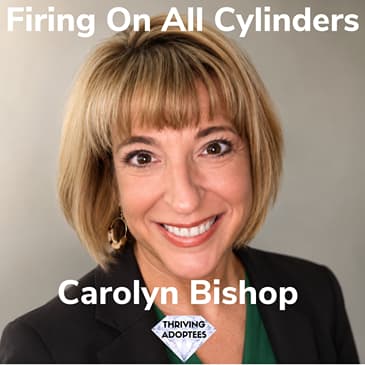
We all function better in life when we are firing on all cylinders. But what helps us do that? Listen in as adoption professional Carolyn shares what works for her. It might work for you...
Find out more about Carolyn and the company she works for here:
https://www.linkedin.com/company/arrow-child-and-family-ministries/
https://www.facebook.com/arrowcfm/
https://www.instagram.com/arrowcfm/
https://www.linkedin.com/in/carolyn-bishop-lmsw-lcpaa-6437b523/
Guests and the host are not (unless mentioned) licensed pscyho-therapists and speak from their own opinion only. Seek qualified advice if you need help.
Want to learn more about thriving for you, your kids, your families or your colleagues? Pick a time to talk here
[00:00:02] Hello, hello everybody. Welcome to another episode of the Thriving Doctees podcast. Today I'm delighted to be joined by Carolyn, Carolyn Bishop from Arrow in Texas, Child and Family Services. Looking forward to our conversation today, Carolyn. I know you're sharing your excitement too, so we're on for a good one today. Carolyn Bishop I'm excited to be here. Thank you for having me.
[00:00:25] Very welcome, very welcome. So the big question that we like to start with, right? Thriving. What does that mean to you personally or professionally? As broad as you like, Carolyn, but yeah, I'm really after your kind of personal or professional take, I guess, Thriving. I was a little surprised at how hard this question was to really think through. I've thought a lot about it since we,
[00:00:55] initially met. I think at the broadest level for me, Thriving is not having to worry every day about the basics, the foundations, food, safety, shelter, clothing. But then I thought that sounded a little simplistic. And so I had to really dig a little deeper into that and think through what it really means to me.
[00:01:23] And I think ultimately where I landed is it comes down to feeling like you're operating on all cylinders and things aren't in your way, right? Like you don't have barriers that you have to jump over and hoops to jump through to move towards your goals, whatever those would be. And I also think that what Thriving to me looks like is probably really different than what it looks like to you or to anyone else.
[00:01:50] I think it's very individualized. And I think that it's a very personal feeling and not just a definition. So I think that's where I landed. Yeah. Yeah. Yeah. As you started that, I thought about Maslow's hierarchy of needs, you know, the safety needs.
[00:02:16] And then we swiftly ascended that hierarchy. Yeah. Yes, absolutely. Absolutely. Do you remember what's at the top? Do you remember what's at the top? Self-actualization is at the top. And I remember back when I was working in college, you know, getting through my college degree in social work, that seemed incredibly unattainable at the time.
[00:02:45] Because, you know, when you're in college, you're trying to make ends meet. You're working on your degree and thinking about where you're going to go with your degree. And that never seemed to me like that's just something that I'm not sure we would ever attain. And I don't know if we do. I feel very confident where I am in life right now. And I love the work that I do at Arrow.
[00:03:11] And so maybe it's not self-actualization, but it's certainly moving in that direction. Yeah. Yeah. The self-actualization piece, is it about realizing our potential? Finding our place in the world?
[00:03:37] I remember that self-actualization, but I also remember thinking perhaps like you, I'm not really sure what that is. Yeah. And I think it's different for everybody. I think what it is to you and to me will look very different based on our history, based on our experiences and, you know, life around us. I just think it's different for everyone. Yeah.
[00:04:06] And there's a commonality in loving the work that we do, I think. I think that's a big piece. I think I have been at Arrow Child and Family Ministries for a little over 14 years and have seen tremendous change in our organization, specifically a lot of growth.
[00:04:32] Expansion, working on different services and different things that we've learned over the years and getting to work with the families that we do. And I think helping them to address the barriers and the obstacles that are in their way to whatever their life needs to look like for them has been a blessing.
[00:04:58] And I think when you're very confident at work and you're confident in your home life, you're well on your way to thriving. Yeah. So the cylinders, you talked about firing on all cylinders. What do you see as those different, making up those different cylinders? Is it home and professional or are we different cylinders? Yeah, I think it's your home life.
[00:05:25] I think it's your family, your if you're married, your, you know, your relationship with your spouse, children. If you're confident in your role, you're, and you're not willing to stop learning. I think that's another important piece to the work that we do because in child welfare, it evolves and changes, it seems like every day.
[00:05:53] And so you can't, you can't stay stagnant, right? Like you can't operate today like we may have 10 years ago. And so I think about that. I also think about learning and education. I think even though I'm not in school anymore, I'm constantly reading and learning and trying to trying to understand the why behind the work that we're doing. And so, yeah, I think it's a little bit of all of those things.
[00:06:19] And I think when they're when they're firing in the right direction and you're confident in what you do, you can accomplish anything. Yeah. Yeah. So what are you learning at the moment? What what's what's new for you? How should we speak, Carolyn?
[00:06:37] Yeah, I think for me in my work life, one of the biggest blessings that I think we've had at Arrow is we have really moved towards a kin first culture. I started at Arrow in 2012 and in our work, we license foster parents. We also do complete or consummate adoptions. And we've always since I've been at Arrow, we'd always licensed kinship families.
[00:07:07] But we treated those families the same way that we treated non-relative families that are that were coming in to to become foster adoptive parents. And we saw that trend several years ago beginning to shift more towards a kin first culture. So about four years ago, we really made a very strategic. Focus, a decision on how we were going to move that needle.
[00:07:37] And so we hired a very specific kinship team. We have we have a director that that reports to me. She has built a huge team of what we call family engagement specialists. Those staff, I think of them as like barrier busters.
[00:07:54] Like they go in and they identify the things that are really holding a family back in order to either move towards permanency, whether that be guardianship or adoption. Or they are temporarily helping, you know, a member of their family while maybe the parent needs to, you know, work services or things like that.
[00:08:21] And so I think we've learned a ton. We are immersed in the kinship work through the Texas Alliance, through Casey Family Programs. We worked we've worked very closely with Generations United just to understand and learn why is this so important and how can we do it better? And so I've been really proud of that work. And I think it's going to continue to evolve for us. Yeah.
[00:08:50] So what what do you see? You talked about barrier busters. What what do you see as as the barriers or and your your teams and your colleagues? Yeah, I think it looks different for every family. We have had families that have come to us in. Absolute crisis.
[00:09:12] We've had families that have taken on nieces and nephews because a relative died very suddenly in in some really traumatic, traumatic ways. We have families that they're their home, their their physical space. They didn't prepare for this.
[00:09:36] And so they don't have extra money to spruce up a bedroom or even even have. An extra bedroom. I mean, it just really depends on the family. So my team really goes in and they work directly with families on a very individual basis to assess and determine what does that particular family need? And then what can we do to help with those things?
[00:10:01] So we have we have done everything from help a family replace windows in their home to work through the licensing process to helping with a down payment on a car. We had a woman come to us three or four years ago. Her sister lost custody of her four children and her her sister was able to to step in and she uprooted her life.
[00:10:30] She was single, living her best life in Florida and came to Texas and instantly overnight became a parent to four children. They were in a one bedroom apartment with very minimal furniture. She was sleeping on an air mattress in the living room and an arrow was really able to come in and help her figure out what do you need?
[00:10:54] She was very reliant on public transportation and sometimes it would take her an hour, two hours just to get to an appointment for the kids. And so through our work with her, we identified the physical needs that she had. But eventually we were able to help her with a down payment for a car so that she she could get what she needed done in a more comfortable way. And I think we take things like that for granted.
[00:11:19] I think when you're when you're comfortable in life and you don't have to worry about those things, you don't think about them. But for her, that that particular piece of of help was life changing. Yeah. I mean, what what what have you learned around the that what have you learned about what helps adoptive parents and kinship parents?
[00:11:46] What helps them operate on all cylinders? The first thing that I've learned and I've learned it the hard way because I as a as a social worker. I'm a fixer, right? I want to jump in and I want to make things better for everybody, you know, but they need to be heard. And I've learned that lesson probably many times more than I probably should have. I should have listened a lot more early on in my career.
[00:12:15] But we you know, we do, for example. Well, we do check ins with families after they've been licensed with us after a certain amount of time just to check in with them. What do you need? How are you doing? And one of the families actually said no one's ever asked me how I'm doing, how I feel. And I thought that was incredibly powerful. I couldn't such a basic question. We in daily interactions, we always ask each other, how are you doing?
[00:12:45] How was your weekend? How was but somebody actually took the time to ask her directly, how are you? Not how are the kids? Not. What do you need? But how are you? And I think that's what they need the most sometimes. And that is to me, that's so basic. But we forget. We forget. And so I think they need to know that they have people in their corner. They need to know that they have advocates.
[00:13:13] And I believe that Arrow and our team have have accomplished that and continue to accomplish that. So it seems to be that all cylinders then, there's an emotional cylinder. I guess there's a relationship cylinder. There's a career cylinder.
[00:13:37] And I'm wondering what other cylinders you see either for yourself or for the adopted parents or kinship parents. Yeah, I agree with you. I think so much of it does come down to relationships and feeling that level of connection.
[00:13:58] I think a lot of our kids, when they come to Arrow, whether they are in a kinship home with family or they are placed in one of our non-relative homes, that's the thing. The relationship and the connection is the thing that I believe that they are in desperate need of the most.
[00:14:22] I think that having someone that they know that they can rely on, someone that they know will stay. We have foster families that have been through it with kids. They have been through runaway incidents, psychiatric hospitalizations, property damage, because that trauma has to come out somehow. And that trauma comes out in behavior.
[00:14:47] And I think for our families, you know, it is the relationship piece to me that is probably the most critical. And I think everything comes back down to relationship. So those challenges that you say that the trauma comes out some way, it's going to come out in relationship.
[00:15:12] What do you see about, I guess, the resiliency, Selinda? Is that, I mean, have you got another word for it? You're nodding. Does that ring true to you? It does. It does. I think resilience is an incredible part of our work. And teaching our families, teaching our kids that, I don't know if that's really a skill.
[00:15:41] I probably wouldn't use that word. But I agree. I think resilience. And we hear that a lot. Children are very resilient. They're very resilient. They have been through so much. And it always amazes me to see, even despite the challenges in their way, what they can work through and get through. But I think sometimes the getting to that point can be very difficult for our families to work through with kids.
[00:16:11] And we're very proud at Arrow. We work really hard to keep the children in the homes that we place them in. If we have placed them, we want them to stay in that particular home until it's time for them to move on to whatever is next for them. And so we do put a lot of effort and time into placement stability and making sure that while we are in that child's life, that we are keeping them safe.
[00:16:40] We are keeping them connected so that they can, you know, that they can begin to heal. Yeah. And what are the drivers of that stability? I think first and foremost, it's the initial message that our foster parents hear from us when they come to Arrow. So every foster parent applicant, whether they're a kinship parent or a non-relative parent, must go through an Arrow orientation.
[00:17:10] And we really lay out that we want to walk alongside you in this process. And I think sometimes people come to us with very different expectations that maybe once they become licensed and they actually start to work with children, it begins to look very different from them.
[00:17:37] And so we always tell our family applicants, we're going to walk alongside you, but it's not going to be easy. This is not easy relational work, but we have a lot of different services and programs that we can put in place to help our families. And so I think the first and foremost piece is the expectation up front that things are going to get hard, but we will be with you. We will work with you, but you've got to stick it out with us too.
[00:18:06] And so I think we've had to shift that message a lot over the years. When I first started at Arrow, you know, we had families that would come to us that really wanted to complete their family, right? That was their initial motivation. And we've really had to share a different message that this isn't about you completing your family.
[00:18:29] This is about a child finding belonging, finding relationships that will be long-term, whether that be through adoption. We have families that have helped support reunification where children have gone home to their parents, but our families have continued to be a respite provider. They've continued to be a support to the birth family, you know, and maintain those relationships. And so that is what we're looking for.
[00:19:00] We want families to be in it and know that you can't just run when it gets a little hard because the kids need you. They need you to be there and they need you to be consistent. Yeah. What do you see about the resilience of your own people in supporting the families and their resilience? Yeah.
[00:19:24] I think that one of the struggles that we have, you know, I think very transparently is we have a young workforce and they also come into the work with certain expectations of the work that they're going to be doing. And I think just as much as we have to talk to our families about sticking it out, we've got to do the same with our employees. They're the ones that are in the homes doing the hard work alongside those families.
[00:19:54] And so I think, you know, really working through managing expectations and making sure that they have the support they need from leadership and their supervisors is critical. And that's something that we, you know, that we continue to develop and focus on at Arrow. Yeah.
[00:20:15] So the communication piece seems to be pretty big and communicating ahead of time, that kind of expectations piece. Absolutely. I think it's really interesting. You said that it used to be about completing the family. And now it's about a child, a family for the child. It's child-centered rather than parent-centered. I don't know.
[00:20:45] Is that how? Yes. I would. Yes. I would agree. Yeah. Yeah. Yeah. I think people, you know, depending on where they are in their life, you know, we've had families that have struggled to have children. We've had families that are, that have maybe chosen at one point not to have children. Or they've had children and then they've decided that they want to add to their family.
[00:21:09] And I think making sure that people know up front that this is, it's very rewarding work, but it is difficult work. And we want to make sure that it is about the child, that it is about making sure that if they have family, if they have biological family that we can help find,
[00:21:35] we're going to do our very best to try to match that child with that family. We, you know, we have several programs at Arrow where we do family finding work and have been able to connect children to aunts and uncles that, you know, that they haven't had contact with. And so, you know, it is about the child and it needs to be about the child. And I think, I think over, over time that has, you know, completely shifted in the work that we do.
[00:22:04] But it is something that I saw early on as a challenge. Yeah. So I want to just go back to the resilience, resiliency piece. And I'm wondering, you know, we've talked about the resilience of the, of the parents, of the families. We talked about the resilience of the staff. What about the resilience of, of leaders? And, and what, you know, what does resilience mean to you?
[00:22:34] Or what, what drives your resiliency? Well, that's a great question. At the core for me personally, I hold a huge level of ownership in the work that we do. I, I could not, not in good faith, do this work if I were half in.
[00:23:03] This isn't the kind of job or career that you can have where you've got one toe dipped in and one out, right? You've got to be all in. That is not to say that there are times where I am completely exhausted and mentally just drained and worn out. But I think, I think innately in me, when I started this work almost 30 years ago, this is a, it was, if I don't do it, who's going to mentality.
[00:23:33] And I just love what I do. I absolutely love it, even on the very, very hard days. And there are, there are some of those. I also have been incredibly blessed at, at Arrow. We have amazing leadership who pour, they pour into us. We have leadership academies. We have ample opportunity for training. We are allowed to go to conferences. We, you know, we're able to learn how to do our work better.
[00:24:03] And so I think that's another driver for me is, is that permission to, to be creative, be innovative and, and to continue learning. And I, when I'm looking for people to be on the Arrow foster care team, I am looking for people that feel the same way. You, you just cannot be partly in.
[00:24:24] And we have that, we have people that are all in and it is what makes the work easier, if that's the word, but it makes it more rewarding. Yeah. So do you mean a commitment? Is commitment, commitment, dedication, passion. I feel like we have the most passionate team.
[00:24:54] And I think sometimes passion to a, to a detriment in the sense of then they get tired, right? And, and they need that, the ability to recharge and, and, you know, have their time off, get away, have, have time with their family, go on vacation. Um, but yeah, I mean, I think, I think it's commitment and I think it is an ownership of that responsibility that has been entrusted to us.
[00:25:19] It's, it's not, if we just looked at it as a job, we wouldn't be as successful as we are today. And I think that's one thing that myself and my team share, um, is this is what we do. This is who Arrow is. And we want to do the best by kids and the families that are entrusted to us. Yeah. Yeah. So what, what have you learned about yourself across those 14 years with, with Arrow currently?
[00:25:49] Um, I have learned that I do need to listen more. Um, I, I am, as I mentioned earlier, I'm, I'm a problem solver. I am, have no issue jumping in and fixing things. Right. Um, but I think I have learned and I'm still learning.
[00:26:10] I haven't learned it completely, um, that I need to sometimes step back and really listen to what my team needs, what they see as the needs for our families, um, and help coach them and not necessarily fix it for them or provide the solution, but work with them through that process. And, and I think some of that is just age and maturity and more confidence in the work because I have done this work for close to 30 years now.
[00:26:39] Um, and where I was 30 years ago and where I am today, uh, both work-wise and life-wise are incredibly different. Um, and, uh, but I also know that I need to keep learning and that I need to keep listening. Yeah. Have you got kids yourself, Caroline? I do not have children of my own. My husband has, uh, two kids. I say kids, they're 25 and 22.
[00:27:09] Um, but I met them, uh, and became part of their life, uh, when they were six and 10. Um, so I have gotten to see them, uh, grow and develop and, and, uh, we've gotten, we've had some hard times, uh, but we, we worked through it well and they're, they're doing really well right now. Yeah. Cool. What have you, what have you learned about this, this problem solving and, and, and jumping in?
[00:27:35] Uh, what, what have you learned about that with regard to kids? Whether that's through your, your partner's kids or whether you've, whether you, what you've seen professionally? Um, I'll give you an extreme example. So me and my wife haven't got any kids either for, for transparency, right? When, when I, I, I, I swim a lot, right?
[00:28:03] And I'm not, when I swim, sometimes the kids have just finished their swimming class at the, at the local swimming pool, right? And I see all their shoes lined up and, uh, the, the, the, the shoes, they, they don't have laces. They have Velcro, right? They have Velcro on, right? So it, it, it, it, it's a tricky thing learning to, learning to tie your shoes. Yeah.
[00:28:30] So some people, maybe it's a fashion thing, but maybe it's, but there's a, to me, there's a kind of, uh, I have to be, I don't want to be coming across as a Victorian here, right? But, you know, it's like, you know, we, we, we talk a lot, let's change it, change the, change the topic slightly. Well, give a different, a different take on the topic, right? We talk a lot about behavior and, and, and behavior change.
[00:28:59] And for, for me, I think about, well, why don't we empower the kids to change their own behavior? You know, rather than us trying to do it for them, because it's, it's, it's tricky to get people to change their behavior. We, we, we know that, right? Um, but I, I also think about that jumping in and solving and problem solving and, and, and, and, and fixing.
[00:29:27] And if we try and do that, then can't we disempower the kids sometimes? Yeah, I, I completely agree. I can give, I can give two examples. They are very opposite in levels of extreme. But, um, years ago, I worked for an organization, um, where we were, it was an emergency shelter.
[00:29:51] And so in our work there, we, um, we could have a child stay with us for up to three months. And on a particular day, um, we received a referral for a youth. He was about 15 at the time. Um, he had gotten off the school bus. And when he got home, um, discovered that the police were at his home and it was very tragic story,
[00:30:18] but his father murdered his mother and then committed suicide. And this all had happened when this teenage boy was at school. Um, so CPS child protective services had to, had to remove him, you know, right away. And he was placed at our shelter and it was right around the holidays. Um, it was right around Thanksgiving. And this was very much pre my work with kinship families. Uh, I hadn't really worked with kinship families at the time.
[00:30:47] Um, and so the state had, had located some aunts and uncles that, that had some interaction with him that maybe not regular relationships. And so we, they all came to the shelter and he was there and he had just gone through this huge tragedy. And all of we, all of the adults in the room were talking, we were, we were at a big conference table and we were all talking about what should happen and where he should go and who's going to do what. And it's Thanksgiving. And is he going to stay here?
[00:31:15] Or is he going to go, you know, have Thanksgiving with his family? And he was, I remember seeing him just sitting there and, and thinking like he had gone through all this tremendous tragedy overnight, literally got off the school bus. And that's what happened. And he finally said, does anybody care what I think?
[00:31:39] And I, I, I was like, I was jolted, um, because all of us caseworkers, family members, staff, we were all just talking around him and he was in the room the entire time. And, and we all just got silent. And it was such a lesson for me in, you can't fix everything and you can't talk your way out of everything and you can't plan everything.
[00:32:07] They have to be part of that discussion. And, and, and I think I, that day has stuck with me in my career for, for a really long time. That was probably 16, 17 years ago at this point. And he's, he's, I'm sure now, you know, uh, I mean, he's gotta be in his mid to late twenties or almost 30 at this point. And I do wonder whatever happened to him. You know, I wonder given all of that, um, tragedy around him, what happened? So that was one big lesson.
[00:32:35] The other lesson is a little bit more lighthearted in that I have two nephews, um, that I adore, uh, one is nine. Um, and he is very introverted. He's a little ball of anxiety. He's just, he's just, I love him to death. And then I have a five-year-old nephew who is extroverted and, and just wants to know everyone and knows no strangers. Well, my nephew, my older nephew had, had gotten into some trouble and, and I was talking to
[00:33:02] my sister and, and so then I talked to him on the phone and, you know, he was telling me what happened and he started to cry. And I just, my, my auntie heart wanted to jump in and, and fix it for him. And my sister was like, no, he has to feel this. He has to feel what happened and, and he has to get through it. And I think that was another lesson for me that you can't fix everything. And I think your story about tying a shoe or Velcro, if we, if we jump in and make it
[00:33:30] easier for them all the time, what skills are they learning long-term? And they're not going to learn how to be resilient because people are always jumping in and fixing it for them. So, yeah. Yeah. Yeah. So that brings me back to the, the healing word, right? So we, we, we talk about thriving and we talk about healing on this, on this podcast. What does, what does healing mean for you, Carolyn?
[00:33:59] I think that's a very similar word to thriving in that there's not one right answer. I think we have all in, in our lives been through difficult situations. You know, I've, I have gone through a divorce, you know, years ago and, and had to get through, you know, moving and changing jobs and going from a house into an apartment and, you know,
[00:34:29] just, just sort of working through that whole process. And I think, um, I found healing in time. I think time is a big piece of healing. I think I was also very, very well connected with friends, particularly friends that I've had for, for many decades, um, and my family. And so I think it goes back to relationship for me, um, being around people that know me, know who I am.
[00:34:58] I can truly be myself around them. Um, and I, I think it's probably very similar for our kids that they, they need to feel heard. They need to feel safe. Um, and they need to be able to tell their story and not have that story be told for them. Um, and so I think, um, I think it's very, very similar to thriving. It's just on maybe a different part of the spectrum. Yeah.
[00:35:26] The emotional part maybe, or a different part. Yes. Emotional. I think, um, in, in the process of healing, I think you go back to sometimes when we talked about the, the hierarchy of needs, you're, you're kind of almost working your way back up in that healing process. And so I think sometimes your whole, whole world can be upended depending on the situation that, that you find yourself in.
[00:35:53] Um, but I think if you have strong supports around you, whether that be spiritual, family, um, friends, pets, I mean, I, you know, we have a dog and I adore him. He drives me nuts, but you know, there's a lot of, there's a lot of therapy in that. Um, I think, I think all of that together is the process of healing. And for some, it may not take as long and it may take longer for others.
[00:36:23] I think just like that thriving discussion, it looks different for everyone and we're not all on a same timeline or a same linear path. It, it, it can ebb and flow over time. Yes. I mean, how do you put, do you see, how do you put healing and fixing together? Do they, well, first off, do they even seem in, in, in the same ballpark?
[00:36:48] I think it depends on the situation and what it is. I think, I think if you can step back just a little bit from the fixing piece and help people to see what's available to them. So not necessarily fixing it for them, um, but showing them what opportunities are there
[00:37:12] and maybe talking through, um, how, how we could help engage them in those opportunities. We, we have some amazing programs at Arrow that fall within our foster care programming. Um, one of our programs, um, does very specific skills building with kids. And, and some of it really does come down to coping strategies. And, you know, um, there's a lot of, of, of, uh, uh, you know, reframing and, and just
[00:37:41] the things that I think kids, they just need someone to like really sit down with them and, and have that time with them. And so I think all of those things, we're not fixing it for them, but we're guiding them through the services and the opportunities that we have at Arrow, um, and helping them on that, on that path. Yeah. Well, one of the things that, um, is a theme that keeps on coming back is in the podcast
[00:38:09] is raising kids isn't about fixing them. It's about growing our own capacity to, to handle what they throw at us. Um, and that, to me, that seems as fundamental, a part of this as we, where, where that shift
[00:38:31] from, uh, completing their family to finding, finding a family for the child. Right. Absolutely. Um, so it's, it's a, it's a growth thing. It's a growth thing. It's a capacity, it's a capacity thing. Um, and our ability to handle what throws at us, you know, and I, and when you talk about
[00:39:00] that, that young man that had lost his parents overnight, you know, words can't really express that, right? Yeah. I, I think about him often. I think that was one of the points in my social work journey that, that sort of was a turning point for me. Um, I often wonder what happened to him. Um, and I think, you know, I think at that moment in time, we did the best for him that
[00:39:29] we could, but I think I've learned so much in the years about listening and about, um, helping to find very individualized services that aren't cookie cutter services that, that, you know, we just give everybody. And, and I, I wonder what his story would look like if that happened today, um, versus back then, you know, um, I don't know. I don't know. Yeah.
[00:39:59] We've covered a lot of ground today. Um, Carolyn, um, uh, what, what we've talked about the, the, the, the drivers of the, or we've talked about that emotional piece, uh, I wonder, is there a, is there a physical piece
[00:40:22] as well for like people, you know, like a holistic approach, people talk about mind. You, you, you mentioned spiritual, uh, in passing, but you know, the kind of mind, body, spirit side, we started off the very concrete physical, physical stuff in terms of. Logistics cut travel and things like that.
[00:40:50] I'm wondering what, what you see in the kind of the individual physical stuff, the, the self-care, the, the sleep and the water and all that. Yeah. I, you know, in my, in my learning, particularly at Arrow, we, um, we've used, uh, TBRI trust based relational intervention.
[00:41:13] And, um, and I remembered learning the importance of hydration and nutrition for our kids and thinking, well, that just seems so basic, but, but really, I mean, that is fundamentally where it begins. Right. And I think, um, we have, we have children who, who come to us, um, seemingly healthy and then, you know, there's underlying physical needs that we find out, you know, through, through their time with us.
[00:41:42] We also have, um, a program at Arrow where we have foster parents that care for very medically fragile children. Um, and so, you know, our families really operate at different, different levels in the type of services that they provide. But I think, um, I, I don't think you, you can't even talk about thriving at all. If the physical piece isn't addressed, isn't, isn't nurtured. Um, you just, you just can't.
[00:42:12] Um, and so, you know, obviously, um, you know, we're responsible to make sure that they get, the kids get medical needs met, dental needs met. Um, and we have children that have very complex health issues. Um, and, uh, you know, we have, we're very blessed. We have a wonderful director of nursing at Arrow and she, she looks at vitals and, and weight and our kids, you know, gaining the weight that they need. Um, if they're on medication, how does that affect their physical health?
[00:42:40] Um, and so that is, that is a huge piece of, of the work that we do as well. Yeah. Yeah. Yeah. Is there an area that you, that I've not asked you about that you think is, you'd like to bring up before we bring it in? No, I just really, um, I've enjoyed our conversation. I appreciate, I appreciate the time getting to chat with you. Yeah. I appreciate you too. Yeah. And, uh, thank you to you too listeners.
[00:43:09] And we'll speak to you again very soon. Take care. Bye bye. Thank you.