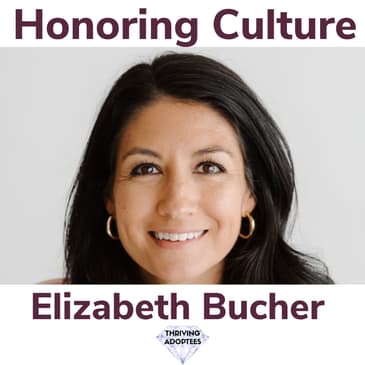
One of the most important drivers of transracial adoptees' thriving is honoring their culture. Listen in as adoptive mom and adoption professional Elizabeth shares what she's learning about thriving raising her son who was adopted from South Korea.
Find out more about Elizabeth here:
https://hopeadoptionagency.org/
https://www.facebook.com/hopeadoptionagency
https://www.instagram.com/hopecenteradoptions
https://www.linkedin.com/company/hope-center-adoptions/
Guests and the host are not (unless mentioned) licensed pscyho-therapists and speak from their own opinion only. Seek qualified advice if you need help.
Want to learn more about thriving for you, your kids, your families or your colleagues? Pick a time to talk here
[00:00:02] Hello everybody, welcome to another episode of the Thriving Adoptees podcast. Today I'm delighted to be joined by Elizabeth, Elizabeth Bucher. Looking forward to our conversation today. We had such a great conversation last month and I also interviewed Casey, your colleague. So looking forward to our chat today. Thank you. Thanks for having me.
[00:00:26] You're very welcome. So Elizabeth is not an adoption profession. She also has one of, a boy, you've got three kids and one of whom is adopted from South Korea if I remember correctly. Yes. And she works at Hope Adoption down in Tennessee. It's Cookeville is it? Cook? Yes.
[00:00:51] That's right. Yeah. Okay. Cookville, I think of Nashville, Tennessee, but yeah. How far from Cookville to Nashville? Is it to Nashville? Because I've been to Nashville, but I've not been to Cookville. Oh, okay. Yeah. We're just a little over an hour east of Nashville. Okay. Okay. So yeah, that was for a conference a while ago, just before lockdown. So yeah, a big conference. It wasn't an adoption conference, a marketing conference.
[00:01:19] 5,000 people there at a convention center. Yeah. But yeah, great people. Great, great, great people in Tennessee. So thriving. What does thriving mean to you, Elizabeth?
[00:01:36] Well, when I think of thriving, I just think of obviously living. I know this phrase is, it's used, it's overused for sure, but you know, living your best life.
[00:01:50] You are doing, you've got the tools, you have the support, you have the emotional maturity, you have just maturity in general, where you are just living your, living your best life.
[00:02:08] And not in, I know last time you and I talked just pertaining to adoption, you know, I think, and it's really not just adoption. It's anybody, anybody who can get, it's easy to get bogged down by, and just be stuck in a spot where you're, you're a victim and you're thinking about everything that's, that's wrong in your life.
[00:02:36] But thriving is, in my opinion, you're looking around at the resources that you have, you're looking around at the blessings that you have in your life.
[00:02:46] And you are choosing to see the good in your circumstances, instead of focusing on what's wrong, or what has been wrong, or what's in the past, what's moving forward and moving into a life where you are choosing to see your blessings and choosing to see what is going well in your life.
[00:03:09] Yeah, yeah. So there's a practical part there. There's an emotional part, and there's a kind of a mindset part. One of the things that occurs to me, just looking at it from a practical point of view, you've got three kids, you work in, you know, a committed, passionate professional in the adoption space.
[00:03:35] You know, me and my wife haven't got any kids. We've got our hands full with our two Labradors and helping my 88 mama out, you know, on occasion. From the practical point of view, how do you make that work? Because you've got three kids to juggle and a household and the job. What goes? How does that work?
[00:04:02] Yeah, well, you know, it depends on the day. It depends on the week. It depends on the day. I do have a lot of help. I have a lot of support. My husband is a wonderful husband. He's a wonderful dad. He is active and involved. We joke that we are just kind of our kids Uber drivers. Our kids are living their best lives. And we're just the ride. We're just getting them to everywhere they need to be. But my husband, he, my son loves, loves, loves,
[00:04:30] soccer and plays soccer. And my husband is his coach. And so, you know, we double team, double team on that. And so he's involved in that I have, we are blessed to live in the same town as my mom and dad. And my parents are very hands on, involved grandparents. And they help a lot school pick up school events and things like that. They help.
[00:04:52] They help with that. Staying flexible really is the best, the best thing because, you know, our plans, I can have my whole day, a whole day planned. And wouldn't you know it, I get a phone call from the school. You got to come pick your kid up. So I'm so sick. And there goes my whole day. You know, thankfully we, a lot of what we can do today with work and stuff can be done virtually like this. And so, you know, I can just pack everything up and go home and work from home, which is,
[00:05:18] which is a blessing to have a little bit more of a flexible schedule with things. But it takes a village. It really does take a village to, to raise kids and to work in this adoption space. It takes, it takes a village as well. I have
[00:05:37] a wonderful administrative assistant that works at the agency with me. And she's, she's a huge, huge help to me. And so being able to delegate, delegate tasks and delegate things that need to get done is a lot of what I have to do. And really learning for me, I really have had to learn how to say no to some things too, which is hard because, you know, I'm a social worker and we love to help.
[00:05:59] It's my favorite thing to do is to help people. And, you know, when people call, we need volunteers with this, we need help with this. I have really had to prioritize and stay in my lane with things and just be like, that's just not my season to do that right now. This is, this is my season. And this is, this is what I have the capacity to do right now. And my, my plate is pretty full right now. And it's really okay.
[00:06:23] My husband said to me recently, because somebody had asked me to volunteer to do something. And it was something I wanted to do. I wanted to help with, but my husband said, don't you think you're doing enough right now? And I said, yes, actually I do. So I am going to say no to that for now. It doesn't mean that I can't say yes later, but just being.
[00:06:44] And I really have to say to my kids too. I think it's been really good, honestly, for my kids, for me to just say to them, like, Hey, mom's just one person. Mom is human. I am a human. I'm going to mess up. I forgot something. I'm sorry. I forgot something. You know, I'll make it up to you.
[00:07:01] So, uh, but I am just one person and, uh, mom can only do so much and you got to give mom some grace to, you know, you know, they know that I love them. They know that they're my priority, but they know that my, uh, to-do list is very long and things do fall through the cracks. And when that happens, I do my best, you know, to make it up to them.
[00:07:22] Um, but I think it's good for our kids to know that we are humans and that we mess up and we get tired and, you know, we, uh, we, as much as I want to be super mom, um, uh, I'm not, I'm not a superhero, you know? So, and at the end of the day, just them knowing that they are my priority and that they are loved and that, um, I'll make it up to them whenever I mess up.
[00:07:49] But they also have to learn disappointments too. And working through, you know, you were disappointed and I'm sorry that I disappointed you. And it's an opportunity for me to apologize. And I want my kids to grow up. I want my kids to apologize to people when they mess up. And I want my kids, when they grow up to be adults that can apologize for things too, you know, when they, when they mess up. And so it teaches us all humility for sure.
[00:08:14] Yeah. Yeah. Humility and grace are big, so big for us, aren't we? So big. Um, you, you talked about emotional maturity. So what, what does that mean to you, Elizabeth? What's emotional maturity?
[00:08:35] I think, um, emotional maturity is just where we can, you know, a little bit like what I said that we can, um, ask for forgiveness when we, when we fall short, when we, when we mess up, um, that we realize that people in, I say this a lot to my kids just in our, in our house. Um, you know, that we, it's easy, the people that you live with,
[00:09:01] it's very easy to be short and snippy with them and not give them as much grace in instances. But I tell my kids often, you know, they really do get along well with each other, but of course, of course they annoy each other and they know exactly what buttons to push with each other. Uh, but I, I just, I say to them, this being in, being in a family and you with your siblings, this right here, you are going to have difficult people in your life, the rest of your life.
[00:09:30] And if your siblings are the people that you get to practice on, on how you solve conflict and how you learn to get along with difficult people and people that you may not, you love them, but you don't always like them, you know? And so it's, it's the, it's a safe place for them to get, to learn how to work through issues with each other and, um, recognize, say to each other, Hey, that hurt my feelings when you did that.
[00:09:57] And then in turn to say, I'm sorry that I hurt your feelings. And then they can forgive each other and work, work through that. But just being, I'm big with my kids too, to, to kind of put your, put yourself in somebody else's shoes.
[00:10:11] You know, it's not to try to see things from someone else's perspective as well. I think that's huge. Um, there are not many adults that can do that, that can, uh, think like, well, you know what, that person, they didn't treat me very nicely today, but you know what, maybe they've had a bad day.
[00:10:28] Maybe they had got some really bad news, maybe to not take things, to not take everything so personally, whenever, uh, we encounter something, you know, to, to kind of be able to step back and be like that made that interaction that I just had with that person. That may not have been about me at all. That could have just been completely, uh, about their bad day and something that they had happen.
[00:10:54] And then it's a chain, chain reaction sort of thing that they treat somebody poorly, but that we can change the trajectory of that chain reaction by being kind to someone. Then that could completely turn around the, their trajectory of their day and then who they treat next. So they would maybe treat them kindly. Yeah. Yeah. Next.
[00:11:15] So just having that emotional maturity, having that emotional intelligence, um, to just kind of think everything kids, of course, are egocentric the world. They think the world is all about them. And it largely is my kids, my kids, their lives, you know, I'm like, yes, my life really does, um, revolve largely around my children's lives. And, you know, they are kids and they, cause they need a lot, but really for them to kind of step back and be like, the whole world does not revolve around me.
[00:11:45] That's I, I am thinking often as I'm raising my children that I am raising, um, I'm raising adults. They're going the, in the grand scheme of things in their lives, they are children for. Or a much shorter amount of time than they are adults. And so I try to have that perspective with my kids of being like, I'm raising, I'm raising adults. I'm raising someone's, uh, future husband.
[00:12:09] I'm raising someone's future dad possibly, you know, and, um, to, to just really have, have that mindset and just to help my kids think past the present moment that they're into that, of course, that feels really big to them, what they're in. And we can recognize that and we can validate that, but that we can also, um, you know, we can move past it. We don't have to stay in that moment of our hurt feelings, but we can give people the benefit of the doubt. We can work through our feelings.
[00:12:38] And then we, another thing that I say often to my children too, is, you know, how that person treated you? How did that make you feel? Well, that didn't feel good. They didn't treat me nicely. Right. Exactly. And let's remember that when we interact with people in the future, how we want people to feel after they've interacted with us.
[00:12:59] We want people to leave feeling encouraged and feeling like they were valued instead of being like, well, that person was really mean to me. And so just kind of having that perspective with them too, I think having that sort of emotional maturity. Again, like I said, there are a lot of adults that don't know how to do that. So it is a lot to ask that of a kid, but to really just say like, this isn't too hard for you.
[00:13:27] You can do that and you're not going to get it right all of the time and that's okay. But next time, let's try that be what we remember is how we treat people is how we want to be treated. And let's remember how that person treated us. That didn't feel nice. And we don't want to do that to other people. So, yeah. Yeah.
[00:13:49] How has, you know, obviously you mentioned a social worker, a big part of who you are, an adoption professional. How has your kind of like social worker training and your experience in this adoption space, how has that changed your emotional intelligence, developed your emotional intelligence,
[00:14:18] reflected what, what's what, when you reflect back, what do you see changing about your own emotional maturity through the professional part of your life? Yeah. Well, certainly just being a mom and being an adoptive mom as well. It has, I feel like it gives me a really unique experience to be able to, it helps me empathize
[00:14:46] with the families that I work with. I largely, you know, we are an adoption agency. So I'm largely working with families that are in the process of adopting and I can really empathize with them through the adoption process. It's lengthy. It's, it's a long, it's a long journey. There's really no way of predicting how long it will take for when a family is approved to adopt and then when they will actually have, have a placement.
[00:15:15] So, uh, before my, my initial job with the agency, I was the home study writer. And so I loved being able to go into families homes and, um, say to them, like, I've been, I have been in your shoes. I've been here before. I know what it's like to have a stranger come to your house and look through your medicine cabinet and, uh, you know, make sure that your home is safe and make sure, um, that you don't have any safety hazards.
[00:15:42] And I know what it's like to have somebody, uh, read through your, your financial statements and, you know, things like that. It's, it can feel very invasive. So I, um, I've been grateful to be able to have that, that I can help people. I can say to them, it's, it's really okay. You don't need to stress out. I remember I'm not coming into your house with a white glove, making sure you don't have, you know, dust on your baseboards and things like that. It's, it's really okay.
[00:16:07] So it has given me a lot of empathy to be able to just meet people right where they're at and say, I've been in your shoes. I understand. I've been able to help encourage families, uh, as they are feeling discouraged that it's taking a long time for the adoption process to happen. And, uh, I can say to them, I know I've been, I've been there. I remember, and it helps, you know, people when they're in adoption is such a unique space to it.
[00:16:35] Uh, it has brought my family so many unexpected blessings and gifts and connections and people that we have met through it that I never would have met otherwise. And I think to it just, and this pertains really to anything, any, any interesting or unique struggle you're going through or situation that you're going through in life. I think for someone when they're in the thick of it and they're feeling really discouraged
[00:17:04] and just overwhelmed to just have someone else to talk to number one, and somebody else who has been through it, that really does understand and, uh, and that's, that's not unique just to adoption. That's just any, really anything in life that somebody you can sit down and talk to and you can help them feel seen and you can help them feel, uh, understood and just to, just to encourage them and just kind of share a common experience with someone. Uh, it's really helpful.
[00:17:33] It's really beneficial for people. Um, but it definitely has, it's helped me in just who we, who we, um, who we work with, you know, when we work with birth moms too, when we have a woman that is coming into our agency that wants to make a plan for adoption. I, of course, we, with our adoption experience with it being international adoption, we never met my son's birth mom.
[00:18:01] Uh, so I have a lot of questions, you know, I have, but I have a, I have such a soft spot, soft spot in my heart for women that do choose to place for adoption. And I just think, um, obviously I have a lot of questions and wonder about my son's birth mom and, you know, and I just, I just, I, that's so it's special to me when I get to, cause I wonder who, who walked alongside my son's birth mother and who helped her make the
[00:18:28] plan for adoption and who helped her, uh, with her unique situation. It's really been beautiful for me to be able to do this for, for a birth mom and think I'm so happy that I get to be on this side because I'm getting to help someone make a plan for adoption because I know what it meant for us and our family to have, um, have that for our son and have our son join our family through adoption. And so that's been really beautiful.
[00:18:55] It's given me, there's just a lot of people, we have a lot of people that I come across that say, you know, I just can't ever imagine how a woman ever gave up her baby. And as an adoption professional, I, we do not like the lingo gave up her baby. That is not, you know, but not everyone, not everyone understands that. Not everyone knows that there's appropriate language to use. So I am quick to say she did not give up her baby. She placed her baby.
[00:19:23] There's a huge difference when you say something between those two things. And then I also say, and you know what? I mean, no, you do not. No one can understand really what that was like for that woman. And whenever you sit down and you hear her story and you understand the circumstances of why she needed to place for adoption, you, you get a completely different, completely different understanding.
[00:19:50] And the judgment goes away and people are just quick to, people don't understand what they haven't been through, which is of course valid. So that has given me just a very, very unique perspective to be able to work, work with these women and encourage them and also educate, help educate people too. Like you just don't, you just don't ever know. You don't ever know what somebody is going through and why a woman chooses to place for adoption.
[00:20:17] And so it's definitely given me a unique perspective because of my experience with adoption. And it's, it's so personal to me and it is, it has caused really just, I am very passionate about it and I believe in it, believe in adoption so much. Uh, there's so much, uh, nuance to all of it and not all of it, hardly any of it is easy.
[00:20:43] And I never tried to paint that picture for people that it's all rainbows and, you know, unicorns and sunshine that there really is. It is, it is hard and, um, but it is a cause that is worth, worth doing and worth being involved in. And I just, from my own experience, of course, with my, my son and, uh, what we've walked
[00:21:11] through with him, with the adoption process, everybody's experience is different, but, uh, having that trauma informed care that I have had that I know is important as a mom for me to be able to say, what, what are we looking at here? Is this normal nine-year-old boy behavior? Or is this something to do with some trauma that you have experienced in your life? You know, so it gives me that perspective.
[00:21:37] I'm able to help other families when they bring up, um, instances that they're concerned about, you know, that I'm like, okay, well, let's put that lens on that. We can think, we can think in this way. Um, I've also really been able to help adoptive families to just say, you know, I'm, I'm not an expert. I can only tell you what I have, uh, told my son and what has worked for my son and where we're at, at his, uh, nine-year-old level.
[00:22:07] But, you know, just encouraging families to about, uh, how to talk to their child about being adopted, you know, and the language to use, uh, when, when they're discussing that and how to handle some questions that, um, they get from friends and just people in their community too, you know, how you can, they can answer those things without giving away information about your child's story that you don't necessarily need to share with them
[00:22:34] and to just give them a perspective of, um, how to reframe, reframe some things. That's just from my own personal experience that I've used that I have learned from other adoptive parents that I have learned from, um, adult adoptees that I know that I have just tried to, uh, use as a resource to families that we, that we work with, that I've used just with my son as well.
[00:22:59] So you, you, you use the word, uh, reframe and, um, that kind of takes me back to that, uh, the, the third part of what you, what you talked about at the outset about mindset. And, um, one of the things that, uh, occurs to me is that we, we don't hear the word mindset, um, or, or that word you use another word, emotional intelligence. We don't, but if we just stick on mindset for the while, we, we don't hear that mindset,
[00:23:29] um, word, uh, a lot in the, in the, uh, adoption space. It seems to be kind of, you know, the, we've got this rainbows and unicorns, uh, rainbows and unicorns world that we, we, we realize now that is, um, uh, fancy, simply not true. And then we've got the trauma stuff. We don't hear the word mindset and it's, it's fascinating for me because I've had a lot
[00:23:56] of coaching on emotional maturity. That's, you know, that's sort of stuff, but also I've had a lot of coaching in kind of straightforward business coaching and it's kind of in that space, it's, it's mindset all the way, but we don't hear the word mindset within the adoption space, or at least I don't. Um, I mean, do you, do you hear it a lot? Is it, is it just me that's missing out on it?
[00:24:24] Um, what, what do you think? Well, that probably is, uh, just my kind of my take, my, uh, my experience, the way that I, that's how I process and, and think and work through things, you know, as I think about that, I think a lot of times, and, you know, I mentioned that kind of with my, with my kids too. I am a big believer when I was going through the adoption process and I, I think for moms
[00:24:53] too, um, I can't speak for all moms, but I think for a lot of moms, we have, uh, we can go to worst case scenario real quick with, with things. And we can, we want to have quick answers for any situation that could come up. We want to know, we want to think through how am I going to respond in this situation? I know for my children in order to, I always want my kids to feel like they are safe.
[00:25:20] And I want my kids to know that mom and dad are in charge. And while we can't control everything, we can control how we respond to things. And I'm, I am big on that with talking to my children about that. And I think that, that this applies really does apply to adoption specifically.
[00:25:42] Just one thing that I think of specifically is, um, I want, I always want my son who, who is adopted to feel prepared for when something is going to happen. So for instance, I'll share a quick story with you. I, um, went, he was in kindergarten and my son is very proud that he's adopted and he is a different race than we are. And we celebrate his race. Uh, we celebrate cultural traditions and things like that.
[00:26:11] We love, we love the South Korean culture. And so I had gone to his class. It was a Korean holiday and I had gone to his class and shared about the Korean holiday. And my son wore his handbok, which is the traditional Korean outfit. He's very, very proud of that. So I had gone to have lunch with him about a week later after that at his school. And one of his, and this is kindergarten, my keep this in mind kindergarten. So that's five, six years old.
[00:26:37] Um, and one of his classmates comes and sits down next to me and says, Hey, so what happened to Bryn's real parents? And I, I was so caught off guard and was not expecting that at all. And of course, I'm very concerned about how my son is going to feel about that question and respond to that question. You know, we talked about things. I try to keep it very age appropriate for him. And so I said, well, I am his real mom.
[00:27:07] I am real. I am his mom right here. This child was not satisfied with that answer. I'm also a big believer of that people don't need to know everything. It's not everyone's business. My son's story is private and we share bits and pieces of it. He's very proud that he's adopted. Like I said, but I'm his mom. End of story. I have the legal paperwork to show it, you know? And of course we honor his story.
[00:27:33] We honor the fact that he had a woman that was his birth mom that gave birth, chose life, chose adoption for him. Uh, we always speak very, very highly of her. I am very mindful of that. So anyways, I'm watching my son sitting right there and I'm watching him think, trying to gauge his reaction to see if he was going to be upset by these questions and what's happening. And he just looked at me and he was like, yeah, that, that is my mom. And just points points to me.
[00:28:01] And so we just kind of, I diffused the situation. Well, we left after that and we got in the car and I was like, did you feel okay that he was asking those questions? Like, was that? Cause it bothered me. I was, I was upset. Cause I was like, who is this kid? Somebody, where did he come from? I don't know him from, I don't know him at all. My son was not upset by it. He was not, he was just like, it's okay, mom. I'm okay that I'm adopted. I'm okay that people ask questions. And I was so proud of him that he was just like, this is fine.
[00:28:31] This is my reality and I'm okay with it. And I was very proud of him in that situation. And then I really had to kind of examine me. Well, why was I so upset by this kid's questions? Kids are naturally curious or naturally inquisitive. It's very normal for that. And so I, I was upset with myself that I was so caught off guard because it has always
[00:28:58] been my, I have worked very hard to help my son feel like he's equipped because I didn't want him to be in a situation because he's going to be, I didn't want him to respond like I did. So caught off guard during the headlights, like, oh my word, I wasn't prepared for that question. I have been very proud of as a mom, as my, in myself and the fact that I never want my son to catch me off guard whenever he asks a question.
[00:29:28] I don't ever, I want our, our conversation with each other to be open about his adoption. I don't have all of the answers to his questions, but I always want that communication to be open. And I believe that, you know, if a kid comes to you and asks a question and you are super caught off guard and super surprised that then they'll, they probably are not going to want to follow up with any more questions. Oh, mom really didn't want to talk about that. I really, my son is naturally, he's a people pleaser.
[00:29:57] He's not going to follow up with any more questions. And so I have had the mindset of, and I encourage the families that I work with who are adopting and have adopted to be prepared with answers because I don't ever want my son to, you know, we're, we've been open about the fact that he's adopted. I encourage families.
[00:30:20] It is not good for a child to, um, we've seen how adoption has changed over the years. That was how it was always handled. We don't talk about it. We don't tell kids that they are adopted and then the parent dies and the kid finds some paperwork and as an adult. And they're like, wait a minute, my whole life is a lie. You know, that is not, we, we have seen as adoption professionals, we have seen, uh, that that is not the way to handle that. It is being open and being honest. And so I encourage family.
[00:30:52] To be open and honest, because I believe that the source of information should come from the parent and you don't ever want another person to be the one that tells your child that they were adopted. And so keeping those lines of communication, kids will internalize that and believe, oh, that was supposed to be a secret. Maybe there's, maybe I did something wrong. You just never know the way that a child is going to process that. And so having that mindset of being ready with answers, you don't have to have all of the answers,
[00:31:21] but you do need to know, especially with young, young children, how you are going to answer some of their questions because you don't want their takeaway to be, oh, mom and dad do not want to talk about that. I'm not going to bring it up again. And then they're left to have to try to process things on their own. And they're not really sure. And they don't really know where mom and dad stand on this. And then they're like, well, then, then what do I do?
[00:31:46] And so as adults, we need to be the ones that help the children process through these feelings. The adults need to process through their feelings on how they feel about it and what they think about it and be ready with an answer. Like I said, it doesn't have to be perfect. It's not going to be perfect, but mainly so that you answer, so that the line of communication with your child stays open so that they are not afraid to come back to you with more questions.
[00:32:13] Or like I tell my son, I may not have the answer, but I want you to come to me and we can wonder together about something. So that is whenever I say mindset, you know, that's where I'm coming from as a mom. And just from some of my lived experience that I've had with my child and his adoption experience, that having that and being having mindset of where we're prepared and we're ready to answer questions
[00:32:43] when they arise. Yes. Have there been other kind of big insight moments for you, Elizabeth, like that one? Yes. Yeah. Just really things with, because we are a, a international adoption and because my son is from a different,
[00:33:11] different, a different race, you know, there have just been little things, little things. It was like that, that I have been like, this is a reminder that I need to talk to him about just making sure that he's secure, you know, talking about like families don't have to all look like each other, you know, it's okay. Everybody doesn't have to, everyone doesn't have to look, look the same to be a family and, you know, helping him.
[00:33:36] We actually, and it's funny, we joke about this, you know, I just in pop culture right now, it is very cool. It is very trendy to be Korean. And we, I joke about how my son, I'm like, it was honestly pretty great. The timing for him about being, cause I have heard stories of older adoptees who were adopted from Korea that people were just like, where is Korea? And are you from North or South Korea? And, you know, questions like that, that people ask that nobody knows.
[00:34:04] Everybody knows about South Korea right now. We it's having a huge cultural, uh, moment. And, um, I joke and I'm like, it really works out really well for my son. It's really cool to be Korean. Like people say he has people that say things to him all the time. Like, oh yeah, they mentioned like K-pop bands and movies and stuff that they know about. And they it's, uh, people traveling to Korea right now, it's become a really hotspot for, for travel and things like that, which I'm like, that's worked out really well for him.
[00:34:34] It's like, it's cool to be Korean, which that has not always, that's not always been the case. Um, I have been very surprised by the number of people that have asked me if our son was adopted from North or South Korea. That has been one that I've been like, I'm going to let you think about that question for a second from what you know about North Korea. No, he's not from North Korea. It's not possible.
[00:35:01] Things like that, that just really kind of have caught me, uh, have been funny to me, but I'm like, no, that's not, that's not it. But, um, really just, just the gift that adoption has been to, I, I mentioned that just, um, a little bit too, just, we have a wonderful support group. Um, we got to know a lot of moms got to all know each other through Facebook. We were all in the process of adopting from Korea at the same time. And, um, we have stayed in touch.
[00:35:31] It's been nearly seven years that my son has been home now and they have been an amazing, uh, support group to me, just different things that we have, uh, issues that we have worked through insight. They'll have suggestions that they bring up. They're like, I never even thought about that. And that's a, that's a wonderful suggestion. And that's been really great too, because we, uh, once a year, we tried to get our kids, uh, together.
[00:35:57] We met, um, rented this huge cabin last summer and all, all got together. It's very important to me as a mom that my son knows that there are other children that are also adopted because it can feel really, it can feel really isolating, you know? And I, I like for him to know not only that there are other children that have been adopted, but then there's this whole group of Korean children that were all adopted as well. And so he's been able to form friendships, um, with kids like that.
[00:36:26] We don't live in a very, uh, Cookville is not a very racially diverse, uh, area. And so I have made a point of seeking, seeking that out for him to get to know and be around other kids that look like him. You know, I mean, I think that that, I think that that's important. And like I said, that's really ended up being a major benefit for us that Korean culture
[00:36:52] has exploded like it has because he's seeing himself represented on pop culture and in movies and things like that, which there was not an, there has not been a Korean or an Asian space for that, um, really up until recently. And so I think that's a really big deal for kids to be able to see, uh, other people that look like themselves on TV and in movies and in pop culture and things like that.
[00:37:18] So as a mom, I've been really, really excited to, uh, for him to get to, to get to see that, um, as well. So yeah, just lots of, lots of surprising, lots of surprising things that, that happen. Um, it's been funny. My, my daughters are older than, than my son. And, uh, they'll even mention things to me that people ask about adoption that they'll just be like, mom, isn't that crazy that somebody asked me that? And I'm like, yes, it is.
[00:37:47] And again, let's be mindful that we don't ask questions like that. You know, like, it's just not whatever thoughts pop in your head doesn't mean that they need to come out of your mouth. It's just not always something that someone needs to ask, but overall our adoption experience really has been very positive. I have been, um, really grateful for that, that overwhelmingly, uh, people have, uh, been
[00:38:13] just encouraging and, uh, have not singled my son out or made him feel excluded in any way because he's a different race or because he's, um, because he has adopted. I think a lot of it too, like I said, I felt like it was important to me to get ahead of the game. And I was very mindful about how we talked about the fact that he was adopted.
[00:38:36] You know, I think I know in a previous conversation that you and I had, um, I mentioned that I said, it's, it is okay for my son to feel however he wants to feel about being adopted. I don't expect him to be, he doesn't have to feel happy about it all the time. He can feel sad. He can feel the emotions that he wants to feel and hopefully work through those and get to a place where he, I mean, I will tell you currently right now he is nine. He is thriving 100%.
[00:39:05] But I think of a child that has been through the things that he has been through in his short little life. He is thriving and he thinks that adoption is great. He tells me that he wants to adopt one day. Uh, he does not feel weird about it. And I do think that it is because of the way that my husband and I have talked about it in our family, the way that we process have processed things, the way that we've talked about it with our girls too, and really our extended family too.
[00:39:32] I was very mindful about how I talked to my parents and how I talked to my sister and my brother-in-law and my nieces when we were bringing our son home. You know, there were just certain things that I coach them on this, these, this is the language that we're, we're going to use. This is, um, I want the, the language that we use around adoption to be positive, to be honoring, to be honoring of where he came from, to be honoring of his birth culture, to be
[00:40:01] honoring of his, uh, birth parents. That was always very important to me from, from the beginning, because I, the reality is I don't have a whole lot of information about his, his birth family and everything. I don't really, I don't really know all of the circumstances on everything, but when given a choice on how I'm going to talk about adoption, it's always going to be positive. I'm always going to give his birth mom the benefit of the doubt because without her, we, we wouldn't have him, you know?
[00:40:30] And so that is just always been the mindset and the frame, the way that I framed adoption. And I don't know, like I said, my son's nine, you know, once we hit those teen years, once we hit puberty, once he becomes an adult, I, I know that this is a process and that this is in stages. He, I hear that a lot from adults adopting these as well is that, you know, it didn't really
[00:40:57] hit them until they got to a certain age and that's, you know, and that's fine and that's okay. But me as a mom, I want to have my son set up with tools that he can use that then he will hopefully use to help him process things. And it's okay if it's going to be hard for him in a season, but I hope that I have, and I am continuing to give him the tools that he can know what to do with the thoughts and
[00:41:24] the emotions and the feelings that he has in that season about being adopted. And so, yeah, that's just really been my, my approach and parenting through it so far. Yeah. Yeah. That, the deep, the, the rooting and the, the security, the foundational kind of stuff that
[00:41:47] you've sat down, that'll be, be, play spades, you know, pay off in spades later on. I'm sure, you know, the, the real, you know, you've talked about the, the, the kindergartner and asking your son about, you know, what happened to your real parents. And, uh, I remember being asked that question. Um, now I was a bit older than, uh, than your son.
[00:42:18] And I'm not quite sure how old I was, but I would probably guess about 10. Uh, and I said, uh, my mum and dad are my real parents. And, and that was it really, you know, um, that's the end of the, that was the end of the, the, the, it was the end of that conversation.
[00:42:40] Um, and it's interesting because as I was listening to you, I was thinking, was there a follow-up? Right. Um, and, uh, but when, when I answered that question that way, there wasn't a follow-up. Yeah. You know, um, so it was the same, it, it, that, that was it. That was, we call them full stops. You call them full points. Do you point them?
[00:43:10] Um, at the end of the sentence, that, that's kind of it. It, it, it, it's done. Uh, uh, it's done. And I think it's, I think the way that it said it, you know, I, I didn't, I didn't think of how I was going to respond. You know, I just responded, but my, my response was strong.
[00:43:34] It was based in conviction and it was, and it, and the strength of the conviction was the way I said it meant that that was the end of the, that was the end of the question really. Sorry, that was the end of the subject. It wasn't, there wasn't a follow-up.
[00:43:58] Just, just, but so what I'm trying to get at is really that that conviction came out of the security, came out of the foundation. Yes. Yeah. It's the foundational work. It's, we often, you know, think about, we talk about behavior, but it, it, it's where the behavior is coming from.
[00:44:20] The, the depth, the grounding, the, the sense of belonging, the, the foundation. Yeah. Right. So the, the, the metaphor that's coming to my mind, you know, is that, is that, is the tree that's, that's going in, you know, blowing in, blowing with the wind.
[00:44:43] And, but it, because of the, of the firm, the firm foundations and how there's a lot of adoptees of my generation that haven't felt like that. Right. So there's, I think there's an, there's an adoptee podcast and it's pulled by the root. It's called. Mm-hmm.
[00:45:09] So, you know, when we think about languaging, that's the way that, that adoptee felt. I mean, that's, that's the way that they, they felt. So the, the foundational work, the, the, um, all the stuff that you're doing, you know, like all the stuff that you've done, all the stuff that you've learned properly through
[00:45:32] osmosis professionally, and then put it in and put it into that kind of, that, that foundation, that foundational work. I don't know. Mm-hmm. Yeah, absolutely. And I know, I know one of the things that, um, like I said, we have extended family that lives around us as well. And I remember reading a study and I don't recall where I read this. I wish I could remember, but it interviewed some adult adoptees and they all commented on
[00:46:02] one of the things that helped make them feel the most secure in their family unit was the fact that they had grandparents that were very involved in their lives. And they had a very great relationship with grandparents. And, uh, that is one thing that I absolutely have to say. My parents, um, are very involved, like I said, in all three of my kids' lives. I mean, it's, this is, that's foundational, whether you're adopted or biological, that's just
[00:46:29] foundational for a child's experience, I think. And not every child, of course, has grandparents actively in their lives. But I, I can absolutely say that is one of the things that is, um, has made such an impact on my son and his identity and his security that he is, is that he has a great relationship with my parents as well. And I have seen that really help him in his secure foundation. He's the only grandson and that has really helped him.
[00:46:57] He has that very special, very special role. He's the only grandson and it's very special, special to him. And so that's something that I have, uh, I remember reading that article and just thinking like, that's wonderful to hear. I'm always wanting to learn from adult adoptees. And so, you know, to hear something like that, that I'm like, okay, that, that's wonderful that that helps in a child's, um, secure attachment and identity for sure.
[00:47:23] But, um, yeah, so that is, that's played absolutely played a major role in, in my son's life as well. Fantastic, Elizabeth. Yeah. Um, have you got anything else that you'd like to add before we bring it in? Oh, goodness. This, how much time do we have? We're almost done, aren't we? We're almost done. I've talked for a long time. I mean, I didn't have to ask many questions. It was very, it was a very easy interview to do, Elizabeth.
[00:47:52] I, I don't have any problem, um, talking on this, on this topic. Yeah, I noticed, yeah. We just recently had, actually, uh, Tuesday, we had, um, uh, an event for our, for our agency that I, I spoke at and I spoke for 30 minutes and I looked at the clock and I was like, wow, that just, and I barely took a breath the whole time. So I, this is the topic that I could talk about, you know, uh, I'm all, so that's why
[00:48:21] I always am like, which lane do you want me to stay in? Because I could go, you know, I could share our story, which our adoption story is beautiful with how, uh, our son came to join our family. I can, I can talk about it as a professional. I can, as an adoption professional, I can talk about it as a mom. You know, I have the added unique experience of it being an international adoption in a way that we really have tried to incorporate my son's birth culture.
[00:48:49] And that, um, I just, adoption just has been, it really has been an incredible blessing to our family. And, uh, I just, you know, we of course can't imagine our lives without our son. He is just, he's just a bright star and he is just an amazing, amazing little guy. And so, uh, that really, I think has been impacting to people that know us as well is to just see,
[00:49:19] just to see him thriving and him just living, living his best life. It's just, it's been really beautiful. And like I said, we'll take it year. We'll take it year by year. You know, so far it really has been a very smooth, uh, smooth process. And, um, he is just an amazing little guy and I'm just proud, proud to be his mom. And so I love getting the highlight adoption, any chance that I get to. So thank you so much for letting me talk. Yeah.
[00:49:49] You're a star. Thanks Elizabeth. Thank you listeners. We'll speak to you again very soon. Take care. Bye. Bye.