What if there was nothing to fix in you, your kids or anybody else? What if you're already whole? Good to go? Great as you are? Wouldn't that be a relief? One less thing to do in your already busy life? YES! Listen in as Amanda and I dive deep into our fundamental wholeness.
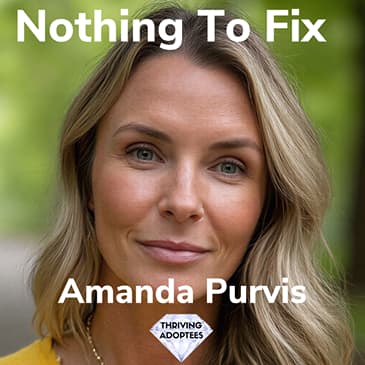
Amanda is a globally recognized thought leader in developmental trauma, childhood adversity, and the power of healing systems. With over two decades of experience in local and international child welfare, Amanda is known for her ability to translate the science of Trust-Based Relational Intervention® into practical, transformative change—from family homes to national systems.
She holds a bachelor’s degree in social work from Metropolitan State University and a master’s in criminal justice and criminology from Texas Christian University, where her passion for trauma-informed justice took deep root.
A dynamic speaker, strategist, and community organizer, Amanda is at her best when partnering with others to design solutions that honor cultural context, human dignity, and lasting impact. Today, Amanda is unlocking hope for thousands of vulnerable children around the world as the Vice President of Global Impact at All God’s Children International. Whether leading policy discussions, equipping front-line workers, or facilitating global collaborations, Amanda brings both head and heart to the work of disrupting trauma for good.
On a personal note, Amanda is the proud mom of five incredible children and a lovable, extremely personable Bernese mountain dog named Athena. She enjoys early morning walks with her weighted vest, attempting to train said dog, and dabbling in gardening and handyman adventures—with varying degrees of success. She believes in the power of community, the possibility of healing, and that humor and connection are always part of the process.
Find out more about Amanda and the organisation she works for here:
https://www.linkedin.com/in/amanda-purvis-4aa71b334/
https://www.allgodschildren.org/
https://www.facebook.com/allgodschildreninternational
https://www.instagram.com/allgodschildreninternational/
Guests and the host are not (unless mentioned) licensed pscyho-therapists and speak from their own opinion only. Seek qualified advice if you need help.
Want to learn more about thriving for you, your kids, your families or your colleagues? Pick a time to talk here
[00:00:02] Hello everybody, welcome to another episode of the Thriving Adoptees podcast. Today I'm delighted to be joined by Amanda. Amanda Purvis. I'm really looking forward to continuing our conversation today. Amanda, great chat last time. Great pre-interview chat. Talking about beer. We're not going to talk about beer, we're going to talk about thriving, right?
[00:00:23] So Amanda has five kids, three through adoption, two bio kids and she also works at All Gods Children International which we might get into in a bit of a moment. So when I was doing some kind of last minute research following the conversation we'd had last time, the conversation I had with Amanda last time.
[00:00:57] ChatGPT alerted me to some of Amanda's philosophy on life I would say and one of those really struck me and the first one was you talked about our fundamental wholeness.
[00:01:18] our fundamental wholeness. And that's something that's very close to my heart and my philosophy. So what do you understand by, what does fundamental wholeness mean to you Amanda? Thanks for having me Simon. Cheers. Cheers.
[00:01:43] A fundamental wholeness to me is the idea that we are all showing up, doing the best we can with what we know and what we have in the moment. And I think that we've been sold a story, particularly I would say like in the field of trauma and loss and all the things that adoption can entail. That we have something to do that we have something to do that we have something to fix.
[00:02:14] And I think when we look at people as whole and when we look at ourselves as whole, we approach the world very differently. And I think that, and I think that not to get too political or philosophical, but the system wants us to think of ourselves as less than. And that serves the system.
[00:02:42] And when we actually know that we are whole and that we have everything that we need. We, we are kind, we are gentle, first with ourselves. And then that allows us to see other people through that lens. Yeah. I guess the challenge is that we, I'm totally with you, right? I'm totally with you.
[00:03:10] And yet I hear a, I hear a listener's voice in my head. And the listener saying, but I, but I don't feel whole. Yeah. I think, I think that's what they want. I think, I think that's, that's the whole lie that we've been sold. And I think that once we come to a place where we go, hey, I have experienced loss.
[00:03:38] I am not showing up in the best version of myself. I am not like, once we come to a place of acceptance of who we truly are and who we are in that moment, then we can be first accepted of ourselves and then others in our own stories.
[00:04:00] Um, I think oftentimes like we get caught in our like trauma history and our trauma stories and those things are true and they do affect us and in every moment. Um, and, um, with, without those things, we wouldn't be showing up the way that we are today for good and bad.
[00:04:19] Um, and I think that we are taught to believe that we're only supposed to show up, um, whole in the sense that we're showing up kind to other people and kind to ourselves. And, um, when we aren't, then we say, oh, we're not, you know, like, like we negate the rest of who we are.
[00:04:42] Um, and what I've found is that when we can be okay with who we fully are, um, we give other people permission to be okay with who they fully are. And just a very simple example of that, um, is I think I've, I've had an opportunity to teach my kids, like, it is okay to make mistakes. We all make mistakes. We all, you know, and so I see that in them, um, something that we would probably say is resiliency, right?
[00:05:09] Um, and then there are times when I will make a mistake and I will say something like, you know, um, I'm so stupid. I forgot the keys, right? Or something, you know, simple like that. And they'll say, mom, we all forget things. And, and they'll mirror back to me that, that wholeness of like forgetting something doesn't make you less than, right?
[00:05:33] Like it's that, that fundamental message of really what I, I believe in is proximity that like, when we are close to one another, um, we see each other for, for the whole picture. Like, yep, you forgot the keys and now we're all standing in the cold and you got us out here and you got us ready and we're going to have fun as a family and right. Like all the rest of it.
[00:05:56] Um, and so that's, that's kind of where I, I try to rest and I love that I'm surrounded by community that reminds me of that. And to flip that story, um, when my kids, you know, like I have one son who, um, he had like really hurt me, um, with his words and his actions and he was feeling horrible and shame.
[00:06:21] And he, you know, he said to me, um, you know, I know that I'm not like, I'm not a good son. I'm a bad son. And I said to him like, buddy, um, have I ever yelled at you? And the answer is absolutely yes. Right. Like, yes, yes, mom, you have yelled at me. Um, have I ever said something that was mean and I didn't actually mean in the moment? And he's like, well, yeah, yesterday you, right. Like, like there's, there's plenty of those examples.
[00:06:50] And I said, do you think I'm a bad mom? And he said, no, you're, you're a really good mom. And I said, the same is true of you. Like we, we can be great people and have bad moments. And if we let those moments define us, then we remain in that shame cycle. Um, and so being able to mirror that back to not just my children, but anyone I'm in relationship with,
[00:07:17] um, a colleague, you know, a partner, a friend, um, has given me the gift also of being in a community where that is mirrored back to me as well. Yeah. Superb. Just brilliant. Right. Um, uh, I'm a metaphor guy. Are you a metaphor girl? I don't know. Are you into that? I try. Yes. Yes.
[00:07:47] I, and I love when they get really weird and people are like, wait, I'm not following. Um, have you got a, um, have you got a metaphor for fundamental homeless? Ooh, I don't know. Do you? Oh yeah. Okay. Tell me, tell me, tell me. I'm supposed to be interviewing you. Um, uh, okay. Um, so the freshest one, right.
[00:08:15] The freshest one that I've got, um, is, uh, is actually my, my selection from chat GPT yesterday. Um, I asked it for a different metaphor. Uh, and, um, it's a different take on fundamental homeless, right? But we have a different take on fundamental wholeness and that's okay. That's what we do.
[00:08:41] Um, so, so the metaphor is the peach, peach, right? So, um, trauma, uh, is, is like a cut, right? So you've, you, you, you cut the flesh of the peach, but you don't cut the stone. The knife, the knife can't cut the stone. It's just not strong enough.
[00:09:10] I mean, all metaphors run out, right? So you could get an axe, you could get an axe and smash through the stone of that, but, you know, but within the limits of the metaphor. Um, yeah, that's it. So, um, so what, so the, the flesh, the flesh of the peach. Oh, I guess you've got the outer skin of the peach first. I mean, you've got to slice through, right? Sure.
[00:09:41] Um, so that might be our appearance. Okay. Um, the flesh of the peach might be our psychology. Mm-hmm. Um, but the stone of the peach is, is our essence. Yeah.
[00:09:57] Because a wound in our psychology is not a wound of our essence or our uppercase self or our true self or our core or our consciousness or whatever phrase you want to, or a spirit, whatever, whatever, whatever word you want to put to our fundamental wholeness.
[00:10:27] Love that. Yep. I love it. I can't think of one off the top of my head for fundamental wholeness. So let's go, um, let's go a slightly different way. Why might we believe that we're not fundamentally whole?
[00:11:01] Yeah, I think that, um, trauma. Often, um, is experienced relationally. Um, and we are made, um, to believe about ourselves, um, what was mirrored to us, um, through relationship.
[00:11:21] And I don't want to get too much into attachment science, um, but that's where I'm going in the sense that when our, um, hurts have been relational, um, the only way that healing comes is relationally.
[00:11:38] Um, but oftentimes when our hurts are relational, our response is to withdraw relationally, to not trust people, um, to not go deep with people, to, um, and so when that happens, our only mirror is ourself and our self-talk.
[00:11:58] Um, and I think that that cycle, um, would make us to believe then that there was something wrong with us. Right. That we have these hurts, um, because there's something wrong with us.
[00:12:15] Um, and rather than a larger picture of, um, the idea that relationships are passed down and relational history is passed down. And so I think that the, the history of our relationships oftentimes creates the lens at which we see ourselves and other people through.
[00:12:40] Um, and so when we've had those relational hurts, and I don't mean relational hurts, like someone called you a name, you know, who was angry at you at work. I mean like true big relational hurts where you've been rejected, um, at the core of who you are, um, those things, um, without healthy relationships to help us repair them have echoes.
[00:13:06] Um, and so, and I would say in many ways, um, a lot of us have had those. And I think that it comes down to, are we, um, willing to put ourselves in, in at risk, um, of going deep and having deep relationships and trusting people again after those deep rejections.
[00:13:31] Um, and, and, and when we choose to protect ourselves and we choose to, um, and the things that kept us safe during those relational, um, breaks, when we choose to continue that patterning, then we're alone in our, in our, um, in our true essence in the core of the, um, and so that mirror is lost. Yeah. Yeah.
[00:14:01] What would, uh, if you, if you brought a, an adoptee lens to this, or let's put it slightly differently, what, what you've learned and what you are learning about adoptees through, through raising your kids. Right. Um, and, uh, through the work that you do with AGCI, if you put an adoptee lens on this subject of wholeness.
[00:14:29] Why might an adoptee not feel whole? That's a heavy question, um, that, um, I can make assumptions based on my experience, but I certainly won't speak for everyone.
[00:14:50] Um, but I think oftentimes, um, adoptees have experienced that core relational break.
[00:14:59] Um, and even if it was an infant domestic adoption where, um, which most people would say is like the least traumatic, um, what we know is that we are biologically wired to connect and attach first to our biological parents.
[00:15:21] Um, and so when that break, um, um, and so when that break, um, occurs, even in the best of circumstances, there is still that, um, that experience, even though like people will say like adopt young, adopt when they're infants. Then they don't remember. It's not as traumatic. Um, that's, um, that's, that's not true is the bottom line. Um, biologically, um, our bodies remember and know.
[00:15:46] Um, and so with that being said, um, that isn't a life sentence to relational, um, mistrust. That isn't a life sentence to, um, um, trauma, um, and experiencing its effects, but it is something that at our core, there is that storyline.
[00:16:08] Um, and if, unless we are willing to, um, bravely, and I would say it's an extremely brave, um, task to look at that inner storyline or our inner, um, narrative. Of what is the story that we tell even about our adoption.
[00:16:30] And we might be a 52 year old, you know, healthy, happy, have our, you know, like moving forward in our life, but you have a narrative about your life, um, and being brave enough to look at that narrative and truly question whether that narrative continues to serve you and who you are today. Um, and question if that narrative is true.
[00:16:55] Um, and, and I think that that, um, is a huge task that, that all of us are doing in some ways, right? Looking, looking back at the narrative of who we are and, um, and questioning whether that is still true today. Yeah. Wow. Uh, wow. Yeah.
[00:17:20] It's narrative is, is, is a, I think is, is the key to this, right? So it is, it is, is the key, you know, what, uh, I flippantly say this, but it's, it's really, really, really big here. Right. I didn't believe I was primally wounded until I read the primal wound.
[00:17:50] So, so, so Nancy Verrier's narrative became my narrative for a while. Right. So that my experience was with this was relief at a diagnosis, then doom. I'm stuck with this.
[00:18:09] Uh, and then joy when I realized that, uh, that who I truly am is unwoundable. I, I, I'm unwounded because who we truly are is unwoundable. We, we are whole. We are the peach stone.
[00:18:39] Yeah. Not the flesh of the peach. Right. So, uh, I, I, I think a narrative, an external narrative, you were saying they want us to, they want us to feel that we're, we're not whole. Right. Well, that, that's what Nancy Verrier, that's what her theory is, is, is about.
[00:19:02] It's, um, and she says that, she says that it's everything, right? That it's psychological, that it's essential, that it's spiritual, that all these different things. Right. But her follow-up book about healing is pure psychology. And we're not our psychology. How, how we think and feel isn't who we are.
[00:19:32] We're not the, we're not the flesh of the, we're not the flesh of the peach. I'm going to, you know, switch, I'm going to, um, switch metaphors here. Right. So we're, we're more like, we're more like the, um, the, the, the, the, the scream. We're, yeah. We're, we're more like the sky in which our feelings come and go. Trauma is a storm. I love that. Yeah. Yeah. Trauma is a storm.
[00:20:02] It's, it's the anger of thunder. It's the grief of rain. It's the terror of lightning. That, that's the storm. That storm appears within us. But the storm doesn't damage the sky. Right. Storms come and go.
[00:20:32] The sky is going, the sky is going, come on. The sky is wide open. The sky is wide open because it knows that the storm can't damage it. Because it's whole. It can accept everything. Yep. And I, yeah. And I also love that when you're trained to look at the sky, you can see things coming. And you can see things going. And so, you know, like, oh, here it comes.
[00:21:01] Like, I'm going to have my moment. And I also know then it's going to pass. Yeah. And I'm going to still be here in the sky. And I think, um, I can't emphasize enough the power of narrative and to your listeners. Um, if you're an adoptee, if you're an adoptive parent, um, talking about the story is so important. And the way that you talk about it will and should change.
[00:21:29] There are times in our lives where putting words to, for example, the primal wound that you're speaking of is incredibly healing because it might help to, um, like literally when you put words to an experiences. So experiences are felt in, in like one side of our brain. Um, and then when we put words to it, um, then we can literally watch the synapses of the left and right hemispheres connect when you tell a story.
[00:21:59] Um, and, um, so when we put words to experiences, it integrates the brain around that experience. Um, and the reason that that's important for us to understand is when you don't, it gets trapped. And then those become what we call quote unquote triggers, right? Like something happens and you explode or you get deeply depressed or you write like you have your response and you don't necessarily know why.
[00:22:26] Um, and so the more that we tell our stories, um, the more that we're connecting our experiences with words, but the important thing is to recognize that the way that you tell your story should change over time because as you tell your story, you're telling it from your vantage point then, right? So like what, with what we know about development, kids are always the center of the story, right?
[00:22:51] So for a child who is talking about, you know, um, adoption, they are the center of that story, right? Like, and, and that is developmentally appropriate as you grow up, as you learn all the things, suddenly you can look at your adoption story and go, oh, it wasn't that my mom rejected me and didn't want me. It was that there was this whole big bad world who, who exists.
[00:23:20] And there were all of these pressures, whether it was economic, whether it was age, whether it was religion, whether it right, like there's all of these things coming up against this woman who is having to make a decision. And it actually had probably nothing to do with me. It had nothing to do with me and it had everything to do with her experience in the world at that time. Therefore, the way that I tell that story and the way that I feel that story in my body is very
[00:23:49] different than when I thought I was the center of that story. Um, so as we tell our stories, it's really important that we continue to tell our stories, stories, um, because we will change the narrative. The facts don't change, but the narrative around the why does, um, and should, and it absolutely should. Yeah.
[00:24:15] Because the, the, the narrative that so many of us take on board is that, or would that we take on board that we believe that we, that, that, uh, that imagination causes us to create is there's something wrong with us because our birth mother didn't connect, uh, that didn't keep us. Right.
[00:24:37] Um, and, and then we have an insight and we realize the narrative was wrong and the, the insight changes the narrative. So reading a letter from my birth mother to a social worker, I felt her love her. for me.
[00:25:04] Uh, and that visceral experience. Well, was an epiphany that changed my narrative. So insights epiphanies, that's, they change our, change our narratives. And we realized that the narrative that we had was wrong.
[00:25:32] And it, and that narrative might, uh, might've been, and probably was, uh, subconscious. Yeah, absolutely. And I also think that narratives serve a purpose in the moment oftentimes. Um, so for example, like right now I have a child who, um, is like putting words to their story in a new way, in a new era of their life.
[00:26:01] Um, and right now they're saying, you know, um, my biological mom, it was bad because she does these three things. Right. Um, now if I were to try and like, make him understand like the societal pressures and what poverty does and what, you know, like right now that's inappropriate. Like, like, like you can't understand those things. Right.
[00:26:27] And so I can help to write a very, you know, like, oh, I don't think that she's a bad mom. I think she's a mom that was under a lot of stress. Right. And like, like that's like, and when we're all under stress, we don't make good decisions. Right. So like I can help with that. Um, but over time, I think he'll go to, um, he'll come to understand like, oh, what does it mean to grow up, um, in a home where you weren't loved or what does it mean to, um, seek
[00:26:55] acceptance outside of your family? Um, and what does it mean to use substances in order to numb pain? Right. Like, so he'll, he will over time understand the larger picture right now in where he's at developmentally saying she was a bad mom makes sense of his story. For him. Right. But as we continue, right.
[00:27:21] Like when he's a 45 year old man, he's not going to be saying she was a bad mom. Like he's going to understand more of that story. Um, and I just think that recognizing that our narratives can and will change over time, both developmentally. And as you're saying, as we get more insights, as we have deeper understanding, um, that's appropriate. And so I would challenge your listeners.
[00:27:48] If the narrative that you're telling yourself about your own story today is the same narrative that you've believed your whole life, I would become curious about, does that narrative still serve me? Does that narrative still tell the truth about who I am and what I've experienced? Yeah.
[00:28:13] Um, there's a, there's a literary device called the unreliable narrator. Have you heard this? An unreliable narrator. Yeah. Yeah. So, um, you, you, you, you've got, uh, obviously books are written in different ways, but, you know, sometimes they're written by a, a, a narrator who's describing what's happened. And, and you, you, you believe the guy, you believe this narrator is telling the truth.
[00:28:43] And then it transpires that the, the, uh, the, the narrator was coming from was, was lying. Right. Was lying. And, but it, it, it, it's a, it's a device that's used in, in, in, in, in storytelling.
[00:29:02] My big, my biggest insight, my first big insight into this, this world of questioning, the questioning of narratives was a five day deep dive with eight of us. Uh, and, um, it was facilitated by a couple of, a couple of people.
[00:29:28] Um, one of whom's got a book, uh, Liz, the book's called, um, it's not your fault. And it's all about the, the fact that the inner critic is a liar.
[00:29:48] So the, the, the, the, the narrative is created by an unreliable narrator or another way of saying that, you know, the inner critic, the inner critic is writing your narrative, writing our narrative. And, and that narrative is, is, is false.
[00:30:16] That, that inner critic probably had some help from some external sources. Right. So the external source was Nancy Berry saying that we're, we're fundamentally wounded.
[00:30:36] Um, I, I, I, I believe that underneath, underneath any primal wound is a primordial wholeness. So listeners, what Amanda's saying about questioning, questioning your, the, the narrative, if, if
[00:31:00] the, if the narrative has been the same for the, for the, the whole of your life, then maybe it's worth getting curious about whether that narrative is true or not, or to the extent to which it's true. Right. It might not be true or stroke false. It might be degrees of. Yeah. I would even say expand it.
[00:31:28] Like, like you're saying, like there might, there is truth in it probably, but expand it more. Like, I think about that. Um, when I think about the experiences I have with my mom growing up, um, my narrative was like, oh, she was like a very cold person. She didn't like nurture me very much. She didn't write. Like I could, I could have that narrative and in, in many ways that narrative is true, but
[00:31:56] over time I have been able to expand that narrative. And now I see, oh, my mom's mom grew up in world war II. Um, her mom had mental illness and was completely disconnected. Um, her dad was her primary caregiver. He worked, he, you know, like, so then what my, my grandmother, the way that she cared for
[00:32:25] my mother was in a way that was more cold, more like serving her independence, like in those ways. So my mom came into motherhood saying, being a good mom is this right. And it is helping my child to become independent. It is making sure that the world can't hurt her. It is making right. Like all of these things.
[00:32:49] And so actually now I look back and I say, my mom was intentionally teaching me skills that served her well in her home and in the environment she grew up in to help me be successful. She wasn't cold. She was teaching me skills that she needed to be successful.
[00:33:13] And I can choose now whether or not those skills serve me in certain situations or don't. And I can choose that narrative to say, my mom wasn't cold. She was intentionally teaching me things that she thought I needed. And many of those things I did need. And I wish that she had been more nurturing. I can hold both of those as an adult.
[00:33:39] I can hold the tension between I didn't get what I need and she gave me everything that she thought that I needed. And both of those things can be true. And so when we are willing to expand the narrative, it means that like, I call that like, those are
[00:34:02] really grown ass adult things to do, like, like to hold both, um, both things at once. Um, I didn't get what I needed and they gave me everything they had and deeply loved me. Like those, those things can be true in our narrative. Yeah. Um, yeah. And, and the, the, the, both things can be true.
[00:34:28] But pointing back in, in case people think I'm a trauma denier, right? So I, I, I believe that, uh, we all have psych, I believe that we all have some form of psychological trauma. And I believe that, I believe that we are all fundamentally and primordially whole underneath that trauma.
[00:34:53] So I, the, there's the, the, the, the, the, the trauma cuts so far, but it doesn't cut the, it doesn't cut the, the, um, the, the stone of the, the, the peach, um, in the same way as the storm doesn't damage the sky. Storm doesn't damage the sky. Yep.
[00:35:16] And I, I spent a long, probably, well, too long, a really long time in my career believing that, um, we, it is my job to heal trauma. Um, and it is my job to give caregivers, to be a caregiver who, um, knows how to create
[00:35:43] environments, um, where children can heal. Um, and I, I still believe deeply in that. I don't believe that love is enough when it comes to, um, helping people experience healing. Um, but the mistake that I made was I believed that I was the healer and that there was a wound in my children, that it was my job to heal.
[00:36:11] Um, and that is not only a false narrative, um, but a narrative that I would say, um, puts way too much responsibility and power on me as the caregiver, um, and not enough agency and belief in who my children are, um, and who they, um, who they are meant to be.
[00:36:40] Um, and I think that that, um, that narrative, um, yeah, it takes away agency and it gives you the belief that there's something wrong that has to be fixed. Um, and what if the healing is in me loving and accepting my kids exactly who they are in that moment? Um, despite, right?
[00:37:09] Like what if the healing is actually for me and it has nothing to do with them and it has everything to do with my belief that, um, in order to deeply and truly love someone, they have to be healed. And what if it's just that I learned to deeply love and care for people as they are whole. Acceptance.
[00:37:40] Yeah. True acceptance. And I think for so many of us, that's it. We, we talk about it, but we don't know what that feels like. Therefore, we don't know how to give it. I'm going to think about that. If they're whole, they don't need healing.
[00:38:16] They just need agency and belief in who they are. Yeah. And. And me too. Like they is me. Like I want to be very clear. Like me too. I just need agency and belief in who I am. Um, and that's the whole point of proximity is like, as soon as you become proximal, um, you realize that we're all really, really similar. Yeah.
[00:38:43] Like the healing that I want for my child is actually the healing I need. The healing it like, and I think that that, um, as soon as we think that we're serving or healing someone else, we've lost the plot. And I spent a lot of years lost, I think. Yeah.
[00:39:07] That deep dive that I did with, um, Liz and Richard into the unreliable narrator there, the iniquity that's wrong. We, we, we all saw, we all saw the false narrative.
[00:39:29] We all saw, we shared ours and we realized that everyone has that. Yes. Everybody has, uh, um, an inner critic. It's that they, they, they, they say different things, different people, uh, different people's
[00:39:56] different inner critics have different, uh, loudnesses, right? Volumes. Some of them, some of them are screaming. Some of them, it's more like a whisper. Um, I, um, and it resists like hell does this inner critic.
[00:40:18] Um, I, I once put a comment on Facebook a couple of, a couple of months, a couple of years ago. And it was said, um, and it said, uh, has anybody ever told you the inner critic is a liar? Uh, and, uh, somebody put underneath, has anybody ever told you to F off? Hmm.
[00:40:50] That, that, that inner critic is so strong. We're so, we're so sure that we're right. That the, the inner critic's so sure that it's right. And it, and it, and, and it's taken us over to the extent that it, it, it, it fights, it, it, it fights back like hell.
[00:41:16] Um, even, even kind of like when we know that there's something wrong, I'm on a different, completely different tack. This is, I was out walking with my mum about 10 years ago. And we saw these, these, um, two guys just throw their, their sandwich wrappers on the, on the floor, right. On the ground, uh, rather than putting them in a bin.
[00:41:45] And before I, before I thought about it, I was calling them to, to task about this, right. You know, I was pointing out, uh, which was a really stupid thing to do because they were a lot bigger than me and there was two of them. Right. Um, but they, one of them came back with was if you told me to, to put the sandwich wrapper in the bin in a nice way, I would have done it.
[00:42:16] That, that's how, that's how sure we are that we're right. Right. Right. Right. Which is ego, right? Like it's all ego, um, to protect ourselves from the feeling of shame.
[00:42:38] Um, and I think so many of us are living stories, um, where our ego is protecting us from feeling shame. But what if we said, Hey, we don't actually need to be protected from that. We can weather the storm. We can let the storm come. We can feel those feelings. And then actually, oftentimes we learn from them. Yeah. Yeah.
[00:43:08] But we don't like bad weather. No, we're afraid of it. Yeah. Yeah. Do you have this in Colorado? Um, miserable weather? Not often. No? It's pretty beautiful here. Yeah. We've got this thing in, in, um, in the UK, it's called miserable weather. Uh, and the, the narrative that, that we've, that we've learned is that the weather causes our misery.
[00:43:41] It's all about weathering the storm. But, and, and, and knowing the, the openness, the, the acceptance to the weather, not, not fighting it. Yep. But fighting our feelings never wins. Yeah. Yeah. At, at AGCI, um, we have something that we try to foster, um, in adults.
[00:44:10] And it's basically, we've looked at all the research about what does it mean to be a healthy adult who can foster the storm, who can help, um, other people. And, and so we kind of have categorized all that research and all the things that we need. Um, and so we kind of focus on these six things. Um, and as we're talking, I'm just remembering like, oh, like that's being connected.
[00:44:39] And because those six things for us are being connected, which goes back to our attachment and our relationships, our communities. Um, being informed, like we've talked about, like, do we have the correct information? Like, is our narrator telling the truth? Um, but also like, do we have the skills and the information that we need? Um, being compassionate.
[00:45:01] Um, and I think about like, that this is all that we're talking about is being compassionate with ourselves, with the caregivers that we've had in our stories. Um, being hopeful that the weather will pass, right? Like, um, how, how do we fill ourselves with hope? Um, being adaptable.
[00:45:22] This is one of the markers of someone who can weather this storm is, um, oftentimes like if we think of life as like a river, um, there's a shore of that river, um, that's chaos, right? Like when, and then we have a shore that's like rigidity. Um, and as life takes us, as things get stressful, some of us go to the shore of chaos and others of us go to the shore of rigidity.
[00:45:51] And, um, like being adaptable means like we stay in the river. We stay with the flow as things change, as things move. We don't allow chaos to overtake us and we don't allow rigidity. Um, and that's that adaptability. Um, and I think like even in your story of the sandwich wrappers, like I hear like that person went to rigidity.
[00:46:15] Like, well, if you had said it in this way, if you had done it at this, right, like then I would be able to comply. Um, and I can say like for myself, when things get stressful, I go to rigidity. I like stick to the schedule. I, you know, these are the rules, period. Like we're not going any, you know, and, and I tend to go to that shore of rigidity.
[00:46:37] And so just adaptability is being able to, in the moment, be mindful of like, am I moving toward chaos or am I moving toward rigidity? And how do I stay in the flow? How do I stay in the river? Um, and then our last one that we try to foster as adults is relentless. Um, like this idea of grit and understanding, like the storm will pass and we can weather the storm and we can stay in it.
[00:47:04] And feel the rain and feel the thunder shake the ground. And we like, and we can stay. We don't have to give up. We don't have to run away. We don't have to hide. Um, and so we kind of focus on those skills for adults, um, in order to create resiliency. Yeah. Or as you would say thriving. Well, yeah. Um, I, I think, I, I think the resilience.
[00:47:35] That word is kind of overused somehow. I mean, trauma is overused too, but I, I, um, I've been thinking a lot recently about perseverance, but I, but I think that resident, uh, I think that relentless is a, is a, is a better, is a better word than, than, than, than, than perseverance.
[00:48:02] One of the things at AGCI that we are kind of standing like two feet down on is the idea that, um, kids are actually not supposed to be resilient. There's been a lot of kind of talk about like shifting from trauma lens to resiliency lens. Um, and resiliency is something that is built over time through healthy relationships. So developmentally kids are not resilient. Um, we see markers of resiliency.
[00:48:32] We see markers of, but the reason that we see those is that they have a resilient adult in their life who is modeling, showing them and teaching them those skills. But trauma doesn't produce resiliency. Like I, I, I hate that narrative. Um, resiliency is built through healthy relationships.
[00:48:53] Um, and so saying to someone who has experienced a bunch of trauma, you are so resilient to me is full. Like it, it, it, it's not, um, if, if someone is resilient, it's because they have been in healthy relationships who have taught them what it means.
[00:49:15] Um, and so for us, that's why we really shifted our services from kids to adults because adults are who build those things in kids. Healthy adults in healthy relationships with kids are what build that. Yeah. It's only that I'm just, the time's flown by, right? We've been on almost an hour.
[00:49:41] Uh, is there anything else that you'd like to, to share Amanda that I've not asked you about? Um, I'm a fan of the, I'm a real fan of the shift that you talking about the shift to the adults and the relentlessness and, and the flexibility and going, you know, going with the flow.
[00:50:02] I think all those, um, all those headers are big, big, wise parts of a philosophy.
[00:50:16] I think what I would encourage, like, I would want to leave your listeners, um, just with, uh, um, an encouragement that if you are listening to this podcast, you have already said, I have a narrative around this experience in my life. And I'm willing to be curious about it.
[00:50:36] Um, and so I just want to say that, like, you are doing a phenomenal job of looking at becoming curious about the narrative. Um, you, um, you, you are on the right path. Um, and I would just encourage your listeners to continue to talk about it. And if you don't have safe people in your life, write about it.
[00:51:00] Um, we see the same things happen when we write, um, and not when we type in our phones, but, like, when we write, um, and, like, continue to be brave and question the narrative. And I believe that this space of standing on the edge of what we have believed and what we want to continue to believe, um, is a really scary space.
[00:51:27] And I want to acknowledge that for your listeners and encourage them to jump, to be brave and jump into what is, what is this story for me moving forward? Um, and how do I want to expand the narrative in my life? Um, and be so, so gentle and kind with yourself in that journey. Yeah. Thanks, Amanda.
[00:51:55] Um, brilliant words, brilliant conversation. Thank you, listeners. Uh, thanks for sticking with us. And thanks for being at the edge. Thanks for being at the edge. This is a minority sport, right? This is a minority sport. Most people, um, thinking this deeply. So, uh, um, thank you for, uh, thank you for reminding the listeners that, that they're, they're at this space.
[00:52:26] We'll speak to you again soon. Take care. Bye-bye.