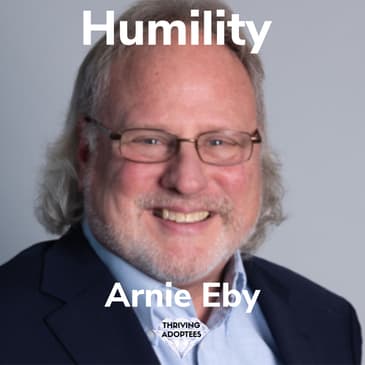
How often do you realise that you're wrong? It's incredibly freeing. It's the ultimate lubricant for life. It reduces frustration and oils relationships. But if you're like me, your beliefs can get way of humility. Listen in as Arnie dives into humility, change, making a difference and much more. Truly empowering.
Arnie and his wife Donna have been foster parents for over 20 years and are the parents to three daughters and three sons, four of which are adopted into his family from the foster care system.
Arnie currently serves as the Executive Director of the National Foster Parent Association (NFPA). NFPA is a non-profit organization representing thousands of foster, adoptive and kinship parents, established to provide opportunities for advocacy, networking, and education.
Arnie’s role includes developing partnerships and building relationships that benefit foster parents by providing the resources, services and support they need to provide care for children in need.
He serves on multiple national, state, and local government committees, and strives to provide one voice in advocating for core needs for family-based care.
https://www.facebook.com/NFPAonline
https://www.linkedin.com/company/nfpaonline/
Guests and the host are not (unless mentioned) licensed pscyho-therapists and speak from their own opinion only. Seek qualified advice if you need help.
Want to learn more about thriving for you, your kids, your families or your colleagues? Pick a time to talk here
[00:00:02] Hello everybody, welcome to another episode of the Thriving Adoptees podcast. Today I'm delighted to be joined by Arnie. Arnie from all the way from the States, right? Arnie and I met in Florida back early October, was it? Yes, early October. Arnie, yeah. And I pronounce your surname Eby, right? Correct.
[00:00:23] Correct. Okay, so Arnie is the boss of the National Foster Parent Association. Executive Director, is that the title you use? Executive Director is the title that I have. Yeah, cool. Titles don't mean anything. That and $10 will get you a cup of coffee at Starbucks. And Arnie is also a dad through adoption. Yeah.
[00:00:50] And so, Thriving. What does Thriving mean to you Arnie? Well that's an interesting concept, Simon, and we, you and I had a little bit of time to back that around while we were in Florida together at the We Are Families Rising conference.
[00:01:11] And I think that thriving is one of those interesting things. It probably means a little bit, something a little bit different to each person. But for me, thriving is the opportunity to wake up, to make a difference, and to end the day knowing that you gave it your best shot.
[00:01:39] Now, for some people, thriving might be just getting through the day. For some people, thriving might be just waking up. But for me, thriving has a real connection to making a difference. Yeah. And that's what drives you, yeah? Making a difference. Yes. Yeah. Yeah. It's making the world a little bit better place. Yeah. And what difference are you trying to make, Arnie?
[00:02:06] Well, the work that I do for the National Foster Parent Association, a lot of that work in Washington, D.C., is centered around policy, around the kind of things that matter to foster adoptive and kinship parents, emphasis on recruitment and retention.
[00:02:28] And what it is at the end of the day that those foster and adoptive parents need to be successful. And I guess if we would like to say it's the things they need to thrive. Yeah. And so what have you learned about that? What we need to thrive?
[00:02:53] Well, across the course of the last 20 plus years, and my wife and I started out as foster parents 25 plus years ago. And over the subsequent 22 years before I took this job four years ago, we had the incredible opportunity to foster 150 plus different kids, a lot of sibling group work.
[00:03:18] And then we were able to add four individuals to our family through adoption. So the work and where I've arrived comes from a lot of years and the experience with those kids, but also then with talking to and listening to foster and adoptive parents all across the state of Maryland,
[00:03:47] where I first started my journey in this kind of work and now at the national level. So it's personal and it's also a lot of listening, but I think for me, it's boiled down to a few things that are foundational to success, foundational to thriving.
[00:04:12] And what are those, what are those nuggets, the things that they're boiled down to? There's, there's five of them, and hopefully I'll remember all five of them in one succinct breath here.
[00:04:23] But the first one generally has to do with daycare, childcare or respite, those type of things that we, they, that families need for families to stay in the workforce to say gainfully employed. Daycare and childcare is extremely important. One of the aspects of mental health is respite.
[00:04:51] We also need adequate rates. And so those rates are for, to cover mileage, to cover the, what needs to be done to go to appointments. Those rates cover a room and board, but they cover clothing, et cetera.
[00:05:08] But rates also kind of trickle over into adequate rates for mental health practitioners or doctors so that our, the kids in our care get to see the best. And so we, that's a rates roll over into that. And then it's the whole mental health part of thing. Our kids and our families need mental health services.
[00:05:36] And so lots of times there's a wait list. And so you're dealing with maybe six months of a backlog. In my estimation, that isn't adequate and it's not acceptable, but you need to be able to see a professional. Now, yes, oftentimes you can see a doctor very quickly, but then you have mental health services. You have dental services and those kinds of things are not always easy.
[00:06:04] But in the whole mental health aspect, we have then adoption competent or permanency competent mental health services. We have attachments or trainings or attachment counseling. We have trauma counseling and all those things tie together. So as we come out of the mental health side, we come into what kind of trainings then, because that's kind of interconnected.
[00:06:33] Do families need on an ongoing basis? On a Saturday night at 11 o'clock, if you're the child in your care happens to be suicidal or cutting or maybe runs away. Where are you going to turn for help or support if the caseworker or your supports don't answer the phone?
[00:06:54] And so we look at what kind of trainings are they available on online platforms that somebody can count on to be able to plug in. And then finally, peer to peer supports. We need people to understand, to listen and to walk this journey with us.
[00:07:15] A real critical part of thriving to me, Simon, and it's something you and I talked about in Florida a couple of months back, is that personal connection. Surrounding yourself with people who believe that you can, believe that together we can make a difference. And I'll give you a quick example. When we met in Florida, I had been going to the gym for like nine months and I just was not getting anywhere.
[00:07:44] One of our conversations centered around art, that thriving and then making a difference in your personal life was attached to or a very important component of that was people who had the same goals. And I was going to the gym for 30 minutes doing my thing and leaving. I had no peer to peer supports at the gym. I changed my trainer.
[00:08:10] I got to hanging out with a couple people that really believed in working out, watching their diet. You know, last week I was at the gym five mornings straight and I was there for over an hour and a half each morning, partly because my friends were there. I've changed my diet. I'm up to 40 minutes on the exercise bike now. I mean, for me, that's a big deal.
[00:08:36] And, but it all comes back to that thing that we talked about. I've surrounded myself with a few people who have the same kind of goals. Now, they're light years ahead of me. I mean, if you'd, they've made significant physical changes. I mean, for me, I've been able to be on the bike 40 minutes. I've lost 15 pounds.
[00:09:01] I mean, you know, that's a little, but it all comes back to the people that surround you change your mindset. So thriving has a big part of the people you surround yourself with. And that's why peer to peer supports matter so much. So that's the things that I've kind of boiled down to the foundational things that foster adoptive kinship parents need and the things that they need to thrive. Yeah.
[00:09:32] I mean, huge stuff there. Huge stuff, Arnie. How does this belief thing that you're talking about from a physical health point of view and the great, you know, the work that you're doing to shed the weight. How does belief and the belief that we can, the belief that we can thrive.
[00:09:58] How important is that in the, in the peer to peer groups? Well, I think that, I mean, for me personally, and that's the easiest frame of reference. Surrounding yourself with people that believe you can. At a certain point, it gets into your head. I make a joke about my physical trainer that he got into my head. But the reality is he couldn't get there if I didn't allow him to.
[00:10:27] If I didn't say this crazy guy who goes to the gym every morning at 430 and trains people and is the, in, in here in the States, we have Walmarts and you walk into a Walmart, there's a greeter and they greet you and say hi. I mean, this guy is kind of the epitome of the greeter at the gym. He talks to people. He probably high fives or fist bumps.
[00:10:56] 50% of every, of all the clients there in any given hour. But it's, it's engaging. It makes you believe.
[00:11:08] Just being around energy, just being around other people who believe that work, working hard at the gym, changing your sugar intake, changing other things, like drinking more water, that kind of thing, make, make a difference. And then as you start to see those results, it does get into your brain. Yeah.
[00:11:36] The, the, the parallel that I'm seeing is cause I'm an adoptee, not an adopted parent. So I don't hang around in adoptive parent Facebook groups. Right. But I have spent a little bit of time in adoptee face in adoptee Facebook groups. And those people aren't high fiving one another. Right.
[00:11:57] Unfortunately, no, there is a human nature kind of makes us want to stay in the negative or pity ourselves or to find an excuse. I think, I mean, I found, even though I was going to the gym, I found a, an incredible amount of excuses, uh, not to be there any longer than I was paying to be there.
[00:12:24] And, um, so I think that, I mean, for me, and it's strictly my viewpoint that we, that misery does enjoy company. And if we want to be miserable, we're certainly going to find enough people to be miserable or to, um, to tell us we're doing it wrong and, um, and we can stay there. But being somewhere else is a personal choice.
[00:12:53] You have to decide, I have to decide, and I have to decide to crawl out of bed at four 50 every morning and head to the gym where there's a whole group of crazy people who are happy to be working out. And that, as foreign as that seemed four months ago, it feels really, uh, re it feels really, really good right now. Yeah. You know? Yeah. It does. Good on you. I was there this morning after an hour and a half and I was, I was hot.
[00:13:23] I was tired. I was tired. And, uh, somebody I had never talked to came over and gave me a high five. And he said, um, I saw some of the, uh, uh, work you were doing last weekend, the big smile on your face, trying to do some pull ups, et cetera. And he said, uh, keep at it. That smile is what matters. I had never spoken to that gentleman before. I mean, uh, but I came home pretty stoked, uh, pretty, you know, it does make a difference.
[00:13:51] And so the people who are around you, the people who you have to make the decision to surround yourself with people with the same kind of goals, people who want to make a difference, people who want to thrive, people who want to persevere even when it's tough.
[00:14:10] To stay through it, even when you're not getting the results that somebody else thought or somebody else on social media says should be happening. There it's none of us have the same road. None of us have the same situation with the exception that we make the decision, um, at some point to surround ourselves with people that will help us either be successful.
[00:14:37] Or, um, help us, uh, stay where we were or where we felt comfortable. Yeah. So how are these transferable to raising adoptive kids? Well, raising adopted kids isn't easy. Uh, raising adopted kids. Um, wow. Um, that's a tough one.
[00:15:04] Uh, our two youngest are 13 and 15, uh, almost 14. And this in 2026, I'll be 14 and 16. And I'm in my sixties. And there are some days I get up and say, um, what the hell was I thinking? And edit that out if you can't put that on your show.
[00:15:26] But anyway, uh, I ask myself that, but through the incredible work that I get to do and the fact that I get to attend conferences, I get to talk to people like you. Um, I have the incredible opportunity to surround myself with people who continually figure out a way to try.
[00:15:54] That say there is light at the end of the tunnel. Um, even if it's a train, I'm not going to fear it because, uh, I'm going to go towards it.
[00:16:06] And so we continue to have hope and we continue to learn, continue to, um, dialogue with others, the things that work for them that didn't work. And we learn and care together. Yeah. So, I mean, that, that's the whole essence of the podcast, right?
[00:16:36] Sharing, sharing learnings. That's what I'm trying to do with every interview that I do. I'm trying to explore with, with that, uh, with that guest, what they've learned and, and share their learnings with others.
[00:16:51] So in, in, in those, in those 20, 20 plus years, 25 years, I think you said, um, what have been your most important, most fundamental learnings about raising adopted kids to thrive? Well, I, I would say it this way, Simon.
[00:17:17] We live in a society and a culture that would like to have instant success, would like to have instant results. I mean, we love to be able to go to the microwave and have, uh, a hot, a hot cup of coffee or tea for you in, uh, a few minutes or, or less.
[00:17:41] And raising children, raising kids, um, isn't that easy or that fast. And particularly, um, and we, we, we encounter other challenges with, uh, adoptees.
[00:18:03] I think what I've learned, and as I've journeyed through it, I've learned that, uh, doing the right things doesn't necessarily guarantee, uh, what society says are the right outcomes or the preferred outcomes. But doing the right things open for each of us, the doors of opportunity.
[00:18:28] And as we walk through those doors, and as we, uh, say, oh, I have the opportunity to win. I have the opportunity to lose. I have the opportunity to grow. I have the opportunity to be stretched. But equally as important is the opportunity to say I was wrong. Or the opportunity to say I missed this.
[00:18:53] Um, or the opportunity to say I'm going to try. And if it doesn't work, I'm going to adjust. And as we walk through those doors to opportunity. There's only once again, we're not guaranteed. Preferred results. But what we are guaranteed is the opportunity for impact.
[00:19:18] And as we experience impact, that might be in the life of the adoptee that you're working with. But even more so, that impact is on my life. It changes the way I see things. It changes the way I, uh, adjust and I'm ready for the next situation.
[00:19:46] It, it changes my worldview, so to speak. And so, as I arrive at the opportunity for impact, it's a pretty, it's significant. But it's scary.
[00:20:04] Uh, but the hardest thing for me in that journey is to understand that the opportunity to be wrong, to miss it, has as much a chance to have impact as the opportunity to be right. Yeah. Think about it. With my kids, to be big enough to say, hey, I was wrong.
[00:20:31] I didn't figure that one exactly right. Um, and I'm sorry, uh, is an incredible moment of impact that doesn't only impact me, it impacts them. Can you give us an example, Johnny? I think that, um, I can think of some of the...
[00:21:01] Obviously, I don't want to pry, you know, like... I think that, uh, it comes down to if I tell them they have to do something. And maybe I'm saying this is what you have to do in this situation. It's either with encountering other people or an event that they have to, uh, be a part of.
[00:21:22] They say, you just have to do it and it doesn't work out or it's overstimulating or it's, um, it takes them to a point. It stretches them in a direction that maybe wasn't good. I have to be able to say, we went to an event yesterday where there were lots and lots of people. And we had three of our kids with us. One of them has Down syndrome and the other two, uh, were stretched in a, in a lot of ways.
[00:21:50] Um, we had to be in a position at, uh, significantly earlier than we had planned, uh, to just leave. Because, uh, we had to understand that this may not have been a good idea for any of them. Um, and instead of getting upset and saying, you have, we're here, you have to do this. We're here. You wanted to see the animals. You're here.
[00:22:20] You wanted to do this. We had to say, Hey, we're here and we can leave. Yeah. And I think that is the, uh, um, the paradigm that I have to be able to feel comfortable in saying, Hey, I thought this would work. I thought this is something you would like.
[00:22:42] I thought this was something that, you know, uh, aligned with some of the things like our one, uh, adopted, our one son says he wants to be a vet. Well, we were a place to see literally hundreds of animals, but there were thousands of people and it just, uh, it didn't match. So I think even in small things, it wasn't a right or wrong.
[00:23:06] It wasn't something that was, you know, black or white, but it was something that as a parent, you, I have to be very perceptive. But understanding when it's time that it is okay to exit before, uh, I would have thought acceptable. Yeah. My expectations were that we were going to be there all day and we were going to have a great time. Yeah.
[00:23:36] We were there two hours and 15 minutes and, uh, by leaving, we had a great time. Yeah. So the, the themes that are coming to me, Arnie, that kind of sum up what you're talking about here are flexibility and humility. Yes. Yes. A lot of flexibility and an incredible amount of humility. Yeah.
[00:24:01] Do you remember some of the early moments when the, these two themes became big for you? When, when you saw these, when, when, when your perspective was changed? I remember early on, I'll, I'll give you two examples. Uh, one was, uh, when, um, our one son was having a really, really bad day at school.
[00:24:31] And the teacher had called and, uh, they had no idea what to do. He was under the table and he was just not responding. So, uh, I was the one who was closest to the school and, um, I got the text from my wife and she said, you need to go get him.
[00:24:53] So, um, so I got to the school and I walked back the hall with the, uh, vice principal and they're telling me, you know, he won't, he, he just won't get out from under the table. And he was still, when I walked into the room, sitting under the table. I mean, what am I going to do? So, um, I got down and I crawled under the table and I sat there with him. And, uh, we sat there a little while.
[00:25:22] He was in, he was not talking. He was just under the table. It was his safe space. And after a little while I said, uh, why don't you get out from under here? I'll get out from under here and we'll go get some ice cream. Now that's not something that was in my mind when I was walking back the hall. Uh, it wasn't the first thing in my mind when I got under the table with him, but we got his stuff.
[00:25:51] We headed out, out of the school and a block or two down the street to the little ice cream store. And I got him, um, um, a chocolate ice cream cone. After about five minutes, he had chocolate ice cream all over his face. I thought you might say that actually. Yeah.
[00:26:13] And the thing was he dapped my ice cream cone with his. That was the first thing he communicated. And, uh, that's when I knew I had connected. So you were waiting for the connection before the conversation.
[00:26:41] I waited for the connection. And, uh, before there was any kind of conversation. Absolutely. Absolutely. So that was one of them. The other one was in a situation where I felt like my, two of my kids were really struggling, uh, overstimulated, uh, at school. They were stressed out. And I was talking to their counselor and I said, you know, I really sense that maybe we just ought to take a couple days off.
[00:27:11] Uh, and he said, well, why aren't you? And I said, well, I don't think, you know, I didn't know that would be a good deal. And he's like, you think you, in your mind, in your heart, you know, they need a break. Uh, I'm giving you permission to give them a break. So we, uh, I booked a couple day short vacation. We headed out of town.
[00:27:34] Uh, they spent two days along the river, uh, in the tire swings and, uh, had a great time. And we got back from that and, um, they had a, a really good run at school. So I guess my thoughts are that in that situation, I thought I knew what they needed, but I needed permission from somebody else to say, do it. Just do it.
[00:28:04] And I think that that's, we need to be surrounded with people that say, you have a hunch, you, uh, maybe it's going to work. Maybe it's not, but just do it. So two of the three, two of the themes that you mentioned earlier on were kind of growth, growth and stretching, stretching yourself.
[00:28:30] So what, what's, what's that look like for you over the last quarter century, that growth? How, how, how have you grown? Well, uh, from a personal standpoint, that growth was, uh, it's pretty simple. It's that I thought that doing these kinds of things, I thought getting involved.
[00:28:58] I thought, uh, interacting with, uh, the, with foster kids or adopted kids or foster parents or adopted parents would somehow, uh, like I said earlier, make the world a better place. I guess I was kind of naive and maybe, uh, hoping that that would be what would happen.
[00:29:22] But the reality is at the end of the day, uh, I'm the person who changed the most. I'm the person who changed in the way I see the world. It's the way I see people. Um, it's the way I take care of myself because it's important to me to have people around me that believe that we can win or, and also believe that we can win.
[00:29:51] We can lose it's, uh, back to one of the words you use. It's, uh, gives us the opera, gives me the opportunity to stay humble. We hit it so much. Don't we kind of like the self care thing. Yeah, it's self care. And, but it's also intentional. Yeah.
[00:30:17] Um, I guess, uh, when I first, um, heard about self care, I, I, there was a misconception that it may be. It was a bubble bath and, uh, a glass of wine, champagne, or whatever your bourbon, whatever your preferred, uh, uh, soothing beverage was. And maybe candles or whatever. But self care to me now is very intentional.
[00:30:44] Uh, self care has to do with working out. It's a surrounding myself with people who have positive energy. And a big part of self care is the intentional choice for positivity. And in the intentional choice to stay, um, to not cross the line back to negativity.
[00:31:11] And that, that to me is the most important lesson I've learned in self care. Yeah. So it's far deeper than you first thought. It's far deeper than I first thought it. And it is significantly more intentional. It is, and it's hard work.
[00:31:33] It is, um, it's a, an active choice every day to say, if I can't change that, or I have no, no, there's nothing I can do or no, nothing positive I can lead to in that situation. I should walk away from it. I don't even need to read it. I don't need to try to understand it.
[00:31:58] I have enough incredible challenges in front of me on a daily basis that I can have, uh, the opportunity to win or to lose and have impact. And so that's where I have to stay. Right. So it's discerning where you can make a difference. Discerning. Yes. Well, that's another deep word. I mean, that wasn't one of the initial ones that I would have thought this was going to take me to, but it is a very, yes.
[00:32:27] It is a process of discernment and understanding. Yeah.
[00:33:00] We think, I'm just talking about myself. Right. So, uh, for, for you, you do both these things, right? So you try and change the policy. So you do the work in DC to, uh, to change the system. Right. Uh, to advocate through and you do, and you do the support, the support of, um, uh, of adoptive, foster and adoptive parents and kinship parents. Right.
[00:33:29] So I don't try and do the policy bit. I don't feel called to do that. Well, I don't feel called to that. I don't think I can, it's a, it's not where I choose to make a different. I don't think that I have got that much chance of making that much difference.
[00:33:47] So kind of, I stay to my lane, uh, stay, stay in my lane, but somebody, a fellow adoptee and podcaster called me out on this, um, uh, a while ago about, you know, me not wanting to do the advocacy piece.
[00:34:03] So I kind of took that on board and I thought, okay, so I'll, I'll do what I think I can do for some, to, to support advocacy and, and I ran some webinars to bring the knowledge, bring the learnings from other advocates to share. So they could share their learnings with, with other potential advocates. Right. So I did it in a kind of a roundabout way, but generally speaking.
[00:34:33] I stay away from that policy, policy space. Um, uh, and, but I, I've given it long and hard thoughts about that. So I've discerned, right. I've discerned whether I should go into that space, but sometimes I've got the choice to make a difference. Uh, or a chat. I, I see an opportunity to make a difference. And, uh, sometimes the negative voice will jump straight in. And, and, and keep me away from that.
[00:35:03] Um, so I have to kind of sit on it, sit, sit on that, that chance. What's your, what's your inner, what's your gut versus voice in the head, um, approach to this? Do you know what I'm getting at? Yeah. Yeah. I know what you're getting at.
[00:35:23] I mean, just last week, a situation came up where I was asked to be on a panel and I get to sit on multiple panels where, uh, uh, at points in time where I get to talk about either my personal story or to advocate for, uh, these core supports that I think. That I believe firmly are foundational to the success or thriving for foster adoptive and kinship families.
[00:35:51] And, you know, I got this chance, uh, last Friday, I heard about it and I'm reading it. And then, uh, I guess it's that negative voice saying, man, you know, you know, your stuff a little bit, but you know, that's a pretty big deal. Uh, and, uh, there's this being scared a little bit and then, uh, being, um, maybe intimidated. I mean, you fight all those little demons after a while and it gets a little easier to push them back.
[00:36:20] And then you said, wow, this is a chance, uh, you know, uh, I hope that one way or another, I, what I say makes a difference. Maybe what I say connects with one person. So you really have to intentionally, again, you have to stay with the connection, but it's also, I think for me, the framework of humility saying I've learned something.
[00:36:45] I've had this incredible opportunity and now for whatever reason, it's the opportunity. There's an occasion for impact. And if I stay humble, if I stay connected, if I stay focused on what positive or what good can come out of this, then, uh, that negativity, um, kind of fades away.
[00:37:15] But at the same time, I think sometimes the negativity also helps me dig a little deeper and make sure that, um, I know what I'm going to say or that I'm really connected, uh, with my message. And I think, you know, I've probably been a little intimidated or scared to jump on here with you.
[00:37:39] If we hadn't had the chance to, uh, uh, meet and, uh, share a little, uh, break a little bread in, uh, Florida. I mean, you know, there's times you say, oh, I don't need to do that. I mean, what, what good is it going to be, but, uh, uh, uh, having that opportunity, taking, uh, the chance to, um, have good conversation, to ask tough questions, uh, has, uh, made me think.
[00:38:07] And it's, and I've, uh, hopefully figured out how to incorporate it and, uh, to be positive and continually strive for impact. Yeah. So I, I, I, the last, the run up to my last question was very long, but you, thank you for, uh, thank you for getting, taking us to the, helping us get to the bottom of that issue.
[00:38:33] I think what we're talking about here is getting better at discernment. Um, and I, and I love your point of listening to the negativity. And seeing if that is actually a prompt for us to go to think a little bit deeper rather than just ignoring it.
[00:38:59] I think I've been a little bit in, in, in some of my past work and continue to be, I can, I can be a little bit naive. Like I can be a little bit Pollyanna-ish, you know, um, I, I can stick at stuff too long. I can be late to my humility.
[00:39:28] So maybe we can all get better at discernment. Well, I think that it comes back to the mental discipline to be intentional.
[00:39:46] And so intentionality, I think evaluates the negative, evaluates the positive, and then says, uh, because I choose not to be negative. It'll say, what can I learn? What am I missing?
[00:40:03] And how can this negative thought make me be better or help me to think about something I may not have been evaluating, thinking, or, uh, preparing for?
[00:40:20] So it's not pushing it away totally or just saying, no, I'm not going to think that it's going, it's how can I use this as a stepping stone or a springboard or to evaluate what I may be missing or what I may, uh, need to learn or grow from this. So, um, it's evaluating that opportunity to be right or to be wrong.
[00:40:48] And the negative says, well, you don't want to be wrong. Well, I've learned across the course of the last couple of years that being wrong is, uh, doesn't cancel out my impact. Being wrong can actually be a door to opportunity and impact. Yeah.
[00:41:15] So a couple of little things are coming to mind as you say that, um, I, over the weekend, I heard somebody's name mentioned on a TV show, an American TV show. So, and it, it took me back to alert a lesson from a guy called Wayne Gretzky. Do you remember that guy? He's a ice hockey player. Ice hockey player. And he said, um, I miss a hundred, a hundred percent of, I miss a hundred percent of the shots that I don't take.
[00:41:47] Yes. So it was, it was about taking more shots to get, to get better, get better. And also the, the, the other theme that came to my head was topic really was failing faster so that we can, we, if we experiment more, I guess.
[00:42:12] Perhaps we're talking about the professional stuff here more than the, the, the, the raising the kids stuff, but failing, failing faster allows us to progress quick, more quickly. Well, I'm not sure about faster. I would use another word that starts with a failing forward. I think that, uh, we like to think, or we're conditioned to think that failing takes us backward.
[00:42:40] Uh, I think it's a mindset that says I can fail forward. I can fail forward as easy and as quickly as I can, uh, maybe not, but similarly to, um, not failing and moving forward. So I think a mindset for me has been failing can be failing forward. And I, I choose to do that. Yeah.
[00:43:12] And that reminds me of, uh, feed forward rather than feedback. Yeah. So just a little bit of feedback for you, Simon, and my heart sings, but if you tell, if you give me some feed forward, you know, tell me what I should do better next time. Then, you know, I'm, I'm, I'm looking at it. I'm, I'm, well, you talked about hope at the start. Um, then I'm a little bit more hopeful. My heart hasn't sunk.
[00:43:42] I'm, I'm going to fail forward. I'm going to get feed forward rather than feedback. All right. So, Arnie, I'd love to ask you what things that you, if there's anything that you'd like to share that I've not asked you about so far. No, I, I've, I've really enjoyed this.
[00:44:09] I hope it, uh, is what you were hoping for. And I would say that I really enjoyed, uh, getting to meet you in person. And I, uh, that was a, a valuable learning experience and, uh, I enjoyed our conversation. I've enjoyed this and I hope that it, the, your audience enjoys it as well, uh, or take something positive away from it.
[00:44:34] Because, you know, the world that we live in, there are so many negatives and so much pressure around failing that we don't always think about failing forward or failing towards impact. Yeah. I agree with all that. And I think it's a fantastic way to, to, to round off this conversation. So thank you, Arnie. Uh, thank you listeners. We will speak to you again very soon. Take care.
[00:45:04] Bye-bye.