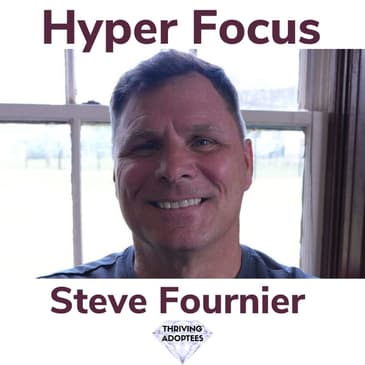
What do you want? For others? For Yourself? Listen in as ex pilot, now non-profit leader Steve shares insights on persistence and relentless hyper focus. Powerful and empowering.
Here's a bit about the Burke Center from their website.
All children deserve a safe and supportive environment in which to flourish. Through therapeutic treatment, foster care, and adoption and reunification, our ultimate goal is to help children rebuild their lives in a manner that will break the cycle of abuse and give them the tools necessary to excel.
Find out more
https://burkecenterforyouth.org/
https://www.facebook.com/burkecenterforyouth#
https://www.instagram.com/bcfydriftwood/
https://www.linkedin.com/in/steve4nier/
Guests and the host are not (unless mentioned) licensed pscyho-therapists and speak from their own opinion only. Seek qualified advice if you need help.
Want to learn more about thriving for you, your kids, your families or your colleagues? Pick a time to talk here
[00:00:02] Hello everybody, welcome to another episode of the Thriving Adoptees podcast. Today I'm delighted to be joined by Steve, Steve Bournier. Looking forward to our conversation today Steve. Thank you. So Steve leads the Burke Centre for Youth. So I'd like to start with the big question then Steve in terms of what thriving means to you.
[00:00:28] Yeah, thriving to me means that, you know, and I use a saying that says, especially for our boys, they say we're not here just to survive, we're here to thrive. So thriving means not just the minimum, not just making it but excelling in life in so many different areas and what you wish to do.
[00:00:53] And, you know, it focuses very much on what our boys need, but more of what they can do. So it's more of a, what amazing opportunity can you reach? What height can you reach versus can I survive?
[00:01:11] And so those are my, I tie those two together survive and thrive because too many times people, especially in our line of work, look at, hey, how can I get this person to survive? Or how can I get the minimum to be done for them to be able to? So now I want to see how, like, if they raise their head above the horizon, where can they look and what can they make and what great heights can they reach?
[00:01:34] Yeah. And can you tell the listeners a little bit about the background to these boys? I think that might help. Sure.
[00:01:43] Yeah. So our boys are 10 to 17 year old that we take care of. And we also have an 18 to 21 year old section that we help as well. But they're all foster boys. So they're all being fostered. They're in our foster system. And so they're, they have no family members that have either connection with them or are allowed connection with them.
[00:02:06] So they come from very broken families. I'd say 70, probably closer to 80% of the children that we have, boys we have, have no father for sure. Never had a father figure in their life. And their mother is usually struggling very hard if they have a mother.
[00:02:30] And so they are usually having issues with drugs or alcohol or something like that. And, and then they have the, they're being taken away from their, their family, if they have any. And then they're brought to us or they don't have any family at all. And that means extended family or anything. And so they, they are taking from everything that they've ever known, if they even have ever known that.
[00:02:55] And so they're wards of the state, they call them. And so the state of Texas, so we do it, each state has their own system. The state has custody and it has a responsibility to help them through their youth to get to a point where they can become independent. Yeah. Yeah. That's our boys.
[00:03:20] That, thank you very much for, for doing that. Um, I want to just take it back a bit in terms of like your, uh, your version of thriving for yourself, like your, your kind of like your personal, uh, perspective, perspective on, on, on, on this for what you want out of, sorry, excuse me, out of your life and what you want for, um, um, in terms of serving and leading this, this center.
[00:03:50] Okay. Yeah. So, you know, I'm getting a little bit older in my life and I've had a chance to thrive quite a bit up to this point. Uh, so I've been very, very blessed and very lucky. Um, the interesting thing for me is, uh, you know, I, I feel like I have been able to thrive for my whole life.
[00:04:13] I've been very blessed and very lucky and I've had many, many accomplishments in my life. And most of that is from being able to have a situation where I can thrive, where I can, uh, succeed at things that I would have never thought that I could ever do. You know, I mean, I'm a retired pilot from the air force. I've flown, you know, supersonic airplanes. I've, you know, done amazing things throughout the world.
[00:04:41] And, um, so I'm very lucky for that as far as continuing to thrive, because I mean, I have done, you know, a lot of education and I've thrived in education. Entering into this stage of my life, um, you know, I've retired from one from the military and then coming across this, you know, of course I have a family and I thrive, thrive with a family.
[00:05:06] That's another piece of that. But, uh, in this stage where I'm with these boys, uh, my idea of thriving now is what can I do personally to ensure that everything that is at the Burke center that is, that touches these boys and their lives is exceptional.
[00:05:29] Um, not just the minimum. So, you know, we'll talk about this, you know, as we go through the podcast, but there's so many different things that I've done there that, and things that I implement as a leader that allow these boys to thrive.
[00:05:48] And that's part of my thriving. I thrive when I see and feel like I am doing good for someone else. That's, I'm a pleaser. I I'm, I'm an, uh, an upholder. If you've ever read the four tendencies, I want to ensure that whatever I do helps someone else better their life.
[00:06:10] And especially, I feel I have a meaning, you know, with these boys is my meaning is to, uh, make sure that they are helped in this very traumatic time of their life. And it's very, this is the most difficult time of their lives. They're all traumatized. They've all been abused significantly in their life to be able to make it to us. Like we're not, we're not just an orphanage and we're not just a place where they hang out. We're a treatment center. So they, we have therapists and we have psychiatry.
[00:06:39] And we have, you know, we have so many different things to help them, but that's what my goal is, is to help them in this most difficult time of their life to thrive. And by doing so I am benefiting personally and I'm thriving because I feel like I'm doing something worthwhile in life. And that is, I think for most people is one of the most important things for them is to feel like they're, they're doing something good for someone.
[00:07:06] And that makes them feel good about themselves. At least I hope that's what most people feel like. Yeah. Yeah. So a few months ago I was talking to a lady who has, who thanks to, she, she fosters often older teenage girls and she has her, her own trauma history of domestic violence at the hands of her husband.
[00:07:33] And so one of the things that she, she will share with the older, the older teens. That's really sticking for me is she said, look, I'm not going to deny your, your trauma. I've had my own and she, she shared with them something appropriate about that. But now you've, you've got, you've got a choice here, right?
[00:07:59] You can either succumb to the trauma or you can rise above that. And what, what's, what's really sticking for me is that, that, that, that is very powerful and very, very, very brave. Right. And, and, and very, very, very empowering.
[00:08:21] And I'm, and I'm wondering, I'm wondering what have you learned about empowering kids from these tough places? You know, an interesting thing for our boys and, you know, we, we very focused on boys.
[00:08:42] So it's everything I have is focused and comes from information and experience I have with this age group, 10 to 17 and then the 18 to 21 year age group boys. And, and, and the interesting thing is each person needs to be dealt with and helped with in an, in an individual way.
[00:09:09] And so you can't generalize a whole lot of a way to help someone or a way to see what's happened to them. You have to make it personal. And so to me, the most important thing is, is making sure that you personalize your approach to every single child. Now they have similarities, you know, they have a trauma and how do they handle that trauma? Do they, do they close up and clam up and then not speak to anyone?
[00:09:39] Do they lash out and do they break things? Do they have it to the point where they, they can't handle loud noises. They can't handle being alone. They, each one of them has their own triggers. They have their own, even strengths.
[00:09:58] If you say that I can't generalize for the boys because they're so specific, but they're definitely all in a situation where they're trying to figure out how, like, how do I survive? Like the trauma has hit, um, it could have probably been happening for years. How do I handle that trauma?
[00:10:27] And to me, that's what, what our goal, our specific goal is. How do I find out what works for each of these children? And that's what everyone on our property, uh, everyone that touches their life is trying to do is that piece. And so I can't generalize, um, on each and on these kids.
[00:10:50] I can specific because the, you know, I, I, when I give a briefing to people that visit us, I have a whole list of different things that can, and I, and one of the things I want to do is I try to tell them a little bit about our boys. Because when I got here, like when I first showed up at the Burke center, uh, I was just volunteering for a couple of years. I just didn't do anything with the boys. I actually was fixing up buildings and trying to help the place out.
[00:11:17] When I first started understanding about the trauma and the children that were there, I realized how much I did not know about the situation and how they were affected in their lives. And why they acted the way that they did. So I find it important for me to help the people know, like where these kids come from and the different traumas that caused them to be who they are, because then you can understand better how to deal individually with them.
[00:11:46] So I'll give you an example. Uh, if a child has been, uh, was, was in the womb with the mother and the mother was doing drugs, that's it to me, that's a, a very difficult child to help because the trauma is in literally the synopsis of their brains and the ability for them to cope.
[00:12:13] At a, you know, molecular level with the trauma that they had at that point. And so they chemically can't do things with their brain to make it stop themselves from doing something that they're, they're doing, you know, whether it's breaking a window or, or running away or anything that trauma is so, so, so deep. It's, it's molecular. You have to find multiple ways, but then you're also at that point, probably doing a little bit of psychiatric piece where they give them medications to try and help that work.
[00:12:43] That's different than dealing with a child who was beaten by someone in their life. And, and that trauma is from a specific individual and, and at a different time in their life. So if you have it when you're three years old or five years old or 10 or 15 or 20 or wherever that is, that trauma and who does it and how it's done affects children in different ways.
[00:13:11] And so if you understand that there's different, you know, genesis of this problem, then you can probably focus a little bit better and pinpoint how to deal with that and how to help them better. So it's, it's a very, it's not a broad stroke. It's a very specific thing. And so we deal each individual child and, and that's why we have a small number at our, at our facility. We have no more than 28 children.
[00:13:40] Plus we have the ability for six boys at the, over the age of 18, but those, those younger children, um, we have only a certain number because I want to hyper focus on each one of those children to help them with the exact traumas and problems that they have. And so that's why you'll, you know, it's, it's, it's, it's not just a specific general thing.
[00:14:07] It's like, Hey, how do I help this specific child deal with the problems that they're having? You know, did I answer your question? Did I shake you off so far? No, that's great. That's great. Um, I'm, I'm really interested in, in that, how, that, how question.
[00:14:24] And, uh, the, the, you, we, we, we, we, we, we, we, we can look at it from the, the, the, how, from our own perspective and, but also helping the, the, the kids and, and, and, and teams and the young adults, if, if they're in that older age range, uh, like empowering them.
[00:14:46] And one of my, one of the, the themes that I've come across in the, in the, uh, adoption space, right. So, uh, a separate space to this is that. Well, our boys get adopted. Sorry. Our boys get adopted too. Yeah. Yeah. Um, and so that's why we, that's how I came across your organization when I was looking, um, looking, uh, around that area. That's what drew me to you.
[00:15:12] What, one of the things I see in the kind of like the broader adoption, uh, area is that a lot, there's an awful lot about trying to get kids to change, trying to get, trying to change kids behavior. Right.
[00:15:30] And what strikes me as a, perhaps a, a better question in, in my opinion is how do we get kids to change their own behavior? Right. So it's, it's not about us coming in from outside and trying to change them. It's giving, um, empowering in the sense of like giving them the power to, uh, to, to do it, do it themselves.
[00:16:00] Um, and, but we, we haven't seen much of that. Could, could you talk into that theme? Sure. Yeah. You know, we, at least here where we're at our goal, uh, you know, just, you know, a boy, boy, a, you know, boy, a comes in, he has these, um, issues that he's having to deal with.
[00:16:30] And he, he ends up acting out in specific ways. Let's just say, you know, he, he has, uh, he has outbursts, massive outbursts, um, anger that is, you know, throwing things around, uh, breaking things in this room, you know, whatever. It doesn't like school.
[00:16:52] Um, it's not like, as you said, it's not as much about changing them to be who we want them to be. It's seeing how far they can go on their travels to be productive and to thrive, as you said, thriving. So with a boy, we will try to find all of the different avenues to help them. So I'll give you examples. Examples.
[00:17:21] Um, we have, uh, equine therapy. So we have a lot of different people have a lot of different therapies. Um, but we were lucky enough to have equine therapy. So we have horses on campus and we've found that it's very powerful to most of the boys. I'm not, I can't say all because there's some children that are just afraid of animals.
[00:17:45] Um, they do learn to love the horses and stuff, but there's still that little bit of primal fear for some people for, of large animals. But in general, most, every one of our children gets something from that. But what that helps them do is. Overcome fears because they're usually afraid of a large human. And so, you know, the person who's beaten them before, and then it helps them to see.
[00:18:16] It's like a calming because the horses are so calm and horses are amazing because they can feel your emotion. So our equine therapists and our equine coaches, we have like three people that do this for the boys are able to bring out from the boys, their traumas and to calm, calm them. And to. You have them be able to find within themselves the strength of who they are.
[00:18:44] And so our goal for that, for them is to find out, like, how can we help them thrive with the traumas that they've had, but to succeed in being the best individual that they can be and to not be triggered by certain things.
[00:19:06] So that allows them to be able to be placed into, back into society, back into a foster home, back into an adopted home, back into a family, what they may have been. And so it's really about getting them to be healthy mentally and physically as well. And we take care of that. So we're not trying to make them into us.
[00:19:33] We're trying to make them into the best version of them because everyone has a different version that we all have our different highs, our lows, our abilities or inabilities. And so we try to find there something from them that they enjoy, that they are striving for and what they really think that they can do. And then we try to add even on top of that. So we have an example. We have a 17-year-old. He came to us in our schools.
[00:20:03] You have to have a minimum of – there's a lot of information that would be behind it. But let's just say – let's say it takes 21 hours. It's like credit hours to be able to graduate from high school. He came to us with – he was 17, had one year until he turns 18. And at 18 here in the United States, you're on your own. Like we help them in a different way. But for under 18 where the state is 100% taking care of you, that's when we help you.
[00:20:33] So he comes to us with six hours done, six full like semester credit hours done. And he needs 21 to graduate. So that's a mountain. Like that's Mount Everest trying to climb that. In one year, it's almost – it's not impossible, but it's almost impossible. Our goal is to find out where he's at, which is we find out where he's at, and then to see where he can go.
[00:21:00] So where is his – you know, where's his thrive at? We're able to – he's going to be graduating in March of this next year coming up. So that'll be a year. He'll have been able to do every single one of those 15 hours, which takes a kid three years in normal time with school.
[00:21:26] He's going to be able to finish all of that and graduate on his birthday. So his high, his thrive, his – what he needed in life and what needed for him to be able to get past his goals was this focus that we have in our ability to be able to help him in that respect. So that's one of – like that's an example. But here's the interesting thing to that.
[00:21:52] Once we found out how smart he really was and his abilities that were very much, you know, from the trauma of the life he had and the people around him and the drugs and the, you know, the insecurities and the –
[00:22:08] your inability to be able to feel like tomorrow is going to be a day I'm alive, when you take all that, strip all that away and you give them an environment where they can feel like I can do something else without spending all their energies just trying to survive. Then you say, okay, what can we do now when we see that they're in a situation where they can thrive? And so for him, he found out that he could actually do it for the first time. Like absolutely did not think that he was ever going to – no one in his family has ever graduated.
[00:22:38] He's not graduated from high school. No one. No one around who's graduated from high school. So he's like that's unobtainable. So he finds out he can obtain it and he's going – and then he finds out it's easy. So the interesting thing is he goes, oh, okay, I'm going to do that and I'm good to go, you know. And I'm like, no, no, no, no. Now that we know you have this ability, you need to see that you have to have a higher goal now. So I'm like, you need a goal to finish college. And he's like, well, that's not even – forget that.
[00:23:08] No one in the world does. You know, it's not even obtainable by anybody, especially by me. And so when I hold a higher goal for them and show them where I think they can thrive and achieve, then that forces them to rethink on their own what my goal can be, not should be, but what can be. And so this child is going to probably, in my mind, he's a very bright child,
[00:23:34] is going to be able to make it through college and have whatever he wants to do at his fingertips. So that's, to me, what we do for those individuals. Yeah. There's a lot there about tapping into people's – tapping into the boy's own motivations
[00:23:54] and then there's being ahead of them on the journey or seeing more opportunity than they can see for themselves. So could we start with, you know, what you've learned about that tapping into kids' drivers' likes, aspirations? What have you learned about that, Steve?
[00:24:24] You know, what I see is that when they're in a survival trauma mode, which is what our boys are, I mean, they wouldn't be with us at our location if they haven't failed at so many other things and have been in a situation where they are just literally trying to survive from day to day and not doing a good job at that.
[00:24:55] Obviously, they're not doing a good job in society, they're not doing a good job with their family, if they have a family, or they're going from foster home to foster home and they're just not connecting. They're not getting the attention and the help that they need. I don't – in order for us to help someone like that, in order to do what we need to do to help them out,
[00:25:21] we just need to really get personal with them. And so I have – at our location, we have – for every three children that we have, we have an adult that helps take and watch them and helps them throughout the day. So we have to use different methods to understand who they are.
[00:25:46] And one of the things that we do that I think is surprisingly people don't either know or don't use as a way is we have a lot of – we have a reading book club that we have. So we have a donor who's very generous. And she provides us with a book for every – we have probably – I don't know, I think I have 100 different book titles and different things.
[00:26:13] And each one of them is something that can help a boy learn about themselves or learn about where they can be. And getting them to read about other people's lives helps them see where they are and how someone else has overcome what they've done. I'll give you an example. We have a book called Be the Change.
[00:26:41] A lot of our book boys come from places where there's people who are in jail or they've had family members and they have people doing drugs around them and they do bad things. And so then they've seen people die and they've seen friends die and they've seen family die. They've had a lot of these traumas.
[00:27:05] And so when they can see and read about someone else who is just like them, that has overcome what they are dealing with and is doing – is thriving, that to me seems to be a very, very powerful thing for them. And this book specifically, we've got, again, a lot of books. I have a book of a month every single month. They read a different book. They don't have to. They're allowed to, and then they get something really fun afterwards.
[00:27:37] But for this book, they seem to resonate with this book and a few of the other books really well because this gentleman had no mother, no father. There was drugs all in the neighborhood. There were people that died. He was with the grandmother.
[00:28:03] He ended up, you know, getting in with the wrong crowd, was a smart guy, went to the – you know, went to a university. And at university, he started doing drugs and started doing school, which he could be doing. He's doing drugs. And then he got in trouble and ended up in prison. And so they're reading this, and it's very much making them feel like, oh, well, I can relate to this guy.
[00:28:31] And then he ends up meeting someone in his life in prison who says, hey, you're stupid. You're a really intelligent guy. And you're here because you don't realize what you can be and what you can do. And he says, you need to turn it around.
[00:28:52] And he respected that person in prison and changed it around and ended up going back to the university, getting a 4.0. He becomes a Grammy-nominated artist in music. And he is talking to kids all around the country now and telling them about his story and how much they should be changing and how much they should be reaching their goals.
[00:29:22] And so that ability for him to directly correlate with them and to make them feel like, hey, I'm like this person. And if he can do this, I can do this. That is powerful. And I can't tell them that. Like, I personally can't say that. I've had a very blessed life, and I haven't had to deal with those traumas. I haven't had to. It doesn't mean that I can't understand it, and I can't put in information.
[00:29:51] I can help a lot because I'm a doer. I can make things happen. And then I can also understand how someone's got the traumas and stuff. I can't relate exactly because I haven't had that. But I'm very good at being able to bring people in that they can help with.
[00:30:14] So this actual author comes out every year, and he comes and talks to the boys personally and sings a little bit for them and then answers their questions. And they can tie directly to this individual. Hey, he can survive. He can thrive from stuff that was as hard or harder than what I had. I can survive and thrive from that.
[00:30:38] And so that's a very powerful thing to be able to read about someone else or to be able to hear about someone else or even speak with them so that you can understand, hey, this isn't just some fictitious thing adults talk about. This is real life, and this is something I can do too. Yeah.
[00:30:59] So it's giving them a role model in literature or in an inspiring talk by when this author guy comes out to the center. What's he called, by the way, Steve, the guy? It's his name. Yeah. Well, his book is Be The Change, and his name is – let me get this correct. I don't want to say it incorrectly.
[00:31:40] It's not Be The Change Foundation. It just kind of caught me with my brain. No worries.
[00:32:05] We'll check it out later, listeners, and put a link to the Amazon page for the book or the guy's website in the show notes. So it's showing them possibility. That's what we're doing. We're showing them possibility. We're showing them role models.
[00:32:30] We're showing them the opportunity to rise and to not let their past dictate their future. Correct. Because that must be – that kind of takes me on to the next question, really, Steve,
[00:32:50] because clearly that belief that our past determines our future can be a big obstacle to what helps us thrive. Sorry, so what gets in the way of our thriving. Yes. So what have you learned about that?
[00:33:15] Perhaps we can take it – look at it from a personal angle if that's appropriate. What gets in the way of your thriving? What have you learned about the obstacles to you achieving what you're capable of? So me personally or for the – where I'm at with the boys? We'll start with you, and then we'll move on to the boys if that's okay with you, Steve.
[00:33:43] I think one of the things people have to understand in life and what I had to learn young is that the word no does not mean you can't do it. You know, it's like, no, you can't do this. No, you can't do that. I mean, I went to the United States Air Force Academy. There's only 1,000 or around 100,000 people that can go, and about 30,000 people apply. The numbers are very low. You have to get a congressional or a senatorial nomination to go there. You have to have exceptional grades. You have to be physically exceptional.
[00:34:13] There's just so many different hurdles to get over to be in this very small number of people. I was told no over and over and over and over and over. And it's like, okay, you just have to – for me, it was like you have to understand that the no doesn't mean never. It means not yet. And I think that's something that people lose track of. It's like, well, no, I can't do this. Well, you know, can you lift 200 pounds on a bench press? Well, no.
[00:34:43] Well, because you've never bench pressed, and you can only bench press 20 pounds, and that's okay. But if you want to, if you keep – and it's about constantly setting that goal and refocusing on that goal, then you can achieve it, or you can at least achieve the highest potential that you have. So you can't take a no as a no. You have to take it as a not yet. And so for me, I mean, I kept taking tests, so I got higher test scores, and so it was more competitive.
[00:35:13] And then I – you know, you do extracurricular stuff. And so for me, it was not yet. And then when I get in there, it's like, okay, I'm just a pretty optimistic person in general. And so if I think I can do it, I can do it. And so, I mean, I became a pilot in the Air Force. And so, again, nothing that's very simple, but you have to understand that it's going to be difficult.
[00:35:39] And so I think especially when I'm dealing with children who are just trying to survive, they're like, why would I worry about something like this? That's not even – I'm trying to breathe right now, and you're trying to have me go run a marathon. So I think they have to, you know, take little – they say take a bite out of the elephant at a time. You can't swallow the whole elephant. But so you have to have them understand it's a process. Life is a process, and you have to – you can't skip it.
[00:36:09] You can't skip a section of it. You have to just – you have to see the goal. Someone has to tell you how to achieve that goal, which is where we're at with the boys, is that they have to know how. They don't know how to do that. They don't know how to survive or else they'd be doing it. They don't know how to keep themselves from doing things that they shouldn't be doing. And they don't know how to look at the future because they just haven't been taught how.
[00:36:34] They haven't – the people that have been in their lives up to this point have not been able to give them an environment to be able to survive and thrive. And then they haven't been able to show them how to do that because they obviously aren't doing it themselves. And so they're learning poor habits. That's a nice way to put it. It's not really habits. It's some really bad things. But they're learning poor habits from their environment and the people around them.
[00:37:02] So someone has to step in at some point and readjust their perspective and then provide them with the tools to be able to achieve what they are now seeing that they could potentially achieve. And so that's really the big picture of that is like how do I get them to understand that they can do this? And so to overcome those obstacles is the key.
[00:37:31] And you can't – for them, a no is not somebody telling them no. It's their brain telling them, no, you can't do this. Just like the boy I was talking about. No, I can't finish high school. Well, I'm just going to be like everyone else and I'm going to do meth on the corner or something. So that's what that is. For me, it was – I've always been a very driven individual. And I've always – when I see a problem, I tackle the problem. So it's just part of my DNA.
[00:38:02] So everyone has their own strengths and weaknesses. And so we will focus again, like I said, we individually focus on what the weaknesses that we see and what the strengths that we hope we see in the individuals are, the boys. And then we try to have them achieve the highest they can for what they're able to do. If you're five foot two, you're not going to play for the NBA. It's not going to happen.
[00:38:29] I can see the persistence, tenacity, all that kind of – the mindset stuff that's driving the behaviour. One of the big things that's popping up for me is kind of the self-image part of this. You know, that very core that – how we see ourselves that drives our thoughts and our feelings
[00:38:59] and our beliefs about ourselves and how – because clearly that drives our behaviour. What have you learnt around that self-image part? Well, I mean, first off, does that resonate with you? Do you use that sort of – that word? Do you use other words? What identity self-image? Yeah, self-image does because, you know, when you're sitting one-on-one with one of our boys
[00:39:28] or you're in a situation where you're talking with them, you can visually see whether or not they have a good or a bad self-image. Sometimes you can see in the way that they hold themselves. Sometimes you can see in the way that they dress and the way that they do their hair. You can see their hygiene.
[00:39:50] And so their self-image is like – it's almost like a visual sign for us to be able to see how they are, even on a daily basis, but some also in how they can perceive themselves and what they have to achieve. So it's more of like – and there's a visual piece, but then there's also the internal piece, which is obviously the deeper one you're talking about, is like how do I feel about myself?
[00:40:20] Not visually, but like emotionally and intellectually. How am I as a human and how can I do better? And so it does resonate with me in the fact that they have – they need to have a positive self-image. And a lot of times we have to change their perception of that.
[00:40:46] And it's very – especially with children that are in the foster system and that have been abused and neglected. Because their self-image is, hey, you're a dirtbag because that's why I was beating you. And so they come in with that baggage. It's like, well, obviously I'm worthless or else I wouldn't have been beaten. Like what did I do wrong? I must have done something wrong. I keep doing something wrong. And they blame themselves. So there's a lot of that self-blame for everything.
[00:41:16] And I mean I've seen it where you have a child come in and some adult made them do horrific things. And they blame themselves for it. And so their image of themselves is like I'm really not worth anything. And that's when you have some kids having battles with suicide. And battles with – why should I even go through this life? Because I'm obviously not worth it.
[00:41:43] So constantly reminding them how important they are in every respect is very important. And that's why having so many positive people around them in their life now is really important. Because you can tell someone something a hundred times and they still don't – especially if they're in a traumatic situation. They don't care. That doesn't mean anything. When it keeps being talked about, it keeps being built upon.
[00:42:14] And you wrap around and keep talking about that. Hey, you are an important individual. You are worth being here. You are someone who's going to do great things. You're loved. You're cared for. We want you. We need you. And you keep that as the center of the relationship that you're building with these children.
[00:42:37] Then that allows them to be realizing to themselves that they're worthwhile, that they're worthy. That their self-image becomes, hey, I am someone that's worth being here. I can do great things. And so it's just a matter of them having enough time to talk to them and to relate with them.
[00:43:04] And that's what our whole focus, at least in the state of Texas and many other places, it's called trust-based relational intervention. And so when we build this relationship and this trust between the child and us, that's what we're really doing. We're trying to get them to understand, hey, we see you as an amazing individual. And we're going to help you see yourself as an amazing individual.
[00:43:32] And so that relationship, that building of their self-image is essential, I think, for them to be able to get out of the hole that they're in, that they've been tossed into. And that will help them be a, they'll see that they're able to overcome the problems that they have and then become amazing people in the end. Yeah.
[00:43:57] So it's, it's busting beliefs is core, the core of this, yeah? What's that? It's busting beliefs. What they can't do? What they can do, their belief about their, their worth, their lovability. Yeah. Yeah. That you have to, I think it's a lot of, it's an education is what it is, not a formal education.
[00:44:25] It's, it's, it's helping them understand and, and to push back away from them the belief that they have right now. Because when they come to us, their belief is that they are not worth anything. And that they are, you know, it's, it's their fault. It's their, I mean, you've got a 10 year old boy.
[00:44:51] How is it your fault that, you know, you're not being fed and you're being beaten. It must be because I'm just not a good human or it must be because I'm just not good. And how do I, you know, so that you busting that belief in negativity. And, and the negative piece that's around them and then filling it with positive belief in yourself is really, is a core piece of that. And how we do that is through trust. It's through relationship.
[00:45:19] It's through all the different modalities we have, whether it's therapy, whether it's, you know, psychiatric help, whether it's through just the day-to-day interventions with our staff. And then showing them. So you can't talk about it. You have to show them. So if you don't live what you're talking about, these boys can read you like they know fake. They've lived around it.
[00:45:48] They can know if you're not genuine and you don't do what you say, they will hold you accountable for that for sure. So it's very important that when you're trying to build a relationship with someone who's in a traumatic situation like this and they're in a survival mode, you had better be 100% true to your word and be there for them when they need you or they're not going to believe you. Incredibly powerful stuff.
[00:46:17] I'm wondering what else you've learned about yourself through, through, through this new part of your life, Steve? For me personally, I think I've learned that I'm very resilient because in this job, there's a lot of things that happen out of your control.
[00:46:43] You know, when a state representative is not, not, not the congressman or something like that, but when someone from the state who's running these programs comes in and then gives you negative feedback and you're looking at him going, are you kidding, right? Like, do you see what we're doing here? Like, you see how this is amazing. Like, and then they give you an idea. They say, well, you shouldn't be doing this. And you're like, whoa, wait a minute.
[00:47:12] You guys are wrong. You know, I don't have a problem with telling someone who's higher than I am. You're wrong. Like you, you're not going to do, you're not doing the right thing to help this boy out by what you're trying to do right now. A good example is, and I've learned that I've got to really stick up even for when it's against a very large entity. You need to stick up for what that child needs. And so I've learned that I can do that and I should do that.
[00:47:38] When a, when a boy is being placed in an environment from us that I disagree with, I will adamantly and vehemently disagree with the people above me who are, we're contracted with the state of Texas. And I'll say, this is not in the best interest of this child. If you don't stick up for that child, who's going to stick up for them?
[00:48:06] And, and I know, you know, you, you, you deal with it. You, you, you use all of your knowledge, you use all of your heart, all of your faculties to be able to try and make them see what you see is not right as you move forward. And hope that they'll change their, their decision. And there's times that it doesn't happen like that. And it's frustrating.
[00:48:33] So you have to, you have to still be like, I have to push that aside and say, I've done everything that I could possibly do. Like when they, they're out of my control at that point, I, I can't emotionally drain myself and say, you know what, I'm a failure. I just, I can't do this. You know, it's, it's too emotional. I can switch that and say, okay, I did my best. It's time to help this boy and do my best with this boy.
[00:49:02] And one of the things you have to realize, and it's difficult for a lot of people that are, you know, they're very emotional individuals would not be able to do this job is that there are times that a boy is not going to let you help them. So there's times that you are going to, we'll call it fail. Like if a boy's not ready in their life, if the right person doesn't enter in, if the right medication, if the right therapy, if the right timing, if it can be so many different things.
[00:49:31] If that happens, you can do everything you possibly can. And you're doing, you know, momentous things to try and help a child and it doesn't work. You have to be able to understand that you have done your best. You let someone else have a try to help them. And then you move on and take care of the children that you have. Some people may not think that it's very, very difficult.
[00:49:59] That is immensely difficult to realize that you cannot succeed every single time that you try to succeed. And oh, by the way, no one can. Like you don't, no one has the, you know, the pill that everyone can take and then all of a sudden they're well and they're better. And so that, to me, a failure, I'll call that, is really difficult.
[00:50:23] And so you have to learn how to deal with that and then still press on, focusing on, okay, how do I keep going? How do I make it better? What did I learn from something that happened with this one? And how can I do that better? Or sometimes it's like, you know, I can only do what I can do. And you put people around you that are amazing, that can help. You ensure that they're empowered. You ensure that they're educated. And you ensure that they have the ability to do what they need to do.
[00:50:53] And then you say, okay, now I've got to let them do their job. And also, if I see something, I will help and make it better. So sometimes it's very difficult to do that. And you have to understand you just can only do what you can do. So that's a difficult thing I've learned in this because it's very frustrating when you can't do everything that you want to do. Yeah. Yeah. Wow. Coming in on time here, Steve, is there anything that you'd like to share that I've not asked you about?
[00:51:24] No, I think the biggest thing is for thriving because this is mostly your ideas thrive. And it's a very important thing for children.
[00:51:31] When I brief every single person that comes in to see me, every boy that comes in, in my initial talk with them, and when I talk with every volunteer or someone who's a potential donor, I said, my goal for you, for the boy, my goal for these boys is to raise their eyes from right in front of their feet. Because what they're doing is they're surviving. They're looking right in front of their feet. I've got to put one foot in front of the other.
[00:52:02] My goal is to get their eyes to go to the horizon and to see how they can thrive, how they can do the most that they can do. So instead of surviving by looking at my feet, I want you to look at the horizon and see how I can thrive. What can I potentially do? And that just optic move metaphorically and directly is, hey, I don't want you just to be able to survive one minute to minute.
[00:52:29] I want you to see, oh, my gosh, I can go to college and I can do this or I can be, you know, I can have a family or I can do this and I'm worthwhile. That is something that I want people to understand when they are dealing with children like this. It's like, hey, yes, they have to be dealt with right now. They have to see how to step to step and they got to do that. But they also need to understand that there is a capability for them at one point in their lives, just like everyone else, to be able to thrive.
[00:52:56] And looking at the horizon and saying what there's nothing that can keep me from doing what I want to do. And so that to me is a very important point. Thank you, Steve. And thank you listeners. We'll speak to you again very soon. Take care. Bye-bye.