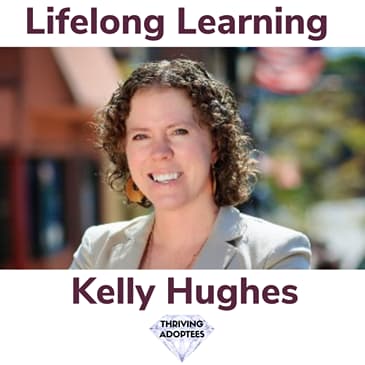
When we know better, we do better. This podcast is about sharing what we've learned so we can do better. Listen in as Kelly, mother of four including 2 by adoption from foster care and non-profit leader shares what she's learning about thriving.
Kelly Hughes (she/her) is the Founder and Executive Director of Foster Love Project, supporting children and families affected by foster and kinship care in Pittsburgh and Western Pennsylvania.
Kelly and her husband, Andrew, have four children, two adopted through foster care, and have fostered eight children at different times. Those experiences inspired her to create Foster Love Project, initially providing bags of new essentials for children entering care. In 2017, it expanded into a full-time, free shopping centre for children in foster or kinship care.
She advocates for maintaining connections with children’s first families, drawing on her family’s experience of open adoption. She holds a Bachelor of Science degree from Northland International University
https://www.facebook.com/fosterloveproject
https://www.instagram.com/fosterloveproject/
https://www.linkedin.com/in/kelly-hughes-8bbbb877/
Guests and the host are not (unless mentioned) licensed pscyho-therapists and speak from their own opinion only. Seek qualified advice if you need help.
Want to learn more about thriving for you, your kids, your families or your colleagues? Pick a time to talk here
[00:00:02] Hello everybody, welcome to another episode of the Thriving Adoptees podcast. Today I'm delighted to be joined by Kelly Hughes. Looking forward to our conversation today and moments of joy. Kelly leads Foster Love Project and you founded it.
[00:00:20] If you founded it and you lead it. And she's also a mum of four through two from foster care and two as infant adoptions. Two were biological and two were adopted from foster care. Okay sorry my memory's gone. And we were talking about, so we're recording this on the 8th of October.
[00:00:50] So we're, we were just talking about autumn colours and a tree stopped me in my tracks on Monday with the beautiful colours. And Kelly's trees are still mainly green but it's just like a interruption, a moment of joy in our day. And I must be getting older because I appreciate those things that I didn't do before.
[00:01:19] But how often do we just take a moment, right? Yeah. It's harder I think for younger people to do, to appreciate that. There's something about getting older where you begin to value that stopping and taking in the changes of nature. Yeah. I'm thinking about all the, all the multitasking that we do as well and the screen time.
[00:01:51] And the screen time, the screen time on the phones, the screen time on the iPads, the screen time on the computers, the screen time on the television. And how overwhelming that all is. Mm-hmm. Yeah. A moment to do. Yeah, one of my priorities that I try to do is walk outside every day if I can. Yeah.
[00:02:13] And that's just happened more as I've gotten older and that really rejuvenates me in a different way, even than walking on a treadmill or doing some other physical activity. There's something about walking outside where you have the combination of fresh air and being able to take in what's around you that really contributes to, for me, feeling well.
[00:02:43] Yeah. So it sat you up for the day? Is that when you try and do it? No, I usually have to do it in the evening because there are mornings I've got four kids getting out the door to school and work. So I'm not a 5am riser. But I try to take them the evening. Yeah. So yeah, it's good. It's good.
[00:03:09] So thriving, Kelly, what does thriving mean to you? Mm-hmm. Thriving for me feels when I feel like I'm contributing good to the world.
[00:03:25] Um, when the work that I put in place through our support resources that we provide to kids in foster care is impactful and we see the impact on kids and families. Yeah.
[00:03:46] That gives me a certain piece on knowing that I'm creating change that I wish would, could have been there when I needed it. Yeah. And so by implementing it and knowing it's available for other people, it gives me a lot of joy. Yeah. Well, what was it that you, that you needed that wasn't about? Yeah.
[00:04:13] Well, when we, my husband and I were foster parents, and I'm not sure if it works the same here in the US as in the UK. Um, but when you say yes to kids coming to your home, we've had as little as 45 minutes notice and they arrive at our house without any belongings. And so when you think about the impact of what do those kids need? Um, do we have clothes for them?
[00:04:43] Do we have enough food in the house? Do they need car seats? Do they need car seats? Um, all of those factors were a challenge for us as we receive kids into our home and just ensuring that they had just the practical resources that they needed, but also knowing that they've just gone through a very traumatic event of being separated from their, um, biological family.
[00:05:10] And so as I saw that happening in real time, when I had capacity, I started stepping into ways that I can change that. And so first that became community bag drives where I asked people in our community to pack a bag that had a new outfit, a blanket, a stuffed animal, full size toiletries, pack of socks and a book.
[00:05:35] So when those kids were coming into a home, they could at least arrive with this bag of essentials. And then that led into opening a free shopping center for kids in foster care. So now they can get that bag of essentials when they're first placed in the home, but then they can make a shopping appointment and come and shop for at our store.
[00:05:59] They can get clothing, shoes, toiletries, books, luggage, bedding, toys, um, a wide range of items. And so we are seeing that have a huge impact on, um, kids being ensuring that they have what they need to go through this big transition. Yeah. So we've got the practical and the emotional stuff.
[00:06:26] Um, the practical stuff, perhaps under, perhaps under emphasized, like that, those are the base, the base preparation. Right. So, so necessary. Um, and doing some great work in that.
[00:06:53] What, what about the emotional side as well? Mm hmm. So some of the other programs that we've implemented as well is we have a team mentoring program. So that is for kids ages 12 to 18 who have experienced either foster care or adoption. And we have a monthly meetup for them.
[00:07:16] And the goal is that they have a space to make friendships, um, build peer relationships with other kids who have experienced similar, um, life situations. And our goal is that they don't feel isolated and alone in their story. And then we have a team of mentors that volunteer with that program who are adults who have lived experience. Yeah. And so they are there as just part of the support system.
[00:07:44] And so our goal is that we're providing wraparound support and care and leaving space for kids that are balancing having two families or maybe not knowing who their first family was or having questions, um, and confusion about the role of being an adoptee or being in foster care. And so the goal is just to provide a safe space where those questions are normal.
[00:08:12] And we, um, we want them to explore what they're, what they're going through and how they're feeling. So what, what have you learned about, um, supporting those kids as they come into your, as they come into your, to your, to your family?
[00:08:34] So, um, uh, I'm, I'm moving this back into, back into that kind of the personal space rather than the foster love project space. Um, I'm, I'm just that, that, uh, cause obviously I was like five weeks old. Um, and it's a, it's a, it's a different ball. It's a totally different ball game when you're accepting an older kid into your, into your, into your, into your house.
[00:09:03] So what have you learned about, about, uh, supporting them in those initial hours? Mm-hmm. Like kids coming into my home? Yes. Yeah. Um, I think a big part is just acknowledging how traumatic that event is to be separated from their family.
[00:09:28] And whatever their age, the older they are, the more they understand what's happening, the younger they are, they don't understand. Um, and there can be a lot of confusion because even if they're, it was deemed that it was an unsafe home for them to be in, for them, it was what was familiar. It was their family.
[00:09:52] And so we just tried to meet them with care and compassion of knowing how difficult it is to have to walk through this experience and just leaving lots of space for big emotions. And, you know, we weren't there to replace their mom or dad.
[00:10:14] We were there to just walk alongside their family as, um, they were experiencing this crisis and with the goal that we hope reunification can happen. Yeah. Yeah. Because you thought, you thought that the kids, the kids that you've now adopted, you thought initially, if I remember rightly, that the plan was for them to be reunified in. Yes, they were, the plan was that they were going to live with some other family members.
[00:10:43] Um, and, and so that, that ultimately happened for a short time. And then their family reached out to us and said, um, that they would actually like for us to adopt them. Yeah. And so we did that, but we also, um, committed to staying in an open relationship with their family so that they were not cut off from their family and their history and their heritage. Yeah. Yeah.
[00:11:12] So I, I, I, I, that's all about, um, minimizing the confusion, I guess. Yeah. I think it's about just providing as much comfort and care as you can in the moment. And, um, yeah, again, emphasizing, you're not there to replace the mom and dad.
[00:11:37] Um, you're just there as their, their temporary caregiver and, um, you know, let's walk through this together and we just want to make sure you're safe and you have what you need. Yeah. Yeah. So, um, going forward then after those, uh, those initial hours, what have you learned about, or what are you learning right about what helps adoptees thrive? Yeah.
[00:12:08] I think what I've learned from, you know, parenting my own kids who have been with our family now for 12, 13 years.
[00:12:18] So quite a long time and knowing a lot of adoptees in, in, um, throughout the organization is that it is so important to validate what they're experiencing and hold space for different, um, questions that adoptees have, particularly whether they do or don't know their biological family.
[00:12:47] Um, I think normalizing that it is okay for adoptees to love two sets of families and that they shouldn't have to choose. Um, just like I have four kids and I can love four different kids and nobody questions that my adopted kids have two sets of parents and they can love two sets of parents. And we shouldn't question whether that's a good thing or not.
[00:13:17] Yeah. How, how important is your own grounding in this? I mean, um, I don't, grounding stability. What, what, what word would you, do you know, you're nodding. So you kind of know what I'm getting at. Would that be a good word for it? Grounding. Have you got a better word? Something that's more. Are you talking about like self care as. Yeah. I'm, I'm looking perhaps a little bit deeper than care.
[00:13:47] I'm, I, the metaphor that comes down to the metaphor that comes to mind is roots. Right. So I'm thinking about grounding your, your grounding, your self-awareness, your, uh, your, uh, confidence in, in this, your ability to stay calm in the moment. I guess. Like calm when my kids are having a hard time.
[00:14:14] That, that sort of thing and your, you know, to, to, to be the, the, the strength and the courage to, to validate this stuff, to, to normalize it, to, to the, the, the place that you're coming from. To be able to handle, have the capacity to deal with what the kids bring to you.
[00:14:41] Um, I have studied a lot, the writings and words of adult adoptees, um, since becoming adoptive parent. I have tried to become a lifelong learner, um, from adoptees to help in my parenting adoptees. And that's really important to me to learn from those with lived experience.
[00:15:10] And that's where I've learned a lot to hold open hands for my adopted kids. Um, I had to be very secure in my role as their adopted parent that I don't feel threatened by their love and care for their first set of, of parents. And for their extended family, you know, that was their family before us.
[00:15:34] And I, um, I don't feel threatened by them having love and care for both families. And I want that for them. I don't want them to be isolated, um, from, from their first family. And, um, and so when my kids, um, you know, are having maybe some complex experience and complex emotions.
[00:16:01] One thing we always try to say is they're not giving you a hard time. They're having a hard time. And so I think flipping the script of this is not a personal attack. This is them experiencing something that's really hard. And I don't want to take that as a personal attack, but I want to be a place where they can vent or they can tell me about the hard things that they're going through.
[00:16:31] Um, you know, I want to be that, that person that they feel open enough, um, that they can talk to when those things are hard. Yeah. So secure was the key, was the keyword for me that kind of popped out. That's what, uh, so if we did, you know, secure security grounding, that, that was kind of where I was going for.
[00:16:59] So, um, well, that's what I was trying to, uh, to, to, to get to. Um, so can you share some, uh, some instances or, or some learnings, some moments around that, uh, journey to security? Um, well, you know, what, what, what's helped you feel what, what, what's, yeah. What's helped you feel that security? Where, where has that come from? What, what stimulated or you learnt on that?
[00:17:29] I think I really had to approach it from the beginning, whether when we, when we were foster parents is that we were their second family and that the intention was never to bring kids into our home and cut them off from their family. Um, sometimes adoptive parents will look at adoption as I'm getting a child for my family. And I wanted to offer my family to a child.
[00:17:58] And I knew that parenting adopted kids would look different than it did for my biological kids because they had a different experience. My biological kids don't have to, um, manage the complexities of having two families.
[00:18:19] Um, and so I made it imperative from the very beginning that we were their second family and we loved and cared for them in the same way that we did for our biological kids, but also knowing that they had a different experience. And so it was important that we looked at it that way from the beginning.
[00:18:45] That their experience growing up as an adoptive person was going to be different and to hold compassion, um, and empathy for when complexities of that position came to the surface. Yeah. So there's a couple of things that, uh, that you're turning on, on the heads to the way that some people look at this. This is like 180 degree shift. Yeah. Yeah.
[00:19:16] Um, how did you get to that? What do you, do you recall? I think, I mean, a big part was we didn't struggle with infertility. And so I know when people aren't able to have kids and they seek adoption as a way to have kids for their family, I think sometimes that perspective can be different.
[00:19:36] We stepped into foster care knowing that this was a role that we were offering our family to kids while their family was in a crisis without the expectation of adoption. Um, and so when, um, two of our kids needed then a permanent resource home, then we were ready to step into that.
[00:20:01] Um, but yeah, I think we just stepped into it from the beginning as we are a support system. And, and that is our, our goal of walking alongside these kids. And we did have, um, six other kids that were in our home at different times through foster care. And they all left to either reunified or they went to a different home.
[00:20:26] Um, so we did have that experience of kids coming into our home and having to say goodbye to them, which is always a painful experience. Um, but we always knew it was the next best thing for the kids that were in our home. Yeah. When we talked last night, uh, last time I was looking back at my notes from, from earlier.
[00:20:48] And one of the things that stood out was, uh, you talked about not villainizing birth parents. Yes. I don't know if you could talk a little bit about that. Yeah. That's really important part of it.
[00:21:02] I've been a part of different adoptive parent groups and it really was so hurtful and harmful to hear the rhetoric of people talking about, um, the biological parents in really villainizing ways. And I know that kids are in foster care because of mistakes that adults make.
[00:21:27] Um, but for me, I believe there's redemption that, that people can change. And I also believe that no matter what mistakes they make, they will always be the biological parents of those kids. So it's not my job as an adoptive parent to try to make myself look better than them. Um, that's never the goal.
[00:21:54] Um, we can talk honestly about now that my kids are teenagers, we, we talk a little bit more honestly because they have questions, you know, of why they were removed. And, um, they, you know, have access to their files if, if they want them.
[00:22:11] Um, and, but I, we have tried very hard to never, um, villainize any of their family for, um, and just give them as much open and honest information as we had. And now as their teens, they're kind of figuring out for themselves how they want that look, that relationship to look.
[00:22:36] Um, and they're kind of, you know, now they can kind of make the choice. We were able to lay the foundation of creating space for them to see their family and be with their family. Um, and now as they're heading towards adulthood, they're, um, you know, really getting more control over what that'll look like for them in the future. Yeah. What else have you learned through the, um, through the experiences that you've had?
[00:23:06] You talked about being another, a group, uh, adoptive parent groups. And obviously you're supporting, uh, supporting, um, foster and adoptive parents through the foster love project. So what else have you learned from that? You've, you've talked about learning from adoptees. You've talked about learning from adoptive, other adopted parents. Um, perhaps we'll start with the adoptive parents. What else have you learned from, from those people that you've come into contact with?
[00:23:35] Um, I think again, just shared experiences help mold community. I think that's the biggest thing that I feel, um, can be harmful is isolation, no matter for what category anybody finds themselves in.
[00:23:54] And so finding commonality among other people, I think is really important and vital to just support each other when things are hard because of those circumstances. So we have an annual family retreat that we do for foster and adoptive families. And that's always been one of the highlights of our year where families come together for three days.
[00:24:18] And again, just building connection and community so that our kids are building friendships and community with other kids that have shared experiences. And then, um, um, the caregivers can also build community and support each other. And sometimes it's a great way to find resources. You know, what, what resources have you found that have been helpful? What are some good therapists? What are some, um, other means of support? So sharing information is so important.
[00:24:48] So I think just being in community with other people is really vital and not, not let yourself get isolated. Yeah. And yet you're, you're taking what you hear from others with a pinch of salt, right? You're not, you're aiming off. You, you, you, you're learning what you're learning good stuff and what not to do from the other conversations.
[00:25:18] Uh, you know, as a, as, um, as an adoptee, I had a email this morning about, um, some peer, some peer support groups that somebody is doing here in the UK. Okay. And, and I, and, and it was a very long, very long, very complicated questionnaire that they were looking to, to, to, um, to, um, uh, for answers on.
[00:25:45] And at no stage did they say who's going to be lead leading these peer support groups, right? Because if I, you know, I want to, I want to learn from somebody that's ahead of me on the journey, not behind me, right? Not still early stage processing coming out of the fog and, you know, like, um, and, or anybody just at the same place as me. Right.
[00:26:12] I want to learn from people that are ahead of me because it, so if you, if I go into a group and, and people are trauma dumping, then I, I, I, I, I, other than feeling sad for where they're at, I'm, I'm, I'm not, I'm not going to move on.
[00:26:37] And if, if, if they're all just trauma dumping amongst themselves and nobody's leading it, then there's no point being there. You, you're going to get, you're going to, you're going to feel validated, but that validation isn't going to move you on. Right. Yeah, absolutely. Uh, so I'm not quite sure what the question is out of there. Um, uh, yeah, let, let me, let me try this way, Kelly. And it's a bit of an experiment really.
[00:27:07] So, cause you talked to, you, you talked about validating the kids feelings, right? So there's, there's, there's validating kids feelings, uh, or the validating feelings full stop. And, and there's also invalidating beliefs. And why I say invalidating beliefs is because I've had a lot of coaching over the years. I've not done too much therapy.
[00:27:37] 10 hours kind of talk therapy. Um, some EMDR stuff, maybe 10 hours of fat and another 10 hours of somatic experiencing, maybe 20 hours of somatic. Anyway, like 40 hours tops. But I, I, I, I've had hundreds of hours of coaching around, uh, you know, what some people might call life coaching, right? But also business coaching as well.
[00:28:05] And what a lot of, what a lot of coaching is about is about helping the person, the coachee as in me, right? Uh, helping me see where my beliefs are, are right, where they're askew, where they're not quite right. Right. So we've got this, uh, so I'm, I'm seeing attention, uh, attention here. And I don't know whether this is, this is, maybe this will help me get around to asking the question, right? Yeah.
[00:28:34] So you, you want to, uh, you, you want to validate your kids' beliefs. Sorry. You want to validate your kids' feelings, but you, if, if the beliefs are wrong, you want to, I'm assuming, you're nodding your head, that you, you, you want to kind of help them see that the beliefs aren't, aren't, aren't, aren't right. So. Right. There's a, there's a tension there.
[00:29:03] How, how, how, am I making, am I making this more complex than it is? Yeah, I think I know what you're asking. I think, um, where I see it with my kids is validating this, what they want their relationship to look like with their biological parents.
[00:29:27] And also the tension of that relationship can't be what they want it to be. Um, and so that is where we have to talk about appropriate boundaries. What are, what are boundaries that you need to have for yourself when you're told one thing and maybe there's no follow through or you're disappointed or something doesn't happen that you thought was going to happen.
[00:29:55] And so there is tension there of, um, of what they would hope and dream that relationship could look like, but also dealing with disappointment when it doesn't meet their expectations. And so I think that can be really difficult. Yeah.
[00:30:19] And so I think it's a, about then being a support system and, and holding those disappointments with them. Um, and also helping them. Yeah. Set up boundaries maybe for themselves where they can avoid being hurt again. Okay.
[00:30:39] So I guess that's empathy, empathy for the child and the validation of where they're at and then empathy for the birth parent as well. And this, uh, non-villainization are going to be crucial in, in navigating that tension.
[00:31:06] So you've, you've not asked the, you've not asked the question and not answered the question that I asked for, but you've given something that's far more useful, which is what, what adopted parents need to, what adopted parents need to know. I'm, I'm coming at it from like an invalidation of belief for being an adult, maybe an adult perspective. So the question was a bit off what's more important. Um, yeah.
[00:31:31] So, well, and I'm trying to be careful cause I really am very careful about protecting my kids' privacy and story. So there's only so much I can say. Okay. Also, I've always told them I will never use them, their experiences as. Yeah. You know, examples. And so there's, there's a, so then it's hard sometimes to transfer information because I do want to be very protective of that's their story to share, um, at some point and not mine.
[00:32:00] So that's why I, that's a little bit tricky of a line. Okay. Thank you. Thank you. Yeah. Um, uh, yeah, I, um, I, I agree with you completely on the, is that sorry to take. Like I, I, but I didn't, I didn't see the trickiness in the question that I asked. So, so thank you for bearing with me, Kenny. Um, can I, can I turn it back to talking about experience with adoptive parents? Yeah, sure.
[00:32:30] And, and some of the tensions there. So again, creating community where adoptive parents can support each other and say, hey, this, this is hard. Or we're walking through parenting a child with trauma and that can be very difficult. And there are things that come alongside with that. And so we can have empathy and we can support each other.
[00:32:52] And where I try to put the boundary is that we're not then, um, over disclosing our kids, medical diagnosis, behavior diagnosis. We're not throwing this on the birth family, like again, villainizing them. And so those are with me being able to run my organization. Those are boundaries that we can put in place, um, that I haven't experienced in other groups.
[00:33:19] So when we get there for our, our, um, family retreat, we say, this is not a space to villainize the biological family. And we also want to protect the privacy and dignity of our kids' stories and diagnoses. So as you interact and as you support each other, keep those boundaries in mind. And so we try to create that, that is the expectation of our events and, um, those who are involved.
[00:33:49] And so that is one way that we can try to kind of shift what is often the common narrative of just disclose whatever people want about adoptees. Um, you know, especially as children. And so we, I'm grateful that I'm in a position where I can shift that narrative, at least for the events that are run under our organization. Yeah. You can, you can impact the people that you can impact and.
[00:34:19] Right. So you can put the guardrails on and, and, uh, do kind of best practice. Yeah. And sometimes it's just about bringing awareness to it because the cultural norm is that people disclose things about their adopted kids all the time. They disclose it on social media. They disclose it to their friends and family.
[00:34:41] Um, and so when we draw attention to that actually is not the best practice that we shouldn't be doing that. I know even when kids came into foster care in our home, we didn't even tell our families why they had been removed because we didn't feel that was necessary information for them.
[00:35:03] We could say they needed a resource home for the kids to stay in and end of story. That's, that's all that has to be shared. Um, but there is such a dominant narrative that foster and adoptive parents share all of these private details. And so I am continually advocating to shift that narrative. Thank you.
[00:35:29] Um, what else do you see in, in the foster adoptive world that you think isn't quite right or, or, or downright wrong? You know, I, one thing. Um, that I would really want to see change. Again, I don't know if this is a U S thing or worldwide, but when kids are adopted, their birth certificate is changed.
[00:35:55] That their biological parents are taken off the birth certificate and the adoptive parents are added. And I think that's really a disservice to the whole family because. When I adopted my kids, I did not become their biological parents.
[00:36:11] And maybe there's a space to add adopted parents or something, but I do not think that kids should be reissued birth certificates with their biological parents erased from that public record. I think that is something that should be changed. Yeah. I, I, I have two birth certificates.
[00:36:34] Um, and I, I only got my second one fairly recently. I hadn't bothered with it, but then I thought, well, I knew that I had the data on it, but the names that were on it, but I didn't have the actual original. And, and I just thought I should get this because so many adoptees, uh, uh, are, are fighting for it and I can have, I could get one if I wanted.
[00:37:03] So I should, I should, I should do that. Yeah. That's really great. Yeah. We have both for our kids as well, which I'm grateful that we have those. Yeah. So, um, I want to go, we, we, you talked to a few minutes ago about learning from adoptees. What, what have you learned from adoptees that you would like to share with the listeners?
[00:37:30] Um, we recently hosted a workshop where three of the adoptees that work with our team program, um, shared their experiences and all three of them. Which all have, how will have very different adoptive experiences, but all three of them said they could not talk to their adoptive mom about anything about their biological family without her crumbling, crying, shutting down.
[00:37:59] And I felt like that was really impactful reminder, especially to moms in, um, just giving space for normalizing that these are questions that adoptees have. And they're not personal attacks and we shouldn't take them as such. Um, and so that, that felt really impactful that they all three had the same experience.
[00:38:28] And, um, yeah, that felt like a very strong learning moment to particularly adoptive moms, but, but dads too, of, um, being able to hold that space without their kids knowing. That it was going to cause such tension. Yeah. I, um, I was interviewing, uh, an 80 year old adoptee, right. The other, um, earlier in this week.
[00:38:57] Uh, and he was saying that he'd, he'd become hypersensitive to what was going on for, for his parents back in, back in the, back in the day. And, uh, I think we, I think we, I think we, I think we do.
[00:39:21] Um, when people, uh, uh, somebody asked me yesterday, you know, what, what, what would you say that we should do? You know, um, and as an adoptive parents, I said, do your own work. Mm-hmm. Yeah. Do, do your own work. We, we, we're not, um, we're not broken, uh, despite what, despite what some would say. Mm-hmm.
[00:39:51] Um, we, we're not broken, so we don't need fixing. Mm-hmm. And, and, and I, and I, and I draw on what I've learned from other, uh, adoptive parents in the next part of this. Can, advice or suggestions would be, uh, that it, so raising adoptive kids isn't about fixing us, it's about growing you. Yeah.
[00:40:21] I love that. Yeah. And, and by, by growing you or growing us, because I've, I've heard that from adoptive parents. I'm, I'm not just telling that I'm not, yeah, this isn't an adoptive thing. You should do this because I say so. This is, you should do this because other adoptive parents say so, right? So it's about growing, growing you.
[00:40:42] And, you know, to, to go back to the, some of the themes that you've mentioned, you talked about the words secure. And, and then a bit later, you just now, you said crumbling, right?
[00:40:59] So if, if somebody's crumbling, whoever they are, like, they haven't, they haven't done, they haven't done enough work. Yeah. Yeah. And it's not the kid's responsibility to do the work for the adults. Yes. Yeah.
[00:41:25] So when, what, I think what, what I meant was if somebody is crumbling, so what I, if an adult adoptee is crumbling or an adoptive parent, I mean, is there the work? You know, we're not going to tell the, we're not going to tell the, the 10 year old kid, you need to do your work. Right. No, no. You know, that's not where I was going. No, no, no. The parents. The parents.
[00:41:48] But everybody, we, like, if you're adults in the economy, then we need to do more, more, more work to get to that, to dial up that security. Yeah. Yeah. It's about care and understanding. Yeah. For sure. What other advice do you give to adoptive parents?
[00:42:24] That's a great one. I don't tell them to keep the stuff confidential, like you just said. So I will take that one going forward. I don't have too many specifics because I, I don't, I don't know.
[00:42:50] I, they, they need to take the time to do it themselves.
[00:42:55] Other, other kind of insights that I would, top line insights I would share is, well, if, if I think about heat, if I, when I'm, when somebody asks me about healing, I, what I've learned from interviewing people through my own experience is that, you know, we've got, we've got this spiritual side, whether that's a religious, spiritual side or a religious, spiritual side.
[00:43:24] And we've got the psychological side. We should be looking, we should be looking at both. And the spiritual side has far more power, healing power in my, in my perspective, from my perspective.
[00:43:40] And I, another theme that keeps on coming up again and again and again is that, how do I, yeah, I put it. Very blunt, bluntly. Pre-verbal talk therapy can't heal pre-verbal trauma. And I'm very, I'm very pointed about that and, and people will water it down and stuff.
[00:44:10] But if therapy is not, if it, you know, like, yeah, we've got to, we've got to look at the somatic and the EMDR and stuff. So I'll say about that. And yeah, those would be some of my top line things. And obviously you're not, you sort of play therapy for younger kids or. Right. Yeah. You know. Yeah. You did that for many years. Yeah. Yeah.
[00:44:33] And we're going to be meeting in a couple of weeks to look at this, this thrive stuff that I have, the drivers of thriving. So the, when I go back to the wholeness thing. So when I go back to the not broken, so we're intact. Well, like we're all whole. Right.
[00:45:03] I think that we have, I think that we have become. We are, some of us are in danger of becoming trauma obsessed. And so my mantra is trauma informed, wholeness aware, thriving obsessed. So I think, I don't think we focus enough on kids and adults wholeness.
[00:45:34] And I also don't think that we focus enough on, on thriving. So the thriving adoptives podcast is about thriving. Thriving. And that's what I, kind of that's what I focus on. So those would be my top, top lines, but I, I could talk about that stuff forever. I, I don't, I don't, I try to give for individual adoptive parents asking myself, I try not to give them too much because I say, right.
[00:46:03] I, I'm, you've, you've got to find the work that works for you. You, you've got to find time to do the work. And then you get into this, then, then we can, we can struggle into a kind of, well, I haven't got any time. Well, you know, and, and, and, and, and, and I'm, if, if somebody takes me down that route, comes up with that,
[00:46:29] I'm, I'm, I'm just going to back off away because I, I, I, I don't push on doors that are opening. And I don't get into, I try not to get into the, into the, into the, into the detail of that. That would be tricky. But, yeah. I love that you're bringing people together.
[00:46:56] Like, and again, we're running, we're running some groups here. I'm going to let you know about them. But we're bringing everybody together, birth parents, adoptive parents and adoptees. This email that I had this morning about support groups for, for, for people within adoption space.
[00:47:19] It was, as so many of these support groups are, it, you know, there's a cohort for birth parents. There's a cohort for adoptive parents. There's a cohort for adoptees. Well, yeah. There's a place for both, but there's, there's, there's, there's a place, a place for both. Yeah. But, but I think further on in the journey, we want to be, we want to be collaborating, we want to be learning from another. Yeah. Yeah, absolutely.
[00:47:49] There's, there's big, you know, like if we, if we think of, you know, a lot of people talk about adoption starts with loss. Mm-hmm. And, well, yeah, I mean, where does that take us? But if, if we look at, if we look at shame, for example, you know, you said that you didn't come to,
[00:48:13] um, um, adopted parenting through, uh, through infertility. But some people do, and then there's that. So you've got some, there's some shame running for, for adopted parents. There's some shame running for adoptees, you know, like under the radar sometimes. And on top of the radar sometimes.
[00:48:42] There's some shame running for, for birth parents, for birth mothers. Right. So what, well, let, let, let's all work together to bring some light to that darkness. Right. Yeah. And, and, and, and that's what, uh, that's what a, uh, a mixed group of, you know, in a, in a, in a setting can, can do. It can bring. I love that. But it doesn't have to be about shame for anybody, anybody's decisions.
[00:49:11] It can be about healing and moving forward. Yeah. Yeah. I like you when you said too about groups that sometimes just become a trauma dumping circle and how that's not always helpful. And I was thinking of our teen group, um, because we do have a space where we have connection circles and we give them the opportunity to talk about things that might be hard for them.
[00:49:39] But a majority of our time together is feeding them and playing games and doing joyful things. And so that we don't want it to be, here's just something where we're just dumping our hardest things of the week. Um, but here's where we're also experiencing joy together. And I think that is part of the process. Yeah. And, and there's a, there's a balance in all these things, right?
[00:50:06] So you, you talked about venting earlier on, you know, sometimes it, sometimes it's about venting and there's venting and healing. And it's all of those things. You just don't want it being too, too much of any one thing.
[00:50:21] That's why you got to try and handle the, you know, handle the, the, the, the group with, uh, with, with care and, and, and, and empathy and, and be intentional by what you're doing. Right.
[00:50:38] One of, one of my concerns is that the Facebook groups or for adoptees and presumably for adoptive parents as well, they are, there's, there's no, there's little or no leadership. Um, yeah, yeah. Uh, there is, it's the wild west and it's really accessible. It's very, it's very, it's a very accessible, it's a very accessible place to get, to get into.
[00:51:08] Uh, and how much, how much healing comes from them? Um, uh, in person is a different kettle of fish for, because we, we talk, we talk differently as human beings. We talk differently on the phone to what we say to each other on social media. And we talk different again, face to face to what we talk about the phone to what we're talking. Yeah.
[00:51:37] So it's, it's, it's a different, it's a whole different thing. Yeah. Yeah. Yeah. So, um, fascinating conversation, Kelly. Um, thanks for asking me some questions. Um, uh, uh, just want to kind of wrap up, but before I do that, I wanted to ask you if there's anything that you'd like to share that I've not asked you about. Um, I don't think so.
[00:52:07] I, I think just that continued narrative of protecting the child's privacy, um, I think is really important. Um, and, and changing that narrative about giving information freely. Um, and, um, that's one of the most, um, I think loving things we can do for adoptees is protect their privacy and dignity, dignity.
[00:52:37] Um, and, you know, we, we always want to be part of that. Yeah. Yeah. Thank you, Kelly. Thank you, Simon, for sharing your insights and your experience. And I love the work that you're doing and I think it's really valuable. Thank you to listeners. We'll speak to you again very soon. Take care. Bye-bye.