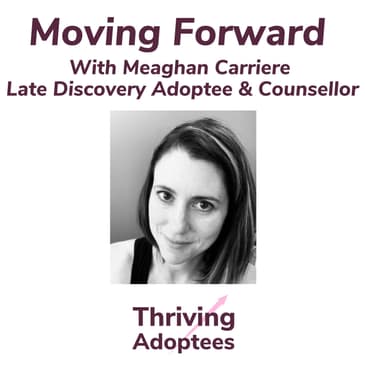
Here's what Meaghan says about about herself:
"I am a Master Therapeutic Counsellor (registered) and Late-Discovery Adoptee. A survivor of trauma and abuse. A wife and mother. For many years, I worked as a Birth Doula, and later as a Shantala Baby Massage Instructor. Our family has fostered teens, and been a perspective adoptive family at one time. In my counselling work, I use art, writing, and play as a primary means of emotional processing and healing in my work with youths.
The work I do is healing, intuitive, rewarding, and creative. Expressive art and play is a powerful and dynamic way to move forward in one’s journey. It is a privilege to witness clients process and find their inner voice, courage, and strength. In my local practice, I work primarily with youths and their families, supporting them in learning new skills such as: communication, emotional regulation, increased self awareness, managing anxiety, boundaries, and how to deepen family connections. Clients learn how to tune into their bodies and their emotions. One of the fundamental skills they learn is how to practice self-care when they recognize they are experiencing troubling emotions; they learn that the emotions are a signal to them that something needs their attention. Together we learn how to pay attention, how to process, how to hear the message and transform, moving forward."
Her website and group is a safe space especially for Late Discovery Adoptees to make connections, learn and share:
https://www.latediscoveryadoptees.com/
https://www.facebook.com/groups/355308151597261/
Connect with her on social
https://www.instagram.com/late_discovery_adoptees/
Guests and the host are not (unless mentioned) licensed pscyho-therapists and speak from their own opinion only. Seek qualified advice if you need help.
Want to learn more about thriving for you, your kids, your families or your colleagues? Pick a time to talk here
[00:00:03] - [Speaker 0]
Hello, everybody. Welcome to another episode of the Thriving Adopting podcast. Today, I'm delighted to be joined by Megan. Thank you very much for making the time to come on the show today, Megan. I really, really appreciate that.
[00:00:19] - [Speaker 0]
And I'm looking forward to having a great conversation with you.
[00:00:23] - [Speaker 1]
Thanks for having me, Simon. Yeah. Yeah, it's great to be here.
[00:00:27] - [Speaker 0]
It's great to be here. So, it's great for all of us. It's just a loving, isn't it? Everybody's happy. It's cool.
[00:00:35] - [Speaker 0]
We're having it great. Yeah, so Maggie, could you introduce yourself to the audience please?
[00:00:43] - [Speaker 1]
Yeah, absolutely. So my name is Megan and I am from Port Alberni in Canada, so just on Vancouver Island here. Here I'm an artist and a writer, and I work as a counselor as well. And I'm a late discovery adoptee. So for any of you that don't know what that means, it means that one or both of my parents, in my case just one, wasn't my birth parent, and I didn't get to find that information out until I was an adult.
[00:01:17] - [Speaker 1]
So for me, that was when I was 33, So well into my adult life. Yeah.
[00:01:25] - [Speaker 0]
Yeah. And is the counselling work, is that within the adoption space?
[00:01:34] - [Speaker 1]
Little bit, a little bit. I'd like to get more into that. Currently I'm working with kids who are on the autism spectrum mostly or who've got anxiety, depression, that kind of thing and we do art together nature walks and that kind of thing, yeah.
[00:01:50] - [Speaker 0]
Yeah, that's great because when I hear Vancouver Island, I think is that whale watching territory, is that where people go to watch?
[00:01:58] - [Speaker 1]
So is, yes and lots of whales this time of year, lots of people are seeing. Yeah.
[00:02:04] - [Speaker 0]
Yeah. It's, I guess that's connecting to the, to the meditative space, is it?
[00:02:14] - [Speaker 1]
Absolutely. Yeah. When we're in nature and we're, you know, taking, we're using all our senses, right? So when we go into nature, we're looking and listening and smelling and touching the different things and really just sort of getting back into our bodies and into our natural state.
[00:02:32] - [Speaker 0]
Yeah.
[00:02:32] - [Speaker 1]
Yeah.
[00:02:33] - [Speaker 0]
And the kids with autism are into that, yeah, I'm guessing.
[00:02:39] - [Speaker 1]
I mean, everybody's different, right? So some are, some aren't.
[00:02:42] - [Speaker 0]
Yeah.
[00:02:43] - [Speaker 1]
Yeah, some are more into stories and more into play or building or we just kind of, I just go where they take me. Yeah. Really, yeah.
[00:02:51] - [Speaker 0]
Yeah, that's that's your creative nature coming through, I guess.
[00:02:58] - [Speaker 1]
Yeah, well and I guess in terms of, you know, the timeline for me is, So I started getting into pottery when I was about 30 and it was just kind of this neat thing there was a lady in town. Who had a studio and she. Well it's a long story, but anyways we ended up working in her studio and she sort of apprenticed me a little bit and my daughter, and at the time my daughter, she had dyslexia and a number learning difficulties. The little community that we're in, we were having difficulty finding resources. At this time she was, how old did she have been, about nine or 10, and she still didn't know how to read.
[00:03:40] - [Speaker 1]
Like she was very, very delayed in all these kinds of skills. And taking her to pottery, I saw changes happening for her. I saw her self esteem shift. I saw her starting to print in the clay, so she'd make things and want to put someone's name on it, or write this story about it into what she was making. And so I just saw it being really good for her, you know, and so then when we were, you know, our time was up in the studio, I was just kind of hooked, and so my husband said, well we've got this space, let's set it up and get going, and so when I found out, that my dad who had raised me was not my birth dad, it was really kind of a godsend that I had this space to work in.
[00:04:33] - [Speaker 1]
So I just kind of lived in there and just sculpted and worked and had my brain do its thing while my hands were doing their thing and it was just really healing. So then when I did counseling training, it just seemed like a really natural sort connection to lead into, you know, working that creative energy into the healing space.
[00:05:05] - [Speaker 0]
Yeah. Have you come across a guy called Rupert Spira?
[00:05:11] - [Speaker 1]
I haven't, no. Who is he?
[00:05:14] - [Speaker 0]
He's a potter who is now a teacher. I mean he doesn't like actually, I use the word teacher, he doesn't like being referred to as that. He shares philosophy with people and it's called non duality. But interestingly, so he started and he, like you, he had done a, so he went into, went into pottery. He had an apprenticed with somebody and then pottery was his life.
[00:06:00] - [Speaker 0]
And then he got into speaking about this. He learned stuff for himself, for his own well-being and then started sharing that with others and then eventually left the pottery behind and shares this stuff. Interesting. And his work has a precision to it, whether it's his pottery or his speaking. Really, yeah, he has a BBC English voice, very precise.
[00:06:46] - [Speaker 0]
His language, his intellect is great and he shares some interesting stuff. So that's a bit of an aside. So I was going to ask you if your own learning led you into the counselling, did your own learning on the back of the discovery, being a late discovery adoptee, did that lead into the counselling as well? Did it It
[00:07:12] - [Speaker 1]
did, it was kind of, life is really sort of funny. So the way it went was, we had the two kids already, my husband and I, and we were actually talking about adopting. And so in, at least in BC where we are, it's a fairly large process and they make you go through a whole program and parenting, learning how to do for special needs and all this kind of thing. And then the social worker that we were talking with, I remember her saying that she had been a counselor to start with. And I sort of said, Oh, you know, I've always thought about doing that.
[00:07:46] - [Speaker 1]
And she said, Well, you should just do it. Like don't, it's not as hard as it sounds, and just do it. So it was sort of this like inkling of a thing back here. And then when we were nearing the end of the adoption process is when my parents sort of took me out and we went for this walk and they disclosed this information about my dad. And then of course, we had to tell social worker and that kind of threw everything.
[00:08:15] - [Speaker 1]
The social worker said, Oh, oh, this is huge. And I said, Is it? Because I was still very in shock. And she said, Yeah, no, this is big. You're six months at least, she said, so I'm going to go away.
[00:08:29] - [Speaker 1]
Know, and give you guys six months to just sort of let this settle and then and then we'll see where you're at again and and she was really wise to do that, because sort of in that six months, it was pretty bumpy, and I think it was maybe six months after that, that I thought, no, I'm gonna go into to the training and get working with people. Yeah.
[00:08:56] - [Speaker 0]
Yeah. Wow.
[00:09:01] - [Speaker 1]
You sort of shift everything.
[00:09:03] - [Speaker 0]
Yeah. Yeah. So as you process this stuff, is that how you talked about it, processed it?
[00:09:14] - [Speaker 1]
That's how I talk about it is processing. Yeah.
[00:09:18] - [Speaker 0]
As you process this shocking news at what was it 33?
[00:09:23] - [Speaker 1]
Yeah, that's right.
[00:09:25] - [Speaker 0]
You kind of from looking at your website and talking before we started recording, you kind of, you've made sense of your own journey recognising that everybody, every late discovery adoptees journey is going to be different, guess since everybody's journey is different. What did that twelve months, six to twelve months look like for you? Oh, wow. Did it feel? It
[00:10:01] - [Speaker 1]
was rough. It was really rough. My mom, so again, yeah, everybody's, you know, the way it plays out for everyone is different. For me, way it played out was that they sort of gave me the news, but they didn't give me any details. So it was like probably six months till I had like a name.
[00:10:26] - [Speaker 1]
And in that six months, I just felt like I was floating, like I was just there was no ground, there was no anchor. I cried a lot. I was, I felt rage and anger like I've never felt. In some ways I was relieved because it made it so that a lot of things made sense now because there was a lot of things that didn't make sense before that now made sense. I was sort of mentally reviewing my childhood and going, that's why my sister and I don't look alike, and oh, that's why I sometimes feel like I don't fit, you know.
[00:11:09] - [Speaker 1]
Things like there was there was one instance that came up in this, it brought up a lot of emotion for me so. After the birth of my second son, I had a lot of. Autoimmune type issues inflammation in my body and that and the doctors had thought that I had lupus, and so they were, you know, doing their investigating as they do. And to my knowledge, my granddad had died from lupus. And so I took this news to mom and dad and I said, know, they think I've got lupus.
[00:11:44] - [Speaker 1]
And they said with the family connection of granddad and so on and so on, that, you know, that's really likely what it is. I was very scared. My little one was like under a year old. And there was no reaction from my mom and dad. Just really not much reaction at all.
[00:12:06] - [Speaker 1]
And I kind of said like, do you hear me? Do you hear what I'm saying? And my mom just said, You know what? We never agreed your granddad had lupus. It can't be that.
[00:12:16] - [Speaker 1]
Let's have dinner. It's that kind of thing that I sort of reflected on and I was like, you weren't worried because you knew I didn't share his blood. But rather than tell me, he had just kind of said, well, we never believed he had that anyways. So it's like, and I hear this from other late discoveries, that it's not just the one lie, it's that once you discover, you then start to see all the little lies that had to be kept up to keep the big lie. And so the sense of betrayal is huge.
[00:12:59] - [Speaker 0]
Yeah.
[00:13:00] - [Speaker 1]
Yeah.
[00:13:01] - [Speaker 0]
Yeah, I mean, what can I say? I mean, well, can only say my own, I can only bring my own little bit into this, right? This fact that I talked about we started recording, the fact that I'm at the opposite end of the spectrum. I'm an early discovery adoptee. I don't know, I've come up with a new I've come up with a new identity for myself.
[00:13:36] - [Speaker 0]
But I wasn't told wasn't told till I was 40 that the teddy bear that I'd had growing up was from my birth mother. And my first, here's the thing, My first reaction to that was that's interesting. A gentle curiosity. The anger came later. Came a couple of months later.
[00:14:05] - [Speaker 0]
So it's kind of the I guess a bit of shock. Have you seen, yeah, I'm sure you've seen that Kubler Ross curve, have seen?
[00:14:16] - [Speaker 1]
Yeah, absolutely, yeah.
[00:14:18] - [Speaker 0]
So yeah, it's one of those, it's a curve but she doesn't say how long it takes to go through each bit. Some people jumps it so it's kind of like how useful is it, I don't know. But yeah, that little angle, so I'm talking about my teddy bear. So in terms of the significance of who's my dad or sorry, I'm pointing fun at my own little story of the thing. You know it's those little things, I can see how those little things.
[00:15:03] - [Speaker 0]
But it's a house of cards isn't it? It's the secrecy and it's the well it's whatever reason, mean, your mum ever given you a reason for the secrecy?
[00:15:16] - [Speaker 1]
Oh yeah, no, the story that came out is enormous and I don't think I talk about it explicitly on the website, and I can here to some degree. So the story that came out, here's my preface.
[00:15:34] - [Speaker 0]
You only need to share what you want, Megan, I'm not going
[00:15:37] - [Speaker 1]
to No, no, I always want to be careful because I wasn't there, right? I wasn't there when it happened. So the story that I've heard, I've heard one version from my mom and I've heard one version from my brother and depending who you talk to is what the story is, right? So in my mom's version of the story, she was kidnapped actually by my birth dad. So she came into relationship with him, not fully wanting to when she was 15, and stayed in that relationship until she was 21 or 22, I believe.
[00:16:16] - [Speaker 1]
And my half brother's version of that is that she was an affair because my birth dad was married already and he had three boys and my brother was aware of it. He was actually there for most of their relationship. So yeah, so my birth dad had two families, and previous to that he had had a son and a daughter that were both placed for adoption as well. And so it was quite a mess, and it was a lot to sort through, kind of person that he was, you know, and to try to, in those early kind of days, decide is this somebody I want to find? You know, he was 35 and she was 15 when this thing started.
[00:17:10] - [Speaker 1]
And, you know, it's not a pretty sort of a story. So her reason for keeping it was safety, you know, she felt that he was unsafe and it wasn't going to be a good place for me to be, a person for me to be in contact with, and she was right, I would say, you know, right to keep me from him, and I don't know that there's, I don't agree with the deception and all of that because it's caused a lot of pain and a lot of that for me, but I understand where she came from, you know. So yeah, there was a lot of so yeah, basically over that year, I would get tidbits of information from her, just a bit at a time, a bit at a time, and then with each bit of information, you know, I would have emotion to that and I would grieve it. And it, I think what I had to learn from it was obviously in the stories that I was being told by her, there was a lot of trauma, right, and so now I can look back at that and I can go, okay, so I felt fearful, but it was her fear, and I felt trauma, but it was her trauma, as much as my own, right?
[00:18:34] - [Speaker 1]
So in the way those stories were handed down, right, kidnapping, that makes us really fearful, right, that feels really scary and awful. And so I had a lot of fear about finding him, my birth dad, and I had a lot of fear about finding my half siblings. Because what if I accidentally found him, you know, and or maybe it was okay to find him, right? So it was a lot of lot of teasing that out, and I did reach out to him a couple of times, and then was very scared, To be honest, I made like a separate email to do that, and then thought, Oh, please don't actually respond, because that's quite frightening. But I found my half sister, that was his first child that was placed for adoption, so we connected, and she's older than my mom, to give sort of like
[00:19:38] - [Speaker 0]
Yeah of course, yeah.
[00:19:39] - [Speaker 1]
Kind of interesting, right? So she's older than my mom even, but she's really nice, and we're in touch, know, to this day, and it was kind of neat to see her, just certain things that we have in common, different mannerisms and things like that. Yeah, am I talking too much?
[00:20:00] - [Speaker 0]
No, not at all. Just fascinating. Yeah,
[00:20:04] - [Speaker 1]
so yeah.
[00:20:04] - [Speaker 0]
Yeah, it was her trauma, you know. Do you know, she's another Canadian lady. Interviewed her for the podcast, but I'm just waiting for pictures and stuff to put it. Lady called Marni Tets. Have you come across her?
[00:20:21] - [Speaker 1]
I haven't come across her.
[00:20:25] - [Speaker 0]
Was adopted and she eventually, Yeah, she contacted her birth mother, she found her birth mother. And this. The lady couldn't, although it was pretty on in convert, how do you say that word? Inconvertible, incontrovertible evidence. It was clear.
[00:20:54] - [Speaker 0]
It was, it was a kind of no brainer. But it took the lady two years to admit it.
[00:21:04] - [Speaker 1]
Right, yeah.
[00:21:05] - [Speaker 0]
So the trauma of being forced to give money away was so deep. You know, she had been told this baby cannot be yours. You cannot keep it. So she had said, right, well, this is not my baby. And it was so wired into her that she couldn't admit it.
[00:21:38] - [Speaker 0]
And that's what immediately came to my mind when you shared That's your
[00:21:43] - [Speaker 1]
really interesting. Yeah, I think almost a little bit of like the opposite happens from what I hear in late discoveries, where the adoptive parents this wasn't true in my case, but I've heard others where it is, the adoptive parents are presented with DNA evidence or other evidence from their child that says, Hey, look at this thing I've discovered, and let's talk about it. And the parents are insistent that it's not true.
[00:22:12] - [Speaker 0]
Both things are denial.
[00:22:15] - [Speaker 1]
Yeah, yeah, both.
[00:22:16] - [Speaker 0]
Yeah,
[00:22:18] - [Speaker 1]
it's the same, yeah, and they say, No, no, you're ours, and that's, you know, even when there's yeah, evidence there.
[00:22:27] - [Speaker 0]
Yeah. Yeah. I remember a strange thing happened to me once in a cafe when I was on holiday with my dad and we were playing, I was playing pool with some kids on, it was on holiday and I heard a dad, a dad say to my dad, my adopted dad, your son, isn't it? That's your son playing pool, pointing at me. And I overheard this guy saying this and me and my dad, my dad looked at me, I looked at him, we exchanged a glance, a bit of a smile and kind of left it at that, you know.
[00:23:12] - [Speaker 0]
Yeah.
[00:23:13] - [Speaker 1]
Well, that's, it is that sort of, is it awkward? Is that the word I'm looking for? Like it's it sort of reminds me that I mean that one of the other experiences that I had was when my dad passed away, he passed away about two years ago. Most of the people believed he was my birth dad, right? So at the funeral people would make comments about my children looking like him, various things, and I just it was really odd because I was grieving him, but at the same time some of the comments that being made were sort of steeped in this
[00:23:53] - [Speaker 0]
yeah
[00:23:54] - [Speaker 1]
lie, and it wasn't the time to say anything about the lie, or say no, well that can't be, he, know, my son can't look like my dad because that's not, you know, or whatever it is. And so, you just kind of smile.
[00:24:12] - [Speaker 0]
You just kind of smile and yeah, and that's it, you know.
[00:24:16] - [Speaker 1]
Like, okay.
[00:24:17] - [Speaker 0]
But what I wanted to ask you is what's the kind of discovering the truth. So there's the logical journey and the tidbits of information that you've been fed. And clearly, you know, There's been discrepancies, very clear discrepancies. Probably discrepancies. It's two different versions, isn't it?
[00:24:54] - [Speaker 0]
Completely.
[00:24:54] - [Speaker 1]
It's just two different versions.
[00:24:55] - [Speaker 0]
Discrepancies doesn't do it just to Yeah. Them, So you've had these two different versions, one from your half brother, one from your mum. And so there's the truth and then there's the emotional stuff as well. And how do you see those two things? Do they, are the same?
[00:25:22] - [Speaker 0]
Are they going down the same track? Are they kind of like x and y axis? That might be a bit left brainy for a creative creative lady. Do you know what I mean? How do you see those?
[00:25:32] - [Speaker 1]
So I actually see it as both being true. I see it as both being true. So my brother's experience of that was, you know, my dad's with this new lady and she's kind of like my stepmom and this is what's happening and I've got to keep it a secret from my family. And the way my mom experienced that was that she had no power and and that's where she had to be. So to me both things are true, and both are, you know, really sad, actually.
[00:26:09] - [Speaker 0]
Yeah. Terribly Yeah. Sad.
[00:26:13] - [Speaker 1]
Terribly sad. How
[00:26:15] - [Speaker 0]
do you see the, I didn't ask the question quite right, how do you see the truth journey and the emotional journey.
[00:26:29] - [Speaker 1]
Ah, I see. I think for me with every bit of truth is the emotional journey. So you referenced sort of Kubler Ross before, right? So exactly that. So with each discovery, With each piece of truth, there is a bit of, you know, sometimes shock or denial and there's anger and there's sadness and there's, I think the piece that is missing and I've referenced it on my website is confrontation.
[00:27:05] - [Speaker 1]
So with each of those pieces too, you kind of like sometimes there's someone to talk to about the information, right? Or, you know, there's some fact checking you have to do, or there's some digging or whatever it is, and or maybe even just sharing with your your own, you know, immediate family. And so that's hard. It's hard.
[00:27:37] - [Speaker 0]
Where I'm coming from on that is that I think a lot of people, a lot of adoptees, I see them searching for birth parents and like it's a journey and that's gonna be the I'll be happy when I know the truth. And so there's a of gold at the end of the rainbow.
[00:28:21] - [Speaker 1]
Right.
[00:28:23] - [Speaker 0]
And I know that I've done, my healing has been in stages. Yeah. But for me, biggest part of the healing took took place part, before I went on the search. We live in a world where we're brought up to believe I'll be happy when. So I'll be happy when.
[00:29:02] - [Speaker 0]
So at the moment, just to make this a little bit lighter, okay? I'll be happy when I lose my COVID weight and my little muffin tops above my jeans, right? Okay. Or, and then I'll be happy when the weather's a bit nicer. I'll be happy when I can get to Greece on holiday, which I love, you know, love, we've been on holiday to Greece for the last, not last year, but the year before that, year before that, and I had a pretty tough time.
[00:29:30] - [Speaker 0]
I'll be happy when or, and then in the societal condition, I'll be happy when I get my mortgage paid off or I get, I get, or I buy my house instead of moving instead of renting or when I retire or when I get my promotion. We're all, we're brought up on this.
[00:29:54] - [Speaker 1]
Postponing I'll
[00:29:56] - [Speaker 0]
be happy when? Sorry?
[00:29:57] - [Speaker 1]
Yes, postponing happiness.
[00:29:59] - [Speaker 0]
Yes. And as one of mentors that really helped me with my stuff, which was my happiness actually, not adoption stuff, not specifically adoption. They talk about us being waiters. There's waiters
[00:30:16] - [Speaker 1]
and
[00:30:17] - [Speaker 0]
every great feeling that we want is right inside, is inside us right now. You know, chest is a treasure chest and we're waiting for an excuse to bring that out. So I think, well, as somebody that did that for forty years of my life, right? I see a lot of adoptees thinking I'll be happy when I find my birth mother.
[00:30:44] - [Speaker 1]
Right,
[00:30:45] - [Speaker 0]
yeah. And it doesn't always work out, does it? And so it might work out, it might not work out. But there's one true thing here is that out those, as I see it, my take on it is happiness is inside us right now. And what Rupert Spira would say was we are that happiness, which is a little bit woo woo and a little bit of a flip comment or woo woo or a flip comment for a slightly strange chap to just spout at the top.
[00:31:25] - [Speaker 0]
Yeah, and I believe him actually.
[00:31:29] - [Speaker 1]
Yeah. So
[00:31:33] - [Speaker 0]
I'm labouring this a little bit because I wanted to share that with you. I've never really shared that with anybody just to debate it as to adoptees that have gone through different bits. Do you see it happening? You see it happening?
[00:31:56] - [Speaker 1]
And I'll be happy when So I think what came up for me as you were talking about that was sort of landmarks right, so you referenced you know, like losing weight or paying off a mortgage or different benchmarks right so when I got a name. That was pretty satisfying. Satisfying. When I I got, got. I was blessed enough to get an apology from my A dad before he died.
[00:32:28] - [Speaker 1]
And not everybody gets that. And it was really heartfelt and meaningful. And it wasn't an apology that was followed with, I did this, but, or I'm sorry, but, it was just a real true, you know, moment of connection and recognition. That was really wonderful. And I think through this, I have had to sort of, as you say, happiness now, right?
[00:32:59] - [Speaker 1]
Because when we do focus on what's happening right now, usually right now is great, right?
[00:33:04] - [Speaker 0]
Yeah,
[00:33:05] - [Speaker 1]
you know, back to the nature, back to the hands in the clay. Yeah. You know, yeah, so I mean, in terms of spiritual practice, that's been pretty huge for me. So like, I pray a lot, you know, I practice mindfulness, you know, so really just taking time to breathe and and come back to the present moment. Yeah.
[00:33:31] - [Speaker 1]
Know? Yeah.
[00:33:33] - [Speaker 0]
Yeah. Interesting. When our search ends, there's a mini, mini relief. So something's been playing on our mind. I'm talking about myself here.
[00:33:57] - [Speaker 0]
Something's been playing on my mind. So actually, this is directly about what we're doing here, right? So I was in before I came into the podcasts and into the adoption space, I was doing other stuff and I was doing stuff with kids actually, interesting. But it was a different, in completely different way to you. So it was group workshops in primary schools or elementary schools, call them in The States.
[00:34:33] - [Speaker 0]
You guys call them primary schools, guess in Canada, do you? Do you call them elementary?
[00:34:37] - [Speaker 1]
Sometimes, more it's elementary, but primary works too.
[00:34:42] - [Speaker 0]
In The States they don't know what primary means. It's all elementary. So I was doing work in that and having a great time in empowering the kids to be happy and stopping them, stopping bullies upsetting them, empowering them. And the stuff I did worked with the kids, but I couldn't get it to work because the schools didn't want it, didn't really want it.
[00:35:21] - [Speaker 1]
Yeah, it's tough.
[00:35:22] - [Speaker 0]
So this was an absolute nightmare for me, right? Because I've got this stuff I'm thinking, these kids tell me this superb stuff but the schools don't want it. And I took that really personally. So the thing that was on my mind for seven years was how am I going to scale this? And now I'm in the adoption space and everybody's so much more open, everybody's so much more curious to learn.
[00:36:01] - [Speaker 0]
That thought has gone now. The how do I make it? How do I scale it? Well, I'm scaling it with a podcast, which people all over the world can listen to. You know, that's how I'm scaling it.
[00:36:14] - [Speaker 0]
So I've got that relief. That's the answer. You know, it's people say, well, if happiness is right inside us right now, well, you know, I have, things have happened and I've been happy. And yeah, that's because our thought, the thought that was cheesing us off
[00:36:36] - [Speaker 1]
Yes.
[00:36:37] - [Speaker 0]
Has gone.
[00:36:38] - [Speaker 1]
Yes. That's right.
[00:36:41] - [Speaker 0]
Yeah. And it is in I'm a simple guy, so it is as simple as that.
[00:36:54] - [Speaker 1]
Well, yeah, I think it's finding what makes you happy, right?
[00:36:58] - [Speaker 0]
Oh, that's an easy one.
[00:37:00] - [Speaker 1]
And what's that? What makes you happy?
[00:37:05] - [Speaker 0]
At one stage, it's at one level it's a happy thought.
[00:37:11] - [Speaker 1]
Yeah.
[00:37:12] - [Speaker 0]
And at a deeper level, it's knowing that I am happiness and that we all are happiness. That is our nature before SH1T that we go through in life like being relinquished in my world or being bullied in my world or having having the the rug world, pulled from under you like happened to you at 33, but all those little things that you talked about not fitting and feel like you fit you fitted in and then you've got the big mallet over the head happened and you got this shocking info. The secret came out of there. The cat was out of the bag.
[00:38:30] - [Speaker 1]
That's right. It sure was. Sure was. I think, for me, the creativity part of it is where my happiness is. So, and sort of getting re re in touch with my intuition sense of self because that's The other thing that happens, I think, is because it's almost like a do you guys use the term gaslighting there.
[00:39:00] - [Speaker 1]
To. Yeah. Sort of yeah it's sort of the sense that you know somebody's just bold face trying to convince you something is true that isn't true. Even if you know you've just seen it, or you just know it, but in a way it's sort of like LDAs live a whole life of gaslighting right, so the whole life there's this whole false.
[00:39:21] - [Speaker 0]
Wow
[00:39:22] - [Speaker 1]
you know it's a false life and you develop a false self and a false and so after discovery. It's kind of like painful yes but it's freeing also in a way, because you get to recreate yourself you get to find yourself, you know and and be in the world as who you are, you know. And like I remember my husband saying to me, I post discovery, I was like well who am I and who am I and where do I fit and he was like you are you, you are you so you just have to figure out who that is and not worry about where you fit and just be you. So, and I think creativity is where I found myself again. So in art and in writing and I've got to be working on some pretty cool projects.
[00:40:26] - [Speaker 1]
So there's a there's a writer director in Eastern Canada that I've been working with, and he's he's wanting to make it a late discovery movie. So it's it's not going to be about me, but it is going to be about somebody like me. And so we've gotten to sort of, you know, like share stories and really get into that creative process, and it's been a lot of fun.
[00:40:55] - [Speaker 0]
So have you do you know the word of the the origin of the word inspired?
[00:41:02] - [Speaker 1]
No. I'd love to hear that.
[00:41:04] - [Speaker 0]
So it's it's in spirit. The spirit that we truly are, you know, that chi or some of the guys in the Eastern world would call it chi or we would call it spirit, you know. So when you are working on a film project, you know, can see your face light up when you're talking about the pottery and the art, you know, you are in spirit that you are who you are, who you truly are. Beyond, you know, always fluff this, but we're not human beings having a spiritual experience, we're spiritual beings having a human experience. You heard that one?
[00:42:09] - [Speaker 1]
Yeah, have heard that one.
[00:42:11] - [Speaker 0]
So you're spirit, right? And it's the same with the word enthusiastic. So enthusiastic comes from Greek, I think, and theos is like theology is God, right? So enthusiasm comes from enthios. Enthios is the God within.
[00:42:33] - [Speaker 0]
So God is another word for spirit. So when we are enthusiastic, we are being ourself because we're being God and we're being spirit and are lost, aren't we? We're lost. Like my dad was into, turned into a sculptor after he got out, you know, sold his business. He became a he became a sculptor and an artist and, you know, he'd been an entrepreneur and sales guy for thirty years.
[00:43:02] - [Speaker 0]
So he was in spirit, he was enthusiastic, he was being who we truly are and lost in the work. So I guess you get, you lose yourself in the work and you lose your kind of like egoic self or whatever, the shallower self and you find your deeper self. Does that sound like?
[00:43:27] - [Speaker 1]
I think what I'm thinking of as you're saying that is, it's almost like you get to be as God intended you to be, or I get to be as God intended me to be, you know, without all of this extra. Because, because what is God if he is an energy and creative force, And just life, right? He's life force. Yeah.
[00:43:56] - [Speaker 0]
And that's where you escaped. You escaped to find yourself that shock period of time. That's what you're helping the kiddos to do as well.
[00:44:07] - [Speaker 1]
That's right. Yeah. Well, and I'm so excited to be here doing things like this and sharing my story because I think like the website that I created, that I did that because there was not very much out there.
[00:44:21] - [Speaker 0]
Yeah.
[00:44:22] - [Speaker 1]
Right? We've got all these maps for how to rationalize different events in our life, right? Different things that are hard to deal with, and there wasn't something like that for me. Yeah. Or people like me.
[00:44:34] - [Speaker 1]
And I thought, well, let's make something. And it might not be true for everybody, it's It's an a start.
[00:44:42] - [Speaker 0]
It's a start. I mean, a great pictorial representation of lots of different things that all kind of connect together and, you know, it's very as an artistic person that it is visual. In a world where we're talking about podcasts, we've been talking for whatever forty five minutes, we've probably done a couple 100,000 words. But sometimes the visuals communicate this stuff far simpler and far clearer. And just for the listeners for you, and obviously we're to put a link in into the website in the show notes so people can get a, take their own view on whether this helps them.
[00:45:40] - [Speaker 0]
And I would say, you know, it's like that Kubler Ross curve thing, Elizabeth Kubler Ross curve that was for, I think it was for death. I think it was. And, but it's post any shock. Yes. And I would encourage anybody to, even if you're not a late discovery adopter listening, have a look at Megan's model and see what whether there's any clarity, whether that helps you get any clarity.
[00:46:19] - [Speaker 1]
Yeah.
[00:46:22] - [Speaker 0]
Is there anything that you'd like to share that I haven't?
[00:46:30] - [Speaker 1]
Know what? I just You brought up something really interesting, which is that we use a lot of words. And then this thing that I've made is visual and what got me through it was making all of these visual items. And so I think one of the things we didn't talk about is left brain, right brain. So this is really kind of a neat thing.
[00:46:52] - [Speaker 1]
Just a little bit of information. So the right brain is where we hold trauma. It's where we hold our emotions. And we think in pictures there. And it can be hard to access what's there, but often there's a lot of wisdom there.
[00:47:11] - [Speaker 1]
So we spend a lot of time in our left brain, where we have logic and reason and rationality and words. So one of the really cool things about using visuals or arts is that it's actually a way to let the right brain speak. It sort of is using the language of the right brain. And so some really cool things can come of that, which is kind of the heart of, know, my work with kids and, you know, and my own self, is that we build these things. Then when you take a moment to reflect on the thing that you've built and put words to it, Sometimes it's surprising what's there.
[00:47:52] - [Speaker 0]
Yeah.
[00:47:53] - [Speaker 1]
Yeah.
[00:47:54] - [Speaker 0]
The other thing that popped into my head on that would, do you know anybody in, are you into animation? Could you animate that? You know, could you animate that?
[00:48:05] - [Speaker 1]
That would be interesting. I you know what? I've I know some kids that are pretty amazing at animating and I've watched them do it and they just blow me away. So the short answer is no, I don't know how to do that. But I know some kids
[00:48:19] - [Speaker 0]
that probably Yeah,
[00:48:24] - [Speaker 1]
yeah. It's a lot of, it's very technical stuff.
[00:48:32] - [Speaker 0]
Well, it is on one level.
[00:48:34] - [Speaker 1]
Really cool though.
[00:48:36] - [Speaker 0]
It is on one level to do it on the computer. It's very, but have you seen these things on Facebook, you know, these people that obviously they're trying to stand out on Facebook, you know, they stand there and they've got a pad and they
[00:48:52] - [Speaker 1]
Right and they have the words.
[00:48:53] - [Speaker 0]
And their words and they, you know, so it doesn't necessarily need to be full on, you know, was it Adobe Aftershock, is it? I can't remember. Aftershock was one of the, back in the day was one of the animation programmes. It didn't need to be kind of like that. The metaphor that I use with my work with kids was the, oh, well, I'll tell you, I'll go back a bit, right?
[00:49:28] - [Speaker 0]
So I talked about the waiter and creator, you know, waiting for something to happen to let the good things out or being a creator, the good stuff out right now, yeah. So that came from my mentors, Richard and Liz, they're at ministryofinspiration.com. So I'll put a link on that as well. So he talks about the sausage machine, like life is like a sausage machine and most people are waiting. So they are waiting at the end of the sausage machine for happiness, but they are mistakenly like all of us, know, they're putting hard work in.
[00:50:18] - [Speaker 0]
They're putting hard work and stress into the sausage machine and that's what they're getting out of life, you know. So when I started doing work with kids, figured, well, I started looking at the sausage machine and sausages then, weren't appropriate because they have different meanings for young boys. Boys talk about
[00:50:44] - [Speaker 1]
Sure, yeah.
[00:50:47] - [Speaker 0]
Genitalia, I don't know what's the right word to say in a PC world. So I came up with the with the juicer.
[00:50:54] - [Speaker 1]
Okay. Works.
[00:50:56] - [Speaker 0]
So feelings come from thoughts like juice comes from fruit. And then we played games around that with the primary school kids, the elementary school kids. But it didn't end there because the kids got to see that they aren't their feelings and they aren't their thoughts. They are the juicer. So they are not affected by their feelings or their thoughts.
[00:51:34] - [Speaker 1]
Empowering them really, right?
[00:51:38] - [Speaker 0]
Yeah, empowering them.
[00:51:39] - [Speaker 1]
That they can handle this, whatever it is they can handle.
[00:51:42] - [Speaker 0]
Whatever it is and that it's not their fault.
[00:51:45] - [Speaker 1]
Yeah.
[00:51:46] - [Speaker 0]
So you know, we talked about the juices gone from that. It's running on automatic most the time. So sometimes you need to switch it to manual and put some positive pomegranates in.
[00:52:03] - [Speaker 1]
Yeah.
[00:52:04] - [Speaker 0]
And there's gunk, old gunk in the juicer. So like old nasty nectarines and yeah. So that I've just started talking about that because it's animation. I never got to animate the juicer, but I created a comic book about it. But I think that would be a great, that would be a That
[00:52:24] - [Speaker 1]
sounds awesome.
[00:52:25] - [Speaker 0]
That you're your own models and getting them and having the kids, if the kids want to animate it, you know. So some kids want to draw. So yeah, when I talked about the juicer, I used to say, well, you know, what do you want to do? You can draw it, you can draw it out, you can act it out. And exactly the same way as you said, I think, you know, different kids get, keep So on different let them like at school, they've got to toe the line and fit in with the way and yeah, just
[00:53:06] - [Speaker 1]
It's pretty cool when they show up. So what I have is I have a little home studio and it's, I mean COVID has changed this. I'm going to talk about pre COVID times, they would show up and there is sandboxes inside and toys and clay and bins full of art supplies, and they can just access whatever they want. And we make messes and we play and man oh man is play powerful thing too,
[00:53:40] - [Speaker 0]
Kids learn more when they're having fun. We all learn more when
[00:53:43] - [Speaker 1]
they're having fun. Don't we? And well, I mean, it takes our nervous systems out of all the stress and into a social engagement. It lets us connect with each other. It lets us play out our emotions.
[00:53:53] - [Speaker 1]
It lets us play out different situations. Yeah, I look at the adult world and I think, we could learn from the kids. We could have some more play too, because it's so good for us.
[00:54:08] - [Speaker 0]
Yeah. Go and play ladies and gentlemen. And if you don't feel up to playing it, know, and go and just do it anyway. Go and play with your kids. Go and play with your kids.
[00:54:23] - [Speaker 0]
Yeah, I heard I heard this ages ago from a guy, a businessman saying, I've got, he's saying, I've got really good at playing with my son and daughter. I've got really good at doing that. And I thought that's a good place to be in.
[00:54:45] - [Speaker 1]
It is, yeah, absolutely.
[00:54:50] - [Speaker 0]
So we're gonna link to Megan's website in the show notes guys. Thanks a lot for coming on Megan. It's been a lovely conversation.
[00:54:59] - [Speaker 1]
Yeah, thanks so much for having me. Been really nice getting to know you.
[00:55:02] - [Speaker 0]
Yeah.
[00:55:03] - [Speaker 1]
Yeah.
[00:55:04] - [Speaker 0]
Thanks for listening and we'll see you all again. See you. We'll speak to you all again very soon. Thanks a lot. All the best.