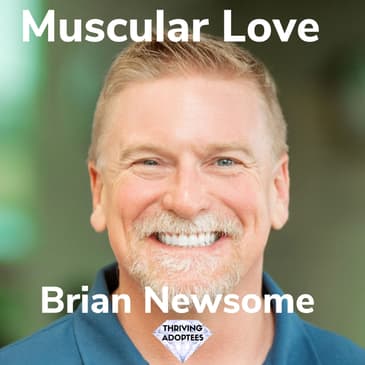
Loving kids with trauma takes a different sort of love, a muscular love. Listen in as Brian who leads a non profit supporting foster and foster/adoptive parents take on muscular love, connecting no matter what and more....
Find out more about Brian at:
https://fosteringhopefoundation.org/
https://www.facebook.com/fosteringhopefoundation/
https://www.instagram.com/fosteringhopefoundation/
https://www.linkedin.com/company/fostering-hope-foundation/
https://www.linkedin.com/in/bnewsome1/
Guests and the host are not (unless mentioned) licensed pscyho-therapists and speak from their own opinion only. Seek qualified advice if you need help.
Want to learn more about thriving for you, your kids, your families or your colleagues? Pick a time to talk here
[00:00:02] Hello everybody, welcome to another episode of the Thriving Adoptees podcast. Today I'm delighted to be joined by Brian, Brian Newsome from Fostering Hope. Really looking forward to our conversation today Brian, we had such a great chat last time so I'm sure this one will be great too. Yeah, it's a pleasure to be here.
[00:00:19] Yeah, so Brian's in Colorado Springs, Colorado and Fostering Hope is a slightly different sort of organisation than we normally interview people from and we'll probably will get into that in a little while.
[00:00:37] But you're a wraparound, what you do is wrap around adoptive and foster families isn't it? It's support and volunteers to make the logistics easier. Would that be a good way of summing it up Brian?
[00:00:58] Partly. I would say it's a non-professional kind of wrap around so we recruit volunteers and they function as aunts, uncles and grandparents to those families. So there is a lot of practical support that the families get, meals and date nights and things but I would say probably the most important part of the support is the relational support, the emotional support, seeing these people in the community.
[00:01:27] families as they walk through families as they walk through things. So you hear wraparound used in a number of ways in our world. Often it's in a professional kind of support services, putting those together around a family. This is a little different but conceptually.
[00:01:43] So thank you for the clarity on that and we'll dive into that a little bit more as the interview progresses. But you know, the big question that we like to start off with Brian is thriving. So from a professional perspective, from the leader of a non-profit perspective, from a human perspective, from a husband perspective, from a dad perspective, as broad as you like, right? What does thriving mean to you, Brian?
[00:02:13] Brian? It's such a wonderful question. I think it comes down to three things, which interestingly are the things that our organization's built on, but I think they're so universal in nature.
[00:02:28] I think enrichment is a big one. So enriching experiences where you get a chance to try some things, do some things and get a little better at them and then that builds a sense of agency and resiliency. I think that's really important to thriving.
[00:02:48] Connections, I would argue that might be the most important thing. Having people in your life that love you no matter what and are there for you through thick and thin. And then I think the third one is something that I think most of us take for granted, especially if you've grown up in a healthy family, but it's a sense of stability.
[00:03:14] You know, knowing you have a place to go when you're feeling a little insecure or scared in life. You know, having a calm environment when life feels scary. I think those three things are when you've got all three of those, you're in a position to just thrive no matter what externally is happening in your world.
[00:03:41] Yeah. I love the agency, the agency and the no matter what seem to connect somehow to me. It's about internal stuff rather than external stuff or, you know, when the external stuff is tougher, right?
[00:04:04] The world that we're operating is tougher. It's our internal stuff that comes to the fore. Yeah. Just how do you see your three areas? How do you see the interplay between those, Brian? How they link together? Yeah. That's a great, great question. I think.
[00:04:34] Well, a great example would be spending time in the kitchen with someone you care about. I think I think cooking is a great reflection of that because you've got all three working at once. So, you know, meals tend to bring people together. You know, cooking, there's something about that communal experience. So if you're if you're participating in cooking a meal, let's say for the holidays and you're doing that with someone you care about and who cares about you,
[00:05:05] you're you're connecting over something. But you're also creating something, you know, that internal part. Like there's something about cooking and I'm not a culinary whiz or anything like that. I can make spaghetti and that's probably the top of my skill level. But but but that process of creating a meal and learning how to do certain things and you take these raw ingredients and outcome something really, you know, wonderful.
[00:05:31] You're doing that in connection with someone and you're also in this environment that's very calming. And and and and so out of that, I think there's just this sort of sense of peace, you know, that that comes from.
[00:05:49] That interplay of being with people you love, being in an environment that is warm and inviting and feels like home and the process of creating a meal and doing things and getting good at them, you know. And and and then there's that final payoff of, you know, people enjoying your creation. I think all of those things are feeding your soul in a way that we may not consciously pay attention to.
[00:06:16] But but there's a lot going on there under the surface. Yeah, there is. Well, first off, you're one ahead of me because my signature dish is frozen pizza that you put in the oven for 18 minutes. And I make it slightly better by putting it for 20 minutes because I think it's better crisper. So spaghetti is one ahead of me.
[00:06:41] The next thing is the next thing that popped into my head, well, related but unrelated is have you got this thing in the States? We've had this thing in the UK for a while that people are knocking down walls to make their kitchens bigger. Right. Right. So that there's more of a family space, that there's more space for people to talk. There's more space in the kitchen.
[00:07:09] So more talking can be done over the preparation stuff. Is that is that a thing in the US or is that the UK thing? That I'm not sure. I know people love their big kitchens here. But interestingly enough, I know several people that have massive kitchens, but eat out most of the time, which is a tragedy.
[00:07:32] Yeah. Yeah. Yeah. I just watch we watch quite a lot of home shows, you know, like home renovation shows kind of stuff on the telly me and my wife. And that often they're knocking a wall down. So they maybe had a separate kitchen and a dining room and then knocking the wall down to make a kitchen diner. That's the sort of thing that's been going on for a while here in the UK.
[00:08:00] Yeah. Yeah. The other thing I thought of was I once another TV show once I saw a guy in Paris making croissants. Right. So for eight hours he was making croissants and it showed him like his finger going on to the pastry and a few little bits of art,
[00:08:24] you know, a few bits of maneuvering and then the croissant was ready to go in the oven. And he did that all day. And I just thought, how can you do that all day? But it must be some kind of meditation space that the guy gets into.
[00:08:45] Right. And that's what that was, as you were describing, the calmness and what's going on. That's the other thing that popped into my head. So. Yeah, I think that's another important piece is, yeah, calming ourselves and having.
[00:09:09] We we we've actually been trying to implement these things and subtle ways with those we serve. But the little the little tricks you can do to calm your nervous system, you know, tapping your tapping your arms and breathing. I think there's a lot of a lot of things you can do to kind of settle yourself when you when that fear response kicks in. Yeah. Yeah. Maybe maybe maybe maybe making croissants is one of those.
[00:09:37] Right. Yeah. I'm so glad that you said the word croissant the way that you did, because we we pronounce that. Whenever I hear it being pronounced in an American way, I think that's a cooler way of doing it. Oh, yeah. So where was I going to go with that? Yeah. So we're talking about peace. We're talking about calm. We're talking about contentedness.
[00:10:06] And we're talking about togetherness. And you also you talked about connection. No, no matter what. And and the thing that popped into my head is I heard you say that was this. Connection no matter what. Like unconditional love. Right. I'm going to I'm going to love you. No, no matter. No, no matter what.
[00:10:36] And how potent that is. And how significant it is for kids from hard places for kids that have been through these ACEs, these adverse childhood experiences. So. Can you talk a little bit when I asked you about what Fostering Hope did?
[00:11:03] You you talked a lot about the or the bit that I meant that the bit that I'd missed out really was that kind of emotional support. I perhaps defined it too narrowly and too in terms of logistic. And you said, no, it's what it's broader than that. Well, first off, you didn't say no. You just said you did it in a natural way. Right. So can you talk a little bit about about that?
[00:11:28] Yeah, I think I think it's the the thing, the most important thing, really. And our families say that, you know, we I talked to a mom, a few a foster mom a few years ago. And, you know, she talked about a volunteer bringing her, you know. And snacks for kids and everything. But it wasn't the groceries and snacks that she cared about.
[00:11:53] She talked about how this volunteer just took time to ask her how she was doing, ask her how her day was. And she this mom described how she had the, you know, the stains on her shirt and her hair was a mess. You know, it was just one of those crazy days with their kids. And and none of that mattered. You know, this volunteer just wanted to spend a few moments on the front porch, really, truly understanding how she was doing.
[00:12:19] And I think when you think about this concept of unconditional love, especially in the context of foster care, these kids have been harmed severely by by in most cases, by the people that were supposed to be the ones protecting them. And what that does to your your state, it's almost like a it's almost beyond a physical or emotional wound.
[00:12:49] It's like a spiritual wound. It's a wound to the self, you know, and you. You. You develop this this distrust of people and you develop this worldview that people are not resources that are out there to hurt you and their threats. And the way you undo that is to show up time and time again without expectations. And when they are intentionally sometimes acting pretty unlovable as a as a protective mechanism.
[00:13:17] And you almost have to stay the course long enough to change that worldview. And that's it. And it's a it's a worldview, both psychologically and physiologically. So we have a young adult who now works for us. But for years and years and years, she she's told me she's like, I just couldn't understand why you guys kept showing up. I was like, what's the catch?
[00:13:45] And they have to you have to demonstrate it long enough that they finally accept that there's no catch. So how does how do those how do those wounds heal? I I don't know that they ever heal entirely, but I think over time.
[00:14:12] Enough trust and enough love from people that that you can start to believe in. Reshapes enough of your understanding of people that there are some people out there you can count on. And I don't think it changes the fact that you'll probably always be predisposed to fear or, you know, a little bit more distrusting or cynical than people that haven't had those experiences.
[00:14:41] But but but it can over time teach you that there there are people you can you can feel safe with. But and and I think that's really you know, we've had some pretty remarkable outcomes over the years with our kids and families and compared to those that have gone through foster care without that kind of support.
[00:15:05] And and and I I chalk it up to just the fact that once you can start to once you can start to feel safe and trust people, that is that is the point where you can then begin to think about your future and then start to, you know, chart a new path for your own family and your own, you know, life. Yeah. Thrive. Yeah. Thrive.
[00:15:32] I was thinking about I just wanted to give a quick shout out on Emma. I don't know if she ever listens, but most props the longest term mentor in in my life. I think I've been I used to talk to her pretty much every week. Now it's probably once a year, twice a year. And I had a text offer this morning. Um, so it's a lady called, uh, uh, Elizabeth Ivory.
[00:16:02] Um, and her book is called It's Not Your Fault. I'm going to link in the show notes because she, she was, she's a, she's a poster girl in this space. Right. Um, she was abused in every way possible by her father. Um, and, uh, she, she, she wasn't adopted. She, the, it went to court, but she was not removed. Um, but her, um, her, her brother was, her brother was adopted.
[00:16:32] And, uh, she, so, and I, you know, when I was talking to her back 20 odd years ago about my stuff. And then I heard about her stuff and the fact that she got past, she got past that. I, she'd got past, she, she got past abuse by her own father. It, it gave me, it gave me hope.
[00:17:02] Cause if I think if, if somebody can get through something like that, then we can get through, we, we can get through anything. Um, uh, and, uh, and, uh, I'm, I'm wondering how big a factor hope and optimism is, is in, in the mix of what you do. I mean, it's, you called fostering hope. So, um, I'm guessing it's big for you. Mm-hmm.
[00:17:32] Oh, it's very much so. Um, but you, but that's what I, I'm saying when you talk about the, the length of time. And the amount of, of, um, unconditional love and showing up, that's how you get to that place of hope.
[00:17:51] Um, because, um, you know, when you've, when you've grown up with those kinds of experiences, um, you know, when you, when you've encountered that kind of abuse and then. You know, we've had so many of those that we work with tell us, you know, you're, you're not sure when, when the next thing's coming. You live your life that way.
[00:18:17] You know, um, we're trying to help teach our, our, uh, youth and young adults about saving and managing money. And one of the first things you have to address is the fact that if you don't think you're going to be around next week, there's not much incentive to save for a future. Right. So, um, so hope is, is what we're actually trying to establish. Um, but it comes from persistence.
[00:18:43] You know, it comes from those three things I mentioned, um, stability and safety. And those experiences to build a little bit more confidence with each one and those people showing up. And, uh, even on your day where you're just, you know, you might be the most unlikable person you can think of. Uh, they're still showing up and liking you anyway and loving you anyway. Um, those build a foundation.
[00:19:12] And on that foundation, once you feel like you can kind of breathe and relax and trust people and feel safe, that opens up the ability to then hope. You know, a great example of this that, that, um, I share with people that I learned, uh, many years ago is if you were out hiking and I don't know if you have a mountain lions in the UK, but, um, think of a bear. Yeah. Okay.
[00:19:42] Any kind of scary animal, right? If you're, if you're out for a walk or a, or a hike and you come across a scary animal, a bear, let's say, and you're out there all by yourself, you know, think about that, that what's going on inside of you, right? Your heart's racing, your palms are sweaty, you know, everything is focused on that bear.
[00:20:05] And in that moment, someone's not going to be able to reasonably ask you to think about, um, solving a math problem or, you know, what the next five years of your life is going to be like. You're, you're universally focused on that bear. Well, for, for so many of these, um, people that have experienced hard things, that bear is their life and that's where they're, that's where they go most of the time.
[00:20:33] And so to get to a place of hope, you have to eventually, um, you know, kind of help, help them learn that the bear is not everywhere you turn. Yeah. Cause you, you, this is relatively new for you, Brian, I think, cause this was a change, a change in your career, wasn't it? It was, I've been at it for a while now.
[00:20:59] I've been, I've been doing this for nine years, but, um, but yeah, I did not grow up with a, uh, or I did not, uh, train or get an education in social work. I was a, I was a newspaper journalist and that's, that's how I learned. That's coming back to me now. Yeah. It was a month or so since we thought you were a journalist. And so what, what have you learned about yourself, uh, over those last nine years? Oh gosh, there's so much.
[00:21:27] Um, I, I have learned that, um, I, I've learned to see people differently. Um, I've always been an empathetic person.
[00:21:45] That's, I mean, that's why I got into this work in the first place, but, um, but I've just learned that, um, as human beings, we are so complex. We are such complex creatures and, um, and I've learned that, um, there's so much more going on beneath the surface.
[00:22:07] Uh, so I first learned that as, as we worked with those that we serve, but I've also come to learn that about myself, you know? Um, so I do a lot more, um, a lot more, uh, introspection, uh, than when I started. And I think I really am able to sit with things and, um, um, um, take the time to understand them, uh, a little bit more deeply.
[00:22:36] So, um, as a, as an example, you know, you wake up in the morning or maybe in the middle of the night because you're stressed or you just have like this sense of heaviness. Um, now I think I'm more, um, more adept at, at really taking the time to reflect on that and understand what's going on.
[00:22:59] And I can say like, oh, I think I'm feeling a little bit of fear about X, Y, or Z, or I'm feeling disappointment here, or this is tapping into this thing back in my past. It's now resurfacing. So I think that, I think that deeper understanding of why we behave the way we do, why we feel the way we do, um, you know, all the way down to how our nervous systems feel, you know, feeling things in our bodies when, um, when different things are happening in our lives.
[00:23:28] So I guess I would sum all of that up into, I think I'm more attuned to my own life and, and, uh, into other people in my life. Yeah. So I think about emotional intelligence, right? Um, would that kind of sum it up really? Well, attunement and emotional intelligence, I guess they're similar ish things.
[00:23:57] But I don't know whether it's just me or not, but we don't hear that word emotion, those words, emotional intelligence as much as we used to hear. I think maybe it's a fashion that's gone, you know, that kind of come, come and gone. But, um, how, how, how, how do these two, how does your, uh, attunement to yourself relate to your attunement to others?
[00:24:26] I think, uh, a great example of that is, uh, my role as a parent. I have, I have two kiddos. Um, I have a daughter, she's, uh, 20 and she's off in college right now. And, uh, I have a son who's 16 and, you know, now he's driving a car and, you know, he's a junior in high school. And, and, um, I think, um, this has made me, um, hopefully I would hope they would agree with me, but I think it's made me a better parent in some ways.
[00:24:55] Because, um, when you understand that most things are not what they seem on the surface, it helps you take the time to really get to the, to the heart of the matter, you know?
[00:25:09] So, uh, with our son in particular, um, uh, he can be a typical teenage boy and not the most, uh, um, uh, thoughtful and how he, how he responds to things or how he treats you sometimes or, or how he reacts. But now, for example, I can understand that if he's a bit sullen or withdrawn, it's not just being rude.
[00:25:36] Um, it, there's something going on under there, you know, and, and we've had some really, really great conversations where I think with a little bit of calm and patience and moving, I guess to sum it up, moving beyond behaviors, you can really get to what's under the surface.
[00:25:55] And, um, so I, I've had several enriching moments with my, my children, um, where I feel like that attunement has led to, um, breakthrough is not the right word, but, um, it's, it's gotten to the heart of something.
[00:26:15] And I think if this had been me nine years ago, it would have been more of your classic scenario where a child's being, you know, rude or, you know, disobedient or unruly. And then you just react and get mad and you move right to punishment and, you know, it's up to them to get over it. And I think there's a more nuance in my parenting now. Yeah.
[00:26:41] Um, I don't know how long ago I heard that kind of the, the response versus react. The distinguishing, distinguishing between the, the, the, between the two that must be 20 odd years ago. No, but it stayed, uh, stayed with us and that, and that, and that in the, the little bit of space between, between the two. Um, yeah.
[00:27:13] One of the, I want to go back to the support for the people, well, the people that you support, the families that you support. And, and, you know, you talked, we talked a lot about connectionness and, uh, and connection and support and help.
[00:27:36] Um, what, one of the things that is a theme on the podcast is that it seems to be human nature. Our, our pride sometimes asks, sorry, our pride sometimes gets in the way of us asking for support. Um, uh, we feel like we should be able to sort this ourselves. Um, um, asking for external help is a sign of weakness and, um, those sorts of things.
[00:28:06] That, that seem to be a human thing, right? It's, it's not, it's nothing to do with, um, foster parents, adopted parents, parent, parents, uh, uh, social entrepreneurs, nonprofit leaders, whatever. Um, what have you just, does that, does that ring true? You're, you're, you're, you're nodding. Listeners, he's nodding. Um, what, what, what have you learned around that, um, Ryan?
[00:28:37] I think, um, that's a really important point. Um, and what we've done as an organization, um, uh, well, I think is, uh, to facilitate these relationships. Uh, we have, um, coordinators, uh, they're, they're on staff with us. They're, most of them are trained in social work and volunteer, uh, management, those kinds of things.
[00:29:03] And, um, they, they are the trained professionals to put the families at ease with that kind of thing. And even to pull out their needs while also making the volunteers feel safe and empowered to meet those needs. So what we like to say is that our coordinators create the space where loving service can happen.
[00:29:30] So in the, um, in the early days of, of matching volunteers with the family, the, the family is referred to us by their agency that licensed them. And one of the questions, um, that the, you know, agency asked on our behalf is, are you willing to be in a relationship? So they do have to acknowledge that they're willing to be in a relationship.
[00:29:57] Um, but once, once that referral is made and that family is connected to us, there's a very sort of gentle easing into the process to let them know how it will work. And, um, so it's not even just sometimes pride, but it's also overwhelm. Um, if you think of a moment in your life where you're very stressed out and overwhelmed, um, if somebody says, how can I help? In that moment, you don't necessarily know what to tell them.
[00:30:27] It all feels big. It all feels chaotic. And, and you're just not in that mental state, you know, again, it's almost like another version of that bear. Right. So, um, so the coordinators will sometimes not only gently help them address something like pride, but, but also like, would it be helpful if, uh, if this person over here brought you a meal on Wednesday?
[00:30:52] So that you don't have to worry about that when you're at the hospital with your children all day, or, um, you know, it sounds like you've got a full day of appointments. If someone could help drive you or drive the kids to some of those, would that be helpful? So, um, they absolutely need that help. And if you didn't have that person facilitating all of that, I just don't think it would, would be as successful because that's proven so important.
[00:31:19] And, um, and the volunteers would be overwhelmed by it as well. Yeah. So there's, there's something there about attunement and, uh, and anticipation of demands and steady, taking it, taking it steady because, uh, if you come on too strong or you go too wide, too nebulous, right.
[00:31:50] Then, then, then, uh, then the, then the parents gonna be confused and yeah, the relationship isn't going to develop. That's great. Yeah. That's a great point. The attunement that we've talked about, you know, that you have, um, with others closely, it does extend, you know, the, the coordinator, the family, the volunteers, there is kind of a collective attunement that needs to be developed. And, um, and our staff are very, very skilled at that.
[00:32:20] Yeah. Yeah. Is there anything else that, that gets in the way of people asking for support? Um, distrust. Um, you know, when we started, uh, as a pilot program 20 years ago, um, it took some convincing for those first foster families to even experiment with us.
[00:32:47] Um, because, uh, they have a lot of people coming in and out of their lives. They, they've got a lot of, um, demands put on them, you know, um, whether they're from the court system or, you know, their, their agency or, you know, there's just a lot they're juggling. And, uh, and, uh, and a lot of things that are asked of them that they, you know, really can't say no to.
[00:33:11] So the idea of having more people in your house, the idea of having one more thing to keep up with, uh, there was a little bit of, of, um, cynicism about that. Um, I think we're, I think now we've been around long enough and, uh, um, you know, the benefits are clear enough that there's not so much of that, but, but I think, um, I think those are probably the big three.
[00:33:36] Just a little bit of, you know, is this for real and, you know, uh, can I trust this? Um, a little bit of pride, like, will they see me as not being a good foster parent if I ask for this help? And then, uh, the third piece is, um, I'm so, I'm so overwhelmed right now. I don't even know where to begin.
[00:34:01] What, um, what I hear from, well, yeah, what I see on social media and what I hear from professionals in this space, the foster adoption space, uh, uh, I hear, you know, words like, um, blocked care, um, and secondary trauma.
[00:34:19] So the, the, the, the, the, the trauma of the, the child's trauma creating trauma within the, within the parent, um, what, what, what's your experience in your learnings around that space? It's, it's huge. Um, you know, roughly half of foster parents quit within a year.
[00:34:46] Um, and, um, and when you really see what their lives can be like, um, and that, that, uh, secondary or tertiary trauma, it's, it's significant. Um, we have, uh, foster parents that are, um, assaulted, you know, by their kids.
[00:35:07] And I mean, I mean, these kids, um, you know, when you look at what's happened because of their trauma, um, these behaviors, um, they're no fault of their own. They're extreme. Um, you know, developmental trauma, what it does to your brain as a child can be very profound. And so, um, when they become dysregulated, you know, they, they tear up the house, you know, uh, punch holes in drywall, um, you know, punch a foster parent in the face.
[00:35:37] Um, they might hurt another sibling. Um, those are traumatic kinds of things, you know, as a parent to deal with, there's the grief of losing a child when they, when they go back home or go, you know, you, you want that you can simultaneously want that for the child and also have your heart broken by not having them in your life anymore. Um, so there's a grieving process.
[00:36:02] Um, a lot of foster parents talk about not feeling like they have a voice, you know, they're, they're, um, a lot of their parenting decisions are really, you know, not always subject to what they would want to do, but they need to do because, you know, that's, um, you know, what the, what they're, what's being required of them.
[00:36:26] Um, um, so all of those things, uh, just take such a toll. Uh, we, we had a foster mom and, um, you know, uh, one of the kids was, uh, but both of these young children had been severely abused and, um, one of them kept trying to escape during the night.
[00:36:49] And, uh, so she had to sleep in front of their door on the floor every night, you know, so she could keep, you know, keep them from, um, going out and being unsafe. And, um, you know, I, I could, I could tell you story after story and, um, it's, it's significant. And when they become, when the parent experiences that kind of trauma or becomes dysregulated, then they can't help the child to co-regulate.
[00:37:18] The child needs that parent to be calm. And yet all of these circumstances make it very difficult for that parent to be calm. And that's really what we've tried to address is if we can, if we can alleviate some of that chaos and help them feel supported by extension, they can be that common presence for the child. Yeah. Yeah. You mentioned, um, uh, tigers and cats and stuff.
[00:37:44] Uh, the, uh, one of the trauma guru guys, uh, is a guy called Peter Levine. And I think his book is called Taming the Tiger. If I remember, uh, if I remember rightly. Um, and it's an, it's an odd thing really, cause he's a somatic trauma guy, right? So the trauma that's in the body, but he's written a book about it.
[00:38:12] So you're writing about, you know, writing is about, well, clearly books are about words, but somatic stuff is, is the stuff that's, that's in, uh, in the body. Presumably, um, you've got connections with other, uh, experts and nonprofits, uh, you know, when, when this gets extreme or is, is, is that, is that secondary trauma, tertiary trauma that you talked about?
[00:38:40] Is that, is that for within your, within your, uh, Bailey, what's the word? Within your remit. Mm-hmm. So there, there are many other services out there. Um, and we, we do not do the professional kinds of services.
[00:38:59] What we kind of, the way we think of ourselves is taking some of these scientific, um, learnings, you know, like, uh, like we know that, uh, a calm, safe, stable environment is really important. We know that developing agency is really important. So, you know, scientifically. Um, we're trying to translate that into the everyday home setting through ordinary people. Um, but there are professional services that these families have access to.
[00:39:29] Um, but there was a gap and that's why we, that's why we, you know, began in the first place. Uh, the, the families informed our program. They basically designed it, um, in recognition of this gap.
[00:39:45] So, um, the, the burnout experienced by foster families was becoming increasingly evident, especially to our founder who was a, a child abuse pediatrician prior to starting our organization. And, um, um, when we, when we started investigating that burnout.
[00:40:06] There was a gap between the professional services and the kinds of things they needed that looked a lot more like thriving, right? Like, uh, you know, love and being seen and having some support with daily tasks so that you can focus on your kids. Um, just a chance to safely just get something off your chest without them questioning whether you're a good parent or not.
[00:40:34] Um, those were things that were missing. And that was adding a lot to the stress in the home and the outcomes for the kids. Yeah. Cause you know, at the start of the show, we were talking about unconditional love. You know, you were talking about, uh, connection. No, no, no, no matter what. And, uh, and, and then now you're talking about punching holes in, in, in walls.
[00:41:01] These two things, uh, it seems, well, you know, how do you, how do you square that circle? It's, uh, it's, it's a big challenge, right? Yeah. Yeah. It's, uh, it's, uh, is our, um, one of the founders said it's, it's a muscular kind of love.
[00:41:23] Um, you know, it's, it's easy to, it's easy to love someone when they're pleasant and kind and, um, you know, and you're, you're getting as much enjoyment from their company as they're getting from yours. Um, but in a, in these situations where you have children that as a protective mechanism are going out of their way to push you away because it feels threatening and dangerous.
[00:41:53] That's hard. You know, um, when a, when a child goes, you know, when they become dysregulated and that fight, flight, or freeze response is causing them to punch a hole in the wall. And there is nothing you can do in that moment to console them. They have to, you know, come down from that. Um, that, you know, that's hard. And, um, it's, it's hard to, um, it's hard to love them through those moments.
[00:42:21] You know, one common scenario our families talk about is being out in public. Um, you know, we have children, a lot of children have food trauma. Um, you know, they were, they experienced, you know, periods of starvation, uh, very early ages, sometimes as babies and toddlers. So a mom takes a child to the grocery store and when they, they get around food, um, that can become a trigger.
[00:42:50] And, you know, they may have a total meltdown, unconsolable, inconsolable in the grocery store. And that foster mom is, is, is there in public dealing with this inconsolable child because of their trauma. Meanwhile, all the customers are looking at her judging, you know, with those judging faces, you know, why can't you get your kid under the, under control? Um, that, that's a very hard thing. You know, that's very hard on multiple levels.
[00:43:19] And, um, and that's what, that's what unconditional love looks like. You know, you're there in that hard moment, loving that child, um, as deeply as when they're acting well, as, as, as deeply as when they're well behaved. Yeah. Um, I, I, I don't want to ask a how question, right? Because that would be, uh, uh, I don't know, naive.
[00:43:45] Uh, what, what, what have you learned about that? Um, because it, it, it, it clearly is the, the coal face of, of foster parenting. We have, we have learned that the, especially again, it sounds like a broken record, but unconditional love and loving service and showing up consistently.
[00:44:14] Why that's so powerful, um, is we have learned that when someone simply sees what you're experiencing and they're there to support you through it, no matter how well or how poorly you're dealing with it. That goes a long way in helping you endure and keep going.
[00:44:37] Um, we had a mom a few years ago and she's with her team of volunteers. They meet once once monthly as a team and she's with her team of volunteers and she's just on the brink of quitting. You know, she's living out of drive-thru fast food, uh, windows. This was the mom that was sleeping on the, in front of the threshold of her child's room.
[00:45:04] Um, she's lost her job because she's caring for the kids. Um, she found, finds another job and that one's in jeopardy because her life is so chaotic. Um, and, um, this team is doing what they can, but the mom is just to the state of desperation and she's just really being vulnerable with them. And a volunteer puts their hand on her shoulder and says, you're not a failure if you can't do this.
[00:45:33] And that mom, in that moment, just exhaled, you know, just having someone acknowledge that. And that moment was actually a point where this mom, you know, just having someone say that allowed her to like let that weight off. And she ended up keep going or she, she continued to foster.
[00:46:02] She, she did not make the decision to quit. And, um, she continued fostering. Uh, the team continued to support her. Eventually she ended up adopting those children. And, um, I think a lot of it came down to that moment of someone just sitting there with a hand on her shoulder, looking her in the eye and telling her she's not a failure. So when you get to the how or, or why, I mean, I don't know how you put that into a manual, but.
[00:46:32] No, you can't. You can't. That's why I didn't, I didn't want to ask you a how question because I thought it would be, uh, I thought it would be, uh, well, put it, to put it bluntly stupid. Right. You know, I, uh, I heard this, um, I had a, I, I heard a great sports guy being interviewed about his, um, about his leadership skills.
[00:47:00] Uh, and, uh, the, the question, the, uh, the, the guy asked him a question. He tried to ask him a how, you know, a manual question like that sort of thing. And, and the guy, the, the sports star just said, um, it's just who I am.
[00:47:19] And, and the, the, it was a sports psychologist that was interviewing him and he, um, I thought, I thought he would ask him a better question after that, but he didn't. He just skipped on to the next kind of banal, oversimplified how, you know, how question after that. Um, so that's always, that was a few years ago and, and it stuck, stuck with me.
[00:47:47] And I just think it's, if, if, if there was a simple A to B response, right. Then, then we wouldn't be having this conversation. I will say though, uh, just cause I can almost hear our team, uh, getting mad at me for, for, uh, saying it's just this thing.
[00:48:06] We, we do have, um, very well-defined processes and, uh, procedures to facilitate those moments, you know, and without going into great detail about them, you know, all the way down to our volunteer trainings. Um, our volunteers are prepared for what they're going to encounter and they're taught. One of the biggest things that our volunteers learn is, uh, this is a nonjudgmental, um, unconditional kind of service.
[00:48:35] You don't go in to teach the foster parent what to do. Um, you're not there to, um, give them advice. The foster parent's the expert. Um, so there are things that we do in the how to create those moments, but, and a lot of that is really built around that concept of attunement that we talked about earlier. Yeah. Yeah. Feels like a great place to bring in Brian, uh, unless, is there something that you've, you'd like to share that I've not asked you about?
[00:49:07] Um, I think just, I, I would just conclude by saying, um, these are bigger than, um, foster care. They're bigger than adoption. Um, these are universal human things we've learned. Um, and, uh, I, I continue to marvel at that even after many years of doing this, that, uh, the, this idea of thriving.
[00:49:31] Um, if, if we held onto these things a little closer with all of our relationships, professional and personal alike, I just think the world would be a better place. Indeed. Indeed. Thanks, Brian. Thank you, listeners. We'll speak to you again very soon. Take care. Bye-bye. Bye-bye. Bye-bye. Bye-bye.