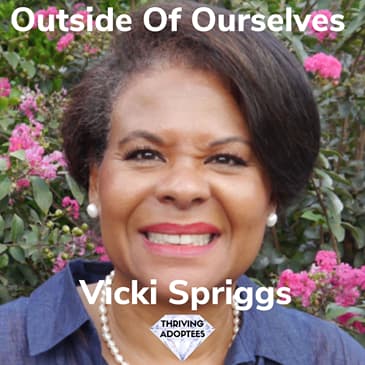
Looking for more meaning? Stepping outside of ourselves is where we find meaning. It's where we feel connected, passionate and at one. Listen in as Vicki shares insights from a life spent making a difference. Profound and empowering.
Vicki Spriggs is a dedicated advocate for children who has worked for more than 50 years in the child services arena. Known for her leadership on youth-related issues, Spriggs is a national speaker, a decisive leader and a fierce believer in the rights of all children, especially the right to a safe, loving and permanent home.
Spriggs currently serves as CEO of Texas CASA. Prior to joining Texas CASA in January 2012, Spriggs served in a variety of positions dedicated to child welfare, including as a foster parent, director of the Travis County Juvenile Court Informal Adjustment unit and executive director at Texas Juvenile Probation Commission. She received a bachelor’s degree in education and Master of Education in juvenile justice and secondary counseling from the University of Massachusetts.
Spriggs was the recipient of the National CASA/GAL Award of Excellence -State Director of the Year in 2022.
https://www.facebook.com/texascasainc
https://www.instagram.com/texascasa/
https://www.linkedin.com/company/texas-casa/home/
Guests and the host are not (unless mentioned) licensed pscyho-therapists and speak from their own opinion only. Seek qualified advice if you need help.
Want to learn more about thriving for you, your kids, your families or your colleagues? Pick a time to talk here
[00:00:02] Hello everybody, welcome to another episode of the Thriving Adoptees podcast. Today I'm delighted to be joined by Vicki, Vicki Spriggs. Looking forward to our conversation today, Vicki. Just great to spend time with you. Thank you, Simon. I'm really happy to be here and glad to have met you as well. You're a star. You're a star. So, ladies and gentlemen, Vicki leads Texas CASA.
[00:00:27] That's the Court Appointed Special Advocates. And regular listeners will know that we've had Joy Rigbyon, who leads CASA up in Alaska. And closer to where Vicki is in Austin, we've had Angie White on the show, who leads San Antonio CASA.
[00:00:49] So we're having a streak of CASA. And so what these Court Appointed Special Advocates do is they advocate for the kids that are in the system. So a lot of these kids will be perhaps having more than one multiple placements within different foster families. They may be in other group homes and stuff like that, I guess.
[00:01:17] So there's all this change going on within these young people's lives. And a CASA is a constant, regular person who is advocating for that child or teenager wherever they are in the system, despite the different environments that they might be in. So they do an incredible, incredible job.
[00:01:46] So Vicki leads Texas CASA. She is also, she was adopted in the sense that her mum and dad got divorced and her second, and her mum's second husband took on six daughters, right? Including Vicki. And Vicki's other experience within this, you were a foster, you're a foster carer. A foster parent, correct. A foster parent as well.
[00:02:16] So a wealth and depth of wisdom that we're going to be exploring over the next hour or so, maybe just under. So with all that said, the big question that we love to start with Vicki in terms of you and what thriving means to you. If you don't mind, I'd like to go back a little bit because everything that you said about court-appointed special advocates is true.
[00:02:46] You just left out the most important part, which is that they're volunteers. Okay.
[00:02:50] So while the paid staff, the attorneys, the caseworkers are coming and going because of high turnover at the caseworker level and the attorneys hardly seeing the children or the young people, it is the CASA volunteer who is the constant person that's with that child, staying in touch with that child, doing all the best interest research they can do to create the best outcome for that child and family.
[00:03:17] Right. So they're the unpaid person who is the one that ends up really having the highest value for the young person. So I just wanted to make sure that was added because it is the crux of what CASA is. Okay. Thank you for reminding me on that one. And that gets me thinking also about the significance.
[00:03:40] So when I interviewed Joy from Alaska, Joy Rupi from Alaska CASA, she was a volunteer before she joined their staff and became the leader of Alaska CASA.
[00:03:53] And the fact that she was a volunteer made an incredible difference to the young person that she advocated for because that person knew that she was doing it out of the goodness of her heart. Exactly. Not for a pay packet. So it's not only the continuity of the advocacy, it's also the nature of that being a volunteer.
[00:04:20] It means so much more for the young person. It means the world. Absolutely. And every volunteer I talk to talks about how they came into it to make a difference and how the difference is actually made for them. Right. They learn so much from the young people.
[00:04:41] But for the young people that I talk to or those who have experienced the foster care system who have now exited care, they talk about the qualitative difference in their lives that CASA volunteer made. Because once they realize there's always that barrier at first because the trust has been violated in their life. People are coming and going in their life. The CASA volunteer is one more person that shows up.
[00:05:05] And then they realize over time, oh, you're still coming to see me no matter where I move to. And then they find out they're the volunteer. And that's when the sun starts to shine. It's like you're doing all this and you're not getting paid. And that, again, critical, critical difference for the young people in care, which is why we have a volunteer focus model. Yeah. Yeah. Have you on a similar sort of subject? Have you heard of this?
[00:05:36] This process called reverse mentoring. Have you heard of that? No, I haven't. So reverse. So normal mentoring is a younger person, an older person mentoring a younger person. Reverse mentoring is when they do it the other way around. So the more junior, younger member of staff mentors the older member of staff. So I've read about it in the newspaper a couple of years ago.
[00:06:04] I thought, what a great way for leaders to get in touch with what's going on for younger people and that fresh sense. And I always feel that I used to do work in elementary schools.
[00:06:23] And if we, when we turn the child or the teen, when we turn them into the teacher, rather than expecting them to take our word for it, there's a massive shift in empowerment. Exactly. And we're building that young person up. Exactly. Yeah. So thriving.
[00:06:52] What does thriving mean to you, Vicky? Ah, thriving. I would say if one is thriving, they're happy. They are confident. They have their own sense of self-confidence, which also leads to resilience. It's like they know there are things, whatever the challenge is, they're going to find a way. They know they're going to be able to find a way to overcome that.
[00:07:21] And thriving is also, to me, part of that is having a support system. Right? And then consciously living your life. Like living your life with intention. You may not know where exactly you're going, but you have a sense of you're moving, you're moving forward. And you're able to experience joy.
[00:07:46] You're able to experience connection with the people and the things around you. Right? You can go outside and really appreciate a great sky or the flowers that are growing. That's thriving because you have the mental space to open yourself up to what's around you. Yeah. That moment, that little moment of joy there with the wide open sky.
[00:08:15] And this is Texas. So you've got big skies, right? Big sky with big skies. Big sky with big skies. Big sky with big skies. Big sky with big skies. That's like a, it's like an interruption to our day, isn't it? It's like peace calling us back. Yeah. Yeah. Yeah. It takes you away from the, whatever the, I'm going to call it the mundane issues of life or the challenging issues that you're dealing with.
[00:08:44] To be able to step outside and just look at the sky and look at the flowers and appreciate the trees or watch the dog run by, whatever it is that takes you outside of yourself for that moment to just grasp what is happening around you in the positive. That, that is just, that's part of thriving. I mean, that's it. Just to be able to do that. Yeah. Yeah.
[00:09:14] I recently heard that described as a taste of our being. Hmm. Yeah. You know, when I first came, I grew up in New York, in New York state. And when I first moved to Texas and I actually arrived here July 4th of 1981, I remember looking at the sky here. It was before everything got to, I'm living in Austin, Texas.
[00:09:38] And so before everything really started building in Austin, Texas, when I arrived here, you could see the night sky was like black velvet with diamonds twinkling in the sky. It was just amazing. And the grass was green all over the place. And you'd see robins running around the lawn. And it was just, it was amazing. And that's why I moved here. Now we're so built. You can barely see that.
[00:10:06] You can still see the night sky, but too much light's reflecting off of it. So it's not the black diamond effect. But it's still, when you get out in the country, you can still appreciate the night sky like that. And it's really something to behold. And just the green grass and the rolling hills. Well, Texas is very interesting because there are some places that are just so flat and deserty and other places that have rolling hills and lakes and rivers. That it's just, you know, it's just an amazing state.
[00:10:35] Anyway, but just to see that, you know, to experience that metaphysical piece of I am part of this universe. Right? I am part of, I am, I'm a minor speck in the overall scheme of things. Right? You look at that big sky, but, but I am a piece of it. You know, I'm a part of that. And that's, you know, that's, it's something to experience and to be able to just open yourself up to experience that.
[00:11:07] That's a test, a taste of our connection. Yeah. Absolutely. Have you read, I listened to a guy, one of the American astronauts talking about a Kensho moment, a moment of intense consciousness and awareness.
[00:11:32] You know, looking out of the module and seeing, seeing the world, seeing the universe, you know, so many miles away. And took him outside of, took him outside of his normal self.
[00:11:51] As you said, a break from yourself, but a, a taste of our being rather than, rather than the separate self, a taste of our connected self. Exactly. The oneness, kind of unity, consciousness. Yep. Peace. Yeah. That, that is, it's a, it's, those moments are an interruption into, into the chaos of every day to the peace that we,
[00:12:23] that's the peace that we owe ourselves. And that's, that's there for us again, but okay, that the difference between surviving trauma and being able to become, recognize that connectedness is the difference, right?
[00:12:46] Because depending upon the extent and the level of resilience, treatment, therapy, whatever, to overcome the trauma. If your brain is locked in trauma, you can't get that. Because now you're focused on the inner and the outer in a way that is protective, protective of self, right?
[00:13:12] So it's hard to experience the universe in that oneness if you have to protect yourself all the time. Well, we feel separate. We don't feel connected. Exactly. The trauma, the trauma is the, is, is in the separation. Exactly. It creates that separation. Yeah. Yeah. Yeah. When you talked about the stars, did you, you talking about the tweaking, did you mention the word diamond?
[00:13:42] I did. It was like, I said, it was like the night sky was like black velvet with diamonds sprinkled over the black velvet. Yep. Yeah. You know, the thriving adoptees logo is a diamond. No, actually I didn't. Well, there you have it. There you have it. But it's, it's the diamond. It's the diamond as a direct counter to the trash.
[00:14:10] You know, kids, kids who have come from trauma, kids who have been in, been separated, kids that have been in the system, kids that have had multiple placements. Right. We, we tend to think that there's something wrong with us. So the, the diamond is the direct counter, the direct opposite of that. Yeah.
[00:14:40] And, but we're, we're talking, we're normally the diamonds, you, we've got diamonds in the sky. Yeah. There's a Beatles song there. Yeah. And, but diamonds are usually, they're, they're, they're in South Africa, right? They're mined in South Africa and they're deep, deep underground, right? So what, what we're doing when the Thriving Adoptees podcast is we're going diamond mining.
[00:15:09] We're digging through the layers of rock, which is the equivalent to the, that's a metaphor for the trauma. Yeah. To get to the diamond that's underneath. Well, you know, it's interesting, as you were saying that you think about the rock, right? The diamond is discovered typically encased, as you said, in stone. The diamond starts out. I mean, the diamond is there, right?
[00:15:36] The diamond, that child, all children hit the world with this beautiful golden spirit. And then events will determine, does the golden spirit get to shine straight through? Or does rock begin to cover the spirit trauma that then has to be cracked later? So that diamond is shining again, right?
[00:16:02] That's, that's, that's, you know, if you're in the diamond, that's what comes to my head as you talk about that diamond analogy. But that's, that's how I see it because that, that trauma puts layers of soot, if you will, that covers the diamond. And the diamond then has to, things have to happen to like chip that, chip that soot, that rock away.
[00:16:30] So we've got to go diamond mining and we've got to help our kids go diamond mining for themselves so that they can see their brilliance. That's how that empowerment comes in. Yep. Yep. See their own brilliance because they won't, they can't see that for themselves. Exactly. The trauma's hiding the diamond. We, we, they, we can see their brilliance, but they can't.
[00:16:59] So we've got to get really good at pointing them towards their own brilliance so that they can see it for themselves. And that's where that links back to what you talked about there, the self-confidence. Because that, that, that, that diamond has, has self-worth. It has self-esteem. It has self-confidence. Exactly.
[00:17:30] Exactly. You know, one of the things that I, I talked to a lot of the CASA volunteers about when they're talking about working with the young people and they work with zero to 21 at this point. Um, but the, um, the fact that, and just getting a young person to recognize everything they've gone through that it's like the hardest thing anybody ever does in life is being born, right?
[00:18:00] You got to push your way out of a canal. You're pushed into a world where you don't understand what the heck is going on. And all you can do is cry for what you need and hope, hope you get the attention that responds to what it is you need. And then in the, in the effort to understand the world that you live in and you learn how to speak, whatever language it is you're growing up in the environment of, you learn how to do that because you need to be able to communicate your needs. Then you need to be able to figure out how do you get around because sometimes nobody's there to carry you.
[00:18:30] So how do you, how do you, how do you get around? Um, so then you learn how to crawl. Then you learn how to walk. Then you learn how to run. And it's like, if you can even help young people understand, they've already done a lot of hard stuff, no matter what anybody has done to them. They can't take away from the fact that that young person themselves has already done a lot of hard stuff. They overcame. Right.
[00:18:58] And then, so you just kind of build on where you see their light shining where they don't see it. And you just keep inching them forward so that they begin to own their own power. Yeah. It's like the, um, the trauma has endarkened them. Yeah. Yeah. But they are the light. They are the light.
[00:19:28] And you have to show them that look, look in this mirror. Don't look in that mirror that somebody put on you. Look in this mirror. This is your true self. Here's, here's, here's what you've already done. Right. What else do you want to do? Let's, let's figure out what else you want to do. Let's get you there. Cause you can do that. Isn't that the seeing of their own resilience? Exactly. Cause a lot of people talk about resilience as if it's developed.
[00:19:59] And to me, it's something that seen. Rather than. I think it's felt. Not so much seen. Yeah. Yeah. We see it in the other person, but the other person has to feel it. And, and I, and that's why I kind of put confidence and resilience in the same kind of stream of thought because you have, you have to believe from the outside going to the young
[00:20:29] person. It is. Well, let me back up. Depending on the person that you're talking to. Some people have so much resilience, so much self-confidence. You got to like slow them down. Okay. Now let's, let's, let's build in these. You got, you have some gaps in the foundation. Let's, let's fill these gaps. Cause you've got this. You've got this. Let's fill in these gaps. So now you can fly. Forget thriving. You're going to fly.
[00:20:55] Um, and then others, because of the length of time of that trauma or that abuse or whatever that situation is, you really have to help them recognize that, that they can, they can fill in the blank. Right. But, but that's, that's a belief. They have to believe they can. And from that belief comes the confidence, comes the resilience.
[00:21:25] Have you heard of that term? What's the lady? The growth mindset lady. I think she's from Texas. Is she Carol, Carol Dweck? Have you heard of her? Dweck. I've, no, I've heard of the growth mindset connection. Yeah. The growth mindset was something that I think it was a, I think it was a, a term that she coined. She was an educator, an American educator. I think it was Texas, but I'm not sure.
[00:21:51] Uh, Carol Dweck with a D, D W E C K. So what she's summed, I read the book and, um, a while ago and she, it's summed up in, in one sentence. It's not that you can't, it's that you can't yet. Yeah, exactly. Yet, yet is the key. Yet is the key word. Yep. Yeah.
[00:22:19] And, and the yet is you can't yet because you don't believe you can. That would be what I would add to what she said, because you can't yet because you don't see yourself being able to do it. Once you see yourself being able to do it, you can do anything. What have you learned about busting that belief that, that we can't?
[00:22:50] Creating the belief that, how do you create the belief that one can? Again, looking at, again, recognizing that every soul is its own diamond. Looking for this, do a strength-based, you know, just keep continuing to engage from a position of that person's strengths. Look at what you did today, you know, and, and point out like what it took to do what they did,
[00:23:16] whatever that thing is that they did, or those things are that they do, but really using those and pointing those things out and talking about those as strengths so that you continue that person is able to like recognize that they're powerful. Because everybody is powerful. I think society generally for most people doesn't empower.
[00:23:42] You have to grow up with people who are telling you you're empowered to believe that. We have so many lambs out here in the country without trauma who are lambs because they don't believe. They just follow. They're looking for somebody else to believe in. You have to teach people to believe in themselves, right? And they have to, when they gain, when they get that, and again, by building on the assets, you know, this is what you're doing.
[00:24:11] Look at, look at how well you do X. You know, you did that. And I haven't seen somebody do that like that before. You were really effective in making this, this difference. And talking to get, you talked about it when you talked about how you work with the kids in the elementary school. It's that same thing. It's that same dynamic. Making them your mentor, highlighting for them what they've done well. So that it's just, it's a foundation. You just keep adding the bricks to that foundation. You set a strong foundation.
[00:24:41] Then just keep building the bricks on it. Yeah. Until they're able to say, I got this. So you're kind of directing them towards their own evidence. You're helping them see the evidence in what they have done themselves. That's right. That's right. That's right. You did this. I didn't do this for you. You did this. Right?
[00:25:11] You asked me how to do XYZ. But if you didn't ask that question, maybe I wouldn't have known you needed to know XYZ. Right? So all the steps, even asking questions. That's a strength. Right? Being able to formulate the question to ask, how do I do this? Right? Wow. That's a great question. You know, that how to, a lot of people never ask that kind of question.
[00:25:40] Well, here's how you do it. Here's how I would do it. How do you think you want to do it? But it's that. The questions are key to the empowerment. Mm-hmm. Yeah. When I get near this, I think about like questions. Questions end with a question mark, right? Which is a bit like a hook.
[00:26:05] And then, so what we're doing is we're hooking, we're bringing the insight out of the person. We're using the hook to bring the wisdom that's inside, outside. So it's their insight. It's their wisdom. It's their thought. It's not something that we've put into them. It's something that, yeah.
[00:26:32] The word educate comes from the Latin educare, which is to draw out of people. It's not to push, shove into people. It's about drawing out. Yep. Yeah, the wisdom is there.
[00:26:53] Sometimes, you know, just in life, general pop kind of response would be, you don't even know the question to ask sometimes. But asking any question for the young person, right, that we're talking about here, the adoptee, the person who's gone through trauma to get on that path of life. They may not know the questions to ask, but they'll have questions.
[00:27:21] And so the prod is, so what do you think about X? You know, what is X? What do you think about that? Or just ask those not weighted questions, but just questions that get the conversation started, that get them thinking in a certain kind of way. That it's not a test and doesn't feel like a test. Yeah. Open questions, presumably. Yes. Yep. Yep.
[00:27:55] That's how we boss beliefs, right? Exactly. I see. I see beliefs like bouncers, right? They don't want to let new thoughts in. Exactly. Yeah. Yeah. So, yeah.
[00:28:16] So, because sometimes beliefs, depending upon what the belief is, right, the belief system, if the belief system is, I'm open, I really want to hear, that's a strong belief system. But if the belief system is, this is the box of the world that I live in, and if it doesn't fit in this box, it just doesn't fit. They're wrong. Then that belief system becomes walls or boundaries or limitations. Yeah. Yeah.
[00:28:45] And as the person, if you ask just general questions, what do you think about X, Y, Z? And you start getting a sense of that, then you can ask some other questions that build into or out from the, I'm going to use this term loosely for lack of a better right now, but lack of logic that box has created for them, or the limitations that box has created for them. Yeah.
[00:29:12] We don't, what do people call it? Self-limiting beliefs. It's a question that I ask every now and again on the podcast is we don't hear within the adoption and fostering world, we don't hear the word, or I don't hear the word phrase, self-limiting beliefs a lot. Right. Do you, do you hear that?
[00:29:42] You hear that word a lot? No. In fact, as you said that, I was realizing, you know, that's true. So no, you don't hear it a lot. It's, I haven't said this for, I haven't said this for a while, but there was a while, a few months back when I was talking about this one lady all the time. Um, so her name's just gone out of my head. It will come back to me.
[00:30:10] This is a lady from another New Yorker, I think originally, um, or maybe New Jersey. Anyway, that, that part of the world, East Coast, um, who is a, she, uh, she's a, she's a foster mom and she often fosters older teen girls. So 16, 17 year old girls. And this lady has her own trauma experience.
[00:30:39] Unfortunately, her first, her first husband, first husband was very abusive. She was into, she was in suffering from domestic violence and the guy almost killed her. Right. So he said, she says he was, he was addicted to alcohol and I was addicted to him. So it took her 13 years to get out of this domestic violence. Yeah. Wow.
[00:31:08] Um, so she is, uh, she, she shares a little bit of that where appropriate with, where kids are, um, you know, the, with the older teens perhaps. And she says, so she's, she starts that after she's, when they're settled in, right? This isn't, this isn't the first, this isn't the first conversation for the first hour than she, than these 16 year olds have arrived, arrived in her, um, in her house.
[00:31:37] But she says, I'm not going to deny your trauma. I know that your trauma is real. She knows something of that story. She says, but you've, you've got, you've got a choice now. You can either succumb to the trauma or you can rise above it. And I, I, it, it just, the reason I kept on repeating it on the podcast is it's so, it's so strong.
[00:32:07] It, it, it, it, it's so gutsy of her to, to, to, to, to say that she's obviously created some empathy with these, these, these teens, but to lay, to lay out on the line in such bold and straightforward terms. It's, it's, it's, it's, it's got to be a truly, a game changing choice that she's giving these, these older teens.
[00:32:36] And you're not going to do that with an eight year old clearly, but you've got to be age appropriate. But making that clarity, it was just overwhelming for me. And I thought, what would happen if I went into like some adult, adult adoptee spaces and said stuff like that? I would get, I would get, they would come for me. Right.
[00:33:05] Well, if you didn't have that relationship, if you hadn't started, you know, building a, cultivating relationship with them first. Yeah. I had a, there's a young man who came up in the foster care system. He and his two brothers. And he had a CASA volunteer and he said, he and his brothers were removed. The father was gone. The mother had mental health, severe mental health issues. They were pulled from her care, sent to a placement.
[00:33:31] And he said, they were in this residential group home. And he said, the atmosphere there was kind of depressed. All the kids there, you know, you got up, you got dressed, you did everything that was according to plan. You went to school, but there was no joy. There was no future, right? In that facility. And he said, one day his CASA volunteer came to visit him. And he said, the CASA volunteer took him for a walk.
[00:33:59] And he said to him, you are not what happened to you. You get to decide who you are. The experience doesn't define you. And he said, that was world changing for him mentally, right? So he went back into the group home and he said he got his two brothers and he sat down. Incredible. Oh, yeah.
[00:34:24] So he went back to his two brothers and he said, this experience does not define us. We get to choose who we are. And so they began to like own that. And then they started sharing it with the other kids in the group home. And all of a sudden, there was joy because now there's like, we get empowerment, right?
[00:34:48] Because the other kids, because this one spark, the CASA volunteer sparked in this young man, this empowerment, this empowering notion. He shared it with his brother. And it's like a ripple on a pond. They share it with others. And all of a sudden, the whole house, all the young people in the house are now empowered because they recognize they get to pick their future. They get to determine what's going to happen next. Cedric, this is a young man's name.
[00:35:18] He's a public speaker. He talks about this publicly. So I didn't violate a trust. But he goes out and he speaks now, he speaks nationally about that experience and how it changed his life. And now he's a successful businessman with his own family. But it just, you know, one, whether it's the choice, how this woman talks about the choice or how it's just that sentence of the experience doesn't define you. You get to choose who you are.
[00:35:47] Those little things are big, big mountain movers in the minds of a lot of young people. Yeah. Those are the empowering thoughts that make a difference, that can make a difference. Yeah. Mountain movers. Yeah.
[00:36:11] I think we need to be talking more about beliefs, don't we, and mindset in this space. And, you know, the empathy first, as you say, right? The empathy first, and then the questioning, the questioning of the past not determining the future. Yeah.
[00:36:41] And incredible that Cedric's giving back as well, right? Yeah, exactly. Exactly. What do they say? That which doesn't kill you makes you stronger. And use that test that you would put through with a fire. What is it? Fire shapes metal. Yeah. Right? And so many of the young people, they don't have to feel compelled to share what they've gone through.
[00:37:08] But for the ones that I've met that do, their story, what they've gone through, that test becoming a testimony that they're sharing with other young people who are in care, helps empower those young people who are in care about the other side. Right? This is what I went through. I got through it. I'm on the other side. This is what I had to learn going through it.
[00:37:38] So how important is this for your volunteers? We have a lot of volunteers who grew up in the foster care system. And then for the volunteers who haven't, it's about compassion, right? It's about compassion and being willing to and wanting to do the right thing by this young person. And so, you know, our volunteers, they're trained, right?
[00:38:06] Then they have a supervisor that's assigned so that if they get a child whose case is really complicated or they feel like they're not making the kind of difference they want to, they've got that supervisor that they can talk to who will help them bring the best skill set possible to working with that young person or challenging the system, which a lot of times is what they're having to do. The volunteers challenging the system on behalf of that child to make sure the right things are happening for that child.
[00:38:36] But yeah, it's important. It's important. And again, if you don't have the experience, it's the listening. It's like really listening, not preconceived listening, not this is what I'm going to say when I get there. It is listening to find out where that child is, where that young person is. So you're talking about challenging the system, challenging beliefs. Listening and empathy is key to that.
[00:39:06] What else have you learned about this empowerment piece, Vicky? I guess empowerment starts with who you surround yourself with, right? You surround yourself with negative people. You're going to adopt a lot of negative beliefs.
[00:39:35] That may, this is going to sound strange, that might seem positive. But when you're surrounded by negativity and that becomes the norm, then the negative sounds positive and you don't know that it's negative until you step outside into a broader circle. Right. So who you surround yourself with is really important in terms of what they're putting in your head. Yeah. So I go ahead. Yeah.
[00:40:03] So what I've seen about that and the negative seeming, well, who we hang around with, what I've learned about that is that there can be, there's a relief in validation. But that relief can become stuckness. Exactly. Yeah.
[00:40:30] So my, I went through that myself, right? So I read the, 12 years ago, 13 years ago, I read the Primal Wound book by Nancy Verrier. You're nodding, you've heard this book, yeah? So it's like a Bible for many adoptees.
[00:40:55] And when I read it, I thought, well, this explains everything. So there was a relief. And then I was, and then after the relief was a kind of a feeling that I'm stuck with this. But the people that I was hanging around with were people that question our beliefs. Okay.
[00:41:23] And so I had a big insight for me, which was realizing that I'm not stuck with this wound. And more profound than that, the realization that came to me was that who I truly am and who we all truly are is unwoundable.
[00:41:50] So I now call this primordial wholeness. Oh, I love that. Yeah. Primordial wholeness. So we are whole underneath our trauma. We are whole underneath. I'm not denying the trauma. I'm saying that we are whole underneath our trauma. I acknowledge it and I put it back on its shelf. It doesn't define my life.
[00:42:19] It doesn't define me. And yet there are people out there. Here in the UK, there's an adoptee who is also an adoptive parent who put a post up on LinkedIn last year. I am trauma. Oh, dear.
[00:42:42] So we need to be careful who we're hanging out with. We need to be careful who we are being influenced by.
[00:42:57] Because if that person's sense of self is so trauma identified, it's more than being stuck in the trauma. It's being identified as trauma. Exactly. Exactly.
[00:43:17] You know, I just did a training, volunteer training this past Saturday in Texarkana, Texas, which is right there on the Texas-Arkansas border. And the theme for the training, for the volunteer training, I was just a speaker at it. But the theme was sowing the seeds of success. And what I talked about, because I'm a believer in wherever you go, there you are.
[00:43:47] So if you're a volunteer, I'm going to give you this information at the adult level, and you can break it down for the young person's level. But one of the things I said is, besides be careful what you allow in your head by being careful who you surround yourself with. But I also talked about how in business we create strategic plans. But we don't do that for our lives.
[00:44:13] We don't say, so I talked about developing personal mission statements, right? So you develop a personal mission statement by thinking about what do you want in life. And then typically, society tells us thriving is the big car, the big house, the designer wardrobe, the designer shoes, the designer purse, the designer this, that, and the other thing. All this materialistic stuff. That's not thriving.
[00:45:05] The Stephen Covey thing of beginning with a well-detailed vision of the end. This is what I want it to look like for me. This is thriving. And then work backwards from that to the present day. So if I want to have a, if I'm an introvert, which basically I am, I'm a huge introvert. I tell people, you can put me in a cell. Just give me a bunch of good books and some good music and something to drink water. I'm a happy camper. However, I don't live my life like that. That's how I refresh.
[00:45:34] I have to step away from people to do that. But generally, my energy is outward. It's outward projecting. Because part of my personal mission statement was I wanted to make a positive difference in the world I live in. And then, of course, I had to define all that for myself. But part of that is generating and radiating positive energy.
[00:45:57] And being an inspiration to people, to elevate people in their mind space so that they recognize they can do. And they are. They are beings, powerful beings that are put here for a purpose. And if everybody owns that, I can die tomorrow a happy camper because I know I have done that. But we don't think about personal mission statements.
[00:46:25] And if we can get young people to start thinking about personal mission statements, it helps define. If my goal is to make a positive difference, I can't hang around. I can't. How I pick my friends, how I live my life is now going to be defined by this vision that I have for my life and what I want it to represent. So that's just something that came to mind as you were speaking, just sharing that.
[00:46:53] And we need to do this for, if we're parents, we need to do this for our kids. Exactly. My work in schools before I came into the adoption space was about kids' dreams and making them come true. These were 8 to 11-year-old kids.
[00:47:18] Now, I spoke with 1,200, 1,500 kids in the UK. And a couple of years ago, I did the same thing in South Carolina. I spoke to about 1,000 kids within a week about this stuff. And none of them ever said, oh, we've done this already. Exactly.
[00:47:45] So we can't rely on the educators to do this stuff. We need to be doing it for our kids. Yeah, because generally the education system isn't designed to empower.
[00:48:00] It's designed to, as you talked about earlier, push information into children's heads, not to empower them to become entrepreneurs, empowered thinkers, empowered beings. It's like, for the education system, typically they make your goal to get a good grade. And that's where you're supposed to find your sense of self-worth.
[00:48:28] But the good grade doesn't necessarily, that's not a good indicator. So, yeah. Yeah. Yeah. Yeah. So I'm doing the adoption stuff because when I went into schools talking about personal mission statements, I wasn't, you know, I was talking about, in my own words, I would say empowering kids to make their dreams come true, right?
[00:48:57] But when I went into schools to do that, I couldn't get that to scale. I couldn't get that to scale because the schools are focused on the grades, not on the empowerment of their kids. Yep.
[00:49:15] So if you're a parent, you need to be doing the nine yards, the whole nine yards with your own kid because you don't want to leave it to the school to do it. That's right. That's right. And the sad thing is, even most adults don't think about having a personal mission statement. And they may be all in for whatever company they work on.
[00:49:44] They're part of the strategic plan. You know, they really get into that process, but they don't think about doing that for their own lives because their parents didn't know to teach them. So it's like you really have to you have to keep pumping it out there. So adults, especially parents, start thinking along those lines so that putting that information into their children. Indeed. Indeed. So we're coming up on time here, Vicky. I'm wondering if is there something that you'd like to share that I've not asked you about?
[00:50:20] Actually, nothing comes to mind. This has been a great conversation. Yeah. We're good. No. I just I guess the only thing is, you know, as we have these conversations and you've been pointing it out, even as we go, the conversation takes on different levels depending upon the age group that you're talking to. But you can still start feeding that line, you know, feeding the thoughts. But it's just different how you how you articulate it. It's going to be different depending upon the age.
[00:50:49] Sowing the seeds age appropriately. Exactly. Exactly. Yeah. I appreciate the work that you're doing out there and getting this getting this having this discussion with the broader public. Thank you for that. Thank you. Thank you very much. And thank you for being part of it. Thank you for listening. Thank you for inviting me. Oh, please. Thank you for being part of it. Oh, sorry. You're a star. Thanks so much, Vicky. Thanks, listeners. We'll speak to you again very soon. Take care. Bye bye.