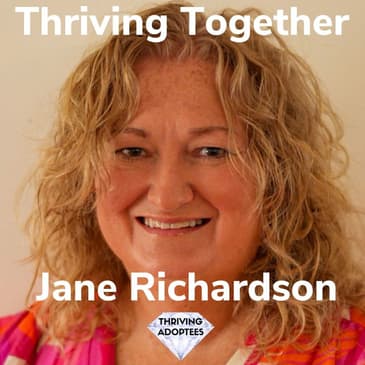
Together we thrive. Listen in as Jane dives deep into the power of community to help us navigate the tough times. Uplifting, hopeful and powerful. You're going to love this.
Here's a bit about Jane
Jane Denny Richardson was promoted to Executive Director in August 2023 after spending 5 years as the Program Director at Friends of Foster Children. Jane is determined to make positive changes to the child welfare system and the community and believes that FFC is the change agent to assist in moving the system forward. She is excited to continue to grow the agency and be a support to the dependency system.
She has over 30 years of experience in working in non-profits, advocating for at-risk children and their families in the fields of substance abuse, domestic violence, and child welfare. Prior to FFC, she spent years working as a supervisor in the dependency system and helped create the Extended Foster Care program for Palm Beach County and continues to advocate within the community for teenagers in foster care.
Jane has a degree from Slippery Rock University’s School of Social Work. She has also obtained Certification in Ethical Leadership from the University of South Florida. She has been trained in Trauma Informed Care and has a certification in child welfare case management from the Florida Certification Board.
Jane is proud of her Pittsburgh area roots but equally as proud to now be an active resident in the Lake Worth Beach community where she has lived for the last six years.
https://www.friendsoffosterchildren.com/
https://www.instagram.com/friendsof_fosterchildren/
https://www.facebook.com/FFCPBC
https://www.youtube.com/@FFCPalmBeach
Guests and the host are not (unless mentioned) licensed pscyho-therapists and speak from their own opinion only. Seek qualified advice if you need help.
Want to learn more about thriving for you, your kids, your families or your colleagues? Pick a time to talk here
[00:00:02] Hello everybody, welcome to another episode, I was going to say another element, another episode of the Thriving Adoptees podcast. Today I'm delighted to be joined by Jane Richardson. Looking forward to our conversation Jane. When we had a conversation like last month it was so brilliant and I just have been really looking forward to this one too. So welcome to Thriving Adoptees. Thank you so much for having me and I agree we had a great conversation when we spoke.
[00:00:32] Yeah, but before we hit record listeners we've been down an economy doom hole and I sent us down that so we decided to come back out of the economic doom hole. So Jane runs Friends of Foster Children in my, not, no it's in Florida but I can't remember where, where about it? Palm Beach County.
[00:00:59] Palm Beach County, yeah okay. So I, did I tell you that I was in Orlando last year, is that closely? No we didn't talk about that. Oh yeah, yeah it was at Families Rising, what used to be NACAC, they had their annual conference in Orlando so I was, I was over for that. How far is that from you? It's Orlando. About two hours.
[00:01:22] Right. Yeah, not too far. Not too far. Orlando, it just seemed like a sprawl. I couldn't find a hub. Right. It's, it's just loads of motorways. Right. I'm glad I wasn't driving. Yes, the traffic is something there and it's also a conference central as a matter of fact next
[00:01:50] week I go for a conference there. All right. Yes. So the big question that we'd like to start with Jane, what does, what does thriving mean to you? Succeeding but also maintaining in
[00:02:12] a healthy way and, and it isn't just success, it's having, feeling safe and supported and having community. Yeah. Safe, safe, safe the big one when we think of kids from, from in foster care. Yes.
[00:02:40] And these multiple placements and I was chatting with somebody last week and we were talking about the difference between adoptee trauma, like, like a guy like me who was adopted at
[00:03:04] five, five weeks and foster kid trauma where they keep this, this, the, the, every placement they have and these successive placement is a, a break in, a break in their constancy. It's another. Another trauma that they have to, that they have to live through. So they're stacking up, right?
[00:03:32] Yes. But fascinating. You should say about the difference. I actually was at an event this weekend and I spoke to a gentleman. I can't tell he was probably in his sixties or seventies and he was adopted at shortly after birth.
[00:03:55] But about 10, 10 years ago, he joined a registry and he said he had a great upbringing, but he just felt like there was something missing that he wanted to know about. And, but it was from one of the states where you could join the registry and then the, if, if the, the parents,
[00:04:22] the bio parents were willing, they would also sign up. So long story short, they ended up connecting and he had other siblings and he said it just really changed everything. And just so many things that he worked through. And it was just a brief conversation, but I was representing our agency, Friends of Foster
[00:04:46] Children and lots of people want to tell their story when they see, see me and see our booth or whatever. And I just thought, yes, like you think about it with our kids who turn 18 and they immediately want to go back to their bio families, but it doesn't matter what age you are.
[00:05:11] Yeah. And they want to go back because they think it's going to be better. Right. Right. I always say we do a disservice when the youth are going through foster care and maybe like, maybe the, the family, not maybe, the family, the family isn't safe. Right. So we do everything to protect them from that, that,
[00:05:36] but as they get older and I just wish that we did a better job for at least the parents who have lost their parental rights, right. That are, these youth are like up for adoption. I just wish we did a better job at continuing to allow them
[00:06:01] contact because while they have that safety net, right. And we could help them through the, that process, we don't do it. And then when they're out on their own and they don't have that safety net, they go looking and they can't handle, or it's harder for them to, to work through all that dysfunction that might be there.
[00:06:28] Yeah. It's a can of worms, isn't it? I mean, can, can be a, can be a, can be a can of, can of words, worms. What, what helps you feel supported? Jane. Me personally, or as an executive director of an agency? Well, as broad as you like. Okay. Um, well, I think community is so important. Um, and that is
[00:06:54] personally or professionally. I think the more connections a person has, um, the, the, the better able they are to thrive, right. They, um, human connection is so important and having that support system and whether that's with our agency and our supporters and our ambassadors
[00:07:21] or personally having, you know, a sense of community and that you belong somewhere. Yeah. So what, what have you learned about thriving in this role? How, how long have you been, you've been with the organization a while and then you took it over as the, as, as leader more recently, but how long have you been with? Since 2018. Right. Okay. So it's good. It's good eight years then. Yeah. Yes.
[00:07:50] What, what, what have you learned about thriving, um, personally in that, in those eight years? Um, again, I feel as though it's really important. Well, I guess we'll go back to safety and having
[00:08:13] that support system that you feel safe with that. And so that is helping our, our youth and our families, but also as an agency, right. And, um, yesterday we talked in our staff meeting about it being okay to make mistakes. We can all make mistakes and we're going to learn from them and,
[00:08:37] but we shouldn't be afraid to not make those mistakes. And I think that's, um, one thing that's really important. And another thing I try to instill in, um, everyone that works here is that we're all leaders. We lead from the position that we're in and we can influence a lot of things, um, by having that mindset. And I think that's another thing that I've, I've learned.
[00:09:07] Yeah. You mentioned last time that you were going on a staff, uh, retreat. Yes. Yeah. Um, so what, what came out of that Jane? Um, we focused a lot on leadership and, um, and everyone had ideas on how they can lead from their
[00:09:30] positions and, um, and what they can do to, you know, we talked about influencing culture, right? We, we're co-located with, um, in our, the building that we're in, we are co-located with
[00:09:51] case managers that do the every day and, and they sometimes, you know, are, are more stressed than what we are as helpers, right? And so how we can influence by making their lives easier. And, um, we talked about that and how that's, that's leadership, right? That, um, if someone
[00:10:19] comes in and they're like feeling beyond stressed out, meet it with calmness and regardless of whether it's our clients coming in, because we also work as liaisons and just how important, you know, like the customer service aspect of our job in social work is. Yeah. So I often look at this kind of golden thread, right? We want the, we want the kids to
[00:10:47] thrive. So for the kids to thrive, the parents need to be thriving for the parents to thrive, the, the, the people that are supporting those parents, they need to be thriving, whether that's you and your team or the, um, the, um, the case managers. And, and yet everybody's so stressed, right? Like how, how, how, you know, how can we, how can we do our best to serve others when,
[00:11:16] you know, our own glass is half, half empty, right? Right. It's really hard. And, and kind of like what we talked about as well, um, earlier about the economy, it's hard because we have our helpers who, I mean, salaries aren't really
[00:11:40] increasing the way the economy needs them to, right? And so they themselves are struggling struggling and yet they need to put on a, a brave face, right? And in order for them to help others. Yeah. I mean, we can put on this brave face or we can be, uh, or we can be vulnerable,
[00:12:07] right? Uh, two ends of the, two sides of the corner, perhaps too simplistic, but, um, what have you, what have you learned about vulnerability, um, and, and, and telling the tough truths as a, as a leader? Right. Isn't that hard, right? It's hard to be vulnerable and, uh, show your weaknesses.
[00:12:31] And, um, because I guess your fear, I guess it goes back to your sense of community, right? You have to feel safe in order to show your vulnerability. And, um, I think it's really
[00:12:47] important. And, um, I think it's important that you create this safe space where not only your coworkers can feel safe, but that they then create that environment where their clients feel
[00:13:13] safe to be vulnerable in order to help. Because if everyone is afraid to be vulnerable, we don't know what is happening. Like for instance, if a caregiver might not have grocery money this month, they have to feel vulnerable and they have to feel safe in order to say, I don't have that and not
[00:13:42] feel like if I admit my shortcoming, I might lose these kids and they have to, and creating that environment where they can say, Hey, I need help with my utilities or my, you know, in order to, create this safe environment. Yeah. We talked last time about doing the, the disc profiles,
[00:14:09] didn't we? Remember? So disc profiles, um, listeners, it's, it's, uh, it's a, it's a kind of self inventory. Um, you're taking stock of how, how you are at work. Um, and so people, people do these, these, these questions, these questionnaires and I think it's pretty,
[00:14:35] I think it's pretty cheap to do it. Um, and then you, you, you, you, you share within the team, you share the, you say this disc, uh, disc profile. Um, and for me, it's a, it was, uh, back, back when I had some staff in the, in my old job, the publishing job, it was a great way of getting
[00:14:58] to know the, well, getting, getting to know your own strengths and weaknesses better and being, and being, and having this, this tool to, to know others better. Right. So bringing stuff together. So, and that, I guess that's, that's an act of vulnerability in itself, right? Put, put,
[00:15:24] putting your, right. Put your thoughts down on the paper. Right. And, and, uh, we did that at our staff retreat and we did several of the different personalities, but disc is one of the ones that we did. And so we would take the test and take the, the, the survey and, and then talk about, and, and
[00:15:47] I think it's, it's great with a very diverse staff for them to see their similarities and their differences. Right. And so you might have two individuals that seem so different and yet they have very similar, um, personality styles. And so talking about that and, and seeing your weaknesses
[00:16:14] as well and, um, what people focus on and, and not, and it's just really fascinating and it's great for team building to help people understand your coworkers understand you more. I wonder if there's similar sorts of tools out there for, for, for, for parents. I, so this,
[00:16:40] this, this, this look, this looks at this, the disc looks at you, you kind of, your emotional, your, your emotional space and, um, it looks like your role, role, role at work and your strengths and weaknesses and extrovert, introvert leader, leader, leader, follower. I don't know. There were all sorts of different, different categories, but, um, I also, I often think that I go, one
[00:17:09] of the key guys in me, ex, ex, um, exploring my adoption stuff, his, one of his catchphrases is a guy called Christian Simpson is a, like a business coach guy, but quite a deep spiritually business coach guy rather than just a numbers man. Right. Um, and, and he was the one that said, look,
[00:17:35] Simon, you've got to look at this adoption stuff. I think, I think you've, I think you've, he, he kind of alerted me to the, to a blind spot here about 50, 15 years ago. And he said, it's hard to see the picture when we're in the frame. So anything that allows us to get out of the frame and to take,
[00:17:57] uh, take a bird's eye look at, uh, uh, uh, uh, take a bird's eye perspective on how, how we are, how, how our behavior is. That's just automatic for us. And we know we've been doing it all. We've been acting that way all this time. Uh, whereas this stepping outside and taking a self inventory can be a,
[00:18:20] a really fast way to, to, to insight. Right. Change, that change our world. And, and we hear often, um, from our caregivers, whether it's foster or our kinship families, we hear, oh, well, this is what I did with my own kids, right? Well, yes. However,
[00:18:47] our children who are, um, coming into this situation come with so many more things, um, emotional baggage, so to speak, that they have to work through that. You can't just handle it like across the board, the same way for all children. Yeah. And it's so important to point
[00:19:09] that out and give them the tools they need to see that. And we, we can say this till we're blue in the face, right? We, we can, we can point out from outside the space, you know, that you, that you need to change your parenting because what works for bio kids is going to work for foster kids. But until somebody sees that for themselves, until somebody has that,
[00:19:36] has that insight, then, then it's, it's just, I was going to say business as usual, but it's just parenting as usual, isn't it? Until, until we see something sufficiently, see, see the need to do something differently. Right. Sufficiently. Uh, you know, I'm, I'm thinking of my, uh,
[00:20:01] I think of, uh, I used, I, I, my line manager when I started work back in 1989 was my, is now my wife, right? Okay. Yeah. Her boss was my dad, but I, I reported to her and her, her, her and a colleague who were directors while I wasn't, you know, um, they instituted, uh, a instituted, uh, an appraisal
[00:20:29] scheme, right? And the reason that they instituted the appraisal screen scheme was for them to basically, uh, tell me I needed to book my ideas up in, in particular, in, in particular parts at work. And I, I, I, but they wanted to do it in a kind of a dispassionate, more scientific kind of
[00:20:55] structured way. Right. So, uh, but it, it, it, it landed, it landed for me. I saw the, I saw the error of some of my ways and I changed them on, on, on the back of that. So I think this, anything that we can do to take stock on, on how we're being can help us hopefully change,
[00:21:20] change for the better. Right. Right. And I, I think it's, I think we're even changing as a, as a system as a whole dealing with, um, youth experiencing foster, foster care is
[00:21:41] changing our way that we educate because, and making it more family centered and more, um, trauma informed so that they better understand it's harder for our kinship families. Those who the children are removed and placed with someone that they're familiar with,
[00:22:07] they don't have that initial training. Um, we did, we have created a program here. Um, it's called confirmation and it's for those families that, you know, get that phone call in the middle of the night. Will you take these kids? And they take them, but they have no idea really what they're signing up for, whether it's for the, um, the support of the kids and, and what they're going
[00:22:37] through, but then the dependency system and it being a legal system and they have no idea how to even navigate that. And so we created a program to help them to better educate them, but they are learning in the, on the job training, so to speak. And we all are. Yes. Yes. Yes. As we go.
[00:23:05] As we go. And for people often say there's no manual, right? There's no manual. No, there isn't. No, no, no manual. No manual. And I mean, you hope to instill in people what you've learned along the way to help, but then it's, you know, it's important for them to learn as
[00:23:34] well. One of the themes that we keep coming back to on the podcast is, is people asking for help. And, uh, and, uh, what, what stops them asking for help? So, you know, when you said, uh, I love the name, by the way, kinformation, that's very catchy. Um, I, I, you know, I, I think, oh, well,
[00:23:59] I, I, I, I, I, I, I, I, I, I, I know my grandchild, you know, um, did, did they underestimate? Is it about underestimate? Thinking that the, the fact that they know their grandkid or their nephew or
[00:24:23] their niece, do they, do they think, well, because I know them, it's going to be okay. Do they underestimate what's involved? What, how do you see that? I, I don't, so I do think they underestimate, and I think they also underestimate their own level of
[00:24:52] trauma that they are going to go through with this dependency case. So if it is, especially if it is grandparents or a sibling, um, the level of not only hurt, but honesty and
[00:25:15] things they have to really look at in this case in order to, I guess, protect and, and help the, the children through it. But, um, I think sometimes it's hard for them to say, oh yeah, I, I need help with that. And, and then they also have this, you know, especially grandparents,
[00:25:41] you know, what did they do wrong in the process? Okay. So they've got the grandchild because they didn't raise the, the, the, the, the, the, the grandchild parents. Yeah. Yes. You know, and, and it could have nothing to do with that, but that's something that they too have to unpack,
[00:26:03] right? They have to unpack that in the process of helping the child unpack what is going, going on with them. Yeah. And important for all, all people involved, all helpers, right? To create
[00:26:25] that community and that sense of safety, a safety net for them all to work through that. Yeah. So on one hand, you've got a kind of naive optimism. And then on the other hand, you've got, uh, a kind of some form of shame that's driving them. And I guess is that, is all parenting?
[00:26:55] Is that right? You've got a 30 year old, you've got a 30 year old son. You said, you know, like, is it, is it, is all parent or parenting is, is, is a mixture of naive optimism. Right. And being afraid to show your, um, vulnerability or your weaknesses, right? Yeah. Um, cause you're going to be shamed about it.
[00:27:19] Yes. Yes. They will bring it back, um, and remind you. Yeah. It seems like a zero sum game, right? There's no, there's no, you know, you said, um, you talked about, uh, uh, succeeding then the cards seem to be slightly, slightly, the cards seem to be stacked against
[00:27:45] parents, parents, adoptive parents, foster parents, kinship parents. It all seems stacked against us. And, and yet, what is it that, what, what, you know, what makes people, some people more resilient
[00:28:06] than others? And like, what is it within them that, that lets them beat all those odds? Right. Yeah. And they keep going. And, um, I think it's, I think it's really important. And I, I also am a believer of, for our teenage youth, that it's important to put people in their lives that aren't
[00:28:35] paid people to be in their lives, right? That can be that support system. That's what I love. Um, not, not, not like a mentorship program like that. I, I, I, um, I agree with those as well, but what I'm saying is those that, you know, maybe someone's going to come in and teach a finance class and
[00:29:00] there's that person hits it off with one of the youth in, in that class and they build these natural connections, or maybe they have a love for fishing or building these natural connections outside of the system, so to speak, you know, because as the kids get older, right there, a little, um, comes with it
[00:29:28] is that, that some with that shame of, um, in foster care, I, um, I have all of this going on in my life and being able to kind of pivot and have a sense of normalcy in some way with an adult that
[00:29:52] isn't paid to be in their life that truly is picking to be in their life. And I think that too makes all the difference in the world. Yeah. Yeah. I've, um, interviewed a, uh, lady, Joy. Yeah. Joy, uh, a lady called Joy Rigby, who's, um, a, she leads CASA, CASA,
[00:30:18] court appointed, what do they call them? Court appointed special. Yes. An advocate. Yes. Um, she, she, uh, talks about mentoring a 12 year old who she's still in contact with for years ago. And the fact, the fact that, that she wasn't paid to, to mentor when, when the young lady found out that joy wasn't being paid, that, that made the world of the difference. It was more of a,
[00:30:47] as you were describing it, I thought it's just a human to human connection. Mm-hmm. Mm-hmm. Yeah. I want to take, take you back a bit to resilience. Um, what's the, is, is there a, is there an opposite of resilience? Mm-hmm. I mean,
[00:31:12] I guess there is right. But, um, what, what does resiliency mean to you? Without defining it, I feel like it's having that extra oomph, right? That extra to keep going when you don't feel like
[00:31:34] keeping going and, um, finding out ways to thrive. Right. And figuring that out when you don't feel like figuring it out. And you see people, um, really struggling, right? To, um, to have that resilience.
[00:31:59] And, and I think help, I think that's very much what, um, part of what being a social worker is, is helping them figure out how to get to a point to be resilient. But it's not easy. And we see some, some people that aren't ever able to get there. Yeah. I was thinking of the opposite of resilient as,
[00:32:29] as fragile. Yeah. Yeah. But that, it felt, it felt kind of okay, but, but it felt a bit, judgy. It felt a bit judgy. You know, I, I was, I was thinking about, you know, you, when, when I come, come across challenges, I'm often better in the morning. Right. Right. Right. Of course. And of course you, you overthink it in the middle of the night,
[00:32:57] right? You, you wake up and you're just overthinking all of that. And as you're tired. We can't take, we can't take action. Correct. Correct. Correct. And the healthier you are, the better able you are to be resilient, right? Like, so if you have other things going on in your
[00:33:17] life, it's, it's hard. So even taking, um, little pieces of, you know, a lot of our families are down in many different ways. And if you look at it in like all the things wrong, right? It's overwhelming. But if you just take one piece and you figured that one piece out,
[00:33:46] it can make all the difference because then you can see, and you can be successful at that one piece. Then you move on, right? And you tackle another, another piece of it. Yeah. I was thinking that I often, I come up with, come up against something and,
[00:34:08] and I think, oh, that, that's a, that's a dead end, but I can't, I can't, I can't figure a way around that. Right. But then I'll give it some time and come back. And the, the, the answer kind of comes, comes to me. Uh, the read, uh, over the years, I read a lot of
[00:34:34] Jack Reacher books, you know, this character, Jack, Jack Reacher. Um, he, he's a, he's a loner, ex-military policeman that wanders America, looking after, you know, taking care of bad guys and looking after, looking after good guys. But he, he says, if, if he's got a problem, he says, oh, he can't figure it out. He'll just say, I'm going to, I'm going to put that on the back burner.
[00:35:04] I'm going to put that on the back burner and, you know, stop trying to think, think, think your way to a solution, put it on the back burner and then it kind of, the solution pops into you. Right. Solution pops into your head whilst you're taking, uh, once it's off your mind, when it's at the, at the front of your mind, you can't, you can't, kind of can't see a way out of it. Right. It, it overwhelms you.
[00:35:28] Yeah. It, there's no, it overwhelms, you know, overwhelms us, uh, no solution seems to be, seems to be present and then, and then something happens and it, and it pops. Yes. And you get the, you get an answer or you think, oh, maybe I can try this. And yeah. Yeah.
[00:35:56] Another, another solution seems a solution that you couldn't, that we couldn't see in the midst of the, of the challenge. Right. And, and having hope, I think as well. Um, like that, okay, I can, I think I can solve this. Yeah. How do you see the relationship between hope and trauma?
[00:36:22] Hmm. Well, I mean, I, I, I think when you're suffering through trauma, it's hard to, to see a brighter day ahead. And so it's really important that they do see that hope. Right. I
[00:36:52] think it, I think it's important. I think it's part of the solution to trauma, right? It's part of the healing process is to have hope. Yeah. I, I, I, I mean, you said, you said bright and light. I, I was thinking of dark and light, like trauma, trauma feels dark. Hope feels, hope feels light.
[00:37:24] Yeah. Yeah. And, and just getting there and it's, it's so important. Um, you know, I'm originally from, uh, just outside of Pittsburgh, Pennsylvania, and we had Mr. Rogers. Right. And so I grew up with the saying, look for the helpers. Right. And so I think it's so important. And I think of it
[00:37:52] so often when I have like an overwhelming situation or, um, something is really bringing me down. It's just so important to look at the people who are willing to help you through that situation. Um, but not everyone, not everyone has the ability to see the helpers. They're too, in a too dark of a
[00:38:21] place. And it's important to, I guess, get some light in there so that they can see it. Yeah. Cause it, when, when the future looks dark, that's often when we shut down and we're not going out there. Right. Right. And, and I think, you know, every problem is temporary. And so,
[00:38:52] but I think people who stay in that darkness aren't able to see that it's temporary. Yeah. We go back to that, I go back to that trauma informed thing, that trauma informed catch phase, uh, word, adjective. And does that bring us hope? Does trauma, being trauma informed
[00:39:20] bring us hope? I think, I think so. I think, um, I think what we learned through the years and I've been doing this a long time, um, like it's ever evolving, right? We're learning more and more, um, what our youth need. And it's so important that they now have a voice in, in everything and
[00:39:49] seeing how they can, um, I don't know, knowledge is power. Right. And so I just think that the more people that better understand the trauma, the more likely the community is able to help them,
[00:40:17] give them the tools because like it's internal, right? The trauma, like it's internal. Our youth have to figure that out internally, how they're going to and giving them the tools. And so it's important that the community is able to empower them and better understand it. Is trauma, is trauma the number one barrier to thriving then?
[00:40:51] No, I don't think, I don't think so. I think, um, I think we, we all have some sense of trauma that we are going through. Like it's just part of life and, but resilience, right? You have to be resilient and have that sense of community. You know, they say it only takes one caring adult
[00:41:18] to change the trajectory of a child. And I believe that to be true. Yeah. The, uh, the quote that came to mind as you were talking about trauma being a fact of life or along those lines, it is a quote by a trauma, a trauma author, therapist guy. Um,
[00:41:45] he's into, he's called Peter Levine and he's one of the main architects in this, um, somatic healing space, right? So it's, it's somatic, it's, it's body stuff rather than talk therapy stuff, right? But he says, um, trauma is a trauma is a fact of life, but it's not a life sentence.
[00:42:09] Right. Right. So there's the, there's the hope right there. Right. And something you said, like the talk therapy that isn't for everyone, like lots, lots of our youth don't want to talk about it and it takes a really good therapist, but there's so many other ways around that, right. In order to get, get through it.
[00:42:39] Yeah. And I hear time and time again, that pre-verbal trauma, pre-verbal trauma, well, you can't talk your way out of it. You can't talk therapy as your way out of pre-verbal trauma. It's, it's, it's not it, but, but, but then, but the whole thing is it's not a life sentence. And then there's another, uh, so that, that, that there's the, there's the hope. So
[00:43:06] if, if trauma is not a life sentence, where are the, what's the key that undoes the, the jail door, right? If it's not a life sentence. And I, I truly think it's, um, having your, you have to sense your community. I think it's not just
[00:43:32] have, you know, I could say all day long, I care, I care, I care, I care, but people have to feel it and they have to know that they have someone and they have to create their own community in order to start, um, to thrive.
[00:44:04] Because people say all the time, don't they? Like that felt sense of safety. So it's not, it's not what you say. It's how they feel. Yes. Yeah. We can talk about things all day long. If you're not feeling it, you know, or I can say, I care, I care. But if someone isn't feeling that you care, it's just lip service. Yeah.
[00:44:35] Genuine, people being genuine in your life. Yeah. What have you learned about helping others feel that felt, well, feel the felt sense of safety? What, what have you learned about, about that, Jane?
[00:44:54] Um, I think it's really important to be authentic and not just tell what you think they need to hear. Sometimes it's things that they don't want to hear. And just being authentic in your guidance, in your being, in order to help them have that safety.
[00:45:24] You know, if, if... It's an art, right? It's got to be an art. I feel like it, I mean, we all go through life seeing these, what, inauthentic people, right? And so I think it's really important. I think you have to know yourself in order to be authentic. And I think it's really important. I do think that's how you help.
[00:45:54] Because some people, I've heard some, we talked about vulnerability earlier on. And I was thinking about a conference that I went to where vulnerability, it seemed to be like a strategy, like something that was forced.
[00:46:14] You know, like it was people on the stage were trying to outdo each other in terms of how they could, how much they could bear their soul. It was, it was a strange succession. I mean, it wasn't a, it wasn't a social work conference. It was a marketing conference, but everybody was trying to kind of outdo. Yes.
[00:46:39] And I think it's also like your own personal story too. Don't embellish it. Like, don't try to outdo the next person with the trauma that you've received. Like everyone's trauma is different. Everyone handles it different. But I think we've all witnessed the kind of outdoing of the me environment that tends to be here. Yeah.
[00:47:08] So back to, back to community then. So is, is isolation our biggest challenge to, to, to thrive? The biggest barrier to thriving? Is that? Oh, I think definitely. Definitely. I think it's when you isolate yourself, I think it's really hard to be resilient.
[00:47:33] And that, and that's not saying, um, isolating as in, that's not saying, okay, I need to cut this person out in order to be healthy. Right. That's not what I'm talking about. That's not what I'm talking about. I'm talking about, let me like live in a dark hole and, and not interact with people. Like you're going to be there. Yeah. Yeah. Yeah. It's coming back to that community all the time, which is what you're providing, right? That's what.
[00:48:03] Yes. What we, what makes us who we are is, um, the sense of community and all of our programs kind of, um, intermingle. Intermingle. And so that's what we want. We want our, our caregivers and our kids to feel that community. Yeah. And I'm sure they do. I hope so.
[00:48:33] I think so. We've been doing it for 40 years this year. So hopefully they, um, we got something right. Yeah. It's muscle memory within the organization, within the agency. Um, it, as we come into, to on time here, Jane, is there anything that you'd like to share that, that I've not asked you about? I mean, I don't think so. I think it's just so important, um, regardless, right.
[00:49:02] Regardless of who you are, what you do, um, what your circumstances. It's so important to build your own community and in order to thrive, right. In order to, um, be the best you and be an authentic, being your authentic self. Yeah. Did, did, um, did the community vibe come very strong when you did the, when you did the disc and the other profiling?
[00:49:31] Oh yeah. Um, I mean, we had a lot of laughs because there's a lot of things that are like, we're spot on and, um, you know, you know, we have one staff that is like, just kind of jumps around helping everyone all the time. And then we have another one who is all about our paperwork. Right. And, um, you know, we laughed about it because in that disc assessment, it, it points that out.
[00:50:01] It shows that, um, the differences and so, and how they, we all work together and that's how we're successful is because we have a great team. With difference, with differences. We all can't be the same because then we can't be successful. Fantastic. Thanks, Jen. And thank you. No, thank you, Simon, for having me. You're very welcome. I've enjoyed our conversations. Yeah.
[00:50:31] You're a star. Thanks, listeners. We'll speak to you again soon. Bye.