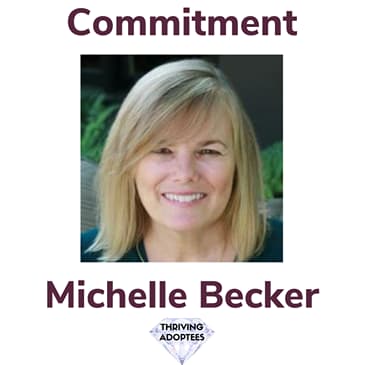
Raising kids is tough. Some clichés become clichés they are true. Listen in as adoptive mother and advocate Michelle shares her learnings on commitment, curiosity and much more.
Here's a bit about Michelle from her website:
"Every child deserves a chance to succeed
My mission to serve and advocate for children began in 1996 when my husband and I adopted our twin girls from Romania. I experienced great difficulty getting the girls the early intervention services they needed. And, after successfully acquiring those services, we still faced the challenge of getting them the free and appropriate public education to which they were entitled.
I understand the challenges that children face in school and the challenges their parents face ensuring that their children receive the education they deserve. The special education learning curve is steep and the time it takes to acquire the knowledge to advocate for them may mean days, weeks or months delay in getting a child the educational services they need."
Find out more here:
https://www.linkedin.com/in/michelle-becker-0b720131/
Guests and the host are not (unless mentioned) licensed pscyho-therapists and speak from their own opinion only. Seek qualified advice if you need help.
Want to learn more about thriving for you, your kids, your families or your colleagues? Pick a time to talk here
[00:00:02] Hello everybody, welcome to another episode of the Thriving Adoptees podcast. Today I'm delighted to be joined by Michelle Becker from LA and Beverly Hills right? Altadena Altadena, near Beverly Hills is it kind of? About 20 miles away. All the suburbs in LA are just kind of, we're all just one big city with suburbs out. You know, sprawling.
[00:00:29] Is it, yeah, so I was 13. Did I tell you this about my first trip to the States was actually to LA to do the Disney and... Oh yes, you did tell me that. I told you about that, yeah. So I've not been back since, but I was in Florida last year and that just seems to be like one big mess. There doesn't seem to be any centre to it. It's just a load of interstates and freeways and yeah.
[00:00:58] Yeah, well, I don't really think there is a centre. There's actually wonderful locations, you know, Orlando, Miami, Tallahassee, you know, the Panhandle, the Keys. So you go to the specific locations within Florida, but it's flat and it's expansive.
[00:01:20] Yeah, yeah. So listeners, Michelle is a lawyer and she does some incredible advocacy work for kids. She's also a nun through adoption to twins from Romania. Romania. So yeah, so they must be coming up... My girls just turned 31 years old. 31.
[00:01:46] Yeah, twin girls. They were part of that, you know, 1993 expose 2020 Romanian orphans. When my husband and I saw that, we took action. I think a lot of people in the UK did the same thing. They just said, this is where we're going to get our babies because there's a lot of need there. Yeah. Yeah. Funny you should say that. I had a... So I ran the...
[00:02:16] Yeah, I took over one of the founding businesses, which was a publishing business. And our printer, the sales rep that worked for the printer, one of the printers that we used, he drove a van out. He drove a van out from the UK to Romania with a lot of stuff in it. Yeah. And he did... I think he did it twice, actually. Oh, wow. Supplies and just getting stuff to the children.
[00:02:40] Yeah. And so it really did capture the... Well, I guess the world's attention. It really did. I mean, the images and just... I don't think... You know, we'd wondered for so long what was going on behind that iron curtain, so to speak.
[00:03:03] And once we all saw, we just were horrified. And, you know, it just... It didn't take long to make that decision. Yeah. So they're 31. Married. One is ready to have twin girls herself coming up on November 11th. So, you know, when you talk about thriving, I feel like my two girls are thriving. Great. Great to hear. Great to hear.
[00:03:31] So thriving, then. What does it mean to you, Michelle? So I would say, basically... To me, it means just making the most of all parts of your life all the time. You know, when you look at your life, there's different parts. There's your personal life. There's your professional life. There's your life as a community member, a family member.
[00:03:59] And each one of those takes a different effort and it takes a different approach. And you can be good at all of them at the same time. And if you're making the most of those different aspects of your life, I'd say that's how you thrive. Yeah. Do you remember when you first came up with that idea or that view of it?
[00:04:28] So I think it was more of an evolution, right? I mean, you start off as a young adult figuring out your way in the world. And I think that, you know, maybe you find personal success and that personal success kind of builds on itself. And then professional success and that professional success builds on itself. And before you know it, you've got different things going on.
[00:04:57] And my goal from a very young age was to build on success. I've always said the more you do, the more you can do. I mean, that's been a thing that I've really thought and believed since I was a child. And so it just kind of perpetuated. And then eventually you get a wheelbarrow full of parts of your life and you're like,
[00:05:26] this is working for me. And so I don't think that it was ever one aha moment. It was more building on, I won't say just successes. I would also say you can thrive being a phoenix out of the ashes, right? I mean, I think most people find struggles in their life and they overcome them. And that's part of thriving as well.
[00:05:55] It's not just it's good and I want to make it better. It's I want to grow. Oh, I, you know, I want, I, I want to try this. Oh, let's do that. This relationship needs this focus. So I just think it's honestly making the most living in the moment, which I know sounds very cliche, but honestly, you really, you really do have to check in with yourself and with
[00:06:23] the different parts of your life and keep them on track. They don't just run on automatic. So I think that that's part of thriving as well. You have to be engaged and curious and always wanting to make the most of it. It really is making the most of the different parts of your life.
[00:06:50] So I would say there was never really a time that came to me. It just has been an evolution of my life. Yeah. I was talking to somebody yesterday. Also in Florida, actually. Sorry, not also in Florida, because you're in, we're talking about Florida, but you're in, you're in California. Sorry. Yeah.
[00:07:12] And he was talking about, he was talking about being a quote about somebody realizing that they'd been successful in the wrong areas. Right. So, you know, when I think of California, I think of those people that have, you know,
[00:07:41] come from the back of beyond to Hollywood. They've waited, they've waited tables till they get their big break. Break. They get the big break that leads on to the next film or the next film, whatever. And then they get the Oscar and then they've got this all this acclaim and it hasn't done it for them. Right.
[00:08:09] And we know how that, we know how that goes when it goes wrong. You know, I'm thinking about Heath Ledger and lots of people who have kind of pinned their hopes on this dream. And it reveals itself to be like a pipe dream. Is it not pipe dream? It reveals itself to be like a hollow victory. Yes. Yes. Yes.
[00:08:37] The athletes call it gold medal depression. Athletes. So their whole life has been around getting this gold medal. And then they get the gold medal. There's a simulation. And then there's the so what? There's. Yeah. Yeah. You know, I can kind of relate to that, not from me experiencing such great success
[00:09:01] or me experiencing such, you know, overcoming such high hurdles, you know, fame and stardom. I think it's right place, right time, enough talent, enough good looks or honestly, in some cases, what the what the director is looking for. Right. Right. So all of that just happens to come about.
[00:09:25] I would say that, you know, I really have felt like it. You make your own luck. You work really hard. You kind of set your sights. You set your goals. But most importantly, you know, we can think about all the Harvard or Oxford grads, all of the celebrities, all of the athletes.
[00:09:53] But in the end, at the end of the day, you know, there's there's only a few that make it like really big. Only a few Harvard grads actually end up running companies. You know, only a few of those Pop Warner football kids end up being, you know, NFL stars. There's there's only one Beckham. Right.
[00:10:17] I mean, so my approach has always been carve out your little space in the world and do it. You know, we all have our little space in the world. And that's that's like the greatest place to be. Right. Here I have my law firm, which I love the work I do. I have my family. I have my community. I have my friends. And, you know, I could have gone to Harvard and.
[00:10:48] Not become a president of an organization or been a great tennis player and not gone to Wimbledon. Right. So what is my dream? What is my goal? What feels good to me? And carve out my little spot in the world and out to Dina and live my life to the fullest.
[00:11:09] I like this is not just jargon or just kind of empty talk. It is really how I live my life. Yeah. So the idea of being, you know, being successful at the wrong thing.
[00:11:31] It's almost like you're feeling your way through more than having a particular goal in mind. Right. This is this is what I'm feeling. This is what I like. This is what interests me. This is what I'm going to pursue. And don't get me wrong. I have endless to do lists. My husband and I every year in December make our annual goals. What are we going to work on? What are we going to focus on this year? What are my to do lists?
[00:12:00] You know, so it's not like I'm not the taskmaster and that I don't have, you know, short term goals and long term goals. But at the end of the day, if I fulfill the kind of my vision of a life that makes me happy and I'm, you know, not living in isolation and it's in my little corner of the world, I really am happy. Yeah.
[00:12:29] So you haven't you've never led your ladder against the wrong wall. I would say the closest I came to putting my ladder against the wrong wall is not so much that it was the wrong wall, but it was more it was time to move the ladder.
[00:13:15] Right. Being on the road sales, you thrive, you feel good. But at one point, you're like, I got to move the ladder. This, you know, this isn't as fulfilling as it once was. I'm getting older. I want to be home. I now have kids. You know, all of those things start to bring into clarity different priorities. And so it's not so much the wrong ladder.
[00:13:44] It's time to move the ladder. Yeah. So so I feel very lucky that I have been able to notice it rather than stay miserable and stuck. My husband and I, I think that we've kind of we live a life that is not overextended, which, you know, is kind of hard to do in the land of Hollywood. Right.
[00:14:14] Because everybody is very flashy and spends a lot of money and lives in an expensive home. So it's, you know, if those kinds of things drive you, I can see how everything would be a hollow victory and I could see how you'd never feel satisfied. I mean, that's just not been my deal, but living unaffected. And maybe it's the fact that I'm a local, you know, native Californian.
[00:14:43] I'm not moved by Hollywood. I'm not moved by stardom or celebrity. I think it is local to locals not to care that much. So we can get on without having to feel the need to keep up with Hollywood. Yeah.
[00:15:02] And but you're in the you're in law, but you're not you're not in corporate law, global tax, global tax advisor to BP, Walmart. And something like that. Right. Yeah. Or chasing some kind of. Yeah. Times are flashy or I'm thinking about Hollywood. I'm thinking I'm thinking about big law, big law.
[00:15:32] I'm thinking about big law or even, you know, the Gene Hackman. What's the big film with Tom Cruise? Oh, yeah. That's the firm. Not that it's not that sort of law you're in. The strapline for your law office is because I got it up front of me here. My memory's not that good. Bringing peace, peace of mind to families with loved ones that have disabilities or special needs.
[00:15:54] So it's a it's a different sort of law that's about meaning rather than Ferraris. Right. Yes. In fact, it's it's basically here in America. We have what I would call some pretty stout education law for children with disabilities. And we're talking ages three to 22.
[00:16:22] And, you know, just my experience with my girls. They came to us at 18 months and they were 15 pounds and they weren't walking, talking or crawling. They had no teeth. They were severely delayed. And so it took me. And this was in 1996. So if you can imagine, there really was not much Google where you could research or no chat GPT to find out exactly how to help the kids.
[00:16:52] So it was literally talking to doctors, learning, you know, from the social workers or learning from the schools. And that is how I ended up becoming a lawyer for students with special needs, because I know what I experienced. And there was never going to be a moment when other mommies were going to have to go through what I went through.
[00:17:20] And so I decided as soon as I could see where my girls were headed. And again, luckily, they are typical and functioning. And it took a lot of work, but there's a lot of kids out there who need a lot of support. And I would even say the school districts are getting much better about doing the right thing.
[00:17:47] But I have a job because there's so many instances where they don't. And there is just such an opportunity to give parents some peace of mind that, you know, it's going to be different, but it's going to be OK. We can figure this out. And so that's that's really what I do.
[00:18:14] And I actually have a very quick anecdote. When I first opened my practice, I knew I knew like there was no question. I was going to law school to be a special education attorney. I interned for a year after I got my license and I opened my firm a year later. And I had a friend who had opened up her law firm and she was corporate lawyer and said,
[00:18:43] while you're getting your firm running, why don't you help me with a few cases? And they were Lemon Law cases. They were, you know, cases where people were feeling like they got like like they got taken advantage of by. I'll just say they're a Mercedes dealer.
[00:19:05] And it just felt so you want to talk about leaning your your ladder up against the wrong wall. That is leaning your ladder up against the wrong wall there. I did one case and I said, I will I will scrimp and save and keep growing my law firm before I will do another day of this nonsense. It's just unfulfilling.
[00:19:33] And really, I'm just I'm I'm helping to two rich parties solve their squabble. I don't care about that. So so that's that's kind of where I it was clear that there was going to be no turning back.
[00:19:53] I'm going to be the best special education lawyer I can be because that is way more fulfilling than helping a guy who will pay me a lot of money to solve his Mercedes problem. Yeah. Do you remember the moment when you came up with the idea? I'll be a special education lawyer. Yes, I do.
[00:20:16] I and when my girls were in fifth grade, you know, I had stopped working to stay home with my girls when they were in fourth grade. And then, of course, by then things were going well educationally. But in fifth grade, it turns out they were closing our school because of low enrollment and we were going to have to go to another school. So I didn't really know that much about special education, only what I knew to help my kids.
[00:20:43] And I literally had this one mom who came to me and said, they're not doing my kids IEP because the school is closing. And she said, can you help me? And I didn't know anything about it. But I said, OK, so let me let me let's let's call the police because I had no idea how to help.
[00:21:07] And then I went from calling the police to looking in the phone book and because I wasn't. And then so we got online and I'm like, what do you call this? Like, OK, so kid school for kids with autism. And so I did a little bit of work and it was that day in my dining room with one of my kids friends moms who didn't know how to help her kid.
[00:21:38] That is the that was the day of the epiphany. And then in when my girls were in sixth grade, I started law school and went through, got my license. And I've never looked back. But it was that day in my girl's fifth grade year. No question about it. When I could see how a mom was so desperate to help her child and she didn't know how and I didn't know how.
[00:22:05] And then it became clear you could figure this out if you have the time and the resources and the ability. But when you're raising a kid with special needs, you could have all the ability in the world. But the time, the bandwidth, the just the problem solving, you're you're solving a problem in the moment.
[00:22:33] You're not solving a problem down the road. It's like if you have your wits about you and you've got everything under control, you can start turning over rocks. You can see, oh, gosh, that's going to be a problem. Turn over a rock. Where am I going to find problems to solve? Right. But moms can't do that in the moment. They're too busy making sure their kids needs are met right then.
[00:23:02] So that was the day. I remember it clear as day in my dining room looking in the yellow pages. Yeah. So. I am not sure whether to ask this question, but it came to me, so I'm going to do it anyway. You know what? Somebody asked me yesterday at the tail end of an interview.
[00:23:26] So kind of basically what advice have you got for what advice do you give adopted parents? And I say, well, I say, do your work. Right. And the reason that's not that's not my advice. That's what other adoptive parents tell me.
[00:23:48] And I just, you know, I just take what they tell me and pass that on to adoptive parents. And I said, but I'm doing the work and you've got to find the work that works for you. And then it's not about. So raising adoptive kids isn't about fixing us because we're we're not broken. Right.
[00:24:17] So don't worry about fixing us. What it's about is about your is about you growing your capacity to handle what your kids throw at you. And sometimes kids with big behaviors, as they say. Right. They do actually throw things at them. It's not just a metaphorical throwing at it. Right.
[00:24:37] And I said, but and I said, and if somebody asked me some questions and then we get into the time thing, I say, well, I will then back off because, you know, I'm not going to get into a debate about time. Because I don't. Well, I think we're down in the weeds rather than seeing the big picture.
[00:25:03] But also it's not I'm I'm not a time management consultant, you know. So how do. How how did you. You talked about the short term challenges raising kids, short term twins. Right. You've got that short term. You haven't got time to think.
[00:25:26] How do how do you how did you find the space for for your growth or did the growth just happen because the challenges kept on coming at you? So what I would say is the both, you know, the challenge, the challenges did keep coming at me.
[00:25:50] I'm not I'm not going to deny there's still challenges today, you know. And when you say there's nothing wrong with adopted kids, I agree. There's nothing wrong with adopted kids. Adopted kids, just like natural born kids, come with their own wheelbarrow full of qualities. And it is really the wheelbarrow full of qualities that you're working with.
[00:26:21] And, you know, my girls from an orphanage were severely delayed. And as things were coming at me, I'm figuring them out. Meantime, I did seek help through a huge community.
[00:26:36] And I didn't I don't mean that there's a wonderful community here in Altadena or Pasadena or Los Angeles, but seeking out pediatricians who had experience with Romanian orphans, seeking out, you know, we have the regional center here in California to get the occupational therapy services, the physical therapy services.
[00:27:01] To get the counseling services for, you know, children that have attachment issues. Right. So none of those things say that there's anything wrong with the kids.
[00:27:17] But there is the wheelbarrow full of variables that you get, whether you give a natural birth or you pick your babies up from an orphanage or however, I've always said, and I told my girls this right from the beginning. God picks mommies and babies, whether they come out of their belly or crib in Romania, God picks mommies and babies. And so you are my babies. Let's do this.
[00:28:14] Let's do this. Try a little harder. And it's OK. That's just your job right now. So I think it was me reaching out for resources. It was me doing the work in terms of figuring out what is coming at me. What is this? Which resource do I need to find? Right. Because I would be a fool to think that it was going to be me to solve all these problems. Right.
[00:28:43] It just wasn't going to happen. So I could do what I could do. And then I had an entire community that I brought into our lives to guide and direct and help me figure this out for them. Yeah.
[00:29:04] It's the I'm getting a sense that the kind of the sales person mindset kind of make stuff happen, make sales happen and make stuff happen for my kids. It's a kind of like that. That's that's coming from the same driver. No, no. I would say that the biggest driver is. I wasn't going to let them down. Right. I wasn't going to let them down.
[00:29:33] I wasn't going to, you know, not turn over a rock. I wasn't going to not figure out what ailed them. I mean, let's face it, kids, kids in elementary school, middle school, high school, college, they know what they feel.
[00:29:54] And if you give them the space to tell them to let them talk to you or if you can see, you know, there's clearly something going on. I'm not going to let you down and ignore it. I mean, denial is the worst thing ever. This isn't about finding things wrong with them. This is about making sure I I gave them the best chance ever. That was the driver. That wasn't the salesperson in me.
[00:30:24] That was my commitment to them the day we picked them up. I wasn't going to let them down. Yeah. People talk about no matter what in this space. Right. Yeah. No matter what they throw at us. And then we're talking literally and metaphor. Yeah. I've had some chairs thrown across the room at me for sure.
[00:30:52] Or, you know, and no matter what, we'll figure this out. It doesn't mean that it's all happy and, you know, loving. There was there was definitely consequences and there was definitely structure. And there was, you know, look, this is your this is this is the space you can move around it. And it's very big.
[00:31:26] Okay. And this may be controversial, but this feels like a space I can be controversial and hopefully. Go for it.
[00:31:57] I said, look, typical is a big space. You can go have whatever space you need, but you don't get to be the weird kid that does the weird stuff. You know, and I mean things like I'm not going to let you pick your nose. I'm not going to let you do stuff that's gross. I'm going to call you out on it. I'm not going to let you do it.
[00:32:24] And, you know, some kids have weird tics and stuff. Okay. I'm still not like you're gonna. There is. I'm not going to be one of those moms that is forgiving because of your circumstances. I'm just not going to do it. And both of my girls will tell you to this day. Thank you. For not just letting us run wild. They they've seen what that looks like.
[00:32:54] And it's hard to function that way in the real world. So, you know, controversial as it may be, I was not an easy mom. I was going to give structure. I was going to give parameters. And there was a lot of space in those parameters. My screen is this wide. They had this much space. It was wide.
[00:33:20] But to me, it was important that I raise girls who could function within society, not have, you know, a lot of not so that they were standouts. Just fit and you'll be fine. I feel like that's kind of how I live my life in my little corner of the world. Fit and I'll be fine.
[00:33:48] It doesn't mean I have to be the same as everyone. It doesn't mean I have to act like everyone or have the same ideas as everyone. It's a big, wide space. There's a lot of space for you to be who you want to be. You just can't go outside of that. So I'm sure that that's going to be controversial for some. But it's working for me. It's working for my kids. And we're going to we're going to take the V.
[00:34:18] Yeah. Yeah. So, I mean, you're answering lots of questions here about, you know, the thriving of your kids. What gets in? What do you think stops? Your kids thriving. So, so I would say that.
[00:34:45] So there, there's a big part of me that even now at 31 is compelled to still parent them, which they hate and I hate. And so I really try hard not to do that. No more teachable moments. No more. I wasn't really ever an I told you so kind of gal. But teachable moments was my thing. And by high school, they're like enough with the teachable moments. We get it. We understand. We can live our lives.
[00:35:14] So I would say they are thriving. I see, I see girls who have jobs, who have husbands, who have homes, making their way in the world.
[00:35:37] But at the same time, I think that some of that stuff left over, like you don't think it was mine and my husband's opinion. You know, 18 months in an orphanage. What harm could that do? Bring them into our house. We're not dumb. We could figure this out. Okay. They're still stuff. Right?
[00:36:04] It's inevitable that it's their job to work through their whatever is lingering. Right? They are thriving. But to say that neither of my both of my girls will say, I know that this is an attachment thing.
[00:36:20] Both of them are in therapy and both of them are working on overcoming, you know, when you have attachment issues or abandonment issues or, you know, the stuff that comes along with that.
[00:36:37] I think the only thing that keeps them from thriving more is sometimes the internal, I don't know how much research you've done on early childhood development and attachment theory. I've done a lot just because I'm trying to understand my kids.
[00:37:03] If you've been in an orphanage neglected and nobody was there to nurture you, there is some sort of hard wiring that goes on. It doesn't mean that it can't change. There's only so much mommy can do. And then you have to take over and do it yourself. And that has to be an intrinsic drive. And I do think that both of my girls have it.
[00:37:33] But I think sometimes it's just hard to keep, like, is there an end? Is it a hamster wheel? Am I going to find that gold medal of feeling the way I think I should feel? So I think that that is their personal journey.
[00:37:57] And I think that they may, it's just going to take more maturity, take more effort, take more perspective and insight. And it's hard. And it takes time to do it.
[00:38:17] And it takes curiosity to do it and a real motivation to not just kind of live day to day with it lingering. Does that make sense? Yeah. Yeah. And I, yeah, and I just, I think that they've got it.
[00:38:40] I think that the one that's ready to have babies is going to find a new, almost healing in her being able to nurture her babies the way she wasn't nurtured. I hope that that's how some of this resolves for her.
[00:38:58] But I do think that it's all as overcomable as a person has the capacity and then thriving will take on an entirely new level. What do you think? Is it just a, am I just saying words? No, not at all. One of my fascinations is, is a theme that I go on about a lot.
[00:39:27] And the, the theme essentially is talk therapy ain't great for pre-verbal trauma. Yeah. And despite that, a lot of talk therapists have taken a lot of money off a lot of people and being barking up the wrong tree. Yeah.
[00:39:57] It's the EMDR. It's the somatic. I actually did for like, both my girls have had EMDR, which has been super helpful, but then also the somatic emotional release with the light touch massage and the energy movement and processing that somatic stuff. I, you know, my husband calls it, you know, voodoo. It works.
[00:40:27] There's evidence behind it. And there's not a lot of somatic people about. Yeah. We do have some great ones here in LA. We have some great ones here in LA. Also, I would say the dialectical behavioral therapy is another, you know, it's good for borderline. It's great. Abandonment attachment kids with borderline.
[00:40:54] It's super helpful because it's really skill based, not just talk therapy. But the somatic piece, I think is like, I think that's a somatic, the nonverbal trauma associated with adoption, abandonment, just pre-verbal trauma, all that. I don't know if that's what you're going to say, but. I'm looking for your, I'm looking for your insight and your expertise in it.
[00:41:19] You know, I've, I've done, I've done somatic, I did a somatic experiencing once a month for quite a few months. And then we got kind of, we got to where, where it was. But it, it, it's inexplicable. You can't put it into words. Yeah, exactly. You know, like, I've done it myself just because of my life story.
[00:41:45] And it's, it's what, here's what I would say. And this is where you can explain it. You know, like anybody who feels a visceral response when something happens, you're just like your entire core is shaken. And then you go through the EMDR process or a somatic therapeutic process.
[00:42:09] And all of a sudden, the thing that impacted you viscerally, no longer impacts you viscerally. It is the, the most profound shift. And it's like, you can actually say, I shifted. You can tell I shifted. My husband will say, it's voodoo, but you did shift.
[00:42:33] Like, there is a literal change in your response to this stimuli. And the, the, the, the, the concept between, behind EMDR. Now, do you guys in the UK have a lot of EMDR therapists? We have a fair bit of it, I think. I think, um, so I, I've, I've done some EMDR, but I, I think people have different techniques and stuff.
[00:43:03] Yeah. There's different EMDR techniques. And, and also most therapists will, will blend. Right. So, you know, I saw, uh, an EMDR type person, but she was doing some work that's probably somatic. And, and I, I don't really see it. I don't understand the distinction. Maybe that's part of the, maybe that's part of the challenge. Do you, do you understand that? Can you, can you? Yeah. Yeah. Yeah.
[00:43:27] So like the somatic emotional release, uh, what, what happened with, with, uh, one of my daughters was, um, we would have her come to the house and she was basically a massage therapist, but she was trained in the somatic emotional release. And so she'd bring her massage table to our house. She'd set up for like, um, it'd be like a 45 minute session. And then we would have a half an hour debrief after the session.
[00:43:56] And what she does is like, it's very, very light touch. And she basically feels over the body for stored energy. And then she works in that area. And again, it's not like a massage, right? It's very light touch. And then, um, she, the first time she met my daughter, she said, did something happen around your throat area?
[00:44:25] And then my daughter said, yeah, the first week of college, this happened. And then it really was around the throat area. And then, so they basically the way my daughter explained it to me and the way we, during our 30 minute debrief, basically she could see the colors of the chakra. She visualized herself in a crib in the orphanage laying there.
[00:44:54] And it was a very colorful experience for her. The colors she experienced were yellow and black. And she had no knowledge. Like she, I would say that it wasn't like she researched it. It wasn't like I prepped her for it. This was her very organic response.
[00:45:16] And then she, like, what happens then is, in her case, there was a few dreams a few nights later. And that piece, that piece of whatever she was experiencing, um, I'm not really quite sure how it ended.
[00:45:40] But what she did say is, yeah, that doesn't, like, I'm not in, like, I didn't know I was impacted by that. But I do feel lighter. Like for her, and again, it wasn't her being curious and being able to have almost a, what do you call a placebo effect? Because she wouldn't have known what the placebo effect would be. So she was organically describing her experience.
[00:46:04] And it's just, it is hocus pocus. It is magical. And if you believe that energy is stored in your body, then something like a somatic therapy is the only way to release it. Yeah. So my somatic experiencing was completely different to that.
[00:46:30] So it was, there was no, there was no hands on. It wasn't like, um, what, but we were, we were talking about what was happening in my body. And I was tracking things moving in my body.
[00:46:51] Um, so we actually, so the, the closest one I could find was an hour's drive on a, on a good day. Um, but in rush hour, it's like, you know, our traffic isn't, LA is legendary, but it's trying, our traffic isn't quite as bad as that.
[00:47:11] But this was, you know, so I was, I was, I gave myself plenty of time and, but I was still late and, and I didn't want to be, I didn't want to be late. And, and there's a certain amount. So we literally, we worked, we, we, we just talked to me a little bit about what was going on with, within my, my, my body. And, um, where I, we would try it at one moment.
[00:47:40] It, it felt like there was, um, a steel ball bearing, probably about the size of a golf ball. And it was, and it was shooting from my left hand or the bottom of my, from my left wrist, all along my left, left arm, around the back of my shoulders and down to the bottom of my right wrist. And then back and forth and back and forth. And we were doing track, kind of tracking stuff like that.
[00:48:09] Um, but that's the only bit that can really recall. So, so it's interesting you say that because some of the, the work that I've done is like my therapist will say, okay, so how are you feeling? Do, do you feel anything? Yes. I feel a big stone. Is it cold or is it warm? Cold. Is it jagged or is it smooth? Jagged.
[00:48:34] Uh, you know, and we, we, we'll go through that and then we may do some tapping or, you know, this, you know, this whole thing. And. Okay. So how do you feel now? And then as you're talking about what's going through your mind. Okay. So how is it feeling?
[00:48:52] And there have been times literally when I can say, I could feel this thing that's cold and jagged start melting down into my stomach. Like you can really feel yourself processing, whatever it is you're processing. So when you were feeling your steel ball, was it warm or was it cold? Yeah. Yeah.
[00:49:18] And then did it stop, you know, and did it change direction? You know, all of those things make this type of therapy so interesting. And just, you know, I'd come home because she would say to me, you don't need to research this. Just sit with it. It's going to be fine. But I would be okay.
[00:49:41] So what does a cold stone melting, you know, and go home and have a whole conversation with chat about it just to kind of organize it in my head. But then, you know what, I might have a weird dream and the next night or whatever. And then I feel free. I feel free. And again, it is not placebo because there's nobody who feels things more viscerally than me.
[00:50:11] And I can't shake it. So the fact that I can shake this stuff tells me it's real. And that's, thank you for sharing about that because one of the things that, you know, when I, when I, when this adopted mum said to me yesterday, you know, what advice do you give? And I say, well, do, do the somatic talk therapy.
[00:50:39] And I often say it pretty boldly, right? Talk therapy can't heal pre-verbal trauma because people get into it. Oh, yes, well, it'd be kind of about this. And well, it's not just about that. Well, yeah, okay. Yeah.
[00:50:53] But I just find you've got to be really, really straight with, you've got to be like, like you were straight with your kids, you know, like I, you've got to be clear. There's got to be some clarity or else, and then, or else it's just fudging.
[00:51:17] And, you know, so I ask people these questions and I, lack of clarity drives me nuts. What, why can't you? Why, if, if you're not clear about it, tell me you're not clear about it. Don't try and fudge me. Right. You know, and before I, so I, I was a salesman too, but before that I was a buyer.
[00:51:47] So, you know, I'd say people, I want, so the print buy, right? So I want, this is what I want and give me the price for it, you know? And then you say, and then the job would happen or it wouldn't happen. You needed the job and you say to people, I want this, I want this really, I want this as fast as you can do it. And then they'd say, well, when do you want it? I'd say as fast as I can do it. No, but you didn't, but you just go around in circles.
[00:52:16] So I'd say, okay, well, I think, you know, I'd figure it's going to take four days. So I'd say, I want it in three days. And they say, we can't do that. Okay, well, you come back to me and tell me when you can do it. And it's like a whole negotiation and a funnel, right? I'm going to, you're going to try and, you're not going to be specific with me.
[00:52:37] I'm going to, I'm going to put you into a funnel and I'm going to narrow you down to what you're going to deliver for me. And when you, when you're going to do it. And don't, don't what, just tell the truth. And if you can't make it, if you can't deliver it, then tell the truth. Don't, but tell me a couple of, tell me when you know that you can't deliver. Don't wait for me to ring up and say, where's my job?
[00:53:07] And say, oh, I'm sorry, it's not on my life. Because who, yeah. So clarity and some of the people that I speak to drive me nuts with a lack of clarity. Just cut to the chase. Give me the truth. But, you know, don't fudge over. Oh yeah, well, total therapy. I mean, it's not just about the separation.
[00:53:33] No, and in fact, I honestly, what I can tell you is for, for my own journey, I had this wonderful therapist who was talk therapy. And she was the one that said, look, I can only get you this far. I recommend that you speak with my office mate who is, you know, if you have an EMDR or somatic therapist that also has, you know, a background in talk therapy.
[00:54:03] The talk therapy actually happens during EMDR sessions. I mean, you're not constantly tapping. There's a lot of talk therapy that goes into a somatic session. So I think that the issue is people just are not familiar with it. And because they're not familiar with it, it must not be as good.
[00:54:28] And there isn't a big, you know, like we have pharmaceutical companies who are advertising. Advertising, day and night, cable TV, network TV. It doesn't matter. If you've got an ailment, they've got a drug. We don't have enough good commercials about different types of therapy. You need EMDR if you're experiencing A, B, and C.
[00:54:57] You need somatic therapy if you're experiencing A, B, and C. We don't do that. And I think that we're getting better as a society. Recognizing mental illness is more normal and more average. Most people need mental health support. So it's getting a good seat at the table now.
[00:55:24] But now what we need to do is start almost advertising the different modalities and just having clarity around that. Because I just like, I'll tell the parents all the time, like I'll have clients with significant behavioral issues. And I could see, you know, this feels more like a dialectical behavioral therapy case than a CBT case. My recommendation to you is I'm not a doctor.
[00:55:54] I'm just a lawyer. But just based on my experience, why don't you go talk to a therapist that does DBT and just interview them. Just see what they're willing, what they could do for you. A month later, I'm like, did you find anybody? And I'll give them names. Oh, no. No.
[00:56:19] And I'm just like, no, really, it's kind of like if you need a wrench and you're using a screwdriver, the wrench is never going to do the job. And at that point, it just becomes clear that until people are curious enough, turning over enough rocks, learning about EMDR, learning about somatic emotional release, learning about DBT versus CBT.
[00:56:47] Unless, and this is, you want to talk about failure to thrive? I would say a lot of failure to thrive sits in lack of curiosity. I thought you were going to say wrong therapy. Nope. It does. I mean, that's a given, but honestly.
[00:57:08] Well, that's a given, but people don't, it's a given, but it's given to you because you've had the experience and you've done that, right? I, if somebody asked me, if I'm going to put it on a 10, 10 things that stop, I will put wrong therapy, right? Well, that's where curiosity... If I'm going to put 10, 10, or wrong therapist, right?
[00:57:38] So I have interviewed somebody who is a big name, adoptee, therapist, hugely experienced. I asked her about healing and did I say, I asked her about healing and she said the best that we can hope for is coping. And I didn't challenge her.
[00:58:07] It was on the interview, but I, after I put, I put my head in my hands after the end of the interview. Now, you know, you talked about interviewing therapists. Like, we've got to interview therapists. And, but one of the challenges with therapists is that they're so tuned to flip it back on us. They'll answer a question with a question.
[00:58:35] And like, I had one, this was, yeah, I was interviewing around like 12 years ago, somewhere around. And she said, I said, can you tell me a little bit about your process? And she couldn't tell me. And she gaslit me.
[00:58:57] Like, she, I said, can you tell me a lot about, you know, people that, some of the people that you've helped and, you know, what their circumstances were. Well, it would be, it would be, it would be, it's all confidential. And I said, well, I'm not asking for the names. I'm asking for the general.
[00:59:18] And, and, and then she said, oh, you know, I have my, some, there was another one where she said, I don't, I don't think it would be appropriate to share. And I thought, well, you ain't going to share. You can't tell me about your process. You can't give me any sort of vignettes of people that you've helped. You've turned everything back on me. Goodbye. Yeah. Totally.
[00:59:45] She made me feel like it was my problem that I was, you know, like how, almost as if, how dare I ask her about her question? You know, she, she, you know, like, it's like a cop show, isn't it? You know, the cops, when, when interviewing them, they always say that, don't they? Like, if, if they, if the perp, right? If the perp says, ask question, the cop says, no, no, I'm the one that asks questions here.
[01:00:10] Therapists don't do it like the cops, but they don't explain what they're doing like the cops, but they do it like the cops. Yeah, it's, it's, I, I, I've had some bad therapists. That's, I, you know, I'm not going to lie. And what happens when you have a bad therapist is you don't make any progress, right? It then just becomes a session where you can download whatever's on your mind. But when you talk about healing, healing is possible.
[01:00:40] He, he, you gotta know healing is possible. And then you gotta know, you got, you gotta, you, you gotta want to heal, right? Right. And, and I don't think that there's a lot of people out there who are as proficient in therapy, right?
[01:01:08] Because they don't, they don't use it. They use it more as a professional to, to patient rather than actively participating and not really grabbing the bull by the horns and being an active user of therapy. Right. I, when my girls were young and, you know, one said, look, there's nothing wrong with me. I don't want to go to therapy. Okay, fine.
[01:01:38] Why don't you just talk to this lady? And if you decide you don't want to go, fine. One was more open to it, but even with the one that's more open to it. Okay. So what did you guys talk about? You don't have to tell me the details, but did she give you any tools? Are there any tools that you could use to practice? You, you find out what tools they are. Then maybe you do a little research about the tools, like proactively or being active.
[01:02:06] In your therapy is where I think that that's a learning curve. And that's again, curiosity and a desire to heal, right? It's not just passively taking in the session. And I really think that because people are not active users, like people who go to the gym, like if they're into the gym, they go to the gym.
[01:02:34] They watch YouTube videos about how to use the equipment the right way, right? They find out what's a good time for this. How much lift? How much weight should I? They're like into the gym and they're active participants in their health. It's no different with therapy. You have to actively participate if you're going to heal. Otherwise, you're just taking it all in passively and going again next week.
[01:03:03] That feels like a great place to bring it in. I'm totally in agreement with what you just said. Yeah. Yeah. So unless there's anything else you'd like to share? It was lovely chatting with you about this stuff. It is my life, right? I mean, not necessarily therapy or adoption or special education.
[01:03:27] But again, we have different like I like the way we started the conversation. There's different parts of your life and they all if you're going to thrive, you're proactive and participating in all parts of your life, just like these three areas that we just talked about now. Yeah. Thanks, Michelle. Thanks, listeners. We'll speak to you again very soon. Bye bye. Bye.