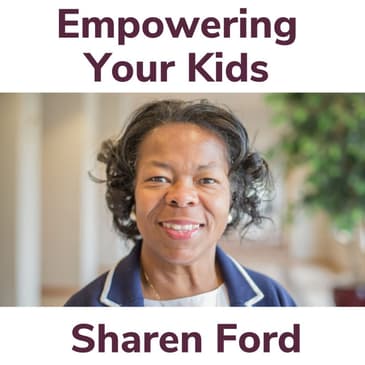
Sharen Ford is a nationally-recognized child welfare consultant and the retired Manager for Permanency Services for the Colorado Department of Human Services in the Division of Child Welfare Services. She retired with 30 years of comprehensive work history with the department. She oversaw six programmatic areas including the Foster Care and Adoption Program and supervised a team of professional staff. Dr. Ford is the former President of the National Association of State Adoption Programs (NASAP) and the Association of Administrators for the Interstate Compact on Adoption Medical Assistance (AAICAMA). She currently serves as the Director for Foster Care and Adoption at Focus on the Family and is as committed as ever to raising awareness regarding the need for every child to have a quality family.
Focus on the Family is a global Christian ministry dedicated to helping families thrive.
Here's a little background on them from their website.
"We provide help and resources for couples to build healthy marriages that reflect God’s design, and for parents to raise their children according to morals and values grounded in biblical principles.
We’re here to come alongside families with relevance and grace at each stage of their journey. We support families as they seek to teach their children about God and His beautiful design for the family, protect themselves from the harmful influences of culture and equip themselves to make a greater difference in the lives of those around them.
No matter who you are, what you’re going through or what challenges your family may be facing, we’re here to help. With practical resources – like our 1-800 Family Help line, counseling and websites – we’re committed to providing trustworthy, biblical guidance and support."
More at https://www.focusonthefamily.com/
https://www.facebook.com/focusonthefamily
https://www.youtube.com/user/FocusOnTheFamilyUSA
https://twitter.com/FocusFamily
https://www.instagram.com/focusonthefamily/
Guests and the host are not (unless mentioned) licensed pscyho-therapists and speak from their own opinion only. Seek qualified advice if you need help.
Want to learn more about thriving for you, your kids, your families or your colleagues? Pick a time to talk here
[00:00:03] - [Speaker 0]
Hello, everybody. Welcome to another episode of the Thriving Adoptees podcast. So today I'm delighted to be joined by Sharon, Sharon Ford. So Sharon's the Director for Foster Care and Adoption and Advocacy for Children, got to remember that, Focus on the Family. So welcome to the show, Sharon.
[00:00:22] - [Speaker 0]
Great to have you on today.
[00:00:24] - [Speaker 1]
Simon, it's my pleasure to join you and your audience today.
[00:00:28] - [Speaker 0]
That's great. So could you tell us a little bit more about yourself, Shine?
[00:00:34] - [Speaker 1]
So, I have had the pleasure to work with Focus on the Family since 2013. And prior to coming to Focus on the Family, I worked in state government in Colorado, working for the Department of Human Services. So I had a thirty year career in state government and child welfare. And so public servant to now being a other servant at a nonprofit and focus on the family. Still serving the Lord.
[00:01:06] - [Speaker 0]
Yeah, wow. So a wealth of expertise here. I'm seeing it from two different perspectives and we love that. We love different perspectives because for me, we live in a world that's all about strategies and tactics and techniques. What I believe changes our world is when our perspectives shift.
[00:01:32] - [Speaker 0]
And so with the Thriving with Doctor's podcast, we're trying to bring lots of different perspectives to the listeners in the hope that that catalyses a new insight, an epiphany, an epiphonet, a new idea or a new perspective. All of those things I kind of lump them in together, like a perspective shift. An moment perhaps, an moment is when we see something different, we see something differently, and when we see something differently, we do something differently. Everybody's trying to make everybody do stuff differently, especially our kids right, but they have to see something different and then they can kind of, the doing follows along naturally. So I love the two perspectives that you're going to bring to this and probably more right to the listeners.
[00:02:28] - [Speaker 0]
Does that make sense? It makes perfect sense to me But it makes sense
[00:02:32] - [Speaker 1]
to me too. I mean, it's one thing to be a public servant and dealing with policy, the federal government, state offices, you know, regulatory issues. That's one level of service and you I mean talking about, you're serving constituent group that is just so diverse when you're in state government, but boy crossing over to the faith based side. That's a huge constituency as well. And while you might not be deal, I might not be dealing in writing public policy, but I'm talking to constituents about the policies in their state, helping them understand it, you know, walking with them through prayer, reminding them that God has a call on our lives to do and serve a certain way.
[00:03:23] - [Speaker 1]
And so just two different ways of dealing with large groups of people, all to get them to think about what is your role in making a difference in the life of children who are vulnerable, and making a difference in the lives of the families who touch those children's lives, whether they're the birth family the kinship family, a foster family or an adopted family, or a family who's providing support services to one of those kinds of caregivers. All of us have a role. And it's about opening our eyes and opening our hearts to see what role God's calling us to play. Yeah, so it's on the public side and on the nonprofit faith based side as well.
[00:04:12] - [Speaker 0]
Beautiful. Yeah, opening our eyes and opening our hearts. I love that because, you know, I've been focusing on the opening the eye stuff. And of course so much change happens at a heart level. We're feeling machines right?
[00:04:34] - [Speaker 0]
We're humans. We human feelings rather than human beings? So, the audience for the podcast is adoptive parents. And so if we could focus in on adoptive parents out of the different constituent groups today, and that's what we're going to address. When I say these words to you, Sharon, these two words, thriving adoptee is the name of the podcast, what comes to your mind and probably what comes to your heart as well, right, when you hear those words?
[00:05:13] - [Speaker 0]
Thriving as an adoptive family, right? Thriving adoptees, yeah. Well, adoptees need thriving adoptive families for sure.
[00:05:24] - [Speaker 1]
So, thriving adoptees, It doesn't matter what stage you are as a thriving adoptee, a young one, a middle schooler, a teenager, young adult, thriving adoptees need other people who are touching their lives in meaningful ways. I think about young ones, toddlers, infants, how do infants and toddlers thrive that pique their someone's helping to keep them safe. Someone's nurturing them ministering or touching their lives and in a way that they know that they're nurtured, well cared for, they're safe. Someone's advocating for them, because those young ones don't have words, they just have behaviors. When we move it up a stage, and we're looking at children who are school age and young school age kindergartners through elementary school.
[00:06:34] - [Speaker 1]
Those children to thrive as adoptees, they still need what the infants needed, just on a different scale. And so now you're involving teachers. So who's advocating for that child with their teacher at their elementary school? Their parents, Okay, who's going to be there with if they need medical interventions? Their parents.
[00:06:59] - [Speaker 1]
Who's going to be there in the whether it's the scouts or soccer or those when you're walking in your purpose, everyone has a purpose for adoptees to thrive knowing your purpose, having somebody fan that flame of your purpose, supporting you, understanding you. Gosh, one of the things that I know every per every adoptee needs is someone who will listen with a kind ear and not have a ready response. But after listening to that person for, you know, however long they need to pour out that they then come back with not the ready answer, but maybe how can I walk alongside you? How can I serve you? How can I support you?
[00:08:09] - [Speaker 1]
So that young person knows. I mean young when I say young here I am more mature young as anybody who's under the age of 40 okay. How does that young person know that they've been listened to that felt need felt support felt understanding makes all the difference in them being able to thrive.
[00:08:37] - [Speaker 0]
Yeah. Can I stretch your definitions of adoptees to 55 year olds? I nearly said I was 54, but I've forgotten how old I am. I've gotten to that many. Dementia setting in.
[00:08:53] - [Speaker 0]
Yeah, I'm 55, so we can stretch it to even that area. There's so much there. It's so rich. I think for me, one of the key things that stood out was not having a ready made answer, right? One of the things that I see in adopted parents is I see, I can never, it's a simple word to say curiosity, they're more curious.
[00:09:25] - [Speaker 0]
So they are curious and having worked with non adopted parents, if there is you know just to distinguish them, adopted parents in my opinion seem to be more curious than non adopted parents. And that curiosity is, you talked about fanning the flames. And what I'd love to do today is to fan the flames of the curiosity within the adopted parents that are listening and encourage them to, as you said, listen with a kind ear. Listen not with a ready made answer. Maybe be asking more open questions, maybe trying different sorts of questions, maybe trying a mixture of open questions and closed questions.
[00:10:25] - [Speaker 0]
And that as the foundation of the relationship with our children, whether they're adopted or not, is asking and listening and asking coming from a great, coming from an interested and curious place, asking better questions, asking tougher questions. You, what light can you bring to this Sharon in terms of this asking and listening and where we're, I guess it starts off from where we're coming from, curiosity, then the sorts of questions that we ask, and then our expectations. We're listening with a kind ear, we're listening to open. Sorry, I'm going on a bit here.
[00:11:22] - [Speaker 1]
I think it's so important, Simon, you said a very important R word, and I love that R word relationship. That here, whoever it is that is involved with that adoptee, that it's about building a relationship because you're building what are you building trust, respect in relationship. And when you're building that block by block, interaction by interaction, you're letting that adoptee know that they matter. And so having curious kinds of questions allows you to let the adoptee lead. It's not about what I want to know.
[00:12:17] - [Speaker 1]
It's about what does that young person want to share. And so if they're doing the leading, it's like, remember when we back in the day when you took dance when we were in grade school, I went to a school where we learned how to how to girl guy hold and, you know, to do the little two step and everything shows you how mature I am. So, someone always led, even when I practice with my sisters because I didn't have a brother yet. He came along, many years later. One of us took turns leading.
[00:12:53] - [Speaker 1]
So in a relationship, you allow that young person to lead. And as a good listener, you follow. That's so important. And so they give as much information as they are comfortable with giving. They get to ask questions too.
[00:13:13] - [Speaker 1]
And it's so important that for an adoptee when they're asking questions that our response, hopefully is one of okay not what they want to hear. But telling them the truth in love. And there's a gauge about sharing with anybody and particularly I think someone who's, who's searching and I think adoptees are searching all the time. They're trying to gauge themselves and where am I and who am I and what about my purpose and and do you really love me and do you really respect me and and do I really matter in your life that there those questions are always bubbling up at different developmental stages, different emotional stages, different spiritual stages that they're on. That the person who's listening is really in tune to them and gives them an answer out of respect and out of truth.
[00:14:18] - [Speaker 1]
That we dignify our responses with you know what I want hear me from my heart. I don't know the answer to your question. Boy is that a powerful response. If you don't know, don't make one up. Don't make up a response.
[00:14:35] - [Speaker 1]
Okay, because that sabotages the relationship. It sabotages respect and truth. Okay, so, but when you do have an answer. And the and you're, and you're able to tell them the truth. Then tell them to say you know what, let me share this much with you, and then let's have some dialogue about what I've just shared, because it's so important that that person, you don't leave them wounded, and you don't leave them running in the other direction.
[00:15:07] - [Speaker 1]
So, careful conversations are so important for with anyone and but I think in particular with adoptees, because they've, they're on the hunt. They're searching.
[00:15:25] - [Speaker 0]
Now, before I came into the adoption space during this podcast and the works I do, the trainings and adopted parent seminars and things like that. Did a lot of work with kids and I found around, well, fanning the flames of what they wanted actually. So I'm a big fan of meeting our kids where they're at. Well, meeting our kids where they're at for sure, but also meeting our kids where they want to be. So fanning the flames of their interests, you talked about music and sports and things And like that was a great way because schools anywhere here in The UK, I think it's the same in The States, They're focused in on the academics that tends to get priority rather than what the kids want to do outside of school or what they want to do after school.
[00:16:28] - [Speaker 0]
And I found it when I was, and so I used that and I also helped them. So it was always about, you know, what's your dream? What do you need to do to make your dream come true? And who do you need to be? Who do you need to be to do what you wanna do to make your dream come true?
[00:16:55] - [Speaker 0]
Also I'd talk about the who you need to be stuff, I would be talking about how they needed to feel, how they needed to think, how they need to see themselves, kind of self esteem, confidence, resilience, all those sorts of issues. And I found vulnerability an incredible tool for making a connection with the kids when I was talking about emotional stuff. So I got the impression that not many adults would come into that classroom and share emotions with kids. Got that impression. So What's the role of vulnerability in our conversations with our kids, especially when we're thinking about adopted kids?
[00:18:04] - [Speaker 1]
Boy, that is not an easy topic. How vulnerable should I be? You know, it's like, I remember when I shared my report card from grade school with my grandson. And he said, because he says he calls me nanny. Nanny, you have, you finished high school you went and got a couple of degrees, you know to college and everything.
[00:18:37] - [Speaker 1]
Were you an A student in grade school and in high school. And I said buddy no, I wasn't. I didn't have to tell him the truth. But out of respect. I told him the truth, because he deserved it.
[00:19:00] - [Speaker 1]
And I needed to be vulnerable with him so because I knew he was struggling with which crowd he was hanging out with at school. Was he going to be hanging out with the, you know, kids who really concerned about their grades making top notch grades. Was it okay to be a B student. Was it okay to be a C student. And I wanted him to know, I had aspirations to do something in life.
[00:19:28] - [Speaker 1]
And I knew I needed to do better at school. Some subjects were easier for me than other subjects. And I showed him my report card to say the subjects that I really liked. And when the teacher really was invested in me. Look at the kind of grades that I received in the classes where I wasn't.
[00:19:51] - [Speaker 1]
I didn't do as well, and I struggled, and the teacher, and I didn't gel. At the kind of grades that I received so I got C's in the classes where the teacher and I struggled, Because they, I needed a different teaching style than that teacher was willing to give. But in the classes where I really excelled and made A's, boy, that teacher and I really gel. I wanted him to know that it matters, the kind of teacher you have. It matters the effort that you put in, it matters.
[00:20:25] - [Speaker 1]
If it's just not an air, it's not a subject that is really, you know your area. I'm not going to be a scientist ever, ever, ever, ever, ever. Technology is not my thing. But boy, English, reading, Shakespeare, oh, that was me. Drama, speech.
[00:20:47] - [Speaker 1]
Was me, you know, and so honesty again is so important. So being vulnerable, let him know that he could be vulnerable back to me. And he then began to share about this teacher and his interaction, and why he was struggling in that class. And I was like, it's okay buddy. All I ask you to do is to do your best.
[00:21:14] - [Speaker 1]
And if you need, first of all, you are your number one advocate. And then your mom is your advocate. And then I'm your advocate. And so know that we're there with you every step of the way. And so then he asked me, what kind of student was my mom.
[00:21:32] - [Speaker 1]
And I was like, well, that's her story to tell. And so that's an important thing. I could tell her story, but she could tell her story. And I gave him permission to go and ask his mom to let her share her story. Now when we eventually had the conversation, she had me participate too so I could be the amen corner.
[00:21:54] - [Speaker 1]
And I could add a little anecdote here and there, you know, but she shared her story with him. And that was her being vulnerable and me being vulnerable because I live that with her. And supported her and was her advocate during when teachers didn't want to teach her in a style that would help her. And she was a A and B student.
[00:22:19] - [Speaker 0]
Yeah.
[00:22:21] - [Speaker 1]
How
[00:22:23] - [Speaker 0]
does this openness, how important is openness in the kind of perhaps a more emotional context, like a concern, I don't know about being left out from a school play or something to do with bouncing back from a setback or being concerned about what other people think of us and
[00:22:53] - [Speaker 1]
those sorts of things. Well, know, one of the things I am reminded about children is sometimes children who are struggling are not kind to other children. School is a difficult time. And high school, middle school, oh gosh, middle school is really hard. Kids are not kind to each other.
[00:23:21] - [Speaker 1]
And particularly, I'm a girl, you know, I think about how the other girls were not kind I was chubby when you know even in high school and middle school, and it was like you can't run we're not going to pick you to be on our team because you're you know you're going to be last. But boy when it came to the academics, we want you on our team. And so that was hard for me And there was a time when my grandson, he wouldn't know it today to look at him. When he was chubby, and that the other kids didn't want him to play, you know, particular sport, and he was very angry he would come home angry. And so we would have to process that.
[00:24:11] - [Speaker 1]
I talked to him about a time, of course for me when nobody wanted me to be on their team. And I said, know, that hurt my feelings a lot. Don't want, they're not going to be my friend and I said, are they not going to be your friend because they don't want you on the team. Is that what you really want. What do you want to say to them?
[00:24:32] - [Speaker 1]
And so we talked, we let him talk out his emotions, the hurt. And to this day, a couple of those people who back then when he was chubby, He eventually did tell them how they made him feel. Some of those two, in particular those people are still in his life, because now he's tall and trim and he's an athlete. You know, then he was just trying to find his way. It hurts.
[00:25:06] - [Speaker 0]
It hurts.
[00:25:07] - [Speaker 1]
It hurts. It's so important for the people who support those adoptees to be there and listen to them as they process the hurt, and help them deal with it in a positive way, so that they don't internalize it and stuff it. Nor do they take it and act out in a negative way in their behavior, because it will yet ostracize other people from them. And that's not what they want. Yeah.
[00:25:40] - [Speaker 0]
I want to take you back a couple of casting out. There's so much richness there. I just want to take you back a couple of minutes to something that I found really powerful for kids. And I want to underline it for adopted parents. So one of the biggest things that anybody who is being called names or victimized or bullied, any child or teen or 55 year old, right, At any age, most important things that they can see is that it's not their fault.
[00:26:26] - [Speaker 0]
It's not their fault. So the people who are struggling, So let's simplify this, the people or the bully and you know, like, or the people, the person that is doing the bullying. They are struggling and they are taking it out on you. And if your child is being victimized, being called, being at the opposite end of this, the child needs to see it for themselves, right? So we're back to the questions here.
[00:27:04] - [Speaker 0]
They need to see that it's not their fault. Bullies always make it about us, right? So they make it about us. So for me, I got bullied for having buck teeth, right? My teeth stuck out like Bugs Bunny.
[00:27:25] - [Speaker 0]
And that was one of the reasons I got bullied. Never got, full disclosure, I never got bullied for being adopted. I don't know how many kids knew that I was adopted. Know people that get bullied for wearing glasses, people get bullied for being, as you say, being chubby, people wearing glasses, people with red hair. The bully always makes it, they pick on us on what's different about us and that could be the fact that we're adopted, right?
[00:27:58] - [Speaker 0]
That could be the fact. So what happens in the person's brain is they think because they make it about us, we think it's about us. And it's never about us, it's about something that's going on within the person doing the bully's, so something that's going on within the bully's heart or the bully's head. They're angry, they're sad, something's going on for them and they're taking out what's going on for them on us. And that's the most important thing that anybody suffering needs to see.
[00:28:38] - [Speaker 0]
They need to kind of see it for themselves. We're back to questions, we can't tell them this stuff, they need to see it for themselves. So you've got to figure out the questions in the conversation, so the kids see it, or the teen or whatever it is, sees it for themselves and then they realise it's not their fault. Then they realise it's not because of their buck teeth or their red hair or them being chubby or them being adopted. That's what they need to see.
[00:29:07] - [Speaker 0]
And then they're not at fault anymore and they see that the problem doesn't lie within them, it lies within what's going on for the bully.
[00:29:19] - [Speaker 1]
I totally agree. Totally agree. I remember a young when I used to teach school, a young boy picked on kids who had lunch money. And after the second week of school, it dawned on me that he was doing it because he never had lunch money. He had the free lunch, and these kids were paying for their lunch.
[00:29:53] - [Speaker 1]
And when it, when it really got bad by the end of the second week. I asked the child, you know, told the child I was going to call their parent in, because they couldn't be picking on the other children and take and taking their lunch money. And he said my, my parents don't have money for my lunch. That's why I have to eat the free lunch. And so I was like, how could I help those other children understand.
[00:30:23] - [Speaker 1]
He was angry with them, because they had something he didn't have. And so we had a little, little support group of people got to talk about things that they like didn't like about school, you know the first couple of weeks of school, what kinds of things were hard and little by little in that support group. He was eventually able to say you have something that I don't have. I want to be just like you. He didn't dislike them.
[00:30:59] - [Speaker 1]
He wanted something that they had. And that's a hard that's hard, you know, work through that rest of the rest of that semester actually turned around that little support group actually turned things around for that. For those children and for that child. And he went on to excel. He was a smart child, but he was angry.
[00:31:24] - [Speaker 1]
Yeah. Yeah. But we sometimes miscues. And so those miscues cause our missed opportunities for healing. Yeah, and righting wrongs.
[00:31:45] - [Speaker 0]
So, are there any particular cues that you hear about adoptive parents missing?
[00:31:59] - [Speaker 1]
I think one of the biggest miscues that I have, I've interacted with families about is why does my child want to find their birth family aren't. I've been their mom, I've been their dad. We've been there for them, you know, ten years fifteen years, why are they, why do they need to search what what did we miss. And it's like, didn't miss anything probably. There's a hunger, a thirst in them to meet for information and you're trying to force and shut it down only exasperates the issue about why can't you help them search, instead of helping them say you know what, there's a time I'm going to help you search I want to help you search I want you to get the information that you need in an appropriate time in an appropriate way.
[00:32:58] - [Speaker 1]
Think that makes all the difference and families who stop struggling with that and help their child turn that corner. I've seen it make a huge difference in a therapeutic session with their kids, relational as they're dealing with other kids. It's made a difference for them. It's not like you're trying to keep something from me that is really mine to have.
[00:33:25] - [Speaker 0]
Just where There's so much truth in the phrase what we resist persists, right? So you talked about squashing it down. And if a hunger for information, there's a thirst for information. If we're squashing that down, then we're kind of dismissing our kids in a way.
[00:34:03] - [Speaker 1]
Yes, that's a part of them. That would see that's that natural curiosity. Who do I look like, where do I come from, what was the situation that brought me into your family. Keep the absence of information makes me more curious about, well why can't I know. And it's like you're, you're denying part of who I am.
[00:34:26] - [Speaker 1]
And so do you really love me. Do you really care for me are you really my advocate, when you have information and you might not have it, which is for lots of families they didn't have the information back in the day. Okay. But the little bit that you had, you're not willing to share with me. When a child.
[00:34:47] - [Speaker 1]
You know this. When you say, oh, I want a bicycle or I want a doggy or I want a cat. It's like, son, you're not ready for you know for a dog, you're not ready for a cat to have an animal, mommy and daddy, we're not ready for another brother or sister. We just, just you is just all we can handle right now, you know. So, I remember my, you want a dog.
[00:35:11] - [Speaker 1]
Okay. So, house sat for a week for a family who, I said, and you got to go squawk the dog and water the dog and bathe the dog and scoop up after the dog. Boy, after that week, she didn't want a dog. Didn't want a dog. So how did we did that when she wanted a sibling because my daughter is an only child.
[00:35:36] - [Speaker 1]
We let her friends come over and spend the night and hang out. And then they left. And I go, you got to clean up. Well, but that was my friends I said no but that's your room. So, you know, if you have a brother or sister and they mess up, you're the older ones you got to help clean up and take care of stuff.
[00:35:55] - [Speaker 1]
She didn't want a sibling after that. And I was like, you sure, you sure, you know, and so there's ways of sharing information when kids are ready for that information. And so we have to be their advocate, be their teacher, be their listener, and help them prepare for when it's the right time to have that information, and not saying no you can't have that information. The other thing is we need to deal with our as adults our own fear about what that information means. Okay, because power knowledge is power, power is control.
[00:36:34] - [Speaker 1]
And so what are we trying to control?
[00:36:39] - [Speaker 0]
Our kids we try to control, we kind of try and control our love. Mean, it's trying to keep the finger in the dike or the finger in the dam and it's going to come crashing through, isn't it? Well, it may do or, and I guess the other thing is there's different levels of curiosity of kids for this. And we've got to kind of respect it both ways. So I wasn't curious about, I didn't do any searching at all until I was about 45, you know, so it's like, but that's respecting.
[00:37:28] - [Speaker 0]
We've got to respect our kids where they're at. Talk to me about advocacy because it's part of your role at focusing the family. You've mentioned it a couple of times. What do adoptive parents need to know about advocacy? How can we help our kids?
[00:37:55] - [Speaker 0]
How can we become better advocates for our kids? And how can we help our kids become better self advocates if they're a little bit older kids?
[00:38:08] - [Speaker 1]
Well, on what stage or age your child came to be with you at, you have a different opportunity to be a different kind of advocate. You have a school aged child boy you're involved in that educational system. And that is the whole advocacy piece. It's huge, particularly if your child has any kind of learning challenges, and being able to access the right resources for your child to succeed and thrive in an educational setting. Child is not an A and B student.
[00:38:50] - [Speaker 1]
Child school should be a place of success for every child, whatever their abilities are based on where their abilities are. And so as a parent advocate, knowing your child, knowing where to access resources, asking the questions about what where are the resources, who, you know, can I get them for free? Do I need to pay for them? Are there special scholarships? Being that inquiring mind and wanting to know on the on behalf of your child that you're the advocate in the classroom.
[00:39:31] - [Speaker 1]
You're the advocate at church for children's church if your if your family goes to worship, whether it's on a Friday or Saturday or Sunday, whenever you go, that that Sunday school teacher or that that children's ministry teacher is meeting your child's need based on their needs. Okay. And so I think about some of our children who have sensory issues. Parents know that about their child. So how do you advocate and how do you inform other people in a respectful way about meeting your child's need?
[00:40:10] - [Speaker 1]
That's advocacy. Yeah, so your child feels comfortable and not as an outsider in that new setting. Yeah,
[00:40:21] - [Speaker 0]
I've heard we had a couple of people on the podcast talking about FASD and advocating from that perspective, for neuro atypical, I guess a certain kind of learning challenges. So we've had Natalie Vecchione and Robbie Seale, if people want to check the back catalogue, we've done a couple of great episodes on them. One of the things that's come become clear to me is. In that area, the curiosity, as you say, persistence, persistence, resilience, determination. And verging on kind of stubborn pig headedness.
[00:41:25] - [Speaker 0]
It is all about in a diplomatic way, not fighting for our rights, But being there, mean, sorry, I'm not making a particularly good job at this. Tenacious. Tenacious.
[00:41:49] - [Speaker 1]
I mean, if you, you know if you get a medical diagnosis, and they say and you need to follow-up, you need to see this specialist you need to go make this appointment you need to do this. You're not going to go home and go, Oh, I got this diagnosis. The doctor will call me, they'll set another appointment. No, no, no, you're going to be online looking that up. You're going to try to.
[00:42:19] - [Speaker 1]
Who's the specialist who should I be talking to, you're going to talk to your insurance carrier and say, this is what I just learned. Is this covered by our insurance and, and they say I might need this particular thing in the home is that covered. Do I need, oh, 20% the 80% of you're going to be asking questions. And sometimes you might not even know some, you know, I have this thing about, we don't know what we don't know. That's when you ask people you know what I don't know what I know what I don't know, but you have some information in this area.
[00:42:54] - [Speaker 1]
You share with me what you know, so that I know some more questions to ask so that I can get down and get more information. So this inquiry mind doesn't know the questions, but if you feed me some information and point me in the right direction, then I can ask some more questions so that I can get the information, so I can be the advocate my child needs me to be for them. And even if my young adult. When I think about children who will always be in their parents home, they're 20 they're 30 they're 40. Yes, 50 even living in their parents home because they have some special abilities, and they can never live on on their own.
[00:43:40] - [Speaker 1]
That parent or an alternative parent is they're advocating for them to make sure that their needs are always being met and addressed. All of us need people who love us enough to speak up and speak out on our behalf. And adoptees need that. You know, we need that as people who we need to know that there are people who care about us so that we know we matter to other people.
[00:44:17] - [Speaker 0]
Yeah. There's another old episode of podcast that's sprung to mind from a lady who works the department, who works in at the Department of Human Services in New Mexico called Estella Swain. She talks a lot about this tenacity. And she also, so I'll link to that in the show notes for listeners who want want an insight into this. And also, I wanted to ask you a question.
[00:44:54] - [Speaker 0]
Oh yeah, Estella talks about questioning the diagnosis as well. And for me, I've never been into that space. So, you know, I trust the guys in the white coats and the women obviously in the white coats as well. And she was very forceful about like the need to question stuff and to question expectations. So lots of people in the system are trying to manage your expectations.
[00:45:41] - [Speaker 0]
So they're trying to give us the worst case scenario so that they don't get it in the neck and does not open themselves up for a lawsuit. That they're trying to often they're trying to give us the worst case scenarios and a seller talks at length about questioning those. What would you say to a parent, an adoptive parent who feels that they've hit a dead end in terms of their advocacy? What would you suggest to them? So I've tried everything with this thing.
[00:46:24] - [Speaker 0]
Can they do?
[00:46:26] - [Speaker 1]
I think one of the things that I would say to a person who thinks that they've hit a dead end is I think there's an opportunity for you to be with people who can show you another side. Sometimes I'm challenged by families who go, I've done everything I can for this child. I've done every I've asked, I've talked to everybody. And I go well you're today you're talking to me, and we've never talked before. I'm another person and based on what you've shared with me.
[00:47:09] - [Speaker 1]
Here's a couple of questions. I haven't heard you say. We ask these new questions. Well, I'm sure I've asked somebody that they don't remember they've been so in the throes of things that I think that they haven't had been able to exhale and do self care. They've taken on everything.
[00:47:41] - [Speaker 1]
And one of the things that they haven't done is that self care, which gives them room to breathe. To see that there is a little more room for some things that maybe can be done. Maybe not. But maybe, just maybe there's something else that could be done. But if you, if you're so full, there's no room for anything else, because you're full.
[00:48:10] - [Speaker 1]
And so let's, let's exhale. Let's do some self care for you. Let's breathe. Let you cry. Let me hold your hand.
[00:48:20] - [Speaker 1]
What is it that you need? How can I support you? How about let us take care of you for a minute. And the Bible talks about a minute is longer than sixty minutes, you know sixty seconds on a clock. Let's take care of you so that you can step back and maybe just maybe there are some other things that can be done, questions that could be asked.
[00:48:47] - [Speaker 1]
Because one of the things about science, one of the things we know about phones, what? There's a new phone coming out next year, right. There's a new computer coming out next year just six months, you can bet your money on it. Okay, so that's science is like that to medical, medical changes happening all the time. Someone I know just passed away last week from cancer.
[00:49:14] - [Speaker 1]
She was not supposed to live that many more years, she lived nine years after, after. So, I can understand when someone says, gosh, I've hit the brick wall. There's no more questions. There's nothing more that can be done. Gotcha.
[00:49:32] - [Speaker 1]
Understand that. Yeah. Let's take care of you. So we can focus on just good self care. And we'll let's just see what God can do.
[00:49:45] - [Speaker 1]
And see because I'm a person of faith. I want to see what God can do. And that means we need to give him room to be able to do it. Because we can't do, I can do all things through Christ, who gives me strength. And so God, have I asked you the right questions?
[00:50:04] - [Speaker 1]
Have I, you know, have I given you room God to work? Have I been so busy, so tenacious that you've been speaking and I haven't been listening God? God forbid, I've been guilty of that. And so, I find myself saying that to people said that to someone actually just last week. Yeah.
[00:50:28] - [Speaker 0]
I'm sorry about your friend.
[00:50:30] - [Speaker 1]
Oh, she lived a rich life. She was a flaming redhead. Loved children, loved children. She was an advocate for vulnerable children getting their forever family. Dixie Mande Fleur Davis.
[00:50:51] - [Speaker 1]
She founded the adoption exchange in Colorado And for forty years, forty years advocating on behalf of children, getting a family who would love them and care for them. And she just passed away last week.
[00:51:11] - [Speaker 0]
What was coming to my mind as you talking about the dead end and giving God a chance was where we started with. We started off with perspective and I was thinking that if we think we've hit a dead end, then we've kind of lost our curiosity. We've got we can't see the wood for the trees. And that might be a more kind of brainy, brain centred way of saying exactly what you said. So we need to give ourselves some space and come back at the dead end that we see in front of us from a different place.
[00:52:02] - [Speaker 0]
Ask some different people some different questions and stay tenacious until we've blown through the obstacle.
[00:52:15] - [Speaker 1]
You know, one of the things I say to people Simon, when they're going, particularly in the educational system or medical when they're dealing with medical issues, take somebody with you. Let them be the notetaker. Because you're when you're in the throes of the thing, you're at you do it you're being that advocate role, you're asking the questions you're trying to get information, let that other person take the notes for you, so that they either writing down your what you said what the other person said in response, so that they can say okay well they just said this. Did you hear them, and you might want to ask this question. Now you might not, I mean you could set that up ahead of time that maybe you're not going to do it in the moment.
[00:53:06] - [Speaker 1]
But after they get home and they're rehearsing, you know, reviewing all the notes and everything. But here's some other questions that maybe you could still ask you can send them to, they said you could set up another meeting. That person has that information for you that gives you that breathing space to not hold on every hold on to everything in your already crowded brain. And it's hard to take notes, when you're in the throes of the conversation yourself. And so give yourself that space and that grace to you know to just have someone who's just going to be there.
[00:53:42] - [Speaker 1]
One interceding for you. But to being a good note taker for you.
[00:53:49] - [Speaker 0]
Space and grace. So, in the spirit of asking questions, what's the question that I've not asked that you'd love to share something with adoptive parents as we bring this in?
[00:54:18] - [Speaker 1]
Boy, that's interesting. As a woman of faith, I think about when families have struggled with their child. I try to remind them that you were selected to be the parent for this child, that there were things during your interview during your training through your interactions that let the agency know that you had the wherewithal to open your heart and home and love and invite that child into your heart, your spiritual world, so that you could love them and nurture them and care for them. And that didn't mean that there was perfection in you. And it sure doesn't mean that there's perfection in that child, even if you did an infant adoption, because there's way stuff that you didn't know.
[00:55:25] - [Speaker 1]
Okay. And the dynamic of being mom being dad plays out with our strengths and our weaknesses are it ebbs and it flows. And that's where grace steps in. We who are imperfect are given an opportunity to be humbled and to ask for help. And there is no shame and no blame and asking for help.
[00:56:04] - [Speaker 1]
We don't as parents, as adoptive parents have to go it alone. No man is an island, John Doan wrote, entire of itself. Everyone is a piece of the continent, a part of the main. Let people love you and support you sit with you care for you. And dad, as you continue on a lifelong journey of loving your child.
[00:56:40] - [Speaker 1]
When it gets hard, go to God. When it's good, thank God. But know that you're never alone. You're never alone.
[00:56:56] - [Speaker 0]
That's beautiful. And on that note, in the show notes, underneath the podcast are going to be all the links to Sharon and Sharon's organisation. And so that if you're looking for support they can assist you in that way. So thank you very much Sharon. It's been a lovely conversation.
[00:57:21] - [Speaker 0]
I've really enjoyed it.
[00:57:23] - [Speaker 1]
Thank you Simon. I appreciate your time today.
[00:57:25] - [Speaker 0]
Thank you listeners and we'll speak to you all again very soon. Bye bye.