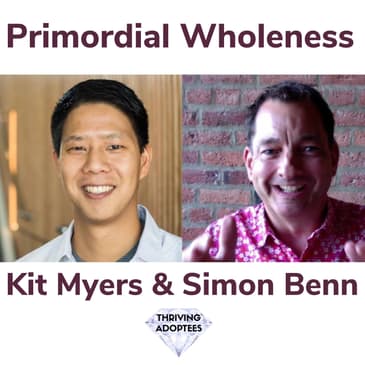
Kit interviews me about my counterculture take on healing. Primordial Wholeness - what is it and how does it help adoptees? We dig deep and debate on whether we can / how to uncover our wholeness underneath our trauma.
Kit Myers is an associate professor in the Department of History & Critical Race and Ethnic Studies. He was previously a Chancellor’s Postdoctoral Fellow at UC Merced. His teaching interests include the study of race as a social, relational, and intersectional category of difference and power. His forthcoming book, The Violence of Love: Race, Adoption, and Family in the United States, with University of California Press (2024), uses interdisciplinary methods of archival, legal, and discursive analysis to argue that while adoption is imbued with love, violence is attached to adoption in complex ways. The book comparatively examines the transracial and transnational adoption of Asian, Black, and Native American children by White families to understand how race has been constructed relationally to mark certain homes, families, and nations as spaces of love, freedom, and better futures against others that not. Myers has also published journal articles in Adoption Quarterly, Critical Discourse Studies, Adoption & Culture, and Amerasia. He serves as on the executive committee for the Alliance for the Study of Adoption and Culture. He received his Ph.D. and M.A. from the University of California, San Diego in ethnic studies and his B.S. in ethnic studies and journalism from the University of Oregon.
https://www.linkedin.com/in/kit-myers-21463417/
Here's where I interviewed him https://thriving-adoptees.simplecast.com/episodes/the-logic-mystery-of-healing-kit-myers
Guests and the host are not (unless mentioned) licensed pscyho-therapists and speak from their own opinion only. Seek qualified advice if you need help.
Want to learn more about thriving for you, your kids, your families or your colleagues? Pick a time to talk here
[00:00:02] Hello everybody, welcome to another episode of Thriving Adoptees Podcast. Today I'm delighted to be joined by Kit, Kit Myers. Delighted to be chatting with you today Kit. Listeners may have heard of Kit, he's been on the show in the past and I interviewed him. And today we're turning it the other way around so Kit's going to be interviewing me. And I guess we're
[00:00:27] going to have more of an exchange of ideas and a strip, what do they call it? Streams of consciousness about this idea of primordial wholeness. So thanks Kit for stepping up to the plate to do this. I really appreciate your help with it my friend. Kit Myers Yeah, of course. It's good to see you. And
[00:00:57] it was great to see you in Leeds just a few months ago. That was a really nice surprise. And yeah, I look forward to this conversation. It's very interesting. You know, when you reached out to me and even before we did our first podcast and as we did that podcast, you know, my understanding of your perspective is this like, you know, healing perspective. And so this is, it seems
[00:01:26] to be kind of developing that. So I'm interested to hear about that. Of course, I think I have my own perspective that is a little bit in tension with yours, but I think it'll be a great conversation. Kit Myers Yeah, I think these sorts of tensions between friends can, we can find space for that. There's, we can make space for that. And we can stretch,
[00:01:49] we can stretch out our opinions. So we're friendly differences, rather than the more antagonistic differences that we see, especially on social media, in politics, whether that's US or UK. So yeah, friendly differences and, and stretching each other's thinking is...
[00:02:14] Right. And so it's, this is like a international friendly rather than like a Derby, right? Yeah, that's right. Yeah. Kit's a soccer fan. So we met in, we met up in Leeds at that adoption conference. And so I, but I think your loyalties are to a Southern soccer team, if I'm right. Kit Myers To Arsenal. Kit Myers To Arsenal. Kit Myers To Arsenal, yeah. Kit Myers Yeah, this side. Kit Myers The Gunners.
[00:02:41] Kit Myers Yeah. He's got a Gunners t-shirt on for those listening, right? The Gunners or the Gooners. They also talk about the Gooners. Kit Myers I know. Kit Myers Yeah. Do you remember a guy, a star in the seventies? He's just gone out my head. The Kit Myers That's before your...
[00:03:09] Kit Myers Yeah. Yeah. Before my study. Kit Myers Before your time. Yeah. So David O'Leary was a big, an Irish guy, a key player, a great player for Arsenal in the seventies. But he came up, he came north. He managed, he managed Leeds for a while in Leeds United in the nineties and before Leeds imploded due to financial challenges. Kit Myers Oh no.
[00:03:38] Kit Myers So there's a connection. There's an Arsenal. Kit Myers There's a connection. Awesome. All right. Well, that's awesome. Okay. Well, Kit Myers Let's say, you know, go ahead and start with, you know, I think the first thing Kit Myers I'm most interested in is what you mean by this concept of primordial wholeness. Kit Myers Primordial wholeness. Right. So I'm going to give it to you in a couple of lines
[00:04:01] Kit Myers And one metaphor, right? So we, well, people say that, people used to believe that adoptees Kit Myers come as a blank slate. Right. And now, and now we know they don't come as a blank slate. Kit Myers Right. There's the trauma is written on, on that, on their slate. Right. Trauma is written
[00:04:30] on, on, on, on their slate. Sometimes it's in like tiny six point text, right? Sometimes it's 50, it's 50 point text. So trauma, trauma is on the slate. But what I'm saying is, is the primordial wholeness is the slate itself. It's, it's not our, it's not our psychology. Psychology,
[00:04:58] our, our trauma is psychological. That's the, that's the chalk on the slate. But we're the, we're the slate itself. And so the slate is what some people might call consciousness. Consciousness is, is, is the, is the slate. And there is trauma on the slate, but we, we are consciousness. We are the
[00:05:25] the slate itself. Okay. You know, yeah, that, that, that, I mean, I love the, the, the, the font size metaphor. And that's really helpful to think about, you know, making a distinction between
[00:05:49] what is the, that sort of trauma and what is our self. So yes, you're quite, yeah, yeah. You're saying that the slate, it is not blank and it is, it is ourselves. And the trauma is just, it is on the slate, but it is not defining. It doesn't, it doesn't define. If we define ourselves as consciousness,
[00:06:13] if we define ourselves as I, I am, I am consciousness, then there is no, there is no, uh, trauma on in that. I am the triumph, the, the, the, the trauma is our psychology. And if I can stretch the metaphor a little bit further, right? So listeners, um, I don't, would you call yourself a transracial adoptee kit? Is that? Yeah. Transracial and transnational
[00:06:40] adoption. Transnational adoption. Right. So sometimes, um, there's, there's different layers of chalk on the, on the slate, right? So we might have some, um, um, we, we might have some kind of, uh, generational, some generational trauma, a layer of chalk on, on a, on a, on a slate that's generational trauma. We might have some trauma from, uh, that, so that might be from our forefathers,
[00:07:08] right? Or, or, or from our, from our parents. I'm my, my, my biological father was in and out of care himself, right? Uh, I think you, you're into, you, you, you lecture on, on, on race and, and those subjects, right? So if we think of the, um, African Americans and the descendants of, of, of,
[00:07:33] of slaves, you know, and, and, and we, the Brits were the instigators of this slave, uh, this slave trade, uh, this horrific thing, right? So, um, think about, so there's, uh, uh, African Americans are struggling, um, suffering with generational trauma. Think about, uh, a, think about, uh, the Jews who have been, um, have been persecuted as well and the generational trauma that passes down
[00:07:59] through that. So we've got a layer of generational trauma. We might have some in utero trauma. So our, our, our, our birth mother is going through tricky stuff, right? And, and, and that's causing her trauma. And we're pick, we're pickled, we're pickled in her, in her cortisol, right? The stress hormone that, that, that, that's going on for her. So, um, in utero, then we think about the relinquishment
[00:08:26] trauma, like the loss of our birth mothers. Um, then we think about growing up in a, in a, in a, in a space where we're the only Asian American in, in, in, in town. We've got the, there's those lack of, the, there's the lack of, what do they call it? Um, genetic mirroring. And, and, and that clearly
[00:08:50] brings a layer of, uh, a layer of trauma as well. And maybe we get bullied, maybe we'll get bullied because of our race or because of us being different in some way. And there's another layer of trauma on that. So there's, there's, there's, there's layers of trauma that are building up along this slate, but we're the slate. Us, I, I, as consciousness, we are the slate. So some,
[00:09:18] so some people might call it consciousness. Some people might call that, uh, awareness, or we might call it simply I, like I, I am right before, before I am Simon or I am Kit or I am an adoptee or I am a mom or I am a dad or I am, I am angry or I am sad or I am traumatized. Right. It's the,
[00:09:43] that I am is the slate that I am that is consciousness that I am that is awareness. Yeah. Yeah. Yeah. Okay. Um, and so, yeah, you're talking about, yeah, these different layers of chalk or, or, and, and really, yeah, the different, uh, the array of, um, traumas that someone who is adopted
[00:10:12] could, could, uh, experience. Yeah. Um, and the general public experience. Yeah. And the general public. Yeah. Yeah. Right. Right. Yeah. Yeah. Even beyond, even beyond adoption. Beyond adoption. Yeah. Yeah. Yeah. Absolutely. Um, and so, yeah, then, then, then, yeah, to me, it doesn't seem like you're, um, I mean, you're using, uh, primordial,
[00:10:34] um, primordial wholeness. Yeah. It, it kind of, it, it seems to be, uh, in maybe not juxtaposition, but, uh, in relation to, uh, um, the, this book, uh, by Nancy Vera. Is that correct? Yeah. The, the primal wound. Primal wound. Yeah. So yeah. Can you explain maybe, uh, touch on, you know,
[00:11:01] how, because to me, it may be, it doesn't feel like they're, uh, the way that you explain it, they're not necessarily at odds with each other. Um, but you could maybe explain how you think about the primal wound and how this fits or doesn't fit within the concept that you're sort of offering.
[00:11:23] So, um, the, the primal wound was, as you say, written by Nancy Verrier, um, and published in 1993. So Nancy has, or had, I'm not sure, I'm pretty sure she's still alive. Um, she has two daughters, a biological daughter and, uh, an adopted daughter. And she was trying to understand the difference
[00:11:47] between how those two daughters of her were in the world. And she couldn't find anything that really explained the, the behavior of, of her adopted daughter. So she, she, she started to research this. She was a, she was a, I think she was a medical doctor that became a psychologist. I think that's the way around it was. Um, and she, she researched this and she came up with this notion of a,
[00:12:16] a primal wound. So it's the, it's the, it's relinquishment trauma is what she's, what she's talking about. Um, and so we went from a place in the adoption world where we were trauma blind to becoming trauma aware. Um, and Nancy Verrier's book was kind of at the forefront of, of our trauma awareness.
[00:12:46] So the, the difference between, I'm, I've, I've, I've read the, I've, I've read the book. Um, and my own experiences with the book were kind of relief. This explains everything to,
[00:13:08] I'm stuck. I'm stuck. I'm stuck with, with the wound, uh, the, the primal wound. And then the third reaction was, I'm not stuck with the wound who, who I truly am, who we truly are is unwoundable.
[00:13:29] Right. So that was my first inkling of what I'm now calling primordial wholeness. Um, so does that kind of set, is that all clear? That sets, he's a lecturer at university or college, right? Um, listeners is a bright guy, but I'm just checking. Am I making, I'm just being, am I, am I being clear?
[00:13:52] Okay. Yeah, yeah, yeah, yeah. Yeah. That's, um, yeah. I think that explains, um, kind of exactly, you know, Nancy's, um, uh, concept that, yeah, yeah. This theory, um, of the primal wound. I mean, having this sort of psychological, physiological and spiritual, um, trauma that occurs from separation.
[00:14:19] And then, and then you're, yeah, you're sort of, um, very interesting, uh, telling of your reaction, because I think, I think it probably mirrors, um, other readers who, uh, for whom it really resonates, um, uh, uh, where they're like, yes, this helps explain why I have these feelings of, that are tied to
[00:14:45] abandonment and loss. Um, and that this trauma is something that is kind of deeply a part of me. And then, but I think your instinct and maybe even, I mean, others too, I'm sure, um, is the question, uh, you know, uh, well, does this, you know, again, does this define who I am? Uh, and you're, you're sort of saying that no, no, it doesn't define who I am.
[00:15:15] It is. So if, if, if I, um, you said that the primal wound, um, psychological, physiological and spiritual, right. And now, uh, uh, and people use these terms in, in different, in, in, in, in different ways and have different
[00:15:35] definitions of those terms, right? So I, um, for me, spirit is, spirit is another word. It's another word for the slate and it's another word for consciousness and it's another word for
[00:15:58] awareness, right? So spirit, consciousness, awareness, uh, spirit, consciousness, and aware, awareness and the slate are for me, they're all the same thing. So they're either synonyms or synophores like a metaphor that makes it sound right. She says, Nancy Verrier says that the,
[00:16:20] the, the, the wound is spiritual. And I would say, I would, I would argue that the spirit is unwoundable. The spirit is unwoundable because the slate is unwoundable. The slate is hidden by the, it's hidden by the chalk, but it's not damaged by the chalk, the chalk on the, the chalk on the slate.
[00:16:50] Yeah. So, um, trauma is, uh, it conceals our essence. It doesn't cut, damage, wound, impact, tarnish, destroy, whatever, right? Spirit is, spirit is unwoundable.
[00:17:19] And primordial wholeness is, is my way of, of describing that spirit. So she says that the, the, the, the primal wound is spirit and it's sorry, the, the primal wound is spiritual. And I'm saying, no, it, it's psychological. It isn't spiritual. And that's the difference.
[00:17:43] Okay. Um, yeah, yeah, yeah. Hold on. So, uh, um, okay. Say that one more time. The primal wound from her,
[00:17:57] from Nancy Berry says that the primal wound is spiritual. Yes. My, my, uh, my belief, uh, my, my rationale is it's not spiritual because spirit can't be wounded. The primal wound is psychology is psychological. So yeah, it's psychological, not spiritual.
[00:18:21] It doesn't hurt our essence. The primal trauma doesn't damage our essence. We are whole underneath the wound. We are intact beneath the wound. Trauma has hidden us. It hasn't harmed us. It's concealed us. It hasn't hurt us. It hasn't cut us. I, I am, I am whole, intact, complete, not damaged.
[00:18:53] Good to go. I just sometimes feel insecure. I just sometimes feel, uh, rejected. I, I, I, I project rejection, right? I project my psychology projects rejection onto the world, which isn't there.
[00:19:14] Yeah, it's, I'm making it up. I, I, I, I, my psychology is, um, projecting rejection that doesn't actually exist in, in, in, in reality. So can I give you an example of, of that? Yeah, that'd be great. That'd be great. Okay. So, um, this is 40 years ago. I'm, I'm walking back, I'm walking back from the pub and, uh, I see,
[00:19:43] I see an ex-girlfriend walking towards me with a new boyfriend and, and her, and her mum. And, uh, as we pass on the pavement, she ignores me. So I say, I say to her, uh, don't, don't say hello then, Fiona, because she blanks me. She ignores me, right?
[00:20:07] Um, I, uh, a couple of, and nothing happens, right? She, she, she, when I say don't, um, when I say to her, um, don't say hello then, Fiona, she, she, she, she doesn't respond. She just goes back the other way, right? She goes, we, we pass on the pavement, the sidewalk, right? We pass on the pavement and she goes back in.
[00:20:27] Two minutes later, I, I turn around to talk to one of my friends who's walking behind me and, uh, and a fist land lands in my face. And it's a new boyfriend. It's a new boyfriend who has taken offense to what I've said and decided to take it out, his anger and his frustration on me.
[00:20:53] And I go down like a, a sack of bricks, right? Cause he's a big guy. He's six foot three. He's probably like a good 60 pounds heavier than me. I go down on the floor, right? So, and my friend has to pull him off. So I, I, I thought that that girl was rejecting me. I projected rejection onto it.
[00:21:18] But then 35 years later, I realized she was actually defending me. She didn't want me to be hurt. But she knew her boyfriend, her, her, her boyfriend was, um, a, a, a, a gorilla and an angry gorilla. So by not saying hello to me, she wasn't rejecting me.
[00:21:44] She was keeping me out of harm's way because what happened, what happened when, when the guy came, when the guy, when I, I stoked that guy's anger, he came back and took it on me. Because I'm projecting rejection. I'm projecting rejection onto her. So because my psychology, because the, because being relinquished by my birth mother has impacted my, impacted my psychology.
[00:22:13] But I'm not myself. I am, I am primordially whole, whole, whole. And we, we, we all are. We all are. We, we've just got our, our essence and our psychology mixed up. Yeah. Okay. I mean, I, yeah, I appreciate the example.
[00:22:37] Um, I mean, I, I think, um, I think this is, you know, an, uh, an area where, yeah, there's a lot of contention. Um, because you have, um, so the way that I sort of perceive it is that, um, is that, like, I don't think Nancy would say we were fully defined.
[00:23:07] By the primal wound. But that there is this primal wound. And it is, it has affected us in a very substantial way. And, but I don't, I don't know that the claim is that it, it, it like defines who we are.
[00:23:22] But that, that to sort of say that it doesn't exist, which is not what you're saying, but to say that it doesn't, like, affect who we are at our core, I think is, um, maybe the argument. And, and I think I would agree with her, um, in that it is this very substantial thing.
[00:23:46] And, you know, at first, while you're growing up, um, you know, the, the narrative that oftentimes I think adopted individuals are told is one that kind of smooths, smooths up. Um, it does either one of two things. One is whether it, it might smooth out the traumatic, um, sort of timeline, so to speak. So that, um, in order to protect you as a child, the parents might say, oh, you know, yeah, this, this happened.
[00:24:14] Um, your parents couldn't take care of you. Uh, and therefore we, you know, we were looking to expand our family or create a family and to kind of smooth that over. Um, the, the other sort of way that narrative could be told is that, well, there was a, there was a trauma and the trauma was that, um, you were institutionalized, um, or that, um, uh, you would have grown up poor.
[00:24:44] Or, or, or, or whatever. I mean, in the, in the U.S. context, it's like, you know, your, your, your mother would have been, you know, was a drug addict or, uh, neglected you or that you would have grown up on a reservation or, um, or for a lot of Asian adopted, uh, individuals. It's that, um, uh, yeah, you would have grown up in a sort of, uh, in an orphanage in a backwards country. That, that would be another lie. And, and, and, and devalued.
[00:25:11] So, but, but the, so you have this like kind of story and then, so the primal wound is saying, okay, well, yeah, there's this story that is told about adoption. And the primal wound is trying to say, well, you know, what about the story that is told is not really accurate. It's not accurate at all because there's these different, um, there's this main trauma.
[00:25:36] But I, you know, I would, I would argue that there's like, um, that there are three levels of trauma. One is like the trauma that sort of happens structurally to create the condition for separation. Like why does most trauma, trauma is, or most, you know, family separation is, is, uh, due to kind of a structural reason.
[00:26:03] Whether that's like religious, um, sort of moral, uh, uh, policing, uh, that took away children from, you know, mothers, uh, who are, you know, like indigenous, indigenous people in the U.S. Or even, even in Ireland and, uh, and in England, I mean, they're, you know, mothers are, uh, having their babies taken away from them.
[00:26:28] Um, but certainly, yes, uh, in like the U.S. Native American and Canadian and Australian context as well. Um, and so there's the structural issue or even in, you know, domestic context where just that, that a woman is not supported, uh, socially or economically, uh, to be a single parent. Right.
[00:26:51] Um, and then the moment of, uh, of separation, um, and, and then the possible sort of institutionalization.
[00:27:01] I mean, I don't know if we combine those two, but, and then after that moment, uh, during the, like the phase of adoption, that journey of adoption, that subsequent trauma can happen when, um, you know, the experiences of adoptees, uh, are negated by maybe the adoptive family. Um, they're saying, oh, you know, your history is not important or your birth family is not important or whether it's, you know, strangers who kind of,
[00:27:31] say that, um, so, or whether they sort of ignore the fact, you know, the issues that you talked about, maybe it's like racial isolation or maybe it's that, you know, families aren't understanding why their child might be affected by, uh, police killings in the United States or ICE kidnappings. Uh, and they're sort of oblivious to that.
[00:27:53] So this is kind of a re-traumatizing of, um, um, adopted individual because, you know, in, in trauma theory, you know, one of the, the, there's this, there's a scholar, uh, named Jenny Atkins. And she, um, talks about, uh, trauma takes place when, um, you think the thing that will protect you actually, uh, you know, the, the, the, the site of refuge will, uh, enact harm.
[00:28:22] And so, you know, these different moments in which you think you'll be safe, you know, maybe, you know, right after birth and, um, in, in, in your new adoptive family, right? Like they're sort of producing these different forms of trauma. And do they like define you wholly? I mean, I agree with you. I don't think they define you wholly, but I actually do think that they produce wounds in, in the slate.
[00:28:51] Like, not, not, not like wholly defining, reconstituting wounds, but wounds that are very real and, and valid and, and impactful. Um, and so I think it's like, if by, like, wholeness, I think, and even like the, the, um, you know, the idea of healing for me.
[00:29:20] It's like, I think most people can heal. I think most people can heal, um, after being adopted, but I think there's some people who, and, and I wouldn't just say it's like just psychological. I mean, I think we could, it's instinctual for us to say this is just a psychological barrier for them to heal.
[00:29:41] But, um, I mean, if we think about like, sort of, uh, indigenous epistemology and the way that we come into the world, uh, and how we are linked to not just like our mother, but how we're connected to land.
[00:30:01] And so I think about like a lot of cultures, uh, bearing their, the, the mother's placenta as, as, uh, for, for various reasons. In some cultures, um, uh, uh, like, you know, native Hawaiian, Maori and, um, native American, like Navajo, they're, they're bearing it to connect the child to the land.
[00:30:24] And so that removal from that, the land to somewhere else that is wholly sort of disconnected, it could be like 20 miles or it could be 3000 miles. Right. Um, right. Does something to the, I think to the spirit because the, the, the spirit was, you know, emerged from this place.
[00:30:51] And then, and what happens, you know, at, uh, like the, one of the reasons why placenta is buried is because, uh, for instance, in like Mon culture, uh, when a person dies, there's a shaman who, um, who guides the spirit back to the placenta. And, and, and you, you have to remember where the placenta is born for them to be able to transition to the afterlife.
[00:31:16] And so there's these, you know, in another culture, um, in other cultures, like the placenta is seen as like the, um, the older sibling, uh, the twin or the older sibling who is, whose role it was to protect the child in utero. And then even sometimes into some of the, uh, even though the placenta is buried to still protect the, the, the child as it grows up and through adulthood.
[00:31:41] And so I think what, in fact, um, Nancy kind of misses with the primal wound, um, because it's very focused on more psychological and domestic, but, but thinking about these larger structures and also in the way that, you know, indigenous epistemology is, is, is thinking about, uh, kinship beyond the mother child.
[00:32:10] Uh, relation. And thinking about, well, there's these answers. I mean, for instance, again, once more to think about the placenta example, oftentimes it's buried to be a connection to ancestors or the child.
[00:32:25] And so again, when, if you like, you know, extract, uh, uh, separate, I mean, and some people, you know, view themselves as being stolen, um, from that place and from that relationship to not only the mother, but to the land, then that, that wholly affects their, I mean. Yeah.
[00:32:49] Maybe not, not, um, uh, completely, but it significantly affects their, their being, their ontological sort of understanding of themselves. And, and I think it, the, the major moment is when we talk about that moment of consciousness, uh, you know, people have used the out, you know, coming out of the fog and, and now, you know, some other folks have, uh, came out with the adoptee consciousness model.
[00:33:16] And I think that's when it goes like this step further, just realizing that there are so many things that affected how you came to be you.
[00:33:29] And certainly you have the power to, um, um, psychologically, um, sort of battle the, the sort of past trauma and to figure out ways to navigate it and manage it. Um, and ultimately, um, and ultimately, I mean, I think the goal is to heal, you know, sort of, but, but I think part of it is like, are we healing like past the trauma?
[00:33:57] Are we healing so that like the trauma doesn't, um, no longer is, um, um, relevant? Like we've, we've just sort of conquered, quote unquote, conquered trauma.
[00:34:13] Or are we healing toward, uh, sort of acknowledging that trauma exists and affects us, um, and being okay that that trauma affects us, but, but knowing that we can actually be these other things and it doesn't have to like define who we are. Yeah. There's a lot there, Kit. Um, there's a lot there.
[00:34:36] If I'm, and I'm, if I was to, oh, let me start with the fog. Right. So the, the, the fog for me is when we become conscious of the trauma or the source of the trauma that we have been unconscious about. Right. Yeah. Does that kind of stuff you mean? Okay. Yeah.
[00:35:01] So for me, if, so the fog lifts, right, go with me on the metaphor, the fog lifts and we see the storm that is trauma. So that's a scary moment coming out of the fog is scary because we, we, we, we feel the, we see the storm. We see, we see the storm cloud. Right. We, um, you've talked about grief. I think, right.
[00:35:31] The, the, it's, it's a thunderstorm. Right. So the grief is, is, is, is, is the tears of, of the rain. Right. The, uh, the, the, the thunder clap is the, the loud noise of our anger. Right. So for me, when I came out of the fog, it was, it was an angry kind of thing rather than a tearful thing. And then we've got the, we've got the, the, the bolts of, of, of lightning. Right. Which, which is our, our fear or our terror.
[00:36:01] If I'm, if I'm going to kind of ramp up the, the, the trauma metaphor. Right. So we come out of the fog, we see the storm. Um, we, uh, we, we, we, we, we're crying our eyes out or we're angry as hell or we're scared as hell. Or we're all of those things all at the same time, terrified, terrified, furious and grieving. Right.
[00:36:28] Those are the main kind of trauma adoption, uh, relinquishment trauma kind of things that, that kind of strike, strike me. Right. And we're the sky, we're the sky, we're, we're the, we're the space in which our trauma comes and goes.
[00:36:52] So this is, you know, you've been talking about different kind of, um, different cultural views around, um, you know, the burying the placenta. You've been talking about different, uh, different kind of cultural, cultural narratives about our essence. Right.
[00:37:18] Well, I'm, I'm talking about what a cultural narrative here about our essence, but I'm, I'm, I'm leaning on, uh, like a Buddhist metaphor, which is to define ourselves as the sky. Okay. And so I think we can, we can pick them.
[00:37:42] We can pick the metaphors and we do, that's what we're doing is we're, we're, we're picking the metaphors that, um, that kind of prove, prove, prove, prove our beliefs. I think, I think that's what, I think that's kind of, I think that's what we're, we're doing. So I'll, I'll, I'll stop and take a breath at that point. And yeah, I mean, I appreciate the sky metaphor.
[00:38:07] Um, I mean, I, and I think part of it is like, um, you know, with the fog metaphor, I think the reason why some people didn't like it is because it felt too individualistic. And it kind of felt like, um, it, it, it felt too kind of linear in terms of like a before and after, right. That, that there was this moment.
[00:38:35] And then after it, it's like, it's, it's kind of, um, you're either in it or you're out of it. And, and, um, and so, you know, I think we come, the scholars, I think we come in, I think we go through multiple layers of it. My, not, not, I think my experience is that I have come in and out of the fog. So it's, it's more like, um, to use another metaphor, it's more like peeling an onion. Yeah. Yeah.
[00:39:05] And, and, um, I mean, I think what you're arguing is, is that, um, I mean, it's almost as if, um, we, we, and there's actually another, um, you know, there's, uh, Chaitra and, uh, oh, this is horrible, but I'm forgetting Chaitra's last name. Uh, she, she's, uh. Oh, Chaitra Lerner-Welker. Yeah. Chaitra. Yeah. Yeah. Yeah.
[00:39:30] Um, she has, uh, I, I saw her give a presentation on like, uh, adoptee superpowers and, and sort of thinking about, uh, these challenges that adoptees have and then inverting those challenges to think of them as like superpowers. Um, and, uh, and it's very interesting presentation, um, and, and argument that she's making.
[00:39:58] And I think you're kind of making a similar one in sort of saying like, we do have the power to, um, kind of, even if it's like a difficult thing that we're going through and like maybe the, the behaviors that we exhibit both as a young child, but also as maybe as a grown adult,
[00:40:20] um, that there might be these, um, very identifiable manifestations that are linked to adoption trauma that, that we do have like the psychological and maybe spiritual, um, power to, uh, kind of have greater control than, than we think. And so that if you, if we are the sky, then, then the storm, uh, we, we actually can, um,
[00:40:51] control this, the storm, so to speak, or how much the storm might. We can't, we can't, we can't control the sky doesn't control the storm. The sky can't control the storm, but it doesn't need to, because it, it knows it's not going to be damaged by it. I see what you're saying. Okay. Okay. So, yeah, I mean, I, I think again, I mean, I'm, I'm with you to, to some extent.
[00:41:15] Um, yeah, I'm, I'm there with you for like the idea of us being, um, uh, where, and this is where like part of me is very practical. And then the other side of me is like, um, I think thinking about how does this play out in real life?
[00:41:42] And so, so for the example is like my mom, when I was young, she had me read this book, uh, don't sweat the small stuff. Um, have you heard of this book? I have. Yeah. Yeah. Um, I, I enjoyed it. I read it like a while ago. Yeah. It's good. It's good. Yeah. I mean, I read this probably as a teenager or something. Um, and, uh, and I appreciated the message of the book.
[00:42:09] Um, and the, the thing is, uh, you can't call it. And it was, it was, yeah, yeah, yeah. It was, it was, yeah, it was absolutely helpful for me and sort of navigating everyday sort of things. Um, but, um, especially once I learned, you know, I took ethnic studies classes and I learned, okay, there's like things that are beyond our control and, and they have like these real effects on us.
[00:42:38] So that like, no matter how hard you sort of, you know, whatever, no matter how much you have like a positive attitude or no matter how much you sort of, um, take a challenge, uh, take, take something negative that happens and turn it into a challenge. Like there are some, some people that experience, um, trauma and hurdles and, and stuff to an
[00:43:06] extent to where it, uh, it can be not, not just feel, but it can literally be insurmountable. And, and, and so there's this, you know, this, this definition of racism by Ruth Wilson Gilmore. And she says, racism is the state sanctioned vulnerability to premature death so that the state allows certain people to die prematurely.
[00:43:36] And so if we take, you know, racism and, and these other terms of, you know, classism, uh, or even like sexism and how, how, you know, you think about like domestic violence or, um, uh, and these other things that have like, um, powerful sexual violence, really impactful, um, things that happen to people.
[00:44:02] Um, and history has shown that it's, it has like real consequences, um, both psychologically and economically. And then of course, um, in terms of mortality. Um, and, and so for me, I think the only caution here with this is, is, or the main caution
[00:44:26] with this is that, um, is that, um, is that there is this idea that, and I think it's kind of has this long history, uh, in Western philosophy, um, of the, the sort of transparent eye, this like subject who kind of, um, you know, thinks and therefore is, and, and kind of the way
[00:44:55] that that has unfolded is that, you know, the European consciousness and, and mind has, um, sort of full control and, and full faculty, full faculties, um, that enable it to sort of manifest itself. Um, and then the, the argument has been that, you know, racial others don't have this ability, um, which I, you know, I, obviously I don't think either of us, either of us, none of us,
[00:45:25] neither of us believe that, but I think, um, so I think my argument is that, you know, that as individuals who have consciousness, we actually are affected. Like we, we, we are, our consciousness is continually affected. And so the, the sort of attempt to believe that we can sort of go beyond being affected,
[00:45:54] um, seems to be something that is, is like an idea. Like that's an idea. We, the idea is that we can not be affected is one that theoretically can happen. But in practice, I think, you know, 99% of people, like the, the, the reality is, is that we are deeply affected.
[00:46:21] And regardless of like what our slate is, or if we are the sky, that, that there are these other things that are continually sort of bombarding us. And, uh, and, and, and if we think of, yeah, time as, as not linear, not progressive, right? Linear and progressive, like things are getting better as I'm navigating my ability to sort of
[00:46:50] move past my trauma, but that time is kind of, you know, up and down or, or circular, um, or sporadic or disrupted, then the idea that we can sort of say that we can sort of get backed or, or understand the, the, the slate as whole, um, I think becomes more difficult. Yeah.
[00:47:20] Sorry. I interrupted you a couple of times in that, that bit. That's okay. So I apologize. Um, so, uh, have you, you just talked about, uh, you're talking clearly about, um, horrific acts of, of, of, of mankind here, right? So, um, killing, killing people because they don't, they're not like us.
[00:47:46] Uh, it, it, it, this is, this is, this is just completely horrific, right? I, I'm not sanctioning, clearly not sanctioning any of that. Yeah. I definitely don't think. Yeah. On the subject of mortality, have you read any books about near death experiences or what? Have you heard of near death experiences?
[00:48:11] Yeah, I've, I've heard of them and, and listened, uh, about, but never, I haven't read anything about it. Okay. Um, so I have read a couple of books about near, near death experiences. One of whom, one of which is written by an adoptee and, uh, uh, and, um, who is a brain,
[00:48:38] a brain surgeon and the book is called proof of heaven. I've heard of that. Yes. Yeah. So he's an adoptee. He's an adoptee. Oh, I didn't, I don't think I knew that. Yeah. Yeah. Um, uh, so he's called Eben Alexander, E-B-E-N, Eben Alexander.
[00:48:59] And what he, what he and other near death experience, some of the near death people that have experienced near death experiences, what, what they see is that conscious, consciousness has us, not we have consciousness.
[00:49:24] So what, what that means, most people think that we identify with our body, we identify with our body and we think our body has consciousness. Whereas what, what, uh, Eben and other of those people say, and I, I, in this camp, I mean, in that camp is consciousness has our bodies.
[00:49:54] So consciousness has our bodies is, is another way of, another way of saying that is that consciousness is the sky and, and, uh, and the clouds are, the clouds are. Yeah. Okay. Yeah. Yeah. Yeah. Yeah. Yeah. Yeah. And, and that, that's actually really interesting. And, um, in part because my mom actually, she gave me that book, but, but I never read it.
[00:50:22] Uh, I'm not, I'm not religious, but it, what's very interesting is that your statement, um, is kind of like, it, it, um, it does, I feel like relate to Buddhism and reincarnation. Like, you know, the body is just, um, kind of a vessel that gets recirculated, you know, over many lifetimes. And so, and if we take it for that approach, uh, and, and because, you know, part of,
[00:50:51] I think my mom who is spiritual, but not religious, um, what she kind of believes is that, you know, our life on this earth is in the grand scheme of things, very insignificant and that there's this greater plan for our sort of consciousness. Um, and so it's, it's a very interesting thing to think about that, that we, and it goes back to like, you know, the don't sweat the small stuff.
[00:51:21] I think it's really effective for those sort of things. Um, and it's helpful to, to, um, use this idea of whether it's like an actual belief or whether it's just, um, like instrumental, uh, to, to sort of take this idea that, you know, our, our bodies are just vessels for our time here, our short time here on earth.
[00:51:49] And really most of our life is somewhere else. Um, and so I think that is really useful because then the way that we approach life can be drastically different. Um, yeah, I, I think, you know, my main point is just that the realities that we live in, like it doesn't have to be these sort of horrific things. It's, it can just be the way that everyday life exists.
[00:52:17] Um, that affect people and, and, and it becomes this sort of accumulation of things. I mean, I think I find it really interesting, um, when, uh, I mean, this is, this is not an example of everyday thing, but, uh, the, you know, the British, uh, fella, Milo's, Milo's, uh, who just got deported from the United States.
[00:52:44] Um, and he's this British guy. He's this super conservative guy who was, um, was doing speaking tours very young, um, uh, doing speaking tours at college campuses in the United States on, on free speech and, uh, on, you know, uh, meeting stricter immigration laws. And, you know, even though he's a UK person, um, and, uh, he actually just got deported, uh, last week.
[00:53:12] Um, and, uh, because he, something with overstaying a visa or something, I can't remember. Anyway, he's on the news and he's talking about how he's like kind of admitting that he didn't really believe the, the trauma that people were talking about when people are detained and well, first arrested. And then, you know, just the very active arrest and then the detainment.
[00:53:40] And he was, you know, talking about humility, humiliation. And he was talking about, he, you know, was just broke down and started crying. And here's this, you know, person who's like, um, uh, spent, you know, years of his life promoting the deportation, uh, of people. And then once, you know, once he experiences it, he's like, I actually didn't realize what
[00:54:10] that felt like, and now he's kind of come to this realization. And so I think part of it is that, um, you know, I think for me, both of these things can come together, like the primal wound and, uh, primordial wholeness can actually fit together in an interesting way to, to think about how, um, we have to like, for me, um, really,
[00:54:40] acknowledge the violence that produced the need for adoption and then the violence of separation and then the violence of that happens after adoption. When we think that adoption is supposed to resolve the violence, oftentimes it actually produces different, new and different forms of violence. And so for me, I think a lot of, uh, um, adopted individuals kind of experience all three of
[00:55:09] those forms of violence and, and that we should really hold space for that. And, and, but that because just because we hold space for that doesn't mean that we can't heal in different ways, whether it's through somatic practices or spiritual practices or, um, you know, mental health, um, sort of traditional mental health practices.
[00:55:34] Um, and I know a lot of adopted individuals like provide those services because I think they have felt a sense of healing through, you know, mental health and they become therapists or, you know, through, uh, practicing, you know, somatic practices and then they become a somatic practitioner. And so all of these things, I think, um, uh, I'm starting to be more like, yes, I think
[00:56:04] we, there can't, there's healing to be done and there's like a wholeness that we can think about. But like, for me, wholeness isn't like, uh, isn't like, uh, a slate that exists as it did in its origin. Like the slate or, or consciousness is, is actually always affected.
[00:56:27] Like, uh, because yeah, that's just for me, um, that's what life is. You know, our consciousness is, is affected. Um, and, uh, but, but wholeness, wholeness can just mean that, that we acknowledge that
[00:56:46] the slate exists, uh, kind of before and beyond the things that affect us, but that there is still these other things that the, that the wholeness, um, contains and holds.
[00:57:07] Um, so I, I think my personality is deeply affected, right? Um, I've done some somatic experiencing and that's cleaned some, that's cleaned some stuff off the slate, right? It's given me a closer view of, of the untraumatized slate.
[00:57:37] Um, we, we have a, we'd have a difference of a, we have a difference of a opinion, uh, on it. And that we've, we've got, we've got two, we've got two views and that that's what we've set out to explore and, and that kind of, that's what we've, that's what we've, uh, explored. The, the challenge is in the bit that the bit, the challenge for me is in the physiological part,
[00:58:06] because you said trauma is, um, psychological, um, physiological and spiritual, right? Um, and I think the bit for me is, you know, that we haven't really touched on the, we haven't really touched on the physiological one. Um, and that's a, that's a big can of worms and, and, and, and the trickiest bit to, to, to, to discuss, right? Because we identify with our bodies.
[00:58:35] We identify with our bodies and that, and, and yeah, we say our body is us. Well, our body isn't consciousness in my definition of consciousness or, um, a guy called Max Planck, he's a quantum physicist. I've just got the, a book out, another, a Ben Alexander book out and it's called the, the map of heaven. And, uh, Max Planck, he was a quantum physicist.
[00:59:01] I think he got a, I think he got a Nobel prize. I'm not sure, but it was 18, 1858 to 1947, Max Planck was all right. And he says, I regard consciousness as fundamental. I regard matter as derivative from consciousness. Yeah. So consciousness is the slate.
[00:59:25] And he says the, the body comes from consciousness, not that consciousness comes from the body. And there's a difference here between a materialist. Uh, most scientists are materialists. Right. Yeah. That, that, that say we are the body and the body has consciousness and other people, including Eben Alexander and, and me and other, a tiny minority of people would say that consciousness has the body.
[00:59:56] And, and therein, therein lies the nub. But I can say that consciousness has, has the body. And I still do somatic experiencing or I have done somatic experiencing. So I'm, I'm, I'm saying that the healing is to be done there, whether it's through somatic experiencing or EMDR or all different things like that. The healing has to be done physiologically. The healing has to be done psychologically.
[01:00:23] I'm just saying that spirit, spirit is clean. Uh, but I, I am not, I am not denying that trauma has had a fundamental impact on my psychology, on my physiology. I, I have really bad start, start, start, startle response, right. Um, or bad in my view of the world.
[01:00:47] And, but I, I'm just saying that, um, that, that my, my, uh, and my personality. So my personality, my psychology, my physiology, all of those things. But on, on, on me consciousness, the slate, the slate is, is clean. But, but that, I think. Yeah. Do you, do you have time for one more question? Of course. Yeah. So, okay. So yeah.
[01:01:14] And, and I, I do really, uh, I can, I hear you and, and I think, um, and yeah, I think you've done, um, a fantastic job of, of sort of, of sort of articulating that. But yes, there's this trauma, um, that, that you have experienced too, even as you're talking about this, this, uh, concept or perspective.
[01:01:41] So I guess the, the question then is, okay, you, you, you understand that this trauma exists and that there's this free trauma consciousness. Um, how, how does that understanding help you as you're still navigating the trauma that you've experienced? In one sentence, I'm less scared of the storm. Okay.
[01:02:12] And that's, that's the main takeaway point for, uh, that's the main hope you have for other adopted individuals is that to understand ourselves as, as consciousness instead of the body who has, that has consciousness, um, to, uh, just be just that much more empowered to, to.
[01:02:38] Less, less, less scared of the storm, but fundamentally undamaged, untainted, complete, intact, unmolested, good to go. Good to go. Good to go. Despite feelings, sometimes feeling that I'm not right.
[01:03:01] So it's a, it's a, it's a, it's a different, it's, it's, it's, it's about, it's, it's, it's, it's, it's, it's, it's feeling differently about our feelings. It's feeling differently about our, about our trauma. Okay. So is there still an internal, you know, dialogue inside of you then? I mean, where you're saying you're feeling good, that you're good to go, even if you're feeling that you're not good to go. Is there still?
[01:03:28] I sometimes get, the storm sometimes scares me still. My, my inner, my inner critic isn't silent. Yeah. But I, I just, I don't, I listen to the inner critic a little less than I, or a lot less than I used to do. So the voice in my head isn't, isn't as loud as it was. And it doesn't upset me as much as it used to do. Yeah. So more peace, right?
[01:03:58] The sky is peaceful. The sky is, is always at peace. The trauma stops raging, but the sky's at peace. Mm-hmm. Mm-hmm. All right. We want peace and content, right? Thanks, Kit. You've been an absolute star. Thank you, listeners, too. Thanks for listening. Take care. We'll speak to you. Yeah, it's been, it's been a great conversation. And thanks for inviting me to join you today. Absolute star. Thanks, Kit. Thanks, listeners. Bye-bye.