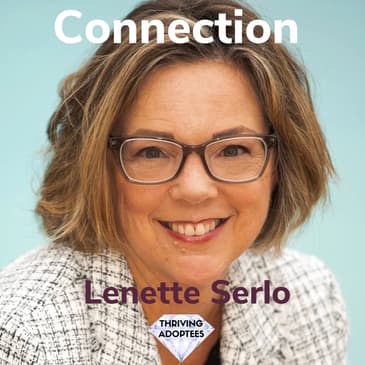
Connection. We all want don't we? And we want our kids to feel connected to. How well are parents connected with us can influence how we connect with our kids. Listen in as adoptive mother of 4 Lenette talks about connection, raising kids with prenatal opioid and substance exposure and more...
Lenette Serlo is the Founder & CEO of Generation O, The National Organization for Opioid-Exposed Children, the first national movement dedicated to supporting families raising the half million children born with prenatal opioid exposure. A graduate of Michigan State University and an adoptive mother of 4 substance-exposed children, Lenette combines personal lived experience with a diverse professional background to advance both compassion and science in this emerging field.
Under her leadership, Generation O has become a growing voice for caregivers and a trusted source translating complex research into plain English. By spotlighting the long-term consequences of prenatal opioid exposure—including impacts on brain development, learning, and behavior—Lenette is raising awareness, building partnerships, and ensuring that the unique needs of these children are recognized in healthcare, education, and policy.
https://www.linkedin.com/in/lenetteserlo/
https://www.facebook.com/lenetteserlo/
https://www.facebook.com/profile.php?id=61564529017720
https://www.instagram.com/generation_o_org
https://www.linkedin.com/company/gen-o-nooec/
Guests and the host are not (unless mentioned) licensed pscyho-therapists and speak from their own opinion only. Seek qualified advice if you need help.
Want to learn more about thriving for you, your kids, your families or your colleagues? Pick a time to talk here
[00:00:02] Hello everybody, welcome to another episode of the Thriving Adoptees podcast. Today I'm delighted to be joined by Lenette. Lenette Serlo, thank you for joining us today, Lenette. I'm really looking forward to our conversation. It's going to be a blast. Thank you Simon. I'm thrilled to be here with you today. Yeah, thrilled. That's a great word isn't it? Me too. Thrilled. We could all do a little bit more thrill in our life can we?
[00:00:27] So listeners, I've said this before, we already have people with huge hearts on this show but huge hearts and so much modesty about the size of their hearts. So Lenette's got four kiddos through adoption and she also, how she manages time to raise four kids and run a non-profit that's growing at some incredible speed.
[00:00:54] So she's the founder and CEO of Generation O, which is for a national organization in the States for opioid exposed kids. So I don't know. How do you do it all? How do you do it all? I'll tell you one thing for nothing before she, before she answers her own question. Perhaps I should, should be not interrupting.
[00:01:20] She does it by, she told me that she's been walking for the last couple of days and that's the first time she's been walking for a long, long time I get the feeling for. So I think she does some of it by maybe edging some of her own self care stuff out perhaps. Lenette, would that be about right?
[00:01:40] Yes, I don't think that you can put raising for interesting children and birthing an organization and self care in the same bucket. I'd love to think that there's a rhythm to be able to do them all and I try to do them all because I know without the self care, everything else suffers. But it's a challenge. It's a challenge.
[00:02:07] I, my four children were all born with prenatal substance exposure. We adopted each of them individually and brought them home from the hospital, my husband and I. And what a journey it's been. Three of them are now teenagers, one's off on her own in college. She's 19 and then I've got two in 10th grade that are 16 and 17.
[00:02:35] And then we've got a little bonus guy who's six. So he still keeps us grounded in all things six year old boy. Yeah. Yeah. Well, yesterday I did an interview and it was called grounded, right? So what grounds you Lynette?
[00:02:56] I think that everything that's constantly happening in my life keeps me grounded because I have to. I don't know that I prefer to stay grounded. I mean, my nervous system would have me keep busy. Um, but when the six year old walks in and, um, need you to cook them an egg, you know, you got to stop and cook them an egg.
[00:03:22] Um, so it's the interaction with, with the children and, and, um, that's a big part of it. Um, you know, I've lived a lot of life and I've understood that when I don't stay grounded, bad things happen. Um, so I do my best to, um, you know, keep what's in front of me important and, you know, stay busy with important things.
[00:03:48] Um, the work I'm doing with generation O is very grounding, um, because I know it's such important work to, um, help people understand what these opioid exposed children are dealing with in their lives. Um, and so it's, it's moment by moment. Yeah. Yeah. Our nervous systems. Uh, like nervous systems keeping us busy.
[00:04:17] Like a high wire act. I don't know. How does it feel for you? Well, um, my nervous system is all over the place. And, um, but what I, I know what I know more about perhaps than my own. My own nervous system is the nervous system of these kids. Um, because what's happening to them is.
[00:04:43] When opioids are part of their fetal development. There's some changes taking place. There's, there's changes in their brain. There's changes in the structure and function of what's going on in their brains and bodies. And when they're born, um, their nervous system may be different than a child who wasn't exposed to these substances.
[00:05:07] And a lot of people, um, you know, with the opioid epidemic in the U S a lot of people have heard about how these babies are born. And then when. The umbilical cord is separated and those opioids are no longer flowing into these tiny bodies. They have to go through this withdrawal. And that's a heart wrenching thing to watch.
[00:05:31] But when the withdrawal is done, they're still left with that miswired nervous system. And now we have the next 18 years of childhood that they need developmental surveillance and support. And that's this huge gap that, um, the, the team that I'm working with sees and really wants to help fill in. Yeah.
[00:05:59] And yet with all that background, you'd think. You think a 19 year old with that sort of star, um, wouldn't be at college. Right. Yep. And I can tell you, there were many years when I never thought she was going to launch. You know, I just, I didn't see it. And, um, this particular child and I, our personalities are so different and we've really struggled.
[00:06:28] Um, and when I would, when I would see her as a 10 year old or a 13 year old and think, how in the heck is she ever going to get through school and get on with her life and launch. And, and I need her to launch because we need to be living in separate places. Um, but it's happened. It's happened. And she launched, she fell flat on her flight. Excuse me.
[00:06:53] She fell flat on her face and she got right back up and she's doing amazing. Simon. I, we are so proud of what she's doing and she's following her own path. And, um, it's not a path that we could see clearly for quite a while. Um, but she's, she's figured out for her what works and what she needs. And we're still supporting her.
[00:07:18] Um, you know, this is a piece of the dysregulation, but her maturity is not at 19. Her maturity is maybe at 13, 14. And I didn't realize this until it happened, but I've, I've started to say that it's like sending a, a middle school kid, which I don't know what you guys call middle school.
[00:07:41] The, the, the ages when you're like eight, 10, 12, like that age range, it's like sending someone that age range off to college and not only off to college, but we live in Florida and her college is in Ohio. That's a significant distance as an airplane ride away. And we, and we did this and it's no, um, surprise that she fell flat on her face, but it's exactly what she needed. And now she's doing amazing.
[00:08:13] So, you know, I didn't ask you the question, right? Thriving adoptees. That's what you're talking about. Is that, is that, is that. Yeah, I would say she is, um, she is currently thriving and it's, it's a different picture than what, um, would be thriving to me. Thriving to her is, is very different.
[00:08:35] Um, but she's doing it and, you know, a huge piece of that was understanding who she was and supporting that person, not trying to support the person who I think that she should be. Yeah. Yeah. So I was, I was talking to an adoptive mum a couple of weeks ago and this was, I can't remember whether it was part of the interview or afterwards.
[00:09:04] Um, and I've got this, uh, I've got this thing. I see this thing so, so clearly. Uh, and the, the thing that I see is our, our, our, our fundamental wholeness underneath our trauma. Nobody's denying the trauma.
[00:09:30] I'm just saying underneath the trauma, maybe behind the trauma, we're whole. Right. And this, this is what Richard Schwartz of internal family systems would call the uppercase S self. What other people might call consciousness or, or awareness is, is what's not touched by the SH1T that we go through.
[00:10:00] And this, this, this, this mum said, um, yeah, I, I, I, this is kind of new to me. I said, well, yeah, it's, it's new. You know, um, this wholeness we've, we've been trauma aware and we should be and trauma informed. We need, we need to be trauma informed. We need to be trauma aware, but we also need to be wholeness aware in, in, in, in, in,
[00:10:29] my opinion, because seeing my wholeness is what's changed. The metaphor I live for, for life, where the metaphor I live from, the way I live, seeing my wholeness and feeling my wholeness. And she said, well, my, my, my daughter's trauma was, uh, was prebuilt.
[00:10:58] Uh, and I said, yeah, yeah. Um, and I said, she's, is she, so she talked about behavior issues and stuff like that. And I said, so it, is she ever at peace then? And this lady said, yeah, yes. Yeah. And I said, well, that's who she is.
[00:11:25] And I went on to say, well, you know, if, if, if somebody that, if, if somebody that's born, if you, if you're born blind, right, you're, you're always blind. You don't have moments of sight and moments, it doesn't, it doesn't come again. Um, and so I'm, I'm, I'm thinking with this, it's a very long answer, a long way to wind up to a question, but, um, how do you see all that?
[00:11:51] This, uh, how do you see the, the, the, the, the, the, what I, I, the, the peace and, and, and the, the moments of, the moments of regulation and dysregulation. Um, uh, uh, uh, how do you see the intermittency of that and, and how does that play out for kids who are opioid exposed?
[00:12:22] I like that question because it really, um, is important when we're talking about kids who were born with a certain challenge because of the exposure, but that doesn't identify them. What identifies them is what you're talking about, who they are and their wholeness.
[00:12:44] And I think the trauma informed care is a really important piece of that because the trauma informed teachings allow us to see that this behavior is not who they are. It's just a form of communication. And I can tell you with my oldest opioid exposed son, his name is Johnny.
[00:13:10] Um, when he was born, um, the doctor, he, he went through his 10 day withdrawal at the hospital and the doctor gave us our brand new baby boy and said, here you go. He's through his withdrawal. There's nothing more to see here. Raise him up like a normal child. And we did, we didn't know any better.
[00:13:33] And it wasn't until he was five, six, seven years old that we started to see things that made me think, hmm, maybe this kid needs a little bit more support than a typical child. And that's when I started to learn about trauma informed care. And that's when I started to learn to parent differently.
[00:13:56] And until I was able to do that, all I saw when I was parenting, like a typical parent, all I saw was that I gave an order. He didn't follow it. He must be bad. There must be something wrong with him. What are, you know, that's what we're taught that the cause and effect.
[00:14:17] But once I was able to see that his own trauma had gotten in the way and his own wiring and dysregulation had gotten in the way. And it wasn't that he didn't want to follow the command. He couldn't follow the command. He needed more skills. He needed more understanding.
[00:14:37] And that process of parenting him normally to understanding trauma informed care and beginning to parent him differently took years. And if there's two parents, like in my husband and I's case, there was two parents. One of us is going to be catching on and refining their parenting a lot quicker than the other one. You know, the fact that both of you would be doing it at the same time would just be a miracle. And so, you know, I'm starting to parent him different.
[00:15:06] I'm starting to see who he is underneath. And my husband is still trying to hammer him down with, you know, this is how my husband and I were both raised. You know, the authoritarian voice says something. The subordinate person follows it. And he still kept trying even when it wasn't working until he eventually saw the light.
[00:15:30] But having to go through this process for me is what it took to be able to see he's not going to be something, someone different. He he is who he is. His wholeness is underneath that dysregulation. And now that I can see it. Man, this is the best dirt bike rider that I know. He's an amazing wrestler. He's a good driver.
[00:15:59] He is so generous and responsible. He's got this magnetic personality wherever we take him, whenever we go on vacation. Everyone at the resort knows this kid and loves this kid. We look different than him. He's mixed race and we're white. And people will not realize we're his parents and start talking about this amazing kid. We're like, yeah, yeah, that's our Johnny. That's our kid.
[00:16:26] And he's got so much that is his wholeness. And now that I see that, I can support it. And his wholeness needs more educational supports. And his wholeness needs a place to release all that pent up energy. But it's still it's still his wholeness. Yeah. And does he see it? Not yet.
[00:16:54] I mean, I think he does to a certain extent because he's got that 16 year old boy, Machado, you know, like he can see some of it. But, you know, in the school system, he's constantly presented with things that are very difficult for them. And even when he tries his hardest, he doesn't succeed. And so there's a lot of doubt that creeps in there.
[00:17:23] I think we finally convinced him that he's intelligent, even though he may not be able to score well on a school test, you know, to try and explain that difference to him. And I hope that he will stay open to learning more as he grows. But, you know, not he doesn't understand it in the in as broad of a sense that dad and I do.
[00:17:56] He's going to have to follow his own path just like you have, Simon. Right. You know, he's going to have to follow his own path to get. Yeah. And until, you know, like until we see our own light. Yeah. I mean, he luckily he's got this internal light that other people can see and that for him can buoy him for a little while.
[00:18:26] But my other opioid exposed son, he doesn't have that same magnetic personality, you know. And so I think it might be a little bit different for him because he doesn't have people buoying him on in the same way. He doesn't walk into a room and light it up, whereas my older one does. And that's just part of his personality. Yeah. How do we get because me and my wife haven't got any kids, right?
[00:18:54] So how how do we get kids to see their own strengths? I don't know that I know the answer to that question. And, you know, I think I I've struggled to see my own strengths. And so I'm thinking from a parenting perspective, you know, if if you're someone who struggles
[00:19:21] with seeing your own strength, it might make it harder to help your children to see their strengths. Now, my husband doesn't struggle to see his strengths. He thinks he's the best thing since sliced bread. And he's been able to communicate to that for the kids. So did you because I don't know whether this is a British thing or, you know, or, you know, travels across the pond or what?
[00:19:46] You know, when when I was growing up, the idea of loving yourself. Was. The pride that comes before the fall, you know, you you love yourself that that's a criticism. It is loving yourself seen as a criticism in the States like it is in the UK.
[00:20:11] I think it's I think it's changed a bit because I remember. I'm growing up. Yeah, yeah. It needs to. It needs to. I remember growing up that I remember my mom in the 70s going through. Like trying to love herself and it being a new concept. You know, like we had never thought about that before. Or.
[00:20:39] I think there's a lot in in today's youth that allows them to love themselves, but. That's a tough one, because then then you have the pride. There's a there's a balance there. I think they've got. Oh, I hear this. I hear this and I and I see it.
[00:21:08] And so we were we were on holiday and a friend's child. Wouldn't go. Eighteen, 19 at college, you know, like your eldest. Couldn't go into a bar with us.
[00:21:34] And she said, I'd have to be off my head on booze to go into that. And this really kind of brought it home for me, this.
[00:21:59] The fragility, the fragility, the emotion, the emotional fragility of. Of of of kids that we read about all the time and the mental health stuff that we hear about all the time. The statistics, the social media and that. But that one example of that.
[00:22:25] And and then it's got the bejesus out of me, really. It's it reminds me of the social anxiety that we hear about with these kids a lot. And and all of my kids have some level in some type of anxiety.
[00:22:51] And the opioid exposed children as a population deal with a high level of anxiety. And it might not always be social anxiety. Like, I don't think that my oldest. Son has social anxiety, but he has anxiety about other things at a level that's it's just different than his peers.
[00:23:19] And I you know, we've seen studies that anxiety in children has gotten higher. Recently, but I think within the population of opioid exposed children, it's part of their makeup. It's part of the reprogramming that's happening when those opioids are combined with the fetus. And, you know, supporting that anxiety and understanding what it is.
[00:23:48] Makes all the difference between allowing these kids to thrive and making them feel even worse about themselves. Yeah. Have you seen the movie The French Connection? I have not. So it's Gene Hackman movie from the 70s. And he's a he's a cop in New York. And he's investigating heroin.
[00:24:17] And he finds himself in Marseille. And they the baddies who are the drug dealers capture him and make, you know, make inject heroin. So he's so he is he has to then come come off it. You see him going through the cold turkey. It's it's incredible. It's incredible film.
[00:24:46] And I also so it's well worth a well worth a watch. I also I read a book by a British author, a guy called Ben Ben Timberlake. It's an incredible book. So the the guy is an adrenaline junkie who becomes a junkie junkie. And he decides.
[00:25:18] He decides it's just so nuts. He decides to try heroin for two weeks. OK. To see what it's like coming off it. Five years later, he's sunk. Off. He's sunk further and further down. And become. Yeah. So sunk down lower and lower and lower. And then he hits. He hits rock bottom.
[00:25:48] And they. He. He. And then he hits rock bottom and he bounces. And he bounces back up. And he's bounced back up is based on an insight that he has. And he shares it in one sentence. And he says. And then I realized that I was bigger than my addiction. And that. That thought landed so profoundly for him.
[00:26:18] It was the start of his turnaround. And he doesn't explain anything more. About. You know. So that's an epiphany. That's. You know. You talked about your husband seeing the light. Right. That. There we are. And it's in one sentence. But obviously. Yeah. I can't convey. I can't convey the import of it to you. I can't. It was his. It was his epiphany. Right.
[00:26:46] And secondhand epiphanies don't seem to make. They don't. No. Yeah. No. No. There was. Yeah. I've been talking to a group of. Women. Who are in their 30s and 40s. And they have all. They were all born. And. They were all exposed to. Opioids in utero. And were born. And had the withdrawal. And now they're in their 30s and 40s. And.
[00:27:16] We're talking. About. What their experience has been life. Like in life. And what they're dealing with now. They have some unusual. Medical conditions. And things. But one of them. Had said that. She works in the foster care system. And she was. With a guy. With a young. You know. Teenager. And. He. Had been. Addicted to some substance. And. You know.
[00:27:46] Had gotten clean. And she was taking him back somewhere. And. He's like. I always just want more. I can't imagine. Ever feeling fulfilled. I just always want more. And. You know. I think that's a similar feeling. To. An adrenaline junkie. And. I notice. With. My sons.
[00:28:14] The sensory system. The sensory processing system. Is one of the things that. We find. Is very different. In these kids. It's just so. Dysregulated. You know. Noises might seem louder. Or softer. Or. They. They have. It's called sensory seeking. When. They just. Want. More. And it's because. The normal amount. Of. Light. Or. Softness. Or whatever. Is not enough for them. They need more.
[00:28:44] And so. It's very similar. To an adrenaline junkie. Because. My. My oldest. You know. He always. Is wanting. To ride faster. Or. Roll on the ground. More times. Or jump off. A higher platform. Or do two flips. Instead of one flip. Well. What's happened. Is that. You know. We're not letting him. Do. Wild. Crazy. Unsafe things. We're. We're just. Giving him the opportunity. To be a normal kid. Simon. He's already gotten.
[00:29:14] Seven concussions. In his life. Life. Because he. His. His. Distom. Needs. So much. More stimulation. And so. He's always doing things. That. Put him in situations. Where. He was three years old. And he was sitting on a. Fence. And he fell off. And hit his head. But he had climbed up. On that fence. Over and over. And over again. Because he needs. That stimulation. And so. That's one of my big worries. About these kids.
[00:29:44] You know. They have that. Staying thing. In them. That intensity. That needs to be filled. And how can we support that. As their parents. So that. We can direct them. Into good ways. To do that. Instead of. Deciding to try heroin. For two weeks. Because that's what they're. Going to want. You know. If they can't. If they can't. Figure out. How to fulfill. That inner need. That's part of them. By.
[00:30:14] I mentioned. My son's a dirt bike rider. You know. Participating in those races. And those practices. Gives him. That outlet. But if I didn't. Allow him to do that. Then. Someone. At some point. In his life. Is going to offer him. Heroin. Or pot. Or whatever it is. And he's going to say. Yeah. Great. Let me try it. And you know what? It's going to feel really good. Because his system. Is already set up. To crave that.
[00:30:46] I interviewed. A young. Adoptee. Probably in his early 20. Yesterday. And he said. The opposite of. Of addiction. Is connection. Yes. It blew me away. Blew me away.
[00:31:18] I talked to. I talked to. Talked to an adoptee. In the. In Atlanta. This morning. And he said. He listens to the show. And it's. He was saying. That it helped him a lot. And. He was talking about. His. He was talking about his birth month. And. And. He said.
[00:31:47] He was talking about anger. And. He'd listen to. My. A bit about my story. And anger. And. And I said. To him. He was talking about anger. And. I said. You're. You were. You. You were your. You meant the world. You were the world. To your birth mother. Right. And. Now I can see. It's even bigger than that. Right. You were.
[00:32:19] You were. Her universe. Her universe. You are the universe. To her. And. So you're infinite. And. How can the infinite. Be insufficient. And. And. It just. It just. Flawed him. In. In a really good way. Yeah.
[00:32:49] And I. That. That. How can the infinite. Be insufficient. Right. So. Why do we go. Why do we go. Doom scrolling. Getting addicted to. Dirt biking. Why don't. Why do we get. There's. Why do we get. Addicted to anything. Why. Why do we. You know. People. Retail therapy. Right.
[00:33:19] Oh. Oh. I need some retail therapy. Right. Okay. And. You know. Me and. Me and watches. I've got a bit of an addiction thing going on with watches. I've just got a new one as well today. It's really cool. That's a pretty safe. That's a pretty cool watch. And. I. I. From. From our. From our. Infinity. We're enough. We're not looking.
[00:33:50] We're. We're. We're. We're. Expressing. Our. Infinity. With the world. We're not. We're not seeking. Validity. Or. An end to our boredom. Or. Do we feel that? And. And I think. That's. That's the wholeness. The infinite. Is the wholeness. That's below all of this. But if we can't access it.
[00:34:21] Then. We don't have the connection. We are. We are. We are. But not all of us can feel it. Well. We haven't seen it. Like. We haven't. We haven't seen it. We have to see it first. Yeah. And how do you see it? Through connection. You see it. We see it through connection. We see it through sufficiency. We see it through peace. We see it like. You know. When you. I was asking you that question. About how do we get. Asgar. And kids. To see their strengths.
[00:34:52] I think where you were going with it. Before we got. I probably side railed you. Into a different answer. It's like. What we have to. We have to see it for our. We have to see it for ourselves. And. When I come. And I mentioned this recently. On a podcast. Sorry listeners. If I had. I was talking to an adoptee. Who has adopted. And the name escapes me. Just at the moment. Maybe it'll come back to me. And she was talking.
[00:35:23] About. She got. Three kids. I think. Two bio kids. And then. Adopted a daughter. Daughter was like. Eight or nine. Nine. And she was talking about. How to. How to get her. How to help her. Her daughter. Her adopted daughter. See her. Her own. Self-worth. And. We went back and forth on it. For the time. And then.
[00:35:52] I said something. And then. The penny dropped. For this. Adopted mum. That I was talking to. Who is also an adoptee. And it was about. Her. Her seeing. Her own. Self-worth. So that. That's the first phase. I think. For me. We have to see it for ourself. First. And then. We have to develop. The skill of pointing.
[00:36:23] Yeah. So. It's a bit like. Learning to dirt bike ride. I would imagine. Right. Or. Become a dirt bike. Dirt bike ride. Trainer. I can't. I'm not a dirt bike. I'm absolutely terrible. On motorbikes. I'm not coordinated. And I would just fall off. I. I. I. I. Rode on one as a 10 year old. And went. Straight through. The. His mum's flower bed. No. And knocked. You know. Cut. Chopped. Chopped a bush in half. And then.
[00:36:53] Went over the handlebars. As I went over a three foot drop. Right. Ah. So. I'll go with the skiing one. Right. So. You know. Like. So. To. To. To be a good skiing instructor. You've got to be a good skier. And then you've got to become a good instructor. Mm. Mm. Mm. Mm. It's both. Yep. It's both. It's about being able to. We can't. We can't give what.
[00:37:22] We can't share what we haven't got ourselves. And. We can't. And we can't point out. To others. What we haven't seen within our. Within ourselves. So you. You spot on with that. Spot on with that. And. You know. Seeing our strengths. For. For ourselves. Without falling into the. Pride. Yeah. So. Yeah.
[00:37:52] And. The. The. The infinite. That can't be insufficient. It's not just. You. That's the. Infinite. That can't be insufficient. It's not just. Johnny. That's the infinite. That can't be insufficient. It's all of us. So it's not about. Specialness.
[00:38:22] It's not about difference. It's about. Everyone. I mean. How many infinities can there be? Yeah. Mathematically. There are loads. Apparently. Just to really fry you. Don't bring math. Into the conversation. Yeah. For sure. I mean. I can see that.
[00:38:53] In my own story. That. You know. My own struggle. To see my own self-worth. Is impacted. My ability. To show my children. Their self-worth. But you've got. Wives to it. Yeah. Yeah. I'm working on it. I'm getting better. And. And they got dad. And dad doesn't have that struggle. So between. Between the two of us. You know. They are getting pointed. In the right direction.
[00:39:23] They are. Able to. You know. Whether. Whether they're. Whether they're at a point. That they can hear it yet. That they can hear. That they have these. Amazing. Wonderful. Strengths. You know. Going through it. With the six-year-old. You know. Because we're kind of like. Second time parents now. I feel like. We're doing. A little bit of. Grand parenting. And parenting. At the same time. For this younger. Child. And. You know. He's getting a different.
[00:39:53] A different. Experience. Because. We've done this before. We've both grown. And. And I think that he's. A little bit more aware. Of his strengths. The lady that I interviewed. Yesterday. Jamie. She's got eight kids. And I was thinking. To myself. Well. You've had.
[00:40:23] Plenty of times. You've had eight chances. To perfect. Right. You know. I think that. They used to say. That the average number of kids. In the UK. In the UK. Household is 1.6. Right. And she. So she's on eight. So she's on. More than four times that. You know. She's. She's. She's had. The. The opportunity. To. To. To learn. To hone. Her. Pointing skills. I guess. Well. And. And that.
[00:40:54] That's very. It's on point. Because. Generation O. Is an organization. Of over. 8,000. Parents. Raising. Opioid exposed kids. And. You know. It's. It's the. The knowledge. Of this. Worldwide. Group. They're. Mostly US. But I think we're about. Nine. Eight. Nine percent.
[00:41:24] Outside of the US. In other English speaking countries. In our group. And. We're all raising these children. Together. Together. And. Since there's no guidance yet. On what to do with. Opioid exposed children. Like. What will we see emerge. Long term. In their lifetimes. And. How do we support them? We're doing it together. And so. It's not just. One or two parents. That have an experience. Raising one or two kids. It's 8,000 parents.
[00:41:54] Raising. Over 8,000 kids. Pooling our resources together. Together. And. And. Trying to guide this whole new generation of children. Yeah. So that's back to the connection. Peace. And. And so there's connection in. All of us working together for this common goal. And there's. What might be. Well. Another piece of the connection is.
[00:42:23] Us parents getting to do this together. Because. Parenting a child. With a special need like this. Can be so isolating. And the fact that. We have this group of us. Even though it's a virtual. It gives us that connection. To do it together.
[00:42:56] So. Going back to the kind of. Idea of. Thriving. How do. What does thriving mean to you. As a. As a human. Being. So. As big as you like. Right. So I'm not. Thriving to you. As an adopted mum. Not thriving to you. As a wife. Not. Not about thriving to you.
[00:43:26] As a. As a. Founder and a CEO. Of a. Global. Non. Non-profit. But you. As a human being. What does. What does. Thriving mean to you. It's something in the line of. You know. Doing the best that you can. With what you have. Kind of thing. You know. I. Have been blessed. That. I have this personality type.
[00:43:56] Where I'm always trying to uncover. How can I improve. You know. I realize. Everyone doesn't have that. But I. Constantly want to improve. Who I am. How I do things. How I. Help the world. How I. Improve. Things. And so. It's something that I'm. Continuously. Thinking at. And. And working on. And so. There's thriving in that. Because.
[00:44:25] You can't always see. All the things that. That need. To get better. But when you can. And you're able to do something about it. Or you can find the supports. To do something about it. Then you're on that. Thriving path. And that. That would look different. To everyone. But. It's. It's. It's an awareness. Of. Being able to see. Where improvement can happen. And then.
[00:44:55] Being willing to. Look at that improvement. And. Strive towards it. Can be really tiring though. Exhausting. Yes. I'm a. I'm a nine hours a night sleep person. I can't. I don't do well. With much less than that. And I know that. That's not. A luxury. Everyone gets. But. I'm early to bed. Early to rise. Is.
[00:45:26] It's part of my formula. Yeah. I. I had this. I was on a. Personal development. Personal acceptance. You know. Good stuff. Kind of. Weekend. And. I. I. I'm a. I need. I'm better with a lot of sleep too. And.
[00:45:54] I sleep a lot better in my own bed. And I. You know. If I. Sometimes if I have. A few pints. Or some wine or whatever. Then. It interrupts my sleep. And. A combination of those two. Can be really tricky. So. Being in. Not in my own bed. Being in a hotel bed. Or a. A B&B bed. And having a. You know. Had a. Booze. Will. Both combine.
[00:46:24] But I. So I felt. Terrible. In the morning. But then. It was such great content. Right. We were having such a great. Great. Great time. With. With. The fun stuff. That we're doing. On the Sunday morning. I kind of forgot. I was tired. Hmm. And. Then it. Got. Then. The next thing. That occurred to me. Was.
[00:46:56] Sometimes fatigue. Isn't physical. I. How. I. How can I. Forgotten. My. I. I. I forgot. Why. Why am I. I'm. I'm. So involved. And I've. Totally forgotten. That. I. Only got. Three hours. Kip. Last night. And it wasn't. Very good. Good kit. Um. I keep. Sleep. Sorry. Does that translate? Yeah. Okay. Um. And I thought. What. What. What if. Energy.
[00:47:26] Isn't physical. Or isn't. Not just physical. Cause this. So there's this idea. Right. I. I used. So at that time. I was running. Doing a different thing. Running a different business. And. When I. When I wasn't sleeping. Uh. When I was in my own bed. And. I hadn't had any. Drink. And I was still waking up early. And thinking about the.
[00:47:57] Thinking about business. And how I was going to. Improve it. And I was going to. Avoid disaster. And improve it. Both of those. Two things. Um. Then I used to get. Really. Worried about. My lack of sleep. Because I thought. Well no. I need my sleep. To be able to. To do what I need to do. Um. So then I. Then I get kind of. I get worried about. A lack of sleep.
[00:48:27] And then I get worried. About worrying. And I. And I. Would become what. A mentor of mine. Michael Neal says. I become a moron. Right. I had a moron. My mom. How do you see that? Um. You know. It's. I think you're absolutely right. I think that. You know. There's so many types of energy. You and I are. Are in. Across the pond from each other.
[00:48:57] On a zoom call. We're exchanging energy. You know. And. We're. We're. Beings of energy. Right. And. Sometimes when. Um. My husband and I are. Going through a difficult time. And I can't quite figure out. Like. What's the right conversation. We can have. To get us back on track. Or. Or what's something we can do. Because. I don't like living with this. How it feels. Inevitably.
[00:49:27] Something will happen. A child will need something. An email will come through. To. And. We've all experienced that. You know. You're just opening up your email for the day. Or you're looking at your text for the day. And all of a sudden you read something. Your energy completely changes in that second. You're either filled with energy. Or your energy just sinks. And it's about something you've just seen or read. And so yeah. I mean. You know.
[00:49:57] We know scientifically that our bodies need to sleep. And. And each body might need a little bit less or more than. Than each other. But. That's not the only type of energy. You're right on there. You know. There's. There's. All of the other energies in the world. That are. Combining to. Have us live out our day. And.
[00:50:27] You know. The sleep piece. I hate to mention sleep. Without. Coming back to these. Poor opioid. I shouldn't say poor. These. Specific opioid exposed children. And. And. And what they're tasked with. Many of their bodies. Can't sleep. They really struggle to sleep. Their sleep wake cycles. Are. Mixed up. And. And it just.
[00:50:55] If you can't. Get. If you can't. If your body can't get the amount of sleep it needs. And you can't. Have that baseline energy to start with. It's going to affect everything. And. Maybe. There's nothing that can be done. Like. Back to Johnny. He hasn't slept well in. 16 years of his life. But. He's managing to grow. And.
[00:51:26] Become. Taller than mom. And. Go out there and do all the things that he has to do in life. And. You know. He's getting energy from his friends. He's getting energy from the sun. You know. Who knows how it all happens. But. He's found a path. Yeah. It. It's like. You know. One of the challenges. You're talking. We're talking earlier on.
[00:51:53] We were talking earlier on about the fragility of teenagers mental health. You know. To put it in. In. Four words. And. At the start of the conversation. You said. Our kids aren't. We're not our trauma. They're not their. They're not their addiction. They're not their prenup.
[00:52:23] They're not their labels. Like. There's a. There's a. There's kind of a relief. At diagnosis. So for me. I'm talking personally. So there's a relief. A relief. Reading the primal wound. And then the relief morphed into doom.
[00:52:57] I'm stuck with this. So. Diagnosis became. Identity. And then. I saw that that was wrong. And. There's a. There's a danger with all these labels. That.
[00:53:25] And making the labels wrong. That. We can be really. That can debilitate us. You know. Like. This thingification. Thing. So. The. Making. Making something dangerous. Making something. A thing.
[00:53:55] Making a label. As a dangerous. As an identity. It can become. I don't know. The word paralyzing. But it can. It can detract. That. And I was thinking about. Social anxiety. Versus being shy. Yes. All the time. I think about that. I grew up shy. And I was just a shy kid.
[00:54:24] I didn't get the label. Of social anxiety. What would it have been like. If someone told me that. And shyness comes and goes. The social anxiety come and go. Well. Yeah. Well. Kind of. It's a thing. It's a thing. It's a thing. Well. It's not a thing.
[00:54:54] We call it a thing. So. Same guy. Michael O'Neill. Michael O'Neill. The. The. Moron guy. Right. Moron on my. Right. If you can't put it. If you can't put it. Into a wheelbarrow. It's not a thing. Hmm. Shyness is a behavior. Is a feeling. Behaviors change.
[00:55:23] Sometimes you're shy. Sometimes you're not. Feelings change. Sometimes you feel shy. Sometimes you don't. Sometimes you feel very outgoing. So. We just got to be a bit more careful. About this thingification. He calls it. Michael. Michael O'Neill's made it a thing. Right. So he calls it. Premature thingification. It's become a thing. Because when you. When you give. When you give. Someone that labels.
[00:55:53] Social anxiety. Then. Then what do you do with it? Do you medicate it? You know. It is. It's a whole thing. And I don't know that. We're giving it the chance. There are. Dissipate. Yeah. There. There are therapists. In. In the states. There is a certain. Type of therapist. That. All they do. Is. Is. Prescribe. That's. All they are. Qualified to do. They. They. They are. Qualified. To. Prescribe.
[00:56:24] And that's all they can do. They can't do. You know. We were talking about. Somatic therapy. And stuff like that. Before. Before we hit record. Obviously there's talk therapy. And these different. Modalities. They can't do any of that. All they can do. Is prescribe. Yeah. I think you're thinking about. A psychiatrist. Sorry. Psychiatrist. Sorry. Yeah. But there's two. There's two sorts of psychiatrists. There's. There's. The ones that. One. One type of them. That's all they can do. Is prescribe.
[00:56:55] Yep. Isn't that really dangerous? I think so. I think so. I mean. It's. And. Especially with kids. Right. You know. Should we understand the child. And. And what things are like. From. Their perspective. Can we support them? I mean. Sometimes medication. Is the right answer. Yeah. But I don't know that. I don't know that. We always look at all the other options. But.
[00:57:25] But we've got. We've. We've got. You've got. A. We're talking about. Opioid. Stuff here. Right. Yeah. We've. We've seen that. We have a prescription problem. Which one. Right. The US has a huge. Prescription problem. Because. Opioids being just one of them. Because. One group within that system. All that. That's all they can do. Yep.
[00:57:56] Yeah. It's. I see that. Change the energy. And bring us home. Bring us home. With something a bit more. We can't. We can't. Yes. Because. Simon. We can't solve all of the world's problems. There's so many. Um. So. You know. I. I have been involved in the adoption world. Since adopting my first child. Um. Almost 20 years ago.
[00:58:26] And. I shouldn't say that. I was involved in the adoption world before that. Because. All of my cousins are adopted. My. Um. My aunts and uncles adopted kids. And so I grew up with. Um. Cousins who were adopted. And. They were my cousins. You know. They weren't my adopted cousins. They were my cousins. Um. And then. We adopted our own family. And. Um. It's taken me down roads that I never. Expected to go down. Um.
[00:58:56] But. But what a journey it's been. And. You know. At this point. By creating Generation O. Um. By. Being a voice. For the caregivers. Who are raising these opioid exposed children. We are. Inviting everyone into our community. Who is part of. This. This journey of raising opioid exposed children. Um. You know. We recognize that they.
[00:59:26] That they have. Their own constellation of challenges. And. You know. We want them to be on the. Journey with us. Because it's too hard to do alone. And. We want to discover. Right along with everyone else. What's best for these kids. And. How we can support them. You know. It just so happens. That most of the people. In our community. Are raising children. Who have. Been adopted. Or are in foster care.
[00:59:55] Or are in kinship care. Family care. Um. And so. It ties right into. The work that you're doing. Yeah. And I think you told me. Last time. Like. Just over half. Of. Of your. Uh. Of your 8,000. Families. Are. Kids. Are adopted. Kids. Yeah. That's true. Yeah. Yeah.
[01:00:24] So it's huge. I don't. I haven't asked this for a while. What do you think we should call this. This interview. This episode. You know. I have a little. I give each episode. A little. Title. You know. I was actually. When we were talking about connection. I was thinking about connection. Um. You may have to go back. And listen to the episode. And see. Um. But I like the word connection. Um.
[01:00:54] It's. You know. I also. I also like that. For people. Specifically. Searching for resources. For opioid exposed children. You know. I like them. To be able to find stuff like this. Um. But hopefully. This episode. Is. Good for. Your entire audience. Um. You know. We talked a lot of things. That are more global. Than just. Yeah. Opioid exposed children. Yeah. Cool.
[01:01:26] Thank you. Lynette. Thank you. Listeners. We'll speak to you again very soon. Take care. Bye. Bye. Bye.