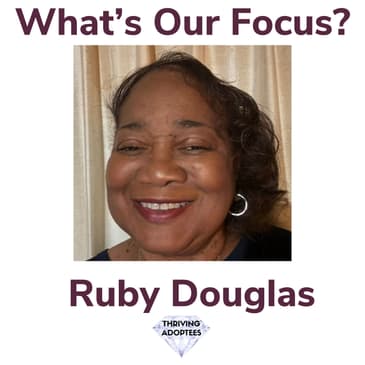
Are we focusing on ourselves, others, our kids? Our dreams or theirs? Our expectations or how they are doing? Listen in as single adoptive mom of 3 and adoption professionals shares a lifetime's wisdom...
https://www.homeswithhope.org/
https://www.facebook.com/HomeswithHope
Guests and the host are not (unless mentioned) licensed pscyho-therapists and speak from their own opinion only. Seek qualified advice if you need help.
Want to learn more about thriving for you, your kids, your families or your colleagues? Pick a time to talk here
[00:00:00] Right. Hello everybody, welcome to another episode of the Thriving Adoptees podcast. Today I'm delighted to be joined by Ruby, Ruby Douglas from Homes with Hope and she's also the adopted mum of three kids and they're all grown up right? They're in their 30s and 40s if I remember right now. Yes, they are. All three. Yes.
[00:00:22] Fantastic. Fantastic. So, you know, I came up with this word thriving, you know, for the podcast. Thriving Adoptees thinking that that was kind of, that's what our ultimate goal is.
[00:00:41] And it struck me over the weekend that maybe somebody, maybe there's other, some other kind of ultimate goal or most important thing that we want for ourselves and for our kids and for our clients. It's the, it's the word that kind of sums up what, what, what you want better than Thriving Ruby.
[00:01:06] I like the word Thrive. I've not thought about it as much in terms of adoption until recently. And I've heard it used several times when people were discussing adoption as an option for children. I've heard it used by an American who now lives in England, Rosie O'Donnell.
[00:01:33] And she talked about her children in an interview in the United States about rearing her children. I've heard it again in a commercial here in Texas where they talk about planning for children, planning adoption for children.
[00:01:51] So, yes, I've thought about it a lot. And I like the word as we talk about it and what we hope and dream for the children that come in through our life to our lives through the process of adoption. Yeah. Yeah. So what we'll get on to the we'll get on to the kids in a moment. I want to kind of bring it back to you and what helps you thrive, Ruby? What is it that drives your own thriving?
[00:02:20] Well, what helps me is my very strong Christian beliefs. I think I find strength in that. And I have found support from friends through church related activities for myself and for my children as I was bringing them up.
[00:02:43] I grew up in a household where religion was central and it was very much a part of who I was as a child and has remained that part of me as an adult. Trying to provide a stable home for children has been my ultimate goal.
[00:03:05] I have done it, like you said, for three children that I adopted who are not biologically related to each other, nor were they adopted at the same time. And I found that to be a key to being who I am as a person. And most of my work in adoptions over the last almost 50 years has been in church supported agencies. Right. Yeah.
[00:03:35] So strength and stability, stability of yourself. Right. And I think the key to helping children to thrive is that the parents must also be comfortable about who they are before they begin the process of adoption.
[00:03:58] You need to know who you are as a person before you can share yourself with someone else. And that is also true of biological parents. And but adoption brings with it a lot of things that most people don't think about until they're into the process.
[00:04:19] And I am a firm believer in educating parents about the things that children have been through. I've worked with voluntary adoptions where birth parents made a conscious decision to plan adoption for their children.
[00:04:40] I've also spent the last 10 or 12 years working with children who have been removed from the custody of parents because of physical abuse, sexual abuse or neglect. And those children bring with them a whole wealth of other experiences. And that's a lot of things that they're not necessarily infants. They can be toddlers to teens.
[00:05:10] And dealing with those issues, the trauma that the children have experienced requires that the parent be prepared to handle all of those issues as they come forward. Yeah. So clearly, your Christian beliefs are a key player, key role here in your in your strength and your stability and in your identity.
[00:05:38] So could you talk a little bit more about that, Ruby?
[00:05:41] Okay, well, first of all, being a parent is something that I think is a true gift from God, the opportunity to rear a child to impart your beliefs, your strengths, your home, your family to share those things with someone else is part of Christian responsibility and duty.
[00:06:10] I was I grew up in a stable home. I had two parents. Life was basically pretty good. We weren't wealthy, but I had my needs met. I learned from my parents about how to be a parent. My mother was a child who grew up in kinship care or what we would call kinship care now because her mother died when she was only two weeks old.
[00:06:39] So she was reared by other people. And from that, I learned her ability to love other children and to reach out. She's always been a person that was drawn to children. And so there were always children around.
[00:06:57] She would be the lady or the grandma who was at home on the block and was there to be sure all of the latchkey children had somebody to go to while they were waiting for parents to come home. She felt that was important. My father was also one of a large family of children, and he was one of the older children. So he also learned to help out other people.
[00:07:25] So that's how I was brought up. And my brother was a child psychologist. So we learned a lot. I did about that. We were active in church. We participated in different organizations to keep children involved, to keep them active, to provide them with structure and also other adults who could be part of that village.
[00:07:53] I found that within the church, we had a lot of people who became a part of our village because I was a single adoptive parent and still am.
[00:08:08] And it has given my children the opportunity to interact with other people to see how you can build a strong community, how you can build a family and provide that love and guidance to children. Because there are lots of people who care. And that community of caring has been central to bringing them to where they are and keeping me strong during the difficult times.
[00:08:37] My children learn values in church. They learn values from me. And being able to help other people and ensuring that they had education that also taught them to share with others. My children went through Montessori school and they learned that if they had a skill, if they had a gift, then they were obligated to share that with someone else.
[00:09:06] And this is part of our Christian beliefs. And this is also what they have learned and what they still do and the way they practice today. Yeah. So what gets in the way of your thriving? Sometimes it can get overwhelming. You want to help every child.
[00:09:30] For right now, I am working with children who are a part of the state foster care system. These are children who've been neglected, abandoned or abused. And they need rapid placements into homes, into stable homes, because they can come into care in the middle of the night, early in the morning, and they need a place to go.
[00:09:57] So what gets in the way for me is when I get a call, a text or an email for a family to care for a child. And I have to say no, because I don't have a family at my agency that's available. What gets me through that is that I believe that God will create a family somewhere.
[00:10:21] It may not be my family, but hopefully, prayerfully, another family can be found so that a child will not have to experience an extra day, an extra night of trauma after having been removed from a dangerous situation. So the numbers are overwhelming.
[00:10:41] The demands in terms of state requirements for agencies and preparing families so they can care for children can be overwhelming. And those are the days when it's really frustrating when you're going all day and all night and you're trying to make sure that you meet each of those requirements. And it just seems like nothing's going to go right.
[00:11:07] But then you get a phone call or a foster parent will send you a picture and show you how well a child is doing that day. And our talk about the progress the child has made. And that gives you the strength to go on to another day because you keep going because you know that there are always going to be children who are in need. Yeah. So it's it's hope and belief and faith then. Yes, that gets me through.
[00:11:38] And and I think anyone who gets into fostering or adoption or working in that field, you need something to hold on to. Because sometimes we see things that make us so sad when you look at what some people have done to children. It does hurt you to your heart.
[00:12:04] But what you do know is that in that heart, you can try to find a way to help that child to move forward and to help them to heal so that they can have a whatever normal is life and enjoy. And then they do thrive if you can help them to deal with the trauma that they've experienced.
[00:12:28] Yeah. So if we looked at this kind of systemically, then the the the the overwhelm is because of the lack of parents available, foster parents and the right is ready.
[00:12:45] So if we looked at this systemically, is it about you know, I hear a lot of about foster and adoptive parent burnout and foster parents not not not closing their homes to foster kids because it's so it's so it's so tough.
[00:13:04] If we could retain if we could retain if we could retain if we could upskill them if exactly exactly and you know we've experienced a lot of that of late families who open their heart they open their home they're ready they're enthusiastic.
[00:13:23] And then suddenly they're caring for this child and they find themselves it's not quite like they thought it would be looking for the resources wondering well when is the daycare going to be paid for so this child can go into the daycare program and I can go back to work.
[00:13:43] When okay, why do workers not take into account that I have a life too, and I can't always be available trying to juggle the needs of a foster child. There's a set schedule of appointments that must be kept by foster parents they're responsible for trying to transport children to events.
[00:14:12] Trying to get them to therapy appointments trying to do all of those things and take care of any biological or other adopted children that they may have and work. You know, when my parents fostered, you know, like many, many 20 30 years ago, you had a different dynamic in terms of the household you had more stay at home moms.
[00:14:40] You know, like many of those kids who had the ability to be able to do many of those things. But now we have foster parents where we do have both parents working. And we also have a high number of single women and men who have become foster parents because they want to share with children.
[00:15:04] And again, it gets difficult when you're juggling all of the paperwork, all of the appointments and all of the other things. And then to have children suddenly moved. And no one takes the feelings of the foster parent into consideration. They just say, OK, we want this child moved by five o'clock today. Get their stuff ready. You're out.
[00:15:26] And it's like in your heart, you knew that the child was going to be leaving, but you didn't know it was going to be with, you know, like three hours notice. And that sometimes drives foster parents away from fostering because they feel unappreciated and they feel that no one really cares.
[00:15:49] And then on top of that, there are a lot of people in the world who think foster parents get wealthy from caring for children and that this is a way of making lots of money. And all they do it for is just for the money. Yes, there may be a few people like that, but that's not the reality. It is not a way to make money.
[00:16:16] Most parents end up spending a lot of money to make sure that their children have all of their needs met. And and a lot of those things are not covered by, you know, the state or the government agencies. Yeah. Yeah. You talked about learning from your own parents. Yes.
[00:16:40] A lot of people talk about that, you know, if they were raised by their biological parents, then raising adopted kids is is different. And so they need to they need to parent differently to the way that they were parented.
[00:17:03] Right. You need to add a couple of tools to your parents skill toolbox and learning to deal with that child's trauma, especially if they're older. And then if there wasn't the trauma that caused the separation from the birth parents, what happens? And I guess we'll talk about that also a little bit later.
[00:17:28] As children grow older, they start to recognize that they have lost something to be adopted. Young children will willingly talk to you about their adoption story. If somebody has told them about it, it's all happy for them. And they are very content and they have no problem with that. But after a while, as they get older, they realize, wait a minute.
[00:17:58] I'm here. Then somebody, A, didn't want me, hurt me, did not want me in their lives. And they have to deal with that reality. And that is one of the realities of adoption. That child was separated from biological family, whether it was voluntary or involuntary.
[00:18:23] And as an adult and as the brain starts to develop, children start to realize that loss. And parents need to be aware of that and open to discussing what it means. And it goes back to learning your child's adoption story, knowing why they came into care, and talking to them and keeping the lines of communication open, especially as the child gets older.
[00:18:52] And we're seeing questions as they approach the teen years. There are a lot of questions that come up. And parents need to be comfortable about discussing those things. And if they are not totally comfortable, they need to seek professional assistance to help with dealing with those adoption questions.
[00:19:43] Yeah. And we do guided fantasy with the families where they find themselves having to leave a situation with, you know, maybe one item. And, you know, there are many films out there that have been used for training that talk about the removal of children from one situation to another.
[00:20:12] Children may view their normal as their normal, but it is not what society feels a child should be reared in. And then that child may be removed, but they may only have one of their special toys. Losing those things, losing the familiar, and having to adjust to a whole new life in another situation. Those are traumatic episodes.
[00:20:38] And it's especially true for children who are placed for adoption through involuntary termination of parental rights. And parents think that if you give all the love and all the support to the child as they're growing up and you don't talk about that, and you think, oh, well, they were so young, they don't remember. But they do put the pieces together.
[00:21:08] And, you know, it's as simple as, you know, there was a song for every when someone must fail. And it's not necessarily failing, but it's a loss. It's losing a part of yourself and being able to discuss why you have that emptiness as an adult or as a, usually as a teen,
[00:21:33] as you try to fill in those voids to learn how you got from point A to point F and all of those things that happen in between. Yeah.
[00:21:44] So what can we do to prepare our kids or lessen the pain when this stuff starts to rear its head? Well, it's part of just normal parenting, keeping those lines of communication open.
[00:22:11] I found that in working with children who've been adopted, they frequently have these thoughts, but they're not sure that they can bring them up with their adoptive parents. They don't want to hurt someone's feelings because they're asking about another parent or what happened and how did I get adopted? What happened? What happened?
[00:22:38] So if the parent will initiate the conversation, whether it's around, we've had parents through the years, they've done things like gotcha day. And that's the day that the child was placed with them or the day the adoption was finalized.
[00:22:58] Or they may do what I did with my children is I kept the albums of pictures that I'd received from the foster parents who had cared for the children out in the home. And so if my children wanted to look at pictures of themselves, they could go in there and look at that. And we could talk about it. Children like to see pictures of themselves.
[00:23:24] You can talk about, well, this is what happened and this is where you came. Or, you know, agencies often have gatherings or their support groups for foster and adoptive parents that parents can attend and go to those events. Our agency does a couple of events. We try to do something in the spring. And of course, we do a Christmas gathering.
[00:23:51] That's a natural opportunity for parents to discuss, oh, we're going to Homes with Hope today and this is the Christmas party. You know, those are the people who helped me to adopt you. And leave it right there. If the child wants to join in that conversation as they get older, then they will. And eventually they will ask more and more questions.
[00:24:18] But being willing to open those doors of communication about the subject of adoption. You don't have to say, hey, we're going to sit down today and today we're going to talk about your adoption. No, it should be an ongoing thing. Or you can ask the simple question, have you thought about? Did you, I think that blah, blah, blah, blah, blah, blah.
[00:24:44] Or the opportunity to discuss it. And usually those opportunities will come when parents and children are doing things together. Frequently it might be from the backseat of the car. And it may seem random to the parent for a child suddenly to ask, well, what happened when and what does that mean?
[00:25:10] And then, you know, the parent can answer those questions honestly. And if terrified and not sure, then they should do what the parents that I've worked with have done. And they simply call the agency. Well, how do I handle this? And we're able to give them some direction.
[00:25:29] If it's serious and the children are having major issues, then most of the agencies can direct them to a post-adoption program so that more and more answers can be provided by professionals who understand adoption. So that would be the main thing is communication. It's not a taboo subject.
[00:25:54] It's not a bad thing, but it is something that parents should be able to discuss with their children so that the children can continue to ask the questions as they grow older. And it should not be hidden as, you know, like a horrible secret or anything like that. Right. So the key things I'm pulling from that is kind of like a normalization of it. And an openness.
[00:26:24] Yes. As I think about openness, I also think about being open about our own emotions. So being vulnerable parents as in being normalizing the discussion of tough emotions. Exactly. Exactly. Exactly. This is one of those tough subjects.
[00:26:53] But unfortunately, it's one that must be covered because otherwise you have people feeling less than. It's easy for a foster child to be in a situation where they might be bullied in school because people know they're in foster care and assumptions about what the circumstances were.
[00:27:23] They may not be dressed the same as other children. They may have, they may be different racial background as the parents. There may be many things about the children that don't fit the quote match that other people think that families should look alike. And you have a child that doesn't look like.
[00:28:14] And you have a child that doesn't look like a family member for whatever reason. But that's really important because they need to look like a child. They may be a child that doesn't look like, you know, they're in school. You have plenty of kids who are in the children that are in the womb. That's really cool.
[00:28:39] And you know that there's a child that is a child that that doesn't look like. That's a child that is an option to look like. is our emotional intelligence, right? Right. Our ability to understand our own emotions and discuss them and discuss emotions with our kids. Right. Yeah.
[00:29:00] So I think in a sense, what you started off was talking about was your spiritual intelligence. Right. So these seem to be the areas that are particularly important in raising kids.
[00:29:26] So people call it, we talk about IQ, we talk about EQ, emotional intelligence, and we talk about SQ, spiritual intelligence. Do those mean anything to you? I agree with what you're saying. You need all of those things in order to parent. That's my personal beliefs.
[00:29:57] Because who you are as a person is going to be reflected in your child. I often talk about it as launching my children, but preparing them for the launch. It's like launching a rocket. You've got this countdown if you're going to start with 10. Through those years, what you're trying to accomplish
[00:30:22] so that eventually that child can go forth and live a fulfilling life. But they definitely have to have the right foundation. You can't launch a child into the world without giving them the tools they need in order to succeed. And being able to discuss their adoption if they want to discuss it.
[00:30:50] And also knowing that their story is their personal story. It's not to be shared with the rest of the world unless they want it to be. Before I agreed to talk with you about adoption, I did consult with my three adult children. And I said, is there anything that you can think of that you would not want me to say?
[00:31:19] And they were perfectly okay. They said, no, we're fine with it. But again, each of them has their individual story. And they know their story. But I don't talk about one story with the other child because it's not the other child's story. We have a combined family history of things we have done together.
[00:31:45] But each of my children has their own birth family history and different circumstances that led them into adoption. And, you know, in terms of knowing birth parents, communicating with them after they became adults, after the children grew into adulthood, those things have been things that I have supported with them.
[00:32:14] And it's part of their journey, their curiosity. But my being there and stepping back and letting them get some of those answers about biological family history. It may not be possible for everyone. My children came through voluntary placements in private agencies. So, yes, there can be connections and there are connections.
[00:32:42] But their shared childhood experiences are with each other and not with the birth parents. And that's another thing that adoptive parents must realize. You are not the child's only parent. That child came to you through someone else. And as a Christian, I have to believe that each of those children that I have parented
[00:33:12] were children that God meant for me. I did not give birth to any of them. They came to me through processes and with the assistance of people at adoption agencies. But in my heart and in my spiritual beliefs, I feel that those kids belonged with me
[00:33:36] and that what we shared was the way God intended it to be. And adoptive parents cannot pretend that a child was born to them. That's not going to get you or that child anywhere in the long term. You must accept the fact that there are others out there that made a clear decision to give
[00:34:03] that child life because that is an option. And, you know, they didn't have to do that, you know, but they did choose life for the children. They chose adoption because of various reasons. And being sure that you accept and understand those reasons is fine.
[00:34:28] It's important that adoptive parents do that, number one. And then you cannot look down upon birth parents because they did this, that, or the other. Many people make mistakes and for whatever reason. And children get hurt for various reasons.
[00:34:56] But it's all a part of who we are. In life, there's going to be pain in many, many areas. But we cannot dwell on the pain. If we're going to be healthy adults, we must learn to deal with that pain. It's a part of the growth process and moving forward. Infertility is painful for parents.
[00:35:21] And when one wants to be a parent and they cannot give birth, they have to deal with that pain as they adopt the child. And also thank God that they have been matched with that child and that whatever was meant to be happened. And the child that God wanted them to rear comes into their life through a different path than the one they had originally thought would be.
[00:35:51] Yeah. So what helps parents who've come to adoption through infertility help them process that infertility? Talking about it. Coming to that realization, it's not second best. It is how it's going to happen. You can't view adoption as second best.
[00:36:19] Well, you can always adopt if you can't have a child by such and such age. Just adopt. It'll be okay. It's not that simple. You have to be willing to accept the child where they are and know that you are taking on some things that you may not have expected. The trauma.
[00:36:42] If you look at some of the older children or the children that come into adoption through states in voluntary termination of parental rights, you have children that come where they have learned skills that you might not necessarily want them to know at that age.
[00:37:06] If they were in negative parenting situation with birth families, those children come with trauma. I've had children who know how to steal at a young age because of how they were living. They forage for food in trash bins because of the way they have lived.
[00:37:31] And as a parent, you have to help those children to know that they can trust you as a parent. The big part of dealing with the infertility is letting go of that imaginary child because even if you gave birth to a child, that child may not be the person that you imagined your child would be.
[00:37:59] And that's number one. Let go of the imaginary. It's great to have those dreams. And maybe your child will have the same skills, whether they're born to you or adopted by you. It doesn't mean that they're going to meet all of the goals of your imaginary child. That's a dream. That's a fantasy. Look at the reality. Help your child to find themselves as you find yourself. This is a part of your life that's just not going to be.
[00:38:29] Some people may have gone through life saying, wow, if I were X feet tall, I could be a great basketball player. But you're not. You're a very short person. You're not going to be that basketball player. You can still develop the skills. There may be a love of the game. But you're not going to be in this country, be an NBA basketball star. You know, very few people meet that role.
[00:38:58] Very few people are going to be the person who has all of the skills of the great quarterbacks that we've seen in American football. Yeah. And again, all of those things are different. So you can have dreams for your child, but it doesn't necessarily mean that that child is going to meet those dreams. And infertility is painful. It's hard.
[00:39:28] But it is one of those things that many people have to face. It doesn't mean you're less a person. It means this is the reality. For some people, they choose not to have a child. And for others, you know, it's the one thing they always hope that they would have. But what you do have is the opportunity to mold a life.
[00:39:53] Those values, whether they're the Christian values like in my family or whether they're, you know, the person's an atheist or whatever. Whatever your values are, you may value education. You have an opportunity to provide that for a child. You can teach them the difference between right and wrong. You can help them to learn to share their gifts with others.
[00:40:24] And molding a life, even though you didn't create that life, is a very, very rewarding thing. And that is what adoption can do. It can be very rewarding for the adoptive parent. As well as for the child. Except that you're not out there saving the world. But you are providing one child with many things.
[00:40:52] And, you know, I've been thinking about that a lot. And I think for adoptive parents, if they would think about it in a different way. Because many of us who have been through the education system, sometimes there was one teacher. There was one person who took some time. And you learned a lot from that person. There's that one person that's come through your life.
[00:41:20] And for adoptive parents, you are that person. You are the one who's going to mold, who's going to encourage. And when that child does not achieve the successes that they wanted to achieve, you're there as the cheerleader, the encourager to find something else that they can do.
[00:41:45] But you can make an impact on the future by providing for the child who comes through to you through the process of adoption. Yeah. Yeah. Can I take you back a bit, Ruby? Because you talked about pretence. And you talked about adoptive parents pretending that their adopted kids were biologically theirs. Right.
[00:42:13] And it struck me. You know, I was thinking about emotional intelligence and I was thinking about self-awareness. And I was also thinking that it seems kind of unlikely to me that an adoptive parent would think to themselves, I'm pretending here. It's not something that they would see. Yeah. Do you see what I mean? Yeah.
[00:42:43] I don't think that they see it either. But that child stays with them. You know, you're feeding, you're clothing, you're caring for the hurts and all of those things with the child. And sometimes you forget that, okay, I didn't give birth to this child. Or you meet somebody new and they say, oh, y'all look a lot alike. Right.
[00:43:08] And, you know, you have that moment where you think, really? But, you know, I've been there and I go, oh, okay. And, you know, for sometimes, you know, if it's just past a stranger say, oh, y'all look alike. You go, okay, yeah, sure. And you just keep on going because you're not going to sit and tell a total stranger your whole story.
[00:43:35] And because it's not their business, you just accept the compliment and keep going. But then for some parents, they want to pretend that everything is, you know, like I gave birth. It's all okay. And I provided all of these things. So, you know, they should be happy. They should be grateful.
[00:43:57] But nobody is bothering to ask the child how the child is feeling or, you know, why the child gets nervous. We do an exercise and we talk and it's based on trust. And being sure that children learn to trust adults. Adults need to be trustworthy.
[00:44:21] They need to be there to soothe the wounds, to listen to the stories, to be the parent who encourages the friends to come over and do all of those things. And, you know, those are things that we have to do as parents or we should do as parents. And what happens is, you know, children grow to expect those things.
[00:44:48] And that's what helps them to become more stable is just having that trust and trusting the adults. But for adults, sometimes they forget. And they don't want to acknowledge to people that the child is adopted.
[00:45:08] But there are moments in time when there are things that you have to explain, you know, or you find yourself asking questions of yourself and some things you may not know. In terms of medical history, that is one of the big ones in there. We don't always have complete histories of possible diseases and whatever that could be hereditary.
[00:45:36] And some things come as a surprise. And other times you have a family of children who absolutely are tone deaf. And, you know, nobody in that family sings. And then there's the adopted child who has the incredible, perfect pitch. And everybody looks and goes, wow. And, you know, so the children do bring gifts.
[00:46:03] Or you may have the one child who has, who can actually hear the beat and dances very well. Well, everybody else is like, oh, how do you do that? Whether it's that skill, whether it's art, whether it's sports or whatever. You know, there are surprises out there. But finding those things for your child is what you need to do.
[00:46:28] But you can't just sit back and think, well, I know you didn't give birth to that child. So in the ideal world, you would have had all those prenatal visits. You would not have used drugs during the pregnancy. You would not have done all of these things. But your child was affected by birth parents who did do those things. So that's a reality.
[00:46:58] You can't change it. All you can do is work with those things that come with the child. And it may not have been the way that you would have ideally done it. I would not have done this during the pregnancy. I would not have done that. But if you adopt a child whose birth parents did, then you have to be prepared to deal with any damage that may have been done by that.
[00:47:29] Or that child may not succeed. It's not going to be perfect. But there are things that must be taken into account. And that could include some other mental health issues that you may not have been aware of at the time of adoption. And that become more apparent through the years. Yeah. Yeah. So are there other...
[00:47:59] What else don't adoptive parents see? They don't see this pretense thing. They're not aware of that. What other things are kind of common blind spots, if you like? I guess one of them is, you know, just expecting that child to instantly learn to trust. Trust is hard to build for a child as they get older.
[00:48:27] The more adults that have been in a child's life and fail to meet that child's need, the less that child is able to trust adults. It's not going to happen instantly. It's a slow process. It's one that builds over time. And just meeting the basic needs of the child. Answering the questions. Making sure the home is secure.
[00:48:55] I've had children come into placement. And because of where they've lived in the past, they'll ask questions of the caseworkers before they get to the home. Like, is the house going to be clean? And then the kids will go and they'll inspect the house. They're looking to be sure everything is going to be okay. Because they know from whence they came.
[00:49:21] They know that they came from an environment that wasn't clean. They want to be sure that the home is going to be clean and that somebody is going to give them what they need. We've had children come into care in America. You know, Thanksgiving's a big holiday. Christmas is very much celebrated.
[00:49:45] We've had children at five and six who've never seen a turkey sitting on a platter at Thanksgiving. And are surprised at, like, wow, this is like on TV. You know, they never experienced that themselves. But they must learn to trust and know that those things are going to be there. That's the beginning.
[00:50:13] Starting to build a whole history. Helping the children to learn more about how to share things. Learning who the family members are. We haven't really talked about extended family. We talked a little bit about the village. But also being sure that you find those family members who are going to be supportive of the child.
[00:50:40] So the child does not feel different at the family reunion. That they feel very much a part of the reunion. They are part of the family. And you want all of the family members to accept that child. But the reality is that some of them may not. But you want to know who are the ones who are going to be supportive. Ask the questions in the beginning. Make those people a part of your close village.
[00:51:09] So that the children can relate to them and feel positive with those other people. Fantastic. Wow. It's been such a deep dive, Ruby. Yeah. The wisdom is incredible. It really is. Thank you. I can feel another episode coming on. Right. Just to speak.
[00:51:36] Is there anything that you'd like to share that I've not asked you about, Ruby? No. I think we've covered just about everything that I thought of. Yeah. Yeah. The one thing I thought to just draw a couple of things that you said together in time with little Bo. You know, we talked about dreams. Right.
[00:52:00] And I think essentially what was coming, what was landing for me is that we should be interested in their dreams for themselves rather than our dreams for them. True. Absolutely. So that ties up what you said about, you know, the Montessori education.
[00:52:23] Clearly, it's a non-traditional focus, but the focus is on that individual person, that individual child rather than dealing with a class of 30, 35 in elementary or primary school or high school, secondary school. It is very individual. And let's empower them to make their dreams come true. Right. Right. Right.
[00:52:49] Giving them those opportunities or it's key to the happiness of a child. Yes. And as a parent, also seeing your child happy and enjoying what they're doing. And because each child has a gift and, you know, but finding it and like with Montessori, they must be treated each child individually.
[00:53:18] So that they can find their happiness and their happy place and what their gift from God is. And so that they can magnify that gift and let that light shine in the rest of the world. Yeah. Wow. Big stuff. Thank you. Okay. You're very welcome. And thank you. Listeners will speak to you again very soon. Take care. Bye bye.