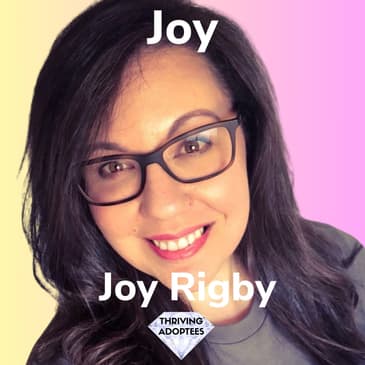
Do you want me joy in your life? Who doesn't? Listen in as Joy talks about joy in parenthood, challenges and much more. Joy has two daughters, one of whom joined their family through adoption.
Joy has been involved with CASA since 2003. After earning her BA in Sociology at Vanguard University, she became a CASA volunteer with Orange County CASA in Santa Ana, CA.
During her seven years as a CASA volunteer, she worked as an event planner, program coordinator, and academic advisor at her alma mater.
In 2012, Joy relocated to Alaska and became the local program coordinator for Kenai Peninsula CASA, a partnership program between the Kenaitze Indian Tribe and Alaska CASA. Joy subsequently served as a Guardian ad Litem (GAL), advocating for children and youth in the Kenai court system. In 2018, Joy became the State Director of Alaska CASA. Her vision as a State Director is to see more children and youth served throughout Alaska by a CASA volunteer.
https://www.linkedin.com/in/joy-petrie-rigby-2954606/
https://www.instagram.com/alaska_casa
https://www.facebook.com/AlaskaCASA/
Guests and the host are not (unless mentioned) licensed pscyho-therapists and speak from their own opinion only. Seek qualified advice if you need help.
Want to learn more about thriving for you, your kids, your families or your colleagues? Pick a time to talk here
[00:00:02] Hello everybody, welcome to another episode of the Thriving Adoptees podcast. Today we've got our first, I'm sure this is a first Joy, the first interviewee from Alaska. The first interview from, but you're not a native Alaskan though are you? You were in California if I remember right?
[00:00:20] Yes, yes I was born and raised in California and I've lived here in Alaska for about 14 years now. So I've had some time here but I'm not originally from Alaska, but I'm honored to be the first. Be the first, yeah. Are Alaskans, are they friendly with incomers or are they, is there a stereotype here?
[00:00:46] Yeah, they're, I will say Alaskans can be very friendly and are very friendly but like they're the type of people that if you're stuck on the side of the road they're gonna stop and help you. But there is almost like an initiation period of oh you have no idea what it's like to live up here and you got a lot to learn and oh that's a newbie mistake you know.
[00:01:14] Of how you're, how you're kind of moving through things and they like to share their wisdom of living in a place like Alaska. So, um, uh, listeners, uh, Joy, uh, runs, uh, Alaska, Casa, I, I, you know I struggle to say Casa. Casa, Casa, yeah.
[00:01:36] Casa, yeah. Because if you're from the north of England, you say, and you see the word C-A-S-A, you see the letters C-A-S-A, you say Casa. That's okay, it's okay to say it that way. Yeah. But if you're from, you're talking about your, your husband, um, spending some time in London, if you're from the south of England, you, and you were posh or, or not just posh, you would say Casa quite, quite happily.
[00:02:03] But for a northerner like me to say Casa, it feels like I'm, you know, I'm, I'm having, uh, tea with the king or something like that. And I'm pretending to be a, um, so, uh, this is Joy, Joy runs, uh, Casa in, in Alaska. And she's also a, she's also an adoptive mom.
[00:02:28] Now we have some listeners may recall, we had Angie White who runs Casa down in San Antonio, Texas, which must be like 5,000 miles away from you or something like that. It's quite far. Yeah. Um, but so a Brit, but a Brit running San Antonio Casa.
[00:02:45] So court appointed special advocates are volunteers who are a, they're, they're, they're, they're the one constant, aren't they? In, in, in a foster, in, in a foster kid's life because the, that you volunteer, that's how you, that's how you got into Casa. Yeah. So you started as a volunteer there. Yeah.
[00:03:11] I, I started as a volunteer in California and, um, I, I was just at a place in my life where I could use my time outside of work to, to, to learn about, um, you know, whatever I wanted. And, and I, my youngest brother and sister are biologically my cousins.
[00:03:30] And I always kind of wondered about that system that they came from, um, and who was all involved in, in those decisions, um, to remove them from their parents and, uh, place them with, in my family. Yeah. Me as a kid, uh, I, they were one and two when they were placed with our family. And since that first day, I felt like they were my brother and sister, you know?
[00:03:53] So, um, I always wondered about that and Casa was appealing to me because I would learn about that system and get exposed to everyone that's involved in children's lives that are in the child welfare system here in, in the United States. And, um, you're just assigned one child or one sibling group at a time.
[00:04:14] So that focus and attention, I knew I could just spend time with one child and be a consistent person that walks with them through this really difficult time in their life with a lot of unknowns. Yeah. Yeah. And I, I, I hear this so much of this all the time. One consistent person can make all can make all the difference.
[00:04:37] Uh, I talked to a, uh, a kid who aged out, uh, Jamal Cowahan a couple of weeks ago. And his, he was, he says he was unofficially adopted by his, uh, by his science teacher. Yeah. And that, that, that one person, that kind of, that one person that stood by him through the change, the period of change was, uh, in that person was instrumental. And you're still in touch.
[00:05:05] I remember, seem to remember you're still in touch with the young lady that you, uh, that you volunteered with. Uh, yeah. Yeah. Well, I've, I've been a CASA for several kids now over the years. And, uh, one of the youth that I, I, uh, was a CASA for her and I are still in touch. The very first girl that I was a CASA for, um, her and I did reconnect, uh, in her latter twenties. Uh, and that was really great, but it was a brief connection. Yeah.
[00:05:35] Yeah. But it's, you know, something that I appreciate is that, um, the very first perspectives that I got about the child welfare system and how it works was from the child themself. You know, a girl who lived her life in the system, you know, being five when she was removed from her family and, um, aging out at 18 from the child welfare system.
[00:05:57] So she really grew up in the child welfare system and her perspective, um, is something that is the center of, of, of, of how, you know, how, how a child moves through the child welfare system and experiences that really needs to be heard.
[00:06:15] And, and so amplifying those voices in any way that we can, um, and taking those into considerations for any policy changes or, or anything like that is so important. Yeah. So the big word, the big word then is thriving, right? So what does thriving mean to you, Joy?
[00:06:38] And personally, professionally as a, as a mum, as a human being, as broad as you like, what, what does it mean to you? Yeah. I think thriving, um, thriving for me, I think is a bit of a journey.
[00:06:57] I think, you know, when we think of immediately when you, when I think of thriving, I think of somebody that's got it, got everything in line and together, but it's not just, it's not that. I think it's something that is more than that. Something that includes peaks and valleys and something that includes, um, a process of aligning your head and your heart, um, and exploring spaces,
[00:07:24] exploring who we are, exploring what fits for us internally, what fits for us, uh, in, in all different areas, um, professionally, personally. Um, and I don't know that you ever achieve, uh, an end with it. It's all, it's an ongoing journey.
[00:07:48] It's never really occurred to me before, but it, it, it, it's, it, it's a verb or it's an adverb. Right. Or it's an adjective. It's not a noun, is it? We never use it. No. That's, that's a great question. I should know what it is and I, and I don't off the top of my head. No, no, it's not a noun. It's never a noun. No. We never say the thrive or a thrive. It's always, yeah.
[00:08:17] Well, 703 interviews in, I'm, I'm still with it. My, you know, thinking about it myself. Somebody asked me the other day, uh, and I thought of, uh, and your, your reply, um, prompted that memory. So I heard something from a, a mentor, kind of a mentor of mine. I've read a few of his books.
[00:08:46] I've been on a few of his courses, spoken to him once on a zoom. He, he said, uh, Jack or George Pransky from, I want to say, yeah, from Washington state. Um, it'll come back to me in a minute. He said being dr, grateful in the highs and graceful in the low. Yes. Yeah.
[00:09:14] I think we learned so much about ourselves in the low, the lows and those lessons can be what takes us even to, to places we've never thought we would go that truly align with who we are. And maybe something that we needed that we didn't even know we needed at a different time. Yeah. Do you remember the first time that occurred to you? Yeah. It was, you know, the idea came to you.
[00:09:44] The idea came to me when I was, I think it was one of my interviews, pretty close after getting my bachelor's degree, you know, you're going into an interview and preparing and, you know, and I knew they were going to ask me, where do you see yourself in five years?
[00:10:02] And I think culturally, I felt a real pressure to know that or to have a good answer or, you know, and just my personality, I was trying to think of like, what do they want to hear from me on that?
[00:10:17] And I went to a place that was very honest internally of, you know, I don't, I don't know what I want to do, where I want to be in five years, because I haven't learned the lessons that I'm about to learn, you know, and so it was, you know, at 21 or 22, whatever age I was at the time, of just being very honest and kind of blocking out some of the what I perceived as like cultural and just,
[00:10:47] pressures to know things that I don't know. And, and so that was the first time I remember kind of that coming to my consciousness, I guess, and becoming a part of my story, I guess. Yeah. And fingers crossed, you got the job. I got the job. Yeah. Yeah. It was a good part of my journey that led me to where I am today. Yeah. Yeah.
[00:11:14] So it would have been, but it would have been funny that I had this big, I had this insight and then I didn't get the job. You know, I know, I know it would have been like, no, I didn't get it. They wanted me to say I was going to be this. But that could have, that could have been it really. So that could have been, so, so I got the, so I didn't get the job. So that, so then I had the learning. So about what I'm going to do next time, you see. Absolutely. Yep. Yeah.
[00:11:40] You, you said, you said something about, I wrote down who we are, right? Knowledge, knowledge about who we are and identity. What, what does, how has that changed over the, the years? What does, what does identity mean to you? Identity.
[00:12:06] We, I mean, it's such a integrated, complex part of who we are. And, and, and our lens can shift over time. What maybe was a regret at this earlier age, you can reframe it and see it as something very different. And then later on, uh, as you see, you know, your life in a different way.
[00:12:31] Um, and I think identity is a, it's a personal thing that involves a lot of external things as well, external interacting with the internal. And it's something that evolves, that changes that, but there's also the stability there, um, that comes from a place inside of you.
[00:12:55] Uh, but like for instance, uh, you know, my identity as, um, in my job, it's changed over the years as far as that importance to me or, or, um, how I felt about that. Um, and that's going to change how I interact with people or how I present myself.
[00:13:24] And so identity, um, also has to do with connection, I think with, with others and with, uh, with the things that make up who we are. Yeah. Um, I, I, you know, I was going with, with others, you know, cause I was thinking, you know, identity as, as mom or. Mm-hmm. Yeah. I, I, I, I struggled to say Casa, Casa.
[00:13:52] I also struggled, I struggled to say mom, right? Yeah. It feels a little bit odd. So, cause we say mom, right? You could say mom. Yeah. Okay. Um, so talk, talk to me about identity and, and, and, and love. So I'm, I used to, yeah. Mom, mom, mom thing. Yeah. No, I, as a, as a mom, you know, I didn't know if I would be a mom.
[00:14:19] I, I didn't meet my husband until my latter thirties. And I was a single person for a very long time. And I was really at a place where I was, uh, you know, struggled with, oh, is this going to happen for me or not? Do I want this or not? And it would, and it would, I'm being really honest with myself. I did want to be a mom, but I didn't know if it would happen. And I, I was at a place where I was truly okay if it happened or not.
[00:14:47] And that's about when I met my husband and, uh, we were, um, lucky to have my first daughter. Um, uh, I, I gave birth to her and then I thought I was done having children. I thought, okay, I, I'm, I'm lucky to have one child.
[00:15:09] And, um, and then my husband and I separately had feelings about adoption and, and he came home one day and he said, you know, I've really been thinking about adoption. And I said, that's crazy. Cause I've been, I had a dream the other night and it's, you know, right with that. And so he and I started exploring that for our family and we were, um, and we have our, our daughter who's almost three now.
[00:15:41] And as a mom, I, because I, until you become a mom, you don't fully know what it's like to be a mom, you know, and being a single person for so long, that kind of. Um, identity as a mom, I, I, I had to come into that. You know, I had to explore that. I couldn't handle pressures or stress the same way that I always had for, you know, my entire
[00:16:10] adult life because I, you know, my life changed very quickly after I met my husband, you have a life partner, you have children within a few years. And so learning about myself and connecting to that was a process as well. And kind of exploring all of those thoughts and feelings and, um, and how you move through it and how you enjoy it.
[00:16:35] And just, uh, and, and at times really chat, it's a, it's the biggest challenge of my life and the greatest joy of my life. So it's, uh, being a mom. Um, and, and even the other day I was listening to a song and just connecting to my own mom, myself as a mom and kind of letting myself feel it because it's, you're just in the everyday
[00:17:02] of it all the time that feeling it is, uh, and connecting to that can be, you don't have time for that. You just move through and do what you got to do as a mom. Yeah. I mean, cause I introduced, did I say adoptive mom? I don't know. I mean, well, I don't know. Yeah. Okay. But that, but what, see, I, I, I was in publishing, right?
[00:17:33] But I'm not particularly hung up with, with, with words, despite kind of being in that space. But I, I would, I would never, I would describe myself if I've got anywhere near it, I would say before I came into the adoption stuff, decided to do the podcast, like five and a half years ago, whatever.
[00:17:57] I would say, yeah, I was, I was adopted, but I, I wouldn't say I'm an adoptee, but now I say I'm an adoptee. Mm. Mm. So there's a difference there, right? That's, you know, kind of like, and people say to me as an adoptee, as an adoptee, you know, people saying as an adoptee, this, and I don't often say that because it, it's like, I'm just using shorthand. Right. I'm an adoptee. It's shorthand, right? Okay.
[00:18:28] I'm, I'm, I'm an adoptee, it's shorthand. Um, but you know, some people will say as an adoptee, I really struggled with that and, or, or as an adoptee, I was glad about that or whatever, but I would never kind of put those, I would never, I would never construct a, a sentence like that. I would never say something, I would never say something like that.
[00:18:56] And, uh, so, you know, when, when somebody says adoptive mom, I mean, cause you've given birth to one daughter and then you've adopted one. So, you know, well, and then you're into the complexity of it. But when, when somebody says adoptive mom, do you think, oh, that's me? You know, I, I'm one of them. Yeah, no, I don't. Cause I, I think, you know, like she came to us through adoption and, and that's her story. And I want to celebrate that story.
[00:19:26] And, uh, and, and I think that that's, that's the way that we approach it in our family is everybody has a story and this is your story. This is, this is when we first met you, this is when we first met your sister, you know, there's, we, we celebrate stories and we, um, we very much like, as we approach, you know, our daughter and her story, we want her to be a part of that story. And we're not going, we don't want her to find out later that her story was something
[00:19:55] different than she thought it was. And, but we also don't want to highlight that, oh, your sister came to us through birth and you came to us through adoption of, you know, and so there is that balance there of like, I, as a mom, I'm very protective and I don't want her to have those feelings, but she might. And that's where I, I'm just going to be here for her to help walk with her through her journey.
[00:20:23] And cause her journey, I'm not going to be able to say what her journey is. Um, but I will have things and conversations for her to have, if she wants to have those. Um, but it, but it also like, you just never know cause everybody's so different. Yeah. And you know, I've, I've heard some, I have, um, uh, a lot of friends who were, uh, adopted
[00:20:50] when they were young and I have friends who have adopted children and, uh, you know, like one, um, one friend's child, he said, could you please stop mentioning that I was adopted? I don't like that I was adopted. And that was where he was at that time, you know, or I didn't, he didn't want to meet his biological family. He had no interest in that, but then later on in life he did, you know? And so I think people's journeys change. Yeah.
[00:21:20] Yeah, for sure. I mean, I didn't want to look, I didn't even consider looking till I got to 40. Yeah. Yeah. And then I, then I considered it for a bit and I didn't do it. And then, and then I did, you know, eight years later. So it does, it does, it does change. Yeah.
[00:21:41] Um, as you were saying that you don't want to make the, you don't want to do the differentiation thing. Uh, I was thinking of, of Nancy Verrier, you know, this author that wrote the prime one. So she had two, she had two daughters. Well, she has two daughters. One is biological, one is adopted. And she made a career out of that difference. Right. Yeah. Yeah.
[00:22:11] What did that do to her daughter? Mm-hmm. Mm-hmm. Right. I, I, that had never occurred to me. I, I don't know. And then that's one thing where it's, you know, I, they're, they're, I think it can be really complex and it might have to do even with relationship and, and how they process that together or, you know, every family is just a little different, but it's, it's something
[00:22:39] that I, that's, you know, I, I hope that I always stay attuned to is what my daughter, how she's moving through it. Yeah. And what she needs from me as her mom, you know, whether that's support to explore or protection from. Like I, I just, yeah. And, and it might be different at different stages and ages and, and whatnot. I'm sure it will.
[00:23:06] You know, like, like I, you know, I went to talk, um, when I decided I was going to do this podcast or whatever, but when I said, right, I'm going to go into the adoption space, like six, coming up six years ago, I went to see my mom and make sure that she was kind of okay with it. And I'm telling her the sorts of things I'm going to do, but, but fancy, but fancy if you're,
[00:23:27] I don't know what Nancy Verrio's daughter's call, but your mom has made all this impact based on, cause she wanted, she, she started doing the research because she wanted to identify, she, she wanted to understand the reasons for the differences between her two daughters. But what, what was that like for her daughter? Yeah. Yeah.
[00:23:58] That's gotta be, that can't be a walk in the park, can it? I mean, no, no, no, no, it can't be. I mean, it must be. I'm sorry. I'm going on about it because I, I, I, it, it, uh, have you heard this word flabbergasted? Yes. Yes. Yes. I'm totally flabbergasted and I'm going on about it. And, uh, anyway, let's, let's go back. Sorry, uh, listeners for the slight diversion.
[00:24:26] We'll go back to, we'll go back to Joy and not, not Simon Woofing on about Nancy Verrier's daughter. Um, so yeah, but I, so I would never, I wouldn't refer to, apart from in this space, I wouldn't refer to myself as an adoptee and you wouldn't research yourself to adopt him. Yeah.
[00:24:52] I, and, and that's where, you know, there's, there, there, it can, it can be a thing of celebration that really highlights this, this great love and this great, um, connection, but it can also, for others, it can really mean something very opposite of that too, you know?
[00:25:17] So I just want to honor both and, uh, and, and both can exist at the same time, you know? Thank you. I'm sure the listeners will appreciate that. Um, I want to take you back to the, uh, I'm going to put it into three words, right? Like feeling your mum-ness, feeling your mum-ness, right?
[00:25:45] Uh, that, that, uh, it's a lovely thing, right? Yeah. Yeah. It's, it's a lovely thing. It's really complex and deep and, and like, basically it means I just sit around and cry because it's so, I'm so overwhelmed by such amazing love and fullness and, and, and, and,
[00:26:09] um, like I just, and just knowing that like, I never knew how much my mum really loved me until I became a mum. Like, I think it's hard to know fully how much your mum loves you, um, without feeling what they feel, you know, and, and knowing that. And it's, it's, uh, so I just, I feel lucky to know that I feel lucky and honored to even
[00:26:38] be able to experience that. It's also very, very hard, but, um, yeah, it's very deep in all kinds of ways. By the way, listeners, if you didn't catch it, right? Today's interview is called joy, right? So it shouldn't really be a surprise that we're celebrating mum-ness.
[00:27:00] Um, I interviewed somebody earlier on today, uh, and, uh, she talks about, we're talking about grace and giving ourselves grace and giving and modeling grace. Yes. So their kids, so our kids give themselves grace, right? Um, and she was talking about, uh, she was talking about shout, um, shouting at a kid.
[00:27:29] Uh, and I, and it, it, it hit me like, did my mum ever shout at me? Like, I, I, I'm. You don't, you don't, you can't remember that. Oh yeah. I've, uh, not shout, but I can remember a raised voice and it, and it, it hurt. It's a, it's a strange story and it, I promise you won't take too long.
[00:27:58] Well, I was 10, I, uh, I, I, I ran across the road and didn't, didn't see a little van coming out of the side street. Uh, and so the, the van knocked me over with it. The van's doing like five miles an hour. It's literally just turned out of my street. I, I, I, I, sorry, it knocked me, not, not me to the ground.
[00:28:24] And, and I remember I had a bottle of soda. You would call it soda. We had a bottle of pop. We called it pop, a bottle of pop in my pocket. And it went fizzing off. Did this bottle of pop. Why I remember that, I don't know. But when I got home, I told my mum that I'd been not, I told my mum that I'd been knocked down and, uh, and, um, and she, she raised, she raised a voice, you know, about being silly or stupid or whatever.
[00:28:53] And, and I thought, well, I didn't do it on purpose. I didn't do it on purpose. Um, it kind of hurt that. Yeah. Not being, not being knocked down. That, that hurt a little bit, but being, you know, she's obviously, you know, the, the, the, the fear about me was coming out as. Yes. It's like, you know, she didn't shout at me. Why are you doing that?
[00:29:22] She didn't say that. Like, she just said, don't you silly, silly, silly Billy. Why did you do that? You silly Billy. Why didn't you do that? Yeah. It was like that. Um, but yeah. Yeah. And then. Realizing that your mum's never shouted at you. Like, that's big. That's big. Yeah. Yeah. And, and also remembering that hurt and how it felt when that happened. And that's something that I remember.
[00:29:49] And so, you know, when I have times where I lose my patience or I do something that, you know, it sounds like you talked about this with your, your other guests about that grace that you have to give yourself as, as a mom, um, at different times. Um, and it's that repair with your child, you know, of going back and saying, Hey, I, I, I shouted at you and here's why I, you know, like I, I was feeling a lot of big feelings.
[00:30:17] I was really afraid when you told me that. And I realized that probably it, you probably felt things when I did that. And I want you to know, you can talk to me about that. And, um, and, and, and I'm sorry that I did that, you know, or I, I'm sorry that you felt that way when that happened. Uh, but allowing everybody to be humans in it. Cause us as moms, we're not, we are not superhuman.
[00:30:45] Um, yeah. Um, so do you want to know which year this was? I've just worked it out which year it was. Yes. 1977. Oh really? Yes. So 1977 to 2026, that's 49 years. Uh, you remember doing, we would call it maths. You call it math and that would be better for me cause I, I struggled to say maths. Maths. Yeah. Yeah. Yeah. Yeah.
[00:31:14] Math is a lot easier. But we call it maths in England, right? Um, but yeah. So, uh, yeah. Emotional intelligence and parenting have changed somewhat in 49 years. Oh yeah. Yeah. Well, I think that parenting is still, uh, I think, yeah, there's different schools of thought on it and different approaches and different, uh, but I think that in talking with my friends,
[00:31:40] uh, my fellow moms, every single one of us has, has shouted, uh, has the things, different things work with different kids. Uh, and you're kind of struggling your way through it. And it brings up a lot of your own stuff that I guess you could continue to ignore or you can, or you can kind of face it.
[00:32:07] And, um, it's, uh, yeah, it's a wild journey. It really, really is. And I appreciate that you named the episode today, Joy, because obviously with my name, Joy, I've thought a lot about that word over the years and what that means. And I think a lot of people associate happiness with joy and that is true, but it's not always happiness.
[00:32:31] It's, it's a deep feeling of, uh, contentment and, uh, and appreciation. I would say, at least this is for me, appreciation of the spectrum that is, uh, life and, um, and finding a peace in that. Yeah. But taking the time to enjoy your mom-ness. Yeah.
[00:33:01] It can be a challenge. Like, because you have all these things that you're doing day in, day out. Like, uh, for instance, my older daughter, she started, uh, school today, uh, for the school year. And so last night it's all the things, you know, do you have your gym shoes? Do we have your name on all the things that the teacher said she wanted your name on? Where's your jacket? Okay. You left it at daycare. It's going to rain tomorrow.
[00:33:31] Where's your other jacket? Oh, it's covered in mud because you went on the four wheeler with it. So we got to get it in the wash, you know, and that on top of a full-time job and, you know, it feels very overwhelming. So I was pretty stressed last night, you know, and, uh, it's those little moments of saying, okay, I want to just appreciate this smile that I get in the morning and, and really let myself feel that of like, it's her first day of school and she's so excited and she's
[00:33:58] nervous and I'm her mom in this and she does it. She'll remember this first day better than I will, you know, but, but also I need, I want to capture this for her and, and join her in it, you know? Um, so it's, it's all the things at once, uh, which can be hard to do. But those little moments of just like, okay, for a minute, I'm going to step back and just
[00:34:26] take a mental picture of this smile and connect with her. Just feel that with her for a minute, you know, I'll go back to being stressed in two seconds here, but I'll, I'll feel it in this moment with her, you know? So our first day school at school pictures, a big thing. And, and, oh yeah, in the United States, like the, everybody on social media is probably posting
[00:34:53] their kids pictures of their first day of school today, you know, uh, I just keep it between me and my family on our own family group. But, um, but yeah, it's a, it's a big deal here. So it's a big deal here as well, but you know that our kids wear uniform for school. Right. Yes. So it's a bigger deal for the photo. The photo is a big deal because it's the first day they put the uniform on. Right. Oh, right.
[00:35:23] It's nice and crisp and clean and well, kind of, yeah, you can, but I mean, when I say uniform, it might just be a, um, a pair of black trousers, uh, and a, uh, a polo, a polo shirt with the name of the school on. Right. Yeah. Or a sweatshirt over the top that that's the uniform that they're wearing at four or five. I don't know what they do at the really posh schools.
[00:35:52] Um, I, it, but back in my day in 1970, I went to school. I started school in 1975. No, cause we start school earlier than you guys. We start at four. Okay. Right. Okay. Yeah. Yeah. I started school in 1971, but in those days you had, you had a tie on. Um, I had, I had a tie, um, at four years old and I would go shorts.
[00:36:20] I'd have gray shorts, gray shorts, gray shirt. Um, green, uh, like a green, maybe a green jumper and a green tie, but like a four year old in a tie. So it's, it's kind of, I don't think, I don't think they do that anymore. I don't know. But so the photos are a bigger deal because of the, because of the uniform that that's, you know, that kind of writer, writer pattern. That makes sense.
[00:36:46] Um, so if we could, if we could give everybody permission to enjoy their mum-ness or their dad-ness, if we could, if, if, if you could just do that listeners or, and if you've, if you're like me and Lynn, you've only got fur babies, your fur baby dad-ness or your fur
[00:37:11] baby mum-ness that might make a, that, that might put a smile on somebody's face, mightn't it? Yeah. And, and I think that for me, sometimes it is a mental exercise to, to kind of, not that we need anything else to do, but of just connecting with your kid and realizing like, this is their childhood and this is, um, I'll never have this little, you know, three year old and six
[00:37:40] year old again, you know, this like during holidays or whatnot, it's like, this is, I have this many left or, or whatnot. And, um, and disconnecting from the things that are distracting in those moments. Um, whether that is social media or your job or, um, and just being present. Um, and, and, and I think that sometimes those moments require grace for yourself too.
[00:38:08] Um, but, but it's, I think recently it was kind of that realization of like, I am the mom. Um, I don't know, like it's, it's, it's, that sounds weird, but you know, remembering who your parents were to you as a young child and how much they meant to you. And that's who I am to these young people that I love so much.
[00:38:34] I think we don't think of ourselves in that way sometimes of like how important you are as a parent, um, or even to, to your dog, like, you know, you're, you're the most important person to your dog, you know, they love you so much. And, uh, and just, um, connecting with that and realizing that that is your, that's a role
[00:38:58] that you have in this, this life that you get the privilege of doing as hard as it is, you know? So take a moment for that. Listeners. That feels like a big, uh, it feels like a good place to bring it in, John. Okay. Yeah. That sounds great. Unless there's something that you, that I've not asked you about. We'd like to share.
[00:39:28] Um, no, I think I've just enjoyed our conversation and you know, conversations take a different road depending on, you know, who it's with. And I think that was our road today. So I appreciate it. Yeah. Yeah. Thank you, Joy. Thank you. Listeners. We'll speak to you again very soon. Take care. Bye-bye.