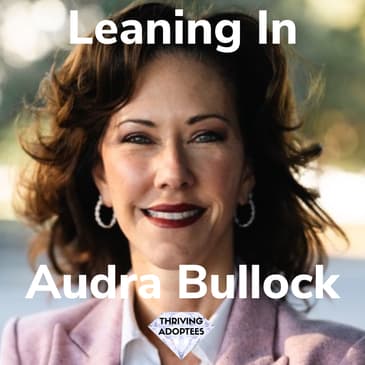
Grief and joy. Intensely challenging and hugely rewarding. Adoption is complex. Listen in as adoptive mother and non profit leader Audra shares what she's learning leaning in....
Audra is the founder and CEO of The Friends of Foster Care. She holds BS, MS, and PhD degrees in Engineering from Old Dominion University and has worked as an Assistant Professor and NASA Mission Manager. Since becoming a foster parent in 2015, Audra has dedicated her professional life to supporting foster children and building programs that create long-term impact.
Dr. Audra Bullock and her family became foster parents in 2015 when a three-year-old boy was placed in their home. His arrival changed their lives and transformed the way they viewed family. They fell in love with him immediately and made a lifelong commitment to support him, no matter where his foster care journey led.
Recognizing that, without meaningful support, he was at risk of following the same path that had brought his family into the foster care system, Dr. Bullock and her family made it their mission to ensure that other children in foster care have the love, stability, and resources they need to thrive. Since then, they have adopted two wonderful children through foster care and remain deeply grateful for the life-changing experience of building their family through foster care.
https://friendsoffostercare.org/
https://www.linkedin.com/in/audra-bullock-024704149/
https://www.facebook.com/thefriendsoffostercare
https://www.instagram.com/thefriendsoffostercare
Guests and the host are not (unless mentioned) licensed pscyho-therapists and speak from their own opinion only. Seek qualified advice if you need help.
Want to learn more about thriving for you, your kids, your families or your colleagues? Pick a time to talk here
[00:00:02] Hello everybody, welcome to another episode of the Thriving Adoptees podcast. Today I'm delighted to be joined by Audra, Audra Bullock. Looking forward to our conversation today. We had such a lovely conversation last month. Yeah, brilliant. Looking forward to this.
[00:00:19] So, probably the first Audra we've had on the show. I don't know whether we might have had an Audra. I'm pretty much, I'm sure that the only ex-NASA employee we've had on the show. Well, I'm honoured. Thank you. You're honoured. So, were you a rocket scientist?
[00:00:43] I was an electrical engineer for NASA. So, not in propulsion, but the sensing systems helped satellites and shuttle dock to stations. So yeah, in the space realm.
[00:01:00] In the space realm. But more importantly to our guests, you are a mum through adoption. So Audra and husband of adopted two kids who are to foster care. They are now 10 and 14. One of each. And she's also a step-mum to three kids who are in their twenties.
[00:01:23] And also, you've started this great non-profit and really taking some of the stuff that you've learned in the business world and really applying that to this thriving non-profit that you've got as well. So we might get into that a little bit later. Okay. That's wonderful.
[00:01:51] So the question obviously that we love to start with, Audra, is thriving or what thriving means to you?
[00:01:59] It's a great question. And to me, thriving is more than being healthy or successful or free from hardship. To me, it means having the environment, the relationships, the capability, sense of purpose that allows a person to develop towards their full potential and experience life as meaningful and worthwhile.
[00:02:25] I think it takes, you know, a combination of different elements to be able to thrive. Safety, stability, belonging, understanding that you have control of your life, you have agency, being able to grow throughout your life, I think is really important to thriving.
[00:02:49] Having a good self-worth and purpose, being able to experience joy, but also being resilient, meaning that somebody who's thriving doesn't just have, you know, success in life. They experience adversity as well, but it doesn't derail them from a happy and productive life. So that's what thriving means to me. Okay. So you've ticked every box that I've ever heard for thriving.
[00:03:21] Great. The thing that popped into my head, I was thinking about the conversation that we had last time, is the meaning that you're getting out of what you do as a mom. You know, we call them moms in the UK, did you know? Yes, indeed. So it's slightly hard for me to say mom. It just sounds wrong.
[00:03:46] But anyway, but I know that the meaning that you're getting from being a mom and the meaning that you're getting from this nonprofit that you've founded is kind of far surpasses the NASA stuff. It does.
[00:04:35] Most difficult work that I've done to be in this space as an adoptive mom, as a nonprofit leader. But it is absolutely the most rewarding thing I've ever done. And I've done some really cool things. You know, I've led a very rich, psychologically rich life.
[00:04:55] And I would say that, you know, being an adoptive parent is off the chart as far as the ability to check all those boxes of thriving. Even the hard ones. Even the hard ones. Yeah. Well, there's a few different ways I could go with that. The first one is it's a bit countercultural, right? Because so we're, you said, I never could have dreamt of. Right.
[00:05:25] So culturally, we're kind of like, what's your dream? How are you going to make your dream come true? Go and make your dream come true. And that's it, right? Right. So that's kind of the cultural norm that a lot of us are raised with. It's the recipe we all try and follow, right? From little kids. It's the recipe. It's ingrained in us in school. And when we go, we're supposed to do the thing and get the marriage and do the family and do the career and all of that. And it's supposed to be a very linear path, right? Yeah.
[00:05:55] It's a linear path. But it wasn't your path. So it was not. Did it feel? Had you followed that path before and then there was a jolt that sent you down a different path? Were you, had you ticked all the boxes and were feeling a little empty inside or what was it?
[00:06:23] I had ticked all the boxes that I thought were there. I needed. I did not, you know, the career was great. I was very ambitious on what I wanted to do. And in fact, my first marriage was really lovely by all accounts. It was not with children. And that was by design. I, unfortunately, our first, my first marriage did not work out. Kind of irreconcilable differences.
[00:06:50] And in my second marriage, as I was entering into my career at NASA after being a professor in Hawaii, I was jolted by one moment in my life where I experienced feeling emotions around a little boy that was in the foster care system in New York. He was featured on TV.
[00:07:16] And his words really changed the future for me. He said, you know, he was having a hard time being adopted. And so there was a feature on him on the news trying to get children that were languishing in the foster care system to be adopted. And his words were, I know I can be a good son. I just have to find the right dad. And that still breaks my heart to say those words.
[00:07:45] It broke my heart to hear those words. And I thought, I've missed the mark. I have this big capacity to love and to care for others. And I've accomplished so much in my career. But there are these children that feel like they have to go out and find their own family. They have to be good enough to find belonging. And for me, that's a great travesty in the world.
[00:08:14] And I'm not okay with that, especially not for children that have been separated from their families, have been through neglect or abuse and just a lot of hardship. And that stuck with me as a driving force of what could I do more for individuals that are feeling that way?
[00:08:37] And so in my second marriage, as we looked at the older kids going off to college, I took inventory of where are all of our efforts philanthropically? And they all happen to be in missions related to children. And I thought back to that little boy who had said he's looking for his dad.
[00:09:02] And I asked my husband if he would entertain us going down and learning more about what foster care was. And could we take this philanthropy and make it really mission oriented around children in a very granular way?
[00:09:20] And when we looked into that space, again, it was another pivotal moment for me where half of the people that were there to learn about foster care and becoming foster care parents had been in foster care as children. And I thought, wow, there is no true or testament to the impact that can be made in this space by showing up and caring for a child that's in need.
[00:09:50] And so we decided we would do that. And just one thing after another, following this path led to overwhelming joy, overwhelming challenge, overwhelming purpose. And really to all those elements of thriving that I had thought I was doing before, but really now feel like it's true. We are thriving.
[00:10:19] And again, it's not without its challenges, but it's with a very full heart, lots of purpose, lots of growth, lots of agency. Yeah. So it's a new world, really. Totally. Totally new world. But elements of engineering go every which way. You know what I mean?
[00:10:42] I'm able to have my passion for engineering and systems and designing things and just apply it in a different space and make a difference like I was making before at NASA. But now that difference really speaks more to my heart, if that makes sense. But raising kids is art rather than science, is it? Oh, for sure it is.
[00:11:08] It is the hardest thing that I've ever done is being parent to these kids. And the broader sense of the children and the foster care system that we serve now, a couple of thousand of them a year, making sure that they have what they need to thrive is challenging.
[00:11:30] And I, in many regards, the engineering at NASA was, you know, a piece of cake, comparatively speaking. Because there is no combination. There is no single system that can be applied to humans this way. You have to figure it out individually, one case at a time. And that's what I think I mean by art. Yes, exactly. That's exactly right.
[00:12:04] So is it, it's a bit of a geeky question. Is it, because we're brought up on this left brain logic and right brain heart, right? Is this more, is this a whole new world because it's all of you? It is. And I think that's what makes it so fulfilling. It, it is many times very logical.
[00:12:31] If we, if we talk about, you know, children that come from a trauma history, developmental trauma, early trauma before the brain is fully developed.
[00:12:45] You can talk logically about what trauma does to the brain and its development and what that manifests later in life and behaviors and, and inability sometimes to connect with other human beings on a level that is easy for children that don't go through that. However, you absolutely have to have the emotional side of your brain to be there for these kids and the emotional side of your heart, right?
[00:13:14] Because they can't heal through all the trauma that's happened to them without that emotional connection. It's, it's really unfortunate and kind of paradoxical. If you think about it, if you think about it, that children are hurt in relationships that enter the foster care system, right? With their natural family, they're hurt in those relationships. And you have to take them away from those relationships. Now they're on trusting of relationships.
[00:13:39] The only way they can heal is by putting them in another relationship with a healthy, you know, functioning adult, but they don't want to trust that. And so navigating all of that with the logic in the heart, left and right brain is, is a challenge like no other that I've ever faced. And really, I think builds a lot of, builds a lot of depth and character in a parent. Yeah.
[00:14:07] So what have you learned and what do you continue to learn about yourself through parenting? I learned that I am a type A personality and that doesn't work well often in parenting. I've learned that patience is the most important virtue.
[00:14:33] I've learned that nothing trumps safety, a feeling of safety for a child. I've learned that watching another human being blossom is probably the most rewarding thing in life.
[00:14:56] Somebody asked, I was being interviewed this morning about, by, by somebody that works at an adoption agency. And, and they asked me about the safety, that safety question, right? So how do you create a, how do you create a, how do you create a, without sense of safety?
[00:15:20] And the question was mixed in with some, with some other stuff as well. And because me and my wife haven't got a, haven't got any kids, right? Nevermind adoptive kids. I felt I had to answer it in a, in a slightly different way.
[00:15:41] And I, and the theme to, when I was interviewed this morning, I, everything came back to something I learned from another adoptive, from an adoptive mom. And she said, raising kids is about unpacking our own emotional baggage as adoptive parents.
[00:16:06] So my whole, my whole mantra throughout this, throughout this period that I was interviewed was kind of do your work. Do your work, you know, and I didn't answer that to every single question, but that was the theme that I ran through because that's what an adoptive mom told me. And it's the thing that's really stuck out.
[00:16:33] One of the things that's really stuck out to me in 700 episodes now, right? It's about unpacking our own emotional baggage. And I think about books I've read about emotional intelligence. I've thought about experiences I've had, you know, trying to change anybody doesn't really work. You know, they have to change, they have to change themselves. And it starts, but it starts with us. We, we have to change first. We, we have to change first.
[00:17:02] And I stand by that. And I, and I, and I, and I don't know that, that the answer to that question of this felt sense of security. And you said nothing trumps, nothing trumps safety. That's right. That's right. So I gave you a very long run up to a rambling question, but. But so what, what is it?
[00:17:32] What is it that you've learned about that felt sense of safety, creating that felt sense of safety? I love that you added felt sense of safety because for us as initial foster parents, you're trained to create a safe environment. And what that means is that you have the right locks on your doors and cabinets. You have, you know, security on your home.
[00:17:59] You, you know, are, are not letting children run around wild out in the streets. Right. But it's much more than that for a human and a child to feel safe. It's an emotional feeling. It's not just a physical safety issue. It's emotional safety. And so it took me a long time to realize that that emotional safety piece is more than just
[00:18:29] compliance with safety procedure, if you will. And I totally get that. If you have your own baggage, you have your own demons that are making you feel unsafe inside psychologically or emotionally unsafe. There is no way you can provide a safe haven for a child in need, particularly if they have a trauma history.
[00:18:54] So it was a lot of learning process for us of that emotional safety piece, particularly for children that have started out at a big deficit. They're afraid of the world. They're afraid of adults as they should be because they have been hurt at the hands of adults, both physically and emotionally.
[00:19:17] And so recognizing the signs and symptoms of unsafe feelings without the firsthand knowledge of what is actually happening to make them feel unsafe, being a little bit of a super sleuth, going with the premise that behaviors are messages.
[00:19:41] You might not understand the message, but I think at its core, it means I feel unsafe for some reason. And so going back to try and address doing things differently, maybe than what was done for these children. And it's a challenge, Simon. I think it's particularly a challenge when children have very early trauma.
[00:20:08] You know, before they remember what the trauma was, their body takes over in survival mode. And this looks like big tantrums, big feelings, big meltdowns over very low level input. And I think the mistake a lot of first time, you know, foster parents and maybe adoptive parents make, and it's a mistake I made, was chasing those behaviors instead of saying, hey, what's the message underneath?
[00:20:38] And how can I make you feel safe enough so that we can process what these behaviors are telling us? And even help children understand what those behaviors mean. Why? Put context. Why is this happening? Why is your body going through this? Why are there such big emotions around not getting one little toy in a grocery store, right? For them, the tantrum is like, this is life and death.
[00:21:07] And I think early on, I didn't realize that. I thought, oh, well, you know, this is just a very poorly behaved child. They don't know how to regulate their emotions. Well, what it comes down to is their body is telling them, you know, similar to not getting that toy, maybe they didn't have food. And that same absence of access to something that they want or need or desire
[00:21:32] triggers that huge survival response of, I have to have it, otherwise I will not survive. And it's not a cognitive process, right? This is literally the primitive brain making sure these children have survived what they've gone through. It's no longer needed maybe in the current family circumstance once they're removed and they are physically safe. But emotionally, they still don't feel safe.
[00:22:00] So it's been a long journey for my husband and family and I to learn this, that you have to trust that if there's a big emotion and a big outburst, that inside that person who is outbursting doesn't feel safe. So how do you make them feel safe? Is the objective.
[00:22:26] So is it as simple and therefore not as simple as you talked about super sleuthing? Is it attuning to the fact that they're not feeling safe and doing something different?
[00:22:53] So it's about curiosity, attunement and adjustment. Yes, absolutely. I think you hit the nail right on the head with that. It is recognizing and attuning to them that they are not feeling safe. Empathizing with the fact we accept that they don't feel safe. Whether it's a safe situation or not, we've got to accept that they have that internal fear, right?
[00:23:22] And then it's how do I make, how can I create an environment where you can feel safe in that moment long enough so that we can get to the part where we can be cognitive about processing. What made you feel unsafe? Well, and normalizing it too. But of course, but of course you would feel unsafe because all of these different things happen to you.
[00:23:47] Because I think a lot of the issue with kids in foster care, kids that have been adopted, is that they don't understand why they have these big feelings. And we have to put context to those feelings and emotions so that they can go back and try and process it, particularly for kids that had pre-verbal trauma.
[00:24:11] I mean, it's significant they don't understand and it's ingrained and they start to feel pervasive shame if they can't normalize those feelings and understand why they do what they do. And that shame going forward can cause, can wreak big havoc in their lives. Unaddressed.
[00:24:34] So how does your sense of about safety help your kids feel safe? It's a great question. So my sense of felt safety is tied up in belonging with my family.
[00:24:56] I get an inordinate amount of my psychological, emotional, physical safety from my family and always have. And so recognizing that I try and create a similar environment for my children that they can rely on their family. And my kids are super family oriented. They really are. And that's great.
[00:25:24] I think one of the things that I had to realize as an adoptive parent is that's not always enough. That's not always enough for these kids, especially because of their trauma history. So a piece of me goes into creating that safe space of talking about their history that they can process with me anytime. They have an open book on their past.
[00:25:52] I never hide that from my kids. You know, whether I wanted to or not, it wasn't going to be possible. My children are racially different. It is obvious that we are an adoptive family. None of us look like each other at all. So it's never been an opportunity to be a secret in our family.
[00:26:13] But even if it had been, I would not, because I really firmly believe that adoptees can carry a big hole in their heart of not knowing, of feeling like perhaps they weren't good enough for their parents to do what their parents needed to do. And I think that that creates some shame and some bad feelings inside.
[00:26:39] And so for our family, we have a safe space where we can talk about all of this without judgment, without, you know, you should have done this or you should do that in the future. It's just understanding that things are sometimes hard. Things are sometimes unfair in life and that that's okay. It's okay. You can still move forward from that. And we're here to walk that journey with you. Yeah.
[00:27:07] So you talked about moving forward. And that takes me back to one of the words that you used at the top of the conversation in terms of growth. So what helps you grow or what's helping you grow and what's getting in the way of that growth? So for me, challenge always helps me grow.
[00:27:30] If I have things that are major challenge to be able to rise to the occasion and kind of dig deep and grow in that way is great. I thrive in a challenging environment. I really look forward to it. But that's because I have the resilience to not bring me down, right? I still have hope. I still have self-worth. I still feel like no matter what, I will be able to persevere.
[00:27:59] So for me, the challenge is what helps me grow. And I will admit this, Simon, there are times through this adoptive journey that I have gotten to the point where I thought, can I really do this anymore? Am I the right person to be their adoptive mom, right? Am I strong enough to make it through some of these hard times? And I've questioned that, but I keep moving forward.
[00:28:29] And I think that is also a part of recognizing that growth is still out there to be had. For me as a mother, I'm not there yet. I'm always going to have to grow. And to give myself a little bit of grace in the times where I've done things wrong, to understand that I'm always going to show up trying to do the best that I can. It doesn't mean the execution is going to be flawless.
[00:28:58] So that grace component, I think, is also a part of being able to grow. So challenge is the biggest driver of your growth then? It is. And I say that and what I mean by challenge is the challenge that comes with parenting children that have a trauma history. It is extremely challenging. It tests you in ways that I never thought I would be tested.
[00:29:27] It's the most rewarding thing I've ever done, for sure. And it comes with significant challenges. Do you mean like stretching you? Is that what you mean? Yeah, of course. Stretch and grow.
[00:29:42] That is a common phrase we use in our family, in this business, is that our purpose is to stretch and grow the kids and ourselves.
[00:30:07] We're talking about cultural norms and, you know, this idea of... We started off with this idea of, you know, ticking the boxes and, you know, make your dream come true. And I'm wondering how prevalent, how many people think that challenge is good. Do you know what I mean?
[00:30:36] Challenge helps me grow. Do we... Do we... Do we... Do we hear that? Do we hear that much? Do we think that, well, you know, if it's... Well, one thing is, you know, once you find a job that you love, you'll never do a hard day's work in your life.
[00:30:59] You know, we're giving different messages about how hard we've got to dig deep. Right. You know, if I find the right thing, you know, this is... That's me set back, you know. I'm going to... Or... We had that a while ago with manifesting, didn't we? Like, we had to manifest stuff.
[00:31:28] And nobody ever talks about manifesting challenge, did they? No, I suppose not. But I will say that any job, any endeavor that's worth doing has to come with challenge. Otherwise, it can't be rewarding. It can't be rewarding.
[00:31:52] So I think having that challenge is really important to being able to be satisfied with yourself, to be able to look backwards and say, look at what I've accomplished. Not just forwards and what I haven't accomplished, right? It's the road ahead needs to be challenging enough to be exciting, to be fulfilling, and not too challenging, right? That you can't accomplish it.
[00:32:19] And that's where the happy balance of I love what I do comes. I believe. That's my personal opinion on that. You know, I've heard the Steve Jobs quote, the only way to really do your best at work is to love what you do. But that doesn't mean that it is without challenge. Doesn't mean that it's not hard. People, I think, deeply love those things and deeply appreciate those things in life that are the hardest that they've had to go through to accomplish. Yeah.
[00:32:50] As you were talking about Steve Jobs, the idea that, or, you know, one of the cliches that kind of sums up, I think, what we've been talking about to some extent is don't wish that life was easier. Wish you were better or something like that. Have you heard that? Yes, I love that. Does probably. I love that. Easy life is boring.
[00:33:21] Easy life is boring, I think. Yeah. I don't think it's rewarding or fulfilling in the way that challenge can. But, again, back to the elements of thriving, too much challenge can preclude you from thriving, right? It has to be just the right amount that you can still accomplish things.
[00:33:47] You might scratch your head for a moment and say, is this something that I can get done? Can I figure this out? Can I get past this? But the fact that you can figure it out, get it done, get past it, is what allows you to be happy and fulfilled and grow through that challenge. Yeah. Because other challenge can stymie. I mean, I think that's what happens to a lot of kids from the foster care system, kids that are adopted.
[00:34:12] They face insurmountable challenges very early in life. It's not spread out. It's not an option. They don't have the agency to control whether they say, hey, time out. Let me take a moment from this challenge and recruit. I think that's kind of the problem is that sometimes it's too much challenge for adoptees that they have to hold in the early years in life. And it stymies all the rest of their ability to thrive. Yeah.
[00:34:45] You talked about agency. Agency. Mm-hmm. What does that look like for you from a parenting perspective? Agency. Agency for your kids.
[00:35:03] Agency means to me, as a parent, it's empowering children to make the choices that they should make, teaching them which choices are good choices and which choices are going to lead to probably some negative outcomes and discerning those differences.
[00:35:32] But empowering them to have control over themselves, because that is the reality. There is no effective means of, I think, controlling a child, particularly not through like authoritative kind of parenting. For kids with trauma history, it absolutely does not work. It does not work. They have to want to do the thing that you're asking them to do.
[00:36:02] They have control of their own bodies. And empowering that control so that they use it for their own growth rather than keeping themselves burdened and limited in the past and what happened to them. So for me, agency is really important of being able to develop children into, I think, healthy
[00:36:31] adults that make choices and understand their role in the world and their impact of what they do for everybody else around them and to make those choices. Yeah. I find trauma choosing or I see trauma choosing. Yes. Rather than. Yes.
[00:37:01] It does. Yeah. For young kids, for sure, trauma. Trauma dictates everything. I mean, it's so unfair that children, you know, at young ages would go through trauma because it really does impact everything else the way they look at the world. And I think for some kids, particularly those with reactive attachment disorder, they end up
[00:37:27] trying to control everything else around them because they can't control themselves. And that's a very dangerous situation because it leads to a lot of lack of self-worth. It leads to a lot of pervasive shame. It leads to a lot of dangerous behaviors, frankly. And so, yeah, I think trauma can really be controlling for those individuals that experience it, particularly young kids.
[00:37:56] Mm-hmm. Well, I mean, people say things that are said like, you know, a dysregulated adult can't regulate a dysregulated child. Have you heard that? Well, yes. And I'll put a little twist in there. There is nothing that can dysregulate an adult faster than a dysregulated child, right?
[00:38:24] So, yes, it's not only you're modeling it, and this is where you have to go back to your own baggage, what your own triggers are, is if you can't stay regulated as an adult, there is no way you're going to be able to be regulated for a child. And they can see through any facade you put on as regulation. They can sense better than any other, I think, age group.
[00:38:51] Children can sense your dysregulation, and particularly those that have a trauma history. That's how they survived, is being able to look at their caregivers, their parents, when all this trauma was happening, and be able to decide, oh, mom's off the rails now, I better back up. I need to be ultra-sensitive to this. So many of the kids that have gone through trauma as, you know, small children, I've heard
[00:39:19] the term, them called super sensors, because they can walk in a room and they can identify everybody's emotion around the room, who is safe, who is not safe, who is on the verge of being dysregulated. And because people in their life haven't taught them how to regulate through some of these challenges, the challenges, the stimulation, right, the trauma was way more than a child could handle.
[00:39:45] They've got no good examples of how to stretch and grow through challenge, right? It's just dangerous. All challenge is dangerous. And including a lot of our behavior modification, right? We're a society based in behavior modification and consequences. And I think the challenge for me as a parent has been to recognize that consequences don't work a lot of times for kids with trauma history.
[00:40:16] Kids with trauma history take behavior modification as a threat, and they go into survival mode. And in order for kids to grow, they can't be in survival mode. They can't be surviving, you know, they can't be, you know, fight, flight, or freeze. Nothing happens productive in those other than survival, right? So we've got to get them out of that space and into a space where they can, you know, thrive
[00:40:45] emotionally, physically in order to move forward. And that's a hard thing to do. That's a hard thing to do. And particularly, you know, we're consequencing them all the time. Do this or you'll lose that. We're always putting them in a survival mode and we're not moving forward. Yeah. So a naive question then. So what works? Perhaps too simplistic a question. I don't know.
[00:41:15] The only thing that I have found that works is that felt safety. That is paramount. Nothing else can happen before children have felt safety. And it, Simon, it's so counterintuitive to the way that we parent and most people don't understand it. And as adopted parents of kids with trauma history, we get told, you know, you've got to be harder.
[00:41:44] You've got to get control of this child. You better do this before, you know, they go off the rails. You've got to take everything away from them. And all of that is playing into a sense of no safety, a lack of safety for these kids. And so kind of going against the grain has been a challenge for me, a growth opportunity
[00:42:07] for me of kind of putting aside those traditional parenting techniques, taking on a new, softer approach that does honor the element of felt safety. And it doesn't mean that you have to be a soft parent, but what it means is that you can't have boundaries and you can't have expectations. It's just the approach is a lot different.
[00:42:31] It really is formed around felt safety and relationships and safety in those relationships. That's where it's taken me a long time to learn that, honestly. Um, but that's where as a family, we've made a lot of progress, uh, and the only space in which we've made a lot of progress. We've tried everything under the sun to try and help our children through their trauma histories,
[00:42:56] uh, and the consequential behaviors that, uh, or the, the behaviors that result as a consequence of, of that trauma. Um, and the only thing that that has worked is coming back to that sense of felt safety. Everything else can follow from that, but nothing can follow if they don't have felt safety. You talked about, um, unpacking your own emotional baggage. So what's been helpful in doing that?
[00:43:28] Recognizing the way that I was parented, uh, doesn't necessarily work. Uh, for, for my children, you know, remembering that my consequences as a child, my, my baggage is that I was told what I was going to do. I did what I was told to do and, and everything worked out fine. And that's how we had the safety.
[00:43:55] And my baggage that I brought to this parenting journey was that, and I didn't even realize that it was baggage. I thought that was the way that it was supposed to be, you know, your, your parents are responsible for keeping you safe. They tell you what to do. You do what they say. Voila, you're safe. And, and from me, then that became very frustrating when I tried to implement that approach in my family and it didn't work. It kept backfiring.
[00:44:24] And I was like, Oh, I've got to be tighter. I've got to be telling them more what to do. And so letting that go and realizing that about myself. And in fact, my husband is exactly the same way. We were raised in very similar families, which is why we get along so well. Um, but that's not the, that's not the path that works for my adopted kids. And having to check that at the door is kind of humbling. Cause it's, to me, it's, it's the more direct, simple, happy way to parent.
[00:44:53] Tell your kids what to do. They have to do what they say. And then everybody's safe and happy, but it doesn't work that way for the, for my kids, at least. Yeah. That, to me, that feels like a, a diff, an answer to a slightly different question. So, um, the way I would say it is kind of what you said is, um, as if I was paraphrasing, I would say, uh, so the biggest, the biggest thing that I've, the biggest thing that I've
[00:45:22] learned is not to parent as I was parented. Right. Yeah. That's kind of, does that kind of sum up? That's, that's exactly right. That's exactly right. And for me, that was a big burden because I, I really enjoyed my childhood. I felt so safe. I felt, you know, I, I am, I am one of these people that, that is just so blessed to have
[00:45:48] had loving parents that really, you know, I, I don't know that I had much adversity in my life at all. Um, and so I had a very easy childhood, um, and recognizing that, um, you know, what made me happy is not what can make my children happy.
[00:46:12] That was, that was a big realization for me, not just don't do what my parents did, because a lot of people don't repeat the mistakes of their parents, but I wouldn't call my parents and the way they parented as mistakes or mistaken. Um, because I just had a wonderful childhood. I had a very safe, uh, loving, perfect childhood idyllic really. Um, so that, that to me was hard to unpack. Yeah.
[00:46:42] So it, it would, there's this, uh, I've talked to adoptive, other adoptive parents about this and one of them, I wonder, I can't remember her name at the moment. That's really bad. My 59 year old mind. I keep on making excuses, throwing the 59 year old question that, um, not question the 59 year age.
[00:47:07] She said that, um, she said one of the hardest parts for her and she adopted from foster care as well was grieving the loss of how she thought parenting was going to be. Yes.
[00:47:30] So how I'd say that from the outside is that her, her, her expectations. So I wouldn't, I would, you know, I'm just, I'm, I wouldn't use her words. It, it, to me, it was about shock. I'm trying to simplify that. I'm trying to, when I ask people questions, I'm, I'm, I'm really, what I'm trying to do
[00:47:54] is, is to kind of simplify what they've said down and ask them if I'm a kind of on the right lines. And that often leads them to explain things in a different way. Right. And I think, I think I do this subconsciously. I, until right now, I've not realized I did it right. So I, what you're explaining, when you said that your childhood was idyllic.
[00:48:24] I'm thinking, well, the challenge here is really about shock. It's like, yes, I was like this. My kids are like that. Right. There's, there's a kind of like a shock. Yes. There's an impact of shock. And that would be a challenge, right?
[00:48:55] Indeed. The largest challenge of my life, really. And, and I agree with your, your former guest in grieving what you think is going to be your path in parenthood and it not materializing. Um, I think often when, uh, parents who were naive, like I, uh, I was enter into foster care and adoption.
[00:49:22] And we have this notion that love is enough. We're just going to love them through all the hurt and everything's going to be great. And then we're going to be taking our family trips, like what I had when I was a little girl, or we're going to be doing all these wonderful things that you kind of envision in your, your head. And it is grieving when you lose sight or, or you lose the ability to follow that path that you've dreamt of.
[00:49:51] And my husband and I have done a lot of grieving throughout our parenting journey with the adoption from foster care. And we've, we've found a new path. We've had to come back to living more in the moment. That's been a very humbling experience. We're very future oriented people. We're planning things out. You know, we know our vacation schedule for the next year and a half, no problem. Right.
[00:50:18] But, but reeling that back in and living in the present moment, um, has had, it's, it's hard. It gives you a sense that you're losing control. Like you don't have that agency going forward. Uh, and, and it is something that, you know, it, uh, a loss when you can't achieve those things that you had in your mind.
[00:50:41] But if you live in the moment and you also are very cognizant of how far you've come in your accomplishments, I think it does ease that, that grieving. And my, my husband and I have had to, had to make those adjustments. Yeah. Yeah. So to simplifying it down, right. To ask you another question, I would say, you know, when we are unpacking our emotional
[00:51:10] baggage as adopted parents, grief is one of the things we find in that, in, in, in that baggage. Yeah. Indeed. Uh, so what, what else have you found in, in, in that suitcase? Hmm. That's a great question.
[00:51:32] Um, I found, I found that I was not, you know, prepared, uh, like I thought I, I was. Um, so I guess what, what would we call that?
[00:51:59] Maybe feeling disoriented, feeling, uh, unprepared, uh, in many regards for the first time in my life. Yeah. Feeling kind of out of my depth or in over my head. Um, that was, that was hard and humbling. And how old were the kids when they came to live with you? The 14 year old, my 14 year old son was, uh, just about to turn three when he was placed
[00:52:29] with us. And my 10 year old daughter was, um, just, uh, about seven months old when she came to us. And, and, you know, my, my son probably had it very easy in, in foster care, meaning like he's probably the most well-adjusted, um, kind of unaffected child from his experience in foster care.
[00:52:53] Uh, of course he had the grief and the loss, uh, but he didn't have a lot of other complicating things as if that's not complicated enough. But my daughter has had substantial challenges to, to the point that it's been confining for our family. Like we cannot do things that, uh, your average family can do. And so trying to, trying to navigate that has been. Yeah. Disoriented. I think is. Yeah. Yeah.
[00:53:23] It was, it, I wasn't expecting that. I wasn't expecting that. And most everything else in my life to that point, if I set my mind to it and it was a problem, that's what I do as an engineer. I solve problems, right? I'm very good at that. And this was almost the unsolvable problem. One that's taken a decade and I'm still solving it. Yeah. Yeah. And I, and I'm solving it with an organization that I founded to try and help solve it for
[00:53:51] a whole bunch of kids, like thousands of children. And I still come back to sometimes my family dynamic is, is overwhelmingly challenging. Yeah. So what, how would you sum that challenge up in a sentence? Hmm.
[00:54:12] Um, I have, my, my challenge is to figure out the happy path forward that is so unknown and uncharted.
[00:54:35] And it takes a lot of introspection, like what you said of unpacking your own baggage, my own baggage of making sure that I am creating safety in all the ways for my children, even when I don't understand what that safety looks like for them, because it's different than my safety, right? My sense of felt safety.
[00:55:11] That's huge, right? My, my, my sense of self safety is different to their sense. It is. Indeed. Feels like a good place to bring it in. Oh, okay. Um, um, I, I, I, I feel, uh, an episode two brewing.
[00:55:41] I love that. At some point. Yeah. Um, you know, the, the, the kind of, the metaphor for me that was coming was, you know, we think, when I think of learning, it's kind of a yes, no thing. Right. It's, it's a yes, no thing. And languages aren't like that.
[00:56:10] You know, you can't, so some, my sister's lived in Switzerland for 40 years. Right. And some people can still tell that she's got an English accent. Right. However good her English, however good her, her French is, sorry. Um, and now it's come kind of the way.
[00:56:36] So she'll come home and home back to the UK and we'll be having a conversation. And she says, I don't know the English word. Oh my. There you go. But that, that's a depth thing. You know, language is like a depth thing. It's not a yes or no. That's right. I'm thinking of science, you know, um, I'm thinking of, uh, oh, physics. Physics equations.
[00:57:06] Um, well, the easy one is E equals MC squared, isn't it? Right. So that's just, it's either yes or no. Right. That's right. But I was trying to think, I was trying to think of a physics one, um, from, from my exams when I was, uh, uh, V squared equals U squared plus two AS. Does that mean anything? I don't know. Is that right? Is that about right? Yeah. But, you know, that, that's, that's science.
[00:57:35] And what we're talking about here is, is, is far more akin to, um, an art. Absolutely. I think you've hit the nail on the head there. And that shift for me from a concrete, very definitive black, white, yes, no world. There's always a solution. There are different paths to get to it, but we have a single solution to this world that
[00:58:02] that is chaotic and messy and emotional, um, is, is part of that challenging growth, right? For me. Um, it's a totally different realm and disorienting at times, overly challenging at others. And, um, yeah, it's, it's really been the most amazing, uh, endeavor that I've ever taken on. Yeah.
[00:58:32] The most challenging for sure. I came up with an idea that something else that, you know, if we could sum it up in terms of what was in, in your baggage, uh, and, uh, I want to run that past you. Uncertainty. Yes. Yes. You know, the certainty of, the certainty of B squared equals U squared plus two AS. You know. It's that, that's, that's what it is, right? That's, that's it.
[00:59:02] Yeah. Right. Um, the other thing that that's coming across really strong is curious, curiosity. I can never say that word, curiosity and humility. Yes. Like people used to say, um, lifelong learning to me and I was going, yeah, okay. And that's not for me.
[00:59:27] Um, whereas, um, that, that's what humility sounds like from your perspective. It's, it's, it's openness, curiosity. It's, it's, uh, I'm, I, I'm going to, uh, I'm going to recognize the art here. Right.
[00:59:50] I'm going to, I'm going to put my, I'm going to, I'm going to use my science where it can help me. And I'm, and I'm going to embrace that art where I, where I realize it's not about science. That's kind of what I'm hearing. Yes. I think that's spot on. Absolutely. Thank you very much. And I haven't said this for a while.
[01:00:17] Listen, check out the show notes to find out what Audra is about. And, um, yeah, get, before we close, right. Give us a couple of minutes about the, the, the, the not profit, the not for profit that you saw. Because I've not, we've not really talked a lot about that. Right. So after I fostered for a little while, I decided that the gaps that I saw in the
[01:00:43] system were too much for me to bear and that here I am a problem solver. I'm going to go do something to problem solve all of that. And so I started this organization called the Friends of Foster Care. We take, we take care of kids in foster care, trying to plug those gaps, educational gaps. We provide one-on-one tutors for kids, uh, that have, you know, uh, are behind in reading and math, which most of the kids in foster care are.
[01:01:13] We provide normative experiences through access to extracurricular activities and wellness, um, uh, wellness activities. We provide normative, uh, experiences through providing birthdays and holiday gifts. Uh, we provide for our older teens an environment. We're trying to create an environment where they can begin to thrive by creating a sense of community
[01:01:42] and connection, belonging among them, providing exposure to careers and college paths and all the soft and hard life skills that need to need, that a person needs to be a productive, um, healthy adult. And we, we provide those all in an environment that they can feel real joy and connection.
[01:02:09] So, uh, we've, we're 10 years strong. Now we've served over 6,000 children from the foster care system. And, uh, we're growing as fast as we can to make sure that some of these systemic issues that plague all children in foster care can be addressed because there are some pretty terrible outcomes for those who interface with the foster care system. It's a, so it is an effective intervention to stop abuse and neglect.
[01:02:38] However, doesn't go far enough to help children become thriving adults. So that's where we stand in that gap, uh, to make those, build those bridges for people who've experienced foster care to have, be better off in the long room from having been in the foster care system. You can find us at, uh, friendsoffostercare.org. Yeah.
[01:03:03] And the links are in the show notes if you're driving, um, or walking or don't have a pen, right? The links are in the show notes, listeners. Thank you very much, Audra. Thank you, Simon. Such a pleasure. You're always a pleasure. Thanks, listeners. Speak to you on very soon. Take care. Bye-bye.