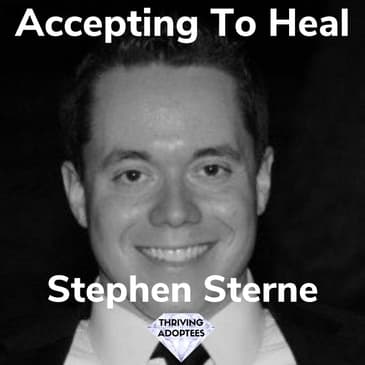
As a wise man once said to me, what we resists persists. So how do we accept the tough stuff we've been through? How do we get to the peace that lies at the other side? Listen in as Stephen shares hard won learnings. Powerful!
https://www.instagram.com/stephen_sternejr/
https://www.linkedin.com/in/sas-jr/
Here are some links to episodes with birth mothers
Guests and the host are not (unless mentioned) licensed pscyho-therapists and speak from their own opinion only. Seek qualified advice if you need help.
Want to learn more about thriving for you, your kids, your families or your colleagues? Pick a time to talk here
[00:00:00] Hello everybody welcome to another episode of the Thriving Adoptees podcast today I'm delighted
[00:00:06] to be joined by Stephen Stern looking forward to our conversation today Stephen.
[00:00:11] This is great thanks Simon for the opportunity.
[00:00:15] So the 50 million dollar question what does healing mean to you?
[00:00:22] I think for me at my journey it's a full acceptance of the full reality of the situation.
[00:00:32] Not not having anything else unexpected to be uncovered but just the ability to take things
[00:00:42] for what they are except them learn from them leverage or utilize them for the future and
[00:00:49] be able to share that story.
[00:00:53] I remember early on I had some counseling and the counselor shared with me something that was
[00:01:01] that was marriage counseling but it applied in this situation and that was the more that you
[00:01:05] share your story the more you accept it for yourself and that just hit home with me because
[00:01:13] trying to deny it or try to avoid it or trying to reframe it up in some way that I wish it was
[00:01:18] versus what it is. It's just challenging, it's just wait that you bring with you through life
[00:01:24] but if you can just share your story the good the bad the pain the hurt the ugly the positives
[00:01:33] I just felt like that was a very key little comment that has made a huge impact in just
[00:01:38] accepting things that are outside of my control but maybe they were there for a purpose.
[00:01:44] There's a lot there buddy.
[00:01:47] Yes, there's a lot there.
[00:01:51] It sounds like for me if I was to sum it up it's kind of a wise,
[00:02:01] it's a combination as it says it's a cocktail of wisdom and acceptance.
[00:02:07] Yeah.
[00:02:09] Yep.
[00:02:11] Yeah, it's sometimes it's hard to accept the truth about things and we
[00:02:21] tend to go with what's safer and sometimes what seems safe is less painful but there's always
[00:02:28] maybe an underside to that that we don't see and that's a lifetime just avoiding things or
[00:02:36] missing on the value of things or stepping away from the pain that we have
[00:02:44] and another great phrase I heard somebody say was if you choose to look at it like this
[00:02:49] that your pain can lead to your passion or your purpose and so many of us have pain.
[00:02:57] We have wounding, we have things that happen to us outside of our control maybe injustices we
[00:03:03] might see them as being but if we utilize that and go okay there's not many people that are going
[00:03:09] to handle this and process this and go through the work of getting healed.
[00:03:15] The people that do do that have a platform and a story they can help others otherwise
[00:03:20] we'll kind of all start in line of our healing journey together and no one's actually come back
[00:03:24] from the finish line and said hey here's the value, here's the benefit of being healed.
[00:03:31] Yeah that makes sense. I think so, I think it kind of makes sense for me. Have you heard of
[00:03:38] this guy Gabel Amate? Who do you think? I'm not. No. So he's not an adoption specific guy but he's
[00:03:48] he's a kind of a big deal in I think it's like a therapist of some type or maybe he was an MD
[00:03:56] he does a lot of work in the trauma, in the general trauma space and he doesn't do much
[00:04:06] adoption specific stuff. He's got but I signed up for a program, I'm not a big fan of his,
[00:04:13] I haven't been a big fan in the past but he's I signed up for a course recently and it's called
[00:04:22] the Wisdom of Trauma, the Wisdom of Trauma and I was thinking that's a pretty cool title
[00:04:31] because you don't see like if you ever said wisdom and trauma together in the same sentence.
[00:04:39] Yeah. It's a totally turn it on its head and I guess the wisdom word was
[00:04:52] that's why was that top of the top in the mind because I just seen that right just before we
[00:05:00] were talking and but it also seemed like a good summer wisdom and acceptance
[00:05:12] and as I think about the word acceptance especially, I'm thinking like what's the what's the opposite?
[00:05:25] What would you say is the opposite of acceptance? I think rejection is the first word that comes to my mind.
[00:05:39] Yeah, rejections, I trust you on the bit of assessment with an adult tease right
[00:05:44] and because for you're talking about the rejection of what a you're talking about the rejection
[00:05:50] of the truth. Sure, it could be that. I mean rejection can be a perspective too, you know it
[00:05:58] is. I've got the natural question that comes to everybody's mind is why did you not keep me?
[00:06:06] Well regardless of the purpose of this situation just that natural first thought that anybody would
[00:06:11] come to is so why not me right now whether you were an infant or a child or a teen whatever
[00:06:19] age you are when your adoption story occurs it could obviously be or seem to be something different.
[00:06:27] If you're an infant you probably don't have that thought but if you were to get adopted
[00:06:30] and say 10 for example you might go so what's wrong with me? Like, you know what did I do something
[00:06:36] wrong? Probably not the case at all but that idea of not being fully accepted for who you are
[00:06:45] or something more important than you maybe having a view your biological family, parent,
[00:06:56] mother's decision as being rejected. I didn't ever really feel that my story was something that
[00:07:06] there was a purpose and an intentionality, a positive desire from both parties that it wasn't a
[00:07:18] I don't want you. It was I want you to have a better life than I needed to provide
[00:07:24] and that was I think we had talked about like a very defining healing moment for me was
[00:07:31] having a conversation with my biological mom and that matching with my adopted parent's story on
[00:07:36] what was my purpose of adoption? And it wasn't I would have discarded because it was an inconvenience.
[00:07:44] It was behaviors that led to a pregnancy and a mom who was young and scared and did the best
[00:07:52] that she knew how to make sure that I didn't feel rejected or terminated and I would be in a home
[00:07:59] where I could be loved and accepted because that wasn't what she was able to provide herself
[00:08:05] and that made it huge for me and I guess everybody could be different
[00:08:11] feel different have a different perspective but that cloaked the whole situation in a very
[00:08:16] positive light in my mind then a lot of other stories that are out there that maybe don't have that
[00:08:23] banging. Talk is through talk is through that that healing
[00:08:33] healing moment what can you put a bit more detail on it in terms of the
[00:08:40] yeah in terms of the specifics and the feeling afterwards and the shift before and after or
[00:08:53] just absolutely that it is a very clear moment in my mind when I stop and think about it so I
[00:09:00] reconnected with my biological mom over the phone at age 20 so I called her and started running out of
[00:09:06] the blue had a conversation so the most awkward uncomfortable yet intimate conversation I
[00:09:15] probably ever had in my entire life but that broker the ability to start building a relationship
[00:09:21] with my biological mom and her family and we connected got to know each other a little bit kind of
[00:09:29] tested out the waters of what each of our intent was and reconnecting and when I went down there
[00:09:35] to visit. Roved at her house went into the living room got to meet her husband my half siblings
[00:09:43] and she had a little packet of materials that she had kept from when I was a child my original
[00:09:48] birth certificate my original social security card some pictures medical documentation etc
[00:09:55] and I remember sitting down and the question that I wanted to know most was so why did you choose to
[00:10:03] put me up for adoption right like I knew what my parents had told me but I wanted to hear it from her
[00:10:09] and she said I couldn't give you the kind of life I felt you deserved and I felt that I just felt
[00:10:17] like okay so this was all done with the best intentions of this situation she was very wrong candid
[00:10:24] she cried I cried and that was like the moment that I'm like okay you did this
[00:10:29] with the best intentions that you know how as a 17 year old girl with no real family support
[00:10:36] that was going to help me raise this child I can't argue with that and my parents had always told
[00:10:41] me that she wasn't able to take care of me and she wanted me to have a good home with two parents
[00:10:45] and the resources to be able to raise a kid and that story my my adoptive parent always told me
[00:10:53] and my biological mom sharing that one or two sentences of why she did what she did
[00:11:00] it just removed all of the unknowns that I had other than some just practical things are
[00:11:06] red疑ary etc but like the why behind the whole situation it just settled in my heart and I was okay
[00:11:14] with it still had other questions but like the core wound that could really be ripped open or destroyed
[00:11:22] just kind of closed in that moment when she told me the exact same reason my parents understood
[00:11:27] was the reason why she put my front option yeah so in a world it in a word it sounds like
[00:11:34] selflessness on her phone absolutely she had no ill will towards me no ill will towards
[00:11:43] my biological father none towards her parents it was just she genuinely wanted to
[00:11:49] have this child that she wasn't planning expecting or equipped to raise to have a good home
[00:11:56] and there wasn't anything I could be disappointed upset or angered by when someone tells you
[00:12:01] I did the best that I could and you just put that context of a scared pregnant 17 year old
[00:12:07] in the 80s working in McDonald's I mean she didn't have anything else to the turnpours and so
[00:12:14] um the other comment she said in that sentence but I will never forget that was
[00:12:21] probably the most meaningful comment was she does I gave you up and I hope that one day
[00:12:26] when we were connected you would be proud of me and I just thought what what mom would ever say
[00:12:33] that like I'm the kid my thought is hey let me make sure that you're giving me up I made a I validated
[00:12:41] your decision right I was a good representation of who you hoped for me to be that wasn't how she
[00:12:46] was thinking she wanted to continue to live her life so that if I ever found her she wanted to be
[00:12:52] someone that I would honor and respect and was proud of her being my mom and that was I just I couldn't
[00:13:01] I couldn't process that for a moment it just hit me so hard I felt wow would I
[00:13:05] interesting and what a blessing to have a mom think like that at 17 and still stay with that
[00:13:13] you know for the 20 years later before we reconnected yeah and you said something about
[00:13:22] a wound the did you say the wound closing is that what the word so
[00:13:29] so at the wound being about questioning it is yes
[00:13:42] I was thinking about that this issue
[00:13:49] that you know our brains go into overdrive it around especially around the why
[00:13:56] question this and it struck me that if I was to look at defining what healing was around that
[00:14:08] it's and it's probably an awe it's two things right so it's either getting to the truth
[00:14:26] like you did or it's being at peace with not getting to the truth
[00:14:38] agree
[00:14:43] because otherwise you know we're always are we always going to have more questions well let me ask you that
[00:14:51] right so did did did that lead to a cessation of of the questioning of your internal question
[00:15:03] no I still have lots of other questions less less painful questions but once the why
[00:15:12] had alignment between what I was raised with someone that I knew was not a biological parent but they
[00:15:20] took the responsibility except responsible raising me and what they shared with me as my why how I was
[00:15:28] brought into the world and once that was validated confirmed from my mom directly in her life
[00:15:35] that that was like the biggest I think pain point was having continuity there yeah but then of
[00:15:41] course I had other questions there was less writing on those questions I write yes 100%
[00:15:50] so the the getting they were less important questions with less
[00:15:58] importance attached to the getting the answers of yeah so it took the sting it took the sting out
[00:16:04] the questions really and the rest then maybe I don't know icing on the cake you know I'm trying
[00:16:12] to so true what I really haven't got an answer for this but what would you say to somebody that is
[00:16:23] listening that says well it's okay it's okay for Stephen because he got to his answers
[00:16:32] and I haven't got the answers that I need my my questions still have a lot writing writing on them
[00:16:43] yeah and it's all right for him what would you say to somebody in that position
[00:16:54] there's a lot of situations and life that have unopened or unanswered questions that we go through
[00:17:06] and we're always asking the why I mean little kids as they grow up
[00:17:10] estuary and verassure parent why why why like it's you're just trying to understand
[00:17:15] and I think there's just a human desire that if you knew why things happened you'd be able to
[00:17:23] handle or have a better perspective on it I had I was very fortunate with my adoption story to have
[00:17:32] two completely separate entities have a story that matched and I think that's the best thing that
[00:17:38] if if if someone's looking to get their child up be honest with yourself and with your child
[00:17:44] why if you're looking to adopt the kid be honest with as much of the story that you can find out
[00:17:49] because that that truth continuity if you want to call it that I think is very important
[00:17:55] for putting those kinds of answers in your kid's mind so that it doesn't become more traumatic
[00:18:03] if that's not your story and I realize mine is probably the minority of stories which what makes it
[00:18:08] so unique and special to me um
[00:18:10] I think if if the questions you had were a puzzle and you're missing five 10 20 50 pieces
[00:18:24] the only thought that comes to my mind is what can you do with what you have right you may not
[00:18:30] get all the answers but as there's some way that you can impact or share your story in a way where
[00:18:36] the pieces that you do have are not without a purpose there's there's not some people can be
[00:18:42] lean from them um so I have a sister and under sister she was also adopted same adoption agency
[00:18:50] very different adoption story uh she didn't have the same continuity from her mom her story
[00:18:57] and her mom's behaviors were very different than mine for reasons we're behind
[00:19:02] then we're very different and my sister and I are obviously different people different perspectives
[00:19:07] different experiences different personalities but she has really struggled because she hasn't
[00:19:13] gotten the clarity from her mom that matches up with the same story my parents shared with me
[00:19:19] about mine she shared with hers and it's true but from her mom that has been the disconnect and that's
[00:19:26] been very traumatizing for her and watching that play out in her adult life of trying to fix
[00:19:35] things in herself in her own family her own future that fill in those puzzle pieces that she didn't
[00:19:42] get answers for and the only thing I've ever encouraged her is hey do what you can with what you have
[00:19:48] because you may never get all the pieces but you weren't you didn't have a say in this situation
[00:19:56] so you know being maybe this comes across too far but you know being kind of a victim to other
[00:20:04] people's decisions about you is all way to respond but if you're able to use your story and accept
[00:20:12] it and share with others I believe that for more than you accept your story with the missing
[00:20:19] pieces the more those gaps kind of come together and you may have an incomplete puzzle
[00:20:25] but you have complete healing and acceptance of your story yeah
[00:20:35] as I had no answer at all whilst I took that question before I asked it
[00:20:42] I've had a few as you've been talking there's another book that
[00:20:57] what under the book there's a like I like this idea of the wisdom of trauma
[00:21:02] I
[00:21:06] I've
[00:21:06] some recommended this book by and I think the lady's called Tara Browns or Tara Brak or something
[00:21:12] and it's called radical acceptance
[00:21:18] so that that sounds like a good idea right radical acceptance like a regular acceptance okay
[00:21:24] so if if we could be you know like if we could be radically accept
[00:21:32] accepting I say what's the word accepting yeah that's the word isn't it
[00:21:38] radically accepting of the holes in our story you know what about that that for an idea
[00:21:47] that sounds pretty cool I read it radically if we could see the if we could see the wisdom in our trauma
[00:21:53] and if we could be radically accepting of the gaps the holes in our story that would be pretty
[00:22:01] that would be pretty cool and another thought that came to me was
[00:22:14] there's a book by an I don't see I think she could confess and it's something like the story
[00:22:21] it's the story about the gills that went away right and it's about birth months so if we can't get
[00:22:29] the truth from our birth month then maybe have a look at some of the truths from people that have
[00:22:37] it have gathered so that infect unfessible and also you could like check out some of their stories
[00:22:45] on the podcast so I put some links in I think we've had four or five birth mothers on the show
[00:22:56] so we could do that we can't get the information that we want from our birth mother maybe it would
[00:23:03] be useful to explore what the birth mother said and then the third thing that came to mind was
[00:23:10] from a guy who I am the fun of I'm named Jack all the time Rupert Spira and he
[00:23:17] listened to something from him today he was quoting a poet called Rumi and Rumi was talking about
[00:23:30] the mind sinking into the heart the mind sinking into the heart and what I took that to mean in this
[00:23:42] context is that the overreving mind right slowing down as it sinks into the like a peaceful heart
[00:23:57] and knowing so it's it's the the chatter in our head disappearing into the peacefulness of our heart
[00:24:16] I'd got a big pretty good to do as well yeah that inner dialogue that we all have and I
[00:24:27] signed to say you know minimum it's a little different but the amount of conversations that we have
[00:24:32] with ourselves on a daily basis that we don't even consciously realize or take note of it just
[00:24:40] because kind of the way that we operate is actually a huge aspect of how you deal with some
[00:24:47] of those aliens what do you tell yourself like I remember reading the book called what to say when
[00:24:53] you talk to yourself and remember thinking kind of strange title I don't out loud myself very
[00:25:00] often and he wasn't talking about you know talking verbally and conversing in yourself in that way
[00:25:06] it was more of those inner thoughts like what do you tell yourself what do you believe about yourself
[00:25:10] what do you believe about others that you have this dialogue within your own mind on assumptions
[00:25:19] conclusions you know things like that versus well let's find the real information or let's find
[00:25:27] the truth but that's scary and painful because sometimes the story we tell ourselves we'd like
[00:25:33] better than the reality so it's way easier to stay in our heads in a sense ago I like this story
[00:25:38] than it is to go how do I get healing from the truth and we've all heard whatever source or kind of
[00:25:45] releases you have about the truth sets you free I tend to believe that's a very true statement
[00:25:52] doesn't mean it doesn't come without pain and work and processing but to really not have shackles
[00:26:01] in your life knowing the truth I think it's a big part of that to the degree that you can't
[00:26:07] like you're talking about you mean I'll be able to get a complete picture have you heard of a book called
[00:26:13] The Chip Aradops you had a book called I have heard of it I have not read it though yeah so it's
[00:26:20] a British Psychologist Psychiatrist kind of guy and it basically is talking about different parts of
[00:26:28] the brain and there's a he hasn't been on the podcast I'm gonna about asked him maybe I should
[00:26:36] honor but I have had a neuro anatomist on the show barely recently called Jill Borti Taylor
[00:26:46] and she she talks about the four different four different characters of four different parts
[00:26:54] of our brain and one part and she she also won two three and four right and one of them
[00:27:08] and it's in our left brain it is actually the receptacle and the voice of all that negative
[00:27:18] South York so she's a neuro anatomist or neuroatomist she calls herself and can't remember
[00:27:26] to but she's saying and it's there during it so she's she's able to take something that we're all
[00:27:37] really one not all but a lot of us are aware of the fact that we have a voice in in our
[00:27:46] and an aware that there's different parts of our brains are fighting against one another right or
[00:27:56] or disagree or disagree let's go to put the fighting with each other or disagreeing with one another
[00:28:04] and but so we're aware of that but then for a neuro a neuroatomist or whatever to say actually
[00:28:11] there's a part of our brain that does that it it somehow for me there was a relief around that
[00:28:22] you know I'm not making this up yes I'm not making this up and there's a there's a lot of
[00:28:33] psychological education lots of trauma education out there
[00:28:41] and there's not a lot of healing education out there but this would seem that that kind
[00:28:50] of trauma education piece would seem to bring people peace that that piece brings needs some
[00:28:58] somehow if I am I can see how the different parts of my brain differ
[00:29:14] and that somehow brings me some peace I've been aware that the different parts of the brain I've
[00:29:26] listened to that Steve the chin paradox book and I've had it very very complicated and very very long
[00:29:35] but I'd somehow forgotten that there are different parts of the brain until I listen to another
[00:29:41] interview with this dual body tailor so that that brings a bit of peace so that's
[00:29:49] that's radical that's that's that's my thoughts on an acceptance I don't know what you have
[00:29:57] what I just heard somebody say something recently people don't overthink positive thoughts they
[00:30:04] only overthink negative outcomes and I thought interesting it's true if you're excited about
[00:30:10] something you think you're something going well you don't tend to put a lot of over analytical
[00:30:17] thoughts into it it's if you're concerned your hesitant you've had bad experiences you tend to be
[00:30:24] maybe a glass half full type person that tends to be where those subconscious thoughts and
[00:30:30] that that voice starts really just chattering away with what if what about you know those types of
[00:30:36] thoughts and I just never thought I never heard somebody so succinctly describe a positive thought
[00:30:43] tend to not have over analytical whereas something that's trimming negative or less optimistic tends to
[00:30:52] have more overthinking so just the interesting thought that someone shared on that that helps
[00:30:59] for me guide okay my thinking positive about something my exploring things with what can I
[00:31:05] learn and blink from this for my kind of exiting the situation because I'm overthinking and if I'm
[00:31:12] really honest with myself what could all go wrong right and just overthink myself right out of doing
[00:31:19] anything about it yeah I think that there is an inherent negativity bias
[00:31:31] that is there to try and keep us safe
[00:31:33] and I when I get near this I remember a story of me water skiing with my friend and his brother
[00:31:50] and I was so the brother was driving and he's on the right hand side because it's bricks right
[00:31:57] is on the he's in the right hand seat and I'm kneeling at the I'm kneeling my friend so
[00:32:05] my friend is water skiing my friend brother is driving I'm kneeling in the back seat looking
[00:32:11] back at the and my friend right and then suddenly the the the the bow does a 180 like on a
[00:32:23] six-pence it just flips in it and I'm like and I need I go over this I go over the side not actually
[00:32:31] into the water but my I bang my my stomach on the side of the bow and and it wins me and I get up
[00:32:43] and I'm like I get back up and I'm like what the yeah I try I can't get the words out you know to say
[00:32:50] to my friend friend's brother what the hell have you done and then and then I look at him
[00:32:56] and he's sat in the he's he's moved from the right seat to the left seat of the speedboat
[00:33:06] and he's still holding the accelerator in his hand it snapped so what actually happened was the
[00:33:15] the cable from the steering wheel of the cable yeah the cable from the steering wheel to the to
[00:33:21] the outboard motor had she had she had had snapped and outboard engines have an inbuilt negativity bias
[00:33:33] they have an inbuilt bias one way they don't it's like it's like rudder steering it's not it's not
[00:33:40] true all the time it's slightly off so the inbuilt the in the inbuilt bias caused the thing to flip
[00:33:47] you know the whole thing flip so that's what I think about them like then that's my metaphor for
[00:33:52] their inbuilt negativity bias that we have as as human beings absolutely but it's a good thing
[00:34:00] isn't it what would what would life be if we were overthinking positive yeah great yeah we've got
[00:34:08] life come through this challenge it's pain it's disappointment it's missed opportunities
[00:34:15] and I think a lot of that comes from just on med expectations that's a big thing is we go in a life
[00:34:23] expecting things in a certain way with a certain set of lenses on and then when things don't
[00:34:27] pan out like that how we respond has a lot to do with where we go from there but there's a lot
[00:34:34] of ways to respond because our own unique experiences and journeys one of the wisest things I've
[00:34:41] heard about expectations was an adoptee is from an adoptee or so a shrink I wish I could remember
[00:34:50] that's embarrassing she said that one of the biggest challenges
[00:34:59] that adoptees face in reunion is often they've done they've done some work right they've
[00:35:09] done some therapy or some counseling along the way and often the birth mothers have them
[00:35:17] so the birth mothers I'm clearly you know your mum birth mom had it fairly together right it sounds
[00:35:26] like she had it fairly together yeah whether she when they should go to that to the
[00:35:31] togetherness on her own whether she had some had some help or not I don't do you know have you got
[00:35:37] a feeling for that or she and her husband did use some calves that really on the mirrors just be
[00:35:44] because they found like every couple you have some argument you have some fights and you either
[00:35:49] you know split and go your separate way or you go hey let's see if we can find some resources to
[00:35:56] reduce the strides from this relationship and they did do that early on I don't know to
[00:36:00] a little bit degree that counseling or therapy or how long it was how intensive it was but she did
[00:36:06] do as a young woman and a new wife for a new family should they do something so we we have done
[00:36:16] some work we've moved on and this therapy said often birth mothers haven't they haven't done
[00:36:24] any work and therefore they can it's they're still stuck and people talk about
[00:36:31] and mothers talk about sorry other adoptees talk to me about this like they they haven't moved on
[00:36:41] at all and they want to mother us so they still you know we growing up but they still they
[00:36:50] they they haven't moved on so there's a still a natch they tend to see for them to to want to
[00:36:56] to mother us and the other thing on the acceptance bit that come that comes to mind as you were
[00:37:04] talking about something else was that the the serenity prayer is it um that's that people get
[00:37:13] out of 12 steps yeah props you know and the style set process so it's do you remember what it is
[00:37:22] I mean I don't remember what it's for word um let me even the whole thing to be perfectly honest
[00:37:31] um sorry I was asking that like you've been in AA and um happened right um so why would it why would
[00:37:40] we why would I expect you to to to know that um so it is uh god grant me the serenity to accept
[00:37:49] the things I cannot change courage to change the things I can and wisdom to know the difference
[00:37:57] yes um so there's there's a bit there's a bit of god there right and uh
[00:38:06] there's it or what some people make called spirituality
[00:38:09] and what strikes me is that you know I've been looking at this healing thing and it it
[00:38:21] fellow adoptee talked to me about this last week she was talking about healing on five levels
[00:38:27] um so here's a fact in a remedy right um psychological emotional um spiritual
[00:38:37] biological and relational so so far we've been talking mainly I think about the psychological
[00:38:52] and in emotional and in this bit now you know I've introduced this serenity
[00:38:59] uh we're in we're into kind of some spiritual elements the the biological one is the kind of
[00:39:10] did we talk about this last time this best old bandicole guy the body keeps the score right so
[00:39:16] this is kind of the trauma that's in our in our biology it's in ourselves right um and
[00:39:26] and then the then the the social and the relational one is the kind of like the healing
[00:39:33] healing in community healing in um
[00:39:39] let's call them smoother more loving relationships now uh and also
[00:39:45] uh in in in in in our relationships with our birth models are you surely yes and and the
[00:39:55] and the the relationship in community around you know talking to fellow adoptees and realizing
[00:40:03] that we're not going mad and you know that old saying you know it's a normal we're having a
[00:40:08] normal reaction to an abnormal event but because we haven't talked about it because we haven't
[00:40:14] we've only maybe had our siblings to talk about if they're adopted too like yours and mine
[00:40:20] but I've got a little sister too so um you know when we get in the in the space i'm just wondering how
[00:40:26] do you see that mix across those five sorts of healings
[00:40:32] the physical is something that I've only recently started diving into with what you just said
[00:40:44] the book that you mentioned the body keeps the score i don't know that that is necessarily the
[00:40:49] the trauma that that book talks about i don't know that that specifically applies to the
[00:40:56] the action of adoption but it certainly applies to just your your upbringing right you have
[00:41:04] you know your your hereditary nature your your environment that comes through your DNA and
[00:41:11] environment that you were raised around right and and you have some of those dynamics there um
[00:41:18] you know talks a little bit about what some people refer to as generational curses which
[00:41:23] doesn't necessarily have like the the wizardry or the spiritual things just maybe thought
[00:41:28] process and behaviors that have been accepted in one generation and so the next generation goes
[00:41:34] well this is an acceptable way to behave and they continue it on whether it's you know alcoholism
[00:41:39] or whatever form of addiction or it's just you know your first second third fourth fifth marriage
[00:41:45] whatever the case may be that can get that thought process can get passed down as well
[00:41:51] um the the relationship side of thing is definitely something that's been a journey for myself
[00:41:59] not as much with my biological mom quite honestly more with my adoptive mom
[00:42:04] right if i if i'm perfectly frank i've probably had more challenges and just trying to understand
[00:42:11] and accept their way of parenting their intent and desire and how they raised me and having
[00:42:19] less continuity in their own walk and talk more so i think that even just the fact that oh i was raised
[00:42:27] by someone that i'm not technically related to what was the story of of that and i think
[00:42:33] my healing moment came from just getting that answer for my mom the first time i met with her
[00:42:39] the spiritual side is definitely something that has been on my mind and heart the last few years
[00:42:45] and i don't share this with kind of a religious bend or connotation per se but just
[00:42:51] from the understanding who i am as a person
[00:42:57] who's i am right if you're someone that believes in a higher power or a creator like you were
[00:43:02] created with a purpose there's a purpose behind your story even if you have all the pieces and it
[00:43:08] just doesn't sit right with you or you're missing a lot of pieces or the pieces are broken
[00:43:12] and you know that the the understand of there's a purpose for this it's not a hat hazard
[00:43:20] somebody didn't create you to have a train wrecked life without a purpose behind it and so i've
[00:43:25] spent quite a lot of time really these last few years as my wife and i think about starting to
[00:43:31] have kids just trying to dive deeper into like who am i who's am i and if i accept me
[00:43:40] the byproduct of that is i start accepting other people and their stories their flaws their mistakes
[00:43:46] their poor judgments you get an understanding that they did the best they knew how they probably
[00:43:51] didn't have somebody in their life parent family friend mentor coach giving them things and once you
[00:43:58] can accept your story forgive yourself for the judgment that you might play in being part of
[00:44:08] the trauma which i don't think for most of us that's really the case we tend to think like that
[00:44:13] sometimes but if we can accept ourselves and our story then the byproduct is as we hear other people
[00:44:23] maybe it's adoptive family biological family you can understand their story and when you understand
[00:44:30] their story that that propensity in my mind of being offended or being resentful and resent
[00:44:40] and truly a prison that you build around yourself because of what someone else did doesn't affect
[00:44:44] them really resentment is something that eats at you but if you can accept yourself and your
[00:44:50] story then you can accept the other players in your story that did things the way it was models
[00:44:56] or the way that they thought was best yeah i don't know if that helps but i mean there's a lot
[00:45:00] that goes into it yeah there's a lot there um i just want to pick out a couple of things or one
[00:45:07] thing really put three three things together okay so you talked about your birth then you've talked
[00:45:14] about acceptance and you've talked about resentment right and so one of the biggest things i think we
[00:45:25] have one of the biggest things that i think we as adoptees so what gets in the way of acceptance
[00:45:38] for for for a lot of us is the resentment to our adoptive parents and sometimes of both parents as well
[00:45:55] it's like the barrier and the question that was forming as you were speaking was what stops us
[00:46:07] or what has stopped you accepting things
[00:46:11] you can't just probably just sorry no no no this but probably wishing the outcome was different
[00:46:26] that it really is like wishing things the kind of goes back to the serenity prayer of
[00:46:34] you know i wish something was different and looking at the past through the i wonder what it
[00:46:40] would have been like had been like this or if this hadn't happened um i think that's a big part at
[00:46:48] least for me first i'm not speaking for anybody else but i think that's that's probably the main thing
[00:46:55] at least kind of the top of my mind so if i was to sum it up
[00:47:05] firstly with the birth parents you know resentment towards the birth parents it's been you know what
[00:47:14] or it might be kind of forward thinking and not making much sense here i'm
[00:47:19] I've mentioned this idea came to me a few weeks ago is that we are a lot of us myself including
[00:47:34] and judging 60s and 70s parenting on 2023 2024 trauma education knowledge like it
[00:47:49] and it's not fair because it's like 50 years we're judging people on stuff that happened 50 years
[00:47:58] ago before this well you know Pramal wound wasn't even written until 1992 or 93 so by that time
[00:48:09] i was 26 right so how can we that that resentment resentment piece you know what we know why
[00:48:18] would they better why wouldn't our adopted parents better why didn't the parents has better
[00:48:28] and i think you it's on it's about that trauma education piece that's part of it but it's also about
[00:48:36] that um that generational stuff that you were talking about as well so you know they had
[00:48:43] they had the how what were their old models like right how were they parented how were
[00:48:49] they parented and you can go you can kind of go on forever but um what did you say uh resentment is
[00:48:56] a prison of our own making use that we said something like that yeah resentment is a prison that we
[00:49:02] build around ourselves because of the hurt someone else flipped it on us but it doesn't affect
[00:49:07] doesn't it prison them right it's it's something that that nags on us and holds us back because most
[00:49:18] people are not spending their time thinking about if someone resentful towards me they're
[00:49:23] living their life you have feelings towards them and it's kind of the kind of goes back it seems to
[00:49:28] that conversation of your inner dialogue like you're the only one dialogue in about how you feel towards
[00:49:34] them and usually resentment is not conversations you have it's that quiet voice that kind of builds up
[00:49:41] these thoughts repeatedly that you have towards them and that becomes this prison that you build around
[00:49:46] yourself and they're completely unimpacted by the prison you build around yourself yeah thinking that
[00:49:55] it would be you know affecting them uh I heard someone else say you know it's like you swallowing
[00:50:02] poison thinking it's gonna kill the person next to you it doesn't really work yeah like that um
[00:50:09] but it's art i mean it's that's probably one of the biggest struggles people have out there is
[00:50:16] forgiving people for doing things they felt were unfair unjust and wrong i think all of human
[00:50:22] existence has struggled with how do you forgive i'm not a big advocate of forgetting i don't think most
[00:50:29] people think that forgetting is even healthier wise but being able to forget someone and not judge
[00:50:35] them you use the term judge it's it's a journey in a process for all of us regardless of how severe
[00:50:43] our trauma was or the the players in all of that it just takes a lot of intentionality and time
[00:50:49] to to work through that because it's kind of how we were created it seems yeah i've heard that poison
[00:50:59] i've heard that poison um that's it for as well i like that too um and you summed out far
[00:51:06] quick and then i couldn't and then i can remember it so that i was because i was good at point towards
[00:51:10] it right but i thought i can't let you remember it you know um the uh i also heard something about
[00:51:19] forgiveness is that um that relies on the assumption that there is something to forgive in the first
[00:51:27] place so i'm struggling to put that into words
[00:51:35] what if there wasn't you know what if we could be radically radically acceptance what if we could
[00:51:43] take a leaf out Tara what's her name's book Tara Braticalt and be radically accepting
[00:51:48] accepting and actually rather than thinking i you know i've i must forgive them i must forgive them
[00:51:57] what if there was nothing to forgive in the first place
[00:52:05] i remember hearing a message that um so much shared and i remember the visual image actually there's
[00:52:12] two of them and they were completely separate people completely unrelated just the two images of my
[00:52:17] mind came together well the first one was you know what creates the resentment the animosity
[00:52:28] the grudge that you hold against someone he had this display and he took this piece of wood
[00:52:35] he's stuck in the ground like he would put enough offense together and he goes you know the first time
[00:52:42] the year life has an expectation and it's not met we're going to put this piece of wood here in
[00:52:48] the ground and then the next time your life expectations not met we're going to put this one here
[00:52:54] and then the next one the half is we're going to put this here and he goes as you go through life
[00:52:58] you just keep on getting these fence posts and he goes actually have 20-30 fence posts you have a fence
[00:53:05] right he's like you know but it didn't it wasn't that you built you didn't intend to
[00:53:10] people didn't necessarily intend to do it to you but on met expectations over and over and over again
[00:53:17] we call it being offended and enough offendine create offense and i just remember that mental image of
[00:53:23] oh yeah oh that's a great mental picture of like you know marriages or relationships that
[00:53:29] go sour was a lot of unmet expectations little by little one little situation after another
[00:53:35] and next thing you know you get a wall up and you know that other person is on one side of the wall
[00:53:41] and you're on this side and now you haven't done anything to really mend things and that the healing
[00:53:46] process is going through and and you can't do it all that's not your life goal but to go through
[00:53:54] and kind of uproot these fence posts one at a time to break down that wall of offense so that you
[00:54:01] can have kind of that that relationship restored um i thought that was such a great
[00:54:09] mental image coupled with another one that talked about you know he was wearing on stages wearing
[00:54:15] this black long sleeve jacket and had a bunch of deering hooks all over it all over the back
[00:54:23] the back of the arms etc and then he had chains connected from these hooks to the back wall
[00:54:29] that he was standing in front of and he said you know most of us go through life and this is more
[00:54:34] of a spiritual nature but i think the principle applies we're trying to get as far as we can
[00:54:40] as we go through life without ever unhooking the chains that hold us back right i just was thinking
[00:54:49] that's that's a great kind of mental image of you're going to go as far as you address
[00:54:55] the challenges the pains that hurt in your life because they're just going to attach you to where
[00:54:59] you are and you mentioned the body keeps the score same kind of information on things that aren't
[00:55:05] addressed gets stored somewhere and whether it's in your physical body or it's in your mind with
[00:55:11] a little self-paw or it's the relationship that the never gets restored it's the healing that never
[00:55:15] happens it's the therapy you never take if you don't go back in face i need to unhook this chain
[00:55:22] and you need to unhook that chain you need to unhook this chain so that you can make progress
[00:55:27] in life healing whatever the case maybe those two mental pictures have just been so
[00:55:33] helped well and encouraging for me to do things that are maybe scary uncomfortable like
[00:55:37] facing the reality of a situation or who you are with your deficits in life your fault or someone
[00:55:44] else's it's just added a little bit of hope that you can take another step forward it's like okay
[00:55:49] I want to take a fence post down and I want to unhook a chain and for me that's
[00:55:55] making progress in life in ways other than just you know take care of family pain bills your
[00:56:02] your home kind of your day-to-day responsibilities but your own personal worth so those were two
[00:56:07] things that would have been very helpful to have mental pictures of
[00:56:12] in working through your your healing journey yeah so you were talking about one starting with
[00:56:22] one fence post and you were talking about building a fence we're also talking about taking
[00:56:33] offense taking offense we're talking about both our fence and not offense you know as in offense
[00:56:40] defense American football right right that you're talking of taking offense taking offense building
[00:56:47] offense and taking offense I like that yeah um your other metaphor with the jackets I thought
[00:56:56] you were going to say just take the jacket off that that would be fair too sure sure um we could
[00:57:05] probably theorize different ways to take that analogy for sure I've um I came up with something yesterday
[00:57:12] on metaphors and so I want to try out on you and then so the idea is we're talking about the word
[00:57:19] grasp right so grasp has two two meanings like um the the fence metaphor right I think something
[00:57:31] we can grasp and therefore a metaphor takes something that is abstract and turns it into something
[00:57:42] that is concrete and when it's concrete we can grasp it we can grasp the concrete physically
[00:57:53] and we can grasp the metaphor um what's the word intellectually and I thought that that
[00:58:05] that's why metaphors are so good because otherwise it's just willy-nilly abstract
[00:58:13] vaporous vapor stuff nobody can get that you know we can't get our head round it when we say
[00:58:19] we say that we can't get our head round it well you can't get it there's nothing there right
[00:58:25] so we have to take something that's not a thing nothing and make it into a thing through a metaphor
[00:58:31] for us to to to grasp it yeah that's great so that's an ours just flown by
[00:58:42] been great I really enjoyed it yeah thanks for thanks for sharing and a lot of you to share it
[00:58:47] a little bit yeah thank you there's anything that you'd like to say as we close it off
[00:58:56] now this was this was wonderful I think the only only thought that I have is
[00:59:06] so much of what we'll talk about in life and doing work is our careers are jobs
[00:59:13] maybe it's raising our kids um I think one of the most valuable things that I have learned
[00:59:19] through reading listening having some good mentors and coaches is don't forget about the work
[00:59:26] on yourself it's not common you know societally it's not necessarily accepted we don't
[00:59:32] know I'm getting excited about what we talked about therapy or what counts will we have or
[00:59:37] you know turning down activities for something that's that's more self-oriented and I know
[00:59:46] by that mean being selfish but the journey of working on yourself is it's a process
[00:59:55] and I think there's so much value that comes out of it as painful as scary as daunting
[01:00:01] as it can be it's an aspect of work that it's overlooked that I found immense value in and talking
[01:00:09] with people out there just living life having conversations sharing my story finding people like
[01:00:16] you sign in that share that same uniqueness of our story of being adopted is
[01:00:20] you know open up a book talk with someone that that journey of self-development and healing
[01:00:30] doesn't have to be fast it's not instant it takes time and of course it's it's painful but it's
[01:00:36] worth it if nothing else I think I think somebody said if you don't if you don't picture wounds
[01:00:42] you'll bleed out on everybody else and I just remember thinking I don't really want to do that
[01:00:47] to people so I wanted to do work on myself so that's all I'll share so thank you for the
[01:00:53] the opportunity and sign this and great right thanks a lot listeners we'll speak to you soon
[01:00:58] take care bye