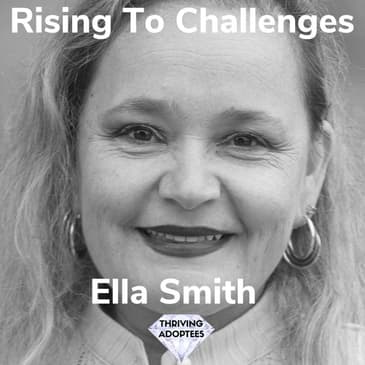
Adoption can present us with many challenges. But how do we rise to those challenges? Listen in as Ella shares insights on dealing with the unexpected, coming from love and much more...
Ella Smith is Executive Director for Adoption Choices. Originally from Colombia, Ella moved to the USA 23 years ago to the DFW area where she has strong connections and friendships. Married to a loving husband for 25 years, they have two grown children: Christian who is a soccer coach, and David who is a pilot like his father.
Ella has an extensive background working with children and families since 2008, for the last 8 years her experience has been in the adoption field, Ella is a dedicated professional with a proven track record in facilitating international adoptions and nurturing positive family relationships. Experienced in navigating complex legal and cultural landscapes to ensure successful adoptions and compliance with country accreditations. Skilled in building rapport with diverse stakeholders, including service providers, adoptive parents, single parents of either gender, LGBTQ+ parents, birth parents and government agencies. Strong understanding of the adoption regulations and protocols. Committed to upholding the highest standards of ethics and professionalism in all endeavors. Ella is dedicated to ensuring that all children find loving and caring homes.
Ella holds a degree in social communication and journalism from Colombia and a master’s degree in marketing management. Now residing in the DFW area, she is passionate about advocating for children’s rights to be loved, valued, and respected.
Ella is excited to be part of Adoption Choices of Texas and to meet all the bravest and selfless parents who wants to create a better future for their child.
In her free time Ella enjoys traveling to her beloved Colombia, spend time with her diverse group of friends, and watching tv at home. Ella also has a service dog named Stella.
https://www.adoptionchoicesoftexas.org/
https://www.facebook.com/AdoptionChoicesOfTexas/
Guests and the host are not (unless mentioned) licensed pscyho-therapists and speak from their own opinion only. Seek qualified advice if you need help.
Want to learn more about thriving for you, your kids, your families or your colleagues? Pick a time to talk here
[00:00:01] Hello everybody, welcome to another episode of the Thriving Adoptees podcast. Today I'm delighted to be joined by Ella, Ella Smith from Adoption Choices of Texas. Really looking forward to our conversation Ella. You really put a smile on my face every time we talk. Ella Smith You're so sweet. Thank you. Thank you for having me. Thank you for allowing me to share a little bit of what we do and my passion for adoption.
[00:00:30] Ella Smith Yeah. Because you've got a big heart for this. Ella Smith I do. I do. I have learned and grow so much into this side of the adoption world and I love it. It's just being there supporting and it's a privilege for sure. Ella Smith Yeah. We're so lucky to be doing what we're so passionate about.
[00:00:58] Ella Smith You know what? Working in adoption is a privilege, like I just said, because you have the opportunity to work with expectant parents, with adoptive families, even with children who are in the system and they are just looking for someone who loves them.
[00:01:23] Ella Smith What it keeps me passionate about this is, it's all about relationships. Ella Smith I just love it. It's just you meet so many people and I'm definitely a people person.
[00:01:37] Ella Smith So I love to get inside of those relationships, realize that every story is completely unique. There is no two adoptions like the same. You know, everybody has their own story. They have their own life and paths during this process.
[00:02:06] Ella Smith So it's, it's, it's, it's a passion for me. And, and I always wanted to work in an environment where I can be helpful. Ella Smith And it's that it's also a world that is important that everybody knows about it. It's just, it's so important. And I want to be an advocate for everybody to learn more about it.
[00:02:36] Ella Smith So that's, that's why my passion is there. Ella Smith Yeah. And you live and breathe it, Ella. Ella Smith Completely. I mean, adoption is in, in my everyday, in my everyday. Ella Smith Yeah. So this thriving, this thriving question, this thriving thing, if it's a thing, right? What does, what does thriving mean to you, Ella?
[00:03:03] Ella Smith I think thriving has to do a lot with resilience. I like to, to look at it, like, where you thrive the most, where you do your best, is when you are faced with things that you are not expecting. Ella Smith So you're, everybody's resilient.
[00:03:32] Ella Smith Some others, more resilient, but I believe everybody's resilient. Ella Smith So everybody has the ability to thrive in different environments, to do their best, to succeed in whatever they want to succeed. Ella Smith So thriving is, show me your best. That's how I look at it.
[00:04:00] Ella Smith Yeah. So what, what's the difference that makes the difference then you, if we're different levels? You're saying that different people have different levels of resilience, right? Ella Smith What do you think is the, the difference that makes the difference in somebody who's resilience? Ella Smith I think resilience, like I told you, everybody has resilience.
[00:04:23] Ella Smith My personal opinion is that some people are being faced with more opportunities to be resilient than others. Ella Smith Some people are going through life, facing more challenges than others.
[00:04:44] Ella Smith Everybody has challenges. Let's start with that. Everybody has challenges. But no everybody faces them on the same way. But everybody has resilience. Everybody is just how many times you have been facing with challenges. Ella Smith Yeah.
[00:05:04] Ella Smith So emotional, financially, psychological, I mean, all kinds of challenges. So every time that you're faced with a challenge, it's every opportunity to show how thriving you can be and how resilient you can be. Ella Smith So are you saying the more opportunities we have to, to show it, the more we become? Ella Smith Yes.
[00:05:33] Ella Smith I think so. I think so. I mean, is resilience is, is something that you definitely develop every time you have a challenge. I mean, you learn from your mistakes, you, every time that you have a conversation, conversations like this.
[00:05:53] Ella Smith It gives you the tools to say, hey, you know what, maybe just little, that little part that she says about everybody is resilient. It resonates with me. So every time I am faced with a challenge, I'm going to use my thriving. I'm going to use my, all my best. Yeah. Ella Smith Yeah. Ella Smith To become more resilient.
[00:06:17] Ella Smith So one of my kind of things I see about resilience is, or my view of resilience is that it's something that it's something that's seen rather than strengthened. Do you see what you mean? Ella Smith I don't think so. I think resilience for me, it's very positive in a way that it makes you grow.
[00:06:46] Ella Smith Yeah. I'm not sure. I think for me, it's, of course, it can be both. Ella Smith Yeah, yeah, yeah, yeah. Of course, of course. Ella Smith And I'm maybe being splitting hairs here, right? Ella Smith No, no, no, by all means. Ella Smith I used to think it was like going to the gym. Ella Smith Okay.
[00:07:13] Ella Smith And you get stronger, right? But now I think that it's actually something that we see. So we don't appreciate our own resilience. And until we're faced with that challenge. And then we see, we see the resilience, rather than it being strengthened. It's strengthened by being seen, not strengthened over time.
[00:07:40] Ella Smith So for me, why that's important for me is because there's no delay in it. So you've got to go to the gym. If I want to bench press, whatever. Ella Smith Okay, okay. Ella Smith If I can only bench press, I can't do any bench pressing at all. I am a swimmer, not a gymmer. But anyway. Ella Smith Yeah, yeah, yeah.
[00:08:01] Ella Smith I need to build my way up. Yes, our goddaughter, right? Our goddaughter is a Paralympian, right? So she's going for 120 kilos, which is what, like 240 pounds, right? She's working her way up to that. And that takes time for that strength to build.
[00:08:25] Ella Smith That's physical resilience, but a physical strength. But emotional strength is more like we, I think it's something that we, we don't appreciate that we've got it. And then we, we see it, like, you know.
[00:08:41] Ella Smith Okay, I know where you're going. But for me, resilience is, is your ability, your own ability to recover, to adapt, to bounce back. I like that. To bounce back from adversity or for, I don't know, hardship.
[00:09:11] Ella Smith Yeah.
[00:09:41] Ella Smith Yeah. So you have to continue functioning. Ella Smith Yeah. So rather than me taking us down a philosophical and theoretical route on resilience, why don't I bring it back up to the top and say, where, where in your life have you seen or strengthened your resilience? What's been there? Have there been any defining moments for you in terms of you?
[00:10:11] Ella Smith Are you seeing your resilience? Ella Smith Are we talking professionally or personally? Because I have all kinds of examples. Ella Smith Okay. Ella Smith I think professionally, in the adoption world, that is the one that we are here. I mean, I will say one of the biggest cases, and I'm not going to talk in a specific one. Ella Smith Yeah. Ella Smith Yeah.
[00:10:38] Ella Smith Every time that we have a disrupted adoptions, you have to adapt, you have to analyze what is going on, and keep providing an ethical, transparent, and always thinking on the child-centered.
[00:11:33] Ella Smith Ella Smith And change and be quick and find another placement for that child, because it's our best interest. So you learn. You learn from that experience, and that makes you more resilient. And you just keep growing. I will say that that is the biggest resilience moment is every time we have a disruption. Ella Smith Yeah.
[00:12:03] Ella Smith Yeah. Because it must be an emotional time. Ella Smith It is. For everybody, all parts involved. I mean, it is. And that's why I think there is a lot of misconceptions about adoption, because of the disruptions. You hear more about what is not good in adoption, other than what is the best about adoption. Ella Smith Yeah. Ella Smith Yeah.
[00:12:33] Ella Smith Yeah. So that's when I feel that we are always trying to educate people. Like, Ella Smith Yeah. Ella Smith Yeah. This happens. That's normal. But we're resilient. Let's move on. I'm not going to use the word anymore. But we thrive. We thrive under these circumstances, and we find solutions.
[00:12:55] Ella Smith Yeah. What have you learned about stopping those disruptions happening in future? Or a disruption happening?
[00:13:10] Ella Smith You know what? I think one of the biggest lessons in adoptions is that their adoption is not a single event. I think adoption is a lifelong journey.
[00:13:27] Ella Smith So one of the things that we learn is to learn, we create a rapport with the expectant parents. We get to know them. We know what they are looking for in terms of taking care of their child. We create really good relationships with adoptive families.
[00:13:56] Ella Smith So in the moment that we have a match, we know it's going to be a lifelong journey. And it's going to be a lifelong relationship. Life-long relationship.
[00:14:10] Ella Smith The experience of doing a match and finding that perfect place for that child is incredible. So you have to make sure that you're doing your best to prevent a disruption. So you try to cover all of your bases.
[00:14:38] Ella Smith So we have kind of, I don't want to say a checklist. I don't want to say a checklist, because it's not a checklist. Again, everything is unique. But we try to make sure that we are placing children in families that first want to have a child. And second, that is going to provide a loving care, loving home for that child.
[00:15:04] Ella Smith So are you saying that you're trying to find the matching of parents and children? Ella Smith Correct. Ella Smith You're always working on that, because that's going to be the best way to stop future Ella Smith Future. Ella Smith Future disruption.
[00:15:30] Ella Smith Unfortunately, it is not a perfect system. Unfortunately, this is nobody has the perfect solution, the antidote, if I may, to prevent disruptions. Disruptions are going to happen for many reasons. But we want to make sure that our space is going to be the best way to stop.
[00:16:20] Ella Smith is so important it's so important you become i mean you know i'm hispanic so i i call all every single placement that they are my nephews or nieces so i'm tila for so many people and tila and and just i just love to have that feeling of we are all yeah in together yeah and and you mean
[00:16:50] anti-ella right yeah yeah tia in spanish is anti yeah okay yeah yeah yeah um so one of the things that we i i hear from other professionals is that sometimes uh there's uh adopted parents
[00:17:13] uh how should we say they they they put they sometimes put off searching for help until they're at crisis point many times many times i go ahead i'm sorry why why do you think that is i think it's a lack of education if we are able to train
[00:17:39] our adoptive families from the beginning from the day that they call the agency saying i want to adopt from that moment there has to be clear ethical transparent conversations with them
[00:18:01] explaining what is adoption what are the steps what are you going to be facing what are the challenges of an adoption and every single agency should provide the resources of counseling
[00:18:26] and during not after you have been placed it's prior to placement there has to be trainings they have to be access to a knowledge books people who have read books a conferences a webinars all kind of information i mean educate yourself because this journey
[00:18:54] is going to be a roller coaster so you are going to be super super highs and you are going to be in the very very lows when you are in the lows is when you are going to need the most support because obviously when you're in the highs you're in the happiest i mean but when you're in the lows is when you are starting looking for help don't wait until you are in the bottom when you start feeling down
[00:19:21] start contacting your agency contact your counselors and school counselors a your personal therapist people who actually understand a little bit about adoption because there's a few elements that are different from the regular i adopt a biological to put in some words
[00:19:45] so i think the best way that we can do is educate from the beginning it's just i'm a big advocate for education i want to switch tack slightly because you you talked about your own learning and growth in the
[00:20:07] first couple of minutes of the conversation so what what have you learned about yourself in in your in terms of your own development in in this in this passionate career that you've found what what
[00:20:26] adoption has brought me what has taught me is that everything that has to be with children and family has to be a priority i'm i'm a big advocate for family unions for for children a well-being i
[00:20:49] i the experience that this world has brought me is the learning i'm sorry that this world has brought me is how much love people have in their hearts i mean everybody who thinks about adoption
[00:21:13] who not from the expected parents are from the adopted parents everything is motivated by love the love for your child the love to have a family and i have learned that the best outcomes
[00:21:35] they come from the adoptions where everybody is involved with everybody is in the process with honesty with respect and open to learn i mean this we know a lot about adoption but
[00:22:02] we we need to learn more and i have grown as a person tremendously i learned that this is not a job to make you rich for sure but the richness that you get on the personal satisfaction of being
[00:22:23] children graduating from from high school i mean to be invited to christenings or to bar mitzvah or i mean it's amazing to see children thrive i mean you just bring into your home this little child and
[00:22:46] you graduate him and you put them it's it's just amazing so you're talking about two i think you're talking about two two things here you're talking about love and education as the kind of the key drivers of thriving yeah is that how you would you you would yeah absolutely yeah um because
[00:23:11] one of the things that people say is that uh love isn't enough right and when i hear that i think yeah you might be right but i i wouldn't be i wouldn't be dissing i wouldn't be dissing love right uh that's not correct if love is what it's all about you don't say love isn't enough it would be
[00:23:35] more like well no it's about love and education um rather than kind of denigrating love i mean it seems a bit it would it seems a bit of a funny thing to just to do to me you know what yeah i know and i respect people saying love is not enough a love is enough when you have additional a resources
[00:24:02] handed and you have passion you are educated you are a you just want to do good i mean love for me love is enough and and it should be enough because you you are taking this trip i mean love is the motivation
[00:24:27] you want someone to love you want someone to love your child so for me love is enough yeah but love's gonna drive love's gonna drive the education right you're coming it's the base it's the base on everything it's the it's the basis for everything it's the it's the fundamental part of everything it's the fundamental of course you have to put more ingredients i mean you cannot do a soup with water yeah it's the basic
[00:24:55] ingredient but you need to put more into that soup to just to talk for analogy but yeah love is the main ingredient but you have to put more things inside okay so so education is going to be one of the ingredients in this in this in this love soup the salt and the salt yeah yeah yeah and what else what else
[00:25:18] goes well i think compassion i think um compassion is something openness yeah mercy and um i don't know i'm i'm getting out of words but uh let's go back to compassion what so give me an
[00:25:48] example of compassionate or a moment understand understand the background of the i'm talking about about adoptive parents being compassionate towards the history of the child that they're adopting yeah even if it's a baby if it's a baby it's a toddler it's a teenager and they come with a history and you
[00:26:16] have to be compassionate about that history and acknowledge acknowledge their history and be willing to support and respect that what about compassion for the birth parents oh 100 they have to give themselves come they have to be compassionate to them because they are making a very important decision
[00:26:43] they are making a lifelong decision and they need a lot of compassion towards themselves to understand the reason why they're doing this this process why they are placing their children for adoption and that's bravery too you know it comes hand to hand with a compassion to understand
[00:27:10] your own story and why you are deciding to do this path that's my compassion yeah okay and mercy what what do you mean by mercy it's just it's love it's it's understand
[00:27:34] and in a way not being judgmental you know in mercy everybody has to be merciful and every everybody needs to understand that some of those decisions in adoption are being
[00:28:03] a decision there are decisions that they are done while people are in distress and when they are going through hard times so you just you just need to be compassionate mercy and compassionate is like the same word almost yeah it's like mercy is like the treatment of being compassionate i don't know i'm just
[00:28:31] confused now but yes it's very i think compassion is probably what's going on within us perhaps and perhaps mercy is is is is the external it's what's what's what's visible from the outside so it's more about what we do right so compassion is compassion is uh if i you know it's feeling with right so
[00:28:59] it's it's understanding somebody's uh understanding somebody's emotions you know understanding the birth moms particularly her her emotions right and um and maybe mercy is what we show what what we show to the to the birth mother that's yeah that's the that's the external manifestation manifestation perhaps perhaps it's the manifestation of what's going on inside and it perhaps it's about our
[00:29:28] our our our treatment uh and and and and our behavior and our actions completely i agree thank you simon to clarify that for me because it is definitely it was in my head but it was i didn't know how to to express you know like to come out it it's uh like english is a second language
[00:29:54] it is it is indeed for you um uh listeners we we we had a when ella and i spoke last time we had a long dive into her language lessons and uh all that sort of stuff so she came to the uk to learn her and to learn her english or to fine-tune her your english here um so yeah and and to be honest i
[00:30:18] have i think if somebody put those two words together for me i i would be hard pressed to to figure it to to to figure out what's the difference between the two but the kind of it's it's what comes in the moment right the the solution comes in the moment the wisdom comes in the in in the in the moment so um
[00:30:41] um yeah and we might say merciful as well yeah full of compassion full of compassion full of full of compassion and and and and and mercy full and that's going to be really important for the not only for the relationship with the birth mum or birth dad or both but it's also going to be really
[00:31:07] important for the adoptee because they're they're going to see how we treat how we how we think about how we speak about about the birth parents and how we act to the in front of to the birth parents
[00:31:29] um and there's the there's you know one of the things that comes keeps on coming back time and time again during these interviews is that if uh if we criticize or judge to use your word if we if we judge the birth parents then uh the the the adopted child may will pick up on that judgment and
[00:31:59] may feel marred by the same judgment uh implicated may feel implicated by that same yeah i i agree that's why i like open adoptions too so when the child has the opportunity to know more about their birth parents
[00:32:22] and their his his or her own history and if this child has the opportunity to know more about um why the reasons behind it helps for that child to grow with less resentment
[00:32:46] more understanding because at the end of the story nobody's giving up on him because adoption is not giving up no it's it's giving a present actually it's not giving up and there's the more openness there is the less questions that are and the less the
[00:33:09] the less insecurity there that there is and the less shame around it and less stigma we talked about that last time is it's just i think the openness and transparency um is very valuable and now nowadays yeah
[00:33:35] is i mean i remember when i was a child and my my brothers used to joke with me telling me that i was adopted and because i'm the one who looks completely different to them they are very they are their features are very similar to my mom i'm not i'm completely different so they used to tell me i
[00:34:03] was adopted and and i believed it of course i was a child i was very young and i remember that one day i asked my mom if that was true there was no pictures of me of my mom pregnant i mean it was so many things obviously i'm the third one by the third child there's no pictures there's nothing it's like
[00:34:27] and my mom was like why would you believe that i mean we even if you were you are part of this family there's not anything wrong if you were adopted she always tried to teach me you belong here regardless of how you came to this home obviously then i find out i was not adopted growing up but i was like
[00:34:57] why my my brothers will joke about it because on that time and i'm talking 50 years ago it it was like a stigma i mean you're adopted you are not loved you now nowadays i see kids proudly saying
[00:35:22] i'm adopted so i i just love that you know i just want to share something i uh from a podcast i released last week a young chap called uh isaac melba yeah um from who was adopted from africa at five
[00:35:42] and um he the the the and he had some concerns obviously uh he had some concerns uh uh growing up uh uh the the the the the most one of the most transformational moments for him is when he went public about his story okay he was sick of getting the questions right each school year
[00:36:12] he was sick of getting the the the questions so he just told everybody the true story like when he got and i'm not sure how well maybe it was when he was 16 perhaps i know one year in the first few days of of uh the school the school year in september he just said i just told all the truth and told talked about the the death of his parents uh and him being in an orphanage and then him being adopted to
[00:36:42] to the states and the the the teacher ran the teacher ran um isaac's mum said is this all true he's told us all this and yeah yeah yeah that's true but it it was like the a whole load of weight lifted off
[00:37:05] his yeah it's freedom it's freedom it's freedom freedom with sharing sharing the the sharing the story and and it's the opposite freedom and openness it's all together right exactly exactly i mean why i mean i don't have to be walking my and telling everybody i'm a biological child i mean i don't present
[00:37:30] myself like hi nice to meet you i'm a biological no you know why i have to go through the true life hi i'm adopted no absolutely not i mean it's just it's so weird it's i i think we we need to to be open and
[00:37:51] transparent and and just learn that adoption is part of life i mean and just learn learn how how why happen and they're like you just said so perfectly it's less questions no yeah i just think it's it's healthy and i think it's appropriate for this time
[00:38:20] indeed it feels like we're coming up on time here ella um is there anything that i've not asked you about that you'd like to share i think um i would like to close with what people think about adoption there are misconceptions and i just want to say that
[00:38:47] a lot of people think that adoption ends when there's a placement and in reality adoption creates a lifelong i have used that word a lot today yeah lifelong connection
[00:39:12] and it's just embrace that connections with people and learn about their stories and in adoption you leave all kind of emotions you
[00:39:33] you you can experience gratitude you experience loss grief love back to love curiosity um and joy and all of them can be at the same time one does not take the other away so i think that's
[00:40:01] it's a great question indeed and the i just want to pick up gratitude yeah these can be experienced okay but here's here's one tip for you if you're a list if you're an adopted parent listening right do not expect gratitude from your child because that is um spontaneous gratitude from within is great but forced forced or expected gratitude from from without without drives adoptees
[00:40:30] and i'm just gonna be honest with you i'm just gonna be honest with you i'm just gonna be honest for those for those listening yeah yeah yeah do not expect gratitude because that will drive your or could drive your your your your your child or teen nuts adoptees absolutely hate it they hate being that gratitude should be expected of them spontaneous from gratitude from within fantastic
[00:40:58] for the outside do not do it but you know why you should not expect gratitude because you're not doing you are not doing things and even when you have biological children you're not expecting them to be a grateful older i mean like thank you for everything if gratitude is not something that is forced
[00:41:19] it's it's it's not mandatory not even with adoptive children with your own children biological nothing i mean you if you get receive gratitude good for you woohoo but don't expect it ever just make sure that they are successful and they're thriving yeah and if they are thriving out of these they're doing great
[00:41:49] thank you ellen thank you ellen thank you listeners we'll speak to you again very soon okay bye