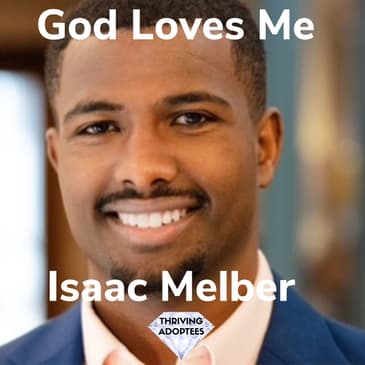
Our most profound learnings often come from the toughest moments. Born in Ethiopia, adopted by an American family at 5, Isaac shares his most transformative learnings. Inspirational!
Born in Ethiopia, Isaac spent time in an orphanage following the tragic loss of both parents. He was adopted at age 5 by an American family and made a profession of faith at age 7.
Here's a bit about Isaac from his website
One of the most profound lessons I’ve learned through my adoption journey is that my view of God shapes everything about my identity. I came to realize that who I am flows out of who I believe God to be—not the other way around. This struggle isn’t unique to adoptees or foster kids; it’s something every person wrestles with at some level. People often ask how I navigate my so-called identity issue—what it’s like to be a Black man raised by white parents, and how that dynamic shapes my sense of belonging.
I tell them that at its core, this isn’t really an identity issue—it’s a theological one..
https://www.instagram.com/isaacmelber/reels/
https://www.amazon.com/Twice-Delivered-Families-Worlds-Redeeming/dp/B0H2HH6785
Here's the interview with Isaac's dad David https://thriving-adoptees.simplecast.com/episodes/slowing-down-with-david-melber
Guests and the host are not (unless mentioned) licensed pscyho-therapists and speak from their own opinion only. Seek qualified advice if you need help.
Want to learn more about thriving for you, your kids, your families or your colleagues? Pick a time to talk here
[00:00:02] Hello everybody, welcome to another episode of the Thriving Adoptees podcast. Today I'm delighted to be joined by Isaac Melber, looking forward to our conversation today, Isaac. Simon, I'm so excited. So listeners, we're recording this on the Saturday 23rd of May and it's the day that Isaac has actually released his book out into the world. So well done my friend, well done. Yeah, yeah, definitely exciting. So I pray that it's increased many.
[00:00:32] Yeah. You're just a youngster still right to write a book? Yes. Yeah, I'm 20 years old. 20 years old. In college. In college. So people who are eagle eyed or eagle eared listeners may remember I interviewed Isaac's dad a while back, David. So there'll be a link in the show notes to his interview.
[00:00:59] And we'll just dive in with Isaac. So I'm going to start slightly differently, right? So what's the biggest thing or the biggest things that you've discovered about thriving by writing your book, Isaac? Man, you know, the idea of thriving. I mean, obviously, when you think the idea of thriving, it comes in, it kind of comes in waves that I'm making.
[00:01:29] I mean, sometimes you feel like everything's going well and then other times you're thinking, man, what's going on with life? And, you know, as I wrote this book and as I kind of thought through the process, I wanted to highlight just mile markers in my life. I mean, mile markers that where, you know, things are great and then things just might be kind of questioning. And, you know, I think as I got older, especially when I came, I came to America at the age of five.
[00:01:54] So young, young age could still remember things. And, you know, at a young age when you can remember things, the idea of thriving kind of used kind of question. I mean, this is just not the way that I want life to be. And, you know, as I wrote, like I said, I try to have mile markers that share, hey, this is a monumental moment. And so I think I believe that, you know, there's seasons of thriving. But, you know, in our world, in our time, in our life, it just seems like all we want to do is thrive.
[00:02:22] And when something kind of doesn't go our way, we want to just ponder on it and just forget about it. And I think a lot of, you know, a lot of this book, a lot of this writing is to show the fact that, you know, one hard moment does not define your, you know, your thriving, that you can continue to thrive. It's not just a momentary thing. Yeah. So, listeners, just in case you don't know, right, Isaac was actually born in Ethiopia and you lost your parents within the first couple of years of life.
[00:02:50] And then you were in an orphanage, right? I was an orphanage. Yes. For about a year. Yeah. One hard moment, you know, there must have been lots of hard moments as a kid. Yes. There were. So young. Mm-hmm. Yep. I still can remember a decent amount of it.
[00:03:11] But, I mean, there's, you know, a lot of times when it comes to, you know, hard moments, for some reason in life, we want to remember the hard moments more than the happy ones. But obviously living in an orphanage and kind of being in a place where, you know, kids aren't supposed to be, you always remember more.
[00:03:31] And, you know, when I share my story, I don't want to be the type of person that's always kind of, you know, down and thinking, you know, I just went through a hard time and kind of down on my story because I always believe that there's always good. But, you know, with a hard beginning, there are hard moments and hard things that you just don't want to remember. And, you know, in life, in life, you know, I want to be someone who's positive. And, you know, I think at the beginning I wanted to remember my story as sad. But the more I thought about it, there's happiness to it.
[00:04:00] But, you know, moments like, you know, in an orphanage, you know, you get to see things that you don't want to see. I mean, you have kids who are, you know, 18 and then newborns, you know, and I'm with 13, 14 year olds doing 13, 14 year old things. I'm five years old. I'm looking at these things. I'm thinking, first of all, I probably shouldn't see this. I probably shouldn't do this. But I'm put in a situation where where else could I be? I'm in an orphanage with a bunch of kids. And, you know, I like to share this story of when I first encountered a needle, which is kind of funny.
[00:04:30] A needle is something I've never seen. And I thought it was terrible, but it was a vaccination, you know. And moments like that kind of made me realize, you know, I got a little shot. I ran around. My friends went crazy. It's a hard moment. It's traumatic. Like, for example, I, you know, I don't like getting shots now, you know. I just, every time someone does a shot, I always want to look at it to make sure that, you know, it went in and I'm safe and everything. But there are moments like that. And then just kind of physical stuff as well.
[00:04:57] I mean, you know, when it comes to, I don't know how to say, discipline. My way of, you know, someone loving me in the orphanage is a little different than I am now with my parents where, you know, I don't have any connection with these people. I'm staying here for a little while. I don't know them very well. And they're disciplining me. And that just kind of always went in my mind.
[00:05:18] And I remember when my dad went on the podcast about a year back, actually, he said, you know, we had to discipline our kids in a different way because there are things that are hard, paths that are hard. And, you know, and, you know, obviously it's a hard moment. But I think as a Christian, I like to think that God used it for a very good, good reason. So, yeah. Because there were times that you didn't want to be in the States, right? You wanted to be back in Ethiopia. And it was more than just times. It was like a period of your life, right?
[00:05:48] If I remember rightly from a conversation a couple of months back. Yes. Yeah. Yes. I mean, at the beginning, I mean, I always tell people, I mean, I'm a five-year-old going from people that look like me, that spoke my language, and then to a place where everyone's in America, a lot of people are white. You know, you see all these cultures kind of mixed together. And when I first came home, when you don't know your story and, you know, the things that happened, you just think, maybe I wanted to go back. You know, and I thought, I want to go back over and over.
[00:06:18] And I kind of neglected my parents' love in many ways. But they kept loving me, you know? And that changed forever. And, you know, for the first, I'll say, two, three years, I just thought, what could have been? What could have been? I could be playing soccer with my best friend, my friends that I actually went to the orphanage with. They lived in my village. I could be back with them. And I could be with my uncle, my aunt, my sister that was alive at the time. And I just kind of lived in the past. And that just pushed me back a lot.
[00:06:47] So when you ask the thriving question, a lot of times when you want to thrive, you must move on. I mean, you must move on from these things. Don't forget them. But you must grow from them. Yeah. Do you remember the moment when you realized you didn't want to go back? You know, there's a story that I share with people oftentimes about my dad. And I remember this moment because it changed my perspective of his love for me forever.
[00:07:15] And as a Christian, I believe it points to the love that God the Father has for me. So, you know, oftentimes when, you know, let's say that I didn't want to go to sleep when I was told to. I'd be angry. And my dad said, hey, Isaac, go inside. I didn't want to. And oftentimes I thought he didn't like me. So if you remember my past, my trauma, the things that I've seen were when someone was disapproving of me, that means they don't like me. And in a lot of ways, I thought that's what my dad did. But he didn't. He loved me. He said, hey, it's raining outside. Go inside.
[00:07:45] You know, stuff like that. But I remember this one time my dad would oftentimes say, Isaac, you need to come out of your bed. So oftentimes I would hide under my bed. So my way of pushing back was hiding under beds, being silent, not talking to anybody, just leaving, being left to myself. But this one day my dad would, he came to my room. I would hide under this bed. I mean, this bed was really tiny. I mean, my dad is six foot, six one.
[00:08:15] And, you know, it would be weird for a grown man to bend down and grab his kid. And in that moment, I thought he's not going to come and get me. He's not going to come and get me. I'm thinking he just, he won't do it. And he said, Isaac, come out. And oftentimes I share that he would use humor. He said, hey, I'll make you a cheeseburger. I'll make you this. I'll do that to kind of bribe me. But it wasn't working. But this one moment he, he bent down. He looked at me. He said, hey, Isaac, come out. I said, no.
[00:08:44] And then he said one more time. I said, no. And then he did the craziest thing. This grown man got on his knees, picked me up. He grabbed me tightly. Remember that the ground scratchy. I mean, everything's scratchy. I mean, he's going to, he had shorts on. He scratched up. But yet he went and grabbed his son and he grabbed me tightly. And in that moment, I stopped squirming. I stopped kicking. I stopped crying. And I realized that my dad loves me.
[00:09:10] And in that moment, I thought, man, I'm loved by my family. And most importantly, my dad always pointed to me that I was loved by God. And that was when I felt secure. And then the day I became a Christian, that was kind of a catalyst. It was a catalyst to me becoming a Christian. And then, you know, a few, maybe a year or so later, I became a Christian and changed my perspective on everything. So that's just kind of a defining moment. Yeah. Yeah.
[00:09:36] One of the things that you said is that it changed, that moment changed your perspective. Mm-hmm. And for me, insights, right? Epiphany moments, to use a religious word. Right. It's they change our perspective. They change our perspective. We don't change the perspective.
[00:10:06] The change is done. It's not done by us. Mm-mm. It's not done by us. We don't make it happen. You know, you didn't write in your school book or whatever or on the back of your sneakers box, you know, I must love my family. Yeah. Mm-mm. It just happened.
[00:10:31] The perspective change happened for you, kind of, almost despite you. It was, indeed. I tried to push back as much as I could. And, you know, I always, I shared this with my parents. I told them, hey, I remember when I first came home, it's like my mind wanted to, you know, I knew I was in a good situation. You know, sometimes when you knew something was great, but you didn't want to accept it. And I didn't want to accept it.
[00:11:01] I mean, anytime I'll be really happy, when I let people see me happy, I go right back to, you know, being, oh, man, I don't want to be here. You know? So it was just constantly to feel like, to feel an idea that, oh, this is great. But guess what happened to me? You know? And like you said, it's right. All this happened kind of despite my, you know, my lack and desire of things to go well. Yeah.
[00:11:27] It's very big for me is this, because this, you know, we hear a lot of talk about kind of mindset and mindset shifts, but we don't make those mindset shifts happen. They happen despite us. We can't kind of make them happen. It's very important. It's when we kind of like, when we see a new truth. Mm-hmm.
[00:11:59] And I really don't know why it's such a big deal for me with this, but it seems pretty big somehow that we've kind of, because the implications, I think, is we've got to put ourselves in insights way. Mm-hmm. We can't make the shift happen. The shift happens.
[00:12:29] I heard, I can't remember the exact word. So I'll shift on that. I had another question that came to me, because when we talked last time, you shared that when you were young, you were a keen wrestler, and then you had this bad, was it broken arm or something? Yeah, broken arm. The own and the radius. Yeah. And that led you to some big shifts.
[00:12:59] Mm-hmm. Can you talk a little bit more about that? Yeah. So I, you know, I think our past and our stories, they prepare us for moments that are hard. I mean, you know, that moment that I broke my arm, I mean, I thought life was going great. Yet again, the idea of thriving, it's not just a moment. It's a continual thriving, where it's a mindset where you continually have to think, hey,
[00:13:28] look, this is my definition of success. This is my definition of thriving. And in my mind, in that moment when I broke my arm, I had plans. I mean, I wanted to wrestle in college. I wanted to be a college wrestler. You know, I had so many ideas and plans going. I obviously wanted to win a state tournament. I mean, my team was really good. Individually, I did, I was a pretty good wrestler as well. And I just wanted that to happen. But just in that moment, my mind was, everything was done.
[00:13:57] I mean, it's no different than Kobe Bryant, the basketball player, breaking his leg. And after he broke his leg, he just wasn't the same. I mean, it's hard. And in that moment, I just thought my success is done. My career is done. But in that moment, it reminded me that I have something greater, which is God. Which God is the one that led me to the situation. And he allowed this to happen.
[00:14:25] But I can either live in pity, self-pity, or live in the idea that I love to say that we live in a story, a bigger story than the moment that we are right there. In that moment, I went to a school called Carson University. I, you know, instead of wrestling, I went there. And now I am there right now preparing for a pastoral ministry, preparing to make God known. And that moment that might have been tragic, it changed my perspective on life.
[00:14:54] It changed my direction as well. And I can't thank God more. I'm going to be honest. Do I want a broken arm? No. Does it still hurt right now? Yes. But, you know, I believe in a God, you know, often uses our pains and our past for greater purposes. So. So it gives you a choice then, really. Mm-hmm.
[00:15:15] One of the things I've been talking about quite a lot is a foster mum laying out a choice to older kids, teenage kids that she was fostering and saying to them, like, I'm not denying your trauma. Mm-hmm. I've had my own trauma too.
[00:15:46] But you've got a choice. You can succumb to the trauma. Mm-hmm. Or you can rise above it. That's it. Indeed. And whenever I find myself, whenever I share that bit of story, I, I, I, I, I see the choice. Mm-hmm.
[00:16:11] And I, I also think what would happen if, if I did, if, if I said some, if I went into an adoptee Facebook group. Mm-hmm. And, and, and said that, that, that, that we have a choice. Yeah. Right. You, you, listeners, you can't see, you can't see Isaac's face. Right. But he, yeah, there was a kind of like, what? What, what is this thing about? What, what is this thing about choice?
[00:16:41] Why is it? It, like, it, it's so, it's so big. Mm-hmm. And yet we push back against it. I mean, we fight against it. We argue against it. We, we argue for our trauma. Mm-hmm. We blame it. We see our victimhood in that. Mm-hmm.
[00:17:09] And nobody would do that on purpose, right? Yeah. Just have this. So where does the choice come from? How do we see the choice? Well, I, like you said, you know, the idea that you, you, you need to realize there is a choice, you know? I mean, without realizing that, you know, I can go right or I can go left, it's really hard to pick.
[00:17:36] And, you know, a lot of my message, the things that I want to share with people is that, you know, we're not victims, but we're victors, you know? A victim mentality leads to self-pity. It leads to just, you know, kind of woes me. And when people realize, someone has to tell them, you know? I mean, in my life, someone had to tell me that I can live a victorious life. I mean, especially as a, as a young kid, someone had to tell me.
[00:18:05] And my mom told me, and my dad told me, he said, hey, Isaac, you can live a victorious life. And it's an, it's a choice. And that choice is there for all of us. I mean, all of us have the opportunity to figure out what we want to do. And, you know, oftentimes we don't, we don't get into situations by accident. We do it by a purpose, you know? And in my life, I'm in this mindset because my parents at a young age told me, Isaac, you
[00:18:34] have, you can hold your own destiny. You can choose to do things because obviously our, our, you know, our, the things we do have consequences. That's why, hey, don't do this. Don't do that. But when you have, when you realize you have a choice, you can hold on. And especially as someone who is, I was adopted and many of those who are adopted and kind of the foster care system. When you realize that you have a choice in life, it changes everything.
[00:19:02] But not all of us here, we're told that we've got a choice, but not all of us here. There's a big difference between what somebody says and what lands within us. So what's the, what's the difference that makes the difference? Whether we, whether we hear the message or we, or we don't. Oftentimes people, they just shut it down.
[00:19:32] I mean, you know, years of, I mean, years of kind of shutting it down over and over, you become numb to it. That makes sense. I mean, as, as human beings, we often become bitter and I believe bitterness is the beginning of not hearing. I mean, I can be talking to you right now, but if I'm, if I'm not intent, being intense, intentional of what you're saying, then is it going to matter?
[00:20:00] No different than a high school or in school listening to a teacher and, you know, they can hear, you know, in a class, they can hear so many other things. The person on the right hears, you know, X equals Z. The other one person hears the opposite. And it's usually the one who's listening. And oftentimes bitterness starts and it builds up. Our hearts get hardened and it shuts down the things that are good. Yeah.
[00:20:29] And oftentimes for adoptees and people, they, it just years and years of just pushing it down. No, no different than when I was younger. Often, oftentimes I like to hold my emotions down. When I was six years old, I held my emotions down, but when I let it out, I let things out and it just builds up. Yeah. But the sad part is that, you know, a, a, a kid, let's say two kids are in two, two families where mom and dad are saying, Hey, you have a choice. You have a choice.
[00:20:58] Well, then why does one live in a victorious manner? And why does one live in a victim mentality manner? And that's, I believe it's a mystery. Oftentimes it is, it's definitely a mystery. Uh, but the oftentimes kids and people, they're not told they have a choice that indirectly, not personally. I hear this big, you know, dream big. It's like in America. I mean, America, you dream big, do all this, but those who grab onto it are the ones that have been intentionally, uh, mentored by somebody.
[00:21:29] Yeah. I'm going to take a guess here that you didn't believe when the first time that your mom or dad said that you've got a choice, I'm going to take a guess that you didn't believe them. But I mean, this is going back a long time, right? So yeah. No, I did not. You didn't. So to, to use your words, was, was there a, was there, was there a moment when you,
[00:21:57] when your heart softened? Was, was that moment when your dad pulled you out from underneath the bed? Was that the ultimate soft heart softening moment? It doesn't sound like a very nice thing to do actually, to pull, pull the kid out by, by their ankle, right? Yeah. Well, the kid was, well, he actually, he grabbed me by, by obviously just like a, you know, like a little bear hug. So I was, I mean, he was, he was just hugging me, you know, uh, cause often, you know, when
[00:22:22] you, in life, you want to feel secure and what, what is more secure than a six foot, six foot man hugging his, his son, you know, hugging his adopted son. And, but that was a, that, that, that, that was a picture of it. But, uh, the moment that changed was when I became a Christian, you know, I, I, I'm a believer, I'm a Jesus follower. And, uh, you know, my moment, my deal was the question that many people that believe in a God have.
[00:22:52] Why would a good God put a kid in a situation like this? So that was kind of my mentality. I mean, my mentality was, I can't trust him. I can't believe him. I mean, this God would put me in a situation. He'd let my mom die. My dad die. My grandpa die. He'd let my brother die. So pain and death was everywhere. But I remember one night when I became soft into it, it was actually, uh, reading the Bible.
[00:23:21] I read the Bible over and over and it became, it just became something that I just could believe in. And I remember, uh, my eyes were not open, meaning I just didn't really understand it. But one night I had a dream. And in that dream, a man in a white robe told me to follow him. And I thought, I thought, man, this is creepy, weird. I don't know what's going on. This is weird. And then I wake up in the morning and I told my brother this story. And he said, Isaac, maybe that's Jesus telling you to follow him. And I thought, he's crazy.
[00:23:51] But if you fast forward a week later, my mind was still thinking, is this Jesus who he says he is? Does he, does God actually really love me? And I got to a verse, Romans 8, 28. And it says, and we know that for those who love God, all things work together for good for those who are caught according to his purpose. And that moment I realized God loves me. He really, truly loves me. Even a orphan in a place where death was prevalent, he still loved me. And that's when my heart softened.
[00:24:17] My heart softened because I realized that I was a part of a bigger story of a God who's big. And the same, so God, you know, God is big. And for those of us who believe in a God, he's big. He's bigger than any of us. He sees things. He does things.
[00:24:44] And I had to realize the fact that this God was big and I get to be part of his story. At the beginning, I want to think I was the story itself. You know, that I, I've been wronged. Everyone's wronged me, that God wronged me. But I had to realize that I'm in his story. I'm not on my own. I'm a part of his story that he wrote. And I was so glad to be a part of it. But prior, I was not happy.
[00:25:12] But at that moment, I realized, man, I'm part of a bigger story and a bigger plan. I can see just a little bit. I mean, I have, you know, I need glasses. I really do need glasses in real life. I need glasses. My vision is terrible. But I believe that God and his bigness and his eyes, his eyes are so clear. He can see so far away. And I realized, well, I can believe in this all big, all powerful God. Yeah.
[00:25:38] And do you need glasses for the computer or for distance? Usually, yeah. Yeah. I'm nearsighted. So anything far, it just does not look good to me. Okay. Okay. Because I've had this idiom playing on my mind for quite a few years now. And I've never really explored it with anybody else.
[00:26:02] But the idea, it's based on this short-sighted, long-sighted thing, right? Mm-hmm. So if we are, if we can't see distance, we know we can't see it, right? We know that we can't see beyond it. It's blurred in the distance. And we know, right, we've got to come back.
[00:26:26] But if it's the other way around, we think that we, like, so if I, so for example, if I share, I wear glasses just for the computer. I don't wear glasses for long distance, right? But I can shave in the mirror without my glasses on. Mm-hmm. And I can't see the hairs. Yes. I can't see the hairs that I've missed. Mm-hmm.
[00:26:55] So, but I can't see them. But I don't know that they're there. Mm-hmm. And this somehow feels important to me, a better or a simpler metaphor of, that I think
[00:27:16] kind of sums up what I'm saying is what a mentor of mine once said is, it's hard to see the picture when we're in the frame. Mm-hmm. And so it's the kind of like the self-awareness stuff. Yeah. Is the tricky part, right? And, you know, the hairs right under my nose are the ones that I can't see.
[00:27:48] I haven't got a question. Just the question is, to what extent does that seem true to you or not? You know, the idea that we are finite as human beings and there's an infinite being. And, you know, I had to come to the realization that I don't have to know everything.
[00:28:18] You know, in my, for example, in the book, I talk about the idea that I don't have to know everything. I really don't. Because when I become obsessed about knowing everything, I try to control the narrative. I try to let things in my past control me. And the natural thing is to figure everything out, figure everything out. And a lot of the book is reunification. I mean, I reunify with my birth family. I get to see all these things.
[00:28:47] And even still then, I feel like, oh, I don't have everything figured out. You know? And you become so obsessed of, you know, the little whiskers right under your, you know, under this one little thing. Like, there's even more that you don't even notice, you know? And you become so obsessed. And, you know, I don't want to live in an obsessive way.
[00:29:09] Because I feel like when we realize that we're finite and there's someone who's infinite or just in your life where you can do so much in your life. You know, there's so much that you can do. You have to leave the rest up to your caregiver or even anybody else. And once you realize that you're not obsessed with certain parts, because identity is a big thing that I struggle with, obviously.
[00:29:36] But it's a big thing that I push and I did that your identity, you don't need to just go around and try to figure all these things out. You just need to know who you are. And that will take care of itself. Because oftentimes, the subtitle is a story of two worlds or two families, two worlds. And then one redeeming love. Oftentimes, for someone who's adopted, you're thinking, hey, which family do I choose? Do I pick my adopted one or my biological one?
[00:30:03] And you just feel like you are constantly are looking for things that aren't even there. And you become obsessive. So just like in that picture that you showed with Amir, I mean, oftentimes we fix our minds on things that we forget the whole picture. You know? Yeah. Thank you. Yeah.
[00:30:26] Interestingly, there's an adoptee that I interviewed a while back. And 600 odd episodes. I can't remember everybody's name. But I saw something on social. He's birth family of Morocco. So that's not too far away from Britain. I mean, well, not in American distances. But, you know, even it's not too far.
[00:30:56] But he's back there. And I wonder whether... And he keeps going back. He's still tracking, trying to track them down. And I'm wondering, will that, if he ever finds them, will that bring him peace?
[00:31:25] Can he find peace? Or can peace find him, right? Yeah. Right. One of the others. Can peace find him without the resolution of that issue? Or is he going to be searching forever? Forever.
[00:31:46] And as I share that question, I think about the parable of the... What's it called? The favorite son? What's it called? The lost son. The lost son. The lost son. Yeah. Yep. Can you share it? As in... Oh, of the son.
[00:32:13] So there was a father and two sons. And obviously, there's an inheritance. And the... Are you tracking the same one? It's the one... The lost coin? The guy that goes... The guy that goes out into the world. Yeah. And then kind of destroys his life and everything. Yeah. Yeah. Oh, yeah. So, yeah. There's a father and two sons. And one of the sons wanted his inheritance.
[00:32:42] He said, Father, I want my inheritance right now. And the father says, hey, you can wait. And he said, no, I want it right now. So the father gives him what he wants. Gives him what he wants. And he goes back and, you know, takes all of his money. And he... What the Bible says, he squanders it. He squanders it for just vain gain. Meaning things that just are not going to satisfy him. So he went to parties. He did all the things you can think of.
[00:33:09] And then next thing you know, he loses all of his money. And in the story, he's in a pig pen. In a pen where he's, you know, with pigs, feeding pigs. And he says, man, I got better treated with my father as his servant than what I am right now. So he said, you know what? I'm going to go back to my father. I'm going to go back to him and say, forgive me. And the son walks to his father.
[00:33:36] And the story goes, the father is standing out. And the son was so far away. And the father sees his son. And the father runs to his son and hugs him. Obviously, that's a parable picture of God. No matter what you do, no matter what you've done, you can come to me. And obviously, the son was not satisfied. But God is the one who satisfied him. So I wonder whether that guy will find peace.
[00:34:06] Or as they say, that peace will find that guy. And how does peace find us when we've got all these questions? Right.
[00:34:30] I think it comes from what you said five minutes ago. It's kind of letting it go. Mm-hmm. Realizing that we can't know everything. Yes. Mm-hmm. At peace with not knowing. Yep.
[00:34:58] Peace with having your arms out. Saying, I can't control anything. I can't control everything. But the things that I can control, I'll do it gladly. Yeah. I pray that many people would, you know, decide to do that. Because a lot of people, a lot of adoptees have a lot of questions. They do. I did. And so, and I still do, honestly.
[00:35:28] I did. And I do. What was the difference that, was there a period where you were wrought on answers? I don't know if that's all right.
[00:35:57] Like desperate for answers? Was there a period at which you were desperate for answers? Yeah. Yes. Mm-hmm. Definitely. Man, a lot of my, you know, ages, I came home about five. I mean, five years old. From five to eight, obviously, you just thought about the past, thought about the past. You know, like I said, I spoke the language still briefly. I mean, I had the customs, I had everything that was, you know, me, you know, my past.
[00:36:25] And, you know, when about fourth grade started, which was about age nine to 10, that's when, and kind of on into middle school as well, you know, on to middle school, because that's when you can, you know, in psychology, that's when you can deeply think more on things. You know, you know, a five-year-old's thinking, you know, what am I going to have for food? You know, right now, a 12-year-old's thinking, you know, they're thinking more concrete, more deep thoughts. And, you know, as I got older, my mind kind of deepened.
[00:36:54] I just thought, I really, really want to see my family over and over and over. And, you know, it got to the point where, you know, I just would, I would cry at night. You know, obviously with my parents passed away, I cried at night. I cried over and over. My bed was wet with tears. Cried over and over, thinking, why can't I see them? Why can't I see them? And obviously, and I championed my parents because they did their best to give me information.
[00:37:21] But I wanted it so bad that I would turn on music and cry my tears away, and I couldn't cry anymore. Just cried until I couldn't cry. But when I could deeply think about, you know, me thinking I can finally go back, that's when I got so desperate. I got so desperate. But when I got to high school, my identity kind of, you know, who I am really obviously deepened. Meaning, who am I really?
[00:37:48] I mean, you know, I always say, am I Isaac Melber? Am I my Ethiopian name? Mesereto Belete? What am I? Who am I? And that even pushed it more. When identity becomes a big point, you just become so desperate. And, you know, at the age, you know, at high school, I just eventually just let things go. I just thought, you know what? Eventually, I'm going to go back. I'm going to get all these answers. But it's not right now. And the crazy part was my reunification, going to see my birth family. It was supposed to happen during COVID.
[00:38:18] The world shut down. So I couldn't go. So imagine this. At age, you know, age five, I came home. For 10 years, I had this on my mind. I'm thinking, I'm going back. I'm going back. And then COVID hits. What am I supposed to do? I'm quarantined. I'm in this place. Everything shut down. We were supposed to go that summer. And that desperation even hit more. I'm thinking, man, I want this really bad. But yet again, I'm not in control. And I just laid my everything down.
[00:38:48] I thought, you know what? I'm going to live life. I'm going to focus on the things that, keyword, I can control. And then let God do the rest. So desperate times did happen. Tears happened. But, you know, I just had to let things go. I had to let everything go. Yeah. So I should have asked you this earlier on. I'm just kind of looking at the arc, right? At the story.
[00:39:15] So how old were you when your dad gave you that bear hug under the bed? I was about six. About six? Yeah, about six. Okay. And when you had the big softening moment around. About a year later. Yeah. About a year later. So, yeah. So at seven, you'd become a Christian at seven. Yes.
[00:39:45] Yeah. And then you had all this. The pain continued. It continued. Just didn't stop then. Yes. But the pain continued. And so what was the next kind of big. You talked about inflection points. Did you? Mile markers and monumental moments. When was the next kind of big change? Man, big change. Yeah. So around six and then at seven became a Christian.
[00:40:14] And, you know, when I was about 10 years old. So I was homeschooled by my parents. Yeah. You know, obviously when somebody is coming to a new place, you don't. They thought, I don't want to just throw you into school. You know, I don't want to throw into school because you don't know the language. You don't know anything. And they just kept me home and my siblings as well. And, you know, I grew, you know, learned English. But they decided to send me to public school, kind of like the public world and everything. And that's when I really questioned who I was.
[00:40:43] And I remember this moment where my mom was white and I was black. And people just kept asking. They said, man, what happened there? And I'm thinking, man, what do you think happened? And people didn't know adoption. I mean, adoption is not in people's minds oftentimes. And when they kind of give you a weird little side look and what's going on. And I just kind of got tired of people asking me that question. So I became bold about my story. And that mile marker changed a lot of my perspective. That I was proud to be adopted.
[00:41:12] That I was proud to be in this white family, in this whatever family. That you can be excited about you and who you are. And that's when I just, you know, put, you know, I had pride. I mean, I had pride of who I was, who God made me to be. And that just really changed a lot of my perspective. So that mile marker made me from being somebody who was shy about who I was. You know, I always say oftentimes, you know, if my parents were at a distance, I'd kind of give them a weird look. Look down, look back. Who are they?
[00:41:42] I don't know. I'm black. They're white. People probably couldn't tell. Let's just move on, you know. But I became proud of them. So I became proud of my Ethiopian culture, my American culture. And it just became a marker where I was just happy with who I was. I became really happy. And something that you said is that just because I became a Christian does not mean my pain went away. I always tell people, your pain became purposeful. Meaning my pain, my anguish, it brought me hope, you know. I had hope within it.
[00:42:12] Because, you know, in the Christian world, people think just because, you know, you become a Christian, life is all roses and everything. You still, life's still hard. But I suffer with hope. You know, and that mile marker at the age of, I believe about 10 years old, 10, 11, it just made me be happy of who I was instead of being bashful.
[00:42:32] And, you know, when you're bashful as an adoptee, it really hurts your mind because people are, you know, in the title of this podcast are thriving. Why am I not thriving? Well, maybe I realized that I just was being bashful of who I was. And once you're not bashful, you just can thrive. Keep working. Do you remember the moment that happened? Oh, yes. Yeah. Okay. Yes. Yes. Yeah.
[00:42:57] Well, so in the, in, in, in school, you know, first day, who are you? And that's honestly an adoptee's worst nightmare because seriously, I mean, you're thinking, who am I? What am I? Who am I? Where do I come from? You know, it's just, it's a nightmare. And I remember, I just thought, you know what? I'm going to let everything go. I want to tell everybody my story. I'm going to tell them who I am because I just thought I knew this is going to come up over and over, especially when my mom, when my mom comes and helps with the school.
[00:43:27] And they said, Isaac, you're up. And I said, okay, well, my name is Isaac Melber, born in East Africa. My name used to be Mesereto Belete. I was born in a, in a, in a small little village where death was prevalent and pain was normal because we just didn't have things that we needed. But I get sent to an orphanage at the age of about four years old. And then I'm in this family that loves me, that cares for me, that put the Bible and God in front of me.
[00:43:58] That's who I am. I'm both end. And that moment, it felt, it was awesome because my, the crazy part was my, my teacher called my mom and said, did this happen to him? Because people don't believe, seriously. People don't believe, you know, there's no way he's telling the truth. Brilliant. And that's what my teacher did. She called, she literally had a meeting with my mom, which is hilarious. She said, is he telling the truth? And she said, yeah. Yeah. All this happened to him.
[00:44:27] And she said, wow. And in that moment, my mom and I just laughed. And, you know, I talk about this briefly in the book. She says, why did you share? And, you know, in my innocence, I say, well, I'm tired of people asking me why you're white and I'm black. And so we just laughed about it, you know? And that, that moment of me sharing my story in front of my class, it changed everything. It changed everything. Feels like a great place to bring it in, Isaac.
[00:44:59] Yeah. Good on you. Thank you, listeners. We'll speak to you again very soon. Take care. Bye-bye.