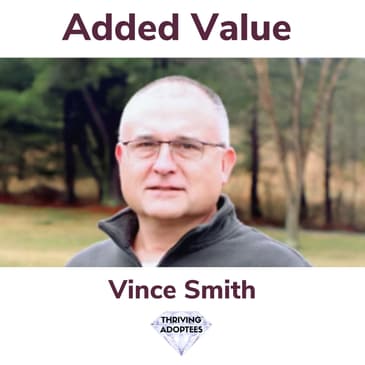
Vince's mission is to add value to everyone he meets. Listen in and let him add value to you with his insights, learnings and wisdom. Vince and his wife have six kids, three of whom are adopted. He's also Executive Director at Keystone Family Alliance.
Keystone Family Alliance is comprised of representatives from different churches around the state of Pennsylvania. We aim to educate, motivate, and equip every Christian in the state of Pennsylvania on the needs of orphans and vulnerable children, both locally and globally. Everybody can do something to positively impact these children, and the Alliance wants to help you find YOUR something. We bridge the gap between the desperate need of the child welfare system and PA churches. Agencies and caseworkers struggle to find new foster and adoptive families to meet the current, overwhelming need. Keystone Family Alliance mobilizes Christians from around Pennsylvania. For some, it is registering to meet tangible needs of foster, adoptive, and biological families through our online portal, Gateway. For others, it is serving on an engineered Care Community to support a local family for a year. For churches, Keystone Family Alliance provides the framework and support to help churches successfully recruit families to care for children in their communities to become these much-needed placement homes. There are so many ways to do something.
https://www.linkedin.com/in/vince-smith-0214808a/
https://www.instagram.com/keystonefamilyalliance/
https://www.facebook.com/keystonefamilyalliance
Guests and the host are not (unless mentioned) licensed pscyho-therapists and speak from their own opinion only. Seek qualified advice if you need help.
Want to learn more about thriving for you, your kids, your families or your colleagues? Pick a time to talk here
[00:00:02] Hello everybody, welcome to another episode of Thriving Adoptees podcast. Today I'm delighted to be joined by Vince, Vince Smith. Looking forward to our conversation today, Vince. Likewise, thanks for letting me be a part of it. You're very welcome, you're very welcome. So Vince is reaching out to Vince from a very snowy Pennsylvania with a few inches of snow yesterday and some chilly weather.
[00:00:28] But we haven't, it's chilly here actually in the UK today, but we haven't had any snow so if you can keep it on your side of the Atlantic that would be great. The one they send it your way. Because most of our weather comes from you right? The prevailing winds are blowing from Pennsylvania our way.
[00:00:50] So listeners, Vince is, Vince and his wife have got six kids. Amazing. Three of whom are biological kids and three of whom who are adopted. He's also the founder of Keystone Family Services, isn't it? I said that right? Yeah, Keystone Family Alliance.
[00:01:13] Keystone Family Alliance, right. Something was telling me I wasn't 100% there. And perhaps we'll dive into what the Alliance does a little bit later in the show. But first off, we're going to kind of focus in on Vince and your personal stuff, right? So what comes to mind? What does thriving mean to you, Vince?
[00:01:39] What does thriving mean? That's just a great question. For me, that's all about intentional living. I feel like every day we have the opportunity to add value to other people and their stories. That's absolutely what I want every one of my days to be looking like. So thriving is going to look like, hey, how do we add value to the people that we have the opportunity to come in contact with?
[00:02:06] Yeah. And we were talking before I hit the record button, we're so fortunate. We're so lucky to be in this space when that's our focus. Yeah. It's a, I guess it's an honour. It's rare. It's rare. Whether it was an intentional thing to get there or not.
[00:02:32] And it wasn't for, it wasn't for me. It wasn't my intention until like 14 years ago, perhaps. Well, 14 years ago, I had 58. So I'm 58 now. So at 40, 44, maybe I had an inkling of this and that kind of grew a little bit. What about you? Did you, cause you started off as a shepherd, right?
[00:03:02] Yeah. So it's actually a cowboy. Sorry, a cowboy. Sorry. I have a degree in animal science. I am a shepherd now. My daughter has some sheep that she raises in our backyard here. So we, we do enjoy the sheep side of it as well. But yeah, I have a degree in animal science, was cowboying, but probably since I was in 10th grade in high school, feel like God had put this heartbeat inside of me to want to care for kids from hard places.
[00:03:31] So I thought at some point I would put kids and cows together and start a children's ranch. And God definitely had other plans for my story that as I got that animal science degree took me eventually into becoming a full-time pastor, which I did for 25 years before officially going full-time with Keystone Family Alliance.
[00:03:56] So, yeah. So 10th grade then. So that's what, 15, is that 15, 16, about that, is it? So, yes. So it would have been about age 16. 16. Yeah. I started to feel that, that kind of that calling and that heartbeat. And it, for me, it's college, actually. I lived in a mobile home park with a bunch of other mobile homes.
[00:04:23] And on the weekends, then we started what we called the Big Dudes, Little Dudes program. So every Friday night, my roommate and I would host something out in our yard for all the kids in the park. And a lot of underprivileged kids lived there. And it was a program where we were able to do kind of a vacation Bible school, just a fun night hanging out with these children. And that program actually continued on for 10 years after I graduated from college before they closed that mobile home park down.
[00:04:53] Yeah. But, yeah, that was kind of the beginning of the journey. And I'm happy to dive into, you know, really just how this kind of became a full-time passion as well. Yeah, sure. Do you remember the moment at 16 when something struck you? Or was it more like a feeling that grew over time? Yeah, I think for me, it was probably more of an over time growing.
[00:05:21] My parents had always lived with an open hand. Our home was a place where people felt safe and there was people in and out all the time. They had done a little bit of foster care. We'd have several, over the years, several high school students that lived with us that were having hard times with their family of origin. So they would come spend summers with us.
[00:05:45] And I feel like I just kind of got a front row seat on watching my parents' heart and passion for caring for kids. Yeah. Yeah. And you followed in their footsteps, really? Absolutely. They were definitely a great motivation and an example of what it could look like to serve and serve well kids from hard places. Yeah. Yeah. And you mentioned the word, the phrase adding value.
[00:06:12] So what does adding value mean to you, Vincent? Yeah. I think that is unique to every individual we have the opportunity to come in contact with. For sure, with the full-time work I do, I say it's my full-time job to invite people to wreck their lives.
[00:06:32] I am inviting people who may be living perfectly comfortable stories right now to say, hey, would you be willing to invite kids from hard places into your homes? Kids that are going to come with trauma may put holes in your wall, may create more emotion than you ever imagined. But in those situations, we have the opportunity to add value to those kids from hard places. And so for foster and adoptive parents, it looks like that.
[00:07:02] For me personally, if I'm coming daily, I want to add value to my kids' stories, to my wife's story. And that's going to look a little bit unique, but kind of what are their needs? And I always like to ask the question, what is God doing in that person's story? And how can we just add some value to that to help them become everything that God wants them to be? Yeah. So what helps us thrive then?
[00:07:31] What helps us add more value? What helps us become more intentional? Yeah. Well, I think those are definitely daily habits that we need to live into creating rhythms in our life story. Life can get fast really quick.
[00:07:55] And so I think having the daily habits for me, you know, personally, that just looks like the day is going to start with a walk, some exercise, spending time in my Bible. Making sure I have some alone time to pray, to hear what God's doing in my story. But then actually kind of looking at the day, I love to be able to do some life mapping.
[00:08:21] So every November and December, I will literally map out on three pages of paper what I think the next year needs to look like. So some goals, some opportunities, how I'm going to speak. And add value to my wife, to my kids, how I'm going to add value to my staff, how I'll add value to the foster adoptive system.
[00:08:46] And so I kind of look at every one of my roles and a year ahead of time, try to make some intentional decisions about that. So I think those are the kinds of things. It's those daily habits that we're looking at that are going to ultimately lead to thriving. Yeah. And so you're because we're recording this on the 3rd of December, listeners. So 25, right? Where's the year gone? How so are you in the middle of this mapping out at the moment, Vince?
[00:09:16] I am definitely in the middle of that. Yeah. And what's looking different for you? Is there anything looking different for 26 compared to 25? Yeah. So what I've loved about doing this for the last well over a decade is I feel like it kind of builds on itself.
[00:09:37] So I'm able to I just take a think day a lot of times in November and will reflect on the last year. To see if the way I use my time, was I a good steward of the time? And then I'm able to make adjustments as I look at that year ahead, look at my schedule, look at how my days are operating and just say, hey.
[00:10:05] And so the life mapping for me really starts to build off of itself. A lot of things as a I always like to say as a student, I have a map of what that's going to look like every year. I want to be a continual learner. So for a couple of years in a row, I'll just read books on leadership. I'll read a book a week. And then after a year or two of that, I may say, hey, I'm going to be a learner deliberately in the area of trauma this year.
[00:10:35] So I'm going to read a number of books in that space. So it doesn't for me, it's not a dramatic change every year. A lot of times it's just a building on of what I feel like God was doing to my story last year and what I feel like he's calling me to in the year ahead. Yeah. OK. I love that there must be a lot of details that three pages, right? That's this is more than a New Year's resolution, which, you know, might even just be three words.
[00:11:05] Right. You're talking about three pages. So you're getting fairly granular in the kind of detail that you're looking at. Absolutely. Absolutely. Yeah. For me, it definitely comes down to the details of when I life map for my family. It's hey, what weeks are am I putting on the schedule now that we are going to take and go on vacation?
[00:11:31] It involves scheduling fishing trips for eight weeks in a row with my son when spring comes. So it gets very detailed. You know, if I share it with my wife, it usually drives her a little bit crazy. But she likes to have some fluidity in her story and be more spontaneous. So, yeah. Yeah.
[00:11:54] So I like to dive in in terms of adding value in this in this call, right, in this in this interview. So I was thinking maybe we could start off for the adoptive parents who are listening. Yeah.
[00:12:14] And what could we what could we what could we dive into to add value to their day in terms of perhaps your learnings, your reflections, your insights? What what whatever really works for you? Working off that theme of adding adding value. Yeah. Yeah. Yeah. Yeah.
[00:12:43] There's so much there for sure. Any family who has chosen to foster enter this adoption journey. It truly is a wrecking of their lives of sorts where you have chosen to bring disruption, you know, into your space.
[00:13:03] So the rhythms that were easier for me to keep before foster care and adoption get more complicated. But they become way more important, I think, when you enter this foster care and adoption space, because if you don't have healthy rhythms, you will not last.
[00:13:28] So as we as we look at adding value, if I'm coaching a new foster and adoptive family, I mean, first thing where we say all the time is you absolutely have to have a team of people that is willing to walk this journey with you. You can't do it on your own as a foster parent. When we started, my wife and I, you know, I would like to say we're pretty good foster. We're pretty good parents. If we do say so ourselves, we had that first placement.
[00:13:54] These kids showed up with Mountain Dew in their bottles and they were just crazy and through our life. And all of a sudden we realized, hey, maybe we do need some help, but we didn't know how to ask for the help. And when people offered to help, we just did they actually mean it that they want to sacrifice their time and energy to be able to serve our family. So so I would say the first thing as an adoptive parent, you absolutely have to find people who are going to do the journey with you.
[00:14:22] In our ministry, we help these families build wraparound support teams that will serve them well in their journey. But I would say the rhythms of healthy eating exercise, making sure for me with my faith in Jesus, it's going to be spending daily time with him, regardless of what the schedule looks like or how chaotic it is, you know, in our home. So those rhythms are hugely important.
[00:14:51] And then knowing who you can talk to, because you will have days where you don't know what to do and you're not sure how to navigate the next chapter with a child who has challenges that you haven't faced before. Yeah. Taking back a couple of minutes, you said wrecking, right?
[00:15:17] You said wrecking, you know, but and you're smiling again now, but you were smiling as you said wrecking. Yes. That's not really what most people that's not that that's not the facial expression that I would normally associate with with wrecking. So this is about sense of humor, is it? I don't know. What is it about? Yeah. Yeah. So. We like to say we want to talk people out of this before we'll talk them into it these days.
[00:15:46] If you're going to adopt, we want you to go in with eyes wide open. So it is you're going to have to count the cost. And again, as a Jesus follower, I like to say I know that Jesus came from heaven to earth to take on my brokenness so that I don't have to be broken any longer. Because of that, I am motivated to be able to bear the burdens of somebody else because I get to. So it's a choosing to bear somebody else's burden and bearing their burden is not an easy choice.
[00:16:16] It will cost me something to bear that child or that person's burden. But I do it with eyes wide open. I do it because that person matters to me. That person matters to God. And ultimately, I've been at this long enough.
[00:16:35] I've had the opportunity to see so many success stories on the other side of choosing the hard that when you persevere for years, when you sacrifice sleep and you sacrifice relaxing time on the couch because kids need you to change their diaper or they want you to go fix their bike.
[00:16:59] Like, I've had the opportunity to see on the other side of that, how that sacrificial living pays off in the life of a child or families or individuals.
[00:17:12] Yeah. So the first part of the answer, it was almost like drawing your strength from Jesus so that you were strong enough to bear this burden of these kids from places with the aces.
[00:17:32] Absolutely. And I say as a Jesus follower, I don't know why anybody would choose to do this outside of being a follower of Jesus who sets that example for us. Because, again, it's it's not about me. It's not about us. It's not about a comfort. Hence the wrecking thing. Yes, absolutely. So that's that. It's a choosing to deny yourself.
[00:18:01] It's choosing to wreck your life on behalf of another so that they win, so that we can add value to their story. Yeah. So it's a short term. Well, short or medium term. Wrecking for you for a long term payoff for others. Yes, absolutely. And as my wife and I had these conversations.
[00:18:26] Often our youngest biological daughter graduated high school six years ago. She'd be wrapping up law school here in just a few months. And we'll still look at each other and say, if we didn't choose this foster adoption journey, we could have been empty nesters. We could have been doing traveling. We could have been having coffee with our friends. But that absolutely is not our story.
[00:18:55] We don't sleep as much as we would have if we had an empty nest. We are running to appointments nonstop. And there's moments where you're going like, hey, what did I sign myself up for? But we're in the thick of it. Yeah. Because a lot of people are struggling. A lot of adoptive parents are struggling. Yes.
[00:19:19] I have not yet to come across this kind of data from the US. Maybe I just haven't found it. But I found it in the UK. So there's an adoption organization. It's not an agency. It's a membership organization. Largely, it's a membership organization of adoptive parents. And they do lobbying and other things like that. Okay. They're called Adoption UK.
[00:19:46] And they run a survey every year. And it's how well people are doing, how well adoptive parents are doing, how adoptive families are doing. And I think the last time I saw it, it was about a third in crisis, about a third. I can get you a copy of the, it's called the barometer. I'll put it in the show notes. Yeah.
[00:20:15] And I'll send it to you, of course, Vince. I think the last time I saw it, it was a third in crisis, a third struggling, but kind of holding water, and a third kind of okay-ish. You know, it was something like that. So that's a lot.
[00:20:37] If that is reflective of the US, you know, it's a lot of people struggling. I do feel that the US is slightly ahead of us in terms of post-adoption. Like ahead of us. So one would hope that the numbers might be slightly better for you guys. But I mean, just as a gut feel, does that feel about, does that feel consistent as you would guess it? Absolutely.
[00:21:34] A fostering because it is not for the faint of heart. It's hard work. It is a true, like they, for whatever reason, didn't count the cost before they entered into this space. And it wasn't what they expected. So when nearly 90% are dropping out without the right support to be able to do this. So those numbers are staggering.
[00:22:01] And for sure is part of what drives the why of what we do at Keystone Family Alliance is because if we're going to recruit families into this space, we want to equip them to be able to do it well. We don't want to tell them it's going to be easy. But we want to help them have the tools so that they can thrive in the midst of hard. Yeah. So we're going to dive into Keystone in a minute.
[00:22:29] I want to just, I want to just change, you know, this theme of adding value. We've talked, we've talked to, you shared some learnings for some insights and some empathy really with, for adoptive parents. Is there anything else that you feel that you'd want to share with adoptive parents? That some, perhaps some of the learnings that you wish you'd had earlier,
[00:22:59] or the insights you wish you'd had before you had them, or anything, anything of that ilk? Yeah. Can I say, first of all, I just counted a privilege anytime I get to talk to or work alongside adoptive families. What a great group of people to be a part of. People who have chosen to give their lives on behalf of another.
[00:23:26] I just love being able to work with people that live sacrificially like that. And so, so it's a privilege to do that. And just acknowledging that it is absolutely hard work. We are full-time responders. I know here in America, we celebrate first responders often. There's not a lot of celebration of foster and adoptive families that, hey, you guys are full-time responders. You're getting up all night long when kids are sick. You're changing diapers.
[00:23:56] So I just want to say, like, we see you. Thanks for doing what you're doing. It's harder than we ever could have imagined that it would be. And I think that's why it's so important to acknowledge, first of all, don't have pride that keeps you from asking for help. I think that was probably one of my biggest challenges early on.
[00:24:22] I thought, hey, my wife and I, this parenting is a piece of cake. Our three biological daughters, things are going really well. As soon as we had our first foster children at home, we realized that piece of cake got messy really, really fast. And it took some humility for me to realize we needed to ask for help and to actually be able to go after it.
[00:24:47] So, again, I would say probably just, you know, if there's a word of wisdom, I would say, please don't carry pride into this space. Know that you need the help of others. And humility is going to be what helps you get through it. Yeah. Cool. Cool. As I think about the other listeners to the show, I think of adult adoptees.
[00:25:14] So one of the challenges, listeners, is that I know where you are, and I got some inkling on how old you are, but I don't know where you sit within the adoption constellation. So I know, for example, that 67% of the 130,000 downloads that we've had so far, they come from the States. So the States is way bigger. Like your population is 350 million. Our population is 70. So there's more of you. More of the guests are American.
[00:25:42] So perhaps that's reflected in the listeners too. And I know that most of you are women and most of you are 40 plus. So I'm figuring that you're older, adopted parents and you're adoptees, adult adoptees. What would you say to adult adoptees listening?
[00:26:10] That's not your lived experience, right? Right. But I'm just wondering if you've got anything to, wisdom to share on there. Yeah. No, that's a great question. And for sure, not one that I can speak to from experience, but with what we watch, I would just say kind of the same thing, that humility matters in your story as an adult adoptee.
[00:26:34] Like, I've watched so many kids exit age out of the system. And there's really just kind of a lot of hurt, a lot of anger and a lot of pride that is keeping them from getting the help that they need to be able to thrive, you know, as adults.
[00:26:59] And I think so on both sides of this coin, humility is such an important piece. Like, go get the help, go get the tools so that you can absolutely thrive. And every one of those adoptees, you know, matters to God and their story matters. If they choose to use their story to be able to add values to others. I mean, Mike, what a huge gift and a huge blessing.
[00:27:27] Because as we've already stated, I can't understand the stories of, you know, adult adoptees, but they can. And if they're willing to use their story to help others. Oh, my. What a blessing. Yeah. We've had a few younger adoptees in this space as well, doing some pretty powerful and transformative work. And that's great.
[00:27:54] Great to see the sharing of the sharing of stories. People sharing their stories in books, people sharing their stories on podcasts. People are sharing their stories with fellow adoptees, with adoptive parents and adopted organizations, often agencies and organizations. So it's powerful. It's powerful. Absolutely.
[00:28:22] One of the questions that is always at the back of mind is, what are the obstacles to thriving? And you've mentioned pride as an obstacle. So our belief or almost, it's almost like a fear, isn't it? Can it be a fear? I don't know.
[00:28:48] What do you see around that space, Vince? In terms of pride holding us back for asking for support? Yeah. Yeah. Yeah. You know, a large part, I just think there's a fear factor that says, if I acknowledge that I need somebody else's help, maybe somebody's going to think less of me.
[00:29:17] But I think the opposite has absolutely been true. As I say, in my own journey. And as I get to watch other people, when I actually share the hard places and I get vulnerable, I realize that actually helps other people. They're going through the absolute same thing. They're going through the absolute same thing that I am or have gone through.
[00:29:41] And as soon as I can voice the need or the vulnerability, it just creates us a place of community when we can kind of remove that fear where we can actually talk about it. And then I'm able to listen to and or offer suggestions that are going to help people that are in a struggling place get to the space where they're able to thrive. So I think just creating those environments.
[00:30:10] There's so much, again, from a faith perspective, I always have kind of right behind my computer that, you know, faith, not fear, is what's going to equal trust. And for me to trust that God knows what's best for my story is going to require me to have the faith that what he says in his word is actually true. And every single time it has proved to be true.
[00:30:33] But it's going to require faith for me to take some steps in following Jesus in my story to be able to get to the full potential of what he wants. So I don't know if I'm getting to the heart of your question here, but. I think that's pretty that's pretty tight in on it. I was going to ask you, you mentioned something about when you were talking about the planning for the year that you do around this time.
[00:31:03] Planning for the next year that you do around this time of year. You talked about. Jesus's involvement in your life. Yes. So what's that? What's that looking like for you? What or what does that look like for you? Other than I guess it's the driver of Keystone, right? Yes. Yeah, absolutely.
[00:31:28] We are, you know, as a faith based organization. Jesus is the driver for us. He was a leader who, again, came from heaven to earth, put put that skin on and. And his own words, he said, I came to serve, not to be served. And so as a follower of Jesus, if I'm truly following him, I'm not using the Bible to.
[00:31:57] Make my life more successful, better. It's using my life to be a servant of other people. So that that absolutely drives that. But every single day, that has to be a choice that for me, I have to make to truly follow him to be a servant. So in the rhythms of my life mapping, I will read and or listen to the entire Bible every year.
[00:32:25] I just have to make sure that I'm actually listening to his voice and his promises, his principles are steadfast. They're true every single time. But if I am not if they're not fresh in my mind, I am so human. I can it becomes about me. It becomes about my comfort and serving myself rather than serving other people. So that has to be a regular part of my rhythm is I'm just spending time with him.
[00:32:54] And I'm spending time with with other believers who understand the importance of being servants. And we do it together. It just creates a movement that I have the privilege as a leader of Keystone Family Alliance to just watch thousands of Jesus followers across the state of Pennsylvania that are doing something, choosing to live sacrificially on behalf of other people. And it's just awesome to be a part of that. Yeah. So serving and adding value are one in the same, really.
[00:33:25] Absolutely. Absolutely. Yeah. I want to take you back another couple of minutes to use this word vulnerability. And it's really big.
[00:33:40] It's really big for me because I think of the work that I kind of used to do, did a lot of work in elementary schools and used to run workshops for kids about happiness, about confidence, confidence, about aspirations and goals. And also about bullying.
[00:34:09] And because the link was, was the voice in our head. Right. So we've got, sometimes we have a voice in our head that says that we can't do something or that we're, tells us that we're not good enough.
[00:34:31] And oftentimes that comes from a bully, the bully telling us from the outside that we're not good enough. The external bully becomes an internal bully. The kid, the kid from the playground, from the yard, sow some seeds of doubt in us. And that becomes our kind of inner critic.
[00:34:58] So that was the link that appeared to me. Right. I didn't know I was going to find that. I didn't know I was going to find that link. And yet when I was vulnerable with the kids. So I had a kind of a format that I used for most of the, a lesson plan, you know, some people might call it a lesson plan and teachers call it a lesson plan.
[00:35:27] So I had a structure to, to what I was going to share after I'd done the first few sessions. And in, in one of those sessions, in that structure, there was a part where I revealed, you know, with some vulnerability really about how I'd felt about being bullied when I was kind of their age.
[00:35:54] And as soon as I got near that, the kids got really quiet and, you could hear it. It could, you could, there'd be a hum in the room. There'd be a hum in, in, in the classroom. And it would go when I would share about being bullied on scout camp when I was 11 and bullied at school.
[00:36:20] I got the feeling that kids, that adults didn't do that. Right. So me and my wife haven't got any kids. I don't, I'm, I'm going a long way around to asking a question really. And that is, what about vulnerability with our kids? And I haven't got, I haven't gotten more on that question than that. I don't know if that's a broad question.
[00:36:48] Well, my God, you know, I think vulnerability with our children is, is huge, huge. They're going to connect at the level of vulnerability that I'm, you know, willing to have. And as, as a parent, there is so many times when they get to see my humanness, whether I acknowledge it or not. They get to see all of my weaknesses, whether I acknowledge it or not.
[00:37:18] But when I actually acknowledge it and we have a conversation about it and I can apologize for even the way that I've acted. Something just changes inside of them. It creates a safer space for them. It helps lift the, the I'm not enough feeling off of their heads.
[00:37:40] And so I think that kind of conversations you're talked about when you go into school and you're able to acknowledge as an adult that, hey, I experienced some of this. Help with the tools to, to walk them through that. It just gives, gives them a place to, it removes a barrier to help them thrive, if you will. And I think that's a huge barrier that has to go.
[00:38:05] I know with, with my children, then I can talk about the fact that as an adult, I have a degree in animal science. I'm a cowboy. I was called into full-time ministry. I start meeting with groups of pastors. These pastors are really smart. They're schooled in that field. I am completely insecure when I'm in a room with a bunch of, you know, well-educated pastors.
[00:38:30] As soon as I start to talk about that insecurity, but how God still used that to birth what was a couple of schools in Zambia and Uganda for orphans and what is now Keystone Family Alliance. I can share the vulnerability and how I coached myself through that. And in large part, that was just for me, just a reminder. I have to say it almost every day. I am who God says I am, not who those other people say I am.
[00:38:58] So when I have those conversations with my kids, I've had the opportunity, three of them in middle school, high school right now. That is their journey through relationships with other children. Boy, those conversations are transformational at our dinner table.
[00:39:16] As I've got to watch them grow into confident young children in the midst of people telling them that, you know, the bullying side of things.
[00:39:28] Yeah, the big dive, the first big dive I took into understanding myself was 18 years ago when I sat around a table with people for about five days on a kind of like a trauma dumping retreat.
[00:39:57] And this wasn't anything adoption specific. But what I got from that was that none of us sat around that table thought that we were good enough. We all had that inner, we all had that inner critic. And that inner critic isn't us.
[00:40:27] Yeah. Yeah. Yeah. Again, from a, as a Jesus follower, I would say that that would be the enemy's number one tactic is to tell you that you are not enough, that you are not good enough. To hear your parents voice anytime there might be a negative comment coming from them, whether that's an adoptive parent or a biological parent, doesn't matter what your background is. It's the boss's voice, the teacher's voice, the coach's voice. Hey, you're not enough.
[00:40:56] And so that's what I love about the gospel. And I can lean into, I am who God says I am, not who anybody else says I am, because he says I am enough, even in the midst of my own sin, my own shortcomings. He is able to look at me and say, I accept you for all of that. And that's, for me, what can be that driving factor to be able to love other people.
[00:41:22] When I have teenagers in my house who have come into our home from hard places and they cuss me out and maybe run away or whatever, I can still listen and look at them and just realize there is that inner voice that has so long told them that they aren't good enough, that they aren't enough. But if I can be a reflection of, I know the God who says that I do matter and the God who says I am enough. Wow. That's so, so huge. Yeah.
[00:41:55] It's a theme I keep on coming back to again and again. Have you heard of Richard Rohr? Have you heard of that guy? I have. I have. I've read one of his books a number of years ago. Yeah. Do you remember what it was called? I'm forgetting the title now. I think it had something to do with the kind of heavy and non-anxious presence. Right. Okay.
[00:42:26] I just finished a couple of months ago the immortal diamond. Okay. And that really struck me because the thriving adoptees logo is a diamond. Oh, wow. Wow. And we're trying to say the same things, right?
[00:42:48] The immortal diamond is the icon for our value, right? It's the metaphor for more than good enough. Yeah.
[00:43:08] And the theme that I'm getting from this, especially with your fellow Jesus followers, is that that self-esteem, that self-worth all wrapped up.
[00:43:38] But there's nowhere else that you need to look. Yeah. Yeah. That's, you know, Jesus said, you know, I'm the shepherd and my sheep know my voice. When I walk out into the pasture or my daughter does here with our sheep, the sheep will come running to us. If you walk out into our pasture, our sheep are going to take off and run the other way.
[00:44:07] We see that all the time. And it's kind of that, you know, for me, as we're talking about those rhythms, like I have to know, I have to know God's voice above every other voice because that is the only voice over time that has reminded me that I am who he says I am. And as he calls himself the prince of peace, when I can get myself alone with him, hear his voice, the anxiety goes away.
[00:44:33] I'm able to, in the midst of everybody else's voice, still live with a non-anxious presence because I rock solid know what my savior thinks of me. He thinks the world of me. I am his child. There is no better diamond that when he looks at me that he values, you know. And that's so, so important for us to be able to live without anxiety and to have a peace in the midst of the storms. Yeah.
[00:45:03] And, you know, I was raised, you know, I was raised, raised to Jesus follow, I guess, you know, to go to Sunday school. I went to a church of England, a Protestant school. We sang hymns every morning. We listened to a reading every day. And, but it didn't, it didn't really, it didn't really land for me.
[00:45:32] However, I think, you know, we can look at this from a religious point of view, from a Jesus follower point of view. It, it makes, it makes the, it makes the self-worth easier. It's an easier, it's an easier, it's an easier and a faster trip somehow than it's been for me.
[00:45:56] But the, the, the diamond in the thriving adoptees logo, it doesn't require, it doesn't require religion to, to, to do that. But I, I really don't, I really enjoy diving into religious conversations, but it, it's making it, it, the message I'm getting at the moment is it makes it, it, it, it's the,
[00:46:26] the journey to self-worth is, is, is faster and clearer for you guys. Absolutely feel like it is where I know where my value comes from. And for sure, you know, you, Simon, every one of us has absolute diamond value. And yeah. Cool. So we're closing in on, on, on time, so I want, I do want to give you a chance to talk a little bit about, about Keystone Family Alliance.
[00:46:56] So what, what do you want people to know about that? Especially people in Pennsylvania. Yeah. Yeah. Yeah. Well, our, our mission is really just to educate every Christian in the state on the needs of orphans and vulnerable children, both locally and globally. And then we want to motivate them to do their something. Everybody has a, a part in this.
[00:47:21] And then we want to help equip them with the tools to be able to do that well. So we've had the privilege. Uh, we went statewide, uh, about five years ago. And since then have seen thousands of people sign up to receive emails in their inbox through a platform that we call gateway.
[00:47:45] That when a local social service, um, agency has a need, they'll place the need on that gateway platform that goes out to well over 5,000 people in the state now. And those people respond to those emails meeting thousands of needs every year. Um, it might be clothing for kids coming into foster care.
[00:48:08] It might be a mentor for a biological mom trying to get her son back or gas cards for a grandma who is fostering her grandchildren, but can't afford to get them to appointments. So that is just one tool we're able to offer to churches and to agencies across the 67 counties here in Pennsylvania. And then, uh, with that dropout rate that I talked about, the support in foster care is so, so, so important.
[00:48:37] So our team, uh, right now I have 40 staff around the state of Pennsylvania and 33 counties that spend a lot of their time helping churches build ministries to develop wraparound support. So a group of at least five people willing to wrap around an individual foster family to support them in their journey. And so those families, when they volunteer say, Hey, I'm willing to take a meal one time a month to that foster family.
[00:49:07] And with five people on that foster family's team, the foster family gets a meal delivered to their home once a week. Those teams are helping with transportation, taking kids to practices or appointments or, and saving foster families hours and hours of drive time. Um, they're helping with yard work, lawn care, mentoring children. So what we're finding is with those care communities, foster families, adoptive families are able
[00:49:35] to do it longer and stronger. I mean, exponentially multiplying the number of years that, that families will foster and adopt. And not only does it impact the foster family and the children they serve, because now those kids don't have to bounce from home to home when foster parents quit, but it's adding value to the social workers that are working with those foster families, because now they don't have to help arrange transportation or clothing needs because there's a team doing it.
[00:50:04] So, so with the social work side of things, the turnover rate is so huge, um, in that space. Now we get to see them stay longer and stronger because a foster family is being supported. So, so that's a lot of what we're doing through the state of Pennsylvania. Um, literally hundreds of churches today that are doing something that two years ago, we're not doing anything.
[00:50:27] And it's just been so fun, uh, to watch so many more people motivated to add value to kids and families from hard places. Yeah. Fantastic. Fantastic. Is there anything, and as always listeners, I refer, you know, refer you pointing to, putting towards the show rounds to find out more about the, the guests, um, and what they're up to in the world.
[00:50:55] Is there anything that you'd like to share that I've not asked you about Vince? Oh, there's so much, but, uh, Hey, I think we're, we're just so much better together. So I love what you're doing. Um, speaking up, uh, for those that may not be able to have a voice for themselves. And I think that every one of us plays an important part of that. It doesn't matter if you're a teacher working at a gas station or you're running podcasts or
[00:51:22] leading ministries, um, our voice matters when we, we get to speak up and it even matters more when we can get in the room together, share ideas, resources, and imaginations and do it sacrificially on behalf of other people. So, um, I just think that that's so important that we figure out how to do this together better. Yeah. Fantastic Vince and fantastic listeners. So, um, we'll speak to you again very soon. Take care. Bye-bye.