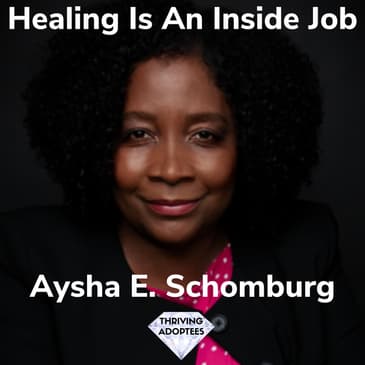
What does healing mean to you? It means something different to everyone. Getting clear on what it means to you is profoundly helpful. Knowing how we heal is even more powerful. Listen in as Aysha and I dive deep into what helps us heal and what doesn't.
"As a New York native, I am thrilled to lead Healing New York as the nation's oldest child-serving agency and help chart the way ahead to create a larger footprint."
Prior to joining Healing New York as President and CEO in May 2024, Aysha E. Schomburg served the Biden Administration as the Associate Commissioner of the U.S. Children’s Bureau within the Administration for Children and Families, where she advised on child welfare. Previously, Aysha served as the Senior Administrator for Program Oversight at New York City's Administration for Children’s Services, where she developed operational plans and coordinated COVID-19 guidance with the Department of Education and Department of Homeless Services. She also addressed inequities and racism in child welfare. In October 2021, the Aspen Institute named Aysha an Ascend Fellow. She holds a B.A. from the University of Virginia, an M.A. from New York University, and a J.D. from New York Law School.
https://www.facebook.com/HealingNewYork
https://www.instagram.com/healing_newyork/
https://www.linkedin.com/company/healing-ny/
https://www.linkedin.com/in/aysha-e-schomburg-4647a518/
Guests and the host are not (unless mentioned) licensed pscyho-therapists and speak from their own opinion only. Seek qualified advice if you need help.
Want to learn more about thriving for you, your kids, your families or your colleagues? Pick a time to talk here
[00:00:02] Hello everybody, welcome to another episode of the Thriving Adoptees podcast. Today I'm delighted to be joined by Aysha, Aysha Schomburg, from Healing New York. Looking forward to our conversation today Aysha, really am I? Me too, I am as well. So listeners will normally start off with the thriving question but because you're Healing New York, I've got to ask you. Healing's in your heart. Healing's in your genes, in your own body.
[00:00:32] Your bones? I don't know. I mean, what does Healing mean to you Aysha? Well, what does Healing mean to me personally? I feel like Healing is... Well, one of the things I want to start off by saying, Simon, is that we changed our name to Healing New York in January. After being known as the New York Society for the Prevention of Cruelty to Children for 150 years.
[00:00:58] And, you know, the reason why we were called the New York Society for the Prevention of Cruelty to Children goes back 150 years and is actually a whole other conversation. But what I will say is that after talking to parents, talking to our partners, our board members, our community members, it was not the appropriate name for us anymore.
[00:01:20] Because while at one time we were rescuing, you know, severely physically abused children, we are now focused more on trauma recovery, sexual abuse prevention training. And so, and supporting parents with the concrete support that they need. So we are really leaned, leaned into a healing space.
[00:01:47] And we all felt as though Healing New York was a more appropriate name. I just wanted to sort of set the stage for that and give a little bit of history. Yeah. Because we are newly Healing New York because that's what we want to be, what we're doing and what we hope to be doing. And so it's both, I think, current and aspirational. Yes. Yeah. When I think of healing, though, for, you know, personally, I think healing, and I do feel like healing is different for different people.
[00:02:16] And healing can be, can mean different things in different situations. And I always say to people, like, as long as you're breathing, you can be evolving. I think that as human beings, we should evolve and we should change. And I feel like also healing may be different throughout the course of our lives, depending on what it is we are experiencing and who's around us.
[00:02:44] So for me, healing can be complicated. It's not just one thing like, oh, you know, I, you know, I suffered a bruise and, you know, six weeks later, you know, my knee healed. Or I had a breakup and, you know, three months later, my heart healed. I feel like healing is more of a journey and more of an internal process.
[00:03:11] So I, when I think about, like, I'll give you an example, a very real example, where in my, my biological family, there has been a, there was a disagreement many years ago. And a couple of us are not, do have not spoken in, in many years, I'd say almost 10 years now.
[00:03:38] And for me, I feel I, even though there's been known, I've talked to my sister, one of my sisters about this, because for her, healing means reconciliation. It means that we are going to go out and go to the movies together and go to dinner together. But for me, healing means I have forgiven. I have not forgotten. I wish everyone well. And I feel, I feel healed in that situation.
[00:04:07] I don't necessarily need the reconciliation in the way that she views it in order to be healed from that situation. I feel healed because in my heart, I've forgiven and I can, I can move forward. Yeah. Yeah. Incredible. Isn't it? The, the, the, the difference between, I mean, I love the way that, the way that you gave it, gave it breadth, right? So it's personal, it's situational and, and it's, and it's life.
[00:04:37] It's, it's something to do with where we are in our, in our life or our life cycle. Yeah. I think that's absolutely right. And I don't, I think, I sometimes wonder whether or not people give where we are in life, the gravitas that it really deserves when we're talking about healing and thriving, you know? And so I, I think it's, I think, yes, healing is, is unique to different situations.
[00:05:07] Yeah. Yeah. Yeah. And just back to the, back to the name change, right? We used to have a, here in the UK, well, we still do. Yeah. It's called the National Society for the Prevention of Cruelty to Children. And they're still known as NSPCC, despite, despite, like, like your organization has changed. Yeah. Let me tell you what a parent, a parent told me about that.
[00:05:36] A couple of weeks ago, we had some parents here. And she said, thank you for changing the name. Because whenever I saw Cruelty to Children, I felt like I was reminded of our scars as a family. Wow. Wow. And we don't always need to be reminded of our scars or reminded of something maybe that has happened in the past. So. Yeah. Yeah. And there must have been a lot of thought behind the name, right? You've got all that history. Yeah.
[00:06:04] There must have been a focus on, you know, what is it that we want to convey with this new identity? How can we, how can we kind of, because it's so well known after so many years. Right. And so it's a transition, it's a transition period. It was a huge transition. And we did think a lot about it. At first, we thought about, okay, what do we do?
[00:06:31] What are we trying, what are we doing for the community? I mean, we are based in New York and we do have some work that we do in other parts of the nation. But like, what is it that we were doing and what do we want people to, what do we want for the people that we serve? And I think, you know, we had several conversations about this over the course of many months.
[00:06:56] We had the benefit of Deloitte helping to lead us through this new name and rebranding. And even when we start to think about, for example, our logo and colors and all that. I mean, all of this has meaning, right? But we, you know, when I say we collectively, you know, we here at Healing New York, and again, as I said, our partners and families, we wanted to, it was clear that we wanted to focus on healing.
[00:07:22] As opposed to the scars, as opposed to the trauma that has occurred, for example, with a child or with a family in the past. Well, how do we get through that? How do we help families and how do we help children individually move toward healing without regard to whatever it is they have experienced? And that has been our, sort of our North Star. And that's why we leaned into this name. Yeah.
[00:07:49] And just a shout out listeners, I haven't done this for a while, but every episode of the Thriving.T's podcast, there are show notes underneath on your device, on your screen, with links to the organizations and the people that I'm interviewing. And I was having another look at Asia's organization site before we came on today. And there's lots of really great resources and events.
[00:08:16] So for professionals and for parents, caregivers. So I would urge you, if you're interested in what Asia's talking about, check them out and find out what they're doing. Yeah. For me, there's a, you mentioned the bruise and healing from a bruise.
[00:08:34] And for me, there's a fantastic richness to explore the difference between like physical healing and emotional healing. And people, you know, we use all these metaphors like in the adoption space, like the primal wound. And, okay, so how are we going to heal the primal wound?
[00:09:03] And I think that allows us, those metaphors allow us to talk about these issues, which are otherwise pretty tricky to talk about. But they can also kind of become restrictive in some ways. So, you know, we can, we've created a metaphor to turn something that isn't a thing into a thing. Right. It's like thingification. Yeah.
[00:09:31] And we make, we make something that is perhaps, we make something that is perhaps abstract. We make it concrete. Great. Does this any, are we making any sense? Is this? Yeah. And you're making sense is it because, you know, and I use the example of the bruised knee because, because sometimes it's really hard for us to grasp, which is people to grasp the abstract.
[00:09:56] And so that, that more concrete thing, sometimes that more literal thing sometimes makes it easier. But I feel like, as you pointed out with healing, it's, it really is not that simple. You know, you can watch a bruise on your knee heal. You can, you know, that it's going to heal. You can see that when we're talking about emotional healing, that's a completely different story and a much longer story usually. Yeah. Yeah. Yeah.
[00:10:22] So you said, you talked about internal, you've talked about emotional. So for me, I guess is, and for you, like emotional healing is, is a change in our feelings or a change in how we feel about something. Or it could be a change in how we experience our feelings.
[00:10:46] Like, you know, I don't want the example that I gave earlier about my family members, whatever, I don't necessarily feel any differently. Right. About the bruise, right. The emotional bruise that occurred. It occurred. I still, you know, if, if we were to come up again, I would stand my ground in terms of how I felt then and how I felt now, but how I experienced my feelings are different. And so it allows for me to heal.
[00:11:10] So I don't experience it anymore where there's severe hurt and, you know, in a way that's disruptive to my own personal peace. Yeah. You know, I experienced it more, I experienced it more as like this, this thing has occurred. But I'm choosing my emotional peace. And, and therefore the healing has taken, and it's taken some time.
[00:11:38] But the healing for me has been, oh, this is, the fact is, these are the facts. However, I don't have to experience him in the, in, in, in the old way. I can experience him in a new way, which is to acknowledge that a thing occurred. But that I'm, I, I have individual will to, to move forward, to wish others well and to maintain my own personal peace and my own personal healing. Yeah. So is it a change in the way that you feel about your feelings?
[00:12:08] Yeah, I think so. And I think it's, it's been an evolution of how I feel. Yeah. Yeah. And I do think to your point also earlier is that it is has, it does have to do with where I am in life. I'm not where I was 10 years ago or five years ago. Because right as, as human beings, we evolve. So I was, I was looking at something this, this morning, I was preparing a, a, a talk that I'm doing.
[00:12:36] And I came up with this idea of trauma liberation, which, you know, on one hand, we can say it's freedom from trauma. And also we can say freedom with trauma, right?
[00:12:56] So freedom with trauma for me is, it is about that change in how we feel about the trauma, how we, how we feel about our feelings. And somebody, I heard somebody talking about this a couple of months ago, and they, I think they called it psychological flexibility.
[00:13:17] And so it's not, it's not a change in, they were talking about it in not being a change in how we think, but a change in how we think about what we think. Right. So it's our relationship with our thoughts, our relationship with our feelings. feelings where we're at peace. And as a mentor of mine says, if we're okay with not being okay, we're always okay.
[00:13:46] Yeah. Yeah. Because fighting, fighting feelings doesn't work. That's exhausting. That's exhausting. You know, you mentioned the word peace at least three times so far today. Yeah. Yeah. Because it's been my choice. I think when I think about, because I think that's how I think about healing sometimes for me personally, is that it's an internal peace.
[00:14:16] It's like, okay, well, I'm at, I'm at peace with the situation. You brought up trauma liberation, which I love. But it just, and so, yes, in that particular circumstance, I am living, I have freedom with, right? Yeah. The healing. And I, but it makes me want to think about, okay, so when have I had freedom from trauma?
[00:14:39] Like, what have I said, you know, can say to you, oh, it's not only how I'm experiencing it, but I, I've closed the door on the trauma and I'm healed. Yeah. And that's a trickier one. It is much trickier. I think freedom with trauma is a lot easier than freedom from trauma. Yeah. Right. We think we're, you know, we're burdened with it.
[00:15:02] I, you know, I, I recall reading the, the, the Primal Wound book. Um, so are you familiar with this book? Have you heard of this book? Should I give it a bit? I have not. Okay. So, um, uh, an American MD, which I understand is like a general doctor. Is that correct? An MD is like a general, like a family doctor. It's a medical doctor. Medical doctor. Yeah. So we, in here in the UK, we, we use the term GP, a general practitioner. Okay.
[00:15:31] So the general practitioner is like an MD. So it was an MD, an MD in the, in the States, a lady called Nancy Berry. And she had two daughters, one that she'd birthed, she converted a biological daughter. And she also had an adopted daughter. And she was trying to understand the difference between that two, um, let's say temperaments for, for want of a better word. And she couldn't find any, this was in the eighties and she couldn't find any, um, any research in this.
[00:16:01] So she decided to research that area and she came up with a book called, uh, called the Primal Wound. Um, and this was published in 19, published with 1993 in 1993. So until that book was published, the kind of the adoption space was trauma blind, right? We, we, we were unaware of the trauma and, uh, and I, you know, I, I think of also this,
[00:16:27] when I think of this, I think about, uh, a general societal blindness to trauma. So trauma didn't really become a thing from, from what I, what I've heard until the seventies with all the, uh, post Vietnam PTSD thing. PTSD. PTSD. That's when trauma kind of became a thing in, it realizes thing in the seventies. So that's the water broad society in the seventies.
[00:16:55] And then the Primal Wound kind of brought a trauma, trauma awareness into the adoption space in 19, 1993. Um, so, but I, I, I, I read that book 12 years ago, I think perhaps something like that. And I, I didn't believe that I was primarily wounded till I read that book.
[00:17:18] So that book changed my, um, my thoughts about my feeling, my feelings about my, my things. So the first thing that happened with it, there was a relief in a diagnosis and then the diagnosis diagnosis felt like it was going to become an identity. And, and, and I felt that was something. Cause it's kind of like, you feel seen, but then it's what, like, did you want, did you want it to become your identity?
[00:17:47] That's, that's like, um, no, I, I, I was, I think my, cause it's 12 years ago, I can't be sure, but, um, I think I feared being stuck with it. I felt that, okay, if this, if, if this trauma's laid down so early, I'm stuck with it. I, I, I've become, I, I've been trauma blind. I am now trauma aware and now I'm, I'm stuck with it.
[00:18:17] I'm trauma, trauma, stuck. And, and, but luckily, um, I was hanging around in some spaces and I've got a very curious mind too. And I, I can't, I kind of came out of that and, and, and realized that I wasn't stuck with it. How'd you come out? How'd you come out of it? Through an insight, through an insight. I, I, I, for me, you know, people talk about time being the greatest healer.
[00:18:45] Uh, and, you know, I, and that's one of the, one of the differences I see between like a physical wound and an emotional wound. Right. So the, the physical wound takes time to, uh, to, to heal the, um, an emotional wound. Uh, um, it, it, it seems to take time like a, like a, a, an apple takes time to grow, but then it drops off in a minute. You know, it drops off in a second.
[00:19:14] It falls off the, off the tree. And that's what emotional healing, the time, the timeline for emotional healing seemed to, to me. It, it takes time, but it happens in an instant. Um, and it, and, and it happens in an instant where we see something new. Like an epiphany. An epiphany. Exactly. Yeah. Um, I, I, I, funny if I use that word, right.
[00:19:39] So I'll, I'll say an insight, which is kind of a more brain-based kind of thing. Whereas an epiphany, you, you mean some things that's deeper, I guess, like an epiphany is a, is a deep thing for you. So what do, what do the epiphanies mean to you, Aja? Well, I mean, when I hear you say, as I was listening to you talk on the one hand, like healing is like an apple growing on a tree. It takes time. The apple falls off.
[00:20:06] That felt like, you know, an epiphany in your, in your case, you had sort of an insight, a realization. You thought you might be stuck with this, um, with this trauma. I'm going to call it like a trauma label, but you've had an insight to, and what I, you said, that's what you said. What I heard was, wow, there was an epiphany, something that freed you from, from having that identity. And so, but as you were talking also, I'm like, sometimes people have spent a lifetime trying to heal.
[00:20:34] And so that apple, that epiphany maybe never happens or that apple never falls, never falls from the tree. I, I think it's a number of epiphanies. And, um, and sometimes there's epiphanates, right? And epiphanates is like an epiphany, but it's not quite as big. Right, right. Um, and, and then there's, so there's a scale for me. There's a, there's a scale of profundity.
[00:21:03] And so you've got, you, we've got all these different words for it, haven't we? We've got, you know, a eureka moment, uh, an aha moment, an insight. Um, a thought that came to me out of the blue, a shift in my perspective, an epiphany, an epiphany, a glimpse of something new. Um, a bolt out of the blue, uh, you know, we, we've got a, we've got a gazillion words for insight or, or, or, or epiphany. And there's different depths. Yeah.
[00:21:34] There's different depths. You know, I want to talk a little bit, a little bit back, back to the primal wound and adoption, because now there's a lot of conversation. I think even this week, there's this webinar happening mostly in the New York community around, um, it's called about, you know, I can't remember the title of it, but it's basically like we celebrate adoptions, but we're not saying how they have disrupted. And in this case, we're talking about black families.
[00:21:59] And so there's a celebration for adopt, you know, there's always at least two sides to a story and everyone has, but, um, and, and so there's been a lot of talk lately. I feel like in these past couple of months where people are saying, you know, uh, adoption, as much as they bring family together, they are also an example of where a family has been, has been torn apart.
[00:22:22] And it's been on my mind a lot because I have no biological children and I made a decision not to adopt, you know, I wanted children, uh, very, very much so. And I tried everything except, uh, except adoption because, um, a fear, right. Um, not so, I'm not going to say that I was so conscious of separating a family, but of the fear that the biological family would, would want their child back. Right.
[00:22:50] Or that I would raise a child and the child would become turn 15 and want to reject me because I was not the, the real, um, mother. Um, and so as we're talking, we're talking about healing and I was, and I don't know that I, and so I don't know if that was, if my, my decision not to adopt was, was just a decision based in fear, whether or not it was the right decision.
[00:23:17] It's an example though, of a decision I made that I still wrestle with. I don't know if I'll ever heal from that. Um, so that's, that's one example and just connecting it to this whole idea of primal wounds being all being maybe on all sides. Right. Yeah. Um, people talk, uh, some people say, um, you know, adoption begins with grief.
[00:23:47] Or adoption begins with loss. Some people say, uh, adoption is a, a both and right. So, so there's love and loss. There's grief and, and, and joy. There's, there's bringing, there's disrupting and bringing together. Uh, and so people, a lot, a lot of these days talk about, you know, the complexity of this, of this issue. Yeah. Yeah. For sure.
[00:24:16] It's very, it's very complex. Yeah. I mean, it's, it's, um, it's a human thing. It's a deeply human thing. Your, your wisdom led you to, uh, uh, uh, uh, uh, an informed decision, right? Your, your wisdom led you to, to that, uh, to, to, to that decision. So. Wisdom or fear? Wisdom and fear. Yeah.
[00:24:44] Well, or both, you know, like a lot of people will say this, you know, um, I heard it from a social worker. Yeah. Yeah. Yeah. Yeah.
[00:25:05] Um, but so healing New York and, and primal wound for me, this is, this is, uh, great territory for a, great territory for a, for a, for a, for a conversation, you know?
[00:25:22] Um, but this, this idea that time is the greatest healer is, is, is wrong in, in my opinion, because if there isn't any change, healing is about to change. Right. And if there isn't, it doesn't matter how much time. Yeah. It doesn't involve. So we've got to get clear on what healing is.
[00:25:48] Um, I, I, my first book that I read in, um, personal development, probably 25 years ago was, uh, Steve and our covers begin with the end in mind. Yeah. Uh huh. You remember that book? I do. Yeah. Um, and sorry, as seven, so begin with the end in mind. That's his first habit, isn't it? It's the seven habits of highly effective people. And begin with the end in mind.
[00:26:15] Um, the end in mind that we, that we have is healing. You know, you also use the word, um, resolution as well. So what is. Right. And reconciliation. Yeah. So, um, all interesting dynamics. So we're going from the, the, the, the, the, the healing and resolution, perhaps that, as you say, that internal perspective and reconciliation.
[00:26:45] Maybe that's the more, um, that the, the, the relational experience. Yeah. Um, so let's, uh, what we've looked at healing. So what's resolution? Is there any, is there any difference? Am I, am I splitting hairs? Am I being too finickety? I was in publishing for a while, so I can be a little bit pedantic, Aisha. Um, that's no problem for me.
[00:27:12] So when you're talking about, are you splitting hairs when you think about healing and, and resolution? Yes. And two different things? Yeah. Um, you know, I feel like I can be resolved and not necessarily be healed. Okay. Um, so I do feel like they're, they are, they can be different.
[00:27:38] Um, yeah, I think, I don't think it's splitting hairs because I think they can be very different. Yeah. So what do you think helps us heal? Oh, and then of course, depending on what the wound is, um, you know, for me, a lot of it is internal. Like you said, you had an insight, right?
[00:28:03] And like emphasis on in, a lot of healing for me is internal. Like I have to, in my own mind, in my own heart, right? I have to do the work, whatever that work is, um, to get that, to get to that point of healing, um, or to get to that point of resolve. Of course, you know, in general, it helps to have community people around you, people who are supportive, who help you out. But I do feel like it's an inside job. You know, healing is an inside job.
[00:28:33] Like I don't, I don't feel like externally people can heal. Anyone can heal me of anything. I totally agree with you. And it is head and heart. You know, we have to look at, we're trying to, we have to look at head and heart. You know, I think about, um, beliefs, right? Uh, here's, here's one for you. Um, cause often people will say therapy will help us heal.
[00:29:02] Um, I know a very well-known and I, I, I respect the lady hugely. Um, uh, at the vanguard of, of, uh, as an adoptee and, um, uh, a therapist. She, she said to me, we can't heal the, the best that we can do is learn coping strategies.
[00:29:26] And I thought that that was, yeah, not very optimistic. Oh, that's, if that, that feels sad to me. Yeah. I was trying to put it politely. Yeah. Yeah. That feels very sad. You know? So I think we, you know, and, uh, it happens inside, but it's often prompted by people outside, like a therapist or, uh, or, uh, or, or a coach.
[00:29:56] And one of the things that comes to my mind is that I, cause I've had, I've had, I've had, I've not had a lot of therapy, but I've had a, yeah. Yeah. Gazillion hours of coaching and, and looking at this sort of stuff. Right. Um, and, and a coach in the nicest possible way is trying to invalidate our beliefs. That's, that's what a coach is trying to do. Really? Yeah.
[00:30:23] You know, I have a coach too, um, but I've never thought of it that way. The, the, the coach is trying to, well, how, how, how would you sum up what your, what, what was your brief to your, to your coach or what is it that, cause we've, we've all got different definitions of what coaching is or what the outcome is, but what was it? What's the outcome? Let me say that I have, I have had a lot of informal coaching in my mind that maybe, you know, coaching, mentoring throughout the course of my career.
[00:30:53] But for the first time in my career, I actually had a coach designated to kind of help me professionally, you know, um, um, uh, because this is my first leadership position within a nonprofit. And so, um, this person has a lot of depth, um, in, in, um, in child welfare, in our discipline and, in moving this sort of, so in my mind, the coach is supposed to, I, I may experience challenges.
[00:31:23] Let's say I'm experiencing challenges with, you know, how to manage my board, you know, when you've got, you know, 14 bosses. Um, and in my mind, the coach is, is, is designated to kind of help me navigate like some of the difficult orders of leadership. Yeah. Um, but yeah, I don't, but I don't, I, so when you say invalidate, I'm like, has he invalidated, you know, maybe I have to start it up on now.
[00:31:50] I'm going to be a little bit more conscious and listening for that as we talk. Yeah. Um, you know, I think of, you know, a coach, a coach is there to do a multiplicity of different things. And I totally agree with you. The, the, it's the, it's the informal, it's not just the formal coaching, it's the informal coaching. Yeah. Um, and you know, I think about, you know, a coach is there to help you achieve what you
[00:32:17] want to achieve and help you, help you overcome. Get to that point. Yeah. Yeah. Help you get, get to that point, overcome the barriers of the, on the way. And one of the barriers that's on the way for so many of us is, is that self-belief, you know, the belief that we can, that we can do it. And the, the, the, the coach is there in that sense. That that's where I mean they're there to invalidate our beliefs that they're only there
[00:32:46] to invalidate our self-limiting beliefs, you know, not, not, they're not there to invalidate good beliefs. Oh, okay. And clearly I didn't make, I didn't make that clear. Right. Oh, okay. Cause I was like, oh gosh, am I missing something? Yeah. Yeah. Yeah. In, invalidate self-limiting. I think that that's, yeah. So that, that now that's tracking. Yeah. Good. I, I, yeah, I, I was a little bit brief in my description now.
[00:33:15] And so the, but we, we come back, I come back to that, that question of what, what helps us, what helps us heal. And the, you know, the other question that comes to mind on that is what gets in the way of our healing. And I think sometimes the self-limiting beliefs. Yeah. We, we, sometimes we have to get out of our own way. We have to get out of our own way.
[00:33:45] Um, and, um, but one of the things that get, that would get in our way of our healing would be working with a, working with a therapist that doesn't think we can heal, you know? Right. Yeah. I know. Every therapist is not a good therapist. Yeah. You know? Um, so I think what we have to be honest about that. I happen to have a person who I think is a great therapist. Yeah. Who I've worked with for a very long time. Who has, who has, who has led me through some very intraste.
[00:34:16] Introspective sort of places in my life to get to that next thing. And, um, but not every, you know, you know, just like anything else, I guess all therapists are different, have these different approaches to healing. Yeah. To resolution, to reconciliation. Um, but I don't believe that they're, they're not every therapist is right for every person. How about that? So what are the things for you help our healing or, or, or get in the way of our healing? Asia?
[00:34:48] Well, um, for a lot of people and probably for me as well, you know, although I'm not particularly very religious person, I am a very spiritual person. And so you've heard me talk about this idea of peace and living a peaceful life and, uh, forgiveness, right? They're sort of, for some people, religious ideals or, and, or spiritual ideals.
[00:35:12] And so when I, when, you know, this belief that they're, that the world is much bigger than me, you know, or my feelings. Um, and then also having a, being a purpose-driven person. I wake up in the morning and I have this, you know, I am, I have this extraordinary gift of being able to do this work, right? Where the focus is on children who need way more than, than I need way more than I've ever needed and families and all that.
[00:35:41] So I feel like being purpose-driven, understanding that the world is like, I am part of the world that's much bigger than me, uh, and having a spiritual and or religious connection to a, to a, uh, um, to a higher purpose, a higher being helps me to heal because I can stay wrapped up in whatever the bruises that I've had, have experienced, or I can make a decision to, um,
[00:36:12] to, to maintain my, my, my purpose, which is really to give to others. And so for me, that helps me to heal. I don't, I can't stay waddling in my bruise, um, because I have, I have to, um, you know, I have to give and do this and do this, the work of supporting others and they, and they're healing. Right. Yeah. And that helps me. Yeah.
[00:36:40] So it's a, it's a bigger perspective on life. I think so. It's a bigger, you know, it's a bigger perspective on life. It's understanding that there's just a higher power. And, um, and that, and that, and that, and that bigger perspective is also like, you know, what, whatever is happening to me or whatever bruise I have is not the worst thing in the world. So it gives you this perspective of like, wait a minute, am I going to, how, am I going
[00:37:09] to let this stop me from doing what I need to do? And should I let it stop me? And so when I have, when I have that sort of insight, that epiphany where I'm thinking like, whoa, the world is bigger than me. I'm able to move forward. I think some of the obstacles to healing, um, can, can, you know, again, when I say it's an inside job, it's almost like I, I, I'm the word that's coming to my mind is a readiness,
[00:37:39] a readiness to move on. We talked earlier about, you know, trauma liberation, freedom from freedom with. And so, you know, I can think of a time, I can think of an evidence that I have freedom from the freedom from the trauma. And it was, and it did take time, but it was also, it was also a decision to be done. Um, and, and a decision to, to move on.
[00:38:07] And so when we think about the obstacles, we can, we can get in our own way, as we've said before, um, and we have to sort of think as individuals, at least for me, making the decision to move on, move forward, to be free from the trauma. As you say, talk about moving forward and, uh, and moving on.
[00:38:35] I'm thinking about, I heard this analogy years ago about some, so somebody else's, in a hole. And we put a, so we put a ladder down, but we don't let them pull us down into the hole. We lift them up. Yeah. Um, and I'm, I'm thinking that if, if, if we let them pull, pull us down, we're going to
[00:39:05] be in the, we're going to in the, be in the hole with them. And we're going to be. We're not going to be able to help anybody. We're going to be looking for a third person to take us, to get us both out of the hole. Yeah. And we're going to be trauma bonding there. Right. And you, right. And so then now, right. Or trauma bonding, misery loves company. So now we're both down in the hole hole.
[00:39:31] And, you know, unless somebody else comes along, you know, to, to, to, um, help pull us out, that doesn't, that hasn't done anything for anybody. No, no, no, no. Um, and that's not, you know, like you, you can't be a leader. You can't lead this important organization doing, doing that. From the bottom of the hole. No. And that also means making difficult decisions.
[00:39:59] I mean, I can try to help pull you out. Um, but at some point I may not be the person to help pull you out. Right. And so I have to, I have to let the top of the ladder go. Maybe I can, there's somebody else around who might be able to do, you know, do more than I could with, with, in terms of pulling that person out. But that's also very difficult where you have to kind of let go and realize, you know, I'm at capacity with that.
[00:40:28] I'm not able to be helpful here. So I have to go move forward. Yeah. Yeah. Yeah. I had a, I had a coach, um, like a formal coach that I saw weekly. And she, she realized there was a, she realized she saw some emotional stuff that she couldn't, um, she, you know, she pointed me in a different, into a different, uh, or a few different places
[00:40:58] that we, that we, that we tried, that I tried out. And, um, uh, particularly one of those was very, very profound, um, source of insight for, for me. So sometimes it is about noticing, noticing, uh, when we can, we need to point somebody to, to a different source. Right.
[00:41:27] Well, and then that's recognizing our own limitations. Wait a minute. I'm not the person who can help you out, but there may be someone else. Yeah. Yeah. I, on the kind of the, the therapy area, I also think about the, the, the modes of, modes of therapy and, and to put it, there are, I don't know, 400. I think I, the last time I heard somebody talking about this is to talk about 400 different modes
[00:41:55] of therapy, but I'm talking about really a categorization of therapy. So talk therapy, talk therapy versus non-talk therapy. Sorry. Or play, or play therapy or something like that. Um, and, and I think that in the adoption space, we talk about a lot about people talking about the, the need for adoption competent therapists.
[00:42:23] Uh, I, I also think that one of the most profound things that I've seen in, um, or heard from people that I've interviewed, profound and simplest thing that I've heard in terms of what gets in the way of our healing is thinking that pre, pre, sorry, thinking that verbal talk therapy, thinking that talk therapy can heal pre verbal trauma.
[00:42:53] Oh, okay. So it's, it's this, this idea of, uh, the Bessel van der Kolk's made popular that the body keeps the score. So the issue is in, the issue is in the tissue. Uh huh. We need to do somatic. We need to do somatic kind of non, non verbal therapy. I think that's, I think that's a really big thing that people, people miss out, miss out on.
[00:43:22] And, and clearly no therapy is totally non verbal. Right. Right. You know, I've done some. But I, I understand what you're saying and I never, I love the issues in the tissue. I, I've never heard that, but I can understand that. Yeah. But I think also about like, when we talked about PTSD, the issues in the tissue, they're thinking about like, for example, you know, when they talk about African Americans and being
[00:43:50] part of the, the, uh, middle-atlantic slave trade and how, you know, this, the impact of slavery, that trauma impacts African Americans for future generations. We're not impacted by it. Not because I'm like talked to, you know, not because I've had conversations about it, but because it is in my DNA. Yeah. Um, and the, and the trauma exists within me. It's in my tissue. Right. Yeah. Um, and that they, they call, some people call it, we call that generational trauma.
[00:44:20] Um, and it, it, there's, uh, you know, I, we used to go on holiday to, uh, the, the, the Gambia in, in Africa when for, for, for many years had fantastic time there, fantastic people there, but that, that was, um, so you remember the, the Alex Haley book, Roots? Of course. Yeah. Yeah.
[00:44:43] So, um, Alex Haley, uh, Alex Haley, uh, Kunta Kinte, um, was, was Mandinka tribe. Right. Right. And, and, and we, we were served in the, in the restaurants, uh, in the hotel. By Mandinka. By Mandinka. By Mandinka and, uh, and different tribes. The, the, I can't remember the other name, but so, but the Gambia was kind of the, one
[00:45:09] of the epicenters of the, uh, of the slave trade. I didn't, I didn't. I don't think I knew that. Yeah. Wow. I mean, it, it was, um, yeah, I'm, I'm getting, I'm getting goosebumps because I couldn't believe how they were with us, given how, how, how they were with us, the Gambians were with us.
[00:45:34] Given how we, and I'm talking about, you know, obviously British, my British forefathers were with, with their forefathers. Sorry? With their forefathers. Yeah. With their forefathers. Their ancestors. Yeah. Yeah. With their ancestors. Um, but it was, uh, uh, it, it was incredibly, yeah. The first time we went there, I, I got a call one day and my, my best, uh, my best friend
[00:46:02] had died at home and they tracked me down. This was before mobile phones in, in overseas. Right. Uh, and the, the, um, so I, I, his, his widow, right. Gave me the news and it was, I was, I was devastated. And the, the guy, the, the, one of the waiters, a couple of hours later, we're in that room down for dinner. Um, and the, the waiter could tell there was something wrong with me. And he, he said, uh, what's up?
[00:46:30] And I, so I, I shared him with him and he, he said, uh, may his soul rest in peace. And the, the, it, it was an amazing, an amazing moment for, for me. And then another time, a few years later, we went back and we'd been tipping the, tipping
[00:46:57] the guys because they were on, they were on about $25 a month. The waiter. Yeah. Yeah. Sounds about right. And, and, um, and, uh, it, it, the, they ate probably 27 pounds of rice, $27 of rice. You know, they were always in deficit. Uh, and so I, I gave, we, we, we, we tipped one of the guys and we tipped him before and he, he came out from behind the bar and he, he gave me a big, he gave him a big hug.
[00:47:27] And he, and he said, uh, it's, it's not about the money, Simon. It was, um, incredibly, uh, humbling moment because I'd been talking to him. I'd been hearing about his story. He was, he wasn't from the Gambia. He was from Sierra Leone. So Sierra Leone was at war at that stage. So he was in the Gambia to earn money and send, send, uh, back to, back home.
[00:47:54] And I asked him about that and he, uh, he told me about, he hadn't seen his mum for three years. Um, and, uh, I, I just thought the guy was an incredible, incredible guy. And I'd taken, cause I, cause I'm interested, I'm interested in people. I'm curious and talk to, talk to people. But, you know, when I, I gave him this, this tip and he said, it's not about the money, Simon is giving me a big tip. That, that was, you know, like a, an epiphany moment. Yeah. Yeah. Yeah.
[00:48:23] So we went down a bit of a, a, a slight, a side road there, but, um, yeah, it's generational trauma. I mean, it's. Generational trauma. Yeah. So he said, it's not about the money. And then what did you think? You thought it was about the connection. It was about the. Yeah. It was about the connection. It was about the friendship. It was about being interested in one of those.
[00:48:47] It was, it was the opposite of being that, um, that, that guy that snaps the fingers at the waiters and treats, treats them like slaves, like slaves or servants. Yeah. It wasn't, it wasn't like that. I, we'd had interest. We'd had good conversations. He shared stuff. I'd share stuff. And he was, it was, it was a lovely guy, you know? Yeah.
[00:49:16] But what, for me, one of the things about, you know, trauma, generational trauma or in utero trauma and those sorts of things is that, as they say, the issue is in the tissue. And also that our brains are really creative and, and, and they can, they can make a mountain
[00:49:44] out of a molehill or a molehill out of a mountain. We don't know how big the mountain is. We don't know. We don't know whether this generational piece or this in utero piece is mountain or a molehill. We've, we've got canon. Yeah. No, no idea. So when I think about myself, I think, well, you know, I, I, I could, I can be over, I could be over egging it, right?
[00:50:11] Over estimating it, you know, like how it's, it's tricky. I did somatic experiencing, I saw a somatic experience for, you know, once a month for 18 months and it, it was, it was great. And yet, cause it's somatic, I can't put it into words. Yeah. I can't put it into words, but I just thought, well, I want to, I don't know how the, how big the issue is in my tissue. Yeah.
[00:50:41] Yeah. So let's give it a go and, and, and see if it cleans some, cleans some stuff out, but it, it, it cleans out stuff that you, but you don't know whether it's there or not, you know? Yeah. Yeah. So it just feels like, it's almost like a whole bunch of stuff and you don't know what to point to, but you were adopted when you were a baby, right? Correct. Yeah. Yeah. It was like four and a half weeks old. Yeah.
[00:51:04] And then at some point you, you, as almost as an adult, then you had this epiphany that you had this, this, I, the word that's coming to me is an outburst, but the, maybe that's not the right word, but where you, you, you felt suddenly you felt harm when you were an adult. Is that? That's right. Yeah.
[00:51:27] So at 40, I found out that my teddy bear that I'd had forever was from my birth mom. Right. My first reaction, my first reaction was gentle curiosity, but then later on there was an outburst, as you say, and that alerted me, you know, I said, she didn't love me enough to keep me. Right. That was the outburst.
[00:51:52] And there was some swear words as well, but, and the, but the, the, the woman that I was talking to, so I'm a mum, Simon, I don't think it would have been quite like that. Right. And I saw the truth in, I saw the truth in that, in, in, in her words. And I got intellectually that, that she hadn't rejected me. And that, that was an insight.
[00:52:18] The bigger epiphany came about 10 years later when I got my adoption file and read a letter from my birth mom about the teddy bear, which was a, I felt her pain. Yeah. And I, and I felt her love for me and I, I connected with her at a spiritual level. Level. And that, that was the big epiphany moment.
[00:52:45] But this has been nine, it's 19 years since that outburst about the teddy bear. So that happened around 40, I'm 59 now. And there's been lots of insights and epiphanies along the way. The biggest insight of, of whole is this, this moment that I had when I, I, I merged with her. Yeah. Me, me, me and Pat became, became one, but, but it was a spiritual hug. It wasn't, I never met her.
[00:53:12] And, but, but the, the epiphany, the, the healing that I'd had through that epiphany, um, that, that insulated me against the loss. So I, six months later, I found out that she died and that didn't impact me because I felt I'd met her. Yeah. I, I met her spiritually. So I didn't need to meet her physically. I mean, that's a simplification. No, I, I understood. It sounds like it wasn't about rejection, which is what you thought it was, but it was, maybe
[00:53:41] it was about protection. Maybe. Maybe. Yeah. It, it wasn't, she didn't reject me. So she made the plan before I was born. She didn't, I didn't come out and she said, I don't want this one. Right. She, she planned it before, but I'm, uh, yeah. So we're coming up on time and I feel like, I'm sorry, I've, I've talked too much about my
[00:54:11] stuff really at the end here. Well, we're talking to each other. We're talking to each other about stuff. Yeah. So, yeah. So, um, what, uh, what would you, what would you like to, to, to share? Is there anything that you'd like to share Asia that I haven't asked you, um, asked you about?
[00:54:35] I think, you know, as we're closing out, I mean, the healing is complicated and, um, and it's not, healing is not transactional, right? Right. Okay. You, okay. I have a bruise. Okay. Now in six months, I'll be healed from that. There will be resolution. It's not, you know, emotional healing is not that way.
[00:55:01] Um, and I feel like it's multifaceted, faceted, as I said earlier, I feel like it's an inside job. Um, so my healing and the way I heal and the amount of time that it takes and the experience that I have with my own healing, my relationship to my own healing is going to be different from anyone else. Um, and their relationship to their own healing.
[00:55:28] Um, and also who I am now, um, is, and, and, and how I heal now as a person is different from how I did it 10 years ago or 10 years before that. And it'll probably be different 10 years from now too. So it's, I think, I think it's a really fascinating conversation, you know, healing, the idea of healing and thriving because I also feel like thriving is very individual as well. Yeah.
[00:55:58] Um, otherwise I couldn't have interviewed 670 different people about it. Right. So that's, that's exactly right. So the conversation continues because it, it's like, it's almost like this never ending opportunity to explore what it means. Um, and it, with every different, you know, whatever the, the bruise or whatever, every different, uh, experience that you might have to heal from. It's almost like, uh, it's almost like an equation.
[00:56:27] And so you can swap different things out and come up with something different when it comes to healing. So I don't know that we, we, we have solved the equation. I don't know that we ever will because it's just so deeply personal. Yeah. To be continued. To be continued. Yeah. Thank you, Asia. And thank you listeners. Yeah. Thank you, Simon. We'll speak to you again very soon. It's okay. I hope so. I hope so. Bye-bye. Thank you.