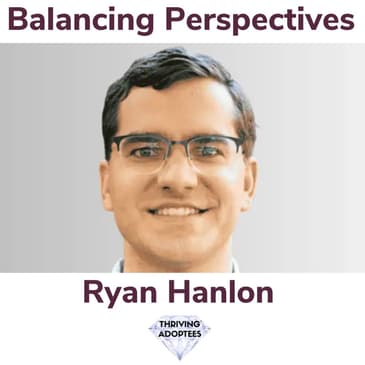
From rainbows and unicorns to adoption is trauma. Pendulums swing too far before they settle into balance. Listen in as we find a more balanced approach that's closer to the truth.
Ryan Hanlon became President and CEO of NCFA in May 2022 after serving as the Vice President of Education, Research, and Constituent Services since August 2017. Prior to joining NCFA, he served as the Executive Director of an accredited adoption agency that provided domestic and international adoption services.
Ryan is a frequent conference speaker, podcast guest, and go-to source for national and regional media on a range of adoption issues. He has expertise in accreditation and regulatory issues, state licensing matters, and adoption-related policy topics. Passionate about research and education, Ryan seeks to ensure that all those impacted by adoption have the resources and support they need to thrive in their families and communities.
See Ryan’s April 2023 appearance on C-SPAN’s Washington Journal.
Ryan holds four advanced degrees including an M.A. in Liberal Arts, an M.S. in Nonprofit Management, and an M.S. and a Ph.D. in Social Work. He has served as a social work field instructor and an adjunct professor of social work to both undergraduate, graduate, and doctoral students.
In 2022, Ryan received the Angel in Adoption award from the Congressional Coalition on Adoption Institute. Ryan lives in Northern Virginia with his wife and their four children including a son adopted internationally.
Here's the article we mention.
https://ifstudies.org/blog/beyond-hashtags-what-the-anti-adoption-movement-gets-wrong
Find out more about Ryan here:
https://www.linkedin.com/in/ryan-hanlon-/
https://www.facebook.com/AdoptionCouncil/
https://www.instagram.com/adoptioncouncil/
Guests and the host are not (unless mentioned) licensed pscyho-therapists and speak from their own opinion only. Seek qualified advice if you need help.
Want to learn more about thriving for you, your kids, your families or your colleagues? Pick a time to talk here
[00:00:02] Hello everybody, welcome to another episode of Thriving Adoptees podcast. Today I'm delighted to be joined by Ryan, Ryan Hanlon. Looking forward to our conversation today, Ryan. Hey Simon, thanks for having me and I'm also looking forward to the conversation. Yeah, you're a star, you're a star. So people might be aware of Ryan listeners. So Ryan is the boss of the NCFA, the National Council for Adoption in Washington.
[00:00:29] And he's also an adopted dad. So you've got, is it four children? Four children and your youngest child came to you. Youngest joined our family through adoption when he was about a year and a half. Yeah. So what we're going to do listeners is we're going to kind of, we're just going to start a big picture and then we're going to dive into something a little bit more personal, but obviously we're going to respect Ryan's youngest.
[00:00:57] It's his, her story. So it's their story. So I saw this article that you've recently posted Ryan, you did it with a colleague. It seems to be about the, the, the, the diversity of opinions on adoption. We've got this, we've got this rainbows and unicorns view.
[00:01:26] And then we've got the other end of the spectrum. We've got, we've got the adoption is trauma stuff and, and, and the, and the anti adoption. You know, that's, I think you're right. And unfortunately there isn't a lot of nuance, especially online. Um, and, and, and so often we, you know, the expression, the squeaky wheel gets the oil.
[00:01:52] It, there's a, you know, loud, um, but I think rather small group, uh, especially online that are anti adoption that, um, in some ways bully people who have more nuanced views.
[00:02:07] I can't tell you the number of adoptees I've met who have told me they've wanted to join an adoptee group and were bullied out of it because they had views that were, you know, more nuanced than, you know, than these, you know, extremist anti adoption, um, sentiments.
[00:02:26] And people who, you know, post positive things about their birth parents, adoptees who are posting positive things about adoption online, um, having, you know, strangers attacking them and making, you know, it's just a, it's an inappropriate way to interact, but it's also, um, it's harmful to adoptees who are looking to connect with others and aren't able to, you know, find a community to do that. Yeah.
[00:02:51] Yeah. I mean, I I've left groups on the back of being called toxically positive. And, and, you know, what's unfortunate is they'll call somebody who's nuanced toxically positive, right? I mean, you're not a, you're not a rainbows and you're not in the rainbows and unicorns camp. You've, um, and you've met with enough people and, and heard enough stories. I mean, we don't, no one has an exact number of how many adoptees are in the world.
[00:03:20] But we'd say millions, right? So we've got millions of different experiences and millions of different stories. And there isn't a, there isn't a single experience of being adopted or being an adoptive parent or being a birth parent. Yeah. And when we pretend that we, we do a disservice. Yeah.
[00:03:40] People have occasionally asked me, am I pro or anti-adoption? And I will say it depends. And then they feel that that's a cop out. And I'll say, well, it depends on whether it's in the best interest of the child or not.
[00:03:55] Well, that's a great way to phrase it. Yeah. And we, we want, um, we don't want to say, well, you know, adoption is always the right thing. Of course not. Um, but we don't want to just remove it as an option altogether because it's often the, the best option that is present, you know, at a particular moment.
[00:04:14] And, and certainly when we're talking about something like private domestic adoption, if, if a, you know, birth parent has made an, you know, informed non-coerced decision to place for adoption, why aren't we supporting that?
[00:04:29] Why aren't we putting supports in place for that as opposed to making that, um, rather difficult decision, even more difficult by adding on stigma or shame or, you know, the, the, and that's what happens in that online space when you are then attacking adoption or saying, um, you know, things that, that are untrue about those, um, those birth parents who've made that decision.
[00:04:54] It, it, it, it, it adds to their stigma. It adds to the, the, um, the already difficulty that they're facing. Something I've seen fairly recently. I know that you've done some work with, uh, Janelle, right? Janelle Bassam, um, who she's, I've interviewed her for the show. A great, a great lady.
[00:05:13] Yeah. I, I have come across a, another birth, a birth mom's, uh, fake Facebook group, um, or page. And I, I see them attacking adoptees. Have you seen this? I, I have, unfortunately, and it, you know, some of the, some of the communities that form online are just themselves, you know, they're, they're kind of like magnets for other people who have the same kind of negative views.
[00:05:43] It, um, you know, it's, people have had difficult experiences and, and, um, people, some people have been treated very poorly. And when that's the case, we understand why they're hurt and why they might be, you know, lashing out at others.
[00:05:56] And, you know, um, at times I think the best response is just to not engage at all. But I think when we want to communicate to policymakers or to the public generally, it's important to put in context the, you know, the, the broader experience and not just cherry pick.
[00:06:17] Here are three good examples, or here are three negative examples. Instead, you know, utilizing research to say, here's the, here's the, the, the wide range of experiences. And here's what a typical experience looks like.
[00:06:29] Yeah. I, I, um, I thought about getting in touch with the, the person about this because, but, you know, I think that we, we all need to be together. Do you know what I mean? There's in, in, um, in a, in the adoptee world, you know, we, we separate, oh, I'm a transracial adoptee.
[00:06:52] Yeah. I'm a baby scoop here and all the little cliques and like, and we're in the adoption constellation where I'm in this and I'm in this.
[00:07:01] And it's a lot for me, it's a lot more human if we're all just human, right. And we're all, we're all, we're all together. So when I saw this birth, birth mother or this, this group of people attacking adoptees, I thought that that's, I thought that that's really sad, really, because shouldn't we be kind of getting along?
[00:07:24] But then, but then I thought, well, I'm actually criticizing this person for criticizing. So I'm at it too. Right. Yeah. You know, again, sometimes I think the non-engagement might be the best strategy or, um, you know, a lot of times with the, these, the, the organized negativity, um, my organization and many of my, my colleagues,
[00:07:53] when we talk through this, the, the idea is not, well, let's not, let's not address them head on. Let's just put out, you know, research based information and allow that to be our response.
[00:08:08] So we, we want to, um, we, we want to, um, not, not go about it the way they do, not be looking to attack, but just to try and even harder to get out good information, accurate information, and let the public or policymakers, um, learn from that. And hopefully they're hearing from those voices and not the ones that are doing the online trolling and other, um, you know, really negative things that, that unfortunately is out there. Yeah.
[00:08:36] A friend of mine, uh, came, you know, reminded me of this truth a while ago, the fact that pendulums do swing too far. Right. Um, do, do you see, do you see it getting more, uh, well, you've used the word nuanced, um, more balanced. Do, do, do, do you, do you think it's, do you think it's coming back closer to, to truth? Well, do you know what? I hope, I hope so.
[00:09:06] I, I haven't seen a ton of indicators of that yet. I think, um, when I think about adoption from foster care, um, I, you know, there, there was this whole group that wanted to abolish child welfare. I'm not sure that's going to be a lasting movement. Um, but I think they've done a lot of damage even around messaging about adoption and what outcomes look like in terms of adoption.
[00:09:29] Um, and so I think, you know, I'm hoping the pendulum swings back and, um, and we have a, a, um, a conversation that is, you know, uh, steeped in the social science research and, um, you know, proven, um, uh, therapies that, that are like post-adoption supports.
[00:09:53] Um, and I, and I hope we, you know, are including conversations about post-adoption, um, support for birth parents as well, uh, ongoing, um, training and support for adoptive families. Um, you know, I, I think, um, our, I have seen our, our community, um, make progress in, in that regard. Um, but I, in some ways, I think the, the online negativity at this point seems to be getting worse.
[00:10:21] And I think it's because they're, you know, they don't, they're not looking to, they're, they're, they get feedback from other, others who are, are, you know, of this mindset. And so, you know, I think they're getting, they're in a, a, a, um, feedback loop that is working for them. Yeah. And we're, you know, often we're having very different conversations in, um, in different silos. Yeah. Have you heard this theory or truth?
[00:10:51] I don't know what extent it is or whether it's an urban myth that Facebook have found out that our angry anger is the biggest driver of virality. And as an organization that wants us online more of the time, so it can sell more adverts and increase its stock price, increase its net price. That, that, uh, that, that skewing, that skewing for anger. Have you heard this sort of stuff?
[00:11:20] Well, I mean, I, I haven't heard that, um, but I've, I've, I think we've all, any of us who are online are seeing that. Um, and, and that's not even a statement about, um, discussions of adoption. We just look at our polarized politics or, um, you know, people are, are, um, making, um, the, well, there's the, you know, we, we have, um, at least in America, a huge number of Americans are getting their news through social media.
[00:11:50] And it's, you know, very, um, uh, from, you know, very diverse sources, um, some of which are, are rather dubious. And I think, you know, we, and, um, it's often, you know, with that anger or with, uh, you know, demonizing of an, of the other and, you know, and take, then connect that to messaging around adoption.
[00:12:11] I think that can also, um, be how we have those conversations instead of, um, talking about what does it look like to thrive, which is what you like, you like to talk about. Um, the conversation is often, here's why I'm not thriving. You know, let me, let me find something to blame as opposed to a way to move forward or a way to be, um, to, you know, find healing or find growth. Yeah. Which do you prefer healing or growth?
[00:12:47] Um, in terms of those terms, I, I think I would want to be mindful of a particular situation. I think there are people who need healing and, um, and I don't think we should shy away from that. And I think for others, it probably looks more like growth or change. Um, and others it's like, you know, maintaining the same trajectory. And so, um, I, I don't want to go in and assume that's the case, but most, you know, all of us need improvement, right?
[00:13:14] Like if we, if we haven't been able to identify that, then we are, are blind. Um, so there's room for growth for all of us. And I think most of us, um, have areas where we've been hurt and need healing and, um, and adoptees are not an exception to that. Yeah. Yeah.
[00:13:33] Um, one, one of the things that I've been aware of, and I've been in this space, uh, professionally, should we say, um, I haven't been in spaces as long as you have, because obviously you worked for an agency before you came to the play. Yeah. So your, your background is a social worker, right?
[00:13:54] That's right. Yeah. I have a social work degree and I've been in the field for, um, a little over 21, 22 years, something like that. And you've got four advanced degrees. I think, I think you said on a lot of schooling. My wife tells me no more.
[00:14:11] No more. Yeah. Stop it. Yeah. Stop learning. Stop learning. Um, uh, the, one of the things that has been apparent to me or my worldview, my perspective on this really in, in, cause I've only been doing this like in this space five years is the fact that I, I think, uh, there are parts of the, there are parts of the adoption community.
[00:14:39] That have gone past being trauma informed and have become a little bit trauma obsessed is if it's possible to become a little bit obsessed, right? I don't think you can't, right?
[00:14:56] And, but, uh, and a lot of the people that I, I say, so, uh, that I, that I speak to when I talk about my own philosophy, which is kind of trauma informed. Well, first off is love grounded, right?
[00:15:10] Love grounded, trauma informed and thriving. That, that kind of sums up my philosophy in, in six, six words. To what extent do you think that we are parts of adoption? The adoption community has become trauma obsessed.
[00:15:32] Well, I think, um, one of the reasons I'm, I'm optimistic about the future is about the future of adoption is I think, um, one of the more positive changes in the last, you know, 20 or so years is that parents have had better training in advance of an adoption to be informed about how to have trauma informed, you know, parenting in ways that I think would have been beneficial, you know, decades prior.
[00:15:59] So you earlier, you talked about that pendulum swinging. I don't think we're at the point where parents are, um, being told, you know, too much information and you're getting too much training. I don't think we're at that point. And I don't think we need to swing in the other direction, but I have met certain individuals who want to, um, attribute everything to trauma or would make a, um, a blanket statement. Like adoption is trauma.
[00:16:25] And, you know, and, you know, without any, any real, um, desire to look at perhaps what preceded the adoption and, and think through, you know, might that be a contributing factor or, you know, you know, the, the social science evidence is pretty, um, pretty overwhelmingly, um, clear that adoption. Adoption is serves as a very beneficial intervention in the lives of adoptees.
[00:16:52] And so to, to like fully disregard the, the, you know, mountains of, of social science literature, and it's, it would be a very simplistic thing to just come in and say, well, adoption is trauma and, and leave it at that.
[00:17:09] Yeah. Okay. Um, cause obviously the adoptee, the people, the anti-adoption lobby, obviously largely adoptees, they're picking, they're picking data that supports their, um, argument, right?
[00:17:29] So that they will talk about the, you know, there's, um, four, uh, adoptees four times more likely to attempt suicide or I, I don't, they have, they have their, they have their data. And clearly you're looking at data that's more holistic. I don't know how well, I mean, let's dive in on that.
[00:17:55] Cause I think this is actually one of the main talking points that the anti-adoption community likes to bring up. And I think they have it exactly wrong. And so I'm glad you brought, um, you know, I wasn't planning on talking about this, but I'm glad you brought it up because, um, they're like, like, let's start with their statement. What they're saying is on its face, a true statement. Adoptees are more likely than the, than somebody in the general population to experience suicidal ideation, to have suicidal thoughts or to, you know, attempt, um, suicide.
[00:18:25] Um, that, that is a true statement. That's a correlation though. It's not a causation. And there have been researchers, um, independent of NCFA, independent of adoption groups. There have been researchers who have studied this in more detail. Um, the medical school at, uh, North Carolina Chapel Hill and Duke, um, did a combined study and looked at this in, in more detail. And what is it that they found?
[00:18:53] They found traumas are the predictive factor, not adoptee status. And adoption often serves as a protective factor, not one that's harmful. And so, um, it's true that adoptees are more likely than the general population, but not because they're adoptees.
[00:19:12] It's because they have experienced traumas and adoptees are far more likely to have experienced traumas, especially those who are placed, um, through inter-country adoption or for adoption from foster care to have had those traumas, um, prior to being in their adoptive home. Um, and so when, when you are only looking for a correlation, you could, you could find all sorts of, of, um, make all sorts of crazy statements.
[00:19:39] They're just not, it's not an appropriate way to go about social science and they should know better. I mean, the, the, the, the communities that are saying this either haven't looked hard or they've been willfully, um, ignorant because this data has been out there. Um, and it's been out there for, for years and they're, they're choosing to either misrepresent or, or, or to be, to be ignorant.
[00:20:04] And it has real harms because I hear that statement over and over again from people as, you know, as a, as a way of, of taking down, um, adoptees or adoptees might even be feeling bad or be, you know, more inclined to think poorly of the decisions that were made for them in a, in a manner that is the exact opposite of what the social science evidence actually says.
[00:20:31] Okay. So is, is what you're saying that, uh, if you take a group of, um, a hundred people and who have experienced adverse child experiences, this ACEs thing, right? And you, and you take, and you have 50 of those kids adopted and 50 of those kids are not adopted and all other things being equal, right?
[00:21:01] What do they call it? What do they call it? Catris paribus or something? If I remember my Latin from universe, uh, economics, uh, that, that, uh, adoptees would be, uh, the, the suicidality, suicidal ideation would be lower amongst the adoptee group. Is that, it's kind of, is that what you're saying? Well, in the study that, that I'm referencing actually adoption, it's what the researchers call it. It just completely fell out of the model. It's not a predictive factor at all.
[00:21:30] What was, um, predictive of suicidal ideation was the number of traumas, the poly trauma experience and the severity of the traumas that were experienced. That's what predicts suicidality, um, not adoptee status at all.
[00:21:45] Um, and there are things like we can, you can then look at adoption, adoptees, adoptive households, and recognize where they, um, because of when the placements happened were preventative of additional traumas.
[00:22:00] So, um, you know, in the scenario you gave, I would, you know, all other things being equal, meaning their prior trauma experiences being equal, I would anticipate, um, that the adoptees and the non-adoptees have the same experiences there. Same experiences? The same outcome in terms of suicidality. Right. So it wouldn't, it wouldn't be the, the fact that they wouldn't, were adopted wouldn't make any difference. That's right. That's right. Okay. All right. Okay.
[00:22:30] I see. I see. Um, so let's, um, let's shift the, the, the, the focus now and look at like you as a look at the, the, the micro. So you've been in this, in this space, uh, decades, right? Uh, how has being, uh, an, an adoptive dad, how has that?
[00:22:59] That influenced your opinion and your, your opinion on adoption and your, your views on this subject? Yeah. Um, so I was already a strong adoption advocate. Um, at the time I became an adoptive parent, um, it certainly became a lot more personal for me.
[00:23:22] And, uh, I became a parent through inner country adoption and my, um, you know, my son is, I see him, I've got him on the school bus this morning, um, right before hopping on this podcast. And, you know, so I, I see day in and day out, um, a kid who is, you know, he's got siblings who love him and extended family who love him and friends.
[00:23:45] And, you know, he's, he's like, like all the other kids, you know, and to think he, he could be in a setting where he doesn't have, you know, a parent tucking him in at night. And he doesn't have, um, the, the, um, support and, and, um, services that, that he and all children, you know, deserve.
[00:24:06] Um, to me, that's a tragedy and, and I, I connect the, the decline in inner country adoption, I think is a, a, a general tragedy. I hope we can talk about that at least briefly, um, because it's often being pushed. It's a policy decision that are, that our country, the U S and other countries have made to decrease the number of inner country adoptions without any recognition of the impact on children.
[00:24:34] And, um, so for me, yeah, it's personal. Um, but I was, I was already an advocate and just kind of makes me even more passionate, um, to, um, see what I think is, is the, the, the wrong direction that our country and other countries are, are taking regarding inner country adoption. Yeah. So we'll get into the decline, but I, I wanted to share something that I heard last week, which is really.
[00:25:04] Um, really got me really up. It's, it's, it's really upsetting to me. Uh, so I was talking to a adoption professional. She was for, she leads an agency and adoption agency. They are in, into domestic and international adoption. She talks about going to three countries in Africa. I think they were Kenya, Zambia, and Malawi. If I remember rightly.
[00:25:28] And she met with officials in each of those three countries. One of those, one of those officials started telling her about babies being thrown in pig pits to die. Starfall. Starfall.
[00:25:54] And, and then, and, uh, and, and then she, she, uh, somebody in the next country also told her about that, um, without any prompting. Like spontaneously in the conversation. It's, it just. And unfortunately, I, I mean, I think the policy makers that are, are part of this decline.
[00:26:23] Don't have. They're not seeing the realities in many of these orphanages around the world. I've been, I mean, I was in Ethiopia in, and I'm sorry, this is like not family friendly. Kids listening, you know, close their ears for a second. Um, I was in an orphanage in Ethiopia where children's fingers were eaten by rats. You mean like little babies, um, overnight. And I mean, just awful, awful things, children dying, um, just cause they're not getting proper care.
[00:26:53] Uh, I've seen that in India. I've seen that in countries all over the world. And the, the idea that we have so many, you know, tens of thousands, hundreds of thousands of families that would be open to adopting these children. And hundreds of thousands, if not millions of children who could, would benefit by having a permanent family. It's a tragedy that our, our policymakers have not found a way to meet that need.
[00:27:23] And families are the, that that's where children are going to thrive. Children are not going to thrive outside of a family. Um, it's, we've got millennia of human history has, has taught us that. And we're not going to, um, the, the government can do a lot of good things. But the government is not going to be a family.
[00:27:39] And, and we're not necessarily, necessarily saying, I'm not necessarily saying that those, uh, that those kids need to be, uh, they must be, um, moved out of their country and adopted into the UK or the US. I'm not saying that. I'm just saying that, that, that, that stuff has to, that stuff has to stop. Agreed. Agreed.
[00:28:04] And, and we would be celebrating when, and we do celebrate when adoptions happen domestically. I mean, that's, um, I mean, I, I just mentioned Ethiopia. There are domestic adoptions increasing in Ethiopia. That's a great thing, but it's, it's not increasing in a way that's. Any, anywhere close to the, the magnitude or the scale of the, um, issue that needs to be addressed. And so I think it's a both and not an either or.
[00:28:31] And, and when we can't do a, a, an adoption domestically in a timely manner, we ought to retain the, um, ability to provide children a family and not let a border become a barrier there. And, you know, but it, yeah, it's not about coming to the US or the UK. That's not the point. Um, the, the point is let's let, let children grow up in a family. Yeah.
[00:28:57] So how has you, how has being a dad through adoption, how has that changed you as a person? Well, you know, I think I have, I think one advantage that I have on this in terms of reflecting on it is, um, three children who were, um, born to us, one child through adoption, but all four are very different. They're very, just different people.
[00:29:23] And so in some ways, you know, it's not like you can't say, well, my wife and I, we've got these great genetics or terrible genetics or good parenting or bad parenting. I mean, those things matter. And those things are, are, are impactful. Um, and yet, you know, I've got four different, very different kids, you know, all of whom I love dearly, but whom I love very differently because they're very different people. And it's not a, um, it's not like I love one more than the other.
[00:29:53] It's just, you know, four very, very different, very wonderful people in my life. And you, there's a, there's a humility in recognizing that it's not all about me or us as parents. They are who they are, um, in, in, in some ways, you know, despite me. Um, and so adoption helps see that too, you know, helps, helps, you know, point that out.
[00:30:17] Um, and one of the things that is specific to adoption is recognizing that what matters and what lasts is the relationship. And so, um, like take my, my, uh, three, um, uh, children who were born to us. What matters when they're adults is going to be the relationship we have with them. Not that there's a genetic connection, right?
[00:30:43] The same with our youngest, it's going to be, you know, a relationship and, and have we maintained a relationship? Um, part of that's our parenting, you know, there's a million different factors that influence it. Um, having a genetic connection is not one of them. And so, you know, if we want UK, you guys don't do Thanksgiving, we've got Thanksgiving coming up, you know? So it's on my mind.
[00:31:05] Um, if we want our, our kids when they're adults to be sitting around the Thanksgiving table with us, we, you know, having a relationship with them matters, not just a genetic connection. Yeah.
[00:31:20] One of the themes that, uh, that we often dive into on, on thriving adoptees podcast is, is this truth that if we want our kids to thrive, uh, then we need to be thriving too. Hmm. So what does thriving mean to, to you, Ryan?
[00:31:43] And, and I just want to say that, uh, I jumped, I jumped pretty quickly from what you just said to that question. That's okay. Yeah. But I'm not, you know, like, so it's cause I'm taking it as a, as it true, you know, the powerful, the power of the power of relationship.
[00:32:01] And, you know, whether, whether they, the, the, the time we spend with our family as adults, when we haven't got, when we've got a choice, whether we go back to the family or we, or we don't. Yeah. So, um, so to answer your question, what does thriving mean to me? I love that you, that you bridge it with, if we want our kids to thrive, we need to thrive in part because we're, we're role models. We're setting an example, right?
[00:32:26] So our ability to eat healthy or not spend all day staring at our scrolling on our phone or, um, exercise, all those things our kids are watching. Our oldest right now is learning to drive. And so even when he's not driving, you know, I, if he's in the car with me, I'm setting an example because, you know, he's learning and he has been for many years now because he's watched, you know, his mother and I drive him around. And, um, and that's true in, in our life.
[00:32:52] So, um, for me thriving, um, in terms of what that looks like for my kids, the temptation is as parents, the temptation is, well, good grades and looking, you know, you're having lots of friends and those are, you're doing well in sports. And, um, those are, are fine things. And, and I think most of us want those for our kids. Um, but that's not, that's not short or long-term, certainly not long-term thriving.
[00:33:22] You know, I think that is a really meaningful relationships. Um, I think being, you know, healthy and making good decisions there, um, you know, prioritizing things like faith and family as, um, as important. And not worrying about what, you know, university am I going to get into or how many people liked my most recent comment on social media, uh, and, and having that perspective. It's hard to do. And, and I think you're exactly right.
[00:33:52] Part of, you know, a big part of that is how are we, um, modeling that for our children and how are we showing them, you know, through our actions, what, what should be valued? Because my wife haven't got any kids, right. Um, and yet I've spoken to a lot of parents, I, you know, adopted parents, biological parents. And before I came into the adoption space, a lot of work with, with kids and parents.
[00:34:19] And one of the most telling things that I heard in this area that kind of relates to modeling is, uh, kids do as we do, not as we say. Yeah, I think that's right. And especially in the, in that long run, um, there, you know, that you end up kind of parenting like your parents, or if you really disliked the way they parented, you might do the exact opposite of what they did or have some type of, uh, you know, reaction to it.
[00:34:45] Um, and, you know, but we learned through those, those actions and through, um, that it's, that that's been set as what's normal. And unless there's some type of a disruption or intervention, we, you know, our framework for how the world works is, is modeled to us primarily, especially when kids are younger by, by parents. Yeah. I want to, you mentioned the word, you mentioned the word faith.
[00:35:14] So I just want to jump back a little bit and tie two things together. If I can do that. Uh, have you heard, first off, have you heard of this IFS, this internal family systems model therapy? Right. You've heard of that. Sure. Um, have you, have you heard it mentioned that it's a psycho spiritual model? Have you heard that? Um, I, yeah.
[00:35:40] So that I think is one of the areas where the, the kind of psychodynamic view has changed in, in, in more recent decades, there's been a movement to bring in a more spiritual element as well. Recognizing that it's a big part of many people's environment.
[00:35:57] And so, um, to, if you're a therapist or if you're, uh, um, if you're a clinician of some sort and you're leaving out something that is enormously important to half of your clients, uh, that's a huge part of their life and their, their value formation in the worldview. You're missing out on an opportunity to understand how they're, they work as a family unit. And if it's family systems, um, you're, you're going to, you might be missing some of the most important puzzle pieces.
[00:36:27] Yeah. So by spiritual, uh, Dick Schwartz, the guy that created IFS, um, he, he's including, his view is a, is a non-religious view of spirituality, right? Rather than a religious one. Um, and I, I've, so most models are psychological and IFS is psycho-spiritual.
[00:36:58] So he, he's talking about, uh, religious, well, he's not necessarily talking about religious psychology, sorry, religious spirituality. But it, it, it, it kind of, it's about our essence, uh, as spiritual beings having a human experience as, as one guy puts it.
[00:37:23] And that he created IFS many decades ago, but he, he seems to be now realizing that the, the spiritual, he hasn't been giving, enough emphasis or enough balance to the spiritual side over the, over the cycle, over the psychological side. Are you, am I, is this all mumbo jumbo? Are we making any sense?
[00:37:52] You know, um, yeah, it's, it's making sense. And I, I actually probably would benefit by even like learning more and reading more about it. Um, the family systems, um, model that, that I learned, you know, through, um, my graduate studies, um, is I think pretty compelling, you know, um, and I see it within, you know, like it would be hard to understand our family dynamics unless you really, you know, studied the interactions we have with one another.
[00:38:20] And you really learned who we are because there's non-verbals, there's, you know, things that, that happen that just, you know, is not going to be clear. If you're looking at just, you know, one person, um, and not taking into account, you know, everyone, including our crazy dog. Um, and, and like what, what then, um, happens, you know, in, you know, when it's my wife and I in a room, the dynamics different than when it's my wife and, and our kids and, you know, like it, things, things are, things change.
[00:38:49] And, um, and to not bring in spirituality for families where that's an important part of who they are and how they interact with one another and how they understand the world to, to just totally leave that out is missing an opportunity to work with them. Um, through, um, a channel that they are already receptive to. Now, what I wouldn't want to do if I'm a therapist, I'm not, um, but if I were a therapist, what I wouldn't want to do is push spirituality on people who say, I'm not interested in that.
[00:39:18] I don't believe that, you know, if somebody came to me that I'm an atheist, uh, I wouldn't say, well, let's bring a, uh, you know, religion into your family system and mix it up that way might be good for them. But if they're not interested in it, if they're not, you know, receptive to that, I don't think that's the therapist's role. Yeah. Good. Cool. Um, so we're kind of coming up on time now, Ryan. I know you've got a hard stop in, um, in, in five minutes. Yeah, I can, I can, I can be a little bit late if you want to keep going a few minutes. Yeah.
[00:39:47] I, I wanted to ask you, uh, we've covered a number of different topics and, um, I wanted to ask you if there's something that you'd like to mention that I've not asked you about. I mean, we talked about the decline in international adoption. You talked about policymakers, um, looking to trim that back. Is there anything else? Well, we haven't, we've talked a little bit about, um, birth parents. You, you mentioned, um, working with Janelle and having her on the podcast.
[00:40:17] And I, um, you know, I think that's an area where we need to continue to see more services and support. Um, I, I don't, you know, I still don't think there's a lot that's happening at the, I think in, I primarily understand the U.S. context, at least. Um, I think states and, um, the federal government could do more to, to bring a focus on birth parents in a way that they, um, haven't done as much in the past.
[00:40:44] There's been more of a focus on adoptive parents than, um, and, and adoptees than there have been for birth parents. And so I'm, I'm hopeful that becomes even more part of the general, um, conversation. And when we're thinking through what does post-adopt support look like to ensure that we're, um, including them and mindful of them. Um, and so that, you know, that's to me something that's, that's really important.
[00:41:09] Um, and, you know, one of the other changes, I'm just thinking of like the trends, um, an enormous number of inner country adoptees are now children who have a medical special need of some sort in a way that wasn't true decades before.
[00:41:27] And that's an area that I think warrants a lot more, um, research to, you know, understand what, you know, how, how do those, that that's a, a, a different dynamic. If you're parenting a child who has a, you know, a significant medical special need or a complex need of some sort. And, you know, what, what are the supports that families need so that they can thrive?
[00:41:52] So when they're on your podcast, 20 years from now, they are talking about, here's what thriving looked like in that, in that context. Yeah. Fantastic. Thanks for coming on Ryan. I really enjoyed our conversation. It's been, uh, far, far reaching, but I hope you've enjoyed it. Uh, thank you, Simon. I have enjoyed the conversation and look forward to the next time we connect. Okay. Thanks a lot. Cheers. Bye bye. Thanks listeners. Bye bye. Cheers.