What helps us blossom? What gets in the way? How do we overcome those obstacles? Listen in as we explore big questions with grace and depth. Brad stretched me out of my comfort zone into new insights. I hope this interview catalyses sparks insights in you.
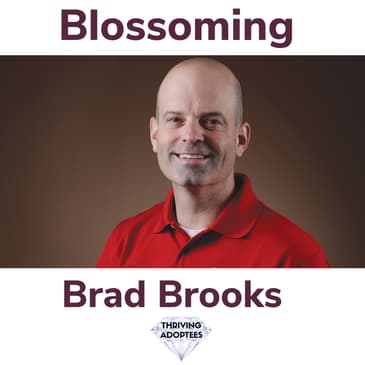
Foster parent Brad Brooks serves as the Executive Director of Southeastern Children’s Home and Counseling Center. Brad is an avid San Francisco 49ers fan and a running enthusiast. He has previously served as both a Case Manager, Education Instructor, and Director of Social Services for Southeastern Children’s Home. He has a Bachelor’s degree from Lipscomb University and a Master’s Degree from Converse College. He and his wife, Katie, have four children: Reese, Ellie, Hattie, and Will.
Guests and the host are not (unless mentioned) licensed pscyho-therapists and speak from their own opinion only. Seek qualified advice if you need help.
Want to learn more about thriving for you, your kids, your families or your colleagues? Pick a time to talk here
[00:00:02] Hello everybody, welcome to another episode of Thriving Adoptees podcast. Today I'm delighted to be joined by Brad Brooks. Looking forward to our conversation today, Brad. Me too, Simon, thank you. So, thriving. What does thriving mean to you, Brad? Well, thriving, I mean if you think about the opposite, or maybe a lesser scale of thriving is just surviving, which means just getting by.
[00:00:30] And I don't think we're created to just survive, I think we're created to thrive, which means to almost like to blossom, to do well. And so I think in the context of what you're doing and what I do every day, we want the kids we work with to not just survive, we want them to thrive. Yeah. Grow, to blossom, so to speak. So let's go with that one. If you're thriving, you're kind of blossoming.
[00:00:58] Blossoming. And I like the word blossom. For me, it implies natural and nature, right? Right. The flower, what does the flower need to blossom? It needs some sunlight. Right.
[00:01:23] It needs a bit of rain, but it's kind of, it's within its essence to do that. It doesn't require that. Well, a flower doesn't require any thought, does it? It's, you know, it's, what do they call it? A non-sentient being. Right. Yeah. Yeah. Yeah.
[00:01:51] And the thing that, the next thing that pops up to me on that is, I think you guys call it blacktop. So it's the material that roads are made out of. Yeah. No, blacktop. So we call that, over here in the UK, we call that tarmac. Okay. Yeah. And it's named after a bloke, a Scottish guy, I think, called Macadam. And he came up with this idea of tarmac.
[00:02:17] Something, I don't know, I don't know where it came from. But as a kid, I remember seeing, I remember seeing a tiny little daisy, I think it was.
[00:02:31] And it had forced its way through a level of blacktop. And I thought, how can that, how can that be? How can that, the power of that daisy's nature be strong enough to burst through something that's so big and chunky and heavy? Yeah.
[00:02:57] Right? I don't know how thick blacktop is, but, you know, like four inches, six inches or something like that. So it's got a lot of weight on it. And somehow this, the flower forced its way through that. Yeah. That way. It's predetermined. Yeah. Predetermined. Yeah. Which is a nice metaphor for trauma, I guess, is it? Yeah. You're determined.
[00:03:24] I mean, you gotta, you know, like with Thrive, I mean, you got to, it requires some work on your part. You have to be determined to, you know, just like the plant you're referring at. Yeah. Get through the crack of the tarmac or the asphalt, whatever words you want to use. Yeah. Yeah. Yeah. So that's an inner thing, right? That's coming from within the flower.
[00:03:57] And that's coming from within the flower. And the flower is, I don't know how far we're stretching this metaphor, right? Yeah. That kind of the, there's the internal driver and then the, the, the, the, the environment to thrive. Yeah. So if we're thinking about it from, from your perspective, creating the environment for the kids to thrive. Well, and I think too, I mean, Simon, the, we can carry the metaphor.
[00:04:27] It's really good. I mean, because you think about tarmac or asphalt on top of, you know, grass. I mean, the, the, the deck is so stacked against this, this flower. Um, and yeah, really it's not given much of a chance at all. And yeah, the kids that I have seen come through our program over the years. I mean, that's one of the things I've said to our staff over and over again is the deck
[00:04:54] is stacked against them in a major, in a significant way. Um, and, and we've got to do our best to, to try to level the playing field if we can. And I'm not, I'm not talking like through, you know, some sort of government intervention. I'm talking about as a staff, you know, to try to really pour into them and not give up on them. Because in, in, in so many ways, they're just waiting for someone to give up on them because that's what's happened their whole lives.
[00:05:23] They've just had, um, that person after person after person, especially adults and authority figures in their lives. They've just given up on them. And so that's what they're waiting. But, but this, this flower, um, again, deck totally stacked against it, you know, completely covered. Um, and it just, you know, just needed something to, to kind of a little bit of a crack in the surface, something to believe in it and it blossom. Yeah. So let's take that.
[00:05:53] Let's take that first. Um, the first idea, uh, that comes to mind, listening to talk about in depth and about the kids is that we've clearly, we've got, we've got an audience here that are listening, but probably not kids. Right? Not, I don't think many kids, uh, tune into the thriving adoptees podcast. In fact, I know, in fact, I know, I know that most of the listeners think something like 80% are over 40. Okay.
[00:06:23] Um, so what, what have you learned? What have you learned that you could share with those listeners that are over that age? Is that, does anything come to, to, to, to mind? Yeah. You know, the research shows the, the, the, the more, um, adults that, that can be in a child's life who have a, a really positive impact on their life.
[00:06:52] The, the, the higher their chances are for success. Now, how do you define success? I don't know. I mean, I, I, we're not into defining those terms, but I, I think we have a general idea of what success does not look like. Um, and it's, you know, whether it's incarceration or drug use or whatever, um, you know, we would say those that's, you're not a successful person or your, your life is not led up to that point if you're, you know, participating in those things. And then there are measures for success.
[00:07:19] You know, if you, you know, you work on your education, you've got a job, you're contributing to society and all those things. And so the, the more, um, and the more adults you have in a child's life that can really pour into that child, um, the, the greater their chances are to, to be successful. And we've seen that time and time again. Um, and, and it's, it's not to say it's easy. Uh, um, you know, we gotta, there's a, there's a kid we've been working with in our program for
[00:07:49] over four years now and, and he's a knucklehead. And the number of times he's been in my office and we've just talked through some of the really, really questionable decisions that he's made. Um, and he's making one right now. He's in the middle of one, but we're still there. And the key with this one is he's coming back to us. He, he, he hadn't just, you know, given up and said, Oh, these guys don't care about me anymore. Cause I'm making this dumb mistake.
[00:08:18] He's coming back to us time and time again. And we're here and he, and he knows that. So, um, I don't know if that answers your question or not, Simon, but. Yeah, it, it, it does. It does. If I just take it a little bit further. Um, uh, so it's about learning, like it's about the depth to which we learn something. So we're, we're talking to an adult audience here.
[00:08:43] Um, the, I guess the adult audience is somehow thinking there's still more for me to learn. I, I'm, I'm, I'm not living my best life to put it in, in, in simple terms. So, but I must be missing something here. So I must be, there must be something, there must be part of the G saw missing that I, that I have, I haven't yet found yet.
[00:09:10] And maybe the thriving adoptees podcast will help me get that. Maybe that'll, it will, it will give me the, uh, a different learning and new learning, or it might give me a, the same learning at a, at a different, different level. Cause what's if, if we keep on making the same mistakes until we, until the lesson is
[00:09:38] kind of embodied within us. Is that like, we can, we can get a, we can get a new idea as a, as a theory in our heads. So we can have a, like a change of mind. Right. Um, but, but then we've got a, a change of heart, a change in the way that we feel about something. Um, and, and I, so you can have a change of mind, a change in heart or a change of, of life, like something really huge and really huge and, and big.
[00:10:06] So it's the same learning at a cellular level rather than a nice idea. Um, so I'm, I'm thinking about giving up smoking, right? For example, uh, uh, so people, people that they think it's a good idea to give up smoking, but they haven't had a big enough, uh, realization. And I, and I was in that camp, right? I was, I was in that, I was, I was in that camp.
[00:10:34] I knew that I should give up smoking, but I hadn't yet seen that clearly enough to do, to do differently. So, yeah. So I, I think it's, it's about us seeing better cause it seemed, seeing the same idea or the, the, yeah, the same plan of action at a different level for ourselves.
[00:11:03] Um, because it's very different. You, you raising, um, helping a kid, uh, that's within your care and the adults listening. It, it, it, but for me, it's, it's about insight. Insights are what change our worlds, but profound insights that we get in our bones. Um, so we don't get it just in a heart and our heads. We don't just get it in our hearts. We get it in our bones.
[00:11:31] And when we get that in our bones, then the world changes, changes for us. Sure. Uh, yeah, no, I agree. I agree. And I think, you know, I think what I hear you asking is, you know, how can, how can we as adults, if, if the audience here is, you know, 80% over 40, which is me, I'm 46 and I've been doing this a long time. And, and, and here's what doesn't, doesn't work is bull crap.
[00:12:02] I mean, it just doesn't, you know, and I learned that the hard way and you've got to be authentic. These kids can, can sniff you out a mile away if you're not being your authentic self. And here's, here's one of the struggles I've had Simon. And, and, and I think this will, maybe this will resonate with some of your listeners is I grew up in a very normal, whatever normal is. Normal is the wrong word, but, but very, um, you know, healthy family.
[00:12:30] My parents are still married after however many, you know, 50 years. My dad, my mom never hit me. Um, I never wondered where my next meal was coming from. I had a roof. I mean, a pretty sheltered privileged life. If you want to use, let's just say privilege. Um, and, uh, it's hard for me working with some of the kids I work with because they've had the complete opposite experience where they, you know, there's, there've been multiple men
[00:12:59] or women in and out of their parents' lives and there's abuse and there's, you know, poor health when there is food and where's my next meal coming from? Where are we going to sleep tonight? That's one of the, and so I've, I've just been really honest with these kids. And I said, look, it's, it's impossible for me to empathize with you. I cannot empathize with you, but I can sympathize with you. And I can tell you that I'm here when you need to talk. Um, I'm going to call you out and do something stupid.
[00:13:27] And, and, you know, sometimes they do, but I'm here and, and I'm not going to, I'm not going to go anywhere. I'm not going to give up on you. And so I think, I think that's a big thing is, is being, you know, just being real, you know, being authentic, um, with them because, you know, as soon as you start bluffing, as soon as you start pretending you're somebody or not, man, they, they smell that a mile
[00:13:54] away and then you're done with your relationship, um, with them. So I, I hope that helps. I think where I guess the reason I'm maybe struggling is I'm just trying to draw the similarities similarities between you, you and kids and the audience as, uh, as adults.
[00:14:17] I can see some, I can see some big things, um, which are persistence, right? Keeping going. Yep. So you're keeping going with your kids. You're, you're making it a hundred percent clear that you're still going to be there. So you're, you're keeping going. And so you're, you're leading, right? So leaders go first. So that, that, that it rather than some people have given up on them.
[00:14:47] You're not, you're a constant and you're going to go. Um, so there's a consistency there in, in showing up. There's a consistency that the listeners to this podcast are showing by the virtue of the fact that they are listening to the podcast. They're still, they're still going. And you and me, I, I, I, I'm, I'm here for, I'm here for them. I'm, I'm here for, I'm here for the listeners. You're here for the kids.
[00:15:16] You're joining me here, sharing your learnings. You're here for the listeners too. So persistence is a huge thing. And, and we're already, and we're already doing it. Right. The listeners are already doing it by virtue of the fact that they're here. Uh, so something within them, call it nature, right? Um, for religious people, we call it God, maybe. Right.
[00:15:44] But just for, for non, let's assume a non-religious audience. Um, their nature is keeping them in the game. The nature is keeping them in the game, uh, in the belief that they are. They may see something differently. They may see, they may, they may see their sound cells differently. And they may see the world differently.
[00:16:12] And that will be another step along that learning, healing and growth journey. And, uh, you talked about the word growth at the outset. You said you use, you use the word, um, blossom and you were use the word growth. And I jumped on the, I jumped on the blossom word.
[00:16:36] Funnily enough, because I, I actually did a, uh, a webinar for adoptive parents called blossom. Um, so, you know, that was an, uh, a meeting of mine on that, but there's a lots of space that we can, we, there was lots of space for me to jump into and talk about that, um, blossom. Peace. Um, as a metaphor that we can extend, like, you know, we, we turn in what we're doing with metaphors.
[00:17:04] We're turning the abstract into the concrete. And when something is concrete, it's a thing and it's a thing we can grasp. So we use that word understanding, don't we? We use that under the word understanding and we use the word grasp. And, and we use the word grasp because we can grasp an object. We can grasp a metaphor, something that is vague and ethereal and abstract. We can't grasp it.
[00:17:31] So we turn the abstract into the concrete by a metaphor. Um, and then that, uh, that, that metaphor allows us to grasp the object or our brain to grasp the concept that we're trying to get across. Um, and, and it led us in the blossom led us into this way.
[00:17:55] And the fact that the, the, the, uh, the kid, the deck is stacked against the kid with the weight of stuff that's going, uh, that's, that's gone on for them in, in the past, in their lives. The, um, the, the inconsistency of people in their lives, people not showing up for them, the trauma that they've, uh, that they've been through. Um, so now I'm stuck with the next question, right?
[00:18:25] Um, what let, let's talk about us as adults. Um, I've got 12 years, uh, I've got 12 years on you at, uh, at 58. People use the phrase getting in their own way. Have you heard that? We get, we're getting in our own way.
[00:18:54] And it seems to me that, that implies two, right? There's the one that's trying to get something done. And there's the one that's, that's getting in the way. Like it, it, it doesn't, it, it doesn't seem quite to, to stack up to me. Do you see it? Is it just me? Do you see it? No, it's not just you. I mean, it's, you know, this, you're your own worst enemy.
[00:19:24] You're getting in your way. Um, you know, you referenced, you referenced God, uh, you know, scripture, the new Testament's clear. Paul, the apostle Paul, very clear about, uh, you know, I don't want to do the things that I do, but I do them anyway. Kind of thing. Um, yeah. I mean, getting in your, getting in your own way. It's, it's human nature. Um, it's, it's all those things. It's, you know, but is it nature? Is it nurture? Is it both? Um, and yeah, I see that with, with these kids. Yeah.
[00:19:54] You know, getting in, in your own way. Um, but, but isn't trauma getting in the way for a lot of them? Um, yeah, I think so trauma and, um, the, their, just their, their background. Um, I, so I can tell you, I'll tell you a story real quick. 15 year old girl that, um, we fostered, um, smart, beautiful. Great. She, she had, she has so much potential.
[00:20:22] Um, and you know, my, my wife and I just poured ourselves in to her. Um, and, uh, you know, after three months of, of her living with, you know, my, so I have four children, so my wife and my four kids, so living with the six of us and, and our dog and all that, um, you know, she had a, you know, a breakdown where she was doing things at school. She wasn't supposed to be doing, you know, drugs and whatnot.
[00:20:49] And, um, we had, we had made a concerted effort to, to just kind of accept her into our family, which included doing all the things that, that we do participating in sports, you know, sitting down for meals together as a family, talking about our day, eating the foods that, that we ate. Um, and frankly, Simon, we, you know, I'll speak for myself. I won't speak for my wife, but I'll speak for myself and I'll say, I thought we were doing her a favor. You know, look at us.
[00:21:19] We're, we're, we've got, you know, we're doing activities and we're together as a family and we're healthy and we're eating healthy and we're spending time together. And, and when she had this, uh, incident at school, I sat down with her and I said, uh, you know, you've been with us three months and this has probably been the, the happiest three months. I think I said, I mean, I just made the statement. I said, this has been the best three months of your life. Very, I was very confident, Simon, that, that I had given this to her.
[00:21:48] And she went, no, no. You know, she kind of looked at me like I had three heads and was like, what are you talking about? And I said, okay, maybe not the happiest, but, but the healthiest, you know, we, we fed you, you know, my wife would get up every morning and make smoothies for her, you know, a young lady who never ate breakfast and was tired all the time. And we were trying to, you know, all these good things, physical, you know, the whole, the whole family, the whole person, I mean, church and everything. And she's like healthy.
[00:22:16] I don't, you know, and I, okay. And I finally said, what, you know, we've done a lot for you over three months. And, you know, you don't, you don't have the violence and the, the unhealthy habits that you had. And she said, okay, but I like those. And I just kind of looked at her like, did you really just say that? And she had told me a story before about she and her mom chasing each other around the
[00:22:43] front yard, you know, going after fighting, you know, physically fighting, chasing after each other with like pot pots and pans trying to beat each other. You know, it was just this image of violence. And she said, and I, and I referenced that and she said, well, that's normal for me. She said, I like the chaos. And that's because I said that that's chaotic. And she said, I like that. I'm comfortable in that. You know, you, you and your family sitting around after church on Sunday morning and talking
[00:23:10] about, you know, this, that, and the other, and how your day went and how church went and man, this food is, we never did that. I don't even know what, what that is. And it was, you know, it was almost a disdain for, for what I valued. Um, and felt like was healthy and, and, and important and made people happy. And she just didn't want any part of that. And that was a real eyeopening experience. And I'm not here to judge, you know, anybody.
[00:23:37] I would argue that it's healthy for a family to get together in the evenings or the afternoons and have a meal together. I think, I think research shows that I think that these are good things and, and certainly not chasing your mother around the front yard with a bat or a pot or pan or whatever. You know, that's a good thing if you're not doing that, but for her, that was normal. That was chaos that, and that was comfortable for her. So she wouldn't really even make it feel like it was chaos. It was just comfortable for her. It was what she was used to.
[00:24:05] And I mean, it, that was what, that was just a really eyeopening conversation for me because, you know, here I am, you know, holding up this, on this pedestal of what I feel like is, is an absolute of normalcy and appropriateness and health and, and all that. And she wanted no part of it. Um, and that's trauma.
[00:24:34] You know, all these things, you know, violence in the home and, you know, not eating healthy meals and chaos. That's trauma that impacts. And it's just not healthy. I mean, but who was I to say that to her, even all the time that we had spent together? She just didn't see it. And, and, and, and she wasn't going to see it. And so to go back, you know, Simon kind of back to your, your smoking reference, it's
[00:25:04] like, yeah, I guess I know I should stop smoking. It seems to be unhealthy, but man, I like a cigarette every now and then. And it feels normal to me. And so until I have some, you know, major reasons, some real significant reason to stop smoking, I'm not going to do it. And, and I'm afraid for her and kids like her, especially when they reach that, you know, 15, 16, 17 year old, that's just, it's where they're comfortable.
[00:25:34] And it's, it's, it is going to take something significant to, to get them out of that. I went off on a tangent, Simon. No, no, I, I, I think it is. It's great. I think what we're looking for, you talked about it, that big and eye opening moment for you. How?
[00:25:58] How, I, I guess that that's a moment where you, you realize that your, your word, your definition of thriving was different, different to her definition of thriving. Yeah, absolutely. Absolutely. And, and I'm, and it's, it unpicked an assumption within you. Yeah. Yeah.
[00:26:24] I, I kind of, I, my worldview is more accurate than your worldview. Right. Yeah. Right. My perspective is. So how did that change you? Wow. That's a really good question. I, I, you know, the cynical side of me, you know, because unfortunately I've seen it
[00:26:51] happen time and again and I've, you know, kept up with her and, you know, two and a half years later, she's back at home on drugs. So the cynical side of me just felt feels like, yeah, you know, she's stuck, you know, it's this cycle. Yeah. Um, and that it's easy to get in that because I've seen it happen so many times. And, and, but what did it change?
[00:27:21] It, it, what did it change in me? It, um, and it just, it helped me to see that. And, and I knew this cognitively, but sometimes you have to experience it. You know, the short window that I had her in, in my home, in my life with my family, you know, it was really small, 90 days, three months, 90 days.
[00:27:46] And what had gone on in the 14 years and nine months before that? Um, and it's so unrealistic to even think that in 90 days, I'm going to have the impact that the first 14 over 14 and a half years had. So what does that mean? Does that mean I don't try? Well, that can't be the answer.
[00:28:15] Um, what does that mean that I just, you know, give in and, and, and say, okay, we're going to have, while you're here, we're just going to have chaos. What are you used to? Okay. So you're used to eating, you know, bad food and staying up all night and smoking in your room and, you know, chasing mom around. Okay. Let's just do that while you're here. So we're no, I, that's not the answer either.
[00:28:39] Obviously the answer's gotta be Simon, that you just do the best you can while you can with, with what you have. And, and it's what we, we preach, teach, preach whatever word you want to use to our foster families. It's like, whatever the length of time is, and we're a faith-based agency. And so, you know, we, we believe, and I believe this Simon that God sends us these children to, you know, for, for a reason.
[00:29:07] And, and they're with us for just a window of time. And during that window, we just, we've got to do the best that we can and, and hope that there's a seed planted, hope that there's something that we share, that we give them that makes a difference that they'll come back to. And it won't be tomorrow and it won't be next week. It may be 10 years from now, but we give them something that they'll come back to.
[00:29:35] And I can evidence that by the number of kids who come back, number of kids who have spent however much time in our program and come back years later, whether it's to say, thank you. And then there's a lot of that, or it's to man, my electric bill, I can't pay it this month, Brad, can you, can y'all help? Or we've got one young lady who came back and she's, she had a new baby, needed diapers, needed formula. Where did she go? Well, she came to us.
[00:30:02] She, she came to us and we provided those things for her. And, and so I just, you know, are you going to make it a lasting change that they're going to wake up one morning and go, oh, wow. Let me know. But are you going to plant a seed? Yeah, I think you are. Um, and that's why you got to be real. You know, you got to be authentic. Um, and you've, you've just got to persevere and be persistent.
[00:30:31] Um, but then also realistic Simon, because again, with this young lady that I've referenced, I'm not, you're not going to undo 14 and a half years of trauma in 90 days. You're just not, you're just not. So fascinating conversation, but fascinating, my friend.
[00:30:55] Um, you said, uh, getting, you talked about getting something cognitively and, and differentiating getting something cognitively and something that was an experience. Is that, is that right? Yeah. Book smart versus street smart, I guess. Maybe that's what I've heard of. I think it's, it's all those different ways of, of saying the, the, the, the same thing.
[00:31:22] So that's what I was trying to get at in terms of like a, a change of mind, a change of heart, a change of heart or a change of life. Right. So that's getting something in the head, getting something in the heart or getting something in, in, in your bones, right? Getting something, getting something in our bones. So it, it becomes our lived experience. Right.
[00:31:49] So that's that, that, that's looking at the degrees of the degrees of the significance of the change that's happened. It's easy to, you know, think that sounds like a good idea. It's harder to follow through with it in practice. It takes a, it takes a bigger insight. So I, I distinguish between epiphanets and epiphanies. Right.
[00:32:18] So an epiphanet is a small epiphany. Right. So yeah. Like I like the other thing is that we can't, we can't have those for other people. We have to, we have to have an epiphanet or an epiphany, a change. We have to have our own epiphany or own epiphanet.
[00:32:42] We have to have our own change of head, change of heart, change of lived experience. It's, it's an inside job until we have, until we have that breakthrough moment or then, then there's no, there's no change. We, we have to have, yeah. There's no such thing as a second hand insight. We have to have them for ourselves. Yeah.
[00:33:09] And, and yet, so what's the world, what's the world, what's the world outside doing? It's, it's, it's either help helping is, it's keeping us stuck. Um, or it's creating a space for us to change. And arguably, you know, that's what you're doing.
[00:33:35] You're creating, you're, you're, you're creating space for the kids to, to change, but the change is ultimately up to them. Yeah. And that's what we're doing on the podcast, right? We're creating, creating a space for people to talk about change. You know, what, what, what helps, you know, the, so the questions are right. Um, what, what is thriving? What helps us thrive?
[00:34:04] And what's gets in the way others thriving? What, what helps us thrive? We talked about that with the, the, the, the, the, the, the blossom. What gets in the way of thriving? Trauma in this, in, in, in, in this. And so, yeah, what, what, what helps us like the, the right environment, what helps our trauma gets in our way that the trauma is, is a blocker.
[00:34:33] It, it, it's a blocker to us thriving until we have a big enough insight to, to take us forward to the next step. But we have to have it. We have to have that insight for ourselves. Yeah. So I heard it. I heard a comedian recently is this week talking about, um, he's got a friend who, when they go out to eat and I don't know how it is in the UK summit.
[00:35:01] So maybe I'm, I'm off here, but he's got a friend who's just rude and they'll go out to eat. And he snaps at the, at the server, you know, Hey. And, and when he brought this up in the standup bit, you could hear the groan from the audience. They were just like, Oh, you know, and so he went on to say, he said, you know what I think? Um, and I can't remember which country he referenced may have been Israel. I don't know. There's a country he referenced that, um, all, all citizens, at least male citizens have, you know, it's basically conscription.
[00:35:30] You have to serve in the military for some extended period of time. Um, he said in the United States, they should do the same thing, but you should serve in a restaurant. You should be a server in a restaurant so that you you've experienced it. You know what it's like. And, and, and, you know, of course, his, his inference was, you wouldn't have any of this snapping. You, you treat, you know, your, your servers, your servers better. And, and I think that's, I think he's right.
[00:35:56] Number one, I mean, that's, that changed how I see, um, the, the service industry, but I, I think that's that lived experience. Um, that, that you're talking about, you know, what gets in the way, um, of, of thriving. Um, what stops it's that, it's that trauma, but then what can help, you know, us as, as adults in the lives of these young people.
[00:36:22] Um, you know, if you're like me and you, you, like I said, I can't empathize with these folks, but I've, I've been around it enough to, to sort of have lived it. Um, to have experienced through their eyes, to see the effect that it can have. Um, and, and so, yeah, the, the, the, your second question, what keeps us from thriving? Well, it's the trauma. Well, then what can help the, the thriving, most people in the, in your life who really are seeking to understand.
[00:36:48] Um, you know, seeking to, to live your experience with you as best, you know, as best that they can. And, and so, you know, maybe it's on us to, to foster, you know, to welcome a child into our home or to, to help support a foster family or an adopted family somewhere. And, and, and that there's any number of ways you can do that, but to live the experience. Um, I think that's key.
[00:37:17] I really do. Yeah. I think it's not just trauma that gets in the way where I was going with the, what I'm getting in my own way. Right. I I'm only one person. I can't actually get in my way. I've tried to do this. Right. If you, so imagine, imagine, imagine you're walking. We call it a pavement. You call it sidewalk, right? You imagine, imagine yourself walk or actually do it. Try and do this.
[00:37:46] Walk down, walk down, walk anywhere, but walk down a, walk down a sidewalk or walk down a pavement and try and get in your own way. You can't actually do it. It's not possible. It's a metaphor, but the metaphor doesn't stand up to the physical thing. Right. That doesn't stand up to physical tasks because you can't do it. There's only, there's only one body. One body can't get in you. There's nothing to lean. There's nothing to lean the, the, the ladder against.
[00:38:14] Do you mean there's just one. And we have it. What, what's getting in our way. Sometimes it's our trauma. Um, sometimes it's our conditioning. Right. So I was thinking, uh, maybe the person that clicked his fingers at the waiter grew up in a house where that's what his dad did. Right. So it's conditioning or a learned behavior.
[00:38:42] So trauma, um, conditioning, learned behavior, but what get, what's, what gets in our way along the, the, the thriving isn't, isn't ourselves. I think it's a belief. And, and, and where I've seen this, where, where, where I've seen this before, I didn't believe that is where I've seen it for myself.
[00:39:12] Right. So this is, this is my experience. Right. Uh, so some people, yeah, I didn't believe that I was primarily wounded until I read the book, the primal wound. I thought, I thought adoption may have messed me up in, in somehow, but I, I didn't, I didn't use those words.
[00:39:35] And, and, but yeah, when I read the book, I thought this explains, this explains everything. Right. This explains, this explains everything. Um, and my next belief, right. I, I believed I was stuck with it. I believed that I was stuck with it.
[00:40:02] I believed I couldn't heal. So if somebody asked me at that time, what does healing mean to you, Simon? I would just said, well, I can't, I can't heal because I've got this primal wound. And I don't, I don't, I don't believe I can heal. I believe I'm stuck with it.
[00:40:27] And, and then the, then about six months later, I was, I was doing some work on myself. I was doing personal development work. I was going to, um, webinars about, I guess about how our minds work and how our feelings work and who we are underneath all that. And, and I, and I, and it just came to me one day.
[00:40:52] Look who we are, who I am is essentially unwoundable. I, I, I, I, so the, the, the, I, I, I only believed I was wounded. I only believed that I was stuck with that wound. And then that belief went, that belief went for me.
[00:41:19] And, and, and as I say that, I feel it sounds so, it sounds so easy. And I think one of the reasons was, was the way that I was brought up. I think, you know, like if you've got, if there is such a thing as a primal wound, and it's just a metaphor for, it was just, it's a metaphor for this mother separation, the separation degree thing.
[00:41:41] And, and I, and I'm, when I, when I said the word just, I thought I'm playing this down. Right. So let, let, let me put that. So if, if there, if, if we're accepting that there's trauma due to, due to relinquishments, and if we are expect, you know, we're, we're saying that, that we're definitely saying there is, is trauma going on sometimes within birth, within birth families.
[00:42:09] Right. With, with, with, before, before the adoption and how, how the, how the adoptee is parented after, after that's happened has a, has a big role. So I feel that I was brought up in a, you know, mostly good environment where that helped me along the blossoming route.
[00:42:33] And that doesn't happen for all adoptees. Right. It, it, it, it just doesn't, doesn't happen. So the thing, but the things, the things multiply. Relinquishment trauma and trauma within the adoptive family, it, it, they multiply together. Right.
[00:42:56] So one, yeah. If we say that the relinquishment trauma has a score of five and, and we rate a parenting expert, you know, an experience of being parented from one to 10, five is a relinquishment trauma.
[00:43:20] Plus one, a great, a great, a great family, fantastic, almost perfect family gives an overall score of five. But if we're raised, if we're raised by complete narcissistic, just wrong parents. And so they get the score out of 10, you know, five times 10 equals 50.
[00:43:46] And you end up with a whole load more trauma going on within that person because of the way that they've been raised. So I had a benign experience and, and therefore my overall, my overall trauma score is low. Right.
[00:44:07] But I go back to that point that the belief that it's the beliefs now as adults that, that, that, that shape us. If we've looked, if we've looked, if we've looked at this space and we don't believe that we can thrive, maybe we're not listening to the thriving adoptees podcast. If we, because we're going to say, well, that's got nothing to do with me.
[00:44:32] Or if we say, if we say, uh, I don't believe I can heal. I can't heal because I don't believe I can. Then maybe it's the belief, putting the belief under the microscope will be the thing that helps us see that. So we might hear the idea as a nice idea in a podcast with Brad and Simon.
[00:45:03] And then something else happens for us at a later date where we have that epiphany moment, that bingo, got it moment, that aha moment, that breakthrough insight. And, and, and that, that's what takes us along our way. Good. I think that's right. Uh, yeah.
[00:45:32] I think that's right. Let's get that, that aha moment. Epiphany or epiphanet. I like that. Yeah. Yeah. And so all we can do is we can't like, we can put ourselves in the way of those epiphanies. We can put ourselves in the path. We can, we can put ourselves in the places. That's probably the best, better metaphor. We, we can put ourselves in the places where we're likely to have those epiphany moments.
[00:46:02] So that might be, um, that might be church. You talked about faith. That might be church. That might be reading books about our essence. That might be listening to podcasts. Yeah. Of, of, of, so that we can gain a different perspective. Right. And I've been using this perspective word for quite a long, a long time. It's a, it's a favorite word, but somebody used it. I was listening to somebody this morning.
[00:46:33] They used the word angle. And I thought it's really good. Like, so if we can see something from a different perspective, if we can see it from a different angle, right? It's a, it's a, we're, we're shifting it. We're, we're moving. We're moving. The, uh, the rock is in the same place in the backyard or back garden, as we would, we would say, right?
[00:47:02] But we, we've moved. And, uh, because we've moved the same rock looks different to us. So Simon, and I don't know, I don't, I don't know the breadth or the scope of this book. Um, but, um, there's a famous book in the States, you know, to kill a mockingbird. I don't know if you're familiar with it or not. Um, I've heard the name. I've never read it.
[00:47:31] So it's a beautiful story. Um, and the, the, the book is great. And it's one of those rare occasions where the movies, you know, almost as good as the book. And some of that has to do with the, you know, the casting, the actors that are in it, but there's this beautiful scene. And to kill a mockingbird where you've got the, the, the, the father in the, the, in the story, the lawyer. And, and I can't really get into the whole story, but you know, he's just a really good dad.
[00:48:00] I mean, just like fantastic. And, and his little girl, um, tomboyish, um, type little girl. Who's just fantastic. I've got a daughter. It's just like her. She, she gets in a fight at school and, and she gets in trouble and she comes home and she's upset. And, and it's this beautiful moment in the movie encapsulates, it encapsulates so well. The book does a great job, but the movie does a great job as well. And, and, you know, this, this large man, Atticus is his name.
[00:48:29] Um, he, he just, he's got his little girl there on a, on the front porch, um, on their swing. And, and they're talking about this family and they're, you know, how poor they are. And she's trying to make sense of, of all this. And, and, and he stops and he says, you know, scout, her name is scout, her nickname scout says, you know, you really don't know a man until you, you walk, you get in their shoes and walk around for a little bit.
[00:48:59] Seeing things from their perspective, like with the rock that you just referenced, it's, you know, looking at it from a different perspective. And, and I, and I think we're called to do that in these roles. We're called to get in the shoes of these kids that we're, we're working with. Um, you know, what was it like to be in the house they grew up in at two and three years old. And, and, and I, and I so often think about how many times I have a five-year-old at home. How many times a day do I hug that child?
[00:49:29] And my wife hugs that child. I don't, you know, it's, I've, I've already done it several times just today. And, and these children who don't grow up in families like this, the children that we're working with that are suffering through this trauma. Have they ever been really held like that? And, and again, I'm not trying to put myself up on a pedestal.
[00:49:49] I'm just saying that these kids, they don't have these experiences and, and you have the, you have stuff that's well held from them, the physical affection, but then you have the trauma that's put on top of that. Can we walk around in their shoes to really try to understand? Again, it's empathy. And, and I, and I've said this twice now, I can't empathize with these kids, but I can try my best. To try to imagine what it's like to, to be them.
[00:50:17] And as Atticus said, and to kill a mockingbird, to walk around in their shoes. And Jesus says this, to, to treat others the way that we would want them to be treated. I mean, you know, so profound. And if we would just do that, that's authentic. That's persistent. That's helping people to thrive. If we, when we do that, when we try to treat them the way they want to be treated and see things from their perspective, maybe that's just, maybe that's the key.
[00:50:46] Maybe we've, Simon, maybe we've solved all the, all the problems here today is, and it's summed up simply. Just treat people right. And, and, and, and try to look at that things from their perspective. Maybe it is that simple. I don't know. Maybe it is. Doing the, doing the right thing.
[00:51:12] Sounds, sounds easy to do, but in, in, in the, in the piece of a, of a conversation like this. The word that pops into my head is, is, is grace for ourselves. Yeah. Yeah.
[00:51:30] Because in the heat of the moment, our, our trauma can show through, our conditioning come through, our childhood come to, you know, a childhood experience can come through.
[00:51:44] So, um, I've been thinking a lot about this recently in terms of how, how we can, how we can help adoptive parents to a, a clearer experience.
[00:52:12] How we can raise their empathy, given that they haven't walked in, in, in our shoes. And, and I was thinking about the, the personal, uh, kind of like a, a, a, a, a, a parallel personal experience. Right. So you're the first person I've had a chance to ask this, and I know we're running out of time. Were you ever bullied as a kid?
[00:52:43] Oh, sure. Sure. Emotion, emotionally bullied as well. And physical bullied both or. Yeah. More physical, physically bullied. I was, um, kind of a, we say late bloomer. So to speak, growing up, um, and all that. And so, yeah. Yeah. Yeah. Small when I was in middle school, middle school is tough on kids. I've got, I've got two that have come out of it. Yeah. Come out. But yeah. Answer your question.
[00:53:09] If you, do you remember how you felt when, when you were bullied emotionally or how, how you felt about your, how you felt about yourself? Yeah. Not good. I mean, insignificant. Um, you know, not, not liked, not accepted. Um, especially by my, my peers. Um, yeah. Um, yeah. All those things.
[00:53:33] So if you take that and, and, and just, and dial it up. Yeah. Like there is no one primal wound. So some people's wounds are very big. Some people's wounds are very small. Right. So at one end, you've got a shark attack and at the other end, you've got a paper cut. Right.
[00:54:02] So that, but you know, insignificant, you said insignificant and not accepted. Right. So we're in the right, we're in the right space. It's just, it's, it's, it's dialing, dialing that up, a more profound and more emotionally disturbing. But just imagine that a lot, a bigger experience for more of your day.
[00:54:30] And that's, and that's what it, it, it, it, it's about. So my, my, uh, bullying experience. Well, I got bullied. I got bullied. I didn't, I didn't yell at physical bullying, but the, uh, I had some bullying on scout camp. So I was 11. I was the smallest kid in the tent. And the biggest kid in charge is the 14 year old, um, patrol leader guy. I don't know what we call him in the, in the, in the search.
[00:54:56] But he, after I messed up, he, he, he, and I wish I messed up quite a lot on scout camp. He made me kneel on the ground and say, I am a stupid, worthless piece of effing ass. Right. And that's why I had to repeat often now. And now, and then I realized, I realized like 40 years later, that must've been how his dad treated him. Right. Yeah.
[00:55:22] Or how, or how, how somebody else had, he treated him in scout camp, maybe, you know? Um, so it's that, that, that feeling of, of, of, of worthlessness and wrongness. Uh, I've heard it, I've heard it summed up as existential wrongness. That, that's what it, that, that's what it feels, that's what it feels like.
[00:55:50] And so there's a feeling, uh, and, uh, also a belief that there's something wrong with us, which is why the thriving adoptees logo is a diamond. Like it's the direct counter to the worthless piece of garbage. But, um, grace, going back to the point, grace for ourselves when we don't see our diamondness. Uh, yeah. Yeah.
[00:56:19] Grace for ourselves when it isn't. That's good. Good stuff. That's good. Anything else you'd like to share before we bring it in? Well, I think, you know, you asked about the, the bullying and stuff like that. And, and, and again, for me, the, the feelings I felt of being, and, you know, being not accepted by my peers and insignificant, that wasn't at home. That was just at school.
[00:56:47] And so to your point, you know, if I, if it was that significant for me at that age, and that was just at school, I mean, I came home and my parents accepted me. I, I was very important in my parents' life and our family. Um, and, and so, you know, you, you take, you know, what I experienced just among my peers and you dial it up to use your term at home. I mean, it's much worse if it was my family that had made me feel that way.
[00:57:17] Uh, man, that is hard, hard, hard to recover from. Um, yeah. And I've heard that, I've heard that from, I've heard that from adoptees that they weren't accepted. They were, um, their, they didn't live up to their parents' expectations. Right. Right. And therefore they were, they were not accepted. Their, their, their behavior or their intellect or their feelings or whatever it was, or the whole thing.
[00:57:46] No, they, they didn't feel accepted by them. So, uh, that, that's why I think that the, you know, the, the trauma to do with relinquishment, there's trauma in relinquishment, and then there's trauma, uh, in, in, within our, uh, within our families and, and it's, and they, they, they combine. It's a, it's a multiplying, multiplying force because they only, it's all, but it's all contained in one person. Right. Yeah. Yep. Thanks, Brad.
[00:58:16] Hey, Simon. Thank you. Thanks, listeners. We'll speak to you again very soon. Take care. Bye-bye.