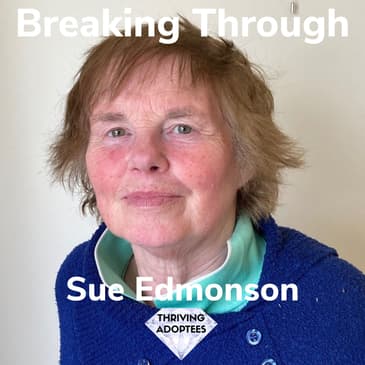
Trigger warning: mention of suicidal ideation. Sometimes we have to break down to break through. Our biggest insights come in our lowest moments. So what's the biggest insight? The insight with infinite levels: there's nothing wrong with us. All is, in fact, right with us. We are perfect with our imperfections. Listen in as Sue, adopted in the 1950's, shares her breakthrough healing moments.
Guests and the host are not (unless mentioned) licensed pscyho-therapists and speak from their own opinion only. Seek qualified advice if you need help.
Want to learn more about thriving for you, your kids, your families or your colleagues? Pick a time to talk here
[00:00:00] Hello everybody welcome to another episode of Thriving Adoptees podcast
[00:00:06] today I'm delighted to be joined by Sue, looking forward to our conversation
[00:00:10] today Sue. Thank you. Yeah we haven't had any Brits on for a while so it's great
[00:00:17] to have a conversation. All right. Yeah so healing, what does healing mean to you Sue?
[00:00:28] Doing things that will help me feel better, to work out a lot of pain and anger
[00:00:37] and for me it's without affecting anyone else. To me there's no point dumping your pain on
[00:00:44] someone else if they don't know what to do with it. So the stuff I can do on my own
[00:00:53] Stuff you can do on your own. Or with a group like a yoga class
[00:01:01] you know where it isn't intrusive, where they're not asking questions.
[00:01:05] Yeah because we see so much of that leaking don't we? Like we're leaking our anger and it's
[00:01:12] and it's impacting other people and we don't want that to happen so we want
[00:01:19] we want more harmony on the inside. So we're kind of like more harmony on the outside right?
[00:01:25] Yeah. Yeah. And it's been my experience that however well meaning other people are
[00:01:34] are if it hasn't happened to them they just don't get it. Yeah yeah and what that causes
[00:01:46] us some frustration I guess as adoptees how would you how would you sum it up
[00:01:53] that's effect the effect of that on you? Well I've learned just to keep my mouth shut
[00:02:00] I don't tell many people I'm adopted unless it's appropriate or unless they feel
[00:02:07] you know I feel like a summing clinician you know. Yeah so have you learned that
[00:02:14] have you learned that the the hard way by kind of like oversharing talking too much about it
[00:02:19] and then realising or or have you always been. I think I mean most people are okay let's
[00:02:27] you know be clear on that and I'm not talking about now I'm talking about years ago school and
[00:02:35] you know early employment that sort of thing. I wouldn't say it was so much oversharing
[00:02:42] it's just if I've mentioned it because they don't understand it being weaponised
[00:02:50] everything stops there because I'm adopted and they can do what they like but it's all my
[00:02:56] fault because I'm adopted and I've had all these problems and I think well I'm just as good
[00:03:03] as you lot you know I don't want it weaponised I don't want it used against me by people who
[00:03:09] didn't understand the situation. I mean I'm not talking about now it's completely different to
[00:03:18] mean as a society. Yeah we know far more now about child development than people did in the 50s and 60s
[00:03:28] and as a child well not as a little child but from seven onwards I think home was not good
[00:03:39] we were on a downward slope and I really didn't appreciate being told how lucky I was and
[00:03:48] how wonderful the parents are. I mean I think with most adoptees you mention your adoption
[00:03:54] and it becomes about the parents and we were living in a mess and I didn't want them to know
[00:04:01] and I didn't want to talk about it and basically I just wanted them to mind their own business
[00:04:05] because there was nothing they could do to help anyway.
[00:04:11] Why did you say that? Why did you say there's nothing they could do to help?
[00:04:16] Because I got it only now and again as a miserable child or at work in my 20s.
[00:04:28] I just wanted to be on my own and someone had come up and say you know I want to help you can I help
[00:04:36] you and I'm just thinking yeah just go away there's nothing you can do and confiding in the wrong
[00:04:44] person is only going to make things worse so I felt I had to keep my troubles to myself at that time.
[00:04:52] I think I should explain in that I'm the eldest of five adopted children
[00:05:03] and my adopted parents had four before they had five stated in the obvious.
[00:05:12] They always said they wanted four and they had two boys and two girls
[00:05:18] and as it happened there were two dark hair and two fair hair just you know the look of the draw
[00:05:26] and all of us were basically alright so you think what more do they want?
[00:05:34] And I mean even at seven I knew this was going to go wrong they got a phone call from the
[00:05:42] adoption agency would they take another child? Now they had actually no intention of no desire to
[00:05:51] take another child they said they wanted four and they got four and that was it but I mean I don't
[00:05:59] really know what happened this is a seven year old memory but I'd be sent out to play and I'd sit
[00:06:07] on the back step and listen in to what was going on and there were quite a lot of conversations about it
[00:06:21] because mum was from quite a large family although both mum and dad were one of three
[00:06:28] mum had more relatives than dad or more relatives living nearby anyway and there were huge
[00:06:34] discussions and the overwhelming conclusion everyone came to was no you've got enough you're
[00:06:43] doing enough and even as a seven year old I felt it strange because couples who want to adopt
[00:06:52] they approach the agency if you sit at home and wait for the phone to ring
[00:06:59] you'll be waiting a very long time so even then I thought there was something wrong and you see
[00:07:04] with adopted dad being a doctor I just think this child was dumped on us anyway mum seemed to want
[00:07:17] him more than anyone else I mean as I say it was a child I don't really know with dad
[00:07:22] I don't know whether he was as keen as mum or just went along with it
[00:07:29] but it went wrong virtually from the start this kid had so many problems difficulty
[00:07:38] feeding difficulty settling you know screaming all night and then serious behavior problems and
[00:07:46] he didn't I mean we four we played together and that was the time when you could we'd go
[00:07:53] around to friends houses or friends had come here and we play or we play in the street
[00:07:59] he never seemed to get the rules that you know you have to take turns there are rules to the
[00:08:04] games and he just caused havoc and at the time I held mum personally responsible for this
[00:08:17] though now of course with the benefit of years of hindsight where has she played a part
[00:08:24] other people played a part as well and it shouldn't have happened
[00:08:29] it just shouldn't have happened full stop it was the wrong he was in the wrong place
[00:08:34] he needed younger parents with a lot more energy and preferably an army type views of discipline
[00:08:42] you know but it just it didn't work no it had serious mental health problems and it was family
[00:08:51] wrecking behavior and fortunately for all of us he got sectioned
[00:09:01] he did something that even my parents would not put up with he had abs across the line big time
[00:09:13] and the police were involved and he went to went to trial and he was found unfit to plead
[00:09:20] and he was sectioned and he was out of the way in a secure mental health facility for six months
[00:09:29] and we all sort of blossomed you know you've obviously heard of the Bamba family Jeremy Bamba
[00:09:38] yeah yeah well reading about that there were so many similarities with our family
[00:09:46] the big difference was neither my dad or my two other brothers had the slightest interest in guns
[00:09:56] I think if we had a gun in the house none of us would be here and someone would be sitting talking
[00:10:02] to you saying well it was actually another family that this happened to yeah yeah was
[00:10:09] was you mentioned up there outset about doing you know healing being doing things to help you feel
[00:10:17] better um and yes anger was was was there some anger towards your mum for bringing this fifth
[00:10:27] child into the house that needed more care yes when she wasn't up to it and she must have known
[00:10:35] and also for not taking advice uh in that he was he went to three different schools he was expelled
[00:10:47] from one school and then he went to another junior school and mum was often called in
[00:10:54] for his behavior and then went to the secondary school and mum was called in again and the head
[00:11:02] master there who my other brothers think was okay he had a good reputation this bloke he was
[00:11:10] known for being firm but firm he suggested that he was so out of hand he had to be sent away
[00:11:19] they were obviously not coping and mum wouldn't do it no and dad wouldn't do it
[00:11:28] and i remember i know this sounds really awful it isn't as bad as it sounds though it was two
[00:11:37] completely different reaction to the same piece and use in the mum mum was dreadfully upset and
[00:11:45] was crying upstairs and we four were all dancing around the dining room table thinking he was going
[00:11:53] yeah now that just tells you what it was like for us kids nobody went to comfort mum we all yeah who
[00:12:00] is going alleluia which i know doesn't sound very nice but we were kids you were kids we'll forgive you
[00:12:10] yeah we wanted rid of him yeah he needed more
[00:12:17] he clearly needed more as you say more focus perhaps somebody
[00:12:24] oh he needed more you see
[00:12:29] dad's parents lived with us so there were nine in the house anyway
[00:12:35] and mum had her mother and her sister they lived around the corner
[00:12:44] and the sister had had a breakdown and wasn't quite right and there were two of her dad's sisters
[00:12:51] two elderly maid and aunts so as well as dad having a very responsible job
[00:12:57] uh they had six old stroguille people to keep an eye on plus four kids now i was angry with the
[00:13:05] adoption agency they didn't do their homework they were just so keen to dump him on a doctor
[00:13:11] i always felt problem solved and i sort of don't mind mum wanting to give him a chance
[00:13:18] but there should have been backup and support and yeah i mean it's the whole system it's not
[00:13:24] just her yeah and and this was presumably this was late 50s early 60s was there
[00:13:30] he was born in 1960 yeah and he got sectioned i think in either 80 81 so as a teenager as a
[00:13:45] top juniors teenager early adult a lot of the time i wanted to be on my own and i didn't
[00:13:51] want people coming pestering cheering me up because there's no way they could do it the only thing that
[00:13:58] would cheer me up is the home to be sorted out and there's no way a complete stranger could do that so
[00:14:06] yeah i became quite solitary yeah so um was there a point where you went when that was
[00:14:17] gone that you started looking inside when when he went he was out of the
[00:14:24] out of the house you started looking inside and looking self reflection
[00:14:30] yeah definitely um the first thing i did when i had a clear ear run uh was trace my birth mother
[00:14:40] and that was huge that made such a difference because i now know it was unusual but i had a brilliant reunion
[00:14:53] and i'm still in touch with a couple of my birth family in australia after 40 years
[00:15:01] yeah that was the first thing i did the second thing i did was to finish my degree with the
[00:15:14] o u i had walked out of college i couldn't go any more and hadn't finished it so i decided to finish
[00:15:22] it so i was doing things for me things i'd always wanted but there was so much chaos and drama at
[00:15:29] home and even though i'd moved out of home i always felt responsible i couldn't leave them for too long in
[00:15:36] case something happened yeah well i guess the eldest there's a feeling of oh the eldest girl yes and it
[00:15:45] was it was such a burden it really was yeah but this was it was a mixed blessing you know because
[00:15:53] one good thing about being adopted especially when you're a teenager is you're not actually related
[00:16:00] to this lot there's actually nothing to do with me it's just a cruel twist of fate
[00:16:08] yeah you know i'm here yeah that's yeah so you could was that uh that was a relief
[00:16:16] like not being answerable for their dodgy choices like taking the the fifth fifth child on it yeah
[00:16:24] yes it was and i felt and they probably hadn't meant to you know they weren't bad people but it impacted
[00:16:31] on all of us yeah terribly before we he was sectioned the six of us were ill one way or
[00:16:42] another physically or mentally i mean i had ibs and that dreadful eczema and the brother next to
[00:16:50] me was the same he was worse his skin was like a lobster another brother uh his diabetes started
[00:16:59] my sister um she i think mental health problems mom had mental health problems dad had he was
[00:17:08] quite an active man he had terrible lumbago and that's which reading up about it is stress anyway and
[00:17:15] obviously he wanted to have a clear head to go into work i just always thought this was never fair on
[00:17:22] him you know because of his job life's depended on this yeah there's a doctor yeah um the thing
[00:17:31] that's coming to me is that perhaps the uh there's an overestimation we we overestimate what we're capable
[00:17:39] of so your your your mom overestimated what she was capable of she could she thought well yes
[00:17:45] but i think there was an element of i'll show you because so many people said no oh yeah i think
[00:17:56] there was a little bit of a child in that and also her mother used to help her a lot with the children
[00:18:08] now the state in the obvious were all going to die and it was all right when nana was alive
[00:18:18] because mum had some support and she was very much a kid person my grandmother on mum's side
[00:18:26] and she was delighted she'd get stuck in with all these kids and she'd do us costumes for fancy
[00:18:31] dress and parties and that sort of thing uh but she wasn't going to last forever and things
[00:18:38] went wrong when nana died because mum had to cope with the grief of losing her mother
[00:18:45] and they were very close because the dad had been killed in the second world war
[00:18:52] um so there's obviously a closeness with a wall widow and her children
[00:18:59] and she had to cope with that and she had to cope with martin he was called
[00:19:06] and us really didn't see why we should help we did but grudgingly we felt it wasn't our problem
[00:19:14] yeah and i also felt i mean councillor in training i think um i was beginning to realize there was
[00:19:22] enabling the more we helped her the longer this would go on and perhaps if we didn't help her
[00:19:29] she would deal with it that was always in the back of my mind as a child i couldn't put it into
[00:19:34] words but it was was vaguely aware that i could be making this worse yeah so that was the hope
[00:19:42] so um listeners uh Sue mentioned oh you earlier on that's the open university so i'm presuming you
[00:19:49] you were doing some some sort of uh psychology or something that was going to help you in this
[00:19:55] no it wasn't it was it was history psychology came later that came later yeah that came later yeah
[00:20:04] and again when i had time to think about it and get my head around it and
[00:20:09] another thing that made a big impact on me uh was that um White House Farm story i think it was then
[00:20:21] my interest in psychology yeah developed you know how the hell has this happened yeah so this was the
[00:20:30] you you talked about Jeremy Bamba earlier on so um yeah this was dramatized wasn't it on UK
[00:20:37] television there's been a loss about it but i remember now Martin had been sectioned
[00:20:44] and then when he'd been sectioned dad said there was no way he was coming back
[00:20:50] and i traced my birth mother so i was in a very good place anyway and i remember driving into work
[00:21:00] and the news was on something about adoption and murders and a farm so i pulled into the next news
[00:21:08] agents bought a paper took it into work with me stuck it in my locker i thought i'll read this at
[00:21:14] lunchtime so i was eating the butties and reading the paper and i just you know jaw dropping i looked
[00:21:26] at it because the similarity even the photos of neville and june bamba were so like mum and dad
[00:21:34] height and build and reading about the family the personalities and the mental illness that wasn't
[00:21:42] dealt with and you know it wasn't acknowledged and the tension and everyone looking at the outside
[00:21:50] thinking it was lovely and i was saying shi sh Christ and i read it about three times and then
[00:21:58] my colleague who was on the same lunch break he looked at me and he said what on earth are you
[00:22:05] reading so i handed him the newspaper and he just flipped through it quickly handed it back
[00:22:16] and said yeah they're all bonkers so i thought well it hasn't affected you like it's affected me
[00:22:23] you probably are not adopted yeah but it did happen
[00:22:30] so what had your uh what had your union what had your reunion what had that done for you
[00:22:37] oh it was life changing it really was um it had answered so many questions because i'd always wondered
[00:22:49] you know why am i here you know why was i adopted what's wrong with me what was wrong
[00:22:57] with the family but it was again another mixed blessing but i found i was one of the probably
[00:23:09] quite a few adoptees who get taken from a difficult situation and why eventually end up in one that
[00:23:17] eventually becomes worse yeah now where their adoption just sends them bonkers i don't know
[00:23:25] but just being with my birth mother and you know we were so alike and just hearing their history as well
[00:23:33] and knowing where they'd come from and everything it just filled in so many pieces of the jigsaw
[00:23:41] and i then felt i think there's actually nothing wrong with me or with her or with anybody else
[00:23:51] we're just people okay my birth mother had made a mistake i'm the result of an affair
[00:23:59] and at the time she didn't have any option you see she did say last time i spoke to her
[00:24:07] and she's been long gone that she's very sorry that she didn't keep me and my siblings also feel
[00:24:16] i should have been with them because we're also alike i mean it it's this connection with the birth
[00:24:23] family but with the adoption family we've had all sorts of shared experiences we've all been through
[00:24:29] help and the birth family i don't see very often but yeah i'm more alike with them but i haven't
[00:24:36] as much to talk to them about you know it's a bit strange but um i just was just more at
[00:24:44] peace with it really simon i'd always wondered and then i got my answers and you know to us i say
[00:24:53] she made a mistake i mean don't we all but she hadn't made anything like as big a one as we adopted
[00:24:58] mom of maids yeah you know and although yes i would have liked to have stayed with them i would have
[00:25:06] liked to be brought up with my brothers and sisters but the stepfather issue isn't easy
[00:25:15] as a cancerer i used to hear it time and time again and i wouldn't say it doesn't work
[00:25:22] but if it does everybody's very lucky yeah yeah so you did a after you've done your history you went
[00:25:32] on to do some qualifications in psychology then you became a a counsellor uh
[00:25:38] uh
[00:25:47] hi sorry about that listeners we had a bit of a glitch with uh zoom so um this reading this article
[00:25:55] reading this article about the the bambas that uh that set set you thinking about psychology is that
[00:26:04] right it was yes and why people behave in various situations because up until then
[00:26:12] i hadn't known many adoptive people and i had thought very naively that it was just us
[00:26:19] having problems and everyone else was living in paradise but i had a job a couple of years later
[00:26:29] as a school attendance officer and when i was there we had some training from the school
[00:26:41] psychological service of how to handle situations how to deal with people who were very angry and
[00:26:48] how to deal with them when they're upset and how to keep your yourself safe and that triggered
[00:26:55] off an interest and it was after that really i went round to a couple of houses it happened a
[00:27:04] couple of times i'd go around to the house to see why the kid wasn't at school and 98% of the time
[00:27:12] it was just bog standard either she'd slipped in or slept in or was giving them other the
[00:27:19] run around or what happened a lot with absences on monday is that dad would have them for the weekend
[00:27:29] and then he wouldn't be too fussed about them getting the train to be in school on monday just
[00:27:34] run at the mill stuff like that but i went round to one house that was met by a very upset lady
[00:27:43] and such a tale of woe and the only thing i could think of doing was offering to make her a cup of
[00:27:50] tea and just let her talk and talk to her through and then it happened again and about a nine months
[00:27:59] a year or so later i went round to a house and the mum was in her tears and i thought i'm
[00:28:05] hopelessly out of my depth here hopelessly so i started the councillor training and with working
[00:28:16] as a councillor you don't just train and i let loose on the unsuspecting public for years and
[00:28:23] years with no safeguard or anything like that we had to do 30 hours cpd continuous professional
[00:28:35] development and i went on all sorts of courses with that you have to choose topics where you
[00:28:41] wanted to work and i'd go on courses like that so it's you know been acquired quite slowly really
[00:28:49] my knowledge over a long period of time and what what's that brought you personally in terms of
[00:28:57] if your own your own stuff
[00:29:03] well now and again i had to be careful because i felt my own stuff was coming up yeah you know i
[00:29:11] was somewhere where i just had to leave the room on one occasion you know so i'm sorry i feel
[00:29:18] sick i'll just have to go out and get some fresh air it's because my own stuff was coming back
[00:29:24] but i've just learned breathing exercises and that sort of thing to keep the lid on it i mean
[00:29:33] i can only feel safe letting it out if it's appropriate if it's in the middle of someone
[00:29:38] else's lecture perhaps not you know perhaps i just have to keep quiet yeah but whenever
[00:29:47] i've been like that during the day i'll do something physical in the evening i'll go for
[00:29:53] a swim or go for a run or dig up something in the garden you know give the lawn what for and
[00:29:59] i've got to get it out physically without with doing some benefit you know and without upsetting
[00:30:06] anyone else yeah snapping at the join doesn't work it just makes things worse
[00:30:13] you've talked about sort of two there's two main strands there um
[00:30:20] as an outsider as me looking in it's all that that physical stuff and you mentioned the yoga
[00:30:27] yeah mentioned the yoga earlier on you've also clearly um you've talked about the
[00:30:34] the the piece that came that came to you through reunion and and the answering of questions that
[00:30:43] you'd talked about it was back yes i had all these it's like what's described as a jigsaw
[00:30:49] isn't it you have pieces missing and then some of the pieces went back in yeah so maybe this
[00:30:56] so maybe it's two the three things as well obviously the third big strand is when you're
[00:31:03] when you were when you're no longer living under the same roof uh roof as uh mark did you call him
[00:31:12] mark martin martin sorry i've clutched it so those those are the three big strands
[00:31:20] um yeah the three big stands of your healing stuff i'd say is it absolutely martin being
[00:31:28] sectioned well moving away that was the start of this um but actually i think i mentioned this before
[00:31:37] before i moved out is realized i had to move out i had an alcohol induced i did something very
[00:31:47] very stupid well under the influence um basically it was a suicide attempt that failed and it was after
[00:31:56] that i thought that i saw the bigger picture i that was before i moved out but that was what
[00:32:02] decided me to move out because i'd stuck around thinking i could help and then i realized i was
[00:32:10] just wasn't helping myself you know i just had to get a grip or you know you just i felt we just
[00:32:19] couldn't have six people going down for one who was going down anyway um so that uh moving out
[00:32:30] reunion the bamboo family they just i wasn't so focused on myself that i was like i was as a
[00:32:39] child i thought you know the world's getting bigger all the time there's more and more people
[00:32:45] and more and more problems it's not just about me yeah yeah because we do that uh we we tend to
[00:32:54] as we when we're young this isn't just an adoptee thing this is a human thing it's a child
[00:33:00] teenager yeah we think we think that it it's about us we look we yeah do we blame ourselves i don't
[00:33:10] know how would you how would you say that i know i don't um i think they did quite well out of me
[00:33:20] really for help and support i mean you can always do more can't you uh but i i didn't want to be sucked
[00:33:31] into it um i always wanted that distance between their adoptive parents and my adoptive siblings
[00:33:43] especially with martin i got on well with all the others but
[00:33:50] it was it was a family wrecking individual really yeah and i've spoken to other relatives
[00:33:59] after it you know years later and they all say say the same thing you know they had a
[00:34:06] the parents had a nice family and this just wrecked it yeah and and as you said it was it was
[00:34:14] your mum's pride or i'll show them your mum's pride i think no i think there was a she just
[00:34:22] wouldn't accept i mean three head teachers of three different schools all saying the same thing
[00:34:33] i mean come on mum someone's trying to give you a message here yeah uh but she just it's this willful
[00:34:39] blindness and i i don't think she was aware of the effect it was having on us she kept hoping
[00:34:48] everything would be all right but i mean to be fair i don't think the knowledge was there
[00:34:57] anyway yeah no i mean it's a thing that comes up a lot is that we're we're looking at this stuff
[00:35:07] here in the 21st century um based on the knowledge we have now yeah and no no the
[00:35:15] stuff that happened in 1960 and i'm not sure what it was to be honest but it could well have been
[00:35:27] something like fetal alcohol syndrome yeah now i always felt the adoptive pair uh adoption society
[00:35:38] knew because wiring up someone who's already got four children and the dad is a doctor
[00:35:49] why would you do that unless you knew there was something wrong and you see with all this secrecy
[00:35:57] i mean if dad and the gp had had the medical records they might have been able to do something
[00:36:04] but secrecy was such a game then yeah i think they just enjoyed the power to be honest and you see if
[00:36:10] dad had his medical records he probably wouldn't have taken him yeah so there was the to their
[00:36:17] madness yeah the method to their um yeah i think they did like a transponder yeah i think if
[00:36:26] if they didn't tell the parents in case they didn't take the child and it was their job
[00:36:33] to place the children and there was no support or anything oh this one's off our hands yeah i mean
[00:36:40] when i got my folder it said about the um the children's society and that sort of thing
[00:36:50] and it said on it something about outcome disposal i mean we were just there to be
[00:36:55] disposed of given away there was no you know follow-up or interest they see now
[00:37:06] they try what is it we were children for parents but now they try and find the right parents for
[00:37:14] the children yeah and he was the wrong child in the wrong family yeah and you see we're not
[00:37:23] i'm in the medical history as well it actually can be very dangerous i mean it might have been
[00:37:30] fetal alcohol syndrome she might have been on drugs or something it might have been incest
[00:37:36] i don't know but it was something pretty bad yeah there's um there's something very telling with
[00:37:42] their word disposal i don't i don't normally take judgments to people on on singular words
[00:37:50] like that but that is a as a summation of what what they were up about you know they're up against
[00:37:57] oh yeah absolutely some deserve yeah yeah so um the the the moment you talked about um or you know
[00:38:11] like uh almost taking your your life what that must have been because you you seem like a
[00:38:22] strong very strong strong lady you must have been a strong kid thank you yeah i have been through a
[00:38:27] lot yeah yeah oh it was just there was a moment of madness really um a lot of things were going wrong
[00:38:40] um the things at home were just getting worse and worse and i didn't realize it at the time
[00:38:49] but i was in a toxic relationship i was seeing someone who just wasn't doing me any good and
[00:38:57] it was beginning to get to me and i had also very stupidly
[00:39:08] brought it on my own head by arguing with one of the bosses at work
[00:39:15] and i thought i'd got away with it know what happened i don't know whether he knew
[00:39:22] but some he said something like
[00:39:30] we were arguing or we were about level pegging and he said well at least i was born in wedlock
[00:39:38] well that's wow oh that lit the fire within and i said and the right bastard you turned out to be
[00:39:49] good and everyone that's what i thought yes and everyone else you know laughed and i think i got
[00:39:55] some applause as well and i thought yeah i would have thought i would have thought it yeah
[00:40:01] yeah i got summoned into his office the following day and was told in no uncertain terms to take
[00:40:12] this as a warning you have a verbal warning then you have a written warning then you are dismissed
[00:40:19] um this was my verbal warning and although i was very blase about it at the time and didn't take
[00:40:26] it too seriously i was riding a motorbike at the time and i was in the serious drinking
[00:40:33] squad at work quite a lot of us used to go out for drinks and lunchtime and after working out
[00:40:40] so there's probably some alcohol in my system and i just thought on the way home
[00:40:49] that i didn't want to be here you know home was bad the relationship was bad work was bad
[00:41:03] at the time i couldn't see the two out of the three things i had brought on my own head
[00:41:09] i didn't have to see this bloke and i didn't have to argue with senior management at work
[00:41:16] and i just thought i didn't want to be here i was riding a motorbike and i was getting off
[00:41:22] at the junction i mean i can still see it to be honest and there was this lorry huge lorry
[00:41:30] coming round the roundabout and i just thought oh sod it and instead of breaking i opened the
[00:41:37] throttle and headed for the lorry and you know i can just see that man's face even now
[00:41:47] fortunately it was a very powerful bike so i just opened the throttle a little bit more
[00:41:57] and got out of the way and the lorry driver was honking the horn and i could hear this
[00:42:02] for quite a while and i went round the roundabout and i went heading towards home
[00:42:10] i mean it's very clear even now and it was you know over 40 years ago i felt like i was in a
[00:42:17] tom and jerry car too anybody watching would have just seen a girl on the motorbike but i
[00:42:25] was having an out-of-body experience i felt as though i was up looking down and like tom and
[00:42:32] jerry the stomach was going like that all the time and i went along the road feeling very very
[00:42:39] strange and somehow something in my brain told me to look at the speedometer and i was doing
[00:42:50] just under 90 miles an hour in a residential area with a 30 mile an hour limit wow wow talk about
[00:43:02] making things worse and i that did it i thought what the hell i mean i was so lucky if some first
[00:43:10] of all i could have hit the lorry and it wasn't the driver's fault he wasn't doing anything wrong
[00:43:17] and he'd have had to live with that someone could have come out of a side road or someone had tried
[00:43:26] to cross the road it was a residential area i was just so lucky well my body ahead of a stomach sort
[00:43:35] of all came into land and i slowed down and i just drove home boy boy boy boy boy boy boy
[00:43:43] boy and that's i think when i started to turn my life around yeah big moment well i'm glad you had a
[00:43:53] powerful motorbike yeah but now that i think saved the day you see if it wasn't so powerful i might
[00:44:03] have got to the lorry anyway but it just at the last minute i thought i can't do that open the
[00:44:09] throttle a bit more and there was just enough in the engine to get me out of the way but it was
[00:44:17] afterwards i thought well what the hell did that poor bloke think yeah i mean he's done nothing i can
[00:44:23] still see the look on his face they were that close that it was uh very close and then
[00:44:30] i couldn't sleep that night i just lay in bed you know boy boy boy boy boy
[00:44:39] first thing i do was going to get rid of the bike i'm going to go back into work tomorrow
[00:44:46] on time incorrect uniform being pleasant to everyone grovel to the manager you know put
[00:44:55] right as much as i can look quite a few people i could have should have gone around and apologized to
[00:45:00] as well uh how am i going to get there oh right well the bike has to go so i got a much smaller one
[00:45:10] and then i don't want to be in this relationship anymore so i don't him yeah and i'm not going
[00:45:17] to drink so much yeah big turnaround and then with having a smaller bike and not drinking so much
[00:45:26] my finances improved i thought well i'm going to move out i'm going to get a deposit they
[00:45:33] those were the days when you could buy a house on a you know a medium salary not a huge one you
[00:45:41] can't now but i could say i had money put aside and i could save up for a deposit and moved out so that
[00:45:49] was life changing really but i realized that although things were bad i did have people who
[00:45:59] cared about me i was sort of visualizing all sorts and visualizing being taken to court and mum
[00:46:07] and dad watching and the mortification of being sentenced and them coming to see me in jail and
[00:46:16] coming collecting me on release day i thought i can't honestly i can't do that to them they
[00:46:23] don't deserve it i've got to get a grip and grow up and sort my life out i grew up this evening
[00:46:33] you talked to at the start of the conversation you talked about people
[00:46:43] sharing with people that you adopted and people weaponizing that against you well that's what he
[00:46:50] did and that's what he did now i don't know how he knew maybe it was an inspired guess because
[00:46:57] i hadn't told anyone at work but somehow he picked it up i don't know maybe it was just a guess i really
[00:47:05] don't know but that lit the fire within yeah and because of that i just didn't want it also
[00:47:18] i had been a teacher very briefly and there was an adopt a couple of adopted kids non-related
[00:47:27] brother and sister at the school and one particular teacher was quite horrible to the
[00:47:35] children because it was clear to me that she didn't understand and i just thought well do i say
[00:47:41] something or don't i i didn't but the only thing i thought i could do was raise awareness mentioned
[00:47:50] to other people just casually and so and so was bullying this kid in the i thought she was bullying
[00:47:58] this kid and you know is everything all right sort of thing and it it seemed to stop but i didn't
[00:48:05] seeing how this child was treated i didn't want to line myself up for that i didn't think i
[00:48:11] could defend her i think if i said something it would just make things worse but i i always knew
[00:48:16] i had to be very careful it was used to be a junior school but not at the secondary school they
[00:48:24] far more to worry about than me why do you think that weaponization hurts us so much
[00:48:33] because i've felt that you felt that yeah i think it's
[00:48:43] because of the ignorance i think they're showing their ignorance and because you can't argue with
[00:48:48] it i mean statement of fact we are adopted and it wasn't our choice and i think sometimes
[00:48:58] people tend to attack what they don't understand there's a lot of anxiety about adoption i've heard
[00:49:06] it quite a lot about if you're a bit different you get treated differently yeah i think it's
[00:49:14] that people are a bit wary perhaps and feel like they have to keep you under control by
[00:49:21] under control by knowing this thing about you when you see it isn't a two-way street
[00:49:28] i mean with friends if you tell a friend something the friend will very often
[00:49:35] find something in return you're sharing the confidences but this is just well i've got
[00:49:41] something i need to use against you which i found very irritating and you found it as well
[00:49:51] yeah and and and um and as you were i didn't i didn't have an answer at all for for my own
[00:50:01] question now right and as as you were thinking as you were talking i was thinking about what it
[00:50:09] could be um and and this is just a theory at the moment is
[00:50:21] it's that somebody else pointing out or inferring
[00:50:29] or downright saying it that there's something wrong with us yeah it's our
[00:50:39] it's our biggest fear you know it's the elephant in our room it's in the elephant in our room
[00:50:47] yeah and and then somebody absolutely they were good enough to be kept and you weren't
[00:50:53] and that's how i interpreted it
[00:51:00] yeah there's something big there there is isn't there well elephants are big so
[00:51:09] well that's it yes it's it it's uh it goes back to a trivial little
[00:51:17] thing that happened for me this this morning when
[00:51:24] i i can see that i could see that unless i agreed unless i agree to some extent with the criticism
[00:51:34] it doesn't hurt me
[00:51:36] it doesn't hurt you if you don't agree with it unless unless i agree with it on some level
[00:51:48] unless i agree with it on some level well you're taking away their power aren't you
[00:51:55] if you agree with it there's nothing to argue about just agree with it you can't
[00:52:09] something about them pointing out our biggest fear
[00:52:13] our biggest fear our biggest insecurity
[00:52:17] oh yeah but you see we haven't had
[00:52:24] we've had a disruption a pretty major disruption very early on in life which most people haven't had
[00:52:40] i mean even if the adopted parents are like birth parents they're good bad or indifferent
[00:52:47] you know but even if your parents aren't wonderful if you say in your birth family at least you know
[00:52:54] where you've come from and you've got your medical history and the family history and you
[00:52:59] grow up with people who look like you and certain mannerisms and that go in families
[00:53:06] but adopt you're on your own far too soon aren't you
[00:53:13] most people leave the nest whatever it's like when they are ready
[00:53:19] you've been we've been slung out long before we were ready
[00:53:24] it goes and it goes back to that point that you made earlier on
[00:53:28] um
[00:53:32] about
[00:53:34] it's just sorry it's just come out my head
[00:53:40] well it strikes me it's the pre it's the pre-verbal pre-obnative thing yeah you're talking about
[00:53:48] kids taking stuff personally that's what you're talking about yeah yeah yeah so we take stuff
[00:53:53] personally so instead of uh so we take things personally and we and the the person
[00:54:05] the conclusion that we come up with is there something wrong
[00:54:09] that's that's the con that's the conclusion for we've got that question why was i adopted
[00:54:17] there's something wrong with me that's that's what the the me focused kid brained that's what i always felt
[00:54:28] yeah not being good enough
[00:54:38] yeah
[00:54:39] yeah
[00:54:44] that's why the thriving adoptees don't logo is a diamond
[00:54:49] hmm as a direct counter to that
[00:54:57] because i'd be good place to bring it in unless you'd like to there's something else you'd like to share
[00:55:02] um
[00:55:07] no not really i mean i think it's
[00:55:11] it's always there it's always a theme in my life but it becomes less and less important as time
[00:55:19] goes on because other things happen in life
[00:55:26] i think actually
[00:55:31] the death of my adopted parents has sort of brought it to an end anyway
[00:55:38] how else that well i don't have to look after them anymore don't have to feel responsible
[00:55:46] that sort of thing yeah you're talking a lot about that earlier on about being the oldest
[00:55:51] because they're the kids responsibility oldest of five
[00:55:56] yeah well
[00:56:01] i've never wanted the guilt if anything went wrong and i wasn't there or wasn't nearby
[00:56:09] not saying i had to mine them 24 seven or anything but i was there it
[00:56:16] if i was needed you know i'd like always like them to be able to get hold of me pretty quickly
[00:56:25] and that never really went away no because you see that's another thing that's part of you
[00:56:34] really you were there for them you were there to fix their problems
[00:56:38] and although i resented it i was never been able to get rid of it completely
[00:56:43] because that's your first job isn't it to fix it you fix your
[00:56:50] birth family situation by going and then you fix their infertility
[00:56:56] you know you've done quite a bit it's a week old haven't you yeah yeah
[00:57:04] wow thanks to thanks listeners we'll speak to you very soon okay bye bye