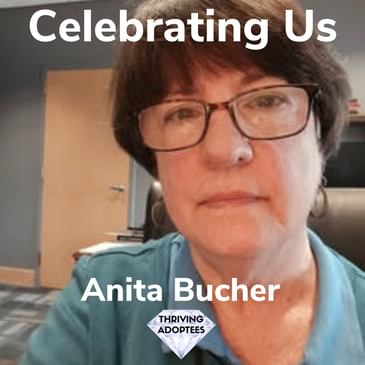
How do we celebrate ourselves when we don't know how we came about, feel unwanted or an accident? Listen in as adoptee, adoptive parent and adoption professional Anita shares profound insights on finding meaning, a reason for being and more. She also shares how following Christ has helped her along the way.
Find out more about Anita here:
https://www.brookhills.org/staff-elders/anita-bucher/
https://www.linkedin.com/in/anita-bucher-a8233725/
Guests and the host are not (unless mentioned) licensed pscyho-therapists and speak from their own opinion only. Seek qualified advice if you need help.
Want to learn more about thriving for you, your kids, your families or your colleagues? Pick a time to talk here
[00:00:02] Hello everybody, welcome to another episode of Thriving Adoptees podcast. Today I'm delighted to be joined by Anita, Anita Bucher. Looking forward to our conversation. Did I get the pronunciation about right? You've got it perfect, yes. So Anita, thank you for joining us today. Thriving Adoptees, ladies and gentlemen, Anita is an adoptee, right? So sometimes I forget to introduce people's role within their constellation, not the triad anymore.
[00:00:32] It's a consolation. So what comes to mind when you hear the name of the podcast, Anita, Thriving Adoptees? I think when I first heard of it, when you first contacted me, I thought about people who have not just embraced their story, but they celebrate their story.
[00:00:55] And it is easy to walk in that story with joy and purpose and see it being used both for their own benefit and for others. Yeah. Funnily enough, I was just talking to another adoptee before we hopped on the call.
[00:01:15] And he was saying that he's looking, he's big into kind of self-improvement stuff, shall we say. But that's for other people. But that's for other people. And there's that sense, isn't there, that it brings more meaning if it's not about us, it's about others.
[00:01:39] It takes us away from our little self and into the bigger self. Yes. Yes. Yes. I agree with that. Yeah. And because that, I guess that plays into what you do work, right? Within the, within the. I do. So just real quickly. So I am an adoptee. I'm also a foster adoptive parent. My husband and I have a bio son.
[00:02:08] And then we, several years later, we became foster parents and fostered and adopted our youngest son. And one of the things I do here is I help lead and facilitate our foster care ministry. And a lot of those families go on to adopt if the child cannot go be reunified with their family.
[00:02:29] And so I get to be a part of that whole cycle of orphan to family, you know, permanency, as it were, for children and for families. So, yeah, having having a good feeling more, it's much stronger than a good feeling.
[00:02:49] But celebrating my own adoptive journey certainly plays into how I can love and encourage others when they're in the adoptive journey. And yet, there's sometimes those sorts of words like joy and celebration. They're rarer, aren't they? In our world today. Sometimes they are. They're very rare, unfortunately. Yes. Yeah.
[00:03:18] Have you got an idea why that is? You know, from the stance of an adoptee, the one where I don't see joy is when people have struggled with the reality of their adoption. They've either struggled with having to be adopted. They can't quite get past, why was I given up in the first place?
[00:03:47] Or they feel that. And you and I have spoken about this before. Where you feel alone, even though you're with people because you don't feel as connected. And so as I was thinking through our discussion today. And I thought back through my story. I'm obviously, I'm older than you are. So we can. Oh, much. Oh, much. Yeah. But, you know, it was, it's been a long time since I came into this world.
[00:04:16] And adoption was not very popular. It was not positive. It was not accepted and celebrated. And, you know, you had asked me once, what is it that has helped me thrive? And I think a couple of things came to mind. One is my brave parents who were willing to step outside the norm and go and pursue adoption. And to go take in a child that was not theirs. A child that they knew nothing about.
[00:04:45] They didn't know genetically. They didn't know personality. They didn't know what I brought to the table. Good or not good. And they not only did that, they celebrated that. And from the beginning, I mean, way before, I was like two months old when I came to their home. So I obviously didn't understand a lot of what was going on, but they told my story over and over.
[00:05:11] So they celebrated my story, including the fact that I had to lose a family, if you want to say it that way, in order to gain a family.
[00:05:20] And they just did a great job of loving me unconditionally and not looking at my adoption as a label, but simply how I entered into the family. Yeah.
[00:05:44] I think it's the two things, the two parts of every adoptee story in terms of the feeling of separation or the relinquishment itself.
[00:06:05] How we are relinquished and how we are raised is all wrapped up in one experience. And I don't think it's possible to separate it out, really. Right. Oh, I agree with that. I mean, I can't.
[00:06:30] Being orphaned or abandoned or relinquished is part of my story. It will always be a part of my story. And while we knew nothing about why it happened, how it happened, I mean, there was no information shared. My parents were very gracious and they always took the stance that if your parents had to make a choice, they made this choice because they thought it was best.
[00:06:59] And we believe they made it with love in mind. And and I was OK with that because I thought, well, but of course they would. I mean, I was a child, obviously. And but I thought, yes, why would I try to imagine some, you know, some horror story that as to how I came into being?
[00:07:23] And they also the other thing my parents did is they reminded me because we are Christ followers. They believe they reminded me that God actually brought our family together and that he was in this from the beginning, from before I was conceived and born. And that if he was involved in it and I believe he was, then it is for good, even though it came there was hard things in it.
[00:07:53] And I remember wondering. Why would you know why did my parents give me up? But I always went back to the narrative of I don't know, but I choose to believe that they did the best. They made the best decision they knew to make. Yeah. So I think how we feel about being adopted or let me ask you this question.
[00:08:19] To what extent do you feel that how we were raised impacts our experience as a whole and our feelings about adoption as a whole?
[00:08:32] Yes. Yes, for sure. I mean, how the parent, how the adoptive parents, which I just call them parents, but how they see it, how they respond to it, how they treat it in everyday language and everyday conversations and how they treat me or any other child impacts how I see it.
[00:08:55] Because I am going to process my feelings based on what I see them feeling and, you know, giving me. And that doesn't change. I know, especially having spent so many years doing foster care ministry, that does not change incredible trauma in a child.
[00:09:16] And there is trauma from the womb that the body knows, the body remembers, the brain remembers that consciously I don't recall anything, obviously.
[00:09:31] So that doesn't, all the love in the world, all the therapy, all the, you know, unconditional love, all the wonderful things that a whole family can give you does not erase that. But it can help you process that. Even if you can't say, well, I think it was because my birth mom felt this while she was pregnant or she took this while she was pregnant or, you know, whatever.
[00:10:01] So just because you come into a loving family, an incredibly loving family, does not mean you're not going to still struggle with your own thoughts about adoption, abandonment, relinquishment. Why did this happen? Because there are things in here that my parents can't possibly know. I can't know your thoughts except the ones you choose to share with me.
[00:10:28] And so I don't want people to hear this and think, well, I should just be happy because I have a family and they love me. Why do I, but there's still, there's still hurt. There's still angst in here. There's questions, you know, for a lot of people. And a lot of the ones that I talk to who are adult adoptees, they struggle because they never really felt like they process in a positive way their adoption. Yeah.
[00:11:02] Yeah. So we're in danger if we're not careful. We haven't spotted this. We're in danger of blaming the relinquishment for challenges that are really to do with how we were raised.
[00:11:34] Like you said earlier, I think it's all meshed together. And so while you might be rejecting your parents, we're going to call them adoptive parents, your adoptive parents' love, it's not because they're doing something wrong. It's because somewhere in here, there's still a resistance because someone who should have loved you gave you up and you haven't dealt with that.
[00:12:00] And so you don't trust to accept the love that is coming to you because they might do the same thing. Does that make sense?
[00:12:37] Yeah. Does that make sense? On their adoptive mum. Yes. And they were also taking out, there'd been some abuse as well. So they were taking that, which they didn't know at the time of adoption, but they were taking that out as well.
[00:13:03] And the more I adopted, as I speak to, the more I recognised that and realised that I got lucky. Do you know? Like, I got lucky with my parents. Yes. Yes.
[00:13:29] And my heart goes out to those that didn't get so lucky. You know, if we're to believe Facebook, every single man on this planet is a narcissist. But there's a lot of that gone on.
[00:13:47] And there's a lot of adopting gone on in the old days that wasn't actually for the child or the child wasn't put centre. Right. Right. It was playing a role. Yes.
[00:14:15] But the being raised in that celebratory culture, that celebratory, that atmosphere, that home full of that, of the positive, as you say, was a clear, clearly accelerated the processing. Oh, yes. Absolutely. Absolutely.
[00:14:45] But, and I think I mentioned this in one of our previous conversations, that in light of that, I had a wonderful family, wonderful parents, you know, aunts, uncles, grandparents, you know, all of that. And they were very loving and caring. And we would do, you know, family reunions, which is like 100 plus people would show up, you know, and we would be together. And I had all that love. And I knew that the people in that room loved me.
[00:15:13] And yet, one of the things that I realized, even then as a child, that I still carried was, I look across this room and all of these people look alike. They all have, you know, similar nose or similar color hair or blue eyes instead of brown eyes or, you know, whatever. And the realization that in the moment, I am different. I am not then.
[00:15:41] Their blood is not coursing through my body. I don't carry, you know, the genetics of anybody in this room. And every now and then, it would just be this, not horrible, but this strong feeling of separated. I'm here, but I'm not connected. Even though, again, I had the love. No one was telling me you don't belong here.
[00:16:12] But my body, you know, there's a part of me that knows I am not of these people in the way that they are of each other. And, I mean, I felt that, you know, into, and not like every weekend, every, you know, it wasn't common. But every now and then, even in high school and college, when you get together with families, go to weddings or, you know, whatever, that it was like it would just pop back in.
[00:16:41] You know, these people are so great. Like, oh, I wish I, you know, had my mom's whatever. And not having that. But, so again, all the love, all the right things, all the truth talk, all the grace, doesn't take away the things that are inherently in me.
[00:17:03] Because of my womb experience, my birth, my relinquishment, and my coming into the family. That's all there. And, but again, that's, that's who I am. And I know that God has used every detail of that to put me where I am now. You know, he's used, he's used it all my life.
[00:17:28] But it's, I think in some ways it gives me even greater joy to recognize the blessing of having a family, period. That I have one at all. And that I have one that loved me so well. It's just, you know, beyond description. Yeah. Yeah.
[00:17:54] Was, was there a lessening of the pain around? You said that you felt, you felt that separation through high school and college. And was the, was the dissolution of that feeling? Did it, was a lessening of that feeling? Does that feeling still go on for you now? Or?
[00:18:24] No, it's, it definitely lessened. And I don't, I can't tell you the last time I felt that specific thing. Certainly as I've gotten older. And I am now pouring myself into our own family and to friends, families, and the families here at our church. You know, you become more outward focused and less inward focused.
[00:18:46] Um, but I do know one time when that, let's call it, uh, an empty spot for lack of a better word. That's not a great, a great analogy, but we're going to go with it. Um, I do know when that spot was filled for me momentarily. I was at the Christian Alliance for Orphans Summit several years ago.
[00:19:13] And I think it was the second time I'd been to their, to their summit. And I walked into the worship gathering and there were, I don't know, 1,500, 2,000 people there. It was a huge sanctuary. And I knew maybe 10 people who were there for the conference at that time. And they were scattered about, I wasn't with any of them, but I knew I'd met a few people.
[00:19:40] And I walked in and as soon as I walked in the room, it was like, I thought, oh my gosh, I feel connected to every single person in this room. These are my people. None of us are blood related. None of us are related by marriage.
[00:20:00] I mean, there was no family connection except everybody in that room was either an adoptee, an adoptive parent, a minister in, you know, ministering in adoption ministry or foster care ministry or fostering children or everybody in that room had, were like hearted. H-E-A-R-T-E-D.
[00:20:27] And I walked in, it's like the Lord said, fill this family. Tell me what you think of this. And it was the most exhilarating moment. I thought, oh my gosh, these are my people. And it pointed out to me, and I knew this, I knew this in my head. It's not about blood. It's not about genetics. God brings families together in incredible ways.
[00:20:54] And my family that I grew up with, no genetic or blood sharing. I had that connection with them. But that day, it helped me. I don't know. He just showed me a glimpse of, see, you've had this. But today, you recognize it in a whole new way. Yeah. It was just, it was awesome. It was, it was so, it was a bomb to my soul.
[00:21:24] It really was. It was a what to your soul? Bomb, B-A-L-M. So I was so, you know, it was filling and exhilarating, but it was also just very calming for me. And I have walked in that ever since that conference of realizing I've got family everywhere. I have family here, you know, at the church because we share journeys, share stories and stuff. But yeah. Yeah.
[00:21:53] That was a, that was a taste. That was a taste. It wasn't, it wasn't. Oh, it was. Yeah. It, yeah. It was an experience, a taste, an experience. It was. It was a momentary, you know, we sang songs. We heard the speakers. We went to our breakout groups. You know, the rest of the conference went, you know, as it should, but at that moment, it was definitely, yeah, it was, it was an anointed moment for me.
[00:22:22] It was an energy, I think, wasn't it? Oh my gosh. Well, it was more than that. I mean, it was, it was the spirit moving, no doubt about it. I mean, his spirit speaking to mine saying, okay, look at this. Here's your family. And your family's in North Carolina and your family, you know, like. Yeah. A connection that is beyond legal papers. You know, I now pronounce it your husband and wife, or I now pronounce it your adopted and you get this new last name.
[00:22:53] Yeah. This is the, this is the mystery of, of wholeness. Yeah. Yeah. You're not going to find it in the world. Well. Yeah. Yeah. But this is like, this is like way beyond psychology. Yeah. Oh yes. Yeah. Yeah. But it's the space. Yeah.
[00:23:23] And that's, you know, that's my story. You said earlier, you know, that you felt lucky, you know, that you got the family you did. I totally agree. I didn't, I didn't feel, I didn't feel lucky growing up. I didn't feel unlucky. I just, it was, it was what it was. I didn't, I didn't have the questions. I didn't feel lucky or unlucky. I just, it was what it was. I, I have realized that I was lucky.
[00:23:54] After talking to lots of fellow adoptees and realizing that my experience, which, that I was lucky. I didn't, I didn't, I hadn't realized that before when I've, when I've heard the stories of people that have been treated. Like the guy I just spoke to last hour, right?
[00:24:23] He, he, he was, he, he's, his parents thought it was a problem. Yeah. Yeah. And he was naturally resentful of that.
[00:24:43] I want to go back, I want to get back to the vibe because we, we, we can, we can, we can talk psychology to work till we're blue in the face. But this is, this, this is the mystery. This is the mystery of healing. I had a, I had a moment a bit like that, a bit like yours.
[00:25:13] I walked into, I walked into a room and this was you, this was, this happened to you at the first time at, at this conference. Mine was at a refresher, like a gathering of people that had been through the same process that I had separately. Right.
[00:25:38] So there was 150 people in the room, maybe a hundred of them have been on the same course as, as me, but not with me. We did them in groups of six or eight, but there's a vibe in the room. And as I, as I came into the room, I looked up, I looked up to the front of the room and there was a screen and the screen was running through a slide deck.
[00:26:06] And I looked up to the back of all the people that had been, all the groups that had been on this course. And as I looked up to the screen, my kind of passing out picture came up on the screen and, and, and tears came to my eyes. And I'm, I'm at home, had the happy tears there. And this is a, this is a hope, this is a homecoming.
[00:26:36] And it's, it's, it's way beyond anything that you can put into the vibe that you, you can put into the words. You were, uh, I, I, or I was, I, I think you were around people that were vibrating at a higher frequency. You know, you go into a, you go into an office.
[00:27:02] Well, they used to, um, a woman that worked for me, I had five or six staff in the publishing business that I had. And she said, she used to come in to work at Harper's nine cause she, she was on flexi time because of her dropping her kids off at school. And she said, when I came through the room, the office door, Simon, I could tell whether you were in a good mood or not by the energy in the room and energy in the office, the energy, you know?
[00:27:33] Yeah. So there's a vibration that we give, there's a vibration that we give, give off. Um, and that room was, was the, was, I think was about the vibe and my room, my, this, this experience that I had was about the vibe. And that's what we've got to find.
[00:27:59] We've got to find, we've got to find our vibe, find our people, but we need to find people that are vibrating at a higher frequency, not the people that are all over social media who are not vibrating at a high frequency. Because we're like tuning force and we will, we will tune to the level of people that we're.
[00:28:28] We are greatly influenced by those that we spend time with. There's no doubt. And we're made for community. We are not made to be a bunch of individual islands. And that doesn't matter whether you're, you know, born into your family, adopted into your family or whatever.
[00:28:46] And, um, finding community is something that I encourage every adoptee, regardless of their age, is to find people who have been on that journey. Both those who are older than them, it's been longer, they've had more time to heal and process, to find parents, to interact with parents who have adopted. And to get more of a full story of what that's like and what that love is like.
[00:29:16] And I heard someone say that, um, if you are wounded in relationship, the only place you're going to heal is in relationship. And so you can't say, well, my bio parents hurt me and I don't trust my adoptive parents because I can't deal, I haven't dealt with this. So I'm going to go off here by myself until I figure it out.
[00:29:42] Well, you're not ever going to figure it out because God made us for community. He made us to be with others. And you have to be careful who you select, no doubt.
[00:29:54] If you end up being, if you choose to be with people who are also bitter because of something that happened or angry because of something that's happened or, you know, unwilling to be transparent and accept love when it's extended, then you're not going to get any further than you would if you're sitting by yourself. You'll probably be further behind. Um, and there again, my parents did a great job of, you know, having me, we had a great family.
[00:30:23] So I had aunts and uncles I could go visit and cousins and, and things. And we have foster care community. We have our, you know, parents come together on Wednesday nights. So you can be with people who were on, as you said, they have, they're in a different place in the journey and their journey is personal and it's not the same as mine. But we share aspects of this journey.
[00:30:48] And so therefore these are good people for me to be around because we all desire to love well, to nurture our children, to be nurtured, you know, to process our own issues in that scenario and to do it in a healthy way. And so, yes, absolutely. Community is important, is so important.
[00:31:10] And there, you know, now, I mean, obviously when I was little and growing up and even in high school and to some degree college, there weren't adoptee groups that got together on campus and said, hey, let's get together and talk. What's your story? That just, it just wasn't discussed. It wasn't out there. And I am thankful that it is now out there.
[00:31:34] And there are things like this where people can connect with others, if not face to face over a cup of coffee. Well, we are face to face. But I mean, if it's not physically, you know, sitting across the table. 18, 18 inches apart. 4,000 miles. Right. And six time zones. Yes. So, you know, the fact that this is there.
[00:32:00] I love that you're doing this, that you're giving people a place to be heard because Kurt Thompson says, you know, we all come into this world looking for someone who's looking for us. And that is so true. And having. And then to have a voice to be able to say, why do I not feel as excited about my adoption as you feel about your adoption? Let's talk. Can we just be honest with each other?
[00:32:30] I mean, that right there is your start of your conversation is. You know. Have you heard of a guy called Richard Rohr? Richard who? Richard Rohr. R-O-H-R. No, I have not. Writing that down. He's a minister. He's Catholic. I think he's Catholic minister. And he's also a. I think he's.
[00:33:02] Whether he refers to himself as this or other people. He refers to himself as a. I think a Christian mystic. Okay. And he has a. There's a book that I just finished and it's called the immortal diamond. Okay. And the reason it spoke to me is. I heard him on a. I heard him on a podcast.
[00:33:30] And I thought that this is interesting guy. And then the title. Right. So the thriving adoptees logo is a diamond. Yes. Richard Rohr has written a book about the immortal diamond. And the. The immortal diamond is. Our essence. It's. It's a metaphor. For our. It's a metaphor. For our. Wholeness. I think. In religious. Words. It might be called.
[00:34:01] A child in Christ. Does that make any sense? Child. I don't know that phrase. Or. I don't know. Something. Along those. It. It's about. It's. It's spirit. Or it's. Consciousness. Or it's. It's our uppercase. S. Self. If you. If you're into. Internal family systems. We. Mentioned that quite a lot.
[00:34:31] On the show. Have you heard of. Have you heard of that? Internal family systems? I think. You mentioned it. In one of our. Previous conversations. Okay. So the. The guy. It's a psycho spiritual approach. And it's not a religious. Spiritual approach. But. Essentially. He's. He's talking about. The spiritual side of it. Is the. Is what. Dick Schwartz calls. The uppercase. Self. And. And that's the self. That is.
[00:35:02] Buried. By our trauma. But. Not damaged by. Okay. Yeah. I do remember you saying that. That sort of stuff. Yeah. So. Richard. It's an interesting. It's a hard. I found the book quite hard. But there were. Moments of. Really. Genius clarity. For me. I wanted to go. And because this. This diamond thing. It really. It really stuck with me. I want to go back to. What you said. About.
[00:35:33] Your focus. Moving to others. And. The impact. Of that. On your. Healing. For want of a better word. Mm hmm. Can you share more about that? Please. Um. Sure. Well. Like I said. Obviously growing up as an adoptee. And as. An adoptee that was. Openly discussed in the house. You know. In the home. It wasn't hidden. A secret. Um. Adoption has always been. Just.
[00:36:04] Part of my heart. I was always. I met very few adopted people. Growing up. Especially kids. But. I mean. I did know some. And. I love celebrating. Our commonality. In that story. And I loved. Encouraging them. Talking about the very things. That we've talked about. You know. And. So as I. Was getting older. And going to school. And you know. Finding ways to serve. In the community. Mostly through the church.
[00:36:33] As where I've served. Then. Those were probably. Those were the families. That I enjoyed. Interacting with. Because one. There was a commonality. In our story. As varied as they were. There was something there. And I think anytime. We allow the Lord. I do know this. The Lord uses. Every single thing. In our life. If we give it to him. And say. Show me what you want to do with this. He takes it. And he uses it. He wastes nothing. And so.
[00:37:03] I wanted him to use me. And my story. To help others. Whether it's. Parents who are considering adoption. Parents who have adopted. And they're struggling now. Kids who were adopted. Who are still young. Especially teens. Or adult adoptees. Who are still struggling with. I just never really felt like. I had closure. I had this. Or I had that. And being able to. In a conversation. To find.
[00:37:33] That one thing. That I could pull from my story. That they could relate. To. And it would not. Say. So see. Your story isn't that bad. You know. None of that. I mean. It's like. I'm validating. Everything you feel. Is real. I'm not trying to tell you. Not to feel that. I'm trying to tell you. That there is. You know. There is a way. To heal. And get past that. Whether it's sorrow. It's sadness. It's depression. It's. You know. Anger.
[00:38:03] Frustration. Bitterness. You know. Whatever those things are. And. So. Being able to. Spend time. With foster parents. Adopted parents. Just. I mean. There is nothing. That gives me more joy. Than to watch kids. Who are either in foster care. Or have been adopted. Who. Feel safe. Secure. Loved. And they are just playing.
[00:38:32] And enjoying each other. In that safety. They know that they have a safe base. In their parents. And. Any way that we can help. Encourage that. By giving them other adults. In their life. Who can also be trusted. I'm here for you. I see you. I hear you. I will help you. You know. Whatever. Is huge. And. And the Lord has blessed it. I mean. We've been doing. Intentional foster care ministry. Here since 2009. Like I said.
[00:39:02] We've always had an adoptive community. So that's. You know. Always been here. And we're also ramping back up. Some things to. More intentionally. And come alongside. Our. Adoptive parents as well. So how does focusing. Yourself on them. Benefit. You. How does that. How does. Apparently. The Lord reminds me. You see. What I did. In the past. You see what.
[00:39:32] Where this happened. Okay. Here's a quick example. I was adopted from an orphanage. Ten years ago. Actually this week. I was going to a conference. And stopped by that orphanage. To say hello. And say. How are you guys doing? Doing. And. Do you. Reach out. And encourage your churches. To come along. And serve with you. I encourage you to do that. And in talking to. One of the social workers. She had my file.
[00:40:02] In her lap. And she said. Well. That's great. But also. I can answer questions. That have been. Released. That have been open. Not your whole file is open. But a little bit. And I said. Well no. I don't really have any questions. You know. I'm good. My story's complete. I don't need anything else. To add to it. So anyway. We got to chatting. And talking. And chatting. And talking. And talked about foster care. And I told her about. You know. Our own family journey. And came back. And she asked a question. And I answered it. And she said.
[00:40:32] I just think it's so cool. That you are. You are actively working. You know. Serving in foster care. I said. Oh. Absolutely. I said. I've always had a heart for adoption. And the Lord just really has opened up foster care to us. Obviously through our own journey. But this too. And she says. Oh no. What I think is cool is that. You're doing it now. And you were in foster care when you were an infant. And there was this awkward silence. And I looked at my husband. And he looked at me.
[00:41:02] We looked at her. And she said. You didn't know that. I said. You are correct. I did not know that. I said. Which means. My parents didn't know that. Because my parents told me every. Two or three things that they knew. You know. As I grew up. And she felt really bad. And I said. No. No. Don't you see. This is just another affirmation. That God has been in my story. Since before. I came into being. Because he knew. The day I was born.
[00:41:33] That. What year. I would be fostering. And adopting. And doing foster care ministry. And that. It was an emergency placement. It wasn't a very long one. You know. Probably a couple of weeks. Or something. But. Nonetheless. It. I was in foster care. And he used that. To plant. In my heart. Not just adoption. Which was a huge. Huge A. Adoption. In my heart. And then he. Somewhere in there. He put in there. Foster care.
[00:42:02] Which didn't really come to fruit. Until we actually walked that journey. And were foster parents. And adopted. And I thought. But of course. Absolutely. You know. He used it all. And. Just things like that. That he brings back. To. Things that happened before. That. We get to see the fruit of. We don't get to see the fruit all the time. There are a lot of things that. We won't see this side of heaven. And. And. And we have to be okay with that.
[00:42:31] We don't get to see all the healing we want. But. I just. I just know that for me. He has. He has used my entire journey. The good. The bad. The ugly. The blessings. The hardships. And. If I'm careful. And I listen. Sometimes I listen well. Sometimes I don't. But. Then he will use that for the benefit and blessings of others. Which in turn blesses me. Because it.
[00:43:00] It gives me more processing and healing. Of my own story. Though I would tell you. I feel like I'm quite healed. I feel very positive about my story. Have been. All of my life. And yet. Again. He shows me times. Another one was. I realized one day. When I was. My birthday is in July. My second birthday is in September. That's the day my parents came and picked me up at the orphanage. We celebrated the second birthday in my family.
[00:43:29] We were both. But that was a big deal. And our family was that second birthday. And I remember I was just taking a walk somewhere. And. Around that second birthday time. And it dawned on me that. The day I was born. There were probably not a lot of celebration and joy in the delivery room. I don't know.
[00:43:58] I haven't talked to the nurse who was there. Anything. I have no idea. But when I think about my story. Someone was going to give me up. They couldn't keep me. They didn't want to keep. Whatever. That there was. I don't know that it would have been sadness. Though I think there probably was sadness there. There was sorrow. Because it wasn't going to be the way you would want it to be. And I had this moment of just. Oh man. That is. That's heavy. How am I 50 years old. And I've never thought about that before.
[00:44:29] And at the same moment. The Lord reminded me. I was there. He was there. And he was celebrating. My birth. Because he knew. I often say my parents were brave because they took me not knowing what I was going to be like. And yet the Lord chose me. Before I was born.
[00:44:57] And he knew exactly what I was going to be like. All the ugly stuff. All the mean stuff. All the. Everything negative. He knew exactly what I was going to do. Every second. And yet he set his love on me. And chose me before. Before the foundations of the earth. But you know. Certainly before I was conceived and brought into this world. And he. And he reminded me that day. I was there. And I was celebrating. Your birth. And.
[00:45:27] This is where. And wait till you see what I've got planned for you. And then. Here I am. You know. Many, many, many, many decades later. So. A couple of words. Spring to mind. But. They don't do the. They don't do justice. To the enormity of what you've. Been describing. So I'm going to mention them. In the hope that you. You come up with a better. So.
[00:45:57] So one word is meaning. And the other word is. Destiny. Maybe destiny is closer to it. Seems a bit bigger than meaning. But. Is there a word that comes to mind. That. Or a phrase that comes to mind. That. Sums it up. More. Wholly than. I've. Been able to do. Um. Wow. I haven't tried to put a word on it. I.
[00:46:25] The first word that came to me is. Purpose. That. I am here. On purpose. I'm not an accident. I'm not something that shouldn't have happened. And. Um. Wow. That's. Yeah. I see you've tricked me up here. Because I don't know. I can't find a. A perfect word. Um. I think. I think it's great word. Purpose. On purpose. Yeah. And. And.
[00:46:55] It's. When you. When you. Uh. This is a word I don't use very often. Juxtapose it. Right. Okay. When you juxtapose it with. Not an accident. Mm-hmm. Destined.
[00:47:25] Destined for something. Not destined for anything. Joy. The. The. The other. Juxtapositions. The other opposites. When you think about the joy. There wasn't much joy in this room. Mm-hmm. Yeah. Um. Then. That scopes it out. I'm. I'm. I'm just. I'm just riffing on it. Really. Yeah. We're just 18. Yeah. We're just right across the table from each other. We're just talking.
[00:47:54] Yeah. Um. Yeah. I think. And that's where I come back to that. That God uses everything. He has purpose for everything. He doesn't waste it. Whether I do something wrong. You know. I. You know. Don't follow him. I don't obey him. Whatever. He uses that. In my life. Just like he uses when I. I am faithful. And I do do what he tells. Ask me to do. Um. And.
[00:48:24] I think. I just think that's incredible. Because. It doesn't. It doesn't start. It's like. Okay. If you do well day one. Then day two is going to be better. If you do well day two. Then day three is going to be better. I think. For a lot of the adult. Adoptees I talk to. Is. That option. Is on the table. For them. Right now. Regardless. Of what their. Previous. 18 years. 20 years. 25 years. You know. Ever how old they are. Have looked like.
[00:48:53] Knowing that you are purposeful. That you are here. For a reason. That there is someone. Who does love you perfectly. Unconditionally. Without fault. And. You can find healing. You'll find it the rest of your life. I mean. It's not something one day. Okay. That's it. We're all good now. But. He will walk you through. I mean. To me. That is just. Yeah. And that he'll.
[00:49:22] They'll bring community around you. To speak encouragement. Into you. And love you well. And. Be your sounding board. When you need to just say. I just got to get something off my chest. I've just struggled with this for years. And to have a safe place. To do that. I mean. It goes right back to that community. We talked about earlier. And. You know. God is faithful. He'll bring those people together. And. There are enough people out there. Like us.
[00:49:52] Who don't mind sitting down. Across. The ocean. Or across the table. To say. Sure. Let's chat for a few minutes. Have a cup of coffee. Then. That there are people to meet with. There are people who come alongside you. Either 18 inches apart. Or across the screen. Somewhere. And. I just encourage people to look for that. To find that. To. To be willing. To try that. And.
[00:50:23] He desires that we heal. He desires that we find joy in our story. Goes back to. What helps you thrive. Finding joy in the story that you have. That is you. Does he see us whole? Oh he does. Yes. I mean. Through his. Obviously. I believe in. Salvation through Christ. And yes. But absolutely. In that. We are seen as whole. Doesn't mean we're perfect. Doesn't mean that we've got it all figured out. Doesn't mean we're going to stumble.
[00:50:53] Or that we don't still hurt. We don't have pain and trauma. But we don't do it alone. And. Yeah. I know. We've got a few minutes. You asked me something. When you gave me the. What helps me thrive. I'm going to. I'm going to read some scripture to you, Simon. I'm sorry. That's. I am. This. Go for it, Anita. This has been my. Some of my core. Core statements that. That speak to me. This is from Psalm 139.
[00:51:23] It's 13 through 16. For you, God created my inmost being. You knit me together. My mother's womb. I praise you because I am fearfully. And wonderfully made. Your works are wonderful. I know that full well. You. Your eyes saw my unformed body. And all the days ordained for me. Were written in your book. Before one of them came to be. When I read that.
[00:51:51] It totally explains how there was. No human joy necessarily in the. Delivery room. But there was heavenly joy. My parents took a brave step. And decided to take this kid home. Not knowing what she was going to do. Totally made sense. That they. From the beginning celebrated. Their choosing of me. There's. That I was adopted. Giving me a beautiful story of adoption. That. I found.
[00:52:21] There were a lot of people who were. Not real crazy about me. Because I was adopted. I mean again. It wasn't very popular. But. There were more people who loved me. And accepted me. And. And walked with me. And. And. And helped me. See. Myself more truly. As. You know. As. As purposeful. And being here. And. Knowing that he used foster care. In a few. Weeks of my life. And brought it full circle.
[00:52:51] Later. In my life. Um. Yeah. I mean. That's what. That's what helps me thrive. Right there. That's it. That's beautiful. Thank you listeners. Thank you Anita. We'll speak to you again very soon. Take care. Bye bye.