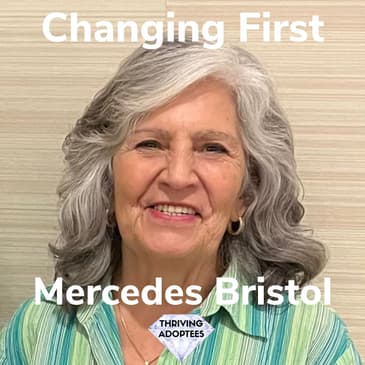
It's a trap we all fall into. Thinking that others will change. Waiting for others to change. But we have to change first. Listen in as Mercedes shares her insights on change for the better...
Mercedes is a compassionate leader dedicated to supporting grandfamilies in Texas. As a grandmother of eleven and great-grandmother of four, Mercedes’s journey into grandparent caregiving began in 2011 when she adopted five of her grandchildren. Recognizing the lack of resources for grandparents like herself, she founded Texas Grandparents Raising Grandchildren (TXGRG) to fill this gap. Under her guidance, TXGRG has become a vital source of support and advocacy for grandfamilies statewide.
Mercedes is not only a caregiver but also a passionate advocate for grandparent-headed households. She tirelessly works to amplify their voices and advocate for policies that address their unique needs at all levels of government. Mercedes’s dedication has earned her recognition, including the prestigious 2022 Casey Excellence for Children’s Award. Her unwavering commitment ensures that all grandfamilies are resourced, connected, and thriving. Mercedes Bristol is a true champion for grandfamilies, making a positive impact across Texas.
https://www.facebook.com/txgrg2019/
https://www.instagram.com/tx_grg/
https://www.linkedin.com/in/mercedes-bristol-78249816/
Guests and the host are not (unless mentioned) licensed pscyho-therapists and speak from their own opinion only. Seek qualified advice if you need help.
Want to learn more about thriving for you, your kids, your families or your colleagues? Pick a time to talk here
[00:00:02] Hello everybody, welcome to another episode of the Thriving Adoptees podcast. Today I'm delighted to be joined by Mercedes Bristol, from the Texas grandparents raising grandchildren. That's a hell of a mouthful that Mercedes, yeah. It sure is. Thank you, thank you so much for having me on your show.
[00:00:23] You're very, very welcome. So, yeah, Mercedes, she adopted five of her grandchildren, they are her kids and founded the organisation off the back of that and a hole, a big missing hole, right? There was no support for these people. So, we start with the Thriving question then Mercedes, what does Thriving mean to you?
[00:00:54] For me, Thriving means that you have something to look forward to. You have things that you are already living and it's also a place where people are not just surviving. I remember after getting the five children, I was, somebody said, you know, to me, why don't, why don't you teach these grandchildren how to speak Spanish?
[00:01:21] And I remember saying, I'm just surviving. I'm just surviving this journey. I, you know, it's, it's a, it was such a heaviness. And to me now to look at what's thriving and I feel like, like when you plant a plant, right? And it's nourished and it's getting fed and it's taken care of and it has all these nutrients and, and, and things.
[00:01:46] And then it's, it looks beautiful and it's thriving. It's, it's happy. It's, it's alive. And so that's the difference that I see for Thriving for me. Yeah. And, uh, ladies and gentlemen, I just got to tell you that this happened when Mercedes was 57, right? She was, uh, she, that that's when this was sprung on you, right? So, um, in a different part of your life, right?
[00:02:12] And then boom, everything, everything changes. That must've been, uh, a, that must've been a challenge to your thriving in that moment, right? It was, you know, at 57, I was, uh, planning on a retirement, right? I was single. I had been divorced now for about eight years and then, um, taking care of my mom.
[00:02:33] She was, uh, herself, she had a COPD and then she passed away. And then I thought, okay, what do I do with myself? Right? It's like, let's me. So we started, I started thinking about, oh, I, I, as soon as I retire, I was 57. I figured I retired at 60 and start traveling. Well, at 57, I was surprised with the five grandkids. And what do you do? You take them. What do you do?
[00:02:58] So going back to this metaphor that you had, uh, uh, uh, nourishing, feeding, taking care of, of the, of the, the grandkids who have now become your kids, right? And the nutrients, what, what have you learned about, about that? How, how can you kind of extend that metaphor into what it, what it means for you raising your grandkids that are now your kids?
[00:03:24] Well, you know, one of the metaphors that comes to my mind right now, um, they have issues. These children that are taken away from homes in their, in this had been their third removal. So they had a lot of, uh, uh, a lot of trauma around the, the leaving parents coming back, leaving parents coming back.
[00:03:45] And on the third removal, I just, uh, uh, put my foot down and I, and I hired an attorney and, uh, I did an intervention, which then the parents could not do their, their, their services. So I ended up adopting them. But one of the things I learned is that, you know, with their behavior problems, there was a lot of, uh, a lot of nurturing, right? How, how do you provide all of this, uh, nurturing and love to these children that are challenged?
[00:04:13] And so one of the things I learned is that, um, like, for example, one, the, the, the six year old at that time, they had to evacuate the classroom because of his behavior. So we learned that he had PTSD and H ADHD and oppositional defiance. And Simon, I didn't know what all those acronyms meant.
[00:04:37] And so I was, uh, talking to a friend of mine one day and she said, it's very hard to, to straighten up a tree that's already crooked. And so back to the plants, right? When you plant a plant and it's now growing sideways and then you get it and you want to nourish it and bring it back to, to, to health.
[00:04:59] It is a challenge because how do you provide all of that space for five children with the, um, the, the three month old have breathing problems. And a lot of health issues, uh, required three sets of tubes within his five years, between three months and five years old.
[00:05:17] So all of those things are, are, are hard to be able to have that thriving, uh, sensation because you have to bring in people to help you really get those, those nutrients in the ground. Yeah. And to me, the whole challenge is the, your capacity for this, right?
[00:05:38] The, the, the, the, the, the space to handle, keep all the plates spinning, you know, to use another metaphor with you've, you really, really have your hands full. So you've got to dig deep in those moments, but what was that about for you? Where, where did you find that capacity? Well, you know, I went to my church and I asked, you know, I needed, I needed hands on deck.
[00:06:07] I needed people to, to come in and help me. There was one, um, one lady that I was able to, to, um, to come in and she would come in three times a week and she would help me from four o'clock in the afternoon. I was still working and she would come in while I was still at work and, and, and prepare meals for me. And then, uh, when we got home from, from, uh, picking up all the five grandkids from daycare, um, you know, she would have dinner. She would help me with them.
[00:06:35] She would help me take them a bath and put them to bed by eight o'clock. So that was kind of a routine, a routine that helped me manage the spinning plate, like you said. Right. And so, um, the other thing is I have my daughter, which is their aunt, and she would come in on the weekends and give me some help. And, um, and I just relied on, on my community to be able to, to assist me with some of the issues that we have. Yeah. Yeah.
[00:07:05] What about the internal capacity? Well, you know, uh, I mean, I went through a depression. I did. It was very hard for me to balance everything at the beginning and how that started is, and I didn't even know I was depressed. What happened is I went, I had, I got sick. I had bronchitis, went to my doctor and my doctor, by the grace of God was very, very intuitive. And so he said, I'm going to treat your, your symptoms.
[00:07:33] He says, but you really need to take care of a deeper, uh, thing that's going on within you. And, uh, he says, you need to take care of those emotions. So he invited me to attend these Al-Anon meetings. And so, um, I, uh, I started attending. I started realizing that I had to change my perspective, my way of thinking, because I remember saying, I have to take these kids. I have to do this.
[00:08:00] And when, when I was going through that program and it's a 12 step program for Alcoholics Anonymous, having you look at how you contribute to the, to the madness that's going on. And I, and I went through the 12 steps and I realized that I had to turn all of this over to God, but then I had the support of other, other people going through similar situations.
[00:08:23] They can support me on my thinking, on my way of, of looking outlook on, on things, excuse me. And that really helped me mentally. Yeah. So it seems, uh, it seems a big leap from, uh, from depression to Al-Anon. What, what, where is, where was the, um, overlap?
[00:08:48] Where was they, they, they, they seem very distinctive, different kind of things to me. It was because once I started taking care of myself, I, I, you know, first medication, right. To get off the, uh, get the, um, the bronchitis and, and get me back to health. And then the doctor did prescribe some, some, uh, antidepressants. And so while I was going through, uh, uh, that emotional stuff, then I was able to press in.
[00:09:17] And I also, uh, got counseling. I was also in counseling. How do I manage myself to be able to help these children? And that was the, the key with between, it was like a three-legged stool. You know, the medicine, the counseling in the program really helped me focus on where my priorities were to be able to handle everything and be enabled to, to, um, to give the services to the kids. Yeah. So what, what were the perspective changes?
[00:09:44] Uh, when we spoke last time, you talked about aha moments. So, uh, you know, they're wanting the same to me. Like it's just two, two, two different words for the same thing. Um, uh, an insight, a change in our perspective or an aha moment. So what, what were those for you Mercedes? What were the big moments? Well, you know, as, as you're, you're seeing, I was, I was seeing my life, you know, changing.
[00:10:11] And, uh, I, I was one time, uh, I was in church and I saw myself with these five children all over me. Right. I'm sitting standing there and I had this sense of overwhelmness of like, this is my life. You know, I have to, I have to do something about, and I felt very disempowered. And I remember saying to, to God, I said, I can't do this Lord. There, there are five children. They need a mom and a dad.
[00:10:38] They don't need a grandmother to, to, to a single grandmother to boot that I didn't have families, uh, a husband. And so I remember the Lord telling me at that time that, uh, to stop being a victim and be proactive. They were there to hit, these were there, his children, and he would take care of them and take care of me. And at that moment was that aha moment. It's like, Lord, you know, I'll trust you. I'm going to trust you that you are going to get us through this. Yeah.
[00:11:08] Yeah. So was it a major turning point for you that? It was because now I saw things that, and with, with the work with Al-Anon with the, again, you know, the empowerment that Al-Anon gives was a, a, I can, you know, I have the tools. I just have to access them. And so, uh, that was my, my home moment of how can I, how can I get from this point? But it had to become, it had to start with my thinking and letting go of the victim role.
[00:11:38] The victim role was a really big thing because, uh, a lot, I don't know how a lot of parents feel or grandparents, but what, what I felt is that I got dumped all these kids. I had no choice, but through the program and through help, you know, turning it over to God, I felt like, no, I did have a choice, but because I loved them, I had a choice to get these children and nurture them and have them become what God wanted them to become because they were his children.
[00:12:08] Yeah. So you, you didn't make the change happen. God made the change happen. The insight happen. Yes. Yes. How do you see the relationship between trauma and thriving Mercedes? Wow. That's a, that's a loaded question. Uh, uh, trauma is no simple questions on this. No, no simple questions.
[00:12:37] Trauma is so difficult to find out what kind of trauma each one child had, you know, and for, to be able to change that trauma or at least understand it was very difficult for me because I'm old school, right? I'm 57. I was, I wasn't brought up with all of these acronyms with ADHD, PTSD, you know, rad and all of these things that now people get labeled, but you see the behavior.
[00:13:06] So when, when, for example, uh, um, the six year old, uh, they call me at work because, uh, they had to evacuate the classroom because he just tore the classroom apart and something triggered him. And I, I had no clue. So when I got to the school, they had him sitting there with an iPad and I said, why are you rewarding him? You know, he just, he just caused the cold chaos here. And they said, that's the only way we can, we can deescalate him.
[00:13:36] And that was the only way that they can, you know, look at his trauma and be able to deal with the trauma and not the behavior. And that was a big mind shift for me. It's to now look at a trauma because in my mind, old school, I would have spanked them and I would have said, no, you do not behave that way. You have more respect for people and for your elders.
[00:14:00] And so learning on each child's trauma, the, the seven year old at the time, I learned that she had been bathed by chemicals because mom had been on drugs and thought she had bugs all over her. So she, she bathed her in chemicals. Imagine that trauma, you know, and now having to, to repair that. And how do you nurture and have these children thrive to what they went through? Yeah.
[00:14:29] One of the things that hit me hard, I think it was last year, might've been the year before I was sitting in an adoption conference and you know, this, this bit, the behavior topic came up and, um, and I was thinking I had, I had a light bulb moment, right?
[00:14:50] I thought, you know, the parents biggest challenge is the kid's behavior and they don't understand it. Right. And it's the same for the kid. They don't understand it either. Right.
[00:15:07] How do you, how do you begin to explain what's going on to, to, to kids? Do you, do you, once I got educated on what that was and that's where, you know, we, we
[00:15:32] try to educate grandparents because once I started learning what, what that was like, what is ADHD? What is it? You know, what, how do you, you can't, you know, how do you treat it? How do you deal with it? And so I started getting the school gave me some books to read and I was reading about that. And there's books out there for children to understand what ADHD is and what it does for them.
[00:15:58] And they can identify with some of the behaviors and make, and having them understand that ADHD is just a condition of, of, of, of, you know, their mental condition. And it's not a behavior that there can control a lot of times, but with proper, like one of the things that, uh, that we have to deal with, I didn't want to put them on medication right at the beginning. So I started learning, how do you treat some of these symptoms with nutrition? Well, for my kids, it didn't work.
[00:16:28] So I had to go back and look at, okay, do we explore medication? So I had to sit down with the children. There were six, seven, you know, that were already of age. We got books that are for children. We read about them, explain what they were going through and saying, I understand now that it's not a behavior problem. It's a condition that we need to learn that. And, um, I had a lot of opposition from my ex-husband and my daughter about putting them on medication.
[00:16:56] And I had to educate them, you know, that it wasn't a long-term medication that we can have that medication supported to support them while they're going through counseling and learning different behaviors to be able to, to, uh, set patterns for them and choices. And so we started learning that and it helped us, you know, because it was, to me, it was hard to accept. Imagine for a child. Yeah.
[00:17:25] I'm wondering if any aha moments, any of your kids aha moments come to mind, you know, during, during, um, during the, reading the books, working with the, with, with the counselor, that they're taking these drugs as a short-term, uh, tactic. Do you, do you, do you recall any, uh, you know, moments for them when the penny dropped for them?
[00:17:55] It was a struggle. It was a struggle. It was a struggle with all of them because, um, again, I didn't have the support of my family members and they kept saying that they didn't need the medication. So my kids grew up thinking that I forced them to take it, even though they understood their condition, but they, they thought they could do it on their own. And that was a struggle for me. However, the aha moment came when, when one of the daughters, one of the granddaughters, it was in high school and I gave her a choice not to take the medication.
[00:18:24] I said, you know, you're in high school. If you think you're, you've got it. I said, I'm going to, I'm going to give you that choice. And she didn't take it for one semester. And so she was, her grades were going down. She was not, she was here, there everywhere, you know, with ADHD, they start a project and then they think of something else. Now they go do that. And so her grades started falling and, um, she came to me and she said, grandma, I need the medication. I see that, that, you know, it helps me stay focused and it helps me, uh,
[00:18:54] uh, complete what I have to do. So that was her, her own, you know, um, aha moment. And, and it was, I was glad not because I wanted to push the medication because I wanted them to feel that they have a choice. Yeah. The word was coming to our mind was, um, was empowerment. Um, yeah, you're giving her the choice. So, um, what, what else? I think this is a really rich, it's a really rich, um,
[00:19:25] for me, it's a very strong theme for thriving to me. I, I, I talk a lot about, you know, we're trying to get the kids to change their behavior. Well, why don't we give them the, the, the understanding, the tools for them to change their own behavior? You know, that, um, surely that's a better way to, to do it.
[00:19:50] Um, and, and this is based on work that I used to do before I started the adoption podcast with, with kids. Uh, um, what have you learned about empowering kids through, through choice? And what, what are you, what are you learning? Clearly there's an age thing, right? You, it's gotta be age appropriate, but, um, rather than me trying to second guess it, why don't I just ask you the question?
[00:20:19] What have you learned about empowering kids and choice? I think, uh, again, because of my age, that was something that it was hard for me to shift, right? To be able to give them some, some control for themselves and stuff like that. So what I've learned is that both the caregiver and the child need to understand that, that the choice is not a control thing.
[00:20:44] It is a, it's a mutual understanding and agreement that, that this is going to be for their best interest. And they have to have a buy-in, you know, they have to see the benefit for themselves. Like, just like this granddaughter, right? She saw that she wasn't going to be able to make her grades if she didn't have that extra help. And so the other thing that comes with some of that medication with ADHD that we tried
[00:21:09] to talk to them, uh, I talked to them, to my children and I learned is what are we putting in place as a safeguard in the schools? So, you know, like we talk about 504s, you know, um, special accommodations at schools that they understand also that they have this, this deficiency type of, uh, going on that if they see them, you know, their grades dropping or they see them inattentive, that they have a safeguard.
[00:21:37] Like if they're not taking enough notes and they, you know, that they will actually provide that for them because they might, they have off days too, you know? And so that's a, a, a collaborative thing that we have the school and the child and you're, and you know, the caregiver working with this child to give them the best tools that they need. And then, then the child doesn't feel like they're outcast, like they're different.
[00:22:02] You know, they have the teacher helping, they have the caregiver and they have a choice because once they don't, they choose not to get this, the help, then that's when they go downhill. And so, um, and you explain that to them and you give them those choices. Yeah. And it would, it requires courage on, on, on your part, right? So you're, you're giving her the choice of take the drugs or don't take, take, take the drugs.
[00:22:30] And you know that you, you could be in for a tough time. It was very difficult. It was difficult because, you know, it was difficult because then you have to have other, other, other things come into play, right? Consequences. So if your grades are dropping, it's your choice. So now you're going to have a consequence. If your grade drops below this, this, and it to me was below a C, okay.
[00:22:59] Then you lose your phone. And so you don't have access to your phone because now you're spending more time on the phone or more time being distracted than the time you need to be studying. So I'm going, you have consequences for that. So they have to make good choices and you know, they have to know what the consequence is going to be. If they, their grades go down or if she's, for example, at home, she was, she'd clean her room, right?
[00:23:28] That's, they have three chores, you know, clean the room, clean the bathroom and pick up after themselves. Right. And so when they were cleaning the room, they start the vacuum cleaner. And then all of a sudden they're now they have the vacuum cleaners out and now she's doing an art craft, a craft on the floor, you know, and then, you know, she leaves the paints there and now she comes downstairs to eat and then she goes outside to play. And then I go in the room and I see the vacuum cleaner.
[00:23:55] I see the art stuff on the floor and I'm like, uh, uh, uh, uh, let's backtrack. Let's go back. And so that was choices that she made. And I says, okay, you know, give me your phone. You lost it for the day, you know, and it's hard, but they have to feel that the choice comes responsibilities. And if she chooses not to take the medication, she's going to have to work harder to be able to go back and do the things that she, she's responsible for. Yeah.
[00:24:29] When you, when we spoke last week, you talked about the fact that, um, you didn't want to be considered an angry parent and that landed with me, you know, in terms of, I'm not quite sure which, and I'm not quite, sorry, I'm not quite sure why, but it was, um, it seemed kind of a big, big moment when you saw that.
[00:25:01] Well, you know, one of the things that, that, that I discovered in my journey with these children is that I was angry. I was very angry with the parents because they didn't, they weren't being responsible. They were out there doing their life how they wanted to. And I had five of their kids here and I had all of these struggles to, to go through. And then, you know, when they wanted to come and visit, it was a, a happy, oh, I love you Disneyland parents. Right.
[00:25:31] And then, you know, they leave them and then I got stuck with their behavior. And again, and even though I had adopted them because he's my son, I still wanted my son in my, in my life, but I didn't realize that having my son in my life was causing more trauma to me and to the kids. So when I had that aha moment about, I'm still angry, you know, I, I, even though I choose to have these kids, I didn't realize I was angry, disappointed, hurt.
[00:26:01] And, and, and I was like a bottle. And so some of those feelings, I realized that when I, by having those feelings, and even though I do the work with, with Al-Anon and I do that, I was still not letting go of something. And that aha moment was a day where I blew up and I felt like I'm triggering these children by having all these feelings bottled up and not being able to talk to, to really be honest
[00:26:30] with somebody that, and then have the tools. So, you know, when you have a tool and you're building a house, you finish the house and then you put the tools away. Right. And that's part of, of, of our journey that we're, we're constantly building this house. We're constantly, you know, picking up those tools and trying to chisel at that anger or that resentment or whatever comes up. And sometimes the, you know, for example, the child would come in and he'd say, oh, my dad
[00:27:00] said I didn't have to do that. And there it goes, you know, there goes that anger. And I'm like, no, your dad is, it's not your parent, you know? And why would I say that? And I caught myself saying that to, to the child. And I thought, wait a minute, instead of saying things like that, that's going to hurt the child, I need to be responsible. And I say, well, thank you for sharing what your dad said, but while you're in this house, you know, and I'm your parent here, we're going to do things this way.
[00:27:29] And that was a lot of my conversation. And, and, uh, you know, when you're 18 and you want, you know, you have a choice if you want to go back with your parent or not. But until you're 18, I am your parent. And, you know, we have rules in this house. And so those were the hard parts. How do you navigate those triggers? That anger that comes up when the child is, you know, doing or saying things about that other parent. And I had to heal from that.
[00:27:57] I had to really look at, uh, how do I, how do you, how do you separate those feelings from the parents and then just be a parent? Yeah. And presumably were you still in counseling at this point? Yeah. Yeah. Yes. Yeah. So what, how did the counseling help with the anger?
[00:28:24] Identifying it, you know, saying how I felt and going back. And, and I think, uh, I also had, had to do some inner child healing. And, and that's another conversation, right? That a lot of people don't understand that the trauma that we go through when we're children, we carry it into parenthood. And we think that's the right way. And I had to look back and, and, uh, um, one of the things that I, that I got to see is that I had to let go of how I was parent.
[00:28:53] You know, it wasn't there, it might've not been the right way, but it was their way. And, uh, uh, I had to let go and do my own parenting and learn new skills to be able to parent and let that go. And so those are the challenging things of, of, um, when you get triggered for your own childhood. Like I remember my father didn't think twice to spank me, you know, and now looking back,
[00:29:17] I've said, I think I had ADHD, you know, at the time, the way I was, and yet I got spankings. And so now parenting a different way and learning, you do get triggered and you do get that anger, you know, and you have to have, again, have the tools to be able to walk away. And I've several times I've had to tell the kids, right. I can't, I can't respond right now. I will have to come back to that. Yeah. It seems a really steep learning curve.
[00:29:48] Yes. Yes. Is it, is it, is it still as steep? Is it, is it leveling off? What does it look like? It's leveling up. Yes. I can now see myself that, you know, the kids can be doing A, B or C and I can just look at them and just walk away. I don't have to get triggered. I don't have to get in the middle. Like that's their, that's their choice. You know, again, going back to the choice and then they have a consequence.
[00:30:16] Like right now, my 15 year old, he decided he was going to play games at school and not, and not pay attention. And so he had three bad, there were F's. I'm going to be honest. There were three F's. And this is a GT student and he's taking his medication. So I'm like, what's going on, Paul? You know what? Let's talk about this. And then talking to the teachers and I saw that he was playing a lot of games and not.
[00:30:43] So now he has no games and he keeps saying, I made up the grades. And I said, they're not on the, they're not on the, on your report card. So he has no phone now for two weeks and he has, he doesn't have any, any electronics. Yeah. And so he is, he's, he's suffering the consequence. But like I told him, these are your choices. Yeah. And I don't have to be angry. Yeah. And how long is it now since the kids came to live with you?
[00:31:11] March has been 15 years to this month, 15 years that the kids have been with me. 15 years. And if you, if you look back on it, when did the learning curve start to level off? Do you remember? No, I, I mean, it's, it's gotten gradually easier. I think gradually it's been easier.
[00:31:37] I think my aha moment though was about five years ago when I had surgery and I was really laid out and couldn't do much of anything. And the kids stepped up and, and, and really took on taking care of me. And I realized, you know, I didn't do a bad job. I didn't have to keep measuring myself. And I think a lot of times we measure ourselves by, by feeling like I'm not doing a good job
[00:32:06] or, you know, because we're just focused on that. So I started about five years ago, I started focusing on, you know what, these kids have, have, and that's when I started giving them choices and I started letting go because I felt I can't, I can't control all of this. Yeah. Well, you can't. And I did it.
[00:32:32] I mean, it goes to that empowerment thing, almost like you, you went, when you were ill after the surgery, I guess you, you didn't have a choice that you just, you couldn't. And so you had to let go a little bit. And then the more you let go, the more you, you saw that you, you could let go. Yeah. I could let go. And they did respond in a better way, you know, because I think the controlling part
[00:33:00] of me was, was really suffocating them too. And so when I start letting go, they start thriving. They start doing on their own. So I think that was a learning curve for me. Yeah. I'm starting a course in a couple of weeks and the lady who's running it sent a questionnaire around, you know, what, asking background sort of questions.
[00:33:27] And, and I, what did they, she said, you know, what, what are the challenges? You know, what are you hoping will be better? And that, uh, what issues have you got to address or something like that? So I said, uh, anger, uh, frustration and control freakery. Yeah. Yeah.
[00:33:52] Um, the, you were kind of alluded to a little bit in the, in the last answer, but, um, one of the things that you shared with me last time was this, that this belief that you had of not being good enough. Has that been with you forever?
[00:34:18] What I was, was this did, did, did raising the kids bring that up to the fore? You know, what was the, what was the story around that? Well, the story about not being good enough came from, uh, from my childhood. You know, I was raised with five boys and I was the only girl for, for many years. My, uh, I was 11 years old when my, my, my sister was born.
[00:34:45] And, um, I always felt that the need to prove myself like I was good enough, you know, I have a sense that my mother, uh, favored the boys, you know, and I was left behind. And I think that was something that I made up, you know, because she loved me. It's just that there was so much more boys than a girl, you know, and she, she had to survive all of that. And we were, we were, uh, very, um, uh, poor. We, we grew up in a, in a poor environment.
[00:35:15] And so one of the things that, uh, uh, I didn't have a bedroom, you know, the boys have their own bedroom, but I, I slept in the living room for example. And so I always felt like I wasn't good enough to even have a room. I always dreamed about having a white bedroom set, you know, and, uh, uh, not until I was married did I get my white bedroom set, but, but the feeling of not being good enough, I now have done some work on that.
[00:35:41] And I realized that somewhere I told myself that, you know, I wasn't good enough that to be loved, like the boys were being cared for. I mean, I had to help take care of the boys, you know, so I had to grow up. I had to learn how to cook because mom had to work and my dad had to work. So at a, I remember being 11 years old when my daughter, when my sister was born and taking
[00:36:06] care of my sister and, um, and cooking, I remember, you know, making rice and beans and, you know, things, potatoes, peeling. So I, I had to grow up really fast to help mom. And so I don't think that I had that, that nurturing in the childhood that, that, uh, that I needed maybe. And I always felt like I had to prove myself. I remember my dad saying I did something that he approved of and he said, you know, I was a little chunky. I was, I was heavy.
[00:36:36] And he said to me, you're worth your, your weight in gold, you know, in Spanish, it sounds different. And, and so I was like, I didn't understand if I did something, then I was worth something. And if I didn't do anything, I wasn't worth it. So that not always having to work at something was, was it played with me all the time that I had to produce, do something to be, to feel good enough.
[00:37:04] And so when I got the kids and, and, and, you know, that came to play because it was like, I felt like I was failing at one point where I couldn't control them. Right. I couldn't get myself my bearings. And that's when I was crying out to God, I'm not good enough to do this. You know, they need a mother and the father. They, they, they don't need just the grandmother. And I felt that that was another point that, that came up for me, that I wasn't good enough to do this job that God was putting me to do.
[00:37:32] And so, um, I, I don't feel that way no more. Uh, you know, I know that my identity now is in God and that I am a daughter of God and I'm valued. And so, uh, and he loves me the way I am. So that has been a result. Um, does it come up once in a while? Yes. But, you know, we, we now, I now have the tools to be able to say I am good enough. Yeah. Yeah.
[00:37:59] Do you remember the moment when you got smart to the idea that you might've made that up? You said, you said something about, um, I think I might've just made that belief up, but it might not be true. That was when, when I took this course in, um, it was a course that was offered and, uh, it was called Denmark education.
[00:38:26] And, uh, you go back into, into what's going on and how you make up stories and some, uh, something happens to you and you make up the story. And so I got to see how I made up stories, you know, in my, in like what really happened that, that, that had me think that way. And going back and looking at things that happened in my life, I have seen that I might've made that up because I mean, I'm sure, you know, my mom loved me just like she loved my brothers.
[00:38:56] I just have more, more responsibilities. And, you know, at, at 10, 11 years old, and I just thought I don't have a bedroom. They're different than I am. You know, she doesn't care for me because I, I don't even have a bedroom. And how did I get to, to think that way? You know, I don't know what made me think. Maybe somebody said something. I don't know. I haven't, I haven't discovered that, but I remember thinking, you know, going back and saying, where did I get that idea that I wasn't good enough? Yeah.
[00:39:27] It's, it's a fascination for me, this topic, because, you know, like the thriving adoptees logo is a diamond. As a, as a direct challenge. Yeah. To, to the fact that many adoptees would, their icon for themselves would not be a diamond. It would be something else.
[00:39:55] It might be a, a, a, a bin or a trash can, as you would call it in, in, in the States. And my fascination is how that belief forms. Because, you know, like it, it, it, it, it, it forms. It, it, somehow it, it forms.
[00:40:22] And I can, I can only kind of talk metaphorically about it. I can't, I can't really see it in a different, see it in a different way. But, we've, we've all got it. We, we've all got it. You know, like. We all have it. And you know, what, what's really hard for, I, I've seen it with the kids.
[00:40:49] It's really hard for them to be able to thrive with the feeling of their insecurities, right? Why did my parents leave me? You know, I wasn't good enough. And, and having those talks, as I've learned to, to, to define that for me, to talk to them, that you are good enough. It's not about you. They didn't leave you because you were not good enough. Or they could not make the choice to stop doing their, their behavior because you weren't good enough.
[00:41:18] It's because they have a flaw. Because they need to get to that point to see why they're, they're, they're feeling that way. And so, you know, I taught my kids that they are good enough. You know, that's why I, you know, like my child said the other day, he said, I'm not that smart. You know, I can't get A's. And I said, you are smart and you can get A's, you know, but you have to want them.
[00:41:47] You have to want to change. You have to want to choose not to play games to be able to concentrate. And the same goes with a, once you identify that you are capable. Of looking inside and saying, why do I feel I'm not good enough? That whatever happened outside of me is causing me not to be good enough.
[00:42:14] And we need to look inside why we feel that way. And, and again, when did it start? And how do we begin to heal that? You know, because it's a healing process. It's not an aha moment that you get rid of it. It's really a healing process. And I think I talked to you a little bit about the, the point therapy that we're doing with the program. And that's what we want it to be is those aha moments.
[00:42:40] How do you start identifying those behaviors that makes you do certain things? And, and it's, and it's fascinating to me too, to see some of these children crying, you know, getting to their feelings because they, now they see how, how other people react to them when they're feeling a certain way. And so when I see the kids withdrawn, I'll, I don't want to cry, but I'll just say, you're okay.
[00:43:09] You know, just check in, check in with them. How do we get them to see that for themselves? Talking about it. Because if you don't talk about it, it doesn't exist. If you talk about it, it makes it more real and it makes it more understandable. I talk about it with friends, you know, I talk about it with people, not about them specifically,
[00:43:40] you know, just in general. And, you know, the work that I do, I talk to a lot of grandparents and we, and they hear me and they hear me talk to them, you know, coaching them on how to be able to talk. Like one of the things that I get asked a lot, how do you talk to these children and let them know that their parents don't, you know, left them. And so, uh, and, and I'll say something like, just let them see the positive.
[00:44:07] Don't let them keep, you know, that negative why they were left and just say, look where you are right now. Look where, where, you know, this is something that God put together for you. And, um, it might not change them right away, but it's so normalized now that I, that, that we talk about it more because my grandkids are, are always with other grandkids and other grandparents, this support that we give each other through, through these support groups.
[00:44:36] They don't get to see themselves as they're different. And I think that the community needs to come around them and see them as not as adoptees, as just children living, you know, and the labels are not important, but we do live in a society. I remember my grandson saying, uh, to me, he says today at school, they, they asked me if I was going to the mother and son dance.
[00:45:06] And I told them, I don't have a mother. And I said, I am your mother. You know, I'm, I will never take your mother's place, your birth mother, but I am your mother to be able to mother you as you grow up. And so those are conversations that we need to have with those children to normalize. You know, it's, it, it might not be the traditional family, but we are a family and we are, you know, you do have someone that you can go to the dance with.
[00:45:35] And, and, you know, some of the other things that we need to understand from the, these children is how do you, you can't change all their feelings or their thoughts, but you can normalize them. You know, yes, you have a mother, but if she's older, she's not a younger mother, like, you know, your other friends, but, um, but yeah, it's, it's, it's a hard place to be. Yeah. And the community does a lot of the normalization for you, right? Yes. Yes.
[00:46:05] Because now we have, you know, I have gone to, um, to parent, uh, conferences, right? Parent. And the superintendent is talking to, to the grandparent, to the parents about how great it is to partner up for the school. You know, thank you parents for, for being, you know, you're the first educators at home and you trust this year at school. And, you know, they're doing all that, that speech.
[00:46:31] And I remember raising my hand and saying, uh, um, excuse me. I said, would you, would you please mind addressing the grandparents and the kinship caregivers that are in this room? Because I'm sure there's a lot of aunts, uncles, and grandparents here. And then I went to say, is anyone a grandparent here that is raising the child? And there was people that let, that raised their hands.
[00:46:55] So normalizing that even in a room has caused the shift in thinking that we're all in this together. And the children are looking at that as they're, they're more acceptable because now even the schools are recognizing the guardianship, the kinship, you know, the, the, the, the grandparents. And so, um, so that's one of the things that I've seen being more normalized as far as, uh, being accepted. Yeah.
[00:47:30] So we're coming up on time here, Mercedes. Um, is there something that you'd like to share that I've not asked you about? Do you think significant in this thriving conversation? You know, the last question you were going to ask me is how do we overcome this obstacle, you know, obstacles. And I think that, um, overcoming trauma is, is just creating that safe place for those children.
[00:48:00] You know, I think if they feel safe, even the adults, once they have a safe place, I think it, you can deal with your drama and deal with the drama of the children and then supportive spaces, um, building strong connections. We talked about the community, right? I know, I know, um, you know, my kids, uh, we go to talk to senators. We talk to representatives.
[00:48:25] We talk to all of these people that can be actually in the conversation and building those strong relationships. Like right now we have a, um, a youth group that actually is, um, it's a support group for youth. And so again, normalizing their situation, they're being raised by a kinship, by a grandma, an older relative. And, um, and how do they cope with that?
[00:48:50] So we have the state representative come in and talk to them and just really bringing them to, to be able to speak at a higher level, uh, that I'm here for you. You know, I am your voice. How can I help you change processes, policies, and giving them that, that, uh, empowerment. So I think bring, building those strong connections within the community and having the community
[00:49:15] see these children as being, um, important constituents of theirs because, because they're going to become 18. They're going to be able to vote, you know? So start teaching them those things, um, again, guiding them, uh, respectfully, and then understanding that, um, that there are opportunities to grow, you know, that they don't have to be stuck
[00:49:37] in, in, in their thinking and, and, uh, uh, um, that they are a beautiful creation that God, that God made them that way. And if there's anything that's there, they can heal and start thriving. They don't need to be stuck, that there's always a way to be able to encourage one another. And one of the things I remember hearing a long time ago is that, how do you,
[00:50:08] how do you thrive? That was your word, right? How do you thrive? I, I just thinking another metaphor is, you know, when you start the briquettes, you know, the charcoal in the, in the barbecue, you start them all together and then you fill them up. You know, you put the, the lighter and, you know, and then you put the fire and they're all burning together. But what happens if you move one to the side and, and, and keep it to this side, it's going to go off. We need to keep them together. We need to have these conversations.
[00:50:38] We need to continue to educate them, continue to fuel them with the power. And I always say the power of God, you know, always bringing that in to be able to get them the, that education, the support, everything. So they're not set aside because one of the things that we like to do as human beings is isolate. We're feeling bad. We don't want to be contagious. We don't want to put people, you know, get people in a, you know, in to, to come, but
[00:51:06] we need to start shifting our thinking and start saying, how do I, how do I get to the joy part? How do I get to, to feeling better about my situation? I hope that makes sense. It does. Beautiful. A great place to end it on. Thank you, Mercedes. It's been a lovely conversation and thank you to listeners. We'll speak to you very soon. Okay. Thank you. Thank you.