How hard are you on yourself? Self judgement is rife amongst us. It's always there. Until it isn't. Listen in as we go deep on grace, easing up and giving ourselves some slack.
Bio:
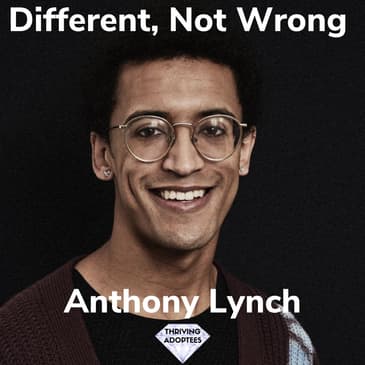
Anthony Lynch is a Jamaican-white adoptee based in London. As a research assistant at Coram, the UK's oldest Children's charity, they use their lived experience to inform policy and practice in the Adoption space.
Links:
Anthony's work: https://linktr.ee/inbetweenlinesorg
LinkedIn: https://www.linkedin.com/in/anthony-emanuel-lynch/
Guests and the host are not (unless mentioned) licensed pscyho-therapists and speak from their own opinion only. Seek qualified advice if you need help.
Want to learn more about thriving for you, your kids, your families or your colleagues? Pick a time to talk here
[00:00:02] Hello everybody, welcome to another episode of the Thriving Adoptees podcast today. I'm delighted to be joined by Anthony, Anthony Lynch Looking forward to our conversation Anthony what we talked about last time you really
[00:00:15] Yeah, you really got me thinking so I appreciate that and I appreciate you coming to have this chat today Hmm. Hi. Thanks for having me Simon So this healing word Does that resonate for you Anthony? I would say it does, yeah
[00:00:35] Yeah. And what does it mean to you? It was hard coming up with a definition for it But also a very valuable process for me And what I've got here is that it's a process of patiently and systematically incorporating more flexibility, ease and simplicity into my life
[00:01:02] Do you want me to break that down? I'd love you to, yeah. I mean and first off What Anthony is alluding to here maybe it might be a good idea for you listener if I may be so bold
[00:01:18] For you to have a think about your definition for it and the reason that we're thinking about a definition is I guess we're trying to set a direction for our life That sounds a bit grandiose but it is right And if we don't know where we're heading
[00:01:37] How are we supposed to have any idea of knowing how we're going to get there? So yeah, break it down that would be brilliant. Thank you So yeah those words were specifically chosen And I'll start with the flexibility ease and simplicity
[00:01:55] So flexibility is about how I respond to a situation, especially a high pressure area such as relationships of the people or volatile areas such as processing trauma
[00:02:10] And so it relates to yeah, how many times can I respond to a trigger or situation or how many ways can I respond and can that increase over time? So it's a creative way of thinking about healing and the possibilities for interacting with people
[00:02:32] In terms of ease that one's a bit more direct. It's how do I feel more comfortable? How can I choose ease over hard work in the times where it's appropriate? I found that in my life, I have a tendency to
[00:02:51] Work really hard be a perfectionist and burn out and a lot of my practice at the moment is can I choose The path that feels good The path that means I can breathe a little easier and through my nose Um
[00:03:10] So yeah, that's what ease is and then simplicity is Similar to ease but it's slightly different. It's how do I get to the other two? in the shortest amounts of steps and without rushing where it's That's a response to again And
[00:03:33] Times in the past that I've practiced healing or have practiced being with other people Or dealing with my trauma in a way that is convoluted In a way that Seems to solve Issues but actually is just like a really fixed structure that leads to this Really rigid outcome
[00:04:01] Takes more steps. So for example If I look at my therapy journey, I spent When I was 10 I spent six years in cams, which is the local sort of count like How do I describe cams it's Well, it stands for children's
[00:04:24] Is it children and adolescent mental health services? It's a government thing here. Yeah, it's government. Yeah, so pretty bog standard And I really did not like it. Um, and I wasn't honest with my therapist at all and so For years after that, I tried looking at other
[00:04:48] talk therapies Some of which were helpful some of which were not But what I really needed In hindsight was some kind of trauma therapy And if I just picked that maybe a few years earlier and that would have just
[00:05:05] You know life happens and that's fine that it took time But now I'm thinking how do I not waste time? How do I get to the heart of the issue? Where I there's an issue and then I pick The simplest solution rather than
[00:05:22] Going in a merry-go-round of trying to find more um Yeah, trying to find solutions that are easily available, but don't actually solve the root issue. Yeah So I'm not sure which way to go from there, but the first thing that popped into my head was actually to go
[00:05:44] A bit deeper So what what is the heart of the issue then do you feel for myself it would be be processing the early childhood trauma that I had as an adoptee and
[00:06:04] How that crops up in situations such as my relationships in terms of socializing in terms of Learning to really deeply accept myself and Let go of the persona Incorporate the shadow the parts of us that we don't like
[00:06:28] And find a sense of wholeness rather than trying to attain a sense of perfection Beautiful beautiful. Um, have you read any books on emotional intelligence? I'm sure I have but in the past. Yeah I've read a lot. I've read a lot of self-help books. Yeah. Yeah me too
[00:06:48] But I'm yeah, if you could explain what yeah, I was just You had both the kind of the internal stuff And the external stuff as the heart of the matter and so Us and our relationships to put it into for words, is it?
[00:07:09] um, and I was thinking about Me reading a book on emotional intelligence I'm thinking probably 20 years ago So Uh, and I was reading it on holiday and I'm laughing at myself, right? You know, most people would be reading some trash and I'm sitting there on the beach
[00:07:27] Um, well, you know, and I do read like jack richard obel sometimes when I'm on holiday as well Yeah, um, but you know, I was reading sat there with this hardback book on emotional intelligence But it starts with us
[00:07:39] In so it starts with us. Um before it goes out into the Um Out into our relationships, right? So the we put our own oxygen mask on first like we do like we're told to do on the plane, right?
[00:07:55] And it's about us first. It's our our inner work Shadow work as you referenced it as well before we kind of we go outside um and
[00:08:07] The the thing that's popping up for me on the basis of what you just talked about you said that you said a sense of wholeness And there's that I read something some couple of weeks ago about this, you know about the idea that
[00:08:26] If we if we think happiness is outsiders or wholeness is further ahead of us it'll keep us it'll keep us looking It it'll be like a carrot hanging off Fair You know in front of a donkey and we'll we'll keep going so if If for example
[00:08:50] We feel whole we have a sense of wholeness then that's The end of the healing Journey to some to some point um What what do you make of that? in my in my experience That resonates because the search for perfection the carrot
[00:09:17] In front of the donkey and I was the donkey has me too me too. Yeah I'm definitely not alone in that has characterized so much of my childhood adolescence where I've constantly been searching for external validation and Trying to find or attain that one goal
[00:09:43] That always eludes me, you know doing really well in the university getting x-price getting this person's attention Whatever it would be and then I would be whole and I think In order to do that This is a very Jungian idea of the psyche. I would push
[00:10:08] away all of the parts of myself that I deemed Would slow me down in getting that goal or getting that affection So really repressed a lot of that shadow side, which I think directly has to do with adoptee trauma and the pain of that and That
[00:10:30] Ultimately doesn't work that approach because When I finished university I had everything I wanted. I got all of my goals The grades to friends the partner the social life And I just felt empty after a week And was like what's next
[00:10:56] And I kind of knew that would happen And what was really lovely was that it gave me the permission to let go of that external chasing and look within And look for that wholeness that sense of that missing piece that not to be cliche
[00:11:13] Was and is me all along So it's an inside job. It's looking within It's an inside job, but it's also An acknowledgement at least from my point of view That we live in a non-dual world where Or at least I do where
[00:11:39] You know the sense of self that Is meant to be a border between us and other people Just kind of seems to be a bit of an illusion to me And
[00:11:52] Doing outer work can help your inner work and doing inner work can help your outer work and it's a constant Interplay in exchange between your inner world And what you project out into the world And the task is how do you align
[00:12:09] What's going on inside the trauma the qualities the sense of character that you have With the external situations that you find yourself in whether that's with your Friends whether that's your work whether it's meaningful to you or not And making sure that What your authenticity
[00:12:33] And sense of being that that projects in a really clean way and direct way out into the world rather than it being muddled by needing to appear good or needing to be worthy or Pushing away the parts of yourself Are you are you talking about?
[00:12:56] Coming from homeless homeless then or relating from homeless. Is that what you're yes Now you mentioned the parts stuff. Have you have you looked at that parts work this? This dick Schwartz guy Richard Schwartz
[00:13:15] Great, yeah, you looked at that I've read. I'm no bad parts exiles fighters all that good stuff. Yeah Yeah, and What What did you get out of that so For a quick explanation My understanding of parts work is that
[00:13:42] There when we were younger there were parts of ourselves that are the most sensitive and vulnerable And loving parts of us that were affected by trauma or neglect abuse And so in order to survive Those parts were exiled by other aspects of Your
[00:14:05] Your being and yourself that then evolved coping mechanisms to repress those exiled parts so one of them is the firefighter which is the parts that Drowns yourself in some sort of addictive substance To feel good but often
[00:14:31] You know just can cause other problems and the other part of that is the manager which is the if you think of like an intense middle manager in real life who is really controlling and And attempts to In my in my experience render my life perfect
[00:14:55] And so I would often go on On My firefight or my um Parts would often mostly be manager focused obsessively controlling my day and
[00:15:11] I had like a I made a timetable for my life when I was about 14 and put it up on a fridge for my entire family to see And I have followed that In various guys's
[00:15:24] But most of my life until my healing journey started once I finished uni, which was about two years ago But then since turning 18 Having more access to alcohol and to University I would say there would be a fair amount of firefighting
[00:15:47] In that sense in terms of I would work really hard for like a week at university and then use that to justify just getting extremely drunk and You know, oh, yeah, you deserve to feel good because you did all of this previous work before and
[00:16:07] I guess using that language of parts work a lot of my healing Journey at the moment is finally getting through to the exiles is unpicking all of those managers letting them know it's okay not to be perfect um but through
[00:16:23] EMDR therapy and also a lot of improv theater I've managed to learn to let go of perfection and to Finally begin to engage with those really sensitive parts that ultimately are You know, the really amazing parts of yourself as well
[00:16:42] Do any particular big healing moments come to mind? There are Or there are crises points which seem like crises and then turn out to be really Really amazing in the long term so when I finished Sixth form, which is the part before and university I remember getting
[00:17:14] my a level results And they were good, but they weren't quite the grades I was looking for and I don't think I've ever cried harder. I think I spent about eight hours of that day crying and sobbing that I got for
[00:17:32] three really good grades, but they weren't quite the top grades and I spent two years at this top um school Means tested but with a lot of you know, it was a boarding school with a lot of really smart people and I built up this whole personality and
[00:17:53] Inflated sense of self and ego that I'm the best and if I'm the best here, I can be the best everywhere And when that wasn't realized it was like my entire world just came crashing down and my sense of value And I'd say it took me about
[00:18:09] three four years to overcome that which was Then doing my gap year Spending three years at university and then getting the grades that I did want and then all of the prizes that I did want and having all the friends And so that was a really lovely
[00:18:32] Again moment where I was like, I don't need to focus on the external I don't need to focus on doing really well or being better than other people or um Trying to be good in the eyes of my lecturers and then I can go in
[00:18:47] I can go indoors. I can go inside and really focus on that healing so I'd say about eight months ago was a really amazing moment where This was a bit more of a soft realization but I noticed that Probably about november last year That I felt broadly okay
[00:19:13] For the first time in my life It's really hard to explain, but I just felt stable and relaxed And not like I was going to get hit by a trauma attack or
[00:19:29] Obsessively worry about something for the first time ever and I noticed that in like the previous couple days beforehand, but I Called or sent a voice message to every single important person in my life and told them that and That was
[00:19:46] You know I cried on my family group chat and was like, I've never felt this good ever And not in terms of like just some sort of high But just like in a really relaxed way um in a in the most mundane way. I felt fantastic, which was
[00:20:02] really amazing And there's like this really good quote that I actually got from my local buddhist center, which is like spirituality Is ordinary and uncomplicated And I think I really began to understand that quote once that moment happened for me Where
[00:20:21] It was just a normal evening. Nothing had happened. It would be in two days since my last um therapy session And I just felt this overwhelming sense of oh, I can survive I can I can not just survive but I can thrive um
[00:20:39] And I don't need to thrive either. I can just exist and feel good on a daily basis So yeah, those are the three that come to mind. It's a you know, it's two sides of the same coin
[00:20:50] You know the moments which are the crises and then which are the um Moments of revelation or peace? Yeah Because people talking about um Breaking down to break through Mm-hmm It's only at the When you've gone You know, you don't you don't bounce till you hit the bottom
[00:21:11] Mm-hmm. My my parents both work in um addiction And they call it the gift of desperation Which is that moment where you've exhausted all of your options because you're just so low that You have to radically change your life and they call it a gift and um
[00:21:32] those moments with finishing school and finishing University deafening were gifts of desperation because I'd exhausted everything and I Had to look for a new way of doing things Yeah It's deep, right? I think that's what healing is right can't be can't be superficial
[00:21:56] I have lots of conversations which quickly go into medium and deep talks. I'm not very good at the At the superficial It's a perfect podcast for me. Yeah people sometimes Yeah, people say sometimes all this is deep and I go yeah, that's the point That's the
[00:22:17] That's the point When did you realize that you had to go inside? when I started boarding school I was meditating at that point But that was the kind of muck mindfulness reduce stress increase concentration type of meditation Which I did for two years
[00:22:49] And then I read a book um during my first year of university Which I think was called self-compassionate by dr. Kristen neff. Um, who's fantastic And I just had never been introduced this idea that you could be kind to yourself
[00:23:07] And that you could love yourself and that could be the driver for success rather than Being driven by a cattle prod to success And it was at that moment that I realized that there was a lot there was a lot of inner work that I needed to do
[00:23:27] but at that point due to Covid which then happened in a couple months from that point and just a lack of money to be honest and The environment wasn't correct for me because you know, everyone just wants to drink and have fun at university and I wasn't gonna
[00:23:48] I just needed some time away from my um family home at that point. So I knew that it was something that I wanted to do but I just needed to have the time for it and That time was once I got back home after university and
[00:24:09] said to myself Some of the You know the adoptee child syndrome things of addiction of bad relationships of trauma You're beginning to see those patterns now and you're 22 at this point. So You need to nip this in the bud you need to address these things Head on
[00:24:41] And go inside and do the work whilst you're in your childhood home as well because that's going to be one of the most difficult places to do it, but it's going to be one the most powerful places to do it and
[00:24:55] At that point you can then go and enjoy your life But what you're going to do for the next period of time is learn how to enjoy being alive rather than enjoy the moments when you can impress or be better than other people
[00:25:13] Have you got a sense of whether you're Whether the majority of other adoptees Are coming to this stuff at the same time Of their lives as as you are as you did I've been very blessed to unite my sense of meaning in life with also
[00:25:41] Doing a lot of work in adoption so I am supported by many amazing adult adoptees and mentors who are a bit older than me and Have had that life experience or are searching trying to find a reunion or I'm getting the therapy, but just a little bit later
[00:26:08] and a lot of my Recent healing initiatives have been prompted by conversations with them when They only started searching when once they had children or they only started doing the work Once they got a bit older And I guess the sense
[00:26:29] That I get from them is don't is do it now It's the the best times plant a tree was 20 years ago second best times now kind of mentality and so In a way most of my adoptee community Is people who are older than me
[00:26:50] And so I guess because you know this healing and This world that we live in which prioritizes or is a lot more Concerned about mental health They They started later because you know they're older than me So I can't say for certain
[00:27:11] Whether I started earlier than people my age because I don't actually know that many adoptees are my age But I do know is that I'm trying to learn from the wisdom of the generation above me and go Nip these things in the bud before I have
[00:27:28] Children before I'm in you know before I get married before You know these really big events in our lives that kind of lock you in a way to a certain way of life Um Or lock you in obligations to other people
[00:27:44] I think it's really important to me that I get my life sorted before those moments happen Yeah I don't know many young adoptees either so I'm with you on on this My sense from the adoptees that I do know
[00:27:58] Um through the podcast is most of them a lot older and that's because they haven't come out of the fog They haven't come out of the fog now at the moment i'm having some interesting conversations with adoption organizations here in the uk and I've asked
[00:28:22] Four of four individuals now. I think whether they've Well, whether they've heard the term coming out of the fog and they haven't And I'm like Oh What do you think? No, these aren't adoptees. These are these are adopt these are social workers that work for them um now
[00:28:48] most of their Work is with adopted parents And yet they Yeah, but they don't know this word so that asks That's a alarm bells ringing for a For me on a whole different way. That's a different subject
[00:29:08] So let me let me bring it back around to something I wanted to ask you about we talked about the The the no bad parts The the internal family systems And
[00:29:22] And you talked about the firefighters and there's a managers and then there's a it's a it's a people pleaser Is that counted as a manager? Or is that another part or do you know, do you remember?
[00:29:32] I'm not entirely sure it was a while ago when I read it, but What did you get if anything from reading about what Dick Schwartz calls the uppercase s self
[00:29:50] So if I remember correctly, that's the self that sort of includes a more spiritual understanding or like a deeper sense of self or Yeah, I would say I would I would agree with that um That that's a kind of definition
[00:30:10] And and I would also say because sometimes those would put people off I would say that this is this is kind of looking at the our essence Our thoughts Aren't our essence Our ego isn't our essence Our feelings Isn't Isn't our essence. So we're looking
[00:30:39] We're looking before thought we're looking before trauma um So this is that that's what I think he means by the uppercase s Yeah, well, I find that that before trauma
[00:30:58] It's so fascinating for me because I was adopted at seven. I was fostered at seven days old eight days old so I There was no pre traumatic personality for me and for so many adoptees there was no sense of self lowercase self developed without that
[00:31:23] strain that poison of trauma that affected my brain development affected my relationship with friends affected my sense of self language um But I've since doing so much of my healing I didn't realize I would ever feel as good as I do on a daily basis
[00:31:47] It's really hard to explain But I just never thought when I was like 18 20 22 that I could feel was good Without drinking Or like doing really well at school or university and getting adoration That I could ever feel this sense of peace And for so prolonged
[00:32:14] And so I do agree that there there is or it does resonate with me in a sense of self the before trauma the before feelings the before thoughts um and so I guess in a We're thinking about in like a very in the short term um
[00:32:34] That kind of way of thinking about trauma any time I'm meditating or any time i'm doing therapy and You know the trauma comes up the upsetting images or feelings the terror
[00:32:46] Being able to contain that within a larger self that is untouched by all of those has been really helpful for me but I think another thing that has been really great for me is finding this sense of meaning and being able to
[00:33:02] I think I've always really struggled with like the inherent meaning of my life because Just from Circumstances of my birth and my adoption It's not entirely clear as to why I'm alive And that sort of goes beyond like a Human understanding of why I should be alive
[00:33:25] And into more of like the universe has decided that I am alive and I have to I have to accept that you know the reality of me being alive is more important than The specifics of my case and
[00:33:42] I think I've been reading some Joseph Campbell, which is all to do with the power of myth and the hero's journey And that has been an incredibly comforting set of ideas for me where You know the orphan figure in
[00:33:57] literature, you know the John snows of Game of Thrones or Harry Potter for example, you know all of those tropes I found myself in those maybe not harry potter because I wasn't allowed to watch it when I was growing up, but um
[00:34:14] I don't know john snow. I really resonated with that, you know and Being a bastard in a way and how I find a sense of ultimate purpose and then reading Joseph Campbell and realizing that My life and my meaning sit inside these like really ancient set of stories
[00:34:41] And purposes that go beyond human understanding I think that's been what's been really comfortable and comforting for me of late in terms of processing trauma in Having some sort of north star in guiding me and and also a north star within
[00:35:04] Of how I respond to feelings and how I choose what to do with the rest of my life and knowing that I am supported by the world. I don't need to struggle as much anymore You know things are working for me in a particular direction and
[00:35:22] Now I'm held, you know, I think that's a that might be a common adoptee thing but you know, I was never really held by my mother I never got that opportunity and But in some way the universe holds me or I'm held by my friends and yeah it's
[00:35:45] It's deep, but you really need to understand it and have a sense of connection to That inner self uppercase self that also is the whole world in a way. Yeah um, where do I go from that? The before the before trauma before thoughts um
[00:36:12] Is a is a tricky one to explain and because that word before gives us time and you can think of you know, no no pre-toma personality as as you alluded to but what I'm thinking about when I mean when I mean before thought is Before the our
[00:36:36] Thinking brain kicks in In the mornings like for example, or you know, it It uh, it dies When we when we go to the thinker dies when For a short period when we're when we're going to sleep
[00:36:56] So, you know, I can have had a pretty busy day juggling different stuff and and then and I hit my head hits the pillow and it's like Ah, it's a it's a it's a it's a it's a moment when the the thought
[00:37:12] Disappears and then when I wake up in the morning sometimes I wake up in the morning at four o'clock and and the thinker starts He he wakes back up right and sometimes like this morning I was awake at half past six, but
[00:37:28] But usually it'll keep me awake for ages. But this morning for some reason they're just So when I mean before thought I mean before the thinker wakes up before the and before that Yeah before that little
[00:37:46] Before the personality is awake really. Yeah, I call it the schema. That's my um That's my name for that part of myself who Is always thinking ahead is always future oriented. How do I benefit the most out of this interaction? and I guess a lot of
[00:38:08] This might be in a slightly different way to the um rich sports Up a case self, but so much of my practice has been about How do I it relates to ease? How do I feel more comfortable and can you can't think yourself into being more comfortable?
[00:38:26] It's also about how do I just pick what I want if I want So much of my life would be like Oh, but I can't eat out now because I need to save money and then You know if I can like
[00:38:41] Get it when I go home or like scheme in that way then I'll ultimately be happier in the long run And it's like yeah, of course you do need that thinking mind. You do need to planning minds, you know
[00:38:52] But sometimes you just want to get yourself fit some food and I'm using that example as like a very um It's very like a simple example because so much of my life beforehand was not doing the thing that I wanted to do
[00:39:06] or really paying attention or accepting the part of myself that I Did desire that desired. I think that partly was my religious upbringing where it was like Don't trust what the first thought that comes into your mind because it's sinful or impure or the lower self um
[00:39:28] And then instead, you know try and escape that escape the body whereas now a lot of my Before thoughts thinking is just I do this meditation every day Which is like accepting and knowing who we are and the two prompts are
[00:39:47] Who would I be if I wasn't conditioned to be the way that I am? And then also What do I want? And that I found that really helpful in Living a life of more simplicity without scheming and just addressing the need
[00:40:09] Address the need instead of scheme your way around it The um you talked about meaning mm-hmm The meaning of of your life the meaning of being alive Where are you on? clarity on on that when you said meaning there were two
[00:40:37] Thoughts that came to me during that there is that overall sort of like what is the meaning of life question? Which I don't think is a very helpful question um And then there also is like the day-to-day meaning um And so with that latter one
[00:40:54] What I've found really fascinating is starting um Is I've been doing a lot of improv in the past six months and That space is such an interesting um space to be in because
[00:41:12] The improv world is a world where you don't need to be funny. You don't need to be smart You don't need to be interesting And then also everyone is always supporting you And is done out of a place of love for the other person
[00:41:26] Those are the rules that they tell you once you get into level one and everything else is open and I don't particularly care about the quality of work That I do an improv or whether it's actually funny to other people or whether it's like
[00:41:44] Not going to be on it's not going to be on Broadway, right? but What it has given me is an environment which I should have had from the very beginning Of I am accepted no matter who I am or how I present myself And
[00:42:05] No one can deny the reality of who you are because the essential philosophy of improv is yes and which is Whatever statement you make the other person has to accept it and build on it And so that's been really fascinating
[00:42:22] Doing improv and understanding that the meaning that I gain from a situation Or Interpreted through one particular part of my ego is completely different to what another person is thinking So if I'm miming something
[00:42:41] Like for me, it might be washing the dishes but for them it might be doing some building work or arranging Um, I know crayons or something so that's really helped give me an appreciation of being able to appreciate other people's points of view and also that
[00:43:07] I can show up however I want in the world and There is no like singular Personality or way of being for me. It depends on the environment that I'm in So there's that first kind of meaning
[00:43:26] In terms of the second kind of meaning which um you originally alluded to I've done a lot of work in adoption for the past two years since finishing university Um, I've been working with my own adoption agency, which has been a really fascinating experience and
[00:43:47] I've always struggled with being too egotistical or being too arrogant that my um ideas were too domineering that I wasn't Being fair to other people but I think my
[00:44:05] Meaning that I've gained from being in the adoption spaces that I kind of need to be like that in order to survive and because I have good ideas and I'm at least one of the few publicly out adoptees working at my agency
[00:44:21] I do need to fly the flag for adoptees and Help them You know get roles within the company to be paid better to not be consulted just on the side but actually drive how the charity operates and That for me has been a space where
[00:44:49] I've gained a tremendous amount of meaning and have done at least I hope some good in the world and I think as I am transitioning to moving away from Doing such direct adoption work and like telling my story and more in terms of like facilitating and
[00:45:11] helping set things up it does feel that That's the current purpose of my life or that's where I can be placed and these events that happen to me at the start of my um start of my life that Have really shaped it in such a radical way that
[00:45:35] can help other people and then can also help this organization to change Yeah Brilliant Brilliant, you talked about the universe holding you I thought was really beautiful Have you heard a there's an Einstein quote along that Along that Sentiment Does Is it
[00:46:05] Do you recognize it? Have you heard something on that? Yeah, he's got a lot of good quotes but I got it more from um, I'm really into enneagrams which is a type of personality test and my type is um type four which is Sort of the the dreamer
[00:46:26] Who has a like a huge imagination that struggles to put it into practice and one of the key images For the type four is like the womb and the divine womb And knowing that you were held by the world and um
[00:46:48] Yeah, just knowing that you're safe in that that the floor is not going to go out from underneath you. Um So yeah, that was my inspiration, but I'm sure I mean that sounds very smart, too. So I'm sure you knew it's something like
[00:47:04] And the biggest question we can ask ourselves is the world for us or against us. Mm-hmm So, you know the universe whole held me holds you and Seem to be kind Along the world's working for you whereas
[00:47:27] I'm guessing that you felt that the world was working against you at some stage. Oh massively I think growing up You know as an adoptee of color We're up on a council state in london I've experienced so many social class changes
[00:47:45] Where I eventually ended up, you know going to a nice university and going to a boarding school for two years and And they had to change my accent in order to fit in or to be accepted by
[00:47:58] The people who I wanted to who I knew could lift me out I think growing up. I always knew that I needed I had thoughts that I and ideas that I needed to contribute but that people would Automatically not listen to me because of where I came from
[00:48:17] And who I was and so I think a lot of my drive to ed education Um Was about gaining the sense of belonging because I knew more than everyone else and Therefore was indispensable So
[00:48:34] A lot of that was like a struggle and I think that fits into like race struggles um class struggles But at some point you've you've got to be able to relax, right? Or maybe it's uh, you've got to develop your capacity that the universe is ultimately for you
[00:48:53] But you know, there are systems of power That Aren't reflecting the truth of the universe at that moment and are being going actively against you. Um And I guess Again in this sort of non-jewel sense Even if the universe is against me, which I don't think it is
[00:49:18] at least I don't need to be against myself There's so much in the world that needs that There's so much bad and evil in the world that we want to change but The the most power that we have to change is ourselves, right?
[00:49:34] And if I can embody that I am for myself on a really radical sense Then I think you can begin to shift that external perception Because I ultimately think that whatever you experience on the outside is a reflection of your own core beliefs about yourself
[00:49:53] um, especially once you're in that healing phase of letting go of those beliefs That have kept you safe, but have also kept you small for so long has um Has anything got in the way on of you on the on your healing journey?
[00:50:20] In light of really blunt practical terms money access to Specific types of therapy I really struggled getting trauma therapy for for the longest amount of time. Um So I had to use CBT once I got out of university which just did not work at all for me so
[00:50:41] That was definitely one uh, as I said before the university environment was not conducive to really spending time alone and Not just drowning myself in alcohol and partying. Um in order to feel better I'd also say
[00:51:01] A lot of my amazing healing recently has been due to the fact that I am based in London and Have discovered a sense of community Because look there's so much to do in London. For example, I've recently joined a Muay Thai gym kickboxing gym and I
[00:51:23] Have always felt really anxious in hyper masculine environments. I've always struggled with being enough of a man And I actually identify as non-binary so um my preferred pronoun pronoun today then but I've always Really wanted to be accepted by men at the same time
[00:51:42] I it's been a really desperate thing and I think that's due to Um, I don't know my biological paternal father. Well biological father at all And I think that's been a lack of Direction there in terms of having a positive male figure
[00:52:01] Yet going to this Muay Thai gym has been really fantastic in Helping me get over my fears of men My needs to Be the strongest You know, I grew up having a little brother
[00:52:16] So I never really had to deal with that until he turned about 14 15 started getting stronger than me Um, there's about two years difference. Um But you know, I've always been scared of men like overpowering me or being able to bully me I got bullied very heavily at school
[00:52:32] And the fact that this Muay Thai gym which has trained multiple world champions is five minutes from my house Is a privilege of living In london other places don't have so There have been obstacles to healing in a very practical sense
[00:52:54] I honestly don't think a lot of that that those obstacles have been internal I've been So committed to healing since I was about 16 That it is mostly been about
[00:53:09] The external world isn't ready or there are things I need to do in the external world such as getting my degree rather than A resistance to that And as we commit on time, is this anything that you'd like to share that I've not asked you about Anthony?
[00:53:34] one really amazing understanding that I've had in the past six weeks has been with understanding my sort of neurodivergence and The way that I process information and interact with people because when I grew up I never really fundamentally understood
[00:53:59] What people get out of having a conversation sometimes or people who are dancing or people who Are just like having fun at a bar I I never really got that on like a really basic level And I've always kind of pretended and they've done a lot of masking
[00:54:17] In oh, this is how I should act in this situation rather than this is how I should um This is how I feel A lot of my thinking was like oh, this is what my sister would do or this is what my friend would do and then
[00:54:31] Follow that in social situations And this persisted until about six seven weeks ago Even despite so much of the trauma therapy I've been having where I thought that this weird relation that I have to socializing and to other people
[00:54:50] Would go away if I addressed a lot of my early trauma And even though I have It still felt like in the present moment
[00:54:58] They're just it's like when I was talking to people it just wouldn't make sense or I'll quickly get really overstimulated because I was masking and then I would try and be funny and then
[00:55:10] Wouldn't be funny because I'm overstimulated and would then shame myself afterwards and this would be like the constant cycle of my life But then when I realized that like a lot of my A lot of those issues aren't because there's something wrong with me
[00:55:28] But because I just process information in a different way and gain different things out of situations When I found that out I cried all weekend essentially because I just re interpreted every single awkward moment of my life
[00:55:46] or a lot of them through this lens of neurodivergence and uh There was nothing wrong with me It was just that this is what this is how I like talking to people or this is how I process information You know, um It's really better than rather than wrong
[00:56:04] Sorry, so it's different rather than wrong. Yes, exactly And like giving myself permission like I've been using a fidget toy this entire hour And I wouldn't let myself do that before because I felt that I needed to sit still and
[00:56:23] That realization has been one of the quickest ways that I've achieved a sense of happiness and purpose um in my life to be honest because Now whenever I feel tired or whenever I say an awkward comment or whenever I Do a social misstep it's just funny rather than
[00:56:47] What's wrong with you um I would I would say that A lot of things fell into place for me at that point and Yeah, just accepting where you're at is just so important
[00:57:06] With this work and that you don't you're not going to ascend to this level of like God perfect hero status And that you don't need to in order to give yourself love um I'd say
[00:57:22] That was a real encapsulation of that that I can just hold myself where I am um Rather than clipping more parts of myself to fit in with this perfect Person who always gets says the funny joke is always really Smart and intelligent always knows what to do
[00:57:40] never get stressed out That's what I wanted to add brilliant Thanks, Anthony being beautiful conversation. Thank you listeners um check out their show notes for links into Anthony's website and socials and we'll speak to you again very soon Thank you. Thanks. Thanks listeners. Goodbye