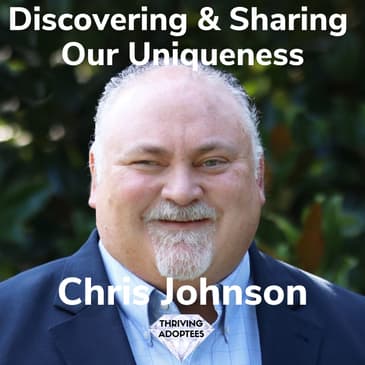
What if discovering and sharing our uniqueness drives our thriving? How does that help us tough times. Chris is dad to 10 including 7 through adoption from foster care. Listen as we dive deep into our diamond nature how his beliefs power his thriving.
Chris Johnson serves as the Sr. Director of Church Partnerships & External Advocacy at Lifeline Children’s Services. With over two decades of pastoral experience and a background as the Executive Director of the Kentucky Governor’s Office of Faith and Community Based Initiatives, Chris is a seasoned leader and advocate for vulnerable children and families.
As a consultant and frequent speaker, Chris has inspired audiences at conferences, churches, and community gatherings across the nation. He passionately shares his family’s journey and challenges others to respond to the gospel call to care for the most vulnerable in society.
A native of metro Atlanta, Georgia, Chris now resides in Birmingham, Alabama, with his wife, Alicia. Together, they have 10 children, seven of whom were adopted from foster care, and are proud grandparents, including two grandchildren adopted through foster care. Their commitment to serving children extends to fostering over 40 children throughout the years, embodying their dedication to family and community.
Chris holds a B.A. in Church Ministries from Trinity Baptist College and an M.Ed. in Educational Leadership from Regent University. His passion for equipping churches and individuals to make a lasting impact continues to shape his ministry and advocacy efforts.
https://www.linkedin.com/in/chrisjohnsondoz/
https://www.facebook.com/lifelinechild
https://www.instagram.com/lifelinechild/
https://twitter.com/lifelinechild
https://vimeo.com/lifelinechild
Guests and the host are not (unless mentioned) licensed pscyho-therapists and speak from their own opinion only. Seek qualified advice if you need help.
Want to learn more about thriving for you, your kids, your families or your colleagues? Pick a time to talk here
[00:00:02] Hello everybody, welcome to another episode of the Thriving Adoptees podcast. Today I'm delighted to be joined by Chris, Chris Johnson. Looking forward to our conversation today, Chris. Really looking forward to it, my friend. It's a joy to be with you, Simon. Grateful for the opportunity. Yeah. This, listeners, this guy has, normally it's the women that I'm kind of, you know, like I'm admiring their energy, but this is a guy with incredible energy.
[00:00:29] So him and his missus have got 10 kids, 7 that they adopted from foster care. And he's just been telling me now that they've had their 8th, the 8th grandchild, the grandson has been born. So 2 out of the 8 grandchildren are adopted too. And he also, right, he finds time to lead some very important work at Lifeline in Alabama. So welcome to the show.
[00:00:57] Thank you so much, man. Yeah, we're, we are so blessed. You know, I tell you, we never anticipated Alicia and I, when we first got married, a lot of people talk about how, you know, adoption was a part of their plan from the beginning. It was not ours. And we never really planned to even have a big family. And God kind of laughs at our plan sometimes. And once we dove into this world of understanding the realities of foster care and adoption, and God called us to it, we kind of, we've always been kind of full throttle.
[00:01:26] Everything we do is full throttle. And so we, Alicia and I met in college. We graduated on Wednesday night, got married on Saturday, started our first church ministry the next Sunday and pastoral ministry. And so that's just kind of been the way that we do things. So once we dive into something, we just kind of go all in. And so it's been the same in the world of foster care and adoption. And now we get to come alongside families and help them answer the call as well. So yeah. Yeah. So the big question, the one that I'd like to start off with then is the thriving question.
[00:01:56] So what, what helps you thrive? What does thriving, what does thriving mean for you personally as a, as a dad, as a granddad, as a guy whose whole living is centered in this, in this space? I think, you know, if I, if we're to boil it down, maybe just to a sentence, I would say living as I am uniquely created to live, living, being who I am uniquely created to be, kind of living that out and walking in that.
[00:02:25] And certainly that has a lot of different facets to it. I, you know, my, my faith is, is the kind of the center of who I am. And so recognizing who God created me to be and living in the full, you know, thriving to me means that I am just living kind of all, everything's running on the, you know, running on the right tracks and, and really living in who I am uniquely created to be living that abundant life.
[00:02:49] I think a lot of things that get you to that point is, is kind of understanding your identity and recognizing how, how so many of your, you know, all of your experiences and all of your relationships have shaped you to be who you are. And so living in that fullness of that, I think it's a journey. I think thriving is a journey. It's not something that, you know, that we probably fully accomplish at any one time.
[00:03:11] We're all on a path and a journey of moving toward thriving in greater levels at, you know, I think that you don't have to have all the answers figured out. You don't have to have everything, you know, just spot and every bow tied in order to be thriving. I think part of it can be that journey of just kind of recognizing different aspects of your life, learning from those things, understanding who you are, and then growing in really just kind of who you're created to be.
[00:03:35] So I think it's this, this process of, of moving toward just, just living out who you're uniquely created to be. Yeah. That's a long answer. That's a long answer, but I like long answers because they give me lots to dive into, right? The first thing that kind of struck me is, you know, we think of, we think of God as universal, right? As a, as a, as a universal, a universal entity. I don't know what you use here.
[00:04:04] I would say, I would say he's a person. Yes. But different from us. He also is a spirit. The Bible, we believe that he's a spirit. So he's so much more than just an individual, but yeah. Yeah. Okay. Very hard to explain. Yeah. Very hard to explain. But the, the, the, the, I guess the, the bit that's easy to, to, to, to get and to, to, to, to compare with, right?
[00:04:28] You think of God as universal and you, you leaned on, on uniqueness as you described your view of thriving. Yeah. So how do those two things kind of fit together? The, the, the, the universality of, of God and the unique uniqueness of Chris Johnson, Alicia Johnson, Simon, Ben, you know? That's a great question.
[00:04:52] You know, I think, I think that when, when we, when we are created, when we come into existence, when we, you know, from, from, from the moment that we come into this world, we each have unique giftings. We each have unique abilities. We each have unique makeups. I think that, I think that's one of the things that I love about God is, is he's able to create the world and hold the world together. But yet he also is interested in me as an individual. And he also plays an active role in my life as an individual.
[00:05:22] And so for me, that's really, it's awe-inspiring, but it's also comforting. And so I think that he, that each person, when they come into the world, they, you know, they've got, we, we certainly know that each one has a unique DNA, right? We have unique DNA that comes from, you know, both our mother and father. And we've got these two individuals that create this new, this new life that has a unique DNA that's only unique to their one individual.
[00:05:45] But then I think even so much more, our personality, our, the, the things that, that, that we, that we enjoy. There's just so many things about us that are unique to us. And so recognizing that, that, you know, there's, there's, there's certain people that are better at certain things than other people. I mean, I, you know, there are people that are better athletes than I am, or there are people that are better speakers than I am. And, and so it's, it's understanding who I am.
[00:06:12] And then, then of course, as we grow and as we develop, we interact with so many different relationships, certainly the parental relationship. And sometimes that initial parental relationship is broken and you have other parents that enter into the picture, obviously through adoption. But so many of those relationships, different ones that we interact with, they shape us, they mold us. The experiences and the things that we go through shape us and mold us. And so there are no two individuals on this world that are, that are exactly alike.
[00:06:40] Even people, identical twins still have different bents and different passions and different things that different unique, uniqueness about them. And so recognizing kind of just that I am unique and that, that I, I am created with a purpose. And my purpose may look a little bit different from other. I believe we all ultimately have the purpose of, of glorifying God and bringing him glory. But, but my, my unique, the uniqueness of me has put me in a place to where that I can make an impact in this world.
[00:07:10] Where I can influence others for good, where I can point others to helping them live out their full identity and who they are. And so, yeah, I think just, you know, thriving is just kind of recognizing that all of these things, you know, help create who I am.
[00:07:25] And then just being the best version of who that is that I have been created to be and living with that, that both that understanding, but also that passion to, to take who I have been given, who I have been, take who I am and, and use my abilities, my passions, my giftedness to help others find their ability to thrive. It's just something that just gets me up every day.
[00:07:47] It just really excites me to be able to take and, and, you know, the things that I am learning, be able to share with others and pass on to them so that they can then do the same. Yeah. Do you see, I mentioned your energy at the top of the conversation, right? So do you, do you see that your energy as a unique thing or do you see that as a God thing or do you see that as both? How do you, how do you see that, the energy? Yeah, I would, I would say, I would say it's both.
[00:08:15] I mean, I think again, it's part of, it's part of who I am. And it's part of just that we, one of the tools that we utilize here at Lifeline is the working genius. So we want to help people do their job and live their life every day in whatever part of their life that gives them the most energy and the most, you know, connectedness. And so I am, my working genius is that I am a galvanizer and I'm an enabler.
[00:08:37] So just part of the nature of who I am and who I think God created me to be is someone who just, I love coming alongside people and helping them be the best version of themselves. I love helping them identify who God created them to be. And then not only, not only kind of rallying the troops and getting them going, but then also kind of helping them take their next first step and kind of exploring. And so I think part of that is unique to me and just kind of how God made me.
[00:09:01] I just, I just, when I get into some of these things, I get energized and it just kind of, I have to tell myself, usually my wife is like doing this to me to get a slow down, slow down. You got to, you know, articulate and help people understand because I just get so excited and passionate. So yeah, I think that that is, you know, a uniqueness to me, but I think that that inherently comes from how God created me and even what his purpose and plan is for my life.
[00:09:28] I think, you know, there's, there's another level, I think when, um, for me personally, I've done some study on this just kind of when, when, when, when, you know, I believe that when a person enters a relationship with God, that we also are given spiritual gifts that kind of, again, kind of oftentimes are based on our personalities, but it's kind of that extra level where you do have this really, um, spiritual empowering to be even to kind of go to the next level in utilizing your gifts and, and, and your, uh, and your uniqueness.
[00:10:24] Yeah. That's who we are, right. We, we, we are consciousness. And, uh, the, the religious name for consciousness is, is God, right? Yeah. Well, and I would, I would say, I would say God would probably, from my perspective, say that God probably sits outside of that, but I think the spiritual nature of who we are would be that exactly.
[00:10:49] I think, I think part of us being created in the image of God is that we are created with, with body and soul, body, soul, and spirit. And so I think the body is this fleshly part of us. The spirit is kind of that, that, uh, or the soul is that kind of inner who we are, that inner being. And then the spiritual aspect of that is just kind of how we relate to our understanding of God. And so I would see us as kind of that, but I think everyone is definitely body, soul, and that soul would be that consciousness, that piece of us.
[00:11:17] That's kind of that, that really that uniqueness in a lot of ways, the things that drive us, the things that, uh, excite us in those kinds of pieces. Yeah. So something I heard on the, you've heard this phrase, we're not spirit, we're not human beings having spiritual experience. We're spiritual beings having a human experience. Yeah, yeah, yeah, yeah. So what does that mean to you, Chris?
[00:11:40] Yeah, I think, you know, I think, um, again, I, I believe that we were, we're, we're kind of created with this, this missing, missing part of us that, that God feels in the, in the spiritual aspect feels in us. And so I think that, that yes, we, we are created as physical beings, as individuals, but there is something that we're, we're created for something greater than just what this physical world has to offer.
[00:12:05] And, and so there, there has to be this, this reality that, um, that our soul, our inner being of who we are, I think our bodies are going to waste away, but our soul, that inner being of who we are is going to continue to live on. And so, yeah, in that sense, we're absolutely spiritual beings that are kind of just put on a body of flesh that we're living in a, in a temporary world. And so, um, yeah, and I, that's why I think it's so important that, that we nourish that spiritual, that soul side of who we are.
[00:12:33] Um, and that, that we, that we make sure that it's, uh, you know, where it, where it needs to be as well. Yeah. Yeah. Have you, have you heard of this guy, Richard Rohr? Have you heard about him? It's a, what's the name? Richard Rohr. I think he calls himself a Christian mystic. No, no. Um, so yeah, he has a, he has a book called the immortal diamond, uh, which I, which I've listened to.
[00:12:54] And I'm wondering whether what you call soul, Richard Rohr, Richard Rohr calls the immortal diamond. And why that's important to me is because, you know, the, the thriving adoptees logo is a diamond and it's a diamond as, as a direct contrast. To, to, to, to the way that some of us adoptees feel. Sure. That we were, we were trash.
[00:13:24] Right. Or that we were given away. Or that we're less than, or we're not good enough. Yeah. Right. So, you know, rather than the trash can as a logo, we're going with the diamond. Or trash bags in foster care. Or trash bags. Yeah. Trash bags in foster care. Yeah. We're going with the, the diamond. Uh, uh, uh, and, and so our, uh, our, we, when we're going diamond mining, right?
[00:13:52] We're going, when you, when you go diamond mining, you've got to dig through layers of rock when, and you get to the diamond and diamond was there all along. It just hadn't been seen. Right. Yep. And where, whereas, but when we think about us as adoptees, we've got to go through layers of trauma. For sure. To, to, to get through to the diamond that's, that's underneath the trauma that's, so that the diamond has been hidden by, by the trauma.
[00:14:22] And so life, uh, self realization is seeing that we are, that see our, seeing that we are the diamond, not the dirt that it's being buried below. I love that. And I love that. I mean, and, you know, one of the things about a diamond too is it's hard. It's, it's, it's strong. It's, you know, it can, it can, it can affect other things. I mean, you can even use a diamond to cut and to shape and to grow.
[00:14:49] And, and, but that, that hardness of that resilience of a diamond was created from tons of pressure and tons of struggle and tons of difficulty. And so I love that, that imagery there that, that yes, what's, what's been hidden there all along and what's been created by hard things and pressure has now produced something that is resilient. And it has the power to, to live a long time to stay, um, you know, firm and strong.
[00:15:17] So I love that, that imagery there for sure. Yeah. Thank you, Chris. I appreciate you sharing that. I didn't realize that with your, with your logo. That's kind of where I came from, but I love that. You've reminded me of something that I used to say actually, uh, around this diamond thing with, uh, and I'd forgotten, I'd forgotten it. When you're talking about the diamond's toughness, right. And you use a, you use a diamond to cut, you use a diamond to cut, right. And that's because you can't cut a diamond.
[00:15:47] Right. Exactly. So, so we've got, if, if we, if we put these two metaphors together, you've got Nancy Verrier in a primal and her primal wound. Yep. And you've got a diamond that can't be cut. Yep. Yep. So if you can't cut it, there's, there can't be a wound. Wow. Yeah. Yeah.
[00:16:15] That's interesting to think about and how the, how the, the, the pressure formed it, but yet that pressure made it so strong that it's, it's, it's, it's, it's what we would consider hard difficulty. And oftentimes we'll remove things or move ourselves from difficulty, but it's those difficulties that put us in a place to where that we can be resilient and we can be strong and we can be firm and we can't be knocked aside by, we can't be cut.
[00:16:44] Man, that's a great, that's a great thought there. Yeah. And so what we're saying is trauma has hidden the diamond. Yeah. Yeah. Under layers like a diamond under layers of rock. It hasn't harmed the diamond. Yeah. It's, it's concealed the diamond. It hasn't cut the diamond. And, and that's, again, I think, I think all along what we have to, what, what, what our responsibility, especially as parents.
[00:17:09] And I, and I would say, especially as, you know, even greater emphasis as adoptive, adoptive parents is we have part of our role and responsibility is to find that inner diamond, find that inner piece, that, that piece that's been there.
[00:17:23] And I think that's the uniqueness of our kids, the uniqueness of our children and find that, what is that, what is that central piece of who they are that while they live through the storms and while all the doubt has come and all the pressure has come and, and the trauma and all the things, what is that inner piece of who they are that has been there all along that needs to be revealed, that we need to kind of move the dross around and move things off and move the trash off so that that inner being can be revealed.
[00:17:50] I think that's part of our role as parents is to call that out and then help that shine. I mean, my, my role is, as my, you know, as, as a dad to my kids is to, is to help them find who they are at the core of who they are and then create the culture in the, in the atmosphere where they can live out who they truly are and not be cut by their trauma and not be looked at differently, not be, you know, thought ill of, but, but can truly live out who they are. I, I actually, this, this might be a good time to mention this.
[00:18:19] I was, I, um, knowing that I was coming on this, having this conversation with you today, I reached out to some of my, um, my adopted kids and especially those that are, that are adults now and just kind of asked them, I'm like, you know, what is driving me to you guys? And, and what are you, you know, what, what would you say if you could be on this podcast bar? And one of the things that kind of speaks to this, one of my, one of my kids, he's a 27 now. Um, he, he, we were talking about just different things.
[00:18:45] Of course he was, he was kind of saying that he, he thinks that thriving is the same for anybody where they're adopted or not adopted. But then he said, this kind of just, just struck me as even just this whole idea of a parent, the role of the parent. Um, he said, I know that I have been set up for success and that not everyone gets that opportunity. So I'm always grateful for what you and mom have done for not only me, but for all of your children. And I think that to me, just, I told him, I'm like, you have me a mess here.
[00:19:12] Cause he, he said several things about how that we've helped him kind of thrive and those kinds of things. But I think just that that's part of our role as parents is to help identify where that diamond is and who that, that, you know, what is the uniqueness of that diamond? And then do everything we can to help clear the mess and the ugliness so that that diamond can shine brightly and that diamond can live out its purpose and go forward. So I, I, I, um, I totally agree with you on that.
[00:19:40] And I, I also think it, it's about the clearer we can see the diamond in us, the better we get at pointing towards the diamond in, in others. Yeah. Yeah. And, and, and just one thing, I don't know whether, how big, how big it is. You tell me, right? Like other people have to see their diamondness for themselves.
[00:20:11] Yeah. Yeah. We, we can like, you know, like I, I thinking of like, that's cause me and my wife, I haven't got any kids. Right. But, you know, I think of, I think of stuff that I've heard from our friends that are parents. Right. They say, uh, um, I've told him till I'm blue in the face. Yeah. Right. So I think, and usually they're thinking that they're thinking about something like picking up, not leaving their socks in the, you know, in the middle of the bedroom.
[00:20:40] And, but I think, I think you can tell somebody, you can tell anybody, you can tell your kids until you're blue in the face. That they're a diamond. Yeah. But that doesn't matter. Unless they hear those words, unless they see what you're, what we're pointing at. Yeah. It, it, it, I came up with this, uh, three or four years ago, right?
[00:21:06] Like there's no such thing as a secondhand insight. We have to see things for ourselves. So the clearer we can see our own diamondness and, and, and the better we get out at pointing other stuff out, the pointing stuff out to others, the more likely they're going to see their own diamondness. But they, but they really do need to see it for themselves. Absolutely. Yeah. Yeah. Yeah.
[00:21:32] And I, and there's certainly, you know, I would say, I would say, you know, the, the things that have helped me discover my diamondness and who I am truly on the inside. You know, I don't, I think, I think marriage was a huge piece of that. And I think this is why, again, we're not designed to live in isolation because we, we, we grow in our understanding of the world around us, but we also grow in our understanding of ourselves as we interact with other individuals.
[00:21:58] So, so I think the process of being married and having, you know, trying to take two imperfect people and come together to live this life together and bring even, you know, the romance and the, and the fuzzy feelings wear off. And then it's like, you're left with two imperfect people trying to, to live and figure out how to live and coexist and, and to thrive together.
[00:22:19] And, and so I think that marriage relationship certainly helps us see where our weak points are, where our struggles are, where it helps us reveal, kind of get to the point of moving aside all the things. And so I think there was a certain element of that when I entered into a marriage relationship with my wife. But then when I became a dad, those things became even more clear. And I started seeing, you know, I saw, I saw the imperfections and the things that, that needed to be addressed that were not where they needed to be.
[00:22:48] But then I also saw that, you know what, this is, this is who God made me to be. And I have, I can live out my purpose by, by being a dad who comes alongside. And so I started seeing some of those things in me that, that were also good things that, that, that were, that I wanted to pass on. And so, and so being a dad helped me kind of identify toward that now, as I walk along this journey with my children and, and many, you know, five of my kids are now married and three of them have, or four of them have kids of their own.
[00:23:16] And, and so kind of along this path of helping, you know, I think that's what we're called to be, right? We have to understand who we are, who we're made to be. We invite others into relationship and we have relationships, we come. And then as we, as we're, you know, I believe part of my role as a husband, as a good husband is to help my wife discover who she is and help her thrive and help her be who she is. But then I now have the opportunity to pass this on to the next generation.
[00:23:41] And so I want my kids living in a place of victory, living in a place of thriving, living in a place where they're recognizing the things that have affected them and got them to where they are, but they're not being hindered by those things. Instead, those things are fueling them to understand more of how they've, they've been created and more of what their purpose is. And so now I have the joy of, of passing that on. But if I just try to, like you said, just do it by telling them everything and not walking with them, they're never going to get it.
[00:24:09] And there's certainly, you know, we could certainly go into a whole nother conversation on kind of the stages of parenting and how that we, we start off by just kind of creating that, that you need to do certain things because we want to protect them and keep them safe. But as they get older and as they mature, we have that responsibility to come alongside and help them understand things because ultimately we want them to get to the place where they're making the decisions on their own to, to, to, to do healthy things and to live in a healthy way and to shine brightly in who they are.
[00:24:37] So, um, yeah, I think there's this role of, of identifying in ourselves, what things need to be addressed, what we're, what are our, our gifts, abilities, what makes us shine. And then walking alongside others to help them discover that about themselves so that we then can cheer them on as they start to deal with the issues and start to shine brighter.
[00:24:57] I mean, I'm at a stage now, uh, where I am seeing some of my kids now become parents and I'm seeing them, uh, those that aren't parents and, and that may never get married or may never become parents, but, but they're finding their space in the world. And they're finding their place in their career and they're starting to, to kind of take and grow and heal and, and, and see these things. And it's, it's really a cool place to be right now. Uh, certainly not without its challenges because sometimes I see them making decisions that I'm kind of like, I want to be able to jump in and help.
[00:25:25] And my role now is not to jump in and fix things for them. My role now is more of a coach and a guide, um, but to see them, you know, making good choices and often making bad choices too, that help course correct and those kinds of things. But, um, it's, it's really a unique perspective that you get as a parent to kind of help, uh, our kids shine brightly in who they, who they are as well. Yeah. I want to take you back to the top of that, uh, answer, Chris.
[00:25:53] And, you know, you talked about, um, like, uh, you know, the fuzzy feelings and the, the kind of the honeymoon period of being a, uh, of being a husband, being man and man and wife. Um, I've, I've heard that in some cases there are, there's a honeymoon period when kids move into the house, right? Like when, when, uh, kids come to live with foster parents or adoptive parents, there is a honeymoon, there is a honeymoon period.
[00:26:22] Was, was the one of those for you? Did you have that? Yeah, I think it was probably different with different kids, depending on the stages of when they came into our lives. Um, we were involved in foster care for a little over 10 years. We had more than 40 kids that came through our home. Wow. Some for short periods of time, some for a little bit longer extended, you know, some ended up being with us forever, you know, that kind of thing. Um, and we, we kind of were in a unique spot too, that most of our adopted children came to us specifically while we were foster parents.
[00:26:53] They didn't come to us as initial foster placements. They were already maybe in the system. We heard about them. Their parents' rights had already been terminated and we felt specifically called to adopt them. So they came into our home for the purpose of adoption, not necessarily foster care. Um, but we had kind of both over the course of our years of experience in this. And, and I think with, with each child, you're going to have some of that.
[00:27:14] You're going to, sometimes though, you have kids that have been through so much that they come in and the, and the honeymoon, the fuzzy feelings are very short or there, or there's none at all. Um, just because of the realities. And I think, you know, what we had the position we had to take as parents is we had to recognize that and be okay with that. That this wasn't about, you know, we didn't, we didn't do this to make us feel better. This wasn't about making, you know, us, us feel fuzzy and feel great. And so we had to go, okay, this child needs some extra support and love.
[00:27:43] And we need to set aside our desire for, for those fuzzy feelings to really kind of embrace and help the child. But I think definitely with, you know, with most of our kids, and I think, you know, there's, there's different memories that pop in my head, even as we're talking about this over the course of our, of our life. But, um, yeah, there were some that came into our home and it was, you know, it was like, they were excited to, to have a family. They were excited to be in a new place. They were excited to maybe have some brothers and sisters and these kinds of things.
[00:28:10] But, but then the, the, the reality of this is forever kind of sits in and the reality of, you know, there's, there's this, there's this, this, this struggle of wanting independence, but also knowing that you need support and care. And so there's this, this, you know, this pull back and forth between that.
[00:28:31] And so I think that there's times that that's what kind of brings that honeymoon to, to somewhat of an abrupt end because we start recognizing by being a part of a family and by making myself vulnerable to a family, I am losing what I think is what I should be holding onto. Because I feel like I need to hold onto my independence and I feel like I need to hold on to, to everything that I have gathered for myself.
[00:28:54] And when I start becoming a part of a family, I feel like I'm losing grip on what I have been thinking in myself that I needed to hold onto. Five of the seven that we adopted were teenagers when they came into our family. So they were, they were close to that age of aging out. They were 16 or 17. So, so they had sometimes spent a lifetime living in traumatic situations or being bounced from home to home or living in group care, those things.
[00:29:18] So, so there was this survival instinct within them that to survive, I have to stand up for myself. I have to be the voice for myself. I have to hold onto things myself. And so becoming part of a family, you're opening yourself up to a certain vulnerability. And when I opened myself up to this vulnerability before people that should have cared for me, they let me down. And so I have to now, okay, I'm starting to feel vulnerable here. I got to grab this independence again because I don't want to let you let me down.
[00:29:47] And so there's this tug of war, I think that causes that, you know, that honeymoon. It's like, everybody's good. Everything's exciting and great. But then the reality starts sitting in and I start making myself vulnerable or feeling vulnerable. And I have to go and grab back onto it. So I think part of it, and I think this fits even into the thriving conversation, part of, for those kids that are in that situation, part of getting them to a place of being able to thrive is when they start letting down those walls, inviting people in.
[00:30:16] They're still maintaining their independence of who they are, but yet they also recognize the vulnerability of their need for a family and the need for others in their lives. And they can get a lot, they can go a lot further even in their independence if they have the support of people alongside them caring for them. And so there's this, again, kind of this dual process of them figuring that out. And, you know, we have to give them space to figure that out. We had, I'll tell you a quick story. One of our daughters, when she came to us, she was 17.
[00:30:45] Her plan was once she turned 18, once she aged out of foster care, she was going to get an apartment, get a job and take care of her brother who was also in care, who was two years younger than her. They both moved into our home, eventually came to the place where we were able to adopt them. But she had, when she came, she was very much, there was even, there's a whole story where her and her brother were featured on a 60 Minutes episode that was dealing with homelessness in Central Florida.
[00:31:12] So in that episode, she had presented herself very strong, very capable, and she was. She had built this strength and resilience about her. And so when she came into our home, it was all about, even her social media handle was the Tigress, because she was the Tigress, that she was strong and she didn't need anybody else. She was going to take care of her brother and all those things. Well, when she started feeling and realizing the love of a family and the support that can come from being a part of a healthy family, she started letting some of those walls down.
[00:31:40] And I remember when I was dropping her off for college, standing in her dorm room and we've got everything set up and we're about to leave, we're about to head out. And that, you know, for any parent is such a difficult place of launching your children. But as we were about to walk out the door, I went to hug her goodbye and she just fell on my chest and began to weep, which was not in her character, just overwhelmingly weep. And I'm like, wow, what is going on? And I said, where's my Tigress? Where's that strong Tigress, you know?
[00:32:09] And she looked up at me and I will never forget what she said, Simon. She said, I'm your tiger, but you removed my claws. And she wasn't saying that in that she was no longer strong, she was no longer firm, but she no longer had to defend herself. She no longer had to be the one because she had now found a family that loved her and that would support her and help her. And so she didn't need to always have her claws out. She was able now to live in who she was.
[00:32:37] And so now there's this new angst of, you know, is that going to stay? Am I going to continue to have that family? I've made myself vulnerable to being a part of a community, being part of a family. And I don't know what that's going to look like going forward. Of course, we, you know, we assured her that we are there with her and we continue to be. And she's a great mom now. She has a little girl that is and it's just managed to be so cool to see her life continue to move forward in that. Yeah. Wow. Wow.
[00:33:05] Well, I was thinking as you were talking about, you know, kids coming to you at 17 and that particular daughter. I was thinking about, I was thinking about anger and control and aggression. And, you know, we often think about the tough stuff, the toughest stuff for adoptive parents.
[00:33:35] All parents, but, you know, parenting kids, kids from hard places with trauma and stuff like that is the behavior. Right. And, you know, until today, I'd thought about the lack of control and the lack of choice. But a 17 year old must have, she must have chosen to be adopted by you. Right.
[00:34:05] She did. Yeah. Because they were at the age then when they could, they were, they could make that choice. Yeah. Yeah. And is there, is there an age, is there an age at which the kids have a choice by law or is it more fuzzy than that? Because, yeah, I want to say, and it may vary based on state regulations where, you know, where you live kind of things.
[00:34:30] But I want to say that it's around 13 or 14 that they at least start being allowed to have input. It may be earlier than that in some places. I don't, I don't know specifically, but yeah, there is, you know, I think that as those kids get older or that are in the foster care system, they, the goal is that they would be able to be more involved and engaged in the, you know, in determining their future and kind of what their path is.
[00:34:54] I think, you know, I don't know if there are hard, fast numbers or if it's more at the discretion of the social workers and those kinds of things to kind of, because you certainly would need to recognize the maturity level and the ability to make some of those choices. But certainly by the time they get 15, 16, 17, they absolutely are able to say yes or no. One of our sons had said over and over again that no, that he did not want to be adopted.
[00:35:18] What happened is he actually, I was pastoring a church at the time and a little over a third of the families in our church were fostering or adoptive families. So it was just a huge part of our church culture. And so he was in a home there had been in several homes in our church. And so he had built such a community there that his fear went once we peeled back and got to the root of it. His fear in saying that he didn't want to be adopted was he didn't want to leave the community that he had built.
[00:35:44] And so when we felt called to kind of step into his life to offer, to say, hey, is this something you would ever, would you ever want to be a part of our family? He jumped on that because this was what he really wanted. It wasn't that he didn't want to be adopted. It was more, again, the fear of going to an unknown. And if I say I want to be adopted, I may end up being adopted by a family in another state or another part of the state or those kind of things. And so sometimes it's important to not just take those answers of face value, but to peel back as to why.
[00:36:12] But yeah, once kids are that old, they definitely and they should be able to speak into their future and, you know, and help. You know, again, I think I think sometimes we may be, you know, we need to take into account that they may need a little coaching and help them understand the magnitude of the decision they're making. But yeah, they did. They all had to make that choice. And there was a bit of anxiety for us kind of as parents even putting ourself out there because we were like, you know, we certainly he certainly could have said no.
[00:36:41] And the other kids certainly could have said no. And so then we had to kind of wrestle with what does that mean for us? You know, are we being rejected? You know, that kind of thing. But, you know, we're very grateful that they said yes and that we've been able to continue to be a part of their lives. Fantastic. There was a bigger question that I had after that kind of maybe small question. I don't know. Maybe there are no such thing as small questions.
[00:37:09] But it's a big question and it's a complex one that I'm going to ask it. It sounds really simple, right? So how do we thrive despite trauma? How do we thrive despite trauma? Despite trauma. Yeah. You know, I think it is. It is.
[00:37:35] I'm looking right now at my eight when I asked that question of my kids. The first one to respond was my 18 year old son. And that really surprised me because he's not usually, you know, the one that kind of steps out. And what he had to say, I think I think speaks to this. He said he said learning to hold questions about your roots and biology without letting it control you.
[00:38:03] Healing core wounds, fear of abandonment, all these the trauma things that we're talking about. Finding healing of those things, fear of abandonment, anxious avoided attachment, care wounds of shame, father and mother wound, attention seeking, people pleasing, hyper independence. Even that list was like, wow, he's really been thinking through this. He says all tends to show up in one way or another in adoptees, especially those taken as a small child. He said thriving may also just mean generally doing well vocationally, relationally and those things.
[00:38:33] But ultimately, thriving as an adult adoptee comes down to acknowledging all of the broken parts of your identity and learning to psychologically integrate that into your personality so that it doesn't run your life. So I think that last statement there, acknowledging all of the broken parts of your identity, so all of that trauma, acknowledging all of that trauma, learning to psychologically integrate that into your personality.
[00:39:00] So letting that recognize how that shaped you, but not letting the trauma run your life and control your life. I think that's I was I was pretty amazed when he said that. Yeah, I think that's very insightful. And I think that's it. It's recognizing these things. Very insightful. These things happen to me, but they don't have to control me or define me. And so I I take those things and I integrate them into who I am. And that's part of what shaped me.
[00:39:29] But I'm not defined by that. And I don't have to continue to live in what I was, but I can live in who I am now created to be. Yeah. And I to simplify it right down, you know, you use the word define me and define me. Right. So go back to the diamond metaphor. Yeah. Am I the diamond or am I the dirt? Right. Right. Yeah. Yeah. So that when we're saying.
[00:40:00] I am. I am the diamond. I'm. And so for me, it's a kind of a disidentification from our trauma. Yeah. And you as the diamond, you were formed in the dirt, but the dirt doesn't define you. The dirt is not beautiful. You are the diamond. You are the beautiful diamond. And that dirt helped make you beautiful. But now you have the opportunity. Now that you have been discovered and you have been elevated, you shine brightly. Yeah. Not as the dirt. You shine brightly as the diamond.
[00:40:29] I would just say one more word. You said now you've been discovered. I would say now you've discovered yourself. Yeah. No, absolutely. So like we discover, we discover something that means somebody else sees our diamondness. Yep. Whereas discovering ourself as a diamond is, is that. Yeah. Sorry to be pedantic. No, I think you're. And when I, and even when I say discovered, either you're, you're both discovered by others externally and internally as well. So no, I would agree completely with that.
[00:40:57] And it may, it may well take other people seeing our diamondness first. You know, that, that's the. For sure. For sure. That's the, that's the greatness of. But I'll kind of take that even further though. Even, even those kids that, that maybe have not been adopted, that maybe have not had someone else call that out in them. I think it's still important for them to discover that. And there are many kids that have discovered that on their own without people calling it out
[00:41:27] just through their, their own resilience. And so that, man, those, those stories and those situations certainly are, are even, you know, are so inspiring as well. I say this, I don't know how much I say this. I say it fairly often. But I get the sense that when I say it to an adoptee, they don't believe me, but who knows, right?
[00:41:54] Adoptees do not have the monopoly on identifying themselves with the dirt. Yeah. Yeah. Yeah. This, this, this is, this is a human thing. I've spent the last 19 years in a lot of spaces where people were trying to find their diamondness. Yeah. Yeah.
[00:42:17] And, and 99.9% of those people that I've spent time in those, in, in, in those spaces with have been, were biological children that were kept by their parents. So it's not, it, I, I guess it, it's just, as adoptees, we, we have perhaps some more
[00:42:42] of a tendency towards identifying with, you know, with, with, sorry, identifying with the dirt or not seeing our diamondness. Yeah. Yeah. But you're right. It's, it's the reality of so many. And that's why even understanding trauma and the effects of trauma on human development is so important right now, because we used to kind of think in those siloed categories, right? It's like, oh, we need to understand trauma to help adopted kids.
[00:43:11] Or we need to understand trauma to help kids in foster care. Or we need to understand trauma to help kids who have experienced, you know, born with physical maladies or those kinds of things. But the reality is now there are, I mean, all of us have some aspect of trauma in our life that, that we for so long have kept kind of hidden and covered. And I just, I'm so grateful now that the more we learn about the brain and the more that we learn about the effects of trauma, that it's becoming more, the reality is everyone needs to understand trauma. It affects everyone.
[00:43:40] And, you know, even in, in, in kind of in church world, pastoral world, uh, we're wanting to equip, you know, churches, part of our real lifeline is we want to equip churches to understand trauma, not just so they can help kids who are in foster care who have been adopted, but so they can help all kids because the reality is everyone comes to, to life with certain aspects of that. And so it's so important that we, that we understand those things that we seek to, to help, you know, all kids, all individuals, uh, find that, that healing in care. Yeah.
[00:44:10] That feels like a good place to bring it in, Chris, actually. Yeah. That, that point, um, the universality. I mean, we started with the universe. But I asked the question, God is the universe and, and the unit uniqueness of Chris. Um, is there anything that I've not asked you about that you'd like to share? Well, no, I mean, this has been a, it's been a great conversation. Um, you know, I think, I think, you know, obviously anytime I get the opportunity to,
[00:44:38] to challenge and encourage people to, um, to live out who they're created to be. And, and if that, if that involves coming alongside and helping kids from hard places, find healing and support, man, embrace that. Don't be afraid of that. Uh, so many people shy away from foster care and adoption of those kinds of things because of fear and uncertainty and, and, you know, not wanting to be hurt. But the reality is, um, it's such a great opportunity to take our uniqueness and be able
[00:45:08] to help bring, help others find healing and support and care. And so, um, you know, anytime I get the opportunity to encourage any audience to, to prayerfully consider stepping into this space, um, man, it's, it's, it's challenging. It's hard. It's the hardest thing I've ever done in my life. Um, but it also is the most rewarding thing I've ever done in my life. And it's helped me better understand myself and better understand, uh, others and, and even
[00:45:33] better understand, uh, my relationship with my heavenly father as I have engaged in adoption and foster care. So just want to challenge people that are maybe on the fence thinking about it to, to, you know, really consider what their role should be. Yeah. Fantastic. Chris. Thanks listeners. Thanks Chris. Thanks for what you're doing. Thanks for what you're doing, Simon, to help people understand these things. And just thank you for giving this issue and giving adoptees a voice to process and to think out loud and to do this.
[00:46:01] Just, I really appreciate what you're doing and thanks for letting me be a part of this today. It's been, it's been, you're welcome. And, and as you were talking about your kids and asking them about what they thought, yeah. Uh, my first thought was, wow, isn't that brilliant that Chris did that? That was my first point. Yeah. And then my second point was maybe some of, uh, Chris's kids will come on the podcast in Ducal. Yeah. I think that would be great. That would be awesome. We'll see you soon. Thanks listeners. Bye-bye.