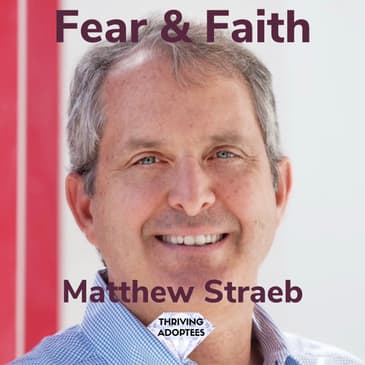
Fear & Faith. Two words we don't usually hear together. How does fear hold us back, how does faith spur us on? Listen in as Matthew and I dive deep into how we grow and help our kids do the same.
In September 2006, Matthew co-founded the Heart Gallery of Broward in response to the need he observed in his community for this service. During its short tenure, Heart Gallery of Broward has achieved an above-average success rate of 40 percent, having already helped place 70 children in loving, permanent homes. Recognizing the benefits a national network of Heart Galleries could have, he co-founded and organized the Heart Gallery of America in August 2008. As co-founder of the national organization, Matt leads this group to share resources and broaden the pool of families seeking to adopt.
The Heart Gallery of America, comprised of 100 individual heart galleries, also launched ww.heartgalleryofamerica.org, a comprehensive reference tool and informational index for prospective families. Recently, he founded the Florida Association of Heart Galleries to organize the 15 Florida Heart Galleries and advocate for adoption in the Florida State Capiton Region. In 2009, he received the Florida Governor’s Points of Light Award.
Matthew is married and has two daughters.
https://heartgalleryofamerica.org/about-heart-gallery/directors/
https://www.facebook.com/p/Heart-Gallery-of-America-100054215212909/
https://www.linkedin.com/in/matthew-straeb-8a12934/
Guests and the host are not (unless mentioned) licensed pscyho-therapists and speak from their own opinion only. Seek qualified advice if you need help.
Want to learn more about thriving for you, your kids, your families or your colleagues? Pick a time to talk here
[00:00:02] Hello everybody, welcome to another episode of the Thriving Adoptees podcast. Today I'm delighted to be joined by Matthew, Matthew Straeb. Looking forward to our conversation today Matthew. Yes please, yeah. So Matthew is the president of Heart Galleries of America and co-founder I think, is that right? Yeah, that's correct.
[00:00:22] And Heart Galleries helps kids in foster care find homes or people that want to adopt kids out of foster care find the kids and Matthew's done some great work in that area. So if you haven't heard of Heart Galleries, check them out. As always listeners, links in the show notes. So Matthew, what does thriving mean to you? What is thriving? Yeah.
[00:00:54] Growing, enthusiastic, you know, forward thinking, you know, wanting to get something done. Getting something done. And what about Thriving Adoptees? When you think of Thriving Adoptees, the name of the podcast, right? What comes to mind when you think about that?
[00:01:17] That you're, you know, that we're trying to get more kids adopted. I mean, and we're trying to energize the system that we're trying to introduce new ideas or concepts that can be different or change the way things have been done all along. And then we're open to new ideas. Yeah. So is it, is it about curiosity then? Is that one of the key things?
[00:01:43] That too. I mean, open to new ideas means you have to be curious. You have to be aware. You have to be willing to engage new concepts, new ideas. I think that's one of the challenges we have in our, a lot of systems, not just this foster care adoption system. Yeah. So I guess it's sometimes we have challenges as individuals, right? Our openness.
[00:02:07] So I don't know if you have them in the, in the States, we have these things in the UK called grumpy old men, right? Yeah. Those things, right? So we're like, the idea is that, or my hope is that I don't become one of them, but grumpy old men.
[00:02:23] Right. Maybe it's a global phenomenon. I'm not sure. But we, we are grumpy old men. We are, I'm, I'm lumping myself in with them. All right. But they're very set. They're very set in their ways. They're not open to, to change in terms of thoughts, in terms of beliefs, in terms of habits. Everything's kind of locked, locked down and, and, and shut up.
[00:02:52] The curiosity has, has, has gone, but we don't want that in our, in our kids, right? Of course not. No, we want to, we want them to be, to feel like they can, they have beliefs, but they can change their belief system, which, you know, belief system is what we're, right. You know, we're sort of, we can be born with a belief system to some extent, but also we, we are raised with the belief system, but maybe that belief system doesn't serve us.
[00:03:21] And that's how we can become grumpy. Yeah. Yeah. We have to be willing to change our belief system. Otherwise. Yeah. There's a big, there's a big how question. Sure. Coming to me about how we do that. And as soon as that how question comes, it comes to mind.
[00:03:40] And I think of it, I think that's a bit trite. That's a bit, it's perhaps too simplistic. It's more about like how change happens. So what's your, what's your take on how, how we change beliefs or how beliefs are changed?
[00:04:03] Well, I don't think we do it easily. So we have to experience some kind of a crisis, pain, failure to, to, to, to change because otherwise, why would we change? Because it's, it's working fine. If we think it's working fine or we get comfortable, you know, we have to be, we have to get comfortable with being uncomfortable. We, that's how change happens. And if you're not comfortable with change, um, you mean things are changing all the time, then that's how you become grumpy.
[00:04:32] Same noise. Because at the end of the day, as you get older and older and you, and you get frustrated and, and, and you haven't achieved or, uh, or thrived, um, throughout your whole life, you're going to be very frustrated and angry at the end of your life. And that's how you become grumpy. Yeah. Yeah. So how can we, uh, imbue that in, in our kids? What's, what's that about? It, you know, to what extent, um, is it, is it about modeling?
[00:05:03] Is it, it's about leadership? What, what you, you've got two, you've got two kids, I guess. Yeah. How old are your kids now in there? 25 and 27. Yeah. I was going to guess, I was guessing 20, so not 20. Yeah. So, um, what, what does, uh, imbuing that in, uh, in your kids mean to you? Well, the first thing I have to do is let go of my kids so that they can have their own ideas, their own belief systems. They can have their own failures.
[00:05:32] I think a lot of parents, um, save their kids too much. Um, they wait, you know, they don't let their kids fail. And, you know, my approach has always been, I want my kids to fail because that means they're trying new things. And then there's two things going on. One is how do you respond to failure? Okay. And number two, I want them to fail while they're, while they're around me, meaning before 18.
[00:05:56] So I don't want to save them. I want them to fail. So then I can actually have some input because once they leave home, I have less and less influence on them, um, to demonstrate to them how you deal with change, how you respond to change, um, you know, and that change can be, can be good. Number one, change is, is a constant. It's constant. Things are constantly changing.
[00:06:20] So, um, you know, and I wish, you know, I wish a lot of our systems that we deal with today were willing to change. Yeah. Yeah. For me, it's one of those challenges about bureaucracies that built, that built not to change. They're built, they're built. They're too comfortable. They're too comfortable. And they're self-protecting also, which is very challenging. Yeah. Self-protecting industry or bureaucracy is one of the most challenging things to break. Yeah.
[00:06:49] If we go take it back to the, to the kids, one, one of the ideas that you mentioned was the, uh, the, the notion that we're, that we're born with, uh, we're born with beliefs. Yeah. Yeah. Um, can you explain a little bit more about that? Well, my, my personal opinion is we're all born with the fundamental idea of, of a God or some kind of a higher being, a creative intelligence.
[00:07:13] Uh, whether or not we want to listen to that, to that fundamental idea or whether or not we act on that fundamental idea is the choice that we all make. Um, not, not, not one way is not better than the other way. I'm just, for me that, um, the fact that I've been able to tap into that inner resources made, made my life a lot, a lot easier. Yeah. Can you give us some examples about that? I thought.
[00:07:37] Well, I mean, you have, you know, basic, uh, idea, you know, you can't experience faith unless you, uh, engage it. So you have to, um, you know, if you've got a challenge or something ahead of you, um, you know, the courage, the courage comes after the action, not before too many. I think too many times I've gotten stuck only because I was worried about what was going to happen on the other side.
[00:08:03] Uh, so I would kind of try to muster courage up, but actually what happens is I do the action with, with the idea of the faith that it's going to be okay. Cause it doesn't really matter what the outcome is because I'm taking the action. The action is the key. And then afterwards comes the curve. I look back and say, Oh, you know what? That wasn't so bad. And how did I get from here to there?
[00:08:23] And then I can look and see how, how other outside sources, uh, played a role in that because at the end of the day, I don't really control a lot of outcomes. So no. Does that make sense? Yeah, it does. Um, the, the metaphor that popped into my head was, uh, I thought of a movie metaphor. So I, when I met Matthew, um, uh, a month or so ago, he was explaining that his background is a, as a colorist in, in Hollywood.
[00:08:53] Coloring movies. So getting the balance, right. Um, and the, so the movie metaphor that came to mind was the Indiana Jones and the temple of June, temple of doom, where they've got this massive chasm to overcome. Do you remember that? Yeah. I, it's, it's shocking that you're going to bring that up because that's exactly the example that I use in many cases. And I've heard that only one time before in the open forum.
[00:09:21] I know what you, when he steps out into the, into the old gorge and it all comes open to him that he can see the, the, the log that takes them across the other side. Yeah. So there's, uh, there's stepping stones. Yeah. Right. Right. That's stepping stones across this massive gorge or or chasm. And if, if he misses, he's going like a thousand million feet down. And that's, that's going to be the end of the, uh, Harrison Ford.
[00:09:48] But of course it being a movie, it doesn't happen like that, but the, he takes one step at a time. And, uh, the stepping stone is the stepping stone appears as he's taking the step. I think if I remember this rightly, he has to take the step before it appears. Yeah. And that's faith. That's what faith means. Right. Exactly. Yeah. That's so funny. Cause you're the second person.
[00:10:12] Um, cause I use, I've used that example over the, since that movie came out and it stuck with me and you're the second person that actually has brought that up and recognize it. That's really interesting. Yeah. Very good. I don't know where that comes from. So what, how do we, how do we do this for our, for our kids? You know, like if I'm a, an adoptive parent listening, right.
[00:10:36] It's, it's the same, whether you're an adoptive parent or, um, a biological parent to use a jargony kind of a word. How do we, how do we, you talked about being born with belief. How, how do we, how do we, how do we turn up their faith, faith dial? What's, what's this about? We're talking about foster kids. We're talking about foster kids. We're talking about kids.
[00:11:05] Talk to me. Um, I'm interested in the, the, the wealth of your, your wisdom and your learnings. So whatever feels right for you from what you've experienced. Yeah. I think, you know, I think, um, at the end of the day, we all experienced trauma. And I think that trauma comes on an early age. It doesn't matter whether you're in, you know, whether you in a healthy environment or not healthy environment, we all experience trauma.
[00:11:34] And I think that trauma introduces an opportunity. If we, if we experience trauma and the first thing we all, you know, we have a bunch of fear that goes with that. That fear can manifest itself in a lot of different, in a lot of negative ways. We can, we're looking for other way, other thing, you know, we want to control things. For example, we become very controlling. We become very angry. We turn to, uh, substances.
[00:12:01] We turn to other things to try to manage, to minimize that fear. Um, at the end of the day, we need to teach each, we need to teach each other how to help each other in the fear. And that a lot of that trauma that's generating fear really has to do with us being able to trust other people so that we can express our fears. And then once we talk about our fears, because fears are all made up in our head.
[00:12:27] There is no real fear except I, and, um, and you know, there's not, there's only a couple of real fears in the world. So we create all these fears. So if we expose those fears, I found that, and we allow, uh, inside of a trusting relationship, whether it's with adults or kids, it doesn't really matter. Um, that fear seems will, will, will dissipate. Yeah. Uh, I. That leads to faith and hope because what we can do is look back. We see what happened.
[00:12:56] We have to reflect and then we can see that, oh, okay. Next time I go in that situation, I'm going to have a lot more faith and hope and I'll be able to deal with it. Yeah. Yeah. So is, is, or to what extent is fear the opposite or the absence of faith? Um, well, fear isn't really the absence. Fear is the only antidote to fear is faith at the end of the day. Okay.
[00:13:24] Um, absence of fear, uh, never really happens. I don't think it's tough. Yeah. Yeah. Interesting. Tell me more about that. Tell me more about that. I try to avoid fear. We're all, because, you know, fear generates some, some emotions. We try to, we try to get rid of fear. Okay. Um, through all different means and mechanisms, which creates, you know, a lot of different types of character mystics that are not really favorable.
[00:13:54] And that can be lying, cheating, whatever, all kinds of different things to try to get, you know, just to get rid of the fear. But the reality is you're never going to really get rid of fear because it's, it's a concept of our minds. You're telling, are creating this stuff. Um, the only way to really get rid of it is through faith. You have to have faith. One of the metaphors that's popping into my head for, for fear.
[00:14:18] And as you're expressing it is the, uh, well, it's a, I'll share a little bit of a story. So I was, I was water skiing. Um, well, I was watching my friend water ski and this is like 30 years ago. And suddenly the boat did 180 degrees. Wow. Yeah. 180 degrees. And I was kneeling in watching. I was going backwards. Right.
[00:14:47] So I wasn't facing, I wasn't like the driver's facing forward. I was facing backwards, watching my name. And I was, I was kneeling. Yeah. I was kneeling in the back seat. Right. So when it did 180 degrees very quickly, I nearly went over the side. Sure. Because I was kneeling up and kind of bruised my ribs and stuff like that. And, and I was like, what the hell? Cause I hadn't realized what happened.
[00:15:10] And what, what had happened, uh, speed boats are steered by a, by a wire, by, by a steel wire from the steering wheel and, and, and it, and it twists the engine. Right. Sure. And the, but the, but the propeller has a natural bias. Right. It's not set. It's not set straight. It's got a natural bias.
[00:15:36] And that, when that steering cable snapped, the natural bias kicked it to one side. Right. That's why it did 180 degrees. So you had a fairly wire. Yeah. Failure. It's a failure of the wire. Gotcha. Um, I, I, I think that our, our brains come kind of programmed with that, with that natural negativity bias.
[00:16:03] It's about people talk about it being, is it the reptilian brain or something about us keeping, keeping us alive? Yeah. I think people are, are biased towards negativity actually. Um, it's a, it's a, it's a, it's a protection mechanism for ourselves. We look at the worst case and then we decide, can we deal with that or not? Yeah. Then looking at, you know, what, what could be a positive outcome? Yeah. I think we, our bias is negativity actually. As humans.
[00:16:31] And I guess in, in, in, uh, adopted kids or, and especially adopt, foster adopted kids in foster care, that, that dial, that innate human negativity bias has been amped up somehow because. I see it all the time. Because of their life experience, because of the multiplicity of homes that they've been in, you know, the placements.
[00:17:00] I talked to somebody the other day and the kid has been, the kid had been placed in 23 different homes. Yeah. Before it landed. Yeah. So given that this, uh, you know, there's an opportunity there because I've seen it in many kids that that's drawn, you know, in those that's drawn them and connected them with
[00:17:27] their God, a God, because that's the only concept they have in their life. Or in a lot of cases, a mentor or a guardian at lightem, there's a, there's two or three opportunities for a constant to appear in those transitions. And if that can be fostered, then, then they have a chance, you know, of actually not getting, gaining so much negative bias. I think. Yeah. So the constancy is the antidote. Exactly. Yeah.
[00:17:55] And the constancy is actually, um, you know, there's not many opportunities for constants to appear in a foster kid's life as they move from house to house. It can either be the case manager, a guardian at lightem, some kind of mentor or, you know, a faith. Yeah. So what, what does this mean for adoptive parents raising kids ex foster, out of foster care
[00:18:23] or who have been adopted in terms of fear and faith? What, what, what, what are the implications of that? Well, I think there has to be a level of acceptance by the parents that the, you're dealing with a kid that's been traumatized. That's going to be angry. And, um, you have to really focus on gaining and building the trust. And you do that by doing trusting things, you know, you treat them the same as the other.
[00:18:51] If you have other kids in the home, you, you basically discipline them like you would a, your own kids, you know, um, you don't favor them in one way or the other, but at the same time you try to, you've got to gain that trust with them. Otherwise they're not going to open up and you're not going to have an opportunity to minimize or alleviate that fear and anger. Yeah. Yeah. The word fear comes up again.
[00:19:18] I had this strange question popped into my head, Matthew, as they, as they sometimes do what happened to me this morning is, uh, and you're the first person that I've got to ask about it, you know, ask for their opinion. Um, so what, what do you think trauma is made of? Um, well, there's, there's lots of different types of trauma, right?
[00:19:44] There's imagined trauma, there's real trauma, there's physical trauma, you know, mental anguish or trauma. So I think it's all of those things. And, and, and then we, we kind of lump it all into one big bucket, but it's not, that's why it's so complicated. Um, but I think, yeah, I think trauma is, is, is, um, is when, when you've been, um, I,
[00:20:10] you know, in some sense abused or mistreated, um, and you don't have any way of fixing it or, or, or, or expressing it. Yeah. It becomes trauma. Yeah. And trauma turns into anger. Yeah. Yeah. Cause you're pissed off. You're pissed off. I mean, yeah. Yeah. Rightfully so. Yeah. And we're, we're back to grumpy old men. It's not their fault. It's not their fault. So. Yeah. Yeah.
[00:20:38] I, I didn't get to an answer for my own question this morning when I thought of what is, what is trauma made of, but I was thinking about the answer as I was listening to you. And I, I agree. It seems very complex, but the, but the idea that popped into my head is one of the main ingredients of trauma is fear. Right.
[00:21:07] You could, you could, and you could simplify it. Right. So you could say, you've said anger as well. Well, the thing is a lot of parents, a lot of potential, you know, foster or adopted parents, they have, first of all, you have to recognize that these kids have been traumatized, that they have fear and that they're angry. If you don't do that and you, you think that they're, it doesn't, you just ignore it. You're not going to have a good outcome. You're not going to have a good outcome. No.
[00:21:36] So, so it's like to me, like traumas made of, traumas made of anger, traumas made of, of fear, maybe traumas made of shame, sometimes shame. Yeah. I was talking, I was talking to a kid who, who was, well, a kid, a 23 year old guy who was abused as a, as a kid. Yeah. That's all. Well, yeah. Yeah. Yeah. Yeah.
[00:22:06] Um, I came up with this metaphor, uh, a couple of years ago now. And it, the, the metaphor goes like this, that it's on this theme, right? So that's why I popped into my mind. That trauma is a toxic cocktail of fear. Um, and we could go further than the fear, probably go to terror, right?
[00:22:29] Fear, terror, anger, fury, you know, an answer of anger and, and, and, and shame. But, but, but we are the glass, not the contents of it. Correct. I mean, cause somebody, cause somebody can go through a traumatic event and they can see it three, two or three different ways on the other side. Some people it affects one way than a different other way. It's not the same outcome. Yeah.
[00:23:01] I, I agree. I, I agree with that totally. It's about the different perspectives that we each have a different perspective on it. What I was kind of getting at was a separation from the trauma that we feel. Yeah. Trauma is largely a felt thing. You know, it, it may have all those different, uh, origins as you're describing, but as it manifests,
[00:23:26] it manifests, it usually manifests or mostly manifests as a, as a feeling thing. It doesn't, it doesn't manifest as a, well, it manifests more as a feeling thing that it does manifest as a thought thing. Right. Right. And, and it's not who we are. Well, I mean, trauma, if it's not, if you're not physically affected by it, then, um, then there's an emotional psychological point, you know, that's, but that's up to us, right?
[00:23:55] How much we want to let that roll, rule us or, or affect. Yeah. We, we decide how much psychological or emotional damage we want to incur, right? Based on the tools to avoid it or. If, if we have that choice, I guess that I was talking to this, um. We always have a choice. Yeah. Choice. Yeah. But we've got a choice as, as, as adults do, you know, to what extent do our kids have the choice to, I don't know. Not really.
[00:24:25] They don't have money. They don't have the tools. Yeah. That's the, that's, that's called abuse. Yeah. Yeah. So how, what, what tools do we give them? How do, how do we empower them in this regard? You know, honestly, the one, the only one that I know that is kind of foolproof and works is, is the faith one, you know? So, um, we can, you know, cause you have to have some kind of, uh, level of, uh, knowledge,
[00:24:55] intellect to deal with some of this stuff. I think as a young child, you don't really have that. Um, you're not, you shouldn't have that. Um, especially if it's, you know, um, physical or sexual abuse. I mean, that's, that's just, you know, you're really doing a, you know, harming the kid, obviously abusing. Uh, so faith will be the only thing. And I don't know how much faith a young child or even a teenager can have. So I think that's, yeah. Yeah.
[00:25:24] I think we're hitting on the, the, the challenges. Yeah. One of the things that's been coming up for me recently is a, is an idea based on something that a American business guru, leadership guru came up with a while ago. So this is the guy is Jim, something Jim Collins. He wrote a book called good, good to great. Yeah.
[00:25:52] And what, one of the things that he says is strategy eats, no culture eats strategy for breakfast. And, uh, and I was thinking about that with, with regard to what I've learned from doing the podcast, interviewing the people that I've done and, uh, and, and to, to draw those
[00:26:20] things together and put them in the words that you're talking about. Right. I would say that faith eats psychology for breakfast. Faith, faith eats psychology for breakfast. Yeah. So that makes sense. Yes. Yeah. Um, so the idea that I'm trying to get at is the potency in terms of what helps us thrive, what helps us heal from trauma.
[00:26:48] Uh, faith is far more potent and powerful. A, a, a source. It, it kind of, it, it, it, it trumps to use, uh, to use a word that people might not like me using. Um, it, it, it, it trumps psychology. Right. Yeah. Yeah, exactly. Yeah. Why do you think that is? It's a tough question to ask somebody that I've just foisted it onto, but can you talk around that? Your perspective?
[00:27:22] Yeah. It's, you know, most of the, I don't know. I'm not sure I know the answer to that question. I didn't think about it. Yeah, sure. So I, as I'm thinking about it while you were thinking about it. The answer, I think, would be that faith takes us out of ourselves and basically all we're really looking for is a shift in perspective.
[00:27:49] So if we can shift our perspective, we've shifted the psychological, um, direction, you know, if we're going towards a negative. The other thing I would say is that anytime that some negative thought comes in my mind for me personally, I'm caught, I immediately dismiss it. I don't let it grow. I don't give power to it because one negative thought will build on a negative, negative thought will build on another negative outcome, another negative outcome.
[00:28:17] And then before I know it, I'm looking at a hundred different, you know, impossible things happen. You know, a good friend of mine told me one time, he said, you know, I've suffered a hundred tragedies and only two of them actually happened. Yeah. Yeah. Sums it up. Yeah. I, I heard a, an idea recently that fits with that. And it's the, the idea is the second thought, right?
[00:28:42] So, so we have, we have no kind of power over the, or, or, or say or anything or control in terms of the first thought. Yeah. But we can choose the second thought. Sure. And, and, and, and that second thought is the degree to which we take the first thought on board. Right. Yeah.
[00:29:09] So it's the same, it's saying, sounds like a similar thing to what you're saying. You're just like dismissing it. Yeah. Yeah. If we're all were judged or acted on our first thought, we'd probably all be in jail. So, yeah. Yeah. Yeah. That's the one. Yeah. So I think the, for me, the, the, the power of the faith, I, the, the power of faith or
[00:29:34] the power of faith over psychology, it's, you talked about it being bigger than ourselves and psych, well, how should I put it? We're not our psychology, right? It like psychology and trauma to me seem like blankets that, that obscure us, right?
[00:30:02] I, the, the, the fundamental thing is if we're in the, if we're in the middle of, I had a, I told, I told you because Matthew's in, you're in, you're West Coast, aren't you? No, Florida. Florida, yes. West, yeah. I was in Florida a couple of weeks ago and I, I had this, this idea popped into my head that, well, the question popped into my head, where are my car keys, right?
[00:30:31] So I was in the hotel room in Florida and I was, I went to, I went to my jacket and I, and it was the jacket that I put up in the, in the overhead parcel thing in the, in the plank. And I went into the pockets and I thought there's no keys there. And I thought, I'm sure I put the key in my jacket pocket and maybe it's fallen out, right?
[00:30:57] In, in the, in the, in the, the, the compartment, the luggage compartment. So next I went into the, next I went to this little bag that I take when I go traveling. And I was going, it's, it's got a, it's got a gazillion pockets and I couldn't find the keys anywhere. And I was into a full on meltdown, full, full on meltdown, like a, almost like a panic attack.
[00:31:23] I'm thinking, well, when I fly back from Florida to Manchester, my wife's going to have to come pick me up or she'd have to bring the spare car keys over. She'd have to meet me. It is the battery in the remote control, you know, the blipper for the, for the alarm in that, in that key phone. Is that, is that flat or is that, so I was completely lost in this panic, right?
[00:31:53] And it, it, that's what trauma feels like. We, we are lost in our trauma. We're lost in, lost in the whole experience of it. We, we, we're, we're hidden. We're buried. We're lost. We can't, we're concealed, right? In, in, in the middle of that thing going on. And in that space, we have no, we have no choice about, yeah.
[00:32:24] It, our, our psychology has run away with us. It's kidnapped us, right? So the biggest, for me, the biggest thing that we can see is a separation between how we feel. Yeah. And our trauma and who we are. So when I say trauma is a toxic cocktail of fear, shame and, uh, fear, shame and anger, fear, shame and terror.
[00:32:53] But we're the glass, not the cocktail. I'm, I'm, I'm separating who we are from the trauma that we feel. A simple way of putting it is feelings aren't facts, right? So, you know, just because I feel something doesn't mean it's, it's really what's happening. That we are. Yeah. Yeah. That's why, that's why we need other people to talk to about it, to check it and say, Hey, am I thinking straight here or not? And that's where the trust, you know, the, with the, that's the one unfortunate things
[00:33:18] about a foster kid or even an adoptive kid is that they don't really have those trusting relationships. So they've owned, they're creating their own reality and that's a, that can be a real dangerous place to be. Yeah. So trust and faith would be the fundamental building blocks that, that, um, we're putting, uh, or scaffolding, the fundamental building blocks, the scaffolding to help our, uh, help our kids thrive.
[00:33:48] You're like a lot, most foster kids and adoptive kids trust the system. Well, yeah. Right. It, I guess it's, we're looking at the trusting the, the, the family system, the family system, the broader welfare system. The actions that are being taken, I mean, the actions that are being taken, is that fostering trust in the system? Yeah. And are they being managed?
[00:34:16] Is that really achieving the goal? And are we fostering trust? Uh, are we as parents fostering trust amongst our kids with our kids? Yeah. We have the right thing. The main, the, the worst thing that can happen, you know, I always tell my, I kind of juggling talk to people and say, our parent, our kids would be perfect if it wasn't for their parents. Yeah.
[00:34:43] So if, if faith and, uh, faith and trust are fundamental building blocks for thriving, what else do you see as the key, key things that we want to imbue that we want to create for kids? Yeah. Opportunity. You know, you have to create, you know, there has to be opportunities. Um, I think that's one of the things that really challenges foster kids and adoptive kids are
[00:35:12] put into like a system and there's really not a lot of wiggle room for them to break out of that. They become part of the system. And then there's no opportunities really for them to, to really grow or have up, have new thoughts or ideas or, you know, how do you break out of that? I mean, as a parent of my own kids, I mean, I want to foster them to take chances, to take risks, to have opportunities. I mean, we spend a lot of time and money on giving my children opportunities.
[00:35:42] Can you give us some examples of that? What do you mean? Whether it's in sports or it's in, in, uh, academia or in, you know, getting, you know, pushing them into something that they may not think they can do or that, and then they end up doing it, those kinds of things. Yeah. So it's, it's not us having faith in them before they have faith in themselves. Of course. Yeah. Of course. I mean, and sometimes they fail, but that's part of the experience.
[00:36:11] You know, then we, then, you know, you push too far, you know, that's, that's part of being a, it's called the wisdom, you know, that's called like, you know, knowing your children and their strengths and weaknesses. So. Yeah. Yeah. So we're coming up on time, Matthew. Can, is there anything else that, that I really appreciate the, uh, the discussion? It's quite, it's got me, it's very thought provoking. Thank you. Yes. Yeah. For me too.
[00:36:41] And, and, and that, that, there's, there's that, that big question for me about what, what trauma is made of, right? It, it, it's, it seems really, it seems really big. Yeah. Another one that I had that I've kind of resolved more elegantly, I think, is what are beliefs made of? Right. What are beliefs made of? Beliefs made of. Yeah, that's right. That's right. That's right. Yeah. What would you say to that?
[00:37:11] What would you say that beliefs are made of? Um, I think we, we're, uh, we basically those come from people that we, that we trust, you know, that we, um, um, you know, basic beliefs come from our upbringing. I, I believe the, the, the, the, the actions our parents take, the actions that other, our friends or that we learn in school, um, other, you know, as we break, get into our own, you
[00:37:38] know, adulthood or whatever, those beliefs need to be challenged. Um, I think too many of us get lazy. We become lazy and, and then we become hardened because our ego protects our beliefs because if our beliefs are wrong, that means we, we somehow, maybe we challenge ourselves that we're wrong or that it's for some reason we could be, um, you know, not worth, worth less, I guess. Yeah. Yeah.
[00:38:06] We go to the end of the day to protect those beliefs and a lot. That's, I mean, just turn on the news. You'll see it up on night and day. Yeah. Yeah. Fantastic. Thanks a lot, Matthew. Have a good day. Thanks a lot. Thanks for listening. Bye-bye.