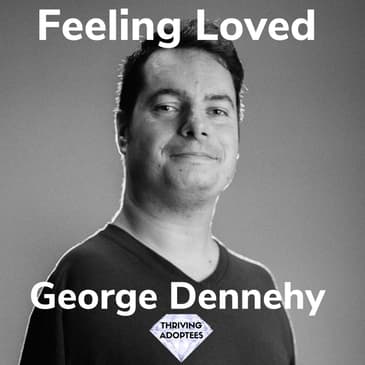
Born without arms in Romania and unwanted, George went straight from the hospital to an orphanage where he stayed until being adopted at 18 months. Relentlessly bullied at school he felt ashamed, full of resentment, mad at the world and God. Listen in as he shares his insights on the journey to thriving. An incredibly powerful interview. You're going to love this.
Find out more:
@ThatArmlessGuy
“UndeFEETed”
Guests and the host are not (unless mentioned) licensed pscyho-therapists and speak from their own opinion only. Seek qualified advice if you need help.
Want to learn more about thriving for you, your kids, your families or your colleagues? Pick a time to talk here
[00:00:02] Hello everybody, welcome to another episode of the Thriving Adoptees podcast. Today I'm delighted to be joined by George, George Dennehy. Looking forward to our conversation, George, today. Thanks Simon, thanks for having me. I spoke with George a couple of weeks ago and you're just going to love him listeners, you're just going to love him and his wisdom. And the power of this stuff is incredible.
[00:00:26] So George, what does Thriving Adoptees mean to you? What words does that conjure up for you when you hear the name of the podcast? Yeah, when I hear the name of this podcast and Thriving Adoptees and being invited to talk with you on the show, it really struck a chord with me, pun intended as I'm a musician.
[00:00:50] You know, because most adoptees, their life didn't start out in a positive way a lot of the time. Oftentimes there was a mishap or being, in my case, being given up to an orphanage and unwanted. And oftentimes that's the case. So being able to thrive as an adoptee almost sounds like it's ironic.
[00:01:16] Because, you know, we didn't have things going for us when, from the very start, from the very formative years even. So, but, you know, as we see, there are many, many, many stories and cases of adoptees who are thriving. So really, I guess, beating those odds or overcoming those obstacles that started from the very beginning.
[00:01:39] Yeah. There's so much, there's so much there then. The key word that stood out for me, George, is this word unwanted. Right? So, so many of us feel like that, right? Yes. Yeah. What did that mean for you? And what does that mean for you now?
[00:02:05] Yeah. Yeah. Yeah. You know, I think for, I mean, there's so many different reasons why a child will be put up for adoption in the first place. And, and a lot, a lot of times it is because they're, they're unwanted or they're, that's not what, you know, their biological parents wanted was to have a baby or to be able to take, or they could take care of a baby or, or whatever it is.
[00:02:28] And so for me in my own story, you know, I was born without arms and it was a complete shock and surprise. And I was born in Romania and kind of the turmoil in that, in that country and the living conditions of, of being in Romania and the nineties and so forth. Um, so I was unwanted straight from the, from the get-go. Um, and I didn't have a chance to, to, to live in a home when I was born.
[00:02:55] I was born in a hospital and then immediately put in an orphanage. And, uh, and I was also unwanted in the orphanage. I was malnourished and not taken care of and kind of cast aside because of, of, of my disability of not having arms.
[00:03:11] And, um, you know, the flip side of that is again, is being adopted. So thriving adoptees, you know, eventually we, we are adopted and, and hopefully in, in a lot of cases, again, not all cases, that's kind of the trick of, of adoption is not every case is a good case. Um, but in a lot of cases it is because, uh, us who have been adopted are, are, are wanted by, by another family and, and, and our value is seen and our worth is seen.
[00:03:41] And, um, that, that was the case for me where, when I was adopted at the age of two and a half, I was adopted by a loving family here in the, in the U S in the States. And, uh, and I was shown what it, what it looks like to, to be wanted to, to, to be loved. And, um, that's been my, my, my whole life is, is this idea of not just surviving as an adoptee or as a person with a disability, but, but thriving.
[00:04:07] Um, you know, we're not here on this planet just to live and, and we don't want to just get by. We want to, we want to thrive. And, uh, so, yeah. Wow. Um, so is there a, are you balancing up this, these, these, these, these, these changed circumstances and, and, and this changed.
[00:04:32] So like has, has, has the, has the love and the desire of your, uh, adoptive parents basically, um, outshone the, uh, the fact that you were unwanted by your birth parents? Is that, is that what it looks like? What, I mean, these, yeah. It sounds, that sounds like I'm, like I'm doing some sort of mathematics, you know, mathematical equation or something like that.
[00:05:00] But I guess I'm, I'm, I'm, I'm stunned really. Yeah. Yeah. And I'm keen to hear more about, but I, I don't know how, if I put that in a particularly okay way. Right. No, no, you, you, you, you, you were, you were fine. And that's one thing I'm excited about this, this conversation and to talk with you is we, we get to, we just get to talk and be open and honest and share our hearts, uh, with each other. And then also with the listeners.
[00:05:27] And I think what, what, what you're, what you're saying, what you're getting at is, is, is definitely true. Um, kind of, uh, the idea that the, the love of my parents and being wanted by my, my parents who adopted me, um, outweighs, I guess, the, the history and the beginning of my life of being abandoned and being unwanted.
[00:05:49] Um, and, and I'm not, I'm not going to say that that, that has always even been the case because as adoptees, I think we, we go through ups and downs and everybody in life goes through ups and downs emotionally and internally and, uh, struggling with, with identity. And, you know, I, I, I faced a lot of my own struggles growing up and even, even still do, you know, life, life without arms isn't always easy.
[00:06:11] Um, and especially as, as a kid and, and being in grade school and, uh, being the different kid in class and, and writing with my feet while everybody else is writing with their hands or eating with my feet while everybody else is eating their lunch with their, with their hands.
[00:06:26] Uh, so, uh, so, I guess in my life I've, I've been very susceptible, susceptible, I think is the word, susceptible, susceptible, um, to that struggle of, of fitting in and, and, and really being accepted and being wanted and feeling like I belong. Yeah. Um, so when, when things got difficult for me in school, a lot of those, I think, feelings and emotions from the beginning of my life bubbled back up to the surface.
[00:06:56] And again, the kind of those questions of who am I, uh, where do I belong? Uh, do I even matter? Am I, am I even wanted in the world? Can I even make a difference? Um, and then also kind of how, how could I be wanted and how could I be in the right place when from the beginning of my life I was cast aside and, and where I was, you know, in my head where I was supposed to be is what I thought where I was supposed to be. I hadn't, didn't have a chance to be because my, my birth parents didn't want me.
[00:07:25] So almost like my, my whole life I felt like was not the way it was supposed to be. Um, and it took time and it took a lot of, uh, I guess internal reflection to, to overcome that and to have a different mindset and a different perspective.
[00:07:46] And, and that's kind of where I am today is I'm a firm believer that our mindset and our perspective is so important and, and matters so much in who we are and who we're going to become. Um, so yeah, long, it was a long answer to your question. Yeah. Well, this is big stuff, right? I mean, what, what, uh, what, what strikes me and I love your way your word outweighs. Right.
[00:08:10] Because, uh, I, I, I was, what I realized is I was struggling over the question because I didn't want to use the word Trump. Right. Um, because some people, uh, some people are for him and some people are again him. Right. So, but I guess, I guess, so I'm gonna, I'll, I'm gonna remember that word outweighs cause I'll be able to use that in the, in the future.
[00:08:34] Cause so what, I guess the question, the question is then that your adoptive parents love for you and their want for you, the desire for you to be in their lives that outweighed the, um, uh, not being wanted by your biological parents. Yes. Yeah, absolutely.
[00:08:59] Absolutely. And, and that's, that can happen naturally, but then it's, it's also kind of the side of the corn, the coin that I have, I had to focus on too. And I had to take to heart too, because, because, because, because of many, many adoptees for a lot of different reasons and valid reasons, many adoptees can be very stuck on the fact that they were, they were adopted or they were an orphan or they were unwanted and things like that.
[00:09:27] And then some, some adoptees can never escape that. And it's, it's, it's a very sad thing. Um, but you know, me and my mentality and what I try to bring to people is that, man, there's, there's always a couple of different sides of, of a coin, you know, and there's, there's a couple, there's a lot of different ways to, to look at life. And there's a lot of different perspectives to have.
[00:09:47] So instead, you know, for me, I had to almost bring myself to have that perspective of, well, instead of focusing so much on the fact that I was given up and the fact that I was unwanted by my birth family and all these negative things. Well, let's, let's, let's instead focus on the fact that I was, I was chosen. I was chosen by my adoptive family.
[00:10:09] I was, I was specifically picked out among, you know, and not, not to brag, but among hundreds and hundreds of other orphans in the world. My parents looked down on the whole world and picked me. And that, again, that word outweigh that, that should outweigh the more negative side of, of, of, of the beginning of my life. Yeah. Yeah. Wow.
[00:10:37] Another thing that strikes me, George, is that the, what others think of us, you know, is one thing. Other people's desire for us in, in, in their lives is one thing, but our, our own, our love for ourselves is something completely different. Yeah.
[00:11:04] How, I mean, I'm compartmentalizing here. How, how do you see that? Is the, am I over compartmentalizing? What does it feel like for you? No, no, you, you are, you are absolutely, you're absolutely right on my, on track and on, on the, the mental wavelength where I was going to as well, because that, that's kind of where, I don't know the term that's used. The, the, where the road meets, I don't, I'm not even going to try. Okay.
[00:11:34] But that's where, the road meets the road. That one? Yeah, exactly. Yes, exactly. I mean, from, in, in my life, I was fortunate and I was blessed to, to, to have parents that adopted me, that loved me, to have, you know, I grew up in a very large family. So my parents, they had three children of their own and they, they adopted 10 other children. Wow. Including myself.
[00:11:57] So I was fortunate to grow up in a very, just different, unique, loving, mostly loving family and very loving parents. And, and, and I grew up in a nice small town and had good friends growing up and everything. And then struggled in, in school and had those issues with being different and being bullied and, you know, went through all my things. So all that to say, we, we, we, we could have support around us. We could have loving parents.
[00:12:26] We could have loving friends. We could have all these things. Um, but if we can't bring ourselves to love ourselves, then none of that really matters. You know, none of that's really going to truly hit home. Um, because it, it, I think eventually it ends with us. You know, we have to get to that point personally where we accept ourselves and we, we believe in, in our, in our own worth and we believe in ourselves.
[00:12:53] And, and having that support around us can, can help that. Um, but you know, there's life is so interesting because there's people in the world who have all the support that you could ever ask for, but they, they, they don't, they don't believe in themselves or they don't, they don't love themselves. Or on the other side, there's people in the world who have no support, who grew up in, grew up in traumatic lives and, and, and have, uh, have nobody.
[00:13:22] But, but then they, they, they, they believe in themselves and they bring themselves to a good place. So, yeah, I, I, I like where you were going because that's exactly, you know, where, where my, my thought process was going. Was it eventually we have to decide for ourselves? Yeah. So you use the word eventually there and you talked about the being a point.
[00:13:42] Um, was there a specific point that, um, uh, or a specific event, specific memory, a specific place in time where self self love, um, dawned for you, shall we say? Yeah. Yeah.
[00:14:06] I think, I think there, there was, and for me, it was kind of during this grade school time and kind of more, more later in grade school. So, uh, it would be kind of high school for me. So maybe age 16 or 17 when, you know, I was kind of in, in the thick of it, I was in the thick of feeling alone and being kind of being bullied and being picked on and not really having many good friends in school.
[00:14:31] And, and, you know, I, I kind of got to this, this point where, um, again, there's perspective, perspective is everything, you know? And, and I really began to, to ponder that until even, even meditate on it. Um, as this high schooler was, you know, I, here I am at this school where I'm being picked on and being bullied. I don't have any arms. I was adopted.
[00:14:55] Um, I'm in this family with, with kids from other countries and, you know, I guess, what am I going to do with all this? You know, what am I going to do with my life? What am I going to, how am I going to live this life basically? And, um, a lot of the times that that's how we present ourselves and how we carry ourselves.
[00:15:16] So, uh, I, I, I began to have this, this perspective change and, um, in a good way and in a positive way and began to look at myself more positively. And in turn, I began to carry myself more, more positively and even, even confidently.
[00:15:34] So instead of walking around school, nervous and ashamed of who I am and almost expecting the negativity from everyone around me, um, I started to bring myself to walk more confidently and be more friendly and just be more who I am and be more open. And, and, and, and over time, and it's, and it happened pretty quickly.
[00:15:57] Um, other kids began to, to see me for who I, who I was and who I actually am rather than just seeing me for my disability. Yeah. Do you remember the turning point? Um, I, you know, I don't remember a specific turning point, to be honest with you. It was more so a, I guess, a very quick, gradual change.
[00:16:21] You know, there, there, there, there was a, there was a moment in school when, when I, um, it was very simple. And so I traveled this country and, and some, sometimes other countries as well to, to share my story and to play music. And I play guitar and piano with my feet and I sing. So I share this story, especially at schools, because something very simple happened at, at, at my school, uh, that really helped in this, this shift in my life. And it was very simple.
[00:16:49] I just was in a class one day and it was a music class. And, uh, there were these two friends who were sitting and talking and laughing and just goofing off and goofing around and having, having just enjoying each other's company. And I was sitting alone as I usually did. Um, and they invited me to come sit with them. Um, and I went over and sat with them and, and from then on, we were, we were the best friends, uh, for the rest of our time in high school. And we were inseparable. We were close.
[00:17:19] We did a lot of things together. We went to church and youth group and did, did lots of just, they became my, my closest friends. And it was very simple. That's all it was. They just invited me to come sit with them because they noticed that I was alone. And so when I go, when I especially go to schools, I share that story and I just tell all the other kids, I said, you know, if you see somebody sitting alone, uh, invite them, just invite them over. They, they might say no. And that's okay. Some people want to be alone and that's okay.
[00:17:48] Um, but you never know, you never know what can happen. So I, to, to your question, I think that was a moment that really helped in this kind of shift for me. Yeah. Yeah.
[00:18:08] I think we're, we're brought up in the, in the, in the Western world to believe that the outside world determines our feelings. Hmm. And a, a, a simple way of, uh, of kind of illustrating that is, is this, we, you know, you and I started our conversation talking about the weather, right?
[00:18:35] Um, and I don't know if you have this in the States or not, but we've got this thing here in the UK called miserable weather. Yeah. I have, I've heard that. Yeah. Yeah. Miserable weather. Do you have that in the States as well? Miserable weather. Okay. Occasionally if we're thinking about the same thing, but maybe, maybe go ahead and explain further. So we're raised on this idea that, that the outside world determines our inside world. Hmm.
[00:19:06] And everybody, and, and miserable weather is one of those things. And if I sometimes get onto this conversation with some people, people, people say, well, yes, but all the ADD, you know, like, um, uh, not, not ADD. Um, people will talk about this, uh, you know, it's a syndrome, you know, uh, the lack of vitamin D from sunlight in the winter and, and all these different things. Right. Well, but those are all, those are all kind of belief.
[00:19:36] Aren't they driven? Isn't it driven by belief? We, we believe that the outside world determines how we feel on the inside because we're brainwashed by everybody else in society that thinks the same. Yeah. Yeah. Yeah.
[00:19:58] And if we, and if we, if we disagree with them, um, then they're going to, then they're going to, uh, other us and they're going to think that we're blaming them, you know? Yeah. That, yeah, you, you, that, that's such a good, that's such a good point. And it's such an overarching, uh, theme for life too, you know?
[00:20:21] I, so as, as you were talking about that and kind of how it's portrayed there in the UK, kind of a miserable weather. Yeah. It makes me think of like seasonal depression, how we have it in the U S. Yes. Seasonal affective disorder. Exactly. Yeah. It's a thing. It's a thing. Oh yeah. It's a thing. Yeah. It is. What drives the thing? Exactly. Yeah. What drives the thing? How, how, how external is it? How external is it?
[00:20:50] Is it compared to being internal, you know? And, and I think that's, that's so tough with, with so many people because so many people allow their circumstances to, to determine, uh, to be the driving factor of who they are on the inside. And man. Me too. Me too. Sometimes I don't, I, I, it's an illusion, but I, I, all the time too. I'm not saying I'm above this. Oh yeah. It's, it's a, it's a struggle and it's something that I've, I've had to be extremely mindful
[00:21:20] of because, because I don't have arms. You know, if I, if I always let my external circumstance determine my internal thoughts or feelings, man, I, I would get nothing done and, and I would live life with no hope. And, um, yeah, I mean, we, we have to, we, that's why I just, why we have to be intentional. All of us, we have to be intentional about, about being planted on the inside, being, being
[00:21:49] confident on the inside. So then when, not if, but when life gets hard and when life get, when life gets challenging, we're not swayed by those external factors that, that, that do go up and down because life is full of ups and downs, but if we can remain stagnant and, and, and, uh, and rooted, I guess, then we can overcome anything.
[00:22:19] Yeah. And it's about seeing the roots. And, and, and I'm, I'm just thinking playing devil's advocate is, you know, like I've been on, uh, another adoptive podcast and, uh, called pull by the root. Right. Um, so a lot of adoptees say, well, I don't know my, I don't know. I can't be, uh, I, I can't be confident because I don't know my roots. Hmm. Yeah.
[00:22:50] Yeah. Yeah. I, I've, I've, I've, I've definitely, definitely heard, heard that too. Yeah. I mean, that, that, that, that's, that's a, that's a, that's a, that's a hard place. That's a hard place to be because if, because if you don't, if people don't know where they come from or, or where they're from, or yeah, like you said, their roots and it can be harder, it can be more challenging than to, to, you know, be planted.
[00:23:17] Um, and I guess to, to those people and in those cases, I would say, and I would just encourage, make your, make your roots and make your own roots. Yeah. Um, but yeah. Yeah. I'm, I'm, I'm struggling for stuff as well. And, and, uh, for, uh, for a comeback on that.
[00:23:43] And that's quite unusual for me because I'm normally pretty quick with a suggestion, right? I, I, I, I'm trying to do less unsolicited suggestions, but I find myself doing that. I guess we have to find our, we have to find our own way to this stuff. And that's, that's go, it's a going within thing.
[00:24:13] Yeah. Yeah, exactly. And, and, and then bringing it, bringing it all back to thriving, thriving adoptees. Yeah. Like it's, that's kind of a, that's what makes it hard is people, those of us who have been adopted our entire start to our lives and our root and our roots are kind of, have all been jumbled up and, and switched around and changed and re replanted somewhere else with, with, with the act of adoption.
[00:24:40] So, so that's, that's why, that's why I love hopefully being able to thrive myself as an adoptee and to see others who have been adopted also thrive because it's almost like, even though we went through all that, we went through at the very beginning of our lives, here we are thriving and, and that can be an encouragement to so many, so many people. Yeah. And you said that you thought it was ironic. Like there was a sense of irony in, in putting the two words together.
[00:25:10] Yeah. A little bit. I mean, it's almost like it, it, it would, it almost, to me, almost sounds like it would be an ironic thing, you know? But it rarely ever actually is, you know, because so many adoptees do thrive. So it's, it's so encouraging to see like, man, again, like, even though for me, even though I was born in this Romanian orphanage and, and given up to, or born in this Romanian
[00:25:37] hospital and given up to this orphanage where I was not fed and I was neglected and I weighed nine pounds at two years old and I was sick and I almost, almost, almost died. Even though I went through all of that to the, in the very first couple of years of my life, the most important years of, of, of a human's life. Here I am now thriving as, as an adult, as a 31 year old. Yes.
[00:26:04] And, you know, it, it almost seems like it would be ironic. Like a baby in that, somebody whose life started, starts like that should not be able to end up where they are now, but, but. Can you just give me the weight and the year and how old you were? You were nine pounds at how old? Uh, yeah, I was not nine pounds at, at two, at two years old. That would have been 90, 1996. Wow.
[00:26:32] Um, and that, that was because of the, the malnourishment and. Yeah. The abandonment and, and, uh, not being taken care of because, because I didn't have arms and it wasn't because there was the conditions where, I mean, the conditions were lacking and they were poor, of course. Um, but on top of that, I didn't have arms. So the nurses, you know, I was last to, to be cared for always. And, um, wow. So, yeah. So that's what I just love.
[00:27:02] I love the, I love the podcast and I love the name thriving, thriving adoptees, like, uh, adoptees who can thrive. How, how, how can that happen? Uh, and we get to show the world how, how that can happen. Yeah. Yeah. I think, um, one of the misconceptions is that it, it means that everything in the garden is rosy or that we don't have down days or down moods.
[00:27:32] Um, that it's all, all, all is sunny. There's still some darkness sometimes, but I, I guess more, more light than dark. Yeah. How do you see that? Yeah. I, I think you're right. You know, it's, yeah, it, it, it, it can be, it can be challenging, you know, cause, cause we, we, we can thrive as, as adoptees and we can overcome the beginning of our lives and
[00:28:01] our own individual stories of being orphaned or being, being adopted or things, things like that. We can overcome that and we can years and years later be in, you know, doing our own thing or living our own lives. But the fact remains is that we, we still have that experience as, as, as orphans or as, as adoptees. So like you said, that, that, that little piece of our lives is always there. Yeah.
[00:28:26] And, and, you know, whether that's a physical, a very physical metaphysical thing that it's still there in our, in our own minds or our own bodies, um, or an emotional thing. So yeah, that, that piece is, is always there and it was always going to be there because it's part of our history. It's part of our, part of our lives. And sometimes that's going to come out in different ways. And sometimes it's, it could, you know, it's, I'm not really sure how to, how to word this.
[00:28:56] Um, sometimes it could just randomly pop up in our minds on a, on a, on a sunny day, on a Saturday afternoon. We could just randomly think about that. And you mean a dark memory pops up? Is that what you're talking about? Yeah. Yeah. A dark, a dark memory or just the mere fact of how our lives started, um, could just, because it's always going to be there. Like, like, like you said. Yeah. You use the word metaphysical.
[00:29:27] Um, can you, can you explain what you talked about in the emotion? I can get the emotional stuff, right? But what, what do you find metaphysical? Um, you know, that, I hope that was the right word I used. I, I think I just used it maybe just to add in another term. Um, but I, I think what I was going for was, you know, at, so from the very beginning of our lives, we, you, me, other, other people who are adopted were, were given up.
[00:29:56] Often, oftentimes we were unwanted. And sometimes we weren't, we weren't cared for. So those very basic needs that humans have, a lot of us weren't given from the very beginning. So that, that, those kind of things could even pop up in our own, uh, I guess, bodies even like late, later on in life, um, when it comes to our own interpersonal relationships
[00:30:23] or family life or, uh, how people treat us on the outside, you know, that sometimes that could cut deeper for us because we, um, we were treated such a way in the, in the very beginning. So I don't know if, I don't know if metaphysical was the right word. Um, me neither. Maybe somebody listening could correct me on this.
[00:30:47] And I, I welcome that because I, I may have, uh, uh, um, incorrectly. No worries. No worries. Um, but that, that, that's what I was going with. I think our own physical nature, our own bodies, um, kind of hold those things, uh, for the rest of our lives. Yeah.
[00:31:10] People say, um, that the, the issue is in the tissue as in, you know, in, in our human tissue and, um, you know, the body keeps the score is the book by Bessel van der Kolper. The, uh, the therapist guy, and that book's only been around like 10 years, you know, the body keeps the score.
[00:31:35] The idea that, so like trauma wasn't a thing until the, until after Vietnam. Right. So in, in the first world war, uh, British troops were, were told where it was the condition that they were given was the name for the condition was shell shock. Yeah. So, so that, that, that PTSD was called shell shock then PTSD.
[00:32:05] The term wasn't, um, the, the, the term wasn't around. Right. And, um, and the, uh, I was interested, I was interviewing a researcher around PTSD and trauma and, uh, other similar stuff to, to that about four years ago.
[00:32:32] And, uh, this wasn't for the, I wasn't, sorry, I wasn't interviewing. This was, this was for the podcast, actually. This wasn't for the podcast. This was just a conversation. And I was talking to somebody who is a PTSD researcher. And I said, so what, because not everybody that goes into, uh, who endures these events gets PTSD and I, I think it's actually the minority from what I can hear, uh, from what
[00:33:01] I've heard, I'm going to dig around that. Um, and it, it, so I was talking to this researcher and I said, so what's the difference that makes the difference? And she, she reeled off a load of factors, different, different factors. And I said, well, all those are, all those are on the, um, on the outside. All those are external factors.
[00:33:33] Um, what are the internal ones? And she didn't know. She didn't have an answer. Interesting. I, and yeah, and I, I've got to say I judged her in that moment to put it politely. Yeah. Yeah. It's, yeah.
[00:33:58] It's interesting when, when there's, there's not always a clear cut answer. Yeah. To, to, to the group. Well, if, if you're a researcher for PTSD and, and, and you, and you can't give any, and you haven't got a clue about the internal factors that drive whether somebody gets PTSD
[00:34:23] or not, then I, I would say that your, your, your research is a little, you're researching, um, yeah, your research is a little bit narrow to put it politely. Shouldn't be the whole point B to, to, to, to know the internal factors, to look at the internal factors, but we're back to miserable weather again, right? Yeah. Yeah. Yeah.
[00:34:53] That's, that's so interesting. Yeah. And I think that that's where the focus needs to end up being is, is the, the internal, whether that be family of origin or generational thing, you know, who, who knows, but, um, No, I mean internal right now. I mean, inside us right now, our internal, our internal level of resilience. Yeah. Yeah.
[00:35:19] How, how, how our, whatever it is, our determination, our persistence, our, uh, ability to bounce back as, as it's within us right, right now. Yeah, exactly. Yeah. Internal. And that makes me think about, yeah. Why, why, why some, why many people who were adopted and, and, and went through that in
[00:35:45] the beginning of their life can thrive later on, but then also why, why some other people who were adopted, uh, can't, or they, or they haven't yet. And, and yeah, going back to internal, there's something, something internal going on. And, and, and, um, I apologize. I think I'm still stuck on metaphysical. Um, I think one, one example that came to my mind as you're talking about PTSD and, and
[00:36:11] things like that is I think, I think about, um, even in my own family, my own, uh, brothers and sisters, you know, a lot of people who are, who are adopted or some people who are adopted, um, really struggle with, uh, uh, relationships and, and, and even attachment and, and a lot of children, especially who end up being adopted, whether from an early age or a later age, um,
[00:36:39] they, there's a term for it. Um, it's like an attachment disorder where, where they, they literally have no, like they physically cannot have an attachment, uh, to their, to their parents or to their siblings. And there's, there's something to that, um, based on their, their upbringing or their beginnings in life.
[00:37:04] And, and, you know, I, for some, for some people that, that that's a struggle and for others, it's not. And again, it's almost like with PTSD, what, why is that? Why is that? Yeah. Yeah. And, and like, why, why aren't we studying the internal factors? Why aren't, like, we've got to go, we've got to go within. Yeah.
[00:37:24] We've got to continue to do our work in effort in whichever work, whichever way our work works for us. You know, what other, so whether it's videos on, on YouTube, whether it's podcasts, whether it's audio ports, whether it's therapy, whether it's EMDR therapy, whether it's somatic therapy,
[00:37:48] whether it's, you know, what, what, what, whatever it is, um, trying all those different things to unlock our own answers. Find our own, what, what works, what, what works for us? What reveals, uh, the, our, what, what reveals our resilience?
[00:38:19] Because I, I, I think it, I, I think it's revealed resilience. I don't, I don't think it's strengthened. Right. Yeah. It's, it's, it's something that. I'm just going to keep this right here. It's a, sorry about that. It's all right. I'm going to, I'm going to, my, my, uh, phone here is, is not, not wanting to stay up. Um, no, I think, yeah, I think you're right. I think resilience is, is revealed.
[00:38:52] And yeah, some people have it and some people need to learn it. Learn it. I, I think they need to find it. Yeah. Yeah. Yeah. And find it. It's like, I'm at the edge of, I'm at my edge of my ability to explain this.
[00:39:16] Uh, where I normally go when I think about this sort of thing is like we've, um, something's looming and an event's looming large on the horizon for us. And, and we don't know, uh, how we don't think we're going to get through it. And then sometime, somehow we've managed to get through it. Uh, and it was the resilience.
[00:39:41] It was our internal resilience that we hadn't, hadn't seen before. And still don't, still don't really see until after the event. And I, I don't, I don't know how I got through that. Well, uh, our internal inbuilt resilience, that's what got through us, got through it, but we can't see it as in, it's not an object.
[00:40:11] Yeah. Am I being a bit esoteric? Am I being a bit metaphysical here, George? No, no, it's, it's, it's, it's, it's important. It's important for, for us and people to talk about, because I think that can get people to think a little deeper. You know, how, how can, how can each one of us find, find our own resilience? Because we have to. Uncovered. It's, it's uncovered. It's discovered.
[00:40:39] It's, it's within us, but we just haven't realized that it's within us. Yeah. Because we live in a world that's so, so obsessed with the outside world determining how we feel. Right. The miserable weather. We're back to the miserable weather again. Well, I've, I've been happy in the, I've been happy in the rain and I've been very sad in the sunshine. Yeah.
[00:41:09] Yeah. Yeah, exactly. Yeah. And I think, I think one, one thing for me is, is, is, is, um, I guess being, learning to be content in, in any situation.
[00:41:28] And that, that's been, that's kind of been a, a, a, a factor in a foundational thing for, for, for my life is, is in any situation I'm in or any circumstance, uh, just being, being content. And again, yeah, not, not letting those outside circumstances really dictate and be, be the ruler of my world. Yeah.
[00:41:59] I'm trying to think of a quote from one of my mentors. It goes something like this, um, beyond, beyond the, beyond the high tide of happiness and the low tide of sadness is, uh, a big C called contentment. Yeah. Yeah.
[00:42:29] I, I, it's not quite his, it's not quite his quote. I can't remember. I can't remember it in the moment. Um, yeah. One of the words that you said, another one of the words that you said earlier on was stuck. George used the word stuck. I mean, do you mean, and, and, and, and, and us getting stuck, like we all get stuck.
[00:42:54] Were you talking about beliefs or what were you, do you remember? Um, yeah, you know, I, I think, I think when, when, when I, when I mentioned people being stuck, um, it, it goes back to the, the external circumstances or our own histories is people can get so, uh, it, it, it can be so easy to get stuck on an event.
[00:43:21] Or to get stuck on, you know, a past experience that, that was not so good. And that then, and being stuck in that can really, uh, uh, affect the, how things are now and not, not, not, not in a good way.
[00:43:40] So, so it's, especially, you know, in, in talking about adoption and talking about, um, those of us who, who were orphans, you know, I, I've seen and known other, other people who were adopted who, who, you know, are still stuck on, on being given up or being unwanted by their birth family or, um, things like that, where, where that's, that's been their, so their, their focus. And, and, and not, not in a good way.
[00:44:08] I mean, it, I think it can be healthy to, to want to discover more about who we are. Um, but when, what, what I've seen is, is many people who, who have been so, so focused on those beginning years of their life and being unwanted in there and, and, you know, being given up for adoption. And, um, I guess holding onto that resentment is maybe is what I'm, what I'm getting at. Yeah.
[00:44:38] Um, and resentment can be a poison. Um, that can really, that can really keep us from, you know, I guess for lack of better words, living our best, best lives. Yeah. Yeah. We have to, we have to learn to let go of resentment. We have to, we have to learn to forgive.
[00:44:58] Um, not, not for, you know, not always for the other person, uh, but for us, you know, for, uh, I love forgiveness because in grace, because those things. Uh, more, uh, oftentimes do more for, for us who, who are giving the forgiveness and giving the grace than it does for the other person. Yeah. Um, but yeah, holding onto, holding onto resentment can, can hold us back.
[00:45:25] Have you, um, have you any moments when you've seen your, your own perspective on this shift, George? Um, yeah, you know, I, I think, I think for me having that, having that shift of, of, you know, being, being in height, it all, for me, it all goes back to those high school years.
[00:45:55] It all goes back to that, that shift of, of who I, um, who I was and, and, you know, going, going from somebody who just didn't think very highly of themselves. And, um, just ashamed of not having arms, ashamed of being adopted and, you know, just being mad at the world, being mad at my birth family, being mad at my adoptive parents,
[00:46:22] being mad at, you know, God, even for, for, for not having arms, all, all these different things I was mad at and, and holding onto that anger. And, and again, the resentment is what it comes down to, holding onto that resentment. Um, I realized, uh, it wasn't doing anything, you know, it, it wasn't, it wasn't doing anything. Um, and I, I tell people this all the time, and this is kind of where, where I land the ship when I'm, when I'm speaking,
[00:46:51] is it's, it's, it's, it's easier said than done. And it, and it sounds kind of, you know, like a hard thing to part pill to swallow, but, um, just, we can't control everything. Like there, uh, essentially there's things in life that, that happen and there's things in life that we go through and we're born a certain way.
[00:47:12] And we're, we're, we're a lot of children are given up and unwanted and become orphans and hopefully, uh, become adopted. Um, but we, we just, we can't control all of that. I couldn't control the fact that I don't have arms. I can't change that. I can't change the fact that I was adopted into a family in the U S and, and unwanted by my, my birth family in Romania. I can't, I can't change that. I can't control that.
[00:47:42] Um, and being angry about it and being holding resentment and unforgiveness, um, again, that doesn't change anything, you know, that, that doesn't change my circumstances. Um, the, the only thing I can do is, is change my, my perspective, kind of where we were talking about before internal perspective. So the only thing that I can truly change is my, my own perspective.
[00:48:08] And my perspective, um, so oftentimes, uh, can be the determining factor of, of where, where I go in the future. Yeah. Um, so yeah, I think, I don't know if that answers your question. Yeah. Great. Yes. Um, but, um, but yeah, I think, I think for, for me, that's, that's been.
[00:48:33] So it's the, the, uh, the driving force is, is kind of acceptance and perspective. So what, what do you think changes our percept, our perceptions? Oh, sorry. What do you think changes our perspectives or what changes your perspective? I think, you know, well, so for me, for me, it's, it's definitely been my, my faith.
[00:49:02] Um, and, you know, so, you know, we, we all, we all need things in, in, in our lives that, that give us hope and that give us, I guess, meaning. And a sense of belonging, a sense of purpose, things like that. So for me, it's, it's definitely, definitely been my faith. Um, and I'll say, you know, uh, without, without going, you know, too, too crazy into it or doing going too much into it.
[00:49:32] Cause I know, I know people are listening from all different backgrounds and all different beliefs and things like that. Um, and, you know, I can only share my own personal, my own personal story, which I'm, I'm happy to do, um, this morning. And, you know, I, I being, having grown up in church and, and, uh, growing up in Sunday school and things like that. Um, I struggled a lot with, with a lot of it because I, because of not, not having arms.
[00:49:58] And, you know, the, the, that question of, well, you know, why, how could God do this? Or how could God allow this to happen or allow this to happen? Or how could God, um, allow me to be born without arms? You know, what, if God is so good and if he's so loving, then why does he, why does, why does that happen? You know, things like that, which a lot of people ask. And, and I think it's valid. Um, it's a, it's a hard, it's a, I don't want to say it's hard because I don't want to diminish
[00:50:25] people's intelligence, but it can be a challenging thing to accept or to understand, I guess, or to wrap, wrap your head around my head around. Certainly is, you know, how can a loving God, um, allow me to make me be born without arms, especially if he made me, if he's the one who created me, he made me without arms. What's the deal? And that, that's kind of what I struggled with for, for so long.
[00:50:51] And, you know, again, I came back to that place of perspective and, and what, what questions am I asking in life? And realizing that, you know, I don't, I don't have all the answers and I'm never going to have all the answers because I'm only human. And I'm certainly not the smartest human in the world. So, um, I don't have all the answers. So instead of being angry again, instead of holding resentment and instead of asking the questions of God, how could you do this to me?
[00:51:21] How could such a loving God, you know, what kind of God does this and what kind of God does that kind of thing, you know, in my own faith, maybe instead of asking, well, maybe there is a purpose, you know, maybe, maybe, maybe he does love me. Maybe he does have a plan for my life. And what, what could that look like? And how can I find hope in that? So long, long answer to your question is kind of getting to that point personally for me of saying, I'm going to find my hope in, in maybe what God has for me in this life.
[00:51:49] And people need, people need to find what their hope is and what, where their hope, um, comes from. So for me, it's, it's been, it's been my faith. Yeah. Wow. That feels like a good place to bring it in, George. Yeah. Yeah. I, I, I think so. Yeah.
[00:52:12] And I'm, again, yeah, that's, again, that's my own personal, uh, journey and where, where I, where I've come from and where I, where I am today. Yeah. And I think what's most important really for anybody listening is being able to have that, that perspective shift that, that can, that can change the course of where you're going.
[00:52:38] So having that, having that, that different perspective and finding hope in your life. Um, and, and being able to, for me, being able to thrive as an adoptee has, has all been because of those couple of things. My parents love for me and being wanted by my parents and, and, and having a different
[00:53:02] perspective on who I am and then having, having my faith that, that, that drives me forward. Brilliant. Yeah. Thanks, buddy. Yeah. Yeah. Thank, thank you. Thank you, Simon. This has been, this has been a great, great conversation. I, I, um, yeah, thank, thank you for letting me open up and thank you for letting me just,
[00:53:28] this, this was, uh, I guess, intellectually, it felt very engaging. I, I, I really enjoyed it. Yeah. We hope you liked it too, listeners, and, uh, we'll speak to you again very soon. Take care. Bye.