If we always do what we've always done, we'll always get what we've always got. We need new solutions if we are going to move forward with the tough stuff. Listen in as Kelly shares learnings on persistence, creativity and much more.
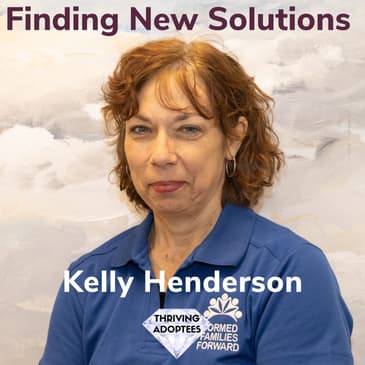
Kelly Henderson, Ph.D. is Executive Director of Formed Families Forward.
A special educator by profession, Kelly is a former public school teacher of students with emotional and behavioral disorders, and has worked in national and federal special education policy and research settings. Kelly’s family is formed in part through public foster care and adoption. Her young adult sons have a range of learning, behavioral, medical and cognitive disabilities. Pulling from her personal lived and professional experiences, Kelly consults with and trains adoptive, foster and kinship families and professional partners on special education and related topics. She also serves on numerous advisory boards and committees.
Kelly earned a Ph.D. in Special Education from the University of Maryland College Park and served as an Executive Branch Policy fellow for the Society for Research in Child Development. In addition to her work at FFF, Kelly serves as part-time instructional faculty at George Mason University, training special education teachers. Kelly believes that when formed families have information and tools to advocate for critical educational services, their children and youth experience improved academic, social emotional, and behavioral outcomes.
We are a family-led nonprofit organization dedicated to supporting foster, kinship, and adoptive families of children and youth with disabilities and other special needs. We offer critical resource tools to empower families to advocate for better special education, behavioral health and other services for the children in their care. Services to Northern Virginia parents, caregivers and family-serving professionals include training and events, peer supports, resource navigation and parenting and youth classes.
Formed Families Forward’s mission is to improve developmental, educational, social, emotional and post-secondary outcomes for children and youth with disabilities and other special needs through provision of information, training and support to adoptive and foster parents, and kinship caregivers.
https://formedfamiliesforward.org/
https://www.facebook.com/FormedFamiliesForward
https://www.instagram.com/formedfamiliesforward/
https://www.youtube.com/channel/UCAXmFiDD2phNTeRJ9PBqBAg
Guests and the host are not (unless mentioned) licensed pscyho-therapists and speak from their own opinion only. Seek qualified advice if you need help.
Want to learn more about thriving for you, your kids, your families or your colleagues? Pick a time to talk here
[00:00:02] Hello everybody, welcome to another episode of Thriving Adoptees podcast. Today I'm delighted to be joined by Kelly Henderson. Looking forward to our conversation today Kelly. Thank you, me too Simon, looking forward to it. So like many of the guests, Kelly brings both a personal lived experience, expertise to this conversation and her professional approach. So you've adopted three kids out of foster care right? Is that right?
[00:00:31] So close, we have three sons. Two of our children are adopted out of foster care and one is a birth child. Ah okay, and she's also the Executive Director of Formed Families Forward, Triple F. I know, that's tricky. Had we known, had we known all that alliteration was going to cause trouble down the line.
[00:00:52] But yes, Formed Families Forward. And we work exclusively with foster, adoptive and kinship families. And kinship may be a new term to some, but at least in the States we use that term to mean an extended family member or close family friend who's raising a child. Long term, short term, formally or informally. So there are a lot of kinship caregivers in our culture.
[00:01:19] And that's of course, as well as foster and adoptive families. Have you got an idea of what the percentage split is roughly for that? Yeah, yeah. So we say, and I'm in Virginia, the state of Virginia, Northern Virginia, and in Virginia, nearly 15% of children are in homes that are headed by someone who's not a birth parent or step parent.
[00:01:44] So we will claim in that foster, and that foster, adoptive kinship, global umbrella, nearly 15% of children. And a lot of those, a good, good two thirds of those are in what we would say are kinship caregiving homes. And then about 2% of all children are in adoptive homes and then the rest are foster situations or similar. So kinship is, is bigger, right?
[00:02:13] So lots of kinship, lots of kinship. And a lot of kinship families don't even know that they're, they're necessarily a kinship provider. They're just doing what, what they have done. And that's taking care of family and stepping in as needed. But we do find across all three populations that there are a lot of children and youth and young adults with specialized needs, disabilities, obviously trauma impact. As you know, Simon from, from the adoptive world.
[00:02:39] And so those children do have significant often needs and their families have significant needs for support. And that's really where we come in. We're a family led organization. So we're doing what we do from that family lens. We live it. And we are also professionals in the fields of education and, and social work and counseling and, and, and the like.
[00:03:03] And so we really use our, our personal and our professional experiences to support other families from that peer model. Yeah. So it's clearly a very, a specialist area with some significant differences, some special challenges all around this.
[00:03:22] What does, what, what does thriving mean in that, in your context, in the context of your family, of your organization, of your, do you call them, do you call them members? Would you call them members? No, no, just families, the families. Okay. Yeah. Yeah. Yeah. So you, you had, you had done due diligence and, and had us give us, give, give us some thought to this. So I appreciated that.
[00:03:47] And I think as I reflected on the term and the concept, I think in our little corner of the world, thriving in, particularly when you're raising children with unique and, and often intensive needs, obviously trauma impact in foster, adoptive and kinship families.
[00:04:08] And thriving is that persistence to make your way with supports and that, that that's a, it's a, you're, you're looking at a piece of the journey every time, you know, you are taking a step and that journey is very long, long one, and it's a very winding path.
[00:04:27] And I think we make our, our effort to help families thrive within their circumstances is to use that, that approach of the, of, of peers, sharing resources, being supportive partners as they travel their journey.
[00:04:48] And so thriving is figuring out the journey's path and who can help you along that and, and knowing and recognizing and being okay with the fact that that journey isn't going to have a, a concrete end. And there's not, there's no, there's no pot of gold on the end of that rainbow.
[00:05:07] So I think that realization and the recognition of the importance of others walking alongside you and taking advantage of those resources and knowing that those resources are going to shift continually on that journey. Um, the resources you're going to need, um, the resources you're going to need, um, the resources you might not find helpful and you need to pare down.
[00:05:33] Um, I think that's, that's thriving in our world is continuing the journey or being persistent on the journey, but recognizing that you're not doing it alone and you don't do, you know, you may do best, not alone. You may do best with others, um, and being open to that. Yeah. I, I, I think that, um, persistence, I'm, I'm, uh, first of all, I love the, the breadth of the, uh, the breadth of the description.
[00:06:00] And the other thing that pops into my head is because if you just said persistence, right, there's not a lot we can say about persistence. It's just dogged determination. Keep going, keep going, keep going. And, and that's all you can say. It's like life.
[00:06:20] What, what, what can you say about persistence than keeping going and not having an option, not, not seeing, not seeing an option. You know, your family is what it is. You just keep on going, you keep on, on, on going. Um, and what else can we, what, what else can we say about persistence?
[00:06:45] It's like, it's a, people ask me, say, well, you kind of, you're very persistent. I said, yeah, well, you know, yeah, I just keep at it. I can't really see an alternative. I, I, I, I, I, to it, I, I try to look at where I can tweak my approach, change my approach and do some small changes or some big changes and kind of see what happens.
[00:07:16] Um, and I'm really realizing I'm, I'm giving an awful lot of me into this conversation, but, um, what does persistence mean, mean to you? Have you got a different stake on it, take on it? Have you got something broader than, than mine? Because mine seems a little bit limited, really. No, I think, I think you're, you make a good point. And the alternative to persistence is stagnation, right? Um, and we do work with families who are in that space, right?
[00:07:40] Like, like, that they've, they've tried and they, their vision for what this family was going to, their family's journey was going to look like, um, has not, not come to fruition. And, and there's grief and there's loss along that, that recognition, like, my child is not going to be the, the image of what I thought, um, they, they, they could be.
[00:08:04] Um, and so I think there are folks, you know, that, that sit in that, that sort of, this is my, I resolve to be here. Um, and I would hope that what we do at Form Families Forward and hope what I do on a day-to-day basis, um, I try, uh, with my own kids is to think, yes, and, yes, we have these challenges. Yes, we are facing these barriers.
[00:08:29] Um, yes, we have turned, been turned away from this or that or whatever, didn't go the way we had envisioned. And then we need to find, um, new, new ways forward. And so I, I think, um, it is dogged and it has also done better with others. And I think that's really where we center our work. Um, um, whether it's a peer support group or, um, a parenting class or a training or, um,
[00:08:59] a consultation to just talk about, this has been my experiences, this is where I want to go. And I can't figure out how to, to go there, what the next step is. And, and I think that's where the peer, the peer model is, is very powerful or can be powerful. Yeah. So there's an element of kind of creativity, is there, to, to, to persistence? I think so. I think that's a, well, that's a, that's a, that's a, that's a safe statement. Yeah.
[00:09:27] And, and maybe the creativity comes other than solidarity, you know, the, the, the peer support provides solidarity. Um, and perhaps that it, it, it provides, it creates, um, or provides creativity too.
[00:09:46] So, you know, there's often that relief at realizing, so I think of solidarity. I think of the relief in realizing that it's not just us, we're not going mad, right?
[00:10:15] So there's a, there's a, there's a relief there. And then there's a, a creativity that helps us point, points us in different directions or see different directions to go to. What's it, what's it look like? Yeah. I mean, yes, I think, I think having options, I mean, we, so again, a lot of what we do is in that education realm, um, what we would call in America, special education, exceptional education, um, of children with disabilities.
[00:10:44] And I think one of the foundational principles of educating kids, all kids, but particularly kids with specialized needs and parenting kids, um, who may have is the concept of choice. Um, and the idea that I think empowering ourselves as parents, caregivers, educators, professionals, um, and empowering our kids with choice is just hugely valuable.
[00:11:13] Um, that choice may need to be somewhat limited depending on the circumstance. Um, but choice is, choice is a really, um, important construct of what we have. So as we work with families, um, um, and think about that creative approach, um, you know, for, for lack of a better term, really being very broad in options. Here's, here's A, here's B, here's C, this is the, you know, these are the potential outcomes of, of those options.
[00:11:40] Um, these are some options you may not have even known exist. Um, uh, and, and that's, I think part of our strength, um, part of our power, um, to do that again alongside families, um, and, and find those out of the typical norm, um, uh, approaches. We're, um, pretty good at being told no and then saying, okay, I hear you. And we're going to pursue this in a different way.
[00:12:10] Um, and I think sometimes that's, that's done a little easier when you have somebody who's either walked similar path before you, or at least walking beside you. Yeah. What, what sort of choices do you mean, Kelly? Oh, uh, uh, so, um, I think, for example, a typical situation that we work with, um, would be a parent, a caregiver, um, concerned about some school performance, something happened
[00:12:38] in school and the child is not engaging, child is not achieving, child is not getting grades, child is getting in trouble at school, whatever. Um, and they know something about their child. They know a lot about their child. They are the number one expert on their child. Um, and often they are disempowered when they go to the school or the, uh, you know, institution, wherever the child, you know, um, the, the counseling center, the day camp, whatever it is, wherever
[00:13:05] the kid, kid is getting services, um, often school is what we deal with it. But, um, and they, they are told they are not, they, they don't know, and they don't understand the way, you know, the system works. And so they just need to, um, accept that this is the proposal and this is the plan and this is what's going to be done essentially to, to them, to their child and to their family. And I think we then say, okay, that is obviously one, one path forward. There may be other paths.
[00:13:35] And so what are those paths and what are those choices? Um, and, and trying to, uh, clarify what other ways, either that research or experience or policy allows other, other, um, other methods, but always honoring that parent, that caregiver as an expert on their child. And of course, also the youth themselves. If, if the youth is able to play an advocacy role, it's really important that they have, they have agency in the choices that they're making.
[00:14:05] Um, and I think sometimes families are so used to being told, this is the one way get on board or you're, you know, you're just, you're just the problem if you're not on board. Um, and, and sometimes groups like ours that, um, you know, have a very strong set of experiences and, and have a bit of a, an understanding of, of options can help, help move that, that thinking
[00:14:33] a little bit more broadly and help identify new options that they might not know even exist. Yeah. So it's deep help helping, uh, parents or caregivers deal, deal with the bureaucracy and the people that want to give a one, one approach or seeing it one way or seeing the way forward as one way.
[00:14:58] And you're bringing in your creativity, bringing in more ways, more ways, more ways. And, uh, so it's challenging, it's challenging the bureaucracy in there. Sometimes it is. Yeah. Sometimes it is. And sometimes it's a mindset thing. Like, I think you deal with this a lot in your podcast with people really thinking about circumstances in a, in a new and different way. And, and just, I mean, if you, if you don't, you don't know what you don't know, right?
[00:15:25] Like that's, that's, that's the, that's the fact of the matter. Um, so if you don't know that the way, uh, uh, that you were parented, for example, or the way that you were taught is not the only way or the best way, or the way that's going to work for the kid that you're raising most importantly, um, then you, you can't advocate, you can't support the child or you can't support the system around the child to change. So I think broadening our, our lens, um, is really important.
[00:15:54] Um, and we know that a lot of traditional, for lack of a better term, traditional ways of parenting, traditional ways of teaching, traditional ways of, um, engaging, of disciplining, um, kids don't work well with kids that are in, um, that who have trauma histories, who are in foster adoptive situations, who are impacted by disability or other specialized needs. And so, again, we're just trying to open that door.
[00:16:21] I think, um, you know, we, we talk about things like brain first parenting and, and, um, trauma informed practices and those kinds of things to just begin to help again, create options and create choices that to alternatives that are usually not working, right? Like by the time families are coming to us or the family, the family is hitting a wall in the school or in the community, something hasn't worked. Um, the kid is failing, the kid is struggling, there's conflict, there's disciplinary,
[00:16:52] um, consequences. And, and so where, where do we go from here is really where we often start. Yeah. So it's coming. It's about to shift in, in mindset then, is it? Oh, that I think so. Yeah. I think a lot of, a lot of, um, as we work particularly with systems that have been doing their thing the same way for many, um, many, many years, um, many generations.
[00:17:19] In fact, um, I think sometimes it is about shifting mindsets of professionals and, and often family. We, well, you, you've addressed this, I think, in your podcast about, um, our personal history, the way that we, um, experienced parenting, the way that we were raised, the way that we interacted with schooling and other institutions, um, you know, that's, that's sort of like our, our core or central center.
[00:17:44] And when that begins to not work, when you're the parent or the caregiver, um, or the educator or the professional, then we have to, we have to be open to that shift. And that's, that's hard. Um, that's hard work. That's hard work. Um, have you come across the, the, the, I think she's an American professor. I'm sure she, Carol Dweck and this growth mindset. Have you come across that? Yep. And a lot of schools are, I think, resonating with some of Carol Dweck's work.
[00:18:12] Um, uh, and, and I think there's, there's some good, good, good content there. Um, I, I think, uh, we always want to start with where the child is and, and, um, and recognize that their history may make a growth mindset easy, or it may make it. Even more challenging. So I, one approach to a growth mindset is not going to fit everybody. No, no.
[00:18:40] Um, I read the book and I liked it. I did think it was slightly over long. I did think it was slightly over long. I don't know what the, the word that it came down to for me is the, the nuts of it. Uh, listeners is this word yet, right? So the, the idea is I, I can't.
[00:19:07] And instead of I can't full stop, it's, I can't yet. So it, it, it, it, it, it's, it's about, well, I think about being, when I think of the word mindset, I, I, cause I often think in, in, in metaphors when I'm doing trainings, right? I do a build a lot of metaphors. And I think, well, wouldn't it be easier if we were mind fluid?
[00:19:36] Like you think of mindset, I think of set concrete and, and being rigid. And what you're talking about is clearly completely different to that. You're talking about a more creative approach. What Carol Dweck is talking about is a more, well, a growth mindset. So it's about change. I'm, I'm looking at, I'm looking, uh, Kelly's got the Families Forward logo behind her, right?
[00:20:03] And it's got formed families in quite small letters and then forward in about four times the size, right? So it's all about forward, forward motion, moving, moving forward, change, shift, mindset shifts, shifts in our perspective. What, what did you learn anything?
[00:20:28] Um, did you learn anything about your, your, your own mindset listening to Carol Dweck talking about growth mindset? Yeah. I mean, I think, I think you raise a really, the, the power of yet is one of the, you know, by, as you say that she talks a lot about, um, and the idea that, um, where we are is not our destiny. Right. And I think that that's a hugely valuable concept in, in, um, in foster adoptive and
[00:20:57] kinship world, as well as specialized needs and special education and disabilities and neurodivergence and whatever term, you know, you particularly resonate with. Um, I think that is really important that, but there's always, even in the most significantly challenging situations, there's the, the potential of something, uh, of change, um, of growth, of future action.
[00:21:22] Um, um, another, another favorite of ours is Ross Green's work, uh, Dr. Ross Green. Um, and he, um, has this phrase, he works, does, does work with parents and caregivers, but a lot of work now in schools, um, and, and talks about children doing well if they can't, um, because traditional has, you know, sort of, um, ways of thinking, excuse me, my
[00:21:51] light's gone. Ah, power, the power, um, is saving itself. Um, uh, uh, uh, you know, I, I think there's a tendency to, when a child doesn't do what they what we want them to do, we say they're making a choice to, to misbehave, a choice to be disobedient
[00:22:16] or in schools insubordinate or, um, disrespectful or, um, defy it, defy it. So great words love. Um, and, and we sort of assume that that child has, has the, has the, the capacity to consciously make a choice to do exactly what you don't want them to do. Um, and, and Ross Green talks about children that pretty much, um, there's a few, you know, obviously there, there are moments where our children are just being obstinate and, and,
[00:22:44] and, um, persnickety is the word I sometimes use with my kids. That's nice. I prefer it to defiant. Yes. Um, but on the whole kids are, want to, want to build relationships. They want to succeed. They want to have positive things happen to them and want to have positive people, people around them that, that have positive connections with them. And so this idea of children do well if they can, and if they're not doing what we want
[00:23:12] them to do, then we need to look at ourselves and say, what is it that we can do to, to support them in getting closer to being able to do as best, uh, as they can in the vision of what we want. Um, and, and, and that may be teaching specific skills. It may be teaching coping strategies. Um, you mentioned flexibility, um, and, and, and thinking, um, broadly and widely.
[00:23:36] I think that's a skill, um, that some children, some adults, um, don't, don't necessarily have, you know, inherently. And so that needs to sometimes be taught, um, and reinforced and helped, help. And we talk about the concept of co-regulation a lot where, uh, parents, caregivers, um, caring adults are supporting that child as they go on that journey, um, towards increasing their
[00:24:03] regulation and management of their, you know, um, challenging what behaviors that challenge us and emotions that are challenging to them. Um, so I, I, I like that concept. Um, uh, and I guess I, I don't always hit it, but as I do my work and I do, as I as a parent, I really try to keep that in mind that what I'm seeing in this meltdown or this refusal or this statement, um, or these curse words that are coming at me is not, um, not a,
[00:24:32] not necessarily a conscious, um, evil intent, but, you know, an opportunity for, for us to connect in a different way to move, um, together forward towards some better options. Um, so yeah. I don't know if that makes sense. Yeah, it does. I think I break the, that, that section into, into two bits. That's a bit more bites, a bit, a bit more, um, easy for me to, to, to chew over, right?
[00:25:02] You know, this idea of, of choice and, you know, you mentioned the word trauma a couple of, a couple of times earlier in, in the conversation and I was thinking, right, well, it's not the king choosing, um, or the adult choosing. I, if, if, if we, if we, if we extend this to adults as well, it's the trauma that's choosing. Um, and the, the defiance, uh, defiance or persnicketing us, which is clearly a little bit more fun.
[00:25:31] Um, it, or the, or the anger or, or what, what, or the sullenness or whatever the, whatever, whatever it is. It's, it's, it's not the child's conscious choice. It's, it's, they're coming from trauma. It's, in simple terms, I can't put it any simpler. I don't think. It's trauma choosing, not the kid.
[00:25:55] And, and their systems in most cases are doing what they can and to keep that child safe. And that may be, you know, we talk about the flipped lid. I don't, um, that's a Dan Siegel model that we, we use a lot as we talk with families and talk with, um, professionals. Um, but you know, they're, they're, they're, they're, they're protecting themselves from that protective core man, you know, reptilian brain, whatever downstairs brain, whatever term,
[00:26:25] you know, you, you resonate with. Um, and, and so when they're in, then their lid is flipped and they're doing those things that we don't like that look disrespectful or defiant or whatever. Um, that's, that's their, their amygdala, their limbic system protecting themselves. Um, and, and saying, well, I've, I've got to get out of this, the situation and the best way I can. And the best way I can is by swearing or throwing something. And that's going to keep me safest. Um, and so, yeah, it's absolutely right.
[00:26:55] Simon, I mean, it's all driven by trauma, right? Um, not everything, but a lot of, a lot of what we see is driven, driven by a trauma response that is again, hardwired to keep us safe. So like, um, if I'm not regulated or I'm not operating from that prefrontal cortex, then I'm going to react, um, in a way that, I mean, may not look logical to others, but is, is hardwired to keep me safe.
[00:27:17] And when I get around this subject, I can't help thinking about the fact that it's about our ability not to take the kids' trauma driven behavior personally. that, that's, that's kind of the whole, that's the secret. We're talking about secret sauce before we, before we hit record, right?
[00:27:43] That, that to me, having listened to a few people talking about that, that seems to be the thing that makes the difference. And, uh, and of course we can't always see that in the midst, in the midst of the, in the midst of the fire, right? In the midst of the, um, the, the disruptive in, in the, in the, in the, in the heat of the fire, in the, in the storm of the moment, we can't, we can't see that it really does
[00:28:12] feel, it does. It really does feel like it's aimed at us. The missiles are coming our way. Right. Right. So when, when I look at that, this sort of thing, I think I'm thinking about the insight, right? So we've, we've, we've got to, the, the thing that's going to change our world for us is the insight that this isn't personal.
[00:28:42] This isn't, this, this, this defiance isn't personal. It is trauma driven behavior. It's got nothing to do with us. It's got nothing to do with the kid. It's got everything to do with their, their trauma. And it's, and yet it's all about our insight as, as seeing that, um, more, more clearly, the, the, the more clearly we can see that it's not personal, the less likely they are
[00:29:11] to take it personally. Yep. No, I think you're right. Um, and again, we work a lot with schools, so I'm just going to use that lens. Um, in fact, we're, we're doing this, we're, we're talking right now as, as schools are beginning to prepare for the school year here. Um, and so, uh, we're actually doing it in two days. We're doing a new teacher training in one of our school systems.
[00:29:36] Um, and we made a decision that we're, we're, we're not going to talk about, you know, pedagogy, um, and, and specific strategies, but we're going to talk about you new teacher. Um, you likely, first of all, had a decent experience with school. Um, or you wouldn't likely be going into education. Now, there's some exceptions to that, but generally people who are in schools, teaching, leading,
[00:30:04] administering had positive experiences and goals. Like they were successful at some point. Um, uh, or else they wouldn't have gone to college, right? So they wouldn't have gone to college. Pursued that and certainly not pursued, um, uh, you know, the education field. Um, so you bring your own set of expectations about what this, this thing called school is. And so we're actually spending, um, an hour with the new teachers just really thinking about what, what is your experience?
[00:30:34] What are your expectations? And what does it look like when those expectations aren't met? Those triggers, those, you know, those things that you were describing, Simon, when people, you know, um, they're, they're, uh, they're being challenged. Um, uh, I think like, yeah, yes. Um, and, and really examining that and knowing that, that the, the art of addressing really challenging behaviors and, and challenging student situations is how we're responding to it. It's not changing the kid.
[00:31:03] It's changing our response to those kids. Um, and that's really hard. Um, and we set up systems that don't necessarily reinforce that too. So that's a whole nother conversation. But, um, you know, I think, I think realizing that again, in a situation where you've been very successful with this whole education, um, and, and many of us have been successful, you know, children being parented. And so when we use those parenting techniques or those education techniques that worked
[00:31:29] for us, um, and are not working for our kids, we get really, we get really triggered. Um, and then we start flipping our lid and are working from not our best place. Um, and so there's definitely whether you caught a mindset shift or something, you know, um, flexibility, um, is really, really key for the, the adults in the room. And that's, that's hard. That's hard stuff. We all have really, really important triggers.
[00:31:57] Um, and, and, uh, it's sometimes hard to get around those. Yeah. But the, the, the key, the other set, the second key thing that you seem to be saying is that it's about our response to their response. It's rather than seeking them to change. We're the ones that are doing the changing. And that requires a hellish big insight, right? Oh, well, it's not.
[00:32:26] I, I'm thinking now about a therapist that I spoke to a couple of years ago. And she said that essentially she, she did therapy with a young adopted kid. And she said, um, parents ring me up. They, they know the school of thought that I'm coming from, right? Because they've, they've been on a, I think it was a TBRI. Okay. Yep. Yep. Yep.
[00:32:53] So she, she, they, the parents been on a TBRI course of some nature or knows that this is one way to look at, um, the, the, the parenting. And so they know that they, they know that it's about the changing the parent because that's what TBRI is all about.
[00:33:14] However, when they ring up the TBRI, uh, counselor, therapist, there's something about, something about fixing my kid. Ah. Ah. Ah. Comes out loud and strong. It, it, it, it, it, so, so they've got the theory.
[00:33:41] Uh, and yet they, they haven't had that shift yet to, to, to, that's really been embodied. Yeah. They, they have, they haven't seen that clearly enough. On one level, they, they know it's about changing them, but in practice, they're still thinking it's about changing the, the, the, the, the penny hasn't dropped yet. They, they, because they still say to the therapist, fix my kid.
[00:34:09] Well, and I think that circles back actually to where we started this conversation. So I mean, it's the importance of, of walking alongside, because if you, you know, that you, you know, you've read the book, you've read the, you've done the work books or, you know, whatever you're going to the therapist, um, the TBRI in that case, therapist, and you know, you know, you got to make the change, but if you're not supported and making those changes, it's really, really hard.
[00:34:33] Um, so that's where I think the peer support groups come in, you know, really, um, loom large as in terms, I, I, you know, I was on this track. I was going to respond very positively. I was the thinking brain first, and then they said this, or they did this, and I just flipped my lid and having others to sort of re respond to that and say, oh yeah, well, what the, you know, one thing that I've tried in that situation is, you know, this, this approach or, um, we're using picture symbols and maybe that's a way to do it instead.
[00:35:03] I'm having the, the, the verbal, whatever, whatever the back and forth was, um, and just having others who are like, yeah, I've been there. I completely, completely hear you. Um, um, I, I lived that experience in one form or another and being able to walk alongside. So I think that's, you know, recognizing and then being able to, to, to live that is a whole different thing. Yeah. Yeah.
[00:35:28] So, so clearly one of the things that stops, uh, parent, parents or stops, uh, families thriving is, uh, a more, uh, isolated, isolated approach to it, right? What, what, what you, what you bring is that shared, uh, the shared experience and the other ideas, the creative solutions. What else do you see?
[00:35:57] What else do you think that gets in the way of, uh, of families thriving? Um, so, I mean, I, I do think the systems around families can be helpful and sometimes they, they contribute to the problems. Um, so, you know, again, schools are a system that we deal with a lot.
[00:36:22] So if, if a school is not on board with a different way of thinking about behaviors, um, so that you're, you know, we talk to a lot of families, like, you know, every day I'm getting the call. I've just, I can't even look at the caller ID anymore because that triggers me because it's an, I know it's another thing that they're calling to say something bad about my kid. Um, so I think, you know, we, we need to shift that around a whole lot is the systems around our kids. So that that's something else.
[00:36:50] Um, uh, I think there is still, um, a lot of blaming, but a lot of, um, even family, you know, within communities, there's sort of some, some beliefs about bad, about bad behaviors come from bad parenting. Um, and that's not, that's not helpful. Um, but I think it's a reality.
[00:37:18] So I think even just within the socials, you know, we, we talked to a lot of families who are no longer attend their, their, um, or have had to change their houses of worship because, um, the churches or other places worship that they had gone to either before children or when the children were younger. And then these behaviors started to become a real, you know, we're no longer welcomed or no longer felt welcomed.
[00:37:41] Um, so I think we still have some systems issues of understanding and not blaming, um, uh, parents and caregivers for their children's behaviors, um, and figuring out a way to be more supportive, um, and maybe changing practices to make that more realistic. Um, I don't know. You ask Google question. I need to think, I'm sure I have more answers than that.
[00:38:12] But, um, those are definitely, I think some of the challenges that we, that we hear. There's financial. I mean, there's also always the financial, um, particularly we talked a lot at the beginning about caregivers. Um, a lot of time kinship caregivers were not ready or planning to take on the care of, um, extended family members, um, and are financially not necessarily ready to do that. And we, at least in the States, do not have a good system, um, for particularly informal
[00:38:42] care, kinship care to support them in any real way. Um, so there's, you know, grandma living in a one bedroom apartment and she gets a call saying, if you don't come get these kids, they're going into foster care. She's going to get those kids, but, um, there's not necessarily the supports available to do that. So I just want to, we've talked about mindset shifts and, uh, seeing things, seeing things
[00:39:08] differently and the, how the group dynamic helps you, you do that helps you be, be more creative. I just want, are there any particular moments that, that, that come to mind when, when things have shifted for you, when you've had a, one of those big, um, I guess what they would call it in church, an epiphany moment, right?
[00:39:34] Um, yes, personally you get to the, well, I'll just say, I got to the point where I am doing, I am engaging in behaviors that I could never have imagined that I would have called when I was a teacher, when I was a classroom teacher that I would have called. If I had heard a child tell me that their parent had done to them, I would have called child
[00:40:01] protective services, uh, because that was such bad parenting, you know, bad parenting. And there I found myself doing that. And that, so those were, I guess, the points where you're like, something has to test to change. I have to, the way I am approaching this situation is not healthy for anyone. And, um, at the core of good, good teaching is if you were doing something and it's not working, you got to do something else.
[00:40:27] Um, and, and so I guess that those have been my, like, when I'm restraining a child because he's punching a hole in the wall, um, my own child, um, and, and the behavior is not the, that my response to the behavior is not making anything better long-term than we have to be open to thinking of different ways. And those different ways are not what I knew growing up. That's not what I was taught in teacher training.
[00:40:55] It's not what I understood, um, good parenting to be, but I have to make that change. Um, and finding, finding a few people that are ahead of me on that path was really important. Yes. Yeah. I, I did a training last week on the last part of the Thrive framework, which is empowering, empowering others. And I was reflecting on, on, on what empowers us.
[00:41:24] Like I came up with all the, the nice stuff about, about empowerment, you know, um, emotional intelligence, insights, epiphany moments, all these big positive things. And, and then I was thinking, I was, I was swimming, actually, if I look back on stuff, some stuff for me, when I've realized I have to change. So in that last segment, you said, I have to change. That has happened.
[00:41:54] That insight has happened often in crisis. Yes. Often. It's when we, when things, uh, I, so I was talking about myself, um, and I, uh, burying my head in the sand. I, you have that, you use that idiom and it's not just a British thing. Um, first off is I wasn't doing that on purpose.
[00:42:22] It sounds like I was burying my head in the sand. I, uh, it was trauma choosing or something else choosing. It definitely wasn't Simon choosing. I wouldn't, you know, nobody would choose to bury the head in the sand. Right. Um, we're just being optimistic. Do you know what I mean? Um, uh, and then the crisis moment comes and the, the head is ripped out, out of the, the, out of the sand.
[00:42:52] And we see that we, we, I see that the way, the way forward is different. And it's often in those crisis moments that really, you know, and like, and I was thinking about running a small business. I learned more when it wasn't working right. That's well said. Yep. Yep. Yep. You, you, yeah. Yeah.
[00:43:21] There's, there's no motivation like that hitting that wall. Right. Yeah. Like. Yeah. So I, I, I heard a while ago, we're kind of, we're, we're motivated, uh, either away from pain or, or towards pleasure. That, that is what human motivation is all about.
[00:43:42] And, uh, the, the, the pain, the thing about pain is it's present now, but being motivated towards pleasure, towards, uh, some further motivation. And, um, I, that's not there. It, it, it, it's, the pain is present. The, the, the pleasure is just in our imaginations about the future.
[00:44:09] So it's, it's the pain that motivates us towards change. Um, so to what extent do you see that within your, your, your, your families? Well, I would say, I mean, I'm not sure I would, pain is, pain's a strong word, but, um, I think, um, uh, the discomfort, the experiences of, of challenging circumstances.
[00:44:38] All of our staff, all of our board have, um, at our organization, they've been in those places where things, um, haven't gone as desired.
[00:44:52] Um, and, and, and then that pain, that, that disconnect, that dissonance with the way it should be has, um, and I would say this about, we're part of a parent center network of, of, of, uh, uh, training centers in every state that support, uh, parents of children with disabilities. Not necessarily foster adoptive kinship, but all families of, of children with disabilities who are receiving special ed.
[00:45:22] I mean, I'd say across the board, that's, that's, that's how the staff, that's how staff do their job is from that place of we've been there and things, we saw it not work. And we know there are, there are strategies either through information sharing or practice or connection, um, relationships or changing policies, um, and, and procedures and best practices that can make it less painful to use your term.
[00:45:50] Um, and that's what then fuels what we do or in our work with families, uh, because it doesn't have to, it doesn't have to, you don't have to sit in that misery. Um, again, circling back to where we started the, the idea of persistence, like the alternative persistence is stagnation. And, and some people are there and I say generally our staff at board are not, are not, are not people that are comfortable with that stagnation.
[00:46:16] And so we were using that, those experiences of the need to persist and how, and the strategies we use to persist, um, with, and, and using that peer model to, to really help other families and say, it doesn't have to be this crappy. Um, uh, and let's, let's figure out. And did you know, did you know that you could request this? And did you know you could blah, blah, blah.
[00:46:38] And here's a resource directory of, um, trauma informed providers who did it and aren't going to just say, oh yeah, your parenting sucks. Um, you know, like that, that there's, there are better ways. There's not the perfect way. That's one thing we've learned. There's not one perfect way, but there are better ways or more constructive ways, more flexible ways, um, that benefit the family, benefit the kid and benefit the institutions around. Yeah.
[00:47:06] And we, we, we always, we, we want to learn from somebody that has come through the mire, come through the manure, right? Yeah. And, and kind of coming out of the other side or has come out of the other side. Uh, and you know, that's, that's how we, that's how we, we, we change.
[00:47:30] And the, the, the, the, the strange kind of parallel that I'm, that's popping into my head now is some of the adoptee Facebook groups where everybody is in the mire. Yeah. And, and, and, and, and we, unfortunately we, we are stagnating.
[00:47:57] We're, we're stagnating in, in that, in that place. Not healthy. Not healthy. Not healthy. And, and yet, kind of, there must be some reassurance on, we're being proved right, aren't we? I think we've been, are we being proved right?
[00:48:21] We're, um, no, nobody's pointing out the error of our ways. There must be something, there must, there must be, there must be something that we're getting from that. In, in some kind of strange way. It is, it is a strange analogy, but, you know, often, you know, what, what, what, what do I need to do?
[00:48:47] To a, to a broad question, somebody says, well, find somebody that, that's been through what you've been through. Come in and I didn't ask them about how they did it. I, you know, it's not, it's not.
[00:48:59] Well, and I, yeah, this isn't my, this isn't my specialty, but I, I think that there is some value in just being in that space of complaining to get, like, being in that place of shared frustration, shared, like, and, and this, I mean, in date, my date, my relationship with my husband, you know, sometimes I just want to complain. I just want to complain about whatever the situation was and just have him go, uh-huh, uh-huh, uh-huh. Not necessarily solve it.
[00:49:25] Like, I want to be in that space of just dumping, venting, you know, I want you to, to empathize with the, my frustration, my level of whatever. And then there's a place for, okay, now what are we going to do about it? But, and so maybe there's just those, maybe, I don't, I don't know, but it starts with that, like, just everybody's, like, in that, in the, the mire together. And we're going to, like, hear each other, hear each other.
[00:49:54] And maybe then we're going to be able to take a second. And maybe some people are not wanting to take that. So, I mean, I don't know. I would say that, we're back to the choosing again thing. I would say that trauma's choosing. I would say that trauma's choosing and we're not.
[00:50:12] And you talked about, talked about judgment earlier on, you know, like, I'm thinking how much does our self-judgment, our self-criticism, how does, how much does that keep us stuck or keep us spinning the wheels, right? Right.
[00:50:31] Before, before they catch, you know, before the, before we get out of the gravel and, and, and the, and the tires are on, back on the. I love that analogy. That's going to be my next analogy, Simon. Okay. The tires and the gravel. I love it. Yeah. So, Kelly, we're kind of coming up on time here. Is there anything that you'd like to share that I've not asked you about?
[00:50:59] I guess it's just, you know, if, if people are listening to this and, and are raising children or supporting children who have disabilities or neurodivergence or other specialized needs, I guess, you know, in terms of that acceptance and realizing the, the rate of, of, of those conditions of, of, of disability and other learning and behavioral and social impact. Is really high amongst foster, adoptive and kinship.
[00:51:28] I mean, we theorize why that is, but the reality is we know at least three to four times the rate of disability, identified disability amongst our, our families. And so I just want to like, be really clear, like if that's your reality, you're not imagining it.
[00:51:44] And if you suspect that there's a, you know, a reading or learning or behavioral challenge or mental health condition under, in addition to the foster, the adoptive, the kinship situation, you know, trust your instinct and, you know, reach out, reach out. If you're in the States, reach out to a parent center, reach out to others who have lived, you know, are working within the systems and, and, and be persistent. You are the ones who know your child best.
[00:52:13] So, you know, don't shy away from, you know, asserting yourself to get the services and supports, reaching out to others who've lived similar, similar circumstances or know the disability or other service systems. And, and because the sooner, the sooner kids get supports, the better they're going to fare. So we, that's, that's indisputable. So that would be my, that would be my little commercial. Thank you, Kelly.
[00:52:42] Thank you. And thank you listeners. We'll speak to you again very soon. Okay. Bye.