Have you found your way to thrive? Could you use some pointers on different ways? Is it about understanding trauma? Moving beyond identifying with trauma? Healing? Something else? Listen in as we discuss different ways to help you find your way.
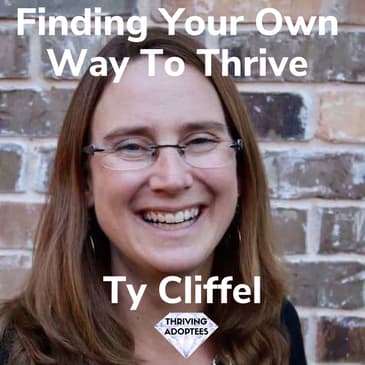
Ty is an adoptee who has been in reunion with her birth family for over 25 years.
https://www.linkedin.com/in/ty-cliffel-748b7ba7/
Guests and the host are not (unless mentioned) licensed pscyho-therapists and speak from their own opinion only. Seek qualified advice if you need help.
Want to learn more about thriving for you, your kids, your families or your colleagues? Pick a time to talk here
[00:00:02] Hello everybody, welcome to another episode of the Thriving Adoptees podcast. Today I'm delighted to be joined by Ty, Ty Cliffel. Looking forward to our conversation, Ty.
[00:00:11] Thank you. Looking forward to being here.
[00:00:14] So, when you hear the name of the podcast, Thriving Adoptees, what springs to your mind, Ty?
[00:00:22] Making an active choice on how you move forward from life circumstances and how you make sense of it and how you direct your future going forward.
[00:00:31] Yeah. So how does that, that sound like quite an empowered, a powered approach. How did you come to that sort of take on life?
[00:00:48] I really don't feel like you have a choice other than to take control of your life. I mean, like you're going to get things thrown at you and you're going to have curveballs and things that you experience like everyone does.
[00:01:00] But I do think it's a matter of responsibility to make some choices on what you want to do with that based on what's available to you and what your circumstances will allow.
[00:01:14] But ultimately it's a responsibility to Thrive or try to anyway.
[00:01:21] I'm just playing devil's advocate slightly, you know, like, I'm thinking about somebody that's really still in the grip of what a friend of mine calls the trauma bound identity, right?
[00:01:37] So they're, they have yet to unlock, they have yet to see any freedom from that trauma bound identity.
[00:01:46] And they would say, well, I can't, you know, like, I can't make a choice.
[00:01:52] I'm not, I'm not choosing to be stuck where I am.
[00:01:57] And then, and then the rest of the conversation would go kind of down that, down that space.
[00:02:04] So how would you, how would you put that to, to, to somebody that's perhaps looking for more freedom to choose?
[00:02:17] I completely agree with that sentiment.
[00:02:20] I mean, I think that trauma is something that, you know, through adoption, it's inescapable, honestly.
[00:02:32] I mean, I really do believe that, you know, it's, it's a traumatic impact that happens to people who are impacted by adoption, whether it's, you know, me as an adoptee, my birth mother, for example.
[00:02:43] I just feel like it's something that impacts everyone.
[00:02:46] And it's something that circles back around throughout the lifespan.
[00:02:51] You know, you, you understand it in one way as a child, you understand it a little differently as a young adult.
[00:02:56] You understand it differently than as you move into your adult life and in my role as a spouse and as a parent and as someone in reunion, like that adoption trauma.
[00:03:08] I mean, it hasn't gone anywhere.
[00:03:10] Certainly it's still very much part of, you know, my operating system.
[00:03:16] And I would say that probably a lot of adoptees feel that way.
[00:03:19] You know, it's something that you, you know, those different issues pop up periodically and it's just, you know, have to make space for that and really invest the time.
[00:03:30] At least for me, I try to, you know, sit with that thought and feeling and identify what it is and what it's about and unpack that and figure out how it makes sense in the context of my life.
[00:03:40] And, you know, and then, and not shying away from those feelings, you know, but you do have the responsibility to, you know, get support or, you know, make some choices for how you want to move forward with that.
[00:03:55] So definitely not putting, you know, oh, it's no big deal.
[00:04:00] Cause it definitely is a very big deal and it's definitely, you know, something that has been foundationally impactful in my life.
[00:04:11] Yeah.
[00:04:14] In the grips of the, in the grips of stuff though, we're not choosing though, are we?
[00:04:20] There's some things you don't get to choose, right?
[00:04:22] I mean, clearly we arrive at things as they happen.
[00:04:27] Some things are definitely not our choice and we have get the, the great benefit of having to figure it out.
[00:04:39] You know, I think, I don't think that's unique to adopt these.
[00:04:40] I think we have a lot of things in life that happen to us that we have to figure out and deal with that aren't always fun, frankly, you know, but that's,
[00:04:51] I don't know.
[00:04:52] I would argue that adoption is not something to be ignored or minimized.
[00:04:59] And it definitely is something that I would not have chosen for myself.
[00:05:03] I can't say I feel particularly grateful for having been adopted.
[00:05:15] You know, yeah.
[00:05:16] So it's not, not really a choice.
[00:05:18] Yeah.
[00:05:21] I, when I, I had a very profound week about 17 years or so ago, I think it was.
[00:05:34] Maybe 15, maybe more like 15 years ago.
[00:05:37] And we, it was a retreat and there's two, two people facilitating the retreat and five, six of us on the, on the course.
[00:05:48] This, these were not fellow adoptees.
[00:05:52] But we, we, we spent basically a week learning that most of the time, most of us aren't choosing how we, you know, what we do.
[00:06:05] It's, it's involuntary, right?
[00:06:07] It's involuntary.
[00:06:09] We're reacting rather than responding, perhaps one way of putting it.
[00:06:11] So we're not choosing what we do.
[00:06:14] We're not choosing what we, what we feel.
[00:06:18] And we're not choosing what we, what we, what we think.
[00:06:22] And we're not choosing how we see ourselves as, as that.
[00:06:28] In that, in that state.
[00:06:30] And there's no, we're believing, we're believing in the voice.
[00:06:36] We're believing the voice in our head.
[00:06:38] The voice in our head is not a choice.
[00:06:40] We wouldn't choose to say the stuff that we're saying to our thing, saying to ourselves about ourselves.
[00:06:47] So for me, that was quite a profound look at, at, at, at choice and at identity and at who, at, who we are beyond our behaviour, before our behaviour, beyond our feelings, before our thoughts.
[00:07:08] And looking at the essence of, of, of who we are without that stuff.
[00:07:13] So our, our self before we were conditioned by whatever's conditioned for us.
[00:07:20] So that's why choice, the choice thing was a big thing for me when you mentioned, when, when you mentioned that.
[00:07:30] And I was just thinking, well, for me, if I'm in the, if I, if I'm in the grips of some insecurity, should we say, or if I'm in the grips of some fear,
[00:07:41] then in that moment, I have, I have, I have no choice.
[00:07:46] I am responding rather than reacting.
[00:07:50] I am, you know, I am, I am my, what, you know, fight, flight, fawn, you know, I'm doing that stuff.
[00:08:00] So, um, what, what do you, what do you make of, what, what do you make of choice, given what I, what I shared there?
[00:08:13] Um, I think that's a great observation.
[00:08:15] It's a practice, isn't it?
[00:08:16] I mean, I feel like it really is something that, you know, being, when we do have those big feelings or the emotions, the fear, the insecurity, all of that.
[00:08:25] I mean, I'm definitely impacted by that the same as anyone.
[00:08:29] Um, that's hard for me.
[00:08:33] It takes, it takes a minute to kind of work through that.
[00:08:35] And I think some of the, some of my personal practice has been kind of figuring out, identifying it.
[00:08:41] First of all, this is what I'm feeling right now in this moment.
[00:08:43] And then trying to unpack what it is that's contributing to that and making space for it so that I can work my way through it.
[00:08:50] And then, um, you know, and, and then trying to bring myself through, you know, to the other side of that and sorting out, you know, what's rational, what's not rational.
[00:09:01] What's, you know, what's serving me and what isn't, um, I find that to be a daily practice.
[00:09:07] You know, there's things that come up in my mind that are not serving me.
[00:09:11] You know, what do I want to do with that?
[00:09:15] And some days I'm better at it than others.
[00:09:17] Yeah.
[00:09:17] Well, I was going to say, I was going to use the grace word, right.
[00:09:20] Um, I was going to talk about giving ourselves grace.
[00:09:24] And I also thought, I was also thinking about, um, it's kind of common sense that we don't do the big, we don't, we don't make the big decisions or do the big actions in those, in those, in those tight moments.
[00:09:40] Right.
[00:09:41] We, we, um, we let that, we let that pass.
[00:09:48] And, and then we, rather than making a life-changing decision in the heat of the moment, in the heat of the, in the heat of the fear, in the heat of the insecurity, in the heat of the trauma.
[00:10:00] Yeah.
[00:10:00] Um, and, and then, so for that, that feels to me as a kind of more graceful take on, and a more, yeah, a kind of, a kind of view of, of, of ourselves and, and our choices about important stuff.
[00:10:25] Yeah.
[00:10:25] It's kind of a practice for me to not make big decisions and changes in the heat of an emotional moment, for sure.
[00:10:31] Because it's not when my best thinking is available to me.
[00:10:34] It isn't.
[00:10:35] It isn't.
[00:10:36] That's, that, that is a hundred percent, is a hundred percent true.
[00:10:42] It's not, uh, when we're clouded over, right.
[00:10:48] When, when we're lost, what, what's lost?
[00:10:50] Well, uh, you know, what do they call it?
[00:10:55] The frontal cortex, the frontal cortex is, is, is where the, the frontal cortex is where the logic is.
[00:11:00] And, uh, and that's, that's shut down when we're, when we're gripped by stuff.
[00:11:09] Yeah.
[00:11:10] It's that flipped lid thing that Dan Siegel writes about.
[00:11:13] It's, it's something that, you know what I mean?
[00:11:15] When you know that your, you know, emotional brain is driving, it's, you know, it's important to acknowledge that that's what's happening and normalize that for yourself.
[00:11:24] That, you know, everyone goes through this.
[00:11:26] This is a normal thing to have an experience like this and to, you know, cope with it and the strategies that, you know, we've developed over a life of experiences.
[00:11:37] And what was the metaphor you used, uh, you said Dan Siegel, but what, what was the metaphor?
[00:11:45] Flipping your lid where, you know, basically where if you, if your prefrontal cortex is kind of offline and your emotional brain is driving, you know, you've, you flipped your lid.
[00:11:55] You have to be able to attend to the emotion and lower that temperature a little bit so that you can get your thinking brains, you know, back online so that you can make more productive decisions for yourself.
[00:12:07] Yeah.
[00:12:12] So I was, as I was swimming today, I was thinking about some adoptive parents that I'll be talking to soon, but I think it's, I think it's wisdom for all of us.
[00:12:26] It's, it's, uh, reacting less and responding more.
[00:12:31] We're not saying don't react, right?
[00:12:35] So there's, we're saying just try and balance it out so that you're, you're making, we're making steady, steady progress.
[00:12:45] Uh, so we are, our, our, our behavior is not being, uh, being driven by the lip, the lip being flipped, the lid being flipped.
[00:13:02] Lid being flipped.
[00:13:03] Yeah.
[00:13:04] It's a, it's a good example.
[00:13:05] And this, this isn't just adoption centric, you know, someone cuts you off on the highway and you have a, you know, you have a little fit of anger right there.
[00:13:12] You know, that's your lid flip too.
[00:13:14] You know, it happens in just regular therapeutic life, but in regular life too, you know, sometimes we're just, um, you know, we're having an emotional reaction to something and it's completely normal.
[00:13:27] This happens to every human being at different points in their lives and days.
[00:13:33] Yeah.
[00:13:35] When, when did this idea about active choice occur to you, do you think?
[00:13:42] Oh boy.
[00:13:42] I, I don't remember a time where I haven't been thinking about that.
[00:13:48] Um, I just, I think I started thinking about it as a kid.
[00:13:56] I mean, I was a pretty, um, pretty in my head kid, like always kind of figuring out, okay, so what's my next move going to be?
[00:14:05] You know, this, this, you know, where I'm at right now, isn't working out so well.
[00:14:08] So what do I want to do about that?
[00:14:09] You know, how do I, how do I strategize to put myself in a better position and how to, I don't know.
[00:14:18] So, you know, and then that, you know, evolves with maturity and age and life and, you know, experience.
[00:14:22] But I think that was something I always craved control and, you know, craved the ability to make choices for myself, you know, very, from a very young age.
[00:14:34] Yeah.
[00:14:35] Because when we spoke last time, you said that you felt that you'd been dropped off at the wrong house.
[00:14:42] Someone said that to me several years ago.
[00:14:44] I was in a, an adoptee support group actually.
[00:14:46] And someone said that.
[00:14:47] And I, it so resonated with me because, and I'm not unique in feeling this way.
[00:14:52] I think a lot of adoptees that I've spoken with over the years have felt this way, you know, where you're just kind of not in sync with the, the family of experience that you're placed with.
[00:15:03] And I feel like it's, you know, when you have that asynchronous kind of feeling, like I don't totally belong here.
[00:15:12] I'm not like anyone in this house.
[00:15:14] I like different things.
[00:15:15] My temperament is different.
[00:15:16] The things I'm interested in are very different.
[00:15:18] The way I respond to things are different.
[00:15:22] The things I want for myself are different.
[00:15:25] And, you know, when you realize that, like in my situation, I really realized pretty early on that I was not the, I was not the person that my adopted family thought they were getting or wanted specifically.
[00:15:41] Like the traits that I possess were different than what they imagined.
[00:15:45] We had, we had a disconnect in, you know, what they perceived, I think.
[00:15:50] And, and we unpacked this later on, you know, over, over a lifetime of like, well, I thought it would be like this.
[00:15:58] And it's definitely not like that.
[00:16:00] So, yeah.
[00:16:02] But both, both sides felt the disconnect.
[00:16:05] Oh, absolutely.
[00:16:08] Absolutely.
[00:16:09] My, my language is a bit weird there, isn't it?
[00:16:12] Both sides, you know, but I mean, your, your parents and you were both aware of a, of a disconnect.
[00:16:21] Right.
[00:16:24] But I'm guessing, but parents have expectations.
[00:16:27] What, what expectations does a kid have?
[00:16:31] Well, that's the kicker, right?
[00:16:32] Because when you, when you, you know, bring children in the world or you decide to parent children, I think, I mean, as a parent myself, I feel this, and I felt this growing up.
[00:16:42] It's like, it's your parent's job to guide you and support you and nurture you, but it's not, not their job to dictate everything about your character or your interests or your, you know, your goals and your, I don't know.
[00:16:55] I think that, you know, I think that, for me as a parent, I really enjoy, you know, watching my kids' interests unfold and seeing what they're interested in and joining them in those interests and letting their life be about them.
[00:17:07] I think in adoption, at least in my adoption specifically, I can speak only for me, you know, my adopted parents were in a position where they were, society was very pressureful.
[00:17:21] And like, when you get married, you have a baby and they wanted a baby desperately.
[00:17:25] They struggled with infertility and, you know, went to the next logical step, which is adoption.
[00:17:35] But that adoption didn't save the marriage.
[00:17:38] And that adoption, you know, resulted in a person who was interested in very different things.
[00:17:45] And, you know, I think I was meant, there was a lot of pressure to perform, a lot of pressure to be perfect, to be just right, to do things this way, to bring the family honor, to be, you know, doing things just so for the appearance of things.
[00:18:08] And that was something that was pretty hard to grow up in, you know, and when, you know, different things about me, of course, were not perfect and weren't exactly meeting the order of what, you know, adopting this child was supposed to bring.
[00:18:28] That posed a lot of conflict and it really brought a lot of stress.
[00:18:31] Yeah.
[00:18:37] Yeah.
[00:18:37] Because your adoptive parents divorced a year after adopting you, yeah?
[00:18:42] Correct.
[00:18:44] Yeah.
[00:18:47] And what, so what was life like?
[00:18:52] Did your dad have you at the weekends?
[00:18:54] I mean, what, what was it like in practical terms?
[00:18:58] In practical terms, I was primarily raised by my grandmother.
[00:19:04] My adoptive father lived out of state.
[00:19:07] I never really knew him at all.
[00:19:10] You know, as an infant, you know, I would have met him, but I never spoke to him since.
[00:19:17] Like he just left and moved on and, and that was that.
[00:19:22] So I have never had a relationship with him.
[00:19:25] Um, so I was, but then, um, my adoptive mother moved back in with her mother and, um, that's who primarily raised me.
[00:19:35] Because your mom was out at work or because she just didn't take to the mothering role or she just ceded to her mom?
[00:19:44] What?
[00:19:46] She tried.
[00:19:47] She had some struggles of her own.
[00:19:48] She, she, I think, I really do think she did the best she could, but I don't think that, um, you know, she, she had definitely had some struggles of her own that made it difficult.
[00:19:58] Um, and I think her mother realized that and stepped in to be helpful.
[00:20:02] Um, and she was a great person.
[00:20:05] My grandmother, I called her Nana.
[00:20:06] She was an incredible human being, just very loving, very kind, um, really supportive.
[00:20:12] You know, she really was, um, she was kind of in the middle of like trying to navigate meeting her daughter's needs and then, and then following through with taking care of me.
[00:20:25] Yeah.
[00:20:26] Yeah.
[00:20:27] Cause I mean, that would have been unsettling for anybody, wouldn't it?
[00:20:32] The, the situation, the situation that you, that you kind of went through.
[00:20:36] Um, you talked about a different understanding of, uh, trauma as a kid and as a teenager and a young adult.
[00:20:57] How has that, how has that understanding changed, shifted?
[00:21:04] What, what has that, what has it looked like?
[00:21:10] Like before the knowledge that it was a thing, right?
[00:21:14] Um, you've got these feelings.
[00:21:18] You have these feelings and you feel that you don't, uh, you feel like a square peg in a round hole.
[00:21:27] If I kind of summit with, would that be a fair summation of you, of, of how you felt as a kid?
[00:21:34] Yeah, for sure.
[00:21:35] For sure.
[00:21:36] That's a good way to put it.
[00:21:39] And then at some point, presumably there's some, that, that gets, that gets a grip.
[00:21:47] That becomes your, more and more your lived experience.
[00:21:52] Did it?
[00:21:52] Is that how it worked?
[00:21:54] It did.
[00:21:55] It did.
[00:21:55] Um, I just, you know, I dealt with it initially by separating from it, you know, just, um, my response initially was to distance myself, you know, as quickly as possible.
[00:22:10] Um, I just needed to get out from under that and figure out, you know, my next steps in my life.
[00:22:17] Um, I've just, I felt very much on my own, you know, very much on my own, especially after Nana passed away.
[00:22:24] I was pretty young when that happened.
[00:22:26] I was shortly out of college and, um, you know, without her as my anchor.
[00:22:33] Um, I don't know.
[00:22:35] I just kind of, I've always kind of felt like I was on my own and managing it, but definitely after that and just really felt the need to get after it, you know, to figure it out and understand like why.
[00:22:47] Why are my feelings what they are?
[00:22:49] You know, how is, how, how is, how am I working?
[00:22:52] That's, you know, what, what's, how do I understand myself and choices I'm making and things that I'm thinking?
[00:22:56] And, and so that's how my interest in trauma kind of started.
[00:23:00] I don't think I had the language for it then, but, um, definitely became very interested in it.
[00:23:09] I did, I didn't know.
[00:23:10] And it's, it's interesting because trauma is a relatively new thing.
[00:23:15] I guess, you know, in the last 20 years or so, we've started really increasing our talk about trauma and our understanding about trauma.
[00:23:23] I certainly didn't have that word in my vocabulary in my twenties in any real way, but I definitely have gotten a lot more curious about it as I've gotten older and learning more about it.
[00:23:34] It has helped me kind of reach back and understand a little bit about how I, you know, my experiences in my life and how I've come to be the person I am now.
[00:23:46] So, I mean, that what's playing back for me is that, um, if the, the feeling of, the feeling of aloneness.
[00:23:57] It's probably sounds like a driver of the empowered stuff.
[00:24:01] Like you talked about an active choice and I, the first couple of things that you said, I said, wow, that seems like an empowered thing.
[00:24:07] So maybe those two things kind of sit together.
[00:24:16] And, and then also in terms of people doing the best they can, uh, yeah, I think we're all doing the best that we can all the time, given how we are in that moment.
[00:24:35] And that's, that's grace for us and grace for ourselves.
[00:24:43] So when, when did you first kind of stumble upon, did you, did you read the primal wound or did somebody, you know, what, when did you stumble upon, uh, or get interested in understanding relinquishment trauma or adoption trauma?
[00:25:02] Do you remember?
[00:25:06] Boy, I don't know exactly when that was.
[00:25:09] It's kind of been a growing, growing interest over time.
[00:25:12] I mean, I chose, I think I was subconsciously interested in it without really realizing it as a younger adult.
[00:25:21] Um, but yeah, reading those books was very helpful, but I was older when I read those.
[00:25:28] I read those, um, in my forties, which is, you know, quite a while ago.
[00:25:34] So, um, I was a little late to the party with that.
[00:25:38] Um, I came to it through trauma informed care through my work.
[00:25:42] You know, professionally first.
[00:25:46] Um, and really started to dig into some of the.
[00:25:51] Adoption literature after reunion and later on in adulthood.
[00:25:56] Yeah.
[00:25:59] Yeah.
[00:26:00] Yeah.
[00:26:00] I think, I think I got the primal wound book like only 10 years ago.
[00:26:08] Right.
[00:26:08] So, uh, and I'm, I'm 50, I'm 57 coming up 58 very quickly.
[00:26:13] So, uh, and most of the listeners to the podcast actually are between 40 and 60.
[00:26:18] That's what, um, uh, Spotify tells me, you know, different, different podcast channels give you different data on the, on the, um, on the demographics of the audience.
[00:26:31] And it's pretty.
[00:26:35] Most, most people that interview are in that kind of 40 to 60 year old bracket.
[00:26:40] Um, so the, the trauma awareness for you came before the kind of the adoption trauma awareness.
[00:26:51] Is that right?
[00:26:52] Um, probably so.
[00:26:54] Yeah, I believe so.
[00:26:55] I mean, I've always been aware of the adoption trauma and like the way I didn't have the formal language for it.
[00:27:01] No, no, that's, that, that's what people say, you know, um, it's a common reaction to the, the primal wound.
[00:27:11] Um, has this woman been reading my mind essentially?
[00:27:15] Right.
[00:27:16] I do feel like as I, as I read through some of that stuff and I'm like, oh, that's why that happened.
[00:27:20] Or that's why I thought about it that way.
[00:27:22] Or like having someone articulate things that I didn't have the vocabulary for, but I had the feeling for.
[00:27:27] I think that has been very healing to me.
[00:27:29] It's to be like, okay, this is a normal reaction to an abnormal situation.
[00:27:34] Like this makes sense.
[00:27:35] And I'm really grateful to so many, you know, so many of these books that have been written that have really helped me.
[00:27:43] Yeah.
[00:27:44] Kind of clarify and crystallize thoughts that I'd been having for a long time.
[00:27:49] And then other adoptees who can articulate their stories.
[00:27:52] And I can say, gosh, I felt that way too.
[00:27:54] I didn't know that was a thing.
[00:27:55] And I guess that is connected to adoption, you know, and it's like, as you start reading these things and learning these things, I think it's been something that, you know, that I'll spend my time.
[00:28:03] Like, I'll just take a while and just really digest that and, you know, think it through.
[00:28:09] And, you know, then I'll take another little chunk of something and, you know, work on that piece.
[00:28:13] And I just, I don't see it really.
[00:28:18] Gosh, I wish it was a one and done thing.
[00:28:20] You could just, you know, think it through and solve it.
[00:28:22] Wouldn't that be lovely?
[00:28:22] But it doesn't work like that for me.
[00:28:26] I wish it did.
[00:28:28] Yeah.
[00:28:31] So, so I had a relief at diagnosis.
[00:28:35] There was a, there was a relief in the diagnosis for me along the lines that you're describing if I was to sum it up.
[00:28:44] But then there was a kind of a thought, I'm stuck with it.
[00:28:54] And then there was another thought, no, I'm not.
[00:28:59] What was it like for you?
[00:29:02] Oh, I'm definitely in the I'm stuck with it camp because I feel like it's, and I don't say that as like, that's a, I mean, that's, I think every human being is stuck with certain things.
[00:29:18] That they get to work through.
[00:29:19] I think it's just, this happens to be mine.
[00:29:24] And so I guess I feel like I'm in good company, but I definitely feel the stuck with it feeling is, is it's there.
[00:29:33] I don't think that's going anywhere because I just think as, you know, as again, as developed, I think I view adoption as developmental and, you know, we're not done developing, right?
[00:29:44] You know, I'm still growing as a person and I'm still in relationship with family.
[00:29:50] And when you're, you know, if you're part of a family and you're in relationships, you're going to experience your adoption issues kind of coming into that as you go through life.
[00:29:58] So stuck with it, I think is pretty accurate.
[00:30:02] Yeah.
[00:30:03] I guess it depends how you define the I.
[00:30:10] Does that make any sense?
[00:30:12] Say more about that.
[00:30:20] So it depends how, how we, what the definition, the definition of self we're using.
[00:30:30] Right.
[00:30:31] So one of the things I'm looking at at the moment is we use, we use the word self a lot, but we use it in a loads of different contexts.
[00:30:41] So, you know, what is, what is the self?
[00:30:44] So we've got, you know, self-conscious means embarrassed.
[00:30:51] Right.
[00:30:52] Self-conscious.
[00:30:53] Self-aware means being aware of our behavior.
[00:30:57] Behavior.
[00:30:59] You know, well, yeah, he hasn't got a load of self-awareness.
[00:31:02] That, that, that guy, Simon Bennett, he's not very self-aware.
[00:31:06] Right.
[00:31:06] He's not aware of his impact on other people.
[00:31:10] Yeah.
[00:31:10] Or, or, or, and so somebody says, or I'm working on becoming more self-aware.
[00:31:15] So, you know, I'm reading emotional intelligence books.
[00:31:20] Right.
[00:31:20] For example.
[00:31:21] So that, so that's self-aware is kind of aware of our behavior and our impact on others.
[00:31:26] Then we've got self-esteem, which is about our, our worth that, that we have.
[00:31:33] And this fundamental thing that we feel as adoptees, as, as often, you know, that we feel that we're insufficient.
[00:31:47] Right.
[00:31:48] Right.
[00:31:48] We're, we're wrong.
[00:31:51] We're existentially wrong, or there's something a bit wrong with us, or there's something a bit off with us, or, you know, different levels on that thing.
[00:31:58] Right.
[00:31:58] So we've got self.
[00:32:02] We, self isn't a very clear concept and neither is I.
[00:32:07] I isn't a very clear concept.
[00:32:09] So when I talk about, I'm stuck with it, I'm talking about the, I, the eye of identity.
[00:32:17] So who am I at my, at my core?
[00:32:22] Or, so to look at it from perhaps somebody else's, somebody else that feels and thinks the same as me, I, in this respect, I look at the IFS guy, Dick Schwartz, right?
[00:32:44] Who talks about the uppercase S self, I, right?
[00:32:50] Uppercase S self.
[00:32:54] That, that hasn't been touched by the trauma.
[00:32:59] The trauma is in our parts.
[00:33:03] The trauma is in our parts, not in our self.
[00:33:06] So when I'm saying I'm stuck with it, I'm thinking really uppercase S self, sorry.
[00:33:14] And I'm saying that I'm not stuck with it.
[00:33:17] However, this morning I went to see Blanche, my somatic experiencer lady that I've been seeing every month or so for the last, whatever, most of this year.
[00:33:29] So I'm still, I'm still working on it.
[00:33:35] I'm still, why am I doing somatic experiencing?
[00:33:39] Well, because I, I, I believe that, you know, I'm looking to clear out pre-verbal stuff.
[00:33:46] I'm looking to become aware of pre-verbal trauma.
[00:33:49] Like we can't put words to it.
[00:33:52] We can't put words to it because it was before our words.
[00:33:57] We had words before we had concepts.
[00:34:02] So that's my take on it.
[00:34:06] And that was an awful long answer to a pretty short question.
[00:34:14] But I think that's a, that's a really important gift that we give ourselves, right?
[00:34:18] Is to really dig into some of that pre-verbal trauma stuff because it's, it's very freeing.
[00:34:25] I mean, I found EMDR extremely helpful, you know, just being able to, like, it was surprising.
[00:34:31] I really, I don't know, it, it, I was surprised the relief that brought in from things that I didn't really realize were bothering me as much as they were.
[00:34:42] I really felt like that was, and I had someone who was combining internal family systems work with EMDR.
[00:34:50] And it was really life-changing.
[00:34:52] I felt like that was very helpful.
[00:34:54] And it did clear up a lot of, you know, gook in my brain.
[00:34:58] It really helped me feel, like, a lot freer and brought a lot of clarity in some things.
[00:35:04] I really appreciated having that opportunity to do that.
[00:35:09] So I'm going to do a quick plug or a quick summation of something in case you haven't listened to this, heard this before.
[00:35:17] But one of the biggest things that I've heard from adoptees that stops us thriving is
[00:35:28] not tackling the pre-verbal stuff, not tackling the non-verbal stuff.
[00:35:34] So EMDR or somatic experiencing, are there other modalities that you've come across that have not been beyond those two?
[00:35:47] Ty?
[00:35:48] I think the thing that opened me up to that initially and what really, really got me going on a productive path was learning about TBRI,
[00:35:57] Trust-Based Relational Intervention.
[00:36:00] And I had the opportunity to study with Karen Purvis and David Cross to do their training coursework for TBRI through work.
[00:36:10] And I got to do a couple of those classes.
[00:36:14] And part of the coursework, there were pre-modules and then a week-long on-campus intensive
[00:36:19] and then some post-modules and different side things that we did as part of that.
[00:36:25] But what I really appreciated about it, it gave a pretty solid education on trauma and just understanding that there's a wide range of,
[00:36:37] it isn't just the single event that happens to someone kind of trauma, but that there's trauma that happens in utero.
[00:36:44] There's prenatal experiences and pre-verbal experiences that are also traumatic events that impact our development, our attachment,
[00:36:58] the way we can attach to other people and our relationship with ourself.
[00:37:04] And just learning about all of that was very formative for me.
[00:37:10] Like I found that whole, that entire course was wonderful and exhausting at the same time because I was learning so much about myself,
[00:37:24] you know, and the things that impacted me growing up in my relationship with my adoptive family.
[00:37:31] You know, having the experience of being parented by someone,
[00:37:33] having the experience of losing the parents that created me in that experience
[00:37:37] and being in reunion with them now as an adult.
[00:37:40] So I was processing it through that angle and then through my adoptive family relationships
[00:37:44] and then my relationship as a spouse, my relationship as a mother, my relationship with friends.
[00:37:51] Like really digging into...
[00:37:53] That is a lot of digging.
[00:37:55] It's a lot of digging.
[00:37:57] Yeah.
[00:37:57] And attachment trauma.
[00:37:58] And then we also, one of our children had experienced some pretty significant medical trauma as a baby.
[00:38:04] She's fine, fine as an adult.
[00:38:06] But, you know, realizing that some of the ways that we tend to trauma
[00:38:16] and understanding that that was a medical trauma and that was impacting some of the things that she needed
[00:38:20] and we needed to change the way that taught me that we were...
[00:38:23] Our approach with her wasn't very trauma-informed either.
[00:38:27] And what would have worked with our other three children definitely wasn't working with her.
[00:38:30] And so it changed our family life in the way that we were able to support her.
[00:38:36] It just was so powerful and really brought a lot of healing in that regard.
[00:38:45] But it took a lot of time to unpack it.
[00:38:47] Like, okay, I'm learning this for my job, of course.
[00:38:49] And now I'm needing to learn this because I have to apply it to myself first.
[00:38:53] And I need to see how this plays out in the rest of my spaces and work on it internally, you know, in my own mind.
[00:39:03] So that's probably the thing that really pushed, you know, that really gave me the biggest push towards healing
[00:39:12] was going through that experience.
[00:39:16] So that definition of healing, to me, if I was to sum it up,
[00:39:23] and I guess I'm asking you how accurate you feel this summer,
[00:39:27] is it's about taking the sting out of the trauma through understanding.
[00:39:34] It's about a better...
[00:39:36] It's about...
[00:39:42] It's understanding as healing and healing as understanding.
[00:39:47] I think that's...
[00:39:48] For me, that was very important.
[00:39:50] I think, you know, and the healing came in layers.
[00:39:53] And I mean, please don't hear me say I'm done.
[00:39:55] I know for a fact I'm not done.
[00:39:57] But the healing has come in layers over just, you know,
[00:40:00] the first part of it was just understanding why am I different?
[00:40:05] You know, why did I not fit in this house I grew up in?
[00:40:07] Like, why was I so different from my family that raised me?
[00:40:12] Finding out the why of my origin, you know, how did I get here?
[00:40:16] Who are the people that created me?
[00:40:18] What were the circumstances?
[00:40:19] You know, what's...
[00:40:23] Getting to know them as people added a layer of healing.
[00:40:27] Getting to know, you know, just as life has gone, you know,
[00:40:31] just answering the questions and understanding more information.
[00:40:35] It all just has layered over time and the way I understand myself
[00:40:40] and the way I understand my circumstances.
[00:40:43] And then has subsequently freed up a little tiny window a little more
[00:40:48] and a little more and a little more over time as I've gotten older.
[00:40:53] And I think that's probably where you're hearing that empowered stage
[00:40:56] because this is something that I've been chipping away at, you know,
[00:40:58] for 50 years.
[00:41:00] So...
[00:41:01] Yeah.
[00:41:04] Is it about understanding fundamentally for you?
[00:41:10] Because, I mean, that's what I'm taking, right?
[00:41:15] As to what you've said.
[00:41:17] But I've been known to be wrong.
[00:41:20] So...
[00:41:22] And degrees of rightness or wrongness.
[00:41:24] You know, to what extent does it feel like...
[00:41:28] It sounds to me like it's an understanding thing.
[00:41:32] I...
[00:41:33] And I'm...
[00:41:34] Yeah, it's an understanding thing.
[00:41:36] That's really been the biggest part of it.
[00:41:39] Yeah.
[00:41:40] Is knowing the details, but then also just getting comfortable
[00:41:43] in the grayness of it.
[00:41:44] You know, the fact that there isn't right and wrong.
[00:41:47] So there's...
[00:41:48] You know, everyone's experience is going to be messy.
[00:41:50] And it's myself and my whole extended constellation of family and friends.
[00:41:55] I mean, it's messy.
[00:41:58] And to be okay with that, you know, and that it's not perfect.
[00:42:01] It's not...
[00:42:02] You know, there are no rainbows and unicorns like we like to talk about in adoption land.
[00:42:06] There's...
[00:42:07] Reunion doesn't bring that.
[00:42:08] Like, nothing brings that.
[00:42:10] You know, and just kind of being able to get to that place of understanding
[00:42:13] where you're like, okay, so this is what we're dealing with.
[00:42:16] And this is, you know, this is where we are.
[00:42:18] I'm understanding the variables that are part of it.
[00:42:21] And, you know, I'm also understanding my choices.
[00:42:23] Yeah.
[00:42:25] You know, whether they're the ones I want to make or not.
[00:42:28] These are...
[00:42:28] This is what we're dealing with.
[00:42:29] And I think that that does provide some healing
[00:42:31] because it gives you something to work on.
[00:42:34] You know, you kind of have a direction to go.
[00:42:37] Yeah.
[00:42:37] I think why I'm drawing attention to it or why I'm asking you about it is because my view is...
[00:42:50] My definition of healing would probably be different.
[00:42:54] It would be more about seeing who I am underneath the trauma.
[00:43:03] Seeing who we all are underneath the trauma rather than thinning the layers of the trauma.
[00:43:12] Does that make any sense?
[00:43:14] So meaning like you're feeling like the trauma is something you'd like to peel away
[00:43:19] and just see yourself exterior to it.
[00:43:24] No.
[00:43:26] So if we're going to do...
[00:43:31] I'm...
[00:43:32] You know, have you heard this saying?
[00:43:33] We're not...
[00:43:35] We're not human beings having a spiritual experience.
[00:43:38] We're spiritual beings having a human experience.
[00:43:41] You heard that saying, Fray?
[00:43:42] Yeah.
[00:43:45] So my view is what's been fundamental, the most profound stuff for me has been in that,
[00:43:59] in seeing that, understanding that and having a lived experience of that
[00:44:07] and a lived experience of oneness with my birth mother, right?
[00:44:12] Who had died 10 years before I went looking for it.
[00:44:16] So, you know, one spiritual being having whatever it is, 7 billion or 9 billion human experiences.
[00:44:27] That's been...
[00:44:28] That's what it...
[00:44:29] So my healing has been about...
[00:44:34] More about identity and your version of your...
[00:44:39] As I'm hearing it, your description has been more about understanding.
[00:44:44] That makes sense.
[00:44:45] So there are...
[00:44:45] Sorry, that makes sense, right?
[00:44:46] Yeah.
[00:44:48] Phew, I'm glad that because I've never thought about it quite that way before.
[00:44:53] But...
[00:44:54] And the point that is, for me, from that is that we all have a different definition of thriving.
[00:45:04] We all have a different definition of healing as well.
[00:45:11] And healing into thriving, you know, and different...
[00:45:15] Are they one and the same?
[00:45:17] You know, we can get...
[00:45:19] Oh, I can get very lost in the words.
[00:45:27] One of the ways I've been looking at it is on the back of...
[00:45:31] It was off the back of a conversation with a fellow adoptee, Teresa.
[00:45:35] I can't remember her saying it.
[00:45:37] She said, well, you know, for me, there's five forms...
[00:45:42] Five...
[00:45:43] Five sorts of healing, right?
[00:45:45] There's psychological, emotional, social, physical, and essential or spiritual.
[00:45:52] So she's given the five ways to look at it.
[00:45:55] And I thought that was really...
[00:45:56] For me, that was really empowering because we could say, well...
[00:46:03] Psychologically, we'll be healing forever.
[00:46:05] But essentially, there's nothing...
[00:46:07] Essentially, at our essence, if we believe in the uppercase...
[00:46:12] Self of Dick Schwartz and IFS, then that self is unwoundable.
[00:46:20] The trauma's in the parts, not in the uppercase itself.
[00:46:26] I'm waffling a bit.
[00:46:28] So I want to bring it back to you.
[00:46:30] Because you talked about your birth mum being an adoptee.
[00:46:40] And I'm wondering...
[00:46:42] And we're just recording this just after Thanksgiving, right?
[00:46:45] So you said that you're with your biome for Thanksgiving,
[00:46:48] which is clearly a very beautiful thing.
[00:46:51] Yeah.
[00:46:56] So what has that brought?
[00:47:02] Well, do you remember her telling you that she was an adoptee herself?
[00:47:09] Was that a profound moment?
[00:47:11] What's that?
[00:47:12] Oh, that's a fun question, actually.
[00:47:17] She didn't tell me that she was adopted.
[00:47:22] This is kind of a longer story, but it's a fun one.
[00:47:26] And I had been...
[00:47:28] I was a pretty precocious kid trying to find my answers,
[00:47:32] probably far too young of an age.
[00:47:34] And I started...
[00:47:36] I dug around and found my adoption paperwork
[00:47:38] and found the phone number of the agency.
[00:47:41] And so starting from about 14 or so,
[00:47:43] I was calling the agency that handled my adoption
[00:47:47] and speaking to the social worker that was on the letter
[00:47:51] and talked to her.
[00:47:52] And she's like...
[00:47:53] She was very kind, very kind.
[00:47:55] And she's like, I understand you want your information,
[00:47:58] but I can't give it to you.
[00:48:00] You're too young, right?
[00:48:01] And so I proceeded to call her yearly,
[00:48:03] every year, every year, every year,
[00:48:05] sometimes twice a year.
[00:48:06] Anything change?
[00:48:07] Anything you can tell me?
[00:48:08] No, no, not yet.
[00:48:11] And so when I was 18,
[00:48:14] I was able to get a little more information.
[00:48:16] And then when I was 21,
[00:48:17] I was able to get a little more information.
[00:48:21] And this agency had a correspondence ledger.
[00:48:25] And this ledger was a way to kind of work around
[00:48:27] the system of closed records in Ohio.
[00:48:30] And you had to...
[00:48:32] You could write a letter to your relatives
[00:48:34] and they could write a letter to you.
[00:48:36] And if you wrote to each other,
[00:48:38] they would forward the letters to...
[00:48:40] So they weren't giving out the contact information.
[00:48:43] It had to be mutual.
[00:48:46] And it was up to you
[00:48:47] if you wanted to identify yourself or not.
[00:48:50] And so the same social worker I'd been speaking to
[00:48:53] for seven, eight years at this point,
[00:48:56] she sent this letter to me,
[00:48:58] the paperwork,
[00:48:59] and I was in graduate school and working
[00:49:01] and just busy, busy, busy, busy.
[00:49:04] And I had the paperwork,
[00:49:06] but I just hadn't filled it out yet.
[00:49:07] And it was just sitting in my room somewhere.
[00:49:09] And she called me out of the blue
[00:49:12] and said,
[00:49:13] you know, you...
[00:49:14] Did you get that paperwork I sent you?
[00:49:16] And it had been several months.
[00:49:18] And I said, oh yeah, I have it.
[00:49:19] Thank you for sending it.
[00:49:20] I just haven't filled it out yet.
[00:49:21] And she said,
[00:49:22] I don't know...
[00:49:23] Or I can't say anything else,
[00:49:25] but you need to read between the lines.
[00:49:28] I would suggest you fill it out.
[00:49:32] And so of course,
[00:49:33] you know, a flood of just stress chemicals.
[00:49:36] I'm like, oh my gosh,
[00:49:37] it's like my dream
[00:49:38] and my biggest fear at the same time.
[00:49:41] And I knew what that meant.
[00:49:42] And so I got the paperwork out
[00:49:45] and wrote a letter and sent it in.
[00:49:47] And she wouldn't tell me
[00:49:48] who was looking for me or anything.
[00:49:50] And, you know,
[00:49:50] so that was a really daunting task
[00:49:52] to write a letter.
[00:49:52] But I did it.
[00:49:54] And then in the meantime,
[00:49:55] a couple days
[00:49:56] or maybe a week or so prior,
[00:49:59] my birth mother and father,
[00:50:01] they both worked together.
[00:50:04] And they married two years after I was born.
[00:50:08] And they...
[00:50:09] My birth mother had a temporary employee
[00:50:12] in her lab
[00:50:13] who was also adopted
[00:50:16] and let her know
[00:50:17] that because she was adopted before 1964,
[00:50:19] that her records were open.
[00:50:22] And, you know,
[00:50:23] she had not breathed a word to anyone
[00:50:25] that she was a birth mother.
[00:50:27] The only...
[00:50:27] She and my father kept it pretty tight.
[00:50:31] And so she didn't talk about that,
[00:50:33] but she went into the same agency
[00:50:36] to the same social worker
[00:50:37] who handled her adoption
[00:50:39] that handled my adoption.
[00:50:41] So this woman
[00:50:42] who I'd been speaking with
[00:50:44] was, you know,
[00:50:44] up in her years
[00:50:45] getting closer to retirement age
[00:50:47] had served my birth mother
[00:50:51] early in her career
[00:50:53] with that adoption.
[00:50:54] So she'd been involved
[00:50:55] with both of our adoptions,
[00:50:57] if that makes sense.
[00:50:58] The social...
[00:50:59] The social worker...
[00:51:00] The same social worker
[00:51:02] handled...
[00:51:03] Yes.
[00:51:04] Your adoption
[00:51:04] and the adoption of your birth mother.
[00:51:06] Correct.
[00:51:06] Wow.
[00:51:07] So she knew us both
[00:51:08] and she...
[00:51:09] My dad went with her
[00:51:11] to the appointment
[00:51:13] and, you know,
[00:51:14] so she put two and two together
[00:51:16] pretty quickly
[00:51:16] that they were married,
[00:51:20] that, you know,
[00:51:21] there really wasn't a secret
[00:51:22] between the two of them about me.
[00:51:25] And she, you know,
[00:51:27] gave my birth mother
[00:51:28] her information
[00:51:29] and then she said,
[00:51:30] you know,
[00:51:30] you've been here before.
[00:51:32] And she said,
[00:51:33] I can't tell you anything.
[00:51:34] You need to read
[00:51:35] between the lines.
[00:51:36] But there's this correspondence ledger
[00:51:38] and told her about it
[00:51:39] and that kind of thing.
[00:51:41] And so my birth mom
[00:51:43] wrote a letter
[00:51:44] and sent it in
[00:51:45] and I wrote my letter
[00:51:47] and they forwarded it
[00:51:48] and I was talking to her
[00:51:49] the same night
[00:51:51] our letters crossed.
[00:51:53] So it was kind of
[00:51:55] a cool experience.
[00:51:56] So I...
[00:51:56] And at that point
[00:51:57] I knew that
[00:51:58] her letter had said
[00:52:00] she was adopted,
[00:52:00] that she wrote me.
[00:52:04] But I had a feeling
[00:52:05] from the social worker's comments
[00:52:08] that she was...
[00:52:10] She was adopted also
[00:52:11] getting her information.
[00:52:14] Yeah.
[00:52:15] And so now we're doing
[00:52:16] reunion with her family.
[00:52:18] She is...
[00:52:19] Has 10 siblings.
[00:52:22] And...
[00:52:24] So we're, you know,
[00:52:26] looking at, you know,
[00:52:27] trying to find history.
[00:52:28] That's on her maternal side
[00:52:29] and now we're working
[00:52:30] on her paternal side.
[00:52:32] So...
[00:52:33] Yeah.
[00:52:34] So what understanding...
[00:52:36] What have you gained
[00:52:37] from
[00:52:41] reunion?
[00:52:42] What's that done for you?
[00:52:46] You know, I met...
[00:52:47] I met them
[00:52:48] when I was 23.
[00:52:49] I think
[00:52:50] getting to know them
[00:52:52] really gave me
[00:52:55] a much, much better
[00:52:56] understanding
[00:52:57] of why.
[00:52:58] Like for me,
[00:52:59] why matters.
[00:53:01] I'm one of those people
[00:53:02] that really appreciates
[00:53:03] the longer story
[00:53:04] of why things are.
[00:53:06] And, you know,
[00:53:07] hearing from them,
[00:53:08] you know,
[00:53:08] the whole circumstance
[00:53:09] of, you know,
[00:53:10] their relationship
[00:53:11] and how they met
[00:53:12] and, you know,
[00:53:13] how I came to be
[00:53:14] and understanding
[00:53:15] the societal pressures
[00:53:16] of being, you know,
[00:53:18] that led to...
[00:53:19] You know,
[00:53:20] you've read the book
[00:53:20] The Girls Who Went Away.
[00:53:22] Like my birth mother
[00:53:22] was one of those girls.
[00:53:25] She went away
[00:53:27] to have me
[00:53:27] and it was scandal.
[00:53:29] And, you know,
[00:53:29] being an adoptee,
[00:53:30] she was,
[00:53:32] you know,
[00:53:33] primally terrified
[00:53:34] of being,
[00:53:34] you know,
[00:53:35] ostracized from the only family
[00:53:37] that she knew.
[00:53:37] You know,
[00:53:38] that feeling
[00:53:38] that adoptees
[00:53:39] tend to have
[00:53:40] of like,
[00:53:40] are they going to keep me?
[00:53:41] Am I going to be rejected?
[00:53:42] Will I be sent away?
[00:53:43] She, you know,
[00:53:45] went through a lot of,
[00:53:46] you know,
[00:53:46] I'm sure that kind of thing.
[00:53:50] She had a much better
[00:53:52] overall adoption experience
[00:53:54] than I did.
[00:53:56] But she was definitely
[00:53:58] impacted by,
[00:53:59] you know,
[00:54:00] all those dynamics
[00:54:01] of society
[00:54:02] in 1970.
[00:54:06] And it's one thing
[00:54:07] to read about it.
[00:54:07] It's another thing
[00:54:08] to hear it firsthand,
[00:54:09] you know,
[00:54:10] to hear firsthand
[00:54:10] what her experience was
[00:54:12] and what her mindset was
[00:54:13] and what was going on,
[00:54:14] you know,
[00:54:15] in her thinking
[00:54:16] mattered a lot to me.
[00:54:17] It mattered to get
[00:54:19] to know her
[00:54:19] and to understand her
[00:54:20] and understand her thinking
[00:54:21] and to understand
[00:54:22] how my birth father
[00:54:24] responded to all of that.
[00:54:28] It was very different
[00:54:29] because I was,
[00:54:30] you know,
[00:54:30] the message
[00:54:31] I was given
[00:54:33] growing up
[00:54:34] was that,
[00:54:35] you know,
[00:54:36] my birth family
[00:54:36] where they were,
[00:54:37] the word was trash.
[00:54:38] They were,
[00:54:39] they were really disparaged
[00:54:40] by my adoptive family
[00:54:42] that,
[00:54:43] you know,
[00:54:43] they didn't want you.
[00:54:45] They could have
[00:54:46] taken care of you
[00:54:47] but they,
[00:54:47] you know,
[00:54:48] they didn't want you
[00:54:49] and they were,
[00:54:49] they were trash.
[00:54:50] They weren't able to do it
[00:54:51] and,
[00:54:54] you know,
[00:54:55] just really,
[00:54:55] really negative messaging
[00:54:56] that I think
[00:54:57] was based out of fear,
[00:54:58] you know,
[00:54:59] in my adoptive family
[00:55:00] of like,
[00:55:00] they didn't want me to search.
[00:55:01] They felt very threatened,
[00:55:02] you know,
[00:55:03] by my interest
[00:55:04] in knowing
[00:55:05] my adoption story
[00:55:07] and
[00:55:10] I just didn't believe that.
[00:55:12] I mean,
[00:55:12] there was something
[00:55:13] in my bones
[00:55:13] that I really always felt like
[00:55:16] I couldn't imagine
[00:55:17] that
[00:55:19] my birth family was,
[00:55:22] I just,
[00:55:23] I didn't believe
[00:55:23] that messaging.
[00:55:24] I don't know why
[00:55:25] I just never did
[00:55:25] and of course
[00:55:26] they're not,
[00:55:26] they're lovely humans.
[00:55:27] There's nothing wrong
[00:55:28] with them at all.
[00:55:29] They,
[00:55:30] you know,
[00:55:32] that messaging
[00:55:32] was all wrong.
[00:55:34] So,
[00:55:36] you know,
[00:55:36] they're professional people
[00:55:37] doing great things
[00:55:38] in the world.
[00:55:39] So,
[00:55:40] just,
[00:55:41] you know,
[00:55:43] had a complicated situation
[00:55:45] and had to make
[00:55:45] a tough decision.
[00:55:49] And if,
[00:55:50] if she had an overall
[00:55:51] good experience,
[00:55:53] then that would have
[00:55:54] clearly influenced
[00:55:55] her decision,
[00:55:55] right?
[00:55:56] Exactly.
[00:55:57] She really felt like
[00:55:58] she made the best decision
[00:56:00] she could have made
[00:56:01] in that moment.
[00:56:01] She believes that
[00:56:02] to her bones
[00:56:03] and I,
[00:56:04] I mean.
[00:56:04] Yeah.
[00:56:06] And,
[00:56:07] obviously,
[00:56:08] this is 1970.
[00:56:09] This is 23 years
[00:56:11] before the primal wound
[00:56:12] comes out,
[00:56:14] is published,
[00:56:14] right?
[00:56:15] So,
[00:56:15] there's absolutely
[00:56:16] no knowledge
[00:56:17] of,
[00:56:17] no,
[00:56:18] there's no,
[00:56:20] there's no
[00:56:22] general public
[00:56:23] awareness of trauma,
[00:56:24] should we say.
[00:56:25] Right.
[00:56:26] And,
[00:56:27] well,
[00:56:27] of adoption trauma
[00:56:28] and I'm thinking,
[00:56:29] so a lot of the studies
[00:56:31] into trauma
[00:56:33] came post-Vietnam,
[00:56:35] didn't they?
[00:56:36] It's true.
[00:56:38] And post-Vietnam,
[00:56:39] well,
[00:56:40] in 1970,
[00:56:41] Vietnam was still
[00:56:42] going on,
[00:56:42] wasn't it?
[00:56:43] I mean,
[00:56:44] I think,
[00:56:45] still going on.
[00:56:46] When did you get out,
[00:56:47] when did the Americans
[00:56:47] get out of Vietnam?
[00:56:48] But,
[00:56:49] so,
[00:56:50] like,
[00:56:51] there's probably
[00:56:51] very little general
[00:56:52] awareness of trauma
[00:56:54] full stop,
[00:56:54] you know,
[00:56:56] like,
[00:56:56] in the,
[00:56:57] so from,
[00:56:57] when we look at it
[00:56:58] from the UK perspective,
[00:57:00] the,
[00:57:01] in the first world war,
[00:57:02] which was 1914,
[00:57:04] 1918,
[00:57:05] so,
[00:57:05] you know,
[00:57:05] just over a hundred
[00:57:06] years ago,
[00:57:07] people,
[00:57:08] they called it
[00:57:08] shell shock
[00:57:09] and the idea
[00:57:10] was,
[00:57:11] you know,
[00:57:12] there was something
[00:57:14] caused by it,
[00:57:15] but nobody
[00:57:16] used the word
[00:57:16] trauma
[00:57:17] by that.
[00:57:18] Right.
[00:57:19] At that point,
[00:57:20] it wasn't.
[00:57:21] And I think
[00:57:22] generationally,
[00:57:23] people just didn't
[00:57:23] talk about their
[00:57:24] feelings and their
[00:57:25] life experiences
[00:57:25] and her generation
[00:57:26] quite the way
[00:57:27] we do now
[00:57:28] at this moment
[00:57:29] in time.
[00:57:30] It just wasn't done.
[00:57:31] You know,
[00:57:31] I think you just
[00:57:32] kind of were told
[00:57:33] to stuff it down
[00:57:33] and forget about it
[00:57:34] and don't talk about it
[00:57:35] and it'll eventually
[00:57:37] go away.
[00:57:37] We know that
[00:57:38] that's not been
[00:57:39] the experience
[00:57:39] of birth mothers
[00:57:40] historically,
[00:57:41] but,
[00:57:43] you know,
[00:57:44] that was the way
[00:57:45] things were handled,
[00:57:46] you know,
[00:57:46] and I just think
[00:57:47] understanding that
[00:57:48] and just knowing
[00:57:49] the societal drivers
[00:57:50] and knowing the
[00:57:50] pressures
[00:57:51] and understanding
[00:57:52] the why
[00:57:52] and all of that
[00:57:56] really mattered
[00:57:57] so much to me
[00:57:57] and it really
[00:57:58] helped me
[00:57:59] kind of,
[00:58:01] again,
[00:58:01] make sense of it
[00:58:02] so that I could
[00:58:04] process it better.
[00:58:09] And you're saying
[00:58:10] that makes me
[00:58:11] realize that
[00:58:11] understanding
[00:58:12] has been a piece
[00:58:13] has been a big
[00:58:15] part of it
[00:58:15] for me.
[00:58:16] So maybe I
[00:58:18] oversimplified it
[00:58:18] earlier on.
[00:58:19] So understanding
[00:58:21] my birth mother's
[00:58:22] situation
[00:58:23] did help me
[00:58:27] hugely.
[00:58:29] I just want to
[00:58:30] jump back to
[00:58:30] the question
[00:58:31] like the,
[00:58:32] as you were
[00:58:33] growing up,
[00:58:37] we said,
[00:58:39] I asked the question
[00:58:40] so something like
[00:58:41] were both sides
[00:58:41] aware?
[00:58:42] So you and your
[00:58:43] adopted parents
[00:58:43] were both,
[00:58:44] both of you
[00:58:46] were aware
[00:58:47] that,
[00:58:49] of the
[00:58:50] lack of fear.
[00:58:53] Yes.
[00:58:55] Was that
[00:58:55] clear to you?
[00:58:56] Were you,
[00:58:58] were you,
[00:58:59] were you detecting
[00:59:00] that from
[00:59:01] your adoptive
[00:59:02] mom?
[00:59:04] It was pretty
[00:59:05] clear.
[00:59:06] I mean,
[00:59:06] it was pretty
[00:59:07] clear.
[00:59:08] You were clear
[00:59:08] from an early
[00:59:09] age that that.
[00:59:10] I,
[00:59:10] yeah,
[00:59:11] I remember,
[00:59:11] oh gosh,
[00:59:12] starting school
[00:59:13] like in
[00:59:13] kindergarten.
[00:59:13] I remember
[00:59:14] being just on
[00:59:15] the chopping block
[00:59:16] for not coloring
[00:59:17] within the lines
[00:59:18] and my handwriting
[00:59:18] not looking like
[00:59:19] the school teacher
[00:59:20] beautiful handwriting
[00:59:21] the rest of the
[00:59:21] family had.
[00:59:22] Like,
[00:59:22] do it right,
[00:59:24] do it right.
[00:59:24] You're not
[00:59:24] trying hard enough.
[00:59:25] Get it,
[00:59:25] get it together.
[00:59:26] You know,
[00:59:28] yeah,
[00:59:28] little,
[00:59:29] and I just
[00:59:29] couldn't do it.
[00:59:30] You're laughing at
[00:59:31] that,
[00:59:31] but that must have
[00:59:32] been bloody awful.
[00:59:35] Yeah,
[00:59:35] yeah,
[00:59:36] it sucked pretty
[00:59:36] much.
[00:59:37] But,
[00:59:37] you know,
[00:59:37] again,
[00:59:37] that was
[00:59:38] actually an
[00:59:39] EMDR topic
[00:59:40] of like,
[00:59:40] how do you
[00:59:41] work through
[00:59:41] all of that
[00:59:41] nonsense?
[00:59:42] But,
[00:59:44] yeah,
[00:59:45] you know,
[00:59:45] things that you
[00:59:46] just genetically
[00:59:46] can't do.
[00:59:48] Like,
[00:59:48] I just,
[00:59:49] my handwriting
[00:59:50] is horrible.
[00:59:52] I really think
[00:59:53] like a third
[00:59:54] grader could
[00:59:55] probably write
[00:59:55] nicer than I
[00:59:56] do.
[00:59:56] It's really
[00:59:57] almost illegible.
[00:59:59] And,
[01:00:00] and that's
[01:00:01] the way it's
[01:00:02] always been,
[01:00:02] which is really,
[01:00:03] it's just
[01:00:03] something that's,
[01:00:04] that's a really
[01:00:04] just great example
[01:00:05] in a nutshell
[01:00:06] of like,
[01:00:07] you know,
[01:00:09] I would get,
[01:00:10] you know,
[01:00:11] corrected about
[01:00:13] things as basic
[01:00:14] as that,
[01:00:15] that didn't line
[01:00:16] up with the
[01:00:16] way it was
[01:00:17] supposed to be.
[01:00:18] And then when
[01:00:19] I met my
[01:00:19] birth mother,
[01:00:20] I knew who
[01:00:21] wrote me that
[01:00:21] letter before I
[01:00:22] even looked at
[01:00:23] it.
[01:00:23] I could tell
[01:00:24] by the address
[01:00:25] and the penmanship
[01:00:26] on the front of
[01:00:27] it who wrote
[01:00:27] that letter.
[01:00:29] And it just
[01:00:29] gave me chills.
[01:00:30] It was,
[01:00:31] it was just
[01:00:31] wild,
[01:00:32] you know,
[01:00:32] things like
[01:00:33] that,
[01:00:33] that you just
[01:00:34] can't explain.
[01:00:36] But that you
[01:00:37] just intuitively
[01:00:39] know,
[01:00:40] you know,
[01:00:40] when you're
[01:00:40] genetically connected
[01:00:41] to someone
[01:00:42] and you see
[01:00:42] that mirroring.
[01:00:45] It's fascinating.
[01:00:46] It's really,
[01:00:46] really fascinating.
[01:00:47] And things
[01:00:48] started to make
[01:00:48] sense.
[01:00:49] Like,
[01:00:49] you know,
[01:00:49] that,
[01:00:50] like music
[01:00:51] has always
[01:00:51] been a huge
[01:00:52] hobby of
[01:00:52] mine.
[01:00:53] Like,
[01:00:53] I really
[01:00:54] enjoy live
[01:00:55] music and
[01:00:55] I read about
[01:00:56] it and I'm
[01:00:57] always looking
[01:00:57] for new
[01:00:57] things to
[01:00:58] listen to
[01:00:58] and whatnot.
[01:00:59] It's just
[01:00:59] been a
[01:00:59] lifelong
[01:01:00] hobby of
[01:01:00] mine.
[01:01:01] And no
[01:01:02] one in my
[01:01:03] family of
[01:01:04] experience,
[01:01:05] I mean,
[01:01:05] no one had
[01:01:07] that interest
[01:01:07] whatsoever.
[01:01:08] And it was
[01:01:08] like my
[01:01:09] favorite thing
[01:01:09] in the world
[01:01:10] growing up.
[01:01:12] The first
[01:01:13] day I met
[01:01:13] my birth
[01:01:13] mother,
[01:01:14] she was,
[01:01:16] we were
[01:01:17] talking about
[01:01:17] music as if
[01:01:18] we were age
[01:01:19] mates.
[01:01:19] Like,
[01:01:19] she's,
[01:01:20] you know,
[01:01:22] she's,
[01:01:24] just very,
[01:01:25] we're,
[01:01:26] we're,
[01:01:26] we're,
[01:01:26] we're,
[01:01:26] we're,
[01:01:26] we're,
[01:01:26] exactly in
[01:01:27] sync on
[01:01:27] that,
[01:01:27] that interest.
[01:01:28] And it's
[01:01:29] really comical
[01:01:30] because,
[01:01:31] you know,
[01:01:32] you just,
[01:01:32] how do you
[01:01:33] make that
[01:01:33] stuff up?
[01:01:34] You know,
[01:01:34] it's just
[01:01:34] very,
[01:01:35] and in fact,
[01:01:35] she made
[01:01:36] me shortly
[01:01:37] after we
[01:01:37] met,
[01:01:38] you know,
[01:01:38] back in
[01:01:38] the days
[01:01:39] of mixtapes
[01:01:40] and before,
[01:01:40] you know,
[01:01:41] Spotify and
[01:01:41] streaming,
[01:01:42] of course,
[01:01:42] and all of
[01:01:43] that,
[01:01:43] she made
[01:01:43] me a,
[01:01:44] a mixtape
[01:01:45] called,
[01:01:45] you might
[01:01:46] remember
[01:01:46] these.
[01:01:47] And it was
[01:01:48] all of the,
[01:01:48] all of her
[01:01:49] favorite songs
[01:01:49] when she
[01:01:50] was pregnant
[01:01:51] with me.
[01:01:51] And it's,
[01:01:52] you know,
[01:01:52] one of my
[01:01:52] most valued
[01:01:54] possessions.
[01:01:55] Just really
[01:01:56] special.
[01:01:59] See,
[01:02:00] nobody can
[01:02:01] throw the
[01:02:02] Walkman out,
[01:02:03] right?
[01:02:03] Do you listen
[01:02:04] to a Walkman
[01:02:04] or have you
[01:02:05] got a,
[01:02:06] you got a
[01:02:07] I have a
[01:02:07] little cassette
[01:02:08] player.
[01:02:08] Yeah,
[01:02:08] I don't,
[01:02:09] I don't really
[01:02:10] listen to it
[01:02:11] per se anymore,
[01:02:11] but just to
[01:02:12] have that
[01:02:12] cassette in
[01:02:13] her handwriting
[01:02:14] and,
[01:02:15] you know,
[01:02:15] I could stream
[01:02:15] the songs
[01:02:16] anytime I
[01:02:16] want to,
[01:02:16] but I just
[01:02:17] love having
[01:02:17] that.
[01:02:18] It's
[01:02:18] something
[01:02:18] that's
[01:02:18] really
[01:02:18] special.
[01:02:19] What's
[01:02:20] your
[01:02:20] favorite
[01:02:20] song
[01:02:20] on there?
[01:02:23] Oh,
[01:02:23] boy.
[01:02:24] What is
[01:02:25] my favorite?
[01:02:27] I don't
[01:02:27] know if I
[01:02:27] have a
[01:02:28] favorite.
[01:02:28] I just
[01:02:29] like them
[01:02:29] all.
[01:02:31] It's funny
[01:02:31] because she
[01:02:33] was very
[01:02:33] into Leonard
[01:02:34] Cohen,
[01:02:34] who I'm
[01:02:35] really not
[01:02:35] as intrigued
[01:02:36] with,
[01:02:37] but again,
[01:02:39] it didn't
[01:02:40] matter.
[01:02:40] It was just
[01:02:41] really great
[01:02:42] to know what
[01:02:43] she was
[01:02:43] enjoying at
[01:02:44] that moment.
[01:02:45] We're not
[01:02:45] always in
[01:02:46] sync,
[01:02:46] of course,
[01:02:46] any two
[01:02:47] people wouldn't
[01:02:47] be always
[01:02:48] in sync,
[01:02:48] but the fact
[01:02:49] that that was
[01:02:50] something she
[01:02:50] was passionate
[01:02:51] about was
[01:02:51] really fun
[01:02:52] to know.
[01:02:52] She loved
[01:02:53] Bob Dylan
[01:02:53] and some
[01:02:55] of that
[01:02:55] stuff.
[01:02:56] It was
[01:02:56] fun.
[01:02:58] cool.
[01:03:00] Is there
[01:03:01] anything
[01:03:02] that you'd
[01:03:03] like to
[01:03:04] share on
[01:03:05] this theme
[01:03:06] of thriving
[01:03:07] that I've
[01:03:08] not asked
[01:03:08] you?
[01:03:09] one?
[01:03:12] I don't
[01:03:13] know.
[01:03:17] In my
[01:03:18] professional
[01:03:19] work,
[01:03:19] I work
[01:03:21] at Adoption
[01:03:21] Network
[01:03:22] Cleveland
[01:03:22] and one
[01:03:22] of the
[01:03:25] biggest
[01:03:25] joys of
[01:03:26] my life
[01:03:26] is being
[01:03:27] able to
[01:03:27] create
[01:03:27] spaces
[01:03:28] for people
[01:03:29] to walk
[01:03:29] through
[01:03:30] some
[01:03:31] of these
[01:03:31] feelings
[01:03:32] and experiences
[01:03:33] of adoption
[01:03:34] and being
[01:03:34] able to
[01:03:37] somehow
[01:03:38] create a
[01:03:39] space for
[01:03:39] people to
[01:03:40] explore and
[01:03:40] heal and
[01:03:41] grow and
[01:03:41] learn.
[01:03:42] I really
[01:03:42] enjoy that
[01:03:43] so much.
[01:03:44] It seems
[01:03:45] like the
[01:03:45] thing that
[01:03:46] keeps coming
[01:03:46] back is
[01:03:47] one,
[01:03:48] that we're
[01:03:52] having a
[01:03:52] normal reaction
[01:03:53] to an
[01:03:54] abnormal
[01:03:54] situation.
[01:03:55] I think
[01:03:56] sometimes when
[01:03:56] people hear
[01:03:57] what you're
[01:03:58] experiencing is
[01:03:59] completely
[01:04:00] normal is
[01:04:01] a gift to
[01:04:02] a lot of
[01:04:03] people to
[01:04:03] realize that
[01:04:04] this is
[01:04:06] normal and
[01:04:07] expected and
[01:04:07] we're not
[01:04:08] going crazy
[01:04:08] and this is
[01:04:09] not a weird
[01:04:09] thing to
[01:04:10] wonder about
[01:04:10] and we're
[01:04:11] not the
[01:04:11] only one
[01:04:11] who feels
[01:04:12] this way
[01:04:13] is a real
[01:04:14] gift.
[01:04:15] The other
[01:04:16] thing that
[01:04:16] keeps coming
[01:04:17] to the
[01:04:17] surface is
[01:04:18] that there
[01:04:18] just really
[01:04:19] aren't any
[01:04:19] shortcuts in
[01:04:20] dealing with
[01:04:21] it.
[01:04:22] Try as we
[01:04:23] might,
[01:04:24] the whole
[01:04:24] put it in
[01:04:24] a box and
[01:04:25] not look at
[01:04:26] it just
[01:04:27] doesn't
[01:04:28] work.
[01:04:30] So being
[01:04:31] able to
[01:04:31] figure out
[01:04:32] who your
[01:04:32] community
[01:04:33] is and
[01:04:33] who are
[01:04:33] your support
[01:04:34] people and
[01:04:34] to just
[01:04:35] get in
[01:04:36] there and
[01:04:37] deal with
[01:04:37] it.
[01:04:38] It just
[01:04:41] seems to
[01:04:41] be the
[01:04:41] best route
[01:04:42] people find.
[01:04:44] Cool.
[01:04:52] As you
[01:04:53] think back
[01:04:53] on this
[01:04:54] conversation,
[01:04:54] sometimes I
[01:04:55] ask this
[01:04:55] question,
[01:04:56] sometimes I
[01:04:56] don't.
[01:04:56] It's pretty
[01:04:56] rare actually.
[01:05:00] What would
[01:05:00] you call
[01:05:01] this?
[01:05:03] If you
[01:05:03] were to
[01:05:03] title this
[01:05:05] episode of
[01:05:05] Thriving
[01:05:06] Adoptee,
[01:05:06] what would
[01:05:07] you title
[01:05:08] it?
[01:05:13] I don't
[01:05:13] know.
[01:05:14] I was
[01:05:14] thinking about
[01:05:14] that.
[01:05:14] I was
[01:05:15] looking back
[01:05:15] through your
[01:05:15] other titles
[01:05:16] and the
[01:05:16] way you've
[01:05:17] titled other
[01:05:17] podcasts and
[01:05:18] I don't
[01:05:20] know.
[01:05:23] That's okay.
[01:05:24] I'm not
[01:05:25] sure.
[01:05:25] I'm open
[01:05:26] to ideas
[01:05:27] on that.
[01:05:29] I'll give
[01:05:30] it some
[01:05:30] thought.
[01:05:32] Nothing
[01:05:33] springs
[01:05:35] to mine
[01:05:39] straight
[01:05:40] away.
[01:05:43] I'll have
[01:05:43] to think
[01:05:44] on that.
[01:05:44] I'm not
[01:05:44] sure.
[01:05:46] Cool.
[01:05:47] Thank you
[01:05:47] listeners and
[01:05:49] we'll speak
[01:05:49] to you
[01:05:50] very soon.
[01:05:50] Okay.
[01:05:51] Bye-bye.