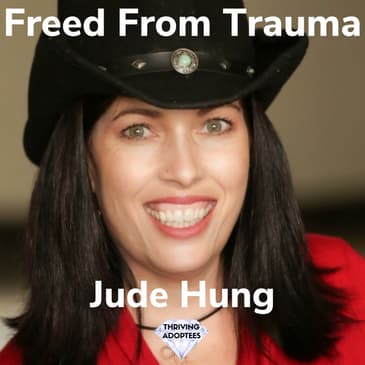
Has trauma imprisoned you? Created a trauma bound identity that feels like a life sentence? Listen in as Jude shares the hard won insights that have set her free. This interview was originally a Facebook Live. The first live an in person interview we've done on Thriving Adoptees. It's one of the most powerful and freeing of all 450 plus episodes. We hope it catalyses some insights for you.
https://www.facebook.com/jude.a.hung
https://www.instagram.com/finding_home_with_jude
Guests and the host are not (unless mentioned) licensed pscyho-therapists and speak from their own opinion only. Seek qualified advice if you need help.
Want to learn more about thriving for you, your kids, your families or your colleagues? Pick a time to talk here
[00:00:00] Hello everybody, welcome to the inaugural Facebook Live for Thriving Adoptees.
[00:00:08] Oh, oh, oh, oh, right, just move to again.
[00:00:12] A few, a few settling in issues here. So this is the first Facebook Live, the inaugural interview
[00:00:20] for Thriving Adoptees. You know normally it's just video, it's not an ordinary audio today's
[00:00:27] obviously video and this will become an audio too. So why are we here? Why are we here? Well,
[00:00:35] my good friend Jude is over from North Carolina and I've hopped over from from Leeds to
[00:00:44] to me because she's here with her husband and we thought well why don't we do a live
[00:00:50] interview, Jude hasn't been on the podcast before so we thought we'll do the
[00:00:55] interview long. Perfect. Do you remember everything? I believe so we're in Ireland.
[00:01:00] We're in Ireland, Dublin, yeah, Dublin, Ireland. Americans for some reason need to say that,
[00:01:05] you know like Paris France. Yeah, we've heard that there is a Paris, Texas,
[00:01:10] you know, there's a Paris in Texas but if you just say Paris and show me a
[00:01:15] an art to tree on for an Iful Tower, we know that it's France not Texas. Yeah, Dublin,
[00:01:21] Ireland, Dublin. So yeah, Jude and husband came over on the inaugural flight of
[00:01:28] JetBlue so you can have an inaugural flight of Dublin and then an inaugural version
[00:01:34] video interview. Right. So today we're talking as we always talk about
[00:01:41] thriving.com. We're talking about healing. So Jude, what does healing mean to you?
[00:01:51] Healing to me means having the freedom to be holy myself, to be fully
[00:02:01] myself true to my essence and to live free in that, to feel comfortable to be me
[00:02:07] and to enjoy life. Wow, freedom. So we're back. There is a French link here,
[00:02:13] you know, we talked about Paris France. What does it say? Egalité, Liberté
[00:02:19] and something, there's three things or one of them at the French is freedom, right?
[00:02:23] And I'll see in the state you've got the Statue of Liberty. So freedom. Yeah,
[00:02:29] there's quite a lot to unpack there. So what helps us get to that place?
[00:02:36] What's the what's the journey? It's been a really long journey for me, maybe like a
[00:02:42] 30, 40 year journey on 50s. I would say but there's been certain key moments
[00:02:51] and the biggest one which I've talked with you about was the the aha around
[00:02:59] separating myself from my trauma bound identity and realizing that I have a
[00:03:06] a wholeness of my true essence that is whole and free from the trauma,
[00:03:15] from the wound and that I can move and be in that free from all the the wounding
[00:03:23] and the trauma and the beliefs and the patterning that yeah,
[00:03:30] so it's entangled in that. So this isn't like a it's a bit strange ladies and gentlemen
[00:03:35] because we don't know it's I don't know what to look at the screen. We don't know where
[00:03:39] to look and pick where in their business range of hotel and people start to
[00:03:45] think we're going to be right. So this when you say yes on aha moment
[00:03:50] this is an aha moment in aha moments of extreme profundity.
[00:03:55] It's a right it's not just oh I know how to get to the airport faster
[00:04:00] it's something that's really deep in your soul yeah.
[00:04:05] Yes, it's it's like we've tied like an embodied aha and then there's an unfolding
[00:04:13] really or yeah there's an unfolding where it becomes you're unprocessing it more
[00:04:20] and more and more and more embodied and true and changes how I am interacting
[00:04:26] with the world outside of me. Yeah, and the world inside of me.
[00:04:31] So oh wow like that distinction so are you saying like rather than this being
[00:04:36] like just an idea in your head or something that you get in your heart
[00:04:41] that you're saying embodied so it is like a whole the whole of you
[00:04:47] the whole of your essence. It's not a flash in the pan or a nice idea
[00:04:55] or a bumper sticker or a theory it's something much deeper than that.
[00:05:01] It's becoming something that I own and know in myself like the cello might be.
[00:05:06] Yeah, yeah. So that kind of leads me in and the cell of your being
[00:05:13] because everybody talked yeah the cells have been not the cell of the prison
[00:05:18] right so you're talking about because you know everybody quakes this vessel
[00:05:23] van der Kolk you know the body keeps the skull right if you're talking about
[00:05:29] being at a cellular level you're talking about a departure of the trauma-based
[00:05:40] cells. A departure of the the trauma infused cells and a replacement
[00:05:47] with the whole cells is that way? New cells well yeah I would say I do believe
[00:05:53] in neuroplasticity and I know that the body regenerates itself
[00:05:58] and we can change the information within ourselves. So I do believe that
[00:06:05] that is likely part of the process I wish I like you know had a PhD in that
[00:06:10] but I don't so I don't want to be like yes but I do believe that.
[00:06:14] At least that in my felt sense, in my sensory awareness and my sensory
[00:06:19] experience is true. I am not who I once was and I'm not interacting with the world
[00:06:27] in the ways that I once did and as a result like I would say the proof is in
[00:06:35] the pudding like as a result my whole life has shifted and I'm enjoying life
[00:06:39] and I would say that my baseline of where I'm operating from has changed.
[00:06:45] I know I had shared with you that I used to think I was depressed
[00:06:50] and I lived from that place for most of my life and to shift to a much higher
[00:07:01] state of being feels still feels a little foreign like they still knew but
[00:07:10] it's been like three years now and it's very solid at the same time and
[00:07:16] I look at my life and like oh my gosh how did I get all this how did I get here
[00:07:21] you know and what I by all this I just mean feeling good I just feel good
[00:07:26] and I didn't know I was hoped it was possible I believed it was possible
[00:07:30] I didn't know that I would ever experience it in this lifetime.
[00:07:33] Yeah.
[00:07:34] So going back to the cells thing then I've heard that from a scientist
[00:07:41] our bodies have every is seven years a seven-year cycle within within
[00:07:48] seven years every cell within our body has been replaced so that would be
[00:07:55] kind of consistent if we were flushing out the trauma out of the cells
[00:08:00] and replacing them with whole cells if we and you've got this you've got
[00:08:05] this lovely distinction between the trauma bound identity and then what's
[00:08:11] what's the other bit what's the answer.
[00:08:13] I called our birth bound identity because that is we live on earth it is our human
[00:08:18] experience and I would say the mean one of the main differentiators
[00:08:23] would be coming from a fear-based anchor you know place and a heart-based
[00:08:29] anchor you know love anchored existence away.
[00:08:33] So I I love the earth bound one because people might think that we're
[00:08:39] actually on a different planet so I'm glad that you reminded everybody
[00:08:44] that we live on earth and some people walking in here may think that we're
[00:08:49] living on a different planet every night you know enough.
[00:08:52] So if that yeah I came up with an idea last week since you know I like my
[00:09:00] metaphors I told you about this this metaphor of a sponge right.
[00:09:05] Yeah so I was thinking about the I was talking to somebody about the in-eutro
[00:09:12] stuff that we that goes on often for as adoptees because so our birth mothers
[00:09:16] are stressed and are stressed out to put it politely often they're under a
[00:09:21] lot of there may be a lot of pressure and feeling out of sorts they know that
[00:09:28] they know that they've got adoption plan like I would my my birth mother had
[00:09:35] a plan before yeah before I was born so she knows that she's gonna be
[00:09:42] losing this baby that she's been in her for nine months and so she's got
[00:09:48] high degree of cortisol right toxic stress toxic stress in cortisol and I came
[00:09:55] and I was thinking about metaphors and I was thinking for some reason I came
[00:10:02] up with this idea of you know a bucket and a sponge and I saw if we're washing our
[00:10:06] car right. So we've got some hot water that's soap in it we've got a sponge we
[00:10:10] dropped the sponge in there and the sponge sucks up all the load of water right
[00:10:16] we take the we take the sponge out and we can't see we can't see the water in
[00:10:22] in the sponge but we can obviously squeeze it out right so I came up with this
[00:10:28] idea healing basically is squeezing the cortisol imagine that that sponge is
[00:10:36] us and the the water is cortisol that we've been we've been bathing in the
[00:10:43] huge in the uterus is all right in the uterus and you know yeah right and we've
[00:10:48] been we've been taking it pickled yeah we've been pickled in cortisol which
[00:10:54] leads us to do slightly strange things later on right anyway but so if we
[00:10:59] squeeze if we're squeezing the water out of the sponge at healing is basically
[00:11:05] getting the cortisol out of the system and maybe if we look if we say that
[00:11:11] the cortisol is in the cells that's that seven-year journey to which all our
[00:11:15] cells have replaced right well and it it really takes us back to
[00:11:21] biological basics of like homeostasis our bodies are always wanting to resolve
[00:11:28] to heal to be in wholeness to be in balance and so homeostasis is our body's
[00:11:34] natural like immunity and an essence to bring things back into balance and
[00:11:40] the that it's bringing our that cortisol like bring everything back into balance
[00:11:45] and it is always working toward that and so we often as children with trauma you
[00:11:55] know infant trauma relinquishment and abandonment trauma mother separation
[00:11:59] trauma we have lived in a state of imbalance our nervous systems have been
[00:12:04] dysregulated and so it is all trying to bring us back to and use everything
[00:12:09] that's happening in our lives to bring us back into that balanced state to
[00:12:15] wholeness so this is fizzy water right so imagine I just squeezed the sponge
[00:12:21] that's the cortisol and the reason that I'm banging on about this just we're
[00:12:26] separating who we are right the sponge from the trauma yeah in the shape of
[00:12:33] the cortisol and as Jude mentioned so eloquently talked about this home
[00:12:40] estatus homeostatus it's about going home home home yeah so I can't I can't
[00:12:46] pronounce it luckily got you to know so yeah so with homeostasis that kind of
[00:12:52] links into what your organization's called yeah home home yes yeah but
[00:13:00] finding home finding home yeah so that's what we're doing we're returning or as
[00:13:06] Nancy Vario says in the second book returning to home isn't it to harm to
[00:13:13] self yeah yeah I wonder why she described the book that describes the
[00:13:20] primal winds about that pick and it's got like thousands of scores
[00:13:26] and readers and readers and really loves that book and then but the the second
[00:13:33] book is about that high and hardly anybody's reviewed it yeah so if we go back
[00:13:43] to the start then so for you healing is about profound insights it has been a
[00:13:52] journey of profound insights and it's for me it's been a little bit like Dorothy
[00:14:00] the Wizard of Oz and you know I went looking outside of myself for all the
[00:14:05] answers and for healing I grew up knowing something was wrong I just didn't
[00:14:09] know that it had to do with my my roots an adoption and you know when I had
[00:14:15] that aha in 2019 that for me that was my coming out of the fog moment although
[00:14:21] there may have been all sorts of smaller moments getting me there but that was
[00:14:27] a huge aha to recognize it what was wrong and what I kept trying to heal was
[00:14:31] at these roots this root experience and then you know another aha around the
[00:14:39] trauma-bound identity that my identity had been so entangled with the trauma
[00:14:44] that I didn't really know who I was and I had to slowly untangle that and
[00:14:50] differentiate what was the trauma and what is me yeah and separate that out
[00:14:54] and tease it out and that was you know for me and everyone is different it was a
[00:14:59] process of about three years until I realized oh this is who I am and then
[00:15:04] that really shifted everything from yeah yeah so it was a case of mistake
[00:15:12] an identity I think you know and I did change my name after coming out of
[00:15:18] fog and I think yeah that could be why so many we do we change our name and
[00:15:23] it I think it is taking claim and claiming who we are and you know our identity
[00:15:29] like yeah so going on coming on with the identity thing it's a case of
[00:15:37] mistake an identity and also some might say like identity
[00:15:44] what most definitely you think about it right so what's true I'm all identity yeah
[00:15:50] we've been given a false identity but on a couple of different levels right
[00:15:53] yeah so the name the name right yeah so I was David Anthony flower and now I'm
[00:16:01] Simon Jonathan I wasn't given a name I was the baby I'm afraid sorry for
[00:16:12] little Jude little Jude's parts yeah parts how do you get on with those parts
[00:16:19] you know that parts work the parts work I have heard about the parts work and
[00:16:24] I it's to me it's a little similar to shadow work or inner child right like
[00:16:30] the way we are relating to different parts of ourselves and pieces and
[00:16:34] aspects of our psyche or yeah and what is interesting because I have done shadow
[00:16:42] work a lot of that and inner child is as I became more whole that kind of
[00:16:49] connecting to pieces of me fell away and it's like I'm just whole like I just
[00:16:53] connect to me as a whole that have fragmented and so I find that interesting
[00:16:57] that those things kind of just yeah and I'm guessing that your first mother
[00:17:04] was told not to give you a name well my circumstance her circumstance which
[00:17:11] also is mine was that she was right and so and then found herself pregnant
[00:17:19] and in 1968 abortion was not legal so she found herself in a pretty difficult
[00:17:26] situation where she didn't want to connect with the baby inside of her at all
[00:17:31] right so yeah right and it's also I'm sure was encouraged isn't she
[00:17:37] brave I you know I'm sure she was encouraged also because they don't she
[00:17:46] wasn't gonna keep it to not connect and I think it just made it easier just the
[00:17:50] baby you know the baby yeah that will tear that will tear yeah well that used to
[00:17:59] bring up a ton of emotion in me and now it still can and today yeah yeah
[00:18:07] because one of my ways I kind of summed that up is you know healing is being
[00:18:16] triggered less yeah and and I guess be most specifically to tie into what
[00:18:23] you just said not being triggered by the stuff that used to trigger us yes I
[00:18:30] think when right being triggered means that our nervous systems are being
[00:18:36] activated and becoming dysregulated right so homeostasis is being
[00:18:40] balanced so when we still have emotional energy left from a trauma in our bodies
[00:18:47] and we are activated it's trying to release some of that that energy right we're
[00:18:54] releasing that energy and over time it will become less right over time if we
[00:19:00] actually process it like so we can either why does nobody else summed up so
[00:19:04] well that you did I have no idea so it can either be on a loop it can either be
[00:19:11] on a loop that we're replaying over and over or we have the aha moment that shifts
[00:19:18] it and it plays out and it releases right and then it happens less and less so
[00:19:23] how would you relate that back to my sponge and the thought of well it is it's
[00:19:29] like the body is trying to release it a little at a time and I think it's it's
[00:19:34] really the body's wisdom because I've heard this and I don't absolutely know
[00:19:39] if it's absolutely true but I have heard like if if the body were to release it
[00:19:43] all at once it would damage us like it could it would be too much for us
[00:19:47] it's so so much energy and so it's it is releasing bits at a time and
[00:19:54] sometimes big parts at a time yeah yeah what we can handle we build capacity
[00:19:58] and resilience over time and we can release it more and more so the the
[00:20:04] extension of the metaphor that's popping up into my head is it's almost as if
[00:20:08] as another part of trauma trauma puts the sponge in a plastic bag right you know
[00:20:17] when because when you buy a sponge often it's it's in it's in like
[00:20:22] shrink film shrink wrap the water and we're kind of so a part of the trauma is it
[00:20:26] kind of seals us off it seals the sponge it seals the sponge in its plastic and
[00:20:32] if it seals it's plastic then the cortisol ain't gonna come out is it no
[00:20:38] it's just gonna stay stuck well and sometimes that is part of our protective
[00:20:44] coping mechanisms right to replay the trauma we kind of get trauma lenses
[00:20:50] yeah that we see the world through like for me it was a band-a-man and I kept
[00:20:57] replaying the abandonment story that was my narrative and it is oh you know
[00:21:02] everybody abandons me the world abandons me and so I would end up seeing that
[00:21:07] everywhere I went and giving that meaning to things yeah it was a band-a-man
[00:21:12] so touched on that with Jeff I was telling you about the interview with Jeff
[00:21:17] Fawning out in LA last night and I wasn't in LA I was just in Zoom in the
[00:21:23] house in Huntsyclap but he was he was talking about the lens I think it's a really
[00:21:29] good metaphor for how we see stuff and my favorite mentor teacher guy at the
[00:21:37] moment this group of sparring guy he talks about the fact that if we've got
[00:21:44] orange glasses on glasses on then snow appears orange yeah when clearly it's
[00:21:53] white so can you I think that especially true for adoptees or anyone that has
[00:22:02] early childhood trauma because our personality was not formed prior to our
[00:22:08] trauma so we don't have a before to go back to and say wait I'm perceiving
[00:22:12] things differently than I used to before my trauma so so it is our normal so
[00:22:18] we think my glasses my lens is online for a fine I don't need to take these off
[00:22:24] and see differently right yeah it's a bit like the you know that old story
[00:22:30] about that if you put a frog in cold water don't do this yeah but yeah it
[00:22:39] doesn't it doesn't sense the water but if you put it in a hot put it into a
[00:22:45] hot thing it jumps right out yeah just think develop it done that somebody did
[00:22:50] it and we did it to come up with the story yeah so if healing is about these
[00:22:57] profound insights and nobody talks about that either didn't really do they say
[00:23:02] all healings about therapy or healings about and connecting with fellow
[00:23:07] adoptees and healings about reading a book or so they kind of like they're all
[00:23:13] talking about the strategies they're talking about the strategies rather than
[00:23:19] I don't know that they think they are hard moments it is because but those
[00:23:23] things that the means to the end the end is healing the end is an insight
[00:23:28] yes and and I yes it's not just once and done is that percolation isn't it yeah
[00:23:35] it is the percolation of the idea it is that spiral like a spy I call that
[00:23:41] spiral of growth but you know I think our body I like to call it a compass or my
[00:23:47] enchanted compass but it is the guidance system that we have been given in
[00:23:51] that homeostasis I believe prompts these aha moments and what those
[00:23:56] moments are is the unconscious becoming conscious it is something the body has
[00:24:03] known and operated in and it's been separated from us in our unconscious that's
[00:24:08] the young question until they oh it is calling I mean yeah I love yeah and the
[00:24:15] unconscious if you look at the iceberg picture is you know it's like 90% is
[00:24:20] under water and that's our unconscious and that is driving our everyday choices
[00:24:25] and actions and so much of our life and then the conscious part is like 5-10
[00:24:30] percent it above the water and it operates at a much slower speed I have this
[00:24:36] information somewhere I'll get it to you and the unconscious part is like tons more
[00:24:43] information at a much higher speed it's really interesting but those aha
[00:24:48] moments is it's our unconscious becoming conscious and then once it's conscious
[00:24:53] it's in our awareness and we can begin to resolve it okay but when the unconscious
[00:24:57] we don't know it's driving and we don't know so that I don't know I don't have to
[00:25:02] talk about this really here I keep it here I go I do you talk about that recently
[00:25:06] coming out of the fog is that isn't it it's one of those moments when we
[00:25:13] become conscious of something that we were unconscious of before and an idea
[00:25:19] that's coming to me a lot at the moment is the fact that the first one is the
[00:25:24] biggie on this but then for the rest of our lives we will be yes this different
[00:25:31] the different levels of trauma will be surfacing yeah we'll be coming so well
[00:25:37] that kind of fits in with your metaphor for the iceberg so the iceberg is going
[00:25:41] to be coming further more and more the iceberg if that's the that's the sea
[00:25:45] more and more of the iceberg is going to be revealed and we'll see more and
[00:25:50] more of it yeah and also I guess it will melt if it's sunny it will melt if it's
[00:25:54] sunny and really I think that's the the human journey I don't think that's
[00:26:00] only adoptees I think that's the human journey of making the unconscious
[00:26:05] conscious right and living from a more conscious place
[00:26:12] more wholeness right or yeah well it's pretty deep kind of deep that's where the
[00:26:22] good stuff is isn't it yeah that's where the good stuff is so what do you think
[00:26:29] oh no before I asked that can you take us through like the what you know just
[00:26:38] the the the granular detail of what happened on that do you remember that
[00:26:43] moment you talked about that memory three three years ago can you give us a
[00:26:47] bit of context and time slow it right down for us when I separated out from my
[00:26:55] trauma band I couldn't yeah yeah I had been working with a friend who works with
[00:27:03] trauma and energetics and we were talking about the trauma bound identity
[00:27:10] and it wasn't really named yet Michelle Frank's I'm gonna give you a shout out
[00:27:15] and thank you Michelle thank you Michelle and in the talk about the
[00:27:22] energetics of it we were talking about like fascia the in the human body and
[00:27:26] the entanglement that happens if you have a physically acute injury
[00:27:30] energetically it's much the same and she was like you know it's like your
[00:27:35] identity is trauma bound and I was like that ding ding ding ding that's that's
[00:27:40] it like that's the name and so once we named it and I could begin to
[00:27:45] understand what was happening with my trauma and how it was playing out and
[00:27:49] how entangled my identity was it was a short time after that I had like a huge
[00:27:59] a big relationship abandonment a relationship ending and it felt like this
[00:28:05] huge abandonment and it really mirrored that first wounding to me and because of
[00:28:13] that life experience I would and the understanding that my that my the role
[00:28:19] the trauma was playing as I went through it I was differentiating like I said
[00:28:25] what's my trauma what's really who I am and so as I went through this
[00:28:30] experience that felt like abandonment rejection and I was very purposefully
[00:28:37] differentiating things and journaling and and feeling one of my feeling my body
[00:28:43] I was almost like tearing apart the trauma bound identity from who I was and
[00:28:49] I could really feel it even in my body and so it was almost like through the
[00:28:59] abandonment and looking at it living through it in a different way from a
[00:29:04] different perspective I was able to really separate out from the trauma bound
[00:29:11] identity and pull away from it and begin to choose differently I'm gonna live
[00:29:17] differently I see I could see it very clearly so the first step was the
[00:29:25] insight of how a trauma bound identity and then the second step was repeat
[00:29:33] then the second event was was a repeat of the the loss the abandonment stuff
[00:29:42] yeah and you put those two things together yeah so do you remember putting those
[00:29:48] do you remember when that was the moment when you did you wake up one morning you
[00:29:53] thought I put those two things together or do you know I think you know by
[00:29:58] having the language it was in my conscious awareness okay right and so it
[00:30:03] gave me the scaffolding gave me the path like I could look at the abandonment
[00:30:09] which you know I've gone through so many bandaments in life and there you
[00:30:12] know I kind of was seeing it in a lot of things and it was that I was like oh this
[00:30:19] isn't about me this is about that person what they need and it it was no
[00:30:23] longer about me being abandoned so having that languaging enabled me to go
[00:30:28] through what I would have called abandonment in a different way and then after
[00:30:32] it was all done and I processed it I was like oh my gosh I didn't handle it from
[00:30:37] my trauma bound identity I just handled it as me as Jude you know and and I
[00:30:43] could see what was the trauma and what was me and so you know and then the more
[00:30:48] you work through life that way the less that affects you at all yeah yeah so is
[00:30:55] a big glimpse it was more than a glimpse was it yeah yes
[00:31:02] like in in three or four words it's not taking abandonment personally not
[00:31:12] taking it personally it's not about it was never about me not even the first
[00:31:18] abandonment it wasn't right my mother was right it's not about me had nothing to do
[00:31:23] with me there it was the circumstances and the times in the choices that she
[00:31:29] had to make and the people around her helped her make or told her to make
[00:31:33] rightly it was never about me ever so what do you think it wasn't personal yeah
[00:31:42] so what do you think stops us having those insights or what has stopped you
[00:31:53] I think you're insights because she's talking about three years ago yeah and you mid-50s
[00:32:03] why did it take so long um I thought I've thought about that myself I have to I have some theories
[00:32:09] but I'll share just from my personal experience I think the body will like kind of allow
[00:32:20] what you're it's about capacity building like what I was able to handle you know
[00:32:25] you're talking about an infant that went through something that was so traumatic and terrifying
[00:32:31] and had no context for that kind of trauma and so my body our bodies took in a lot of cortisol
[00:32:37] we stayed in that state for a very long time at least I did and so I had to capacity build all
[00:32:44] these years to be able to really face the the largeness of what my body had been caring and
[00:32:51] went through as an infant so it's the body's power over the intellect is it I'm seeing you know
[00:32:58] I'm saying insights I'm talking about seeing it I'm talking about seeing it you're talking
[00:33:02] about it being like embodied yeah a system flooded with cortisol rather than just a nice idea
[00:33:11] yeah the amount of grief that I was caring personally for I had to build enough capacity to release
[00:33:16] that that amount of grief was very heavy and the anger you know so I had to build capacity
[00:33:26] to release it and I think sometimes the body just lets us release little bits as you said
[00:33:30] capacity because you said if you said earlier on didn't you that if we talk if it all came out in one
[00:33:35] day it would be much better to be too much you wouldn't be able to handle it I think we'd have
[00:33:38] an until breakdown yeah yeah so I'm thinking of us a I'm thinking of a swimming metaphor
[00:33:47] okay right and so do you know how far it is from England to France across the channel
[00:33:52] I did learn that in this sport but no I don't all right well why would you be interested in
[00:33:55] I don't know why they've been interested in English geography British geography why would you
[00:34:00] be interested in yeah okay it's 22 miles approximately and that's the day of swimming yeah people do
[00:34:06] swim and they I it was one of my dreams yeah one of my goals to swim but then I found out how much
[00:34:14] poo you have to swim through and jellyfish and I just thought no that doesn't sound right fun
[00:34:31] and so it's sort of it's like so you know capacity building in this analogy you know you get
[00:34:40] you get your two length badge right so you've swung 50 yards or 50 meters and then you try
[00:34:46] and swim the channel you know you don't do that you kind of build up to it don't you yeah yeah
[00:34:52] yes and when the when the ego or psyche like identifies with the wound I think it's very hard to
[00:35:03] let that go it becomes an existential crisis right the ego identifies with the wound yeah okay I
[00:35:13] think there's something big here so can it explain that a lot more maybe
[00:35:21] so our our ego has different identities and that we you know we put on our our business identity
[00:35:28] we might put on our father like I'm a dad now and you know so we have different roles
[00:35:34] roles that we play and one of our roles as an adoptee orphaned archetype role you know is the wound
[00:35:45] so we have that that is it's part of us and to be whole we have to let that go we think that
[00:35:53] we are trauma yeah so that's the trauma found identity so to let that go it's like letting go a
[00:36:03] huge piece of us we have almost have to grieve that even or release it and you know that that's not
[00:36:11] who we are that's a big deal that's existential you know yeah so I've heard again this is Rupert Spira
[00:36:19] thank you Rupert and he's got a great metaphor for this which I think is kind of similar like so what we want
[00:36:31] um it's the mouth to the flame right so the mouth is the ego and the flame is who we really are
[00:36:41] so okay the the the the mouth wants and more than anything else to be happy peaceful that sort of stuff right
[00:36:51] and so it's drawn towards the flame okay and then it gets within about two inches of the
[00:36:56] flame and it stops because it realizes it has to die into the flame yes and that's when it it really
[00:37:06] really kicks off and you were talking that's really good you were talking about thank you it's not
[00:37:14] mind-through but it's that's it that's it that's it right okay so you were talking about it's the ego
[00:37:20] death and it can cause a dark night the soul and you know who am I so you were talking about
[00:37:29] conversation I had with Heidi Heidi Marvel's from Paul By The Root yeah and you said that this might
[00:37:40] yeah you might have yeah that could be so I was explaining some of my metaphors to her and she's
[00:37:46] thinking this is gray yeah and and quite often after we have these are our moments then the ego comes
[00:37:55] back with the vengeance again because it's it's been thinking this stuff suffering this suffering for
[00:38:02] ages yeah and and and it says well I've got to 52 or I've got to 48 I've got to 48 and I've been
[00:38:12] thinking this stuff for the last 47 years 44 years whatever it is and and now you're showing me a
[00:38:21] whole new world you're allying and that's it so that night of the soft it's the fight it's the fight
[00:38:33] back yeah they call it ego's got back lash yeah ego back lash well yeah and honestly the ego sounds
[00:38:43] like a rocky movie you know ego is our like filter between our inner world and out of world and I think
[00:38:51] we we end up putting too much especially Western we put so much emphasis on the mind you know so it's
[00:38:58] taken on more of a role than it was meant to have and its role was to keep us safe it's role to keep us safe
[00:39:09] yeah and and does that is that the but we gave it all sorts of like deciding like decision
[00:39:17] is that that's the stuff that keeps us stuck in so that's the clean film on there is that the
[00:39:22] clean film on the sponge maybe and in that it does it keeps us stuck because it keeps it in our
[00:39:29] subconscious our unconscious right instead of letting it out into our awareness right why would
[00:39:37] it do that because it wants to keep the role once you play in the role the same role if I play the
[00:39:42] role I'm safe yeah and we see be out if we see the man behind the curtain right so I'm feeling
[00:39:51] the need to go back to your wizard of odds metaphor yeah so what happens I think there's something
[00:39:59] there is if you after you see the so you know you have the great powerful wizard of Oz and he's all
[00:40:06] scary and then you just see it's a little man behind the curtain and he's not so magical
[00:40:12] and then he still promises to help her get home but he doesn't get her home you know who
[00:40:17] get their home she does she's like she's got the shoes with her and Glenda the Good Witch says
[00:40:23] you have the power within you all along it's inside of us it's inside of us so I'm thinking about
[00:40:30] the so the wizard of ours right so I'm thinking about the adoptees an adoptee equivalent
[00:40:38] she wasn't an adopte what do I think you have I seen that film all the way through
[00:40:50] because there's a lot of films I haven't seen all the way through and sound of music for one of
[00:40:55] I'm just thinking about what if we were to kind of we could what if we were to make it rather than
[00:41:01] the wizard of Oz yeah yeah and the big and he's a scary wizard isn't he as well okay yeah so
[00:41:10] the I'm trying to think of like an adoptee specific equivalent for the wizard of Oz more for that
[00:41:19] three I don't know I like I like to order the analysis or my they're my go-to people but um
[00:41:26] I don't know and what Alice's mother you're with Allison I'm I'm thinking like
[00:41:38] Harry Potter well no I'm thinking I'm yeah the grim reaper
[00:41:44] well because he's got that um sickle and what do you do with the sickle cut this cut big cut things
[00:41:55] right and what happens what what does a cut what's another word for a cut I don't know what's
[00:42:00] another word for the cut that's you that's you very wound primal wound so what we're saying really
[00:42:09] what the grim reaper the grim reaper yeah well he's killing it's killing our identity
[00:42:17] he's killing our it's putting it's putting it's using his sickle so put a um and
[00:42:30] and and this is we're lucky we're joking about it yeah but the adoptee suicide right oh yeah
[00:42:44] that's true that's how you know that's a down that's really because it's that's very um
[00:42:50] it's very real and I don't know if you ever had suicidal ideation but I did it's very real
[00:42:56] and and I do think it goes back to those initial moments of terror and feeling like we're going to die
[00:43:07] um I know through through different like I did EFT and that came up and I re-experienced some
[00:43:13] of those infant feelings yeah too much emotional freedom technique it's happening
[00:43:21] and I have a practitioner who specialises in in her child and so she was able to work with me there
[00:43:27] it was good yeah yeah yeah that's very real um I'm thinking of an adoptee a Brit adoptee called
[00:43:38] Joy that um I interviewed ages and ages ago yeah and she was found she was a twin and she was found
[00:43:47] in the bush in somewhere in Africa sorry I'm always and by her maybe by a mum and dad who were
[00:43:56] missionaries or something and then adopted into the UK you know Trans-Rational Adoption
[00:44:02] all that goes with that identity confusion but yeah she was found next to her dead twin sister
[00:44:10] that's heartbreaking well and I think they're you know why did I survive there a lot there that's
[00:44:18] that would be very hard that would be very challenging to carry that's challenging yeah yeah what do
[00:44:26] they call it survivor skill survivor skill I think there can be healer's guilt as well hate
[00:44:32] and skill well at least sometimes I experience it like like um be like I said in the beginning I didn't
[00:44:44] I was hoped and believed that it's not like you just get to the other side it there's always more but
[00:44:51] that I would be able to feel the way I do now about life and myself
[00:44:57] but even when I was hoping and believing there was a piece of me that didn't think it was possible
[00:45:01] and so then I get there and I then sustain it for a few years so I know I'm like sustaining it
[00:45:10] and holding it and um so it's not just gonna go pff and then I see you know I work in our community
[00:45:18] and I see where people are yeah and and I can have I feel like I want to keep my story in or I
[00:45:26] don't want to share it or I don't want to seem too happy because I know the reality of what they
[00:45:31] carry and what they live with and have lived it I've been there done that and so I kind of sometimes
[00:45:37] will temper it down so that's another and so it's another kind of ego thing is it it's like
[00:45:44] it's like yeah yeah um like we feel uh it could be an extension of the wound wanting to fit in
[00:45:53] wanting to belong yeah right because there would be nothing worse and I have come up against this
[00:45:58] and it's been made very clear to me through my own inner understanding that there would be nothing
[00:46:02] worse uh I think for an adoptee than um to be abandoned by their own tribe which is adoptees
[00:46:11] right like oh well you can't be that well bye bye bye yeah who's she is bye bye yeah uh oh yes
[00:46:21] toxic toxic positivity yeah that could be said for sure that could be said and so but that's not real
[00:46:29] that's yeah but that's gonna yeah yeah I had this strange moment about I think it was about six weeks
[00:46:40] ago two months yes I go when I felt I just spent time looking at stuff at the social media and
[00:46:50] and there's so many advocates out there trying to get the message across to change to change these
[00:46:56] this uh to change the narrative so right you know yeah you're you're under the
[00:47:02] comment rainbows and unicorns is wrong you know that but and so we've kind of and I was thinking
[00:47:11] this doesn't I think you know a one level subgroup this doesn't affect me by ego science it's not
[00:47:18] done affect me and then it all landed on me um one um it was a Monday afternoon I've done a
[00:47:26] couple of calls and it just I just felt the world I felt all the I felt all the stuff on my shoulders
[00:47:36] and I and it was I guess it was me coming out of the fog about how I feel that no that basically
[00:47:46] I've been I've seen this advocacy stuff and it's been triggering me and I've been thinking that was
[00:47:51] above that I'm not gonna activate me yeah not that's not gonna yeah yeah yeah of course of course
[00:48:03] you know we think we're beyond something and then it will hit some other little area
[00:48:10] and so the beauty of that is what's happening as it's coming into your awareness to be seen to be
[00:48:16] resolved to be yeah that with yeah and it's almost as if that that resolved itself pretty quickly
[00:48:29] so you know when you talk you talked about the um the trauma bound identity and then this
[00:48:37] there's that yeah no sorry the you talked about spotting the truth hearing the key the key
[00:48:42] the three key words trauma bound identity yes yeah um and then the then the abandonment
[00:48:51] of this the end of this relationship and you put those two things together yeah
[00:48:57] um it it's almost as if as I look back on that that that moment of a feeling the world on my
[00:49:09] shoulders and really recognizing it it it came that came to the surface really quickly
[00:49:17] and then it didn't take a long time to heal you know it came up it came out into the light I think
[00:49:24] oh I've done that whereas years you know maybe a couple of years ago I would have sat
[00:49:30] that I would have sat with the world on my shoulders for maybe two days maybe two weeks
[00:49:37] yeah not not like two minutes like it did then so it's it's it's almost like healing
[00:49:45] um it gets faster what's healing get faster yeah I think that's the capacity building you've built
[00:49:50] capacity right you've built resilience so you respond you are resilient right there's a difference
[00:49:56] between being reactionary and resiliency right or being in survival and getting through
[00:50:02] and resiliency resiliency feels completely different right then just getting through I've been
[00:50:07] I'm strong arming through um so you've built capacity you've built resilience you're differentiating
[00:50:14] I thought the languaging around all of this really helps us and we're skill building
[00:50:20] uh with okay well I know how to manage this I know I know what this is I've seen it before
[00:50:27] and it passed its right so so yeah you're you're resolving it much quicker
[00:50:34] I know I get it full of yeah I'm still oh so since we awareness we are entering into an age
[00:50:42] of greater sensory awareness making these connections isn't there isn't there something here about
[00:50:48] being becoming consciously unconscious what do people say about that consciously unconsciously unconscious
[00:50:58] then with consciously unconscious yeah we're shifting right that what's unconscious to
[00:51:04] greater consciousness but you're breaking it I'm just thinking about that's back quicker
[00:51:09] but then you're breaking it down into the different things the resiliency and the
[00:51:12] capacity building and etc and I was thinking like surviving to thriving the shifting
[00:51:19] you know getting back getting through to yes right we want to get to that where we feel like we're
[00:51:24] thriving so yeah so why is nobody else talking about this stuff I think some people are but not
[00:51:34] no but I mean it's mainly happening in therapy groups I guess I don't know about I think therapy
[00:51:39] they like it to just keep going I'm not so sure I don't know like when I've had just talk there be
[00:51:46] it just for me it's been it's been the therapies that um you know that are somatic in nature or energetic
[00:51:55] that have really created the biggest shifts for me personally I wish I had a quit that's a pound
[00:52:04] I wish I had a quit I wish I had a pound for every time I'd said something like talk therapy doesn't
[00:52:12] work if we don't have words or talk therapy doesn't work on pre-verbal trauma over the last kind of
[00:52:20] three or four months because I've been getting that message drip that drip that every pretty much
[00:52:26] every therapist I spoken to is there's no it's said that said that to me talk therapy doesn't
[00:52:32] work so you need to do the somatic stuff so that's one thing okay yeah I think therapy is supportive
[00:52:38] it helps especially if you're going through a healing process it helps to talk it out loud there's
[00:52:43] something not saying things out loud as well that makes them more solidified so you know I think
[00:52:49] that's why support groups for adoptees and I'll give shout out the fireside is really good
[00:52:54] about fireside um things like that are really great hello Amanda because obviously Amanda look at the others
[00:52:59] yeah Amanda introduced us you know so um you know there's so many components
[00:53:07] so people don't they might they may not they don't feel alone anymore they feel
[00:53:14] valid agent but well that thing thing thing validation the thing we have to be acknowledged yes
[00:53:20] that's right that's true so the acknowledgement the validation that somehow helps the growth
[00:53:27] the expansion the healing the resolving um kind of almost exponentially when I have seen that in
[00:53:34] and like facilitate a small group when I see that happening I that process of validation seems to
[00:53:42] speak things along and yet and yet they can keep a stock on it it can not the validation more but yes
[00:53:52] sometimes yeah okay so I don't like that whole other thing but yes that's all I think so
[00:54:00] the only bit that I can see for this I can always speak for for myself I've had a lot of coaching
[00:54:08] over the years and I was very resistant I think to change early in being coached or bring
[00:54:16] coach for probably 20 years like business coaching stuff yeah and and
[00:54:23] um what I coach what a great coach does what a great coach has done to me for me is they
[00:54:35] um they they find out where I am and and at some point they invalidate my beliefs or they get
[00:54:47] lead to no they get me they ask me a question that gets me to invalidate my beliefs gets me to change
[00:54:54] my beliefs gets me to see something yes yeah and so and and that's the bit if I put that bit
[00:55:04] with the validation of it so I'm putting the validate I'm talking about validation within
[00:55:09] business coaching and I put that alongside the validation of the traumas I just think
[00:55:16] like isn't validating the experience not the trauma what's the difference what's the difference
[00:55:22] the difference would be because I think at least in my experience within the adoptive realm
[00:55:30] the and in my own life I'll stick with that even the I was living an outer experience and an inner
[00:55:37] experience of like within my family growing up you know so what I was experiencing in my inner
[00:55:48] world had never really been validated until I was in adoptive support circles and groups and so
[00:55:56] having that um validated that experience that something was a miss that something was actually going on
[00:56:04] it's the I'm really important I'm not going mad I'm not yeah like this is real this is a normal
[00:56:11] response to an abnormal yeah and so then I can begin to process release and move on
[00:56:20] right and I think what you're trying to hit at is sometimes we're in those circles and we stay
[00:56:25] at that space of just talking about it and not really processing integrating building capacity
[00:56:30] and moving on why we stay stuck in the room no nobody tells us that we're not at home or yeah
[00:56:37] we're not our trauma right nobody makes that until until they do
[00:56:45] no different shapes between the trauma-bound identity and the
[00:56:49] best standards well no one says there's a whole skill set that you need to move on or to
[00:56:55] or to operate differently in the world because you've been operating one way so now there's a
[00:57:00] other way to be all they write if you're the non-subariate book should write that book about that
[00:57:06] thick on that and it's all it's all about how we feel not who we are
[00:57:15] okay how we feel not who we are yeah it's all about it's it's totally
[00:57:22] psychological rather than essential well in Jesus psychologist right we are not our thoughts
[00:57:27] we are not our feelings we're not even this body right we have a core essence maybe some people
[00:57:33] caught spirit or soul or you're higher self whatever right if you think that's too we're
[00:57:38] consciousness or consciousness awareness I like that even more actually but that essence is
[00:57:47] really who we are and it is and we have an intrinsic worth and value right that yeah so it's
[00:57:56] I'm trying to get it's unwinnable it's unwinnable yeah it's that bit where
[00:58:04] is the difference between I think you might like this the the the content
[00:58:15] thoughts feelings so second and the context
[00:58:19] yeah so it's the it's the screen the screen is the context for the movie which is the content
[00:58:34] thank you Heather good to see you too hi from Ireland Heather
[00:58:42] so yeah content versus context so it's yeah it's a well context was in the work for awareness
[00:58:54] context is awareness and context is awareness and then content is what is that what's on it yeah um okay
[00:59:00] so here's one here's one for you right I'm going to ask you question matters like people say
[00:59:06] adoptive say um we're we don't come as a blank slate we don't come as a blank slate meaning to the
[00:59:15] adopted parents in household yes we arrive and we're not a blank slate okay yeah so what's on the
[00:59:24] what's on the slate well and he when they're saying that there's there's writing yeah writing yeah
[00:59:31] there's writing on the slate yeah there's writing on the slate and the writing is trauma it's
[00:59:37] trauma but the the writing they're writing that's the writing and that's the difference in the writing
[00:59:42] and the slate yeah I love that and I think they're also saying no their biology is on that slate
[00:59:49] that they know like biologically in the body yeah that's the pre-verbal trauma so the pre-before
[00:59:55] they know like the pre-verbal trauma yeah is the writing on the slate so what we're talking about here
[01:00:05] is um well I'm back to my sponge and you're back to the slate but where the slate
[01:00:13] okay well yeah yeah I'm separating I'm separating what's on the slate to the slate itself
[01:00:21] we're not a blank slate because we're loaded we come to be loaded with the trauma so the sponge
[01:00:29] is soaked in cortisol yes and nobody knew and nobody knew within no in 1960s seven when I was
[01:00:36] up to 1968 that you were told nobody knew that nobody knew yeah yeah that's another one right
[01:00:43] because had our parents known there it would be different it would have been different they would
[01:00:47] we keep on saying this and you know the people are apparently doing the best that they can
[01:00:51] we're judging 20th century parenting with 21st century trauma
[01:00:59] that's time to bring it in I think unless you've got no that's the final thing to say
[01:01:06] and links in the show notes when this is an audio right to to Jude's socials and stuff
[01:01:13] and thanks a lot and thanks to the film I guessed on the ignore a inaugural in overall Facebook
[01:01:19] live thank you bye bye bye bye listeners for people listening to the audio cheers bye