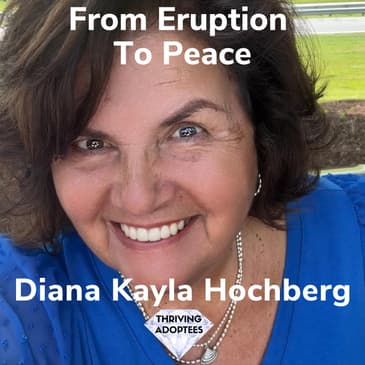
Finding out she was adopted at 38 caused a seismic eruption for Diana. The world disappeared from under her feet. Everything she'd believed about herself was lies. And the lies continued as she searched for her truth. Settle back for a masterclass in stubborn, persistence, acceptance and finally, peace.
DIANA KAYLA HOCHBERG is an accomplished photographer with over twenty-five years of experience in retail management and twenty years as an educator. Her life is a testament to the power of self-discovery and perseverance.
Diana was born in Montreal, Canada, and raised in New York. She holds a Bachelor's degree in Education and an Associate of Arts degree in Art History. Since 2017, she has been a member of the British Columbia Genealogical Society and the National Genealogical Society. Diana is passionate about genealogy and enjoys helping both adoptees and non-adoptees discover their family histories.
She is the proud mother of her son, David, her daughter-in-law, Erica, and her granddaughter, Harper, as well as her stepdaughter, Claire. Diana resides in Pawleys Island, South Carolina, with her brother Jesse and her Siberian cat Gatsby.
CONNECTED: Finding My Truth is Diana's debut book.
Giving Back
A portion off all proceeds or royalties from the sales of this book will be donated to the following organizations: National Association of Adoptees and Parents, Inc., Society for Adoption Truth, Elevating Connections, and Setting Scoliosis Straight Foundation.
https://www.dianakaylahochberg.com/
https://www.facebook.com/dianakayla.hochberg
https://www.linkedin.com/in/diana-kayla-hochberg-736104218/
https://www.instagram.com/dianakaylahochberg/?hl=en
Guests and the host are not (unless mentioned) licensed pscyho-therapists and speak from their own opinion only. Seek qualified advice if you need help.
Want to learn more about thriving for you, your kids, your families or your colleagues? Pick a time to talk here
[00:00:02] Hello everybody, welcome to another episode of Thriving Adoptees podcast. Today I'm delighted to be joined by Diana, Diana Kayla Hochberg. Looking forward to our conversation today, Diana. Thank you Simon and thank you so much for having me and creating this space. Yeah, you're a star. A bit of, I don't know whether you noticed how I pronounce the surname, a bit of German came in there that I have spent some time in Germany. Yes, actually I understand that one time it was Von Hochberg, but they took away the Von.
[00:00:31] All right, okay. Well that means you're aristocracy, right? Yeah, of course. Yeah, you know that. Yes. That's aristocracy. That's aristocracy. So, Thriving Adoptees, ladies and gentlemen, Diana is an adoptee, right? So what does, what comes to, do you like that word, adoptee? Well, you know, it's a little bit different for me. It's part of my story. You know, I'm a late discovery. Yeah.
[00:01:00] And for me, Thriving was, um, reclaiming that I was taken from me, my story, my identity, my name. I didn't know I was adopted, or in my case, black market, uh, until I was the age of, you know, I was a little past 38. Um, that moment, you know, it was, it was like an earthquake. It shattered me.
[00:01:25] Everything I believed about myself, you know, it just, it was just so shocking. It just cracked open. Uh, but I didn't stay broken. You know, uh, thriving isn't about being fine with what happened. It's about facing the truth, even when it's uncomfortable and choosing to live in it.
[00:01:51] It shift, you know, from survival to ownership, uh, from silence to voice, from being who others need to be, to becoming, I am truly who I am. There's a line in my memoir, if I may say, that captures it. It wasn't the moment I found out that changed me. It was the moment I decided to seek the truth.
[00:02:19] Anyway, even when people told me, leave it alone. Even when my records were fake. And even when the silence felt louder than the words. Thriving, it's not neat. It's not easy, but it's real. Yeah. You can tell she's a writer, ladies and gentlemen. That was, um, that was epic.
[00:02:52] So, what happens, I guess it's okay to say what happens when you thrive. Uh, well, I'm thriving and help me find the truth and willingness to be seeking no matter how many people tried to shut me down. And believe me, there was so many people. Um, my quest journey is a 30 year journey. It was an on and off.
[00:03:17] I discovered I was adopted, uh, offhand comment by a friend of my father's with an ex CIA agent. And how old were you when that happened? Um, almost 39. So I was 38. Okay. Right. So the whole thing came out in one, right? I thought maybe the. No, you mentioned being 30. You mentioned it happening when you were 38, but I, I, I didn't realize it was all, it all happened in that. Oh yeah. It all happened.
[00:03:46] It all happened at once. I was out in Las Vegas and it just all happened at once we were out to lunch and I lost both my parents that raised me very early in life. My mom had cancer when I was nine and she died before I was 11. And my father, um, that I knew he was, you know, he was, you know, he was my hero. Uh, you know, but I wasn't even 26 when he passed. And then, uh, unfortunately I also lost my husband, the male, the guy I was married to.
[00:04:16] Uh, you know, I was 36. So there was a lot, I had a lot of death in my life very early, a lot of changes and you know, you just had to be strong about it. But it wasn't just discovering that I was adopted. I was found out that I was trafficked. You know, I don't know. You know, I don't know. Because I guess to say trafficked because I was 21 days old. I found out when I was taken across the Canadian border. I always thought I was born in Manhattan and I was born in Montreal.
[00:04:47] And, uh, so my birth certificate is false. Uh, it's why I'm in black market baby. There's hidden transactions. Uh, there's no legal, uh, adoption. She never signed any adoption papers. So I guess when you asked me before adoption means to me, yes, my parents raised me. So in the adoption community, it's probably easier to say I'm adopted.
[00:05:13] You know, it's, you know, I toy with that back and forth a little bit. But the fact is there is no adoption legal papers, my birth certificates. I have several. Yeah. You know, like four. Right. Wow.
[00:05:31] So, but it sounds to me like you kind of a friend of mine, a mentor of mine actually used to say, you know, that, that most of us are, uh, are waiting. You know, we spend a lot of time. We're, we're, we're waiters. We're waiting for something to happen until, you know, we're going to be content. Um, or, you know, we're, we, we, we, we're putting off.
[00:05:59] We're putting off our contentment until something happens and something about what rather than creating it. Right. Um, so we're, we're waiters rather than creators, but something about what you said.
[00:06:19] Um, seemed to me like you, you didn't put, you, you didn't put your contentment, delay your contentment after you got the, till you got the truth. You decided to kind of put you first. Does that make any sense? It does. And I decided to, um, it wasn't just going to come to me unless you, I went searching for it.
[00:06:49] There's no proof that I was born in Canada trying to prove that I was born besides for finding out from the actual, he was a baby broker. Right. You know, and who confessed after talking to his lawyer before he even talked to me, because it had been so many years. So he wasn't going to go to jail. Do you know what I'm saying? But I was one of probably at that time, a thousand in Montreal alone. Yeah.
[00:07:18] Uh, you know, it just wasn't legal adoption. Uh, we can, you know, we can't help that. So thriving to me in a world that says you don't exist, it means going forward anyway. Does that make, does that make sense? Where, where is it, it's, it's keeping on going. It's persistence. It's, it's commitment. It's taking action.
[00:07:45] So what, what has fueled your, um, persistence? Well, I had to build a case. I wanted to know my roots. I wanted to know where I came from. I wanted to know, I mean, I was raised by, um, you know, middle class, modern, orthodox Jewish home. You know, and to find out, uh, I didn't do my DNA for many, many years.
[00:08:11] So I did the old school where you went to the library, where you research microfinch, where you asked relatives questions, you know, where you went out and you, you did your own investigating to piece together, uh, everything. And then surviving didn't look like piece at first, but it became an obsession. And, you know, there was grief, there was exhaustion. There was rage, but I didn't stop.
[00:08:39] I, I, I know I needed to know the truth. It's the only thing that was going to make me whole who I am today. Yeah. So was it always an obsession? I say some of the, I say to some people about what I do, you know, doing the podcast and stuff. I say on a, on a good day, it's a passion and on a bad day, it's an obsession.
[00:09:09] It, it, it seems, it, it depends how I am. Right. Does, does it feel like that to you? What, what did it, what, what did that? Cause it's a long journey, but what do you say? 30 years. Yes. Well, I didn't choose how it started, but I chose to continue it. Yeah. And then there were years. Um, and I talk about it. If I may reflect back to my book, there's years as a 15 year period.
[00:09:37] I had nothing when I did find my Canadian family in Vancouver, British Columbia. There was a period because of what happened after some reunions that I had to make a choice for safety reasons to separate myself from them. Yeah. And that was a 15 year separation. And then to decide to make the decision, it was time to go back and really go forward.
[00:10:05] And that's when I, you know, I would always did a little, a lot of journaling. So I was able to go back and then it was time to go and start making trips there and start pounding the pavement basically. And investigating and finding out because it's, I guess it's what you need to be a piece. I wanted to be at peace and, you know, hopefully it could also help others never give up. You never want to give up. Yeah.
[00:10:33] So I can understand that, uh, at 38 finding this information out, you know, um, it was like a, an earthquake. So, you know, people have pulled the rug. People have pulled the rug from your feet and, and, and, and you're, and you're looking, uh, you're falling into, uh, uh, an earthquake. You talked about deciding, be, be, I think, what did you say?
[00:11:02] Deciding not to stay broken. Is, is that what you said? I just felt like everything, you know, broke when I found that out. I mean, I denied that this was true. I remember calling my, my brother, he lived in New York. Um, I remember calling him and he says, I don't know what you're talking about. Of course you're my sister. Of course, you know, what are you talking about? He knew nothing. And I said, well, where were you? Where were you when I was born? He was away. You know, they had him visiting some relatives. So he didn't, he didn't know.
[00:11:33] Uh, and presumably he knows that he's biologically related or he wasn't. No, he's not. He's almost, he's seven and a half years older than me, almost eight years older than me. Yeah. So he's not, he now he's not, he knows that he's not another. Right. And he also found out, he also found out that he's adopted. And, but I was able through DNA. I found his birth family for him quite fast within less than nine months. But he hadn't been taught. Right. Yes.
[00:12:03] He's, he's in it. He's in reunion with them, which is nice. Yeah. Um, I'm happy for him. So you said something about not, not broken. What, what does that mean? Well, I just felt that, uh, everything was, you know, I was in the fog. I was in denial. Uh, it took a long time for me. I kept saying, no, this, this isn't happening. It's almost like a, almost like a nightmare at first.
[00:12:33] Yeah. Have you heard of, have you heard of, um, the Kubler, Kubler Ross curve? Um, yeah. No, I have to research that. I, it popped into my head the other day, right? So it's a, I think she's a, a grief therapist, uh, Elizabeth Kubler Ross.
[00:12:57] She, she came up with this, um, way of describing grief and it's called the Kubler Ross curve. That's, so it's, I'll put a link in the, in the show notes listeners in case, because you might be driving and you think, what was that woman that Simon was going on about? Um, so she, she created a, she set out this, this curve, right? She, that she noticed her clients were going through.
[00:13:26] Uh, and the reason I mentioned it is because it had popped into my head a couple of days ago. A lot of people talk about, uh, as adoptees, as, as having, um, going through grief, right? So we've, we've lost, we've lost. Yeah. And I had a lot of grief. I had grief with that, but I had a lot of death early in my life, which. So it's all, it's all layered on top.
[00:13:56] So we're just, you know, it's almost like the bucket gets so full, you know, you just, all of a sudden it just, I remember having panic attacks. I went through the, a period of panic attacks, but I think by writing, especially writing my, my book and talking to people and just, you know, doing meditation.
[00:14:22] Uh, I do photography and just also the community, the adoption community. I mean, it's just been wonderful. And it's just to know that there's other people out there like me and you, it's just sort of helps. It helps get you back grounded. Does that make sense? It just helps you get back. And everybody's story is different. I take no, no story supersedes another story. We all have different stories. We're all like diamonds where each one is unique.
[00:14:53] Yeah. But, you know, the thriving adoptees logos, a diamond, right? Yes. So, um, I worked in jewelry for a long time. Okay. I just want to flick, but flip back briefly on, on this Kubler-Ross thing, because denial is the first stage. It's Kubler-Ross curve. So that's why, that's why I mentioned it. If people want to check it out. Right.
[00:15:16] Um, and there's a proviso really that she, she simplifies it. Um, but we keep on going, we keep on going round. She simplifies it. She doesn't say how, how long we're going to be in each steps. She doesn't say that it, sometimes it's more like snakes and snakes and ladders, shoots and ladders, you call it in the States. Right. So you go up and then you drop down and, um, you, then you go back again, drop up, you keep on going.
[00:15:45] Then you're, it's one step forward, two steps back. And that's the way that it, it works. But it's an interesting model to look at is this Kubler-Ross grief curve. So you talked about, uh, about writing, writing your memoir. So what's that done for you?
[00:16:08] Well, the process, the whole process, um, just learning everything and meeting everybody and just, you know, rewriting too, you know, because it's all about, you find out one thing, and then you find out that's not the truth. And then you do find out another truth, uh, because there were so many lies. And I had so many people kept saying, you know, close this can of worms. You don't want to have anything to do with it. Shut it down.
[00:16:38] So many people, and then not believing my story. I even dealt with journalists who, you know, this can't be, it can't be possible. Well, it is possible. Yeah. Why, why do you think people think that they have the right to tell us to stop, stop our, stop opening this can of worms? Is it self-preservation for them? I mean, why? I think it is for them or, you know, they were afraid of what they did.
[00:17:06] For instance, there was a driver that I spoke to, a driver that was with my dad, a friend of his, when they went to get the baby up in upstate New York, because they came through, you know, he couldn't, the baby broker couldn't just cross the border, you know, baby scooper, they're, you know, 1955. You couldn't just cross the border in the 50s. And here I am with a baby, a man. So she was with him.
[00:17:32] And first they went to Plattsburgh, New York, and then they went down to Lake Placid. And the exchange was made in Lake Placid. There were no papers signed. It was a business transaction. It was money. It was for, they gave her money if she needed some dental work. She wanted to go to college. And they gave her a one-way ticket back to Vancouver. You know, that's part of my story. But this took a long time to find out.
[00:18:01] And that was with, you know, really becoming friends almost with the baby broker, because what was different about him is I think he fell in love with my mother. So I think he opened up. It's a wild ride. Let me tell you, it was a wild ride to meet the man who took you across the border. You know, it's like, it was wild. Truly. Truly wild.
[00:18:32] Did writing this, because people often talk about writing a memoir being cathartic, right? So we get everything down, we get everything down on paper. You'd been journaling. So presumably the journaling was helping you make sense of what was. Well, it gave shape to the silence. You know, it helped me process everything, everything that was stolen from me, you know, and to find out.
[00:19:02] I mean, my mom's side of the family, my mom, they were from Vancouver, British Columbia. They were, you know, Ukrainian, and Ukrainian, Austria, and Poland. That's that's their background. And to find, you know, that out and to meet them and to learn some of their traditions and heritage. And I mean, I met my grandmother, she was, gosh, when I met her, how old was she? I don't know. She was in her 80s.
[00:19:32] She died at 90. But I mean, to find out she had a granddaughter, you know, and she's in her 80s. And she called me, my mother's name was Donna. She called me Donna because there was such a resemblance, especially, you know, you go back 30 years when she first saw me. I look, you know, the similarities, you know, that mirror that we sit, talk about a lot, that mirror effect when you look in the mirror. So many people, relatives that I met right away, they called me Donna.
[00:20:00] I met people that don't even know my story, call me Donna. It's crazy. Well, and there's Donna and Diana, quite similar kind of names. Yes. So what, but is that name, the name that you go by now? I go by Diana. Yes. Yeah. But what was the name that you grew up? Did you grow up with that?
[00:20:25] Well, my first birth certificate that they sent me, it only had a last name. There was no first or middle name. The second one had initials, DK. Wait a minute. And ready for the third one? No. Okay. Karen Diane. Right. Okay. And then I find out it's, then we also have Karen and Diana.
[00:20:50] So since, you know, a lot of times I used to hear the words KD, I never understood, but my mother's initials were DK. Donna Cole, Kate Koloski with a K. Right. So I found that interesting too. Now, isn't it processing all this that my first name and middle name are her initials?
[00:21:13] I don't know if that means anything, but you know, I think it's kind of, you know, old. Yeah. Where does the Hochberg come from then? Hochberg is my, it's the name I grew up with. My married name, I was married, was a white man. Right. Okay. So, but I had a hyphenate, you know, I use Hochberg. Yeah. Okay. So when you, you mentioned giving shape to the silence, what, what do you mean by that?
[00:21:44] Well, processing, everything that was stolen from me, you know, I wanted to, I wanted to get everything back. I wanted to, yeah. And the community has helped me, as I said, that I'm not alone. I also, my son, he helped. I have a son who helped ground me. I wanted to show him, you know, that you have to be honest. I raised him to be an honest, you know, he's a wonderful young man now.
[00:22:11] Oh, he's not a young man anymore, but you know, he has a wife and he has, I have my first granddaughter after 13 years. And it's, you know, I wanted him to know it's just better because you're always going to find out the truth. And that's how I raised him. You're going to hide something from me. You're going to do something wrong. Well, guess what? I'm going to find it out. And that's, you know, how I feel about that. Yeah. And, you know, I wasn't broken because I was adopted. I was broken because the truth was hidden from me.
[00:22:42] So for me, thriving would actually be no more secrets. Ask the questions you want to ask, answer them and stay firm. You know, so many people kept lying to me and not wanting to tell me. And I don't understand a lot of it. Well, I do now after finding out the end, I didn't find out who the biological dad was until January, 2023. So you could see how recent that was.
[00:23:13] Yeah. And that's a whole different. It's all the way up there. Yeah. And had he died, the guy? Or was he still alive or? I missed him. You know, I missed him, you know, by, you know, but I also that's another part of my story. I was told by my aunts who he was.
[00:23:39] So for years, I went searching for this man in Vancouver. Who? This is where the lie comes in. He was actually an American. So both parents weren't Canadian, like I was told. So that's another lie. And that was my, my own relatives, my bio relatives lying to me after, after they found me after we were in reunion. Yeah.
[00:24:07] You know, it's like, but you know. Was there a point at which you, because this, this was being really frustrating and, and upsetting and annoying. Did, was there a point at which you just thought, well, nothing else can phase me on this research, on this journey? Did you get to that stage? Or did it continue to hurt? When you find yourself, I mean, if it's, of course, was very emotional, and very like,
[00:24:35] Oh, you know, you want to like, sometimes you, you have to take it. The reason it probably took me so long to get to where I am now, because now I, I feel good about myself and I feel good about, you know, my, well, my story, you know, do I like who my father turned down to be? No, but we don't choose. We don't choose that. Okay. Would I have liked to have met him? Probably at least once would have been.
[00:25:07] Maybe I, you know, once would have maybe been nice. But knowing who he was. And then I'm also in my thankful for how I, who raised me. Yeah. I mean, I had a great dad. Yes. What my dad did, my dad that raised me, did he know everything? Did he know how illegal what he did? I'll never know that.
[00:25:32] You know, there are unanswered questions throughout my story, but you have to come to peace with what you want to accept, but I'm okay. He was a good man. He was a really good man and everybody loved him. Yeah. So, and he loved me. So I, as far as my raised dad, he, he's one, he's my father. He's, he's one of my dedications in my book. Yeah. Did you, did you manage to meet your birth mom?
[00:26:04] Unfortunately, I've never had the privilege to meet my birth mom. That's another part of my story. That's a little unknown. I don't know everything. I know 96% of my story. I had to come to peace.
[00:26:25] I had to be, I had to come to terms like, you know, what going to accept? And you have to let go. There were three possibilities about my mother to this day. Not one, but three. Three. What do you mean? Three. What are the three possibilities? Well, you know, is she dead? Is she not dead?
[00:26:55] She dead. She dead. You know, there's, you know, some possibilities there. Oh. So are you still trying to get to the bottom of that? Um, yes and no. Uh, it may be for, uh, I don't know. You know, I mean, that's a question I've asked myself a couple of times, but, uh, that's
[00:27:21] why the book to me helped me so much, especially, and, and you, and you'll get, you'll get it. As I said, I know you said you'd never have time, but I think you might have time for this. Um, did I say never? No. I think you're going to find out. I have a feeling it's a, I heard it's addicting. Okay. Uh, but it came at the end. It was okay. It's okay with what I did find out. I'm okay with it. Yeah.
[00:27:50] You know, you said peace. Um, yes, I am at peace. I'm at peace. Uh, I, I, I like where I live. I'm in a very peaceful community. I'm in a well, uh, everybody around me is very, uh, it's a positive atmosphere. And I think we need that. I think there's so much negativity in the world right now. So if we could find some positivity and peace, uh, it just helps us and helps us grow too. Yeah.
[00:28:22] But yeah, it was definitely, um, as you said at the beginning, it was definitely, uh, earth shattering. And I, and I know you've met, uh, you know, I'm friends with some, what they call NPs, you know, when people find out, I find a lot of times an MPE. I have a good friend I'd met here and we become friends and we've talked and it's very similar to a late discovery. You know, it's very similar. Except usually it's just one parent with them. Um, I have everything.
[00:28:51] I have the, as a friend of mine out in Denver, he said, you have it all. You have NPE, you have black market baby. You have, you know. So you've talked a lot about the kind of the external factors and the truth, uh, you know, and seeing, getting to the truth beyond the, beyond the lies, beyond the lies to, uh, to finding, to finding peace. But, um, what, what does it mean for you?
[00:29:21] Presumably the journey was very emotional. Uh, lots, it was a very emotional, lots of highs, highs and lows, frustration. Anger was what, what, what was the, what was the spectrum like for you? Well, it means finding, you know, especially now as an author, my identity, I found my identity and I'm not scared anymore. I was, I was a scared child. I was the child. I was shy. I was scared. I would never do anything like this.
[00:29:49] I would go behind, stand behind my father if he was going to introduce me. I was the shy kid. Yeah. You know, I, I, I don't run from anything. I don't cover, you know, you don't want to cover. Yeah. Story. I'm not afraid to tell my story. Yeah. What, what do you attribute the, the shyness to when you were a child? Well, you know, I, I think back and I'm, I'm going to share this with you.
[00:30:18] I, uh, when I was 10 years old, I was diagnosed with scoliosis. I don't know if you're familiar with scoliosis. It's a very, it's going to do with the spine. Yes. And I wore a terrible brace called the Milwaukee brace. It had metal going down here, here and in the back. And that was three and a half years. So as a teenager, I wore this brace. That was an embarrassment. You had to then get much bigger clothes to cover it.
[00:30:47] Uh, it was, but my mother that raised me, you have to keep in mind, I didn't know that she wasn't my mom. It seemed that once I was diagnosed with the, uh, scoliosis, she wasn't taking me to the doctor. Or the orthopedic or the hospital. It was my dad who was doing it all.
[00:31:11] It's like, all of a sudden I wasn't, uh, you know, I was broken in her eyes, you know, but I didn't understand that at the time, but also too, she did have cancer and she was going through, you know, that was, you know, she was going through cancer. And, uh, so that had to be, you know, so I don't know, whatever. My mother wasn't a warm person, the mother that raised me, there was nothing warm and fuzzy about her.
[00:31:40] I don't have, I don't have fond memories of her. Okay. So do you maybe think, you know, maybe the mom I heard about was when you heard that she was a real warm, giving person from other relatives and how she treated family members and knowing the mother I had, you know, it's like, do you know what I'm trying to say there? I think so. I mean, she wasn't warm at all.
[00:32:05] She was cold and she wasn't, she wasn't a nice person. Yeah. I think the, the, the, the, the, the nature of our relinquishment and the, and the nature and how we're raised are two different things. And, but it, but they, they multiply, they, they, it multiplies up the trauma.
[00:32:33] So it's, it's not, you know, it's not 10 plus 10. It's 10 times 10. Do you see what I mean? Well, I was true. I was treated like I was a secret, you know, but I'm, I'm not a secret anymore. I was a secret, you know, the secret they kept. They had pictures of my grandmother was like my father's parents. They would actually say, cause I would say, I don't look like them.
[00:32:58] You know, I don't look like that because they were very fair skin people and I'm very, you know, olive complexion. And then they would say, Oh, because you look like grandmother, you know, you look like Molly. And they didn't even pick, I had a picture out of her. Well, I don't look like my parents, but I look like my grandmother. Yeah. So they, they had a, they, they had some fudged answer to the question. Mm hmm.
[00:33:24] But I share my story, not just to heal, but I want others to feel that they're not alone. The truth does matter. Your voices matter. You know, silence is not good. No, no. And I refuse to be silent anymore.
[00:33:41] What would the, the key points around what the key, not the key points, the key moments around finding, finding the peace, you finding peace. Accepting the answers expect, accepting. Accepting my new relatives, accepting who wanted to accept me.
[00:34:08] I've met some great cousins who just, they treat me like they knew me my whole life. I grew up with the family. I grew up with the cousins. They were great. We did things on the weekends. We did things on Sunday. There was never any talk about that. That, you know, Manny and Ethel, that were my parents names, that we were adopted children. There was never any say that we were adopted. But everybody must have known.
[00:34:37] But back then they didn't really talk about it. No. Yeah. You know, and I, I believe, you know, this is what's got to be changed. I'm not anti-adoption now. I'm not anti-adoption. I'm about educating. So when you adopt, I think it's very important from the beginning to tell the stories where the child came from, to maybe give them history, to maybe even encourage.
[00:35:02] I have a cousin when her kids were 18, she decided to give them, they gave them a file. They already knew they were adopted, these children. But at 18, if you want to look for your parents or if you want to search, we'll help you. But these are your medical records. And that's another thing I wanted to know. Did I want to know who my bio dad was? Not necessarily. That wasn't the beginning of my search. I was more wanting to know about my mom.
[00:35:29] But the medical records, it's so important to know your medical history. I was following the parents that I raised. There was cancer throughout my mom's side of the family, the mom that raised me. Everyone, all her relatives, her sister, her brother, her mother, they all cousins, they all had cancer. So you have the fear of cancer. And then the dad's side, they're all diabetics.
[00:35:52] Well, thank goodness I had, you know, I have my issues with my scoliosis, but I do not, I am not, I don't have those problems. But when you grow up thinking you do, your medical history is so important, especially as we get older. Don't you agree? Yeah. And I had, I had none of that. So. You know, not having our medical history is, is, it's bad. I think we need to have that.
[00:36:22] To me, it's, it's, it compounds. So there's the, generally speaking, when I think about adoptees, it compounds. So there's, as I say, there's the, there's the relinquishment, there's the, the nature of how we're parented. And then for late discovery adoptees or people that I like to like you, there's, there's that, as you say, the earthquake shattering, the shattering of trust.
[00:36:52] Well, the people I trusted, they built a life that was based on fiction. Yeah. It was no deep sense of, you know, there was betrayal. You know, I was numb. I was angry. I was obsessed. Yes. I couldn't rest until I found the answers. But once I found the answers, I mean, it was, it was a big puzzle. I mean, the puzzle, I had made a room into like a detective room. I had posters. I had maps.
[00:37:20] I had, if I found out a piece, you know, I had to do things because I didn't do my DNA. It was, I think almost 216. And that's me seven years after that. So I found out, you know, the truth. Yeah. I'm, I'm intrigued about the fact that you're at peace and you're at peace with the, the unknowns. I am. I am because you know what? I'm at peace with the unknown.
[00:37:48] But if I find out more fine, I just, you know, it's in my book and I've talked about it before on, with others and with other groups. And I do say strongly, supposedly, when you, when you read it, you'll understand where I'm coming from it. Cause I would like your, I would like your input.
[00:38:18] I think you'll find it fascinating. See all my mother's records were erased. Her school, she was one of five. She was one of five children. She's the only one that went to college. My mother spoke five languages fluently, at least five. And she traveled. Yeah.
[00:38:46] But if she supposedly died in 1967, then I can see why the, the question still, and that, I guess that's what intrigues me is that so much of the, the quest has been to uncover the truth.
[00:39:08] And then to get to the stage where you're at peace with not knowing that final piece of the jigsaw. I, I, that's what, that's why I'm asking you about that because I think it's significant for people that are listening. And, you know, this, this side, this is a, this is a big thing to be at peace with not knowing.
[00:39:42] And I'm interested in exploring with how you, how you found that peace or what is, what, what is it that gives you that peace with, with the what knowing other than just saying, well, I've accepted it, you know, just. No, it wasn't, it wasn't that easy to accept it, but I was, I was at a place the day that I probably said, it's okay. It's okay. It's okay. This is okay.
[00:40:11] This is how you finish this, this, this part of the story. Is there possibly a book too? Possibly if there's enough information, but at the end, you know, you just had to, I had to decide. Okay, because I want to live. This is the only life we know.
[00:40:31] And for me to go on and enjoy the rest of my life and be able to maybe to help somebody else and saying, it's okay. If you don't know everything like yourself, I don't learn also to like myself who I am and, you know, and be happy with what I've learned and how I've grown. And, you know, I have still to this day, I was told I can never have children. I have one son.
[00:41:02] I wouldn't change that for a minute. I was also told that I'd be in a wheelchair at 40. I do have issues where I do walk with a cane because of my severe scoliosis, but I don't let it stop me. Anybody that knows me has told me, wow, you know, you do more than, you know, because I'm not going to stop because I have scoliosis or I'm not going to stop because I'm in pain.
[00:41:31] I have to, you know, there's mental pain, there's physical pain, there's an emotional pain. I've had the emotional pain already. I'm trying to deal with the physical pain by I swim, I meditate, I do some yoga, you know, that's the only way, you know, and I go to meetings with different people. Is that, am I okay? Yeah, yeah.
[00:41:56] I mean, a lot of people talk about, you know, resilience being kind of like an adoptee superpower. Well, we do have a different, you know, I have a sixth sense that a lot of people don't have. And, uh, especially non-adoptees versus adoptees, I could say we have that. I don't know if that's extra sensitivity or, or feelings or just no, sometimes we just know, I know.
[00:42:26] Sometimes when the phone rings, I know who it is before I pick up. We're not even looking at it. Or, you know, you're thinking about somebody and all of a sudden they call. I'm sure that's happened to you. Yeah. I haven't heard from somebody in a long time. And all of a sudden the phone calls. It's them. Sometimes you just know, I can't explain it. You just know. I remember visiting, going back to my mom, my bio mom, visiting the cemetery.
[00:42:55] And I found it very interesting since she was very close to her family. They were all close, you know, they were old, they were from the old country and they all did things together. But they never went to the cemetery. They never went to the cemetery. They never visited the cemetery 10 minutes away. It just doesn't make sense. Yeah.
[00:43:23] And yet I see pictures that I've been able to acquire over the years that they seem all happy. And from what my aunts did say, based on what I was told and my uncles, that she was the gem of the family. She was the one that went to Montreal. She was the one she left early. She was the one that went to college. You know, my mother graduated from McGill.
[00:43:56] So, you know, so I guess I'm what I'm saying is you just have to. And I have met another black market baby in Montreal. And we have spoken several times and we had some similarities in our stories. And he's in my book, too. And, you know, and then I met a lady, Karen, Dr. Karen Balcom. She's she wrote about, you know, people being trafficked very, especially in Canada.
[00:44:25] 1940s through 1970s. It's a big thing. It was really big. But what sends me it's still going on, but it's going on in this country in the US right now. There's a lot of things, illegal adoptions going on. And I'd like to, you know, and then, you know, we can go on and on. The foster care system makes me cry.
[00:44:48] The foster care system, I think that's needs to be concentrated on more and more because it's so broken. The foster care, I actually get upset about the foster care system. Can I take you back to the not knowing and being at peace with not knowing?
[00:45:08] So what would you say to an adoptee who's listening, who has still has a lot of questions? And those questions are those questions are keeping that adoptee from peace. What would you say to the adoptee listening?
[00:45:40] Keeping them from peace? I would say, well, first of all, I think each case is unique and you have to know how far of their story they do know. And two, is it all your bio parents are? Do you know who your biological parents are? I'm working with a case now. They still don't know who they're, you know, I help people. That's another thing.
[00:46:07] I do a lot of genealogy for people. I do help and people with their trees, but I tell them right from the beginning. Do you want to know everything? Because you're not going to, everybody has a secret on their DNA, it seems. How much do you want to know? Or do you want to know the truth? Because I believe in telling you the truth, whatever I find out. But I will triple research it before I give you the answer. Because there's a lot of people that connect things on their trees wrong.
[00:46:40] I would probably say to them, what would make you, what do you need to have peace? What matters? How much truth do you need to have peace? You know, your voice is more, you don't have to be silent about it. Yeah.
[00:47:03] Because somebody else might not be at peace with where I ended up, you know, with my circumstances. That's why I mean every case is unique. What have you learned by helping others through this process? You know, the genealogy. What have you learned about? I've learned that some people, everybody takes it differently. I think I've taken everything I've found.
[00:47:32] I think I've taken in, like if I found out something new or that I needed to process, sometimes I have to walk away a little bit. And then go on. Some people just react really fast. I think it's better to think about it and process it.
[00:47:50] And the hardest thing, I think I was trying to tell somebody that, you know, I couldn't find, I couldn't find their half brother. And I've had other people, even a search angel. I've had a genealogist also help me on that one.
[00:48:11] And the reason that case meant so much to me, it turns out that her half brother, who she found out after her mom passed, had been married before. But this is why this case is personal to me. And I'll share that too. Her half brother that I can't find is my brother's biological father. Right.
[00:48:44] You know, he was 15. You know, they were young. They were, you know, they were young at the time. And when he married this, my brother's bio dad married at 21 and they had a baby and I guess it didn't work out. And she gave the baby up for adoption when the baby was four years old. And I can't find that baby. And I do feel terrible that I haven't been able to find that baby for her. Yeah.
[00:49:12] So, and that's hard to tell somebody that you're trying to help. This is as far as I can go. And, and I know she's hurting from it. And I'd like to see her, you know, how can I tell her, you know, I mean, she wants an answer. Is he alive? Is he dead? You know, so I'd like to see her be at peace with it. But, uh, I just don't know if I'll ever find the answers for her on that. But I am working.
[00:49:41] I met a lady the other day that, you know, I'm going to ask her to help because she just, you don't know, you don't give up. Basically, what I'm saying is you never give up. Yes, I am at peace. But if something comes knocking at the door or a phone call and saying, hey, look what I found out. Am I going to listen? Yeah. Yes, of course, I'd be foolish to tell you I wouldn't listen. But I'm okay with what I have found. Yeah.
[00:50:08] And that's what, and I know, that's really hard for most. But I have to be for me, for my sanity, I have to be at peace. Because I don't want to stop growing. And what does that growth mean, look like to you? What does that mean to you? I evolved. I mean, I've evolved so much.
[00:50:37] I, you know, just because I, I guess we go back to nature and nurture. I was raised in a very traditional, modern Orthodox Jewish home. Because I find out that I'm not, I'm not, you know, when I was 40, I'm not, I married Irish Catholic, by the way. I fell in love with an Irish Catholic man. You know, the guilt that I felt back then?
[00:51:06] You know, you know, I, you know, I was given a lot of Jewish guilt. You know, but the guilt that I felt, I could have avoided all that guilt, you know. But it doesn't take away, I'm still, I'm still, I'm still practicing Jews. You know, I'm not that Orthodox, probably more of the reform side. But you don't change. It doesn't change you. I mean, you know, I do still have 10%, so I'm covered.
[00:51:36] But, you know, it's funny what DNA tells you, you know, everyone thinks, oh, no, I'm 100%, whatever. You know what I'm talking about. Wow. 100%, you find out, you know. Matter of fact, I have 12% from the UK. Okay. Yeah, I mean, hello, 12%. I have all these relatives in England. So you see, you never know. Never know.
[00:52:00] Yeah, well, I think there's a lot of guilt in, from what I've heard, there's a lot of guilt in Catholicism and a lot of guilt in the Jewish faith. Like, they, are they, are they duking it out for who's, who's going to be the most? Exactly. And meanwhile, I come back, I have, I have a bunch of Irish, you know, my father's, I have Irish and UK, and I do have Italian. Everyone thought I was going to come back. Loads of Italian.
[00:52:30] I didn't come back loads of Italian. But, you know, I had more from the UK than I did from Italy. Yeah. But I guess back then, a lot of them went from Italy, they went up to the UK. Yeah. Is there anything else that, that you want to share, you'd like to share with me that I've not asked you about, Diana? You know, I just, you know, thank you for doing this and for helping, you know.
[00:52:59] I am involved with a lot of different things and also organizations and everything. I'm a little bit on to every over the place with different things keeps, I keep very busy. But listening to you, your podcast, and what you do for the community and others, it's so important. You know, don't, don't ever stop doing it. It's so important. And it does. I think, you know, you want to talk about healing for a moment. Healing is an ongoing process.
[00:53:31] I think it's just ongoing, you know, and it's just if we can make ourselves, how do you, how do you heal? How do you find yourself, you yourself? Well, I had a moment when I realized that who we truly are is unwoundable. So that, that came, that, that came to me as a, as an insight.
[00:54:00] People say that time is the greatest healer. I say, well, there's no change over that time. There's no healing. You know, but when I say we're unwoundable, people think I'm nuts. But that, that, that's how I, it depends by the, the, it, it depends on what we're defining as, as us.
[00:54:25] I'm, I'm saying that the, our essence, what some people call our spirit or what other people call consciousness, consciousness, and in, in, in, in, in, scientists would call consciousness. All that is, is, is, is, is whole. It doesn't need, it doesn't need to heal because it can't be wounded.
[00:54:54] Now, that sounds a little bit nuts to a lot of people. So what, what I say these days as a, I find this is, this is a little bit more palatable or can be understood more easily. I can say, I say, well, when it comes to healing, I, I look at healing on two levels. On, on one level, perhaps a psychological level, we'll all be healing forever.
[00:55:25] Mm-hmm. So you're with that on that? On that. And, and that's a, at a, at a deeper level, we are always whole. So for me. And your voice matters. Your voice will always matter. Your voice, fact that you're not silent, it matters. It's important. Yes. Yeah. And some people find it.
[00:55:53] A lot of people find psychological healing in finding the truth, writing their story, sharing their story, ending the shame, ending the, the lies, all that stuff. That is all psychologically healing. Yes. But we're not our psychology.
[00:56:21] No, no, I don't have a degree in psychology. No, no, we are not our psychology. We, we are not our psychology. So the, the, the more, the deeper level of us, our essence, our spirit, our consciousness, that, that is where we identify. So let me put it this way.
[00:56:49] I saw a post on, I saw a post on LinkedIn it was. So, and it, and it was from a person who will remain nameless. Who?
[00:57:11] Who, who, who said, who, and the title of the, the title of the, the post was, I am trauma. Oh, okay. I am trauma. I am trauma. I am trauma. So there is no way that, so I don't agree with that, but there is no way. Yeah. Everybody's entitled to their own opinion. She's entitled to her opinion. I'm entitled to mine.
[00:57:42] But, but so there's no way that I am going to disrespect her or him. However, I did do a, I did do a Facebook post of my own, which was kind of an answer to it. Right. And so this is how it goes. We are not our trauma. We are what's aware of it. We are not our trauma. Trauma comes and goes.
[00:58:12] We are what was there before. And what's left afterwards. We are not our trauma. Before we are triggered, we are at peace. After the explosion fades, we are at peace. We are not our trauma. Trauma is a toxic cocktail of fear, shame, and grief, but we are the glass, not its contents. We are not our trauma. We are the space it erupts in, not the eruption. We are our trauma.
[00:58:42] We are our trauma. It reverberates through our nervous system, but we are not the feeling. We are the one that feels it. We are not our trauma. We are not our trauma. We are the storm of our trauma, but we are the sky and the sky is untouched by the storm. We are not our trauma. It sometimes plays out as a horror movie, but we are the screen the movie plays on unscared,
[00:59:12] un-terrified. It's good, Simon. We're not our trauma. No, I agree. And our trauma is psychological and that psychology will be healing forever. I'm truly, I believe that, right? I believe that. I'm not a denier. I'm not a trauma denier. I'm not. I'm just saying we can look at healing on two levels.
[00:59:41] One at a psychological level and at a deeper essential level. We're always whole. And the degree to which, so in my, you asked me about my stuff, the degree to which I can identify with my wholeness determines the quality of my internal life and my external life too.
[01:00:08] Well, and finally peace as I'm, you've asked me several times is also part of my healing. Yeah. You know, we all choose. We make the final choice. Somebody told me last week, we're responsible for our second thought. Right? We can choose our second thought.
[01:00:38] I thought that's brilliant, right? Because we have these thoughts. I have really strange thoughts, right? They pop into my, they pop into my head. Right? I, I, I, but I'm not responsible. I can't choose that. But I, I can choose the next thought. And so the next thought might be, do I continue going down this, this, do I continue on this thought train or do I get off the thought train?
[01:01:11] And so that's what choice is, choice is for me. Most of the time, most of us aren't choosing most of what we think, feel and do. Most of the time it's not, it isn't, it isn't a choice. Our conditioning, our conditioning is making the choice for us. We're not making, we're not making the choice. But that choice over the second thought, I thought was genius. It's true.
[01:01:43] Thanks a lot, Diana. Thank you listeners. And we'll thank you. Thank you so much, Simon. And thank you so much for being here. Yeah. And, uh, Thank you for being here too. You too. Thanks listeners. Lots of love. Thanks everybody. Yeah.