Feeling insufficient - not enough - is rife amongst us adoptees. So how do we get past that to the relief of being enough and beyond even that. Buckle up for a wild ride to places we've not been before on this podcast.
Here's a link to Jeff's previous interview - A Journey To Self on https://thriving-adoptees.simplecast.com/episodes/a-journey-to-self-with-jeff-forney
With our life story missing chapter 1, it's no wonder identity can be tricky or a complete mystery for us adoptees. How can we feel good enough if we don't know who we are? Listen in as Jeff and I explore identity beyond shame, guilt and trauma.
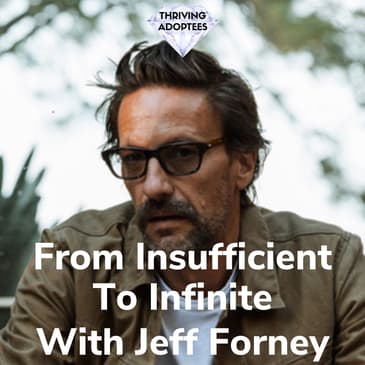
Jeff was adopted at birth. Raised in the Bay Area by two wonderfully loving parents, Jeff still felt a pull to know and uncover the mystery of his origin. Jeff eventually found his biological roots and has been in reunion with his birthmother for almost 30 years.
Now, a photographer living in Los Angeles, a chance photoshoot with Ray Liota and discovering he, too, is adopted, a project was ‘birthed’ to photograph and interview adoptees in reunion with their biological parents.
The project has been a transformative process, but Jeff now finds himself hosting adoptee meetings at his home twice a month. Through Jeff’s involvement with the adoption community and just so happening to be a close friend of Jennifer Griffith and her husband Mark, Jeff has lent his ‘adoption constellation membership’ to Jennifer when her podcast touches the subject of adoption and foster parenthood.
He is not claiming to be an expert on adoption but a mindful devotee to living open and vulnerable. Jeff is happy to help others identify with those who have dealt with adoption/foster care issues and create a community of nourishment.
https://www.instagram.com/jeffforney/
https://www.byjennifergriffith.com/jeff-forney/
https://www.facebook.com/jeffforneyphoto
Guests and the host are not (unless mentioned) licensed pscyho-therapists and speak from their own opinion only. Seek qualified advice if you need help.
Want to learn more about thriving for you, your kids, your families or your colleagues? Pick a time to talk here
[00:00:00] Hello everybody, welcome to another episode of the Thriving Adoptees podcast today. I'm
[00:00:07] delighted to be joined by Jeff Jeff, fully back on the show again. Right?
[00:00:11] Thanks for having me. It's been too long. It's been too long.
[00:00:15] So healing, everybody talks about healing. What does healing mean to you, Jeff?
[00:00:22] Well, I think I gave it some thought when you told me this is the subject and I really
[00:00:29] and we just kind of mentioned it as we were just kind of shooting the breeze here before we star
[00:00:34] this. It's the gratitude and staying in a grateful spot with life and because the more I stay in that
[00:00:45] gratefulness, the feeling of not being enough in life dissipates. The comparison to what was
[00:00:57] there life like being raised by biological parents? I didn't have that. If I stay in gratitude,
[00:01:05] all of those things that can kind of eat away dissipate and they get lessened and
[00:01:14] I, as I've said before, my adoption experience was not that there isn't trauma that come,
[00:01:22] that is there's... Not that there are some things we're not dealing with. The term trauma
[00:01:30] is also one that we can discuss what that really means but I had an upbringing that I really am.
[00:01:41] I'm grateful for what I did have and staying in that spot really, then I feel less of a need to
[00:01:51] compare and to feel less than to other people. And it's weird, you know, you and I both do a lot
[00:02:06] in the adoption community, you interviewing and myself photographing and hearing stories.
[00:02:13] And a lot of times people have a real anger towards growing up and I get it. Some people raised
[00:02:24] transracial adoptees and raised by parents are not of their race, of their ethnicity,
[00:02:30] prefer to say, but so there's no one to mirror off of. But you know what if we were all spiritual beings
[00:02:41] out there in the heavens all equal and we all... What if we were the ones that were up for the big
[00:02:48] challenge? Someone said, hey Simon, you want to come to earth? You're going to have a little bit
[00:02:52] of a challenge. You're going to be raised by parents that are not technically your blood,
[00:02:58] but we think you can handle it and I think you and I probably said, I can do it. So yes, sometimes
[00:03:04] there's challenges here and sometimes our other adoptive compatriots, you know, there are things that
[00:03:13] you know can be tough. But what if this is what we signed up for and this is what we're going to
[00:03:20] slog it out and do? And when we get back to that big campfire in the sky one day, you and I are
[00:03:26] going to have a great story to tell because we had those extra challenges that we felt we were
[00:03:32] up to doing. So I, you know, I know there was that phrase or metaphor like life, this is just a test
[00:03:39] and it's only a test. Had this been a real situation then blah, blah, blah. But in a way life
[00:03:46] is a test because we're here on this human... We're spiritual beings on this human journey
[00:03:53] and we're giving it a go and so yeah maybe it's a tough one but that's what perhaps that's what
[00:04:00] we signed up for. So I try to look at it a little bit of a spin like that and if I feel like,
[00:04:07] if I can, if I look at it that this was something that I was presented as a challenge and
[00:04:14] took the challenge up as an adoptive on earth, it I feel more like all right so yeah,
[00:04:20] I got a little bit of a tougher draw than most but let's make the best out of it. Let's you know
[00:04:27] so that was a very long-winded kind of response. There's plenty there man. There's plenty there.
[00:04:32] That's good. Like we've got a lot to get together so it's good that there's stuff to talk about.
[00:04:39] So what do you see as the kind of the difference between something that you're talking about
[00:04:51] seems to me to be like a spontaneous gratitude from within compared to this kind of force gratitude
[00:05:00] from without you know we're told that we should be grateful and that great that that great
[00:05:07] with us but what you're talking about is a gratitude from within right? Yes, yes and yes I know
[00:05:16] a lot of people you know growing up, hey I'm adoptive and they're like oh aren't you lucky
[00:05:23] you know and maybe I mentioned before last time I was here you know I had a friend whose mom passed
[00:05:28] away in third grade and everybody he got to grieve and they talked about it. Well nobody
[00:05:36] you know my mom died when I was three days old nobody I didn't get any of that you know I got
[00:05:44] hey you're a lucky guy so and yes I think coming from somebody else it's not a very helpful thing
[00:05:58] to hear it on the outside but as I you know looked at it more in the adoption and looking
[00:06:06] at life as an entity in itself the fact that I am here on earth I was not taking the Mexico and
[00:06:14] aborted in Tijuana because I was before Roe V Wade. I'm just grateful I've got you know a family
[00:06:25] and I got Aaron my lungs in a heartbeat in my chest so I'm trying to look at it you know yes we've
[00:06:32] we've got different set of challenges but I'm grateful for everything that's coming so
[00:06:38] and it makes for better conversation at the dinner table you know it's it throws a little dynamic
[00:06:45] that maybe when we were younger yeah we are kind of angry that people would tell us we have to be
[00:06:50] so grateful but now I am grateful that but it's coming from within and that I've got something that
[00:06:59] you know we're a little more unique than the other other people around yeah so did you remember when
[00:07:06] this sort of this spontaneous gratitude do you remember the first time you kind of felt that sort
[00:07:14] that idea popped into your head or I think I think it's been so I think it's been there but I think
[00:07:23] it's gotten bigger and the more I've understood it but I I was kind of you know even high school
[00:07:33] university I I think I even had a there's little signs of it even back then I just I am
[00:07:43] an optimist and I do see things glass half full so from there though learning more about
[00:07:57] adoption in my life and even as a parent you know I that's another thing adoptive parents parents
[00:08:07] that have children that's a whole you know I had a little learning moment with my younger daughter
[00:08:13] last week and I told her I'm like you know I'm still dealing with some adoption stuff and I behaved
[00:08:22] poorly in that situation I'm sorry I reacted it was something that was more deep seated within me
[00:08:29] and there's so there's there's things to learn in that realm too but yeah shoot I kind of lost what
[00:08:40] you were saying there but yeah I feel that it's gotten I've learned more as I've gone along and
[00:08:48] gotten stronger in my idea of the uniqueness of it all yeah yeah and it's a so maybe my missus haven't
[00:08:57] got any kids we were very close unfortunately her she was very close to her uncle that died
[00:09:05] he died like two years ago and so close that she actually gave him one of her kidneys right and
[00:09:12] the guy didn't the guy didn't last long after he got this kidney unfortunately and so this is
[00:09:19] nothing to do with adoption but this is to everything to do with parenting this this little example
[00:09:24] I'm going so he was his father was you know abused abused him physically and you know it's an
[00:09:34] alcoholic and he used to beat up beat on his wife used to beat on his kid and when that
[00:09:45] so this guy's good Brian when Brian saw his son for the first time he had this huge epiphany moment
[00:09:56] that came to him that he was not going to beat how his father was to him he was going to be a
[00:10:04] completely different doubt he didn't have a great you know the opposite of a role model in his own
[00:10:11] father and he was you know completely churned on it its head and you know they're becoming a father
[00:10:20] or a mother I'm sure is a very profound found moment yeah yeah it was when I you know yeah I would
[00:10:35] be changing diapers and you know in the middle of the night and just kind of having emotional moments
[00:10:42] for myself in that I didn't have this so to speak to have my own biological mother or father
[00:10:48] around and they'll never have to deal with that and you know I have still not ever taken a flight
[00:10:57] with my wife and I have never taken a flight by ourselves since the kids we travel as a family
[00:11:06] together sometimes my wife and I drive up to San Francisco from Los Angeles on in a car but
[00:11:14] are there something that I don't want to abandon my children I know when they turn 18 and their
[00:11:20] adults and I'm going to have a less control of it but I we've never and I realize it's something
[00:11:29] that I've kind of been I've always kind of plan I've directed it this way the last 16 and a half
[00:11:37] years well yeah I won't get on a plane with my wife and leave my two kids at home I would
[00:11:44] I would be just I would not like to leave them on their own so my wife has flown with a child
[00:11:52] or I have flown or we haven't done that so there's something still I don't want to be I don't want
[00:11:58] to abandon or have what happened to me and due to my children so there's there's still things
[00:12:03] that I'm still dealing with yeah at this age middle age you know yeah so how do you see these two
[00:12:12] things fitting together this kind of internal gratitude and and this I think you know it's a
[00:12:23] counter you're you're you're talking about the internal gratitude your gratitude being a counter
[00:12:30] force if you like to to this feeling of not being enough how do those two things
[00:12:35] interact relate to one another how does silly it's so how does my gratitude interact
[00:12:45] you we've all got this fear as a doctor is that we're there we're not enough right and we're
[00:12:51] not enough and we're and we're fatal off more rejection on the basis that we're not not enough
[00:13:00] and life is about seeing through that and seeing through that belief you know and that comes off
[00:13:09] the back of the trauma so how does you talked about gratitude for life and you talked about this
[00:13:18] in this gratitude counter being like a counter force to your feeling not you know not not being
[00:13:29] how do those two things relate I think when I dip into those moments of not being enough I have
[00:13:40] gotten better at being kinder to myself um I think in the past I can be pretty
[00:13:51] hard on myself but if I look at how my childhood and the relinquishment kind of affect things I
[00:14:01] I try to allow myself more leeway with stuff and I try to talk to the inner child like you know
[00:14:13] the way I would talk to a friend if a friend came to me and said hey I don't know if I'm good
[00:14:17] enough for this job what would I say to my friend like you didn't get that job because you're
[00:14:23] horrible at it you got it because you deserve it this is what you know I'm trying to talk to myself
[00:14:30] more like I would to a friend or to my family member because we can we can say pretty harsh
[00:14:36] things to ourselves and I'm I really kind of learned that saying treat myself like I would
[00:14:44] someone else that like it's Simon if you came to me and said hey I'm a little concerned about
[00:14:49] this Jeff and also and I would give you all the reasons why you are doing exactly what you should
[00:14:56] be doing why you deserve to be doing this why your podcast is doing well like I would tell you
[00:15:01] all these things and I think that helps lessen that that inadequacy and I really you know the more
[00:15:12] grateful I am they kind of one kind of takes over the other and they or they mesh together but
[00:15:20] now it's only 30% not good enough and 70% city and gratitude sometimes but I want to get to 80%
[00:15:28] 90% though always be a little something but I really I really feel like we can spin it in our
[00:15:40] head as why we're here and you know I was listening to this other uh Gabor Mate you know and he was
[00:15:48] he was saying something but it applied to being adopted someone was saying or maybe someone did
[00:15:54] ask what would you say to an adoptee who doesn't you know I don't remember the question
[00:16:01] Gabor responded and said anybody who feels that like they were unloved or that why did I get these
[00:16:08] parents or how do I end up here with this life well something more empowered more important than your
[00:16:16] your parents why'd you hear and that's called the universe and the universe is up here and parents
[00:16:21] are down here something you needed to be here for some reason the universe needed you here they needed
[00:16:27] Simon here they needed Jeff here so that we could do this and help others in our community so
[00:16:34] um it's a it's a nice way of looking at it um that there is still a purpose for us even though we've
[00:16:42] got you know we have more challenges um we're here to learn and whatever we do learn share with
[00:16:50] others that we can all help each other out yeah so this is a sense of us being big at the now
[00:16:58] least that we're not good enough yes I believe we are totally bigger than our beliefs a lot times
[00:17:06] are limiting um the things we tell ourselves and we're we're diamonds we're we are we are
[00:17:15] stardust my friend we are of the stars and we can we are all stars we can all do whatever we want
[00:17:23] really and the one thing that I got I you know some adoptees um feel like well I my
[00:17:33] I was raised by Caucasian parents and I was African-American and I didn't
[00:17:38] and I get there's challenges there but um at the same time and I was raised by Caucasian
[00:17:48] but I also didn't have uh sometimes other adoptees have the issue of
[00:17:53] assimilating with their parents or I couldn't be like them because I was not them I felt out of place
[00:18:01] in a way my being adopted was a freedom for me I didn't feel beholden to be my dad was in
[00:18:11] finance my mom's a schoolteacher I didn't feel beholden to do what my dad did
[00:18:18] I didn't feel beholden to do it my mom did because they knew and I knew I was not that
[00:18:25] and I it gave me an odd freedom that when and especially this is happening at university
[00:18:32] when I told them hey I might get into a little something else or I might not necessarily use my
[00:18:36] degree at this moment might get into photography or you know modeling and then photography
[00:18:43] it was I felt like there was not it was it felt it wasn't I wasn't so concerned for their reaction
[00:18:53] and I felt like they were gonna understand it more because they knew I was not of them so it kind
[00:18:59] of gave me a freedom to be who I wanted and um I know some adoptees can see it as it really
[00:19:06] limited me and I got stuck and I never got to be around my um you know my you know my biological roots
[00:19:16] but if you look at a different way it allows you to create your you have your own palette to
[00:19:23] paint on I wasn't painting with a brush that came from my mom or dad because I can't hold
[00:19:31] that brush I biologically can't hold that same brush so it kind of gave me a freedom to be
[00:19:39] unique yeah I came up with this uh I came up with this progression uh idea and sometimes
[00:19:49] sometimes last last year and it was it was the the the anguish of not the anguish of not
[00:20:02] feeling enough right and then the the relief the relief at finally feeling sufficient
[00:20:14] right yeah and then the the bliss of being infinite yeah so you're you're really I'm with you
[00:20:28] with this the stardust stuff you know this yeah this bigger thing and I think this is something to
[00:20:39] like like anything else we have to see for ourselves you know I came up with this line about three
[00:20:45] years ago now there's there's no such thing as a there's no such thing as a second hand inside
[00:20:51] we have to have them we have to add the insights for themselves other people's insights
[00:20:57] such as you are lucky don't land for us we have to we have to see it for ourselves and
[00:21:04] if that's that's a gripply that's great that's great I mean go ahead I did I'm just
[00:21:09] clocking that in my own head right now yeah it's that um and then I want to bring something back
[00:21:17] down to really back down to earth on this uh and it's a story I tell every now and again
[00:21:23] I read this read this book about a adrenaline adrenaline junkie that became a junkie junkie right
[00:21:30] yeah yeah and and he so he decided to he decided to try heroin for two weeks to see what it
[00:21:42] was like coming off it so he's a nutter right isn't it anyway five years later still five years
[00:21:51] later he came he he came off heroin and it was on the back of one thing I and he only gives one sentence
[00:22:06] on the on the explanation yeah he said I realized that I was bigger than my addiction
[00:22:15] that's it that's it that's it I was bigger than my addiction so it's an 11 hour book
[00:22:23] it's yeah it's I've known chatted before is it's by guy called Ben Timberlake I put the
[00:22:30] shit I put I can't remember the name of the book I'll put it in the show now so I put it
[00:22:34] but that thing right I am bigger than my addiction and you think how can how can this stupid you
[00:22:42] know like well he got that he got that not as a kind of like a vague idea he got that deep in his
[00:22:48] his bones and and it's very it's really pertinent to me also he's really pertinent to be given
[00:22:54] them out of adoptees who are addicts right yeah and who and how we're all addicted to stuff in
[00:23:02] in in a different way whether it's chocolate business retail therapy you know whatever exercise
[00:23:09] you know like the world is addicted to something different in a different level as well as the
[00:23:14] the booze and drugs which are so prevalent within the doctor and but it's that size of that
[00:23:20] impact and and the identity piece yeah you know like um yeah so I don't know what you make of that
[00:23:30] I think that's really it um we are bigger than our addiction or our adoption or whatever
[00:23:39] shun we want to come up with we are bigger than it but you know I think it's a rare person that
[00:23:48] comes out of the gate uh and is going through grammar school uh at the age of eight ten
[00:23:55] years old that is really tracking that idea I think it you know I think we all go through the process
[00:24:02] of oh these shoes are too tight and boy my toes are hurting well next year the shoes are still too
[00:24:11] tight and at some point as adoptees we say maybe I need a bigger shoe and we get to that bigger shoe
[00:24:20] and yes we did we go through trauma of having crunched up toes for a while yes we did
[00:24:27] did it hurt yep um but did we learn from it and did we make an adjustment yes so you know when
[00:24:34] you know better we should do better and um I think you know we everybody has that moment
[00:24:43] if really kind of figure it out when you learn to ride a bike you will stub your you know or
[00:24:49] scrape your knee and hit your head um but then we learn it and we realize we are bigger than the
[00:24:55] bike we are smarter than the bike and we will not let the bike determine you know whether we fall
[00:25:00] or not it's up to us so I think yeah and we have a few more of those challenges then say a biological
[00:25:08] person they they still have challenges too we're not the only people that go around on this planet
[00:25:13] with challenges but I think that's it being bigger than the addiction or the adoption
[00:25:22] is really key but I think it takes time for us to get there and I think you you kind of pulled back
[00:25:29] and you looked you you know it's kind of like that that box of money or whatever it is a briefcase
[00:25:36] in pulp fiction they open the briefcase the glow of light it's like gold bar light you know
[00:25:42] something golden is coming out and Simon sounds like you saw it and you're like oh I you know
[00:25:47] you saw it the the goal is to have that briefcase open with that light on us all the time you know
[00:25:55] we can't always do it sometimes I have bad days but you got a glimpse of it you saw it and I'm
[00:26:01] I'm you know I see that you turn the page on that that's awesome brother that's awesome
[00:26:08] it's a it's a depth thing I've taught I myself talking about this a lot right so we get
[00:26:17] we get a glimpse of something yeah and you talked about the you you talked about the gratitude
[00:26:25] growing right so we don't norm we wouldn't normally associate growth with gratitude you know
[00:26:33] gratitude gratitude you're grateful or you're ungrateful right it's not normally a size thing
[00:26:39] you know it's not like it's not like the your metaphor with the shoe the shoes growing every year
[00:26:47] it gets it gets bigger gratitude isn't normally looked at something that gets bigger
[00:26:54] and I don't think that kind of insights are looked at that way either I think insides grow
[00:27:02] you know you get a glimpse of it and then you maybe get curious about you get curious about
[00:27:10] the mismatch between this new way of thinking and this old way of thinking perhaps that old belief
[00:27:19] thing yes and then it grows steadily it becomes it's it's like a
[00:27:27] a a I try to think of analogy that it transfers from something that we get in our heads to
[00:27:39] something that we get in our hearts and then we'll get it in our bones and and and that's
[00:27:45] that's the difference and that's when you've mastered you've mastered it when it gets into your
[00:27:50] bones and then you've you've got a good grip on yeah this and it becomes what you know it
[00:27:58] it becomes what people call as a people call an embodied understanding and embodied understanding
[00:28:05] right it's not just an idea in your head it's an embodied understanding you get it in your
[00:28:10] you get it in your bones and I just did another interview with a fellow doctor who's also a therapist
[00:28:17] and she said she she talked about physiological healing right so it's when something happens
[00:28:30] uh let let's say a rejection happens and we feel it we feel it in our gut we feel like we've
[00:28:40] been punched in the gut by this rejection yeah and then and then we do our work
[00:28:48] and we do a little bit more work and we do a little bit more work and as we carry on doing the
[00:28:54] work the the the the punch in the gut is less painful yes yeah absolutely and but we live in
[00:29:06] this world of ones and zeros right gratitude not not gratitude no no it's a size thing it's a
[00:29:14] size of you gratitude it's your it's the depth of is the depth of your of our understanding
[00:29:20] anniversary yeah and I think there's little things that you can do to feed the gratitude that help
[00:29:27] it grow and you know you know as you go gratitude yes can grow and it increase and then eventually
[00:29:38] we're embodying the whole uh gratitude and it makes things a lot less um I don't stumble over
[00:29:48] things things are less painful I don't know if I mentioned on the last um I don't know if this
[00:29:53] had happened but you know I don't know if I told you my birth mother has told me the same thing for
[00:30:01] 30 years of how I came to be and then a year ago she told me well you were kidnapped
[00:30:08] and I said well that's not what you you said I was I mean the papers say this baby's for adoption
[00:30:13] and you told me what you did and and at first I was really like pissed that she said that now I was
[00:30:22] like you know you can really fuck off with that I said some you know I was you know we have this
[00:30:27] we can talk like that to each other but um but then I quite quickly pivoted and realized
[00:30:36] I don't need her uh I don't need my birth mother to conspire in my healing I can do it without her
[00:30:43] and I however I got here and I don't know if I'll ever know for sure because it could be that
[00:30:51] you know I my birth mother I know is dealing with an extreme amount of guilt and shame for
[00:30:57] relinquishing I think she looks back and thinks boy I should have tried harder at doing it on my own
[00:31:04] but at the time I don't blame her uh but I know she's going through it internally um so this new idea
[00:31:12] that you know because if I'm kidnapped it takes it off of her well you are kidnapped so I didn't
[00:31:19] you know there's just less less guilt that she needs to carry and I realized I don't need
[00:31:27] even a clear answer as to how I got here um I just know that I am here and I'm working on
[00:31:36] being better uh as this uh spirit on this human journey that got adopted
[00:31:44] and working on being the best I can be uh where I'm at and how did I get here it could be a changing
[00:31:52] thing but I'm realizing it doesn't hinge on that so there are still things that can come up
[00:31:58] and it did hurt me when she said that but I'm I handled it way better than I would have in my
[00:32:07] 20s if I had heard that I would have been like Jesus Christ at the you know at the market dumping
[00:32:14] tables over out of I would have thrown glass against the wall like I heard that but now it's like
[00:32:21] okay I'm seeing it for what it is I realize there's a lot of people that got into this uh adoption
[00:32:30] mosaic quite innocently I think my birth mother didn't really you know she didn't have any other
[00:32:37] option being Catholic she was not gonna keep me uh her parents were not gonna allow that they weren't
[00:32:43] gonna pay for the last years of university so I don't think that she had any mal uh you know
[00:32:51] any any bad intent um uh and I think my parents who adopted me they came at it innocently looking for
[00:33:02] just a child that needed a home and you and I definitely came into this situation uh innocently
[00:33:10] we were the product of you know you know what we were the product of like we we came in innocent so
[00:33:18] um I think you know I know there are some bad behaviors within the adoption world but I try to give
[00:33:25] I'm giving my birth mother a little more lenience and my birth father who's a little bit of a nut himself
[00:33:34] and I'm not worrying about it I'm gonna let things unfold as they do so and I it's come with
[00:33:42] age and look at it you know and I think you and I have been kind of digging deep and it's showing
[00:33:50] yeah yeah oh I forgot to say you mentioned diamond earlier on so diamonds yeah since last time
[00:33:56] I we spoke I think I changed the thriving doctorate logo to a diamond right so there's a reason for that
[00:34:02] ladies of gentlemen yeah there's a reason for that yeah no we we are we are we're one of the most
[00:34:09] unique people uh in existence on this planet we're a minority hidden in plain sight we don't have
[00:34:16] any specific look to our minority we are of all uh ethnicities and religions and whatever all
[00:34:25] in this and nobody would know who we are unless we raise our hands say we are um and I think we're
[00:34:31] giving some we're getting some voice out there and I think you're giving voice to a lot of
[00:34:36] these people I think what I'm doing as well coming from a different angle and I think people are
[00:34:42] starting to understand that maybe it's not all um you know crumpets and crumpets and coffee you know
[00:34:50] being adopted there's a few things in there but we are bigger than our adoptions so
[00:34:55] yeah things we can do things we can do so um metaphors kind of sometimes run out of steam but
[00:35:03] that you know like the the diamonds value is set by and by the market right yeah our our value
[00:35:12] is infinite right that's yeah that's kind of how I see it and that's the reason for the the diamond
[00:35:21] on the loan and that fell and bodied understanding of you know us
[00:35:29] so you talked about spiritual beings yeah yeah and I love that quote I'm used to it for a bit
[00:35:38] a while you know that the quote is that we're not human beings having a spiritual experience with
[00:35:46] spiritual beings having a human experience yeah and and some big go go further than that and
[00:35:56] say well we're one spiritual being and in that sense we are the universe christisarius one
[00:36:07] others or we are consciousness yeah that's consciousness we are the whole shibain
[00:36:15] we're pun and for me the the spiritual being is that part of ourselves that is
[00:36:25] unwounded the trauma is in the human experience not in the essence of who we
[00:36:34] yes and I think if you can look at it that way and I find it helps me and not everybody will
[00:36:43] look at that way they have maybe other ways of you know dissecting it but if for me if I see it as
[00:36:51] a spiritual being you know on this journey that quite possibly I signed up for so they said who
[00:36:59] wants to be Jeff forney down there who wants to be Simon Ben and we said well I'll give that a shot
[00:37:05] but it hasn't affected our spiritual being yes in the human world it was a little
[00:37:15] weird and you know we weren't raised by our biological roots so that brought certain things to
[00:37:21] our life but we are still intact spiritually we are still ourselves I'm with you on that man
[00:37:31] yeah so have you seen this video the rock paper scissors thing I saw you talking about it yeah no
[00:37:43] yeah I think it's got my body sky really I am I'm just so shocked with myself for this matter
[00:37:52] for you know I've been looking for and it's funny because like I'm going to be really in a course
[00:37:56] with really know what some webinars I was telling about doing some you know metaphors metaphors
[00:38:03] for healing yeah do you do you chunk who are meeting in Dublin tomorrow so will you play rock paper
[00:38:11] scissors form with me will you do that yeah yeah okay so we're going to go one two three and then
[00:38:18] hold up the okay I'll hold up the hand right yeah one one two three okay so listeners I and
[00:38:32] I and the rock I've got my my my my first right it's a rock and Jeff has got a pair of really well
[00:38:41] matured and he is trying he's trying to cut into the rock with his right with with with
[00:38:53] three thousand six thousand miles away because he's west coast and I'm in in New Yorkshire but we're
[00:39:00] only obviously 12 inches away by by by zoom and we can play rock paper scissors so right the the scissors
[00:39:09] in rock paper scissors rock beats scissors because rock can break scissors rock can break scissors okay
[00:39:20] scissors cannot cut rock yeah so the rock is who we are and the scissors are the metaphor for
[00:39:30] the trauma the scissors are the trauma the rock is our essence yeah yeah yeah so but nobody's denying
[00:39:40] the the trauma that's happening nobody's denying that right so do you want to do you want to play
[00:39:45] rock rock paper scissors again yes one one two three okay so Jeff is now holding of his hand flat
[00:39:59] he is paper right your paper yeah and your paper your hand can hide my rock yeah paper beats rock
[00:40:15] so the paper is the trauma and the rock is us so using this metaphor trauma hides us it doesn't
[00:40:28] that's it that's yeah I love that I love that I love it what happened if I had done rock and you
[00:40:36] done rock well I would have just made you do it again I'm not gonna I'm gonna I'm sticking with the
[00:40:46] rock yeah the rock with this thing and this is it works very well on video if you want to check
[00:40:53] it out listen to go to my baseball feed I've got a link in I tell you what I'll put a link to the video
[00:41:01] that I and the thing so people can get that hopefully it'll um it might get them thinking
[00:41:09] in a slightly different way about the trauma because trauma does like I'm just thinking about
[00:41:16] what does trauma do to the universe do you know does it does it hate it trauma kind of it hides
[00:41:23] our world does that it's is it like the fall kind of yeah it's kind of like yeah the trauma is
[00:41:31] the thing that we're seeing things through a lens that's not exactly true we're seeing
[00:41:39] the trauma makes it so that we see things skewed in a way you know last week my daughter uh did
[00:41:48] something she I was I was asking her what she was up to and she kind of blew me off and was into
[00:41:55] her homework and and she kept looking at her phone or she and I was like she's looking at her
[00:42:00] phone didn't want pay attention to me but then when I was speaking to my wife about something and it
[00:42:07] I don't know maybe my wife was saying something about another teenage girl that my girls know
[00:42:12] maybe there was a little gossip or something my daughter came running out of the room and this is
[00:42:17] the one that gave me no time of day when I asked her how her day was but she was really interested in
[00:42:23] hearing about what happened on this date with this girl and this boy whatever something happened
[00:42:28] and I took it personally that she wasn't interested in what her dad had to say or asked her questions
[00:42:37] she was only interested in what the date that happened with the girl and the guy and because of my
[00:42:46] trauma or my you know something in my adoption you know fired off that she wasn't interested in me
[00:42:56] she was only interested in that and it affected me and because of my trauma would be
[00:43:02] that I'm wearing these glasses and I'm seeing I took it to heart it was weird I really took
[00:43:08] it to heart I'm like you know I'm not going to be seeing you much longer you're going to graduate
[00:43:11] high school and you know I wanted to talk to you and you didn't want to talk to me
[00:43:18] and that was all coming from an adopted father and if I had seen it for really what my wife later
[00:43:25] was like she just wanted to hear well she was just into her phone for a moment and then she
[00:43:30] wanted to hear how the date went like you know but you made it a whole thing that she doesn't
[00:43:35] care about you so that's what trauma is for me it's not something that I can't recognize you know
[00:43:42] and I kind of quickly I talked to my wife and then I recognized and I realized yeah that's
[00:43:48] a that's an adopt that's something that I wasn't good enough whatever that came up in that way
[00:43:53] and I felt that my daughter was blowing me off in a way or something so that's where it'll do
[00:44:00] because the reality was if I take my glasses off that's really not what happened but
[00:44:05] I sought that way because I remember the last time I touched the hot the hot plate I got burned
[00:44:12] so I'm going to start reacting that same way um so the more we can learn about ourselves and realize
[00:44:20] that things that happen to us younger are merely you know it doesn't mean it's going to happen again
[00:44:27] and we can learn from these things and how to navigate them with understanding and more patience
[00:44:35] and you know again gratitude can be thrown in there but that's how I reacted last week with my with
[00:44:44] my daughter so that's that's a perfect example and I told I said look
[00:44:48] you know dad has an adoptee sometimes things hit me a little harder and I'm sorry
[00:44:54] I'm working through them um I'm not perfect I'm learning a lot from you as much as you know
[00:45:01] I'm probably learning more from you than you are from me and I apologize and I'm I'm working on it
[00:45:09] dad's working on it right now and that's that was it but that's where that's where
[00:45:15] the adoption showed up and here I am you know I'm middle aged and you know
[00:45:21] it really affected me and so then I got emotional talking to my daughter about it because
[00:45:26] I just felt bad that I got pretty angry with her so that's that's it yeah wow
[00:45:34] now the um the metaphor of the lens I think is really great on that and um
[00:45:44] summing it up and I heard something on this
[00:45:49] landing metaphor I'm not sure how to open them and
[00:46:01] if we've got orange glasses on then snow looks on it yeah absolutely
[00:46:12] so trauma as the trauma as the lambs yes makes the world look different until we see
[00:46:27] the other ones it's getting those glasses off you know I know that the adoption coming out of the
[00:46:34] fog you can use that term but it's getting these rose colored or orange tinted glasses off
[00:46:41] and seeing it without any memory of the past without any uh remembering a biological separation
[00:46:50] of the past without you know but it takes time you know and we're we're all working on it but yes
[00:46:57] it's understanding that we are not our trauma we are not our addiction we are not our adoption
[00:47:03] we are larger than that you know I wish I knew this at 22 um but I didn't
[00:47:11] but maybe people will be learning from you and I and we can help those that are hoping or have
[00:47:19] these thoughts and don't feel feel guilty for having these thoughts feel guilty about sharing
[00:47:24] these thoughts with their adoptive parents they don't know where to turn and they're not alone
[00:47:34] brilliant so is there anything else you'd like to share Jeff yeah I could I could you know
[00:47:41] go get a coffee and we can sit for another couple hours here Simon I mean we can just keep talking
[00:47:45] and talking let's do it again later in the year yeah no I love checking it with you brother
[00:47:51] it's great you're like this is it's like being home we just need a little we need to sit
[00:47:57] fireside and just kind of you know little teens cookies now let's hang out all afternoon I'm hoping to
[00:48:06] get to I'm hoping to get to your close right because I've been I've been to East Coast loads of time
[00:48:12] I haven't been to I've been to West Coast since when I was 13 and I went to Disneyland so you know
[00:48:22] and I'm not 57 so it's 44 44 years my math is correct it's a long time since I've been to West Coast
[00:48:29] well you're welcome for a wonderful dinner here my wife cooks up in incredible Mediterranean food
[00:48:35] and she actually lived in London from six till 12 wow yeah if Israeli moved it was in London
[00:48:44] lived in Finchley and Golders Green or some and then she then they moved back but anyway
[00:48:55] there's a big there's a big Jewish community yes a gold screen yeah yeah so
[00:49:02] yeah yeah I'm finishing for that matter yeah cool yeah thank you listeners and we'll speak to you
[00:49:07] again very soon cheers Jack thanks for yeah