What if thriving is being comfortable with where we are on our journey? Comfortable with what we don't know? Comfortable in our own skin? Listen in as adoption professional Meredith dives into comfort and lots more...
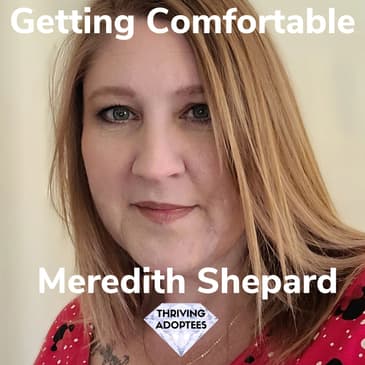
Meredith Shepard joined Heart of Adoptions in August 2013 as the Adoptive Parent Coordinator. She works closely with waiting adoptive families handling day-to-day needs and assisting with matching adoptive families to birth families. In July of 2020 Meredith became the Director of Programs for the agency. As of April of 2022 Meredith is the Executive Director for Heart of Adoptions. She is responsible to coordinate and supervise agency staff, volunteers, and handle day-to-day operational duties. Meredith has worked in the area of social work for over 20 years and has experience working within the fields of child development, adoption, foster care, and developmental disabilities.
Meredith graduated with honors from Eckerd College with a Bachelor of Arts in Human Development and Walden University with a Master of Science in Non-Profit Management & Leadership. She was also a Licensed Massage Therapist prior to obtaining her degree. While born in Ohio, which will always be home, she is also a die-hard hot weather fan and loves nothing more than cruising in her Jeep with the top down and the music loud! She has a son in college and has recently added a new fur-baby “Voodoo” to her home. Meredith can typically be found at Disney on the weekend or enjoying a camping trip and a nice kayak trip down a river when the weather is nice.
https://www.facebook.com/HeartOfAdoptionsInc/#
https://www.instagram.com/heart_of_adoptions/
https://www.linkedin.com/in/meredith-shepard-1357a678/
Guests and the host are not (unless mentioned) licensed pscyho-therapists and speak from their own opinion only. Seek qualified advice if you need help.
Want to learn more about thriving for you, your kids, your families or your colleagues? Pick a time to talk here
[00:00:02] Hello everybody, welcome to another episode of the Thriving Adoptees podcast. Today I'm delighted to be joined by Meredith Shepard. Looking forward to our conversation today Meredith. I am, I'm looking forward, thanks for having me. So Meredith is Lita, she's Executive Director of an Adoption Agency down in Florida. So what comes to your mind when you hear this term thriving or thriving adoptees? What does that mean to you Meredith?
[00:00:32] It's interesting, I've put a lot of thought into this since our first conversation and to try and just understand like what is thriving in general. And I feel like there's so many different thoughts about that, right? Like being successful and, but is that like emotional? Is that physical? Is that like, what does that look like? And then looking at, is that thriving from the adoptee, the birth parent, the adoptive parents, like who is thriving in this, right?
[00:00:59] So I think when I hear the term, I think more of like an adoptee that is knowledgeable and comfortable with themselves and with their adoption journey. Because they think we don't give adoptees enough credit sometimes for the journey that they're on in terms of understanding their adoption process. Yeah. I comfort, comfortable is a really good word.
[00:01:27] I think it's, we know what we're talking about. We know what we're talking about there. When I, you talked about emotional and physical, I kind of look at it from five bits, right? So the two bits you've, you've said emotional, emotional, physical, psychological, and social, and maybe spiritual as well. Right?
[00:01:52] So that might be spiritual, religious, or that might be spiritual, just a bigger, a belief in something bigger, bigger than ourselves, not necessarily God, but it might be God for some people. You know, we do interview, I do interview people who are Christians on the show, right?
[00:02:10] So, yeah, so I look at it and those five, five that's quite kind of broad, but overall, that's comfortable with, comfortable with the, comfortable with the journey, comfortable, I guess, where, where they're at. Yeah. Yeah. At now. And you make an interesting point about not giving us credit. That's a new one on, that's a new one on me.
[00:02:40] I, I guess that's, if we look back on the history of trauma mindset or trauma knowledge around, around adoption, we, it only goes, it only goes back to kind of like 93 when Nancy wrote the book and published the book and how long that took to get to be mainstream kind of.
[00:03:09] Kind of kind of knowledge, but that's, that's, and we think of, everybody talks about the, the body keeps the score by Bessel van der Kolk, which I believe is sold like 5 million copies, which is obviously way bigger than Nancy Verrier sold with the primal, primal wound. Yeah. But that book is only 11 years old. Mm hmm.
[00:03:31] When we're talking about trauma in the body, subconscious trauma, there hasn't really been much awareness of that until like 10 years ago. So, so that's the one that really caught the public's imagination.
[00:03:49] So perhaps that kind of short history of trauma awareness in the adoption space and in our subconscious trauma generally is, is fairly new really in terms of humankind. Yeah, absolutely. And I think, you know, again, that's where I say like, it's the credit. I think, you know, historically, I think people don't or haven't, like I said, give credit or understand like the impact that adoption has on the child.
[00:04:19] Like, you know, we look at it from the adoptive family side and, you know, their fertility journeys. A lot of times, if that's what brought them to adoption, which is the majority that we see and how it affects the expectant parent and then the birth parent and it becomes a birth parent. But I don't think, I think overall, I think people tend to think that like adoption is this beautiful thing and sunshine and rainbows and it's not always.
[00:04:46] And I think adoptees and I'm not adopted, so I don't want to speak on behalf of adoptees, but I think from talking with adoptees and, and kind of all members of the tribe for the years that I think we tend to downplay like the trauma they've gone to.
[00:05:03] And I think we assume that because they were adopted, that their life was wonderful and don't take into account the things like if they felt they had to like fill that void that adopted families had from having biological children or, you know, not maybe hide the fact that they want to know who their birth family is because they want to know their heritage and understand where they came from.
[00:05:28] And just, I think we all have that sense of why, you know, and I, I, I think when I think of thriving, I think of people that they're comfortable with asking those tough questions, whether it's to a birth family or to the adoptive family, or even just to the general public.
[00:05:47] Like, you know, why is there, you know, why is there, you know, why are there, you know, trauma movies, you know, on, I say, you know, specific networks, TV networks that, you know, show like the, you know, these birth parents showing up and stealing their children back. Like, why are there these like negative things associated with adoption?
[00:06:06] So I think thriving adoptees, I think are understanding whether good or bad, where they're from, where their journey is taking them, comfortable with asking those questions. But even if they're, they're comfortable with not knowing, I think that's what thriving to an adoptee is, is being comfortable with themselves, which is hard for anybody, right?
[00:06:30] Whether you're adopts or not, but to, it's just a different layer that I think that's where just being okay with that journey, whether it's sharing it with people or not, you know, being okay with whichever choice you make. Yeah. Because a lot of people talk about the questions, right? And I didn't have a lot of those growing up, but I, from, from interviewing lots of adoptees for the show, right?
[00:06:53] I know that a lot of them did have questions and I see, sometimes see a gender, a gender difference where women ask more questions. Yeah.
[00:07:04] You know, whether it's just more like a stereotypical emotional thing, right? Or I often think about it, it's, it's, it's, what could, what could, because, what could be stronger than a maternal instinct? Mm-hmm. Like, what, what could break that maternal instinct? Yeah.
[00:07:31] And, and obviously, uh, a, women and girls and younger women have that, you know, whereas guys, we've, we're, we're from Mars, aren't we? Is the, what had happened to that book? Right. Right. Um, but it is, it's a, it's a gender thing. You know, I think about my sister, I don't know how girls are these days with, young girls are with dolls.
[00:07:56] Right. But, you know, I had, I had Action Man, which was like the equivalent to GI Joe in, in those days. My wife, sorry, my wife, my, well, my wife, she had, she had dolls as well. My sister had dolls. So the whole thing is that, that kind of maternal instinct is, is nurtured. And people are thinking, women, girls are thinking, young female adoptee, you're thinking, what could be, what, what could trump that? Yeah. Yeah.
[00:08:26] What, what could, what could, what could trump that? And maybe they're not thinking it quite as clearly as that. Maybe it's more, it's more emotional and less conscious, but there's some gender stuff there.
[00:08:39] Yeah. And I mean, I, my best friend is a male and he is adopted. Um, he has reunified with his, his birth mother and a bio sibling and such now. But, um, when he was searching, like, I remember him talking about and asking me questions about like, you know, his heritage, he could have cared less about who his birth father was. He didn't really care. Like, that's not what mattered to him. He was like, I like want to know who I am. Like, you know, people say all the time, like, Oh, you look like you're, you know, Italian. And he's like, maybe I am, you know?
[00:09:07] And so his was more like, he wanted to know who he was. He didn't have that like white horse. They weren't on a pedestal. It wasn't something like he, and, and when he met his birth parent, his birth mother, he didn't ask those questions. He didn't want to know why he was like, it doesn't matter. He's like, that doesn't matter.
[00:09:24] And yeah, I agree. So, you know, I think it is very different, like what women want to know versus what men want to know. But I also think a lot of that plays into historically it's women that are placing is the, I mean, looking long time back, obviously it was like the unwed mothers. Right. And there wasn't a lot of, you know, birth father involvement.
[00:09:46] There's still not a ton truthfully when we get a birth father involved, we love it. Like, because it's just so much a part of his story as it is the mom's. And, you know, I think, and I know we hear this kind of thrown around about how like adoption is this like, you know, selfless thing. But I mean, I think that goes back to like, how do you break that bond? I think sometimes that bond's even stronger in an adoption because I think to be able to recognize that you can't parent that child for whatever reason it is.
[00:10:15] And to be able to separate that physical separation. I think the emotional ability to do that is amazing. Like, I think those are stronger people. Like I'm a parent. I cannot imagine handing my child over and hoping for the best. Right. Like, so I think that's where like you put that blind faith because you think that's what's best for the child. Right.
[00:10:40] So, but I think we, again, I think that's where like, there's not a lot of men, like we don't take stock in that. We don't. And again, I think it's just a historical thing. Like, I think that, you know, adoption was like unwed mothers is what you think of automatically. Right. Like, and so I think, you know, we, I mean, I tell people, my son's almost 25. Like I bought him a baby doll when he was little, because I feel like if we kind of break those gender things that like men could be great dads, my husband's a great dad.
[00:11:08] Like, you know, like, but my husband was like, why are you buying him a baby doll? Like, and I was like, because I think like you can, you can foster that parental caregiver role. Like it doesn't just have to be a maternal bond. You can have a paternal bond. Right. So, I mean, my child probably threw that baby doll up in the air more times than I should, you know, but so I think like that's, I think there's been like a shift in like how people parent.
[00:11:29] And I think we're seeing more birth fathers involved in adoption, but I think that affects the questions still that men and women that are adoptees have, because I think it's still like, I don't think we foster that like parental connection as much as we think of that maternal bond. Yeah, I totally agree with you. Yeah. And I think that the shame is a, is a hangover from the unwed mother's history of this.
[00:12:01] And that, that goes through and that's, that's a through line. I also think that that's always there as a continuation of it.
[00:12:13] And if I think, if I think about it from an adoptee's perspective, that if, if adoptees are struggling, it's because the main evidence of their struggling is that they think that there's something wrong. Yeah. We think there's something wrong with this, right? So that's shame.
[00:12:38] And I don't know whether this is Brene Brown or who it comes from, but, you know, we say something like guilt is about something, about something that we've done. Shame is about who we are. Right. So it goes, it's a very, it's a very low energy, very, very low energy space. It is.
[00:13:09] It's just above death. Yeah. Well, I think. Energy. And that's why we see people who are really struggling. We see that like the higher numbers of suicide stats amongst adopted. Well, we hear like generational traumas, you know, kind of a newer, you know, thing that we think about. But I think generational shame when it comes to adoption, like, you know, you think about like my birth parent was probably ashamed that she was, you know, in the position that she needed to choose adoption.
[00:13:40] She was ashamed of me, you know? So now I'm, I think it's almost, it's similar to generational trauma. It's that generational shame that, you know, do your adoptive family, like if it's, if what brought them to adoption was fertility, I mean, were they shamed that they couldn't have a biological child? You know, like, I think there's so many layers of that as well. You know, that I think people don't look at that aspect.
[00:14:07] It's just that, you know, adoptees talk about the shame, but we don't talk about why. Yeah. I do think shame is a big part of the, a part of, of the trauma. So I came, this is a while ago. Trauma is like a toxic, and I talk about adoptee trauma. Adoptee trauma is, is a toxic mix of shame, fear, and insecurity.
[00:14:34] So, so that, that, the, the shame is a big part of, of that. But the, the, the good news as I see it is the fact that with, with the glass, right, it's a cocktail, but with, with the cocktail glass, not the contents of the glass.
[00:14:56] Like, so that this, whenever I'm doing trainings, I'm seeking to separate who we are from how we feel. You know, trauma is something that's, that, that's felt either as shame or as anger or as fear. But we're separating out who we are from, from the shame that we, we, we, we feel.
[00:15:24] And that gives us a little bit of breathing space. We're kind of opening up, opening, separating who we are from, from our, our, our emotions, our identity from our emotions. Because we've spent, you know, if, if we're, if we're not comfortable, if we're going through this stuff, if, if it's there, this trauma stuff is, is, is there and present for us. It's kind of engulfed us.
[00:15:50] So one of the first things to do is to kind of like separate the feelings from the, from the identity. Yeah. So I, I, I feel traumatized. I am traumatized. I feel traumatized. Trauma and me are separate. Yeah. That's that, that's what it's about. You talk with the comfort thing, but feeling comfortable.
[00:16:18] What I see is. I come some, some degree of comfort and, and then some degree of discomfort. Yeah. And then hopefully a return to a more knowledgeable comfort. You know, this, have you heard this phrase coming out of the fog? You heard that phrase? Yeah.
[00:16:47] What, what have you heard around that? How, how do you see that, that if we talk about that journey from comfort to discomfort to hopefully comfort again, what, what have you, what have you seen in your professional life and, and through your, through your best friend, right? So, yeah. So I think it's interesting because I'm not sure he's come out of the fog yet, truthfully.
[00:17:10] And, um, for him, because I think, I think it's actually caused him to have some more questions that he is not comfortable asking yet. Um, but his is because I think he's not ready to know some of those things like, you know, so he's not ready to get more uncomfortable right now. So I think that's some of the things that we see too, is like, you're kind of in that comfort. You, you don't, you don't know what you don't know. Right.
[00:17:37] So it's like, why, why, you know, upset the apple cart and you have those questions and there's probably some uncomfortableness in within you, but everything kind of looks good on the surface. Right. So then you get to that point where you're like, okay, I'm comfortable with the uncomfortable part. Right. Like I'm ready to make that leap. But then I think it's, I don't think anybody could ever be truly ready for that. Right. Like it's because you don't know what you are going to find out and you don't know how you're going to handle those things.
[00:18:05] And you don't know if you're going to find things out. You know, I think that's something we keep seeing lately a lot is like, you know, birth parents are deceased or, you know, and lately we've seen a lot of that, you know, because it kind of goes to the addiction that we're seeing in the recent years, obviously.
[00:18:21] But so, you know, we have, by the time adoptees get to that point where they're ready to search, ready to understand, kind of really find out like who I am, where I came from, like all those questions that we just talk about the why is the shame, all that stuff. And then they can't get those results. Then I think it's hard to come out of that fog because you didn't get those answers that you needed or wanted. Yeah. Or you got the answers, but they weren't what in your head, like that pedestal vision or whatever it may be.
[00:18:50] And then you have to figure out who you are from there. And so, again, that's where I think that's the thriving part is being able to come through that with whatever the outcome was and be comfortable with it to be able to keep moving and be like successful in your life, like to be able to be productive in society, to be able to socially be able to interact with people. You know, kind of all those five things you were talking about, like, so I think it's like with anybody, whether they're adopted or not, you can get stuck. Right.
[00:19:19] Like, so I think that's where, I mean, I would tell people before you ever start a search, before you ever try to do those things, like, I think therapy is huge. Like, talk about those, the what ifs, the, you know, coulda, shoulda, wouldas, to be prepared so that when you're ready to come out of that fog with the information that you got, that you can be successful and you can thrive. Yeah.
[00:19:45] From my own experience, it's, there was a one big coming out of the fog moment, but there have been lots of other ones too. So it's, it's, it's a, it's either layers or it's whack-a-mole, right? You know, and I think, so my nickname is Moli, right?
[00:20:12] My wife thinks, so that's why maybe I think of whack-a-mole. But I think the layers is more, it's, it's the, oh, I came up with a metaphor for this a while ago. I haven't used it recently. You know those, if you're in a canteen and, a self-service canteen and they've got a, they've got a stack of plates. And it's spring loaded underneath.
[00:20:39] So you can take one plate off and then the next, and then the stack. Yeah. So that's what, that's what coming out of the fog feels like. It's one big plate and then it's series of littler plates underneath. Yeah. So we, we can, or peeling back the layers of the onion is another metaphor to think about it. Yeah.
[00:21:06] Or I say, I've heard it referred to as like the whole bubbling over of things like, right? Like it's, or boiling over. Like it's like one, you know, you get the boiling pot of water. Like you start to get a little tiny like surface bubbles and all of a sudden it's everywhere. Right. So, yeah. Yeah. Um, I also think we don't, we don't, uh, we don't choose when we come out of the fog. It's a, it's an involuntary action.
[00:21:34] It's, it's, it's, it's not an empowered choice. It's something that, it's something that happens rather than something that we, we make. Yeah. We, we, we make happen. Yeah, I would definitely agree with that. And I also think, you know, I think it has a lot to do with, you know, kind of how, how you felt about your adoption going into things too. So like, I think there's a, especially nowadays with social media and everything, I think there's a lot of outside influences.
[00:22:05] And so I think you might think you're on the path and you're, you're doing well. And then all of a sudden there is something that like affects you, whether it's some social media posts or a TV, whatever, or somebody making a comment, who knows, you know? Um, I mean, nowadays, I mean, with all the like DNAs and, you know, genealogy stuff, like who knows what's going to happen. Right. So I think, yeah, there's so many outside factors that you have to take into consideration that you don't have control over that.
[00:22:35] Yeah. So you don't control that whole, like coming out of the fog because you don't know what's going to happen. Like you don't know what's going to push you into that fog in the first place either. Yeah. Um, well, the, the, the fog is basically, it's another metaphor for the subconscious. Yeah. And we're, we're talking about pre-verbal, pre, pre-memory, pre-cognitive memory trauma.
[00:23:01] So that separation, I, I, I get echoes of it. So we, me and my wife have dogs and we're on, I know you have a dog, don't you? Yeah. I do. Uh, we talked about that last time. We're on dogs three and four, right? So we had one dog she last did and Nelly, she got to about 12 or 13. Then we had, um, then we had, uh, then we had Lexi. I can't remember the name.
[00:23:30] Then we had Lexi and then she done, but you know, we're on three and four and we've got two now because when we lost our first one, it was so bad. We just thought we can't do this again. So from, from that point on, we, we've had kind of, we've had two dogs. Um, but that, that when some of our dogs have cried on the first night away from their mum, you know, and we're getting dogs at like eight, eight weeks old.
[00:23:58] And that for me is, is a kind of, that, that's an echo, right? I think, I think, was I like that? Who knows? I can't remember. It was 58, 58 and a half years ago. But, um, the, the, the fog is, the fog is that, um, pre-verbal, pre-verbal, pre-cognitive memory trauma.
[00:24:22] It's, it's, it's something we can't quite put our, our finger on and, and then, then something happens and, and, and it, and it brings, it snaps us out of the fog and, and reveals what's, what's been going, going on. Yeah, but I think you can also go back into that fog too, that where you kind of almost like shut it down, that you don't want to address things yet either.
[00:24:48] So I don't know if it's necessarily the fog per se, but I think it's kind of, you go back into, it's almost like you don't want to address it. So you kind of tamp it down, if that makes sense. Suppress it. I think it's, yeah, um, I, I, I, I don't know whether, cause we talk a lot about that and I'm not, I, sometimes I think that's what we do.
[00:25:18] And sometimes I think that's not what we do, but I, I, I was listening to something the other day on the podcast and the, the, the guy was talking about a, um, a shrink guy. And he was saying that the, the, the, the wisdom, something, some greater wisdom doesn't
[00:25:43] bring something up until we're ready to, until we're ready to deal with it. Right. So on one hand we could say, well, we're suppressing it. And, and then on another hand, we could say, well, wisdom is keeping it, keeping it suppressed. Who knows? Right. Right. Yeah. I guess that's a lot to think about. Yeah.
[00:26:13] Yeah. I don't, I, I don't do suppress it. Uh, people will say that they numb. I mean, that's what drugs are about, isn't it? You know, that's what drugs are. People say, uh, workaholics, you know, that, that's numbing yourself with the business. I think a lot about that because I went fairly hard. I'm well, it's on my mind a lot.
[00:26:36] You know, I might not be doing, uh, 20 hour, uh, 20 hours a day, but I'm, I'm giving, I think about it a lot of the time when I'm not at my desk. Yeah. Talking to people for the podcast or not at my desk doing trainings. Right. Uh, and I, for me, like work, you can say work at, so on a, on a good day, it's an obsession. Right.
[00:27:05] And, and it's workaholism. Right. But on, on, on a, sorry, on a bad day, I saw on a bad day, it's an obsession. It's workaholism, but on a good day, it's passion. Yeah. Yeah. It's, it's, it's a matter of mood and the meaning that we kind of put on our work. So it's a good thing to think about. I mean, even when you're not adopted and you're workaholic. Yeah. Yeah. Well, we don't have the, yeah, that's it.
[00:27:35] You know, um, we, we don't, uh, adoptees don't have a, uh, monopoly on, on, on, um, shame. Clearly not. Right. Right. Um, we think you're shame for birth mothers, but I think a big, I spent after kind of, after I'd come out of, of the fog, whatever it was, 18 years ago, I, I went on a retreat with six, six people and two, uh, two facilitators and this, nobody else was, it was nothing to
[00:28:05] do with adoption, but not, we, we found out fairly, fairly soon because we kind of shared our stories, we found out fairly soon that we all, none of us thought that we were good enough. That, that was the underlying issue for all of us. We have different flavors of insecurity. Do you know what I mean?
[00:28:32] Different reasons for, uh, different reasons for insecurity, different backgrounds to that, whether it was, um, uh, whether it was adoption, whether it was divorce, whether it was the failure of a business, whether it was, you know, whatever it was that there was a different prompt for it. There was a different, uh, prompt for it, but the underlying feeling of the group was that nobody thought they were good enough. Right. So it's, yeah. Yeah.
[00:29:00] And, and then you, and from that, you can start to think, I think now, right, is, is this an adoption issue or is this a human issue? And will I ever get to the bottom of it? Um, is it even worth thinking about? Right. Because it's an, it's an unanswerable question. And then we're back to that thing about being uncomfortable, being comfortable, not knowing
[00:29:30] and in our culture, not knowing is a, it's a criminal offense. You know, like if, if, if, if, uh, if, uh, uh, a journalist, you know, a journalist, a journalist asks a question, I don't know whether they do this in the States, um, but they do it in the UK, uh, uh, politicians have to know the price of a pint of milk, right? Because if they don't know the price of a pint of milk, they're out of touch. Yeah. They're in an ivory tower.
[00:29:59] Um, and they're out of touch with the common people, the people that they represent and did it. But there's a general, there's a, there's a more serious kind of, uh, there's a more serious attack of journalists on a politician that doesn't know his facts that the, the,
[00:30:21] the interview process is set up to explore weaknesses in, in, in, in the, in the data that that politician has to hand, you know, like you, you can't not knowing is you can't just say, I don't know. But it's okay for just the average Joe to be okay with not knowing, or we want people to feel that way. Yeah. Well, yeah.
[00:30:47] Do we, I don't think we are, I don't think as a, in Western society, Brit, Brit States, Canada, whatever. Um, I don't think that we're comfortable not, not knowing what you, what do you mean? You don't know. Like, but it's like I'm saying, but we want, I think ourselves, like, I think we want to be okay with not having all the answers and that we do internally, but yes, I agree. It's like society. We hold other people accountable to know things and we know that that's what other people want
[00:31:17] of us, but I, that's where I think we need to figure out and, and be comfortable with that uncomfortable. Yeah. I think that's what shows true progress. And that's what shows thriving is to like chase the journey, like of knowing of getting answers, but it's okay not to know right now, but don't stop trying to find it. Yeah.
[00:31:41] It's, it's, um, acting as if it really, really matters, but knowing it doesn't. Yeah. Yeah. So what, what do you think gets in, in the way of adoptees thriving? Oh, so much. Um, again, I think a lot of it is the shame.
[00:32:05] Um, and the, the, I think, unfortunately, I think the lack of access to a lot of the information, um, whether it's, you don't have names, you don't have true access to maybe it's a birth certificate or whatever. So you just don't have access to the information to get those answers, to try and figure out who you are and where you came from.
[00:32:31] I think the, gosh, it's a good, it's a great question. Like, I think there's so much, I think internally people, like I said, I think they're worried about like upsetting their adoptive parents. I think they're worried about like upsetting their birth parents, truthfully, you know? Um, I mean, again, looking at my best friend, again, I'm not adopted. Right. But I know like he also has a sister that's biological, his, his parents, biological child.
[00:33:01] Um, and she came along after he did, you know? And so she even was like, why do you want to know? Like, were our parents not good enough? And he was like, it's got nothing to do with that, you know? So I think like the expectations and like those relationships and then like trying to understand how, if you have those connections with the birth family, how does that fit in? And, you know, understand they don't replace, you know, the adoptive family.
[00:33:25] And I think there's just so much like fear, um, from multiple sides. Um, you know, I think just like the disappointment gets in the way. I think, I think there's so many things that get in the way, unfortunately. Yeah. When you were describing your, your best friend's sister, um, the word that, the word that popped into my head was jarring.
[00:33:54] You know, when our, when how we feel jars with somebody else. Yeah. So, and so it obviously jarred with this guy's younger, younger sister. And I, I think when our feelings jar with our adoptive families, I think that, that is
[00:34:25] pretty fundamental, you know, especially if, if we're, if we, if we, if we're feeling othered, if we're feeling, um, less than, if we're feeling different, if we're feeling separate. And, and our, but our parents are coming from it, but we as adoptees, right. But our parents are coming at it from the rainbows and unicorns view.
[00:34:53] There's going to be a jarring of, there's going to be a jarring of emotions around this. And, you know, why don't I feel like this? You feel differently. No, you feel like this. I feel differently. You know, it's, it's, it's all gonna, it's all kind of gonna escalate. One of the things you mentioned social media earlier on, one of the things that's on my
[00:35:22] mind at a lot at the moment is beliefs, right? So what could get in our way of, of, of thriving as adoptees is the, the belief that we can thrive. Right. Right. So we've got all these people, all these, uh, adoptees who've had less than good experiences. They've had bad experiences.
[00:35:50] They've had, they've had parents where they, the parents that were, I've heard stuff. This is clearly older stuff because I'm talking, mainly I'm talking to older adoptees. People of my age and 40s and 50s. What did the, the, the female adoptee, I can't remember who it was.
[00:36:11] She said, it became clear to me that I was there to make my adoptive mum look good at church. So I hesitate to use the word narcissist because if you go on Facebook, every, every man in the world is a narcissist. Right. Fair enough. Yes. I agree with that. That's what you see. I agree with the statement. Right.
[00:36:41] No. But, but, but, but do you know what I mean? Like when I hear that, I just think, well, there was, there was no, nobody's perfect. Right. Obviously apart from me, but nobody's perfect. Um, my, my dad was a workaholic for, for sure.
[00:37:05] But, but do you know, um, but I never, I never had that impression that I was there to, to make them look good to anybody. Right. It was, it was about me. It wasn't about them. And, and I, if it's about them, then there's going to be more of that jarring.
[00:37:33] It's the extent to which our adoptive, adoptive parents are emotionally intelligent really. And, and, uh, selfless. Right. I think, um, and this is not to downplay any of the people on social media that have the following, but I think there's people that are adopted that have what you, they're like, use the example you just used.
[00:37:57] Like, you know, I was there to make my adoptive mom look good in church, but I think there's biological children that feel the same way about their parents that I was there to make my parents look good in church. Right. Right. So I think when you have a platform, I think some people, unfortunately, I don't, I want to say take advantage, but for lack of better way to say it, kind of take advantage of that. And I think it's easy to be like that keyboard warrior and, you know, on the other side of social media and do those things because you have a platform.
[00:38:28] Whereas if you had somebody that was not adopted trying to do that, they're just being a whiner. Right. So, you know, was it really that bad? And so I think from both sides. And so I think there's just as many good stories about adoption as there are bad stories, but like the bad stories sell for lack of a better way to explain it. Right. Like, but that's where I think people that are trying to thrive in their own adoption start to feel guilty because like, oh, I had this great experience. Should I feel bad?
[00:38:57] Was it a lie? You know, was this what happened? Like, what was their motivation? You know, I think that's what, again, you have to be comfortable with yourself and be ready kind of for that journey. But, I mean, I think that happens with anybody. I don't think it's only adoptees that have those questions. I just think it's different questions. Yeah. Yeah.
[00:39:18] I think I saw a book the other day on advertising Facebook, you know, how to overcome narcissistic parents. And it wasn't for adoptees. It's not, you're so right. It's not just that. Yeah.
[00:39:36] But I think that the jarring, the degree to which our feelings don't tally with our adoptive parents' feelings, I think that's got to be, that's got to be a tougher, that's got to be a tougher adoption. Yeah. That's, you can, it's not all to, it's not all to, well, you talked about generational trauma.
[00:40:06] We can look at generational trauma. We can look at in utero trauma. We can look at relinquishment trauma. We can look at trauma within the adoptive parents, within the adoptive family. We can look at trauma within the biological family as well. All these, all these things kind of build up, build up. But it's, it's, it's a layer cake. And sometimes people have got especially thick layer, some have got thicker layers than others, right? Yeah.
[00:40:36] But the good news, we're the cake stand, right? We're not the cake. Yeah. Well, and I think the other thing is too, when there's siblings involved, if they're also adopted, do they have a different story? Like they're, I say, like when I talk with adoptive families, I talk very much about like every birth story is different, right? And it doesn't matter if that's a biological delivery that you're looking at or an adoption story. And for anybody, I think it's every child's entrance into a family is very different.
[00:41:01] And so, but I think it's hard for some families, not all, to navigate like the relationships with birth families. When you have more than one child that's adopted and those stories are different. Or even just navigating those, like the children's like actual stories. Like, you know, if one's got, you know, behavioral stuff or medical stuff or what have you, right? Right. So I think it becomes also like, or if one is biological and one is adopted or multiple are the other way.
[00:41:27] Right. Like, I think you never, I've heard this saying that like, you never parent two children the same. Like you can't, right. Because you're not the same person as a parent once you've parent, parent to the child. Right. But I think there's new layers to bring in when there's adoption stories and having to navigate through those challenges. And so I think then it's jarring to the adoptee and the parents and the siblings when they all have different.
[00:41:54] So I think parents, and again, I'm not an adoptive parent either, but as a parent, you go into it with blinders thinking like, if I can do this with one, I can do it with two or 10 or whatever. Right. But it's very different no matter how those children come into your life, how you parent them. But so, yeah, I think when you then have to like also navigate the different adoption story and experiences and they don't line up with each other.
[00:42:18] And then you question yourself as a parent, if you're screwing it up, but then the kids, you know, you're going to give competition as kids. Right. Like, I think that's a whole nother layer of like, okay. And so then how do you help your child navigate that? Yeah. You know, and yeah. So is it jarring against each other? Like, you know, here you might have this to like under my siblings going to understand me. And it might be just the opposite because their story is so different, you know? Yeah.
[00:42:46] Yeah. So on a more mundane matter, which we, somebody was asking me, which I talked to somebody yesterday about training. How many hours do adoptive training do adoptive parents get? Yeah. So with our agency, it's just over 20. It's literally like, I think it breaks down to 21 hours, which, and that's the initial like home study that they have to have ongoing.
[00:43:12] I mean, if they, you know, have to do an annual update for their home city, it's more, I tell people you should never start, stop learning. Whether you're an adoptive parent or bio parent, I'm sorry. You should just never like things change. Right. Like, so, I mean, but that's mandatory for our agency. Unfortunately, every agency is not like that. State to state, it's different. Some states require much more. Some are much less. Some don't mandate any specific hours.
[00:43:40] I don't, I think the training is great no matter how much you give them, but I don't ever know that it's going to be enough. I mean, again, like. No training is ever enough for any, whether a doctor or a dentist or social worker or. Yeah. Until you have a child in your hands or arms or, you know, life or whatever. And then still, you don't know what you're doing half the time, truthfully. Again, like, again, whether it's adopted or not, like, like parenting is hard no matter how it happens. Right. Yes.
[00:44:08] So I get this, I get this feeling that adoptive parents are tougher on themselves than non-adoptive parents. But that's just my speculation. So to what extent do you agree or disagree with that? I agree a lot, actually. I think we have quite a few staff within our organization that are either adoptive parents, adoptees themselves have adopted. Some of them are multiple. Like, yeah. Yeah.
[00:44:37] And that's one of the things that one of our staff actually that has both, she's got children that are adopted and biological. And that's one of the things she was very worried that she was like, you know, she felt like she had to do better. Try harder. Um, because she needed to make sure because she didn't feel like that automatic, like biological connection. Did they have that? Like she felt it, but did they?
[00:45:01] Um, and you know, I think that, I think there's an expectation that like, you have to like, make sure that the birth parents would be comfortable with what you have said or done. I think in the back of your mind, that's probably always there is like, you know, would I, would they still be happy with choosing me as the adoptive family? If that was the choice, obviously like thinking of more modern adoptions. Right.
[00:45:24] Um, but I also think just making sure, like, I think adoptive families, again, I think it's social media and just media in general nowadays. I think there's so much accessible, so many things that people point out everybody's doing wrong that I think it's just that nagging thing that like, you know, is this child, does this child feel loved? Like, do they feel bonded to us? Like, I think it's a different layer than what a bio parent probably has to think about.
[00:45:53] I don't, I'm again, I'm not an adoptive parent, so I don't know that they, an adoptive parent has to think about that, but I think they do. Yeah. So what, what stops us, us beating ourselves up? I mean. It's a great question. I am, again, I think it goes back to that whole, like, feeling comfortable with yourself and feeling that you're enough.
[00:46:18] I think, you know, and again, searching for those answers, but if you don't have them being okay with still being on that journey to get them to like, know that you might never get them, but it's still it's that journey to like be at peace with who you are. Where you came from, even if you don't know those questions or the answers to those questions.
[00:47:06] I think that's it. My 24 year old can barely do that. Right. Cause that's today's day and age. But, you know, I think that's where. Like being comfortable with who you are and like that soul searching. I think, again, I think that's everybody needs to do that. I think, I mean, again, as a social worker, obviously that's what I, and I'm not a social worker. Let me say that. I don't have a degree in social work. So I try to be very clear on that. I'm in social work. I am not a social worker.
[00:47:34] But I think just being in the field, in human services, like I think that's something that people should always strive for is to be comfortable with yourself and to be confident with yourself. And to be comfortable and confident to ask questions, whether it's about yourself or your surroundings. So, yeah. Yeah.
[00:47:57] I was thinking about your colleague who has, you know, the adoptee who has adopted and has bio kids as well. And I was thinking about, and she's an adoption professional as well. So she's got, she's kind of got more riding on it. Yeah. No, like there's more steam in the game. There's more steam in the game. A spouse that's adopted and a sibling that's adopted. I mean, she's, yeah, exactly. And I think there's, that's her thing. It's like, she wants to make sure that like she's doing right by all these people in her lives.
[00:48:25] Cause it is, she's so passionate about it because it's so much a part of her life. Right. So I think, yeah, there's definitely, and she's nailing it. Let me just say that. But, you know, I think that's just automatic. Again, I think as humans kind of going back to what we talked about earlier, like the whole maternal instinct. I think, you know, you want to make sure that your children are healthy and thriving and doing well. And I just think that's a maternal instinct to want to do what's right.
[00:48:54] And so, again, I think that's just another layer that like you think about. I think good parents are cognizant of that's just another factor. And how do I make sure no matter how my child came into my life and into my family, that they have that comfortable, confident, you know, sense of self so they can thrive. Yeah.
[00:49:19] I've got an answer to my own question in terms of what stops us, what stops us beating ourselves up. When, when we realized that it's not doing any good, it's, it's an insight. Yeah. It's an insight thing. Yeah. But I think a lot of people haven't figured that out yet either. I, yeah, totally agree. Yeah. And I think it's got something to do for me, it's got something to do with that.
[00:49:48] What I said earlier on about, you know, so one day I'm a workaholic and another day I'm a, I'm a passionate guy who is, you know, living his life, making a difference and who wouldn't be. Do you know what I mean? Yeah. It's to do with, it's, it's to do with the, uh, the mood, my mood. Uh, it's to do with my, in, in, in the, in the moment it's to do with my judgment.
[00:50:16] I mean, it's, it's gotta, it's gotta be something to do with that. Yeah. The meaning that we're, we're, we're ascribing it. Um, I also think it's like, if we think it's helping us. So I had a conversation, the dad died eight years ago and I had a conversation, I remember a conversation with him maybe four years before he died.
[00:50:41] And I said to him something about him worrying, uh, worrying about business, which he didn't talk about a lot, but he did. And he said, well, worrying kept me on my toes.
[00:51:08] So he, he thought it was a good thing because it kept him on his toes. And I said to him, it, it may have done dad, but you know, it, did it stop you enjoying life somehow? And some tears came to his eyes at, at, at that, at that point. Um, and he wasn't that sort of a guy. He wasn't a tears to the eye guy, you know?
[00:51:34] So must've something, some insight happened with, within him or about that, you know, but he, he, it was funny. He, he, he was so passionate about business and then he, he sold it and built a business up with my mom and sold it. And then threw everything into sculpting and art and things like that. So he just diverted his passion. He wasn't a gold bar. He wasn't. Yeah.
[00:52:03] He just diverted his passion in a different, in a different way. And he wasn't a golfer. Um, and he'd fallen out with the, uh, with, with the local golf club who had, uh, put some, they used to walk, walk his dog on the, on the golf, at the end of the golf course, right? And everybody else did it. And then the golf decided they didn't want it. So they didn't want people walking. So they, uh, they put up this big fence and people climbed over the fence.
[00:52:32] So then they, they put a load of tar and oil on the, on the fence. So my dad wrote a letter from the dog to the, to the local newspaper explaining that, you know, her fur had got all matted climbing over this, climbing over this fence. Right. And from the, uh, so even if my dad had, had, uh, wanted to play golf, he burnt his bridges there.
[00:53:02] There's no way he could have done that. But yeah, he just, just diverted, diverted his passion. So I guess that's what we, that's what we do. We find a, an outlet for what, what we're doing and we're, we're lucky to be in this space where we love what we're doing. Right. I mean, you and me. Yeah. Yeah. I, um, I say it all the time. Like, you know, I don't always love what I do. I don't always love where I do it at, but I'm a realist. And I know that tomorrow's another day and it's kind of the same thing.
[00:53:31] It's workaholic or passionate is, you know, it's great way to look at it, but I always want to know what I could do better, you know, for all of the, the families that we work with, whether adoptive families, birth families, the adoptees, um, you know, but yeah, it's definitely passion. So, and I got into adoption literally as a joke with one of my coworkers that I worked in a completely different field and ended up in it. So, but I feel like I found my passion. So yeah, it's accidental. Yeah. Yeah. It's accidental. Or it found you.
[00:54:01] Yeah. Or it found you. Great, Meredith. Is there anything else you'd like to share before we bring in? No. Thank you for letting me join you. Yeah. You're welcome. Yeah. Um, I'm now thinking, should I really have told the story about the dock climbing over the golf club? Anyway, it's one of those. I started it. So I'll finish right. That was funny. It is. It was.
[00:54:26] When, when my dad read it out or my mom read it out to me, I know it was 20 years ago. Like this is, my dad's gone really nuts here. You know, like he's talking like in the voice of the dog, you know, my dad said this and he's referring, he's referring to. Anyway. Enough with that. But we, but we do have, there's a lot of people that listen to the show. A lot of, a lot of adoptees who will, lots of people love dogs.
[00:54:54] You know, if I put a picture of the dogs, that gets far more comments than if I put a comment about the new podcast being like. So thank you listeners. And thank you, Meredith. Speak to you again very soon. Take care. Bye-bye. Bye-bye.