How do you handle pain, like when your son says he hates you? There's something that us humans don't like about complexity. And yet adoption IS complex. Painful and wonderful. When it's painful it can be very painful. Listen as we dive into complexity, emotional intelligence and more.
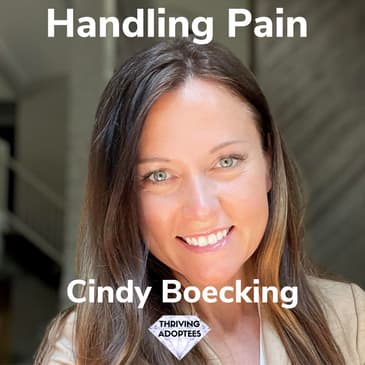
Cindy and her husband, Michael have three children through birth and adoption. She's also Director for the Beyond post adoption program at Circle Of Care in Oklahoma.
Find out more at
https://circleofcare.org/programs/beyond/
https://www.facebook.com/circleofcareok
https://www.linkedin.com/in/cindyboecking/
Guests and the host are not (unless mentioned) licensed pscyho-therapists and speak from their own opinion only. Seek qualified advice if you need help.
Want to learn more about thriving for you, your kids, your families or your colleagues? Pick a time to talk here
[00:00:02] Hello everybody, welcome to another episode of the Thriving Adoptees podcast. Today I'm delighted to be joined by Cindy Becking. Looking forward to our conversation today Cindy, it's going to be a blast. Cindy and I had a fantastic conversation a while ago so I know this one's going to be great too. Yes, thank you so much for having me.
[00:00:20] Very welcome. So Cindy has three kids, so you have a girl, your eldest is a biological child and then two boys are both in their 15 and 12 is it if I remember? Yes, correct. Through adoption and she also is an adoption professional in the sense that she runs a fantastic post adoption program called Beyond Out of Circles of Care in Oklahoma City. Correct.
[00:00:50] So as always listeners, I don't always mention this but I urge you if you like the sound of what the guest is saying, check them out. If you go to the podcast platform and look at the show notes, you'll find a little bit more about Cindy in this instance and links to her, links to Circles of Care.
[00:01:10] So without further ado, welcome again. And what does, like to start with this question, what does thriving mean for you Cindy? Well, I think in this space, and I think you did a really great job on this podcast. I've learned over the past 16 years of being in this space we get, we get a little bit, and I think you and I talked about this, trauma obsessed.
[00:01:39] And, and I think that as parents, and people that serve this population, we really want to do our best to acknowledge the hurt to acknowledge the loss. But I think sometimes we may, the pendulum may swing a little too far in one direction. And so I love your mission.
[00:02:03] I love this podcast because it gives all of us an excuse to have the pendulum swing the other way a little bit and find joy and find peace and find gratitude while also holding that loss. And I think it's, I think it's, I think it's, I think it's, I think it's, I think it's, it's, it's, it's, it's all of the dueling emotions.
[00:02:34] And giving ourself permission to accept them both and to hold them both and to thrive within that. And I think the guests that you've had and the, the topics that you brought up really exemplify that really well. I think there's, there's a lot of complexity with adoption, but I think there's a lot of opportunity to, to turn that into a thriving mission as well. Yeah. Fantastic.
[00:03:04] Lovely. Complexity. Complexity. Yeah. Yeah. I don't think as human beings, we do very well with complexity and, and I'm, I'm wondering why that is. Why, what, what comes to mind? What, what do you, why do you think we struggle with complexity? Yeah, I think that's a good point. I think a lot of us want the world to be black and white.
[00:03:30] And I think maybe that's a, you know, personal, you know, personality thing for some people. But it's not always black and white. It's not always one thing. It's not always just loss. It's not always just gratitude. Sometimes it's both. And so I think, you know, the many more years that I've been in this space, you know, we just have seasons.
[00:03:57] We have seasons of life where things are hard and we have seasons of life where things are wonderful. And we have to have both. And so embracing the both is where I found a lot of freedom in this space. Yeah. Yeah. I was thinking, is it, is it a school thing? Is it like, you know, complexity?
[00:04:25] Do we not like it because we lose track? You know, like we're listening to a teacher and they're going above our heads and it's too complex and we don't like it because we want to understand it. That's a good point. I think sometimes it may be that we want to be right and we want to hang our hat on one side or another. And we want to argue a point. And sometimes they're both are right. Yeah.
[00:04:54] Do you remember? Do you remember instances when when this has become clear to you? Like, did you or let me ask you a question. Did you think it was going to be complex going into it? Or to what extent? No, I did not. You know, my husband and I never thought about adoption until until infertility had presented that option to us. And so grateful for that. So grateful for that.
[00:05:24] And so we had never thought about a lot of things until we brought home our first son. And and I think just the weight of all of it kind of came crashing down. And we really had to take seriously the again, the complexities, but the opportunities that we had to to to to do this well. And I'm the kind of person that will research something to death.
[00:05:53] I want to know I want to know how to do this well. And that was really my driving force for many, many years is, you know, Internet groups and reading books and talking to people and podcasts and videos, everything I could get my hands on. I wanted to be the best parent that I possibly could.
[00:06:14] And in pursuing that, I had to understand what my child needed and how they felt about their story, whether that was hurtful to me or not. And I think that's been my mission for the past 16 years is how do we listen well to adult adoptees who are telling us best practices?
[00:06:44] Right. I think those are the only experts in this space that have the lived experience that we that that we need to really like take into account is how do they feel? What were their experiences? And so that's really why I've spent a lot of years seeking out. I don't want my kids to grow up and for me to say, I wish I would have done this differently. I really wanted to get it right.
[00:07:10] And so when I think about complexities, I'll tell you a short story about one of my sons. We have a very open adoption with his birth family and they are wonderful. They are just the most wonderful people. And so when he was younger, we would have visits with his birth mom and he was about four or five. And I remember driving home from a visit.
[00:07:37] And he's just a very bubbly, cheerful, wonderful kid all the time. And on this particular day, we had just left a visit with his birth mom. Everything had gone really well, but he was really, really quiet in the car. He was just staring out the window. And I look back and said, hey, buddy, are you OK? Something wrong? And he was quiet for a little bit. And then he just quietly said, I hate you.
[00:08:04] And it just landed like a knife in my heart. And I just paused for a second and thought, I know he hates this part of his story. I know he doesn't hate me. I know he doesn't hate his birth mom, but I know he hates this feeling of maybe I belonged there. And here I am, I have this family, I have this family and that in between. And I could see just kind of the struggle that he was experiencing at this really young age.
[00:08:34] And so, you know, the joy of seeing his birth family was hit kind of hard by the fact that he was leaving his birth family and coming home with us. Not that he didn't love us, not that he didn't have joy in our family as well. But just that complexity and that joy and pain at a very young age, that story sticks out to me really well.
[00:08:56] And I think that's something that, and I don't want to put words in adoptee's mouth, but I think that complexity is just something that you live with, right? I don't know. What is your experience? What is my experience? Well, it was different sort of adoption, close adoption then.
[00:09:20] One of the, I don't remember me saying that to my mum or dad. One of the only things I can hold on to is, my sister once asked me, I'd be about, I'd be older than your son was then, four or five. I'd be maybe 12. And she said, do you ever think about finding your real mum and dad? And I said, no, mum and dad are a real mum and dad.
[00:09:49] Now, so that's kind of one of the only things that I can hold on to. One of the only memories I can, an adoption related story that I can hold on to. But my dad gave me a bit of a hard time as a teenager. You know, like I was, I've got slightly rounded shoulders. I don't walk like a Marine or, you know, like a SAS guy.
[00:10:19] We have Marines as well, but they're different to your Marines. I don't walk like that. And he gave me a bit of a hard time about that and other stuff. But did I hate him in those moments? Maybe, but for him giving me a bit of a hard time on one occasion, you know.
[00:10:46] I always tell you another story than that before we hit recording. But I want to go back to your, to the hurt, you know, that hurt that landed for you when your son said that. What happened next? What did you do next? Yeah. So I think, you know, as parents, we have to, you know, whether they're four or whether they're 15,
[00:11:16] our, our kids have needs that are expressed through their behaviors and through their words. And so we have to kind of understand what's happening in their little world at the time. That's led to whatever they're saying or whatever their behavior is saying. And so I'm always trying to think about what is the need here?
[00:11:43] Um, and sometimes the need is just that I hurt and I need someone to, to see that hurt. Um, and in those moments, I think what I really want is to provide validation for my kids, um, that it's okay to feel that way. That's okay. You don't have to feel gratitude. You don't have to feel anything.
[00:12:11] Anything you can feel all of it. Um, and that's okay. And, and I want to be here and make sure that you feel safe to express that. Um, and I'm this, this son, both of my sons, I'm very close with all my kids, but, um, my 15 year old, who's the one from the story, um, he and I have always been very close.
[00:12:32] Um, and, and I love that he's still able to feel safer on me to, to express her, to express emotion, how he's feeling about things. Um, that's what I want for my kids as they grow up. Um, the ultimate goal is for them to have healthy relationships throughout their life. Right. And so as a parent, that's all I want to do is set them up for healthy relationships.
[00:13:01] Um, and so just creating that safe space and trying to understand the need behind the behaviors and the need behind those words, even if they're hurtful to me, I can take it. I'm an adult. Um, but I want to be the one that, that can help them work through that. Yeah. Um, and it, it kills me when my kids are hurting. Um, I think there's a saying that I heard the other day that is so true as moms are only as happy as their least happy child.
[00:13:31] And I think I feel that very deeply. So when one of my kids is hurting, I'm hurting with them. Um, and I, and I love that part of my job as their mom. Um, and I want them to be able to work those emotions out in a healthy and a safe space in the context of a relationship. And right now I'm, I'm their primary relationship. And someday when they grow up, it'll be other people. But, um, but that's what I want for my kids is for them to be able to express however they're
[00:14:00] feeling in a safe way, in a healthy way. Um, and to feel, um, to feel validated and to feel like, um, that they matter and that they've been seen. Yeah. And, and there's a certain amount of detachment as well for, well, I don't know. Is that what it is? Like you, you, he says that, he says that to you and you go to a, you go to a place of
[00:14:29] consideration rather than, you know, a response. You don't react. So, so the hardest part of parenting, right. Is not, um, instinctively reacting because when someone throws hurtful words at you, your first instinct is to throw hurtful words back at them. Right. And so one of the biggest challenges as a parent, uh, for me has been to practice the pause, right.
[00:14:57] And just to give myself a couple seconds to regulate myself and to think about how I'm going to respond to this. Um, and I, and I don't always do it correctly. I don't think anyone does it a hundred percent. Um, but, but when I can practice my own pause and get myself regulated before addressing hurtful words or behaviors, I think the outcome is much, much better.
[00:15:24] Um, because what I don't want to do is escalate a situation, um, where it doesn't need to go. Yeah. I, for me, there's like, um, you talked about the pendulum and, uh, uh, the complexity at the top of the conversation and it kind of appears, it appears to me that one of you talked
[00:15:50] about acknowledging the, the, the, the, the, the trauma and a lot of, uh, rather than trying to negate it, invalidate it. And, and so that there's, is, is, is there a, an acceptance there? Is, is, is that what does, does the acceptance of reality? What, what's, what's behind the pause?
[00:16:19] What's, what's, what's the power behind the part of the pause? What's the knowledge behind that? The, is it, if, if I, if I try and didn't, if I try and deny this, if I try and diminish this, if I try and talk him out of this, that's going to invalidate him. What, uh, I'm not sure what kind of what the question is, but. Sure. Yeah, no, I think I know what you're getting at.
[00:16:46] I think that my experience as an adoptive parent is different than their, my children's experience as an adoptee. And I want to recognize that. But, um, but what I don't want to do is invalidate any of the feelings that they have about their story. I don't want to push a narrative on them, whether that be, I certainly don't want to push a narrative
[00:17:12] that they're broken beyond repair or that there's something inherently wrong with them. Not a narrative I want them to have, but I also don't want to push a narrative where, um, you should be grateful. Um, you should, you know, you should feel gratitude and you should feel joy about your adoption story either. Um, so I, so, you know, I feel like as my kids have grown up, they've kind of woven their
[00:17:38] way through their story, through the hurt and through the joy. Um, and I think my job is just to help them navigate all those emotions, um, and help them try to land in a place of wholeness and healing. That's where I want them to land. And so my, um, intent as a parent is to give them the space, um, whatever that looks like, give them the space, the resources, the understanding.
[00:18:07] And we talk a lot about, um, just because of what I do and in this space, um, how the brain works. And I think that's been, um, really great for my kids just to understand that how they're feeling is a, is a physiological response to, to outside, you know, things. And so when I empower my kids with understanding of how their body and brains work, give them a little bit of taste of like mindfulness.
[00:18:33] Um, and most importantly is help them help model what regulation looks like. And that's what that pause is so important for us. And that's what I'm saying is that I want my kids to be able to regulate themselves as well, um, in the moment when emotions are really high. And so if I'm not modeling that for my kids, how are they ever going to learn how to regulate themselves when they're feeling like their emotions are getting the best of them?
[00:19:01] So that's kind of where I want to land on that. Yeah. Yeah. So what I think what you're talking about is not, not taking our kids trauma personally. Exactly. Yes. And being able, I think, you know, we love our kids so much that we can really, um, if we
[00:19:27] let those words hurt us, they can hurt us and damage the relationship. Um, you know, a lot of the families that I work with through the beyond program have adopted children that have come out of foster care. And so we know that kids only enter foster care if there's been substantiated, um, evidence of abuse or neglect. And some kids have been through significant amounts of trauma before they've been adopted.
[00:19:56] And so for a lot of those children, they've developed self-protective measures as a survival tactic. And so in order to survive in this world, they feel like I can't let someone in. I have to push people away. And so we have adoptive parents that get really frustrated with their children, um, because of these survival skills that they've developed. That's helped them stay safe in a previous life.
[00:20:22] And so, um, so that's part of what I do is help educate parents that this is, um, a marathon and not a sprint. It's going to take a lot of time, but we also can't always take those things personally and allow it to damage the relationship. We need to be able to see what that child needs, um, and try to meet that need instead of taking those behaviors personally and letting it hurt, hurt us.
[00:20:51] So you've done a lot, clearly you've done a lot of research and understanding about the, uh, about trauma responses and how the brain works, et cetera. Uh, uh, the other thing, the other word that's coming to me is emotional intelligence. Um, and the, you know, I remember reading a book on emotional intelligence, I don't know, 14, 15 years ago and the, I think it's got foot, it had four sections and the first section
[00:21:19] was all about our, our own emotional intelligence, nevermind. So we kind of work on ourselves first, um, before we, uh, before we start looking at, um, other people. Does that, does emotional intelligence, is that a term that kind of resonates with how you see this? Yeah, I think what you just said is we have to work on ourselves before we can, we can help another person.
[00:21:48] And I think that's a, um, a huge deal in, in my world and working with adoptive parents is that we all come into a relationship with our own trauma histories, our own hurts, our own, you know, different nuances of the way that we see the world. Um, and so what we really want to do before parents decide to adopt is for them to do a lot of self-exploration.
[00:22:14] We really want them to understand, first of all, what are their own triggers? Because every child is going to, is going to try to push your buttons, so to speak, right? They're going to, they're going to find your triggers and pull them. Um, and so we have to understand ourselves, um, as much as possible, understand where our hurt and where we need to have healing. Um, because, um, I'm a TBRI practitioner, which stands for trust-based relational intervention. I know you interviewed David Cross, which is the founder of it.
[00:22:44] Um, but there's a quote in TBRI from Dr. Karen Purvis that says, we, we can't lead a child to healing if we don't know the way ourselves. And so I always find that very profound and it's true. Um, if we want to provide an environment and relationships that are healing, we have to know what that looks like in our own life as well. Yeah.
[00:23:08] So what, what have you learned about, or what have, what have been your ways of healing or what, what have your learnings been along that, that, that path along that way about your own stuff? Just obviously just, uh, if I'm getting too deep or too personal, then. No, you're good. Yeah. Yeah.
[00:23:32] I think, um, I think parenting in general draws out a lot of things that you maybe didn't even know were there. I used to think that I was very chill. I was very laid back. Um, I feel like I probably was until I had children. Right. And, um, and then I found myself just with a real short temper and I, I didn't even know
[00:24:01] where that came from. And I didn't like it. Um, cause I'd always kind of used to pride myself on being so laid back and, you know, go with the flow kind of person, um, until I had these children that I loved so much and I want to protect them from the whole world. And I want to do everything possible for them. And, um, and I found parts of my personality that I didn't necessarily love. And so, and I think that's just what parenting in general would do, but especially parenting
[00:24:29] a child with loss and trauma, um, is that they're going to have their own triggers in their own, um, things that they bring in. And it may, it may trigger you. It may bring out parts of you that you didn't even know exist. And I thought, I think that it's not just a one time of self-reflection. I think parenting in general is a long game of refining.
[00:24:54] We're, we're trying to be the best parents that we can, but we also want to heal the parts of us that we need to heal so that, so that we're not, um, casting our pain onto anyone else. And I think there's, there's no better refining process than parenting, um, because it will bring out the best and the worst in you, unfortunately. Yeah.
[00:25:21] Um, but I think it has to be just a continual dedication to that refining process of trying to make sure that, um, you're doing the best thing for your child and sometimes doing the best thing for your child is working on your own healing and trying to be the best person that you can be. Yeah. So what, um, we had a, uh, we had quite a, uh, a spell of asking people about healing
[00:25:51] rather than thriving at the top of the conversation. Right. Uh, and then we went back to thriving. So what does, what does healing mean to you, Cindy? It looks different for everyone. And I don't, and I think it's kind of what I, um, just talked about. It's a journey towards healing. Um, and I think that from my perspective as a, as a parent, what I want to do is create
[00:26:20] opportunities for healing. I am not a healer as a parent. I cannot heal the hurt. Um, I can, what I can do is create an environment that is, um, fostering healing. Whatever that looks like, it's going to look very different. My two boys are very, very different. Their needs are very different. Um, and so what it's looked like for, for my children is understanding my children's needs,
[00:26:50] understanding that it's not always going to look fair because what one child needs is not what another child needs. But, um, in order for them to thrive, I need to be committed to making sure they have a healing environment. Um, and I think part of thriving is also looking for ways to build resilience in our kids. Um, and one way that I really feel like has been helpful for my children is to allow them
[00:27:19] to be parts of communities, lots of different little communities, whether that's a church group, a sports team. Um, my daughter did figure skating, my boys play sports. Um, I want them to be, um, as part of as many little groups as we can, because I want them to see what is special and what is amazing about them.
[00:27:46] I, not just from me, I want them to see it out in the world. Um, and so I think the more that we can build those communities around our children, um, and encourage them to pursue, you know, things that they love for my boys at sports. Um, my 15 year old is a phenomenal football player and, and I love that he has found a
[00:28:08] community and, and a talent that he thrives in and he sees what is special about him. Um, I can tell him all day long, you're amazing. You're, you know, the best football player. Um, but he'll say, yeah, yeah, but you're my mom. You have to say that. Um, but when his community has rallied around him and poured, um, positivity and encouragement
[00:28:35] into him, he can see that he's special, that he was made for a purpose and that he has so much worth in this world. And that's what I really want for all of my kids is to see that. And I think that when we allow them opportunities, um, to build resilience like that, I think the thriving just comes naturally. I hope. Yeah. Yeah. Can, can I take you, take you a little back a step? Um, cause you talked about a short fuse, right?
[00:29:03] That you, you talked about, um, uh, parenting helped you realize that you had a, uh, a shorter fuse than you suspected. So is, is healing having a longer fuse? Yes. I think maybe that's maturing. Um, I think understanding is seeing my own faults, seeing where I need work and actively working
[00:29:31] on that is healing for me. Yeah. I don't want to be a person with a short fuse. I don't, I don't want to be that person, but you don't just overnight, you know, drop those bad habits. It's, it takes time and intentionality. And so, um, me really digging into trust-based relational intervention, which has provided me an incredible, um, education of just how the brain and body work.
[00:30:00] And so I think that's been the most healing for me and helped me to change some of my behavior is just, um, understanding what's happening in the moment and giving myself a pause to regulate myself so that I stopped that short fuse situation. Um, and so for me, education has been healing and I think it's given me a much greater past
[00:30:28] capacity for compassion for my children. Um, and so it's kind of reframing behavior in a sense. So if I see, you know, uh, a behavior that I don't like in one of my children, um, I'm not automatically thinking they're giving me a hard time or they're doing this on purpose. Just to make me mad. Um, I want to reframe that and say, what's happening in their brain and body right now?
[00:30:57] What can I do to help them? And so it's, it's, um, reframing of, you know, it's not me versus my child. It's me and my child versus their history. And I'm on their team and I want to be their biggest cheerleader, um, and help them navigate. I don't want to have a short fuse. I don't want to be their enemy. I want to be on, on their team cheering them on. Yeah. So it's, it's a seeing thing.
[00:31:22] It's, uh, an understanding thing and it's, uh, an education thing. For me, it really has been, I don't think that we drop bad habits overnight. I think it takes, it takes a lot of time and, um, an open mind in a willing to learn willingness to learn. Yeah. Yeah. Yeah. Um, I talk about my mind fluid rather than mindset.
[00:31:51] Absolutely.
[00:32:20] Mm-hmm. Um, not just for me, but healing in my relationships as well. Yeah. What sort of things are you learning at the moment on that learning journey? So right now I'm in the thick of parenting teenagers, minor, uh, 19, 15 and almost 13. And I think, um, I've, I've really been digging in recently to the teen adoptee experience.
[00:32:50] And I think there's a lot of really great education out there. Um, the case Institute has put out a book called beneath the mask. That's really eyeopening. Um, and, and I see, you know, a lot of common themes, um, woven throughout the teen adoptee experience. And I really, there's not a ton of resources out there for teenage adoptees.
[00:33:15] And I feel like that may be one of the most crucial times in an adoptee's life is when they're developing their identity. And I think that we as a K adoptive community could do more to pour resources into, um, the, um, the teenage space. And so that's kind of where I'm because I'm living that world right now, but that's where a lot of my reading and research is going right now.
[00:33:45] Yeah. So can you explain a little bit more about the max, uh, about the mask? Sorry. Sure. Beneath the mask is a book that was put out by the case Institute, which I believe the center for adoption studies and education support and education. Debbie, Debbie Riley, um, has been on this, uh, has been on the show and I think she's, she's an adopted mom. I'm sure she's an adopted mom. And she's the lady that wrote the, uh, beyond the mask or beneath the mask. Okay.
[00:34:14] Well, I referenced that book all the time, so I would love to tell her thank you someday. Yeah. Um, but it's, it's an incredible eyeopening, um, thing for me now in the, the program that I run and the ministry that I've run for many years, um, has been very focused on support groups for families, specifically for parents, foster and adoptive parents. Um, it can be a very confusing and lonely journey for a lot of parents.
[00:34:38] And so I've, um, been very committed to providing spaces for support groups and things like that. Um, but it wasn't until this year that, um, I had my first, um, we called it tag teen adoptee group, um, where we started with a group of teenage boys that, um, were all, um, between 13 and 17, all adopted. Um, it just so happened that they all had very similar stories. Um, and it was a, it was a really beautiful group.
[00:35:06] Um, and you kind of, I kind of didn't know what I was getting with a group of teen boys, you know, are they really going to want to talk about their feelings? Are they going to want to engage in this group? But I was, um, so happy that they, they really took to it. And it was a, it was a beautiful time where they could go be a part of a group where, um, they could be seen and heard by people that had very similar lived experience.
[00:35:32] And, and I think that I want those groups to happen all over the place. Um, there's another, um, woman that has an organization called core of adoption, and she's also doing teen groups. Um, I believe she's also an adoptee. She's incredible. Um, so I've just kind of been seeking out other people, authors, um, you know, social media people that are putting education into this space.
[00:35:58] Um, I talked to a lot of families and typically in my program, I don't usually talk to families unless they're having a crisis. Right. Um, and so there are certain different, there are certain ages where these crisis seem to erupt. And 14 and 15 is definitely, you know, one of those ages where developmentally, there's a lot of things happening, but it also is sometimes kind of the first point in a child's
[00:36:25] life where they have, um, the maturity in, um, development in order to process their adoption story. And so sometimes that's the point where, you know, they're, they're pulling away from their parents. They're trying to figure out who they are as a person trying to create their own identity while also wrestling with difficult parts of their story. And so, um, that's kind of where I think there, we need to pour in some more resources for
[00:36:54] families and for teenagers. Yeah. So what, what are you learning off the, off the kids, well, kids are calling kids 14, 15 years. What are you learning off them? And what are you learning off the, uh, the adopted parents that you're supporting at the moment? Yeah. Well, I think that, um, you know, you may have a child that has known about their adoption
[00:37:20] their entire life, um, and been fine with it. Right. And I didn't ask any questions, whatever. And then they get to 14, 15 and everything goes off the rails. And so I have parents just really frustrated and not understanding what's happening with their child. Why am I seeing this behavior? Why are they pulling away? Why are you, you know, where's this anger coming from?
[00:37:47] Just this, a lot of frustration for parents, um, because so much is happening in, in their processing at that point in their life. And so while it's really natural for a 14, 15 year old to be pulling away from their parents, that's developmentally appropriate. Um, that's what happens is you, you have to separate yourself. But for our teen adoptees, what we're learning is that they're also, um, trying to piece
[00:38:15] together, trying to form an identity where sometimes they don't have all the pieces of their story. Um, and so it's kind of like trying to make a puzzle without all the pieces. And so, um, so sometimes that will create frustration for the child and therefore for the parents. Um, and we just see a lot of push and pull in those relationships.
[00:38:36] And so what I would love for adoptees is to be able to understand kind of what it is that's going on in their own bodies and brains, um, and give them tools to help process that moving forward. No kids should have to wrestle with that on their own, but we just don't typically talk about that, that developmental point, um, where all of it comes to a head, right? Who am I going to be?
[00:39:06] Who was I? Where did I come from? Who do I identify with? A lot of our kids aren't even the same race as their adoptive family. And so, um, creating an identity, uh, becomes even more difficult. Who am I going to be in this world? Where do I belong? And I think those are the questions that our kids are wrestling with. Um, and so, um, just trying, uh, in my program specifically in Oklahoma, trying to figure out
[00:39:33] how we can pour in maybe more support groups, more education, more opportunities for kids to come together with other people with the same experience and just kind of talk through that and allow our kids to process in healthy ways. Yeah. You were describing, um, the, you, you, you describing the issue and the response from adopted parents as, as why lots of why questions.
[00:40:02] Um, and I was thinking, what about the, what questions? Like the, what do I do questions? Do you get many of those? I mean, what, what happens? Yeah, I think, I think parents are looking for, I think, first of all, it's why questions because it's hurtful because we are internalizing their behavior and thinking that they hate us. Uh, we are their safe space, right?
[00:40:29] So a lot of times that behavior has nowhere to go, but on us. Okay. Um, and so I think that's why we don't understand, like, why do they all of a sudden hate me? Or why do they act like this? Why do they treat me like this? Why do they say those things? Um, but I think you're right. And I think the questions that we need to be asking are the, what questions is, what do I do? How do I help this child?
[00:40:52] Um, and sometimes it's, um, it's best to get a third party, get a therapist involved, um, and help someone else, um, work with your child to process all those things outside of your family network. Um, and sometimes that's a hard sell for parents. Like maybe everything's been fine. Um, but we're trying to de-stigmatize therapy, right? Um, and understand that sometimes it's just for a season.
[00:41:21] And so, um, so sometimes our kids need just a little bit of help processing what's happening in their, in their brains. And so as parents, we need to just be open to whatever resources our kids need at the time. Um, and to be asking those, what questions is, um, it's not, um, what's wrong with them. It's what happened to you. Yeah. Right. That's the question that we want to ask. Yeah. That's the Bruce Perry book, isn't it?
[00:41:49] Um, there's another rabbit hole that I've heard about from adopted parents and I, as cause I'm not one, I have no idea how to answer it, but you can shed some light on it. There's, there's this in this teens, this teen phase is a challenge for all kids, right? Adopted or not adopted.
[00:42:12] And one of the rabbit holes that some adopted parents go down, as I've heard, right? Is, is this, uh, is this an adoption thing or is this a teenage thing? And it strikes me that that's not, that doesn't strike to me as a particularly empowering question. It can, it, and we'll never know.
[00:42:42] Right. It's both. I get that question a lot, not just from about teenagers, but from a very young age, I think. And maybe that is because sometimes the pendulum has gone so far that we're very trauma obsessed. And we're thinking, is this because of trauma? Is this not? Um, but I think from an adoptive parent perspective, we have to treat it as if it's both. We'll never know. I don't think. Um, and our kids don't know.
[00:43:12] Um, but I think. I don't know. I, I was speaking to, I was speaking to a coach of mine, a mentor of mine on this subject a couple of years ago. And she said, you'll never know. And, and the, the, the, and so what I got from that, the implication that I got from that is ask a different question, move on. Like, stop, stop ruminating on that.
[00:43:39] Stop going around in, in, in, find a different circle to go around in. Don't, don't go around in that question. Um, right. But that's, that, that's me adult to, you know, adult to adult really. And she's given me the, she's given me the truth. Uh, and, and I can take it.
[00:44:00] So, but I don't know what, what it's kind of, how, how do you answer that? Oh, well, first off, how has your, has your, have your kids ever asked a question like that? I don't think so. And I think that it's because adoption is part of their story.
[00:44:30] So it's hard to separate, you know, this is because of adoption. This isn't because of adoption. Um, especially from a young person's perspective. Um, now they can express their feelings about their story. Um, but even then, you know, it's, it's more of me decoding their behavior, um, and, and,
[00:44:57] and understanding that, you know, okay, this, I know that this part of their story is hard and that's a reaction to that. Um, but I don't think my kids ever necessarily say, you know, think that way just because it's such a tightly woven piece of who they are. It's hard to separate and to peel that apart. Um, but from the parent perspective, I think that we, we think about that a lot.
[00:45:26] Um, but, but you're right. It's not helpful. Well, you've got the answer. If you just say, just assume it's both, just assume it, like I'm presuming it's kind of what you do. Just let's, if an adopted parent asks you, just say, just assume it's both and deal with it. Let's not bother about, let's not bother about the why. Let's just assume it's both. And let's kind of deal with it.
[00:45:50] Is, is that, that to me sounds like, uh, uh, a coachy kind of approach to it is, is that kind of what you say or what? Yeah, absolutely. I always, there's no way to tell it is both. Both is who they are. Um, our kids, our kids are still kids and they're still going to have the, all the developmental struggles that, you know, your biological child would have.
[00:46:14] Um, and so, um, I don't, it's interesting cause I have a biological child and two boys that are adopted and I don't, I don't think that that's a question that I ever thought of, um, because I had watched my daughter go through developmental stages and I'd been like, well, okay. Yeah, that's, that's on target for this age. Um, and so, um, but a lot of parents don't have that experience. And so they may just be parenting, um, children that are adopted and think.
[00:46:43] Oh no, is this because of their adoption? Did I do something wrong? What am I not doing right? And that we internalize it that way. Um, yeah. So the, the, what am I doing wrong question, the kind of the inner critic stuff, um, how, how, how do you support adoptive parents on that particular issue? How do you coach them around that area?
[00:47:13] Yeah, I think that that's a big question. I think what I like to do when I work with families or when, um, families are just coming to adoption or thinking about adoption is that, um, I really want them to think about their motivations and their expectations. And I think when we really understand those two things and put them in proper perspective,
[00:47:40] um, I think our parenting, our inner critic may be much easier on ourselves. Um, I think that we're always going to have an inner critic. Like, I don't know any parent, especially adoptive parent that thinks, man, I am killing this. I am doing everything right. We all, we always worry that we're doing something wrong. Um, um, but I don't, I don't necessarily know how to quiet that inner critic.
[00:48:09] Cause I may be the worst at that, um, judging by the very beginning of my conversation here, just thinking, you know, I just, I want to learn everything possible and be the best mom that I possibly can be. And so sometimes, you know, having an inner critic is helpful. It may, um, it may drive us to learn more and to be more compassionate. Um, but at the same time, we have to have the confidence to parent our children.
[00:48:38] Um, we, we, we need our kids to see, um, that we've got them, that this is a safe place. And I feel confident in my ability and I feel confident that you can overcome this as well. So, um, again, there's, there's value in a little bit of that inner critic. Um, but our kids need to know that, that, that we've got them right. That we'll, we've got things under control. Yeah. So as we're coming up on time, Cindy, is there anything that you'd like to share that I've not asked you about?
[00:49:09] Well, I just appreciate, um, all adult adoptees that are brave to share their story, um, so that we can learn. And I think that, um, you know, just the ways that adoption has changed over the past 40 years, um, is incredible to me. And I think that we have an opportunity to, to heal this space even more. And so I'm just grateful for people like you that are pouring into this space and, and
[00:49:37] providing, you know, hope and courage, um, for families like mine and for families that I serve. So, so thank you. You're very welcome. Um, and thank you listeners. Thank you, Cindy, for sharing your wisdom and we'll speak to you again very soon. Bye-bye.