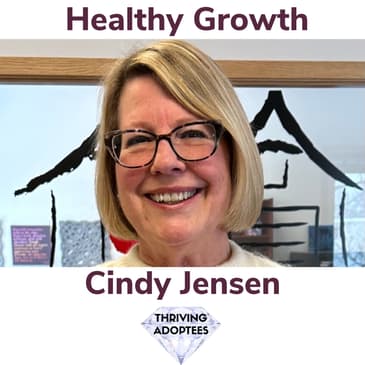
What does growth mean to you? How do we grow? Listen in as we dive into this BIG subject. Insights and practical guidance aplenty.
Cynthia K. Jensen is a Certified Social Worker in the State of Wisconsin. Cindy graduated Cum Laude from Milton College in 1978 with a Bachelor of Arts degree. From 1990 to 2009 she was employed by another Wisconsin child placing agency. During that time Cindy placed more than 550 children with adoptive families. Cindy keeps current on adoption practice by obtaining an additional 30 hours (or more) of continuing education every two years as required to maintain state certification. In addition, over the past 28 years Cindy formed strong professional relationships throughout the adoption community as well as with numerous other referral resources. She has excellent working relationships with the various professionals involved in the adoption process in Wisconsin as well as several other states. Cindy served on a legislative task force to create legislation for a birth father registry in the State of Wisconsin. She also spoke at the national convention for the American Academy of Adoption Attorneys and has been a presenter regarding the adoption process in many different forums. Cindy is also a past member of the National Association of Social Workers.
https://www.facebook.com/cynthia.jensen
https://www.linkedin.com/in/cindy-jensen-a2b55555/
Adoption Avenues, Inc. strives to provide environments of love and stability for children in need. Education and support is offered for everyone in the adoption process, from the person giving up parental rights to the new loving family. We are a Wisconsin licensed child placing agency offering a full range of adoption services. Our social workers have years of experience. Adoption can be difficult and confusing. We are here to help navigate the process for birth parents who are placing a child for adoption and for adoptive parents trying to choose the best avenue for building a family.
The services we offer include birth parent counseling for women experiencing unplanned or crisis pregnancies, home studies for all types of adoption, step-parent screenings, pre-adoptive preparation, foster home licensing and post-placement supervision services. Wisconsin is an "agency" state, thus a private adoption agency must be involved in every adoption.
https://www.facebook.com/adoptionave/
https://www.instagram.com/adoption_avenues/?hl=en-gb
Guests and the host are not (unless mentioned) licensed pscyho-therapists and speak from their own opinion only. Seek qualified advice if you need help.
Want to learn more about thriving for you, your kids, your families or your colleagues? Pick a time to talk here
[00:00:02] Hello everybody, welcome to another episode of Thriving Adoptees podcast. Today I'm delighted to be joined once again by Cindy Jensen. Cindy was on the show ages ago, so great to have you back on Cindy, looking forward to today. Thank you Simon, I am too. It was nice for you to invite me back again. Good to see you, good to see you, good to see your smiling face. So when you hear this word thriving, what comes to mind for you Cindy?
[00:00:32] I want everything in my life to thrive, I want my business to thrive, I want my clients to thrive, my employees, my garden, everything, you know, it's important in life. Thriving is to me about growth, healthy growth, I think. Growth, growth. When I think thrive, I think healthy growth.
[00:00:54] Yeah. So, you know, like sticking on the people side, that healthy growth, expand the metaphor. What's, you know, is this about watering? Is this about foundations? Is this about fertilizer? What is it? What does- All of the, all of the, all of everything you just said. Yeah.
[00:01:19] It's about all these things because it's about whatever it takes for an entity to thrive, you know? And that varies sometimes from entity to entity. Yeah, yeah. Okay. So let's narrow in on the adoptees, right? And in terms of the thriving, in terms of them as entities.
[00:01:46] And it listens, and Cindy runs an adoption agency in Wisconsin. So, and looks many years younger than her, yeah, than her age. So she's got a lot of experience in this. So if I narrow it down then to, in terms of what helps adoptees grow?
[00:02:11] I would say, knowing that they matter, honesty, age appropriate honesty with them. But starting at a really, really young age, when it might be a big deal to you, but it's not as big a deal to a two year old, you know, when you're talking about birth parents and things like that. But if it's just something they've always known about, always heard about, it's just normal for them, you know?
[00:02:41] And so it's also about spending time with that adoptee. Any child, I mean, any child needs a fair amount of time. You know, everybody says quality time, but they do also need quantity time too. So that's always tricky. But, and I think that no child can get too much love.
[00:03:08] So I'm a big proponent of open adoption. I don't push my clients into it, but I certainly educate them about the benefits of open adoption. And it's, I think, an amazing thing for adoptees because they have love coming from everywhere. You know, love from their adoptive parents, love from their birth families.
[00:03:31] They understand who they are, what their genetic roots are, you know, what the nature is, what the nurture is. Because they can grow up with all that information and it makes for a very more stable, mature person. Yeah. Because they haven't had gaps or they haven't felt betrayed. Yeah. Betrayed.
[00:04:00] I think betrayal must be horrible. I mean, I think anyone that's not raised with, if adoptive parents, it's important for them not to hold back information from their children. You know, they, even negative information, you know, has to be shared eventually in a, in as gentle a way and not in a spiteful way, you know, against birth parents.
[00:04:26] But in a gentle way of, you know, these, this person had things that weren't working in their lives. Yeah. Yeah. And, and, and people, I've interviewed a few, have you heard this term, late discovery adoptees? Have you heard that? No, I haven't, but. You can guess what it is, yeah? Yeah. It kind of does what it says on the tin. But. The sense of betrayal that must come with it. Yeah. Yeah. And what else?
[00:04:56] It's the lie by omission, isn't it? Right. Totally. It's, it's the lie, lie, lie by omission. And then people start to think about what. What else did you lie about? What else did you lie about? So. Okay. Yeah. Yeah. So the, the lies can clearly get in the way. What, what else have you learned about what gets in the way of adoptees growth?
[00:05:23] Um, if the adults become competitive, I guess, I don't, I'm searching for the right word, but. When they want to be number one, instead of a team, you know, let's all work together and love this child. There's plenty of this child to go around. You know, we don't have to, you know, we don't have to compete for things. That's about being selfish then, I guess. Mm hmm.
[00:05:52] And I, I, whenever anybody goes near the word team, I think that that, that I don't know who said it. Um, you have the office in the U S this show, TV show came from the UK and it's about a really cheesy guy. I love the office. You love the office. Um, he would say, uh, Brent, Brent, Brent, I think he was called, uh, the Ricky Gervais character in the UK. Steve, is it Steve Corral? Corral. Yeah. Steve Corral. Yeah.
[00:06:21] Um, so, uh, Ricky Gervais would say there's no I in team, you know, when he's trying to, uh, when he's trying to, uh, ref the, uh, the, the, the, the troops up. Yeah. Um, so it, it's about, uh, child centered teamwork rather than. That's what I was just going to say. It needs to be about the child's needs, not the adult's needs. And yeah, it's when you can help people stay in that place. Yeah. It's a much nicer place. Yeah.
[00:06:50] And what else, what else do you see getting in the way of that, of the growth? Um, uh, sometimes I would say society's, um, thoughts about adoption as well. Um, peers can be very, um, if say, uh, I'm looking now more from a birth parent's perspective,
[00:07:15] when they're thinking about choosing adoption, they get a lot of pressure and negative statements about adoption made to them. So there's a lot out in society. There's a lot of, uh, just untrue beliefs about adoption and how adoption works. Yeah. Yeah. So changing focus slightly.
[00:07:40] Cause, um, I know when we last spoke and when we've just caught up today, it's a, it's a tough, it's a tough, it's a tough space to be in at the moment. The, the, the, the adoption, the adoption space. Um, so what about, what about you? What does, what does thriving, what does thriving, what does growth mean, mean to you more personally?
[00:08:10] What does that mean to you? Um, I still learn new things just about on a daily basis in this work because each case has its own set of issues, its own set of humans that are all different from each other. Um, and so I just, I, I enjoy learning new things about people, learning new things about helping people work together.
[00:08:35] Um, learning, you know, doing things like this where you stretch a little bit, I'm not used to doing podcasts. So it was a little bit of a stretch for me, but that's okay. Um, um, I like the challenges of, of everything. I'm, I wish that, um, I guess there were more children for the families that I work with,
[00:09:02] but yet I don't, it's also extremely painful to go through an adoption plan as a birth parent. So, you know, there's always sort of conflicting emotions. Like in one way, I would like my job to go away. I mean, to not exist anymore, to not have a need for it. You know, if, if it gets where people can plan their families intelligently, you know, using birth control and the things that are available and, you know, love their children and care for their children. Yay.
[00:09:32] You know, that's awesome. Yeah. Yeah. Yeah. So what are the things that you've been learning recently that, um, that really stick out for you, Cindy? Um, well, we, we've, we learned about a lot about trauma in our recent education things.
[00:09:55] Um, it's been very trauma, um, focused, which is good because I've suffered from trauma in my life, not adoption trauma, but other trauma. And so I do totally understand how it affects, um, how people can learn, how people can love, how people can grow that if there's too much trauma, it gets in the way because it takes over. Yeah.
[00:10:20] And, um, so that's, that's been a nice thing, a good thing to learn and to help people get through their traumas. Did they, did they ever share anything about post-traumatic growth with you? Um, well, I've had my share of therapy for post-traumatic stress syndrome for myself. So I've kind of had it straight from, you know, from the providers. Yeah.
[00:10:46] Um, so it's kind of more in my, that, you know, it's how your life affects your work and your work affects your life. And, you know, so I've learned a lot, I guess, through that of having to just, you know, kind of having to go through the grief of whatever those traumas cause and, you know, have having the courage to face it, go through it, come out the other side, come out a little stronger each time. Yeah. What, what do you think allows us to come out stronger? Um, courage.
[00:11:19] It takes a pretty high element of courage, I think, to continually face trauma. So you need support, you know, to, you know, yeah, you go girl, you're doing it, you know, you go when you're doing it, you know, you're going to get to the other side, I promise. Yeah. Cheerleaders. Cheerleaders. Yeah. Yeah. Um, the, the reason I asked you about the post-traumatic growth, I'm sorry, I, I, maybe
[00:11:47] I didn't ask you it quite, did, have you heard that phrase before? No, I haven't. No, okay. Um, do you think that, do you think that it's significant that you haven't heard it? Um, I think it may be just a different way of expressing things. I think it just might be a language difference, but. Because when, when I heard it, when I first heard the talk, I think it's a little bit term, I'm not quite sure. A couple of years ago, maybe three years ago.
[00:12:16] I thought, why is nobody talking about this? Why, why, why is it PTSD all the way? Right. Yeah. No, no, no. You can't get to the other side. Why, why is it, why, why does nobody talk about post-traumatic growth? Right. Yeah. Uh, so I, I think it's highly significant because I think we have, we have, um, a media. Sometimes you have to readdress it, but then you get to the other side again. Yeah.
[00:12:47] Well, yeah. Um, we, we, um, sorry. Can you just hold on two seconds? Oh, yeah. So, yeah, I think it's, I think it's really significant that we don't hear a lot about post-traumatic growth and it's, and it's PTSD all the way. And I think it's really significant because it's a part of our, um, a wider kind of, um,
[00:13:17] media and, uh, social media and cultural narrative that is focused on pain. Mm-hmm. It's focused on pain and the, the, the media. Not as much money in the, the other way. Well, no, because they have to, they, they have to scare us into needing their newspapers. Mm-hmm. Right. Or they have to scare us into needing their eyeballs.
[00:13:48] Right. So that they can sell advertising space so that they can make money for their shareholders. Absolutely. Absolutely. And, and, and, and it, I, I do think the world has, has become a little bit, not a little bit, I think, has become a trauma obsessed.
[00:14:13] I've been saying this for a while, you know, why can't we be healing obsessed? Right. Why can't we be thriving obsessed? Yeah. Yeah. Why can't we, why can't we focus there? Right. And, and, uh, and, uh, you know, trauma education isn't healing. Mm-hmm. It isn't healing education. Mm-hmm.
[00:14:39] I'm, I'm, I'm jumping on a soapbox here. Yeah. When it's supposed to be an interview for you, I'm supposed to be interviewing you and I'm jumping on my soapbox. That's okay. To me, I think trauma is like a little break, you know, a little heartbreak or a big heartbreak, depending what the trauma is. And I think, you know, hearts like bones, when it heals, it's stronger.
[00:15:06] You know, if you break your arm and it heals, it calcifies over that break and gets even your, so your arm ends up being stronger than it was prior to the break. And so I think that trauma can be that way too, that once you heal through it and face it and deal with it. And, you know, as I said before, kind of get to the other side, you come out stronger and hopefully happier because you're more accepting of your emotional status.
[00:15:35] You know, you're what's happened to you in your life. So how does that link back to the courage thing? Well, it's dependent, you know, I'll say an example that was not me, but say someone had been raped. You know, it's hard to go back and think about that rape. In fact, therapists have to be very careful on how they manage that or they re-traumatize, you know, the patient.
[00:16:05] And so it's a delicate dance of, you know, dealing with reality, dealing with the pain of it and moving through it to get to that other side. And I'm not a therapist. I'm, you know, I was an English major in college. So what does social worker now? So what does, what does courage mean, mean for you?
[00:16:30] What's, what's, can you give some examples from your own? Even though it makes me afraid or even though it makes me cry, I still do it. You know, I just, even if I have to cry every day, I mean, I've, for a year, you know, that's, I've actually done that. And, but I still, you know, keep putting one foot in front of the other and figuring things
[00:16:58] out and, you know, running an adoption agency as a woman, you know, and I've been doing this work for 35 years now. So a really long time. I've had my own agency for almost 15 years. So just getting, a lot of it is just getting up each day and, you know, showing up. You can't sell much of a book called Showing Up.
[00:17:27] No, I know, but sorry. The truth isn't always glamorous. Well, but it's, it's kind of sometimes simpler than it. It's sometimes simpler than it's made out to be. People will make stuff out. You can't sell a book. Like Nike have sold a lot of trainers on the back of Just Do It.
[00:17:57] Right. But they haven't sold many books. Right. Just say, Just Do It. You know, they haven't sold many. You know, if you've got a book, if you've got a book and it just said, Just Do It. You know, like, you saw it on the spine. You saw the spine of the book in an airport newsagent, right? And it said, Just Do It. Just Do It. And it said Nike on it.
[00:18:25] And then you, so you think, all right, just pull it out. And then you look at the, you look at the front cover of the book and it just says, Just Do It. And then you open inside and every single page says, Just Do It. That's right. I know. Nobody's going to buy it. Nobody's going to buy that book. Well, examples. Examples in adoption. When I have a birth parent, even though their parents are saying, If you do this, I will never speak to you again. Their grandparents are saying it.
[00:18:54] Their friends are saying, How can you give away a child? This is your baby. How can you do that? What is wrong with you? And yet they face all that criticism from their own families who often threaten not to speak to them again, to kick them out of the house, all kinds of things. They still have the strength and the courage, even though this is traumatizing to them. This is to the birth parents.
[00:19:23] And so then that's causing cortisol in their system, which then is traumatizing the infant that's in their womb. So, you know, the baby is already getting trauma even in utero before the poor thing's even been born. And, but yet because they want this child to have a better life than what they've been living, they're going to face all that criticism and all that trauma.
[00:19:52] And then I come in and I have to, you know, I have to support them through that, you know, and help them. I mean, I try to, I, I educate them on all their choices so that they're making the best choice for their lives and then support them through that. And all, you know, in order to hopefully reduce trauma to that baby, not just to them, but to that poor new baby that's going to be born.
[00:20:16] And then the way we do it here in many places, the birth parents, if they want to build their own birth plan or in their own adoption plan, we build that together. And they meet the adoptive parents so that the adoptive parents can participate even prior to the birth in the best of circumstances. So that they're all at, you know, so they become a cohesive team even before that baby is born. And then they're all at the hospital together these days.
[00:20:47] Our hospitals give the adoptive parents their own room. The birth parents have their own room. And they're, you know, the baby's just sort of going back and forth between them. But everybody's doing, you know, skin to skin contact with the baby and some really wonderful, beautiful things as a team, you know, so that this baby has all these people who love them and who are honest with each other about what's going on and continue to build that.
[00:21:16] And so hopefully we reduce trauma, try to nip it at the beginning instead of at the end. Yeah, yeah. What have you learned recently on that subject, on the subject of reducing trauma or healing trauma or both of those things?
[00:21:52] I guess I just see it in action. You know, I learn as much from my clients as they learn from me. But it's, I see it in action. I see how scared they are. And adoptive families as well. They're all scared at the beginning. Everybody's afraid. Everybody's feeling like they're being judged. And I get to watch them build relationships with each other and grow in their thoughts about how this all works.
[00:22:21] And become just more loving people, too. I mean, it really does. To me, it all comes down to love and honesty and communication. I mean, it really does. Yeah. I don't mean to oversimplify it, but it really is what it comes down to. It comes down to. And being open to that, you know, being open to all of that. Yeah.
[00:22:55] So is that, does the love of what you do, is that what keeps you going? Absolutely. And, you know, just the feeling that hopefully I am making some difference. Yeah. You know, and it builds over the years.
[00:23:21] I mean, I've been a part of over almost 800 adoptions, you know, and that's not counting the step-parent adoptions that I do. And that's a lot of lives to touch. That feels good. I hope I've touched them in good ways. How do you reconnect to that passion? Or is that the right word, even? You know what I mean? Yeah. I think passion is probably the right word.
[00:23:52] I don't know. The universe just brings things to me that make me reconnect. They just, when I'm feeling like about ready to give up, and I was like, oh, I don't know if I could do this anymore. This is just, you know, it's, you know, I'm putting my own money into it. It's stressful. It's, you know, da-da-da-da-da-da. And then the universe will send me a case that just blows me away. You know, that's just so beautiful. And I get to witness it and be a part of it.
[00:24:22] Yeah. Yeah. Because a lot of people say love is not enough. People used to think that love was enough. I agree that love is not enough. Communication and honesty. Remember I said some things. You did, yeah. So let's dive in onto the, because honest is pretty clear. You know, it's pretty black and white. And I think we've been kind of down there, that route at the start of the conversation.
[00:24:52] So what's... It can be tricky. Yeah. You have to know the right words at the right times. But you can also, I mean, you know, you could screw up with kids and they still turn out okay. You know, if you are able to say you're sorry, that's another good one to be able to say, gee, I'm sorry. I was wrong. You know, I know better now. This is, you know, let's talk about it.
[00:25:20] If, you know, if there are issues like that. You don't have to be perfect all the time. So how do these two things fit in for you, the growth and communication? What's the interplay there? What's the connection? Between growth and communication? Yeah. Or is there one? You know what I mean? No, I think communication definitely engenders growth. Hopefully.
[00:25:50] That would be the goal. You don't want to use... I mean, you can use communication in a negative way or a positive way, just like anything in life. But... Yeah. Can you give us some examples there? Or some sub-themes that I'm not seeing that the listeners might help the listeners? Well, maybe like we were... I touched earlier on trying to share negative information with an adoptee about their birth parents.
[00:26:18] I think that's a really tough situation to be in. So that you have to be careful in choosing your words, kind in words. Maybe speak to a professional before you, you know, have that conversation with the child. You don't have to give them all the information at once. You know, it's... Adoptee... Just try to be open to questions. You know, be open to your children feel like they can talk to you.
[00:26:46] I don't know the best way to do it. I know I was really good at that. But I'm not quite sure how I was so good at it. We were the hangout house and my children and all their friends, you know, felt very comfortable telling me things. But I think, you know, being able to do it, to listen without judgment is helpful. Yeah.
[00:27:08] What have you learned around the connection that kids make between... Between... So... Their... Their worth. Their goodness. And... That's why you have to be careful how you share negative information because you don't want them to...
[00:27:31] To make that part of their identity, you know, just because a birth parent did some bad things doesn't mean they're a bad person. So you have to... You know... That's a hard concept sometimes for kids to eventually grab. So I guess you're back to that age appropriate. Right. Absolutely. And giving them... Like, they might ask a question, you know, like...
[00:27:57] I tell adoptive parents, they might say, well, how was I born? Or where was I born? And, you know, you don't have to tell them every single detail. You could just say, at the hospital. You know? Or explain the birds and the bees at that point in time. You know, that kind of thing. Yeah. Yeah. Give them the information they need. And then, as they get... You know, as they can understand more, keep adding on. Correct. Yeah.
[00:28:28] So is there another thing that you see aside... Alongside... Alongside growth... That says thriving to you? Just, I think, contentment is a hard thing for people to... To find in life. And I noticed that people who are... Well, we used to... There was a big period of time where everybody was dysfunctional. Do you remember that?
[00:28:58] When in psychology? And so I was always waiting to meet a really functional person. And then I finally did meet one. And I was like, you are amazing. You should be in the dictionary next to that. And what functional people... What seemed to me that they had was a contentment in life. And an acceptance of things. But always coming from a place of kindness and love. Or as best they could.
[00:29:26] You know, we can't always do it every minute of the day. But... So that was a big learning moment for you. It really was. Yeah. Yeah. And it was actually when I was doing home studies. You know, because you have people who are telling you their life stories and everything. And again, I've learned so much from my clients. And I was like, oh my gosh. Your parents were so awesome. And you're so functional. Yeah.
[00:29:55] We have a saying over here. A lot of people in my neck of the woods are fine. Fine. And the F stands for effed up. Insecure. Neurotic. And emotional. There you go. But it's just... I'm fine. I'm fine. Just fine.
[00:30:25] Yeah. It's all in the tone. Yes. It's all in the tone. Not in the... The word. The words, yeah. So that was clearly a big... Meeting a functional person. That was clearly a big learning moment. Yeah, it was. Before you're in. When you look back, you said 35 years. Did you say? Yes. In adoption space, yeah.
[00:30:50] Are there any particular big learning moments that come to... Oh, so many. Well, I also... Adoption didn't touch me personally until I married my second husband. And I have two children by birth. He had one child by birth and two by adoption.
[00:31:16] And so my stepchildren, one is black and one is biracial. So I became a stepmom to transracially adopted kids. And that was a big learning experience for me because I had to kind of, you know, walk the walk and talk the talk both. As I had not until that time been, you know, actively touched by adoption in my life.
[00:31:45] And I came into their lives when they were in middle school. So it's not the greatest time to be coming into their lives. But we have struggled through the years and managed to build pretty good relationships. And then when my stepdaughter was 22, she became pregnant and she placed a baby for adoption. So I'm actually, you know, kind of this is the face of a birth grandmother or a step birth
[00:32:14] grandfather, which is really, you know, gets really complicated. And so I have participated in the open adoption that she has. And so I've been able to see Maria, I guess only three times through the year. She's 15 now, but I just recently saw her right before Christmas. And that's been amazing to actually be able to live an adoption plan.
[00:32:44] And I've learned a lot from that, you know, as far as respecting everyone's choices. I try to just be supportive and warm and open. And the adoptive parents are the same. And Maria is a wonderful 15-year-old who's doing amazing. And so that's been, those experiences have been very, you know, it's good to have life, lived life experiences.
[00:33:13] Where do you come to this from living, you know, the life? So how have those, how has that lived experience, how has that influenced or changed what you do? I don't know that it's changed it, but I think it gives it more validity. You know, when I talk to clients, I can say, listen, I've been through this, you know.
[00:33:38] I, you know, my stepdaughter placed a baby for adoption, you know, and I didn't make her life miserable. You know, I was supportive of her doing, making that choice. You know, I didn't tell her she was going to be disowned or, you know, all those things that I mentioned earlier. And I don't say that to them, but I just try to lead by example, you know, of this is what I did, you know, this is how we handled it.
[00:34:06] And so sometimes it's, it's a good thing to have to actually, because otherwise people can blow you off if you haven't been in their shoes. Well, you don't really know what it's like to be in my shoes. Well, yeah, I kind of do. Do any moments stand out in that, over those 15 years?
[00:34:37] I think, I think the strength of the birth parents always stands out for me. The strength and courage of the birth parents that I work with. I remember the very first birth mom I worked with, she was only 17 years old. And she was a senior in high school. So was the birth father. It was a typical, like straight A student, you know, like what people think an adoption is going to be, but it rarely ever really is. But she was a high school senior.
[00:35:07] They were both going off to college supposedly, but her mom had lymphoma. And so the first time I went to see her, her mom was very, very sick. And I could tell that, but the family was really in denial about it. So then the next time I went to see her while I was there. Excuse me. I can, can you stop? I had someone just walked in the door.
[00:35:36] Sorry, we're back here. I've had an interruption at my end and Cindy's had an interruption. So that's, that's what all that. Yeah. Where were we? You were talking. I was talking about the courage of my birth parents and I was talking about the very first birth mother I worked with 35 years ago. And she was a 17 year old young woman who was very beautiful, very sweet, very smart. Seems so young. I mean, I didn't realize how young 17 was that, you know, I'd been away from the age
[00:36:04] until I went and was counseling with her. And anyway, the first time I visited her, I met her mother who had cancer and who was just, they were very distraught about their daughter in this crisis pregnancy. The second time I came to visit her, her mother was in bed. And while I was talking with this young woman, her mother went into a respiratory distress
[00:36:33] and couldn't breathe. And so I had to call an ambulance and the ambulance came and she's like, don't leave me, don't leave me, stay with me. So I stayed with her and went to the hospital and it ended up the mother had to be, they put her on life support. Once we got to the hospital, they intubated her. Her dad worked in Chicago. It was going to take him an hour and a half to get there. And she was like, please don't leave me, stay with me.
[00:37:03] And I'm like, you know, I'm not going to leave you till you have somebody from your family here with you. Finally, a doctor came in to talk to us and he wanted this young woman who was only 17 years old to take her mom off life support. And I had to say, this is, I'd been on the job for three weeks at this point in time. I had to say to the surgeon who was a few years older than me and a lot more arrogant,
[00:37:32] could you step out into the hallway so we could talk for a minute? And we stepped out and I said, listen, she's 17 years old. Her entire family is so upset by this pregnancy. They've already blaming her for making her mother sicker. Um, she cannot be the one to make the decision to take her mother off life support. I said, I don't care what you do, but you keep that woman breathing until her father gets there, till her husband gets here and he can make the decision.
[00:38:02] So anyway, they did end up taking her off life support. Her mother died that night. Three weeks later, she delivered a beautiful baby boy and still proceeded with the adoption plan to place that baby for adoption with a wonderful couple. I remember all their names. I'll never, I don't think I'll ever forget a detail of that entire case, but, um, she did call me a few years later when she was in college and she was studying to be a speech therapist.
[00:38:31] And she thanked me, you know, for what I had done. And, um, it still gives me shivers to this day, her strength and what she did to make sure that her son had a good life and then went on and made a life for herself. Wow. That feels like a good place to bring it in.
[00:39:02] Thank you listeners. Thank you, Cindy. Thank you. Unless there's any, sorry, I should have asked you if there's anything you'd like to share. Yeah. Thanks, Cindy. Thanks, Cindy. We'll speak to you again very soon. Take care. Okay. Take care, Simon. Bye-bye.