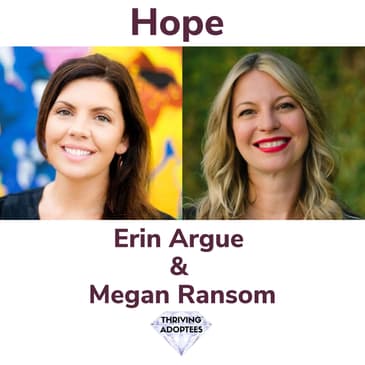
If things are looking tough right now, here's some hope for you...According to one of my mentors - Richard Wilkins "The past is a place of reference, not a place of residence" The past may explain the present but it needn't dictate the future. Join Erin and Megan as we explore hope, healing and more as we look forward to a brighter future.
Erin Argue is Heart Galleries of Texas Post-Permanency Director
Erin Argue first came to TACFS as an intern in 2022 during an MSW program at Texas State and returned as the Heart Galleries of Texas Associate Director in 2023. Before the Alliance, Erin spent her career supporting youth in foster care at member organizations, Partnerships for Children and Settlement Home for Children. There, she managed major programs, services, and projects.
Originally from the Great Lakes State, Erin graduated from Michigan State University and earned two B.S. degrees in Psychology and Environmental Geosciences.
Now, Erin lives in Austin. As a people person with a love for connection, she spends lots of time outside, with friends, and with her dog, Charlie the Bandit.
Megan Ransom is Chief Executive Officer The Texas Alliance of Child and Family Services (TACFS).
Megan joined TACFS as the Director of Community Engagement in 2019, moved into the role of Chief of Staff in 2021, and became the CEO in 2025. She came to TACFS from Partnerships for Children, an Austin-based nonprofit, where she served as the Director of Foster and Adoption Services. Megan worked closely with DFPS and many Central Texas child placing agencies and nonprofits on community education/outreach initiatives built around children in the foster care system who are waiting for adoption. She also worked at Texas CASA in the Quality Assurance Department.
She has a passion for building strategic collaborations that produce results and continuously work towards improvement of practices and partnerships to lift up the children and families involved in the child welfare system.
An Indiana native, Megan earned a BA in Sociology & Psychology from Indiana University and a Master’s of Nonprofit Management from Regis University in Denver, Colorado. She is also Trust-Based Relational Intervention (TBRI) Practitioner through the Karyn Purvis institute of Child Development.
Megan and her husband are parents to two boys, both adopted through the Texas foster care system.
https://www.linkedin.com/in/meganshawrhoades/
https://www.linkedin.com/in/erin-argue-2055646/
https://www.instagram.com/txalliancecfs/
https://www.facebook.com/texasalliance/
Guests and the host are not (unless mentioned) licensed pscyho-therapists and speak from their own opinion only. Seek qualified advice if you need help.
Want to learn more about thriving for you, your kids, your families or your colleagues? Pick a time to talk here
[00:00:02] Hello everybody, welcome to another episode of Thriving Adoptees podcast. Today I'm delighted to be joined by Megan and Erin. Looking forward to our conversation today. You guys. Yes, thanks for having us. We're looking forward to it as well. Yeah, so I've, the last hour I was in Minnesota where they've got snow. I'm guessing you haven't got any snow in Texas right? No, but it's freezing.
[00:00:31] I mean, 34 degrees. We are close to it. You're close to it. Okay, so this isn't what us Brits associate Texas weather with like. No, the 80s this weekend. Yeah, wow. So this is Megan Ransom. She's the CEO of the Texas Alliance for, Alliance of Child and Family Services.
[00:00:55] And Erin, Erin Argue works with Megan as the post permanency director of the Heart Gallery. So some listeners may have heard me interviewing people from the Heart Gallery before. So, Megan is also a mum. You've adopted two kids from the foster care system as we talked about last time. Yes. When we spoke here.
[00:01:20] And Erin's personal experience in this, they did, her family did do some kinship placements, but there was reunion. So that just kind of gives our listeners a picture of where you're coming from. So, so the big question that I like to start with is this idea of thriving. So perhaps we could start with you, Megan. What, what, what comes to mind when you hear this word thriving?
[00:01:50] What does that, what does that mean to you? Yeah, I've, I've, I've thought about this question. I knew it was going to be asked. So I think for me personally, that really flows into everything I do, everything personally and professionally as a mom, as a professional working in the child welfare field.
[00:02:11] Uh, I think for me thriving is not only having my best, my basic needs met, you know, thinking of the Maslow hierarchy of needs. We don't want anybody hangry or lose, you know, lack of sleep. But I think also, um, having hope too, is a really big driver for me and, and looking to the future, looking to what could be knowing that, um,
[00:02:41] things that I'm doing or the life that I'm living is, is making a difference and supporting others. Yeah. And those fit together, right? Cause it's the, it is the, our personal vision, our vision for our families, where we want to be our vision for where we want to be professionally, where our organization wants to be with CEO, right?
[00:03:05] The whole thing is people talk about visionary leaders, you know, to, to, to, to be a leader, you have to be able to, um, paint a picture of, of what, what the, what the future, future looks like. Um, one of my main mentors says the past is a place of reference, not a place of residence, right?
[00:03:32] So we can kind of look, we can look, look back to the past, but we don't really want to be staying stuck there. Um, it, it, uh, hope, hope is the power for a better, for a better tomorrow for, for our families and, and our organizations. Right. Absolutely. Yeah. So what about you, Erin? What, what does thriving mean to you?
[00:03:56] You know, um, we, like you said, we, we were, we had the fortunate opportunity to kind of learn ahead of time that this is one of the questions we're going to be talking about and thinking back to my own experience in my youth and thinking to all the opportunities I've had to learn alongside youth as I work with them, as they were aging from the foster care system.
[00:04:16] Um, it was really critical that with that hope that as a young person or a person that was looking to find, you know, relational permanency through adoption, that we wanted to make sure that there were adults that took you seriously.
[00:04:33] Um, so as we look professionally and personally through the work that we're doing, we want to make sure that we are providing the youth and ourselves with the opportunity to be surrounded by people who take you seriously and value your input and see you more than some of the labels that society might place upon you. Um, and also be supported and embraced by structures that you're not having to perpetually fight against, right?
[00:05:03] You are in environments and, and in systems where people are there lifting you up and the structures are there lifting you up. So that way you've got your independence and your room to grow and your room to lead and your room to explore and be who you are, where there are people who are caring for you, um, and systems that are there to support you so that you can find that hope and not just have your basic needs met, but also just really expand beyond those.
[00:05:30] Yes. So, um, so, um, so, um, so, um, so, um, one of the things that, uh, Aaron was, uh, sharing with me before we hit the record button is that you've got a big role in terms of running mentoring for teens and extending out from that, whether they are adoptees, whether they are in the foster care system or, or whether they're at risk.
[00:05:54] So, uh, uh, based on, perhaps based on that, what, what, if we say thriving and then we have the word adoptees or thriving young, young, young people, what does that mean to you? What extra dimension does that bring to this? I think it means everything, right?
[00:06:18] Like we as personal humans and professionals have a responsibility to all of the children, you know, we're here in Texas. So all of these children here in Texas involved with the foster care system are our responsibility at the Alliance. Um, and Megan does such a great job of being a visionary, like you said earlier and helping our organization really kind of lead that charge.
[00:06:41] But we just have to really integrate every aspect of what we needed to thrive and succeed in the systems and our approaches and the way that we engage and interact with these youth and with these systems to make sure that they are as best suited and best equipped to meet the, the nuanced needs and the evolving needs as, as they come for these, these youth. Yeah.
[00:07:09] I mean, use the word label, right? I think, um, that's powerful, right? People talk about, you know, care experienced, fostered, adopted, you know, adoptee. Like I didn't use the word adoptee about myself until like five years ago, just for shorthand. Um, uh, just using it for shorthand.
[00:07:37] What have you learned about that labeling thing, Erin, in, in, in the work that you've done in youth? I mean, how long do you want this to be? Because I think that that is one of the things that is very, very nuanced and complicated. And in some regard, when you're working systematically, labels are an inevitability because it's a very easy way to categorize experiences. But it does so much harm in that same vein.
[00:08:03] Like you said, you didn't choose to use that, but you did because it was just an abbreviated way to explain your experience, right? So we have to have these labels to be able to very universally help us understand at some sort of basic level what's happening, but also then not utilize those labels to then oversimplify the individuality and the experience of each youth.
[00:08:24] And I think that we often use labels to create systems that are intended to be generalized, but we don't need generalized care and generalized approaches because each individual youth that we're serving has an individual set of needs.
[00:08:38] So it's really addressing the complexity and the line between the two of those and how do we generalize this enough to get a general basis of understanding, but also make sure it's flexible enough to meet the individualized needs because the labels don't do a great job of explaining the wonder and the uniqueness and the goodness of each individual that's involved within the system. It is complex at many levels.
[00:09:06] And what popped into my head and this culture reference might be too old for you. Do both of you know who Popeye is? Yes. Yeah? Okay. So, you know, he says, I am what I am and that's all that I am.
[00:09:34] I am what I am and that's all that I am. So, it's about no label. Mm-hmm. And ultimate uniqueness, I guess. I would agree. I think, you know, at the Alliance, we have our Alliance, our membership association.
[00:09:57] We also have the center, which is kind of our raising all ships work, our research, our training, our supports too. And I think we are always thinking about that. And like in all of the work that we do, whether it's adoptees, whether it's, you know, the commercially sexually exploited youth populations that we're serving or our family resource center.
[00:10:23] It's just, we are constantly fighting against the labels to bring out the individuality of not just our providers, folks providing direct services, helping equip them with the right tools, the right trainings. But also, always our North Star is supporting children and families and making sure they feel seen and heard.
[00:10:48] And everything we do works towards that to assure folks are thriving in Texas, in this world, in their communities. And that is always kind of how we're thinking about what work we take on or even the culture of our organization. I think Erin kind of touched on this, but it's in our core too.
[00:11:12] I think it's how we as a team function, how we talk to one another, how we explore and understand each other or the work that we're doing. It is always driven by making sure we're supporting each other and understanding people as individuals and not creating those labels, even internally too, right? Or in our own lives, but really understanding one another. Yeah.
[00:11:40] Well, I mean, you went back, you mentioned the massive hierarchy of needs and that self-actualization is at the top of that, right? It's funny how that stuck with me. I did a psychology course module as one of my degree. I think it was the second year, one of six modules was psychology. And it's the whole person, but self-actualization is at the top.
[00:12:07] But down at the bottom, those basic needs, like sleep and water, they're huge. You know, I interviewed a lot of adopted parents and they have a lot of sleepless nights.
[00:12:26] And that doesn't set us up for a great, well, for me, I know me, I function a lot better with a good night, with a good night's sleep. Yes. So we've got to look at all that stuff. Yeah. Our body. So what helps, if we stay with you, Megan, for the moment, what helps you thrive?
[00:12:54] What are the key drivers of your thriving? I think, I mean, a lot of what you just mentioned, but just feeling, you know, feeling like things are right. If your core, if your center, your home, your family, you know, isn't feeling right or isn't, you're not feeling that connection.
[00:13:21] I think finding that balance for me, especially stepping into the CEO role and having my boys that are still, you know, they're a little bit older. So they're not necessarily like, you know, need me as much, but I would say just as much, but in many different ways.
[00:13:40] So I think that was always a priority, especially stepping into this role is finding that balance and assuring that I can give the Alliance and the center and our team and all of our, our network and provide us folks doing the really important work, everything I have. While also keeping that core and balance with centered with my family.
[00:14:04] So I am thriving best when things are good at home, when, you know, if it feels good, I'm getting enough sleep. And then I can then take my best self into the day, into our organization to support the team and the folks doing the work. Yeah. And Megan, don't sell yourself short. I know that you said that they don't need you as much, but I would argue that your children just need you.
[00:14:33] In drastically different ways than they did, you know, five or six years ago. That is very true. That is very true. Yeah. So what about you, Erin? What drives your thriving? You know, I wholeheartedly agree with what Megan said. I learned something when, if you spend a lot of time in direct care services with individuals who have endured complex traumas,
[00:14:59] you then yourself become exposed to, you know, secondary and vicarious traumas. And in exploring reactions and responses to those, I heard a phrase once that really stuck with me that was kind of, there's no such thing as a work-life balance. It's more of a work-life salience. And that has kind of helped me find ways to thrive.
[00:15:24] You know, once my basic needs are being met, it's really been beneficial for me to know that I am not at 5 p.m. no longer, Erin Argue, you know, Heart Galleries of Texas Post-Permanency Director and Erin Argue. Not that. I am the same person and I integrate the important aspects of what I get to do every day into my personal life. And I bring my personal self to my professional experience.
[00:15:52] And so being able to find that I'm not trying to balance the two, but I'm trying to make sure that I've integrated them in a way that allows me to step away when I need to step away, but also be all in at times that might not be traditional all in times and know that I have the ability to step back in the future, even if I'm being, you know, feeling overwhelmed.
[00:16:14] And having that safety professionally and personally to kind of wrap around what I'm doing has been really helpful to allow for thriving and allow me to kind of shed some of the expectations that I had to do this or do that or I had to fit into these boxes. And it's been really freeing to kind of feel that way and take that approach. Yeah. Go on, Megan. So I was just going to add, and I've seen Erin and I, just a little backstory.
[00:16:43] We've worked together for over a decade at a prior organization too. And I have, so we've truly grown up together in a sense professionally, but I've seen her evolve too. And the role she had, the direct care role, everything she just said can be so taxing. And she always handled it with grace and with care and concern.
[00:17:09] And so it's really great to hear her say that because I know that there have been a lot of sleepless nights. She has had worrying about the kids she's caring for. Yeah. Even now that I'm not directly with them, I still worry about them. So, you know, you mentioned this word secondary trauma.
[00:17:31] I sometimes hear this word post-adoption depression, which scares the bejesus out of me, right? Have you heard Bessel van der Kolk talking about this stuff? Do you know who Bessel van der Kolk is, right? Body keeps the score. Body keeps the score guy, right? So he's recently become aware of his secondary trauma. Only recently.
[00:18:01] And for those, this guy has sold 5 million copies of this Body Keeps the Score book since the last 11 years. And he's been, he'd done like 40 odd years of professional work in this area before he wrote that book, right? So he knows his onions.
[00:18:25] And he's only recently become aware of the fact that that immersion in the trauma world for decades has had an effect on him. And I just think that that is, on one hand, that's really scary.
[00:18:45] And on the other hand, he's actually saying, pointing us into our own, if he can get it, anybody can get it. Yeah. And is he freeing us to talk about it? You know, I think about, you know, we mentioned Maslow's Hierarchy of Needs.
[00:19:11] I think of old-timer people in psychology and Jung saying, you know, until we make the subconscious conscious, it will rule our life and we will call it fate. Like, if we don't know that we are suffering from this post-adoption depression or we're suffering from this secondary trauma, we can't do anything about it, right?
[00:19:44] Yeah. Yeah. It makes me think, and I don't know if this is the direction you're heading or if this is, I know, I'm sure you've talked a lot about it on the podcast. I think I've heard an episode or two too, but we are in Texas. So we have definitely drank the TBRI Kool-Aid and, you know, willfully. And we have a number of practitioners, TBRI practitioners on our team, including Erin and myself.
[00:20:13] She is even higher, like she can do the trainings as well. I don't know what next level that is called. But we have a great partnership with TCU and the folks doing that work and a lot of our member, you know, this is a model kind of being sought after or looked after.
[00:20:32] And I think for me, even personally, and as an adoptive mom to understanding myself, like understanding the experience, experiences I've had, how that shapes my behavior, understanding the, you know, the, the need behind the behaviors of my kids.
[00:20:56] And understand even with, in my relationship with my husband or my friends, like that had, has been such an opportunity for me to understand how to be my best self or to, to shift.
[00:21:12] If I, if something is feeling off or, but to handle those secondary trauma experiences that I may be going through, whether it's hearing, you know, because we have a lot of folks even on our team too, that have worked for the state that may have not been in direct service, but you hear those stories.
[00:21:31] You are working, you know, you hear the details of the story that you, you carry that to your core, you carry that with you and everything you do.
[00:21:43] So I think understanding what to do with that is so powerful and has been so powerful for me and something that we, as an organization to understand and really try to promote and push out, whether it's, you know, to youth, young adults, professionals, train the trainers, all the opportunities to really combat that. Yeah.
[00:22:11] The other thing that pops into my head is if adoptive parents listening and thinking like being aware of what's going on for the people. So, you know, we're trying, we're trying to get the support that our kids need and systems have a habit of pushing back against us.
[00:22:40] And the people in understanding that the people in those systems may be suffering from like secondary trauma, like, like we are. So maybe it will help us cut them a little bit of slack somehow. Yeah. Brings out the humanness, right? Everybody's human at the end of the day. And we're kind of in it together.
[00:23:08] I was talking to Michelle, the lady I was speaking to in Minnesota before this. You know, I was, the word fight comes up, you know, fighting to get what we want. And it's just, it's just not a very helpful word, is it? It's not a very helpful verb. But that's how I, you know, that's how I hear it.
[00:23:33] That's my worldview, my perspective on what people need to do. They need to fight to get. And maybe it would be more helpful for them if I saw it slightly different. Yeah. Agreed. Especially in such complex systems too, where you almost, you know, as an adoptive parent,
[00:23:56] I know Erin, especially in her post-adoption work too, understanding what parents and children need to thrive in permanency has been a key part of the work that we're doing. And it almost feels like you have to, sometimes I think some of the situations these adoptive parents find themselves in, it almost feels like you have to fight the system that's supposed
[00:24:23] to be supporting you to get what you need because it's not always clear. The doors aren't always open. Services aren't there or easy to access. And so it does almost feel like, I mean, I'm sure it does feel like that very clearly for many people experiencing. Yeah. So what gets in the way of us thriving, do you think?
[00:24:56] When you say us thriving, like just in general? Well, I'm giving you freedom to go where you need. If you want to talk about that personally, if you want to talk about it professionally, if you want to talk about that, you know, like from a human perspective, you know, what, whichever way you want to go. Yeah. Yeah.
[00:25:24] I think for me and Aaron, please jump in. It kind of lands that question lands a little bit professionally when we're thinking about, you know, outcomes for adoptees or for youth aging out of the system. That's one of our passions here at the Alliance and the center is, is how, you know, what, what gets in the way of these, these young adults, eventually adults thriving and being successful.
[00:25:54] And, you know, having much of what Aaron said to at the start, when we were talking about what helps us thrive, but, but not having the tools and the tool belt to even understand how to thrive, to being released into the world. Maybe it's an adoption disruption where the only family you have ever known is no longer there. And you don't have the tools, or maybe you aged out of the system with no relational permanency
[00:26:23] or no strong core relationships with adults to help support you. I think that gets in the way of, of young adults and successful, you know, successful adulting and moving forward in life when you don't even have the core elements to be able to thrive to, or to understand the steps to take thrive. And maybe it's never been modeled for you. Yeah.
[00:26:50] And I, I definitely think that we in the state of Texas and working alongside the state of Texas have identified that there are so many systemic barriers that exist to inhibit everything that Megan just said. Um, and you talk about fight, right? Like the families are fighting the system and the system is fighting the system and we are fighting the system and we are all working for the same goal and outcome.
[00:27:19] It's just not a linear progression and is riddled with red tape and legislation and things that are intended to be very good, positive things set up for, for youth and families. But then down the road, we realized, oh, that didn't actually have the intended outcome. Um, but when you talk about these young adults and things that get in the way of thriving, like I remember, um, everyone is always in Texas up in arms about the state of post-secondary education.
[00:27:49] And even though these young adults who age from the foster care system or adopted later in life have access to free tuition and fees in public universities in Texas, it's a very, very low utilization rate and a very, very low graduation rate. And everyone is like, yes, we need to get these kids through and get them to college. And that's really fantastic. But you have to remember that this isn't a lack of intelligence, right? It's just that I worked with a kid who was in 42 different schools before she aged out of the foster care system.
[00:28:18] That means she had 42 different math teachers. And even if you are in school every single day and you transfer 42 different times, it takes three days to make that happen. You are missing a tremendous amount of just consecutive education that then means you're missing a lot of the fundamentals. And then people label you, as we talked about at the beginning, and then you're labeled as uneducated or not very smart.
[00:28:43] And those are completely false labels, but they are then ingraining into your brain every step of your way through your march to adulthood. And then you turn 18. And like Megan said, if you don't have any sort of supportive adult or relational permanency or someone to fight in your corner, then you are just kind of trying to navigate life and get transportation and employment and housing and make sure that you have access to these very, very basic level of things.
[00:29:12] But don't have the support of the resources or the help to let you do that in a way that makes sense for you and gives you your autonomy and doesn't feel like someone is pitying you because these kids don't need people to pity them. They need someone to help make sure that they have access to resources and access to supports. Yeah. Yeah. You mentioned the word autonomy there. You know, I think about this.
[00:29:40] I think about this a lot when I see so many people advocating for change or pushing for change. So not just advocating for their own kids. I mean, advocating for, I think you probably see more of it in the US, sorry, in the UK. Maybe it's just because of a couple of people that I know, but they are campaigning hard
[00:30:09] again for system change. And I figured, yeah, we, clear, we want systems. We want to be better. We want our families to be better. We want our systems to be better. Like the whole thing is about progress and hope, as you mentioned at the top of the conversation, Megan. And yet, if we're waiting for systems to change, you know, we're going to be waiting a long time.
[00:30:38] And how do you, we talked about, you talked about work-life balance, Erin, and work-life saliency being a different way of looking at this. But what about, what about advocacy versus autonomy and waiting for systems to change rather than pressing on?
[00:31:06] And do you want, either you want to pick that up? I don't, is that a clear enough question? I'm not sure. I think so. I think that, you know, as a true social worker, both can be true. You can be. Of course. Yeah. I think that they take away your social work degree if you don't say it at least once every time you have a conversation about something social worker. So I got that out of the way so I can keep, I can keep my master's degree for now.
[00:31:32] But I think that you are, we are letting, you know, even once children are in adoptive homes, that does not decrease their need for autonomy. And it does not undo or negate any experiences they have leading up to that. And we know that even though adoption is a wonderful and beautiful thing, it also brings up feelings of grief and loss for a family that did exist that no longer exists, right?
[00:32:01] So much like everything we've talked about, there is so much nuance that exists in this space. And we are helping those youth find their autonomy and let them kind of be the drivers in what they're needing and also listening to them and learning from them and taking their lived expertise and use that to push these systemic barriers.
[00:32:29] And I think we're living that in Texas right now. We work really closely with DFPS. We work really closely with our contracted posted app providers, and they are operating within systems that they didn't have the ability to change and they have a lot of red tape. And so we said, yes, we are going to fight for this and we have your back and we're going to do whatever we can to support this. And also simultaneously, we got funding through the legislature and the 88th session that allowed us to provide un-red tape support.
[00:32:58] So we are working with them to make these changes that are super critical and necessary, while also simultaneously going about it in a way that completely skips the red tape of the system that currently exists. And also then working directly with youth with lived experience and families who have assumed permanency of a child and providers who are providing services and gotten their input on what they would like to see.
[00:33:24] So we're constantly, always, always up in the balcony looking at the big picture. Well, simultaneously, we are down in the weeds taking every grain or blade of grass and grain of soil and looking at that and seeing what we can do to make sure that we're doing it all. It's not always being done beautifully. And we are building a plane while we fly it. And sometimes that plane is on fire and people are asking when the drink cart is coming through and that part is not built yet.
[00:33:52] But we're trying to meet the needs while pushing against the system, while listening to the youth and young adults, while understanding that they're still figuring it out too. Yeah. Yeah. And you sum that up beautifully because if I had a dollar for every time I said, yes, but there are kids aging out of the system today, or there's an adoptive family that could fall apart today.
[00:34:19] Because yes, you can advocate and push for these lofty big changes or want to see a better system. But today, families need help. Today, youth need help. And that has been part of the drive, especially as Aaron said on the Heart Galleries of Texas project. Because not only is it a heart gallery, you know, you have your heart gallery programs that focus on adoption recruitment and education and that piece.
[00:34:48] But this second piece of the project, this post-adoption, post-permanency, exactly what Aaron said. It has taken the state-run post-adoption program. And we said, yes, we want changes there. We're going to advocate along the way. We want to plan with you, DFPS, for next legislative session. And they have been amazing in thinking through the barriers there. But at the same time, we have this money. We have this funding to infuse into families right now.
[00:35:17] Like, what is missing? Oh, there's not a specialty therapist in Region 2, in a rural county. What agency can help find the right therapist? And we can fund that and get that child or family what they need. So, like, Aaron has done a fantastic job, too, through our research and exploring all throughout the state what adoptive families need or post-permanency families, even.
[00:35:44] So that includes kinship families that are, you know, any way permanency is formed through children of really identifying those nitty-gritty details of what is needed to not just advocate in, you know, down the road or for the change, but to make change today and support families and help them thrive. So is what you're talking about short-term and long-term at the same time?
[00:36:13] Like dual processing? Yes. Yeah. And what would that look like from an adoptive parent perspective? Because you're talking about it from an organizational perspective. Is there a kind of like a partner? Well, you can start. And, Aaron, you tell me if I'm getting this right.
[00:36:42] But, you know, from an adoptive parent perspective, as an adoptive parent, you have the option to sign up to receive post-adoption services in Texas. And the post-adoption services have just, to no fault of their own or the contractive providers, as Aaron said, we work so closely with them. But they, it has not been funded correctly over the years. The need has outpaced the funding.
[00:37:12] So as an adoptive family comes in every year, the resources and support has become more and more limited because there are more families joining and it's just been outpaced. So as an adoptive parent, maybe you, you heard your caseworker say, sign up for post-adoption supports that are important, or maybe you did it and you missed that. You said, I want to be done with involvement, you know, oversight with, with the state.
[00:37:41] I want this adoption to be final. Here we go. And, and what we know too, through research and understanding is that sometimes, you know, problems don't even arise for an adoptive family or behavioral issues or thing, you know, as Aaron was speaking out, grief and loss may not even start to bubble up until little kiddos and adolescents, and that family hasn't been connected to any services or doesn't
[00:38:10] necessarily understand where to go to help, to get help. So what this project is doing is equipping, equipping community organizations to be educated and also funded to help those families that maybe haven't been enrolled in the state run post-adoption program, or maybe it's going to take some time to get enrolled or get what they need, or maybe the funding's gone to provide an adoptive family with the
[00:38:38] resources, specific resources they need and help guide them for what they need to be able to support their family and support their child through whatever they're going through and not have to think about, you know, relinquishing parental rights or, you know, the, the, the worst case scenario to really be able to receive what they need. Yeah.
[00:39:05] I think what, what I was talking about was pursuing different options at the same time. So looking to talk to different people at the same time. Uh, what, uh, so here, here in the UK, a couple of years ago, the trust, one of the trustees
[00:39:28] of a very large organ adoption organization, um, wrote, wrote a piece in, in a big newspaper. Um, I, I, I, uh, talking about her own, the, the, the failure of her own, uh, of an adoption, you know, like she's an adopted mom and the, so the, it told, it told this story and then
[00:39:54] it got to the point where she needed some therapeutic support and it wasn't available in her area. And, and then the next step was, well, the, the adoption was dissolved. Right.
[00:40:17] And I was, as I read that, I was expecting her to say, so I went outside my area. Do you know what I mean? So I, I, I, I came up with a creative approach. It was like, she only went down one route. It seemed to me that she only went down one route.
[00:40:41] And so instead of trying, instead of exploring different avenues to solve the, solve the issue at the same time, she was, she, she just, she was kind of blinkered and she thought this is, this is the route that's, this is the route that I'm going to go down. And when she hit that brick wall, that, that was it.
[00:41:07] So yeah, I think that's what I'm getting at is, is pursuing multiple solutions at the same time consecutively rather than one after another. Is it what I mean? Like that, that makes sense. And I, and I will say to Megan's point that the TLDR version of it is that, yes, this opens up the opportunity to seek multiple avenues for support simultaneously and turns.
[00:41:37] Some no's into yeses. But to the point of this parent that you're speaking of, I think that one of the, the complexities that exists in this space is that often it seems as if a family has taken one route and then they hit a dead end and they quit. But what we are actually learning and what our contracted posted out providers know and
[00:42:02] what the families are telling us is that they are trying and they are hitting brick wall after brick wall. The way that our system is currently set up is that families, as Megan mentioned, we, we haven't structured the funding in a way that meets the needs of the families. And so families have been on the minor level for years trying to get minor levels of things and no, we can't do that. No, we're out of funding. No, it doesn't fit this way.
[00:42:31] You have to try X, Y, and Z first. There's a 90 day wait list for this. And so when families then come and present, it's not that it was a singular no, it was, it was a singular no compounded on years of minor level services being inaccessible and a final crisis or not crisis that becomes the breaking point.
[00:42:59] And externally, it can look like there wasn't effort made, but, but what we have found is that these families don't want to relinquish rights. They don't want to do this, but they feel that the way that the system is currently designed is that the only option to get the help and support that they need is through relinquishment.
[00:43:23] And so this additional stream of services available help alleviate to some degree and some extent the accessibility issues that have plagued the system for years and years and years. Yeah. Clearly systems are very different, UK versus Texas.
[00:43:46] You're, I would say overall, US is a long way ahead of UK in terms of post-adoption support. Interesting. The other thing, just changing the subject, going perhaps round again, pulling some, a couple of things that occurred to me as, as you were talking, I was thinking about trauma being
[00:44:13] one of the big obstacles too, in the way of getting, in, in the, in the way of our thriving. And Megan mentioned that you, Aaron have done this high level, higher level of the TBRI training.
[00:44:37] And I'm wondering what, what you've learned through that or any particular insights through the TBRI training process that you've been through that bring hope in this, in this space, in, in, in this place and, and to this obstacle of trauma, you know, seeing trauma as a, as an obstacle to our thriving.
[00:45:04] I, the, the interesting thing about a brain is that trauma is trauma is trauma. Your brain doesn't quantify trauma as better or worse or heavier or harder or easier.
[00:45:18] So I think that something that's been really critical to learn through TBRI is that we don't have to compare our traumas to one another to feel validated in our experiences or how we are showing up for ourselves or those around us. And that is for caregivers and that is for caregivers and that is for caregivers and youth both. Trauma is an inevitability of life. And regardless of what happened to a child before they were removed from their family of origin,
[00:45:48] the act of removal is a traumatic experience and will continue to manifest in various ways through life. Um, and that's not good or bad or saying that, oh no, you're going to have trauma forever. That's just an inevitability of life, right? We have trauma and it crops up when we think that we are completely healed from it.
[00:46:10] And so I think that being able to give everyone grace, including yourself as a caregiver and adoptive parent, yourself as a youth, yourself as a professional, to understand that these are not inherently good or bad things. These are just things that we will be experiencing and we need to navigate together.
[00:46:33] And when we are navigating them, we want to have as much practice as we can showing up as our best selves. So when we go into lizard brain mode and our prefrontal cortex is offline and we are, you know, flight, flight or freeze and we're had trauma responses that we have done enough work and had enough practice and earned ourselves enough safety that we can respond in ways that can be most supportive if we are in those caregiver roles.
[00:47:04] I think that TBRI offers a lot of hope. I also think that TBRI, in some instances, people have said, had expectations that it was going to be like an end-all-be-all savior. And it's not that. It's just a way that we can make sure that we are understanding trauma and showing up with our best selves and not being hard on ourselves if it didn't go perfectly. Because I think when you're struggling and it seems like you've hit your brick wall
[00:47:32] and you want something to magically fix it, we have really high expectations of ourselves and interventions. And that's just not the reality of it. So making sure that you are just really leaning into additional supports alongside all of this, whatever that looks like for you and your family, whether it's equine therapy because talk therapy isn't ready. EMDR is fantastic. It's an in-home support group. It's finding people you can connect with.
[00:47:56] All of the different things to just utilize and maximize where you can to feel less isolated when things don't go the way you had hoped. Yeah. The thing that popped up for me there was this idea from Peter Levine. So this is a different modality.
[00:48:20] Listeners, this guy's a somatic guy, whereas TBRI isn't a different form, different modality. Is that the right word? Different modality of therapy. So, but Peter Levine says that trauma is a fact of life, but it's not a life sentence. It's not a life sentence.
[00:48:42] And I, when I listened to the thing with another, I listened to an audio book with another, Bruce Perry, another trauma expert like Peter Levine, and he did this book with Oprah. He keeps on using this word. They keep on saying it's basically the book says it's trauma all the way. But luckily we've got this thing called neuroplasticity. And I think, well, yeah, but what does that mean?
[00:49:11] Like neuroplasticity means that we can unlearn stuff. We can have insights. You know, insights. We can have insights. We can have epiphanies. We can have a change in our perspective. We can think things, things change. It's, it's, it's not a life sentence and things change.
[00:49:32] And neuroplasticity just means having an insight and all those different ways of saying the same thing. Right. So, you know, something struck me out of the blue. I had, I had an epiphany moment or an epiphanet, right? It's like an epiphany, but it's only smaller. I had a shift in my perspective. I saw the world differently.
[00:50:00] These are all shifts in our learning. And that, that's what neuroplasticity is about because this word neuroplasticity doesn't sound very hopeful to me. It, it, it, it founds, it feels really gate kept. It feels like, oh, well, you know, like if I, if I want neuroplasticity, then I've got to go, I've got to get, get some of that from Bruce Perry.
[00:50:27] But insights are like a personal thing, right? We can't, we can't, I can't give any, none of us can give anybody any insights, but hopefully we create a space for, for insights to happen and for, for the ways that we see ourselves. Even, even something around our identity, like a label. We, you know, we, I am that I am and that's all that I am.
[00:50:56] This is Popeye, you know, right? This is, yeah, um, I'm, I'm, I'm off on one, Megan. Sorry. And no, no, it was good. It made me think of too, from just kind of a personal perspective with, you know, both of our boys.
[00:51:17] And I think it also in relation to TBRI or felt safety has always been kind of a core component because if you don't, if you're not in a place where you can feel safe and nobody else can tell you what that means or what, what that means to you or how that feels. But you can't accept or receive if you're not there.
[00:51:44] And I think that's what I think about a lot when we're working with youth that, you know, we're even thinking about enormously or thinking about stability. But I think they just have to be you, me, I have to be in a place of felt safety to thrive or to change things or have that neuroplasticity happen.
[00:52:12] It's, it's not going to be successful if, if kids, if humans don't have that felt safety. Wow. So we're coming up on time here. Is there anything that you'd like to share that I've not asked you about?
[00:52:33] I would maybe touch on just one thing that I was going to try to jump in when we were really talking about kind of supporting adoptive families, keeping, keeping families together. We have a really cool project that we were able, were, it was a pilot rather, but now it's, it's a full blown project through a grant with the state health and human services commission focused on mental health.
[00:53:02] And it's in partnership with one of our agencies, CK family services here in Texas, but it's called the resilient families project. And it is in region three. So the Dallas area, which they have the highest rate of foster care removals. And we see a lot of disruptions, stability disruptions, placement disruptions, adoption disruptions happen in this area.
[00:53:28] But as a program focused on finding the families before they come into the system, whether that's back into the system or being an adoptive family or being, having foster care experience or just a family that's struggling.
[00:53:43] And I think this is just a really cool example of the innovation and the ways you can meet families where they are before they even have to experience a traumatic experience of like, you know, separation. But it's an opportunity to really support wraparound and support the families and figure out what they need before that traumatic event happens.
[00:54:11] And so I just wanted to, I'd be remiss if we didn't mention that because I think it's just a really cool program and we're seeing great results and trying to think about how we could do it in other parts of the state to really jump in and support and help children and families thrive. Yeah. So if you're in the Dallas area listeners, then check that out. Erin, is there anything else that you'd like to add in? Yeah, I just first thank you.
[00:54:40] A, I'm going to take Epiphanet with me because I have many small epiphanies and rarely large epiphanies. So I love Epiphanet as a smaller version of that. But I just wanted to reiterate that we are trying to be proactive systemically while also understanding that we are meeting the needs of the children that are right here in Texas. Last year, just under 900 kids aged out of the foster care system.
[00:55:10] And that's 900 too many. We're so grateful for Heart Galleries of Texas to be able to do the work to try and find connections in communities. We partner with the Dave Thomas Foundation to make sure that we're doing family finding through Wendy's Wonderful Kids. And we work regionally with all of the communities to be able to do the work that they can that makes the most sense for them. And we're super grateful for that.
[00:55:36] And yes, we are doing the systemic change and we are playing that long haul game. But there were almost 900 kids that aged out last year. And so we are also doing the work we can for those. And we're doing the work that we can for the children who were placed in adoptive homes or permanent homes, knowing that the help isn't necessarily most needed the day after permanency is achieved, that it's 10 years down the road.
[00:56:02] It's with every new developmental stage, the re-traumatization that can be experienced and the re-identification of how trauma manifests. And we're really grateful to have the opportunity to work for these youth and these families to try and help allow them the opportunity to have success and feel like they can thrive when historically that may have not been the case. No.
[00:56:30] And I want to just put in one last thing for this about the label thing and the identity thing are huge for us adoptees, right? So I mentioned this quite a lot at the moment, listeners, because I saw this post on LinkedIn and it said it was from an adoptee who is also an adopter, has adopted.
[00:56:59] And the title for the post was I am trauma. No, we are not trauma. That, you know, that isn't us. Yeah. That isn't us. It feels like it can feel like it's engulfed us.
[00:57:27] And I think that's maybe why we feel it is us. But it isn't. We're bigger than our trauma. We're not our trauma. And that for me is where the hopes are. Seeing that. Yes. Absolutely. I'm glad hope exists. Yeah.
[00:57:57] So we wouldn't be doing what we're doing, right? Yeah. Me too. Thank you. And thank you, listeners. We will speak to you again very soon. Take care. Bye-bye. Let's go.