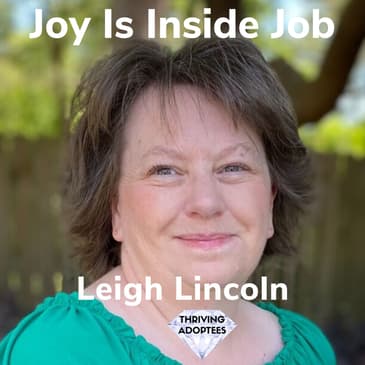
How much are you enjoying life? The more deeply we can see that joy is an inside job the more we can enjoy life. Listen in as we dive into accepting missing pieces of our story, finding joy and more.
Leigh Lincoln is an author whose narratives resonate deeply with the human experience. With a passion for storytelling that touches hearts and provokes thoughtful reflection, she has carved a path that intertwines her love for writing with her dedication to advocating for the homeless and those living in poverty. Her journey as an author is a testament to her commitment to making people ponder the choices they make, how they treat others, and the importance of empathy. Leigh’s journey has led her down a remarkable path of advocacy for the homeless and impoverished communities. For over three decades, she has dedicated herself to making a difference in the lives of those in need. Her first novel, “Road Home,” was born from this tireless work. It serves as a thought-provoking mirror to society, challenging readers to consider how they live, treat others, and desire to be treated.
Leigh’s literary exploration continues with the “Broken Roads Series.” Comprising novels like “Road to Freedom,” “Finding the Real Road,” and “The Road West,” these stories delve into the idea that life doesn’t always follow the path we envision. Instead, we encounter unexpected twists and turns, forcing us to gather the fragments of our existence and move forward.
Leigh’s most recent series, “Path to family,” stands as her most personal work to date. “The Path to Family Series” shines a light on the emotional and hopeful tale of adoption.
Having been adopted, Leigh’s life had been shaped by this framework. And she has been blessed by finding a half-sister and her birth father. Her hope in writing these novels is to help others understand the complexities and emotions involved in the adoption process. She invites her readers to connect with the emotional depths of the narrative and the various perspectives.
Leigh is not just an author; she’s a voice that encourages others to find their own. Through her interviews on various podcasts and radio shows, she strives to inspire individuals to discover their unique voices, explore the world, and never shy away from meaningful conversations. Her passion lies in crafting novels that resonate with readers on a profound emotional level, aiming to uplift, inspire, and provoke introspection.
Find out more at
https://leighlincolnauthor.com/
https://www.linkedin.com/in/leigh-lincoln-24218a133/
https://www.instagram.com/lincolnleigh/
https://www.facebook.com/leigh.lincoln.2025/
Guests and the host are not (unless mentioned) licensed pscyho-therapists and speak from their own opinion only. Seek qualified advice if you need help.
Want to learn more about thriving for you, your kids, your families or your colleagues? Pick a time to talk here
[00:00:03] Hello everybody, welcome to another episode of Thriving Adoptees podcast. Today I'm delighted to be joined by Leigh Lincoln. Looking forward to our conversation today, Leigh. I'm happy to be here and this is such an honour. The honour is all mine. I asked Leigh if she was ready to record and she said very ready. That's the first time anybody said that.
[00:00:26] So there's a certain amount of enthusiasm and joy, I guess, about being in this conversation. We find a sacred place when adoptees connect. This is true. So, Thriving Adoptees, what does that mean to you, Leigh?
[00:00:54] For me, it means I accept who I am, even though I don't fully understand who I am. There's a caveat there, because for me, I always felt like there was something missing. Because I was adopted, there was that missing piece of not knowing exactly where I came from.
[00:01:17] And I had to learn to accept that I'm still me, even if I don't know all of those missing pieces. Which is really hard for a lot of people to understand that whole concept. I think a lot of other adoptees understand that concept. But a lot of people outside, like, I've tried to explain this to people and they're like, we don't get it. You know, like, what?
[00:01:46] But for me, I had a hard time not having people who looked like me around me. I had a hard time understanding that whole concept of never knowing, like, who my parents were. I love, not to say that I don't love my adoptive parents, but there was always that missing concept there. So I had to accept who I was, missing pieces and all.
[00:02:17] Yeah. They, I think, mentioned this last time. Genetic mirroring is the posh word for this, I think. Yeah. Yeah. Which I have dived, did an interview. I'll put a link in the show. I did a link, did an interview with an adoptee. His name's just escaped me at the moment. He's also a shrink.
[00:02:44] So, you know, we did a whole interview on genetic mirroring, which was, or the absence of genetic mirroring. Which I will link to in the show notes to this one. So, it's being okay with not knowing. Yep.
[00:03:09] For me, that's a big part is being okay with not knowing. And I now know a little bit because I have found my birth father. So, I now know a few of those missing pieces. But that took most of my life before I knew even a little bit. Because back in the day when I was adopted, it was all shrouded in secrecy and shame and all of that.
[00:03:38] So, there was no way to know for a long time. Like, it was impossible. They made it impossible for you to know anything. And I had to be okay with that. But that was a real struggle for a long time for me. Yeah. And, and I'm not alone in that. I, over the last few years, we discussed this a little bit before.
[00:04:02] Over the last few years, as I've done research for my novels, I've talked to so many adoptees who also felt the same way as me. That, that, that was so hard to accept the fact that there was so much secrecy around it. And so many of them never knew that they were adopted until something happened that forced the secret to come out.
[00:04:24] And that is so hard, you know, to find that out either, you know, when you're a teenager or an adult to find this out, right? It's because you always know something's wrong and something's off. Yeah. And, and you never knew quite what until the secret comes out. So at least I always knew I was adopted. I always knew that there were, you know, why something felt different.
[00:04:51] But, but to accept that is, is a really hard, a really hard thing. Okay. So let's, let's break this, break this down. Um, first off, this is a, this is a, a, an object lesson for any adopted parents listening. The truth will out. So tell them the truth. Exactly.
[00:05:20] There, there is no point in keeping this a secret. There was never a point in keeping. There was never a point. It was always going to come out. Right. So here's the, and here's the why, right? So if we think about a, a jigsaw puzzle, right? Missing pieces. You were aware of the missing pieces, right? If so, so kids that are told, no, they've got some missing pieces.
[00:05:50] And then there's the, there's the emotional connection to, uh, finding those missing pieces. That, that's one thing which we're going to get into, uh, in a, in a while. But the other one, the, the, if you think about it the other way around, what's called late discovery adoptees. So adoptees that aren't told. So adoptees that aren't told.
[00:06:13] Um, that they have seen their life as a, as, as one picture. And what we're saying now is when they find out by, uh, by mistake or because it out, that whole picture is wrong. So finding out that the picture is completely wrong is more distressing than knowing that there's some pieces missing.
[00:06:43] Because the trust has gone in that, in that moment. You, you have lost all trust. Your, your kid has got lost all trust or your teen or your adult, whatever the age is. They have lost every bit of trust in you because you have, um, lied to them or lied by omission or not told them the, the, the truth.
[00:07:06] And when, when, when we're talking about something as essential and as foundational as our adopted status, you, you just can't do that. Because it's fundamental to who you are as a person that you were adopted. You, you came from somewhere else. That's fundamental to who you are.
[00:07:35] That should never have been hidden. And I know culturally there was, you know, because of the shame for a long time around, um, and planned pregnancies, you know, culturally, this was meant to be a secret, but, but it did so much harm to so many people. And they were told they were told. Right. So my parents were told your kid will never know.
[00:08:07] Right. Because in the sixties, they didn't know that, you know, this is, this is 30 years before the primal wound was written. And the primal wound was the first kind of time when, uh, this, uh, this, uh, this trauma was, was recognized early nineties. Right.
[00:08:32] So back in 1960s, they were told parents were told, but, uh, and I, I don't know what adopted pet. I don't know what adoption agencies say now. I would say the majority of them, but the ones that come on this show, tell them, say to the kids, say, say to the parents, tell them, but I'm the still, I'm sure there's still agencies out there that don't.
[00:08:57] Um, but you're, you're, uh, whether that trust can ever be regained after it's been lost on something as foundational as this. I, I, I can't, I couldn't really see it. I mean, I've interviewed a few late discovery adoptees and trying to figure back, did they ever, did they ever forgive their adopted parents for, for not telling them? I don't know. Yeah.
[00:09:25] And, and some of the, the people that I've interviewed over the last few years, that trust just didn't seem, that bond just never seemed to come back once they discovered, you know, when they discovered very late. And it, it, it seemed like that was a permanently broken relationship at that point between their adoptive parents and them. Yeah. The bond is broken. The relationship is broken. It's kaput. So. Yeah.
[00:09:55] And, and I felt, I felt just so heartbroken for these people because, because I know part of it was the cultural stigma of the time, but that isn't how they were looking at it. They were looking at it as if their parents did something horribly wrong. Their adoptive parents did something horribly wrong their entire lives, which they did. They never should have lied. No matter who told them what they never should have lied.
[00:10:21] And, and that is, and I understand that we want adoptive parents to be fully parents. And I understand that there are times, and I've heard this said too, where, you know, we tell adoptive parents, oh, you're not real parents. Right? Right. So I understand that culturally, there are some reasons why, why parents want to be more secretive about this.
[00:10:49] However, it is so fundamental to who we are. That you just, you cannot do that. And, and I don't, I don't even know how you would rebuild the relationship at that point. If you find out so late, I always knew that I was adopted. There was never a question. My brother, my sister, me, we always knew. Um, but we were unusual, I think, back in the day.
[00:11:19] Um, we were very unusual that we always knew. Which was good. It was great. My parents were, were so supportive. Um, with wanting to help us understand why we were different. And that was great. But so many parents were not, you know, they were, they were so into this whole thing of it's a secret. And they were. Yeah. Yeah.
[00:11:48] We are never going to tell at all. And, and that is really, that is really, really difficult. And I understand why people would do that. Because they didn't know any better. Probably, you know, it's the culture. It's the culture, but it's also, I would imagine people that they're bowing to people in authority, you know? So I was the oldest kid. Right. I don't know. Were you the oldest, middle or the youngest one?
[00:12:17] I was the youngest. You were the youngest, right. So, um, so for your, your eldest sibling, right? You know, your, your, your parents are thinking, well, I've, I've never done this before. The agency has done this before. They must know best. Well, we like, we have to, we have to question, we have to question authority, not be like a, a, a sheep, you know, going, going with authority.
[00:12:43] We have to, we have to live life according to our own ethics and to our own moral compass on, on our guidance on, on what is, what is right and what is wrong. And this whole honesty thing is, is huge. And I, I was brought up very honest.
[00:13:05] And I've, until I started ranting about honesty, just in the last 10 minutes, it, I hadn't really seen why, but it must be something to do with that. Honesty is the best policy. They, they, they, as they say. Yeah. So I think one of the, you talked about culture. I think one of the cultural reasons, um, as a culture, we're not very good with not knowing stuff.
[00:13:36] I, I, as a Western culture, Brits, Americans, we're, you know, not knowing. So I'm, I'm thinking about, you know, what, what do we do? Our, do our political leaders, no names, right. Do they ever, can, can they say, I don't know. It's just not like, you know, it goes back to, it goes back to us in school, doesn't it? You know, what do you mean, Simon? You don't know.
[00:14:04] You know, you could, that you feel the, feel the, I can feel the spotlight on me now. You know, and, and, and, um, there's a, there's a, there's a not okayness. There's a derision. There's a embarrassment about not knowing. There's a wrongness about not knowing it's, it's culturally, it ain't great.
[00:14:26] So the idea that we can be okay with not knowing is a big one, a big pill to swallow given this cultural, what would you call it? Well, no, but, but you're, but you're right. That in school, yes or no was an okay answer, but I don't know was never an okay answer. You were supposed to figure it out. Right? Yeah.
[00:14:56] Maybe that's where we learn it early. It's, it's not okay. Is it? It's, it's unacceptable. Is it unacceptable? Unacceptable to not know. Yeah. So, but for us, yeah. And as an adoptee, there are so many unknowns that, and you have to be okay with them. So you're kind of in this, this weird position. There's, there's a piece. I think, are we talking about getting to, to be at peace with not knowing?
[00:15:25] So this, this quest for knowing may have been burning really brightly within for a long time. Yeah. At least for me, I, I always wanted to know who those people were that, that were my parents before I had other parents, my, my adopted parents. I always wanted to know who those other two people were. Yeah. Now we talked, we talked about this one.
[00:15:55] We spoke a couple of weeks ago. There seems to be more quest for this knowledge. And this is a big gender stereotype, right? So it's, there's every, there's, there's an exception to every rule, but we, we talked about the fact that women, that the fire of not knowing burns brighter for, for girls and women. And then it does for guys as a big. Yeah.
[00:16:24] Um, most of the adoptees that I've spoken to over the last few years, as I've been doing this research, um, most of the ones that really, really felt the need to go find their birth parents were women. Um, and a lot of, a lot of the male adoptees were, were pretty okay with never figuring that out. Um, and again, there were exceptions.
[00:16:52] And I think a lot of that has to do with women. Once they became mothers really felt that pull towards, I need to find out more about where I came from because of my child. And so I think that's part of the way women think and the way women are nurturers.
[00:17:16] Um, and again, that's a giant stereotype, but, but it, it, that seemed to be a lot of the connection where. It's the way we're wired and the way we think. Yeah. And coincidentally listeners, I know from Spotify and an Apple gives me data on, on who listens to the show. And there's a lot more women listen to it than guys.
[00:17:47] Like, uh, and a lot, especially a lot of women in the 40 to 60 age bracket, listen, listen to the, listen to the show. Yeah. And, and that would make sense because again, we're, we're the ones who had all the secrecy around it. We are the ones who are left with all of the questions and none of the answers. So that totally makes sense. Yeah.
[00:18:13] So can you paint a picture, um, of the acceptance? You started off by saying thriving is about accepting, uh, an incomplete picture of our selves. Yeah.
[00:18:38] Cause, um, I I've had to learn that I'm okay. Just as I am, even if I never get any of my answers, I'm okay. Um, and that part of me is, is created by the role models of my adoptive parents. And that's okay.
[00:19:07] Um, you know, I'm very, I, I'm not going to say I'm, I'm a lot of like my adoptive parents. Right. But there are some traits that I have, I've clearly picked up from my adoptive parents and that's okay. Um, you know, imprinting is a thing, right? You know, you, you learn from your environment. Um, and so it's okay that those gaps have been filled in other ways and that's okay.
[00:19:35] And it's okay that, that nobody looks like me. It's okay that I'm different from everybody else in my family. I've had to learn that that is okay. And it doesn't make me any less than it doesn't make me, uh, you know, being different is okay. And, and that, that is, that has been a constant struggle for a long time.
[00:20:01] And you amazingly, one of the big things that helped me with being okay with that was when I had my own child, because then I had somebody who looked like me, right? My son is an, I is a mini me, which is, which is kind of cool. Right. Cause finally, then I had, I had this, this person who was me and, um, and I'm not saying you should have a kid just so you can have a mini me.
[00:20:25] I'm just, but I'm saying that, that there was something magical about it, that, that I think a lot of mothers don't really fully, fully have. Unlike me, right. Or other adoptive mom, you know, adoptees who become moms, right. Because we finally had that person and there's something magical about it. Yeah. It's a different, I guess it's a different flavor of magic. Is it? Yeah. Yeah. And I'm not saying motherhood isn't magical, but I'm just saying.
[00:20:55] That's why I said it's different flavor. Yeah. I was trying to make it, I was trying to make it more palatable to, um, um, yeah, to, to the listeners. Yeah. And, and, and I have learned to just embrace my differences. And, and that's a big thing is, is it cause I'm very different than my brother and my sister, right? Cause we're not related other than we were all adopted into the same family. I, I've, I'm very different than my, than my parents.
[00:21:25] Right. Because of course, genetically we, we have nothing in common. Right. But again, there, I have some traits that are similar to them because they raised me. So, you know, but it's okay. And it, it's fine that, that I am who I am.
[00:21:43] So is this a kind of more fundamental and more essential okayness that's kind of underneath the questioning mind? What is, what's this about for you? Well, I, I think it, I think it was because I, at some point, probably in my mid 20s realized that I would never get answers to my questions.
[00:22:11] That it was impossible to get answers because of the secrecy surrounding adoption back in the day. And I just had to embrace the fact that this is all I have is, is me and all my glory. And I'm never going to get answers. And I had to be okay with that. And it didn't mean the questions went away. It just meant I had to accept that.
[00:22:39] But it was not a thing when I was in my twenties. Right. No, but there's a big difference between all your glory and okay. Right. Right. Yeah.
[00:22:55] And, but, but it's, it's, it's, it's kind of hard to explain, but, you know, I really struggled because I, I didn't know a lot of things about family history, you know, like, were we scholarly? Were we, you know, were we more of the like worker types? Like there's some really like basic questions that you really can't answer.
[00:23:25] And so like, I started college and I didn't do very well. Right. Clearly I'm not the scholarly type, but I'm really good at research, but that kind of, you know, but now that I, I, now that I have found part of my family, like a lot of these things like click, right. Like why I'm, I am the way I am.
[00:23:46] But, but for a long time, I just had, I kind of just like, like had to figure this out myself of who I was and, and then embrace that. Yeah. But it was, but it's, it's different when you, when you know nothing versus when you know something about where you came from, which is why I love open adoptions.
[00:24:10] Because there is all of that knowledge and all of that information is there and available. Like some of an adoptions are so open. Like if the kid ends up in the ER, they call the mom. Right. What, what's the family medical history. Right. Like, I didn't even know that. So. Can you talk us through the process or the event?
[00:24:35] Was there a particular time where you just figured, right, I'm going to have to accept this unless I want, you know, unless I want this to drive me completely nuts. I'm going to have to accept it. What, what did it look like? What, what was that for you? Do you remember a time? What was the shift?
[00:24:53] I think there was a specific thing, but I know in my twenties, I just got to a point where I had tried to, I had tried to access court records and it was denied, which is common. Um, and then after that, I was just like, okay, I'm done because I'm going to just, I'm just going to waste a lot of time and effort and get nowhere.
[00:25:23] So I'm just going to have to accept that there are no answers. So was it, was it like then I'm, I'm banging my head against a brick wall. This is hurting. I wanted to stop. What was it like? Yeah. That that's pretty much where I got to it. And, and, and it was soon after that, that I had my son and I was like, this is enough. This is enough. I'm happy. We're good.
[00:25:51] Because then at least, you know, I had, I had a connection with, with somebody who was like me and that was enough. Yeah. And I was happy. And, and when, and I wasn't even the first one of the first ones to jump on the DNA bandwagon because I was okay with where I landed. Yeah. And it took me a long time to even finally convince myself to go through the whole process with DNA.
[00:26:21] Um, cause I was like, no, no, those answers. I just don't need to find anymore. Right. Although they still were inside of me that I still wanted to know, but I was just like, no, I'm okay. So there was a sense then that the kind of the, the, the downstream genetic mirroring stopped aching so much for the upstream genetic. Right. Yeah.
[00:26:46] But then, but then I, I, I had a really good friend who also is adopted and she found, um, she found her relatives through DNA and she, and I had several conversations. And so that's when I finally decided to take the plunge. And I was just like, you know, nothing happens from it. Nothing happens from it.
[00:27:09] But if something does great, but here's the thing with DNA, just because you do the test doesn't mean you're going to get any like matches like right away. And it took years. It, and, and so I just like kind of ignored it and because nothing happened. But you didn't have a lot of riding on it. Right. No. Cause I was just like, well, you know, if it works, it works. If it doesn't, it doesn't because I'm kind of, you know, I'm in a good spot. So it was okay.
[00:27:37] And then when I finally did get that match, you know, all I wanted from it was to, to see other people in my family. And if I had one conversation with anyone who was related to me, great. If I got a few pictures out of it, I was great. I really had really low expectations. You set the bar low. Yeah. And that, and, and that was because I was in such a good place.
[00:28:07] I was happy with where I was and, and I didn't need much. So what I got was so much more than I wanted. So, and that, that was cool. So, uh, I guess, is there a, is there a spectrum here where everything's riding on this? And, and, uh, there's a, there's a, there's a, there's a, there's a spectrum of kind of our expectations on this.
[00:28:34] There's a spectrum of how important this is to us. Uh, what, what does that look like? What, what does that look, how does yours compete? Not compete. How does yours compare with the other person, the other people that you've talked to in your research? Well, I know a lot of people, they really felt much more urgency about finding someone.
[00:29:04] And it, it was, it was like an absolute necessity. I have to find someone. And some of it, it was because they were having medical issues and it was, I have to others. It was just, I have this need. This need has never gone away. I need to DNA is kind of going to be my, my savior here. And other people were, were in a good place like me. And if it worked, it worked. If it didn't, it didn't.
[00:29:32] And then other people were, were kind of like guilted into it by someone. And they were like, well, you know, I'm going to try. I just really don't care. So, so yeah, there was this whole gamut on why people were, were searching. And everyone kind of had their own different reasons for doing it. And, and for the need level, which was really interesting. I thought.
[00:30:01] And some of their, their end results were really positive. Like mine was really positive. I was super nervous the day I first met my father. I mean, literally I was throwing up that one. Um, which is interesting because I had such a low bar. Right. But it's still, it was nerve wracking. I'm just saying, um, there's nothing like me and your father for the first time. Um, at, but it, it worked out really well.
[00:30:27] And we're slowly building a bond and I'm, I'm building a bond with my half sister and which is really great. But I've, I've talked to other people that, you know, they have had a positive experience in our building relationship with, with this, you know, with their birth families, but others, it was a horrific experience. Um, either no contact at all was allowed or the one and only visit was just an absolute train wreck.
[00:30:53] And it was a screaming fest and angry situation. And it was just horrible. And which is, which is built into this process because of course there's a reason we were given up. Right. And so our, our birth parents probably have unresolved issues around the situation. And of course, when they gave us up, this was meant to be a secret.
[00:31:24] This was never meant to, oh yeah, your kids are going to come back 50, 50, 50. 60 years later and say, hi, this was never meant to happen. No one thought that somewhere down the line, there'd be a way to figure this out and find these connections. So I understand why some of these birth parents are so hesitant to, to, to start building these bonds.
[00:31:52] However, when you really look at it, both sides need healing, both sides need to get out everything. And even if it's just the one conversation there, there is something to be gained for everyone if they're willing to do it. And did I tell you about my experience with my birth father? Yes, you did.
[00:32:16] So it didn't go to plan, but I benefited from that in the sense I thought, well, I'm kind glad that guy didn't raise me. No, well actually not kind of, I'm glad that guy didn't raise me. So you really don't know what you're going to get. And, and you don't know whether, but I went in as a bit of an experiment. And that was it, right?
[00:32:45] Somebody, somebody said, I said, well, I was, I'm not bothered and about him. And, and he wasn't bothered about me. And the adoptee that I was talking to, his pen name is Colin Carruthers, interviewed him here on the podcast. He said he might have changed his mind. I thought, yeah, he might've changed his mind. I said, should we find out?
[00:33:13] And so I did find out and he hadn't changed his mind, but it changed my mind. Like I, I, it became, it became crystal clear to me that I was glad that that guy hadn't raised me. And it got me thinking about the fact that he didn't love, he didn't love the, the birth mother, the girl he'd been dating for five months.
[00:33:39] So it, it, you, you never know how it's going to end up. And you don't know whether the, the, the bad ending, supposedly bad ending is actually lead you, going to lead you to feeling better, but you've got to do it. You know, don't take my word for it. I'm not saying go and find out and do an experiment. No, you make your own mind up listener.
[00:34:07] You know, like don't, I, I'm not, uh, in the place where I want to encourage you to be a, a, a, a, a sheep. Uh, my search for my birth mother came out of, uh, uh, you know, like a moment of necessity. I, it was a no brainer. I had to, I had to pick up my search again and I did.
[00:34:32] And, uh, unfortunately she died, but that led me to other stuff as well. So we never know quite what we're going to get. Right. It's, it's a total crap shoot. Um, there's no ends, if there are butts about it. It's a crap shoot. You just never know what you're going to get. But again, I think if you walk into it with a really low bar, there can be healing on both sides.
[00:34:59] And because again, there, there is a reason that whoever could not raise you. And so both sides, if they walk into it with a very low bar and very low expectations, there, there can be some completeness and some wholeness coming out of it. If you walk into it with, with that, just, just, we need to find out just the basics. Right. And that's all you need.
[00:35:28] Um, but I, but I think a lot of people just don't expect it to complete you. But I mean, like for me, it's like, we're putting our life on hold. Like why are we going to put our life on hold? This will complete me. Yeah. Uh, reunion will complete me. Well, maybe, maybe not. Reunion will make me happy. Well, maybe, maybe not. Maybe not. Yeah, exactly.
[00:35:59] So the, but the whole thing, I, I, I, I, I, I, I, I'm not going to be a I see. I, I see it like a fundamental. Insanity in, in, in the, in our world that we think that something outside us. It's going to complete us. I mean, it's nuts, isn't it? Right.
[00:36:25] Because I was always taught, um, uh, joy and, and completeness and wholeness comes from within, not what from without. And, and again, this goes back to keeping your expectations really low and just, just walking into a situation saying, you know what, if this comes out really badly, at least I know who this person is. And that's all I need from this is just knowing who this person is.
[00:36:55] And that in itself should be enough. Should be enough. That should be enough. Not, not everybody's raised believing that joy is an inside job, Lee. Yeah, I know. Unfortunately. So can you break that down? Can you break that down for us? Because it's, it's a really vital life lesson, right? Right. Because joy has to be your point of view. It has to be your perspective that you choose joy on a daily basis.
[00:37:23] You say, I am not going to let anything affect me. I choose joy. So yeah, my car is a flat tire. It's okay. Because that flat tire has kept me from having a car accident two blocks from here. You choose to look at the positive, always not the negative. It's a choice. That's two different things, right? That's two different things. One is saying that joy is an inside job. That's one thing.
[00:37:51] And another thing is that joy is a choice. The two, there seems to be two different things. I mean, I told you they're clearly intertwined, but can you break that down? Yeah, they're intertwined. But, and you have to, you have to be working both at the same time. But do you, it has to be your point of view at all times. And you just have to start with that as your mindset, which is hard for most people because most people just get sucked into the doom scrolling and whatever's got craziness is going on around them.
[00:38:21] And then they're just like, no. And because they, they don't, they don't start from a place of joy is my point of view. Yeah. So when I get anywhere near this particular topic, I like to talk about the weather. Right.
[00:38:39] Because that makes it less personal, less serious, less profound, but it has some, it has some, that kind of levity around it for me does the thing. So it really, it oils the wheels of our insights. Right.
[00:39:07] And it's also about grace for ourselves. So. Yeah. Tell you about the, sometimes I talk about the, the, the lady at the reception and my swimming pool, the swimming pool I go to, right. I've told you that's wrong. So when I, there's, there's volunteers different days of the week at the swimming pools, there's different volunteers. And the one particular lady, she normally works on a Monday. And I say to her, how are you?
[00:39:35] And when I said that to her a couple of weeks ago, she looked outside of the window before she answered. Right. So what I'm saying is she, her, her, her internal weather, as far as she's concerned, is determined by the external weather. Right. Yep. And that's not good. That's not good. Okay.
[00:40:02] So I, and I, I can, I can kind of see that. And then I get into the swimming pool and I'm going up and I'm looking at the lane and I'm thinking, why is this lane so busy? And I getting cheesed off. Right. So I, in one moment I'm seeing the feelings are definitely an inside job, not caused by the weather.
[00:40:28] And then the next moment I've forgotten that in the moment. And I'm seeing that the busyness of this swimming lane is making me cheesed off. So there's some kind of, like, it's a choice, but joy is a choice, but we're not choosing all the time. And we need to kind of give ourselves grace for that. This is true.
[00:40:59] Because we're not perfect. As my somatic experience, the lady says, whole and human. There you go. Yeah. What, what does grace mean to you?
[00:41:22] Well, if, if we're talking about personally, grace is accepting that I am not perfect. I will make mistakes, but mistakes aren't failures. They're an opportunity to grow. And if I give myself the grace to accept that, then I can be a better person.
[00:41:46] And so grace is giving myself the, the, the ability to fall flat on my face and still be okay with it. Yeah. What about grace for our adoptive parents? For our adoptive parents, knowing that they, they chose to be parents. They, they sat down and had a conversation at some point and said, we're going to be parents. And so, no, they're not perfect.
[00:42:14] They are, they are humans and they are going to make mistakes and probably make more than, than a lot of people, but in the end, giving them grace and saying, you know what, in the end, this was their choice. And they gave me one of the biggest gifts ever. They gave me a home when they didn't have to. And grace is saying that I love you no matter what.
[00:42:44] So what, what have you discovered about first, firstly, isn't that great? Um, and secondly, what have you discovered about grace amongst adoptees for adoptive parents in your research? Well, I know for, for most of them, they understand that parenting and adoptive child is different. Um, because of that choice factor.
[00:43:14] Um, I'm not saying that they're super human or special in any way, but I am saying that there is a difference. And most adoptees understand that difference. That we didn't have to be raised by these people. These people did say at some point, we want a child. Um, and they, they had to go somewhere and, and make that publicly known. We want a child. It's, it's not like, you know, getting pregnant.
[00:43:42] You know, it's a big difference. And so I think, and I think a lot of adoptees understand that, that very fundamental thing that. Them becoming parents was a whole different set of circumstances. And it is a gift and is a huge gift. And how does, how does, how does us having grace for our adoptive parents impact us?
[00:44:12] I think it makes us see the world differently. Because. I think it makes us more, much more accepting of others because we have seen. We have seen a level of, um, unselfishness that most people don't see. And I think it makes us much more willing to accept others on a level that few others do.
[00:44:42] Um, and again, that's kind of stereotypical, but, and I know not all adoptees have a great experience. You know, some adoptive parents are just horrendous. I am not saying we're all perfect, but. But I do think we do view the world a little differently because of it. Yeah. Have you heard that? There's a phrase about this.
[00:45:11] Something about forgiveness and a thorn. And holding a grudge is like, I'm getting, there's two different stories I've got in here, two different metaphors. One is about poison. And one is about a thorn. So the one that I can remember, I think is, uh, holding, holding onto a grudge is like drinking poison and expecting the other person to die.
[00:45:40] Oh, I like that. Because, you know, I find myself saying this quite a lot at the moment. Um, in terms of this grace, like it's totally unfair to judge 20th century parenting with 21st century trauma knowledge. This is true.
[00:46:07] And that kind of me for, for sums up that, that's the logic for it. I think we've got two, there's two things here with grace for adoptive parents and grace for anybody really. But especially in this case, grace for adoptive parents. The one thing is the logic to that grace. And the other thing is, you know, how, how that grace makes us feel right. It's a bit like, it's a bit like a gift, isn't it?
[00:46:35] So we feel good about giving people other gifts. You know, like if I find something, you know, in a world where everybody's got everything, if you find, if I find something that is really appropriate as a gift to give somebody that they would never think of buying themselves.
[00:46:56] They would never even come across it, then that, that gives me a joy inside when I see their, when I see their face light up. Yeah. When they think they can, they can see that. I've not just gone, I've not just gone to Amazon and got an Amazon voucher and send it to them. Right. I've, I've thought about what I'm going to give them.
[00:47:25] And by the way, listeners, I don't do this very often. Right. I'm not saying that this is a common practice for Simon. Right. Anyway. So there's two, those two things, right. The logic of, of, of grace, like it's unfair. You know, like if by the time I was, I was 26 by the time the primal wound came out. So it's unfair to judge my parents against that. Right. So there's the logic of the grace, but also the, there's the feeling of, of feeling of grace.
[00:47:58] How do you see that? Is, have you got a, can you see some other dimensions? I've never thought about it quite in this, in quite that way before. I've never thought about dimensions to grace, but the logic and the emotion, you know, how it makes us feel in inside. How do you see that?
[00:48:14] Well, I think because of, of the whole dynamic of, of adoption, it really, it really does impact for a lot of us, how we are willing to show up for others.
[00:48:37] Uh, you know, for example, um, I have worked with homeless people for probably since my teens. So 40 something years, but that is because my parents gave me a home. So I kind of feel like everyone deserves a home. Right.
[00:48:57] And so I think, I think having that ability to, to be willing to give others second chances and, and, and really go above and beyond is kind of built into this because you see, you see how much your parents sacrificed just to become parents.
[00:49:27] Yeah. Yeah. And what about grace for our adopted, sorry. What about grace for our birth parents? And I think that plays into it too, because they had a difficult choice to make as well. It, as I've, I've interviewed not only adoptees and adoptive parents, but I've also adopt, uh, you know, talked to several birth parents in, in research for my books.
[00:49:57] That was not an easy choice for them to make. And a lot of them second guess the choice long after it was made like decades after. Right. So we have to give them the grace to understand that that choice was not easy. That choice was not made lightly. That choice was, was, was gut wrenching on many levels for most of them.
[00:50:24] And we have to give them the grace and say, we forgive you. We accept you. We love you just the way you are. And that it's okay. And when I met my birth father, one of his first things that he said to me is, I know you're going to be angry with me because he felt so much guilt over his part in the fact that I was given up, but I wasn't angry.
[00:50:52] And, and that is, that is a big part of this is when I get, when I talk about the healing for both me and for my birth parents and, and other adoptees have shared similar stories to mine where, you know, the reactions were so strong from the birth parents. And when I've talked to birth parents, they, they have taught, you know, some of them have met their children and some of them haven't.
[00:51:18] And they've talked about this where, where there is so much guilt and shame built into this, that we have to be willing to give them all of the grace that they need for making that choice because it was not easy. Yeah. So here's one for you. We, I totally agree. We have to give, we have to give them grace.
[00:51:43] And before we can find that grace to give, or before we have, before we have that grace to give, we, we have to find it or we have to find grace or grace has to find us. How, how, how do you see that?
[00:52:06] And, and I think that goes back to being okay with who you are without knowing who you are with all of those missing pieces. You are okay with who you are. And then you are willing to accept whatever you walk into when it, when, and if you find that your birth family, because then you are not placing expectations unduly on that birth family.
[00:52:33] You are, you are walking in there with a blank slate going, I'm going to accept them for who and what I am missing pieces and all. So I'm not expecting them to fill in any gaps. I I've set the bar really low. And again, that, that goes back to that.
[00:52:58] I've accepted myself first, and then I can accept them for where they are and for what, whatever occurred in their life to make them have this choice. Number one, where they were facing this choice of what to do with an unwanted pregnancy. And then what they did with that choice.
[00:53:19] So our self acceptance, perhaps in a, in a, in two words or one word, um, our self acceptance oils, our grace for others. Is that what you're saying? That's what I'm saying. Yeah. Cause I think if you're walking into that and haven't accepted who you are, then it's really going to be hard to accept others and give them the grace that they need. Because you haven't given yourself grace.
[00:53:49] If you haven't accepted who you are. Yeah. Fascinating. And, and from having a lot of conversations with a lot of different people in this universe at this point, I can kind of see how this is played out because I've talked to some adoptees who were kind of blindsided by the whole adoption thing. And then try to find birth parents.
[00:54:17] And so then they walked into it with a very angry mindset and it didn't go well. Right. Because they hadn't accepted the whole thing and they should have, they should have accepted who and what they were and not walked into it with, with a really angry mindset. And of course it went back because, because their mindset was wrong. Right.
[00:54:44] And, and I understand when you find out in your forties or fifties that you're adopted. Yeah. You're blind said, I get it, but you have to, you have to accept that place before you can then just hit the ground running and try to figure out those missing pieces. Yeah. Fascinating.
[00:55:11] I was thinking about how I'd done a lot of work and then grace found me. Right. So if I came, I came out of the fog 18 years ago and then grace for my birth mother found me, I didn't, I didn't go out thinking, I need to find grace. I need to find grace for my birth mother. Or I hadn't thought of, I hadn't had any feelings really about, well, and had a lot of thoughts
[00:55:39] about it, just some, a couple of really sharp, horrible moments, but reading my adoption file and in particular, the, the, the letter from her about the teddy bear, grace for her landed on me. Right. I didn't, I, I, it, I didn't, I didn't, I didn't give her grace.
[00:56:08] I didn't, I didn't find grace, grace, I didn't find grace for her. Grace for her found me. You know, it was a, a byproduct, if you like, it was a, it was a result of finding that, finding that file. But I've done a lot of the self acceptance work probably eight years before that. So who will know, who will know whether, if I hadn't done that work, how that would have been for me? I don't know.
[00:56:38] We'll never, you know, like, and a lot of times I think, you know, when we've, when
[00:56:47] we've spent time asking questions about who, who we are, it's just, it can be hard to, when that, when that's been a habit for so long, and when those, those questions have been loaded, it can be so terrifying.
[00:57:20] Yeah. And, and those, and again, that goes back to those fundamental issues of, of we need to know who we are at the very basic level. And, and when you're raised by someone who is not your genetic parents, there's always going to be something not quite right.
[00:57:50] And a little off, no matter how great your parents are. And it has no reflection on the adoptive parents, but it is, it is just a fact of how this works. Because, because there is that part of us that yearns for something that is us. Yeah. And that is, you know, it is part and parcel of, we need to know who we are, fundamentally. Yeah.
[00:58:21] So, Lee, we're coming up on time, is there something that you'd like to share, that I've not asked you about? Not that I can think of. This has been a really interesting conversation. Yeah. I've loved it. Yeah. And, and, and Lisa, an author as well. We haven't mentioned this, right? You need to check out as always, you know, in the show notes, there's a link to Lee's
[00:58:45] website and you can find out what she's, what she's up to in terms of her writing work, right? Yeah. Cause I've been at the series that I'm working on is on adoption. And I started with a story about the birth father, the second story in that, that series was the birth mother and then I'm working on the third book in that series right now that is the couple who adopts a child so um this is why I've been doing so much research about adoptive
[00:59:14] families and adoptees and birth parents over the last few years because I've been talking to all these people to to make these stories richer yeah fascinating thanks Lee and thanks for all your work thank you this was an like I say this was an enjoyable conversation today me too loved it thank you listeners we'll speak to you again very soon