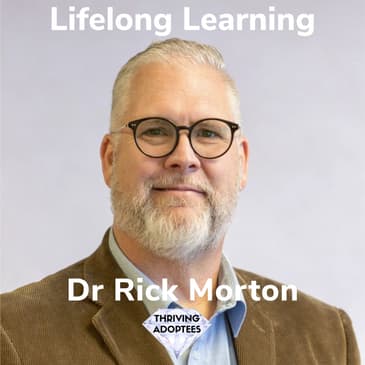
How does lifelong learning help us show up better with our families, friends and the rest of the world. Dr Rick's passion is palpable. Listen in as we dive into his learnings from raising 3 kids adopted internationally and a huge Italian Mastif. Humility, self awareness and God play their part in a great episode. We both hope you love it.
As Vice President of Engagement, Rick Morton shepherds the ministry’s outreach to individual, church, and organizational ministry partners as well as the ministry’s commitment to publishing resources that aid families and churches in discipling orphans and vulnerable children. Prior to Lifeline, Rick served for 15 years as a college and seminary professor, and he also served local churches in Tennessee, Louisiana, and Mississippi. He is an accomplished writer and sought after speaker. Most notably, Rick is the co-author of the popular Orphanology: Awakening to Gospel-centered Adoption and Orphan Care and the author of KnowOrphans: Mobilizing the Church for Global Orphanology. Rick and his lovely wife Denise have been married for over 32 years, and they have 3 children, all of whom joined their family through international adoption. God has continued to grow their family, and he now enjoys the role of “Doc” to his precious granddaughter!
More at:
https://www.linkedin.com/in/drrickmorton/
https://www.facebook.com/lifelinechild
https://www.instagram.com/lifelinechild/
https://twitter.com/lifelinechild
https://vimeo.com/lifelinechild
Guests and the host are not (unless mentioned) licensed pscyho-therapists and speak from their own opinion only. Seek qualified advice if you need help.
Want to learn more about thriving for you, your kids, your families or your colleagues? Pick a time to talk here
[00:00:02] Hello everybody, welcome to another episode of Thriving Adoptees podcast. Today I'm delighted to be joined by Dr Rick Morton from Lifeline. Looking forward so much to our conversation Rick. Simon, it's always great to be able to have a conversation with you. It's going to be more fun to do this. It's not more fun. That's not really true. It's more fun when you and I are just cutting up and talking and being friends.
[00:00:29] But I love your show. I love what you do. I love your heart. And it's always a pleasure to get to join you. Yeah, I love your heart too man. So listeners, Rick as well as working with Lifeline, are you a big cheese, a medium sized cheese? Do you know what a big cheese means? Does this idiom translate? It depends on who you talk to, I think. You know, everybody, everybody's a big cheese in somebody's eyes.
[00:00:58] Okay. Or at least you should be, you know. But, but, you know, I mean, I get to lead a good bit of the things here at Lifeline. Yeah. I've, you know, I've done a few things around in this space. And so I, I, I, I've been privileged to get to meet a lot of people and to get to work with a lot of people over the years.
[00:01:19] And I told, I just had my birthday last week. And one of the things that it proved once again on Facebook is that I'm, I'm wealthy with friends. And so if that, you know, all the people that reached out and said hello and that thought enough to say hi kind of proved to me once again that, you know, I've had, I've had a pretty good life to this point. Okay. And, and, and hopefully that means a little bit of influence in this space.
[00:01:47] Yeah. Cool. And listeners also, he's an adopted dad, right? So you're a dad, you've got three, three kids, three kids all from, all from adoption. Yeah. All from international adoption. Also our, you know, our, our kids, two of them came home older. So one of them, our son was seven when he came home and our daughter was 14. Yeah. So we, we, we've lived an interesting story. That's for sure.
[00:02:15] Yeah. Indeed. So given that, right. How old are they now? How old are your kids now? So my, my daughter is 29. She's, she's the one that came home at 14. And then my sons are actually, trivia fact right now, my sons are both 23. My, my, my middle son is going to have a birthday in a couple of weeks, but they're, our two boys are 11 months apart, but they're both 23.
[00:02:44] Yeah. Wow. So what, what comes to mind, Rick, when you hear this word thriving? Yeah. I think, first of all, I think it's relative. I think we all have a definition of what thriving is. Well, it's good. That's the, it's, it's good that that is the case because otherwise we would run out of subjects for the podcast.
[00:03:12] This would be the shortest series of podcasts in the history of the world. We're on 500 and I don't know, Rick, you know, everybody has a personal, it's, it's always relative. It's always personal. So. Yeah. I think it's, I think it's that, that we've, you know, we sort of find ourselves in balance. We, we find ourselves in, you know, in a, in a place of, you know, growing and, and, and there's, and there's a sense of,
[00:03:42] I think productivity is a part of thriving. You know, it's like that you're, you're, you're growing, you're continuing to gain ground. You're continuing to become, you know, we, we don't, I was, I was actually talking to someone. It's funny, you know, Simon, it's funny, the things that you start to think about the older you get. But, but the older I get, the less the idea of retirement sounds good.
[00:04:10] You know, there, there was a time years ago when I thought, man, it'll be great to not work one day. And I, it sounds horrible now that I'm, you know, turning the corner on 60. Um, I, and, and I think we, you know, when we, when we stop moving forward, when we stop achieving, when we stop becoming, um, we, you know, we're, all we are, all we're doing at that point is we're dying. Right.
[00:04:39] Like we're, and, and, and so I think part of thriving is the fact that we're continuing to, you know, we're continuing to, to become what we were, you know, what we were created. And, and, and, you know, I, I come from a, you know, from a Christian perspective, I, I'm, you know, very much my, um, my walk with Christ is, is very central to, you know, to who I am as a person and how I understand the world.
[00:05:06] And I, you know, I believe that we're created in the image of God. And I believe we're, we're created for a purpose that God has, God has an intention for us. And, and, and that there are, there are things that we've been created to achieve and to pursue and to, you know, to create. And all of that is part of God's creative intent. And I think we're thriving when we're put into a place where we can do those things.
[00:05:36] And, you know, part of what, what keeps quite frankly, you know, kids that have come from hard places from thriving is, is, you know, some of these impediments that have been, you know, have been placed in the way. That distract from, um, fulfilling your creative purpose that, that distract from you, you know, achieving what you were, you know, what you were created to achieve.
[00:06:06] And, and so, um, and we're in some way, the sum of all of our experiences, you know, I just said that about friends and realizing, I mean, you, you realize that a lot of, a lot of what we are privileged to do. In life is, is, you know, we meet people and we walk through experiences and those things, whether we perceive them to be good or bad, they have a shaping effect on us and, and they, they're, they're part of us becoming.
[00:06:37] Um, but we don't always see it that way. And I think that's, that also is part of the challenge. Yeah. So there's lots to dig into there, man. Um, I'm going to take, take you back to the start. Um, because you, you, you talked about balance. You talked about the balance as a key part of thriving. So it's, I'm not, I'm going to ask it in a really left brain logical way. Yeah, sure.
[00:07:05] I know that you'll unpack it the way that you want to do, but a balance between what and what, what is it that we're balancing? I think it's, there's, it's, I mean, man, there's so many things. Um, but, but I, I think we, part of what, part of what trauma and our response to trauma does is, is it causes us to be out of balance.
[00:07:32] You know, we, I mean, so much of our, our work is, is working with kids that are, you know, that have come home through adoption or kids that are, that have, that are in foster care or have been in foster care. And, and part of the balance that sometimes is really difficult in that is, um, we see kids that are, that have had to be self-protective at a level that's unhealthy. They've, they've been born into a world.
[00:08:02] Um, you know, I think God's plan, I think our, our design is built around the fact that we, we're to be born into a world where there's somebody looking for you. Like there's somebody, you know, we're, we're to be born into a world where we're wanted and where we're cherished and where we're protected and all those things. And, and for kids that have, that have had an experience where that's, that's not the world that they've been born into.
[00:08:31] They've, they've been born into a world where instead of someone else seeking their welfare and protecting them, they've had to become their own protector. Um, that's not, that's not natural. That's not the way, that's not the way I think the world is supposed to be.
[00:08:49] And so what we see is an unnatural preoccupation with, um, with self-care and an unhealthy preoccupation with self-protection. And, and, and so like, we all have protective instincts. We all like, we're, we're, we come pre-wired with all of these responses that are, you know, that are things that are, they're autonomic.
[00:09:18] They're not, you know, we don't have, you don't have to think to, I mean, if I threw a ball at your head, you don't have to think to dodge that. There's just, there's something instinctive about how, you know, how our, our, our, how we're wired, how our, how our brains are made that we just know to flinch and get out of the way.
[00:09:38] Um, and, and, and, and yet if, if your whole world is built around protecting yourself and you can't ever find a place where you can just relax and not have to be on guard. That's a, that's being out of balance. Right. So you're talking about hypervigilance really? Is that? Yeah, absolutely.
[00:10:05] Which is, which is a hallmark of, uh, you know, of the things that, that we see with kids that are struggling with attachment disorder. Kids that are, you know, that have a part of disordered attachment and what we see in that is, is that there is a, it's, it's caused on some level by the fact that we, we have to be hyper, like hypervigilance is necessary. It's, it's necessary for survival.
[00:10:34] The, the problem is when, when that's, that's your way of living and you can't turn it off. You can't ever find a place where you can relax. That's not good. Like the balance is that we, we need to be hypervigilant in some moments. We all need the ability to be hypervigilant. We just don't need to live there. And that's, that's what I'm, that's what I talk. That's what I mean when I'm talking about balance that in, in all of these things that, that anything
[00:11:01] taken to excess is, is dangerous and unhealthy, but, but finding, you know, but finding balance in most everything is when, when you find that middle ground where that, that's, that's where we find balance. And then when you find that middle ground, that is, that's really putting you on the road to thriving. Yeah.
[00:11:31] Cause when, when you're talking about that, uh, the, the, the flinching, right. The, the, the, the, the ducking, when the balls come in towards us, um, or, or, you know, or maybe it's also when a, a hand is, you know, I'm thinking about neglect and abuse and sort of, you know, where like when the hands coming towards us, uh, and, uh, and it's got some, it's got some, it's got some violence behind it.
[00:11:56] There's, there's malice, you know, something, you know, that, that free is, is, this is, this is trauma response 101 really. Is it, is it the fight, right? Freeze thing. Yeah. Fight, flight, freeze. You know, those are those, and those are responses again. Like that is a, that is a healthy thing on some level.
[00:12:25] You know, if you're, if you're out on the road and you're, you're driving in your car and, and someone changes lanes in front of you without enough room, you need, you need your autonomic nerve nervous system to kick in. You don't, you don't, you don't need to go all left brain at that point. Right. Like you don't need to go all right brain, honestly, because it's not a time to create and it's not a time to analyze. It's, it's, it's a time to take evasive action. Yeah.
[00:12:55] And, and our, our bodies, you know, instinctively, like we're, we're wired to, to take that instinctive action and to, and to, to do those protective things. But when that becomes a way of life, because we, because we're like, we're primed for survival all the time, that, that's pathological.
[00:13:19] And, and, and so I think finding balance is in, in all of those sorts of things, finding that, that, that happy middle ground between, you know, using emotions and using responses and using those things effectively, but, but not, not being driven in excess and, you know, in any of them. And, and I, and again, I don't, I don't say that. I mean, I think.
[00:13:50] Like, I, I realize I have a, I have a particular worldview that the way I think that plays out, I think is because I think there's a creative intent from a creator. Um, and, and, and I think there's a way that things are supposed to be. And, and we're, we're all drawn to wanting, wanting to, to get to that place of, of being
[00:14:17] able to, you know, live out our creative purpose or, or, you know, what I think is God's creative intent for us. Um, you may say it differently. You may express it differently. You may pursue it differently, but I think all of us are, you know, are, are, are drawn to that. Um, and that's, that ultimately is where, you know, that's where we thrive. That's where we, that's where we, that's where we live well. Yeah.
[00:14:44] So you talked about, um, this distraction, uh, distracting us from a fully achieving. Are you seeing, are you seeing death or trauma as that distraction? Yeah, I think it can be. I mean, everybody, you know, like on some level, all of us, everybody has trauma. Like it's not, that's the, the broken condition of this world.
[00:15:13] I mean, things are not, things are not perfect. Things are not idyllic. We, we all, we all have bad things that happen to us. And, and, and that may be, you know, extreme in someone else's life. The, the, the differences are, does, is, is trauma, you know, like, is that your normal?
[00:15:34] And I think for kids that are born into a world where, where impermanence and, and where, where, where, where trauma and the upset that, that causes trauma is the norm. That sets us on a course of, I mean, we have to respond.
[00:15:57] And so that sets us on a course of, of like learning and ultimately biologically wiring, um, you know, neurobiologically, uh, an, an adverse way of responding to the world.
[00:16:13] That is, that is, that is in some, what a challenge always, all of us have that on some level, but I think, but when it, when it's been, you know, when it's been so magnified in one's life, that becomes. It, like, it becomes a, sort of a lifelong pursuit to quiet on some level.
[00:16:36] And I think, you know, the most important thing, I mean, some of the, some of the advice that we got early on, um, uh, you know, about adoptive parenting is, um, creating that sense of safety and security for our kids. You know, even when they didn't know how to live in it, we, like, so we, we went overboard trying to create predictability, trying to create, you know, stability, trying to, you know, trying to protect.
[00:17:03] I mean, I remember, and I'll, I'll, I remember our son. So our, our first, we adopted, he was 18 months old when he came home. And this is a really silly illustration, but, but just for the first 18 months of his life, um, he was in, he was in an orphanage environment where everything was based on, um, efficiency. And the people did the best they could.
[00:17:29] I'm not throwing stones, but they had, they had more, you know, more children to take care of than they, than they could do well. They had, they, they did the best they could. But I remember he, when he came home, um, he was just barely walking at that point at 18 months old. So he, you know, some pretty significant delays. And, you know, when kids start to walk, they're not, they're not very good at it.
[00:17:56] You know, their, their muscle tone isn't good in there and all the, you know, neural wiring isn't complete. And they, and so they fall down a lot. And, and so he would toggle along and, and then, and he would fall down and he would just get back up and start going again.
[00:18:16] And, and, and what we realized, like it was, it was a little bit disconcerting to be honest with you, that he would, he would take these really hard hits and just stand up like nothing happened. And so what we began to do is we began to treat him in the way he should behave, not the way he was behaving.
[00:18:37] And so he would fall down and we would sweep him up and act like he, you know, had just sustained a concussion. You know, it was like, we would, we would rub on it and we would kiss it and we would, you know, we would hold him and we would, and he didn't need to be comforted. Because he had learned a world where when I fall down and I hurt myself, nobody's coming to help me. Nobody's coming to care for me. Nobody's coming to comfort me.
[00:19:06] Well, he, but he needed, he needed to understand that there is a world where people do love you and they will comfort you and they will provide that for you. And so Simon, the most wonderful thing happened. We started to respond to him by, by caring for him and his, his natural response to that hurt started to come out.
[00:19:34] He, he started, he started to feel it. He started, he started to realize that he was in pain when he hit his head. He started in, in, in, and so when like, I'm going to cry when I, when I say this, but like it was a beautiful thing to watch. So he, he had learned not to respond to his pain. He'd learned not to acknowledge his pain and he'd learned to live that way.
[00:20:02] We started to respond to his pain, knowing it was there, whether he acknowledged it or not. Ultimately he began to respond to it. He got a nod on the head and he started to cry and he would like, he got to the point that he would cry and carry on like a, like normal.
[00:20:22] And that was healthy because, because what he needed in order to be able to grow up into, into someone who could trust the world around him enough to be stable and to thrive was he, he needed, he needed to know that there was, there were people in the world that he could be secure with. And that we're going to look out for his welfare. And that's, that's the, like, that was a big deal.
[00:20:49] And, and so doing something as silly as, as pretending he was hurt, even though he didn't act like he was hurt, it wasn't pretending the hurt was really there. We all know it. It, but it, it, like it literally, it, it literally rewired him neurobiologically.
[00:21:12] And, and it, and it, it, it, it helped and remediated for, for something that had, that his, his early experiences didn't provide for him and that, and that was absent in his life. But, but it set a course for him to live better in that. And it, and it changed things for him.
[00:21:36] And I think that's, that's what the goal is when, when we're, you know, and, and, and really it doesn't matter. It doesn't matter if you're, you know, your child's trauma was because, you know, because of circumstances that resulted in their adoption. Or if it's that, you know, your child had childhood cancer and through, you know, traumatic experiences through, through that.
[00:22:03] It, like, whatever it is, we, like, we just, we meet people where they are in their circumstances. And, but I think as an adoptive parent, what you, you know, just what you know and, and what you're, you know, hopefully what you're trained and conditioned to do is to know that, like, you have, as much as, as much as our children are hypervigilant in learning to fend for themselves.
[00:22:24] And, and we need to be hypervigilant in, in remediating for that and living differently with them so that we put them in a place where they can thrive. Because I think at the end of the day, you know, why do we, why do we do this? Well, we do it because, because we want them to thrive. We want everybody to thrive.
[00:22:52] And so that's, that's why we do things like this. And, and it's, you know, and the payoff is having kids that are adults that are, that are living well. And, and that are, you know, that, and, and the fact is, and you know, I've talked about this before. I know I'm just rambling, so I'm going to shut up and let you ask another question.
[00:23:19] But, but Simon, I think like at the end of the day, what being adopted is a point in time. I know it's a part of your story and I know it shapes because all of us are just a collection of our experiences, but it's, it's not an identity statement. It's a point in time.
[00:23:38] You know, you, you probably more than most adoptees are identified with your adoption because, because you've been so transparent about your story and because you're doing this podcast. And because you have people that are, that are like, that's something they identify you with because of the way that you've, you've created this platform for yourself.
[00:24:03] But the truth is that most adoptees don't go in and introduce themselves as adoptees and they shouldn't. Because it's a, it's a point in time. It's certainly part of your life and it's defining, but it's not everything. You know, when I think about you, I don't think about you as an adoptee. That's not the category that I think about my friend, Simon, and I think about your wit and I think about how fun you are and all these things that, you know, that I've, that I've started to come to know about you.
[00:24:32] That's what I think about is this is, this is a thing, but it is not the thing. Yeah. Well, I never used the word adoptee until like four and a half years ago. So yeah. Yeah.
[00:24:45] I think that there's the challenge for the challenge is the bigger challenge than identifying as an adoptee, I think is identifying with, with the trauma. Yeah. I think that that's a, because we're, if we're identified with it, we're wed to it. We would say in Yorkshire, we're wed to it.
[00:25:14] We're, it, the trauma defines us. It is, it is who we are. It is, it is in our bones. It, it is, there's no, there's no escape from it. And that's why I, I take every opportunity that I can to say we are not our trauma. No. No. And, and, you know, and nobody, nobody thinks that about any other trauma.
[00:25:45] Not really. I mean, you know, you, you have somebody who's a, who's a cancer survivor and they, they may wear that as a badge of honor. And that may, you know, that may be something that's, it's certainly, it's a part of their story and it's a part of their identity. And for some people that is, that becomes, like that does become kind of everything in the way that they introduce themselves and how they explain themselves. But I, but I don't know that that's healthy either.
[00:26:11] Like it, we're, we're not, we're not our, we're the product of our circumstances, but we're not our circumstances. Um, you know, frankly, it's, I told you before we, you know, before we jumped on my, my 34th anniversary was yesterday. I've been, my wife and I've been married for 34 years, which doesn't seem possible. Um, until we start looking back over, you know, looking back over the story.
[00:26:35] And I put something up on Facebook yesterday and, and it just, I mean, we've had some amazing experiences, but we, you know, we had a house that was destroyed by a tornado. We lived through Katrina, the largest natural disaster that America has ever seen. We lost our house. We lost everything we owned in that hurricane. Um, for my, for my son who was our first adopted, he lived through all that experience with us.
[00:27:06] And, and so part of like looking back over, like we've lived through some traumas together. And that's also been really helpful. Honestly, because, because we, none of us are defined by that. I don't, I don't go, I don't introduce myself to people and say, Hey, I'm a Katrina survivor. Now it may come up in the conversation and it may, and it's certainly a defining part of who we are.
[00:27:32] And like, it's, it's always kind of present there in, and it bubbles to the surface in the oddest places and things, but it's not like, it's not all defining. Yeah. And I, and I think that's for an adoptee. Yes. It's, it's central. It happens because it happens early. Like, that's the thing.
[00:27:51] If, if all the stuff, if, if all the, all the macro and micro traumas that, that came as a part of your story as an adoptee, if they came when you were 25 years old,
[00:28:05] you know, like it'd be completely different because, because you're, you know, you're ostensibly fully baked by the time you're 25, like all the, all the things, but, but when they happen in those formative years and, you know, in, in our development, like it, it has a, it has a bigger consequence, but it's not defining. It just is.
[00:28:29] I want to take you back to your, your son and him, you know, numbing out. Numb was the word that kept on coming to me. He, as he was falling over. And it's really interesting that you share that story because whenever I go anywhere near that, right, kids falling over.
[00:28:53] Um, I think of, I think of something that I saw a few years ago where the kid, the kid fell over in a, I think it was either the swimming pool in a shopping center, shopping mall. And, and the kid fell over and we can't, was okay. Right. It wasn't one of the, it wasn't a concussion thing. Yeah. What you were concerned about with your, your boy. Um, kid got up. Okay.
[00:29:22] But then the kid saw the expression on his mom's face. Yeah. Concern. And he learned. Right. Fear of falling over. Right. Um, so, so, so that's where, you know, that's the story that comes to, to my mind when I think about this fall and ever, which is the kind of the opposite side of what. Yeah.
[00:29:48] Which is, you know, which is again, like we're, we're the product of our experiences in many ways. And so there's, and we learn, you know, we learn good things and sometimes we learn bad things from the people that are around us.
[00:30:02] But, but I think the, you know, the, the difference from, from a child who has the impermanence that has, that has necessitated an adoption when, when they're like, when that, when that circumstances happened. And like children shouldn't grow up in an environment where they're unprotected.
[00:30:26] They shouldn't grow up in an environment where they don't have someone looking out for their, for their welfare, but also someone who just desperately loves them and, and is, and is dedicated to, you know, protecting them and providing safety for them.
[00:30:42] And, and, and we, like we're created to be nurtured in that environment, in that kind of environment, because that, that builds in us the proper ability to balance risk and to, and, and to navigate relationships and all these things that are important for us to be able to do.
[00:31:09] And, and, and, and, and when those things haven't happened well, it, it, it changes our response to the world. And it, and it, it, it fundamentally, it fundamentally alters us at a level that is, that, that quite frankly, makes it hard for you to live well without some intervention and some help, right?
[00:31:36] Like you, you, you have to relearn the world and you have to kind of relearn how to respond to it. All of us are going to have circumstances that are going to make that challenging, but you're less likely to have the coping skills and the, and the tools to deal with it. The earlier those things have happened to you and the less intentional intervention that there's been to help you to walk through it. You don't just naturally learn how to get over that.
[00:32:04] There is a resilient, there are resilient few that do, and that we don't know why that, you know, people just go through horrible adverse experiences as children and, and they thrive. And we have no explanation for why. We also know on the other end of the bell curve, that there are going to be people that no matter what we do to intervene, we, like we can't seem to help.
[00:32:29] And, and they, but the, but the big wide middle is that there's a middle ground where we know if we, if we invest well and intentionally that we can, we can provide help and healing. And ultimately that leads to thriving.
[00:32:51] I want to maybe just shift focus to, to you personally, if I may, Rick, because one of, you know, one of the phrases that comes up, I've heard it a lot. It's a really, it's a really, for me, it's a really graspable idea. And I share it when I'm doing the trainings, you know, and I'm doing the trainings in this Thrive program like I do and other trainings.
[00:33:19] And we talk about, it's not, it's not adopted parenting, parenting, not being about fixing our kids. It's about growing our, growing adoptive parents capacity, not to take their kids trauma personally. Right. So staying, not being triggered by that, not being triggered when they're triggered.
[00:33:47] Being, being calm in the, as calm as you can, right. In the, in, in the face of that adversity. What have you, what have you learned and what do you continue to learn about that, that stuff, that, that, that you're grounding? Yeah. I mean, would you call it grounding? Have you got a better word? Yeah.
[00:34:11] I, I, I don't know what I'm, here, here's maybe the, here's maybe the best way to say it. I'm, I'm trying to think. So, um, you know, I've, I've told you that my, um, my, my life, my orientation to, sorry, my microphone is giving me trouble here. And it just gave me a warning that it went off.
[00:34:41] So your editor will have something to work through there. Um, no, Simon, I, I think that, um, I, I think that, um, I, I think that. I had a friend, um, there's a known to many people in the, in the adoption community and the Christian adoption community. A guy named Russell Moore wrote the book adopted for life.
[00:35:05] Um, gives a really good picture of, as Christians, why, you know, why we do all this and how we, how we, how adoption is rooted in our, in our faith. Um, one of the things Russ said to me along the way, he, he was a, he was a, he was a great friend to me as Denise and I were on the journey to adopt the first time.
[00:35:36] And he said something to me along the way. And I was having a really bad moment and was being a little selfish in the process. And he, he just very lovingly said to me, look, one of the things you need to know about this is, is you're going to learn things about God through this process that you would have no other way of knowing.
[00:35:57] And, and what he was, what he was getting at, what he was, what he was saying was that we, you know, ultimately we believe because of what it is that the, like the work that Jesus did and the atonement that Jesus provided, that he's provided for our adoption into the family of God.
[00:36:17] That there's a sense that there's a, that there's a, that there's a bigger spiritual story about adoption than, than just what you and I live out here as, as part of our stories, that there's a, there's a bigger point to it all. And he was trying to help me to understand that. I think what Russ didn't tell me that day and what I, what I probably have wasn't prepared for.
[00:36:37] And what I've learned is the truth is what I've learned is a lot of my experience in, in responding to my children and in parenting through adoption is how much I'm not like God.
[00:36:57] How, how broken I am and how fallible I am and how selfish I am and how, um, yeah, like I, I, and, and, and so theologically, like I look into this, I look into this reality where, where, where I see God presented as, as like the, the perfect adoptive parent.
[00:37:23] Who, who, who provides for our adoption into his family and then, and then loves us perfectly and loves us well. And, you know, provides for us and, but man, I'm not that. Um, and, and I think we, you know, what we, what we find through this journey is that we're not, we're not fixing our kids.
[00:37:46] It's not our role to fix our kids, but through how we respond to our kids, we all find ourselves in, if you're, if you're at all self-examining, if you're at all self-aware, what you find is that you find stuff about yourself that you don't like. You find things about yourself that are not healthy, that are, that are, that are broken in those responses.
[00:38:15] And, and so therefore, like you should deal with that. And, and so it's, it's funny. Now I'm going to take you down a road and this is probably going to be offensive to some folks in the, you know, particularly folks that are in the adoption community. I don't mean to trigger anyone, but I just thought this was an interesting anecdote. So, so our family is just crazy. Like we, we're, we're not right. And, and so we do crazy things.
[00:38:42] Um, so one of, one of our dogs died at the beginning of this year. He was very precious to all of us. He was like member of the family. Um, and, and so we decided we were going to get another dog. And we started looking, we ended up adopting a dog from the humane society.
[00:39:08] And I'm not at all trying to equate the adoption of a human being with the adoption of a, of an animal, but there is something instructive about this when, when you think about it. So we, we found this guy, he's, so we found an eight year old Italian mastiff that had been abused and neglected and found on the streets and was almost dead.
[00:39:31] And he is the biggest mess that he's the most neurotic, um, frightened. This dog, Simon, this dog is 150 pounds. Yeah. And he's scared of his own shadow. Now he was 88 pounds when he came to us. He's, he's eaten a lot of groceries since he, since he came into our lives, but he, he, you know, and, and so we, we ended up like, this is the crazy part. We ended up bringing him into our home.
[00:40:01] It's been really complicated. It's been really messy. It's been really difficult. Um, and, and so we ended up bringing a, a dog behaviorist into our lives. Like we have a psychologist for our dog. And so we, so we hired this guy to come in to help because it was, because it was a mess. And when you're dealing with a 150 pound dog, everybody that's listening to this podcast can identify if, if he doesn't want to do something, he doesn't.
[00:40:29] Because he's 150 pounds and nobody can make him do anything. Right. And, and so, so we're, we're meeting with this behaviorist for the first time. And I just started laughing in the middle of our conversation because he's there with our whole family, with the dog. And I finally just looked at him and said, you know, I've just figured out you're not here for the dog. You're here for us. He wasn't like, he wasn't teaching the dog anything.
[00:40:59] He was teaching us. He was teaching us how to respond and what to do and how to, you know, and, and man, like there was this light bulb that went on for me. And again, I don't want to equate, you know, the adoption of an animal with, it's not the same, but there was a light bulb that went on that the difference, the difference in that and everything that we've walked through as a family, all that we've walked through with our children. The difference is, is, is a soul.
[00:41:27] There's something, there's something about us and our children. That's eternal. That's, that's bigger. That's higher order. That's sees the world in a much different way than, than my dog does. But there are also some commonalities about how I respond to the adverse circumstances and the trauma and the things that have happened in my life that are really common to me and my dog. Right. Right.
[00:41:55] And, and what, what we're, you know, kind of what we realize as adoptive parents is that when we bring this team of people sometimes around us to help us to negotiate building a family through adoption, I brought most of those people in not. What about fixing my kids?
[00:42:13] It was all about me and it was about teaching me how to respond and about teaching me how to, to do things so that I was able to love them well. And so that I was able to care for them well. And the things that were generally an impediment to me doing that were rooted in my own selfishness and they were rooted in my own brokenness. They didn't have anything to do with my kids. And that's probably the thing that I've learned most out of, out of all of this is.
[00:42:44] And, and so the way I would sum it up is, is, is that I've learned that, that I, I do believe God is the perfect adoptive parent, but I'm not. And, and I need help and, and I need his help and I need the help of people in order to hold up a mirror to me, to help me to be able to see those ways that I don't respond well. And man, we're 20 years into this and I'm still learning that lesson over and over again.
[00:43:13] Like we're, we're still figuring it out on, on some level because, because none of us, none of us are perfect and none of us have arrived. Hopefully we're better at it today than we were 20 years ago, but, but we are not perfect.
[00:43:30] The mirror metaphor that you mentioned just then, that was the one that was kind of coming, going through my head again, again, this, and you talked about, you talked about self-awareness, clearly a big thing. And we talk about that a lot.
[00:43:50] And when I'm doing a, when I, when, when I'm doing a, any sort of a training, I always refer to the back, when we get anywhere near self-awareness, like I get to the, I get to the point where I mentioned, well, you know, read it, reading a book about emotional intelligence, sitting on a beach in Greece. Right. Right. Everybody else is reading Dan Brown. Simon, Ben, Free Code Boy, he's reading emotional intelligence.
[00:44:19] I'm in that club too, man. I'm with you. I'm with you. And it starts with us. You know, the emotional intelligence book, it's got, the emotional intelligence book, it's got four quadrants and the first two quadrants are about us. It's about us. We can't change anybody else.
[00:44:38] We need to change, change, change ourselves, but we don't know where we're, where we're off until we're prompted by the stuff in from the people that we love. Right. But Simon, as a, but as a, as a parent, I don't care. I don't care how you got to be a parent.
[00:45:00] As a parent, your job is to set the circumstances and to set the conditions so that your children in a, in a healthy way can, can experience what they need to experience, live through what they need to live through. They can learn what they need to learn so that, so that they, so that they're ready to be adult. And so that they're ready to take on this journey, you know, for themselves.
[00:45:31] And, and so my job is not, but my job is not to like form my kids into something as much as it is that I'm supposed to lead them toward something. And it, you just, and, and as a parent, that is a, that is a very selfless, very, you know, them focused kind of thing.
[00:45:57] And the, the, the key is learning what your kids need. And, and the biggest impediment to giving your kids what you need is you. It just is, it's, you know, and, and I think we, and we wrap it in all kinds of things. And, you know, we, we believe that, you know, we're doing the right thing when we're trying to, you know, shape them and condition them in some ways or discipline them in ways or, or whatever.
[00:46:25] But it's, it's just not, but, but like you wouldn't, you wouldn't think a thing of changing your parenting for a child that has a, that has a physical disability. Right? Like that would be something that you would, you would be crazy if your child had, you know, withered legs and, and you set out to like, you're going to make them run.
[00:46:56] Right? Like you, you have to live responsive to, to whatever, to whoever your child is and whatever they need. And, and yet what so many adoptive parents struggle with is they struggle with, with living responsive to what their kids need.
[00:47:14] And, and, and one of the things that I think, and I think there's a, there's a piece of this, just about every adoptive parent that I know will testify at least at some point in their lives to being scared to death. Because they're scared about what they're scared about. They're scared about what they weren't there for, what they weren't a part of.
[00:47:39] They're, they're scared, they're scared of the unknown and they're scared of how their kids are going to turn out. And, and so in, and, and so many times we hang on too tight. We, we, we do things that we think we're trying to be really helpful.
[00:48:02] And, and, and so, but, but like we, we fear this moment that if our kids don't get over this, or if they don't fix this problem in their lives, then their adulthood is going to be horrible. And they're not going to be prepared for what's in the future. And so we have to double down and we have to, you know, and, and the truth is many times we lose self-awareness in that.
[00:48:28] We lose the ability to see who we are and how we, how we look and sound to our kids and what sort of environment we're providing for them. And, and, and we, we lose the thing we're trying for the most we end up losing, which is providing that safe, supportive environment for them to, you know, to be able to, to grow up in.
[00:48:54] And we have a society and I'm going to go here and this will probably, this may be the thing you get cards and letters about. The other thing is, is like in parenting, we've somehow, we've somehow bought into the lie in our culture that part of our job in parenting is, is to eliminate adversity in the lives of our kids. And you got a lot of adoptive parents that are doubling down really hard and try to do that.
[00:49:20] And they're trying to make up for and trying to live down the adversity that their, their kids experiences have created for them. And we have created a generation of people. I'm going to start that again, because my coffee pot was tooting over here, making a noise. Okay. So we've, we've re, Simon, we've created a generation of people that do not know how to problem solve and don't know how to deal with adversity. Because they've never had to.
[00:49:51] And so this is our culture, right? We're not just talking about adoptive parents. No, no, this is everybody. This is, this is helicopter parenting in, in general. And so, and so parents swoop in and deal with problems with teachers and parents swoop in and fix problems with the law and all kinds of things for kids that, that, that they ought to be on some level. You know, given the opportunity to live through the natural consequences of their behavior.
[00:50:17] More and more and more and more progressively because we're launching them into a world where they're going to have to do that completely at some point. And so they get to do it in a laboratory with us when we, when we get to control it some. And, and, and, but, but what we've done is instead of, instead of progressively parenting kids toward independence, so many people in our culture have just hidden them from, from challenge. And so they don't give them the ability to grow the tools to, to do it for themselves.
[00:50:46] I see that so much in, in excess and adoptive parents. And it's because adoptive parents are jousting against the unknown. They're, they're like worried about these things that they don't know if they're there or not, or they're, they're worried about, you know, they're worried about the consequences of things that they see in their kids behavior. And so there's this, this overwhelming pressure to fix it.
[00:51:14] And we end up unwittingly doing exactly the wrong thing because we're falling prey to that pressure. And, and so I do believe that, that part of, part of being healthy and all this, I mean, I think, look, if you're going to be a parent generally, you ought to have a counselor. Everybody ought to have a therapist and, you know, and not, but the reason we ought to have a therapist is because, or if you don't have a therapist, you ought to have really good friends that won't lie to you. Indeed.
[00:51:42] You know, because, because that's really all a therapist does anyway. I mean, a good therapist, they just hold a mirror up and show you yourself. And if you've got really good friends that won't lie to you, they'll do that too. But we all need somebody to hold some accountability in our lives and, and, and just kind of show us who we really are because we aren't always who we think we are.
[00:52:04] And, and, and that's, that's really important when the stakes are as high because of the start that your kids have gotten off to. Yeah. Regardless of what's caused that, whether that's. Yeah. You know, but if you, there's extra complexity and your story is more difficult, it's just part of the way it is. Indeed. So we're coming up on time here, Rick.
[00:52:30] So I'd love to, I'd love to ask you, is there anything that you'd like to share that I've not given you a chance to? No, Simon, I think big, you know, biggest thing I would, I would say to, um, I would just say, I would say to adoptive parents that, that emotional intelligence really is a big deal in all this.
[00:52:56] And, and, and the, and the key to emotional intelligence at some level, I believe is, is really self-awareness. It's being able to have an accurate picture of who you are. And we all struggle with that. Yeah.
[00:53:06] I think, I think the, I think the thing that I would, I would say to, to the adoptee friends that are here, and I want to be really measured when I say this, um, is, is there, give grace to your parents.
[00:53:30] Because, because, because I've, I've seen so many adoptive parents along the way who've really screwed up trying to do the right thing. And they've made some really horrible mistakes and, and they've done, they've done some things that are, and man, we could go in, we could spend your season of the podcast talking about all the ways that people have found to screw this up.
[00:54:01] And, and there are people, and there are, they're, they're evil people that are out there that screwed up on purpose and they, and they mess somebody's life up intentionally. And that is, that is reprehensible. And, you know, like we should have no tolerance for that. But I think, I think what I would say from the, from the perspective of someone who at least has tried to do this right.
[00:54:23] Um, gosh, we, we did some things wrong, but we did them in the spirit of trying to do something right. And, and I think, I think that that's probably having adult kids that we've all walked through this journey together. Um, that's been the big deal.
[00:54:47] It's, it's learning on both sides to give one another grace and, and to, and, and to not expect perfection.
[00:55:02] Um, and I'm so thankful that, um, I'm so thankful that in spite of the ways that I failed, that, that my kids still love me and they still give me the opportunity to love them.
[00:55:31] Thanks so much, Rick. Yeah. Gosh, I didn't mean to cry. This is, this is like, I feel like a big, you know, feel like a big wimp here, but, but like it, it's yeah, man, I, I, uh, yeah, it's, this is, this is hard, but, uh, but I'm thankful that we get to do hard things. Thanks listeners. We'll speak to you again, racing.