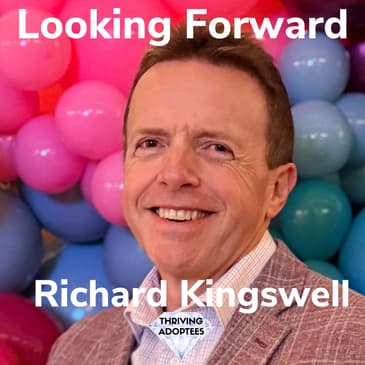
Going through tough stuff? Really tough? Tomorrow's going to be better...Listen in as Richard shares insights on hope, optimism and persistence...
Richard is the Founder and Chief Executive Officer of FosterVA and Extra Special Parents, organisations he established to strengthen foster care services and improve outcomes for children, young people, and families across Virginia. With a strong background in social work and decades of experience working alongside young people, Richard brings both professional depth and personal conviction to his leadership.
Richard believes foster care works best when families feel genuinely supported, listened to, and respected. His leadership is grounded in relationships, transparency, and a commitment to doing what is right for children and those who care for them. Through initiatives such as The Kingswell Conversations, he creates space for open, honest discussions about foster care, leadership, and the real experiences of families and professionals in the field.
Outside of work, Richard enjoys hiking and kayaking, unwinding with a good film, cooking for family and friends, and playing board games. He is also a dog lover and values the balance that time away from work brings, helping him stay grounded and connected to what matters most.
Find out more at https://www.linkedin.com/in/richardkingswell/
https://www.facebook.com/FosterVA
https://www.youtube.com/channel/UC1cwslKf_116XfeZ5eyTjcA
https://www.facebook.com/extraspecialparents
Guests and the host are not (unless mentioned) licensed pscyho-therapists and speak from their own opinion only. Seek qualified advice if you need help.
Want to learn more about thriving for you, your kids, your families or your colleagues? Pick a time to talk here
[00:00:02] Hello everybody, welcome to another episode of the Thriving Adoptees podcast. Today I'm delighted to be joined by Richard, Richard Kingswell. Looking forward to our conversation today Richard. It's been a while happening and I'm glad that we're going to finally do it. We were very excited when we spoke about six months ago and our calendars haven't aligned very well. I'm happy that we're together now.
[00:00:23] Yeah, so listeners, although you can clearly tell from Richard's accent he's a fellow Brit, he's actually in Virginia and he runs Extra Special Parents in Virginia which is adoption, which fostering. How do you describe it? Because you're telling me that 70% of the people that foster through you go on to adopt.
[00:00:47] That's right, yes. So we are a therapeutic foster care agency and we support adoptions across Virginia. And we do that with finding parents, locating parents, educating parents and then going through the training process and then hopefully get them through the home study successfully and then start finding the match for them for their foster placement or their adoptive placement depending on which journey they're on.
[00:01:16] Right, cool. So thriving, what does thriving mean to you Richard? As broad as you like, as a human being, as an entrepreneur, as somebody that's trying to make a difference in the world, as a dad, as a husband?
[00:01:31] So thriving to me is that we all come to this life table with a blank slate and that blank slate is for everybody that contacts you if that's through parents, if it's through friends, colleagues, that starts crafting who you are. And your journey is not always easy. I went through a journey of being bullied at school and things like that. And that journey sculpts who you are and how you interact with others.
[00:02:01] And I think thriving to me in a basic concept is understanding your story, accepting your story and then being accepted by others and what your story is. And I think that is thriving when you get to that point where you accept that it's OK that you had a tough journey and you had a bumps in the road. But it's who you are now, who your friends are, who your family are and they accept you for that individual.
[00:02:27] Yeah. So some people might say, right, that kids, kids, adoptees, that they don't come as a blank slate. There's trauma on the slate, right? Yes, yes. Just being separated from the birth parents and what caused the separation and the unknown, I think, is a very big piece of that very first step in trauma.
[00:02:53] And it's not the physical, emotional or starvation or medical neglect, all the other categories that we put after that. But just that separation, because normal is so important to everybody. And if you haven't had meals every day, if you've been beaten every day, if you've just been separated, that is a journey that is yours. That's your norm. That's nothing wrong with your norm.
[00:03:18] It's only when someone tells you it's not your norm anymore that you go, oh, angry parents is not normal and healthy parents are. Those sort of things. When you get to understand that your normal isn't normal, that's when you get a little shock. And I think that is the first shock when someone comes into your house and takes you away from the people that you love, care for. And that's your norm. The barriers that has been put up after that is very challenging for you.
[00:03:45] And that's the very first trauma is like, I wasn't living in a normal household. Yeah. Now, I'm going to just try this because it's just popped into my head, but it's a little bit of an existential question. Right. So if it's too woo-woo-woo. Make it hard for me, Simon. Second question. Let's go for it.
[00:04:03] So if kids that have been placed have trauma on their plate, on their sleigh, what's the sleigh? What's the sleigh? Well, society sets the tone of what the sleigh looks like, what's acceptable, what's not acceptable.
[00:04:32] And there is a moving target. So it's your judge. It's your community. And I live in a big state. It's about, for people understanding, it's about nine hours east to west and about five hours north to south driving at 60 mile an hour. It's a big state and it's very rural to just below Washington, D.C. and everything in between.
[00:04:59] So a judge in one part of my state will have a different expectations from our parents than another part. And so trying to find that balance of where we are as a society is the slate that these kids come from. And so understanding that and accepting it for your community, not for my standards or a city judge or a country judge. Everybody's different and your slate's different to your parents' expectations.
[00:05:24] Someone who's working the farm every day and getting up at five may sound very abusive to a city dweller. But in the farming community, it's very normal. It's everybody's normal is different. Yeah. Yeah. You talked about being bullied as a child, as a teen. All the way through from first grade, all the way through every stage of my journey was just uncomfortable.
[00:05:52] I was a big kid and I've always said that I was a natural born coward. I'm very happy in running away from fights. I've never wanted to be aggressive person. I have a personality that is quiet. And my father was a black belt in karate in London. And so it was just like it wasn't for me. And so he always taught the best fight was the one you left and walked away from. And that's how I grew up. And of course, when you're a big kid, you have a target on your back.
[00:06:19] I'm also dyslexic. And so school was not my thriving place. And so it was very hard if you're playing chess at three years old, but you can't spell your name by 10 or 11 years old. That conflict is very challenging. And so when you're in in the playground at school in Croydon, you're working with the best playing with the brightest kids in the school.
[00:06:44] That's who my friends were. But in the classroom, I was working with every kid that was struggling through emotional because special education is where you put the kids who can't fit into the norm. And so there was conflict between my friend groups because my friends were X and my classmates were Y. And so that just caused conflicts the whole way through. One of the things I think about bullying is it's always based on us being it's always based on difference.
[00:07:15] Absolutely. It's always based on difference. And somehow, because I was I was bullied to a different context. I was bullied, too. But then it seemed to me that the kind of the external bully, the bullies in the playground became like an internal bully in my head. And yes. And that that inner critic said that.
[00:07:44] I'm not good enough. I totally agree. And you isolate yourself, which is my which was my strategy was I kept to a very small friend group. Maybe three or four for my whole school career, but isolating in libraries, safe places where they could be monitored and protected just because everywhere else was unsafe. And that's a very challenging way to go through childhood until you find that one adult and that says. I got an idea for you and they find a catalyst for your success.
[00:08:14] And I found that at 16. And all of a sudden I was very, very successful at something. And that was scouting. And all of a sudden I was very good at the scouting modality is see one, teach one, do do one sort of thing, sort of the medical profession. And they showed me something. I could do it and I could teach somebody. And all of a sudden I became a teacher. And that's where I started my journey, because one adult, just one person,
[00:08:41] saw a spark in me that was not the visuals that everybody else saw. Yeah. One of my, funny, the context that I was bullied most badly in was scouting. Oh, right. OK, OK. I apologise. Well, you know, I was on scout camp. I was the youngest kid in the tent and the oldest kid in the tent decided to make my life a misery.
[00:09:08] So they they ripped me to shreds for different things like I didn't drink tea. I was still drinking orange squash at home. Right. Right. I was drinking tea, which this should amuse some of the American listeners here. Right. A Brit that doesn't drink tea. Well, I was just a kid. Right. I drink tea now. I'm totally normal in that. I drink coffee too. But but so from I mean, I went to a different school. I didn't I didn't drink tea.
[00:09:38] I wasn't a particularly good scout. So you took to it. I didn't. I didn't write to it. And every time I messed up the guy, the patrol leader, the guy in charge of our tent, used to make me kneel on the ground and say I'm a worthless piece of effing ass. Right. That is horrible. Horrible. What age group were you in the scouts at that age? I was I was 11. He was 14. Yeah. Roughly. Something like that. Someone working through their issues. Well, yeah.
[00:10:06] And I found out later on, much later on through a chance conversation that this guy, I thought it was me. Bullies make it about us. Right. And it's their weakness. And it's their weakness. But we don't get that. We don't we don't get that. That takes personal growth. It takes time to understand that. And it takes time to understand that.
[00:10:34] And the journey is your own personal growth. And I I worked through mine over many, many years. And you find your voice. Yeah. And when you find your voice, that's when you start helping people. Yeah. And the reason that I'm talking about this so much listeners is that the one of the lingering effects for many adult adoptees is that they don't think that they're good enough. Right.
[00:11:02] So that that is that is the kind of the hangover from from the trauma. Yes, there's this. There can be anger. Yes, there can be frustration. Anger at what happened to them. Anger at this. Anger at the system. Frustration with the system. Demand for the system to change. Some adoptees. You want adoption to be abolished. You want to change.
[00:11:30] People up in arms about the lack of support. There's all this sort of stuff. But the the the underlying trend for many adult adoptees is that they don't think they're good enough. And one of the most that my my the first big step on my learning journey was a five day retreat coming up 20 years ago. And there's eight of us around the table.
[00:11:55] I was the only adoptee, but nobody else around the table had thought that they were good enough either. So, yeah, monopolies. Adoptees do not have the monopoly on low, low self, low self-esteem. And one of the things we've been talking about quite a lot with adopted parents recently is is being vulnerable about your own emotional stuff. Right. Being vulnerable.
[00:12:24] And one of the areas that we can be vulnerable about our emotional stuff here, and I think it can land is this is this feeling of not not being not being good enough. Right. And I think that's that challenge is very real. And it's it's your community that you come to the accept who you are. And then if you can accept their acceptance, I think that's the biggest step.
[00:12:48] As soon as you find out that your family, your new family, your friends, your group are around you and they love and care and see your successes and your challenges, but they accept you for who you are. And then hopefully that acceptance reflects on you and you say, OK, I'm a good person. I'm OK. And yes, I had some rough starts in my journey. I was challenged.
[00:13:16] But who am I now is the big point. And if you can accept that part of the journey, but that you need a good support network and finding that if you're isolated and separated and in your own head, it's very hard to break out. And there was a with the sort of the depression side of things. There's a very good cartoon about the the big black dog that sits on you.
[00:13:40] And it's a it's a great analogy that's the more depressed, the more upset, the more isolated you are, the bigger the dog gets on your shoulders and it crushes you, crushes your spirit and isolates you from your friends and things like that. And it's not until you get that dog under control and you start saying, no, I'm stronger than you. And your voice becomes the voices always stays in your head. But it's how you mute it and you lower and lower the volume to it's just a whisper. And then hopefully you can keep it in that level.
[00:14:10] And that's a great analogy that whoever created the big black dog was a great visionary for me for trying to explain the challenges that my kids go through all the time. That's why was I let down? No one chooses to be in foster care. Nobody wants to be in foster care. 99.99%. I think I've had one child knock on my door and say, I need to be out of my family. They're too unhealthy in 20 years of running a foster care agency.
[00:14:38] And that child said, yes, I want to be in foster care and thrive within foster care and found an adoptive family and did the whole journey. But to run away and ask for help is a very rare thing. The other children did not choose to be in foster care. An adult let them down. If that was through no fault of the parents, which happens all the time, they lose a job. They can't afford food, housing, things like that. The capitalist society is very unforgiving. And so there is that.
[00:15:06] But there is also just bad parenting and not making good choices about themselves. And so you have to look at every child differently and individually and accept them who they are and then give them the tools to be successful and keep them moving forward. And hopefully get back home with new skilled parents or find an adoptive parent. And as I said, about 70% of our parents will become adoptive parents in their fostering journey.
[00:15:33] So becoming a working for the state and the community and the counties in Virginia is the way that lots of people find beautiful, beautiful children. Yeah. So what does thriving adoptees mean to you? What comes to mind when you hear the name of the podcast, Richard? Thriving adoptees to me and my children that I work with is that they are.
[00:16:05] Tomorrow is the hope that they have hope that tomorrow is going to be a great day. And if you get into that state versus if you're not thriving and you're being suffocated by your journey. It's just surviving and surviving yesterday and surviving tomorrow. So the crossover is when you say tomorrow is going to be a good day. And I think that's when you move into thriving. And then the slope for thriving is amazing. And then you can just start becoming good at things.
[00:16:34] You can start succeeding in our society and you start thriving in if it's a sport, if it's a friend group, if it's just being loved by a parent, being loved by somebody. You know, when you wake up that it's going to be good and thriving is that's my definition is tomorrow is going to be a great day. Yeah. I was talking about that first big kind of five day retreat I went on back on about 20 years ago. The guy that that was with a guy called Richard Wilkins.
[00:17:04] He talks about the past being a place of reference, not a place of residence. OK, I like that. Yeah, very good. Kind of fits with your optimism and future focus. Yeah. Future focus and hope is the key. Very much so. And I have to live. I'm a social worker. I believe in tomorrow's got to be a great day.
[00:17:35] My tagline, I think everybody should have a tagline is life is good. And I think when you have a tagline on every email that's life is good, you are thriving in what you do. You love what you do. And I think everybody should reflect. And it may be something you can have a conversation about with your listeners is what's their tagline and reflect on what their tagline is. Because when you find your tagline for life, I think you start thriving.
[00:17:59] And I think a kid in the early stages of the journey would have a very negative tagline. And as that development happens, the tagline gets better. And I'm very happy with mine. So I've chosen mine well. Yeah. Yeah. So what does that journey look like for you?
[00:18:20] The change of the tagline, the turnaround from yesterday to tomorrow? Belonging, safety, sort of Maslow's hierarchy of needs that you just got to get the basics squared away to start with. Let's get food and shelter and then start working towards love and belonging. And that can take a very long time.
[00:18:47] But I see it when I take a kid to a family and they're crying. They've just been removed from their family, their bio families, just a few hours ago. And they're just absolutely in shock and terror about what the hell's happened because of the normal conversation that their normal was OK with them. They were fine. And society has set the boundaries that this was not fine, that you needed to have good food and things like that.
[00:19:11] So when they made that transition, you go into a beautiful foster family's home and you're having a conversation and they're just crying. They're upset. We're doing the paperwork and all the rest of the things. And the family settles and be quiet and have peace with them, balance life with them, sort of thing. Not pushing boundaries, setting rules and things like that. Just like just land safely. It's going to be OK.
[00:19:36] And then I come back six weeks, seven weeks later, just in a normal checking. And the transition in that short period of time from trauma to, OK, this is OK. I'm starting to learn what's going on here. That transition is a beautiful thing to see. And that's what gives me hope. And some people's journeys, some of the kids' journeys is much longer than that.
[00:20:00] But when you see a quick turnaround when it's just like from this very scared child to someone that is asking for snacks and going to the cupboard and there's snacks in the cupboard and things like that. Just the basics. A foster child's, how can I put it? A foster child's expectations of life is very, very small. They're not looking for superheroes in their journey.
[00:20:24] They're just looking for someone to turn up and be consistent with them and show love and hope that the journey is going to be better. And then they start thriving. And I think that's that thriving journey starts with that safety and that first step of trust. And it will take time. They've got lots of scars, but they're not their worst day and they're not their worst memory. They will have better days. And that's where I live and thrive in my life as a person who wants to impact children in Virginia.
[00:20:54] Yeah. How do you differentiate between traumatic events and trauma? Because most of the world seems to be focused on trauma rather than the traumatic events. Well, I think the difference for me, trauma is just a big category. That's being removed, being hurt is just the big category. But there is events that happen in your life.
[00:21:24] The parent could die. You've lost one parent. Another parent dies. And all of a sudden you have nobody in your life. That's an event that happens that you had no control over. And so an event where you have no control on a traumatic car accident where both your parents die. You get abandoned at hospital, which is one of my most. I didn't know that's a thing that you could do is just leave your child to die because they've got cancer or something like that. The parents just walk away. And that's just stunning to me.
[00:21:54] That's as a parent to see that at the moment a need when the kid is going to die in a year or two years time, they're in intensive care unit. They're going through trauma. They're going through medical events and things like that. And then the parent just says, I can't cope with this. I can't come back to the hospital. And they walk away and then foster care steps in.
[00:22:16] And my medical fragile parents, the ones that take these kids in and know the child will die in a short period of time, a year or two years because of that's their diagnosis. But they take on that pain, that traumatic event, because they're just amazing human beings. And those amazing human beings will put their heart, their life on hold to protect and look after a child. And these children do so well because they're getting consistent, loving care.
[00:22:42] But that's a traumatic event that they weren't picked up. That is different to a trauma of the medical conditions and things like that. An event is a catalyst to a journey. And the kid not being picked up is a catalyst to that journey. They're in foster care through no fault of their parents, no fault of anybody. The parent just couldn't cope. And that was a choice that parent made as an adult. I think it's the wrong choice.
[00:23:12] But I can't be in their shoes. I'm not going to walk in their shoes. I just need to look after the child. Yeah. For sure. I'm just thinking about what, you know, one of the things that intrigues me is the difference between the US and the UK and the US. And the fact that we have this NHS here in the UK, free healthcare, free at point of access to it.
[00:23:41] It makes a big difference. It makes it well, it's struggling. It's creaking. But yet they persevere. Insurance in America and the healthcare system shouldn't. I came from England, so I do believe in that healthcare is a human right and not a financial right. And in America, it's a financial right. If you've got the money, you can get great healthcare. And we have great healthcare.
[00:24:08] We have the best hospitals in the world and the greatest doctors and everything else. Because if you have the dollar in your pocket, if you don't have the insurance and things like that, then you're going to struggle. And that's a big challenge. I'd rather be hit with no money in England by a bus than in America with no money. And so the universal healthcare is a great product and should be looked after, but it is expensive. Yeah.
[00:24:33] What do you think are the key drivers of an adoptee thriving? I think the first one would be an adult that shows hope and shows up and says yes. I think that would be the first stepping stone for thriving.
[00:24:55] The love, inspiration, showing hope, giving hope, sharing experiences will build on those blocks of belonging. And then letting them go to become their own adults and supporting them when they stumble as adults and know they've got a person, a family they've come back to and say,
[00:25:20] I want to be back with my family, with my hope, and know that concrete foundation that they set with years of hard work of showing up, going to games and working through the tears and the fears and the trauma that they've been through, going to therapy, making sure they get the right meds, all the rest of the things that parenting does. They turn up and they'll continue to turn up for the rest of the child's life and the adult's life.
[00:25:46] Knowing that they've got those two people in their life that will show up, I think that is the best journey that any parent can do for their child. Adopted or not adopted, I think it's the showing up and giving hope and picking them up when they fall and making the difference every single day that they know that they've got one person or two people or a family that they can rely on.
[00:26:10] However much they screw up, whatever mistakes they make as a journey of life, which we all do, and there is no problem with that, it's part of our journey. That is the most important part of thriving as an adoptee or just as a biochild. Yeah, we've talked about healthcare a little bit. And we've talked about obviously the difference between UK and the US.
[00:26:37] There's this piece about advocacy, about getting what our kids need. What have you learned around this advocacy piece and negotiating systems and bureaucracy? It's a very, very big, rusty wheel.
[00:27:01] It is a wheel that is hard to move and it is consistent pressure on that wheel to get what you want. You can't just hit it with a sledgehammer. You'll just shatter the steel. It's stronger than you are. You just have to consistently push with enthusiasm, with passion and pressure to move this flywheel just a little bit at a time.
[00:27:25] And then as it starts moving and people believe that you are worthy of their time, worthy of their effort to fill out the right forms, to get you the right access, to get the right legal documentation, the wheel starts moving, but you just can't come in hitting it hard. You have to push gently and consistently and you will win. The wheel is there to make you, it wants you to win, but it also wants to be a protector of the dollar and the pound.
[00:27:55] It's there to filter out somebody that just wants to get services and doesn't deserve services. So when you need services, you need support, you need counselling, you need an individual educational plan for your school journey. You need a counsellor. You need a therapist. There's protections in place so that the tax dollar isn't utilised abusively. But if you work hard at it as a parent and you advocate and you challenge the system and say,
[00:28:23] no, this child needs this. I need this to happen. How do I make it happen? Could you point me in the right direction? That advocacy is so important as a parent, as a social worker, as an educator. Just keep pushing the flywheel and you'll get there. Yeah. So what mistakes do parents learn in dealing with these systems? The system breaks them. They give in too easy. Understanding what your rights are is probably the best thing.
[00:28:53] And I think in the era of AI and chat GPT, you can ask now a very simple question. What are my rights for my child who's struggling in school? And it'll give you a beautiful answer. And you can drill down on it where just a couple of years ago that wasn't accessible. So I think learning how to use technology to understand what your rights are, because if you don't know your rights, you're not going to ask. And someone can say no very easily.
[00:29:20] But if you know that if you can get this IEP, then you can get some therapy. The kid won't be expelled from school, be sent home. All these protections that are there, you just have to know what to ask for. Yeah. So would those rights be specific to the state, like Virginia, or specific to a county within Virginia? Oh, they're usually federal. They're usually federal laws that give protections and expectations in society.
[00:29:49] Because, again, America is such a large continent of states that are joined together under a rule of law. We don't want one state having a different set and moving across the different areas. So the federal government is really the gatekeeper to advocacy. They're the ones that gives us the true rights for education. They set the expectations for foster care. They delegate the authority to the states, and the states delegate it to the counties, especially in Virginia, which is a commonwealth.
[00:30:19] So we have 133 cities and counties all running their own understanding of what the law looks like. But the feds will punish them very quickly if they don't live up to their expectations. And the feds give them lots of money to be good. And so when the feds are giving them money to look after the children who they bring into care and they sponsor their medical care and they help with the schooling, every child's school, free dinner, all these things that they have money. So the federal government has a big stick.
[00:30:47] So the local communities will follow the rule. And so it's just about understanding what your rights are. Yeah. My question was coming from that, you know, do I need to put into ChatGPT? I've got I'm a parent in Virginia or for me, I'm a parent in North Yorkshire. Yes. How do I make sure that my kid gets their rights within this within this space? We don't need to do that. We don't need to we don't need to ask.
[00:31:17] We don't need to build the kind of geographical prompt into what we're asking. And I think especially in in our level of economies. So England's a very wealthy country. I know it's struggling at the moment, but it is there's money there for the rights of the children. And we are great. And America is as well that you get you get the services if you know who to ask. You just have to knock on the right door and then make sure the door is open for you. And America is the same. That's you.
[00:31:46] You have to advocate for your child and you have to understand there is a key to that door. The door may be barricaded with bureaucratic bureaucratic forms and people and committees. But they're there because they want to do the right thing. They're just protecting the system from being abused. Right. I mean, that's a new that's a new learning for me. Right. OK. So that it's got built in. There's built in friction. Correct.
[00:32:16] There's built in friction. The pot's not big enough, Simon. The pot's not big enough for everybody to have a therapist on call because they got bullied at school one day. They've got to be a filter that we can afford. And if yes, it would be a beautiful place in the planet if everybody could have a therapist. Everybody could have their own general practitioner, their own private tutor. But we can't do that. We just can't afford it as a community.
[00:32:44] And so we have to pick and choose who gets the services. And that's how some people fall through the grass. And our job as advocates is to stop that from happening and getting the word out. And now technology is helping us with that. Yeah. So it comes down to asking the right questions. To the right people. To the right people. And that is the biggest thing.
[00:33:09] You have to know who to ask, because if you're knocking on the wrong door and you're just knocking on this big red door and you need the blue one next door, then they're never going to let you in because it's not the right gatekeeper. So if you've got an education needs, it may be a medical problem first because the kid's deaf and you need to get a certificate to say the kid's deaf. And now you can knock on the right door and say, I have proof that my child is deaf and needs support in school. So you have to work the doors in the right order as well. Yeah.
[00:33:39] Perhaps a chat GPT can help people do that. It can indeed. And it is you just have to talk about your child and it will learn who you are. And then you can then you can ask the right questions. I live in a very specific county. Who would I speak to? It will pop up with the right name of the right person and the right door. Yeah. And one of the things I think of is we talk about technology that can be. A lot of we've got to try different platforms, right?
[00:34:06] So some emails just mount up and mount up. And if we're not getting anywhere, we sent the email. We think thinking that that's it. We've got to. We've got to. You're shaking your head. Listeners. We're on Zoom from two different continents. Yeah. So you've got to you. You've got to hit the phone, right? Yes. If the persistency and flexibility and creativity. Yeah. Yes. You have to knock on the door.
[00:34:34] So if that's a phone call and getting to the right person, getting past the voicemail, speaking to the right person. Again, most people in the system want you to be successful. There's very few people in the system that are saying I'm here to stop you being successful. It's just the bureaucracy around that they have to tick the right boxes to tick the right forms to make that happen. So treat the people that you're working with with respect. They're doing a job. Their ratios are always way overstretched.
[00:35:03] So they should have 50 people they're helping and they've got 100. You have to advocate to get to the top of the 50. And so be nice to them and you will be successful with them. These people who chose to work in the child welfare system want to be successful. Some of them are just tired and a little burnt out. Yeah, for sure. For sure. Going back to the personal bit, what keeps you going?
[00:35:32] What keeps you persisting with what you're doing? Because you're fine tuning, you're fine tuning. What keeps you going, Richard? I work with what I always say are the best human beings on the planet, my foster and adoptive parents. These people who've turned up, want to turn up, want to work against the bureaucracy to win. And I want to make their life better. I want to make it easier.
[00:35:58] I want to show the system, the big welfare system that you can remove barriers without removing filters. And so trying to help a person to be the foster or adoptive parents, I want to remove all barriers to do that. And there's barriers everywhere. The law is big. It's complicated. And it's there to filter out bad actors and bring in good actors.
[00:36:27] But the problem, the filter is so strong that some are good people. And a way to look at that for me is my website, fosterva.org, which is the recruitment site where I do all my work to try and find parents. And I have about 10,000 visitors a month coming to the site to be educated across the whole of America because it's a very big site about advocacy and understanding all the different journeys that parents go through. And I've worked on it for about eight years. And it's a great site.
[00:36:57] But out of that, I produce, I license about 10 parents a month. That is a minute percentage of people that are interested, that aren't ready for the journey at the moment. But I'm ready to receive them, but they have to work the process. And so 10,000 is a long way. One in 1,000 will make it through the journey. And it takes them about 120 days to become a foster or adoptive parent under my system.
[00:37:24] Before I started trying to focus on the refinement, it took me a year. And I would do about five parents a year. So in eight years, I've refined it down to below four months. And gone from last year, we did 98 parents. We got licensed. And from five, just because of working out how to improve the system. And I just love that. I want my parents to be successful. I want them to have the family. I want the kids to get out of the foster care system.
[00:37:52] I want them to find loving home. I want them to go back home to their bios, families. And that's what get up. That's why I get up every morning. And I love what I do. And I'm passionate about it. Yeah. Well, Richard, that's fantastic. It feels like the right place to bring it in. And if you're driving or ironing, I sometimes listen to podcasts when I'm ironing. And that's the only thing I do around the house, right, guys?
[00:38:18] I'm not blowing my own trumpet being a good helper around the house. But in the links, in the show notes underneath this podcast, you'll find a link to Richard's website and his socials. And so if this sounds of interest to you, then I'd encourage you to check it out. And just before I end, Richard, is there anything that you'd like to share that I've not asked you about?
[00:38:49] I think just because of the advocacy for, and I know you've got a very big listening group in America, that going to your local community, your local foster care agency, there's so many kids that want to be adopted. And there's no cost to anybody that comes through foster care. So foster to adopt is free across America. And free is the kids are the same children.
[00:39:18] You can pay for the services with private agencies and things like that. I never really understand when a child is too old to be adopted. And I'm a real challenge of that because a child didn't choose to be in foster care. Your community has literally, depending on which state you are, could be thousands of kids. Virginia has about 1,200 kids at any time looking to be adopted. And the older they get, the harder it is.
[00:39:47] But they're still beautiful children that have just had a hard journey. So click on the mouse and find a link in your community. There's a child waiting for you. And there's an agency that will support you. And in Virginia, come to me. That would be awesome. But across America with the other 49 states, there is agencies there. Just go to Google, review them, understand them, see their licensing, vet them, make sure they're good.
[00:40:14] Up to a good standard where you believe that if it's a religious connection, if it's a gay community that is accepted into adopting, whatever your niche is that you want to be an adoptive parent with that family group, just go out there and make the first step. There's a child waiting for you. And I know they're not going to do well if we don't adopt them before they turn 18. The system just destroys them after 18.
[00:40:43] We have horrible statistics for every child that doesn't get a loving family, a support structure, even an adult that just cares for them. Even if they didn't adopt, they just looked after them until they aged out. But if they know they've got that rock to come back to, then they're going to have a great life. If they don't, they're going to be jailed, homeless or pregnant before they're 21. And we need to do better as a country. Indeed. Thanks a lot, Richard. And thank you, listeners. We'll speak to you again very soon. Take care.