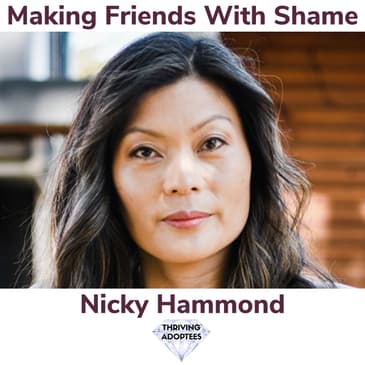
Trying to push away, numb or suppress tough emotions is exhausting and a short term fix if it works at all. We have to feel it to heal it. Nicky shares wisdom bombs to help us heal, including one that really landed for me - making friends with shame. It's so counter to what we normally do.
Nicky Hammond is a transracial adoptee who was born in South Korea. She and her identical twin sister were adopted by white parents in Sydney Australia. She currently lives with her hubby, two primary school aged boys and a Staffordshire Bull Terrier in the Northern Beaches of Sydney.
Nicky is a breathwork facilitator, master coach and former coach instructor. She is an expert in deep enquiry and using somatic practices to heal and expand. She is on her own healing journey using a whole range of modalities to heal. She calls herself The Coach's Coach because she is passionate about helping other coaches deepen their coaching conversations, so they can help facilitate their clients’ transformation and create ethical businesses aligned with their own values. Nicky has been using breathwork to nurture her own nervous system for years and loves sharing it, to help other people take care of themselves, heal, transform and flourish.
https://www.facebook.com/CoachsCoach.co/
https://www.instagram.com/coachscoach.co
https://www.linkedin.com/company/coachscoach/
https://www.tiktok.com/@coachscoach.co
Guests and the host are not (unless mentioned) licensed pscyho-therapists and speak from their own opinion only. Seek qualified advice if you need help.
Want to learn more about thriving for you, your kids, your families or your colleagues? Pick a time to talk here
[00:00:00] Hello everybody, welcome to another episode of The Thriving Adoptees podcast today. I'm delighted
[00:00:07] to be joined by Nikki. Nikki, welcome to Thriving Adoptees looking forward to this conversation
[00:00:12] today. Hello Simon, thanks for having me. So Nikki's down under about 12 hours time difference,
[00:00:20] roughly time 10, 12 hours time difference at the moment. We don't have many Aussies on, so it's
[00:00:25] always a treat. Hopefully, yeah, sure, my funny accent and I didn't say good day or make any
[00:00:37] other G jokes or call you Sheila or anything like these stereotypes. We don't give a castle main
[00:00:44] forex for any of those. So let's be serious. Healing is the Ready More series topic than healing.
[00:00:58] What if we could laugh at our trauma? What does healing mean? That's great, yeah.
[00:01:06] Yeah, here I go again. Here I go again down this trauma tunnel where you only notice it when
[00:01:19] you've come out. Yeah, that's an interesting way to describe it, that's for sure. But yeah, so often
[00:01:28] when you're in the sticky situation and when you're going through that dark tunnel, you don't know
[00:01:32] that you're in there. No, we think it's all right. We've got so accustomed to
[00:01:43] darkness. It becomes our lived experience for a while. Yeah.
[00:01:49] Yeah, and we keep on seeking enlightenment don't we? That's the thing.
[00:01:55] I don't think everyone does, but I think for many of us that's something that
[00:02:01] becomes either interesting or a necessary or you know, I don't know like a kind of mission.
[00:02:10] Who knows why? But there are definitely lots of us and obviously you're on that mission
[00:02:15] for yourself as well as for others which is very cool. Yeah.
[00:02:19] Yeah. The most beautiful thing I heard about this subject is that actually there's no such thing
[00:02:27] as enlightenment. We're already the light, but that light has been endarkened.
[00:02:36] Oh, I think that's true. I think that's true. I think that we come here
[00:02:44] like the purity of being a baby or a child. And then when we talk, because you ask me this question
[00:02:50] to ponder this question, what is healing? And thinking about it in the context of something
[00:02:59] happens to us, something doesn't happen to us. Our body is stressed, our mind or emotions
[00:03:07] or spiritual self gets put into a situation where we don't cope with it in the moment
[00:03:14] and then there's something to heal. So yeah, so as a pure child maybe we have an experience
[00:03:26] the things that need to be healed. Yeah. I was thinking about this the other day
[00:03:35] and I was thinking, well because I was David Anthony Flour before I was Simon Jonathan Ben
[00:03:42] and I was thinking, well, David Anthony Flour. Yeah.
[00:03:51] It wasn't kind of relinquished. It was it's Simon Jonathan Ben that's got the
[00:04:02] that's got the relinquishment trauma. Yeah, it is an interesting thought
[00:04:10] if we think back before adoption and I mean I think even that you know some of the listeners might
[00:04:18] be going, ooh because for me I hadn't thought about being in utero until quite recently like it
[00:04:26] just didn't exist for me. So yeah it's an interesting thought. I think there must be some though
[00:04:33] chemicals and you know experiences that comes from our birth mothers as well in utero. Yeah
[00:04:42] yeah yeah yeah yeah yeah yeah so the fetus the fetus that hadn't been named
[00:04:52] yeah or maybe I don't know when she came up with a name for me right but the fetus hadn't
[00:04:57] been named and been named but the fetus was pickled in it was probably pickled in cortisol right?
[00:05:05] Yeah. The strategy is about stress you know that you've got a mother's
[00:05:14] well maybe you can talk about a mother's view on their child and the mother's attachment to their
[00:05:19] child because you're a mum right and I'm not I'm definitely not a mum and I'm I'm also
[00:05:25] happened not to be a dad either. I could never have been but if we look at the experience in utero
[00:05:33] there's some trauma there and I think there's some trauma later on with relinquishment and then
[00:05:42] there may be trauma on top of that trauma in the in the adopted family home but they're built up
[00:05:49] overlays and the the built up over time and we can't we can't distinguish them. I came up with this
[00:05:56] metaphor the other day it's like a latte macchiato right? You know a latte latte latte latte is
[00:06:02] in different sections so if we've got the in utero stress we've got the root-in-chish
[00:06:08] trauma and we've got any trauma that happens after that it's like three different layers of
[00:06:14] of the latte macchiato but that's separated out but in real life they're they're all combined into one
[00:06:24] coffee right? Yes as the one personality or human or your manifestation in that human it's true
[00:06:32] I've read somewhere it was quite interesting I can't remember which book it was but it was a
[00:06:36] specific adoption book and it talked about how when we're if we're relinquished as a baby at a
[00:06:43] very young age what happens when we're so small is that our point of reference is love our point
[00:06:50] of reference is at the bosom of our mother and if we don't have that then growing up we may not
[00:06:56] have a reference for that sense of and I don't even know how to explain that but it is essentially
[00:07:03] like love and nurturing and maternalism that and so sometimes I think from many adoptees
[00:07:14] a lot of us manifest in like people pleasing etc etc and I don't I hate the thought that you know
[00:07:20] I have a counselor and we spit I said to her last time I saw her you know some of them as I wonder
[00:07:27] what it would feel like to be normal she says no no no don't think about it like that there is no
[00:07:30] normal but I still think for us as adoptees who are relinquished as babies it is interesting to
[00:07:36] think about like that stress that happens at that young age of relinquishment and then how it impacts
[00:07:45] like our ongoing development and who we are because we don't have that point of reference and
[00:07:51] it could be true for some of us it could not be true for some of us I don't know to me kind of
[00:07:56] kind of feels true yeah and yeah I think there's so some babies I've taken away from their
[00:08:07] birth mothers in the old you know I'm talking the old thing days right yeah I've talked about the 60
[00:08:14] and I've heard stories from the states where the mother was knocked out with their drugs
[00:08:24] and the baby was so she experienced the delivery and then the baby was never held up
[00:08:32] to her which just whisked away straight off so just they believed that day in those days that
[00:08:39] the bond would be tougher if it had been made first place but you're talking about the bond
[00:08:47] is has been going on for nine months hasn't it yeah well that like yeah you're right because
[00:08:52] and when you say what's it like as a mother is like as a mother doing the research like looking through
[00:08:57] a perspective of you know kind of traditional like pregnancy mothering and I really go into this
[00:09:05] attachment theory I'm thinking about like in Yushiro the sound of the heart the sound of the voice
[00:09:11] the flavors of the food you know I was adopted from South Korea and one of my go-toes is to eat like
[00:09:17] two-minute Korean noodles now that's that's like if I feel sick or you know kind of feeling like I
[00:09:23] need to pick me up like I'm filling down and I kind of think now you know it's an older person
[00:09:29] as a younger person I didn't even know what I tasted like but there's another person like
[00:09:32] ah because that's what you know that flavor that spices what what I was drinking in the universe the flavors
[00:09:40] yeah so it's the taste of home yeah I guess there's something about it
[00:09:47] the sun but then but then having sent out there's trauma I think around language many adoptees
[00:09:53] who are from Korea that I've met have found it really difficult to connect with the language so for me
[00:10:00] I learned French as a young person in high school and my French is quite good and then as a young
[00:10:05] adult because I didn't kind of go through that identity piece or and connect to my original Korean heritage
[00:10:12] until I was maybe 25 and when I started learning the language I got into it I lived there for a year
[00:10:18] half but for some reason I lost and I don't know whether it's like the way our brain works for
[00:10:23] learning languages but I lost all my Korean almost all of it and like but I've retained quite a
[00:10:29] lot of the French so it's so interesting and when I talk to other adoptees who are Korean they say
[00:10:33] oh there's there's definitely a trauma there in order to learn the language so I don't know that's
[00:10:40] the opposite you know I want I want the Korean food but somehow my brain won't hold on to the
[00:10:44] Korean language yeah there's all sorts of clearly all sorts of questions that go on there
[00:10:54] I think the key thing for me the key thing that's worked for me is seeing that you know despite
[00:11:03] and despite these the these layers of trauma so you're you know did you feel that
[00:11:13] well yeah let me finish them despite the the layers of trauma in the in the macchiato glass
[00:11:20] you know those triangular shaped glasses with little tiny glass thumb thung thung and hold us
[00:11:28] with where the glass we're not the trauma yeah so when you talk about healing that's what
[00:11:41] healing is it's like nowhere the glass and so the thing inside let your thing inside of us because
[00:11:47] I believe that it's I think it's a process it's different for all of us and maybe we don't want to
[00:11:54] be a clear empty glass you know maybe that's part of it it's like maybe we could drink the whole
[00:12:00] macchiato or the whole macchiato could be cleaned out and put in the dishwasher but is that honestly
[00:12:06] what we want to do I don't know it's interesting it's an interesting analogy it's I think it's
[00:12:13] me it's just this I mean every every metaphor as it's you know limits right you can stretch any
[00:12:21] metaphor that I come up with people it can always be stretched beyond the limits
[00:12:26] I'm just I'm simply saying that disidentifying from our disidentifying from my trauma was one of the
[00:12:38] most profound and continues to be one of the most profound healing healing healing moments when
[00:12:50] I when I step back and and also recognizing that you know I don't have that you know if the
[00:13:01] the transracial adopt to the the transracial adoption piece can be another and no
[00:13:10] there is a very trauma yeah it can be the chocolate on top yeah it can be but because I don't
[00:13:17] I don't have that in my glass yeah that in my macchiato glass because I was a white
[00:13:24] kid adopted by white parents so yeah but it's still we're still the same glass whatever
[00:13:34] contents whatever the contents are in it and I'm thinking about you know like that and too much
[00:13:41] caffeine you know like too much caffeine yeah can drive us nuts come it with yeah it gets our heart
[00:13:49] it gets our heart racing so there's a there's a there's a there's a there's a strange similarity
[00:13:56] between cortisol and caffeine yeah what the bit interesting yeah yeah that's true but when you say
[00:14:02] the disidentifying with the trauma like for me the healing part was actually identifying it because I
[00:14:09] grew up with a complete rejection self-rejection but absolutely no support whatsoever within my
[00:14:16] family that my adopted family for what that looked like because it was a British mentality of
[00:14:22] like please don't talk about that that doesn't exist as you know and don't you don't need a
[00:14:28] psychologist you've grown up in a loving family that's it so actually for me to identify like oh
[00:14:33] and there was trauma it's like oh I get it now like I wasn't going crazy because I gaslit myself
[00:14:39] into thinking what's wrong with you you've got this an amazing situation what are you what are you
[00:14:45] hungering for and that's the inner that's the inner conflict yeah yeah where part of you is
[00:14:55] uh part of you is is is feeling the love but part of you isn't feeling the love and and that
[00:15:04] the this idea that that that I think all adoptive parents were told back in the day that their love
[00:15:16] will trump our real enrichment but I don't think they learned that it was trauma
[00:15:25] no they didn't know they didn't know because they didn't know because they supported
[00:15:32] yeah and this is I say this a lot at the moment we know we're we are judging
[00:15:41] um 70s parenting on we're judging 20th century parenting on 21st century trauma knowledge
[00:15:54] yeah and and that's and that's the source of our resentment because we're saying they should have
[00:16:02] they should have done better well they they didn't know better so they didn't know better so they
[00:16:09] couldn't do better look I think in some aspects they didn't know better and then in some aspects
[00:16:14] the institutions and the people didn't know better like I think we can't excuse them for all of it
[00:16:20] but you write around the trauma maybe that's true but there are some parts of it that I just think
[00:16:25] look but the institutions were denying it the institutions were denying it they were getting
[00:16:30] yeah they were thinking they were getting a good and and how much uh I sometimes hold up my my parents
[00:16:37] post post adoption education it's a it's a it's a single page of a for paper well and to me like
[00:16:45] maybe it's not about the trauma but it's also about the process for me post like personally seeing
[00:16:51] the institutionalization of intercountry into adoption and the trans racial adoption like that
[00:16:56] piece particularly I think they knew I think there's a lot of illegal like that's why I'm realizing
[00:17:04] there are a lot of illegal adoptions and you know it's where they were in adopting cats and dogs
[00:17:10] they were adopting humans and bringing them in from different countries and I'm like okay that's
[00:17:16] that's not open for me yeah because the the money thing comes yeah it comes in here and
[00:17:23] and is uh the money thing is a cut the course of the grey market and then the black market
[00:17:32] and then with modalities and that feels uh I don't often swear on the podcast that feels fucking
[00:17:39] awful do you know I mean yeah and and let's also acknowledge as well many of the mothers had a lot
[00:17:47] of trauma about infertility which was never addressed like I know that my mom never addressed that
[00:17:55] so I know that's a piece of you know and I think yeah they didn't know and and at what point do
[00:18:05] you take responsibility because here we are taking responsibility just for and I mean there's no
[00:18:11] end goal it's just about like curiosity and learning and self-improvement like I don't know
[00:18:19] or I just yeah I think if though it's more people in the world took responsibility for themselves
[00:18:26] the world would be a far kind of sort of place yeah so the first step going back a couple of minutes
[00:18:35] the first step in in your healing was coming out the fog and really was realizing um my first step
[00:18:42] probably was it was probably the identity piece like the cultural identity piece
[00:18:47] yeah so what realizing it or or realizing it it's realizing it realizing so rejecting like realizing
[00:18:57] that obviously I realized I'm Asian I looked different to my mom but really rejecting like having
[00:19:02] people in high school who are Korean coming up saying well you're Korean and me going you're just
[00:19:06] weird like just because I look around the outside there's no part of me that feels connected to
[00:19:13] that identity and then but then as a 20 year old at university this was my first epiphany working
[00:19:21] with Aboriginal young people and helping them find their culture and then realizing pathway
[00:19:28] through that process that in fact perhaps my maybe my curiosity was also about myself
[00:19:39] and then um enrolling in the masters of international studies majoring in heritage studies
[00:19:44] which was Korean so I probably didn't eat Korean food till I was like 19 I didn't I had some
[00:19:53] Korean friends who like were trying to you know be Korean with me and I didn't even know what that
[00:19:57] meant I had lots of Asian friends I identified as an Asian Australian um but only through outwardly
[00:20:05] you know inwardly I've sort of so I'm sure you know I was I thought that I was white I thought
[00:20:12] that I was a privileged white person even though on the outside you know and even when you say to
[00:20:16] me today like or you're a person of color I have to kind of pause and go hang on a minute oh yeah
[00:20:20] that's true you know so it's a it's a confusion is it like a forgetting is it now it's not now
[00:20:32] it's not it think it was now it's now it's it's like I didn't grow up as an as a like in a conventional
[00:20:39] Asian environment of course but after going to Asia spending time in Asia living in South Korea for
[00:20:45] almost two years learning some language learning some culture I identify as Korean my children are
[00:20:50] now learning some Korean because they're interested in it like the you know they just signed up to
[00:20:57] some app and they're learning the letters and even though I don't speak a lot of Korean I'm not
[00:21:02] fluent I made peace with me being an interracial intercountry adoptee who is Korean so I think the first
[00:21:11] piece was that identity piece like going who am I and I'm also an identical twin so you know
[00:21:18] there's also that when we were adopted together by the same white Australian family in Sydney you
[00:21:24] know um so there was also that identity piece of like separate being separate from my twin like
[00:21:30] like almost identifying through high school so all the twins the twins twins and then having an
[00:21:35] experience like away I didn't agree to career first I lived in France for a year first and having
[00:21:40] experience of being like my own individual person and I almost now doing a 360 coming back and
[00:21:46] being like oh yeah that's right I am a twin I am a adoptee because I think I kind of wanted to
[00:21:52] explore my identity outside of that yeah explore your identity outside of
[00:22:00] being like between who's you know a trans race because you can lean on that like that's a story
[00:22:06] you know that's like a piece of your identity but I'm also all the other things I'm interested in
[00:22:11] like passionate about coaching or breathwork or um you know for you know when I was parenting and
[00:22:18] doing the attachment parenting stuff like all of those things um I work in community development as
[00:22:23] well like all of these things that I do which is aside from being an adoptee or an intercountry adoptee
[00:22:29] I let that go I kind of didn't even tell people for a while but as you know you know
[00:22:35] I don't know whether you grew up but being a trans racial adoptee people are always asking like oh
[00:22:40] oh you've got no accent how is that possible and I ended up as a young person just giving them
[00:22:45] a lot of information like I'd you know be speaking to taxi drivers and they'd be saying oh
[00:22:49] have you met your birth parents and it wasn't until almost like quite recently that someone said to
[00:22:55] me Nick you don't have to give them that information and I was like revolution you know my sister
[00:23:01] my sister's actually funny she she used to say where you're from and she used to say I'm from
[00:23:05] padding turn because that's like the name of the suburb where we grew up but I would always say
[00:23:08] I'm from South I do the whole studio I'm from South Sv'grie but I'm a adoptee and when I realized
[00:23:13] it 40 I didn't have to tell them I sort of took some time I'm like 46 now but I took some time
[00:23:18] to just not tell people and that was a good process you know yeah yeah so the the start of the healing
[00:23:30] was connecting yeah yeah and then I didn't come out I lived in Korea for two years
[00:23:39] and I didn't come out of the fog in Korea I saw these people who were like feeling lost looking
[00:23:45] for their parents who were angry at their you know their experience being an adoptee and I just
[00:23:50] was that was so foreign to me I was like why aren't you grateful you know like well not that I was
[00:23:58] getting along great with my mom I have to say but like you know don't tell a story that's and I
[00:24:03] think that's part of when I you know this people pleasing that I think lots of adoptees bring
[00:24:09] with themselves because we're so afraid of disconnection and rejection and we're trying to
[00:24:17] people please and you know and that's the society that brings out out of you know particularly women
[00:24:22] but all people so that it wasn't until I started during my own personal self development at around
[00:24:32] 40 that I actually came out of the fog that then I started to like critique this experience I've
[00:24:40] have and I can knowledge that there was trauma there because I didn't understand what trauma was I
[00:24:44] didn't really care and that was that was the next piece and then there was one experience where I did
[00:24:52] this timeline therapy and I said to you like I didn't even think about myself in utero that was
[00:24:57] like four years ago or maybe even only three years ago when someone took me in timeline therapy
[00:25:02] back to the moment I was my mother's womb and she didn't realize that she was totally triggering me
[00:25:09] and it was fine I had the tools to deal with it but for two days I walked around it's going oh well
[00:25:13] hang on a minute I have a cran mum I was in a womb of this mother like it was so weird so that
[00:25:20] was another epiphany where I was like oh trying to make sense of that and at the same time making
[00:25:29] sense of like I'm allowed to not be happy and think that's part of my childhood wasn't enough
[00:25:34] and crave you know have hunger for maternalism and all these things in connection to culture
[00:25:41] I gave myself permission to do those so that's still happening I've got a DNA test sitting on my
[00:25:47] desk over there I haven't I've done the DNA test but I'm doing a different brand that's more connected
[00:25:55] with Korea and it's sitting there because I'm just in the process still of working through
[00:26:01] like do I want to find you know our time runs out if our parents die like do I want to find out
[00:26:09] do I want to meet them do I want to know because you hear through amazing places like your podcast
[00:26:15] and you know documentaries and stories and meeting people people's the perception that you have
[00:26:23] of where you came from might be so completely different to the actual facts like maybe you
[00:26:29] know the story from me was mum and dad weren't married dad you know owned in Seoul a corner store
[00:26:36] mum got pregnant you know she ran away dad couldn't cope put us up for adoption that could be an
[00:26:43] absolute I already know that my birth dates are like I think it's a lie because I don't think that
[00:26:48] it was true I think they made us seem younger than we were because that seems more enticing for
[00:26:53] you know to get a smaller baby younger baby so I don't know I'm still processing it all I'm still
[00:27:00] working through it yeah yeah is this this uh you talked about kind of a relief in not having to share
[00:27:13] all the details yeah that you sister just says well I'm from pannington and you just
[00:27:19] out and you would go into hell for a long time do you think that you know what where do you think that
[00:27:25] where do you think that comes from that need to explain ourselves
[00:27:33] I think it's an ins it was an insecurity but also I mean I think it's a societal thing like
[00:27:38] you don't have boundaries but I think that's further exacerbated by like I talked about before
[00:27:46] like some of the wounds do you want to call them wounds or some of the things that we've experienced
[00:27:52] where um where we're not allowed to have loud voices when like we're afraid that something's
[00:28:02] going to like reject us or hate us or like any of those pieces so we just try and appease and it
[00:28:10] becomes almost just a habit just to be constantly appeasing so we lose sense of self and I think
[00:28:17] I mean that probably resonates with lots of people who aren't adopted as well but particularly
[00:28:20] with adopted people what do you think well I've never really considered this before um yeah what
[00:28:28] uh what what came to me was putting to put it together a couple of different things from what you've
[00:28:38] shared so especially just in last couple of minutes right so we've got um we've we've got limited facts
[00:28:47] we don't know whether they're true or not and you know especially with the translational
[00:28:52] adoption piece and then you know it's done in a foreign country the regulations maybe different
[00:28:59] the paper work maybe different the bureaucracy maybe different the institutions are different right
[00:29:04] so we've got basically um we've got we're not sure you're not sure of your facts
[00:29:10] um and that maybe wanting to share what you see as the truth is it is almost a uh a reaction to that
[00:29:24] so I'm gonna I'm gonna share I'm gonna share so much truth with you because I don't
[00:29:32] I'm not sure these are the facts as I see them do I think maybe I mean I think that's an interesting
[00:29:39] theory to be honest I wouldn't be able to say yes or no but I'm very like try and be honest
[00:29:46] and that's really interesting is like when you've grown brought up and but I haven't thought about
[00:29:50] those facts being untrue until recently that's the only thing about that it's like I just thought
[00:29:58] that was the truth so I would thought that I was telling the truth not that I was you know yeah
[00:30:05] I mean I was thinking the other a situation 30 for probably 40 years ago and we were playing
[00:30:17] or we're on holiday um we were in a cafe and I was playing pool with a kid um so I'm maybe 12,
[00:30:25] 13 the kids about the same age his dad's there my dad's there obviously my adopted there right
[00:30:31] and the the guy the the guy says to my dad that that's your son now looking at looking at me
[00:30:40] and you know I hear I hear this bloke out of the corner of my ear and you know look look to my
[00:30:46] look look at look at my dad and my dad just said yeah it is yeah and I was thinking well
[00:30:53] what what would that have been that situation being like it clearly wouldn't know
[00:31:00] if I'd been a trans-racial adoptee then that bloke wouldn't have said that you know
[00:31:06] what what if he said who's who's the lad who's who's that guy who's that guy you know how would my
[00:31:14] dad have answered would you say do I've been Korean and my dad's why you know what what would have
[00:31:22] happened there and you know like this trying to explain it are we trying to explain our way into
[00:31:30] uh trying to explain our way into into the into the family to try and counter a belief a
[00:31:36] counterfeeling that we don't fit in yeah like like constantly like trying to um grapple with your own
[00:31:46] like belief system and trying to prove yeah I think that could be true like keep saying it like
[00:31:52] and even if it's not like trying to prove it still trying to grapple with the concept of like
[00:31:57] this is where I come from like this I mean I can't remember feeling particularly uncomfortable about
[00:32:02] it but I also know that it was none of their business really unless I chose for it to be but I
[00:32:08] didn't feel like it was a choice at the time so but that could also be part of the the nurture
[00:32:15] part of you know the way that I was brought up not just the part of you know real
[00:32:21] inquisement or whatever it left behind whatever we might find it. Yes what we're also getting into
[00:32:28] in you know as you said it's a theory it is this is my theory but we're you know with a are we
[00:32:34] are we the are we the kings and queens of overthinking as adoptees you know like we've got all these
[00:32:41] answers we've got all these questions we can't get answers to them we're not we're not at peace
[00:32:46] until we get the answers we have to come up with these complicated theories you know like it's just
[00:32:56] you know we've become and as what why one of my mentors because we've become more on we just
[00:33:02] have more on our mind right yeah and we get and we get we get further and further away from
[00:33:10] and we're getting further and further away from that simplicity of simplicity and peace of
[00:33:25] we are not our trauma and and and that's that's a for me that's a kind of a peaceful a peaceful
[00:33:35] stand and the overthinking yeah it gets in the way of that gets in the way of that peace it's the
[00:33:48] opposite thinking is the opposite thinking is the opposite of peace I think I think there's
[00:33:57] truth in that but I also think that you can use thinking foreign against you so it's just being
[00:34:04] nuanced about knowing when just to give yourself a break and you know like I said I'm a coach and
[00:34:09] I'm a breath worker so the reason why I did breath work is because sometimes you've got to get out
[00:34:13] of your head and you've got to get into body right and so and so I do understand that but I also
[00:34:20] and so it just I think it just depends I think that for me like doing the exploration like I think
[00:34:26] it's fun and interesting and engaging and then there's a time when I can do too much of it so and
[00:34:33] then there's this simplicity but I do that with everything you know I don't know whether it's to do
[00:34:38] with adoption but it's definitely part of my personality yeah so I mean when we look at
[00:34:45] you've you've relating to so far we've been talking mainly about psychological and emotional
[00:34:52] healing yeah yeah and and then the but obviously the breath work that being that brings in a
[00:35:00] a body thing so what did you say when getting out of our heads and into our bodies is I think you
[00:35:09] said something yeah yeah yeah because you know the body stores emotions and I think that
[00:35:16] it's not really a science it's an art form so that and so you need to be careful with the ways
[00:35:22] that you use some magic healing processes and the breath can because of the physiological kind
[00:35:30] of changes that you can create your body by changing like the oxygen and carbon dioxide
[00:35:36] you can get yourself into a state where you know mentally emotionally things can change
[00:35:44] what can really happen is you become very sensitive you open up to sensitivities
[00:35:49] you take down barriers sometimes and allow emotions to come out you never know what to expect
[00:35:56] and sometimes those emotions can be wonderful sometimes those emotions can be scary or like anger
[00:36:01] or you know crying I've had lots of different experiences whether it be through breath work or
[00:36:07] hypnosis where I haven't been able to express those emotions just through talk therapy or coaching
[00:36:13] or whatever it is but when you get into a state where like your eyes close and you can
[00:36:20] relax and let down those barriers and some and I think your brain does go into different state
[00:36:25] like the frequency that your brain is changes then you can release things you can process things
[00:36:32] I think don't know whether everyone believes that or whether yeah but I think that it's possible
[00:36:39] yeah yeah I've just started somatic therapy stuff but it's not it's not breath work
[00:36:50] okay what does it bring you what does breath work bring you other than coming out of your head
[00:36:59] breath work can be used in so many different ways so the way that we breathe can make us
[00:37:05] activated or it can bring us down and like relax the nervous system and make us feel peaceful
[00:37:12] and so I do a journey which is to music and I generally do both so I generally activate the body with
[00:37:20] activating breaths so and because of that activation what I'm trying to do is move it allows someone
[00:37:26] to move energy I don't do it in a really intense way some people can do it so that they're
[00:37:32] they go to a psychedelic state like this transcendental breath work I don't do that but I do push
[00:37:39] beyond sometimes the comfort because we're not used to physiologically breathing like that and
[00:37:43] we're not used to the state we can feel dizzy we can get cramping when we do that but I will bring
[00:37:48] bring up the emotions and with the intention so we're thinking consciously the intention but
[00:37:54] also subconsciously and also I think on an energetic level if you believe that stuff the intention
[00:37:59] to release to release and so I've had people like you know who cry who you know we can move like
[00:38:06] because you're in this intuitive state your if you're in a trusting environment the energy that's
[00:38:13] can can can create that atmosphere where you can express and then I generally will I could stay
[00:38:22] up high and energize someone and get them ready to like do some work and be really thoughtful but
[00:38:27] what I generally do is then what people come to me for is then to relax so you get rid of some
[00:38:32] of this energy this frantic energy it might be stress or anxiety or fear and and planting seeds
[00:38:40] in the subconscious mind to do that not just in a session but ongoing and then and then using
[00:38:46] again the subconscious to plant seeds for what you want you slow the breath down you allow the
[00:38:52] parasympathetic nervous system to like be activated so that you create that calm and then
[00:39:00] sometimes when I do it these days I can just sleep or I can go into a zen state where I'm just
[00:39:08] like like sometimes you forget to breathe even though it's usually a continuous breath you've
[00:39:12] kind of drop out and you forget to breathe all there are times where I have like visualizations
[00:39:19] um and you can interpret them or not interpret them and then just like come out of it very very
[00:39:25] gently and through that people make decisions they just feel like nice some some the last time I
[00:39:35] did a group thing in session someone said I just had this moment of my heart filling and having
[00:39:40] this incredible moment of joy and then you know the session before one to one like someone
[00:39:45] cried and released all this energy from a trauma from her past she just that wasn't the intention
[00:39:51] or but she felt like release and kind of like peace and you never know what's going to happen every
[00:39:58] time you do it it's different yeah what's it um what's it brought you so when when you are working
[00:40:10] with um when you're working with your therapist rather than when you're working as I'm
[00:40:18] so therapist with a breath worker with other people what's it what's it brought what's it
[00:40:24] brought you that breath work so like I do it in different ways like I do it um like in person
[00:40:31] so the times that I've done it in person um when I do it and I've you know I've got like
[00:40:37] colleagues and stuff and we do breath work together um it has like created clarity so like the
[00:40:47] intention can be to move through a particular life kind of obstacle or whatever like I've done that
[00:40:56] and to release emotion so it's I've done that in ways that I couldn't do through talk therapy
[00:41:02] um but often these days I just use it for um expressing like stress anxiety and just relaxing
[00:41:08] like just getting into a state to start the day to create clarity I use it you know sometimes
[00:41:13] I meditate but at the moment I'm using breath words instead of meditation to create that and not
[00:41:17] and I don't just do it with live with people online or in person I mean them facilitating me
[00:41:23] I also use an app so in the morning I can wake up and do like a 10 minute just breath work
[00:41:29] um and I've and it just relaxes me and you know you can use you can use the functional breathing
[00:41:36] patterns you know when you're driving when you're like you know just all so I use them in
[00:41:42] all different ways I know people who've going through menopause and I've been using them to change
[00:41:47] their fluctuations of body temperature like we've found breathwork patterns that lower their body
[00:41:53] temperature when they're having a hot flush and when they're having a cold flush it increases their
[00:41:57] temperature so it's different for everyone what is it brought you kind of overall as well as in
[00:42:06] those in those moments uh I guess a method that takes me out of my head and puts me into my body
[00:42:15] and allows me to release emotions and and and nurture my nervous system does that is that yeah
[00:42:23] that's what I'm looking for really and I know that's well I didn't know what I was looking for
[00:42:27] so looking for your answer yeah I think I've been I didn't have an answer because I never done this
[00:42:32] stuff um I'm thinking it back to something else that I said at the top yeah so you said well
[00:42:42] we don't want we you know we may not want to wash out the last cut yeah
[00:42:53] we we maybe so I'm thinking um are you are you talking here about breathwork as a way to
[00:43:05] to clean out to clean out the cup or is it about breathing is it about breathing into the tough
[00:43:14] stuff you know what I think um breathing into the tough stuff making peace with different kinds of
[00:43:22] emotions but if we use that analogy like because when I say maybe we want to wash out the cup because
[00:43:28] who we are like our past and what happened to us as part of who we are and we can love that part
[00:43:34] of us because so I think like part of healing is to like accept ourselves now full humanity
[00:43:39] so flaws in all history and all and so we don't want to get rid of ourselves but maybe it's about
[00:43:46] like if you're saying like sometimes like you know what if you know we come there and there's
[00:43:50] there's the clean cup and then we get filled up and there's the layers and then
[00:43:54] and then part of life is like stirring it all up but what if breathwork helps us
[00:43:58] the layers kind of like fall into place like this is kind of like notion of coming into self for like
[00:44:06] being brave to be ourselves like I think that's part of growth is like to just
[00:44:11] not be afraid not pretend like maybe that's more I would hope that any kind of healing does
[00:44:18] and maybe that's what breathwork does not to clean out the cup but to create the clarity of the layers
[00:44:25] within the cup so that you can like sit in comfort being you yeah
[00:44:33] and maybe that's what healing is like because you don't clean now the cup I don't know that's just for me
[00:44:39] yeah so um for me it's one I took we talked about the feeling whole right
[00:44:48] so one of my definitions of healing is feeling whole and then the
[00:44:59] and then another definition is feeling the whole of our emotions
[00:45:07] yeah it's almost as if if for me if we are um separating in the if you know separating who we
[00:45:18] are from how we feel yeah um in the first instance and then embracing the whole shibang
[00:45:28] yeah because our feelings are no longer
[00:45:38] yeah uh our our we realize our our our feelings aren't going to as cold as you know like
[00:45:46] like we are not our feelings and then we have the ability to become the watcher of our thoughts
[00:45:51] and feelings and experience yeah yeah we sit we sit with them and it's a theme that we keep on coming
[00:46:00] back to in and not every episode of the podcast but um not uh yeah not not pouring
[00:46:11] and not being so afraid of our trauma that we need to pour it away yeah sitting with it
[00:46:21] yeah sitting with the heat right because we know yeah um
[00:46:28] um we know that the heat doesn't have any long-term impact on the cup yeah I just saw I don't
[00:46:41] know whether this is this works or not but my thought was if we're using a measure for it's like
[00:46:48] well feeling the emotions is like roasting the coffee beans right it's like it's like
[00:46:58] and I use an analogy and it's like for me growth is a tunnel a tunnel of darkness and there's light
[00:47:04] on either side and you know the objective you know is to get to the other side because right here
[00:47:12] we're here in the light and we walk through the tunnel and we get to this place of complete darkness
[00:47:15] and we keep on wanting to turn back to go the way we know that's comfortable but really what we're
[00:47:21] talking about is going through the emotion when we're growing because I think um you know growing is
[00:47:29] expansion and then you know the opposite of expansion is contraction and so that's that's also what
[00:47:37] we need to heal as the times that we've contracted so when we're growing we've got to have this
[00:47:42] capacity and this is where you know the idea of this like roasting roasting the coffee beans comes in
[00:47:50] and keep moving having blind faith like blind faith that we can handle the emotions that we're
[00:47:55] going to be okay on the other side even though it feels disgusting and at some moment we start
[00:48:00] sit there and we're walking in pitch darkness not knowing which direction we're going but we need
[00:48:05] to move forward to that next place and then we see the light and then you said you don't even know
[00:48:09] you were in the trauma because you just in the darkness but then when you start to see the light
[00:48:14] then you can look back and go oh I see what just happened I was walking through the process
[00:48:20] but if we never go through it you want to jump over it you want to dig under it you want to just
[00:48:26] just not experience it
[00:48:28] yes and our going back to something that you said earlier on you talked about
[00:48:42] you didn't if we just call this cultural trauma like just for the sake of putting it in two words
[00:48:52] right you didn't see your cultural trauma until you were teaching aborigines about their
[00:49:08] cultural yeah yeah so our that was another fog lift moment that was another coming out to the fog
[00:49:20] moment you've been in that darkness for so long you'd become used to to that and you only
[00:49:35] came into the light when you were actually talking about other peoples you think I fell
[00:49:46] I've felt what they felt yeah I suffered from what they've suffered from similar kind of two-stop-stop-stop
[00:49:56] it's it's it's um our it's that quite in the by by young until we make the subconscious conscious
[00:50:06] it will rule it will rule our life and we will call it fate
[00:50:12] I think it's about a series of series of coming out to the fog moments it's yeah
[00:50:20] it's coming out to the fog again and again and again and the the peeling back at the layers of the
[00:50:26] the trauma so we're peeling back the transracial piece we're peeling peeling back the relational
[00:50:31] piece we're peering back the utero piece we're peeling them all back and we've got this cake
[00:50:38] we've got this trauma cake yeah but but but and we are the we are the the cake stand we are there
[00:50:46] yeah we are on which or that trauma is sitting there and and when you talk about that what it makes me
[00:50:54] think about is like if I because I'm thinking of like the walking through the dark tunnel
[00:50:59] and what happens is when we're walking towards the light we can't imagine that it's really easy
[00:51:05] it's actually really hard even though we've seen the light because the actions that we take in
[00:51:10] the decisions that we make in the beliefs that we have to be willing to change are really uncomfortable
[00:51:16] and so to actually go through that personal growth and to to move through that process of healing
[00:51:21] we actually have to be willing to move towards discomfort so whether that be learning a new language
[00:51:27] or like you know like changing the relationship with your adoptive parent to say like
[00:51:33] this is something that I'm going to do and it's different you know all those things
[00:51:38] so therein lies the barrier to healing yeah totally yeah yeah um I was uh I'm working on this
[00:51:56] let's tell you about this trauma framework I'm working on sorry the healing framework I'm working
[00:52:00] so I fell into my opinion yeah I'm working on this healing framework at the moment so
[00:52:07] basically I'm trying to distill everything that I hear from fellow adoptees and
[00:52:14] everything that they share with me everything that fellow adoptees share with me um
[00:52:21] I've shown I don't know like a questionnaire sent out a questionnaire on asking these questions about
[00:52:27] what does healing mean to you what's helped you heal what's hindered your healing and I'm looking at
[00:52:41] those questions those three questions and the healing moment's question looking at those
[00:52:49] on one side but across the top of the page I'm looking at the different healing bits so we've
[00:52:56] talked about psychological we talked about emotional with we talked about physical biological
[00:53:05] and we've talked about but not so much maybe social and relational and then we also kind of
[00:53:12] we started off really about talking about the social sorry the spiritual and the essential
[00:53:18] you know what is our essence and one of the I came on a coming up with these are their ideas
[00:53:27] like so how do we make this framework work for people um now how we make it into a roadmap and
[00:53:37] the the questions that are coming to mind on the basis of our conversation are
[00:53:44] are we willing to feel that pain are we are we willing are we willing to be wrong about
[00:53:56] what we believe do we bit like do we believe that
[00:54:04] that we can heal because based on some of the answers to the question there's people don't believe
[00:54:16] those some people that answer that question and don't believe that they can heal now that's going
[00:54:25] to get in the way isn't it oh 100% oh my gosh this is like so when I coach there's always like a
[00:54:32] domino quick like domino effect and often you come up to this and that's that's the domino piece
[00:54:39] where it's like if you don't think that it's possible to change your thinking or belief system
[00:54:45] or heal that's what you're talking about then you can't you can't change that's like the belief
[00:54:53] that's the belief that it's going to block you it's the obstacle so like I often will spend like
[00:54:58] sessions and sessions and sessions with one client just exploring that like why do you believe
[00:55:03] that why why do you want to believe that why you know are you holding onto it what what else could
[00:55:10] you believe is the opposite true like all these things and you know my job as a coach is to
[00:55:15] just be curious i'm not trying to change their mind but then showing them like look at this one
[00:55:20] thought it's like oh yeah and and we keep coming some for some people we keep coming back
[00:55:25] it's like that neural pathways so deep within them and below that there might be something that's
[00:55:31] a belief system about who they are they don't deserve to heal or you know what I mean like there's
[00:55:36] something about worthiness or that it comes in at the crux of it that sometimes just
[00:55:43] for some people you can just you can just wobble that belief system and then the whole thing
[00:55:50] collapses it's like a table with all these legs and you can cut a few out and then the whole thing
[00:55:54] but until they're willing to investigate it's kind of like well it's not going to be possible
[00:56:02] how do you think that trauma affects our beliefs
[00:56:06] trauma makes it feel visceral that's what i think because it's stored in the body so it's really
[00:56:13] hard for us to separate our experience from our thinking and most of us don't realize our thoughts
[00:56:19] are optional anyway so we just think like for me shame was a huge emotion that I had to make friends
[00:56:26] with when I was doing my master coach training that was like my main kind of like obstacle was just
[00:56:34] like making friends with shame because we think that it's true we think that it's who we are
[00:56:40] and then like that's of course that's how can we how can we change that and then
[00:56:47] and then the that the worthiness piece the worthiness piece is so integral like
[00:56:54] and for some of us it needs to be just laying foundation of being willing to believe something new
[00:57:00] being willing to like have positive thoughts about yourself because some of us don't want to give
[00:57:04] ourselves permission to do that for whatever reason and then it's like well what do you want to fight for
[00:57:11] because at the moment you're fighting for you being small you're fighting for your pain you're
[00:57:16] fighting for for the trauma so you have to decide no one can make you but you know asking the right
[00:57:24] questions I think can provide avenues for someone to just open a crack like I say like there's a door
[00:57:31] and there's like light behind the door and you just open that little crack and let a little
[00:57:34] little light through and once you've opened that little crack that that gap is going to get bigger
[00:57:39] and bigger if you're willing to let it but you have to do it consciously I really think you have
[00:57:44] to be conscious about it and do it deliberately and remember there's a difference between your
[00:57:48] conscious like cognitive mind and your subconscious mind and you can like like manage your mind
[00:57:57] basically you can't control your mind but you can manage your mind. How much talk do you hear about
[00:58:08] our beliefs in your world in down in Australia and with other other adoptees you know how much
[00:58:20] how much talk is there of beliefs? I don't know I mean I've it's only recently that I've become
[00:58:28] more connected to adoptee communities I don't have I think more we talk about our experiences
[00:58:39] I do have a very close friend who's also an adoptee and we talk about our belief systems like
[00:58:46] our beliefs around and we share lots of you know short videos on Instagram which talks about
[00:58:54] stuff that we've talked about you know like the kinds of traumas how they manifest the kinds of
[00:58:59] families that we've been adopted into and how to heal but I didn't know what adoptees in general
[00:59:06] are talking about in Australian terms of beliefs. I'm not sure. I'm sorry great I don't know if I
[00:59:12] mentioned this on the recent podcast or or just another conversation I'd with an adoptee so
[00:59:18] apologies listen as if you heard this one from me before and yeah I think it's really
[00:59:25] profound for me and another mind that I'm repeating it so I saw something a video from Gabo Marseille
[00:59:36] talking about not only this wasn't adoptee specific this was human race specific right
[00:59:45] feeling like we're not good enough right and he said that's not a feeling
[01:00:02] feeling sad feeling happy feeling nervous feeling stressed feeling confident those are feelings
[01:00:13] feeling you're not good enough is not a feeling it's a belief but see I think shames this is a
[01:00:23] feeling that comes from that belief what do you think I agree yeah so I agree with yeah I can see
[01:00:39] that like I'm not enough is what creates that but also a visceral feeling of like the shame
[01:00:45] that comes up I think you know I went to a school coach at school which always said it always goes
[01:00:50] like like circumstance triggers a thought triggers a feeling you know the drives an action that creates
[01:00:55] a result but the truth is it's the cycle like we have a feeling we have a thought and then one triggers
[01:01:02] the other and so I'd but I think yeah when we can make peace with the fact that we're all humans
[01:01:10] and everyone including Beyonce including you know everyone just just has that experience where
[01:01:17] we feel shame it's just the nature of the world nature of humans and once we can make peace with
[01:01:22] that then we can show up more authentically as we are and tell our truth and then show up whole
[01:01:29] use the word hole before that's that's healing yeah the biggest thing breakthrough for me
[01:01:40] on this subject it's been seeing that the difference between feeling whole and being whole
[01:01:53] right so spiritually I believe that we are all of us already whole
[01:02:03] psychologically we'll be healing forever and there's a freedom in that I'm I'm far more interested
[01:02:15] who I am than how I feel yeah and I just want to take it back because I'm in danger of
[01:02:26] um it's putting too much of my stuff in here
[01:02:29] it it seems it is you know
[01:02:40] getting rid of shame
[01:02:46] seems like a really tough task for me yeah and a lot tougher than um exploring the belief
[01:02:58] yeah we're not good enough to sit to make but we don't get rid of it we just make peace with it
[01:03:06] we make friends and we know so this so this so this is there was an epiphany that I had
[01:03:10] and it's not to do with adoption but it was to do with shame and so I would I would one of the
[01:03:15] things that I kept feeling when I was doing I was stepping outside my comfort zone I was just like
[01:03:20] racked with shame like this you know thoughts I'm not good enough I failed I'm gonna do it wrong
[01:03:26] no one likes me I don't belong here like all these things are coming up and and then I was walking
[01:03:31] I can't remember it's just like I would go and lie down let's be like okay this is shame this is
[01:03:35] shame this is shame and I was walking down the street and I was just so consumed I'm like this is
[01:03:39] horrible and there was just this moment where I was like hang on like even though it seems so simple
[01:03:46] now I say it now but it was this moment where I had the clarity like oh I'm experiencing shame I'm
[01:03:51] thinking these thoughts like as humans we're so it's so part of us to believe that it's this is
[01:03:57] what we're in that when we become the watch out and we have this moment and what I realized as
[01:04:04] like growing I still do it I still get to the place where like oh this is horrible like I'm
[01:04:09] in this is so shameful like blood but then but then the distance between you being in it and
[01:04:15] then you being able to go hang on a minute I'm okay like I'm watching myself I'm watching this
[01:04:21] experience and yes this is horrible you don't like gaslight yourself and yes I'm feeling I can
[01:04:26] process that I can move through it and I know at some point I'm gonna realize that that was just
[01:04:34] the experience and I'm gonna move through it and I'll be on the other side so I don't think
[01:04:38] it's about getting rid of shame I just made friends with shame I'm like and there was a point where
[01:04:42] I was like oh the shame's gone of course the shame doesn't go the shame's gonna come back all the
[01:04:45] time it's fine but I'm like okay with that I'm like I'm not I'm not I'm not because what we tend to do
[01:04:51] is we resist or we cover up our emotions with like food and you know dopamine watching TV whatever
[01:04:59] is that we do and then we just run away and pretend it's not there but then when we like
[01:05:04] open which is what you've talked about and then we have the ability to be the watch out that's
[01:05:12] why I think it's healing I was gonna write a blog post the other day about the shame storm before
[01:05:16] I would have just been in the shame storm but now when I'm a shame storm it's actually gross I use
[01:05:21] the shame storm for my own personal growth I use it for me instead of against me I'm like oh here
[01:05:28] I am again and that's okay I get it now yeah it's powerful very powerful at some point during that last
[01:05:39] during that last section of I don't know something you you said you said adoption and shame weren't
[01:05:51] were were it said this this isn't to do with adoption this is
[01:06:00] I think because it wasn't I don't I mean if I guess who I am that's part of who I am but it wasn't
[01:06:06] it was just yeah it was I think it was because I was stepping out some I comfort zone and it was
[01:06:13] just I don't know I didn't connect it with adoption yeah yeah I mean I don't know whether it is you know
[01:06:20] yeah I don't know yeah it was just an emotion it was just the humanity of it it's just like a human
[01:06:25] part of you know that that's all it was it's just a human experience yeah yeah yeah
[01:06:35] this real genius in in that making friends we shame other than
[01:06:43] yeah yeah and and they're the one they're the throw away truth bomb but I loved you said thoughts are
[01:06:51] optional yeah yeah
[01:06:59] I don't think in the moment we can always change a thought but I think sometimes we can
[01:07:04] and it can be authentically like we can just release the thought or change a thought
[01:07:09] but we do have the power even if we can't change this thought in the moment to manage our mind
[01:07:14] which is create new neural pathways so when we give ourselves permission to believe something new
[01:07:20] then we can practice something new yeah can just go back to the shame thing for a minute I shouldn't
[01:07:26] take you I'm taking it back into it going around around and do do clients come to you wanting to get
[01:07:33] rid of shame no they don't even realize they haven't they don't even realize they have it
[01:07:39] that's just that's just pardon parcel of the process of these conversations that's not the reason
[01:07:46] yeah no they come they come because they want an external goal that they want for field there's
[01:07:52] something there's obstacles that they're trying to fix and and then so then you know as a person who
[01:07:58] understands like who studied the way humans work and and has tools to help people change the
[01:08:04] way that they think in their way they experience emotions you use all of those so that the results
[01:08:10] that they want and the process that they use is different yeah
[01:08:19] and does so does the shame go of its own of course or is that still left behind or does that
[01:08:26] depend or what I think over time like we work on it on so many different levels so whether it's
[01:08:33] like emotionally making peace with experiencing the shame or whether it's changing the neural pathways
[01:08:42] like you know we're laying down new tracks and then and so the beliefs that you know whether
[01:08:49] it be like I'm enough I'm worthy like you know laddering thoughts with because because you know you
[01:08:59] let's let's use a specific example let's imagine someone who
[01:09:07] I'm trying to think of something that's worthiness but I mean worthiness comes into almost
[01:09:11] everything that we do so it's someone who's over-eating so I mean for a while the weight loss
[01:09:16] coach someone who's over-eating who's compulsively going to the fridge at night and they're doing that
[01:09:21] I mean shame will come into that shame will come into that because like part of the process of
[01:09:28] deciding to not eat is a loving gift to yourself to do what is best for you eating the food can be
[01:09:37] love sometimes and nurturing and the exact right things to do but when you're compulsively
[01:09:42] eating to cover up emotions or to escape something from yourself then what's underlying that is a
[01:09:48] sense of lack of worth so when you learn how to make yourself important prioritize yourself and
[01:09:54] do things from a place of self-love then of course all of the thoughts that we come to
[01:10:01] are probably going to be related in some way toworthiness and shame yeah so one of the processes that
[01:10:09] I think you know if you that I love to sort of use is like I say turning inside out
[01:10:18] because in this world what we tend to do is we tend to fuel ourselves with negativity and insecurity
[01:10:25] and scarcity and so if you're doing that like it drains you of energy you don't and you never really
[01:10:32] give yourself the acknowledgement and we I say the metaphor that I use is like you're climbing
[01:10:39] up this mountain you want to get to the top of the mountain and so you're throwing yourself against
[01:10:43] these cliffs and you're climbing and clawing up some people get there and they're like okay
[01:10:48] I'm here I need to get to the next mountain but when we're filled we turn inside out which is
[01:10:53] like this process of like then fueling ourselves with abundance like we want to get to the top of
[01:10:58] the mountain but not because it's going to mean that we're better that we're enough that we're
[01:11:02] worthy that we're successful it doesn't matter when we get to the place where we're like we're doing
[01:11:07] it because we want to and we have this innate choice then then the whole the whole thing changes
[01:11:15] because you're like looking at the butterflies as they go by you're breathing the fresh air and
[01:11:19] when you get to the top you know all there is is another mountain but it doesn't matter because you choose
[01:11:23] the next mountain that you want to so that's the process like you do it because you want to
[01:11:30] that's life right yeah wow yeah feels like a good place to bring in yeah
[01:11:40] yeah
[01:11:48] I thought that I thought we might get to this space
[01:11:52] you feel that space just now yeah yeah
[01:11:58] thanks listen thanks Nikki I speak to you very soon okay thank you