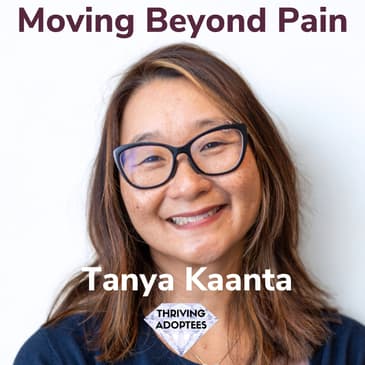
Looking for more peace and less pain? Listen in as Korean adoptee Tanya shares her learnings so far. We dive into healing, freedom with painful emotions and much more.
Tanya is a Korean adoptee and former academic. She has a Ph.D. in Sociology and an M.S. in Student Affairs in Higher Education with a focus on intercountry adoption, identity formation, emotion work, advocacy, and agency. Prior to Ties, she worked 20 years in higher education supporting students, teaching sociology, and conducting evaluation research. She has spoken at multiple Heritage Camps and first started working with Ties as an adjunct team member for Kazakhstan in 2019, where she loved connecting with both adoptees and parents. Along with her husband and teenage daughter, she currently splits her time between Colorado and living abroad, while their son attends college in Colorado. In her free time you can find her walking along the ocean or reading romance novels.
https://www.instagram.com/tanyakaanta/?hl=en
https://www.linkedin.com/in/tanyakaanta/?originalSubdomain=pa
https://www.instagram.com/the.ties.program/
https://www.facebook.com/TheTiesProgram
https://www.thetiesprogram.com/
Guests and the host are not (unless mentioned) licensed pscyho-therapists and speak from their own opinion only. Seek qualified advice if you need help.
Want to learn more about thriving for you, your kids, your families or your colleagues? Pick a time to talk here
[00:00:02] Hello everybody, welcome to another episode of the Thriving Adoptees podcast. Today I'm delighted to be joined by Tanya, Tanya Kaanta. Looking forward to our conversation today, Tanya. Tanya Kaanta Thank you, thank you for having me. Tanya Kaanta I'm excited. Tanya Kaanta So much fun. So Tanya, what does what does Thriving Adoptees mean to you? What comes to mind when you hear the name of the pod? Tanya Kaanta You know, for me, when I hear that, I think
[00:00:32] beyond just existence, but really adoptees who are looking into their journeys and trying to heal. For me, it's about healing also. Tanya Kaanta Yeah, and what does healing mean? Tanya Kaanta You know, healing, you know, that's such a, that's right, that's such an interesting top word. And it can be so subjective for so many different people. Tanya Kaanta Yeah.
[00:01:02] Tanya Kaanta But for me, I feel like healing is wherever you are in your journey. Tanya Kaanta I like to call it a journey because I don't think it's ever ends. I think it's never ending. But, but yeah, for me, I feel like the healing is, you know, being able to be at peace with different aspects of one's story or be in a place where it's
[00:01:28] okay for, for the adoptee to feel like, you know, I, I can feel these emotions and that's okay. Tanya Kaanta Work through them, experience them, ask questions, be curious, and then, and then continue on. It doesn't, it doesn't hold them in that place of, of pain. Tanya Kaanta Yeah. Tanya Kaanta But we can acknowledge the pain and then, and then continue with our lives, continue on our journey. That's, that's what I feel like healing is.
[00:01:58] Tanya Kaanta Yeah. Tanya Kaanta Not being stuck. Tanya Kaanta Not stuck. And you mentioned a key thing that being okay to feel the emotions because, and for me, that, that feels quite a significant thing to be okay to feel the emotions because so many of us have been struggling with those emotions and have fought those emotions for so long.
[00:02:27] Tanya Kaanta Yeah. Well, I, you know, I really Tanya Kaanta I believe with, with a lot of the adoption narratives from the past that still trickle in to this day is that we as adoptees are supposed to be grateful. We're always, that's the only emotion we're allowed to feel. And, and that, and I feel like that can be very, oh, it, it's, it's like, you know,
[00:02:57] I was watching some of your other podcasts and you talk about the wounds, right? And, and there's, there are wounds there. And to not acknowledge that, I don't think that it's, it's healthy for our bodies. I think we, we need to acknowledge all of our emotions and experiences. And, and, and so that we can, we can heal if we only allow ourselves to, to feel one type of emotion.
[00:03:25] I, I feel like it, it, it really stifles a huge part of, of who we are. And then also it tells us that emotion is not okay. That part of us is not okay. When obviously we're, we have all these emotions for a reason. And, and again, not to be stuck in one emotion. Um, but, but to experience it for sure. Also, so we can work it through our bodies. And so our bodies don't get sick too. You know, there's,
[00:03:54] as we're finding out now, there's a connection between trauma and chronic illness as an adult. And a lot of that is because we're not able to get all of those, um, those emotions and pain and wounds that we might have as, as a child. Um, he, we don't have opportunities to heal those. Yeah. And so I think by having, yeah, being able to express all the emotions,
[00:04:19] and recognize that it's okay and not beating ourselves up and allowing us to feel, um, helps us move through it. And then, yeah. And then he'll thrive. Thrive. Yeah. There's so much there, isn't there? There's so much there. Yeah. Um, Um, and, and, and, and, uh, we've got that allowing ourselves. I mean, it's, it gets really,
[00:04:47] really complex this stuff, doesn't it? It does. It does. But it's almost like it, like I know for, for me and talking to other adoptees, it, it, it, it, it's like this big bolt light bulb goes off when we're given permission. We shouldn't have to be given permission to feel right. But I think because those narratives are so strong that we're taught as, as children growing up, it's almost like someone has to be there and say,
[00:05:14] okay, okay, Tanya, it's okay. You know, you, you can, like, I, I remember having a therapist tell me, honey, you are okay. You are a human being. It's okay to feel all these emotions. You don't always have to be happy. Yeah. The somatic experiencer lady that I'm working with, uh, she says, um, we can be whole and human.
[00:05:37] Um, so I was talking to her about, I was talking to her about wholeness and this, and she said, but you're human too, Simon. Mm-hmm. Mm-hmm. You know, and one of the big breakthroughs for me last year was this idea that came to me that will, will perhaps psychologically will be healing forever.
[00:06:07] Mm-hmm. But at a deeper level, we were never wounded. We were, we're, we're whole at a, at a different level beyond our psychology. Yeah. I mean, yeah, we can totally get into the, um, the, the, the, what is it? Um, that realm of beyond the physical, the here and now plane. But yeah, I mean, I think that,
[00:06:39] um, I think, well, yeah, there's lots of different theories, right? That, but we are, we are perfect or, or supposedly, you know, we were supposedly born perfect. And then there's this, you know, through all these different things that happened to us, you know, those
[00:07:03] experiences kind of influence more of, of, of what's going on until we decide, you know what I am. I don't have to live in this pain. I can work through it. Not that the pain ever goes away or maybe it does for some, I don't know, you know? Um, but then also there's a whole piece if we really want to get metaphysical, right? Of the, um, intergenerational trauma
[00:07:28] that comes through. I still think we're, um, even with that, I think we are, we are amazing beings. Our bodies are amazing. And so even if we have like some memories of trauma from, from ancestors, we still are amazing and have this ability to heal and, and to, you know,
[00:07:50] and we're not, it's not that we're broken or that we're not full or whole, but I, I think that there are, uh, our bodies are, our bodies, our minds are pretty amazing that we can, you know, we can look at all these different experiences that, that then are in our bodies and say, okay,
[00:08:15] I hear you. I see you. Let's work through this rather than letting it hold us down. Yeah. And then we can, and then we can, um, kind of continue on our journey. Yeah. For me, because I spent a lot of time thinking about this and trying to get, trying to make the complexity of it perhaps easier to
[00:08:37] understand, especially when I'm doing trainings. And I think it, it, to me, it all comes down to what is the we that we're describing? Right. So what is it? We, we, our bodies, we, our psychology,
[00:08:58] or is it, we, our essence, the stuff underneath all that. And so the, you, what some people would call consciousness or what some people would call awareness and what other people would call
[00:09:18] spirit. So you can't look at healing on just one level because you have, you have to define the level that you're looking at. Yeah. I agree. Yeah. There's yeah, no, that's yeah, absolutely. There's so many different levels. So I agree to, to, to make it simplest. I think if we look at it and for me,
[00:09:45] to look at it on two levels, right? Body mind as one level and consciousness as a deeper level. And then we're only looking basically at, at, at two levels. So the body mind stuff, we could be looking at the body or the mind and we don't know what's what, right? Right. Cause there's no separation. Right. Right. The, the, the separation is in the words,
[00:10:15] not in the experience we get. Like I, I, I have those, those sensation moments like, um, like a, like a, like a panic. So say a panic, you know, like, uh, or, um, a stress, feeling under stress. And my mind's going 10 to the dozen. How am I going to get to this airport on time or, you know,
[00:10:43] whatever. So the, the mind is going to 10, 10, 10, to the other, my mind is going at 10 to the dozen. Um, my, my, my mouth is getting dry and I'm feeling it, but I'm feeling it in, in the body. So perhaps my, my hands are sweating or something like that. I'm feeling hot under the collar. So you can't really
[00:11:07] separate the body mind. No, no, it's so integrated. Yeah. So integrated. And yet that's not who we are at the deepest level. Yeah. Yeah. It that's, you know, it's interesting. I just did this, um, retreat about finding true self. Um, right. Cause it, it, it talks about everything that you were just
[00:11:31] saying about how we have all of this stuff and, and that we, uh, then real, it's, it's almost like we, we, we forget we're beyond that, but we become that we've become that anxiety. We become that, um, depression and that pain or that, um, uh, and then, and then all the negative words and tapes that we keep repeating to ourselves, right. That's just, it, it, it just really continues to
[00:11:58] like beat ourselves up, but our true self is not that person or is not that essence. Our true self is love, right. Our true self is whole, like we are not broken. Um, and so tapping into that true self and, um, acknowledging all this other stuff that's been there for a long time, but then real, then tapping into that true self and finding that true self and, and letting that true self out. Um,
[00:12:26] yeah, I love that. Yeah. And I think finding, you mentioned finding twice. Mm-hmm. So as I'm describing this, it's a description. Mm-hmm. It's a description of something that I have found. Mm-hmm. It, it, the description, it isn't, it, it isn't, uh, as, as, as a description, that's something that we're talking about. It, it, it, it's one thing. It,
[00:12:52] it, it's too abstract. Mm-hmm. It, it, it, it's something that we find. It's something that is a found experience. It's an experience that can't quite be put into words. Right. Yeah. Yeah. Yep. You're kind of living it. And it's always, and it's always in us too. That, well, that's about, you know, that, the, the perspective, you know, from this retreat is like, it has always been here.
[00:13:21] Like, it's always in there. We, right. We just have to find it. Yeah. We're to find it. We're to experience it. Yes. And we, and people listening to this who haven't found it, it won't make any sense to them. No, you're absolutely 100%. Yep. And they even mentioned about that at the, you know, we were with a, a few Taoist gurus, um, who were leading the,
[00:13:47] the retreat. And they said, yeah, people who are not experiencing it won't understand it. So one of my mentors talks about under, underground daffodils, underground daffodils. So there's two people in the garden or the yard, as you would call it in the
[00:14:08] States, two people in the yard talking about true self, true self, love, consciousness, awareness. They're all, those are four different words for the same thing that is found. Two people are talking about it above the ground. And there's a, an underground daffodil bulb saying, what are you talking
[00:14:37] about? Because they can't see it. They can't like, we're, it's like us, we're pointing at the sun and enjoying the warmth of the sun on our backs and the underground daffodil saying,
[00:14:56] you're, you're lying. It's dark. Don't be talking rubbish. Right. To put it politely. Yeah. Yeah. So it sounds like this was big for you, this. Oh yeah. Yeah. It was an, it was an amazing retreat. We're actually looking into offering something specifically for adoptees next year in 2026.
[00:15:24] So we're going to offer something in the spring that that's not, it's, it's a healing wellness program, but it's a bit more hybrid. And then we'll offer hybrid meaning some of the, some stuff from ties where we'll have our facilitated discussion groups. And then there'll be classes with a,
[00:15:50] a DAO master. And then later in the year, we'll offer something like this retreat, which is a bit more intense. And so also, you know, I, I feel like, you know, participants, we, we want them to, to, to want to, to experience that, that depth. Right. So, cause so we're going to offer two
[00:16:16] different ones. It sounds silly. It's almost like a kind of an intro and then a deeper one. So it's not as intimidating. So we're going to, yeah. So we're going to offer, thank you. We're going to offer that. And it's, it's open to all adoptees and loved ones. And so there'll just be times when the, the one for the, the finding true self specifically for adoptees that will be
[00:16:43] adoptee only. And that will be later in 2026. But the one for the first one that we're doing in March is open to adoptees and loved ones. So we'll, they'll get some experiences on, on how to heal our mind and body. And then also we can process some things together and separate also. So then we would have groups separate to hold space for adoptees and hold space for loved ones separately and then come together again. So, yeah.
[00:17:13] So I should explain a bit of context listeners here, right? So Tanya's, you're born in South Korea. Yes. And you raised by a family in the States, I remember. In Connecticut. In Connecticut. Yeah. And she also runs the, the ties program. So the ties program is heritage travel for, for, for adoptees to reconnect with down and down. So the question that's coming to mind
[00:17:43] is the, this, that the Taoist stuff and the Eastern religion. Have you got a sense of whether that appeals more to, um, Asian, Asian, you know, people from Korea? People, does it, cause it comes from that part of the world.
[00:18:09] It does come from East Asia. Yeah. You know, it's interesting, this, um, retreat that I did, um, the majority of the people at the retreat were Caucasian. Yeah. There was only a couple, uh, folks who were Asian and then there were only two of us who were adoptees.
[00:18:36] Um, and, uh, and so, yeah, and they, and it's not just Taoism. They actually incorporate a lot of other, uh, different, um, um, um, what's the word, uh, philosophies, you know? Um, so some yoga, meditation, um, things like that, where, uh, it's not just based in Taoism is there's also,
[00:18:59] um, some other masters who are, uh, masters in other areas as well. The, um, the, one of the main masters though of, of the, the whole area, she actually, she is Korean. So she is from Korea, which is, which is very interesting, but actually a majority of the people that go are not Korean and they're not Asian. They're actually all different race and ethnicities. Um, so, cause it,
[00:19:29] yeah. So I think that's, you know, I think, uh, the whole piece of just speaking to one's inner, inner, inner calmness and peace and love and finding your true self. I think that can speak to people from all different, um, backgrounds and belief systems. Yeah. I'm sure as I come across
[00:19:50] people from all different backgrounds in these spaces and at some level, uh, people would say that all of, all of the religions kind of track back to this one place, what people, some people call the perennial, perennial philosophy, but most of the religions have lost that essence.
[00:20:18] Yeah. It's, I mean, and, and, and it's not a religious experience per se. So for people who are not religious, you know, you'll, it's not going to turn you off, but they do offer a space for any religion, um, to be, they don't, they don't talk about religion in the, in the retreat or in, in the classes, but they acknowledge that we come from all different, um, backgrounds and,
[00:20:47] um, and belief systems and they welcome all of that. So yeah, it's nice. It's nice. So what have been the key moments on so far on your healing journey? Oh gosh. Well, I think one of the big ones and we were, we touched upon it already, um, in, in your, when you were talking about, you were working with
[00:21:14] their somatic coach or, um, is that whole piece of, of, um, for me healing that mind body, um, because it is so linked. And I think for so, for so long, I only did the brain. I only did the mind. Um, and I kind of ignored the body. Yeah. But you have these, that you have these really big
[00:21:41] physical things go on for you. Yeah. Um, earlier in your life that you shared with me last time. So can you talk a little bit about those? Yeah, sure. So, you know, I, I developed, uh, a very rare brain disease in 2017 is called autoimmune encephalomyopathy and, uh, based essentially my immune system complicated by Lyme disease. Cause I chronic Lyme disease for about 25 years,
[00:22:11] that I didn't know I had at the time. Um, cause I'd been misdiagnosed by doctors over the years. And then they finally figured out I had Lyme disease. So we started treatment about two, about 2015. And, uh, and then in 2017, I just woke up with vertigo and, and then it never stopped. Um, and I just got really, really sick. And essentially it was happening was my immune system
[00:22:39] was attacking my brain. And, um, I had done a lot of therapy, uh, and, um, as we talk about healing our wounds, right. And, um, and I thought I am great, but, but I neglected a major piece is that I, I, I didn't take care of myself. I was taking care of everybody else. And, and I think my body
[00:23:06] just was, it was in so much, uh, it, it, it was so sick, actually. It was just really sick. And this is the only way I feel like personally, this is how it manifested to force me to stop and actually focus on myself and take care of myself physically, mentally, all those pieces, because I was neglecting, I was neglecting that. Cause my whole existence was to take care of others and to help
[00:23:36] others, uh, except for myself. And so, yeah, so 2017, I had this disease and it basically rendered me, uh, in a wheelchair, unable to, to talk beyond like one or two sentences. Um, and for a while, I understood what was going on in my brain, but I couldn't actually get it out. I couldn't speak
[00:24:00] it. And then it got to a point where I didn't know what was happening in my brain. So my IQ dropped a lot during that time. Um, I used to teach, um, sociology courses at the university, um, and did research. And so that obviously stopped right away. Um, I had two kids who were nine and eight
[00:24:23] and 11 at the time, I think about eight and 11 or nine or 12. And, um, and so I really had to rely on, um, my friends and my, my in-laws really stepped up and, and helped take care of me. And then once we figured out what I had and, um, got me the medication that I needed, I always, I realized, okay, I really need
[00:24:47] to focus on myself. And so I did a very intense, um, program for two weeks to really focus on that mind, body consciousness connection and healing. Um, because for so long I had been super negative to myself, good to everybody else. And that really made a huge change. And so I was finally able to go
[00:25:10] off the medication. I had a poor, I got my port removed. And, um, now anytime I, I get any of the symptoms, the beginning symptoms of what I had before. So before I had neuropathy, I had vertigo for 10 months straight, um, nausea, dizziness. Well, that is vertigo. Um, oh, and my speech. I lose my ability to speak. Um, I start slurring. I know automatically I have to stop. I do stuff and take care of
[00:25:39] myself. I have to rest and then the symptoms go away. So it's pretty amazing. It's like, you know, it forced me to listen to myself, to my body and heal, like actually be kind to myself. But yourself first. Yeah. Yeah. So I can help others. I can't help others if I'm sick. Yeah. But also to take care of myself and to not be so mean to myself, like all those negative
[00:26:08] tapes that I had growing up. Yeah. So the body was telling you what you'd look, you'd sorted some of the stuff out that was going on in your head and stuff sorted through the stuff going on in the body. Yeah. Yeah. It's almost like, uh, there's a really great Ted talk, um,
[00:26:33] by Dr. Nadine Burke Harris. And she talks about, um, trauma and the relationship to, um, chronic illness. She, she did work with Stanford, um, uh, medical doctor and it's a great Ted talk. And she talks about that relationship and how, if we don't heal that our bodies, we can't just heal the brain
[00:26:58] because our, our bodies are connected. Like you were saying, it's so connected. You can't have an experience without your body experiencing as well. So, yeah, really focusing on, on that healing. Yeah. Yeah. And it's kind of frustrating because we can't really talk about it much. Can we talk about it? Isn't the same as doing it? Right. That's so true. Yeah. And that's what,
[00:27:26] you know, I remember saying, do I really have to do this two week thing? And I remember a therapist of mine who specializes in trauma and does a lot of stuff with the mind, body, somatic healing and everything. And he's like, Tanya, yes. He's like, this is your body saying, this is it. This is like your final countdown. I was like, Oh, okay. Um, so yeah. Yeah.
[00:27:54] Is it like, was it like your pressure cooker going off? Hmm. Yeah, actually that's a great analogy. Uh, I think it was also, yeah, because I thought I was doing all this stuff in my head, right. It was all mind, mind, mind, mind, mind, and ignoring the body completely. Yeah. And, uh, yeah, it was like a pressure cooker because all of a sudden everything
[00:28:20] happened at once. I mean, I, one minute I was, you know, and I had just completed a marathon, like I will never do a marathon again, but I did do one. I had just completed a marathon and then, um, I, uh, and then I was sick, uh, and I was unable to communicate. Like there was points where
[00:28:43] I needed help dressing myself, bathing myself, um, help. I refused to be fed. So I would feed myself, but the food would be all over the place. Uh, right. And so it was, it was like this pressure cooker that just everything, it was like, you will not be able to do anything. You know, couldn't talk, couldn't walk, couldn't smell, couldn't taste, couldn't, you know, it was like
[00:29:07] all this stuff of, I couldn't, which then forced me to accept people doing stuff for me. Yeah. Yeah. So have you gone back to the head, head stuff after that, or has it been kind of somatic stuff all the way? Uh, for me, it's mostly somatic stuff. I mean, I will process stuff in my head and
[00:29:32] then I gotta get it out of my body. Yeah. So I, um, ever since I know I have to do somatic stuff. That's actually key to, you know, it's like, I call it my canary in the coal mine, right? When I have that tingling of my hands and feet, or I get the vertigo, especially the vertigo, the vertigo is the first thing to come. And, uh, when that comes immediately, I do, uh, body stuff
[00:30:01] immediately, whether that's like an infrared sauna and then like a craniosacral massage type thing or, um, healing or getting out in nature, putting my feet on the ground, getting out in nature, walking, hiking, jogging, that type of thing. Um, if I can be near water, I live in Panama half the year, you know, so if I can go near water, that is also very healing. And yet there's still, there's always mind stuff going, but it's not forgetting that your mind and your body are
[00:30:31] connected or at least mine. Yeah. Mine are. So yeah, I have to do, I can't just do mind stuff. So what did you, if you were to sum up what you learned on this last retreat, what would that be? Oh, or the change in your experience? Cause if I asked you a question about learning, right,
[00:30:59] I'm asking you about head stuff. So maybe I should be asking you a broader question about my experience. Yeah. I mean, my experience, um, what I've, what you like doing that, uh, mini retreat, I was, you know, I having done stuff like that before I was like, wow, I'm, I'm on a, I ain't a good, I'm in a good place and my body is happy and, and, um, and I feel good. And I remember doing some
[00:31:27] of the other stuff that was, I could tell it was really painful for many people because it was all the negative talk that we give ourselves. Right. And, and so we're, we were trying to like expunge that, like acknowledge it, like, you know, see that it's there, but then let it go. Right. And I was like, yeah, I'm actually pretty good at this, this exercise. Cause I have done a lot of expunging
[00:31:51] since 2007, you know, since I actually started getting healthy in 2018. Um, I, I've done a lot of work on that and I felt, wow, that's, and then, so I just continued to do it and then just felt great afterwards. It just felt very like, um, I don't know, a huge weight was lifted off my shoulders. Um, and it just reinforced to me more than anything that the importance of working through discomfort
[00:32:17] and happiness, all the different emotions, but working it through not just our brain, but our body. Yeah. Did you touch on anything around the labeling of emotions? Um, not on this one. I don't think although, talk to me a little bit more about, about what you mean. Well, we have this sensations.
[00:32:44] Um, and then there's the meaning that we've put on the sensations. So to use an example from my own life, I would be, I've, I've, I've struggled a lot with waking up in the middle of the night thinking about business. So somebody will, would you say it's insomnia? Well, not, not really. I wouldn't put it.
[00:33:12] It's not, it's been as extreme as that, right? But there's, there's being awake and there's fighting being awake and then there's worrying about the fact that I'm awake. How am I going to function tomorrow? Right. Or, or, um, I talked about earlier on about my mouth getting dry or my palms
[00:33:40] sweating, you know, in a, in a stress moment. There's, there's the heat in the hands and then there's the thoughts about the heat in the hand and the two different things. Right. So there's a, there's a physical sensation and then there's our mental naming, the naming of that
[00:34:09] sensation and shaming of that sensation, I would say, and, and the resistance to that sensation, which is a whole load of stuff going on in our head. That's got nothing to do, that's got nothing to do with having sweaty palms or feeling that I'm perspiring, right? Feeling that I'm sweating with my armpits or something like that. Right. So, uh, I, uh, yeah, I'm, we're just about to go on
[00:34:38] holidays. I, as I said, I do remember something going back maybe 25 years ago. I used to get very, very stressed before I went on holiday because I wanted everything to be kind of run okay when I wasn't there. This is 25 years ago. There's no, there's no mobile phones, right? I'm not, right. I'm not checking in on my business. I'm leaving it. Right.
[00:35:03] So I would be very stressed before I went away because I'd be writing down notes. So I asked you a very simple question and then you asked me for the clarification and I just started waffling on. What I mean is, did you, did you explore the difference between the sensation and
[00:35:23] the labeling of the sensation on this retreat? You know, I think it, uh, I don't, I think we, we acknowledged that was kind of a little bit of a personal journey. I feel like that they had everybody do individually where we would write down stuff and we would name stuff individually,
[00:35:47] um, um, what that, what that was like and what that meant. But then we all experienced, um, acknowledging it and then releasing it regardless of if it was named that this is whatever process that was going on, it was still coming out as a, as physical somatic sensation as
[00:36:13] well. And so that was kind of what I felt, I feel like that they focused on more so than, than, than going into the, um, differentiation. Yeah. Right. Probably better, probably a more holistic way of doing it. Yeah. Yeah. And I, and I think they, they did that because people were coming from different places. Um, but we, but they could all, they could say, look, all the stuff
[00:36:39] that you're feeling or you're thinking, or this is all going like, so they would, they would acknowledge the different things that you were talking about, but then they're saying, ultimately, though it's still in their bodies and we need to get it out. Yeah. Yeah. Yeah. If that makes sense. Yes. And that's why they're doing what they're doing and why I'm doing what I'm doing. I'm not
[00:37:00] talking about this stuff. Did they, did they talk to you about, um, at the, the, the separate self? Did they mention that word or ego? Would they, did they mention that as opposed to true self? Did they get into that? Well, sort of without actually calling it ego, you know, they, they talked about,
[00:37:24] you know, yeah, the difference between, um, um, what, what we are, what we have always been deep down, but that's been kind of stifled and kind of overtaken by this other self that typically tends to be negative, tends to be very oppressive and it tends to be in our head. Yes. But then it affects
[00:37:52] us internally. Right. And so, which makes so much sense, right? When we're beating ourselves up in our head, we're, we're still beating ourselves up in our bodies. And, and so the inner critic is the inner critic, the inner critic has a, is a particular part of the brain. Oh yes. I, yeah, for sure. Yeah. Yeah. And then, and so, you don't have to be an adoptee to have one, right? No, no, no, no. This is
[00:38:21] all the, the fascinating thing though. So this is, this experience could be done for anybody. You don't have to be adoptee or not. I think adoptees really specialize in, I'm going to make a blanket statement about us, me as a member. I think we tend to really specialize in beating ourselves up at the beginning, you know, I, and I, and I think part of that comes from the, well,
[00:38:47] the ultimate abandon, you know, why, why did someone not keep me for whatever reason? You know, when we're young, we don't think about the social constructs that created the, the, the reason for, for the adoption. But it, oh, I just lost my train of thought. But anyway, yeah, yeah. So I, I, I feel like, yeah, this is for anyone, but what, oh, this is okay. This,
[00:39:12] right. This is what I was going to say. The two of us who are from, so myself and a coworker of mind, we went to this retreat because we're going to be partnering with them next year. And what was really interesting and what I felt was very important is there were some of the processes that they did do. It wouldn't like some of the guided meditations and things, it wouldn't work
[00:39:37] with adoptees. It has to be shifted a little bit because it, some of the stuff is one of the, one of the, you know, so I felt like experiencing that was really important because there are very qualitative, distinctive things that make us a different population than non-adoptees.
[00:40:02] And that is the fact that we've lost parents. So, but pretty much everything else, you know, can be, can be shaped to really help all of us heal. You know, it's not just for adoptees only, of course. And what you were saying, that experience is not just for adoptees, but I do feel like
[00:40:27] the experiences that we're talking about, these, these different modalities help everyone heal, including adoptees. Yeah. One of the things that is becoming clear to me is, we talk about this separate self, but there is no such thing as the separate self. It's,
[00:40:51] it's an activity rather than, rather than an entity. Right, right. Cause the separate self is really us. Yeah. Yeah. There's, so there's the true, there's the true self. There's only one true, there's only one true self. And then there's, then there's the activity that's going on.
[00:41:11] And that everybody feels that sense of separation, feels a separate, feels a separate, a self of, a sense of self. I'll say that again, a sense of separation from their true self. We feel that. Yeah. It would appear to me that as adoptees, we have a supercharged sense of self.
[00:41:44] Yeah. Sense of separation. Yeah. Yeah. It's that much further. I agree. Yeah. And then if, if you add on the transracial piece, you, you've got, it's, it's not just as a white guy, you know, raised by white parents, I could, I could say sometimes that I feel different,
[00:42:12] but for a transracial adoptee, it's not just feeling different. It's actually physically looking different. Looking different. Yeah. Yeah. So you've got more, you've got more evidence. So it takes the sense of separation to a different level. Mm hmm. Mm hmm. Yeah. Yeah. Yeah. And, and I, you know, I, I, that is definitely,
[00:42:37] you know, for me, um, growing up, it was really hard. It was, it's fascinating. You're talking about the, the, the, the sense of self. Um, but it really is ourselves versus the inner true self, which is still ourselves. Right. So it's really all one. Um, but it's like the, it's, it's like this. I can't even say it. So I know.
[00:43:04] I was a mind meld though. I understood everything you were saying. Um, I feel, you know, it's interesting. I, I almost feel like it wasn't separate, but, but that part of me was really pronounced because it was so easy to see and it was easy for everybody else to see. And so that part
[00:43:28] of me became more and more out, like overtaking kind of the rest of my, who I was. And, and so, you know, growing up, it was, this was in the seventies and eighties for me when I was growing up, uh, there, it was really hard, you know, as people may find me all the time. Uh, right. I mean, people may find it. Kids make fun of kids for anything. They'll find anything to make fun of a kid,
[00:43:57] but for me, I became a target cause it was easy. Cause I was the only one who wasn't white and I was the only one who wasn't white, who didn't have a family who looked like them either. Right. So it was very easy for kids to make fun of me. And so that part of me was very, yeah, it was very pronounced. Yeah. And that, and that's the part of me that I chose to exemplify because at that age, that's what
[00:44:21] was, that's what I saw all the time. And I didn't have any mirrors to help me kind of navigate any of that and to be like, Hey, there's all these other parts of you. This is not just the only piece of you of who you are, but that one kind of over overtook everything. And because it was negative, it, it just reinforced. And then, yeah. And then we talked about the whole mind body thing and then
[00:44:44] beating myself up and, and never healing from that until I was older. Right. But, but, you know, it's interesting. It was all me, but it felt like there is this piece of me that just overtook everything else because that was the thing that was most apparent when I was younger. And, and it was the thing that was, that was, I was reminded of on a regular basis, you know, I was reminded of,
[00:45:11] oh, nobody wanted you. Like people used to tell me that nobody wanted you. That's why you're here, you know, but you should go back to where you belong or, you know, all, all these negative things. That's the tribalism of human beings. Right. Yeah. And being in a, and then, so then being adoptee, right. I just internalized, well, it must be because I'm a bad person. That's, that's the only, you know, that's what I was,
[00:45:39] that's what the little person was telling myself. Little Tanya was saying, well, Tanya, it must be because you're a bad person. You're, you know, your, your country didn't keep you. And then this country doesn't want you because they keep telling you, you have to go back to where you belong. And I'm like, well, where do I belong? Right. So, so it was, uh, we want you. Oh, thank you. Thank you. Well, I know that now. Right. And I know kids, kids say mean things
[00:46:06] partly because of fear, partly because they don't know. I mean, you know, I, I actually, partly because their parents do that parents. Exactly. Yeah. I actually became really good friends with someone who used to, who, who, who said some terrible things to me when we were younger. And then, you know, I later was like, I feel so terrible. I did that. I had no idea. I had no idea. I was, I was mean, you know, but, but, you know, thinking about this whole separation of self,
[00:46:33] it's really not a separation. It was just like this one piece of myself. I just allowed to get fed more and more and more. It was like, you know, instead of feeding the, all of myself, I was just feeding this one little part that was negative because I didn't know. Yeah. Now I know. Uh, and there's a lot of healing of, of that younger child, but, uh, yeah, gross. Yeah.
[00:47:02] Yeah. But yeah, there's a complicated extra layer of the adoption. I think everybody has the, you know, goes through similar, you know, everybody has traumas in their life and everybody has mean people who, who say mean things and they're a child and everybody, you know, um, and so I'm not discounting that for everybody. Um, uh, but, and also adoptees have another layer
[00:47:26] to, to, to kind of process through. Yeah. In addition, in addition, the, the fact that not, that everybody has a version of this is actually really big because it means that we can learn
[00:47:48] from people who are experts at this, we, because there's like, there is no, uh, who's the Dalai Lama, right? The Dalai Lama, everybody loves Dalai Lama. Everybody learns stuff from the Dalai Lama.
[00:48:15] Right. There is nobody, there's no adoptee in, in, in the world that I see that's anything like approaching the Dalai Lama. Right. In their ability to guide us towards our true self. Mm-hmm. Mm-hmm.
[00:48:48] And, and, and, and that's why it's a big deal. That means that we don't have to just learn from fellow adoptees. We can learn from people that are
[00:49:14] more gifted at point. Oh, one. Yeah. 100%. Yeah. 100%. Yeah. The, one of the, the most healing I, I have ever experienced, uh, was with this, um, therapist, uh, non-adopted white dude. Uh, he goes, uh, he goes around the world teaching, um, uh, uh, attachment, trauma, healing this,
[00:49:42] this process that's both, uh, mind and body. And, uh, it was life-changing. So life-changing. And, and he's not an adoptee. But he understands complexity of, of the traumas that I had. And this was, it, it, it, it was, yes, this is important. And we're going to look at this piece because it is
[00:50:11] part of you. Um, but also this healing that we're doing is it, we know it works for everyone. Yeah. Yeah. And, uh, I mean it, that was transformative. That was one of the most transformative experiences I ever had, um, and healing. Yeah. What's the guy called? Oh, his name is Dr. Terry
[00:50:34] Levy. T-E-R-R-Y. Yeah. L-E-V-Y. T-E-R-R-Y. L-E-V-Y. And, uh, yeah, he's, he's amazing. Feels like a good place to bring it in. Yeah. Thanks, Tanya. Mm-hmm. Thanks, listeners. We'll speak to you again very soon. Okay. Bye-bye.