Some say change is hard. What if believing that is keeping us stuck? Even if it's change for the better? What if we were open to change? Held our expectations more loosely? Questioned our beliefs more? Saw that our beliefs are made of thoughts so we can see them crumble? Listen in as we dive into changing expectations, giving up regrets and coming to a greater understanding.
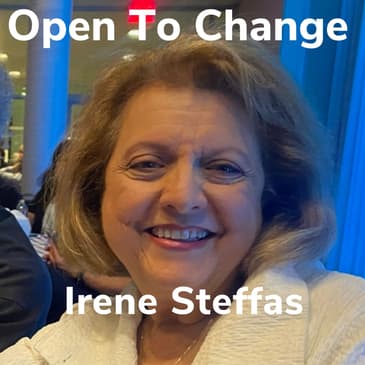
Irene Steffas is the founder of St. Nick’s Kids and served as the agency’s first Executive Director from 2019 to 2024. Currently, she is the Director of Domestic Adoptions and Global Development, where she assumes a variety of services. Irene established St. Nick’s Kids to provide comprehensive adoption services for children, birth parents, and adoptive families. Licensed to practice law in Georgia and Florida, Irene has dedicated over 40 years of her legal career to complex intercountry and domestic adoptions. Her professional expertise is deeply personal, as she and her husband are proud parents of two sons, one of which is adopted. Fluent in both Greek and English, Irene brings a global perspective to her work. She believes her efforts are guided by a higher purpose, describing herself as a tool witnessing God’s hand at work. Through her leadership and dedication, Irene continues to make a profound impact on children and families worldwide.
Find out more at:
https://www.facebook.com/profile.php?id=61555386085410
https://www.linkedin.com/in/irene-steffas-b4a22317/
Guests and the host are not (unless mentioned) licensed pscyho-therapists and speak from their own opinion only. Seek qualified advice if you need help.
Want to learn more about thriving for you, your kids, your families or your colleagues? Pick a time to talk here
[00:00:02] Hello everybody, welcome to another episode of Thriving Adoptees podcast. Today I'm delighted to be joined by Irene, Irene Steffas. Looking forward to our conversation today, Irene. Yes, very much. It's been a long time in the making, but we made it, we made it, right? Yes. That's the most important thing. And we might even be seeing each other in October 2 in real life, not on Zoom. That would be terrific.
[00:00:27] It would, yeah. So I don't know if any of you listeners are going to the Families Rising conference in Orlando in early October, but I will be there. So it'd be great to meet some listeners. So Irene is, she's an adoption lawyer. She runs an agency or founded an agency. She still works at the agency and she is also an adopted mum.
[00:00:54] She's got, you've got, so you've got two sons, if I recall, one biological and one who you, you adopted. So that, it's that universal, that universal, it's that really rich scope for a conversation with both the professional and the personal lived experience.
[00:01:16] So I'm, I find that the most profound and the most, it gives it the most depth to the conversation. So looking forward to it. So thriving adoptees then, Irene, what comes to mind when you hear the name of the podcast? Adoptees who've had a very successful adoption.
[00:01:41] And maybe even if they didn't have a successful adoption are now adults who have it all together. Yeah. I think that's, that's the outcome that I look forward to, to see how well they're doing. You know, when they're 20, 30, I have even one who's 52. So it's, it's quite gratifying to see them as they grow. Yeah. 52. Wow. So he's only six years behind me.
[00:02:11] I'm 58. Right, right. I had her case when she was 12 or 13 years old. So yeah, she wasn't a newborn, but. Yeah. Wow. Wow. How old's your, how old are your, how old are your sons? Um, my, my boys are 30 and 32 and my eldest is the one who's adopted and, um, he's doing well.
[00:02:36] Um, you know, you have to sometimes let go and, uh, not hold them up to your expectations, but what their goals might be, but he's, he's well, he's put together. Yeah. Good. Yeah. Um, expectations. It's a, it's a word that pops up again and again, when I'm talking to adoptive parents. Yes. It is. It's the expectations and, uh, that can be a challenge.
[00:03:06] Yes. Yes, it is. Yeah. He's absolutely brilliant. I don't mind bragging about him. He's probably the smartest people I know. Um, and I think he could do a lot with his life. Yes. But it's not gone into the family business though. No. Um, he works as a paralegal for the law office that I have, but my law office is in the process of, um, shutting down. It's time that I retire.
[00:03:33] And so he's aware of that, that his days are somewhat numbered with me. Right. Okay. So we did go into the family business, just not the adoption practice, the, the, the legal bit. Yeah. He's a paralegal. He's a paralegal. Okay. So that's, uh, somebody that does a lot of legal work, but hasn't got the qualifications. Exactly. Exactly. Yeah. Um, so yeah, use this word, all this word altogether. What, what, you know, having it all together, right.
[00:04:04] What, what does that mean? It means that they don't have regrets, um, about their adoption. Um, and that doesn't happen overnight, uh, that that's something that's a bit of a process. Um, because they, of course, all children are going to wonder why, where did I come from and all of that. Um, and that's, uh, we had an open adoption. So that cured a few of the problem, a few of the issues, not problems.
[00:04:32] Um, but putting it together in my opinion is also having a good outlook on life, a positive outlook towards life. So if you, you made a, drew a distinction between a successful and a non successful adoption, what, what, what does that mean to, to you? An unsuccessful adoption.
[00:04:59] Adoption is not necessarily where the adoptive parents were not the right. It wasn't a good fit with the adoptee. It's more that the adoptee has unresolved issues. Um, and those issues may have absolutely nothing to do with adoption, but you know, our first line of defense, if something's not quite right, well, it must be adoption related. No, it's not.
[00:05:25] Sometimes they're just being teenagers and sometimes it's not, uh, maybe the problem they're having has to do with their own trauma, uh, their birth mother's trauma, grandmother's trauma. So we have a generational trauma issue and, um, that can make life difficult for the adoptee and the adoptive parents. Yeah.
[00:05:49] When, when I'm doing trainings on this, I, I kind of break things down into like a layer cake, uh, layer cake of trauma. And I, I often start with the kind of the generational trauma and the, the example I'll often use is the fact that I found out last year that my biological father was, and his two siblings were in and out of care,
[00:06:16] following the loss of the death of their mother. So that, that's passed on. Yes. That's passed, passed on through, through the, through the, through the genes. So, yeah, we talk about the generational trauma, then there's the kind of the, the in utero trauma. So what's going on for the birth mother. And we look at stuff around, um, sometimes about FASD, you know, if there's been some exposure to,
[00:06:46] to alcohol or, or, or drugs, then, then there's maybe stuff that's gone on in the, in the birth, birth family before adoption. Um, and then obviously if there's any stuff that goes on within, if, if parents, sorry, if adoptees get,
[00:07:06] they're unlucky with their parents and they have, if parents, adopted parents who aren't kind of, let's say, um, attuned or emotionally intelligent. And, and so we look at those, look at those layers. And then obviously on top of that, there's sometimes they can be the transracial adoption piece.
[00:07:31] So if you, you, you feel, you feel different and you look different and you get treated differently, especially if you've been raised in a, in an all white area and you're, you're, you're not, not white. Um, that allows us to kind of break down the, look at, look at the layers and not pin the, I talk about not pinning the, the, the, the tail on the wrong donkey. Right. Correct. Correct.
[00:08:01] Yeah. Oftentimes if you're the parents, you're the first line of defense, so it must be your fault. And that's really not the case. We now at the agency of St. Nick's kids, um, we are requiring trust-based relationship intervention for all adoptive parents who are adopting
[00:08:19] children internationally, um, domestically, um, because that's kind of the big bugaboo in the room that nobody's really aware of when the child may be reacting to you. It has nothing to do with what you said, what you did, what you asked. It has to do with this trauma that they're dealing with.
[00:08:43] So we're trying to give adoptive parents a better understanding of how to deal with that as their parenting and, um, very pleased, very pleased with the results of that. Yeah. So people might've heard of that. It's called, um, TBRI and it comes out of Texas, I think, does it? It was, yes, yes. Um, it was a, uh, uh, trying to get her daughter on the show.
[00:09:11] There was a lady who, who founded TBRI. Yes. Joyce Pavo. Yeah. Uh, no, I don't think it was her actually. Um, Joyce is up in New York. Uh, this lady who founded TBRI. I'm not sure, but, um, TBRI comes out of, uh, one of the universities in Texas, I think. Yes. Boston. And, and, and Joyce is up in, uh, New York if I think or New England if I think. Could be.
[00:09:41] But TBRI, um, if you are an adoptive parent and you're listening, um, check it out. Right. Cause it's, it's, it's one of the leading kind of approaches to, uh, to, to raising kids from tricky places. Right. So that might not, this isn't purely an adoptive parenting thing. Yes. It's broader. It's broader than that.
[00:10:10] Yeah. So how do you see the relationship between thriving and trauma then? How, how do you, does, does trauma get in the way of us thriving? What, what, how do you, how do you see those two things sitting together? I mean, usually what happens is the adoptive parents are exasperated. Um, they've tried various things and it, they haven't worked and they love their child.
[00:10:39] They want to parent their child, but they're in a quandary of what to do. And for children, um, I think it can show up in a number of different ways. It shows up in, um, acting out with, you know, throwing chairs around across the room, breaking things, um, had a little girl once and she had a terrible therapist, unfortunately.
[00:11:05] And, um, she would go in the middle of the kitchen and, um, wet herself and the adoptive parents, which were an uncle and aunt were just flabbergasted. And the counselor didn't recognize that this child who was only like five or six years old had seen her mother, um, die of cancer. And that was pretty horrific.
[00:11:30] And, you know, instead of dealing with that issue, they tried to, you know, use behavioral, um, concepts to deal with it. And I remember the counselor wanted to shoot her. She said, this is a toxic relationship. And I'm going, no, it's not, you know, years later when I, I have greater understanding, it wasn't a toxic relationship. Nobody knew how to address the very serious needs of this child.
[00:11:57] Anyhow, she went on, was adopted by another family and is doing well. Yeah. Great. And I think one of the key things that I've heard about TBRI and I'll see a difference around this, uh, around these approaches. Like, so one approach, the approach used to be about therapy for the, for the child. Now the approach is about training, training for the parents. Right.
[00:12:24] And mostly, mostly that's the same, but I'm still hearing, I'm still hearing from TBRI practitioners, actually, that, that parents who clearly know a little bit about this stuff are ringing them up. They know that TBRI is a good, a good, a good approach to, to, to use. And yet they will still say essentially fix my child to, to the, to the therapist. Yeah.
[00:12:54] And you can't, you can't, you can't contract, you can't outsource your child's thriving. Right. You have to insource that you have to do it yourself because the, the, the, the, the kids are only going to spend an hour a week with the therapist. Right. So what about the other 24 times seven?
[00:13:15] I can't do that in my head, but 140, you know, about 150,000, a hundred and anyway, um, the, the rest of their lives, the, the, the rest of their hours in the week, though, though, if they're not at school, clearly though, though, with, with, with you. So what can actually be achieved in an hour anyway? And, you know, this, this is about taking responsibility rather than, uh, rather than putting it on, on, on, on somebody else.
[00:13:45] And that might sound a little bit harsh to, to some listeners, but that's what people tell me. Right. So I'm, I'm just, I'm just summing up what other people tell me. I, I tend to agree with you. I also think that even though we think we're so developed in our countries, there still appears to be some sort of stigma if we say that there's some kind of mental health issue going on. And so people really don't want to acknowledge that.
[00:14:15] Um, the other thing is I know one TBRI specialist and he works with the family and the child. And that does seem to make a difference when they're working with both of them, not just the child, not just the adoptive parents. But something that came up just last week, I was listening to a seminar about fundraising for adoptive parents.
[00:14:37] And they identified four to five different nonprofit organizations who help with post adoption expenses. And I have to tell you, I was absolutely delighted because I haven't seen that before. And I'm, I'm thrilled to see that it's out there.
[00:14:58] Um, you know, you have to qualify, you have to do all these jump through hoops and such, but the fact that they're recognizing that there are going to be additional needed services after the adoption is finalized. And that's what I'm thrilled to be. Yeah. Yeah. Yeah. So one of the things that's coming to my mind is this, the power of our beliefs.
[00:15:28] Right. So I've been interviewing, I've been interviewing a couple of adoptive mums recently or one yesterday, who's a, who's a, who's a coach and we were talking about beliefs and I'm thinking what, to what extent are we believing if, if things are going, if things are going pear shaped, right?
[00:15:56] If, if, if, if there's these issues coming up in, in the, in, in the home, what's the, what's the, what's the likelihood of our kids thriving if we don't believe they can heal? It's a very good question.
[00:16:20] Um, you know, I will tell you that one of the elements that I see looking at it on a long-term basis is the support from the support system that the adoptive parents have. Uh, grandparents play a huge role.
[00:16:38] And if the adoptive parents are being supportive and even to the point of giving the, um, the, say the grandparents give to the adoptive parents some respite, you know, we think you're should, you should be parenting 24 seven, seven days a week. And, you know, and sometimes people need a break.
[00:17:01] I mean, my biological parents, um, they're the only ones I had, I felt very fortunate to have had them, but they would go, you know, away for three or four days, sometimes a week. And looking back on it, I think, boy, what that was a smart thing to do for their marriage and probably for their parenting skills as well. Um, so I think the support that one has, if you have people pointing the finger and saying, oh, you're not disciplining your child correctly.
[00:17:29] Oh, this is because of X, Y, Z issues with the birth parents. That's not helpful. I think the key is, can we get to a better place and acknowledge that unfortunately there are some children who are not going to get to a better place. Some children are, you know, are not going to make it.
[00:17:51] Um, and that's a huge tragedy, but, you know, if you were a part of a child's life for whatever period of time and could help them and try to help them, um, you know, I think it's still a positive thing. Yeah. Yeah. You've touched a nerve there, Irene. Yeah.
[00:18:16] You've touched a nerve for me because I read this story in the paper a while ago, written by an adoptive mom. And she had not been able to get the support that she needed in her area. And that had been the last straw for her.
[00:18:40] And as I read the article, I just felt very angry about the woman's lack of creativity.
[00:18:54] And I, in that moment, I, I judged, I was judging her on, on that because as far as I was concerned, she didn't, she, she, she didn't, she didn't exhaust all. Well, as she explained it, as she explained it in the, in the article, right.
[00:19:21] It didn't seem to me that she'd explored all options. And, uh, and, um, that made me very, that made me very angry. Well, I angry actually. It was angry. It was more about anger than, than, than, than, than sadness. So, so one of the issues that, you know, initially we, I kind of glossed over it being just an attorney.
[00:19:48] Um, and now that I work with an agency and surrounded by all these social workers, see it a little bit differently. But is, um, it's mandatory on an inter-country adoption under the Hague Convention, um, and under orphans as well for the United States. The adoptive parents have 10 hours of adoption education.
[00:20:10] And I think too often, um, they're not getting that, especially in domestic cases. Um, they don't, and if they're adopting a child out of the foster care system, they really just don't have a clue on how they should approach parenting. Um, I attended a meeting with adoptive parents. This was about 30 years ago. God willing, it's changed since then.
[00:20:36] And, and I remember someone just saying, well, you know, you, you have to use the rod, you know, that's all there is to it. And I'm like, wait a minute. You know, you've got a kid from foster care and you were now talking about corporal punishment, which is against the law in the state of Georgia, um, for biological children, as well as adoptive children. And thinking these people don't have a clue.
[00:21:01] And I, I feel badly that people are approved to adopt, families are approved to adopt, and they don't have the tool set that they need. Well, 10 hours isn't gonna, you know, I did more than 10 hours, um, tuition to learn to drive, you know? Yes. Yes.
[00:21:25] But it's, it's, it's, my point is, there were times where I don't think there was any adoption education. There was none. And especially if you're talking to adult adoptees today, their parents had no adoption education. My parents didn't have any at all. But they were getting, they were given little pamphlets.
[00:21:45] It was about an A4, one, about a double-sided, two sides of A4 about that, really, which was, and it was all about whether, whether you told or didn't tell the child. That, that was basically it. Oh, wow. Well, that's outdated now. Yeah. That's outdated. Yeah. Yeah. Yeah.
[00:22:09] So, uh, one of the things that popped into my head when you were talking about, uh, grandparents was, I've seen some friends of ours who have, uh, kids who, you know, they're now grand, they're now grandparents.
[00:22:29] And one particular grandma who had, you know, had defined herself very strongly. You know, she, she, she was a mother figure, right? She, she was a mother to her kids and she, she defined herself very strongly as a, as, as a mother. It was a big, it was a big deal for her.
[00:22:51] And she had very strong views on, uh, how she should bring her kids, but she, uh, uh, the, they were, they have fallen out with some, uh, they've fallen out with one of the daughters. And a lot of it is on the back of the parenting suggestions, the grandma made to the mother.
[00:23:17] Uh, and it, it, there was an awful lot of friction in that, in, in that time. So, so everybody, the, the, the, the grandma actually thought she was coming from the right place. Um, but it, it wasn't appreciated by the, by the rest, you know, by the, by the daughter and, and it all kicked off.
[00:23:42] So, so I, I don't know what, what there is on the back of that is, but if you're an adopted parent listening and, and, and you're getting told how to raise your adopted child by your, by your mum or dad, I feel for you, but you, you're going to get, you can get.
[00:24:06] Yeah. So let me give you an example to counter that. Okay. Um, and this is a true example. This happened to me. Um, my son was angry at me. He was a phenomenal tennis player coming back from a tennis match. His serve would go over a hundred miles an hour. And he wanted to pick, he wanted to stop by a department store and get this animated figure. And I said, you know, come on, Christmas is two weeks away. Just hold on a little bit. But he got angry and he threw his tennis racket and it shattered my windshield.
[00:24:37] And fortunately I was on the phone talking to my mother and my mother said, honey, this isn't normal. You need help. Where she could have said, well, you just need to distance from that young man. But she did. She said, you need help. This is not normal. And to me, that was such a license that, okay. It's not me. I haven't done anything wrong.
[00:25:05] Um, and it's not my child who I love dearly, but something's going on and we need to get to the bottom of it. So, you know, get some help. Um, and that was a very liberating, I don't think I'll ever forget that conversation. I think you mentioned that to me last time. Uh, so, and, uh, uh, so there is no, it is dark. It is dark and light, right?
[00:25:30] We have to, there, there are some pluses that we get from our parents and there are some, uh, nice bits that we get from our parents. Um, maybe, maybe what I, what, what I should have said would, was about grace, you know, great, great, great grace for our parents.
[00:25:51] Um, when they see that, that, um, when, when they, when they believe that we should be raising our kids like they raised, like raised, raised time, time, time has moved on. Um, it was literally that, that it was so tricky and, and how that's been part of, uh, uh, a breakdown in, in, in relationships. Right. And this, this is, this is, these are all bio kids.
[00:26:19] There's no, there's no adoption involved, uh, here. So it goes back to that point about, uh, putting the, pinning the tail on the wrong donkey. Yes. Pinning the tail on the wrong donkey, uh, putting, uh, putting down to adoption. What is, what is human?
[00:26:42] And one of the things that I hear from adopted parents in, in, in that space is on that subject is that they, they, they spend a lot of time thinking about that. Um, and what one might, one could say overthinking that. And, and as somebody who overthink something, uh, you know, I, I can, I can relate and hopefully I can have some grace.
[00:27:14] What, what have you, what have you got to share on this area of identifying the cause, cause, cause of a challenge of, uh, overthinking and kind of this subject? Well, I think it, you know, they may be overthinking and you may be overthinking this with your biological children.
[00:27:36] I don't think it's necessarily just an issue for adopted parents, but, um, I think the bottom line is we want to do the very best we can for our children. Um, and what is that very best? What, what does that mean? Um, and so it's that search. And I, I also believe there's a tremendous amount of dedication to parenting.
[00:28:03] You know, you, you, you don't jump into an adoption or into having a baby, um, without really making a commitment to this person for the rest of their life. It doesn't end at age 18. And, and so I think because of that, there are, there may be parents who overthink and then let's, let's be realistic. There are grandparents who say, well, this is not my blood.
[00:28:29] This isn't my gene pool, which is a horrible attitude, but nonetheless, it is true. And so they, they, they, they try to find a scapegoat and that's not going to be very helpful at the end of the day. But, um, you know, what I said before about respite care, um, we have a case right now, um, and I'm looking at it and I'm going, I'm scratching my head and I'm thinking, this is a really tough, tough situation that everybody's in.
[00:28:59] The adoptive parents, the children, there's tremendous amount of, uh, stress, turmoil, health issues. And I'm thinking these folks, the kids need respite care. Can we send them to camp for a week? Away from everybody. Can we send the adoptive parents away from everybody, just the two of them and let them, you know, get grounded again? So I, I do really believe that respite care may be one of the answers.
[00:29:27] I don't think it's all of the answers, but if, if families are cognitive of that, um, then as they're trying to think, well, what can I do? What can I do? Well, maybe self-care is the first step you should be looking at because it is stressful for adoptive parents who are taking parenting, you know, as a lifelong commitment. Um, that, that's, that's the, that's the first thing that comes to mind.
[00:29:54] And then, you know, um, when adoptive parents get together and meet and share their stories, I think that that's also very comforting to them. Uh, I'm not alone. Um, this, I'm not the only person, um, who's had my child say, uh, you're not my real mother. I don't have to listen to you. When you hear other people, your child said that too. I don't feel like I was, you know, I was doing something terrible.
[00:30:20] Um, so I think, uh, um, the adoption support and the parenting support, and that includes the schools, the teachers, um, can't emphasize enough how easy it is for teachers to absolutely ignore specific issues for adoption. Uh, we want you to make, um, uh, a line of your heritage.
[00:30:50] Well, how do you do that when you're adopted? You know, you can't go back very far. Um, it just little nuances that, that I watched over the years, um, where, where people slip up and, um, I'll relate to you one story. It's one of my favorite stories, uh, about being an adoptive mom.
[00:31:09] Um, when my son was in fourth grade, um, I was to go to the school and read a story and, um, started reading the story, but the hands started flying up in the air with questions. And I'm thinking, really, the story isn't that exciting? And so the kids who didn't have any filters, they were only 10 years old. They were like, so how much did it cost for you to adopt Nick? How much did you have to pay for him? Right.
[00:31:37] And fortunately my son, cause he's been around, you know, hearing adoption stories. Well, don't you know, that's against the law. You can't pay for a baby. All you can pay for is expenses that, you know, they may have had medical and such. But I was surprised at how many questions a fourth grade class would have about adoption.
[00:32:00] So, um, you know, maybe we are taking things for granted, um, that we shouldn't take for granted in the fact that, uh, the whole community needs to be aware of these things. Yeah. What, what have you learned from your professional life that's helped you in your raising Nick? And your other son? Right.
[00:32:29] Um, everything is changing. Nothing is going to be static forever. No matter how good things are today or how awful they may seem today, they will be different. And the other thing, which I'm still learning, um, is that I'm not in control, nor should I be in control.
[00:32:54] That sometimes you just have to let go and let the child move where they want to be. Just having faith in the, the whole universe, the, the, you know, things do work out. I, I have to admit, and I've known this since childhood, I wear rose colored glasses and I believe that everything's going to be okay. Um, and you know, 99% of the time it really is.
[00:33:22] So, um, but I think being open to change, um, the way I look at adoption when I first started 1984 versus how I felt about adoption in 1990 versus how I feel about adoption law today. Um, I've grown.
[00:33:45] Um, and I think as a whole society has grown in their understanding of what the good things are about adoption. Uh, one of the things I really want to mention this, um, Simon, because I just feel like this is a big gap between that that's caused by the great pond between the UK and the US.
[00:34:09] In the US, we have voluntary termination of parental rights, which is a bit of anomaly for the rest of the world. They, they don't quite understand that. And there's a huge difference when parents voluntarily without coercion, without incentives, decide to place their child for adoption and make an adoption plan for the child.
[00:34:35] That sets the stage very, very differently from a child whose parental rights were terminated. And, and so I, I, I, I really somewhat see it today as a black and white sort of thing. It's, they're very, very different animals. Children who were voluntarily, um, made their parents made an adoption plan versus parents who involuntarily lost their parental rights.
[00:35:06] And what are some of the things that, that make those different? Well, um, number one, a lot of the stigma, a lot of the myths evaporate. Oh, I remember early on in my career, um, reading how adopted boys, especially adopted boys believed that they were taken away from their mothers or they had done something bad.
[00:35:32] Well, if you have a picture of the birth mother in the hospital with the baby and the adoptive parents there, and they're all smiling, uh, nobody stole that child. If you have an open adoption and there's been this communication, we don't have to wonder. We know why. And that lifts a lot of the stress, um, about, you know, is it okay that I'm adopted?
[00:35:59] Um, where we live in Georgia, uh, there's nine homes and there were four adopted children in the, that double cul-de-sac. Now they didn't, they were various ages and they didn't, you know, really, um, get together. But the fact that there, that there were so many adopted children within that very small geographic area, uh, I think was a positive thing.
[00:36:26] Yeah, I mean, it's, you don't stick out. You're not bothered. So it's big, it's like, as it was the same, it's the same, it's the same thing as, you know, the adoptive parents going to, uh, hearing from other adoptive parents that, that their kids said, I don't have to listen to you. You're not, you're my real mother.
[00:36:54] It's the, uh, I don't know, consolation. I mean, it's the normal, yeah, normalization. Normalization. Yeah. I'm not unique. I'm not different. This is, you know, this is just who I am. Yeah. So how do you see, because on one hand, we've got the logic of, that you're describing, um, here with an open adoption.
[00:37:21] Uh, and then on the other hand, we've got the, uh, the, the, when most people think about trauma, they think about big feelings rather than big thoughts, don't they? So how do you see those two, two things? Well, the trauma may have nothing to do with the openness, but if you have an open adoption, the chances of figuring out what caused the trauma.
[00:37:54] Um, I view open adoption to be an extremely positive thing for all parties involved. And there, the question is, how much do we open the window? And there are certain instances where you don't want to open the window very much or at all.
[00:38:21] Um, and I think that those cases have to be taken, you know, um, with their own facts to determine what is in the best interest of the child. But, um, you know, understanding what birth parents were going through, understanding why the adoption plan was made, um, can be very, can answer a lot of questions.
[00:38:46] And for the birth parents, it's very, um, assuring. I made the right decision. Um, you know, this child is, is doing well. And, um, I'll give you another one of my very favorite stories. And this is true. Every bit of facts on this case are true. Um, this couple adopted a baby. Um, this little boy was born and immediately thereafter, the adoptive parents moved to a different state.
[00:39:17] Um, he was born in Florida where I was practicing. And then they moved to North Carolina. And they, the adoptive parents wanted to meet the birth mother, but she did not want to meet them. She did not want to see the baby after he was born. The little boy did, they had a picture of the birth mother on his dresser. And every night when they said his, when they would say their prayers, they would pray also for the birth mother. And one day this little boy, he's eight years old.
[00:39:45] And he tells his adoptive mom, can, can you find that attorney who helped you with my adoption? And she was like, well, I can try. He goes, I think something bad has happened to my birth mother. I just feel something bad has happened. And I want to make sure she's okay. So they tracked me down. I had gotten married. My surname had changed, although I try to keep my maiden name out there. So someone's looking for me, they can find me.
[00:40:13] And they contacted me and said, could you find his birth mother? Eight years later, people move. I was fortunate. I called her employer from eight years before she was still there. And I talked with her. And she started to cry. And she said, how did he know? How did he know? She goes, we went through a really tough time.
[00:40:40] My ex-husband kidnapped my five-year-old daughter. And it was very hard. We've got her back. But it was a very difficult time for us. The child is in North Carolina. The birth mother is in Florida. How did he know? So, you know, and fortunately, you had adoptive parents who were not intimidated, were not, were secure enough to say, you know, can we reach out to her and make sure everything's okay?
[00:41:11] And it ended up being a very positive, you know, it was a paper and telephone reunion. But it answered questions in a very positive way. Yeah. Where does that security come from within adopted parents? You know, I might be Greek, but I'm not Aristotle, Socrates or Plato.
[00:41:39] That's a very loaded question now. It's, I don't know. Well, I kind of, I do to an extent. I interviewed two adopted moms yesterday.
[00:41:58] And both of them struck me as intrinsically confident, strong women. That, you know, where does it come from? I don't know. It felt like it was innate. I agree with you. I do think it is innate.
[00:42:23] And what I marvel at is when I see people who've had a very difficult, traumatic life. And they are not bogged down by their experiences, but they rise and they thrive. And they do incredible things with their lives. One of my favorites is a book called Everyone Deserves a Hero. And it's about a young man who grew up in foster care.
[00:42:53] And ended up becoming, you know, the president of the Hertz Corporation that owned, you know, half dozen newspapers in the United States. And, you know, it takes just a little encouragement along the way by somebody. But I also agree with you. I think it's an innate thing. Because you see some people who have had a really tough life. And the result is they have a very difficult life.
[00:43:22] And others who soar to the top. What's the difference? If we find that we can make a lot of money. Yeah. Well, I think those, the two ladies I'm talking about are innate. But I don't think, I think they've seen, I think they've seen their strength.
[00:43:49] One of the things I think about people that have had more, I think our resilience, our strength is something that we see. I don't think it's realised, it's recognised. We look at something and we look at something on the horizon. We think, I don't know how I'm going to get through this.
[00:44:19] We get through this. We get through it. We look back. Oh, I was stronger than I thought. It's a Winnie the Pooh thing, actually. You're braver than you think. You're stronger than you think. Right. And so I think that we see our strength. But I think that the ladies that I'm talking about had always,
[00:44:48] they saw their own strength earlier. Okay. I think, so for me, I think it took, it took more stuff for me to see my strength. It took, it took more, it took longer. It was my strength. I didn't see my strength until later in life. And it's not something that you can learn, is it?
[00:45:16] No, it's something that's revealed to you. You can't go on a strength. So you can't go on a strength, a strengthening course. It's, you go on a strength finding. I, it's, it's like insight, right? We can't, we can't force insights to happen. And yet we can make ourselves insight prone.
[00:45:45] And, and the only thing I ever say when I get near this is, is that listeners, you're doing it already, right? You're listening to a podcast. You're reading a book. You're going to stuff. You're, you're, you're putting yourselves, you're putting yourself not in harm's way. You're putting yourself in insights way. You're hanging out at the bus stop for insights.
[00:46:11] And not many people want to do that, right? The, the, the, this, this podcast is a niche podcast that goes pretty deep, pretty, pretty deep, deeper than other people will go. I think. And not, it's the road less traveled. It's the road less traveled.
[00:46:38] And that, those number, the, the number of downloads has disappointed me in the past until I've realized. Why? You know, until I saw it, right? Until, until I saw it.
[00:47:00] Until I had adopted called Vin from Australia, transracial adoptee brought up in raised, born in India, raised in, raised in Australia. He said, you're getting, you're getting quality mixed up with quantity, Simon.
[00:47:20] What, what we're doing here is, is, is about quality and, and depth and asking tough questions. I, I don't have, I, I didn't have an answer to the, to the one that I asked you about. You know, where do we find our, where does that strength, strength come from? Well, and, and, and yet we, we, we've kind of made up an answer.
[00:47:51] And I think everybody needs to make their own, empower themselves by coming up with their own answer. So. Totally agree. You know, I look at my grandparents. I look at different people in the family and what they endured and how they succeeded. And that specifically gives me strength.
[00:48:19] But you don't, you don't have, you may not have that in an adoption situation. Um, and, uh, that you can reach back generationally, uh, to find that strength. But I think, um, the strength can come from being insightful, which let's be honest, it's much easier to play a video game than to try to tackle these difficult questions of life.
[00:48:49] Um, but when you keep asking, you will find some answers. And, you know, I have the luxury of being old now or older and I'm still learning things. Uh, and to me, that's amazing. I remember my grandmother, she was like 76 and she goes, well, you know, every day you can learn something new. And I didn't appreciate it then.
[00:49:18] But today I do because she was absolutely right. There may be a better way to do, to make the cream sauce. There may be a better way to handle this problem. And that comes from simply living, um, you know, and being able to reflect back on your own life. Yeah. That's an insight about insights. You had just that. Yeah.
[00:49:43] Well, are you, are you, that you had from your grandma ages ago and then you've kind of reinforced it. You've revisited, you've revisited the insight. Um, and I, it is all about, it's all about insights. I'm, I'm trying to come up with a word at the moment. That's, that's more emotional. I think I came up with infelt, right?
[00:50:11] So an insight, an insight sounds quite a brain thing. Right? It's something that we see is to do with the head. So I'm trying to think about, uh, uh, like what's an, you know, a change. So people say we've had a change of heart, don't we? It affects the soul. A change of soul. Can you have a change of soul? I don't know. I think. Is it a change of soul or is it the development?
[00:50:41] See, I, I view it as a continuum that you went through some things that were maybe so nice, so good, so positive in your life, but you were able to build on them and be where you are today. It's, it's, it's not an isolated incident. It's not an isolated period of time. It's all of those things put together.
[00:51:10] I'd say it's a revelation as well. Yes, I think you're right. Absolutely right. I've got to write that down. That's very good, Simon. And I would go as far as to say that healing, people say that time is the greatest healer, but if there's no change, there's no healing.
[00:51:39] You're absolutely correct. So, so we've got, we've got to look at change as the. Vehicle for healing. And insight is. If change is a vehicle for healing, then insight is the, is the petrol for the car, for the vehicle. It makes it move.
[00:52:08] In addition to change, though, I think comes acceptance. For, I'll give you an example. I was very concerned about someone who lost her husband over 20 years ago and thinking, you know, she's really got to get on with it. You know, this grief is not good. It's 20 years old. And someone said, Irene, she's never going to stop grieving. And that was like, really? I didn't know that.
[00:52:34] And she explained to me, this person who knows a whole lot more than I do, explained to me why this widow would always have part of that grief with her. And once I learned that, then I was able to be more accepting of her. And hopefully she's more accepting of herself as well. Yeah. That feels like a good place to bring it in, Ari.
[00:53:08] I was going to say something about us accepting ourselves. You know, I mentioned grace earlier on. You're talking about grace there. I think that's grace and acceptance and accepting ourselves. Yeah. I think so. Thanks, listeners. Thanks, Irene. You're quite welcome. We'll speak to you very soon. Take care. Bye-bye. Bye-bye.