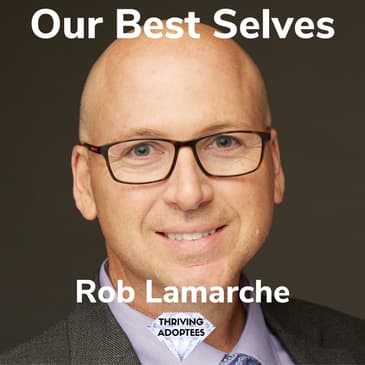
We all want to be our best selves, not just for ourself but for our family. So what does that mean? How do we do that? Listen in as adoptive dad, adoption attorney, social worker and adoption agency executive director Rob shares his learnings on self worth, expectations and much more.
Rob has been in the adoption field since 1996. He has worked in both the public and private sectors in child welfare and has experience in both intercountry and domestic adoption. Rob earned a Bachelor’s Degree in Psychology from Wheaton College, MA (1994). He has a Master’s Degree in Social work from Salem State College (1999) and was admitted to the Florida Bar in 2012 after graduating from Nova Southeastern University Shepard Broad Law School in 2011.
Rob is the Executive Director/Attorney for ACF Adoptions, a private non–profit adoption agency that has been providing services since 1992. Rob is a former foster parent and the proud adoptive parent of two sons and a daughter. He resides in South Florida with his husband, children, 3 dogs and 9 chickens. Rob is an active volunteer in his community and an advocate for ethical adoption reform. He is a member of the Florida Adoption Council, the National Council for Adoption and a Fellow in the American Academy of Adoption and Assisted Reproductive Attorneys where he serves on the Agency and Ethics Committees.
He is responsible for all phases of legal work on behalf of agency including pleadings, hearings and taking consents. He oversees the agency's financial management, budget, audit, supervises the agency's administrative staff, annual state licensure as well as cooperation with Board of Directors. He ensures that the agency services reflect mission.
https://www.adoptionflorida.org/
https://www.linkedin.com/in/robert-lamarche-lcsw-jd-00a6346/
https://www.facebook.com/robert.c.lamarche/
https://www.instagram.com/adoptionflorida/
Guests and the host are not (unless mentioned) licensed pscyho-therapists and speak from their own opinion only. Seek qualified advice if you need help.
Want to learn more about thriving for you, your kids, your families or your colleagues? Pick a time to talk here
[00:00:02] Hello everybody, welcome to another episode of Thriving Adoptees podcast. Today I'm delighted to be joined by Rob, Rob Lamarche from Florida. Looking forward to our conversation today Rob. Great, I'm happy to be here, thank you. So Rob's got three hats, right? So this is not totally unusual on Thriving Adoptees podcast. So he's an adopted dad to three, he's an adoption attorney and he also runs an agency ACF down in Florida.
[00:00:29] So a lot of wisdom, a lot of learnings and we're looking to dive into that. Yeah, there's listeners, Rob's making a slightly surprised face, you know, scared face. No pressure. No pressure whatsoever. Have you, like, I do say it is about wisdom, but we're all so modest. Nobody likes to, nobody likes to think of what they've learned as wisdom somehow. I don't know. Have you met anybody that's good at modesty?
[00:00:54] Well, you know, attorneys are notoriously not modest. I think that mine probably comes from being a social worker for many years before. But, you know, it does turn out when I look at my credentials and I look at my lived experience, you know, as a as a parent, but also as a professional.
[00:01:20] So, um, it turns out I am an expert in this. And I, at a certain point, I just have to be okay with that. Yeah. I suppose. Yeah. So I didn't ask you about this. And did you, did you, uh, you were, you started off as social worker and then became an attorney. Was that with the, the, the, the end in mind of being an adoption, adoption attorney, was that kind of where it went or.
[00:01:51] I, I've always been in child welfare, right. And a social work capacity. And then it was through my first adoption that I really began interacting with the legal system. And, um, issues related to that and met some really interesting, um, and bright attorneys who were advocating for my family. And it got me thinking, it got me thinking like I could do this. I could go to law school.
[00:02:20] Um, I, more people listen to attorneys when it comes to advocacy than they were at my sense was. Yes. And then I could get in front of people, um, to help make change better with my attorney hat on. And that's what really prompted me to, I think I was 38 when I applied, um, for law school. And I wasn't necessarily going to become an adoption attorney.
[00:02:47] I was open, but I was definitely going because I wanted to be able to advocate for the child welfare related issues that were important to me. Yeah. Yeah. And this makes sense. You know, when I had the opportunity to go to the agency, it really pulled all my hats together and said, you're good, you know, private adoption agency. You can wear your social work hat and you can do the legal work in this space. And it was a really, it continues to be a really good fit for me.
[00:03:17] Fantastic. So look, looking back, um, on this, obviously, uh, a first for knowledge and for learning, you know, going back to, uh, to be, to train to be a lawyer when you're 38. If you look back on, on, on those, uh, those, those years, what, what are some of the key themes that, uh, key learnings that you've had in terms of the, the, the name of the podcast, Thriving Adoptees?
[00:03:46] What, what comes to mind when, when, when you look back on those years? Well, I want to make sure that I'm understanding the question. So what have I seen in my experience? Yeah. Okay. Okay. Let, let me, let me go another, another go, another go round on this. Uh, first off, what, what does thriving mean to you, Rob?
[00:04:16] Like for you personally, what does that mean? Just being in your, your best element in the moment. Right. I mean, um, you can be thriving in your work. You can be thriving in your family life. You can be thriving at your gym membership. Um, ultimately nice to be thriving in all areas of your life.
[00:04:39] Um, I don't know if that's always realistic, but I guess the, um, when I think then about thriving adoptees, a couple of things come to mind. One, we could be looking very specifically around our people, um, doing well. Are they happy? Are they, uh, well adjusted?
[00:05:05] Are they, um, their best selves as it relates to their adoption? Right. Which might be an area of their life. Yeah. Or we could be talking about globally. Is this adoptee doing famously in all areas of their life? Yeah. Yeah. Yeah. Because I think you could be one, you know, you might be thriving as an adoptee, but also be experiencing a lot of challenges in your life. Yeah.
[00:05:32] Um, I mean, ultimately I think we would like everybody to be thriving in all aspects. Indeed. Yeah. I'm, I'm looking for that global. Yeah. That, that global all aspects side. Um, that, that's where we're at. I think we're looking personally, professionally in terms of relation, personally, professionally in our relationships.
[00:05:55] And it does seem like it would be a difficult, um, place to arrive if people are not, um, doing well with their status as an adoptee. Right. You really, it's hard to imagine someone thriving in their relationships, in their career, in their other areas, if they're struggling with their experience or status as an adoptee. Yeah.
[00:06:21] I guess, are you kind of getting at that grounding? Hmm. That grounding in, given that. I mean, really, who you are, your sense of self is really going to be the base, right, for, for everything. Um, and we talk about building on a foundation. Um, and if you, you know, if your self worth is compromised, if there are holes in your story, which unfortunately happens with a lot of adult, uh, a lot of adoptees.
[00:06:49] Um, you know, you can imagine that foundation being less secure. Yeah. What, what does sense of self mean, mean for you, Rob? Um, so for you personally, what, what, what's that about for you? Um, understanding where I come from.
[00:07:13] Um, and who I am today and how all the experiences between those two things have, you know, produced this person. Um, you know, the, the, the, the, the, the, the wonderful moments, the failures, the successes, um, and just really having a sense that all of my experiences have brought me to where I am today. And being good with that. Yeah.
[00:07:43] Yeah. Cause I, I often think that the more secure we, we are. So let's just say we as, as parents, right. The more secure and we've only got, we've only got, uh, two canine, right. We've only got two dogs, me and my wishes, but the more secure we are as parents, the more chance we have of kind of passing that on, sharing that, sharing that with our, our kids.
[00:08:13] And I think of one of the seminal moments for me and running the podcast, speaking to a, an adopted mom from Texas who also runs an agency called Holly and Petri. And she said, it's really about unpacking our own emotional baggage as parents, Simon. And that's what she said.
[00:08:35] Um, it's all about, for her, it's all about her sense of security and herself of sense of, um, self-esteem, self-worth, self-knowledge. She has to be in that. She has to be grounded. She has the more grounded she is, the more grounded, uh, she can be in her relationship with her kids. Sure.
[00:08:59] And the more capacity she has to deal with the challenge that, that, um, raising kids with adverse childhood experiences or who've been religious and all those things. Yeah. Well, you can, I mean, it's not hard to look at out in the universe and see examples of this, right? Um, it, no one is, no one is perfect and no one's perfectly well adjusted, but folks who are not struggling with mental health or substances,
[00:09:27] or relationship issues or financial stressors or whatever, tend to be more grounded and tend to be able to focus more on parenting. Um, and that just makes some good sense. Yeah. Right. Um, and, um, the, when you were saying she, she had said something about being, um, I think she said something about being like secure with herself or something.
[00:09:57] Like that. Yeah. And unpacking her own emotional baggage, which was about, uh, being more grounded. Yeah. So you use the word grounding. I, I, I like to think of it as, uh, having, having the conversations with other adoptive parents.
[00:10:13] It's about, it's about, it's about their capacity, about our capacity and what, in, in, in, what specific sense of that word, the, the, the, the ability to grow our capacity to, to handle, deal with, cope with, navigate kids, kids, kids, kids, kids behavior. Right.
[00:10:38] And also the ability to not take that trauma driven behavior personally, because it was there. It was there before they came into, into our lives. Right. So it isn't, it isn't personal, but we, we take your pet parents can't help, but take that kid, their kids condition personally. Right. It's, it's, it's, it's important. Yeah. For sure.
[00:11:05] Um, I don't, um, you know, it's funny because, um, my husband and I talk about this fairly often. It'll come up, it'll come up in joking ways, but I also talk with this, with my, my youngest children's birth mother. Um, so we have this joke that, and I hope this lands okay.
[00:11:25] Um, but you know, when the kids have done something really great and I'll send Ashley photos or a text, I'll call her and be like, look at, look at, you know, what, what, what my boy did or whatever. Um, but if he does something bad, I'll be like, look what your son did. Yeah. And we, and we joke about this, right? She's like, oh, the bad stuff is mine and all the good stuff is yours. And, but we, we, that is playful. That is not playful.
[00:11:53] And, and, but, but what, and then what my husband and I talk about is sometimes we see behaviors out of our, say our youngest, um, cause he's only nine. That is so different from our personalities. Like we don't react that way. That's not a behavior that we have, and it's not the way we're nurturing our children. And we're saying, well, that is sure. Like what we know of his birth father. And how can we get like super upset about it?
[00:12:18] Like, I can't be offended that my child is acting in a way that seems to comport with his genetics. Right. I mean, and I also like, I can't really be defensive about it. Right. There's, we have nurture and nature are a part of this parenting thing. We have the benefit of maybe knowing a little bit more of the nature just because of the, the way our adoptions came about.
[00:12:43] Um, and we're just trying to help our kids navigate, you know, the, the world in the best, the best possible way. And, um, sometimes they're doing what we've taught them. And sometimes they're doing what's just in them. And sometimes what's in them is the good stuff too. You know, like our son is a incredible singer and musician and my husband and I have nothing, but his mother has a really great voice and is inclined to music.
[00:13:12] So, you know. Yeah. Well, first thing, the sense of humor is essential because that gets us through the, the houses get the, the, the, gets us through the, the tough stuff. Um, and, and also the, the bit that came to me was like, you have that perspective, right?
[00:13:30] You, you can, you can see that, uh, that you can see the source of the behavior or you can, you can have a fair, a fair guess at the source of the behavior, but, but that, that's not always there for, for us in, in, uh, in the tough, in the toughest moments, is it right? Our sense of perspective.
[00:13:52] So my sense of perspective went completely out of the, um, uh, out of the window yesterday with some tech issues that I've been facing. I've been fighting. I've been fighting tech, um, uh, some AI stuff that I've been, uh, using to help me put together a book for adopted parents. I've been fighting it for about two weeks. Uh, and I just had a massive meltdown, uh, yesterday with it when, cause you keep on thinking.
[00:14:22] That you're getting somewhere. And, uh, but then all, all, everything was out of the window in that moment of crisis. I didn't have that. Right. I didn't have that perspective. What you're talking about is, I think it is perhaps, perhaps what Holly Ann actually was getting about is maintaining, having that perspective more of the time. So we, we, we catch ourselves more.
[00:14:51] We, uh, we catch ourselves more often than not. We remain grounded more of the time. It's, it's, uh, it, it's the amount of time that we have that perspective. Cause sometimes we don't. Mm. Mm. Mm. I think that it's hard not to have expectations, right? It's hard not to have expectations of our children.
[00:15:22] Um, and, and I think it's okay to have, you know, there's some minimal level of expectations that we should, that we should all have.
[00:15:31] But being a parent has taught me that I have to keep my expectations in check and make sure that I'm not, I'm not putting my desire or what I think on my, I'm being terribly inarticulate.
[00:15:59] Um, so my oldest son, he's turning 31 next week, two weeks from now. Um, you know, there was a whole period of time we were looking at colleges. We're doing different things. He dropped out of school. He went to a different, he dropped out of school. I went to, there, there was a lot of that going on for a few years and eventually got this job. He was working at a restaurant, get a little studio apartment and everything. And I would check in with him and I was checking in with him on new, on next steps. And finally, he said to me one day, he said, what is it pop? My kids all call me pop.
[00:16:29] What is it that you really want for me? And I said, I want you to be happy. And he says, I am happy. I'm really happy doing this job, living in this apartment, having the life that I'm having right now. Cause I never thought I would have this, you know, cause he was harking, you know, going back to all the struggles he and his mom had and telling when it, when he went into care at 13. Right. And he never imagined that he would have his own little place and be doing all that. And that was really good for me.
[00:16:57] It was a really good exercise because Casey was what I wanted for him. It just was in a different package than what I assumed it would look like. Um, and that really impacts the way that I look at my other children. And to the extent that I'm trying to direct them or put them on a path. I try not to do that as much.
[00:17:24] I try not to have the expectation that their trajectory is going to look like what I think it should look like. Yeah. Whenever I get near this space, especially this topic, especially when we think about, you know, you're talking about college and academics and things like that. And, and, and the, and the way we are in the, in the West, in the UK and the US about college university and all that sort of stuff.
[00:17:55] And the, the, the bit that I always come back to is some stuff that I heard maybe 13, 14 years ago. Um, and I, and it was a big study of what, what determines success. And it was out of, uh, it was a global study. I think it was out of a university in Canada actually, but it, it wasn't academic success was not the biggest driver.
[00:18:25] Emotional intelligence was something like, I can't, I can't remember the numbers, uh, but it was something like three times as important. They said, yeah, EQ is three times as important as IQ in success.
[00:18:40] And that always comes back to me when I think about when I'm talking to adoptive parents without expectations and, you know, people start talking about developmental delays, uh, or, you know, uh, ADHD, not being able to, um, not, not being able to concentrate in class, all this stuff.
[00:19:00] I always think, well, if, if, if, if college education, if, if IQ and all those things were the biggest drivers, right. Then, then maybe we would, maybe this would be a big thing, but when it comes down to it, what, what do we want? Uh, well, uh, EQ is going to be more important.
[00:19:23] And if we take a less, if, if we say, right, I'm not bothered about what success means, what, what is the most, what's the top priority for our kids? It's always going to be happiness. And, and, and, and your boy saying that, that, that he is, uh, and, and what an astute question for him to ask, what do you want from me? Me, you know, like, right. Right.
[00:19:48] And, you know, it is, um, I think that, I think it happens with all parents. Right. Um, that I think this has to do with being sort of like the grounded piece. I think it has to do with feeling confident in yourself. Right. Um, and again, I, this is another statement.
[00:20:13] Like, I hope it lands well, but it's okay for me to be, you know, to have a bachelor's, a master's and a JD.
[00:20:25] And for me to have a child whose profession is through trade school, you know, um, there is stuff in the community and your friends and people around in your family think that because you've achieved a certain level of education, your children should also achieve that level of education. Um, I didn't realize that, but Casey was feeling some of that pressure and that I never intended. Right. I never intended.
[00:20:53] Um, but it seemed like the trajectory, the trajectory, it does take a certain amount of strength. I don't know. Um, to be able to say to people, um, you know, don't put your expectations on my kid either. You know what I mean? He's doing well.
[00:21:16] Um, and, um, yeah, particularly with him over the years and to a lesser extent, the other two, but it still happens. There are people who look down on adoptees. We know this, right? We're not making this up. Um, and there have been a number of occasions over the years where I have felt like I have gotten questions about how my kids were doing in school with a tone that sort of suggested. They were not expecting much.
[00:21:46] Right. Yeah. You know, like if I had said, Oh, well, you know, this one, she's going to an alternative school because she's a behavior problem or that that would have been more in line with what they were expecting to hear. Then, oh, well, she's on the honor roll and she's volunteering and she's, you know, she's doing well. Um, that, that, that's still out there. Yeah. Yeah.
[00:22:13] That, that, that, I feel maybe I'm running on a tangent now, but these are the things that I'm picking up.
[00:22:20] When you say look down, are you, I, I, is that related to kind of like pathologizing, uh, adoptees as their trauma or talking about the trauma limiting them or, or what, or is it, is it an eco, is it an economic or is it like, um, is it something to do with the background? Well, I, you've adopted from foster care. Right. So I adopted from foster care. Right.
[00:22:49] And those kids are looked at a little bit different than kids through private adoption. Right. Because people make up all kinds of, you know, ideas about how a private adoption happens. Like mom was a cheerleader. Dad was a football captain and they on homecoming and they weren't ready to parent. So they placed this baby for adoption. Right. That like net practically never happens. I mean, someone's going to hear this and be like, that was what my story was. But it'll be like one person. All right. So people think that it's very romantic sometimes. Right.
[00:23:19] Um, where when it's kids from foster care, they imagine, you know, people are, you know, undereducated, under resourced, that there are more likely minority children, which isn't the case. But they, they have these ideas that they're, they're coming from like, you know, damaged stock and like they're damaged goods already, you know? So it's almost like people are waiting for your kid to have fulfilled the sort of image that they have of where they came from. Yeah. Right. Right.
[00:23:49] Not necessarily really even knowing the full story. Um, but I have definitely felt that over the years, um, with, with my kids that people are kind of like watching, you know, to see if they're going to repeat their birth parents histories.
[00:24:10] So are they, are they doubling up on the damage? Are they saying, right, this, this is from, uh, this kid is from this background. That that's one, um, what, one part of damage. Right. Um, so they're coming at it from a middle class perspective to a more working.
[00:24:29] Yeah. And then they've been, uh, damaged by the, by the trauma stuff as well, uh, what they've been through. So they're kind of doubling up on it. Is, is that what, what it's about? Well, it's like, they're coming from a difficult background. They've obviously experienced abuse or neglect, or they wouldn't be in the system. Right. And then, you know, what we know about the system is that it's unstable and, and under resourced and stuff like that.
[00:24:57] And then they eventually landed in an adoptive family, um, and have to make that adjustment, you know? Um, and in my case with two men, you know, um, which I don't discount that being an additional layer of difficulty that my children face. Um, but, um, I do think that there are still people who are
[00:25:31] more surprised when my kids are successful than they ought to be. Yeah. Yeah. Tricky stuff. Tricky stuff. Um, it is tricky. It is tricky. You know, um, yeah, we could, we could have a whole other conversation about, you know, some of the groups that I have been involved in,
[00:25:55] where you have parents who have children through foster care, children through surrogacy and children through private adoption and how those groups. Mingle. And then don't. Yeah. Well, it's like a clique, isn't it? So we have the same thing in the adoptee space, you know, it's like, Oh, well, I'm, uh,
[00:26:19] I saw somebody else, you know, you use this, you know, like, uh, so there's the different, uh, I'm a transracial adoptee or I'm a, uh, I'm a, I'm a late discovery adoptee. Intercountry. You know, like I'm a baby scoop adoptee. It's kind of like, it's all identifiers, but so within the identifiers, then we have to break them down into the differently.
[00:26:43] Like, well, you know, I, I never described myself as an adoptee until I started the podcast. You know, I, I, I'm an, I'm an adoptee. I say I'm adopted and then people get very challenged by that. Right. So, Oh, that's an adjective. Right. So I'm adopted. That's an adjective. Uh, or I'm an adoptee. Well, that's defining your identity through it.
[00:27:09] And then you disappear down some kind of vocabulary based rabbit hole. That's just got nothing to do with anything really. Um, I, I, I guess my main concern is disidentification from trauma.
[00:27:30] Right. You know, like, um, the is, I, I, I saw a post that said, I am from, from an adoptee, adoptive parent. Uh, and it said, I am trauma. That was the, that was the headline of the, of the, um, social media article. And I just thought that's dangerous.
[00:27:58] Right. I mean, I would agree with that, but you know, I don't get to, I don't get to tell that person. Right. I'm not going to, I'm not going to tell that person how they, how they feel.
[00:28:09] I don't think that my, I don't think that my children would, would say that, you know, um, you know, my son, my oldest, you know, probably in his early twenties, it just said to me very clearly one day, he's like, I know that, you know, you and dad saved my life.
[00:28:32] And I said, well, bud, I mean, I've never, like, if, if, if you're doing a thank you right now, like this isn't, I don't need, I don't need that. Um, and I, and I love you very much. He's like, I just want you to know that I know. Right. Um, Casey didn't experience his adoption is traumatic.
[00:28:51] He experienced it as the thing that has allowed him to survive and, and, and do well. Right. And that doesn't mean there haven't continued to be bumps along the road, but he imagines he wouldn't even be here.
[00:29:04] Right. So, um, and then with my daughter, uh, she's actually turning 18 tomorrow. Um, she's generally been very open about being adopted. Um, and I would have said that she doesn't have a lot of trauma around it because we do talk pretty openly, but we were at a doctor's appointment about a month ago with a new physician.
[00:29:34] Who asked Sharla about some of her medical family, medical history. And Sharla just kind of put her hands up and said, I'm adopted. I don't know it. And she started to cry.
[00:29:48] And I was mortified because I know a lot of it because I talked to her mother, but I hadn't, but, and I guess I assumed that they had talked about it, but I don't know if Sharla never felt comfortable doing it or what.
[00:30:06] So I went and I'm an attorney and I work in adoption. I have women fill out their medical histories all the time. So I immediately called Ashley after the appointment and I was like, can I send you my medical and will you fill it out for Sharla please?
[00:30:21] And she did. And she did. And I gave it to my girl and she's so happy to have it. Yeah. You know, and I, I wouldn't, I wouldn't have imagined that. Right. But that was some trauma there. There was, um, there was some feelings that were happening in there. Um, at that doctor's office.
[00:30:40] Yeah. I felt like a crap parent. Oh, wow. But we, we, we, we, we recovered, right? Yeah. We did. You recovered. And it surfaced, you know, uh, it surfaced the, the, the, the challenge. I have heard, you know, I have heard fellow adoptees talk about that a lot. The whole thing about, and it, it, so it's, it's one thing kind of,
[00:31:12] having questions in your head about your origins, right? And whether life would have been better with, or whether, but then, then when you've, when you've confronted it with it externally as well, like this, this lack of knowledge that that's, it bubbles up. And it's, well, as they say, it's a thing, right? That I've noticed.
[00:31:38] But for me, the, have you heard this phrase coming out of the fog? Have you heard that? I think so. Yeah. Yeah. So what have you, cause it means different things to different people. What, what have you heard about that? What does it, what does it mean to you? Really? It sounds to me like gaining clarity.
[00:31:59] Yeah. So in an adoptee space, right? We would, we talked about coming out of the fog, which is when, uh, when our subconscious trauma becomes, we can become conscious of it. Understood.
[00:32:13] And often, like with, uh, here I am going into the little cliche, the little cliques of adoption space, but often for kids adopted as, uh, as babies, you know, in the blanks adoptions, adoptees have got a blank slate in that kind of era before the trauma was kind of recognized. They, they will talk about coming out of the fog in middle age.
[00:32:42] Right. Um, so that's what happened to me. I, I didn't think I had a, uh, an issue with being adopted until at the moment with the teddy bear, right? She didn't love me enough to keep me. The words that came out of my, my wife, she, my birth mother didn't love me enough to keep me. I'd never said those words cause I'd never thought those thoughts. So I came out of the fog in, in that moment.
[00:33:04] Um, but, but, but, but, and, and people often think about coming out of the fog as a once and done thing, but it's not, it's, uh, it's, it's, it's more like the metaphor that I came up with a few weeks ago. You know, when you go to a canteen or, um, you're like a self, a self-service area where you've got a tray, you know, you've got a tray and you've got a stack of plates. So you take the top, you've got to take, yeah.
[00:33:33] So that, that's what coming out to the fog is like, it's, it's, it's surfacing one plate and then we move on and then surface one plate. It makes perfect sense, you know, that a person might have their first moment of that coming out of the fog. Um, thinking about, you know, with this teddy bear, right? Like I, I, why, why didn't she parent me?
[00:34:00] What was wrong with me or what was wrong with her or us or the situation? You know, why, why, where was the love kind of thing? Right. Um, but at another point, there's the recognition, it sounds silly because it's biology, but that there was also a man involved. Right. And where was he? And why didn't he take care of me? And there were probably grandparents. And, oh, I also learned that they had another child that they were parenting.
[00:34:31] Well, what does that mean that they're parenting that child or have parented subsequent children? You know, and, um, you know, I think this is a natural time that these issues come up for people is when they're looking at, you know, marriage, family planning, starting to talk about building their own family.
[00:34:54] So you can imagine all these times when these issues come up and you have to deal with them over and over. And so the fact that the, um, that the, the, the, there's been this moment in the, in the new physicians, um, consulting room and that it's come up and it's led.
[00:35:17] Well, that, that's another, and you, you, you, you jump straight into how do we get to this, uh, resolve this issue. And, and, and then it's, well, I wouldn't say, you know, is it, is it done, but it's done to a part. It's, it's another, it's a thing crossed off the list.
[00:35:38] What that has done is it has alerted me to the fact that there are things that I may not be able to anticipate. And she might be, she might have big feelings about things that she hasn't articulated or even felt yet. So I'm just gonna, I'm, I'm making it aware. I'm also letting her know that I can handle that. Yeah. I can handle that uncomfortable thing.
[00:36:05] That, that scary thing that made you so sad, that trauma and I'll do what I can do. And I think in this situation, what was really nice is she knows that her birth mother will help too. Yeah. You know, because I didn't fill the form out based on what Ashley told me. I sent it to her. She filled it out in her handwriting and wrote a little note, sweet note with, you know, X, XOs, XOs, mommy.
[00:36:32] And for her to get that is even, even better. I think, I mean, you know, she's 18, 17, depending on the day, you know. So it's, it's like, I've got a different answer. It's like modeling the resilience, right? You're modeling the resilience and you're stepping up. So it's another, I don't know, it's another learning, it's another learning opportunity, you know.
[00:37:01] And, and, but as you say, these things, the things come up, these things surface until that, I use this quite a lot. I'm, when I'm doing, when I'm doing trainings and stuff like that. I'd say until, and as Jung said, you know, until we make the subconscious conscious, it will rule, it will rule our life.
[00:37:25] And we would call it fate until, until we know that we have a challenge here. Then we can't do anything about it. We have to surface it and surface it and move on. That's what, that's what learning is all about. It's becoming, stuff becoming aware of things and then handling it.
[00:37:44] It was, it was a good reminder for me as a parent and also as a professional that the trauma exists inside, you know, adoptees, even when it's not as, it's not visible day to day, right? It's easy to take somebody who you know is an adoptee and might be struggling with substance abuse or something like that and say, oh, well, this makes sense.
[00:38:11] They've had a lifetime of trauma or whatever, like, but it's existing in people who are thriving, you know, it's existing in people who are not outwardly showing, you know, those struggles. I think learning and thriving go along hand in hand, right?
[00:38:32] So I interviewed her, an adoptee lady called Rebecca Autumn Sansom. She, she made a documentary with Nancy Vario, who's the author of The Primal Woon, right? So she's quite, she's out there in terms of the adoptee space. She's trying to make a difference. She's making films. And when I asked her about what does she understand by thriving adoptees? And she said, I don't, I don't think I'm thriving. I'm not sure.
[00:39:02] She said, I don't think I'm thriving or I'm not sure I'm thriving. And, and she, so I said, well, from the outside, you're doing all this great, you're doing all this great work. You're, you're, you're at the vanguard of, of what's going on. So at that point, you realize that thriving is, it's like anything else. It's in the eye of the beholder, right? So, you know, what, what are our self expectations?
[00:39:27] You know, are we, I wouldn't be, uh, thriving for me is about being, and these aren't my words, right? Grace. Yeah. Grateful for the highs and graceful in the lows. It's about being able to ride the emotional roller coaster that is life.
[00:39:56] Okay-ish, being, being, being able to not demonize or get very upset about being upset. You know, I used to worry about being worried a lot. And, and, and then you worry about worry about worry. And then you become a moron. What, um, a mentor of mine, Michael Neal from the, over on the West Coast talks about being, you become a moron, right? You've got a moron on your mind. Right, right.
[00:40:23] You know, so we, we, we are, what we're doing, um, we are pathologizing, we're, we're pathologizing feeling bad, right? We've become emotophobic. Right. And everybody's got ADHD or everybody's, you know, you've, everybody's got mental health issues. Well, yeah, some people have mental health issues. Some people are just having a bad day. Bad day does not equal. Yeah.
[00:40:52] But, but, but everybody wants to be, I don't know what it's like in, in, in the States, but I've heard about this quite a lot. Everybody wants to be in the, well, everyone, a lot of teenagers want to be in the, the, the, the club. And the club is suffering from depression or having mental, or, you know, like if you, if you've not got an ism, you're not in the game. You've got to. Well, there's plenty of reasons for people to be struggling.
[00:41:19] Um, you know, and certainly I can't imagine a time when, you know, the experience that teenagers in particular are having, you know, and I can't speak for the whole country or world, but it's incredibly different from the stress that, you know, I experienced as a teenager in the eighties. I mean, it's just the, how unsafe the schools are.
[00:41:47] Um, just the pressure is so different, um, that it doesn't surprise me that you have as many people struggling. Um, and we still, we don't do a very good job encouraging people to seek help. You know, in the United States, we're very under-resourced in the mental health space. Our schools are way under-resourced. If you have one social worker for 500 kids, you know, um, you're not providing a lot of good mental health support for sure.
[00:42:18] Um, but that's probably a whole different podcast. Yeah. It is. Yeah. Where, where, where does your grounding come from? What, what, where do you draw your strength from? What, what, where's your, where's your resilience? What's your take on that? I have had a couple of things.
[00:42:42] One thing that comes to mind, which, um, very much linked to what I just said. I've had the benefit over the course of my life to have therapy. You know, I spent a good chunk of my undergraduate time in my life, um, getting free counseling at my college, dealing with my own childhood trauma and the difficulties that I faced growing up.
[00:43:09] Um, and that had a lot to do with me going into my young adulthood as a stronger, more confident, uh, more resilient person. And because that was so successful. Um, when I have had times of great stress in my life, I have turned to therapy to get me through it. And it has. Yeah.
[00:43:35] Um, I also think that I have very meaningful relationships. Um, I nurture my relationships.
[00:43:45] I have people that I've known for a very long time, um, that I can, I don't want to say rely on because I don't like to burden people, but, um, they know me well enough that if I'm struggling with something and I reach out, it must be something I really need some help around. Right. Um, or I wouldn't be asking. Um, or I wouldn't be asking. So, uh, I think that's, that's part of it.
[00:44:14] Um, this might be something that people could pathologize. Um, I also feel like I have something to prove.
[00:44:26] Uh, and, you know, I want people to see someone who came from my background, um, and who is, you know, a gay man in a space, you know, child welfare. And this does not, has not historically been friendly, you know, certainly not in Florida when I first got here to folks like me.
[00:44:56] Um, there are additional parenting challenges that I want. And I, there's a part of me that is like, I'm going to do this to my best damn ability so that I can help other people. But the naysayers will have to shut their mouths because people like me can do this. And that is a motivating factor for me every day, trying to be an example, hopefully a good example.
[00:45:22] Um, and, and, and that translates into wanting to be a good example for, you know, my kids. Yeah. So, so like a steel, a steely determination. Yeah, I'm, I'm absolutely. Um, I was absolutely going to get my master's degree. I was absolutely going to pass law school and get the bar. I was absolutely going to be a parent. There was no way anybody was going to prevent me from doing that.
[00:45:48] I was absolutely going to, you know, advocate for the things that matter to me. Um, and, uh, help make a difference in the lives of my kids, other kids, other families like mine. And I'm just, I guess, bullish on that. And it's part of why I'm here. I was right. It's part of why I'm talking to you. This is, you know, I'm, I'm, I want more people to hear. I like that they're hearing it coming from me.
[00:46:14] Um, because a lot of people like me have not been welcome in child welfare spaces. Yeah. You know, I've spoken to a few adoptive parents on this subject. It's about, you know, their advocacy subject and, uh, and the steel. Uh, and, you know, you, we talked earlier on about the thing that happened with the, the new physician, um, with your daughter.
[00:46:39] Uh, I, I, I do think that, that inner, that inner steel is what gets us, uh, through the bureaucracies. Sure. You know, like, um, I, an adoptive mom, I, I know who she just, she, she, she,
[00:47:01] she refused to be sidelined or to believe in, in, in some diagnosis. She, that would be diagnosis were being handed out too easily in, in her, in, in her take on it. Right. And she just, she, the, the, the steel, she, she became a, she was a single mom as well. She was, uh, she was the tiger.
[00:47:30] She was, she was, what do you call it? Um, like, uh, a velvet glove in a steel fist. Sure. So everything on the outside is, is bright and sunny, but she, she's not losing a rag. She's just doubling down and doing what she, what she, you know, what she needs to do for her, for her, for her kids. Right.
[00:47:57] And, um, I, I don't know where, where does, does the therapy help with the steel? I, I, where does the steel come from? Who knows? I, I'm, I guess that's, I'm not sure quite how to answer the question. Yeah. So where'd you find this? What'd you draw on when you find this? I think therapy helps you. Um, I think it helped me understand myself, right? Um, it helped me be more confident in myself.
[00:48:26] It helped me learn how to, uh, approach difficult issues in my life and communicate those better. And then when you're operating in the world and you're more confident and you're communicating better, um, you get more done. Right. And now it just feel feeds itself. You feel better about yourself. You're, you're, you're expanding your connections and communications.
[00:48:52] And then, you know, it, it just continues to go like that. That's my impression. And, um, and confidence is something that's, you know, incredibly important. I think as a parent, because you, people will give you advice, but nobody knows your kid, right? And nobody, no, no other child has had your child's life experience.
[00:49:20] And you have to be willing to sort of sort through all that, take, take what you think would be useful and helpful for your kid, given their circumstances. And it takes a certain amount of confidence to tell your own mother, no, no, that's not, that's not the way we're going to do it. Okay. Um, uh, and, and I think for me, therapy had a lot to do with, with confidence.
[00:49:49] And I'm a better, I'm a better person. You nevermind a parent because I, I have that. Yeah. You know, it's people that use that word processing emotions. And I'm never quite sure what that, that means when therapy helps us process the community things, uh, process our emotions. But, um, that communicating one landed, landed for me.
[00:50:17] It's all, so we talk about understanding, you talked about understanding yourself and you talk about understanding your emotions and being able to communicate your emotions, which must be, must be a bigger, you know, when I was talking about the importance of EQ and how, why it's way more important than IQ, that there must be something, some linking in there.
[00:50:45] If, if we're communicating, if we're communicating, uh, and becoming more confident in communicating our emotions, because we've got to explain it to a therapist. For sure. For sure. But, uh, but understand, understanding your own emotions, um, helps you understand other folks, right? Yeah.
[00:51:09] It also helps nurture your relationships when you can articulate to people what it is that you need, right? Or as the case sometimes is in parenting, you understand that your reaction to this situation may have less to do with your kid and has more to do with you. Like you're feeling hurt or you're feeling embarrassed or you're feeling whatever it is, um, might not really be about your child.
[00:51:39] It might be more about your own issues, you know, bubbling up your own, um, expectations, your own insecurities. Um, and recognizing that then allows you to adjust your reaction and presumably, you know, carry on in a, in a better, you know, a better way. And you were talking about processing emotions.
[00:52:05] So, you know, I'm a, remember I'm a clinical social worker, you know, and I've had a lot of therapy. So for me, processing emotions is, you know, being able to recognize I have this feeling, right? Like I, I, this thing is happening to me. Okay. This event triggered that. Why did it trigger that? Because I have feelings about, you know, these kinds of things happening.
[00:52:35] How have I responded to that in the past? Was it helpful? Was it not helpful? And depending on that answer, how might I respond now? You know, for me that that's processing, right? Like, why am I feeling like this? And how do I get out of this, this space, you know, in the best way possible.
[00:52:58] And I think that therapy allows people to do that exercise and sort of slow themselves down and think through, not every time, but I think people who've had the benefit of good therapy in many cases are better equipped to sort of do that. I want to take you back. Okay. So clearly I'm a fan of, I think everybody should have therapy at some point. Really?
[00:53:29] Like do commit to 10 sessions. If you have the resources, um, I, you know, it's good stuff. Yeah. And if you have kids who are adopted and they haven't been in any therapy, um, you know, you should think about that. Yeah. Cool. So we're coming up on time, Rob. Um, is anything fast? Yeah, I did. Yeah.
[00:53:56] Um, I, I interviewed, uh, uh, an adopted dad from the UK ages ago. And he said, when we finished the conversation, that was like therapy, Simon. No, he didn't say it. He didn't say it in an excited way. Like I did. He was said, he's always like therapy, Simon. That's how I think he said it. Um, but is there anything that I've not asked you about that you'd like to share? Oh gosh.
[00:54:25] I mean, there are so many, there, there are so many issues and nuances around, um, adoption. Um, I just want to encourage folks who are adoptees, right. To, to ask questions, um, to participate in, you know, podcasts like that, to reach out to adoption professionals if they want.
[00:54:51] Um, I don't think anybody is better off sitting on their feelings, um, or just trying to, you know, squash their trauma. And there are enough of us out there, out here who care about you and these issues, um, that we don't want you suffering. We don't want you to have all these holes in your foundation if we can help it. There's a lot of us out here who want to see you thrive.
[00:55:19] We have a personal investment because, you know, we love our kids and our friends and family members who are adopted and they're part of the community with you. And, um, you know, there's no, there's no shame. There's no shame in, you know, in being an adoptee. There's no shame. There ought not be any shame in adoptions. There ought not be any shame in reaching out. Yeah. You know. Good stuff, Rob.
[00:55:46] And I, and I, I sense, I sense another podcast coming with you and me getting together in, in six months or nine months time or a year's time, whenever you're ready. I sense another subject. You know how to reach me. Yeah. You know how to reach me. I can talk for an hour pretty easy, Simon. Yeah. Good on you. And it flew, right? It flew. Absolutely. Time flies when you're having fun. Absolutely. Now I feel like I've just been watching all the emails that have been like flying into my box while I've been talking.
[00:56:14] I'm so nervous right now, but, um, it's good stuff. Yeah. It's all good stuff. Thank you, listeners. Thank you, Rob. We'll speak to you on the next one. Thank you so much. Be well, all. Bye-bye. Bye. Bye.