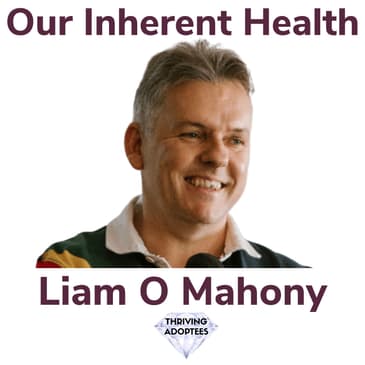
What if there's an inherent health within us that drives us? A Self that's untouched by trauma? How would knowing that make a difference to how we feel about ourselves? Listen in as Liam dives into his experience to reveal a finding overflowing with hope.
Liam O Mahony is an adoptee, an accredited Psychotherapist and Addiction Counsellor with over nine years of experience working with adults and adolescents. He is associated with the Centre for Self-Leadership Internal Family Systems Therapy (IFS), a member of the Irish Association for Counselling and Psychotherapy (IACP) and Addiction Counsellors of Ireland (ACI). He is a graduate of University College Cork and the Cork Institute of Technology with particular expertise in areas such as Trauma and Addiction.
His main interest is the related fields of Attachment, Neuroscience and Trauma and he is particular passionate about how research from these areas can be integrated into the work of psychotherapists and addiction counsellors.
More at:
https://pcpsi.ie/our-founders/
The book Liam mentioned on generational trauma is The Heart of Trauma by Dr. Bonnie Badenoch
Guests and the host are not (unless mentioned) licensed pscyho-therapists and speak from their own opinion only. Seek qualified advice if you need help.
Want to learn more about thriving for you, your kids, your families or your colleagues? Pick a time to talk here
[00:00:02] [SPEAKER_02]: Hello everybody welcome to another episode of Thriving Adoptees, put us today I'm delighted to be joined by Liam O Mahony
[00:00:10] [SPEAKER_02]: Was that closeish?
[00:00:13] [SPEAKER_00]: That's good
[00:00:14] [SPEAKER_02]: That's cool
[00:00:15] [SPEAKER_02]: I'm not, I'm just, I'm not gonna have to say the second name again
[00:00:19] [SPEAKER_02]: I can just say Liam from now, so that makes my life easier for the next
[00:00:23] [SPEAKER_02]: But the next hour or so
[00:00:26] [SPEAKER_02]: So Liam and I just, and as Liam I spoke a couple of weeks ago now
[00:00:31] [SPEAKER_02]: Last week, and I asked him this question about
[00:00:36] [SPEAKER_02]: To what extent does he, just the word he, and resonate with him
[00:00:39] [SPEAKER_02]: And you thought you said that you felt it was kind of over-used
[00:00:44] [SPEAKER_02]: It'd be come a bit of a, a bus word, a bit of a cliche
[00:00:51] [SPEAKER_02]: And you said instead that you prefer to look at five different things
[00:00:56] [SPEAKER_02]: So yeah, what, what are the, one of the five different things Liam?
[00:01:02] [SPEAKER_00]: Well I think, I'm, first thing I'd say Simon is that, you know, thanks for
[00:01:09] [SPEAKER_00]: Invite me on, you know, it's great to be on here
[00:01:13] [SPEAKER_00]: Very welcome
[00:01:15] [SPEAKER_00]: I think healing definitely is, I think it's best to become the boss world
[00:01:21] [SPEAKER_00]: It's become very generalised
[00:01:23] [SPEAKER_00]: Now the first thing I would say is that I think if you look at healing as a verb
[00:01:30] [SPEAKER_00]: Versus is looking at healing as a known
[00:01:34] [SPEAKER_00]: It kind of makes more sense to me
[00:01:36] [SPEAKER_00]: That it's, you know, that it's a process
[00:01:41] [SPEAKER_00]: And that it's something that I believe anyway
[00:01:44] [SPEAKER_00]: That I'll, you know, I'd be healing the day I die
[00:01:47] [SPEAKER_00]: And a lot of the duties that I work with
[00:01:51] [SPEAKER_00]: They would feel the same
[00:01:54] [SPEAKER_00]: So I think looking at it as a verb versus a known
[00:01:58] [SPEAKER_00]: It's just very kind of helpful
[00:02:00] [SPEAKER_00]: Because if it becomes a known, it becomes a team
[00:02:03] [SPEAKER_00]: And we kind of, we lose track then of what healing actually might look like
[00:02:09] [SPEAKER_00]: So I suppose, like, I just, I just say something about
[00:02:19] [SPEAKER_00]: In kind of general, what I think, you know, what my own healing has looked like
[00:02:27] [SPEAKER_00]: And the people I work with
[00:02:29] [SPEAKER_00]: And then the five things that we, what we spoke about
[00:02:33] [SPEAKER_00]: I like to look at them as a kind of an expression of healing
[00:02:38] [SPEAKER_02]: Okay
[00:02:40] [SPEAKER_00]: And, you know, if these five things are happening in a person's life
[00:02:46] [SPEAKER_00]: I think then they're, you know, they're in that kind of process of healing
[00:02:52] [SPEAKER_00]: Now I think, so in general when I kind of look at my own healing
[00:02:57] [SPEAKER_00]: When I look at people I work with
[00:03:01] [SPEAKER_00]: Like I have a kind of a phrase that I use as a kind of a general phrase
[00:03:05] [SPEAKER_00]: And I think for healing to be kind of deep
[00:03:09] [SPEAKER_00]: Then I think what we're doing is we're reclaiming
[00:03:14] [SPEAKER_00]: Or embodied voice
[00:03:18] [SPEAKER_00]: And I'd say that again because I think it's the part and phrase
[00:03:21] [SPEAKER_00]: We're reclaiming or embodied voice
[00:03:25] [SPEAKER_00]: Because often, you know, I know like if you think about it
[00:03:33] [SPEAKER_00]: Or story or our narrative
[00:03:36] [SPEAKER_00]: Without experience is kind of meaningless
[00:03:42] [SPEAKER_00]: And a lot of, you know, say it for me
[00:03:45] [SPEAKER_00]: And I think I would you agree with this sign
[00:03:47] [SPEAKER_00]: But for a lot of people I work with
[00:03:50] [SPEAKER_00]: Or adapt, you know, or adaption experience
[00:03:56] [SPEAKER_00]: Happened at a time
[00:03:58] [SPEAKER_00]: What they call in psychology
[00:03:59] [SPEAKER_00]: A time of implicit memory
[00:04:04] [SPEAKER_00]: So watch what implicit memory is
[00:04:07] [SPEAKER_00]: It's embodied memory
[00:04:10] [SPEAKER_00]: So a lot of all story
[00:04:13] [SPEAKER_00]: A lot of adaption story
[00:04:14] [SPEAKER_00]: Is in our bodies
[00:04:16] [SPEAKER_00]: Not in our minds
[00:04:18] [SPEAKER_00]: And we often, you know, we often get a story in our minds
[00:04:24] [SPEAKER_00]: Or we get a kind of a story or a narrative
[00:04:28] [SPEAKER_00]: You know, maybe from a torn path
[00:04:30] [SPEAKER_00]: We might get past more story from our adopted parents
[00:04:34] [SPEAKER_00]: We might get past of our story from tracing
[00:04:37] [SPEAKER_00]: We might get past of our stories from a lot of different ways
[00:04:41] [SPEAKER_00]: Which is, you know, all very helpful
[00:04:43] [SPEAKER_00]: But I think, you know, for, you know, for deeper healing
[00:04:48] [SPEAKER_00]: And for more meaningful healing
[00:04:50] [SPEAKER_00]: We really kind of need to kind of listen
[00:04:54] [SPEAKER_00]: To that embodied voice
[00:04:56] [SPEAKER_00]: And that that that that that that was
[00:04:59] [SPEAKER_00]: That is, you know, kind of that that that
[00:05:03] [SPEAKER_00]: Maybe part of us that kind of features part of us
[00:05:07] [SPEAKER_00]: That is, you know, that is often for the dark dies
[00:05:11] [SPEAKER_00]: Kind of stuck in a different kind of consciousness
[00:05:15] [SPEAKER_00]: And in a way we need to kind of, you know, for he, you know, to heal
[00:05:21] [SPEAKER_00]: It's about the claim and that that voice really
[00:05:26] [SPEAKER_00]: So that's it in general
[00:05:27] [SPEAKER_00]: So like if someone was kind of under-road healing then or in the kind of a process of healing,
[00:05:36] [SPEAKER_00]: what would that look like? And I think that there's where the five things come in Simon,
[00:05:42] [SPEAKER_00]: you know, the five, for me the five expressions of healing might be a good way of saying it.
[00:05:48] [SPEAKER_00]: Is the first is that because again, it happened to such a kind of a young age,
[00:05:56] [SPEAKER_00]: when we were kind of, you know, very young. I think kind of a adoption has the potential
[00:06:04] [SPEAKER_00]: to leave a kind of real, what you might call a relational rupture. So for me, certainly there was
[00:06:13] [SPEAKER_00]: kind of a very deep, mistrust to people that I had all my life. So the first thing I'd see
[00:06:26] [SPEAKER_00]: with, you know, when a person's under-road healing is that relationally things get better.
[00:06:36] [SPEAKER_00]: So, or relationships are, you know, or you could say they get deeper, they get more emotional,
[00:06:48] [SPEAKER_00]: they get more satisfying, they get more kind of meaningful. And certainly there's more
[00:06:55] [SPEAKER_00]: kind of intimacy in relationships. And in a way as well as a kind of an easy way of saying
[00:07:02] [SPEAKER_00]: it's Simon, is that we begin to leave order people matter to us and we begin to leave order people
[00:07:13] [SPEAKER_00]: in at an emotional kind of level. So that's the first. The second, as well as kind of rupture
[00:07:23] [SPEAKER_00]: like all of a kind of a regulation rupture, usually again the experience of adoption is that
[00:07:31] [SPEAKER_00]: these and their added life will have kind of difficulties or challenges with
[00:07:38] [SPEAKER_00]: autonomic regulation, emotional regulation, cognitive regulation. A lot of other
[00:07:46] [SPEAKER_00]: adoptees that I work with have had kind of dependencies on alcohol, dependencies on food, food,
[00:07:53] [SPEAKER_00]: dedictions, but you know, orders that have kind of addiction then to overwork in, addiction to
[00:08:00] [SPEAKER_00]: addiction to other people see them. So there can be kind of a real kind of challenge in kind
[00:08:09] [SPEAKER_00]: of regulating what goes on inside them. So they'll need to be over emotional, you know,
[00:08:17] [SPEAKER_00]: they're kind of going to say over emotion, overwhelmed by emotion, are there be absolutely
[00:08:21] [SPEAKER_00]: cut off from emotion? And so when you see sort of second sign I think of people healing is that
[00:08:34] [SPEAKER_00]: they begin to have better regulation. They're not as dependent on kind of substances,
[00:08:42] [SPEAKER_00]: they're not depending on people, they're not as dependent on maybe work or status to keep them
[00:08:50] [SPEAKER_00]: regulated. So we really kind of important. So the third kind of the third part I suppose,
[00:09:01] [SPEAKER_00]: sorry, I mean is that I think we talked a little bit about this last week is that
[00:09:07] [SPEAKER_00]: because again, you know, you could say the adoption experiences, you know,
[00:09:19] [SPEAKER_00]: people I work with would be like this, we can be very sensitive to a lot of people see us.
[00:09:30] [SPEAKER_00]: So adopt these potentially can have a very kind of hostile relationship with themselves.
[00:09:39] [SPEAKER_00]: So they can relate to themselves in ways that kind of go from being critical of themselves to actually
[00:09:48] [SPEAKER_00]: don't write hatred of themselves. And then, of course, you know, when you relate to yourself
[00:09:55] [SPEAKER_00]: in such a hostile way and it's kind of ties them with the first one, the first kind of point
[00:10:01] [SPEAKER_00]: that we talked about is very hard to sit where another human being because that's why we project
[00:10:07] [SPEAKER_00]: on to another human being. Then if I see myself in a kind of you to negative for way,
[00:10:13] [SPEAKER_00]: then Simon is going to see myself in a hugely negative way. So the third part of healing is that
[00:10:22] [SPEAKER_00]: adopt these start to relate and to themselves with more kind of gentleness, more kind of kindness
[00:10:32] [SPEAKER_00]: and in a way it can kind of look back at their lives and usually if you kind of relate
[00:10:40] [SPEAKER_00]: yourself in a very hostile way life will be kind of challenging in lots of different ways.
[00:10:46] [SPEAKER_00]: And it can kind of even relate into the, you know, just 16 year or so, their baby self,
[00:10:53] [SPEAKER_00]: their, you know, whatever in a more kind of gentle way. So that that hostility kind of softens
[00:11:00] [SPEAKER_00]: and there's a more gentle, a more kind of kindness and more kind of notoring relationship with
[00:11:07] [SPEAKER_00]: themselves, Simon. So that would be the third, the fourth then would be you potentially again
[00:11:15] [SPEAKER_00]: with adoption, it can, it can leave on our systems in a heightened state. So with adoptees
[00:11:23] [SPEAKER_00]: you could have somebody that would quite a lot of vigilance and if you're somebody that has quite
[00:11:30] [SPEAKER_00]: a lot of vigilance rest is going to be really hard. Now you might be someone that can sleep a
[00:11:38] [SPEAKER_00]: lot but sleep and rest are two different things. So you might, you know, I remember in my 20s
[00:11:46] [SPEAKER_00]: I'd often go to bed at 12 in the day and I, at 12 in the night sorry and then I can get up at 12
[00:11:52] [SPEAKER_00]: in the day. But when I get up I'd nearly have to fall asleep again. So I could sleep plenty
[00:12:00] [SPEAKER_00]: but I never felt rested, never felt rejuvenated after waking. So it can be really hard
[00:12:08] [SPEAKER_00]: or adoptees to tolerate rest. So a real kind of sign that you know people are healing is
[00:12:18] [SPEAKER_00]: that if they're resting more, they're resting more and when they do wake they feel rejuvenated.
[00:12:25] [SPEAKER_00]: And of course the big one then sign, and again the big part that then is they're able to rest
[00:12:31] [SPEAKER_00]: in relationships more. That relationships are not so kind of tiring and that taking actually
[00:12:38] [SPEAKER_00]: feels kind of rejuvenated from relationships. Because often adoptees will you know in the context
[00:12:44] [SPEAKER_00]: of relationships will be absolutely exhausted after relationships because it's so much
[00:12:50] [SPEAKER_00]: effort and so much pressurizing themselves in relationships. So that's the fourth. The fifth thing is
[00:13:01] [SPEAKER_00]: usually you know because of the adoption experience again and potentially you know
[00:13:08] [SPEAKER_00]: to kind of see it's that kind of adoptees can be kind of familiar with is certainly anxiety,
[00:13:14] [SPEAKER_00]: certainly kind of depression, something not knowing themselves, dissociation. And in a way then
[00:13:24] [SPEAKER_00]: that becomes nearly the kind of safe stage even though it's a kind of an uncomfortable and familiar
[00:13:31] [SPEAKER_00]: it becomes safe so they're kind of capacity or capacity to kind of feel you could see
[00:13:39] [SPEAKER_00]: more expansive states like joy, like vitality, like a low-eiveness is very underdeveloped. So
[00:13:51] [SPEAKER_00]: when you kind of sort of you could say the kind of ability to kind of experience simple human
[00:13:59] [SPEAKER_00]: pleasure gets underdeveloped. So again the fifth part is that when adoptees kind of start
[00:14:08] [SPEAKER_00]: you know being able to tolerate being a low-eave more, tolerate joy more,
[00:14:16] [SPEAKER_00]: tolerate feeling happy more you'll know it around the road to healing that. So they're five.
[00:14:22] [SPEAKER_02]: Yeah okay wow can I take you back to the driver of these
[00:14:29] [SPEAKER_02]: of these signs yeah and you talked about reclaiming our embodied voice. So we've got
[00:14:41] [SPEAKER_02]: you're alluding to a mismatch here between our truth and other people's truth.
[00:14:50] [SPEAKER_02]: Attention yeah. I was getting kind of a bit some vessel van de Colk as you were talking about this,
[00:15:05] [SPEAKER_02]: as you were talking about the implicit memory and the trauma being stuck in our bodies.
[00:15:15] [SPEAKER_02]: Yeah um a bit that I'd like to ask you about is it talks about reclaiming our embodied
[00:15:23] [SPEAKER_02]: and embodied voice. Is that about speaking our truth rather than somebody else's truth? Is that
[00:15:33] [SPEAKER_02]: about is that about putting words to what was previously preverbal is what?
[00:15:45] [SPEAKER_00]: I think it can be board of them and like if you think of if you think of implicit memory
[00:15:53] [SPEAKER_00]: implicit memory is made up of um bodily sensations it's going to be made up of
[00:16:04] [SPEAKER_00]: it's made up of behavioral impulses it's made up of intentions. So the the experience of
[00:16:14] [SPEAKER_00]: adoption you know as you're kind of nicely putting it is a kind of embodied experience.
[00:16:21] [SPEAKER_00]: So the body needs the so we have a kind of a story that you know there can be as you say
[00:16:31] [SPEAKER_00]: it's misnature but it's it's a story that we get from someone else usually.
[00:16:39] [SPEAKER_00]: But the story of the body then is very different because if you think about it like
[00:16:46] [SPEAKER_00]: if if adoption for for me was a very kind of traumatic experience it's so if it is a traumatic
[00:16:53] [SPEAKER_00]: experience with the update then or body in response that I'd experience our experiences
[00:17:01] [SPEAKER_00]: will organize in a very kind of particular way which which we then kind of need to live with
[00:17:10] [SPEAKER_00]: so we kind of learn kind of various kind of protections and various strategies to kind of disconnect
[00:17:17] [SPEAKER_00]: from. So we so there's a story there's a very specific story in that organization
[00:17:31] [SPEAKER_00]: that is always looking to be told and that that's going to be very individual for every person
[00:17:42] [SPEAKER_00]: that might be you know that might be kind of sounds coming over your body
[00:17:50] [SPEAKER_00]: you know kind of three verbal screams that could that a dec kind of certainly
[00:17:58] [SPEAKER_00]: where I find a lot with me and if I'm not with the updates that can be a kind of a level of rage
[00:18:04] [SPEAKER_00]: that can kind of feel very frightening that can be kind of deep kind of grief that can you know
[00:18:15] [SPEAKER_00]: that's you know that's very kind of a liveening really but that can be really kind of buried
[00:18:21] [SPEAKER_00]: at a very deep level inside us and when when these experiences start coming off
[00:18:31] [SPEAKER_00]: there can be as you say kind of we can put words on experiences in order you know
[00:18:40] [SPEAKER_00]: to it includes terror I think like I remember being in counseling for a long time and
[00:18:48] [SPEAKER_00]: after many years in counseling I started getting panic attacks so it'll come out for each person
[00:18:57] [SPEAKER_00]: in a very kind of different way and you have a you you have a very different story and that
[00:19:08] [SPEAKER_00]: and it's a real kind of I think it's a real kind of honoring of that kind of baby part of us
[00:19:16] [SPEAKER_00]: that kind of that has been kind of stuck in a kind of a different consciousness for a long time
[00:19:21] [SPEAKER_00]: and he or she then will be able to tell her tell a different story to potentially what we've been told
[00:19:30] [SPEAKER_02]: yeah so I'm getting story on a couple of different levels here as in stories like
[00:19:38] [SPEAKER_02]: tell me the story of your adoption but that story but I'm also getting the idea that the body is
[00:19:44] [SPEAKER_02]: telling story through exactions absolutely and as you were talking about
[00:19:55] [SPEAKER_00]: how how and did you say how it is with yeah it could be kind of like often one of the things
[00:20:01] [SPEAKER_00]: I hear is kind of people like no kind of primal screens that have been kind of trapped in the body
[00:20:07] [SPEAKER_00]: for a long time no that's again that's not everybody but you know that's not a good idea
[00:20:14] [SPEAKER_02]: I I I done that yeah I remember a conversation with my my dad my doctor dad
[00:20:25] [SPEAKER_02]: about a work issue a really tricky work of crisis yeah let's go because that's what it felt like
[00:20:33] [SPEAKER_02]: it's time to make crisis and I I went to him for for help and he he sounded like he was listening
[00:20:46] [SPEAKER_02]: and he made some suggestions and I said well that's not kind of work because of this this and this
[00:20:55] [SPEAKER_02]: and this is probably 20 yes 24 25 years ago now this this happening but I still remember right
[00:21:04] [SPEAKER_02]: and so he he kind of took my points on board and we moved on to some other ideas that we had
[00:21:11] [SPEAKER_02]: and then and then he brought it back round to the ideas that we'd already kind of put to one side
[00:21:17] [SPEAKER_02]: and I remember a primal screen because of anguish at him not understanding
[00:21:34] [SPEAKER_02]: you know and I can remember having one of those primal screens probably 10 to our years ago
[00:21:42] [SPEAKER_02]: oh my I'm just walking just walking the dark when I was kind of very overloaded with
[00:21:48] [SPEAKER_02]: and you know overwhelmed and overloaded about and confused about what I did next with the
[00:21:56] [SPEAKER_02]: certain issue and I I get one of those on my head but then so it's funny and I also love primal screen
[00:22:06] [SPEAKER_02]: the band right so you know I'm kind of getting that so this so you're talking about a story here
[00:22:14] [SPEAKER_02]: that our body's telling a story through a story through its actions that is not a
[00:22:25] [SPEAKER_02]: verbal story so I'm guessing a lot of your work is somatic it's got big somatic base to it
[00:22:39] [SPEAKER_00]: is that absolutely just see I think one of the one things I've found again for my own experience
[00:22:49] [SPEAKER_00]: and I'm walking with people is that again potentially in a different set this is everybody but
[00:22:55] [SPEAKER_00]: like the experience of adoption and the experience of kind of separation from our kind
[00:23:02] [SPEAKER_00]: of boat motor and you know depending on the context of our boat and a lot of things
[00:23:08] [SPEAKER_00]: you know there's a part of us kind of trapped trapped in you know back there trapped in a different
[00:23:17] [SPEAKER_00]: state of consciousness so you know you could kind of talk about it to the cause come home
[00:23:24] [SPEAKER_00]: and it would you know it would not know make any difference but you know where the part of us
[00:23:32] [SPEAKER_00]: that's trapped is embodied so in a way what we're doing is we're kind of helping you know over time
[00:23:41] [SPEAKER_00]: and that part you know that part was to kind of find its you know find its way home and
[00:23:50] [SPEAKER_00]: where in a way it's very kind of sacred because you know it's kind of interesting I remember I remember
[00:23:56] [SPEAKER_00]: I did you know I I don't know if a lot of adulties would kind of relate to this but
[00:24:04] [SPEAKER_00]: I would have a real kind of lack of recall for a lot of my childhood experiences there's a
[00:24:10] [SPEAKER_00]: lot gone you know the years that I have no kind of memory of and again that's not too unusual
[00:24:16] [SPEAKER_00]: for the people I walk with as well so I'd say people would probably relate to that but there's one
[00:24:23] [SPEAKER_00]: there's one thing I always remember I remember when I was kind of young I don't know
[00:24:28] [SPEAKER_00]: I was probably only both era nine and I remember kind of watching this film and
[00:24:37] [SPEAKER_00]: at the time I didn't had a language for this but in a way it kind of resonate and deeply with the film
[00:24:43] [SPEAKER_00]: and the film was it was by an active part you know I'm John Travolta and the film was called the boy in the
[00:24:51] [SPEAKER_00]: bubble and the boy in the bubble is essentially about if I can remember correctly now about this guy
[00:24:59] [SPEAKER_00]: he has this kind of illness where the ear outside you know if he gets too much the ear he does
[00:25:09] [SPEAKER_00]: so the only way he can kind of stay a low is in a bubble and looking back I could really
[00:25:18] [SPEAKER_00]: get to that so much because there was a power to me kind of stalking a bubble you know kind of
[00:25:25] [SPEAKER_00]: trapped you know trapped embodied in a kind of repressed and that's what the work is you know
[00:25:36] [SPEAKER_00]: kind of healing for me is that we're trying to you know very gently and very kind of
[00:25:44] [SPEAKER_00]: the way I kind of gently subtly and a very kind of maybe kind of titrated with as
[00:25:53] [SPEAKER_00]: as a word well we're helping the kind of boy to come over the bubble and and that's that's why
[00:26:02] [SPEAKER_00]: you know somatic path to the work is it's kind of really kind of important because it because we
[00:26:08] [SPEAKER_00]: you're where there can be you know there can be words and there can be kind of sounds so we're given
[00:26:15] [SPEAKER_00]: that we're we're kind of releasing that kind of embodied kind of voice really so does this relate to
[00:26:28] [SPEAKER_02]: and being more at large in the world rather than you know and your first comment you
[00:26:34] [SPEAKER_02]: talk about mistrust of others yeah I'm gonna you know just to divine it but for me I'm gonna say
[00:26:41] [SPEAKER_02]: right I'm gonna stay in my bubble because I don't want to come out my bubble because I know trust you
[00:26:47] [SPEAKER_00]: yeah sorry my phone is gone after some reason energy same it no no no no no no yeah
[00:27:03] [SPEAKER_02]: after my apologies no it so we stay in the bubble because the bubbles safe yeah
[00:27:13] [SPEAKER_02]: and and we don't want other other people coming into our bubble yeah because we're lacking
[00:27:20] [SPEAKER_02]: in interest of them and maybe you know I never spoke to my dad about that primal screen moment
[00:27:30] [SPEAKER_02]: I had within um we didn't touch on anything tricky you know which kind of
[00:27:43] [SPEAKER_02]: relates to his second point well no they you know deep but having it is the same point actually
[00:27:50] [SPEAKER_02]: having a deeper conversation I don't I just don't think he I didn't that I'll tell that
[00:27:55] [SPEAKER_02]: conversation and he clearly didn't he just took the warning sign and then we moved on we didn't
[00:28:02] [SPEAKER_02]: we never revisited that's that conversation so I'm mentioning I'm mentioning this quite a lot
[00:28:15] [SPEAKER_02]: at the moment on the podcast because it seemed something big for me and I've not really got my
[00:28:22] [SPEAKER_02]: handle on it so I'd love your insight on this so this was something that I heard from
[00:28:29] [SPEAKER_02]: Gabo Maté a couple of months ago when he said that the the the feeling of not being enough
[00:28:40] [SPEAKER_02]: feeling of being and were the feeling of being less than not sure exactly which would he use
[00:28:46] [SPEAKER_02]: I'll maybe have something different but that sort of thing he said not feeling enough
[00:28:58] [SPEAKER_02]: isn't actually a feeling it's a belief I believe that we're not enough yeah yeah and I'm wondering how
[00:29:12] [SPEAKER_02]: how these two things how do you see these two things sitting together this this pre-verbal
[00:29:20] [SPEAKER_02]: this pre-verbal non-verbal trauma that's non non-verbal apart from Raimals Green right
[00:29:29] [SPEAKER_02]: that's that's stuck in our body that's embodied how that sits with this feeling of not being
[00:29:39] [SPEAKER_02]: enough and do they does one come from the other how to how do these two things
[00:29:47] [SPEAKER_02]: sit sit together because ones really very visceral and the other one
[00:29:56] [SPEAKER_02]: seems to me anyway to be more cognitive to be more to do with thought yeah absolutely
[00:30:05] [SPEAKER_00]: so like if you think about we're kind of explained it is that you think of if we go back to
[00:30:16] [SPEAKER_00]: kind of implicit memory and if you think of like we give one kind of one example say if
[00:30:32] [SPEAKER_00]: like if you think about the experience of adoption and one it wanted to kind of
[00:30:44] [SPEAKER_00]: possibilities that you know and it happens to me and it happened to a lot of these is that
[00:30:50] [SPEAKER_00]: there can be a lot of them there can be a lot of kind of dig emotions involved
[00:30:59] [SPEAKER_00]: of not being like one of the things that I would kind of say it happens for adoptives
[00:31:08] [SPEAKER_00]: that in my experience it either happens or the suddenly a perception of it happened in anyway
[00:31:14] [SPEAKER_00]: is it's the experience of not being welcomed into the world yeah so when we're as a child
[00:31:30] [SPEAKER_00]: when we're not welcomed into the world the first kind of the first kind of reaction
[00:31:39] [SPEAKER_00]: and said kind of an organic reaction you might call it kind of protest you'd have to try
[00:31:45] [SPEAKER_00]: kind of protesting yeah you know kind of given those you know that they have a particular need
[00:31:52] [SPEAKER_00]: whatever yeah and if the protest then is not mesh what usually happens the protest ramps of
[00:32:00] [SPEAKER_00]: time go yeah and then if the anger is not mesh the the anger ramps up to rage yeah but it's not kind
[00:32:12] [SPEAKER_00]: of it's not kind of sustainable for children or infants to kind of live in a kind of stage
[00:32:19] [SPEAKER_00]: of kind of rage because it's you know it's just too this this regulate and from their body
[00:32:25] [SPEAKER_00]: and as well then you know they can be afraid of kind of retaliation and so they kind of need to
[00:32:32] [SPEAKER_00]: find you know one of the things that happens then so you have this kind of big feeling or rage
[00:32:36] [SPEAKER_00]: or you might have a big feeling of you know grief or kind of sadness so children infants then
[00:32:44] [SPEAKER_00]: and children they need to find a way of kind of going on with life and not being connected
[00:32:54] [SPEAKER_00]: to these big feelings, unappeeing connected to these you know whatever these impulses to we
[00:33:00] [SPEAKER_00]: show sure yeah so the first survival response that's available to them Simon
[00:33:09] [SPEAKER_00]: is that from a very young age we can kind of shut down yeah you're probably familiar with
[00:33:17] [SPEAKER_00]: the polyvagal terri and so we have we have four different responses in our nervous system we
[00:33:23] [SPEAKER_00]: have social engagement or safety we have five slides shut down yeah so we can shut down so
[00:33:32] [SPEAKER_00]: young children will and you know adapties I come across this response a lot in adapties and
[00:33:39] [SPEAKER_00]: I you know I notice for response very well myself so we start shutting down so we start shutting down
[00:33:47] [SPEAKER_00]: that holy sympathetic charge of kind of rage or anger so that the shock don't end kind of
[00:34:02] [SPEAKER_00]: a high activation when we have that shutdown so these responses of kind of fight flight and freeze
[00:34:10] [SPEAKER_00]: are are only supposed to be used in kind of you know very kind of serious circumstances really
[00:34:21] [SPEAKER_00]: life or death but what adapties will do they start using them kind of habitually just to kind of
[00:34:31] [SPEAKER_00]: shut down them kind of early kind of overwhelming emotions and what happens then you know as we get
[00:34:39] [SPEAKER_00]: older if you think about the if you think about then as we get older this is the latter this is unconscious
[00:34:49] [SPEAKER_00]: it up these kind of you know one of the ways we kind of do is is true the body again of course
[00:34:56] [SPEAKER_00]: so the body goes into kind of deep patterns of embracing deep patterns of kit of contraction
[00:35:04] [SPEAKER_00]: deep patterns of shut down and then the developing personality the personality of the child when
[00:35:11] [SPEAKER_00]: kind of cognition comes more online has to make kind of sense of this kind of disregulation
[00:35:23] [SPEAKER_00]: and often you know again because of the immature kind of you know thinking capacity of children
[00:35:34] [SPEAKER_00]: or you feel bad you know because it's so much disregulation in our body often translate
[00:35:42] [SPEAKER_00]: translates to iambad so what's essentially a kind of bodily kind of response no becomes a cognitive
[00:35:55] [SPEAKER_00]: idea or a cognitive belief about ourselves so all this kind of disregulation in our body
[00:36:03] [SPEAKER_00]: because of these earlier experiences of i feed bad becomes iambad so that's that's one way
[00:36:11] [SPEAKER_00]: and the other thing that that often happens to infants again because of children because of
[00:36:20] [SPEAKER_00]: their immature kind of thinking capacity is when winners say are parent or adopt a parent
[00:36:31] [SPEAKER_00]: or not or whatever can't respond to us the child goes into what you might call is a kind of a
[00:36:39] [SPEAKER_00]: splitting dynamic so it children can kind of hold a complexity of emotion so often what children
[00:36:51] [SPEAKER_00]: will do when the environment is not able to respond to their needs is they'd split the parent or
[00:36:59] [SPEAKER_00]: caregiver between the good mother bad mother and themselves you know good child bad child
[00:37:08] [SPEAKER_00]: and again because we depend on our parents for so much it's much better for a child to be
[00:37:18] [SPEAKER_00]: a bad child with good parents than to be a good child with bad parents so we we take on this
[00:37:29] [SPEAKER_00]: idea or belief about ourselves that we're bad because that kind of that lets us for hope
[00:37:35] [SPEAKER_00]: because you know our hope that we become good and the accepted end so so if you think about
[00:37:44] [SPEAKER_00]: these kind of these kind of embodied experiences of kind of disregulation of distress
[00:37:52] [SPEAKER_00]: lead to these kind of ideas or these beliefs of all of such yeah that makes sense I think so and
[00:38:01] [SPEAKER_02]: I can see bits bits of myself in there I'm I'm thinking what back to that word that you used
[00:38:18] [SPEAKER_02]: reclaiming our embodied voice if that is the if that and it's a verb right like so like
[00:38:30] [SPEAKER_02]: healings of the reclaiming what what's the fuel that we use what what's our what's our fuel what's
[00:38:40] [SPEAKER_02]: the driver what's the driver of our reclamation of our reclaiming the reclaiming this term
[00:38:50] [SPEAKER_00]: and well you know I kind of think a two-ting straight away and like you know if you think of
[00:39:06] [SPEAKER_00]: you know if you're if you're kind of when you're working with people say if you're working with
[00:39:11] [SPEAKER_00]: people that are you know adopted or kind of working with people with developmental trauma it's
[00:39:18] [SPEAKER_00]: kind of easy it's easy to kind of see the woundedness and the kind of you know the kind of the
[00:39:25] [SPEAKER_00]: heart parts of them but there's also the other side where we have it we have a huge kind of
[00:39:33] [SPEAKER_00]: amount of what's called inherent health and inherent health in the way it means that we have
[00:39:40] [SPEAKER_00]: huge biological and organic resources so we're we're like what's part of our biology like is that
[00:39:53] [SPEAKER_00]: we always we always kind of orientate to the warmest possible relationships no matter how
[00:40:02] [SPEAKER_00]: traumatized we've been when when that warm person that loving person turns off
[00:40:09] [SPEAKER_00]: or kind of biology will stop orientated that so I think that's one driver in a sense of
[00:40:17] [SPEAKER_00]: you know we have a lot of these organic resources that are always kind of
[00:40:27] [SPEAKER_00]: bit like a flower if you think of a flower will always kind of orientate to what's
[00:40:32] [SPEAKER_00]: sunlight yeah so or kind of or arc and is mix-self you might call always kind of looks is always
[00:40:41] [SPEAKER_00]: looking for healing and always kind of looking certainly to kind of people that you know
[00:40:49] [SPEAKER_00]: that can support that kind of healing because if you think about it you know I do a lot of work
[00:40:54] [SPEAKER_00]: in an addiction and sometimes we you know in our society now you know and people have any kind of
[00:41:04] [SPEAKER_00]: you know mental health problems like kind of anxiety or depression and you know sometimes
[00:41:10] [SPEAKER_00]: you know certainly here now and there can be an an over a lion's hand medication
[00:41:15] [SPEAKER_00]: but see one of the problems of medication and you know there's lots of kind of
[00:41:20] [SPEAKER_00]: losses for medication but like medication kind of norms us but it can never normal
[00:41:26] [SPEAKER_00]: fully because that that part of us that that part of us that you know wants to kind of live
[00:41:34] [SPEAKER_00]: in the kind of myths of our birth drives it's always it's like a compass it's always looking
[00:41:43] [SPEAKER_00]: it's always kind of looking for you know where where we kind of should be so I'd see that as kind
[00:41:50] [SPEAKER_00]: of a big kind of driver and you know what sometimes you know I think the big
[00:41:58] [SPEAKER_00]: I don't know did you mean despite the question but I think there'd be kind of drivers well as
[00:42:03] [SPEAKER_00]: that is something kind of I think around them relationships when we kind of um
[00:42:18] [SPEAKER_00]: when we find relationships that where people can relate to us in a kind of a
[00:42:27] [SPEAKER_00]: certain way can relate relate to us we're kind of a love and presence relate to us with
[00:42:32] [SPEAKER_00]: gentleness with with warmth I think that kind of actualizes something in us as well that's a kind
[00:42:41] [SPEAKER_00]: of a driver towards kind of health so I did I did the two of them yeah you've used the word consciousness
[00:42:58] [SPEAKER_02]: and then and that work means different things to different people have you have you come across this
[00:43:13] [SPEAKER_02]: the David Hawkins scale of consciousness have you come across that? No okay
[00:43:21] [SPEAKER_02]: have you come across this that's well this idea that consciousness is the space in which our
[00:43:32] [SPEAKER_02]: sensations and our feelings happen in the same way as the movie on a screen
[00:43:41] [SPEAKER_02]: this it's none some people look at it this is what the guidance until the time at the moment
[00:43:49] [SPEAKER_02]: is a gaggle-rupa spyra he's talking about it's it's being instead of focusing on the content
[00:44:01] [SPEAKER_02]: of our experience we focus on the context of it that the knowing of it and
[00:44:16] [SPEAKER_02]: is this is this ringing a bells and bells for you well I kind of use
[00:44:28] [SPEAKER_00]: consciousness in the kind of delx paid for myself like we had a conversation last week and
[00:44:44] [SPEAKER_00]: I think you used the kind of term coming out of the fog yeah which is kind of a term that
[00:44:56] [SPEAKER_00]: you know I hadn't heard that much before you know before and
[00:45:03] [SPEAKER_00]: but for me coming out of the fog kind of started like in 54 and I probably wouldn't have
[00:45:12] [SPEAKER_00]: spoken about 40 and it was kind of a visual experience it was ten years last time that
[00:45:22] [SPEAKER_00]: all as far as I started seeing the world in a different way and I'm actually visually different
[00:45:31] [SPEAKER_00]: in that if I met you kind of say 14 years ago when I'd been looking at you it would be like
[00:45:37] [SPEAKER_00]: all of us were inside the steamer and often over the years it would feel that a bit like
[00:45:48] [SPEAKER_00]: you know the bubble that there was some part of me kind of looking out of me from a different
[00:45:56] [SPEAKER_00]: consciousness inside and and often what you know often what kind of happens you know I kind
[00:46:08] [SPEAKER_00]: of work with the dark deases that sometimes with adoption and with developmental trauma
[00:46:16] [SPEAKER_00]: the experiences can be so kind of challenging and it can be so difficult you know difficult
[00:46:25] [SPEAKER_00]: that sometimes you get adopted is that actually never in body you know that is just too kind
[00:46:32] [SPEAKER_00]: of painful to come into their bodies and what what happens is that they all the
[00:46:40] [SPEAKER_00]: did often they have kind of access to consciousness is or kind of more you might call them
[00:46:46] [SPEAKER_00]: esoteric realms that kind of normal folks don't have so that that's what I kind of mean by
[00:46:56] [SPEAKER_02]: kind of for me kind of consciousness really yeah so I had a unit of acarctolar yeah
[00:47:07] [SPEAKER_02]: so I was reading his book that the one of the big ones the power of now which I think he was
[00:47:14] [SPEAKER_02]: his first big one and this would be maybe 20 years ago and and I was reading about his awakening
[00:47:25] [SPEAKER_02]: and the following day I was sat in a I was on holiday in Turkey and and suddenly all
[00:47:39] [SPEAKER_02]: there or all the colours were round round top right so like like kind of like when you change
[00:47:50] [SPEAKER_02]: the colour knob on your television right so the blue went from an incipit blue to a really bright
[00:48:00] [SPEAKER_02]: blue the at the sea the yellow of the the yellow of the because it was August and Turkey the
[00:48:09] [SPEAKER_02]: yellow of the ground became far richer and more vibrant and I became aware of the sound of the
[00:48:19] [SPEAKER_02]: blowing in the in the straw roof of the beach hot and and that was a shift that was a shift
[00:48:30] [SPEAKER_02]: in my vision in the same way as talking as you had a shift in your vision so coming out
[00:48:39] [SPEAKER_02]: the fog was wasn't just metaphorical for you it was actually it was a physical can it lived thing
[00:48:47] [SPEAKER_02]: absolutely and I'm also thinking about a woman that I yeah I was I was sharing some
[00:49:00] [SPEAKER_02]: some of my learnings this wasn't in their docks but but we were touching quite a space and she
[00:49:12] [SPEAKER_02]: she had she was a Muslim and she had a headrest on and and traditionally you know like her
[00:49:22] [SPEAKER_02]: hair ladies has important to me you're like in terms of that I don't like her because yeah in
[00:49:30] [SPEAKER_02]: terms of that look you know like I think of some sort of the round or something you know as a kid
[00:49:34] [SPEAKER_02]: and you know there's the dark hair and you know I always associate people's you know hair with that
[00:49:42] [SPEAKER_02]: and what about her looks to me and she's she suddenly became vibrancy I was just talking
[00:49:52] [SPEAKER_02]: about some deep stuff some I called Tolis up or something like that and and she suddenly became you know
[00:49:59] [SPEAKER_02]: she she became kind of beautiful to me and she hadn't been before so there's this
[00:50:07] [SPEAKER_02]: altered different states of consciousness and that are very visual yeah and I hadn't heard
[00:50:19] [SPEAKER_02]: anybody express it like that before so let me try one of this kind of this group of Sparrow
[00:50:29] [SPEAKER_02]: Guy and Matt's for that would be similar to what if what he would say and I've
[00:50:36] [SPEAKER_02]: your opinion on this right so I love to look at the metaphors and then extend it right so when we
[00:50:47] [SPEAKER_02]: when we come out of the fog what what did you what did you see when you came out of the the fog
[00:50:59] [SPEAKER_00]: and it was kind of like by by story is kind of it's very interesting and I'd love to
[00:51:12] [SPEAKER_00]: I'd love to I haven't had anybody kind of I'm sure there are people so if anybody is
[00:51:18] [SPEAKER_00]: listening on the call and they have experiences like I had please contact me because it's really nice
[00:51:27] [SPEAKER_00]: to have a kind of a soap group of people that you can identify with but comment out of the fog was
[00:51:36] [SPEAKER_00]: was problematic for me in a sense of that and I don't know if you if you kind of
[00:51:48] [SPEAKER_00]: if you have ever heard of a therapy called internal family systems so I have asked and
[00:51:56] [SPEAKER_00]: I know if I have them a term called internal voice so when I started coming out of the fog
[00:52:05] [SPEAKER_00]: about 40 I started hearing a lot of internal voices there up to that point in my life I had never heard
[00:52:16] [SPEAKER_00]: so I would I would hear I'm going to kill myself I would hear I want to die
[00:52:27] [SPEAKER_00]: I would hear I'm going to kill you you bastard yeah and and even though you know so
[00:52:36] [SPEAKER_00]: up to that point in my life up to 40 I had you know challenges like a lot of adulties can't have
[00:52:43] [SPEAKER_00]: but you know suicidal ideation was never a part of my life so here I was like and I'd be
[00:52:51] [SPEAKER_00]: I'd be sitting down with clients and if someone was my client I'd be kind of sitting across
[00:52:56] [SPEAKER_00]: from Simon and next to what I'd hear and side myself I'm going to I'm going to kill myself
[00:53:03] [SPEAKER_00]: I wish you a dead your bastard and I'd start getting these images then very um
[00:53:11] [SPEAKER_00]: very kind of volume and images so I'd get images of babies being chopped up and kind of
[00:53:20] [SPEAKER_00]: thrown into a furnace something that you know I'm really sure I probably never saw but they were
[00:53:27] [SPEAKER_00]: kind of probably more kind of symbolic kind of implicit memory um so some so that would
[00:53:37] [SPEAKER_00]: be what kind of challenges you know they were kind of real kind of challenges because I didn't have
[00:53:44] [SPEAKER_00]: them I didn't kind of have a subgroup you know people that could kind of relate to that and you
[00:53:51] [SPEAKER_00]: know and you see you couldn't tell that everybody because I told it to some people and they kind
[00:53:59] [SPEAKER_00]: of framed it in the way that I was kind of psychiatric that was here in voices but I knew that
[00:54:04] [SPEAKER_00]: wasn't a case because you know so that was that was part of me coming over the fog um
[00:54:14] [SPEAKER_00]: I decomminow the fog was kind of difficult as well because um even at 40 and you know years after
[00:54:22] [SPEAKER_00]: I had 10 years of counseling behind me and then suddenly I started getting panic attacks
[00:54:32] [SPEAKER_00]: and for years that's a constant I didn't need to understand panic attacks because I never had them
[00:54:38] [SPEAKER_00]: because I was so kind of I kind of shut down so much I think in my younger life that I was kind
[00:54:45] [SPEAKER_00]: of in this what you might call it kind of a functional freeze but after both I always kind of laugh with
[00:54:52] [SPEAKER_00]: with my wife because maybe after about I did not 15 years of counseling I started getting
[00:54:57] [SPEAKER_00]: panic attacks I started experiencing kind of levels that kind of terror that I had never experienced in my
[00:55:06] [SPEAKER_00]: life like it and I actually thought that I was going to die that was kind of all over for me
[00:55:14] [SPEAKER_00]: and even though I'd lots of experience of counseling a lot of counseling behind me you know
[00:55:20] [SPEAKER_00]: for the bone probably last several four months was very kind of how to see the wood for the trees
[00:55:28] [SPEAKER_00]: so so they were definitely kind of um experiences that were um what would would difficult
[00:55:37] [SPEAKER_00]: um but I think coming out of the fog as well um was kind of there was a lot of kind of really
[00:55:42] [SPEAKER_00]: kind of rich experiences in a sense that you know I began to be able to tolerate kind of you know
[00:55:57] [SPEAKER_00]: shifts with people having more meaning for relationships with people kind of you know
[00:56:05] [SPEAKER_00]: kind of getting a try around me in a way that could kind of support my kind of development
[00:56:14] [SPEAKER_00]: so I did there did there be somebody experiences
[00:56:18] [SPEAKER_02]: so I mean it took about a subgroup on so there's an American what was the adoption podcast that
[00:56:24] [SPEAKER_02]: she's an adopted mum and uh she called Bath Silicem and she just released a book with a co-authors
[00:56:34] [SPEAKER_02]: right so different people have wrote written different chapters and it's called I think it's
[00:56:41] [SPEAKER_02]: called adopted opportunities and so it's so exciting something like that so um I'm saying that
[00:56:48] [SPEAKER_02]: listeners in case you haven't heard of that and you want to you want to check that book out
[00:56:52] [SPEAKER_02]: and you want to check her out so she's called Bath Silicem as a say adoptive mum and
[00:57:01] [SPEAKER_02]: the podcast is called unraveling, unraveling adoption so that might be worth listen that might be
[00:57:06] [SPEAKER_02]: worth you looking at um I can make an instruction if you want that too she's great lady
[00:57:13] [SPEAKER_02]: and then I would have worked with the listeners looking at
[00:57:19] [SPEAKER_02]: I think you know that so they coming out of the folk was very
[00:57:26] [SPEAKER_02]: is it's becoming aware of the trauma and our brains maybe of
[00:57:34] [SPEAKER_02]: our bodies or whatever it's been hidden we haven't we haven't seen it and then it kind of comes up
[00:57:40] [SPEAKER_02]: that's why it's so violent it's like a yeah and a job.
[00:57:46] [SPEAKER_00]: Alinch for people really Simon then said you know see even therapy the
[00:57:53] [SPEAKER_00]: updates will often go to therapy and they might actually get more kind of symptomatic in therapy
[00:58:00] [SPEAKER_00]: so like because like if you think about it one of the primary ways that I see you know adopt
[00:58:07] [SPEAKER_00]: these corp in this by going into that kind of deep kind of collapse shut down response and then
[00:58:13] [SPEAKER_00]: kind of the dissociative kind of lifestyle comes with that and you see you know what good
[00:58:21] [SPEAKER_00]: therapy will do is it'll start kind of supporting you to come out of the kind of
[00:58:27] [SPEAKER_00]: the dissociative kind of shut down response but the challenge and that is that as you come
[00:58:33] [SPEAKER_00]: you will meet everything that puts you into it in the first place.
[00:58:37] [SPEAKER_00]: And for me that's a gallery.
[00:58:39] [SPEAKER_00]: That's a gallery.
[00:58:40] [SPEAKER_00]: Terrifying yeah and a panic in the you know very high levels of kind of fear and you know
[00:58:47] [SPEAKER_00]: so that can be an energy impact of the process really.
[00:58:51] [SPEAKER_02]: So how would you put what you just shared there?
[00:58:56] [SPEAKER_02]: Thank you for sharing that.
[00:59:00] [SPEAKER_02]: It's powerful very powerful.
[00:59:03] [SPEAKER_02]: So how would you put that with the you know this essential idea that you started out with
[00:59:09] [SPEAKER_02]: of reclaiming our embodied narrative? How would you wrap those two things together?
[00:59:17] [SPEAKER_00]: By the way the seat in a way is how I'd wrap on together as they were
[00:59:22] [SPEAKER_00]: claiming or embodied voice also potentially means reclaiming or families embodied voice.
[00:59:36] [SPEAKER_02]: So the generational trauma, exactly.
[00:59:38] [SPEAKER_00]: The generational trauma so like who like for me who's that voice? Who's
[00:59:49] [SPEAKER_00]: device the one that wants to kill themselves because you know suicide
[00:59:53] [SPEAKER_00]: ideation has never been part of my life.
[00:59:57] [SPEAKER_00]: So who's the one that wants to die and you know I can be fairly sure
[01:00:02] [SPEAKER_00]: that that's my board murder and that's my kind of you know grand murder because my
[01:00:10] [SPEAKER_00]: grand murder and what I found out later spent a lot of our life in an asylum.
[01:00:15] [SPEAKER_00]: So you can imagine the despair of you know live you know kind of spend your life in a kind
[01:00:20] [SPEAKER_00]: of psychiatric hospital especially at that time and then my murder was so kind of wounded.
[01:00:27] [SPEAKER_00]: So potentially you know so that's how we wrap it up you know when you grow up to get your own
[01:00:33] [SPEAKER_00]: and value voice your your reclaiming device of those who went before you as well.
[01:00:40] [SPEAKER_00]: Which is very powerful but you know very difficult.
[01:00:44] [SPEAKER_02]: Painful yeah at the same time um I actually saw a book on
[01:00:50] [SPEAKER_02]: generational trauma the other day and I thought should I have a you know a dive into that or not
[01:00:56] [SPEAKER_02]: and I decided I decided not to. Have you seen anything on that?
[01:00:59] [SPEAKER_02]: I'm thinking I might give it another go actually if you see I'm a book on generational trauma.
[01:01:06] [SPEAKER_00]: I have I have a good few but I leave I can't think of them no I'm probably definitely that's good.
[01:01:13] [SPEAKER_02]: Okay and if you I'll I'll add them to the show notes.
[01:01:19] [SPEAKER_02]: Sorry if any listeners want to dive into that dive into that yeah.
[01:01:24] [SPEAKER_02]: Cool wow. Thank you very much.
[01:01:27] [SPEAKER_02]: Sorry I was always listening to check out the show notes for a link to to Liam and
[01:01:35] [SPEAKER_02]: website and stuff and but before I finish I just want to ask thank you again
[01:01:42] [SPEAKER_02]: and also just ask you is there's something that's you want to share the I've not asked you about.
[01:01:50] [SPEAKER_00]: And well I think the the earlier the two things that I share that is kind of
[01:01:58] [SPEAKER_00]: think we touched on them and I think you know if I look back and if I think it's kind of
[01:02:12] [SPEAKER_00]: different consciousness and one of the things if we have a part of ourselves in a different
[01:02:17] [SPEAKER_00]: kind of consciousness then we need to kind of watch or kind of rhythm and often you know
[01:02:24] [SPEAKER_00]: especially a rhythm of contact with people so often the updates will kind of go
[01:02:30] [SPEAKER_00]: to fast true life, to fast true relationships so I'd say kind of find find your rhythm you know
[01:02:38] [SPEAKER_00]: just it seemed to be really important for me you know because we can go kind of too fast or too slow
[01:02:45] [SPEAKER_00]: as a kind of a protection but really kind of find in your rhythm that would be one thing and
[01:02:50] [SPEAKER_00]: the other thing I'd say that again this at the top of myself and kind of a lot of people I work with
[01:02:59] [SPEAKER_00]: them with this errorly kind of trauma there can be a lot of we can have a lot of kind of
[01:03:07] [SPEAKER_00]: hostility inside yourself a lot of kind of rage a lot of hostility some of it can be a role
[01:03:13] [SPEAKER_00]: on a bow or hop into us and we can you know internalize some of it from the environments we've been in as
[01:03:19] [SPEAKER_00]: well and I think and some of that can be very kind of covert that we can kind of
[01:03:27] [SPEAKER_00]: protection we can come across it's very kind of pleasing and very you know easy go on but you
[01:03:33] [SPEAKER_00]: know the hostility can be really kind of very deep I think in the dark days and what I'd say about
[01:03:40] [SPEAKER_00]: that is that you know that's very normal and we want to be kind of really kind of acknowledging
[01:03:44] [SPEAKER_00]: that and kind of bringing that out more not kind of an acting out where but when there's so much hostility
[01:03:51] [SPEAKER_00]: when there's so much rage we can act that in again stuff itself and it can kind of really
[01:03:57] [SPEAKER_00]: make us very kind of physically sick so I'd say you know as much as possible let's say again
[01:04:06] [SPEAKER_00]: support what that is really important and kind of trying to let that go as much as possible
[01:04:13] [SPEAKER_00]: and is really important as well because it really I think it really kind of gets in in the way
[01:04:20] [SPEAKER_00]: of having kind of healthy relationships you know that kind of level of hostility that we can
[01:04:26] [SPEAKER_00]: kind of carry so we could do another whole podcast and that's something but let's do that yeah
[01:04:34] [SPEAKER_02]: just one question is just popped into my head because you mentioned IFS we've done quite a lot
[01:04:41] [SPEAKER_02]: of conversations with IFS about IFS without IFS coaches and stuff recently
[01:04:47] [SPEAKER_02]: I'm just wondering if you can you talked about this inherent our inherent health being a driver
[01:04:56] [SPEAKER_02]: and I think that's that might be a really good topic if we're if you're up for doing another podcast
[01:05:04] [SPEAKER_02]: maybe next year it is there anyway that you can put the the uppercase ASS of IFS
[01:05:14] [SPEAKER_02]: our true self our essence what some people might call spirit what other people might call consciousness
[01:05:20] [SPEAKER_02]: is does does that sit with in does that uppercase as self does that sit with inherent health
[01:05:32] [SPEAKER_00]: for you or a different it is you know what it does because inherent health is kind of a bit like
[01:05:40] [SPEAKER_00]: inherent or what's our gannoginus and and self they talk about in IFS if you're in self
[01:05:47] [SPEAKER_00]: you're responding to your respondent to yourself and you're spending other people with kind of
[01:05:54] [SPEAKER_00]: qualities like compassion curiosity up for the end you know all these and these are all kind of organic
[01:06:04] [SPEAKER_00]: qualities and it's all part of our inherent health but when we've been traumatized then
[01:06:13] [SPEAKER_00]: you know to deal with the trauma in a way we kind of disconnect from the trauma but we are
[01:06:18] [SPEAKER_00]: so disconnect from our inherent health so to stop in the way so it's exactly it's exactly the same
[01:06:25] [SPEAKER_02]: thing okay so the trauma and upscores there in inherent health yeah we have to see we have to
[01:06:38] [SPEAKER_00]: adapt to the trauma and one of the ways we adapt to traumas by disconnecting but unfortunately
[01:06:44] [SPEAKER_00]: we disconnect from the trauma but we also disconnect what's organic in us and what's you know
[01:06:52] [SPEAKER_02]: and nobody's told us about this inherent health yeah and nobody's told us about this
[01:06:59] [SPEAKER_02]: uppercase that self until we stumble upon IFS room absolutely well in inherent health is a very
[01:07:09] [SPEAKER_00]: very powerful idea because it really kind of means no matter how traumatized you become
[01:07:17] [SPEAKER_00]: that you're you don't lose what's kind of organic in you and that that's why
[01:07:24] [SPEAKER_00]: you know you see even see people on medication that they have to keep going on more and more
[01:07:29] [SPEAKER_00]: medication a lot at the time because in inherent health is always trying to come true like no matter
[01:07:35] [SPEAKER_00]: no matter how like even if you look at it no matter how long we've been in these kind of states
[01:07:40] [SPEAKER_00]: fight flight or freeze or biology prefers as a preference for safety and social engagement
[01:07:50] [SPEAKER_00]: so with the right conditions meet in the right person or in inherent health will start coming true
[01:07:56] [SPEAKER_00]: so it's a it's a real in hand held as a real kind of awful idea yeah
[01:08:02] [SPEAKER_02]: the you mentioned flowers earlier on and the image came to mind mind is I remember having
[01:08:09] [SPEAKER_02]: the the front of our drive time at when I was a kid and I love the smell of time at
[01:08:17] [SPEAKER_02]: for some reason time I can create so extra and I don't want to say anything but I remember seeing
[01:08:23] [SPEAKER_02]: a flower you know there's this this this how many tons and how the thick this layer of
[01:08:33] [SPEAKER_02]: time like what's I don't know or inches thick maybe and and the flower like the tiny little
[01:08:41] [SPEAKER_02]: flower that burst through the time like and that was the that was the that's for the
[01:08:46] [SPEAKER_00]: came to mind mind is you talking about this and how that exactly that kind of attack can be like
[01:08:51] [SPEAKER_00]: no matter how much the trauma is there that that in hand tells to always it's always kind of
[01:08:58] [SPEAKER_00]: looking for yeah this kind of an you know it's a kind of like an organic intelligence really
[01:09:07] [SPEAKER_02]: and yeah and the the inherent health I'm also thinking about the idea that a lot of early
[01:09:18] [SPEAKER_02]: but what's the paradigm so he comes from a sickness mental health came from a
[01:09:25] [SPEAKER_02]: with with mental sickness wasn't that you know like physical physical health was about sickness and disease
[01:09:31] [SPEAKER_02]: and that model came across to to the mental state so it was about mental disease and
[01:09:38] [SPEAKER_02]: and it's it's not about that anymore it's about mental health and inherent health it's a change
[01:09:46] [SPEAKER_02]: of the paradigm and an a function of what's gone before absolutely absolutely brilliant thanks Lim
[01:09:59] [SPEAKER_00]: I'll have to go because I have to collect my way from shopping
[01:10:04] [SPEAKER_02]: Cheers Lim thank you bye again and lovely talk to you Simon