What if there's part of us that's not traumatised? Because it can't traumatised? Wouldn't that be a great place to find and live from? Listen in as we dive deep into thriving, touch on religion and explore the part of us that's beyond trauma.
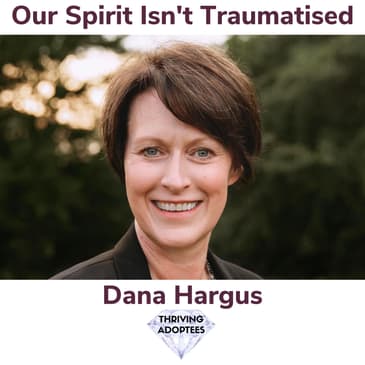
Adoptive mother Dana Hargus, M.Ed., LPC, is a seasoned health professional with over 25 years of experience in trauma-informed care. Before becoming a counselor, she spent nine years as an educator, building a foundation of compassion and connection that continues to guide her work today. Dana is the owner of a thriving private counseling practice and the visionary behind Restore of Ada, a new healing center devoted to wholeperson wellness and rapid nervous system resetting.
https://www.facebook.com/restoreofada
https://www.instagram.com/restoreofada/
https://www.linkedin.com/in/dana-hargus-681519340/
Guests and the host are not (unless mentioned) licensed pscyho-therapists and speak from their own opinion only. Seek qualified advice if you need help.
Want to learn more about thriving for you, your kids, your families or your colleagues? Pick a time to talk here
[00:00:02] Hello everybody, welcome to another episode of Thriving Adoptees Podcast. Today I'm delighted to be joined by Dana Hargus. Looking forward to our conversation today Dana. I am too. Glad to be here. I'm glad you're here too. So ladies and gentlemen, listeners, Dana is an adoptive mum, she's also a counsellor and she's doing some incredible work in the trauma field. If you want to do that, if you want to check out what Dana is about,
[00:00:30] as always when I, in case I don't always say this with every episode of the podcast, but in the show notes there's always links to connect with and find out more about that guest. So we're going to get a great blend of Dana's insights, what she's learned from raising her own kids, her own adopted kids and also from with a professional hat on.
[00:01:00] So that, that unique blend of professional and personal, I always find makes for a great, a great, well great perspectives on this, on this topic of thriving. So what comes to mind when you hear the word thriving? What does that, what does thriving mean to you Dana?
[00:01:22] I think like making the best of what you have, because it seems like often, um, we can be surprised by some people that don't seem to have much yet. They are thriving. They are like living their best life. And then we look at sometimes people who seemingly have it all.
[00:01:44] And that aspect of thriving seems to be missing. So I, in my mind, it's just making them the most of wherever you are and whatever you have. Yeah. I love the, uh, I love the, uh, juxtaposition there. So I, between how people, what people have and how they're doing in the world. Um, so people that seem to have it all, um, underneath is, is that what you're getting at?
[00:02:14] A kind of underneath, underneath, underneath, sorry, underneath the facade, all is not as it seems. Is that what you're getting at? It is because, um, I think before I have this job, I had this idea that there were certain things in life that would make, um, that would make life easy. Like for instance, I thought if I had all the money that I needed all the time, my life would be better.
[00:02:42] Or if, if this problem wasn't present, then I could, then I could be okay. And what I've learned is, um, you know, through 25 years of, of, of seeing into people's lives in a way that I think most people don't have an opportunity to, that none of that is really true. Because there are people I've seen that have it all in terms of our society.
[00:03:08] We would think, wow, you know, you've got it all, you know, you got all the things that someone would want, you know, from like the family that looks perfect to resources or employment or support systems. Yet they're not thriving, you know, and, and their children aren't thriving. And, and then the opposite is true as well.
[00:03:30] I've seen people that seemingly have nothing and yet they have this amazing capacity to not just survive, um, but to live every day to the fullest. Yeah. Yeah. Are you talking about thriving beyond our circumstances then? Yes. Yes. That would be, that would be part of it. But, but then if you look at it though, it's like in one, in one state, it would be thriving beyond our circumstances.
[00:03:59] But then in the other state, it'd be like, you have all the things the world would desire yet, yet you're still unable to thrive. So it's the difference between a fictional future that never really arises and, and where we are now. Is that?
[00:04:26] Or the idea that possibly because people have all the things that anyone would desire, they haven't done the personal work. No. They haven't done the things you have to do in order to thrive. They don't even know themselves. Yeah. So have you hit that phrase, a quote from Jim Carrey, he says something like, I wish everybody could be rich and famous so that they could see that it's not what it's all or what it's cracked up to be.
[00:04:56] Right. I think that's very true. I think it is. Um, so what helps us to see that stuff? Well, I think, um, the first thing is we have to have a desire to know more than we know. And then we have to have the, um, capacity and the desire to apply it.
[00:05:22] Like, I think lots of people want a solution, but they don't want to put in the work. Yeah. And by the work you mean the kind of reflective going within work, is that what you're talking about? Oh, I just think the work can be so many things.
[00:05:40] Um, yes, the reflective kind of like in terms of what you would think in therapy, but then also the work and the fact that you're never going to be your best self while you're eating processed food and drinking monster drinks and skipping the water. Like, you know, it's like people don't want to put in the simple work of, of, and it may not feel simple to them. So that's, they may not be a fair assessment.
[00:06:05] But in my mind, if you aren't doing the basic things to take care of your body, to make sure you get enough sleep, to make sure the sun shines on your face every day, you can. You're missing things that are very doable and that hinder your ability to live your best life. And then there's like the more therapeutic kind of work. And that's important too. Yeah.
[00:06:31] So are you talking about that kind of holistic, you're talking about holistic approach, right? Yeah. Yeah. Like, because I think that oftentimes, um, there are that we look at things like they're in isolation. It's like you take your body to the doctor and you take your brain to the counselor. It really doesn't, that's not the best way to do it. It's like, we have to look at the body, the soul, the spirit.
[00:06:57] We have to look at every part of a person to see that their, um, their quality of life could be improved in so many different areas. Yeah.
[00:07:09] So the holistic bit would also, I guess the holistic bit would also include what some people might call psychology, I guess, looking for thriving in the right place, looking for happiness in the right place, looking for, looking for joy in the right place. Because if we're, if, if we're looking in the wrong place, we're never going to find what we're looking for. Right. Right.
[00:07:37] But, but then also realizing that maybe, maybe it's found in multiple places at the same time. You know, it's like, we can't do one thing in isolation and figure it's going to solve all of our problems. Yeah. Yeah. So how, how does this, how does this ring true for you personally?
[00:08:00] What are the, what are the moments that have made the, the difference around seeing this, this stuff for yourself and experiencing this for you? Well, I guess in my mind where I, where I've probably learned the most is, is just in my own home, you know, with, um, with having adopted children and adopted grandchildren.
[00:08:26] I think that when you step into someone else's pain and you step into someone else's struggle, um, you can feel lost. You can think, I really want to help you, but I have no idea how to do it. So that being said, you know, I think all of these years, I mean, it's, it's been a long time.
[00:08:49] I, my, my youngest, my oldest son was, was one of my beginning foster children and he was eight and he turned 40 this summer. So, you know, I've been doing this a long time and I, um, you know, and then my youngest adopted grandchild is 12 and, and we've had her since, you know, she was three.
[00:09:10] So I, I've had, um, the valuable experience of, you know, even an honor of being allowed into somebody else's pain and someone else's struggle.
[00:09:26] And you can feel so inadequate and it can quickly turn to frustration and anger instead of, instead of compassion and, and just a curiosity of what might I do that could be helpful. So it's a, it's a long journey to thriving then.
[00:09:52] Yeah. I think, I think that we can have absolute moments of thriving. Like, you know, you, you know, when you're working with a, with a child from a hard place and, and they have a good day or they even have a good moment. They're able to do something they've never done before. It's like, like we want to take the joy in those moments, even though we know we still have a long distance to go.
[00:10:19] Yeah. And what have been your biggest learnings about yourself along, along that journey? Hmm. I, I, early on, I wondered if I could do it. And I've been very grateful to realize that I did have the capacity to endure, even when there were times it felt like we're not going anywhere or what, you know, or what are we doing?
[00:10:49] Or how is this going to work out? Or what am I going to do about, you know, all of those struggles of education and independence and, and the things that aren't going well. I, I couldn't foresee a day that I would give up, but I had many days that I wanted to. Yeah. Yeah.
[00:11:12] I guess that capacity, we have to see that for ourselves, right? Nobody can give us that capacity. I mean, when I think of it from the, from the standpoint of being a therapist, um, I often work with families that have foster kids, adopted kids, um, or are considering it.
[00:11:35] I feel like I have the capacity to, um, to share things that will expand their understanding because I think it's a broken thought. It's a, it's a, somebody has the desire to help. There is no question. Like I don't, I think, I think there are people with bad motives, but I think overall, especially people that are seeking therapy and seeking insight, their motives are pure.
[00:12:02] But their thought processes are not correct. The idea that I will love this child and all is well. And that's all I have to do. That is absolutely not true. Like there is so much more to this whole process than love. There is so much more to this whole process than, um, than thinking that it's so simple that I will love you and you will love me and all will be well.
[00:12:31] And then when it doesn't happen, people become very disenchanted and often give up or are unkind or unable to deal with what they're seeing. Yeah. So what, what helps them see the hope in this, in this tricky situation that they find themselves in?
[00:12:55] That's a big question. I think one way that I like to approach is pursuing the attachment style of the adult in the relationship and helping them recognize how their own history could potentially help or hinder them in dealing with this child's history. Because I believe there's hope for all, like not all adults that decide to adopt or foster a child are, um, have a secure attachment.
[00:13:24] You cannot give away what you don't have, like, but you can earn it. Like while you begin to understand, this is what my childhood did to me. You can begin to earn a secure attachment. And while you help this child in your life move towards secure attachment, it will move you towards secure, secure attachment. But you have to understand where you are before you can go down that road successfully.
[00:13:52] Yeah. And before that, you've got to see that it's not about fixing the child. It's about growing your own personal capacity. That's, that's a thread that we come back to time and time again on this show. Like some people just don't see that. No. And, and the thing is, is when people come in and start listing all the problems with the child, something inside of me just wants to weep.
[00:14:17] Like, I'm just so sad because I'm like this poor child is in this home where they believe that the system believes the child is the problem. And it's like, I understand these behaviors are not okay. But to identify that this is our problem right here. And it's interesting when there's a household full of children and they've just identified one, you know, it's like, there's our problem.
[00:14:45] You know, there's our scapegoat, all of our family's things lie. And even the children are accusatory to this child who has these problems. That child will never heal there. Like it is a, it is, even if they keep the child, it is the fail. If we don't understand that this is a system that we have to correct, not just a person. So by the system, you mean the family.
[00:15:12] You don't mean the, the adoption system, do you? You don't mean the social services. Oh, that's a big question. I would say what I was saying is the family system, but I do believe that the system at large is broken. Like, I don't think that we are succeeding often in saving children. We take children from families that aren't doing well, and then we place them in hard situations.
[00:15:39] I've met many children that have had as many as 17 placements. That is a system fail. That's not a child failure. That's the system's failure. When we institutionalize small children, when we medicate small children with multiple drugs that are only approved for adults, all of those things are a failure of the system. Yeah. And I see a lot of people kind of advocating for change in the system.
[00:16:07] And I think, yes, the system needs to be changed. It is broken, whether, whether this is in the UK or the US, right? Our systems are very different. Our systems are very different, but both of them share the same kind of brokenness condition. Like, we have to realize that it's down to us.
[00:16:33] One of the things that concerns me is about people focusing on changing the system when it would be more beneficial for their family to focus on their own stuff rather than the system stuff. Okay. Okay. I agree that you have more power within your own system.
[00:16:59] But I think, as a society, if we don't address the larger issues at some point, we're never going to find our way to something better because it is systemic. You know, the children that I raised came from family systems that had generations of lost children. You know, it's like it just rolls downhill.
[00:17:28] And like in our case, with one of my children who is an adult with a disability, like we have stopped that ball rolling downhill just by assuring that he's cared for and doesn't enter into having children when he's not equipped to raise children. And then, you know, my other child came from systems that no one kept their kids. Their mom was in foster care. Their grandma, you know, it just goes back and back.
[00:17:58] And we've stopped that system because now my child is able to raise his own children. You know, it's like, yes, it can. And we did that from what we would call like the small family system, which is wonderful. It's like, that's good, but that's not enough to change the world. You know, it's like that's not enough because we have to think, how are we getting here that generation after generation after generation wind up unable to care for their own children?
[00:18:28] Yeah. I guess it's a matter of timing then, isn't it really? Whether we're focusing our own on our own internal system, our own family, and then perhaps further down the line or depending on where we are, how well that family is thriving when we then perhaps change our approach and start looking at the advocacy stuff.
[00:18:54] Jumping to the external stuff whilst we're still in the midst of our internal stuff. I don't think many people would be called to do that. Do people still do that? I don't know. People have a tendency to do that. Yeah. I think I see people doing that, actually. Yeah. Yeah.
[00:19:14] I feel like there are those that are able, but I feel like the first step is absolutely to begin to figure out how you do what you're called to do at this moment well. You know, at this point, I feel like I'm kind of on the other side of the struggle in a lot of ways. And so it's a lot. And professionally, I see the failures.
[00:19:38] So I think at this point, I have a lot of thoughts on the things we ought to be doing differently in order to just stop the pain. Like there's so much pain amongst kids, amongst their families, amongst there's just, you know, there's so many issues that we're dealing with that I, at this point, really have a passion for that.
[00:20:04] And I love to talk about that when I can, because I'm just like, we have to see it differently. We have to see the way we're treating the problems differently from a therapeutic standpoint, but also the way the whole system flows isn't working. Yeah. It's a tricky one, isn't it?
[00:20:28] You mentioned a couple of minutes ago about, you talked about that when we're talking about the holistic approach, you're talking about the body stuff. So the basics like sleep, water and nutrition, good food and stuff. You also talked about soul and spirit. And I would imagine that has come to some of our listeners as a surprise.
[00:20:57] When they think about therapy and counselors, they will be thinking more about psychology than spirituality or soul. But like my definition of the soul is, is, is, is the, is that we're looking at the mind, you know, like it, and that does in my estimation that, that does like equate with absolutely what I do as a therapist.
[00:21:28] The, the, the, somebody's mind, you know, that, that's where everything, not necessarily the brain, you know, it's like the brain is, is like, I feel like that's, you know, that falls more in the body. But the mind, like, what does somebody think? What do they feel? And what, you know, what parts of them have experienced trauma and what do we do with that?
[00:21:52] And then as to the spiritual components, we are a mind, a body and a spirit, even if we don't agree upon religious tenets. Like, I feel like if we ignore any part of that, we're going to be less than whole. Yeah. So what, what does spirit mean to you if it, if it's bigger than religion, shall we say? Yeah.
[00:22:16] So, so in, in my, um, and this would be like my personal belief system that my spirit, um, is the part of me that communes with God. You know, it's like, I have a body and I believe I was created to be a spirit and I have a body and I have a soul. So, so often we live from what I would think of as the lower place.
[00:22:42] Like we live from our body and occasionally think about the fact that we have a spirit. And I think if I live from the higher place, as I was created in God's image, and I have a body and I have a soul and those things should serve me.
[00:23:01] Those things should do, should do the work of this life, whether it's to love well or to take care of my family or, you know, just to get up every day and come to work. But, but I prefer the idea that I live from my spirit because that's the place that I'm not limited. Okay.
[00:23:22] Um, and what, what does that, what are the implications of that for your parenting, shall we say, or grandparenting, living from spirit? What does that, what does that look like for you? Well, for me, it looks like doing it again from that place of, of power, because in my spirit, I am, I am like my creator.
[00:23:46] And that is so, to me, that is my, that's my position of, I don't have to have every answer at this moment, but I can be present and, and I can be positive and I can be, um, without.
[00:24:03] Without, because if you think about it, if you parent from your soul, when you see something you don't like, you can very quickly go into a place of guilt, like on your own behalf, like, oh, I should have done better. Or being ashamed of your child because they did something that you can't believe they did.
[00:24:24] And that was an embarrassment or like all of the, all of the things, all of those soulish things can become very inhibitory in terms of being a good parent because you get caught up or you begin in your child. There's no way, even if you don't verbalize it, if you are ashamed of your child, they know it. They recognize that they feel that they know my mom or my dad is not happy with this.
[00:24:51] But if we do it from that, from that again, power position of being our best self of being our highest self, then we're able to come at it just from a place of love and concern. And it doesn't mean we don't need to discipline or we don't have to correct things or work on them. But if we come at it from, from not the place of guilt and shame and anger and resentment or even fear, what if we never figure this out?
[00:25:20] And it, it changes the entire relationship because the child feels the difference. They feel my mom's with me. My mom's here to help me, not my mom's mad at me. Yeah. Are you talking about here about seeing your child's spirit? I'm talking about meeting your child's spirit to spirit, if you will. You're asking very deep questions.
[00:25:50] And it's, this is not where I expected this to go. So this is cool. Um, so, so it's like, we all have a spirit, but so often we're interacting soul to soul. So my wounds and your wounds are just pinging off of one another. But, but when our spirit reaches out to the spirit of our child and says, you are loved and you are valued.
[00:26:14] And, and I can, I can love you no matter what just happened or how many times it's going to happen tomorrow. And I believe you will be better. And here's what we're going to do to work on it. You can't lose the practical part. You know, it's like we, we can't lose all the pieces, but, but it's just about how we connect to one another. Because if we're connecting wound to wound, we're not going anywhere. No, I mean, people talk about this trauma bonding.
[00:26:44] And I think that bonds us to, that bonds us to other people in the way that it's usually, have you heard that phrase? You heard that phrase? Yes. Yes. Um, sorry, I, I, I was thinking that, you know, trauma bonding doesn't just keep, doesn't, doesn't just bond us to other people. Um, but it bonds us to our trauma as well.
[00:27:12] Um, and I'm, I'm guessing that your view of looking from parenting from spirit, parenting spirit to spirit has got nothing to do with trauma bonding. No, nothing at all. It would be just the opposite of that. We're going to find the greatest parts of who we are and come together and search for a solution to this problem we have. Yeah.
[00:27:40] Like it's, it's, you know, I just can't stop saying it's a power position. Not like I have power over you, but I have power over my own emotions. And because I can do that, I can help you get out of your emotions and into something a little bit more profitable to, to move forward as opposed to just keep repeating the same things over and over. Yeah. Yeah.
[00:28:03] So is your process then as a, as a counselor to help people live their lives from that place, from the live their lives, but see, see their spirit and live from, from there. Is that what it's about? Um, I think that's a part of what it's about.
[00:28:25] I, I, again, it's like, I feel like, I feel like we absolutely need to have an understanding that we are a spirit, like that that's a part of us. And I think in Oklahoma, there is a, there's a strong, um, there's a strong spiritual component. There, there is a church on every corner. There are, you know, so that is a part of most people's lives in one way or another.
[00:28:52] Like they, they may not, that might not be like what they would consider one of the most important parts of their life. But, but most people entertain the idea that there is a God and that they want to know him. You know, it's like, yeah, I know God, you know, yeah. You know, my, my grandma introduced me to God.
[00:29:10] You know, they, they're able to talk about that, but I don't think they necessarily understand that from that spiritual part of them, their life can be enhanced. So I do think that's a part of what I do. But then also I talk a lot. We do deal with trauma. We do have trauma techniques and different things we do and, and biofeedback.
[00:29:34] And there's all these different things that help the body release trauma that help the soul deal with the emotions that are tied to that, that explore the practical aspects of, of what do I need to do about the fact that I have terrible digestion. Our stomach makes more of our feel good chemicals than our brain does.
[00:29:59] Like our mental health will need be no better than our gut health, but we don't really look at that. We're not really considering the, the impact of medications or soda or, um, poor food or just all the different things that come into play.
[00:30:19] And I like to think that I try in the time that I have to touch on each of those things in order to improve someone's life. Yeah. How do we, how do we see that, that power, that, um, spirit part of ourselves? How do we see it? Yeah. I guess we're going to look for it, right?
[00:30:49] We don't want to know it's there for a starter. Yeah. Yeah. I would think that we have to know it's there. And I, and I feel like different people approach, you know, spiritual pursuits in different ways. You know, to me, the way that I, um, the way that I seek my spiritual parts is by spending time with the person who created me. It's like, God is, you know, God is my creator. God is my father.
[00:31:17] And I have to be willing to take time out of each day to sit down and, and be with him in order to understand who I am. I have to understand who he is. Like that, it has to, in my mind, you have to, you have to have some pure spiritual pursuit. And then, you know, like in other ways, like, like, like reading the Bible or going to church, you know, those practical things.
[00:31:45] But even more than that, it comes to relationship. Just like if, if I am connected to and related to my father, God, then I will much more be able to relate into my earthly father or my children or my husband or my clients. Like, it changes who I am.
[00:32:09] And if I'm more like him, then I am more able to relate to others. Yeah. And what about helping our kids see that for themselves? Yeah, I think, I think that, um, you know, what we would call like spiritual education of just talking about, this is what the Bible says. This is what God says. And what do you think that means to you?
[00:32:37] And I think that's been a tremendous part of what I, um, what I did with my kids and, and what is being done with my grandchildren is that we want them to understand that it's bigger than just this moment. It's like, we, we don't have to have all the answers.
[00:32:55] There are many problems that kids that have been in care, um, you know, especially, you know, if the children come into foster care before they come to us, many things have happened. And they have many thoughts and many questions that there aren't answers to. You know, it's like they begin to know, like, I love God and this is important to me and I need to do what's right. But then someday it occurs to them questions like, what about my old mom and dad?
[00:33:25] Do they get to go to heaven? Do they know God? You know, the questions that children can come up with are very complicated. And, and that's where it's like, we do believe in that higher spiritual self and that higher spiritual, that God is there and that we can trust him with those things. Even if we don't have a real answer or know what's going on right now. Yeah.
[00:33:51] How, how do you, um, help people see this if they're not religious? That is very difficult. Um, I, I feel like that it's very important in my professional life to honor where people are. Like I, it is not, it is not my goal to impart what I believe upon someone else.
[00:34:19] It is not, it doesn't matter what I believe as the therapist in my personal, you know, it's like, you've asked me personal questions that I'm happy to answer, but you asked me, you know, it's like you asked. And I answered.
[00:34:33] But when we think about, um, if that isn't somebody expresses, if somebody doesn't express an interest in that, I will ask questions such as what, um, you know, I asked them, what are their spiritual beliefs? How do they pursue that?
[00:34:52] Do they, you know, so, and then I let them lead that and then meet them where they are because we, you know, at professionally, I would never want to impose anything upon anybody. I just see where they, where they want to go. It's interesting that a lot of people that express no spiritual interest initially at some point will come around and say, I have something I want to talk about today. And I'm like, okay.
[00:35:20] And they're like, I want to talk about what you think about God. And I'm like, okay, well, what do you want to know? You know, so, so I have to think, you think, why would that happen when they initially, you know, marked on their paperwork that they didn't really have religious beliefs or they weren't interested in that. And then now they want that.
[00:35:42] I have to think that is an indication that their spirit sees something in my spirit that they desire to know more about. Yeah. One of the things that we've got to do here, I guess, is the language thing.
[00:36:07] Because I think one of, um, you talked about soul to soul as mind to mind. Mm-hmm. Um, and that being a place of less power than spirit to spirit. Right. Uh, there's a, there's a band here in the UK and well, they've been going since the eighties. Uh, and they're called soul to soul.
[00:36:31] And using your language, they would be better off being called spirit to spirit. I think some people. Interesting. Yeah. Some people would, wouldn't, uh, equate soul and mind in the way that, that you've, that you've done it. And, you know, if you want to expand on that, you could say mind, will, and emotions. Like all of those things in my, in my estimation fall under the heading of soul.
[00:37:01] Like, because your mind, again, it's not your brain, it's more your thoughts. And then your will is, is just that idea of, of what do I desire? You know, where am I going to put my effort? Where am I going to put my time? And then your emotions obviously are, what do I feel? And when you take all three of those pieces and put them together, I think that's like the fullness of what the soul is. Okay.
[00:37:30] So we've, you've talked about, um, releasing trauma in the body. I think you mentioned that phrase earlier on. Right. Um, we can look at trauma from a body perspective and I guess we can look at it from an emotional perspective as, as well, you know, the, in terms of, uh, fear or, uh, anger.
[00:37:58] How do you see the relationship between trauma and, and spirit? Well, now hold on a minute. Let me back up a bit. So would you, would you then say that part of our soul is the, the trauma is, is in us, part of the trauma is in our soul? Would you say that? I think, yes.
[00:38:24] I think that, that a trauma, that there's a physical, there's a physical part of trauma. Like there's all these interesting body trauma release kind of things that you can do. But then the, there's also the trauma in the soul. Like it is in that it's in your mind. It's in your emotions. It's, it's there. People sees, they see things, they dream about things. They have nightmares.
[00:38:51] They have, um, you know, they can't stop looping. Lots of disorders relate to undealt with trauma. Yes. Um, and so how would you see the relationship between spirit and trauma? I believe the spirit is the place in us that isn't traumatized like that, that, that place.
[00:39:17] And that's one of the reasons that make it the powerful place to be because there's not trauma there. It, it, it rises above the trauma. And, and for those people that are, that know God and that believe in God and that they seek that healing, I believe God wants us to be healed. I believe he desires us to be whole.
[00:39:41] He desires us to be who he created us to be nothing broken, nothing missing, you know, whole complete. And, and I don't think without the pursuit of the things of the spirit, I think there's a limit on the healing. I absolutely think the functional parts of trauma care are great and they can provide much,
[00:40:06] much healing, but I don't think there will be that wholeness that you get if you don't involve the spirit. Yeah. So, I mean, this is how I see it, kind of see it from a religious and sorry, a non-religious take, take on this. Right. Okay. So first off, I would, instead of the, the word spirit, I would use the word consciousness
[00:40:38] and all the, all the word awareness. And I would use those kind of interchangeably. Right. So when I think about healing, I would say, well, all of, all of us have had some experience of, of trauma, pretty much all of us. And in some respects, we will be healing, healing forever.
[00:41:09] But at a deeper, a more profound level from the level of consciousness, for example, we are whole and that, that consciousness as who we are is unwounded because it's unwoundable. It's, it, you said spirit isn't traumatized.
[00:41:35] I would say consciousness isn't traumatized. It's who we truly are. And that consciousness is hidden, oftentimes hidden underneath our psychology. Right. Does that, does that make any. Yes. Yes. I, I totally.
[00:41:59] And that's what I, I'm, I'm very aware that people, that people see things differently, you know, like just like people look at things from a different perspective. And I think often the lens of our life and obviously our belief systems become the glasses that we wear. You know, it's like, I think from conception forward. And if you, if you want to even go back further about DNA and all the things that come through
[00:42:28] to us, that they form the way in which we see life. And, and it's, and it's important that we know we're wearing those glasses. Like all of our history has created these lenses that are contributing to us either in positive or negative ways at any given moment.
[00:42:51] It's like, I am very aware that my upbringing created really good lenses to see life. Because when I meet others and I see the, the lenses, their upbringing and the trauma they experienced and the abuse and the neglect, and just that inability to be able to trust the adults around you created something for them that is very different.
[00:43:20] And, and we all, you just, you don't get through life without being impacted by, by the events that happened to you. So are we talking here about taking the trauma glasses off? Are we talking about cleaning the glasses? What, what, what do you do? What do you, how do you, how does your metaphor go? Well, I feel like it kind of depends upon where a person wants to go.
[00:43:47] Because there are people that when they get a certain level of healing, they're done. Like it, it's just like at some, cause you feel like, boy, we're just, we're clipping along here. We've made these changes and you know, like I try to make things measurable. So I'm asking, cause most of the people that see me do counseling and biofeedback. So I'm asking basically, how do we know?
[00:44:15] You know, yes, we have a treatment plan that says, we'll identify reasons for anger and how to cope more effectively. You know, like we, we have a treatment plan and we can talk about those things, but then I'm like, but I want to know in your life, how do you know if we're achieving these goals? And it might be, I want to be able to sleep all night. I don't want to yell at my kids anymore. I want to be on time for work. I'm late for everything. I have a lot of, I have a lot of pain in my body.
[00:44:44] I want, I want my pain to decrease. So we identify these things that are measurable. And I'm going to ask them about those things every single week. Let's look at, let's look at your list. And you tell me better, worse, or the same. And I have check sheets and I have all kinds of ways that I try to quantify what we're doing.
[00:45:07] So lots of people get to a place that if I were just in my internal workings, I see the next place I think we should work on. And they say, you know what? I want to start coming once a month. I think I'm good. I'm going to honor that. This is their journey. Just because I see three more things I think we ought to do.
[00:45:31] I'm not going, I'm not going to try to convince them to do what I think they need to do. I'm going to honor what they desire to do. If they say, I think I'm doing pretty good. What do you think? If the door is open, then I will say, well, these are some things I've noted. Any of them have any interest to, you know, to work on now? Or do you think that, you know, that you're through for now?
[00:45:57] Like, so some people want to take the glasses off. Some people don't even care if they're all the way clean. It's like my life is better than it was. I sleep. I'm nicer to my children. I'm steady in my marriage. My job, I got a promotion. Thank you so much for helping me. And they leave. And they may or may not come back someday. Yeah. Makes sense.
[00:46:27] Can you talk a little bit about the bio? Well, now let's go back a step then. This is quite a big thing to say, right? That the spirit isn't traumatized. And I'm with you. I totally agree with you. I believe consciousness isn't traumatized.
[00:46:51] And I believe spirit and consciousness and awareness are all different words for the same thing. So I'm totally with you that the spirit isn't traumatized. But I don't hear a lot of people saying that. Right. Why do you think that is? Well, sorry, first off, do you hear a lot of people saying that? No. No. So why? Why don't we?
[00:47:22] Because this is really good news, isn't it? Yeah. I think so. I think part of it is, I mean, part of it is the fact that just like I say spirit, you say consciousness.
[00:47:45] Like, so I feel like I am ever, it's like the only reason we're talking about this is because of the way you ask the question. Does that make sense? Like, I don't want to impose myself, especially my professional self. It's like if I'm in a group of women that are like-minded and we are having a Bible study or a book study or something.
[00:48:11] Yeah, I would absolutely say, well, you need to rise up into your spirit and you need to do this and this. And like, so in my world, I do talk about that. But I would never want to be an offense to somebody or to be, you know, so it's like that line of what is the right place to say the right thing.
[00:48:36] I have many clients that pursue my services because I am a spiritual person and because I believe in God. So when they come in, they're like, you know, my friend said that you know God and that this and this. And I just want you to know that's important to me and don't hesitate to talk about that. Well, great.
[00:48:59] Like, they just asked for something that I am happy to engage in, but I would never want to make somebody feel like I was judging them or trying to sway them to believe what I believe or do what I do. So I think that's one of the things is just in essence trying to trying to honor how other people might think or feel. Yeah.
[00:49:25] It's all context sensitive then, I think is what you pointed to. And my context for asking the question is, you know, I'm thinking that that spirit isn't traumatized or our spirit isn't traumatized. Which would you prefer out of those two? Our spirit isn't traumatized or spirit isn't traumatized? I would probably say our spirit, but I mean, truly, no, I don't.
[00:49:53] I don't think the spirit has capacity for trauma. Like the spirit is who we were created to be before all the stuff happened. And why is that good news? Oh, because there's a part of us that's whole. And if you think about like, I kind of see it.
[00:50:14] I know it's not this clean, but I kind of see it like we spend our day shifting in and out from body to soul to spirit to soul to spirit to body. So it's like, I believe a good goal is to begin to spend more and more time in the spirit. Because I feel like things done from the spirit are effortless, where things done from the soul and the body have limits.
[00:50:45] You know, it's like if I'm doing my work from my soul, I get tired or I worry more. I think, oh, I hope I said the right thing. Like, you know, like I have a lot more concerns in the soulish realm. Just my desire to please, like my desire, like all of those things, they're not bad things.
[00:51:10] But they're in some way warped by something that's happened to me down the line. But from the spirit, there is no fear. There is no concern. There's just a freedom that you don't get elsewhere. And if you think like, oh, today I spent 27% of my time in my body and I spent 10%, you know, but I do in my mind, I kind of see it as this shifting of gears.
[00:51:37] And if I find myself in a place of fatigue or frustration or even just not knowing what to do next, it's like I shift gears a lot. People are coming and going all day long, whether it be my staff or my clients or, you know, just my personal people. It's like I am shifting gears from waking to sleeping.
[00:52:02] And if done from the spirit, there's an ease and a joy in that that you don't experience when it's done from the body or the soul. I was asking you whether you preferred our spirit isn't traumatized or spirit isn't traumatized from a perspective of from the context, right?
[00:52:30] Of what I'm going to call this episode. So I'm when I share the episode on social media. I'm looking for something. Sometimes I'm looking for something that's going to stop people's attention. Right. So the novelty of the phrase might help them do that.
[00:53:01] Right. And they might listen to the episode and they might get something from all your... Yeah. Get something from what you're... Sharing. Right. And then maybe when they listen to my bit, they say, well, I'm with Dana on the God stuff. I'm not with Simon. Right. On the consciousness stuff.
[00:53:30] But there may be some that are saying, right, well, I'm not with... I'm with Simon on the consciousness stuff rather than being with Dana on the God stuff. But now I can see that they're both talking about actually talking about the same thing. They're just using different words. But, okay, I've got somewhere to go.
[00:53:47] And what's more important to me is the positive impact of what I've learned from listening to Dana. And I'm going to think about the amount of times that I spend coming from spirit, coming from soul, coming from body. And I'm going to work... I'm going to honor...
[00:54:16] And I'm going to honor my body because you've mentioned a couple of times about looking after our bodies and soda versus water and nutrition rather than fast food. I haven't really dived into that because I don't know. I guess I'm more interested in the spirit stuff. And I'm also thinking there's only so much we can say about, well, eat your greens, do your five vegetables a day.
[00:54:45] But I think, though, there's a real lack of understanding that without taking care of the body, life is a lesser experience. You have more discomfort, poorer sleep. And then the whole correlation between what goes on in our brain and what goes on in our gut. Like, it is an ignored thing in medical realms.
[00:55:10] Like, people are doing all kinds of things that are counterproductive to their bodies without the knowledge that it impacts their mental health. Yeah. Thank you for bringing that up. I'm thinking of a few trauma gurus who are neglecting their bodies in this moment. Right. It's a big deal.
[00:55:40] And that's my whole goal is to look at ourselves as a whole. And we will never get the maximum benefit from life without dealing with the entire system. We can't just ignore a piece of it and think it'll all work out. Yeah. That feels like a good place to bring you in, Dana. Okay.
[00:56:09] Is there something that you'd like to share that I've not asked you about? I would love to share about our program. Sure. So, we have a program here and it's called Restore. And it is a nine-week program that's designed to address the body, the soul, and the spirit in a number of ways.
[00:56:35] The first six weeks are online and we address things such as attachment, as gut health, as the practical shifts that you need to be making while you're at home. So, if you come to Restore for the two-week intensive, that you're ready to get maximum benefit. We do five months of biofeedback in two weeks' time. So, people are with us for 10 days, Monday through Friday for two weeks, from 9 to 3.
[00:57:05] And they have an AM biofeedback and a PM biofeedback, which is basically just exercise for the brain. And when you exercise for the brain, your brain can become more resilient. It can become more productive. We're dealing with things such as behavioral problems, anxiety, depression, pain, insomnia, PTSD, just to list a few. Because all of our issues are in our brain.
[00:57:31] And while somebody's not doing biofeedback, we have all these other interventions, such as work with frequencies, how to release physical trauma from your fascia. So, we're dealing with the body. We have lunch together. We have psychoeducational groups that just basically teach you how to take care of yourself in all these different ways or how to deal with your child. A child can't come without a parent.
[00:57:59] And the parent will get all the interventions the child gets except the biofeedback if they're with the child. So, our goal is to reset the nervous system. Because as a therapist, I believe there are so many things that talk therapy cannot do. Like we are unable to talk some things better. At the end of the two weeks in person, we move into something that's called Restore Plus.
[00:58:25] Restore Plus is an online forum that has all of the pieces of the puzzle of how to reset your nervous system, how to make your life better, what do you need to be eating, how do you restore your gut health, what about making more endorphins, what if you're low, what if you aren't securely attached, how do you do that?
[00:58:48] And so, I feel like we have gathered together an unbelievable wealth of knowledge that will serve to help people change their lives one step at a time. Because I'm aware a lot of people can't come to Ada. A lot of people can't do that. But there are practical, functional things that people can begin to introduce into their life day by day that will create the change needed.
[00:59:14] And we also have like opportunities for like live sessions where we answer questions, where we teach things, where we just dispense knowledge that improves people's, their life overall, but also just addressing body, soul, and spirit. Yeah. Yeah. Fantastic. Great stuff. So, if that's of interest, and this is in Ada, Oklahoma, right? Correct. Yeah.
[00:59:43] So, people can check that out on the links in the show notes. Thanks a lot, Dana. Thank you. I enjoyed it. Yeah. Lots of love. Speak to you again soon, listeners. Bye-bye. Okay. Thank you.