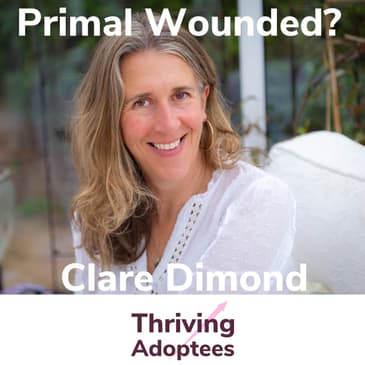
Here's a bit about Clare from her website
"Hello my name is Clare.
For a long time, I wasn’t at ease with who I thought I was.
I felt anxious and worried that people would think I was stupid.
I worried about getting things wrong.
I held myself back in case I would mess things up. I felt stressed, ill at ease, apprehensive.
I didn’t like myself or how I was in the world.
I spent many many years reading, studying, attending courses, talking to people to try to find a way to feel better about myself and along the way earned many qualifications (BA Psych, MBA, NLP trainer, yoga teacher, master hypnotist…).
Then I came across an understanding that made it clear we are never what we think we are and the world is never what we believe it to be. That our true nature is awareness of that idea of self and other.
This realisation was pure freedom. There was nothing to fix. Not with myself and not with the world. And the crazy thing is the more clearly we see this, the more we meet reality as it appears. With freedom and peace we are immersed in our life and work.
Each of us is already what we are searching for. It is that simple."
https://www.facebook.com/claredimondreal/
https://twitter.com/Claredimond
https://www.instagram.com/clare_v_dimond/
Guests and the host are not (unless mentioned) licensed pscyho-therapists and speak from their own opinion only. Seek qualified advice if you need help.
Want to learn more about thriving for you, your kids, your families or your colleagues? Pick a time to talk here
[00:00:02] - [Speaker 0]
Hello, everybody. Welcome to another episode of the Thriving Adoptees podcast. And have we got a treat for you today? I always say this, right? I always talk about having lovely people on the show because we only have great people.
[00:00:17] - [Speaker 0]
Today we're doing something completely different. Claire, who I'm going to introduce in a moment, she's a mentor of mine. I love her books, I love her podcast, I love her courses. I'm doing one of the courses at the moment. So yeah, she's a coach and she's got a really unique and clear way of helping us see who we truly are.
[00:00:46] - [Speaker 0]
So I asked Claire if she'd come on the podcast and she said, yeah, she'd be honored to. And like my heart leapt, cause I'm just thinking, well, I'm bringing somebody into this adoption space that's got a really unique take. So thanks a lot for saying that you've come on then.
[00:01:08] - [Speaker 1]
Thank you, Simon. What a lovely intro. Thank you.
[00:01:11] - [Speaker 0]
Yeah. So Claire's a coach, right? She works across people with all sorts of different challenges. Apart from the stuff, Have you done any work with any other adoptees? Or is it just me that's come into your space with the adoption stuff?
[00:01:32] - [Speaker 1]
Yeah, just you specifically on adoption. Yes. So
[00:01:38] - [Speaker 0]
we were talking listeners before we started about a kicking off point for this conversation with Claire and I. And we looked at a few different options. And the one that we came up with was the primal wound. So the primal wound is one of the kind of the dominant books in the adoption space is written by an adopted mum in the 90s already, an MD, a medical doctor, or what we would call in The UK, a GP. And she had two daughters, one biological and one adopted.
[00:02:14] - [Speaker 0]
And she noticed some differences between those two. And she came up with this theory of the primal wound, which is essentially the trauma of separation between a child and his or her mother. And I was recommended that book when I was struggling a few years ago. And I read that book and I thought this explains everything, right? This explains everything.
[00:02:42] - [Speaker 0]
So this explains why I fear rejection, why I want to control things. And those kind of like emotional, some of the tougher emotions that we go through. And I started telling her, well, I didn't know many of the adoptees of that space. So I asked my sister to read it. I kind of pleaded with a friend of mine who's adopted to read it.
[00:03:23] - [Speaker 0]
I got my coach to read it at the time. And it made so much sense. And then I talked to a few people about it, especially my coach Liz, and she said, well, Simon, I wanted to be adopted because you know me, she was abused by a dad, she wanted to be adopted. And Nancy Vario seems to be writing about is characteristics and feelings that all people go through, whether they're adopted or not. And this kind of like, I saw that I hadn't believed that I was wounded until I read the Primal Wound.
[00:04:15] - [Speaker 0]
And then that belief became like a self fulfilling prophecy. So I talk a lot about like a trauma ball. So it's a bit like a snowball. We scoop up some snow from the ground, we make it into sides of an egg. And then we put it back on the ground, we start rolling it, and it gets bigger and bigger.
[00:04:39] - [Speaker 0]
And then it's the base of a snowman, a snow woman or a snow person in these gender concerned times. And so the trauma gets worse. Or another way of looking at this is kind of we're going down a dark hole of trauma, and it gets darker and darker the further we go down that hole. And the darker life gets, the more tricky it is to see where we're going and we bump into stuff and we have more problems in our life. And at a certain point, I'm not quite sure when, I realised that I needed to instead of going further down the trauma hole, I needed to turn around and see the light that was still available, Because I far down.
[00:05:28] - [Speaker 0]
And what I see in the adoption community, and especially in adult adoptees, is they're going further and further down that trauma hole. And when they turn round, if they turn round, they can't see any light whatsoever. And it just gets darker and the world gets tougher for them. So that's really my take on the primal wound metaphor and what Claire and I are going to do, which is basically have a conversation around that and she will and we'll see where it goes. That's that's what we do with all the gas.
[00:06:11] - [Speaker 1]
Yeah. So yeah, I love I love how you articulate it. Very clear. So so I guess the question maybe that we're looking at is what what well, maybe a couple of questions. What what goes on in childhood that is creating a creating a setup for suffering as we move through life.
[00:06:46] - [Speaker 1]
And I really like what you're saying about it not being unique to adoption. It's, you know, it's it there's there is there are things that go on in childhood for all of us that not for all of us, but for many, many of us that that create a feeling of being fractured and isolated and cut adrift somehow. And and then what is what is the role of life, I guess? What's the role of living in terms of either the the healing of that sense of being disrupted from our our flourishing flow. And it either in in healing it or or how does it happen, like you're saying, when people just go further and deeper down the tunnel of suffering and things just seem to be amplifying the the more we investigate.
[00:07:56] - [Speaker 1]
So I think those are the for me, are the two really interesting areas is what what what causes the problem space in the first place? And what what do we do then with it? Where where do we go with that then? Because I think you know the the conversation that Simon and I are in at the moment is is is a we could loosely call it non duality I guess or or spirituality or exploration of reality and there's a risk within that that this this experience in the in the body that these children have gone through becomes spiritually bypassed in this. So I think I think within our watch out for this whole conversation that we have is that we don't try and deny things just so that they fit nicely into some spiritual framework.
[00:09:01] - [Speaker 1]
That we really like that this is a really healing space in which experience can genuinely be looked at and held and honoured and not in any way denied, put aside just because it doesn't fit. So, yes. So that's where I would go with what you said, which I and I love what you've said.
[00:09:23] - [Speaker 0]
So the cause then, the cause seems to me to be kind of, well, the metaphor that popped into my mind, you said something, and I thought about, when we're watching a wildlife show on telly and somebody gets separated from the pack. The elephant, there's a baby elephant got was being left behind and the mum comes back for it. But on telly, we're watching through the night. And it's that separation for me and the vulnerability. And we're separate from the rest because we're different.
[00:10:15] - [Speaker 0]
If we were physically separate, then that would mean danger as it does to animals on the plane. And yeah, so it's danger. And, you know, one of the things people talk about is, you know, amongst adoptees is what they call hypervigilance. Yeah. So you kind of like on the edge all the time.
[00:10:45] - [Speaker 0]
You're on the edge because you're worried about being picked on by others or left out. So to me, there's like a physical separation there. And there's also like an emotional separate. So if you think that, and I'm thinking about like, we've got two dogs, we've always had, mom and dad always had dogs. Me and my wife have got two dogs and they are dogs two and three, if you like.
[00:11:24] - [Speaker 0]
So the first one died twelve years ago and another one. And I remember the kind of the first night that the puppy comes home and them being howling with anguish because they're loot, because they've lost their, they're not with their mom anymore. And that's that you talk quite a lot about this. You talk about the sense of self being vulnerable and insecure. And if we have been raised in, if that's our background, if there has been a sense of insecurity as we're a kid, then that insecurity stays with us.
[00:12:17] - [Speaker 1]
Yeah. Yeah. I think that makes so much sense. Because I think I think when when yeah. Because when when the baby is born, it's it's entirely dependent, isn't it?
[00:12:30] - [Speaker 1]
Completely vulnerable for its physical survival. And and and what so so at the same time as that baby is wired to behave in a way that is going to maintain the attention and and the care of of the people around it. There's there's there's as it gets, you know, month by month, as it gets older, it starts to form around toddler time a concept. You know, because the human brain is so is so extraordinary. It can create a concept of a thing that isn't isn't there, that doesn't even exist in a way like the concept of a tree.
[00:13:23] - [Speaker 1]
Doesn't exist anywhere. It's just a mental representation of a tree. And and so what happens for babies and toddlers is that this conceptual mind is beginning to develop. And and into that conceptual mind comes a representation of the of the person, of the individual, which starts to represent like it starts to stand in for it. Starts to become it.
[00:13:54] - [Speaker 1]
So when we, you know, me, my, I, we refer there's a the references to that concept of myself. But it's it's being formed at the time where physical survival is still highly highly dependent on people around us. And so this this emotional physical vulnerability is is all becoming wrapped up in this concept of me. And so the concept of me starts to take on this survival space. Even though so even though as a as an adult, you know, I might be in a in a meeting, say, and you mentioned hypervigilance, you know, I might be in a meeting, there's absolutely zero danger to my to the physical body.
[00:14:49] - [Speaker 1]
But the the the sense of me, this concept of me that might come under attack in a meeting, you know, I might, you know, you're you're wrong, Claire. Or you know, then people might be interrupting me, talking over me, indifferent to my comments. That is starting to feel under threat. You know, and like when you mentioned rejection, it's it becomes a life and death thing. And and I think it's you know from all you know all the work that we've seen in in trauma.
[00:15:21] - [Speaker 1]
You know so so many incredible pieces of of of research and writing. The more the more that concept of self develops within that blurring of of physical survival. Where, you know, as as a as a totally vulnerable child, even even a mum walking out of the door is is could be terrifying because that is our food, our warm everything. So let if you, you know, if you imagine that that's what's going on for all babies, when you when you think of of the environment that some babies are in, it's it's so much more extreme and so much more vulnerable. And and that all becomes wrapped up in in this sense of what we are.
[00:16:21] - [Speaker 1]
And so from from from that perspective, we there there's there is a primal wound in all of us, we could say, into the extent that the idea of what we are is represented by a fragile, isolated, insecure, hyper vigilant, conditioned belief system. And and I think what's really like a breakthrough for all of us is that when when that is believed, when that's taken as what we are, we go down the route of trying to fix that, trying to either like overtly trying to fix it or our behaviour is you know again you mentioned control is our behaviours coming out of that and is trying to control the world, control other people to limit vulnerability and limit rejection, limit anything that is gonna trigger that insecurity. When that's taken as what we are, yes, it's like a living primal wound, isn't it? Playing out. When when and and and for me the the enormity of this conversation that you and I are in is that it says, that is completely understandable, but that is not what you are.
[00:18:05] - [Speaker 1]
That is a a a mind body system that has has absorbed a program essentially. And what you really are is the is the observation of that program or is the the life that is allowing essentially that program to play out? The and those things don't get affected by the program. They they're they're stable. So so this now I think allows for both.
[00:18:46] - [Speaker 1]
It allows for the recognition of that vulnerability. As a as a as a conditioned learned system that and now life becomes about seeing rather than trying to find ourselves, stabilise ourselves within that program. Rather than trying to trying to be something, trying to turn that program into some, you know, into me, stable, complete, it it says, no, that that is a learned pile of beliefs. It will never be stabilized. It will never you I won't ever find myself in there because that's not where I am.
[00:19:42] - [Speaker 1]
And and instead, so every every interaction we have, every you know, we were sort of having a bit of a jokey conversation about electricity companies. You know, even even in there is the opportunity for that conditioned learning to be seen and and in in being seen from the perspective that's not me but it's a it's just a program playing out. Now now there is healing available. Cos we're not trying to we're not lost in it. We're seeing it.
[00:20:20] - [Speaker 1]
And it's it's such a powerful distinction.
[00:20:27] - [Speaker 0]
Because I guess we're talking about if I stripped it right down, we're talking about we're talking about two, maybe two or three things. We're talking about who we truly are versus this insecure character or ego. Well, that's probably that's it, isn't it? That it? We're talking about, so who we truly are, plus our beliefs makes us believe that we are this insecure character.
[00:21:18] - [Speaker 0]
That's one way of looking at it. Then on this programme that we're doing at the moment, Claire, you use the word programming. And it's the difference between the TV screen to use Rupert Spire's analogy, it's the difference between the TV screen and the programme that's on the screen. I don't know which one is easiest for people that are not into the conversation that we're in to get. Is it the difference between the true self and the ego?
[00:22:17] - [Speaker 0]
The true self that is unconditioned And then the conditioning comes along and we fall for that conditioning because that's what we seem to do as humans. And we start to believe that we are this false idea, this self-concept.
[00:22:45] - [Speaker 1]
Yeah. I think the tricky thing with with calling it the ego is that it it it sounds like something that just needs, you know, that needs to get be got rid of or but actually, if we, if we think of the, I, I quite like, can, like, this, this sort of body mind system. I think when we talk about it in that way, we're not denying that there was a baby, and we're not denying that there may have been really frightening experiences that were happening, that were literally embedding in the body. You know, the the the cells were duplicating within that stress environment. And and so this this conditioning of fear goes goes through the whole system.
[00:24:00] - [Speaker 1]
And it's it's it's the it's it's that system, that mind body system system that that then then sits sits in in a a meeting meeting. And that gets triggered or feels deeply ashamed or is hyper vigilantly watching the reactions of people. It's that system that's that's there. And it seems to me that when when we are when when life is lived from the attempt to find peace, find stability, find safety. It's lived through the lens of that stressed, frightened system.
[00:24:58] - [Speaker 1]
Because that system is trying to it's desperate. It's desperate to rediscover the peace that it knew in the womb, maybe, you know. Like, it it there's a deep knowing that there is something amiss here. And and so it's sitting in a meeting trying to find peace. And it's trying to do that by being vigilant and by wanting to make sure that all its comments are listened to and and that it doesn't get rejected or insulted.
[00:25:31] - [Speaker 1]
Know, it's trying to find peace there. Of course, because that's that's what's being learned. It's it's learned that everything can come in from other people or be taken away, and so it's desperately trying to secure it. And and and what this conversation does is it says like it's a brick wall to that. It says, that system trying to find peace in its relationships, in its interactions, in its daily life, it's it's never ever ever going to find it.
[00:26:08] - [Speaker 1]
It can't. Because there will never be enough attention or praise or promotions. Nothing. There there will never be enough of that to secure that system. The only the only route to peace, genuine peace, is is to see is is to see the to see that desperate attempt.
[00:26:38] - [Speaker 1]
And and the moment that's seen, there's a shift of perspective because we're not the idea of what we are isn't any more lost within that search. It's now out of the search watching it. And so what we could say there is in that coming out of that unconscious space of desperation. What's happened is the the the idea of what we are is now liberated as as a witnessing presence to to the reactions, to the behaviour, and it and it's understood. It's like deeply, deeply understood.
[00:27:23] - [Speaker 1]
Of course, it would be like that. So, it's so natural that it would be like that and it's not what I am. I I know peace. Yeah.
[00:27:36] - [Speaker 0]
Finding we're looking for the peace inside the stress.
[00:27:42] - [Speaker 1]
Yeah.
[00:27:43] - [Speaker 0]
Inside the fear. Yeah. And that prolongs it. So it's surrender, surrendering the search. The search for peace is the very thing that keeps the peace at arm's length, just out of reach.
[00:28:09] - [Speaker 0]
Like a guy doing the trick where they have a coin in the street or a banknote in the street and it's attached to a fishing, a piece of fishing wire for candid camera and people keep and searching, searching for the, going down and reaching for the pound note, which is reaching for the piece. The candid camera operator just yanks it away. So the search that there's no peace in the war, the peace is only in surrender.
[00:28:56] - [Speaker 1]
Peace is in the capacity to experience whatever emotion or experience is happening right at this moment.
[00:29:06] - [Speaker 0]
Surrendering to the surrendering to the feeling going head on into it. Yeah. So you talk a lot about this. And the story that always comes to my mind when you do that, we talk about when so we're not trying to say go and live you know, go and live in on a desert island and withdraw. We're saying, no, go fall into it.
[00:29:39] - [Speaker 0]
And the thing that always comes into my mind when you say that is, so I was in a therapist chair about six years ago and the idea of my birth mother rejecting me again popped into my head. So I imagine something that the therapist said about why I wasn't continuing the search for my birth mother, right? Not the search for happiness, the search for my birth mother practical, right? I imagine something, the thought popped into my head opening the door, her being there, opening the door of the room that I was in, her being there and what I thought rejecting me again, that's what I thought at that stage. And I flushed with fear, then anger, then kind of running towards this.
[00:30:37] - [Speaker 0]
I'm going full on. I'm going full into this fear because I'm not going to let these emotions around my birth mother's rejecting of me hold me back. So I kind of went full tilt into them and which meant for me resuming the search. So at that stage, I her only name. I didn't know whether she was alive or dead or where she was or anything, but that's what I did.
[00:31:10] - [Speaker 0]
I went full in. Now that a strategy or a mindset thing or an affirmation. It was something that happened in the heat of the moment. It was a decision that I came to. Well, it wasn't a decision.
[00:31:27] - [Speaker 0]
It was a no brainer. It's just like I'm not going to let this fear stop me or I'm gonna run into the fear. Like the Marines do apparently they run towards the gunfire rather
[00:31:45] - [Speaker 1]
than Yeah.
[00:31:51] - [Speaker 0]
Bit Yeah. Macho, all that stuff in it.
[00:31:54] - [Speaker 1]
Well, it's I think I think this may like the more gentle way. Yeah. Is is just step by step, tiny step by tiny step, just seeing what is there. So so in in that moment in the in the therapist office, all all really that was happening in that moment was a thought, wasn't it? It wasn't even a actual experience of rejection.
[00:32:35] - [Speaker 1]
It was a thought of rejection. And and so that's what's available in that moment to be felt. It doesn't it doesn't doesn't mean that things will be different along the way as, you know, when when we're actually going through the stages of contact or anything. It just means that what was coming in in that moment was intense fear and then anger. And and so each of those were there to be allowed into the body and felt.
[00:33:14] - [Speaker 1]
And that's and that's all it means, I think, really. Just in just the the things that are there from moment to moment are that's our healing. And and and in a way what that does then is being in that safe space in with the therapist. Able, you know, with with him his or her support to feel these emotions. Which are maybe emotions that we haven't had the capacity to feel before.
[00:33:53] - [Speaker 1]
You know, we might have had numbing practices or distraction to try to do anything not to feel them. But now we're now they're there. And and and they can sort of flood through the body and and pass through like a storm. And and because they've been felt, there's there's a opening space, and there's a bit more capacity. And so that that increase of capacity really is a is a is a is actually a change in the concept of what we are and of what reality is and of what what the system is able to allow in.
[00:34:41] - [Speaker 1]
And so that that puts the whole thing in a different reality really. In which there's more availability and so something else can come in. And it can be the same thing. We have that as well. And then something else.
[00:34:56] - [Speaker 1]
And each so each time rather than rather than it's centering on a like a sort of like, you know, the sort of like you mentioned the marines of the essay, sort of barging through. It's the opposite of that really. It's an undoing that allows for expansion of capacity bit by bit, so that really rejection loses its life and death grip. And so to the extent that maybe if we are able to meet with our birth mother and she's not in a place where she's available or or, you know, she's her capacity is is really limited still perhaps. That's that's can be held and honored.
[00:36:01] - [Speaker 1]
And and because because of the expansion that we've gone through at each stage to feel what was there to be felt, there is there's less and less defense, less and less protection, there's less and less that is seen as personal. And so when we meet her, we're we're we're we're love, really. And and she doesn't have to be any different. Not there's nothing there's no part of us that now depends on her.
[00:36:38] - [Speaker 0]
Yeah.
[00:36:39] - [Speaker 1]
And yeah.
[00:36:42] - [Speaker 0]
So you talked about a perspective change. What actually happened to me after I resumed the searches, I found out, know, it took me a while, a couple of years, but I found out that she died. And when I got my adoption file, was a letter that she'd written, my birth mother had written to the adoption agency asking me if she could buy me this teddy bear. And as I read the letter, I could feel her love for me. I could feel the desperation of her predicament doing what she thought was the best for me by having me adopted because my birth father didn't want to marry her, which was the thing in those days, took in 1966, 'sixty seven.
[00:37:55] - [Speaker 0]
And as I read that letter, the tears flooded down my face and I felt her love for me. And I also realised this nightmare scenario that I'd made up of the nightmare story of rejection couldn't be further from the truth. And that was another big, that was perhaps one of the most significant shifts in my perspective on this. So she went from villain to hero. My concern for myself dissolved into puddles of tears and empathy for her.
[00:39:06] - [Speaker 0]
And I felt a connection with her through a letter that she'd written forty eight years before I'd read it maybe. I never thought that I would see. And that perspective shift was the thing that was a big step along the way of healing when we realise that the story made up is a story.
[00:39:37] - [Speaker 1]
Yes. Which yes. That's beautiful. And and and and I think where the the what what this conversation offers is that even if, you know, for some of the people who are listening to this, it might it might be the case that that the letter is one of rejection or or we or we trace Yeah. Someone and they and they slam the door in our face.
[00:40:10] - [Speaker 1]
And the the the beauty of this conversation which is is is just like an extension of of what you've just been describing is that it becomes clear that there is no we're in ourselves our own capacity. And we're and we're seeing how limited that capacity is when when it's coming from all the the the sort of life and death fear, the the insecurity, the shame, the, you know, our our beliefs about ourselves that are so weighed down and so so constricted. We see that in ourselves. You know, this is a journey. This is entirely about ourselves.
[00:41:09] - [Speaker 1]
And and as we expand out of that limited space to that shift of perspective that you mentioned, we see for everyone else. They can't they can't ever behave in any other different way. Everyone's behavior, it makes total sense for for what is being believed in that moment. And so the these things, no matter how deeply personal they might have appeared at the bit at the start, We start to see that from from that from that sort of constricted idea of ourselves that is so so con just a conditioned space. Nothing is personal.
[00:42:04] - [Speaker 1]
It's it's only about what's being believed. And that and those beliefs are so far removed from reality. But yet they look absolutely true. And so we become more safe through that expansion for everyone, you know, whatever their behavior it's understood because we've seen it for ourselves. That's the space in which we we move even beyond forgiveness, know.
[00:42:36] - [Speaker 1]
No matter what the other's response is to us, there's such a deep understanding of it. Know, this is who knows what centuries of conditioning, of confusion has led to to, you know, this moment now for each of us. And
[00:42:58] - [Speaker 0]
Do you mean the do you mean the unlearning here? What people talk about as unlearning?
[00:43:03] - [Speaker 1]
For yeah. For ourselves. Yeah.
[00:43:06] - [Speaker 0]
Yeah. So this is the this is the veils of our beliefs. As shedding our shedding our beliefs, shedding our beliefs through perspective, change.
[00:43:31] - [Speaker 1]
That is the beliefs of what we are shedding themselves?
[00:43:36] - [Speaker 0]
Okay. The beliefs of what we are shedding themselves. Yeah. Yeah. We don't
[00:43:42] - [Speaker 1]
No one's doing it.
[00:43:43] - [Speaker 0]
We don't do it.
[00:43:46] - [Speaker 1]
No. There's no one there.
[00:43:48] - [Speaker 0]
So this affirmations, for example, that would be the opposite way of thinking. This isn't an affirmation. This is something that's happening naturally without us doing it as So little
[00:44:05] - [Speaker 1]
in a way, is the opposite process to how the beliefs were acquired. So if we think of the baby wired to believe, really, you know, that's how the mind is set up. Beliefs being acquired all over the place, all the time about everything. Looking to the authorities around, you know, for how to navigate and survive in the world. So acquiring, acquiring, acquiring beliefs, become this construct then of self and other and reality through which all behavior comes, all experience happens.
[00:44:46] - [Speaker 1]
And and as long as it long looks like survival is at the heart of that, then that's what will be maintained. But the moment really that someone comes into this conversation, or hopefully, you know, they listen to this podcast and it becomes like this, like, a sort of resonance. Oh, shit. Yeah. That that's that's a that's just a a view.
[00:45:14] - [Speaker 1]
It's just a film playing out really. And then from that moment, the moment, you know, one of the things we were thinking about talking about with Sid Banks is what someone said to Sid. You just you're not really insecure. You just think you are that like the moment there's that bore thought, the creative power of the mind in creating a reality, then now we're sort of on the way down. We're and the world is showing what beliefs there are that are completely yeah, toxic even really, could say completely harmful, completely deluded, and back down, the system goes in a way, the belief's just sort of dissolving because reality is continually showing what's not true.
[00:46:17] - [Speaker 1]
And yet there's still a maturity. And now there's a sort of maturity of relationship to reality and to the mind and to mental creations and constructs that is the basis of sanity, I would say. And the basis of a You mentioned that snowball, like now the snowball really melting. Yeah, it's like melting each bit melting melting until just at the center of it is just is just presence. Just the most simple localization of presence in a body.
[00:47:05] - [Speaker 1]
Listening, open, available. Yeah. Yeah.
[00:47:13] - [Speaker 0]
This conversation really is like an industrial heater, taking an industrial heater to the snowball, the trauma ball Yeah,
[00:47:28] - [Speaker 1]
think
[00:47:29] - [Speaker 0]
Yeah, well that, yeah, a bloke like me taking a macho thing, I'm gonna, you know, you're gonna probably bring up something way. So other thing is this, just to, we've name checked Sydney Banks. So this guy, Sydney Banks, he was a Scottish well bit there who was also adopted, right? So he was adopted and he had this enlightenment experience. And as Clare said, somebody said to him, you're not insecure Sid, you just think you are.
[00:48:17] - [Speaker 0]
And that was the catalyst for his shift in perspective, which led him to, which he then shared with the world and with other teachers. Yeah, so he became a reluctant kind of reluctant teacher, didn't he? I don't know how reluctant he was. Became a teacher and he taught others and that's the way that I found Claire because she was studying with another second generation teacher. So check out people at Sydney Banks, it's Sydney with a Y.
[00:48:57] - [Speaker 0]
He's no longer with us. I guess he'd be probably in his mid nineties if he was still alive. But yeah, that's Sydney Banks. And in the show notes, I'm going to do is I'm going to link to Claire's website and podcast. So it's Claire without an I in Claire, without an A in Diamond.
[00:49:22] - [Speaker 0]
But you don't need to remember all that. It'll be on show notes. Is there anything else you'd like to share Claire?
[00:49:37] - [Speaker 1]
Maybe just to say, I mean, I really recognize how, like how balmy a lot of this can sound. But if there is anything, if there's anything in what we've been saying, like even just the tiniest little thing that you just think, oh that's interesting, or something is intriguing, or something like really resonates even slightly, then I would say follow that. Because that's an opening to a a world that is so it's unimaginable from within the confines of of what we believe ourselves to be and what we believe the world to be. But follow that little gleam and and it and it and it it it opens up a space that is that in which nothing has changed, really, really, like, literally nothing has changed, but there's there's there's a there's a totally different understanding of what you are in it. Yeah.
[00:50:51] - [Speaker 1]
And it might you know we've mentioned Simon's mentioned Sid and that there's so many, so many brilliant teachers in this that just have a little search around to see who resonates for you. Yeah, there's so much available now.
[00:51:11] - [Speaker 0]
So the glimmer of light that Claire's drawing your attention to is the light at the end of the tunnel. And that only, in my case, I only saw that light when I turned round. So if I'd kept on going down the trauma tunnel, life would have just got darker and darker. But luckily I find some stuff and I turned around. When I turned around there was still light.
[00:51:46] - [Speaker 0]
So if you're listening now an hour into this podcast, you know, the chances that you've seen some light because the other people will have signed off from our balminess, from our shared balminess, you know, probably after about thirty seconds, if we can say. But we're sharing, we're just sharing what we've learned that has kindled that light. Yeah. That light of hope. And And as that light has grown then and continues to grow, right?
[00:52:36] - [Speaker 0]
The last time I spoke to Claire, she went, Just stay curious, Sumit. Just stay curious. And that's like, that's fanning the flame of this light so the light grows. It's it's not being happy with 60 watts. I don't know, I'm losing myself in the metaphors.
[00:53:03] - [Speaker 0]
Thoughts. Thanks so much, Claire, for coming on and bringing your wisdom to this. And I'm delighted to say that you brought a completely different perspective to this on me when you said that, well, we've all got of some primal wound in because of this separation from ourselves. So the light is the means by which we rejoin the real world and rejoin the path, I guess.
[00:53:44] - [Speaker 1]
Yeah, we come back, we come back in. Yeah. Oh, so nice to be here, Simon. Thank you for
[00:53:52] - [Speaker 0]
Delight. Delight. A lot. Thanks a lot listeners and check out what Claire's doing on her podcast. She does one every day and it is superb stuff.
[00:54:04] - [Speaker 0]
Thanks a lot. You. Thank you, We'll you soon. We'll speak to you soon. Bye bye.